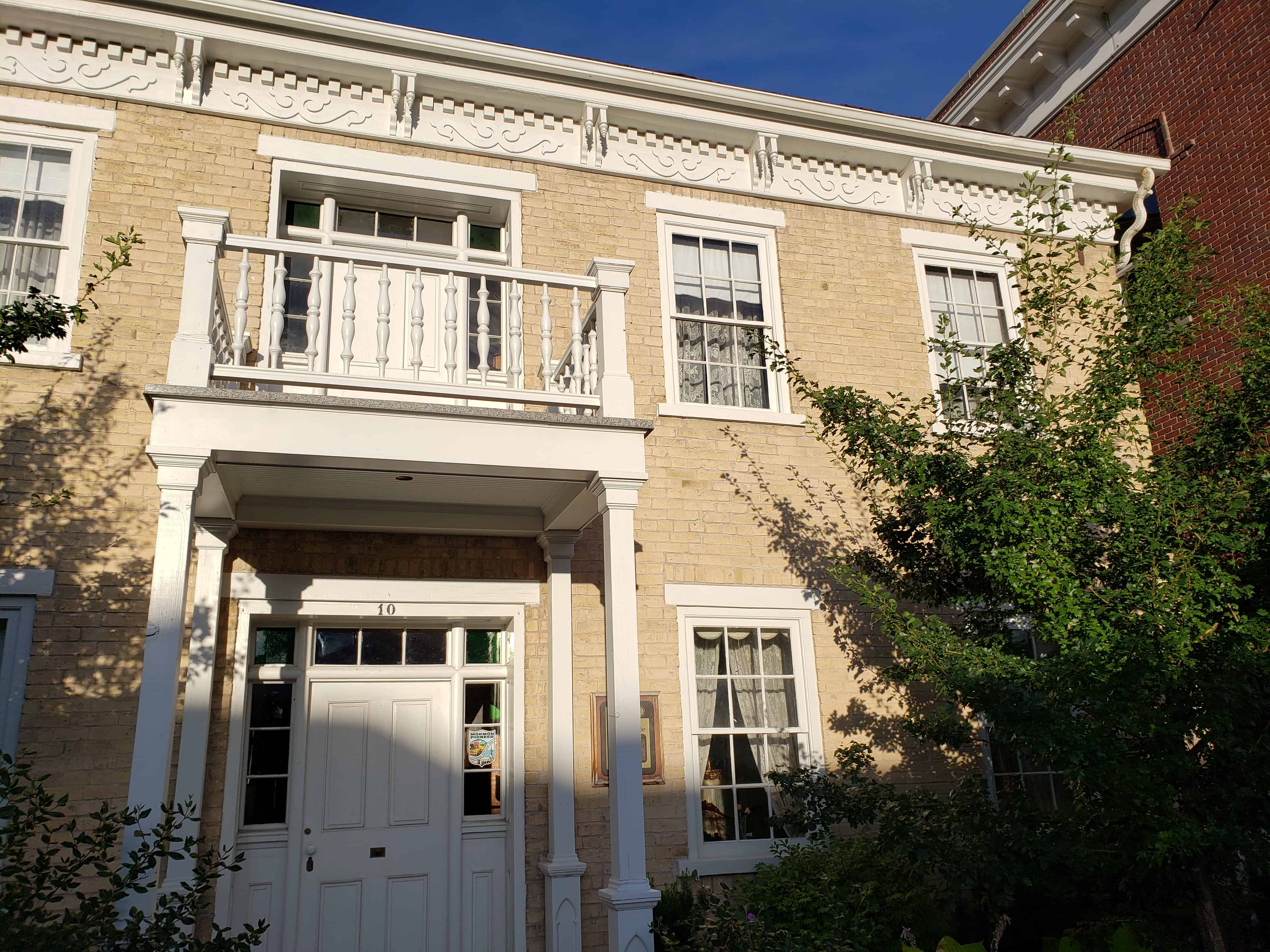
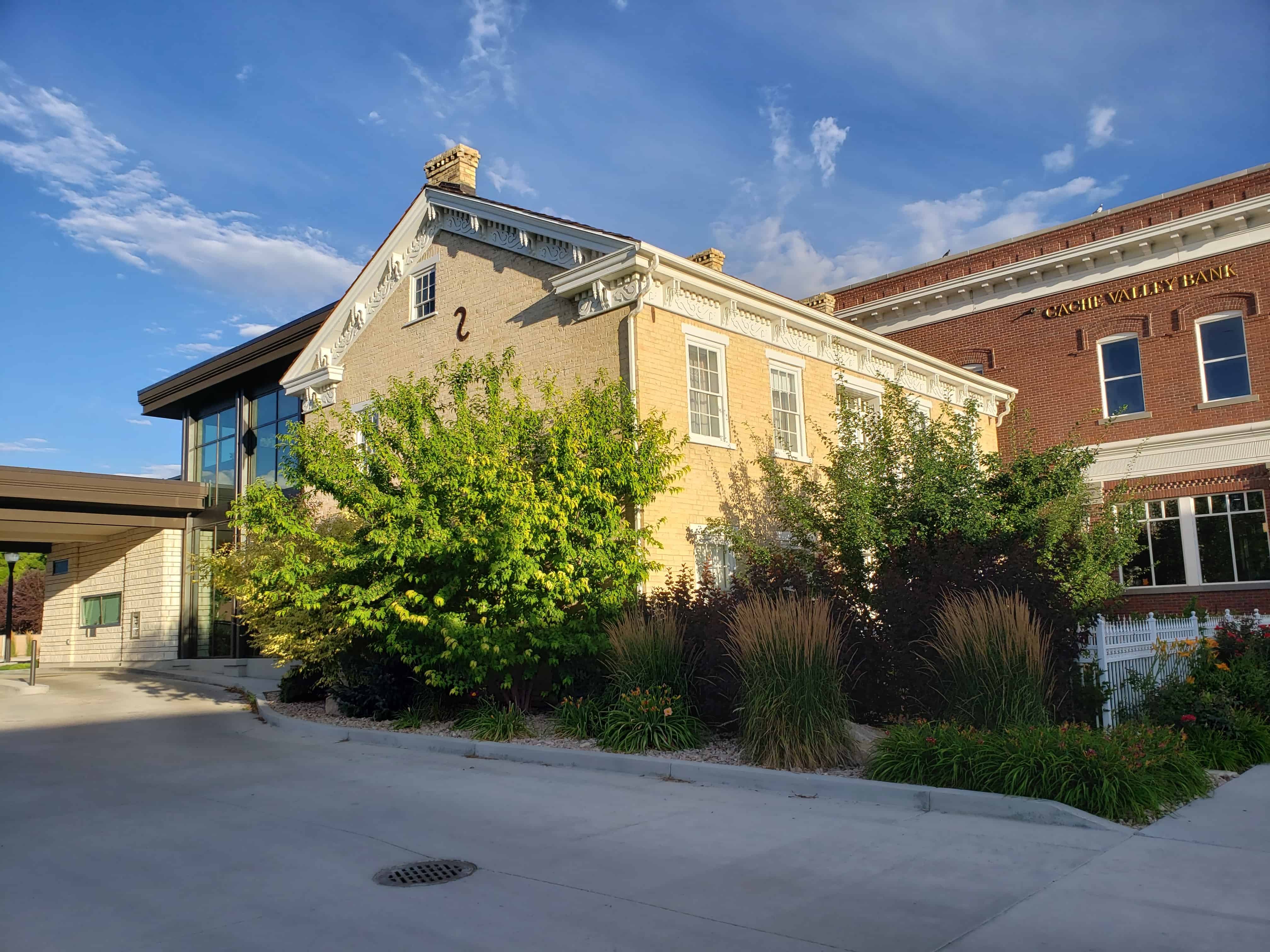
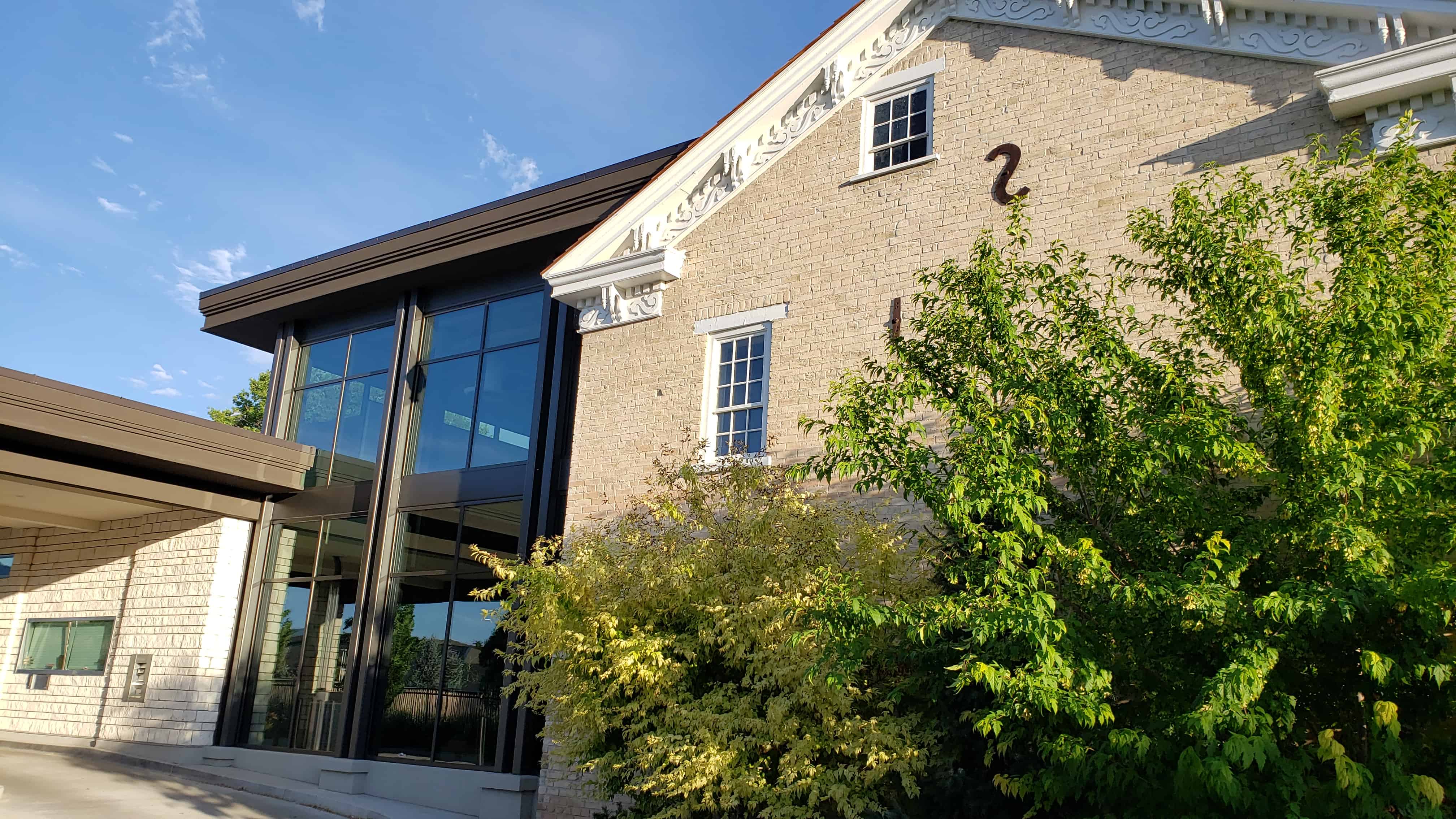
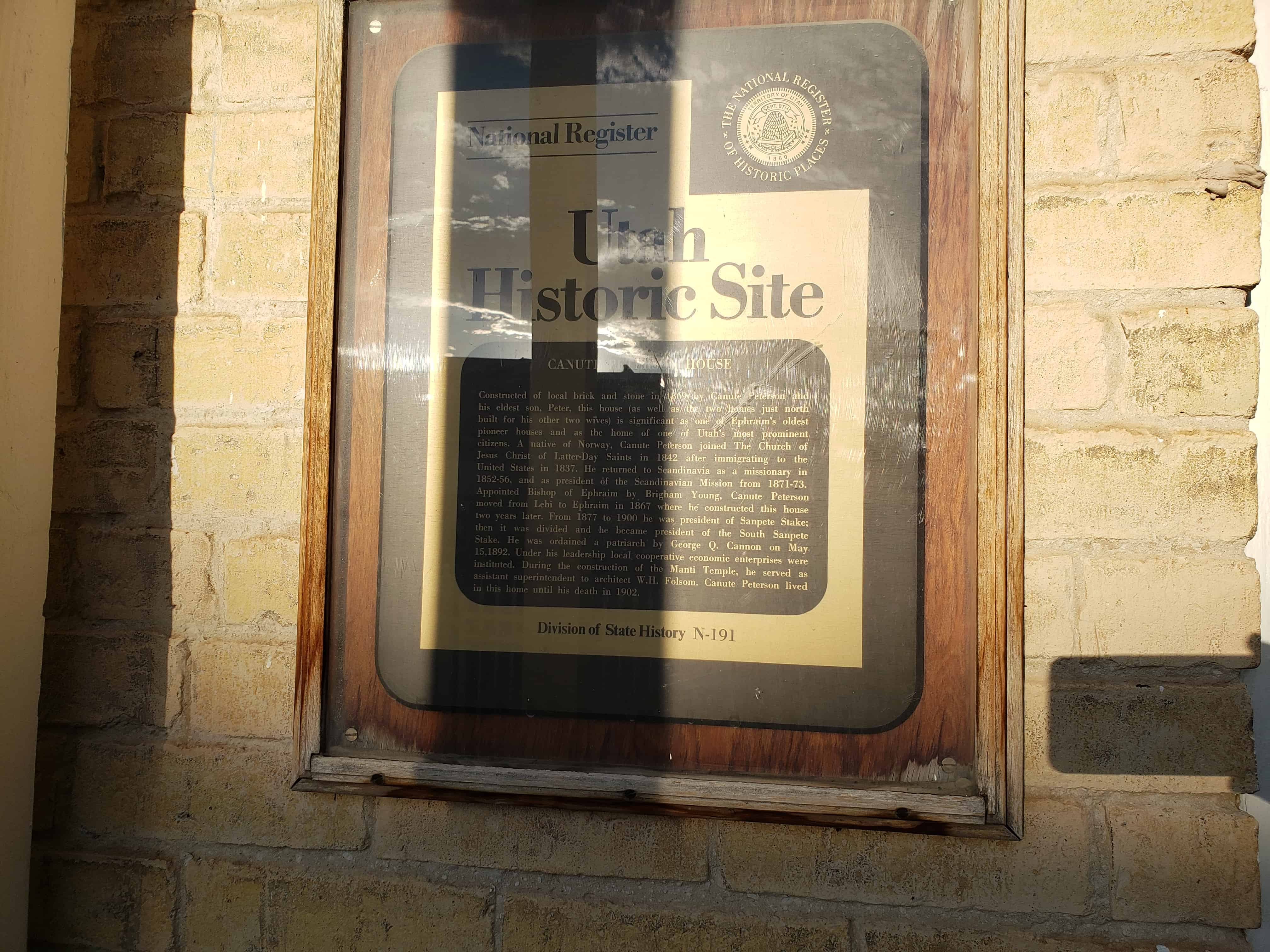
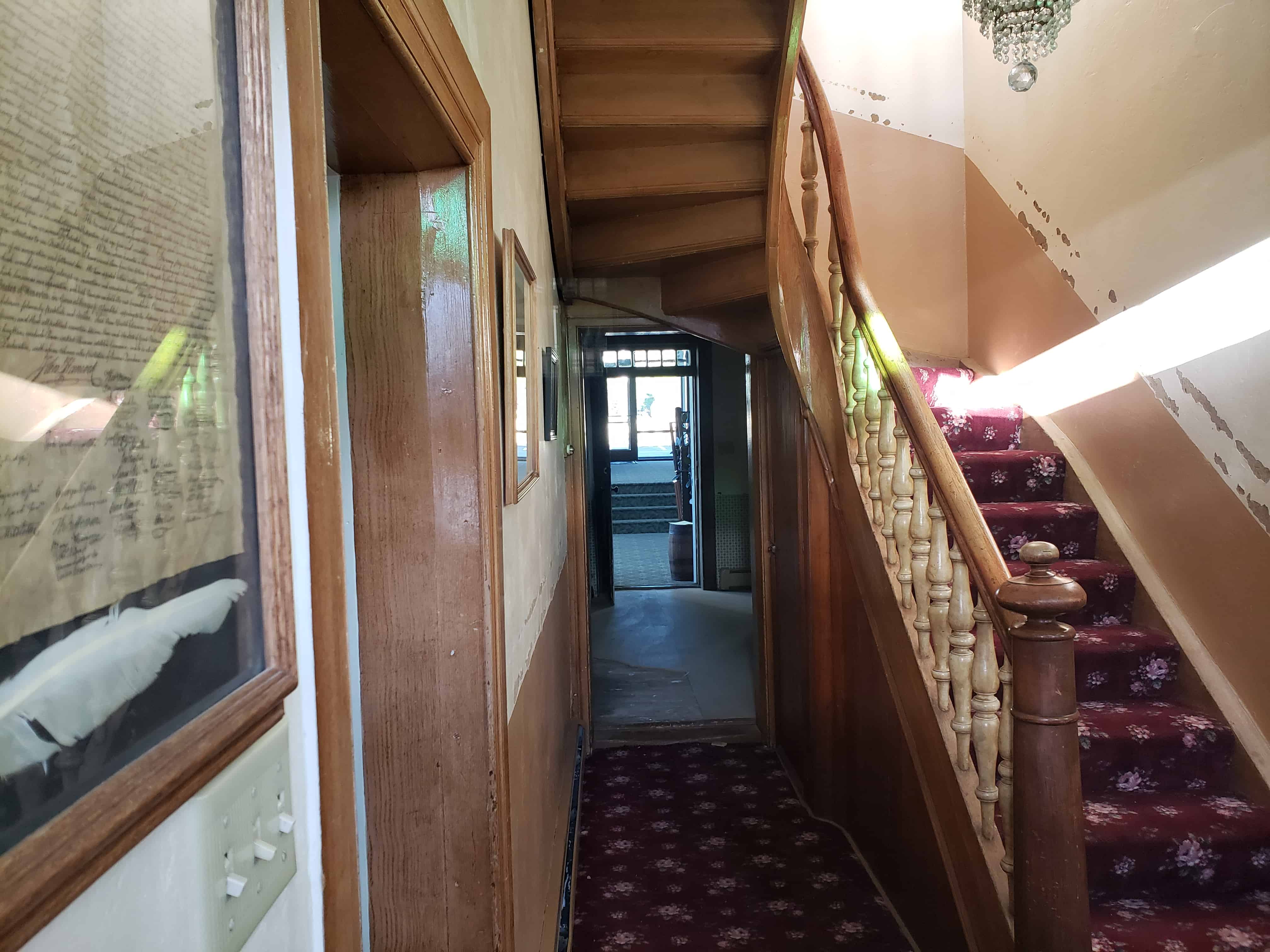
Constructed of local brick and stone in 1869 by Canute Peterson and his eldest son, Peter, this house (as well as the two homes just north built for his other two wives) is significant as one of Ephraim’s oldest pioneer homes and as the home of one of Utah’s most prominent citizens. A native of Norway, Canute Peterson joined The Church of Jesus Christ of Latter-Day Saints in 1842 after immigrating to the United States in 1837. He returned to Scandinavia as a missionary in 1852-56, and as a president of the Scandinavian Mission from 1871-73. Appointed Bishop of Ephraim by Brigham Young, Canute Peterson moved from Lehi to Ephraim in 1867 where he constructed this house two years later. From 1877 to 1900 he was president of Sanpete Stake; then it was divided and he became president of the South Sanpete Stake. He was ordained a patriarch by George Q. Cannon on May 15, 1892. Under his leadership local cooperative economic enterprises were instituted. During the construction of the Manti Temple, he served as assistant superintendent to architect W.H. Folsom, Canute Peterson lived in this home until his death in 1902.
The Canute Peterson House is located at 10 North Main Street in Ephraim, Utah and was added to the National Historic Register (#78002689) on July 17, 1978.
One of the first Scandinavians to join the Church of Jesus Christ of Latter-day Saints, Canute Peterson, played a leading role in the conversion of many of his countrymen to Mormonism. He served three separate missions spanning a total of eight years in the Scandinavian countries. On his three return trips to Utah he guided hundreds of Scandinavian converts to Utah and as President of Sanpete Stake, to which the majority of Scandinavian converts went, he was responsible for their temporal and spiritual welfare after reaching the Mormon Zion.
During his tenure as stake president, the Manti Temple was constructed and the educational institution which became Snow College was established. A man who was well respected in the community, he was described as “. . .a man who blesses and is blessed; who loves and is loved; who respects and is respected, . . .”
A Utah pioneer of 1849, Canute Peterson devoted his life to the development of Utah and the growth of his church. The home, constructed by him and his oldest son in 1869, is a well preserved and fitting symbol, to a man whose role in Utah history is of significance.
Canute Peterson,, who constructed his Ephraim house in 1869, was born May 13, 1824, in Bids Fjord,” ‘Hardanger, Norway.” At the-age of thirteen he emigrated with his parents to America in 1837 and settled in La Salle country, Illinois, with a large group of Norwegian Quakers who were among the first emigrants “from Norway to the United States. They were known as “Sloopers” because they had sailed to America in a small sloop which they had purchased. Canute’s father, Peter, found earning a living on the Illinois frontier extremely difficult. Within eight months of their arrival, he was suddenly taken ill and died. Canute, left to care for himself, his mother, and pay off a $400 emigration debt, hired himself out by the month to farmers in the area. In 1842 he and his mother joined the Mormon church and became part of an active branch of approximately 100 Norwegian converts. After a visit to Nauvoo, Illinois, in October 1844, he was asked to serve as a missionary among the Norwegian emigrants in Wisconsin. Returning to his house in the spring of 1845 he continued his work on the surrounding farms.
Because of his invalid mother, Canute did not join the 1846-47 westward migration following the Mormon expulsion from Nauvoo. However, following her death in June 1848, he began making preparations for the journey to Utah and the following April he left La Salle, Illinois, in company with twenty-one other Norwegian Mormons for Utah. While enroute to Utah he married his first wife, Sara Ann Nelson on July 2, 1849.
Apparently Canute had hoped to settle near Salt Lake City, but when it appeared that all of the good farm land had already been claimed he and five other men accepted the assignment to help establish the community of Lehi in the north end of Utah Valley.
During the winter of 1850-51, Canute constructed a log cabin at Lehi and in the spring of 1851 he moved his family to the new home. A little over a year later Canute was given a new assignment by Brigham Young. In September 1852 he left his pregnant wife and two-year old son Peter for a four year proselyting mission to the Scandinavian countries. After working in Denmark, he went to Norway where he was the first Mormon missionary to work in Christiania (now Olso), the capital of Norway. While in Norway, he visited his birthplace and met many of the relatives who he had not seen for seventeen years. The mission was extremely difficult. Mobs threatened the Mormons with violence and on more than one occasion Canute was forced to defend himself with an iron rod or flee a city and hide in the woods. The police offered no protection and the Mormons were forced to take great precautions to avoid imprisonment for their missionary work. However, converts were made and when Canute Peterson left Liverpool, England on December 12, 1855, to return home, of the 512 Scandinavian converts for whom he was responsible, 46 were Norwegian. The company reached Salt Lake City September 20, 1856. Among the Norwegian converts escorted by Canute to Utah was Gertrude Maria Rolf son, a twenty-seven year old native of Christiania. On November 7, 1857, Canute took her as his second wife.
Upon returning to Lehi, Canute spent the next several years developing his farm and adding new rooms to his log house. In 1863 Canute was made a counselor to Bishop David Evans. During the period, several children were tarn to Sara and Maria. In February 1864, Canute was asked to return to Norway and serve a two year mission. During the nine years since his first mission, the Norwegians had grown more tolerant of the Mormons and the missionary work proceeded with greater success and fewer threats from mobs and the police. Returning to Utah in 1866, Canute once again married one of the Norwegian converts, the twenty-two year old Charlotte Amelia Extram, on February 2, 1867.
Later in 1867 Brigham Young asked Canute to leave his Lehi home and move south to Ephraim where he was to serve as Bishop. The assignment was of special importance because of the Black Hawk War which centered in the Sanpete area around Ephraim. During the peace negotiations, several of the Indian chiefs visited the Canute Peterson home in Ephraim and partook of food prepared by Bishop Peterson’s wives.
In 1869 the present home was constructed by Canute and his eldest son Peter. It was made of brick and stone hauled by Peter from a nearby quarry. With the increase of children from his three wives and the action by the Federal Government against the polygamous Mormons, Canute decided to build separate houses for the families of his second and third wives. A home was built for Maria north of the 1869 home occupied by Sara and here family. North of Maria’s home a house was constructed for Charlotte and her family.
Thetwo homes were probably constructed after 1872 when Canute returned from his third mission to Scandinavia. In 1870 he was called by Brigham Young to serve as President of the Scandinavian Mission. Prior to his departure, Canute had played a leading role in the establishment of the cooperative system an economic system instituted by Brigham Young in the face of the approaching railroad which was designed to encourage home industry, home trade, and a lack of depending upon non-Mormon merchants. Contemporary reports in the Deseret News indicate the role of Canute Peterson in the cooperative movement.
“It would be gratifying to you to see the beautiful and resurrected town of Ephraim, and its Gabriel, Bishop Peterson, who spoke, and the dry bones of Ephraim have lived again. All the people have again partaken of the vivifying influence of cooperation, and all are alive to the importance of sustaining themselves in the several towns. Wisely and correctly they attribute cheap goods to cooperation, and correctly the children have learned that they should sustain the Parent, and buy only of her who gave cheap merchandise.”
“A very strong effort is being made to establish a cooperative woolen factory for the county; its cost for machinery $10,000. The building will, of course, be commensurate, Bishop Peterson is urging its claims upon the good people of Sanpete and a better advocate could not possibly be found. In this city the sense and spirit of cooperation is not dead, for tanning, shoe-making, etc., are urged upon the people and they are not slow to hearken and obey. Should these projects meet with the success they merit, it will soon be an anomaly to see a Sanpitcher hauling his produce to Salt Lake.”
Four years after his return to Ephraim from his service as President of the Scandinavian Mission, Canute Peterson was chosen as president of Sanpete Stake in 1877. His ecclesiastical duties included general supervisor of the communities in Sanpete Valley. He occupied this position until 1900 when Sanpete Stake was divided. At that time, he was asked to continue as President of the South Sanpete Stake. His tenure as Stake President occurred during a time of critical djrportance to the MDrmon church. During the 1880’s the Federal government increased its efforts to rid Utah of polygamy. As a polygamist and local leader of the Mormons, Canute Peterson felt greatly threatened by the government’s efforts. Hiding places, known as “polygamy pits,” were built in the floors of his house. The home served as a refuge for other church leaders who were on the run to avoid arrest by Federal marshals. On one occasion, Canute Peterson was arrested on charges of unlawful cohabitation and his three wives were ordered to testify against him. However, following the trial held in the home of Judge Jacob Johnson in Spring City, Peterson was allowed to go free.
As stake president, the two most monumental activities in which Canute Peterson engaged were the erection of the Manti Temple (a National Register site) and the establishment of Snow Academy. The cornerstones for the Manti Temple were laid on April 14, 1879. Canute Peterson was given the honor of offering the dedicatory prayer on the northwest cornerstone. Nine years later when the structure was completed in May 1888, he participated as a speaker at the dedication. During the years of construction, he was responsible to insure that men, supplies, equipment and money were provided to carry out the project.
Anxious to provide Mormons in Sanpete Valley with an excellent church-oriented education, Peterson was one of the leaders in the establishment of the Sanpete Stake Academy. Organized in 1888, the Academy first met in the Relief Society Room located in the second story of the Ephraim United Order cooperative building, (a National Register site). Originally designed to meet only the immediate local need for education, by the late 1890’s Canute Peterson and other community leaders saw the need to expand the school and seek to bring in students from outside the Sanpete area. Recordingly, Canute Peterson and other leading Sanpete citizens petitioned the First Presidency of the LDS Church for permission to erect a new, larger school building. The permission was granted and in recognition of his help and in an effort to secure a new name for the School which would de-emphasize its Sanpete location while encouraging students from outside the area to attend, Canute Peterson asked church President Lorenzo Snow for permission to name the school “Lorenzo Snow Academy.” President Snow declined the honor of having the school naited for himself but did suggest the school might be named Snow Academy in honor of both himself and his brother, Erastus. Canute Peterson readily accepted the change.
In August 1900, Canute Peterson began dictating his autobiography to his daughter, Carrie Peterson Tanner. The narrative was rich with detail and excitement, however, he was only able to cover the period through 1854 before he died. While attending the October 1901 General Conference of the Church in Salt Lake City in October 1901, the seventy-two year old Peterson caught a cold which left him in poor health until his death a year later on October 14, 1902.
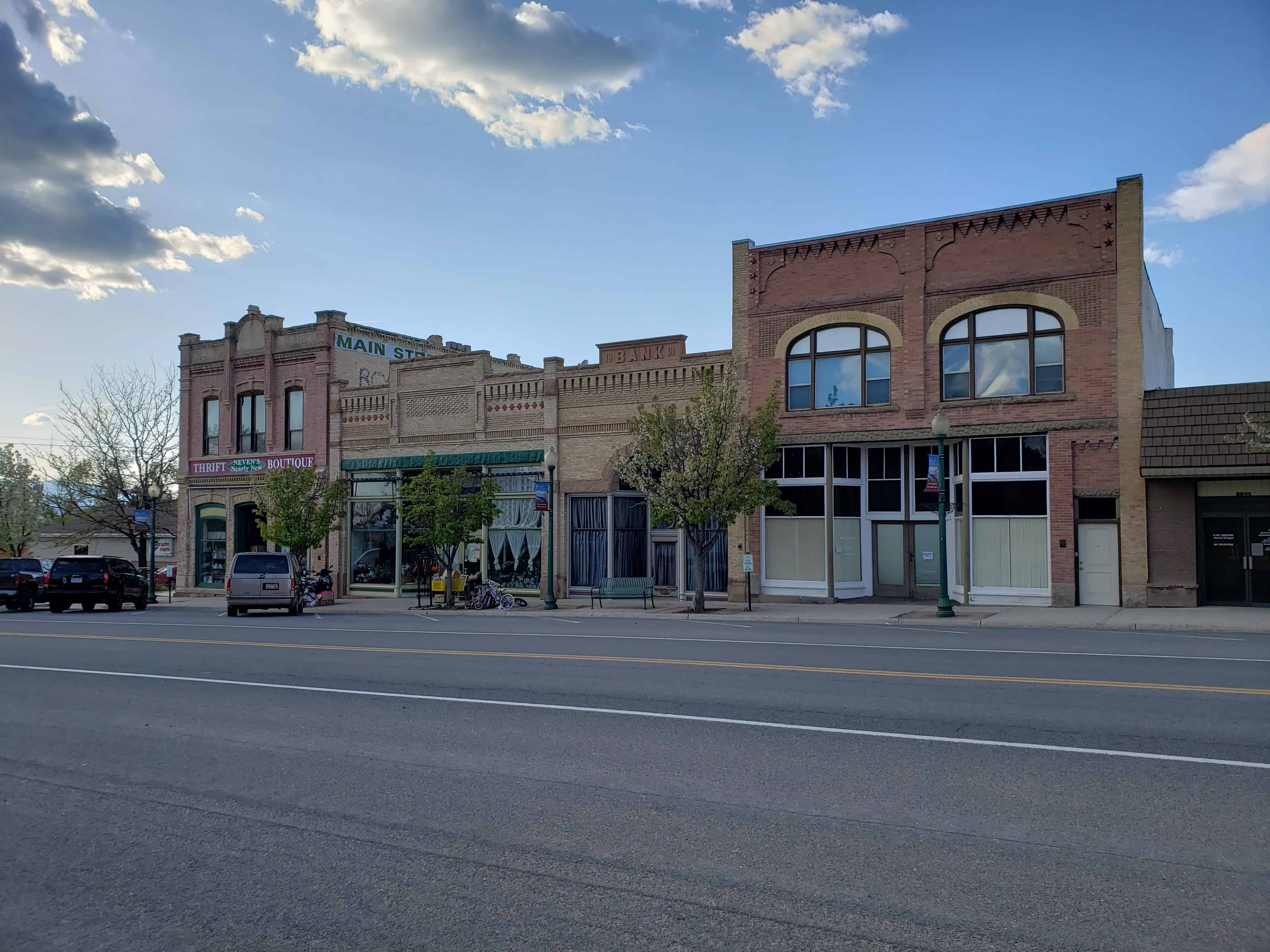
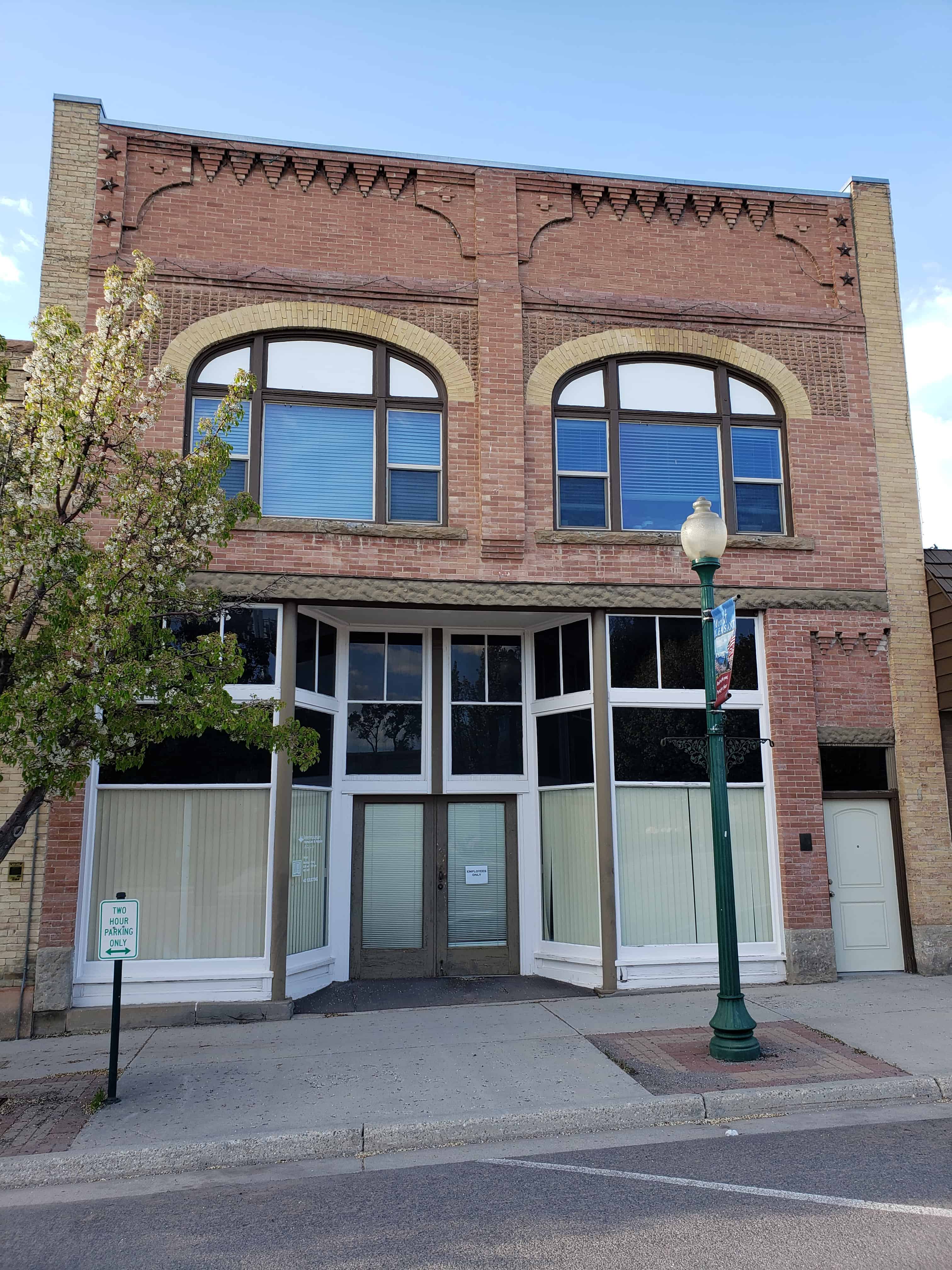
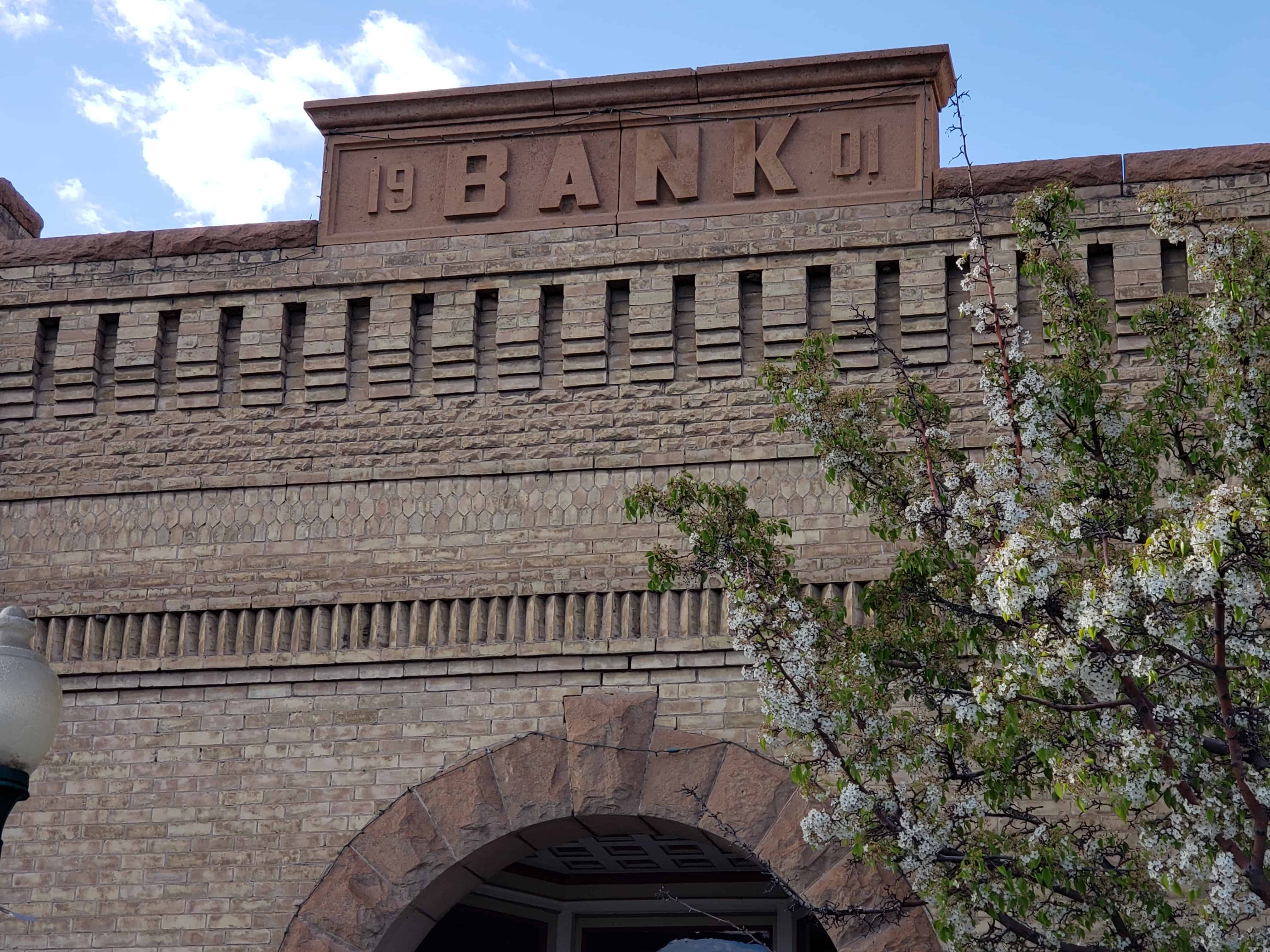
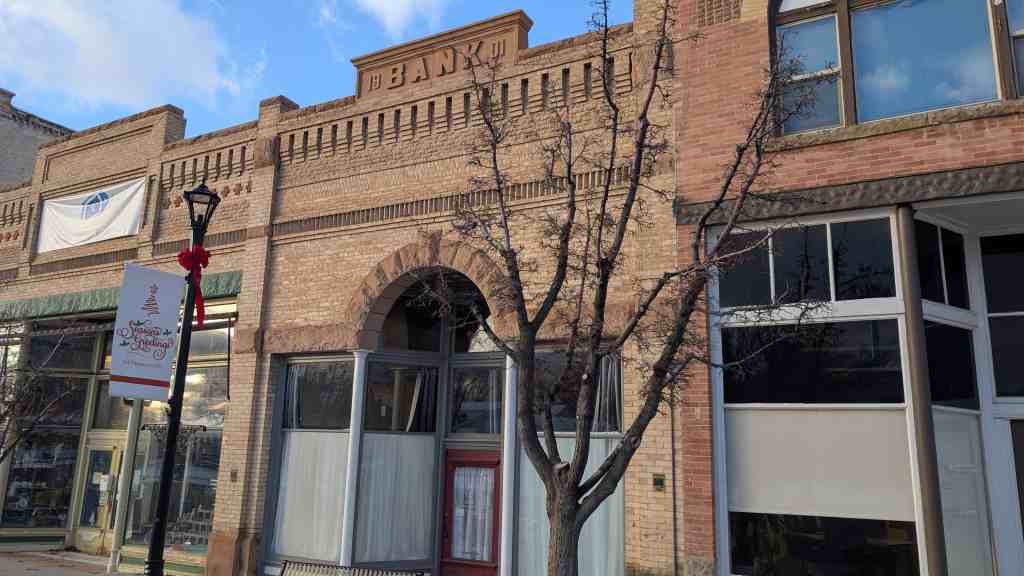
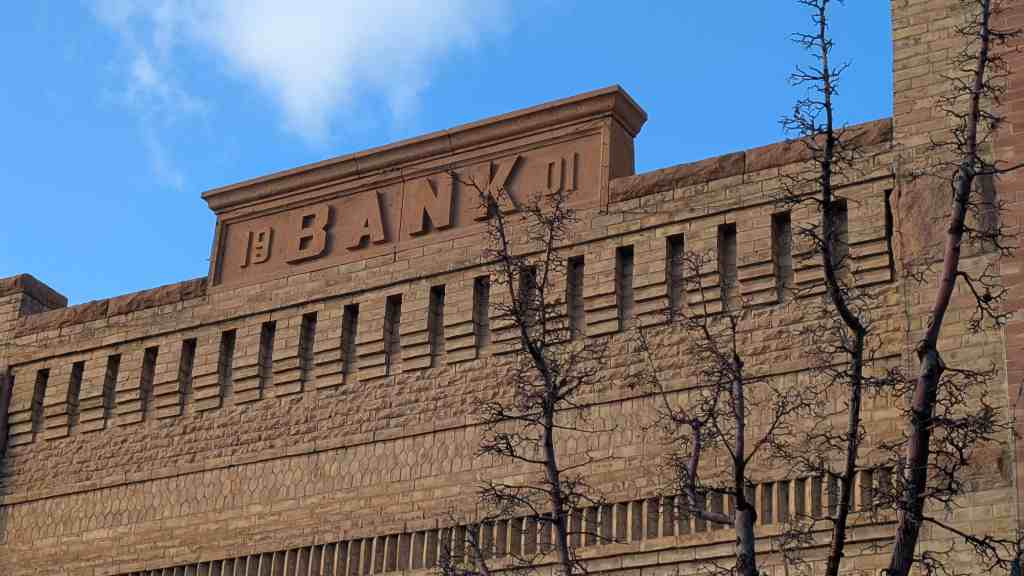
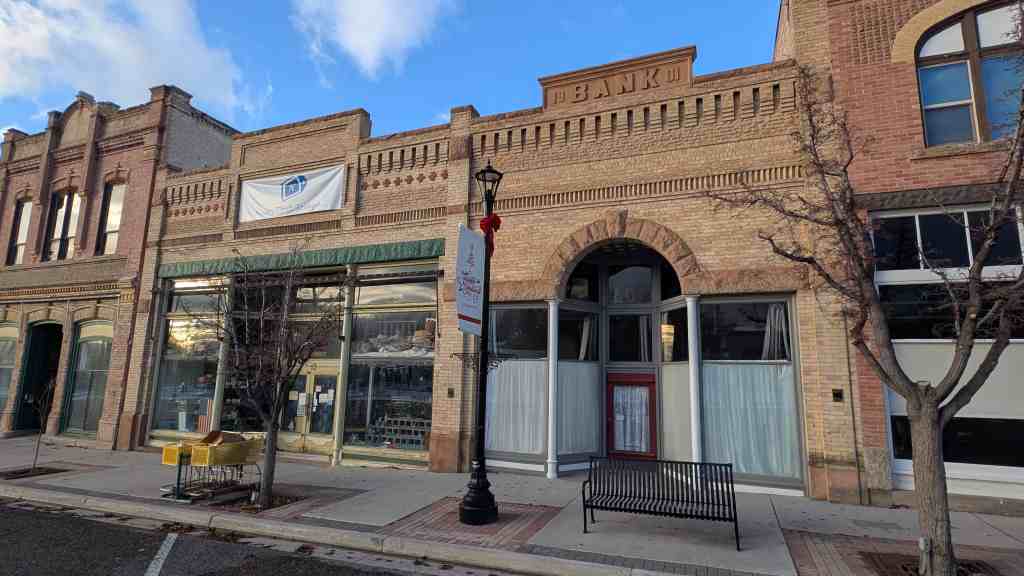
The Mt. Pleasant Commercial and Savings Bank building was erected in 1901. It served as a bank until 1932. That same year Dr. p.L. Holman bought the building and established his doctor’s office here. Dr Holman died in 1932, and the building was purchased by Dr. G.B. Madsen, who assumed Dr. Holman’s practice.
The Mount Pleasant Commercial and Savings Bank is a completely intact brick commercial building. It is significant also as one of four storefronts in an intact streetscape.
It was built in 1901 as the Mount Pleasant Commercial and Savings Bank. This bank was incorporated in 1890 and operated out of a Federal-style frame building on the northwest corner of Main and State from 1898 to 1901, Dr. P.L. Holman bought the building in 1932 after the bank closed and established his office there but died in November of the same year. Dr. G.B. Madsen purchased the building in 1932 and took over Dr. Holman 1 s practice there. Madsen purchased the Lament building next door in 1939 and operated a “hospital” there. The building now houses the firm of a local attorney.
No exterior changes have been made to this fine brick bank building. The recessed entry is marked by a rusticated stone arch in the belt course dividing the first floor fenestration from the brick wall above. Brick dentils and corbelling mark the parapet wall which is topped in the center by a stone plaque with the inscription “19 BANK 01.” The interior includes an “iron-clad” ceiling and a vault.
We were at the City Creek Mall in Salt Lake City and A&W was trying to set a world record for “Longest line of root beer floats,” they were handing out root beer floats and T-shirts.
This late Gothic Revival style building, which features a Norman tower and Tudor window and door bays, was listed in the National Register of historic Places in 1978 as part of the Wasatch Academy Historic District. Duncan J. McMillan, educator and minister of the Presbyterian Church, founded the Wasatch Academy the following month.
The Church and the Academy made important contributions in helping develop a “free school” system, the precursor of Utah’s present public school system. This one-story brick building with cast-stone trim was built in 1922 and dedicated in 1925.
The nomination form for listing Wasatch Academy on the National Historic Register includes this as one of the 21 contributing sites and says:
First Presbyterian Church, 1922. One-story brick and cast-stone trim building of the Late Gothic Revival Style. L-shaped plan; building features a Norman tower and Tudor window and door bays.
Official outlet of ZCMI (Zion’s Co-operative Mercantile Institution), “America’s First Department Store”. This building housed the “Consolidated Mercantile” from 1902 to 1932. It was part of the ZCMI co-operative system servicing more than 150 communities in the intermountain area with retail commodities and services beginning in 1868.
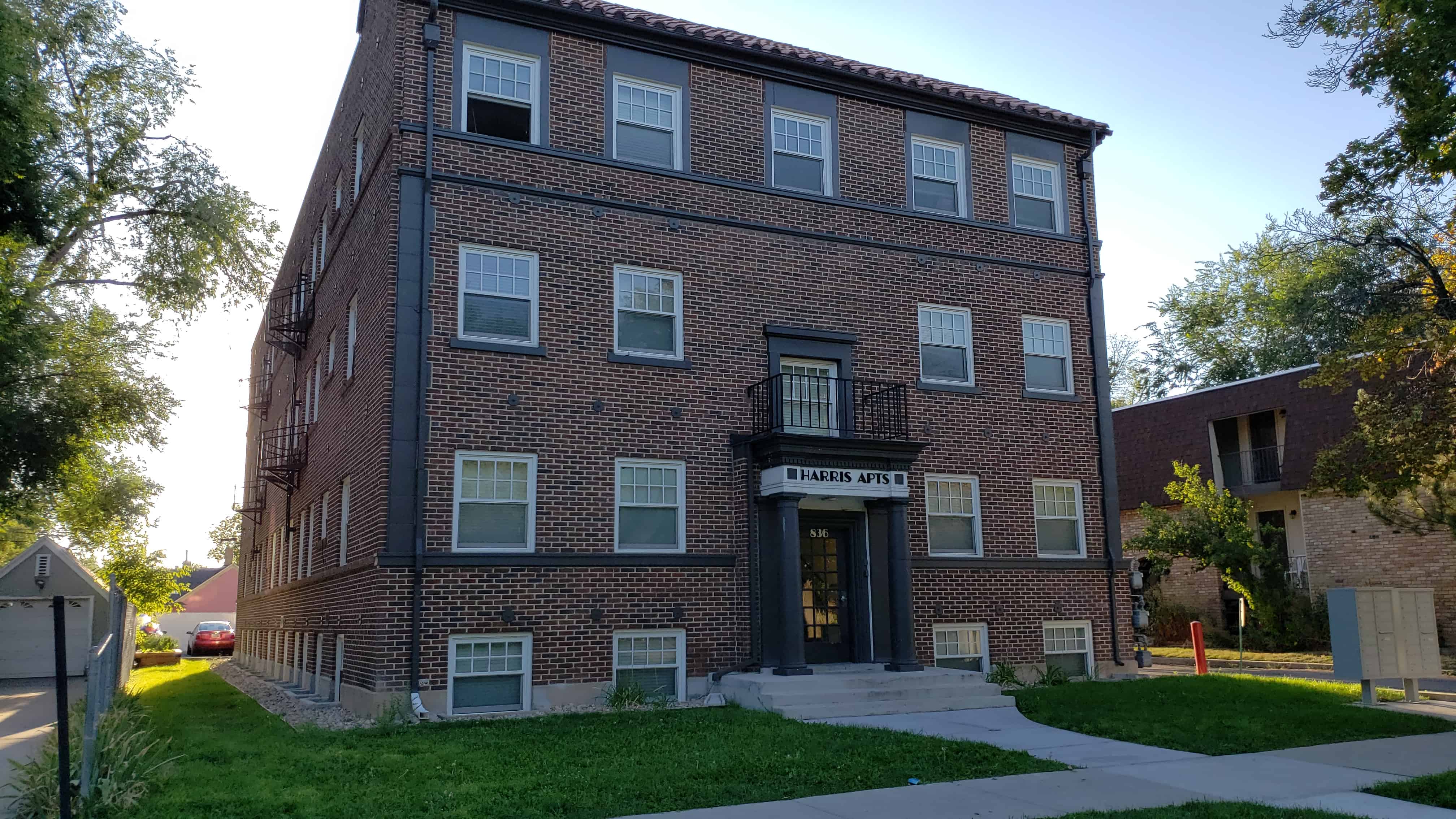
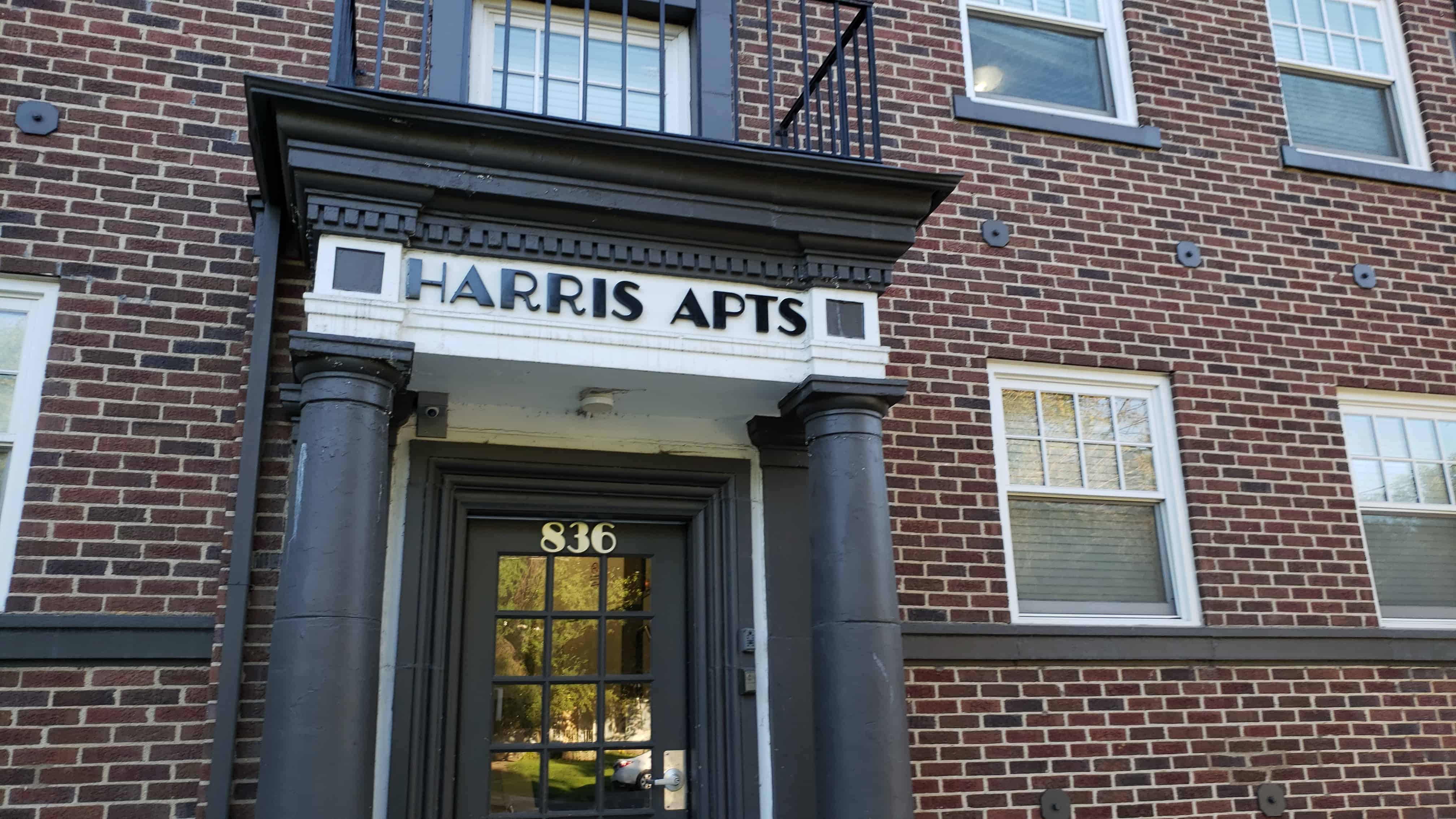
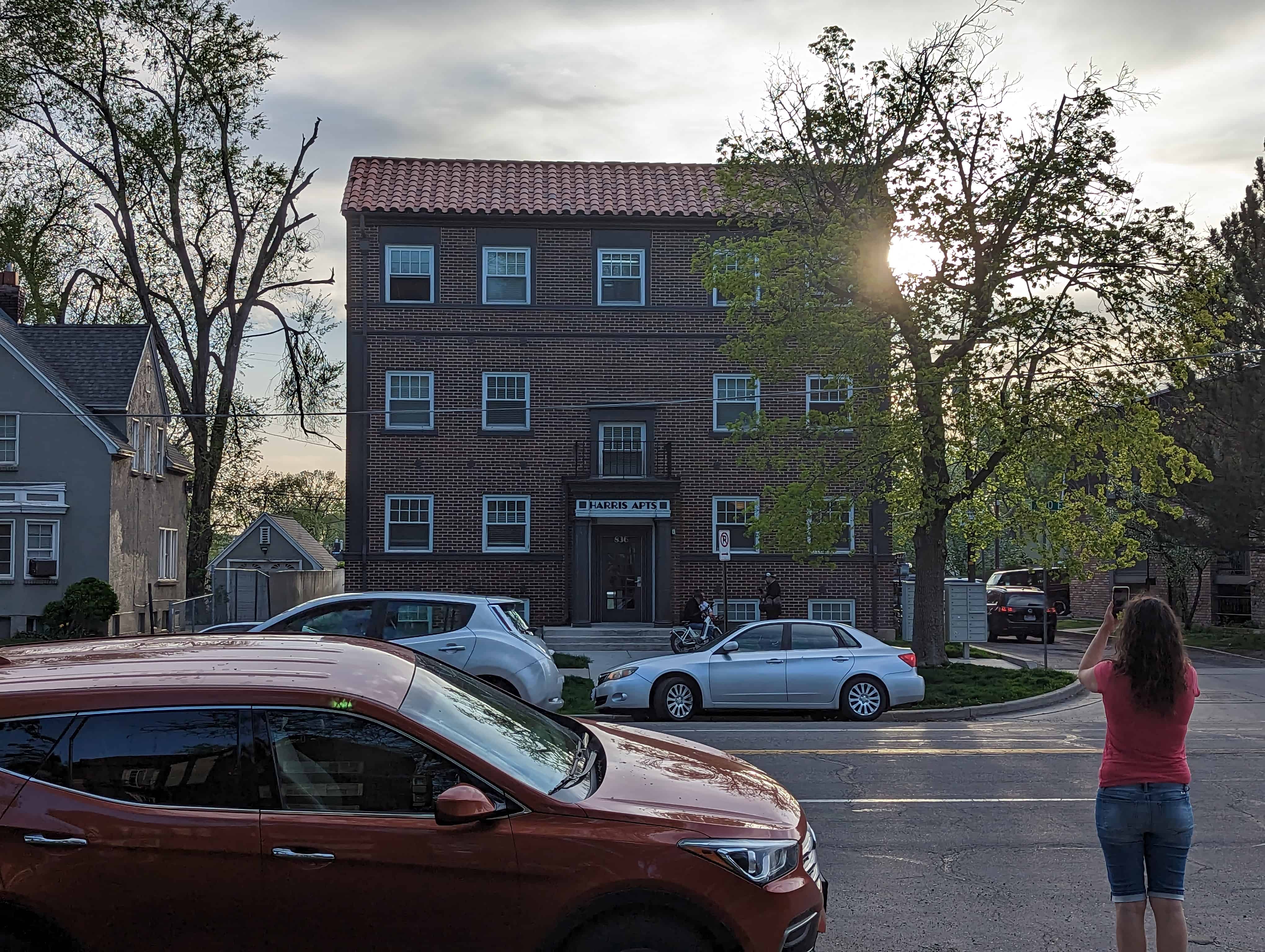
Constructed at 836 South 500 East in late 1929, the Harris Apartments is a three-story brick building with a parapet roof, concrete foundation, and modest Colonial Revival stylistic features. No significant alterations have been made to the building.
The Harris Apartments is a rectangular building with its narrow end facing the street. The symmetrical facade has a central doorway framed by a small porch with classically styled columns and a dentiled cornice. There is a doorway centered on the rear elevation as well. The exterior of the building is a dark red brick accented with cream-colored concrete belt courses and false quoins on the facade; belt courses on the sides and rear are of brick. The windows are double hung with the upper portion having eight divided lights and the bottom portion a single pane. These are new, double-pane windows that replicate the originals. The pent roof above the facade and the coping along the parapet walls are made up of red bar tile.
The interior of the building is laid out in the typical double-loaded corridor plan, which has a central hallway with apartments on either side and stairways at the front and rear. There are 21 apartments in the building consisting of seven studio and fourteen one-bedroom units.
Rehabilitation of the building was undertaken in 1990-91 to upgrade the apartments. It was done as a tax project, with the work meeting the Secretary of the Interior’s Standards for Rehabilitation.
Constructed in 1929-30, the Harris Apartments is one of over 180 “Urban Apartments” built in the Salt Lake City during the first three decades of the twentieth century, a period of unprecedented expansion and urbanization. Over 60 percent of those buildings are either listed or eligible for listing in the National Register. Urban Apartments are significant under Criteria C as a distinct and important type of residential building in the city. Apartments are remarkably consistent with one another in terms of building plan, height, roof type, materials, and stylistic features. These and other characteristics mark them as a new and distinct type of early twentieth century residential building. Under Criteria A urban apartments are significant for their association with the rapid urbanization of Salt Lake City during the 1890s-1930s period. The growth that took place during those decades spurred the construction of two opposing types of housing in the City; urban apartments and suburban momes. Suburban homes represent a rejection of urban conditions. Apartments, on the other hand, document the accommodations of builders and residents to the realities of crowded living conditions and high land values. They were a significant new housing option that emerged in response to the growth that transformed Salt Lake City into an urban center during the early twentieth century.
The building permit was issued for the Harris Apartments to Sterling P. Harris on October 21, 1929. This was preceded by an announcement and rendering of the proposed building that appeared in the Salt Lake Tribune on September 29 (p. B-8). Cost of the building was estimated at $75,000~$100,00 in the newspaper article, though the amount listed on the building permit was only $40,000. Harris was a retired dairyman, who apparently viewed apartments as an attractive investment. He and his wife, Annie L. Harris, owned the building until 1936, when they sold it to T. E. and Mabel R. King. The Kings in turn sold it to W. H. and Amanda H. Facer in 1938.
This apartment building is located several blocks south of where urban apartments were most common, the neighborhoods to the east of the central business district. Like other apartments, however, it fronts one of the major streets, 500 East, a principal north-south throughway.