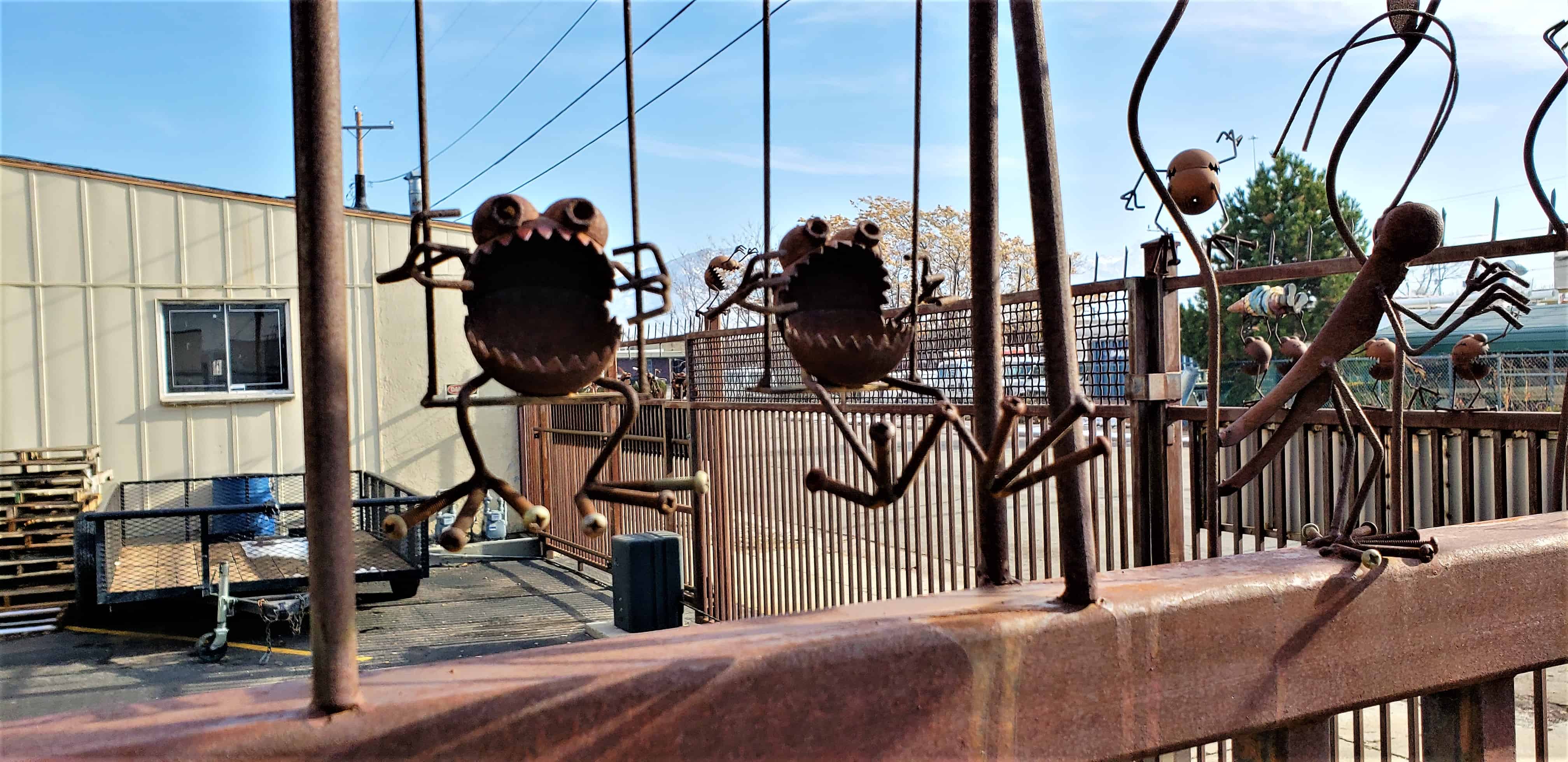
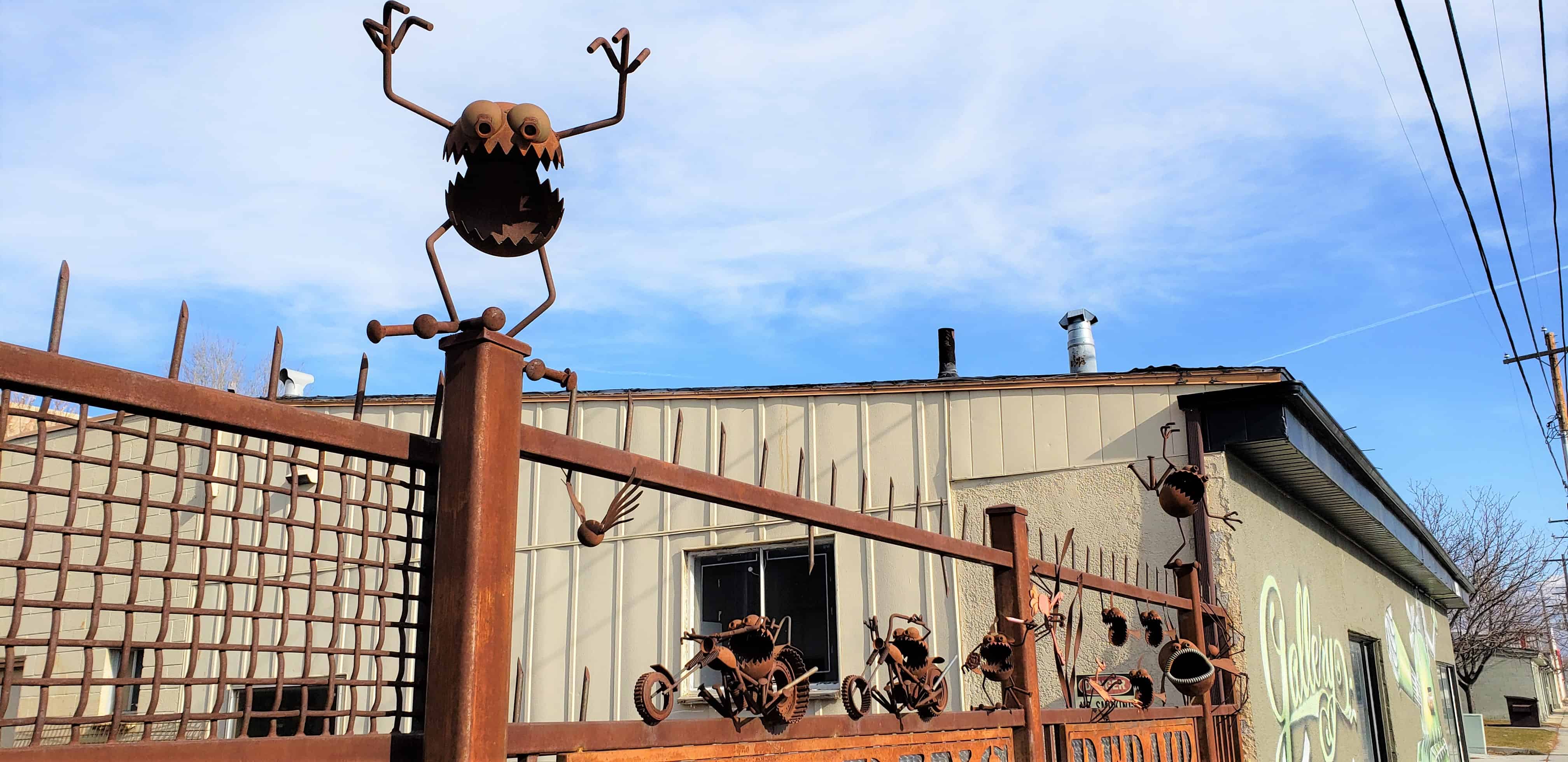
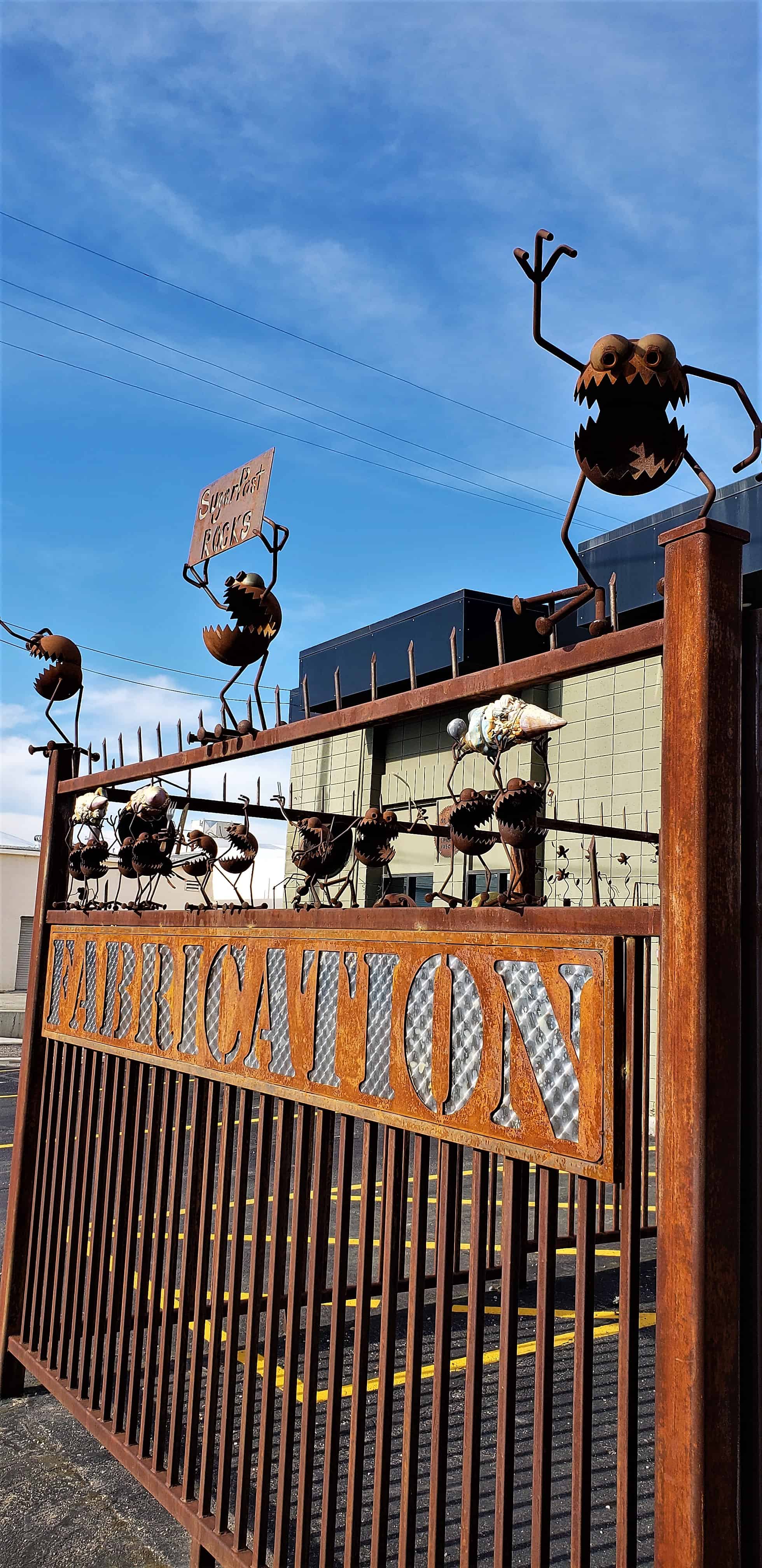
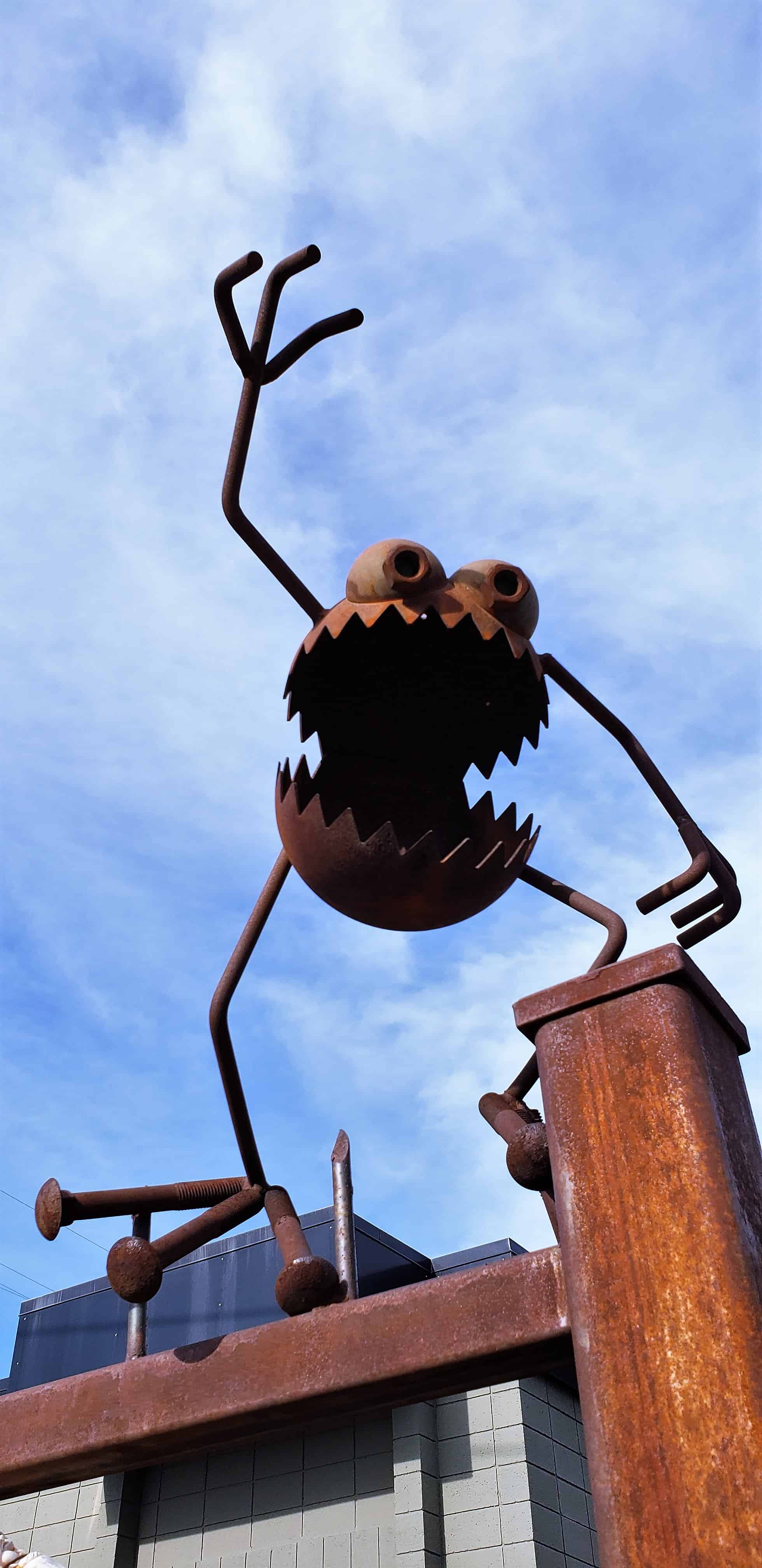
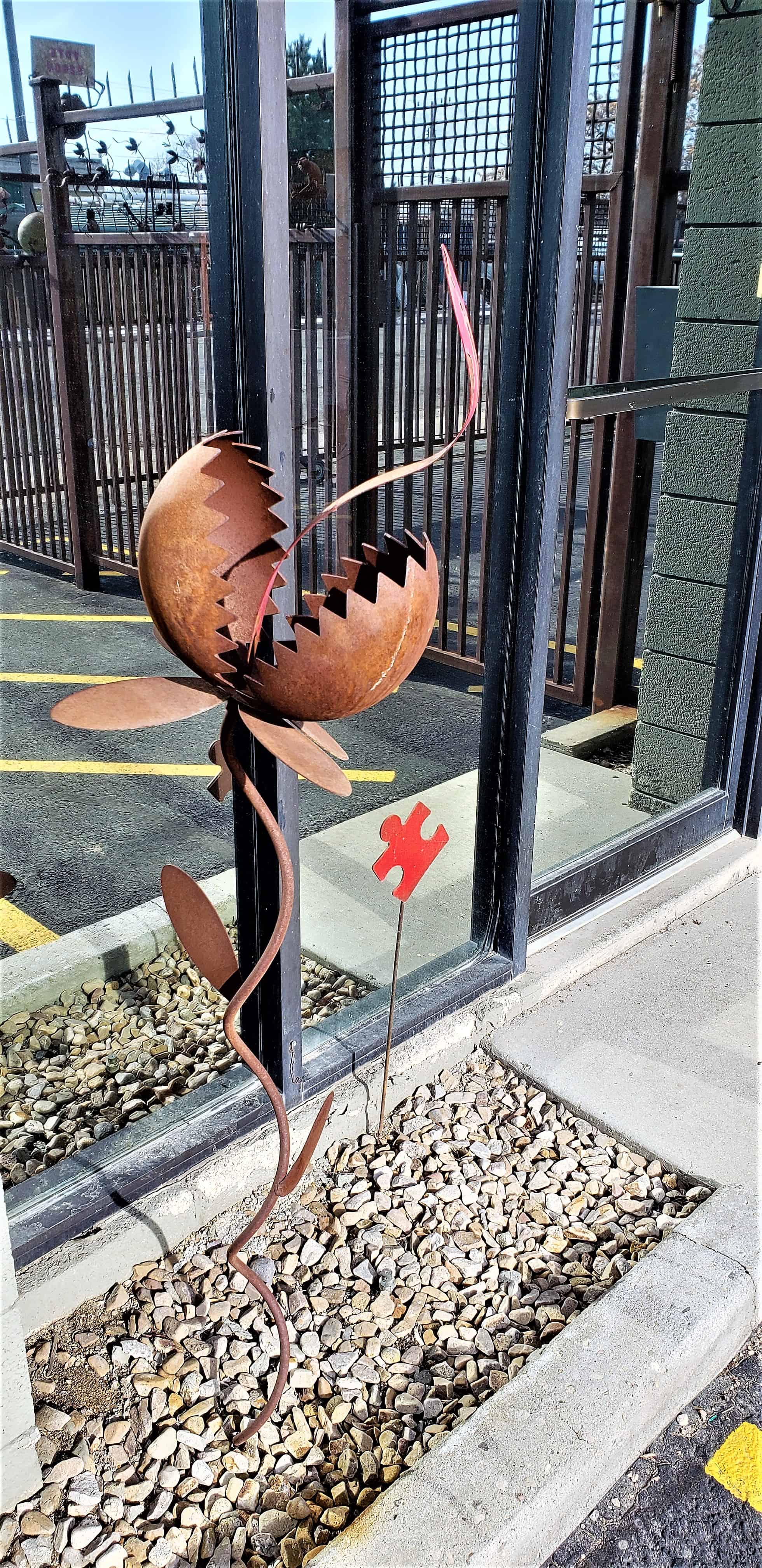
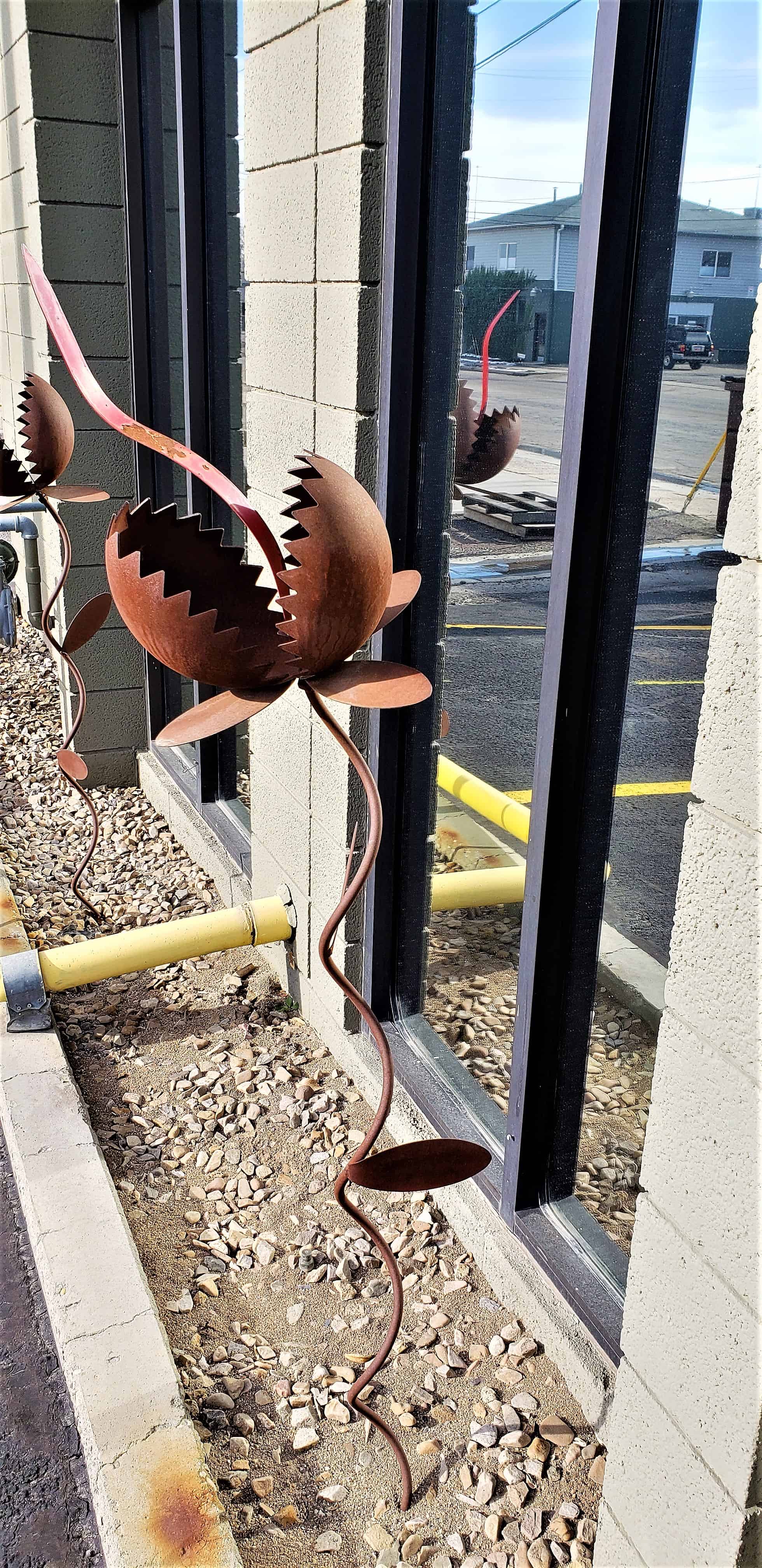
I’ve always loved taking a minute to stop at Sugarpost in Salt Lake City and look at the cool art they’ve created from welding metal. Little monsters and animals that are very creative.
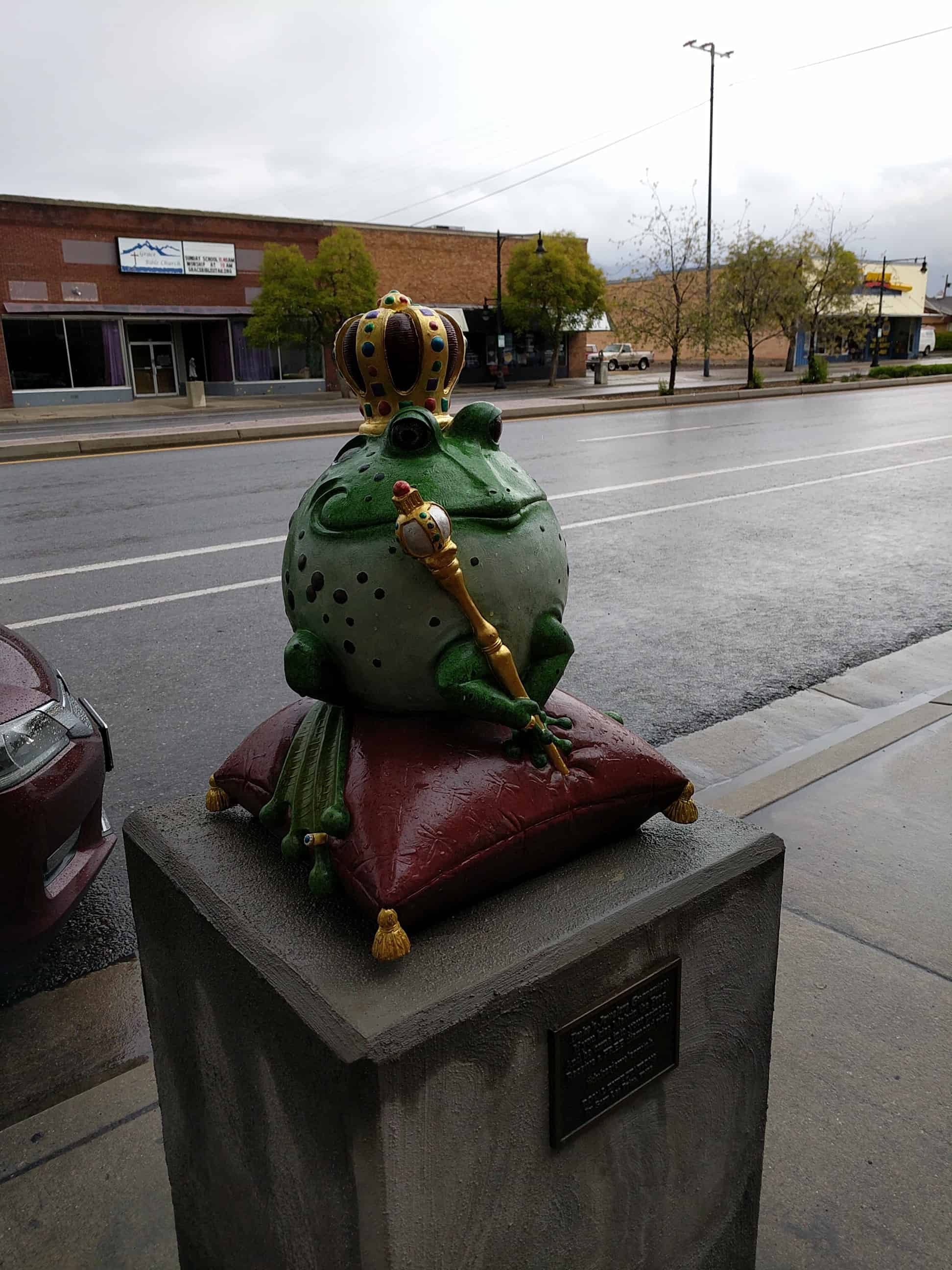
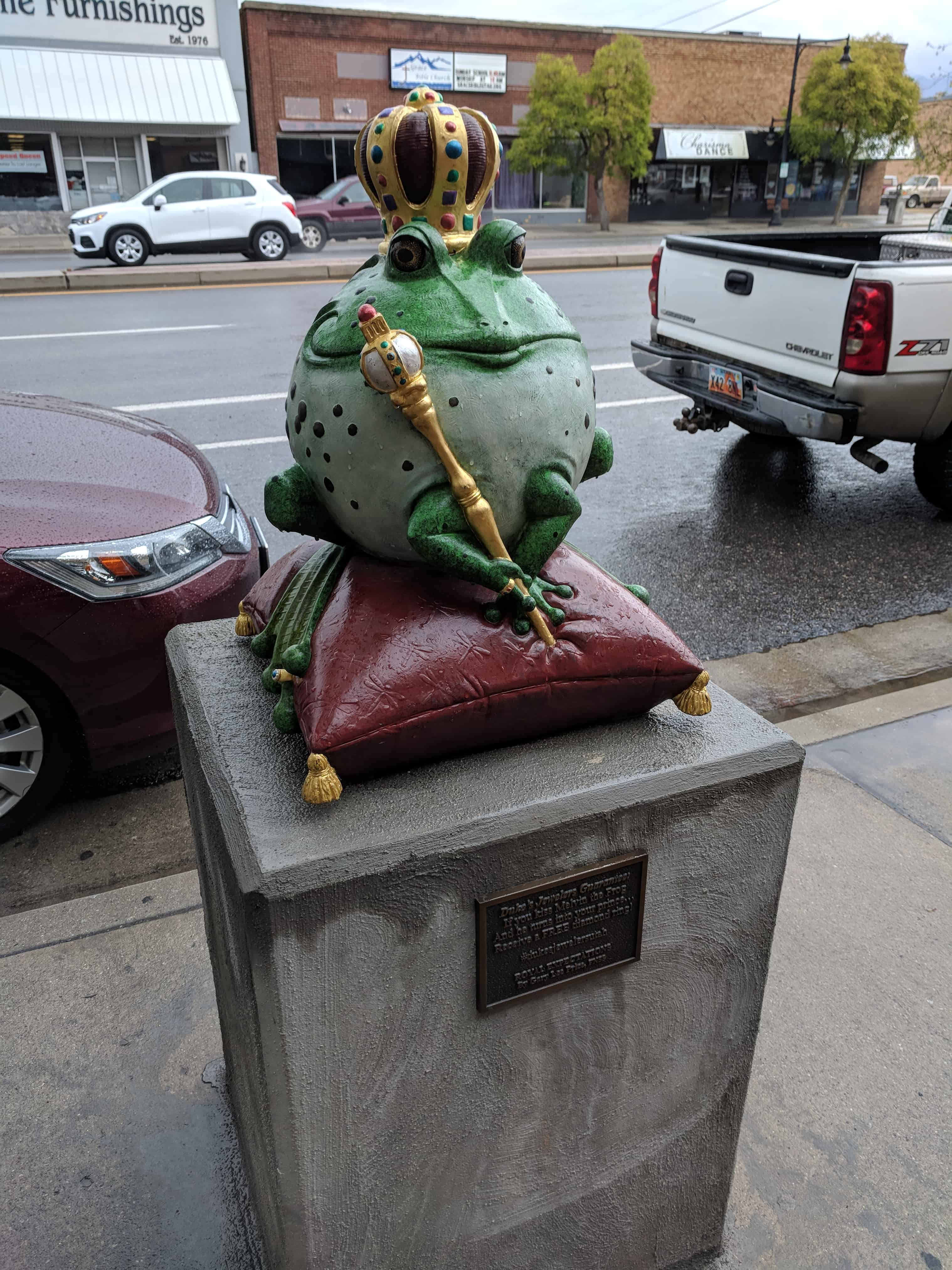
Melvin the Frog is a sculpture called Royal Expectations by Gary Lee Price, sculptures by Gary are regularly seen all over Springville and other places. Growing up in Mapleton/Springville I remember seeing another Royal Expectations on a post here on 1200 South for many years and he just showed up here in front of Duke’s Jewelers at 220 South Main Street in Springville, Utah. I’ve seen him it few other places too.
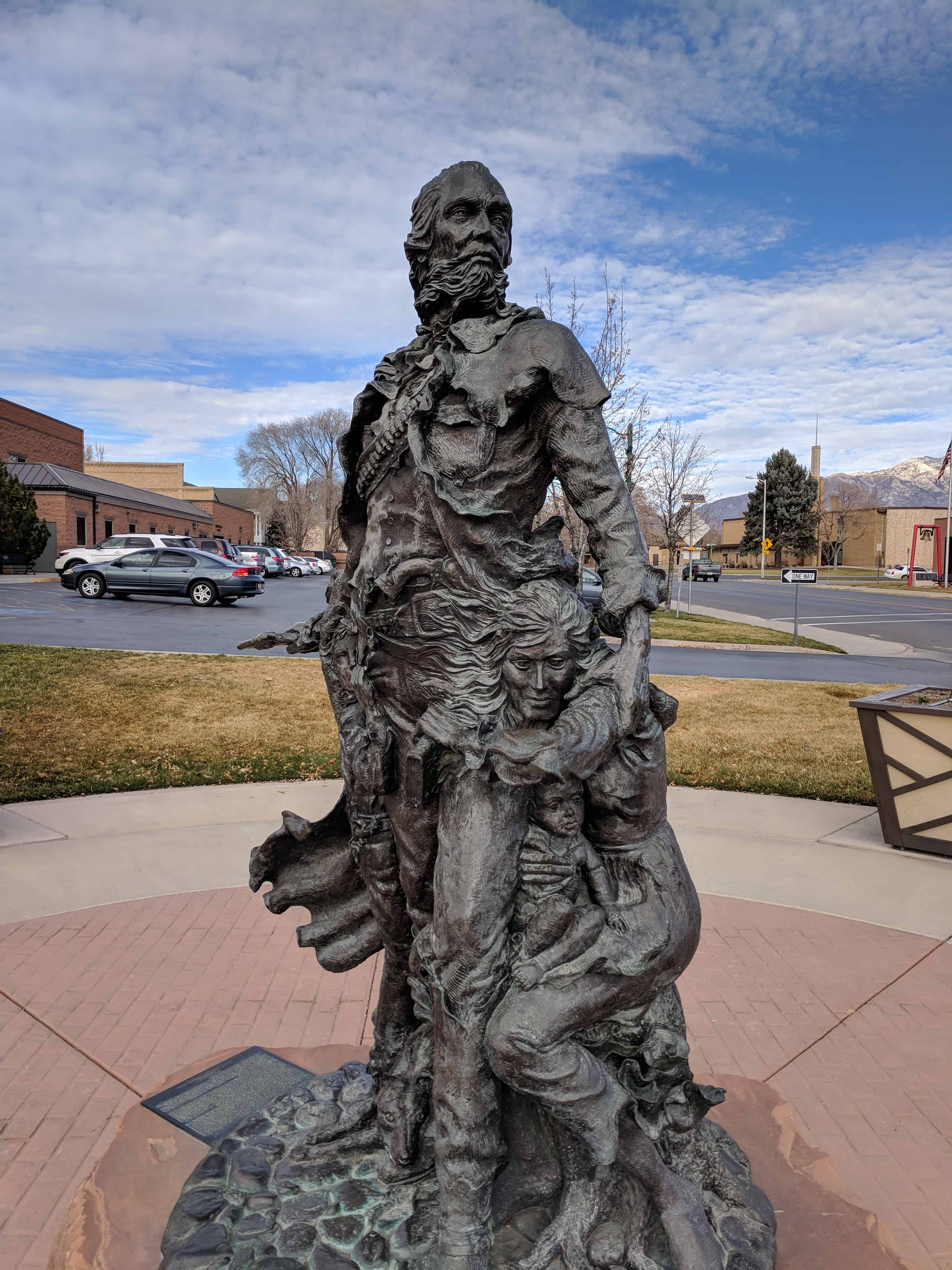
Famed frontiersman, lawman, scout, and gunman, Porter was born in Belcher, MA, on 28 June 1813. His family later moved to New York where he became a boyhood friend of Joseph Smith, Jr., founder of the Church of Jesus Christ of Latter-day Saints. As an early settler in Missouri, Rockwell was caught up in the so-called Mormon War of 1838, in which the Missouri militia, acting on orders from Governor Lilburn Boggs, drove the Mormons from the state. During this period Porter became identified with the Danites, a Mormon militia unit organized to protect church members from their enemies. In 1842 Rockwell was arrested in St. Louis and charged with the attempted murder of Governor Boggs. More than nine months later Rockwell was freed and returned to Nauvoo. On Christmas Day, 1843, Joseph Smith promised him: “So long as ye shall remain loyal and true to thy faith, (you) need fear no enemy. Cut not thy hair and no bullet or blade can harm thee.” For the next thirty-five years Porter faced outlaws, Indians, and war without being harmed. In 1855, while in California, he cut his hair to provide a wig for Agnes Smith, the widow of Don Carlos Smith, the younger brother of Joseph Smith, who had lost her hair due to typhoid fever. Porter grew his hair back, not willing to face outlaws and enemies without the prophet’s promise.
In 1844 Rockwell, in defense of others, shot and killed Franklin A. Worrell in Hancock County, Illinois. Worrell, a leader of those assigned to protect Joseph Smith and others in the Carthage Jail, is often cited as the first of many men killed by Porter in the defense of others, or as an officer of the law. In both Nauvoo and Utah, Porter was a member of the Council of Fifty. He was a guide and hunter for the Mormon Pioneer Company of 1847. Appointed a “Deputy Sheriff for Life” in Utah Territory, he was often called in to track down notorious outlaws. He was assigned by Brigham Young to make peace treaties with the native population of the territory. As an officer in the Nauvoo Legion, Porter led his men against the U.S. Army in the Mormon war of 1857-58. In his later years Rockwell raised horses and cattle in Skull Valley and established several profitable businesses and mines. At the Point of the Mountain he built the Hot Springs Brewery Hotel where he also maintained Rockwell’s Station for the Pony Express and Overland Mail Company.
Porter died on 9 June 1878, just short of his sixty-fifth birthday, at the Colorado Stables he owned on State Street and Broadway. After a night of illness he awoke, put his boots on, then fell back on the bed and died. Never a polygamist, Porter married Luana Hart Bebee, Mary Ann Neff, and Christina Olsen. The father of sixteen, he also adopted two Indian children.
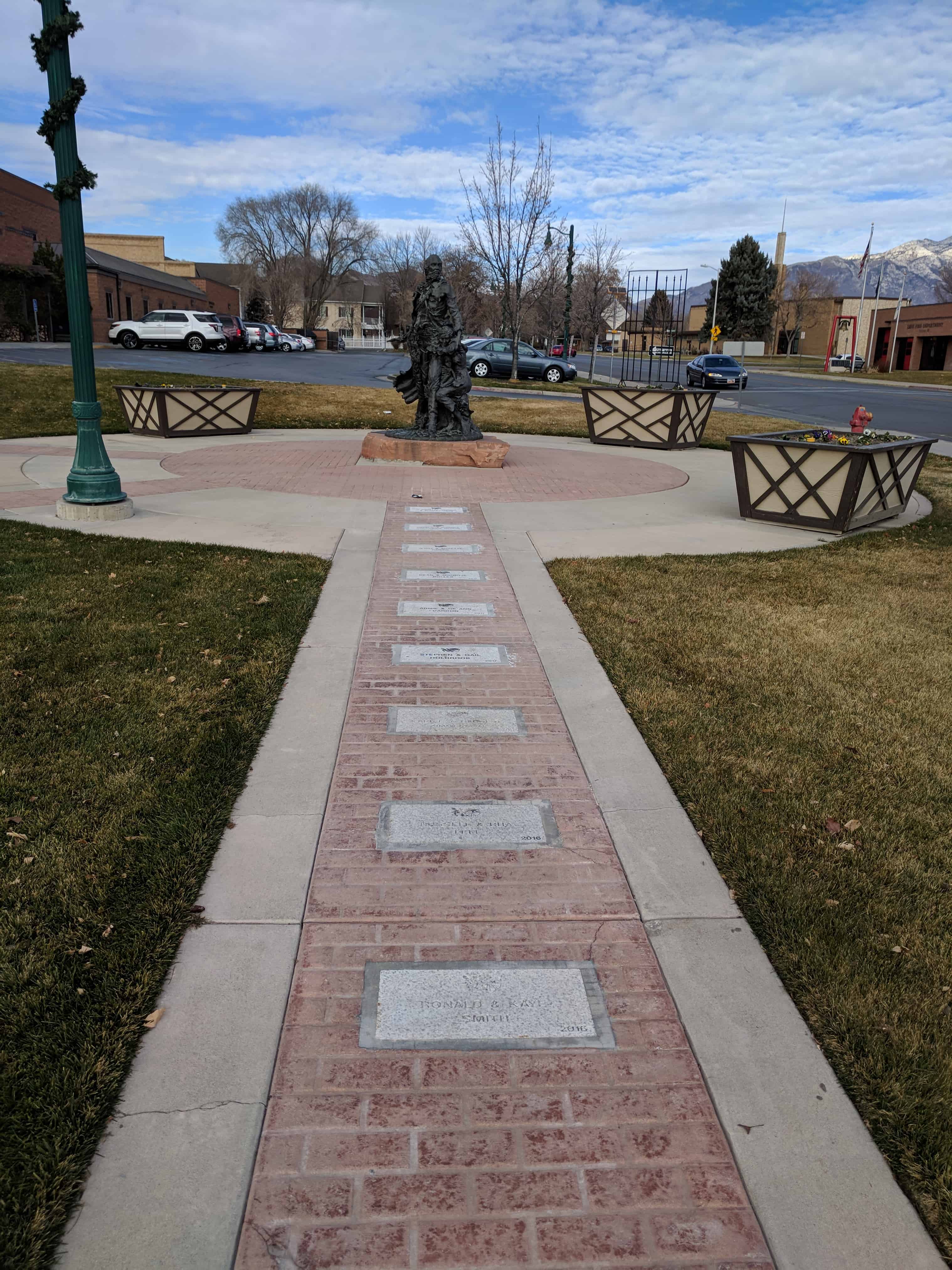
Rockwell lived in Lehi City from 1858 until 1861. This statue of him rests on the location of his home, corrals, and barn.
Porter’s epitaph in the Salt Lake City Cemetery reads: “He was brave and loyal to his faith, true to the prophet Jos. Smith, a promise made him by the prophet thro obedience it was fulfilled.”
Sculptor – Stanley G. Wanlass
This monument is located outside the Lehi Legacy Center:
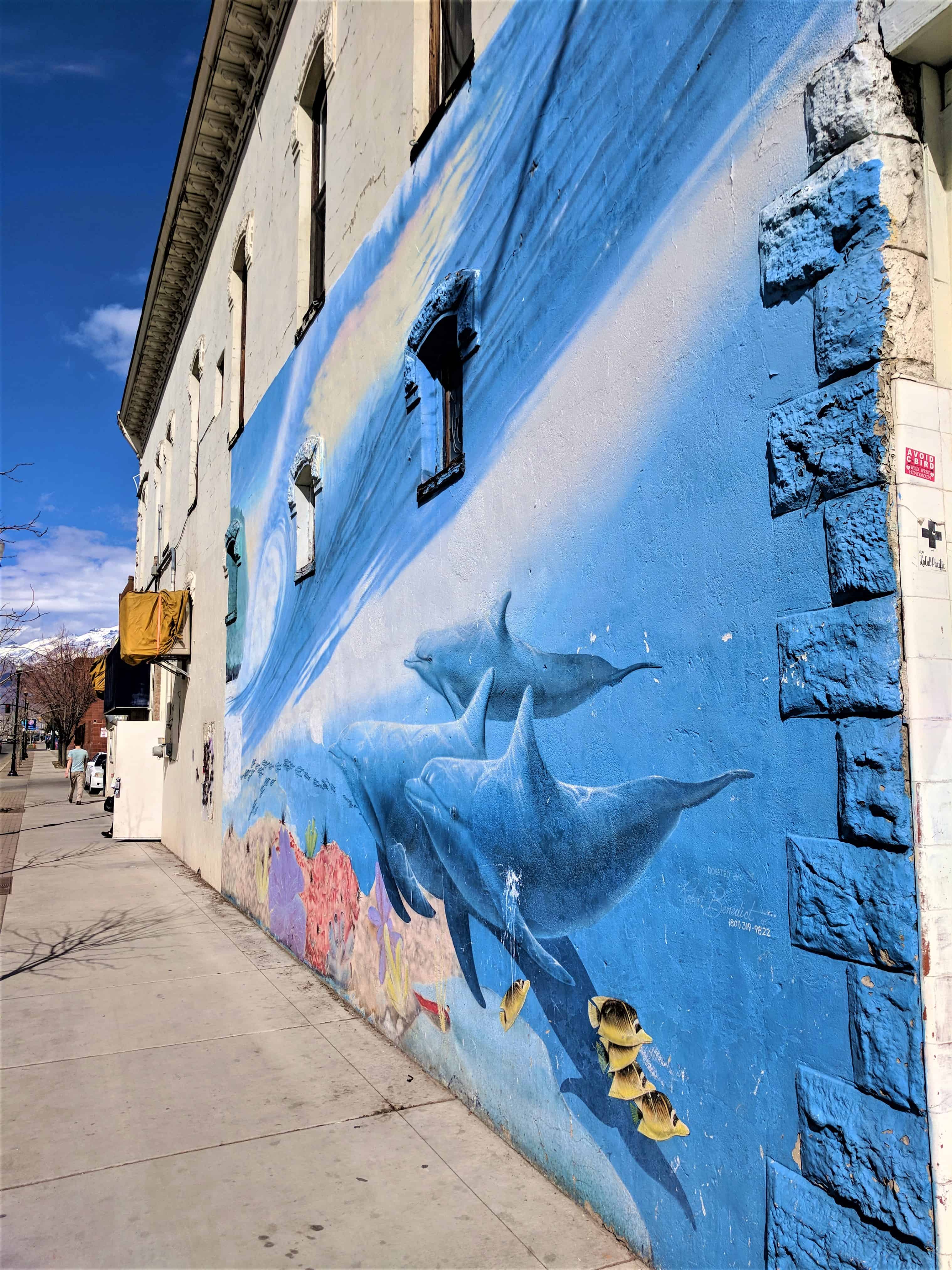
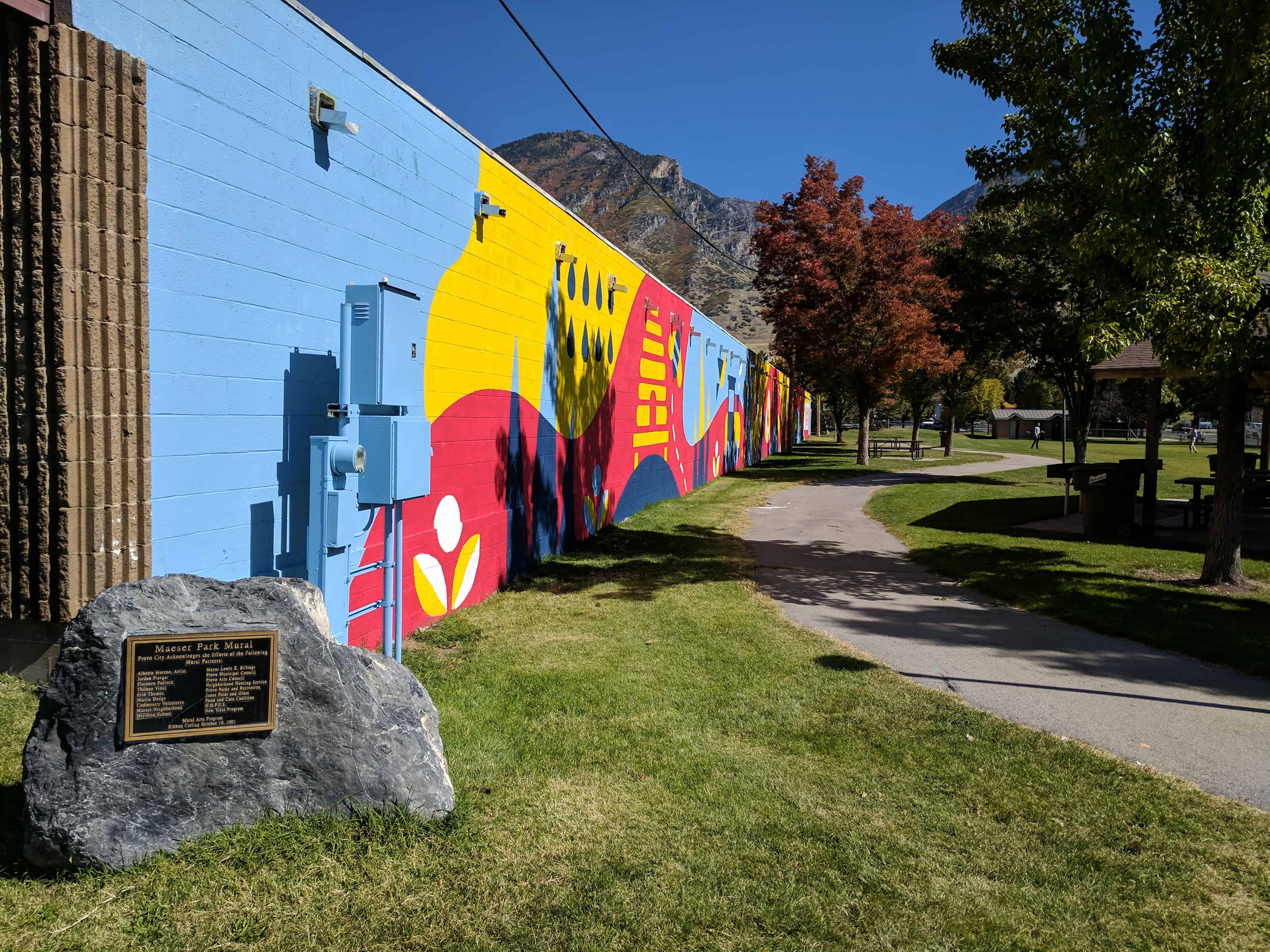
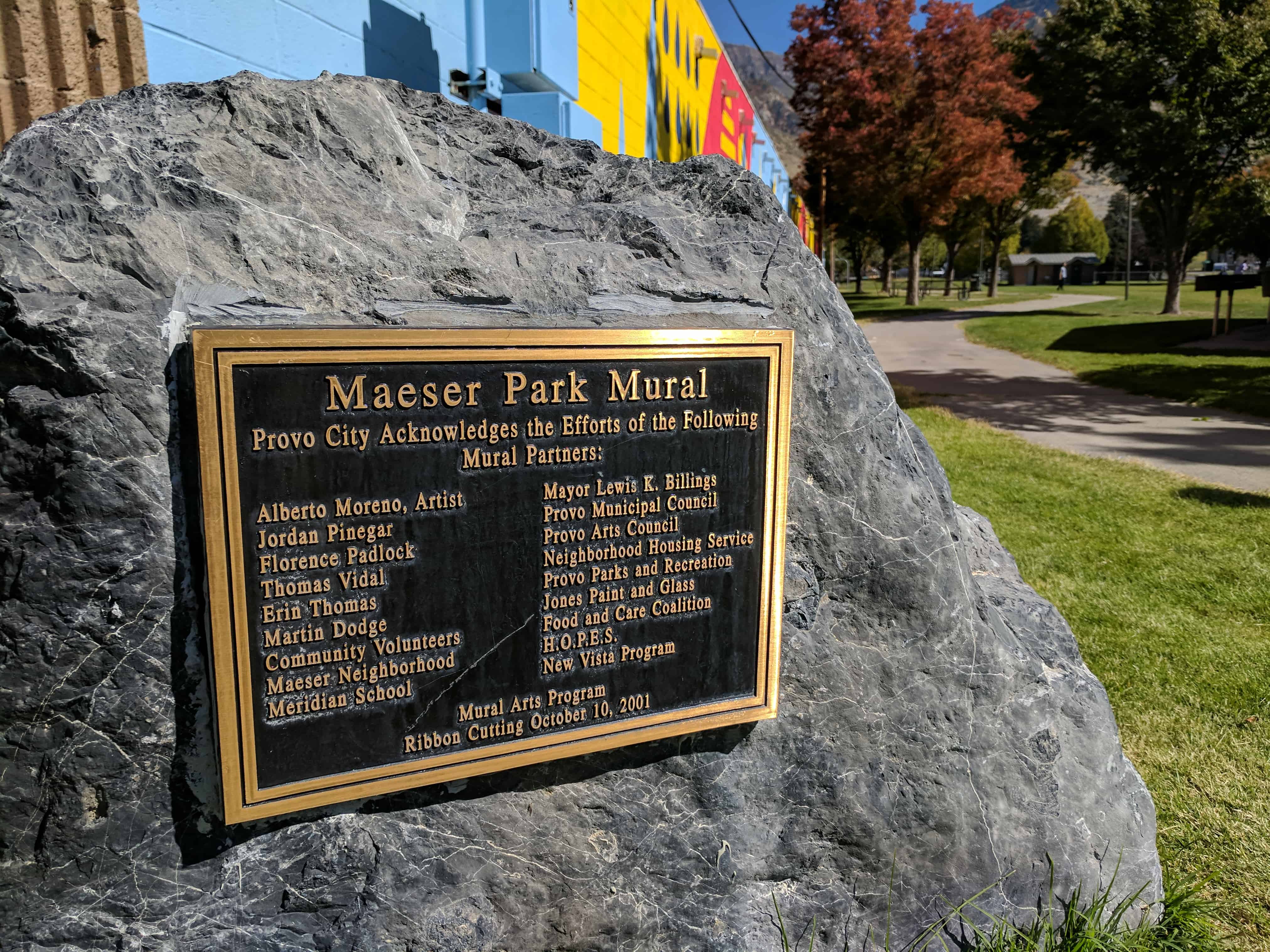
Constructed in October 2001, Maeser Park is a beautiful neighborhood park. A mural painted on the wall bordering the park depicts scenes from the Provo Maeser Neighborhood area. With the park nearly completely fenced, there is a walking path circling the park if you want to take a stroll while your children are playing on the playground.
See other parks in Provo here and Provo’s page for this park here.
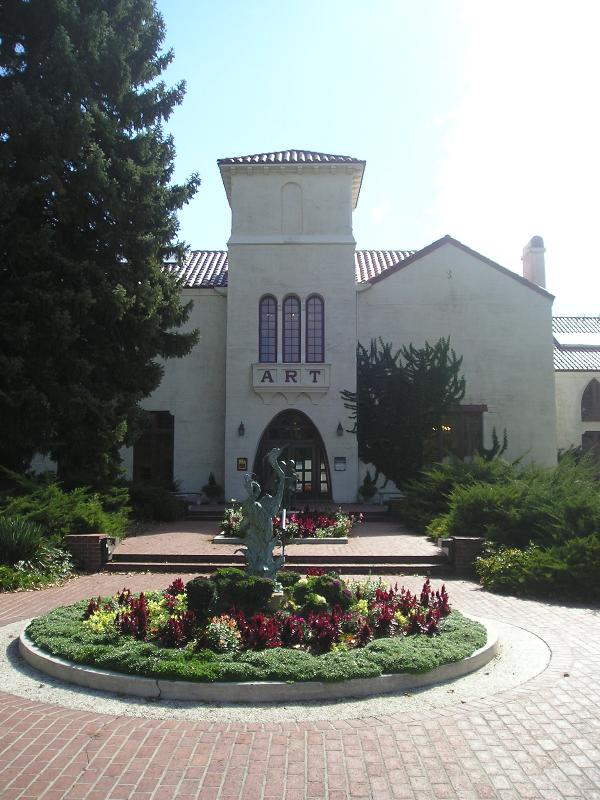
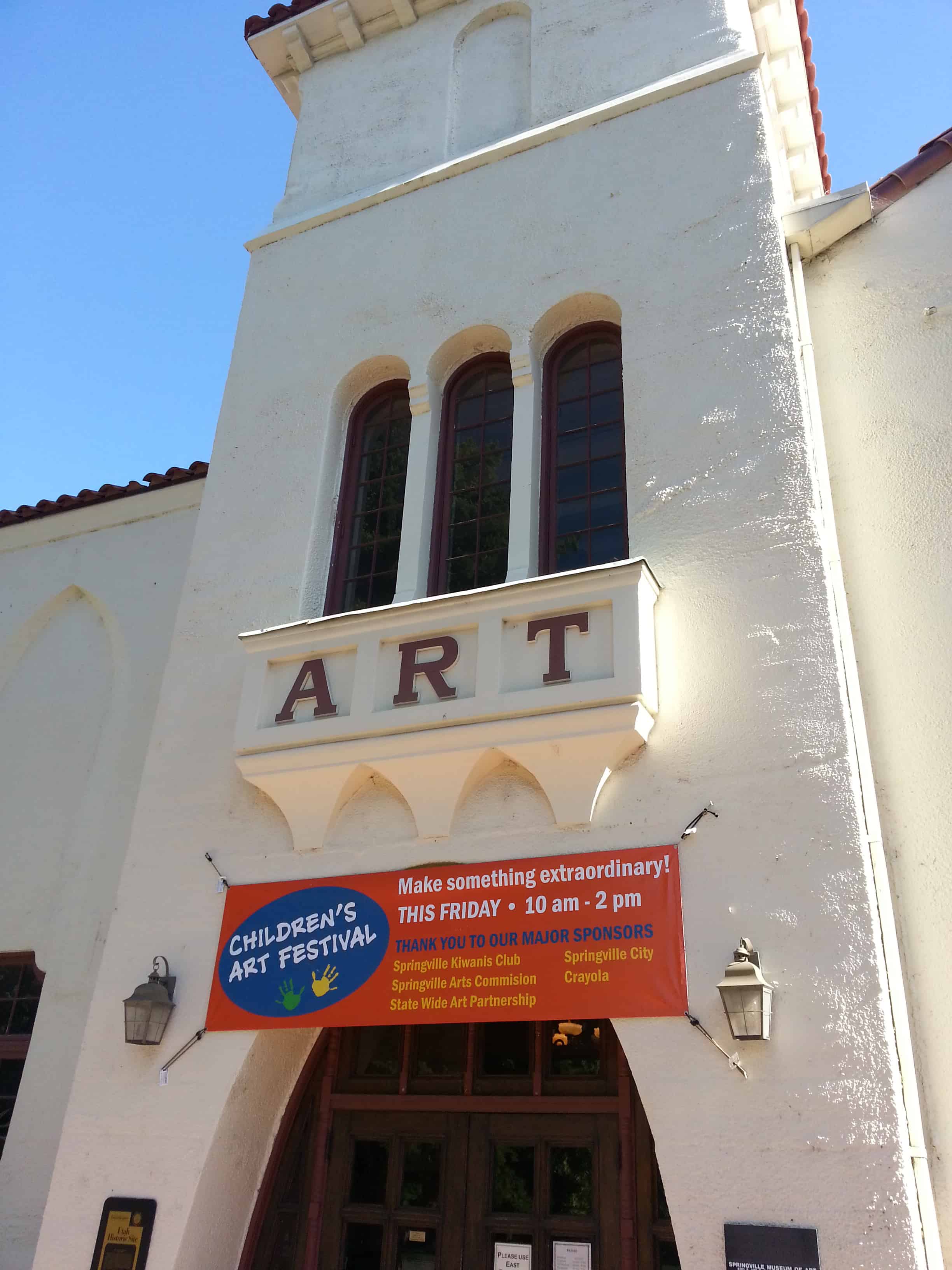
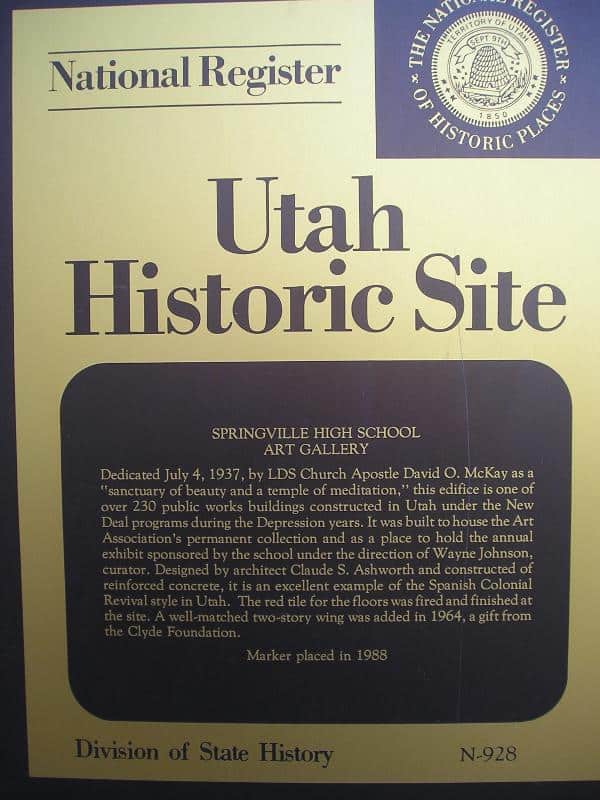
The Springville Museum of Art, on the U.S. National Register of Historic Places as the Springville High School Art Gallery.
The Springville Museum of Art was built in 1937 as a WPA project during the Great Depression. It was designed by Claud S. Ashworth in the Spanish Colonial Revival style of architecture. It is a municipal art museum (Springville, UT has given itself the nickname “Art City,” and the museum is featured prominently in its seal)and free and open to the public, although they do accept donations. It has over 1500 works of art in its permanent collection. It features fine works by Utah artists, as well as a significant collection of twentieth century American realism and Soviet Socialist Realism from the 1930’s to the 1970’s.