• About JacobBarlow.com
  • Cemeteries in Utah
  • D.U.P. Markers
  • Doors
  • Exploring Utah Email List
  • Geocaching
  • Historic Marker Map
  • Links
  • Movie/TV Show Filming Locations
  • Oldest in Utah
  • Other Travels
  • Photos Then and Now
  • S.U.P. Markers
  • U.P.T.L.A. Markers
  • Utah Cities and Places.
  • Utah Homes for Sale
  • Utah Treasure Hunt

JacobBarlow.com

~ Exploring with Jacob Barlow

JacobBarlow.com

Tag Archives: Clark County

Hidden Forest Cabin

27 Friday Dec 2024

Posted by Jacob Barlow in Uncategorized

≈ Leave a comment

Tags

Cabins, Clark County, Nevada, NRHP

Hidden Forest Cabin

The Hidden Forest Cabin has been used for various purposes dating back to the early 1900’s. It is known to have been used by bootleggers during prohibition. According to legend the cabin was used as a robber’s hideout. The cabin was also used by prospectors and local ranching operations. The cabin was in fair condition when the Desert national Wildlife Range, then Desert Game Range, was initially staffed in 1938. An area just below the present site was initially, recommended for the refuge headquarters in April 1938. It has been used as an overnight shelter for refuge personnel since that date.

Hidden Forest Cabin is presently located within the proposed Desert Wilderness Area and the Hidden Forest Canyon is a popular area among refuge visitors.

Much of the history surrounding the cabin and the associated area is open to debate. Unsubstantiated stories and legends concerning the area have multiplied over th© past 20 years. Research could probably verify some history that has become exaggerated. This could be documented and utilized for interpretation of this unique cabin.

Hidden Forest Cabin is located north of Las Vegas, Nevada in Clark County at N 36.63132 W 115.20772 and was added to the National Historic Register (#75001106) on February 20, 1975. The text on this page is from the national register’s nomination form.

Sheep Mountain Range Archeological District

27 Friday Dec 2024

Posted by Jacob Barlow in Uncategorized

≈ Leave a comment

Tags

Archeological, Clark County, Nevada, NRHP

Sheep Mountain Range Archeological District

Added to the National Historic Register (#74001145) on December 31, 1974.

Tim Springs Petroglyphs

27 Friday Dec 2024

Posted by Jacob Barlow in Uncategorized

≈ Leave a comment

Tags

Clark County, Nevada, NRHP, Petroglyphs

Tim Springs Petroglyphs

Added to the National Historic Register (#74001142) on December 16, 1974.

Willow Beach Gauging Station

19 Thursday Dec 2024

Posted by Jacob Barlow in Uncategorized

≈ Leave a comment

Tags

Clark County, Nevada, NRHP

Willow Beach Gauging Station

From instagram:
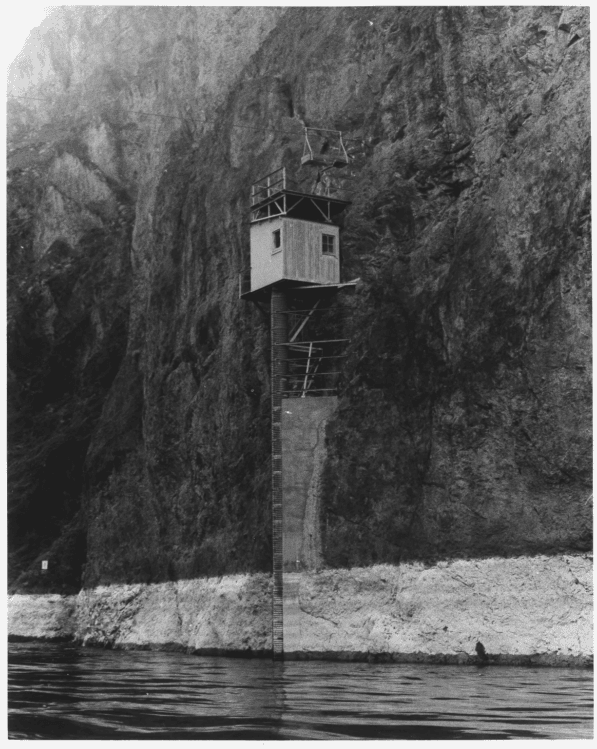
The Willow Beach Gauging Station was constructed after the completion of Hoover Dam to provide data on Colorado River flow downstream of the dam.
The gauging station was constructed on the Nevada side of the river on the vertical wall in Black Canyon.
Originally consisting of two gauging stations and a bucket tramway system for access, this historic structure provides a glimpse of the past at Lake Mead National Recreation Area.
Please enjoy viewing the gauging station from the river, but not not climb or attempt to access the structure – it is both dangerous and could damage a historic structure.

The Willow Beach Gauging Station is located in Clark County, Nevada and was added to the National Register of Historic Places (#86000587) on March 21, 1986.

From the historic register’s nomination form:
The Willow Beach Gauging Station and its ancillary structures were erected to provide data on the flow of the Colorado River downstream from Boulder Dam after its completion in 1935, As such, the Willow Beach Gauging Station is a part of a complex of facilities which relate to the history of construction and operation of a nationally significant dam erected for flood control and irrigation purposes and, secondarily, to supply hydroelectric power. The Willow Beach Gauging Station contributed in its small way to the initial years of operation of this historic dam. It is also of local significance in engineering in its own right as reflected by its construction, hanging from the precipitous, vertical wall of the Black Canyon of the Colorado River, and its difficult access by cable tramway and catwalk hung from the canyon walls.

Reconnaissance to locate the site for a gauging station below the site of the new dam whose construction was just beginning was undertaken in 1931 by District Engineer W.E. Dickinson along with J.C. Hoyt, of the U.S. Geological Survey, and O.G. Patch, of the Bureau of Reclamation. Actual construction under the supervision of J.A. Baumgartner of the U.S. Geological Survey occurred in two phases, from January to July, 1934, and November 1934 to July 1935. Once completed, resident engineers at the gauging station were W.L. Heckler and W. E. Dail. The station operated until October 1939, when it was replaced by a new station closer to the dam (.8 mile downstream)

The Willow Beach Gauging Station, its cable tramway, and its catwalk and trail approach, are located in the steeps-walled Black Canyon of the Colorado River downstream from Boulder Dam, whose operation it served by measuring the flow of the Colorado River in the canyon below the dam. Originally the gauging station consisted of two gauging stations, both on the Nevada (west) side of the Colorado River, connected by bucket tramway cars hanging from cables across the river, which met on the Arizona side a combination of trail, catwalk hung from the wall of the canyon, and a third cable tramway across a side canyon, which extended southward along the Arizona side of the river to a residence and garage for the resident engineers. The residence and garage have been demolished, leaving only the terraced hillside with stone retaining walls on which they once stood. The lower gauging station and downstream tramway across the Colorado River also are gone. The remaining structures which are deemed to possess integrity, include the upstream gauging station, the cable tramway across the river from the gauging station to the trail, the trail along the Arizona side, the deteriorated but intact catwalk along the cliff, the trail south of the catwalk, the cable tramway across the side canyon on the Arizona side, the trail south of the catwalk to the residence site, and the stone retaining walls which mark the site of the residence and garage, which were approximately one and two thirds miles, as a crow flies, upstream from Willow Beach.

The gauging station itself consists of a small, square, shed-roofed metal room hung on a vertical cliff about forty to fifty feet above the surface of the river, whose level varies according to volume of flow. Beneath it, a corrugated pipe about four feet in diameter extends vertically from its floor into the water. The lower two thirds of the pipe above the water, and presumably all below, is connected not only to the cliff by metal supports, but shielded by solid concrete which prevents the water from passing between the pipe and the cliff and tearing it out. Above this concrete diverter, the gauging station is held to the cliff only by metal supports. The metal gauging room has three small £our-lite windows* one next to the cliff on its north side, one on the north or upstream edge of the side which faces across the river, and one on the canyon wall or western edge of the side which faces downstream. On the outer edge of the south wall is a doorway, and along the entire south side of the gauging room is a porch. From that porch, a metal ladder leads upstairs to a flat platform with railing, mounted several feet above the shed roof of the gauging room. Near the canyon wall, another platform is mounted 1 story below the gauging room porch, which allows transfer from a ladder which leads down from that porch to the main ladder which is mounted near the corrugated pipe, and leads down to near the surface of the water* The gauging station may be approached either by boat and ladder from below, or by cable tramway to the platform above. The tramway consists of a flat, shallow rectangular bucket hung by steel supports at each of its four corners from a pair of pulleys, one at each end, suspended from a single cable suspended across the river. From the east (Arizona) terminus of the cable tramway, a combination of trail along the edge of the cliff, a catwalk of wooden planks laid on steel supports driven into the cliff, with a railing of metal supports and metal cable along its outer edge, more trail, another cable tramway across a side canyon similar to the one described, and more trail, leads southward a distance slightly more than a mile to the site of the residence and garage, marked today only by concrete foundations and rubble retaining walls. The cable of a second tramway across the river to the second gauging facility (now gone), is still in place.

Mormon Well Spring

19 Thursday Dec 2024

Posted by Jacob Barlow in Uncategorized

≈ Leave a comment

Tags

Clark County, Nevada, NRHP, Springs

Mormon Well Spring was added to the National Historic Register (#74001143) on December 24, 1974. The text on this page is from the nomination form from when it was added.

The Mormon Well Spring site had been used by the Paiute Indians, a nomadic tribe of southern Nevada, for centuries before white explorers came into the region. The use of this site was seasonal. In the fall the Paiutes. came to the area to collect pine nuts and hunt bighorn sheep. They probably used the spring site as a base camp. Little is known about the use of the site by pre-Columbian cultures.

The spring is the only reliable water source for the surrounding vicinity. of the Desert National Wildlife Range. Therefore the area was used by the early travelers and prospectors during the late 1800’s and early 1900’s A Mr. John Thomas was the first white man to claim the spring’s water for a sawmill, but this project was abandoned before any development was done on the spring.

Beginning in the early 1900’s Mr. Joe Perkins, who then owned the Pickett Ranch in what is now part of the Moapa Indian Reservation, bought the water rights for the spring from Mr. Thomas and began grazing cattle and horses in the Mormon Well area. The cattle had to be moved often as the forage was scarce, but the horses did well and many horses were raised there. Over the years the spring was developed to provide more water for the livestock and the corral was constructed, but little was gained by the efforts.

In 1936 the area became part of the Desert Game Range and grazing was allowed but controlled by the U. S. Fish and Wildlife Service and the Bureau of Land Management. In 1966 the area was changed to a Wildlife Range under the sole jurisdiction of the Fish and Wildlife Service. At that time grazing was eliminated and the water became the sole right of the native wildlife again.

Corn Creek Campsite

01 Sunday Dec 2024

Posted by Jacob Barlow in Uncategorized

≈ Leave a comment

Tags

Clark County, Nevada, NRHP

Corn Creek Campsite

Added to the National Historic Register (#75001105) on March 4, 1975.

Tule Springs Ranch

27 Sunday Oct 2024

Posted by Jacob Barlow in Uncategorized

≈ Leave a comment

Tags

Clark County, Las Vegas, Nevada, NRHP, Ranches

Floyd Lamb State Park / Tule Springs Ranch

The subject project is an architectural/historic assessment and evalution of the architectural resources of the Floyd Lamb State Park. The Division of State Parks of the State of Nevada currently plans to develop the Park into a facility providing for greater intensity of public use, offering a variety of recreational activities. The report will also provide an assessment of the effects of the proposed park development upon existing resources.

The Park served as a city park for the City of Las Vegas from 1964 to 1971, as a private commercial entity from 1959 to 1964, and as a working ranch/guest ranch from 1941 to 1959, during which period most of the existing structures were built. The property possesses some historical values due to its uses during these periods as well as prior eras, and some architectural values due to the construction, planning, and design of the ranch complex.

The purpose of this report is to assess the architectural/historical significance of the park and its structures in order to provide a basis for the development of appropriate plans for new facilities and modifications of existing park structures or facilities,

Tule Springs Ranch was added to the National Register of Historic Places (#81000383) on September 23, 1981. It is now the site of Floyd Lamb Park in Las Vegas, Nevada.

The history of Tule Springs prior to its first permanent settlement includes its use by Indian tribes, early settlers, prospectors, and a transport company. Historic discussion will focus primarily on ownership eras that may involve the addition of structures to the property.

Ownership: (from first permanent settlement of site):

  • Nay: 1916-192S
  • Hefner: 1928-1941
  • Gournond: 1941-1959
  • Tule Springs Investment Company: 1959-1964
  • City of Las Vegas: 1964-1977
  • State of Nevada: 1977 to present

Tule Springs’ history apparently began as an occasional early watering place for Indians traveling back and forth between the desert and the mountains in pursuit of seasonal food sources. Although they utilized the spring at Tule it apparently was not as favored a location for their uses as spring at either Las Vegas or the Redrock area.

Tule Spring may next have been used by Mormons as a camping place on their way to obtain timber from the northeast for construction purposes, having €stablishe3 a settlement in the Las Vegas valley in 1855.

In the late 1860’s, a reconnaissance trip through the area by Lt. George Wheeler of the U.S. Army Corps of Engineers noted that Tule Springs was one of the stops on a road traveled by prospectors from Elko Nevada to Prescott, Arizona. Tule Springs was described as having good water but no wood or grazing.

In 1876 a man named Kiel built a sawmill near Las Vegas and an 1886 map shows a road leading to the sawmill past Tule Springs. Although there was some local traffic in the late 19th century and a few prospectors, the majority of travel in the area occurred on other roads that did not pass by Tule Springs.

By 1904, the imminent coming of the railroad assisted by mining discoveries in the Bullfrong region, provided a remarkable sudden population growth for Las Vegas. Tule Springs became a watering place on the Bullfrog stage route. A photograph, report, and a radio broadcast prepared by Charles P. Squires asserts that an establishment did exist at Tule by 1905, and was located just east of the main spring at Tule (possibly near the present swimming pool). The establishment appears to have been named the U.S. Hotel and was operated by a man known simply as Levandowski.

Squires discussed the freight road that passed by Tule at that time, where two or three freight outfits might be stopping at once with from 40 to 80 head of horses and mules in various corrals clustered about the Springs. An automobile stage line running past Tule from Las Vegas to the Bullfrog mine was also operating at that ‘time but ceased the following year when it was determined to replace it with a railroad line.

It is not known whether anyone lived at the Springs during the next 8-10 years or whether any structures existed on the property at that time.

The next individual known to have settled at the Springs was a Mormon, Bert Nay, who filed on the water rights in 1916. Nay’s application states that the property had never had any development work done on it. Apparently the U.S. Hotel, if it existed, had disappeared by then. The Nay family may only have spent summers at Tule Springs, living in tent houses and camping out of a wagon when following the stock.

The Ritenour report states that the smali adobe building (Building #13, Vhay & Ferrari Building Inventory) was probably built by Nay between 1914 and 1918, as a blacksmith shop and storage facility. Nay would have needed such a facility there on the ranch readily accessible for the care of stock.

However, according to the Nevadan, March 13, 1977 article, “The Nays return to Tule Springs”, Bert and Anne Nay actually lived in the old adobe building still standing at Tule Springs. The Georgia Lewis article states that “Indians or early traders built the adobe as a shelter and Bert added a roof, doors and windows. The adobe bricks came from large clay beds, later diked by Prosper Goumond in the 1940’s to form a lake.”

Nay also built a dam reservoir and apparently a small frame house near the Springs that apparently burned in the 1930’s.

Apparently the next owner of the property, Gilbert Hefner, was not responsible for the addition of any structures of the area. At this writing, after further conversation with Ms. Ritenour, the existence of a bootlegging operation on the ranch during Hefner’s ownership appears questionable. The Hefners did not develop the property further and it lay vacant until purchased in 1941 by the individual who sold it the same year to Prosper Goumond.

History: Goumond Era

By far the major portion of the Tule Spring Ranch, Floyd Lamb State Park complex was planned, developed and built by Prosper Goumond after his acquisition of the property in 1941. Goumond acquired the Tule Springs property on the day Pearl Harbor was attacked in 1941, and gradually added surrounding land until his total ownership involved 880 acres. Only two structures apparently remained on the property when Goumond purchased it, the adobe hut, and a deteriorated wooden structure, located at the end of the original entry between the Concessions Building and the Foreman’s House. He removed it when he began to develop the property.

The first structure built on the ranch by Goumond was the so-called Cook House, later known as the Club House. The structure ultimately experienced. several alterations but was originally built with 2 bedrooms, a fireplace, a living room and a kitchen. Its first addition was a large dining room to the east for ranch cowboys. This addition later became the kitchen, and a large guest dining room and bar were added to the southern part of the building. The bar had a decorative fireplace and yellow upholstery with a studded brass rail design, executed by Goumond’s grandaughter. This structure burned and was removed during the city’s ownership. A contemporary concession building, #15 of the Vhay/Ferrari Inventory, stands approximately at the former location of the Cook House.

The Cook House served as lodging while the other portions of the ranch were under construction. The next principal structure to be built was the Ranch House which became the residence of Goumound’s daughter, Pat Goumond De Vaney, Cliff De Vaney, and Pat’s daughter, Margo. (Prosper Goumond did not reside at the ranch, but lived in town.)

The original entrance road ran between Buildings #15 and #16, the Cook House and the Ranch House. The traditional square-framed “ranch” entry with gate and hanging signs marked the entrance to the ranch. The road that now extended east and west bet wen the stable row and the Hay Barn, and parallel to them, did not exist at that time.

The construction of the other ranch buildings took place on through the 1940’s. The initially rural residence rapidly evolved into a working ranch complex. At its height of operation, Goumond’s Tule Spring complex encompassed a considerable variety of ranch activities.

Goumond bred and raised a particular crossbreed of cattle termed “Brangus”, involving the mating of an Angus Bull and Brahma Heifer. Cattle were butchered on the ranch and hung in large walk-in butcher’s refrigerator. A concrete-walled enclosure in back of the Dairy Building, #6 in the Vhay/Ferrari Inventory, was fitted with a cement slab, built-in trough and a large wood framework with pulley for slaughter purposes. A network of corrals engulfed the area by the stable buildings.

The ranch also kept pigs. The hog house or pig pens and enclosures were located in Building #10 on the Vhay/Ferrari Inventory. Pigs were also slaughtered in the enclosure by the Dairy Building. The room at the west end of this structure held a butcher block table, stainless steel sinks, and various pieces of dairy machinery.

The ranch maintained a small dairy herd as well. Building #6, the Dairy Building, still contains the ramped concrete stanchions that held cows for milking by machine. A complex arrangement of pipe created stalls on a 3 1/2 foot tall concrete platform and held cows for milking by electric machine. (The process and its machinery were not always completely effective. The efficient modern procedure provided a display of intent sometimes followed by the actual milking of the cows down behind the barn.)

Hay and alfalfa for ranch livestock were stored in the large hay barn by the lake. The ranch cultivated and farmed alfalfa in acreage to the northeast of the lake and south east of the pool area thus providing fodder for its cattle.

Stock included horses, both working and ‘dude’, cattle, and dairy cows. Chickens were kept in Buildings #4 and #5, pigs in Building #10 and possibly Building #8, and turkeys were also raised on the ranch. Peacocks, and both domesticated and wild ducks and geese co-existed on the ranch. The water fowl populated both the pond spanned by the suspension bridge and the lake.

The lake itself was stocked by bass, crappie, and blue gill fish, and provided a setting for canoeing or boating. A boathouse, now gone, housed lake canoes and was fitted on the interior with a system for lifting them out of the water.

A swimming pool surrounded by a white picket fence stood near the suspension bridge and pond, also edged in white pickets. The pool was originally built as a reservoir. It was filled with sand to provide a children’s play area during the city’s ownership. A fenced horse pasture (for the better horses) lay below the pool to the east.

The original spring lies beneath the northeastern edge of the Duplex Building #19. A cistern still exists under its foundation. The gazebo sheltered a drinking foundation and a refrigerated unit containing ice.

A large wood water wheel spanned a small masonry lined channel that carried water from the Pump House. The Pump House, Building #18, stands over the first well drilled on the property by Goumond.

The Spring House, Building #26, was occupied by Margo Goumond, Prosper’s granddaughter. Other accommodations existed in the Cook House and Bunk House, but apparently were mainly occupied by employees of the ranch. Maid quarters were located in the water tower, which had apartments also in the rear addition and at the second floor level.

An orchard with a wide variety of fruit trees stood to the north of the Guest House, Building #17. A truck farm provided fresh produce for the ranch and its guests, Products of both were summer-canned and stored for year round ranch use in the root cellar.

Green laws stretched between picturesque green and white structures, pools and graceful willows, tall cottonwoods and fruit trees, creating a garden oasis that contrasted sharply with the dry surrounding land.

A large Fairbanks-Morse diesel engine served by diesel fuel stored in a large tank embedded in the earth next to the Generator Building, #24, provided power for the ranch until diesel fuel became too expensive, Goumond also built his own operating telephone and power lines.

Essentially, the ranch was planned and managed, to the greatest degree possible, as a self-sustaining unit, virtually in the middle of a desert.

An interesting adjunct to the basic ranch operation in the late forties and early fifties was its evolving additional function as a guest or “dude” ranch. While dude-ranching in the west has a history that extended back into the 19th century, a combination of legal changes in Nevada and changing societal attitudes towards marriage created a climate that rather suddenly popularized the state as a combination divorce and guest ranch destination for the entire country,

A notable factor in this phenomenon was the reduction of the residency requirement for divorce in Nevada to only six weeks, the shortest term of any state at that time. Accordingly, the guests that came to Tule Springs were predominately potential divorcees, often women from the east, wealthy, well educated, and “social”.

Some additional apartments were created in order to accommodate this function, notably Buildings #17 and #19. Guest capacity at the ranch could apparently range up to 10 or 12 persons depending on various factors. Additionally, the proprietor of guest/divorce facilities like Tule Springs played the important role of “witnessing” the continuity of residence of divorce-seeking guests, according to state law.

Floyd Lamb Park at Tule Springs

27 Sunday Oct 2024

Posted by Jacob Barlow in Uncategorized

≈ Leave a comment

Tags

Clark County, Las Vegas, Nevada, Parks

Floyd Lamb Park at Tule Springs

Floyd Lamb Park at Tule Springs is a park at the site of historic sites Tule Springs Ranch and Tule Springs Archeological Site. Also located there is the historic marker Tule Springs.

9200 Tule Springs Road in Las Vegas, Nevada

  • Parks in Las Vegas

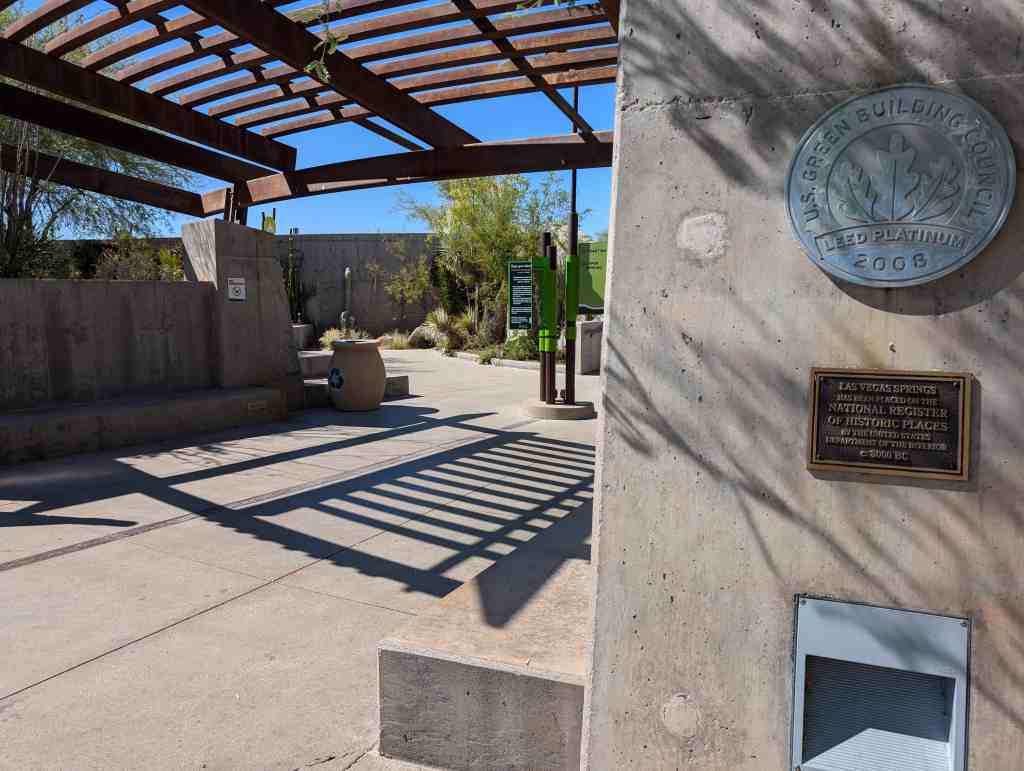
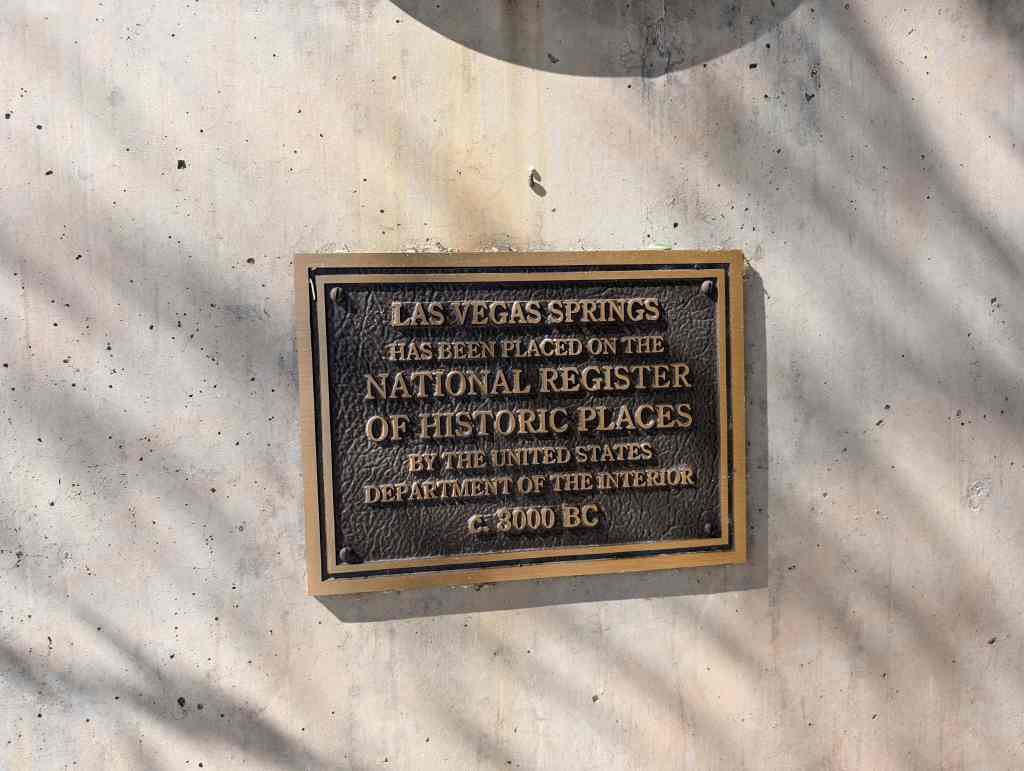
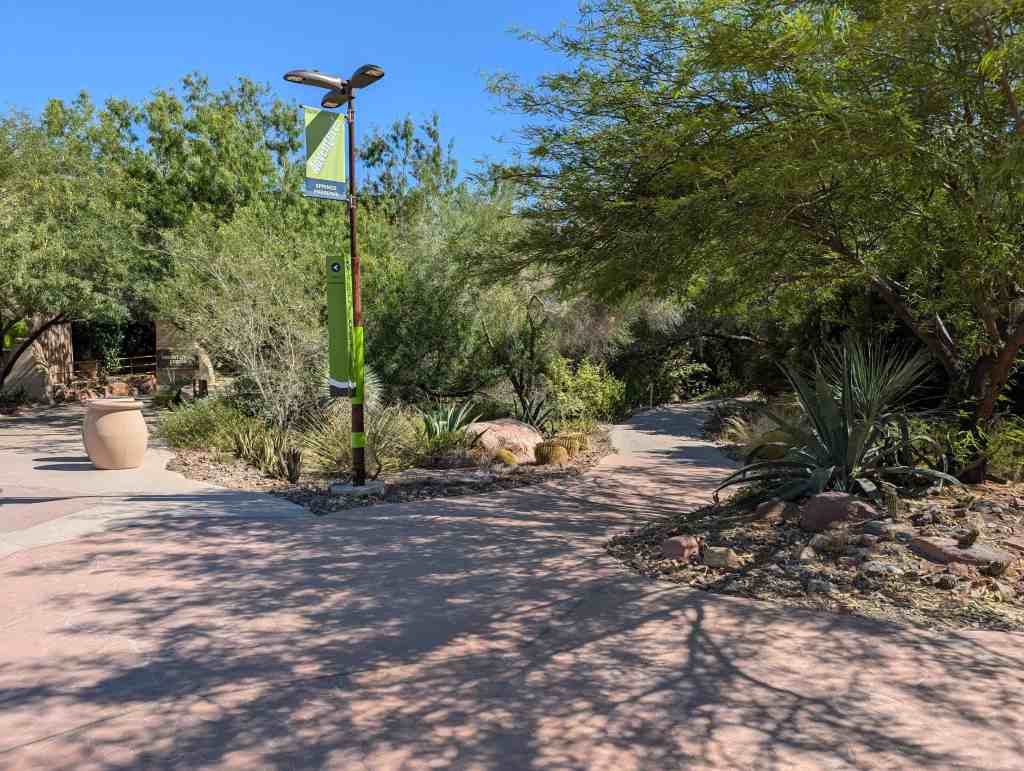
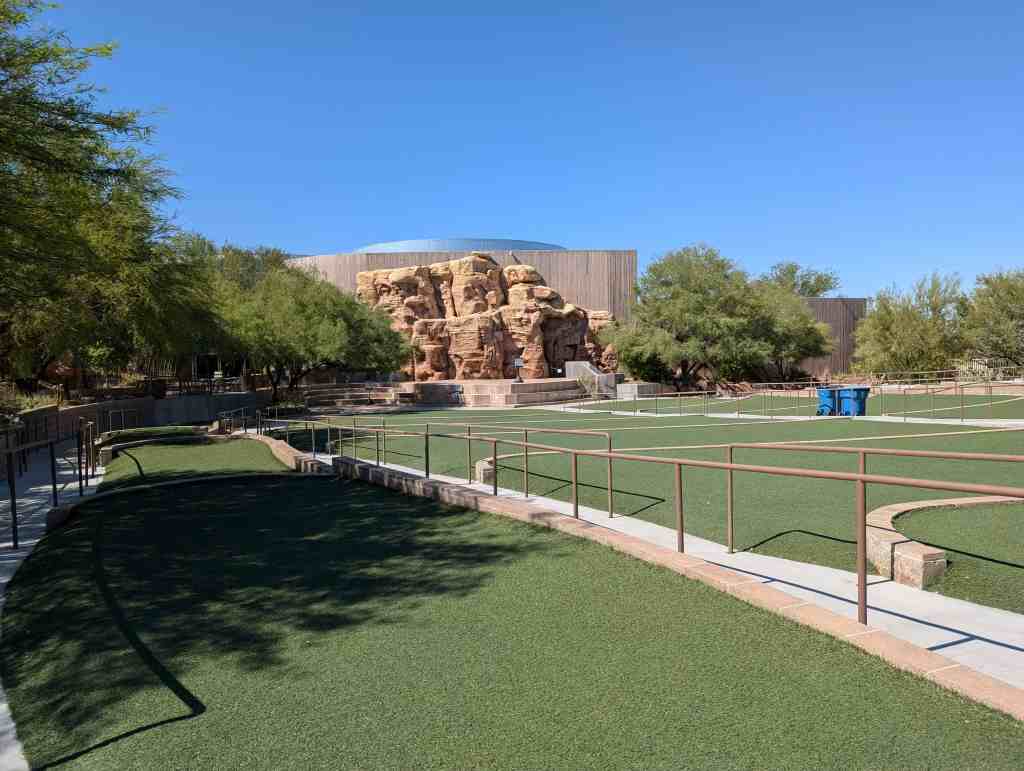
Las Vegas Springs

26 Saturday Oct 2024

Posted by Jacob Barlow in Uncategorized

≈ Leave a comment

Tags

Clark County, Nevada, NRHP, Springs

Las Vegas Springs

From Wikipedia:
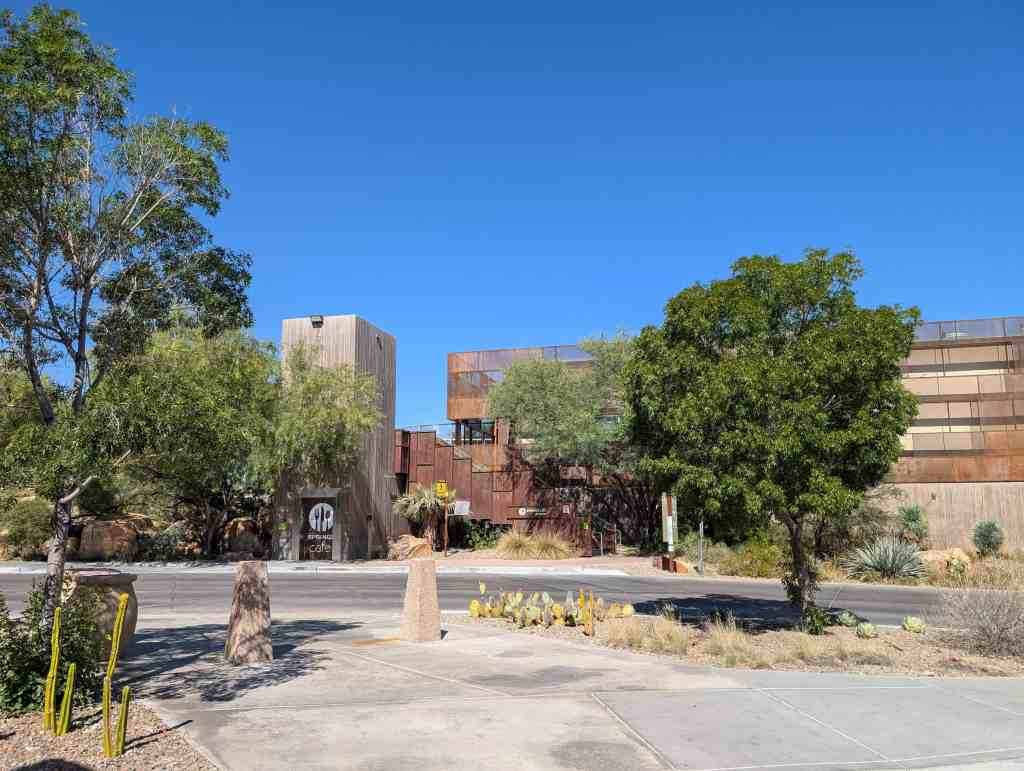
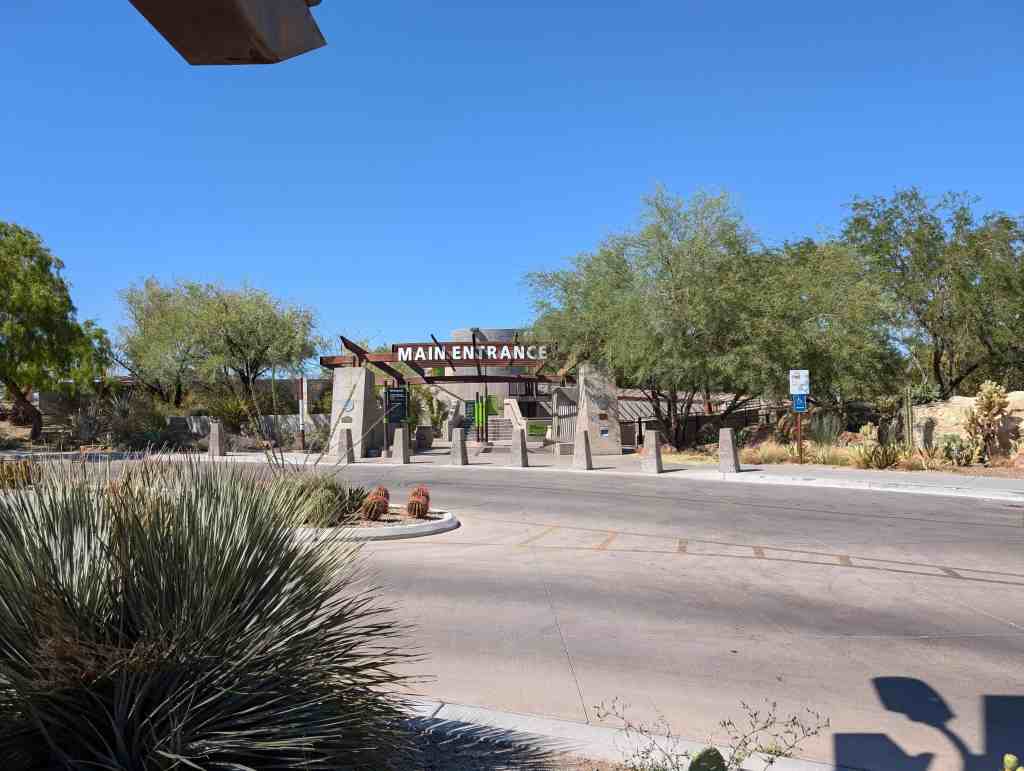
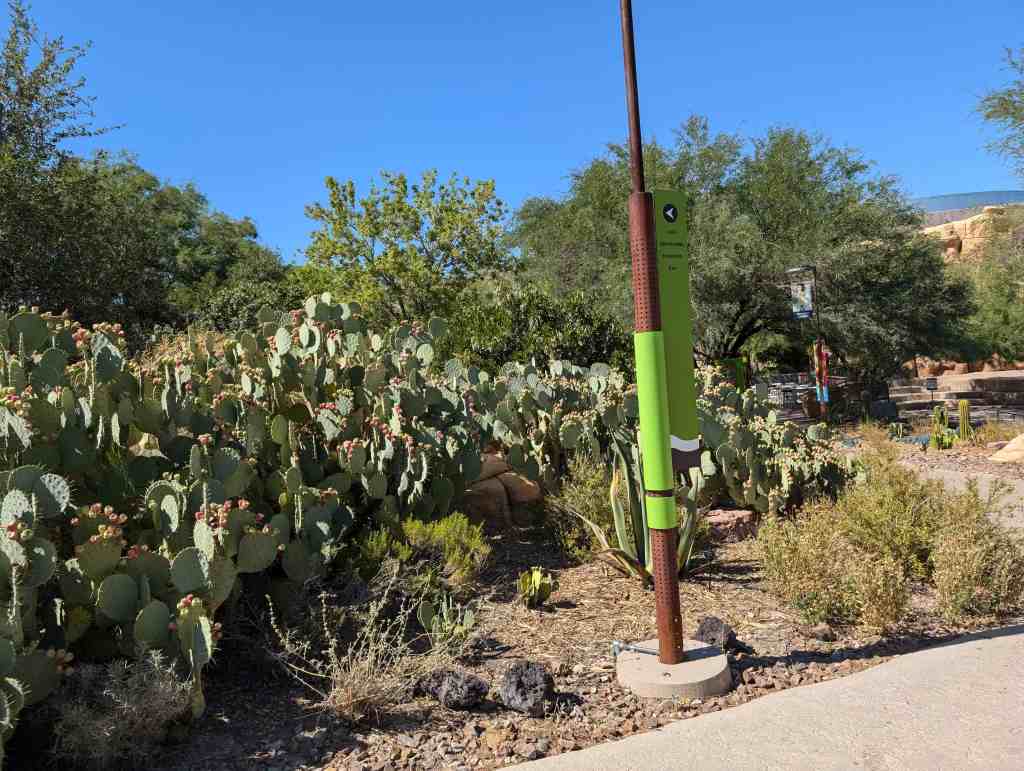
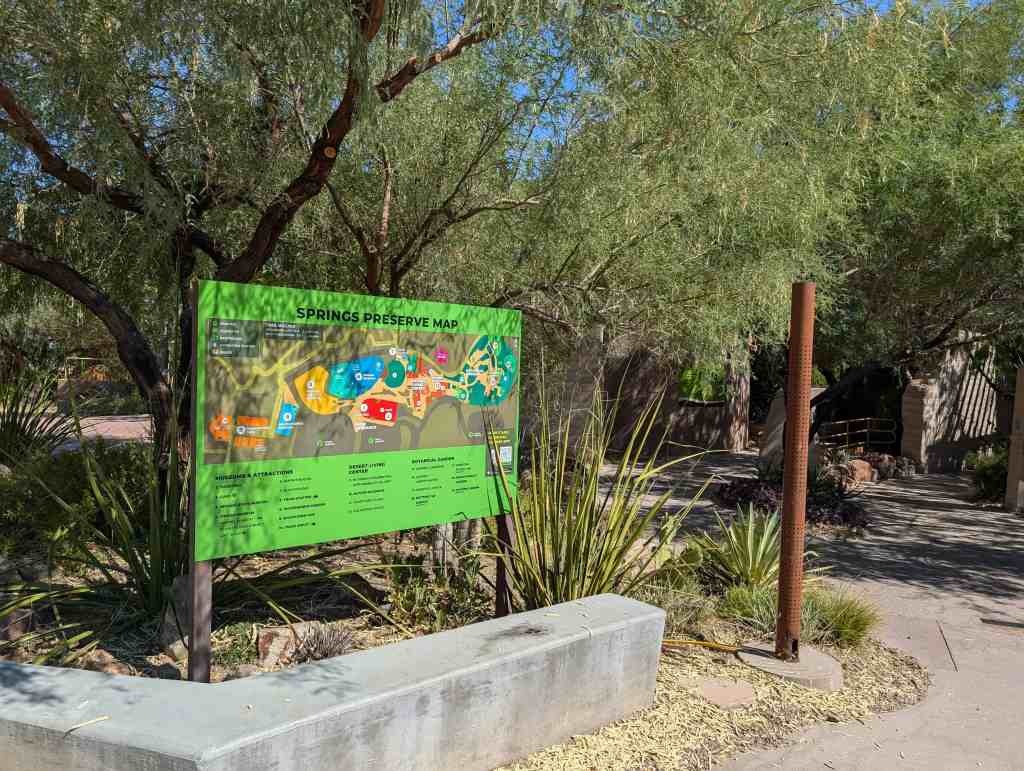
The Las Vegas Springs or Big Springs is the site of a natural oasis, known traditionally as a cienega. The springs are now a part of the Las Vegas Springs Preserve.

Related:

  • Las Vegas (The Meadows) (historic marker)

The springs were added to the National Register of Historic Places (#78001719) on December 14, 1978.

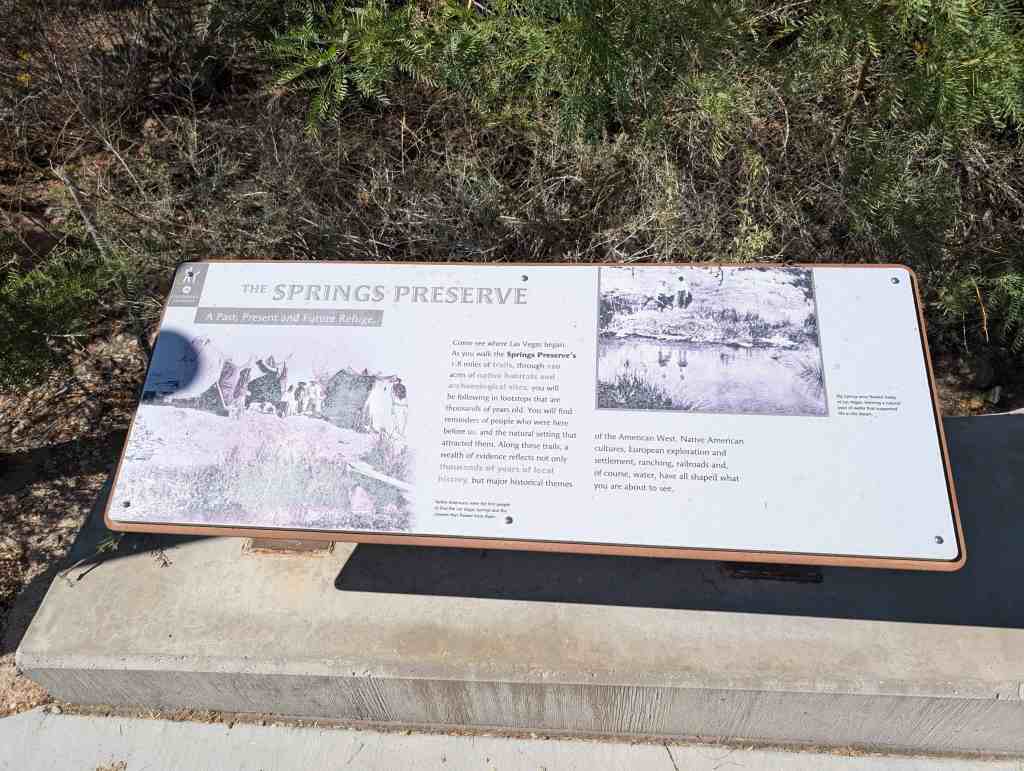
The Springs Preserve
A Past, Present and Future Refuge

Come see where Las Vegas began. As you walk the Springs Preserve’s 1.8 miles of trails, through 120 acres of native habitats and archaeological sites, you will be following in footsteps that are thousands of years old. You will find reminders of people who were here. before us, and the natural setting that attracted them. Along these trails, a wealth of evidence reflects not only thousands of years of local history, but major historical themes of the American West. Native American cultures, European exploration and settlement, ranching, railroads and, of course, water, have all shaped what you are about to see.

Las Vegas High School Neighborhood Historic District

19 Saturday Oct 2024

Posted by Jacob Barlow in Uncategorized

≈ 1 Comment

Tags

Clark County, Historic Districts, Las Vegas, Las Vegas High School Neighborhood Historic District, NRHP

Las Vegas High School Neighborhood Historic District

The Las Vegas High School Neighborhood Historic District was added to the National Register of Historic Places (#90002204) on January 30, 1991.

Properties previously listed on the National Register:

  • Las Vegas High School Academic Building and Gymnasium, 315 South Seventh Street, built 1930-31 and listed on the National Register September 24, 1986.
  • Jay Dayton Smith House, 624 South Sixth Street, built 1931-32 and listed on the National Register February 20, 1987.

The Las Vegas valley is situated within the basin and range province of the southern portion of Nevada at an approximate elevation of 1950 feet above sea level. The region is characterized by sharp, rugged, north-to-south trending mountain ranges separated by wide alluvial-filled valleys and gently sloping alluvial aprons at the mountains’ bases.

A number of mountain ranges surround the valley. On the northern edge are the Las Vegas, Sheep, Desert, and Pintwater Mountains. On the west are the Spring Mountains. The southern boundary is formed by the River and McCullough Ranges and Frenchman’s and Sunrise Mountains.

Abundant natural springs have long made the site of the City of Las Vegas attractive to Indians, early explorers and other pioneers, to Mormons who established a short-lived fort in 1855, and to ranchers. The availability of water and its location halfway between Los Angeles and Salt Lake City motivated its official founding in May, 1905 as a town and as a division point on the San Pedro, Los Angeles and Salt Lake Railroad. The railroad company established a subsidiary, the Las Vegas Land and Water Company, to lay out a townsite and to auction off the lots.

Located immediately to the south and west of the Las Vegas High School, the Las Vegas High School Neighborhood Historic District primarily consists of approximately six full blocks and parts of another seven blocks of middle-class, pre-World War II housing. The Las Vegas High School, already listed on the National Register, occupies an oversized lot of its own, and defines the northeast corner of the district. The district is roughly bounded by E. Bridger Street to the north, the service alley in between Las Vegas Boulevard (also known as Fifth Street) and S. Sixth Street to the east, E. Gass Street to the south and the service alley between S. Ninth and S. Tenth Street to the west.

The district encompasses parts of two separate subdivisions – the Wardie and the South additions. The blocks of the Wardie addition (platted in 1914, but generally undeveloped until the late 1920s and then throughout the 1930s) are generally 300 feet by 400 feet while those of the South Addition (platted in 1926) are generally of the same dimensions. The lots of both additions are regularly divided and have a frontage of twenty-five feet and a depth of 140 feet. Most of the homes and buildings in the district occupy at least two or three lots and oftentimes more. The streets of both the Wardie and South Additions, like those of all the early developments in Las Vegas, parallel the railroad tracks. This pattern emphasized the town’s early dependence upon and orientation toward the railroad.

The majority of homes are uniformly setback from the street, an important unifying feature. Most have detached garages situated towards the rear of the lots and adjacent to the service alleys running up the center of each of the district’s blocks. The use of service alleys is one of the more important distinguishing factors that this Pre-World War II neighborhood retains. Much of the rest of the city today consists of a “super-grid” covering nearly 100 square miles of east-west and north-south streets at approximately one mile intervals. This immense and repeatable super-grid has been laid over the much smaller and more self-contained pre-existing city of Las Vegas, of which the Las Vegas High School Neighborhood Historic District is a part.

Architectural Character

The Las Vegas High School Historic District is the oldest residential neighborhood within the city of Las Vegas which retains its architectural and historic integrity. The historic district consists primarily of single-family residential structures, the majority of which contribute to the district’s architectural and historic character. The district also includes several multiple-family dwellings, one large educational facility (the Las Vegas High School) and one religious structure (the Las Vegas First Ward Church of Latter-day Saints).

Most of the buildings within the district are modest middleclass, single-family dwelling units. Almost all are oriented to the numbered streets running north-south. A handful of homes face the named streets running east-west. Many of the district’s buildings depend upon a frame-and-stucco form of construction. Many utilize architectural elements and design features of a wide variety of period revival styles. These include the Pueblo Revival, Mission Revival, Spanish Colonial Revival and Tudor Revival styles; although most are restrained in their ornamentation and vernacular in their design. The district also includes a number of Moderne-styled residences. Examples of these architectural styles are not generally found in any other part of the city.

The district contains a number of consciously-designed structures. The following presents some biographical information about some of the city’s more important architects and construction professionals, some of whose work still survives within the proposed historic district.

Hampton Brothers

The four Hampton brothers (Robert, Roscoe, Henry and Elmer) were originally born and raised on a farm in Wray, Colorado. They moved to Kansas City at one point, but eventually gravitated to Southern Nevada in 1929 to work on the construction of Boulder Dam. They were all carpenters. They had learned their skills from living on a farm and from building homes nearby.

They remained in that employ for a little over two years before moving to the Las Vegas area and establishing themselves in their own construction firm. Each of the four brothers were equal partners in the firm. Their first contract in Las Vegas was to put in a basement for Jim Cashman Sr. in 1932.

Las Vegas was growing in the 1930s, unlike most of the country, because of the Depression. Robert Hampton, Jr. , the son of one of the brothers, feels that Las Vegas basically escaped the Depression because of construction of the Dam and the economic benefits it brought for Las Vegas and the region.

Robert Hampton Sr. lived outside of town (approximately N. 25th and Stewart) where he owned five acres of land. Robert Jr. says his father lived there because he had a big family (five sisters) and needed the extra room. The other three brothers did not have the same family responsibilities as Robert and chose to live in town instead. Roscoe lived within the proposed historic district and the high school neighborhood at 607 South Seventh.

Henry Hampton lived at 808 South Third Avenue, just north of the proposed historic district.

Generally they did not draft their projects before building them and rarely worked on big projects that required an architect. At one point the Hampton Brothers employed as many as 100 carpenters. They specialized for the most part in building tailor-made houses. Robert Jr. says this was the era before they started building tract homes and that they would simply sketch a design in pencil and just go ahead and build it. Robert Jr. in a recent telephone interview compared the process to cabinetry work.

Occasionally the Hampton Brothers tried to build a house as quickly as possible, just for the challenge of it. Robert Jr. recalls how they actually raised an entire frame for a house in a single day (somewhat similar to a barn raising) . They often worked with the Carson boys, another construction firm originally from Colorado.

Robert Jr. vaguely recalls that the Hamptons worked with an architect by the name of Harvey Bradley (sp?), who occasionally came up from Southern California. They worked together for only a short time. Robert Jr. also recalls how the Hampton Brothers, would stay up at nights to do their “cost estimating.” He says that was in “the days without calculators and everything was done in pencil.”

Structures within the district built by the Hampton Brothers include the following:

  • 802 E. Bonneville Avenue (1931) Jay Dayton Smith House (1932 – Listed on the National Register)
  • 624 S. Sixth Street (1932)
  • 615 S. Sixth Street (1938)
  • 700 S. Seventh Street (1938)
  • 610 S. Seventh Street (1939)
  • 617 S. Ninth Street (1939)
  • 621 S. Ninth Street (1939)

Other buildings constructed by the Hamptons:

  • Al Wengert House (date unknown)
  • Ron Brown (ex-State Senator) House (date unknown)
  • American Legion Building (date unknown)
  • First Bowling Alley in Las Vegas (date unknown – now demolished?)
  • Hidden Well Dude Ranch (date unknown)
  • Sam Gay House (date unknown)
  • Dr. R.D. Balcom House (date unknown)
  • 816 South Third Street (1931)
  • Henry Hampton House, 818 South Third Street (1931)
  • 201-223 Bridger Street (1931)
  • 327 North Ninth (1932) (Addition – 1954)

Ferris & Son

George Ferris ran an architectural firm in Reno, and often worked closely with Frederick J. DeLongchamps. George Ferris designed the Governor’s Mansion (1909) in Carson City and four Mission Revival schools in Reno – McKinley Park (1909), Mount Rose (1912), Mary S. Doten (?) and Orvis Ring (?).

The elder Ferris was soon joined by his son, Lehman, at which point the firm was renamed Ferris & Son. Lehman A. Ferris was born May 14, 1893, the son of George and Doris Ferris. His father, although never formally trained, established an architectural practice after moving to Nevada in 1908. By 1910, the elder Ferris was so inundated with work, that his son started to assist in writing specifications. In 1911, Lehman began his formal education when he entered the electrical engineering program at the University of Nevada in Reno. The lack of family finances cut Lehman’s education short and he never graduated.

After World War I. Lehman began full-time work for both his father and Frederick J. DeLongchamps as a specifications writer. Lehman supervised the construction of a grammar school in Elko, and the Humboldt County courthouse and the Humboldt hotel, both located in Winnemucca. The firm of Ferris and Son was formed soon thereafter. Perhaps their largest commission came in 1928 when they designed the Las Vegas High School, a part of the proposed historic district. Because of the economic conditions during the Depression, their firm was dissolved in 1932. George Ferris took a job as the State Architect for the Federal Housing Administration and Lehman continued to practice privately.

After working as an electrician, draughtsman, specifications writer, and superintendent of construction with various mining operations, Lehman Ferris began work for the State Highway Department. In 1935, a new Democratic administration under Governor Carvill took office and Lehman was pressured to resign. He then became Reno’s first building inspector. Working at home at night, it was then Lehman began to develop an architectural practice of his own.

In the mid-1940s, Lehman left his job with the city, revived his architectural practice full time and formed a partnership with Graham Erskine. Examples of structures designed by this firm include the Reno High School, Wooster High School, Hug High School, the Nevada State Legislative Building and Harold’s Club. Both Ferris and Erskine were instrumental in establishing a licensing board for architecture in Nevada in the 1940s. As a result, Lehman has Nevada Architectural License No. 1.

Structures built by Ferris & Son inside the historic district:

Las Vegas High School (1931)

Pacific System Homes. Inc.

On January 8, 1932, the Pacific Systems Home, Inc. announced in the Las Vegas Review-Journal the completion of the Blakey apartments at the corner of Sixth and Carson streets and that they were open for inspection by the public. The president of the corporation, W.P. Butte, mentioned that the Blakey apartments represented “the highest achievement of his organization in producing an edifice of this character.” dough’s office was in the Blakey Apartments at 201 South Sixth Street.

Butte addressed the issue of Las Vegas’s future prospects for growth and continued development.

Our activity in Las Vegas and vicinity, combined with the completion of this beautiful apartment home makes us feel more certain than ever of the development that will take place by reason of the construction of the Hoover Dam.

Two earlier examples of pre-cut homes survive within the historic district. They are attributed to the Pacific Ready Cut (also spelled Readicut) Company, Los Angeles, California. It seems probable that the two different names represented the same company at different stages in its existence, the change coming sometime late in 1931.

Pacific Systems Home, Inc., was established in Los Angeles c. 1908. Establishment of the company in Las Vegas can be traced back to 1929. Frank Lusson of 620 South First Street was the company’s authorized builder in Las Vegas from at least 1929- 1931. Lusson had been with the company for 17 years, indicating perhaps that he moved to Las Vegas rather recently, with most of his experience coming from his previous time in Los Angeles. A July, 1931 article in the Las Vegas Review-Journal mentions that seventeen projects utilizing the Pacific Readicut system were presently underway.

A sizeable number of plans and designs were available to the prospective homeowner. One newspaper ad mentions that there were

… over 1800 Pacific System designs, from the mountain cabin to the modest bungalow or the palatial home. Also ‘Special Plan Studies’ of artistic exteriors, unique room arrangements and decorative treatments provided to the individual owner’s preference.

An earlier newspaper article indicates that the 24-acre plant facilities, located at 5800 South Boyle Avenue in Los Angeles, also included a number of fully-assembled models available for inspection on their “exhibition grounds.”

Once the home was ordered, the plant in Los Angeles would pre-cut all the necessary materials. The home would then be assembled on site by a local authorized builder. Newspaper articles and ads strongly emphasized the economy of scale and the company’s nearly almost 23 years of experience in building homes as selling points.

Pacific System Homes, Inc. outside of the historic district:

  • Blakey Apartments (1931)
  • 812 South Sixth Street (1931)

Pacific Ready Cut Homes, Inc. within the historic district:

  • 711 S. Sixth Street (1929)
  • 517-519 S. Sixth Street (1930)

Samuel J. Shaw

Samuel J. Shaw first moved to Las Vegas from Nephi, Utah as a child with his family in 1917. Sam Shaw Sr. was a rancher and purchased a home on Fifth Street in which he and his family lived. The elder Shaw also purchased another eighty acres eight miles south of town, presumably for ranching purposes.

The first known reference of Samuel J. Shaw’s life as a construction professional is dated January 1930. As early as 1928, the building crafts in the city sought to organize themselves and to form the Las Vegas Protective Building Trades Association, with Shaw as its first chairman. Their primary concern seems to have been the prevailing wages for each of the building professions. Later meetings were held in Shaw’s home at 521 South Sixth street; a house within the proposed historic that Shaw had built himself and has since been replaced with a 1949 structure. In March 1932 the organization adopted the name Contractors’ Association of Las Vegas and was “fashioned after the organizations of this type throughout other cities of the United States.”

One of Shaw’s largest commissions was the Ronnow Building on South First Street, a half-block south of Fremont Street. The two-story commercial structure was designed and built by Shaw, utilizing “22,000 hollow concrete tiles” manufactured by the Nevada Concrete Block company, a recently-organized Las Vegas firm.

The following August, Shaw was awarded the contract to build the Pico Apartments to be located at 431 South Third Street. Construction was financed and designed by Dr. Louis C. Pico.

The apartments consist of four separate structures, two on each side of a concrete walk with a grape arbor in the rear leading to the residences of the proprietor.

Spanish style, they are of frame stucco, immaculate white exteriors, the front structures connected with a graceful arch under which the walk passes.

Careful attention to details mark the construction work of Sam Shaw and his men, builders of the apartments.

Three feet of air space above the ceilings insures insulation against temperature extremes.

Structures built by Shaw outside the historic district:

  • 524 South Sixth Street (1930 – since demolished)
  • Ronnow Building, 120 South First Street (1931)
  • Unknown Dwelling, corner of Mesquite and State Streets (1931)
  • Pico Apartments, 431 South Third Street (1931)
  • Max Tenesch building, South First street between Bridger and Carson Streets (1931)
  • Las Vegas Club addition (1931)

Structures built by Shaw within the historic district:

  • Samuel J. Shaw house, 521 South Sixth Street (1930 – since demolished)
  • Robert B. Griffith House, 408 South Seventh Street (1931)
  • 506 South Seventh (1931)

Harrison Stocks

Stocks was married in the Los Angeles area to Louise (maiden name unknown) Stocks in 1907. They were separated in 1927, just previous to Harrison’s relocation to Las Vegas. The couple had two children; Grace born c. 1906 and Harrison born c. 1916.

One of the earliest known newspaper references to construction by Stocks is dated July 7, 1931. The article announces the Harry Garner House, a five-room residence costing $2,000, on the corner of Bridger and South Eighth Streets as a “New Model Home To Be Open For Public Inspection” and that the builder and designer, Harrison Stocks, will be there “to point out and explain fine points in construction and finishing of the home.”

The same article goes on to mention that the “Spanish and Moorish styles of architecture [were] combined for uhigue effect” and that “[t]he structure is distinctly [of] desert type construction, the round, built-in tower effect in the corner of the porch lending a decidedly Asiatic atmosphere, with the rustic gates and patio wall effect reminiscent of the Spanish.”

Stocks had just completed a residence for $2000 for Tom Peck, retired general passenger agent for the Union Pacific in Alhambra (near Los Angeles) where he had worked previously as a builder. Projects Stocks also had underway then included the home and a new residence for Dr. J.N. Van Meter in the Park Addition.

A May 1932 advertisement in the Review-Journal for the grand opening of Smith’s Root Beer Stand in Boulder City mentions that the structure had just recently been completed by Harrison Stocks, General Contractor. In June of the same year Stocks was awarded his first known contract for a commercial structure in Las Vegas by the partnership of Lowry and Kennedy, proprietors of the L & K Markets.

The new structure, which will represent an investment of $10,000, will be constructed on the Southeast corner of Second and Bridger streets.

The building itself will be 40 by 100, and will sit well back on the property, the entire remainder of the lot being given over to parking space for the convenience of the housewives patronizing the institution.

In February 1933, Stocks won a very prestigious contract for the building of the A.W. Ham house, located at the corner of Charleston Boulevard and Second street. At the same time, Stocks was at work constructing a home directly adjacent for District Attorney Harley A. Harmon and his wife. This might have been the first instance when Stocks built a structure designed by an architect, in this case by H. Clifford Nordstrom. Construction was projected to cost $15,000.

Being of Norman English style of architecture, that motif will be carried out in its entire construction, stucco, brick, slate and stone, with clapboard and beams, each playing its respective part in gaining the desired effect.

A unique nautical arrangement will be worked out in the boys’ bedroom, where, instead of beds, bunks will be erected, and portholes instead of windows, will bring in fresh air and sunshine. Ship lanterns and compass linoleum will be among the outstanding features. Shop pine will be used in finishing the room.

The construction of the well-appointed Harley Harmon house, also known as “The Pines,” was completed very soon after that of the A.W. Ham house, this time without the assistance of a professional architect. A March 1933 article describes the house in great detail as the “Most Modern In Entire State of Nevada.”

As one views the house from the outside he is charmed with the balance and beauty of the line in its English architecture and the harmony of coloring of brown trim on the soft, grey stucco and the soft blended colorings of the flagstone in the front and garage courts. Stone columns balance the front of the yard and the drive will be connected with English box hedge and two large pine trees will be placed on either side to dignify the front facade.

As one enters the beautiful stained English oak door with its massive hammered black iron hinges and hardware, he is announced with the soft, musical tones of Velvetone chimes and is delighted with the vista of the drawing room, a step down to the left, the wrought-iron and tile paved stairs in front, and a step down to the dining room at the right, both rooms secluded with silk tapestry, green and gold portiers. Back of the stairs is the guest lavatory and dressing room done in light yellow and orchid and at the right of the front door is a guest coat and golf club closet.

By July 1933 and the completion of the A.W. Ham House, Stocks was advertising himself as a “contracting architect.” Perhaps he felt that after finishing these two major commissions he had graduated from being simply a contractor to something more refined.

In August 1935, the city of Las Vegas appointed a board of building examiners and appeals. Their function was to arbitrate in any inspection disagreements in the building industry. Stocks was one of five prominent local builders that also include the architect, A. Lacy Worswick, the builder Samuel J. Shaw, Roscoe Hampton and Ryland Taylor, all of which, except for Taylor, are known to have designed and/or built properties within the proposed historic district.

In October 1935, Stocks won the commission to build a new service station for General Petroleum. The $12,000 station was to be erected on the southeast corner of Fifth and Carson Streets. Berkeley Bunker, a resident of the proposed historic district, was named as its owner and manager.

The station will be of all steel construction, colonial style, and will be constructed by the General Petroleum company. It will have six computing gasoline pumps, and will be equipped to render one stop service to all motorists.

The next major commission for Stocks, and perhaps the largest to date, came in October 1936, when he was awarded the $25,000 contract for building the Las Vegas Elks home at Third and Carson streets.

The building will occupy a space 62 by 102 feet, suitably placed in the 100 by 140 foot site owned by the lodge. It will be of concrete block construction facing Third Street.

A basement will be devoted to gymnasium features for the members. . . The main floor will accommodate spacious clubrooms and a lodge hall . . .

The building was designed by A.L. Worswick and promises to be one of the finest homes owned by the Elks in the State when completed.

By November 1939, Stocks had established the Stocks Mill and Supply Co. The Mr. and Mrs. James Powers’ house at 508 South Sixth Street (since demolished) was perhaps the first building designed and built by Stocks and his new company. A newspaper article describing the house concentrates on the structure’s interior detailing.

Cream colored cabinets gay with blue trim are set in the walls so that they are flush with the slightly dropped ceiling, thus forming one continuous line.

In the breakfast nook is a charming bay window, an effect which Mr. Stocks achieved in other rooms as well by graceful triangular steel windows. Set into the bay is a blue leatherette cushioned seat. The breakfast table is of alternating blue and red bands of linoleum spaced by rings of chromium. This table, made by Stocks Mill and Supply Co., is as smart and modern a piece as one could find.

Venetian blinds were used throughout the house and were furnished by the Stocks Mill and Supply Co.

Later that same month, Stocks was made the building construction superintendent of a low-cost housing tract to consist of 75 homes within four blocks of the Grand View Addition for the firm Nevada Contractors, Incorporated. This was the second such project of its type in the city. Stocks was put in charge of sales as well as construction.

According to a front-page newspaper article, each of the homes would have a different exterior appearance although they would all share a similar floor plan.

They will be placed on 53 by 140 foot lots, facing the street and connected with an alley in the rear. The houses will have two bed rooms, a large living room, a kitchen, a breakfast alcove, a bath, and an attached garage, and will sell from $3900 to $4000. Part of the internal fixtures of each home will feature hardwood floors, inlaid linoleum, large electric water heaters, and electric air heaters.

An interesting feature of the new homes is that all of the attached garages will be placed on the north sides of the buildings, permitting use to the best advantage of south exposures for cool breezes in summertime, and sunshine in the winter.

A later newspaper article indicates that this was a Federal Housing Authority funded project.

Structures designed and/or built by Stocks outside historic district:

  • Vernon Bunker House (1930)
  • Dr. J.N. Van Meter House (1930)
  • Harry Garner House (1930)
  • Smith’s Root Beer Stand, Boulder City (1932)
  • L & K Market Building, Corner of Second and Bridger (1932)
  • Harley A. Harmon House (1933)
  • A.W. Ham House (1933)
  • General Petroleum Service Station (1935)
  • Las Vegas Elks Home (1936-7)
  • James Powers House, 508 South Sixth Street (1939 – Demolished)

Structures designed and/or built by Stocks inside historic district:

  • 729 S. Seventh Street (1936)

Warner & Nordstrom

Little is known about the architectural firm of Warner and Nordstrom. The firm consisted of Paul A. Warner and H. Clifford Nordstrom. The earliest known local newspaper references dated February 1929, concern Paul Warner’s design of the Egyptian Hotel.

In May 1932 the firm of Warner and Nordstrom undertook a $20,000 commission to design the headquarters for A.C. Grant, an auto dealership. The partnership was dissolved in February 1932. Nordstrom went on to design the addition to the Overland Hotel and A.W. Ham House on his own soon thereafter.

Structures designed by Warner & Nordstrom within the district:

  • J. Dayton Smith House 624 South Sixth Street (1932)

Structures designed by Warner & Nordstrom outside the district:

  • Beckley House (1931)
  • Silver Building Supply Warehouse (1931)
  • A.W. Ham Commercial Building (1931)
  • A.C. Grant Headquarters at Third and Fremont (1932)

Structures designed by Paul A. Warner outside the district:

  • Overland Hotel Addition (1932)
  • A.W. Ham House (1933)

Arthur Lacy Worswick

A. Lacy Worswick was perhaps the most important architect in Las Vegas during the booming growth period of the 1930s and 40s. His designs can still be seen throughout the city and include many of the city’s most significant structures. Worswick studied architecture at Kansas State University in the early 1900s. In 1904 he joined San Francisco’s Bureau of Architecture. After the destructive earthquake of 1906, Worswick won a number of commissions that established his reputation and skill as an architect. By 1910 he was placed in charge of reviewing the construction of the city’s schools. By 1912, Worswick became the chief of the Bureau, holding that position until 1929.

It was soon thereafter that Worswick moved to Las Vegas and reestablished a private architectural practice. His reasons for the move are unknown, but they might have been related to the economic conditions brought on by the Depression and the opportunity Worswick envisioned for Las Vegas based on the commitment the federal government was making to Southern Nevada in terms of constructing Hoover Dam.

One of his first designs in the area was the Stephen R. Whitehead House in 1929, to be followed by the Henderson House in the following year. In 1931, he designed the Las Vegas Hospital and the Apache Hotel at Second and Fremont, regarded by many at the time as the city’s plushest hotel. By 1936, Worswick was active enough to announce to the Las Vegas Age that he was drawing up plans for two or three new homes every week. In 1938, Worswick designed the Art Deco Lincoln County Courthouse in Pioche. Worswick was active up until at least 1947 when he designed the John S. Park School at Franklin and Tenth in Las Vegas.

Structures designed by Worswick within the district:

  • 431 S. Sixth Street (1938)
  • 704 S. Ninth Street (1930)

Structures designed by Worswick outside of the district:

  • 520 S. Sixth Street (1938)

A property-by-property description within the proposed historic district follows:

  • 421 S. Sixth Street Built c. 1930
    A single-story, frame-and-stucco, vernacular Spanish Colonial Revival house. Wood-shingled, low-pitched gable roof over L-shaped plan. Originally built as a residence, it is now used as professional offices.
    This residence was one of the first to be built east of Fifth Street and was originally built c. 1930 for Bryan Bunker, a prominent civic leader. Bunker began his career working at Will Beckley’s store. He and a partner were the original owners of the Charleston Hotel.
    Bryan Bunker was also an important leader of the Church of Latter-day Saints in Las Vegas. Bunker was the Bishop for the First Ward Church in Las Vegas from 1929-1936. In 1940 he became the Moapa Stake president. He devoted much of his life to having temple built in Las Vegas.
  • 425 S. Sixth Street Built c. 1937
    A single-story, frame-and-stucco, vernacular Tudor Revival residence. High-pitched, cross-gabled roof over L-shaped plan. The front-facing (W) gable has wood trim to mimic a daub and wattle treatment. The picture window on the main (W) facade was added recently, while the remainder of the building seems to retain its original architectural integrity.
    Built in 1937, this was originally built for Merlin and Vida Hardy and their three sons. Merlin Hardy was a rancher from the Moapa Valley, north of Las Vegas, and came to Las Vegas in the 1920s with his family to work for the local school district as a gardener. The house remains in family ownership and is now used as professional offices.
  • 431 S. Sixth Street Built 1938
    A single-story, frame-and-stucco residence designed by the local architect A. Lacy Worswick. It exhibits ornamental features associated with both the Spanish Colonial Revival and the Moderne styles. A low-pitched wood-shingled roof is surmounted by a centrally-located wood-louvered cupola.
    The detached garage is original to the main house and although an attached carport has recently been added it still contributes to the character of the district. The property occupies a corner site on the northeast corner of S. Sixth Street and E. Bonneville. The main house is oriented towards S. Sixth, while the two-bay, stucco-exterior, garage faces south to East Bonneville.
    The residence was originally built in 1938 for a total cost of $7000 for Jack Price, a retail clothing merchant. The house is now used for professional offices.
  • 501 S. Sixth Street Built 1930
    Contributing A single-story, frame-and-stucco, five-room vernacular Spanish Colonial Revival residence. Shallow-pitched, cross-gabled, mission-tiled roof over irregular plan. The entry and window openings are round-arched. The house occupies a corner lot on the northeast corner of S. Sixth Street and E. Clark Street. The main house retains its architectural integrity as a local representative example of the Spanish Colonial Revival in Las Vegas during the 1930s.
    It was originally built for Arthur Gifford, a long-term mid-level railroad employee, for a total cost of $5,500. Gifford and his wife, Alice, continued to live there until the 1960s. The house is now used for professional offices.
  • 501-A S. Sixth Street Built c.1975
    Non-contributing The property includes a recently-built secondary residence that does not contribute to the proposed historic district.
  • 509 S. Sixth Street Built 1947
    Non-contributing A stone residence with a hipped roof sheathed with asphalt shingles. Subsequent additions have joined the main house with the stone detached garage situated towards the rear of the property. These two buildings are less than fifty years of age and do not presently qualify for the National Register, but should be reconsidered at an appropriate later date.
  • 513 S. Sixth Street Built 1982
    Non-contributing A two-story office building that is incompatible with the historic district.
  • 514 1/2 Sixth Street Built 1930
    Contributing A secondary frame-and-stucco residence that survives the main house (514 S. Sixth Street) since demolished.
  • 517-519 S. Sixth Street Built 1930
    Contributing A single-story, frame-and-stucco residential duplex. Mediumpitched, composition-covered gable roof with exposed rafters along the eaves over a rectangular plan.
    This duplex is typical of the many small structures built as rental properties during the building boom associated with the construction of the Boulder (Hoover) Dam. The original owner, Bert Stevens, was an engineer with the Union Pacific railroad. Stevens had the duplex built in 1930 as an investment and never lived in it himself.
    The house was a pre-fabricated structure designed and mass produced by the Pacific Readicut Homes, Los Angeles, California and assembled by local contractors, DeRenzy and Bertelson. According to an article in the Las Vegas Review-Journal the total cost was $3,650. The detached garage (since demolished) cost another $300. The property is a representative example of rental housing in the Las Vegas area built to take advantage of the housing shortage caused by the construction of Boulder Dam.
  • 521 S. Sixth Street Built 1949
    Non-contributing A vernacular concrete-block residence with low-pitched clay-tiled roof. The building should be re-evaluated when it is fifty years of age (1999) to see if it might then qualify for the National Register of Historic Places. Formerly the site of the home of Samuel J. Shaw, a local contractor who built the house in 1930, previous to the one now there.
  • 525 S. Sixth Street Built 1930
    Contributing A vernacular stucco-over-wood-frame residence has a complex gable roof with flared eaves. The original garage still survives and contributes to the original historic and architectural character of the district.
    The main house was originally built as a rental property in 1930 for Henry Kampling. Kampling alternately lived in and rented out the property for ten years, at which point he sold it to Robert Peccole, a lawyer and the current owner.
  • 529 S. Sixth Street Built 1932
    A Tudor Revival-styled frame-and-stucco residence. It has a jerkinhead gable roof and 6/1 double-hung wood-sashed windows.
    Built c.1960
    Non-contributing The detached garage was recently built and is not original to the property and does not contribute to the architectural or historic character of the historic district.
  • 600 S. Sixth Street Built 1930
    Non-contributing A vernacular residence which has been significantly altered c. 1970 to accommodate a commercial use.
  • 601 S. Sixth Street Built 1938/Addition 1941
    A Tudor Revival residence utilizing stucco-over-wood-frame construction. The house was built in 1938 for Al Adams, manager of Ronzone’s, a local department store. Adams had the house built for a total cost of $5,900.
    Non-Contributing The detached garage has been recently converted to an office and no longer retains its architectural integrity and, therefore, no longer contributes to the character of the historic district.
  • 604 S. Sixth Street Built c.1932
    A residence with Tudor Revival features (i.e. steeply pitched gable roof) and wooden siding covering its wood-frame construction.
    The secondary residence (commonly referred to as a “Mother-InLaw”) occupying the rear of the property is contemporary with and similar in design to the main house and, therefore, contributes to the character of the district.
  • 605/607 S. Sixth Street Built 1930
    A vernacular duplex with stucco-over-wood-frame construction and a jerkinhead gable roof over a rectangular plan. This duplex is significant because of its association with the speculative real estate boom and residential development that resulted in Las Vegas because of the construction of Boulder Dam. The original owner was Glenn Starkweather, a carpenter. He was quite possibly the builder as well.
    A secondary residence (commonly referred to as a “Mother-in-law”) similar in design and contemporary with the main residence occupies the rear portion of the property. It also contributes to the architectural and historic character of the district.
  • 608 S. Sixth Street Built c. 1933
    A vernacular Tudor Revival residence with stucco-over-wood- frame construction. Cross-gabled roof over rectangular plan. The house was first owned by Vernon Bunker, a local businessman, and was his residence from 1933 to 1938. Beginning in 1939
    Berkeley Bunker, Vernon ‘s brother and a prominent figure in Nevada politics, lived in this house. Berkeley Bunker was elected to the State Assembly in 1936 and named Speaker of the Assembly in 1939. In 1940 he was appointed U.S. Senator, replacing Key Pittman, who died in office. Berkeley Bunker was also a key figure in the LDS church, being named Bishop in 1940.
    Built c. 1950
    A recently-built apartment building occupies the rear of the property. It does not presently contribute to the historic or architectural character of the district.
  • 611 S. Sixth Street Built 1935
    A vernacular stucco-over-wood-frame residence with a cross-gabled roof with open eaves and exposed rafters over an irregular plan. The house was originally built for Orval Lee, a postal worker. Built c. 1960
    The rear portion of the property is currently occupied by two recently constructed buildings – a four-plex and a wooden garage. Because of their recent construction neither of these secondary structures contribute to the architectural or historic character of the district.
  • 614 S. Sixth Street Built c. 1933
    A vernacular residence utilizing stucco-over-frame construction. Cross-gabled roof with open eaves over a rectangular plan. The house was originally built for Jack Hutchinson, who was for a time part owner of the Exchange Cafe. (The original detached garage has since been demolished.)
  • 615 S. Sixth Street Built 1938
    A vernacular frame-and-stucco residence constructed by the Hampton Brothers construction firm. The property also includes a contributing double-bay garage, contemporary and similar in design to the main house.
    The house was originally built for Meyer H. Gordan and his wife Sallie at a cost of $5,200.
  • 618 S. Sixth Street 23 Built 1928 0MB Approval No. 10244018
    A vernacular residence with stucco-over-wood-frame construction. Cross-gabled roof with open eaves over rectangular plan. This building was originally constructed for Reed Whipple, an important civic, religious and political leader in the Las Vegas community. Whipple was born in Pine Valley, Utah and moved to Las Vegas from Logandale in 1919. He worked for the Union Pacific Railroad, before starting his new career with the First National Bank.
    This property includes a stucco-and-frame garage that is contemporary and similar in design to the main house and contributes to the historic district.
  • 619/623 S. Sixth Street Built 1950
    A vernacular flat-roofed ranch-styled residential duplex that does not presently qualify for the National Register.
  • 624 S. Sixth Street Built 1932
    A Spanish Colonial Revival residence utilizing stucco-over-frame construction and a complex gable roof sheathed with clay tile over an irregular plan. This house was originally built in 1932 for Jay Dayton Smith, a dentist and important civic leader for the community. The architects were H.C. Nordstrom and P. A. Warner; the builders were the Hampton Brothers. The eight-room residence cost a total of $8,500 and the interior included a sunken living room with open truss ceilings, a large tile fireplace and built-in cabinets. This house and garage were listed on the National Register of Historic Places on February 2, 1987. They continue to retain their architectural integrity and strongly contribute to the character of the district.
  • 625/627 S. Sixth Street Built c. 1932
    A small Spanish Colonial Revival residential duplex with stucco- over-wood-frame construction. The building features 3/1 double-hung wood sash windows and a central entryway.
    This property also includes a small flat-roofed, stucco-over- frame, double-bay, garage similar in design and age to the main house.
  • 629 S. Sixth Street Built 1938
    A vernacular residence and detached garage that have been extensively altered and do not contribute to the historic district and do not qualify for the National Register.
  • 400 S. Seventh Street Built 1937
    A ranch-styled residence with wooden drop siding and low-pitched gable roof over irregular plan. original detached garage. This property includes its Both buildings retain their original architectural integrity and contribute to the architectural and historic character of the district.
    This house is closely associated with Dr. John R. McDaniel, who lived there from 1938 until 1960. McDaniel was one of the first doctors to join the new Las Vegas Hospital. In 1932 the Las Vegas Hospital Association opened a unit in Boulder City in response to the tremendous need created by the building of the Dam. McDaniel was placed in charge of the Boulder City unit and continued to work there after dam construction was completed.
  • 408 Seventh Street Built 1931
    A Spanish Colonial Revival residence utilizing stucco-over-wood- frame construction and a low-pitched gable roof sheathed with clay tiles. the The detached double-bay garage towards the rear of property is original and contributes to the historic character of the district.
    This house was originally constructed for Robert Griffith at a cost of $7,500. Griffith was a real estate developer most noted for his development of nearby Mount Charleston into a resort area.
← Older posts
Newer posts →

Follow Jacob

Follow Jacob

Blog Stats

  • 2,061,237 hits

Social and Other Links

BarlowLinks.com

Recent Posts

  • Navajo Shadehouse Museum
  • Impossible Canyons
  • The Old Hurricane Bell
  • Goulds Shearing Corral
  • Morgan Union Pacific Depot

Archives

Loading Comments...