Tags
Fillmore Posts:
- American Legion Post 61
- Armory
- Fillmore’s Adobe Church
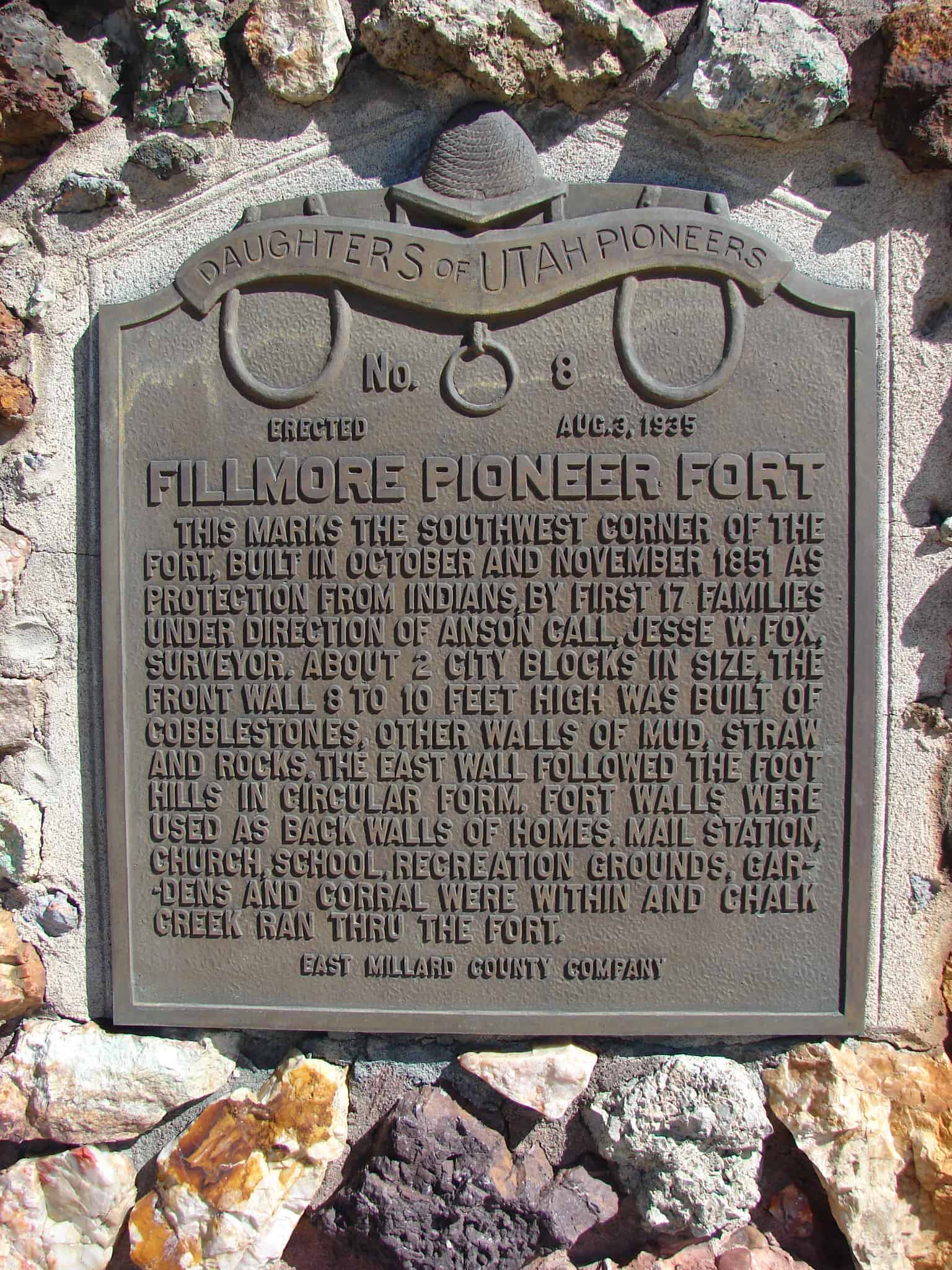
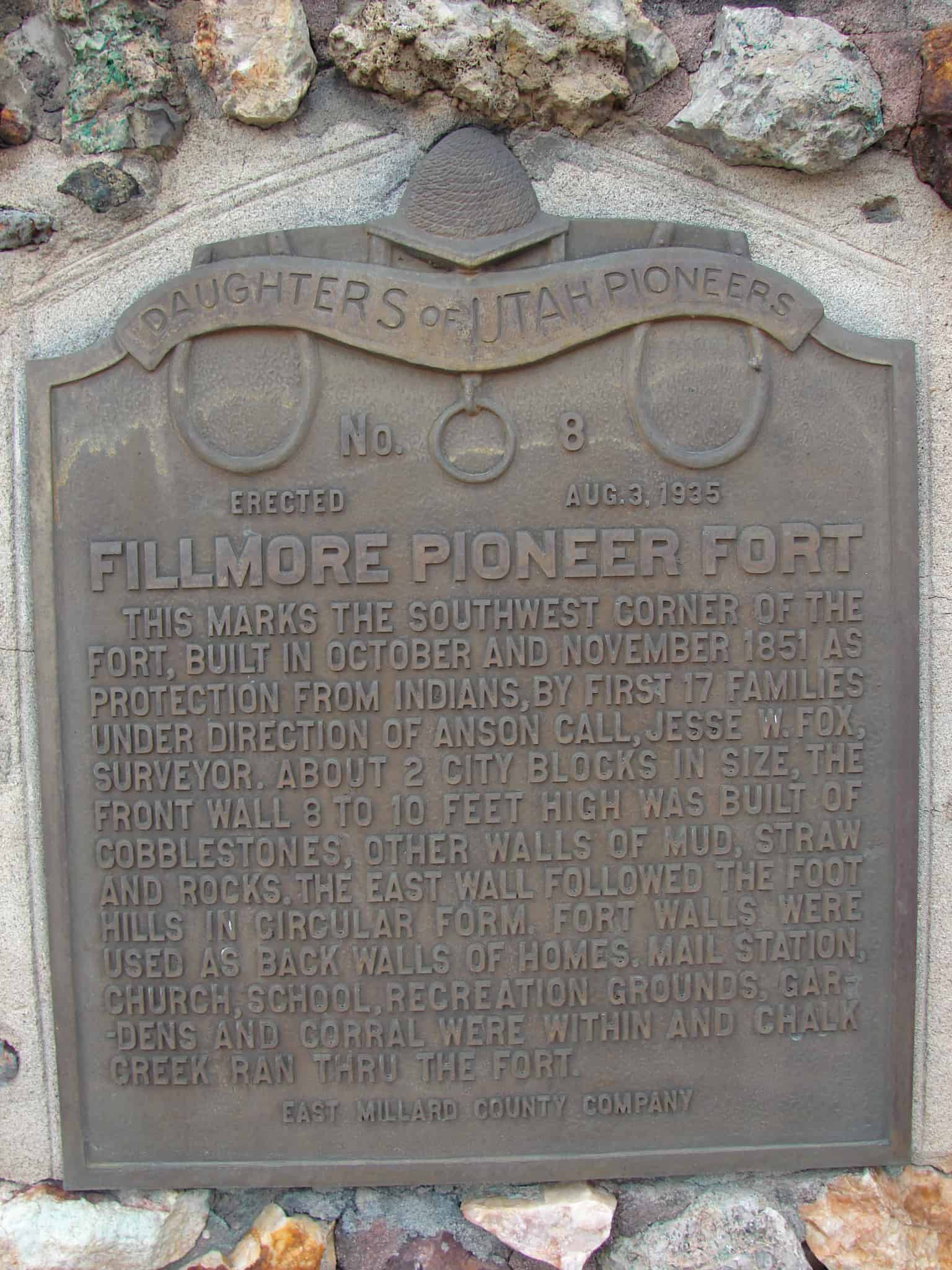
- Fillmore Pioneer Fort
- Land of the Yuta
- Little Rock School House
- Millard County Veterans/Military Monument
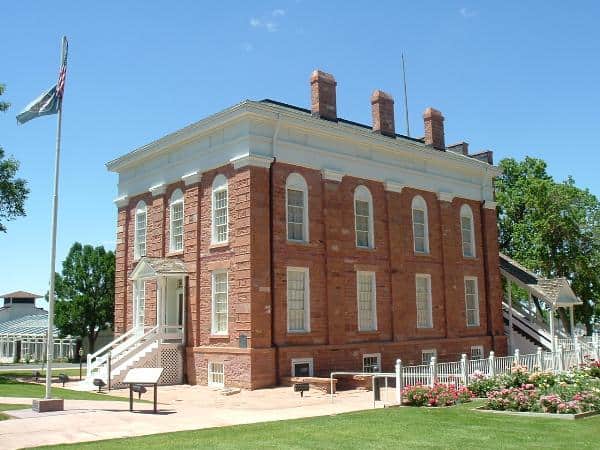
- Utah’s First Capitol / Utah Territorial Statehouse
- Fillmore posts sorted by address


Until 1851 Mormon Settlement in Utah was confined mostly to the western slopes of the Wasatch Mountains. When Utah became a territory through the Organic Act of 1850 settlement patterns began to change. Since the new boundaries of the territory enclosed a smaller land area than expansive Mormon hopes had included in the proposed state of Deseret, LDS leaders anticipated settlement of the entire territory.


Planning for the eventual settlement of Utah, the Legislative Assembly decided to locate the territorial capital at the geographic center of Utah. Pauvan Valley was chosen because of its location midway between the Sierra and Colorado Rockies and in the center of Utah. On October 4, 1851, the remote Pauvan Valley was designated as the site of the territorial seat of government. On the same day, the Assembly named the surrounding area Millard County and planned to create a capital city called Fillmore. A committee of four men was appointed to survey the area and determine the exact location of the city and the capitol building site.

The party, led by Orson Pratt, left Salt Lake City for Pauvan Valley on October 21, 1851. When they arrived at the uninhabited region, Jesse W. Fox laid out the boundaries for the capital city. Streets were outlined for future construction. The site of the territorial capital was located. Orson Pratt later wrote a letter to Brigham Young describing the city boundaries as square blocks of ten acres. The letter noted that a law was established that no trees were to be cut in the city or for two miles out.
Anson Call and a company of several families arrived in Fillmore at the same time as the Pratt party. The group had been asked by church leaders to settle the area. Before he left for Salt Lake City, Pratt instructed Call to construct the city as it had been outlined. Streets, houses, public buildings, and, most important, the territorial capitol had to be built. During the next year the Fillmore settlers worked to create a city out of a wasteland. The immediate need of building homes and public buildings took up most of the time and energy of the workmen. Because of this, construction of the capitol was delayed until the following spring.
In 1854, three years after the selection of the site, the walls of the capitol were finally completed. But construction was further delayed because of a shortage of funds. Though Congress had awarded the territory $20,000 to begin the project, no further funds were given to continue construction. After months of hard work and limited supplies, local workmen finally completed the roof on the east wing of the capitol in the summer of 1855. The interior was rushed to completion in preparation for the Utah Territorial Legislature to convene in Fillmore. On December 10 the fifth annual legislative session was held in the new territorial capitol–the only complete session held there. Tradition says that the next day Brigham Young officially dedicated the building.
The legislature convened in Fillmore again in December 1856, after organizing, the assembly returned to Salt Lake City to complete its session. Legislators complained about the lack of housing and adequate facilities in Fillmore. Rather than being the thriving capital city that many had imagined, Fillmore remained a small rural community with little outside communication or industrial development. Realizing that Utah’s population had not centralized as anticipated, the territorial leaders quickly lost interest in Fillmore. In December 1856 Salt Lake City was officially designated as the capital of territorial Utah. Until the completion of the State Capitol in 1916, the legislature met in five different buildings in the city–the Council House, Social Hall, old Salt Lake City Hall, Salt Lake City and County Building and the Women’s Industrial Christian Home.
Meanwhile, the completed east wing of the Fillmore capitol building took on many different functions. In 1872 title to the building was passed to Fillmore City. It was used on different occasions as a jail, school, church, meeting house, and office building by local residents of Fillmore. Today, the site has been converted into a state park and museum of pioneer relics.
Although Fillmore never became the capital city envisioned by early Mormon leaders, the uncompleted capitol is a reminder of an era in which the settlement of Utah was new and its patterns undetermined.(*)