• About JacobBarlow.com
  • Cemeteries in Utah
  • D.U.P. Markers
  • Doors
  • Exploring Utah Email List
  • Geocaching
  • Historic Marker Map
  • Links
  • Movie/TV Show Filming Locations
  • Oldest in Utah
  • Other Travels
  • Photos Then and Now
  • S.U.P. Markers
  • U.P.T.L.A. Markers
  • Utah Cities and Places.
  • Utah Homes for Sale
  • Utah Treasure Hunt

JacobBarlow.com

~ Exploring with Jacob Barlow

JacobBarlow.com

Tag Archives: Grand County

Dewey Bridge

03 Saturday Dec 2016

Posted by Jacob Barlow in Uncategorized

≈ 1 Comment

Tags

Bridges, Dewey, Grand County, historic, NRHP, utah

  • picture24jul07-030

The Longest Wooden Suspension Bridge in Utah, in Dewey.  The classic, historic bridge was burned in 2008 and replaced.

  • picture24jul07-031

Built in 1916 – Restored in 2000

The Dewey Bridge, constructed in 1916, is on the National Register of Historic Places. In its prime it was designed to support the weight of 6 horses, 3 wagons and 9000 pounds of freight. It is significant for its outstanding Engineering Accomplishment and for its Historic role as a vital transportation and commercial link connecting Southeastern Utah with Colorado and other points east. In the early decades of the twentieth century, Moab and other Southeastern Utah towns were dependent on communities in Western Colorado for everyday supplies, and markets for their agricultural products. This Bridge, which spans the formidable natural barrier of the Colorado River, was the first to provide a direct connection. Dewey Bridge is Utah’s longest suspension bridge, and at the time of its construction, was the second longest suspension bridge west of the Mississippi. It is also the State’s longest clear span bridge.

Solitude, Utah

14 Sunday Aug 2016

Posted by Jacob Barlow in Uncategorized

≈ Leave a comment

Tags

Floy, Grand County, Green River, Solitude, Thompson Springs, utah

SOLITUDE

Solitude is a railroad siding in Grand County just off Interstate 70.

Solitude Wash Bridge is on the old Highway 6/50.

Moab Giants

09 Thursday Jun 2016

Posted by Jacob Barlow in Uncategorized

≈ 1 Comment

Tags

Dinosaur, Grand County, Moab, Prehistoric, utah

A new Dinosaur Park near Moab has a half-mile trail you can pay to walk on and see many life sized, realistic looking dinosaur sculptures.

More info at http://moabgiants.com/

2016-04-12 10.56.41

Westwater, Utah

03 Tuesday May 2016

Posted by Jacob Barlow in Uncategorized

≈ Leave a comment

Tags

Cisco, Ghost Towns, Grand County, historic, Railroad, utah, Westwater

Westwater is a ghost town site near the west end of Ruby Canyon on the Colorado River. The Colorado border is eight miles east. After mining and railroad construction in the region declined, the town was abandoned and the area was used for grazing. The name indicates where the railroad exits into the valley at the west end of Ruby Canyon.(*)


site_map
westwater

Dewey, Utah (Originally Kingsferry)

03 Tuesday May 2016

Posted by Jacob Barlow in Uncategorized

≈ 1 Comment

Tags

Bridges, Grand County, historic, Moab, utah

picture24jul07-032

Dewey is a ghost town. Originally named Kingsferry, it began in the 1880s when Samuel King built and operated a ferry across the Grand River (now considered part of the Colorado River). A small community soon developed around the ferry. The town served as a ferry crossing until the Dewey Bridge was constructed in 1916.


Elgin, Utah

03 Tuesday May 2016

Posted by Jacob Barlow in Uncategorized

≈ Leave a comment

Tags

Elgin, Ghost Towns, Grand County, Green River, utah

2016-03-12 13.11.19
2016-03-12 13.11.23
2016-03-12 13.11.28


Elgin is on the east side of the Green River across from Green River. In 1905, Elgin was established as a siding on the Denver Rio Grande Western Railroad, and a post office was granted on March 5, 1898. The town quickly became a fruit-growing center, but over the years unexpected freezing periods and the cost of pumping water from the river caused the community to decline. Today the town has been revitalized by the addition of motels and tourist activities. Elgin has now been absorbed into Green River.(*)

Here are some photos I recently took at the Elgin Cemetery.

2016-03-12 12.01.49
2016-03-12 12.01.51
2016-03-12 12.04.41
2016-03-12 12.04.54
2016-03-12 12.08.09
2016-03-12 12.08.17
2016-03-12 12.08.27
2016-03-12 12.08.34
2016-03-12 12.08.36
2016-03-12 12.08.41
2016-03-12 12.09.47


Richardson, Utah

03 Tuesday May 2016

Posted by Jacob Barlow in Uncategorized

≈ 1 Comment

Tags

Castle Valley, Grand County, Moab, Richardson, utah

Richardson is a nearly forgotten town named after its founder, Professor Richardson, who in 1879 settled at the mouth of Professor Creek (also named after him). He built a cabin which later became a store when he built his home in nearby Professor Valley. Professor Creek was a strategic waterway used by early residents to float supplies from the railroad stop at Cisco down to Castle Valley. Richardson had an official post office from 1886 until 1905. Today, only a couple of ranches remain in the area.(*)

Pinhook, Utah

03 Tuesday May 2016

Posted by Jacob Barlow in Uncategorized

≈ 1 Comment

Tags

Castle Valley, Grand County, Moab, Pinhook, utah, Wilson Mesa

East from Moab, on Wilson Mesa in the La Sal Mountains, was the little village called Mesa. The Town of Pinhook, also in the La Sal Mountains, was a tent village. On June 15, 1881 a bloody battle was fought between the village and a hostile band of Indians. Eight white men were buried at the site in 1 large grave. A historical marker has been erected on this spot.

Wilson Mesa, also known as simply Mesa, was located on the western slope of the La Sal Mountains. It actually consisted of two mesas, North Mesa and South Mesa, which were separated by a small canyon called Left Hand. These mesas, which still contain ranches, are accessible from the present-day La Sal Mountain Loop Road. Wilson Mesa was first settled by Joseph Burkholder and Herbert Day in 1891. Other early settlers included the Shafers, the Johnsons, the Diffendorfs, and the Fillmores. Wilson Mesa took its name from cattleman A.G. Wilson, who grazed about 500 cattle in Spanish Valley, the Sand Flats, and on the mesa itself. A post office existed in Mesa from 1907 to 1923. One notable accomplishment by Mesa settlers was the construction of an impressive tramway to lower 1,200 pounds of produce at a time from South Mesa to the Mill Creek area some 2,000 vertical feet below. The Murphy brothers built the tram around 1916. Supplies could also be hoisted up the tramway, provided that the down-going load was heavier.

Historic Marker:
In memory of those who were massacred by Indians June 15, 1881, buried here

  • L.E. Wilson
  • A.R. Wilson
  • H. Tarter
  • W. Tarter
  • J. Heaton
  • G. Taylor
  • T. Glick
  • J. Galloway

Erected 1940 by Grand Co.(*)

History on the Pinhook Draw Fight: http://digitallibrary.utah.gov/awweb/awarchive?type=file&item=34837

Pinhook Battleground

The Pinhook Battleground Site on the Manti-La Sal National Forest encompasses an 80-acre area and features a 20-foot square plot, which is the location of the common grave of eight men who were killed in the Pinhook confrontation. The Pinhook Battle, one of the largest and bloodiest battles between Anglo Americans and American Indians to occur in southeastern Utah, took place in 1881. The fight resulted in the death of eight Colorado posse members, two Moab cattlemen, and an unknown number of American Indians. The dispute was fueled by competition over the land and resources of southeastern Utah and southwestern Colorado. The National Register nomination and early commemoration efforts of the site were udnertaken by the Moab Lions Club.

Ken’s Lake

25 Monday Apr 2016

Posted by Jacob Barlow in Uncategorized

≈ 2 Comments

Tags

Grand County, Kens Lake, Moab

2018-03-28 12.56.25

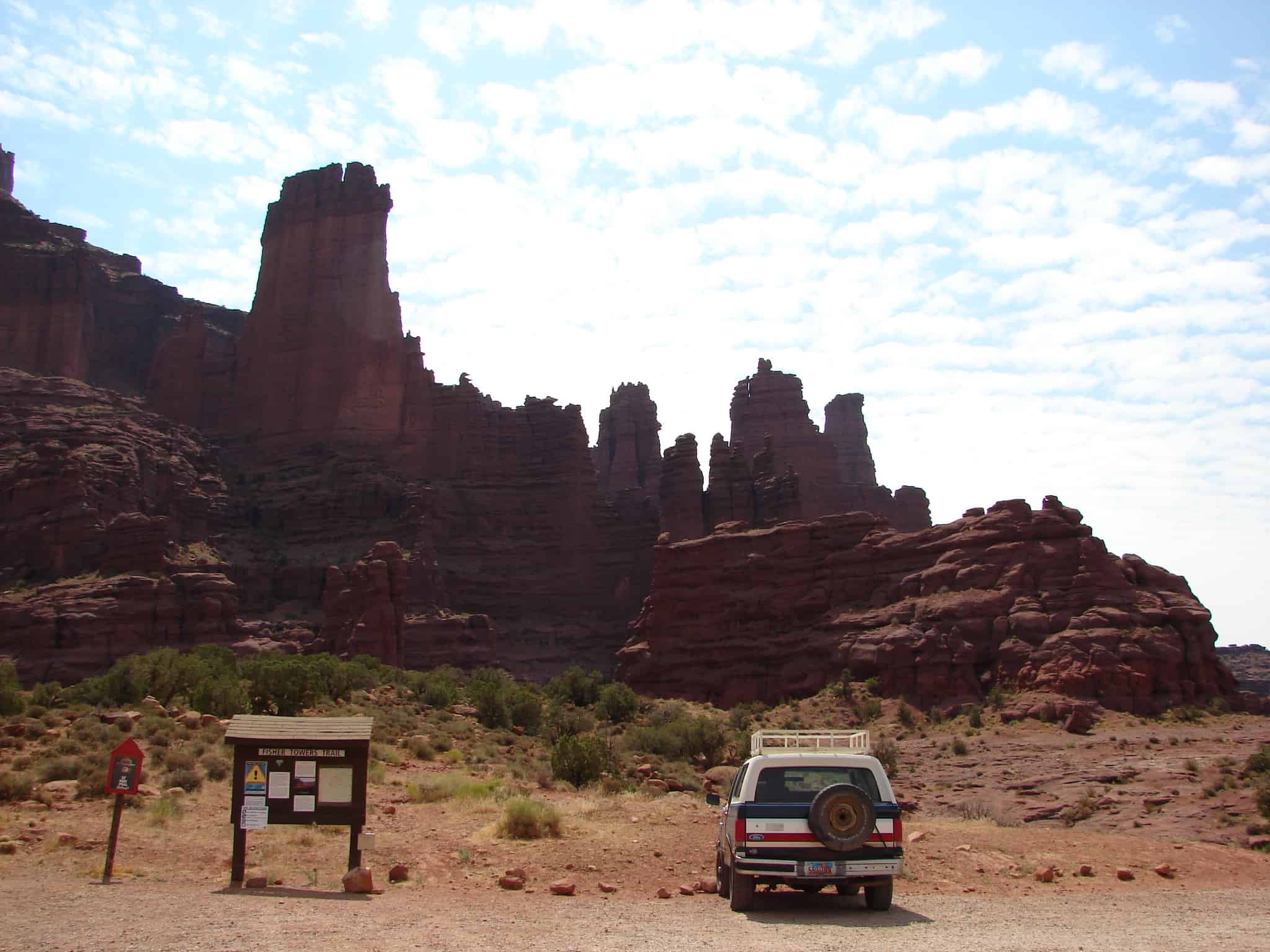
Ken’s Lake is located 10 miles south of Moab. The campground accommodates even the largest motorhomes. Hiking and horseback trails originate at the campground. Fishing in the reservoir is a popular activity. Boating on the reservoir is limited to non-motorized craft. The views from the campground feature the La Sal Mountains and the redrock fins surrounding Moab.

Campgrounds have picnic tables, vault toilets, grills, graveled roads, and trash receptacles.  There is no drinking water at the campground.

Campsites are available on a first-come, first served basis.

Camping at all sites is limited to 14 days within a 30 day period.

2018-03-28 12.56.27

2018-03-28 12.59.04

2018-03-28 12.56.50

2018-03-28 12.56.55

Plainsfield, Utah

25 Monday Apr 2016

Posted by Jacob Barlow in Uncategorized

≈ 1 Comment

Tags

Grand County, Moab, utah

Plainsfield was located just south of the Grand-San Juan County line in the “Poverty Flats” area of southern Spanish Valley, somewhere near or in between the Old Airport hanger and Ken’s Lake. Virtually no evidence remains of the town’s existence. One of its earliest residents was noted pioneer John Henry Shafer, who settled the Plainsfield area in 1878 along with fellow rancher C.M. Van Buren. A petition for a post office was granted in 1879, but was discontinued the following year. Problems with hostile Native Americans caused the first Plainsfield settlers to close the fort and move closer to town. However, in 1883, four other families (Somerville, McConkie, Newell, and Johnson) moved from elsewhere in San Juan County to the Plainsfield area. Jennie Somerville, daughter of Mr. and Mrs. Andrew Somerville, was reportedly the first baby ever born in the fledgling community. Throughout the 1880s, school was taught and LDS church meetings were held at the McConkie home in Plainsfield. Because water was scarce, Plainsfield residents had to go down the valley three or four miles to the Boren Ranch (now the George White Ranch) to obtain drinking water from the springs. By the early 1900s, however, Plainsfield was nothing more than a memory.(Thanks for moabhappenings)


← Older posts
Newer posts →

Follow Jacob

Follow Jacob

Blog Stats

  • 2,064,964 hits

Social and Other Links

BarlowLinks.com

Recent Posts

  • The Heinrich Gubler Home
  • The Temple Quarry
  • The Old Settler’s “Swallow’s Nest”
  • Arthur Miles Home
  • Navajo Shadehouse Museum

Archives

Loading Comments...