• About JacobBarlow.com
  • Cemeteries in Utah
  • D.U.P. Markers
  • Doors
  • Exploring Utah Email List
  • Geocaching
  • Historic Marker Map
  • Links
  • Movie/TV Show Filming Locations
  • Oldest in Utah
  • Other Travels
  • Photos Then and Now
  • S.U.P. Markers
  • U.P.T.L.A. Markers
  • Utah Cities and Places.
  • Utah Homes for Sale
  • Utah Treasure Hunt

JacobBarlow.com

~ Exploring with Jacob Barlow

JacobBarlow.com

Tag Archives: Railroad

Tooele Valley Railroad Complex

31 Tuesday Mar 2026

Posted by Jacob Barlow in Uncategorized

≈ 1 Comment

Tags

NRHP, Railroad, Tooele, Tooele County, utah

Tooele Valley Railroad Complex

Built in 1909, the Tooele Valley Railroad Complex is historically significant for the integral role it played in the transformation of Tooele from a primarily agricultural community to an industrial based community. For over 60 years the Tooele Valley Railroad transported products from the smelter east of town to the main railway lines west of town. The smelter, constructed in 1909-10 and dismantled in 1972, was one of the major facilities of its kind in the state and served locally as a dominant factor in the growth and economic development of the community. The depot is the only remaining building in Tooele closely associated with the activity of the smelter. During much of the time of its operation, the Tooele Valley Railroad also served as an important local carrier of passengers and freight.

The Tooele Valley Railroad Complex is located at 35 North Broadway Avenue in Tooele, Utah and was added to the National Register of Historic Places (#84002426) on May 17, 1984.

The Tooele Valley Railroad (TVR) was built as a connection between the International Smelting and Refining Company’s plant, (built 1909-1910) located five miles east of Tooele, Utah, and the Union Pacific and Western Pacific railways at Warner, Utah, two miles west of Tooele. The International Smelting and Refining Company brought many new peoples to the Tooele area. By 1912 a new town had been built east of Tooele to house 1,000 people. Most of these new citizens were from the Balkans, Italy, and Mediterranean areas. The TVR transported smelted products from the smelter to the main railway connections in Warner, two miles west of town. For years, the TV (as the railway was called) was a familiar sight as it passed through town several times a day hauling workers to and from the smelter as well as ore and supplies to and from the Warner depot.

The Tooele Valley Depot was built “car door to dock high” to facilitate loading and unloading less-than-car-load (LCD freight for Tooele merchants. Prior to 1909, Tooele merchants had to have their goods hauled by team and wagon from the Warner depot. In 1942 the depot was handling three cars of LCL items each week, but, with the advent of graveled roads, automobiles and trucks gradually took over Tooele Valley Railroad’s LCL business. By 1950 a trucking line had taken over all of the railroad’s small lot shipments.

The depot was the operations center for the railroad. Weigh bills and bills of loading for outgoing freight from the smelter and local shippers were prepared there. The depot issued operating instructions to railroad conductors and section foremen and processed reports received from them. The building provided office space for a telegrapher, station agent, time keeper, paymaster, two accountants, and the TV railroad superintendent as well as a baggage room and scales.

age room and scales. Besides serving the International Smelting & Refining Co. and local merchants, the TVR provided passenger service that matched Union Pacific Railroad’s schedule (tickets were sold at a small office at 18 West Vine). Rail spurs also served coal and oil companies in the area with car load lots. Approximately seven miles of track was serviced by crews working 7 hours a day, three shifts each day. Four steam driven, coal fired engines pulled the freight along the tracks. The last run made by one of these steam locomotives was on May 30, 1963 when they were replaced by two diesel/electric locomotives.

By 1970 the price of lead was 14tf per pound while it cost the International Smelting and Refining smelter 18tf per pound to produce lead. About this time the Environmental Protection Agency was also requiring installation of pollution control devices. Faced with increased production costs and decreasing prices, it was decided that the smelter would be shut down. This was Utah’s last copper-lead and zinc smelter. In 1972 the smelter was dismantled. Without the International Smelting and Refining smelter operating, ore concentrates were trucked to the Union Pacific Railroad for shipment to Japan where they would be smelted. This action made the Tooele Valley Railroad unnecessary. After over sixty years of operation the railroad was abandoned and the tracks, except those near the depot, were torn up. The depot currently houses the Tooele County Museum run by the Settlement Canyon Chapter of the Sons of Utah Pioneers.

———-

The Tooele Valley Railroad Complex appears very much the way it did at the time of its construction in 1909. A chain link fence currently surrounds the 2.10 acre parcel of land which includes the buildings and some of the railroad cars which served as the vital elements on the railroad’s operations. The property includes the depot, the section head’s house, a frame maintenance shed, and four railroad cars. Also included on the property are two out-of-period outbuildings and three ineligible railroad cars which were not part of the railroad’s operation.

The Tooele Valley Railroad depot, built in 1909, is a one-story brick building on a raised concrete foundation. It is a rectangular building measuring 61′ 4″ by 31′ 3″ on the outside. It is surrounded on the east, north, and south sides by a wooden dock approximately 4 feet high and 8 feet wide. On the south side of the building is a three part bay window, which was used as the work location of the telegrapher. The roof is a gablet roof with overhanging eaves. The detailing of the building is very simple. The windows are two-paned, long and narrow and double hung. They are topped by two rows of radiating arched brickwork while the two doorways are topped by large square transoms. On the west and south sides of the building are two large freight doorways. The building is in good condition. It is unaltered and appears as it did at the time of construction in 1909.

The section head’s house is a 1 1/2 story frame house with a gable roof and horizontal lap siding. A full-width porch spans the gable-end east facade, and a smaller porch is attached on the southwest rear corner of the house. Other features of the house include a central, ridgeline chimney, two-over-two double hung windows, a concrete foundation, and a rear shed extension, possibly original. The house appears to be in a virtually unaltered condition.

The maintenance shed is a one-story frame building with a gable roof and horizontal lap siding. The broad, gable end east facade features returns on the eaves and two openings, a doorway and a window, arranged symmetrically. The building is in good condition and appears to be unaltered.

he four eligible railroad cars include two cabooses, a coal car, and a locomotive which was built c. 1905 and acquired by the Tooele Valley Railroad around 1909.

The complex is currently being used as a museum by the Settlement Canyon Chapter of the Sons of Utah Pioneers.

Commencing at the Northwest corner of the Vine Street and Broadway Avenue intersection, thence North 216 feet, West 423 feet, South 216 feet, and East 423 feet to beginning. This parcel of land was chosen because:

1) it is visually well defined by the fence surroumng it;
2) it is part of the original railroad headquarters property; and
3) it includes all of the resources identified in this nomination.

This 2.10 acre parcel is only part of the overall 3.42 acre parcel of land as legally defined in the county property records. The additional acreage comprises a narrow unfenced piece of land extending to the west of the 2.10 acre parcel, paralleling and including the old railroad grade. The legal description for the overall 3.42 acre parcel of land is as follows:

Beginning South 2031.8 feet and West 1275.4 feet from the Northeast corner of the Northwest quarter of Section 27, Township 3 South, Range 4 West, Salt Lake Base and Meridian on the West line of Broadway Street; thence South 216.58 feet to the Southeast corner of Block 153 of Plat C and the North line Vine Street; thence West 280 feet to the Southwest corner of said Block 153 and the East line of 3rd Street; thence North 13.91 feet; thence North 80 degrees 32 minutes West 143.17 feet; thence North 38.27 feet to the South line of the Tooele Valley Railroad Southerly line; thence South 81 degrees 59 minutes West 379.11 feet to the North line of said Vine Street; thence West 206.42 feet along the North line of said Vine Street to the East line of 1st Street; thence North 83 feet to the South line of Lot 4 of Block 142, Plat C; thence North 81 degrees 59 minutes East 587.87 feet to a point South 2094.41 feet and West 1698.56 feet from said Northeast corner of the Northwest quarter of Section 27; thence North 66.75 feet; thence South 89 degrees 28 minutes East 423.18 feet to the point of beginning. Being situate within Blocks 142, 154, and 153 of Plat C, Tooele City Survey, Tooele City and said Section 27, Township 3 South, Range 4 West, SLB&M.

Mt. Pleasant Railroad Depot

17 Friday Nov 2023

Posted by Jacob Barlow in Uncategorized

≈ Leave a comment

Tags

Historic Buildings, Moved Buildings, Mt Pleasant, Railroad, Railroad Depots, Sanpete County, Telegraph, utah

The Denver and Rio Grande Railroad Depot on the Marysvale Branch in Mount Pleasant, Utah.

845 South State Street in Mt Pleasant, Utah

The depot was moved from its original location at 500 West Main Street:

Sanpete Valley Railway – 125 N 500 W
https://mtpleasantpioneer.blogspot.com/2021/09/denver-and-rio-grande-railroad-depot.html

250 S Broadway

17 Wednesday May 2023

Posted by Jacob Barlow in Uncategorized

≈ Leave a comment

Tags

Amtrak, Emery County, Green River, Railroad, Train Stations, utah

The Green River Amtrak Station
250 South Broadway in Green River, Utah

Old Faithful #279

30 Sunday Apr 2023

Posted by Jacob Barlow in Uncategorized

≈ Leave a comment

Tags

Railroad

Old Faithful #279

This engine is a symbol of an era past. It is a reminder of the significant part railroading played in the history of Pioche. #279 was purchased in 1927 from the Chicago-Northwestern Railroad Co., for use on the Jackrabbit to Pioche line by the Pioche Pacific Railroad Co. It was retired from service in 1939 and housed at Jackrabbit until it was donated to the town of Pioche in 1957 and moved to this located by a group of interested local citizens.

Located at Pioche Town Park at 186 4th Street in Pioche, Nevada

Tehachapi Loop

19 Sunday Mar 2023

Posted by Jacob Barlow in Uncategorized

≈ 1 Comment

Tags

California, California Historical Landmarks, Historic Markers, Kern County, National Historic Civil Engineering Landmarks, Railroad

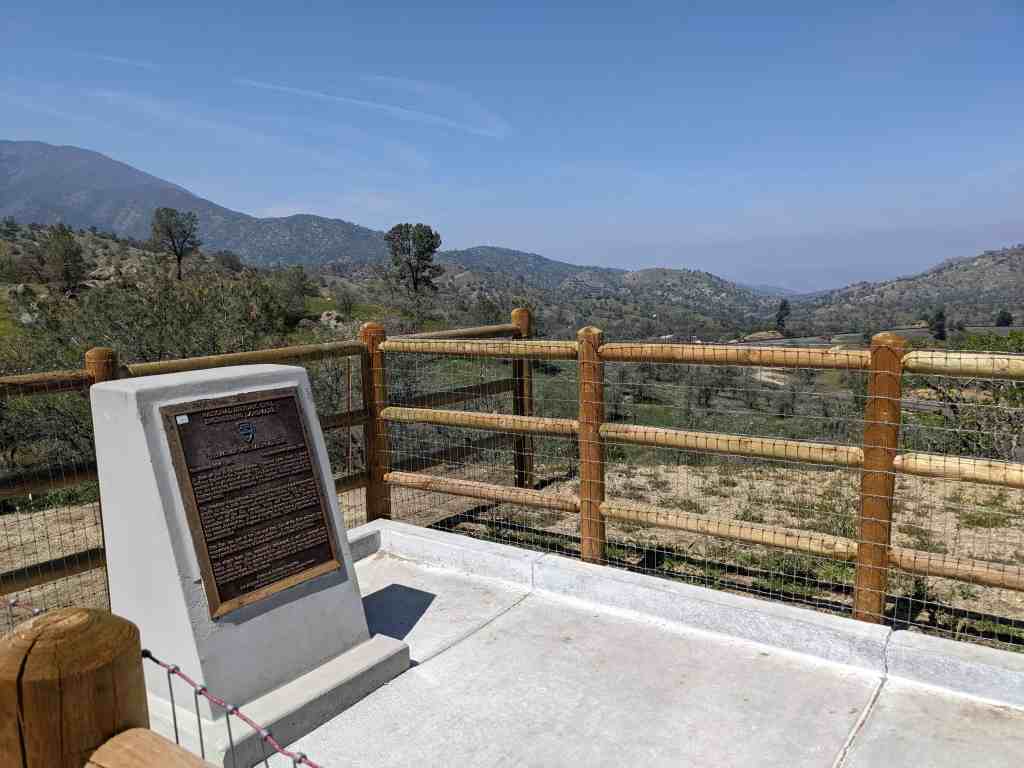
Tehachapi Loop

From this spot may be seen a portion of the world-renowned Loop completed in 1876 under the direction of William Hood, Southern Pacific railroad engineer. In gaining elevation around the central hill of the Loop, a 4,000-foot train will cross 77 feet above its rear cars in the tunnel below.

This is California Historical Landmarks #508.

Also located at this same overlook:

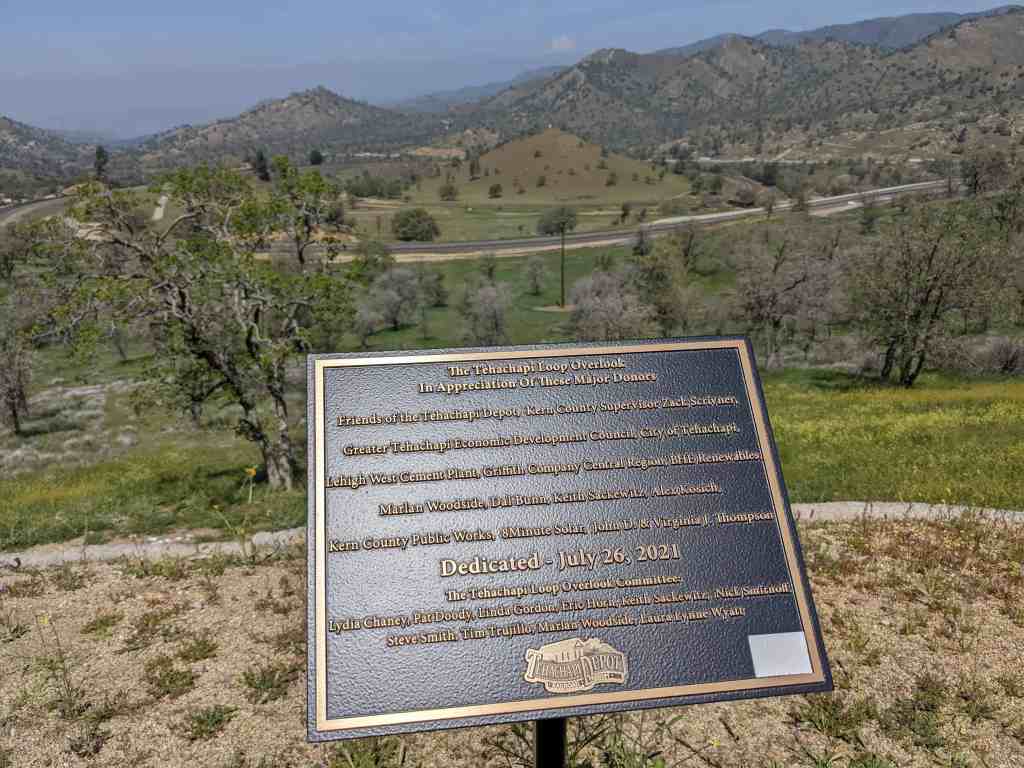
Tehachapi Pass Railroad Line

In front of you is the world famous Tehachapi Loop which is about halfway upgrade to the Tehachapi Pass. This steep line averages 2.2% in gradient in its 28 miles of length. This feat of civil engineering genius was crowning achievement of civil engineer William Hood of the Southern Pacific Railway Company. It is one of the seven wonders of the railroad world.

The Tehachapi Pass Railroad Line was cut through solid and decomposed granite by up to 3000 Chinese laborers from Canton, China. They used picks, shovels, horse drawn carts and blasting powder. This line, which climbs out of the San Joaquin Valley and through the Tehachapi Mountains had 18 tunnels, 10 bridges and numerous water towers for the old steam locomotives. It was completed in less than 2 years time under the leadership of civil engineer J.B. Harris, Chief of Construction, a remarkable feat.

This line was part of the last and final link of the first railroad line connecting San Francisco to Los Angeles. It was a primary factor in the early growth of the City of Los Angeles and the State of California.

This single track line, essentially unchanged, is still in constant use today, 122 years after its completion. It passes an average of 36 freight trains each day. This attests to the superior job of both engineering and construction done by the two civil engineers and the Chinese laborers.

Caboose No. 55

26 Monday Dec 2022

Posted by Jacob Barlow in Uncategorized

≈ Leave a comment

Tags

Carbon County, Helper, Historic Markers, Railroad, utah

Caboose No. 55

This caboose was built in 1918 by the Mt. Vernon Car Company for the Utah Railway Company. It was refurbished in 1958 at which time the steel siding was added. Caboose No. 55 traveled the route from Provo to Mohrland from 1918 to 1975. That’s 57 years!

This is located at the Helper Museum at 294 South Main Street in Helper, Utah

The Last Hurdle

19 Monday Dec 2022

Posted by Jacob Barlow in Uncategorized

≈ Leave a comment

Tags

History, Railroad

The Last Hurdle

On the weathered hillside above you are the footprints of fierce rivals, straining for the finish line in the greatest race of the 19th century.

The stakes were high. Each mile of track laid down meant enormous land grants and hefty federal subsidies. Blasting up from California came the Central Pacific Railroad, led by four eminent Sacramento businessmen with 10,000 Chinese laborers.

Eastern money and rough immigrant track gangs pushed the Union Pacific Railroad out from Omaha, barreling across the Plains and through the Rockies.

Both competitors had one last obstacle – the ascent of the Promontory Mountains – the steepest grade east of the Sierra Nevada. In the middle of this tough grade, was the unavoidable 500-foot-wide Spring Creek ravine.

By the spring of 1869, both railroads hurtled over this ravine, each making the leap in its own way.

The Track that United the States

A sharp eye can still pick out the marks of early railroad building along this rugged escarpment, even if the original iron rails and timber ties themselves are gone.

These fading remnants tell the story of a daunting engineering challenge – linking the Western states to the rest of the nation. Inscribed here, amid the sagebrush and bedrock of northern Utah is a tale of grand dreams and brute work, greed and glory.

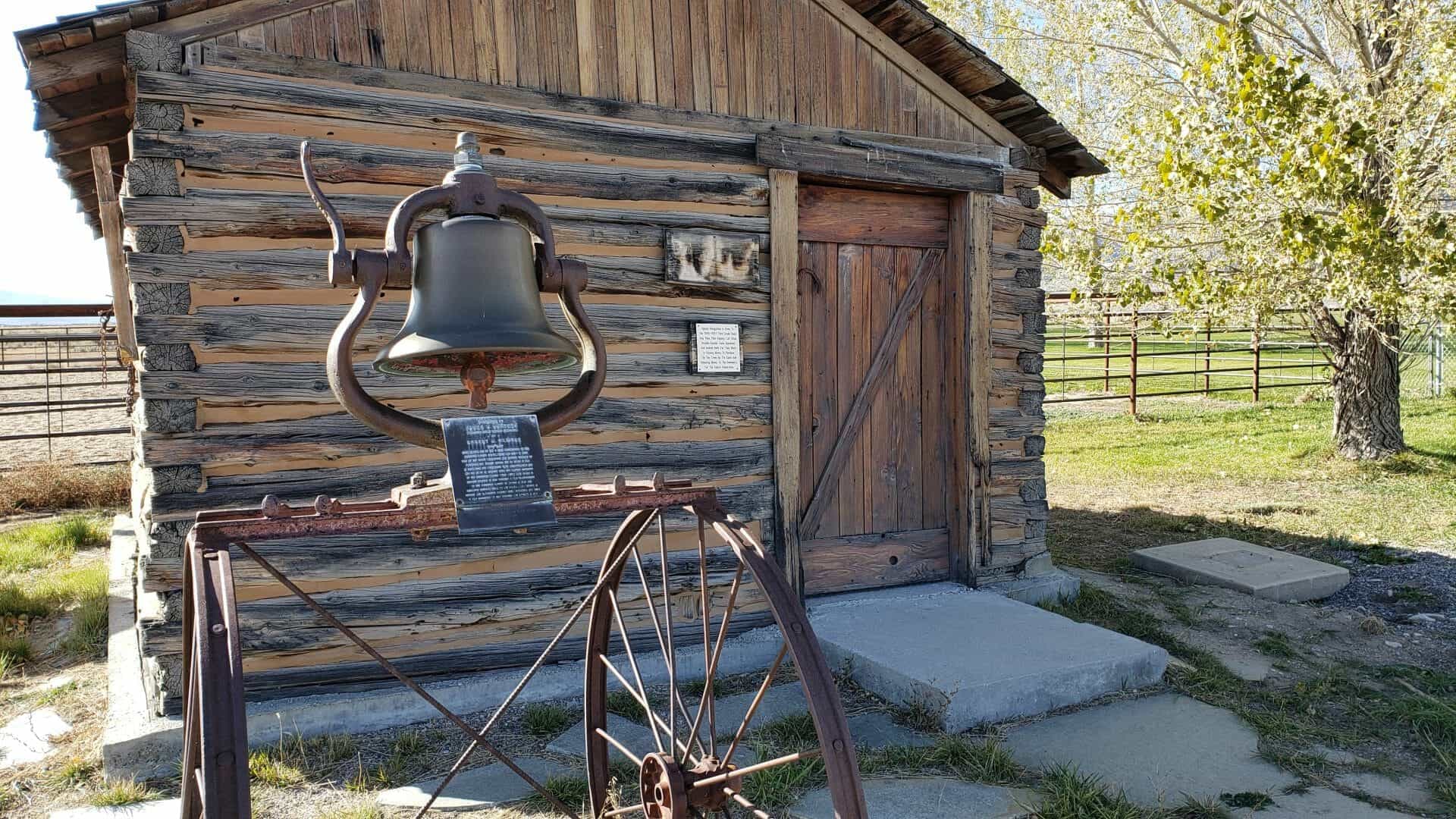
Park Valley Historic Bell

22 Thursday Sep 2022

Posted by Jacob Barlow in Uncategorized

≈ Leave a comment

Tags

Bells, historic, Park Valley, Railroad, Southern Pacific

Presented to
James K. Knudson
Administrator Defense Transport Administration
– By –
Robert M. Gilmore
—
From No. 1678, One of the oldest locomotives on the Southern Pacific system, which was built in April 1900 by the Cooke Locomotive and Machine Company of Patterson, New Jersey. During the 52 years it was in operation, the locomotive gave approximately one million miles of service over the various districts of the Southern Pacific. After many years in freight service in this country it was transferred to the Southern Pacific of Mexico in 1946 and operated between Nogales and Guadalajara, Mexico in freight and passenger service until December 1951 when it was returned to this country and retired in 1952.

This bell given to Park Valley, by Cam Harmon, Brigham City, Utah. Erected at Park Valley October, 1969

Caliente Railroad Depot

01 Monday Aug 2022

Posted by Jacob Barlow in Uncategorized

≈ Leave a comment

Tags

Caliente, Historic Buildings, Lincoln County, Neo-Mission, Nevada, NRHP, Railroad, Railroad Depots

The Caliente Railroad Depot

A large Neo-Mission type depot built in 1923, serving not only as Division Offices of the Union Pacific Railroad, but also as a hotel as well as a civic Center. Today it remains the most imposing structure in Caliente. The City of Caliente has taken it over in order to prevent its destruction In order to justify its cost, a City Hall complex and civic center is being constructed within the building. The exterior of the building is being left in its original form. Wherever possible the original wood, etc. is being left in the interior.

Caliente was founded by a railroad whose operations were based on steam motive power. It became U.P.’s best equipped steam facility between Salt Lake City and Los Angeles. For many years Caliente was a division point between Las Vegas and Milford, Utah. Engine and trail crews changed here. in the days of steam locomotives, Caliente also was the center of a helper district – the terminal for locomotives and crews that assisted trails upgrade between Carp and Caliente, Caliente and Crestline, and Modena and Crestline. During World War II, 17 helper crews were assigned here and about 150 were employed in the locomotive, car, and agents departments.

The interior has extensive oak paneling, ornate doors, vaulted ceilings, and tile floors. The City is retaining all original paneling and tile and interior changes are being kept to a minimum.

video

Located at 100 Depot Avenue in Caliente, Nevada and added to the National Register of Historic Places (#74001146) March 5, 1974.

Related:

  • Caliente, Nevada
  • Union Pacific Depot (State Historic Marker #248)

The building is 54 feet by 341 feet (18,414 sq. ft.), white, with a red tile roof. Railroad tracks immediately adjacent to the depot have been removed and the City plans to landscape a portion of the 2.2 acres now under lease. A few years ago the rows of Lombardy poplars in the lawn on the south end of the building were cut.

The architectural style, generally known as the Mission Revival or the neo-Mission was used on the Union Pacific stations between Salt Lake City and Los Angeles. The Caliente depot is the only station of its type left in Nevada It was designed by the Los Angeles firm of John and Donald Parkinson, Architects. They also designed the Los Angeles depot. A styling note is the full arched openings on the lower floor, with a rectangular pattern around all openings on the second floor. Wrought iron guard rails protect upstairs door openings (fire escapes).

The second floor was originally used as a hotel for the overnight accommodation of train travelers and railroad officers. A separate adjacent dormitory (now removed) served layover train crews in the last years of the Age of Steam. The second floor facilities have been removed and there are no current plans for the use of the area although access has been maintained.

“Following the war Caliente’s importance as a railroad center began to decline. The diesel locomotives, which replaced the steam engines in the late 1940’s and early 1950’s, could be run in multiples with one crew eliminating the need for helpers, nor did they require fuel, water, and servicing as frequently. Forces and facilities were gradually reduced as diesel power gained prominence.

Shop facilities were moved to Las Vegas in 1948. The roundhouse, water tank, and excess yard tracks were removed and the depot turned over to the City of Caliente on a long-term lease (10 years for $1) in 1970.” – Allen Krieg, Union Pacific Railroad

Railway Depot Built, But No Train Arrived!

28 Thursday Jul 2022

Posted by Jacob Barlow in Uncategorized

≈ Leave a comment

Tags

Gilsonite, Historic Markers, Narrow Gauge Railroad, Railroad, Uintah County, utah, Vernal

Railway Depot Built, But No Train Arrived!

The leading area industry of the late 1800s and early 1900s was mining Gilsonite, a glossy black hydrocarbon-resin. Henry Ford used it to produce the lustrous black paint on his Model T, and Anheuser Busch lined beer barrels with the tar-like substance. Today it is used in inks, building products, and protective coatings. The Uinta Basin lays claim to the only commercial mining of this substance. This industry sparked the construction of a narrow gauge railroad in 1904 to ship Gilsonite to the world market.

In 1905 the Uintah Railway and Freight Company constructed its railroad station, directly across from you, for the purpose of housing a railroad depot, freight station, and telegraph office. Despite the fervent efforts of the community, the rails never reached Vernal. The freight station continued to ship produts such as local wool. Until the 1940s, when modern highways and the trucking industry took over, the freight station also provided service to and from the rail line, located 57 miles southeast of the now-deserted ghost town of Watson.

Freight and passengers were transported from Vernal to the railway on a daily basis in wagons and, later, in modern motor coaches. This building now serves as a warehouse.

This is #19 of the 21 stop history walking tour in downtown Vernal, Utah. See the other stops on this page:

  • Vernal’s Walking History Tour

This marker is located at 90 North Vernal Avenue in Vernal, talking about the location across the street at 89 North Vernal Avenue.

← Older posts

Follow Jacob

Follow Jacob

Blog Stats

  • 2,051,694 hits

Social and Other Links

BarlowLinks.com

Recent Posts

  • Wallace Brigham Mathis Home
  • Moses Thatcher, Jr. Home
  • C. Gregory Crampton
  • Las Vegas High School Historic District
  • Martin Harris Gravesite

Archives


Loading Comments...