The leading area industry of the late 1800s and early 1900s was mining Gilsonite, a glossy black hydrocarbon-resin. Henry Ford used it to produce the lustrous black paint on his Model T, and Anheuser Busch lined beer barrels with the tar-like substance. Today it is used in inks, building products, and protective coatings. The Uinta Basin lays claim to the only commercial mining of this substance. This industry sparked the construction of a narrow gauge railroad in 1904 to ship Gilsonite to the world market.
In 1905 the Uintah Railway and Freight Company constructed its railroad station, directly across from you, for the purpose of housing a railroad depot, freight station, and telegraph office. Despite the fervent efforts of the community, the rails never reached Vernal. The freight station continued to ship produts such as local wool. Until the 1940s, when modern highways and the trucking industry took over, the freight station also provided service to and from the rail line, located 57 miles southeast of the now-deserted ghost town of Watson.
Freight and passengers were transported from Vernal to the railway on a daily basis in wagons and, later, in modern motor coaches. This building now serves as a warehouse.
This is #19 of the 21 stop history walking tour in downtown Vernal, Utah. See the other stops on this page:
Mark Requa’s Nevada Consolidated Copper Company laid 150-mile of track from Cobre, on the Southern Pacific line, to Ely in 1905-06 to haul ore from the Copper Flat mines west of Ely.
Ore was loaded into railroad gondolas at Copper Flat for the trip to the smelter at McGill, over a double-track trestle that was 1720 feet long. The trestle burned in 1922 and was replaced with an earth-fill span.
Passenger service and the “school train” carrying McGill youth to Ely High School ended in 1941. With the closing of local copper mines in 1983, the railroad ceased operations. Currently, part of the line serves the Nevada Northern Railway Museum for live steam rides. The East Ely shop complex for the Railway was listed as a National Historic Landmark District in 2006.
This is Nevada State Historical Marker #100 located at the White Pine Public Museum at 2000 East Aultman Street in Ely, Nevada.
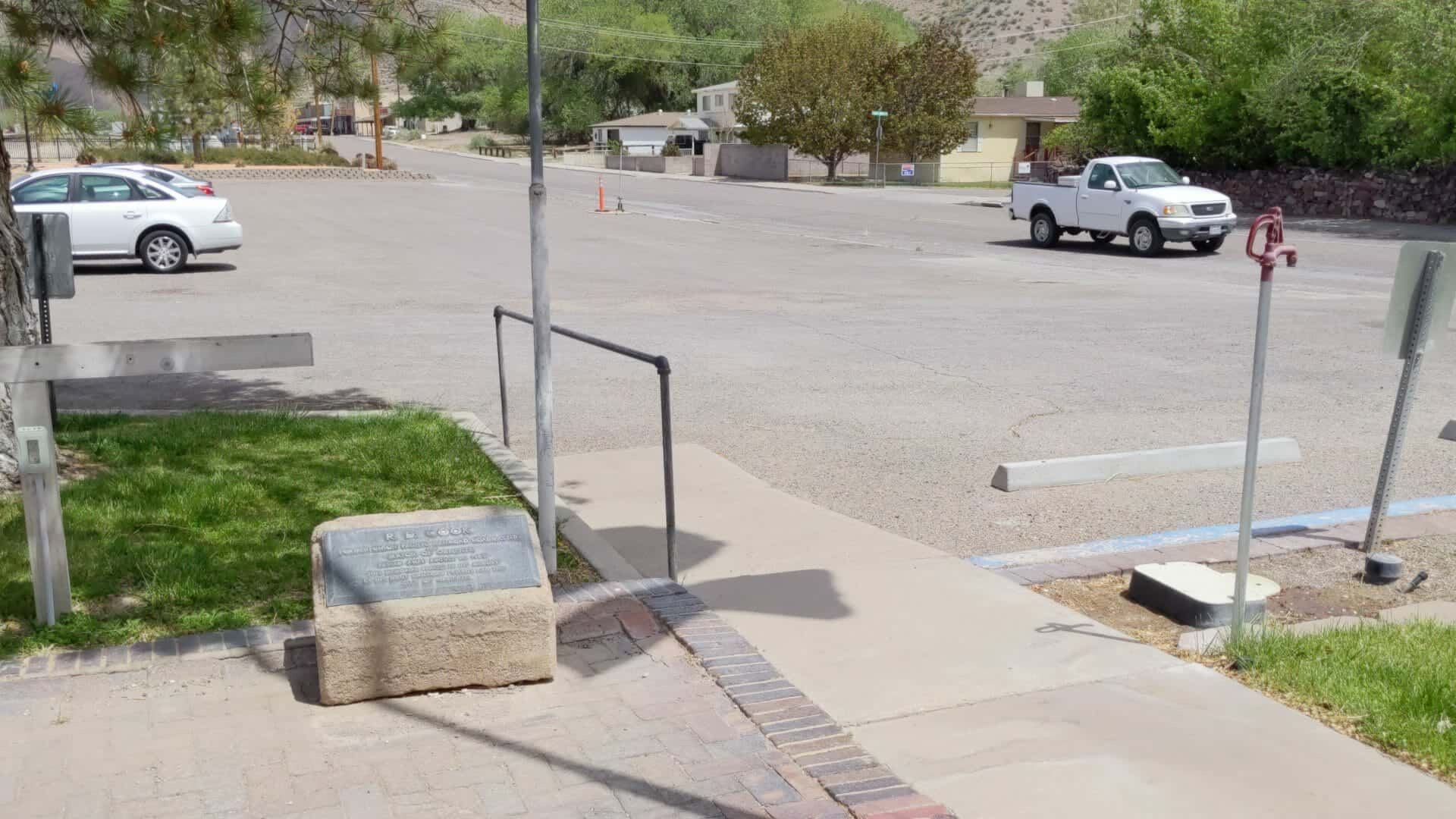
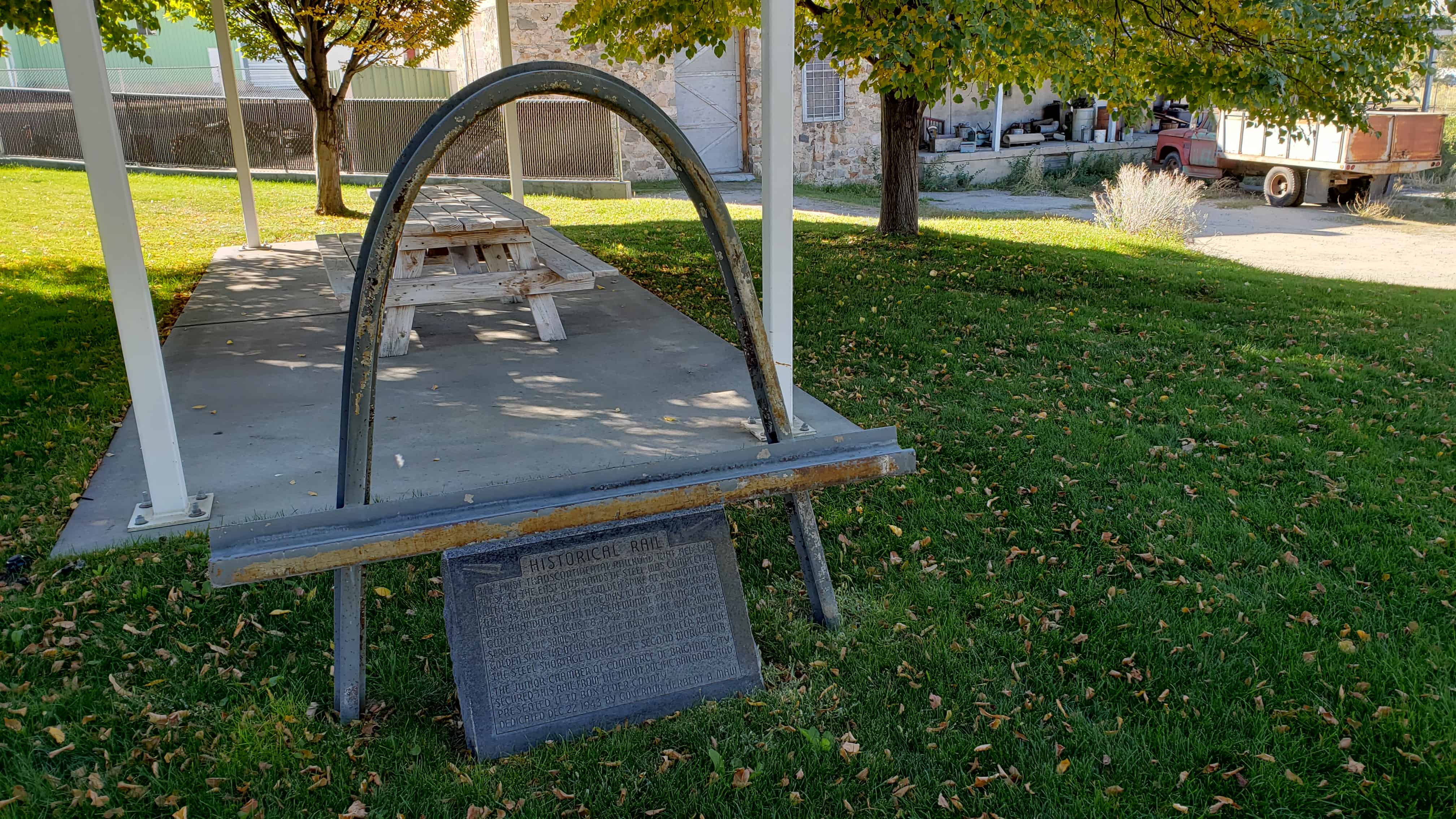
Located in a mini-park near the Railroad Depot is a historical rail with a monument that reads:
Historical Rail
The first transcontinental railroad that tied the west to the east with bands of steel was completed with the driving of the golden spike at Promontory, Utah, 33 miles west of here May 10, 1869. The railroad was abandoned with the ceremonial pulling of the golden spike August 8, 1942. This is the rail which served in the same place as the original rail held by the golden spike. The other rails were used to help relieve the steel shortage during the second world war.
The Junior Chamber of Commerce of Brigham City secured this rail from the Union Pacific Railroad and presented it to Box Elder County.
Dedicated December 22, 1943 by Governor Herbert B. Maw.
Located at 815 West Forest St in Brigham City, Utah
This rail car was moved to Ophir by Leo Ault to represent the St. John & Ophir Railroad that carried ore and passengers to the main Union Pacific line in Rush Valley. It contains old pictures and documents of significance to Ophir, the State of Utah, and the United States.
The depot served thousands of train passengers over the years. The trains also handled shipments of coal, locally grown produce, and mail.
During World War II a track was installed between the depot and Brigham City’s Bushnell Military Hospital for transporting wounded servicemen and medical supplies.
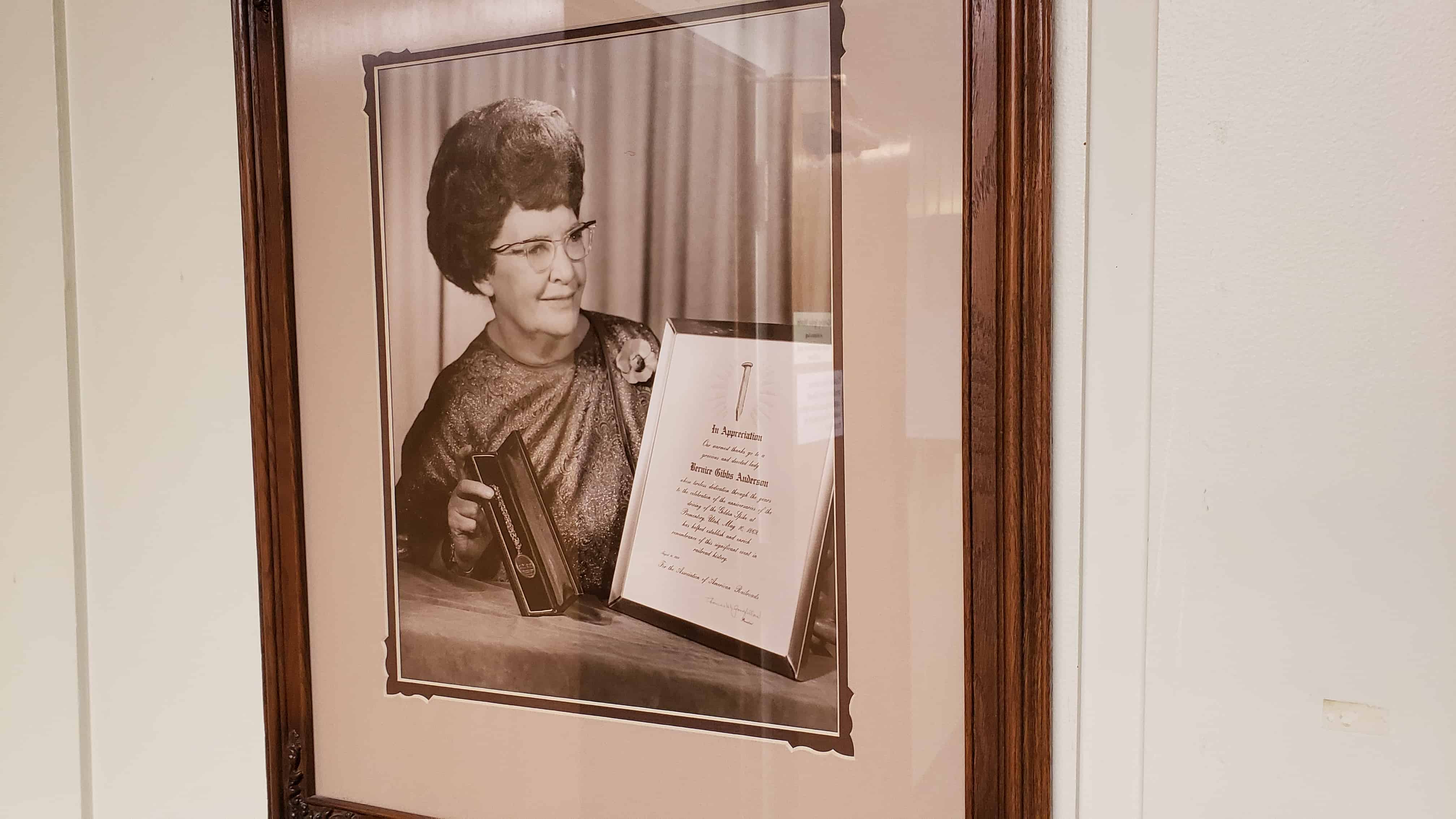
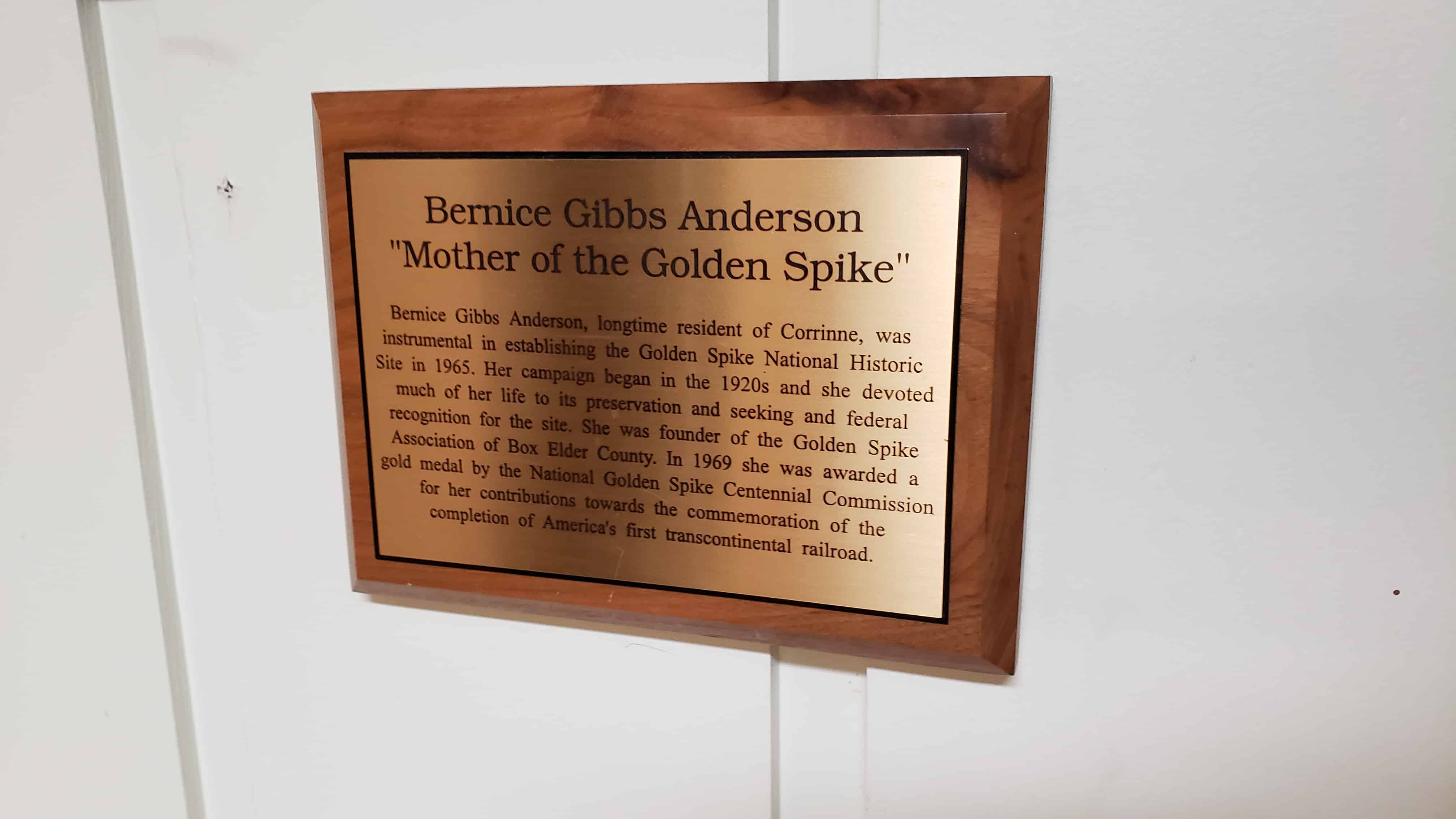
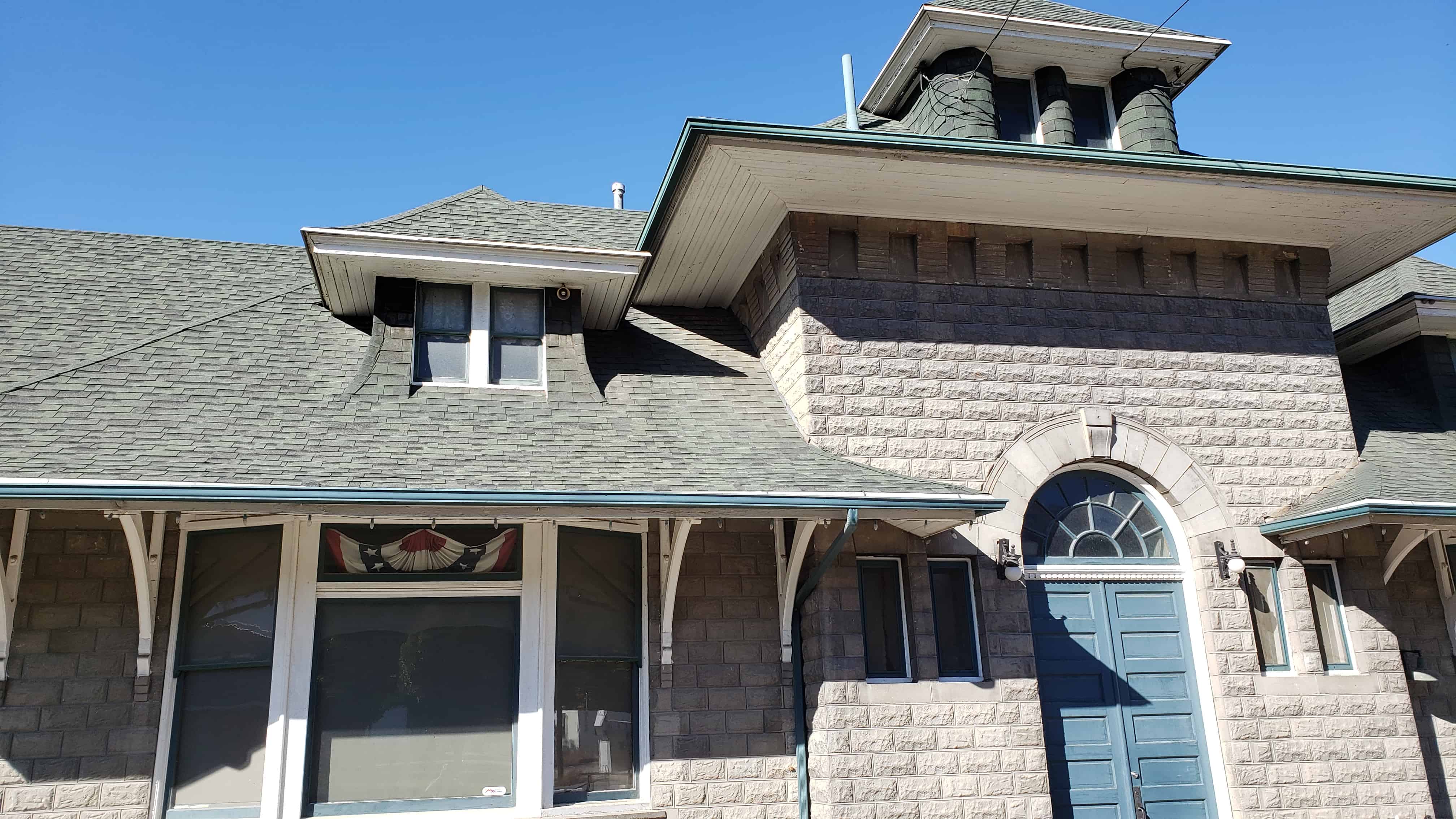
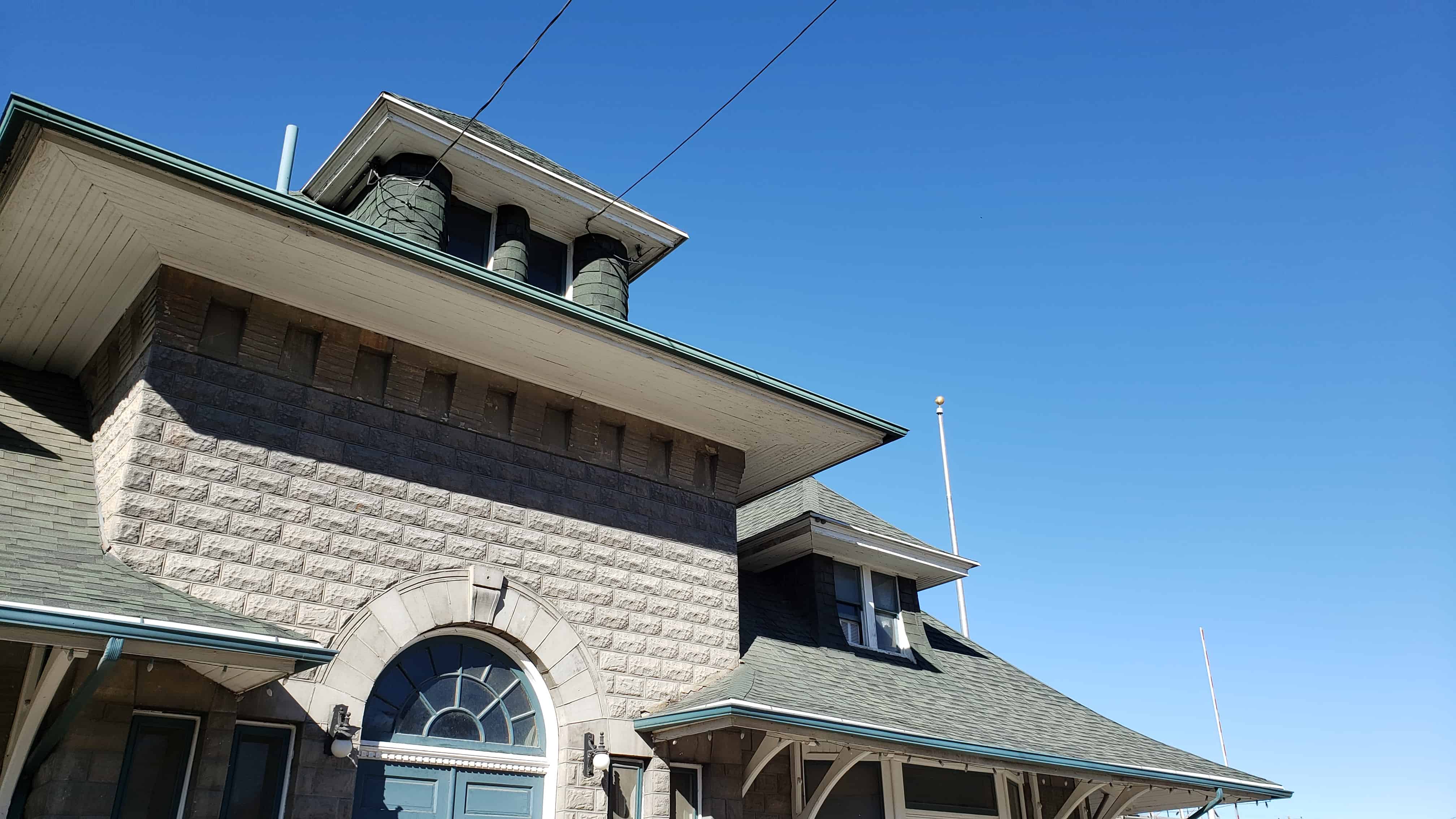
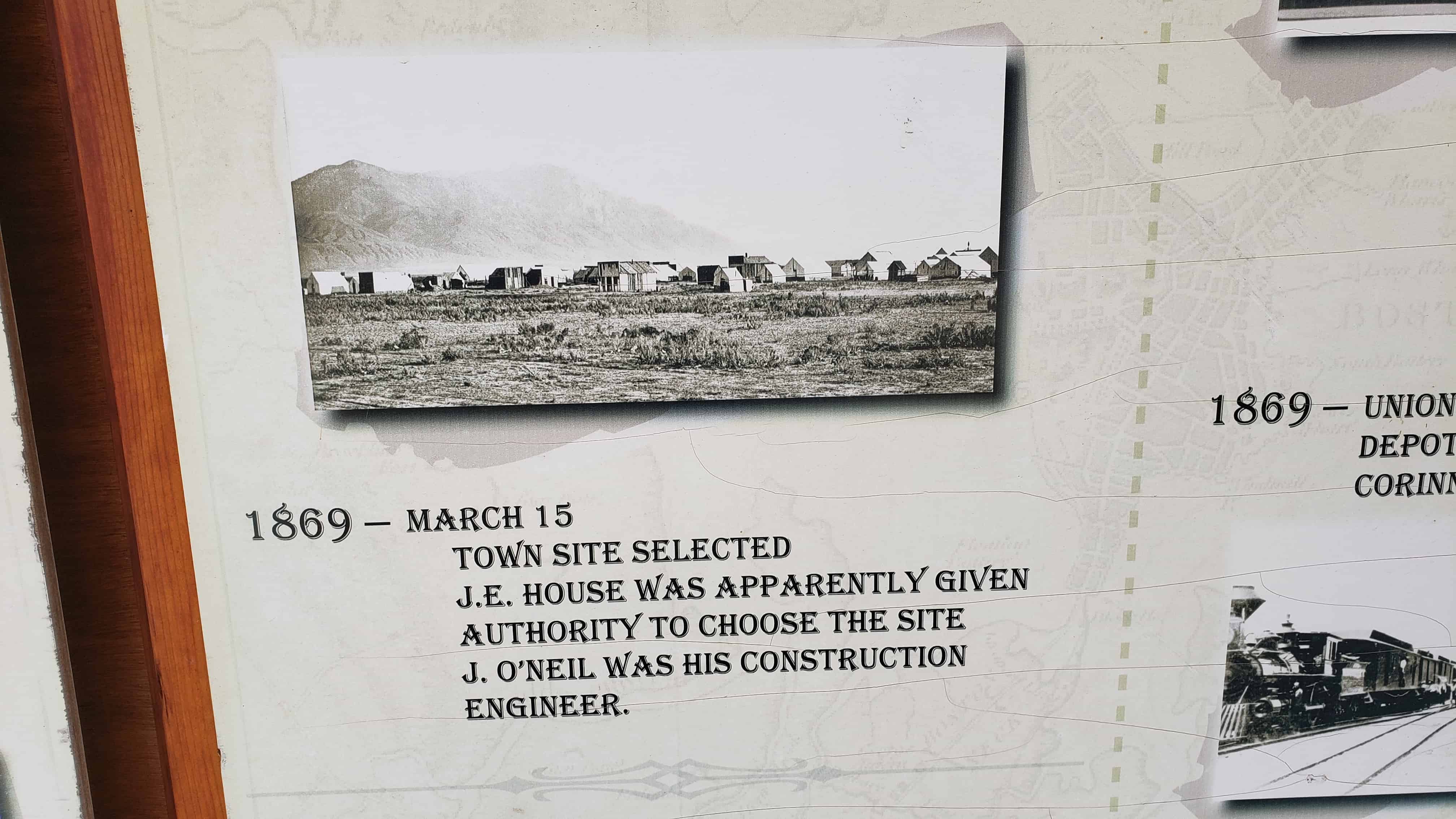
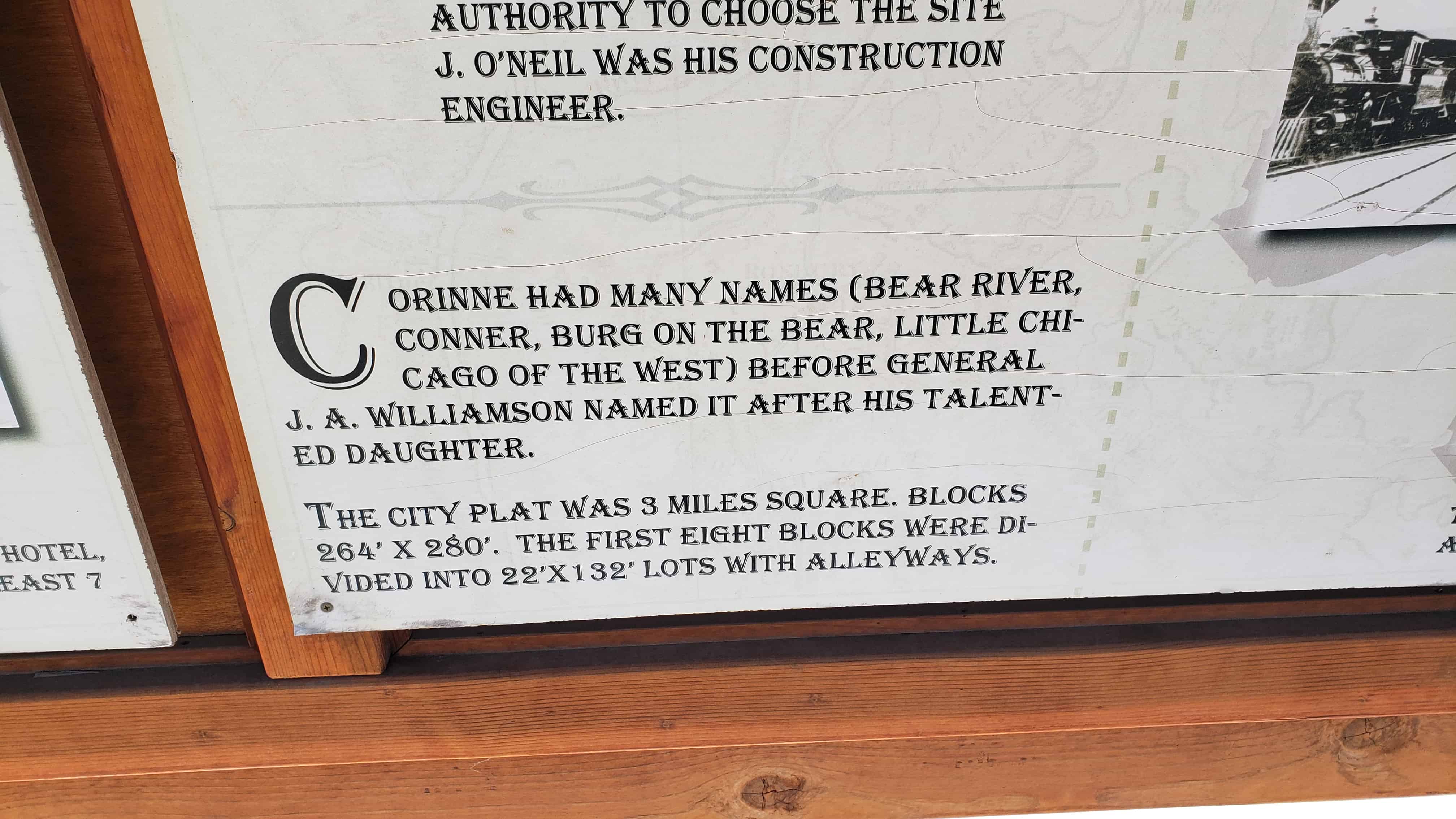
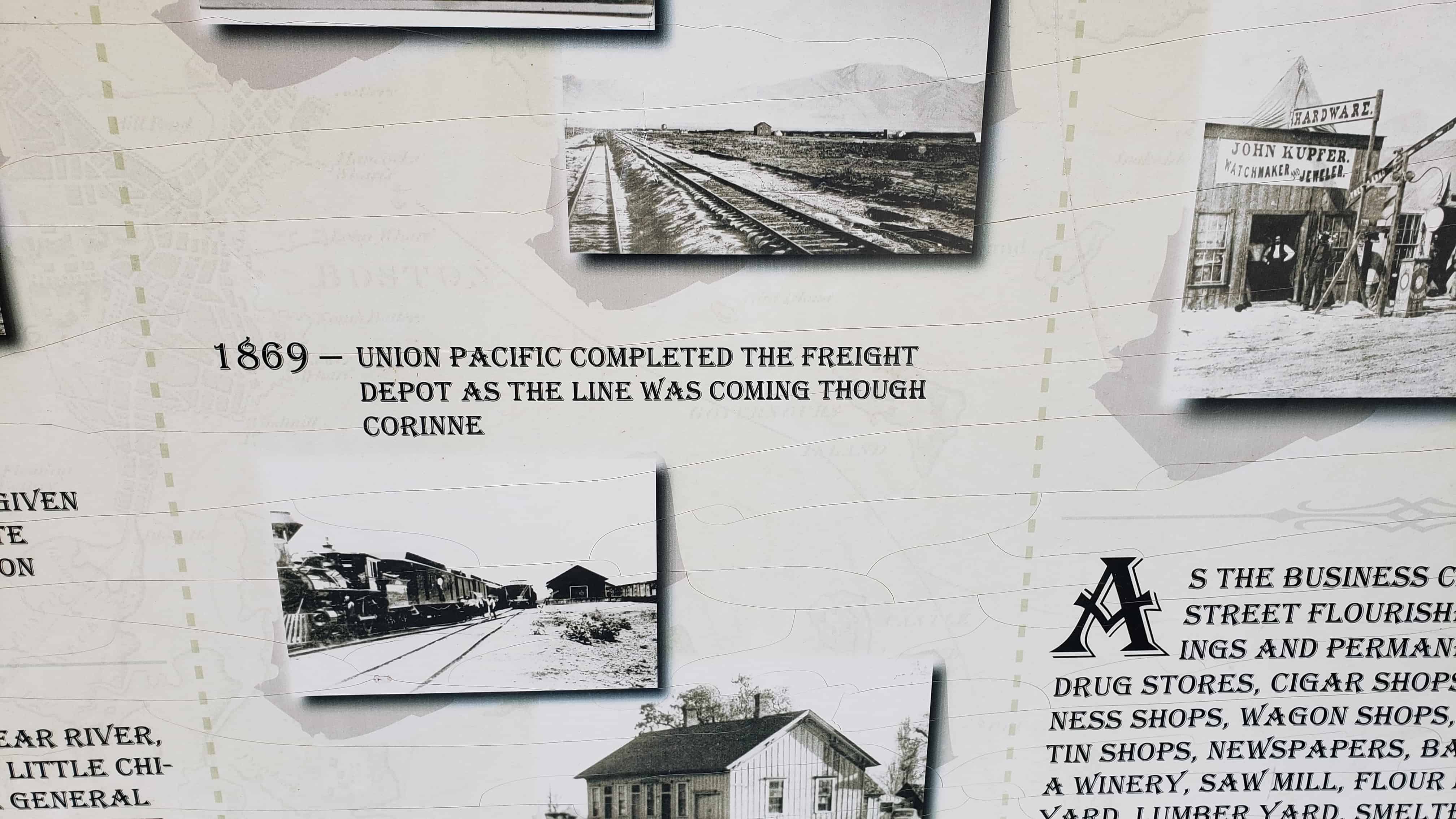
Looking toward the immediate completion of the first Transcontinental Railroad, Corinne Townsite was laid out in the Spring of 1869. Railroad Financiers, Real Estate Promoters, Businessmen & Gambling Sharks, launched a boom to make Corinne the shipping, trading & amusement center of the Rocky Mts.
Although Congress had planned the junction of the Union Pacific & Central Pacific Railroads at or near Ogden, the Union Pacific designated Corinne as the Freight Junction for the rich mines of Montana & the communities of Idaho & northern Utah. This decision was made after the Engineers declared that the town lay in the center of the Rocky Mountain Area & that the Bear River was navigable by Steamboat, making it possible for freight to be transported from Corinne via Bear River, the Great Salt Lake, & the Jordan River to Salt Lake City.
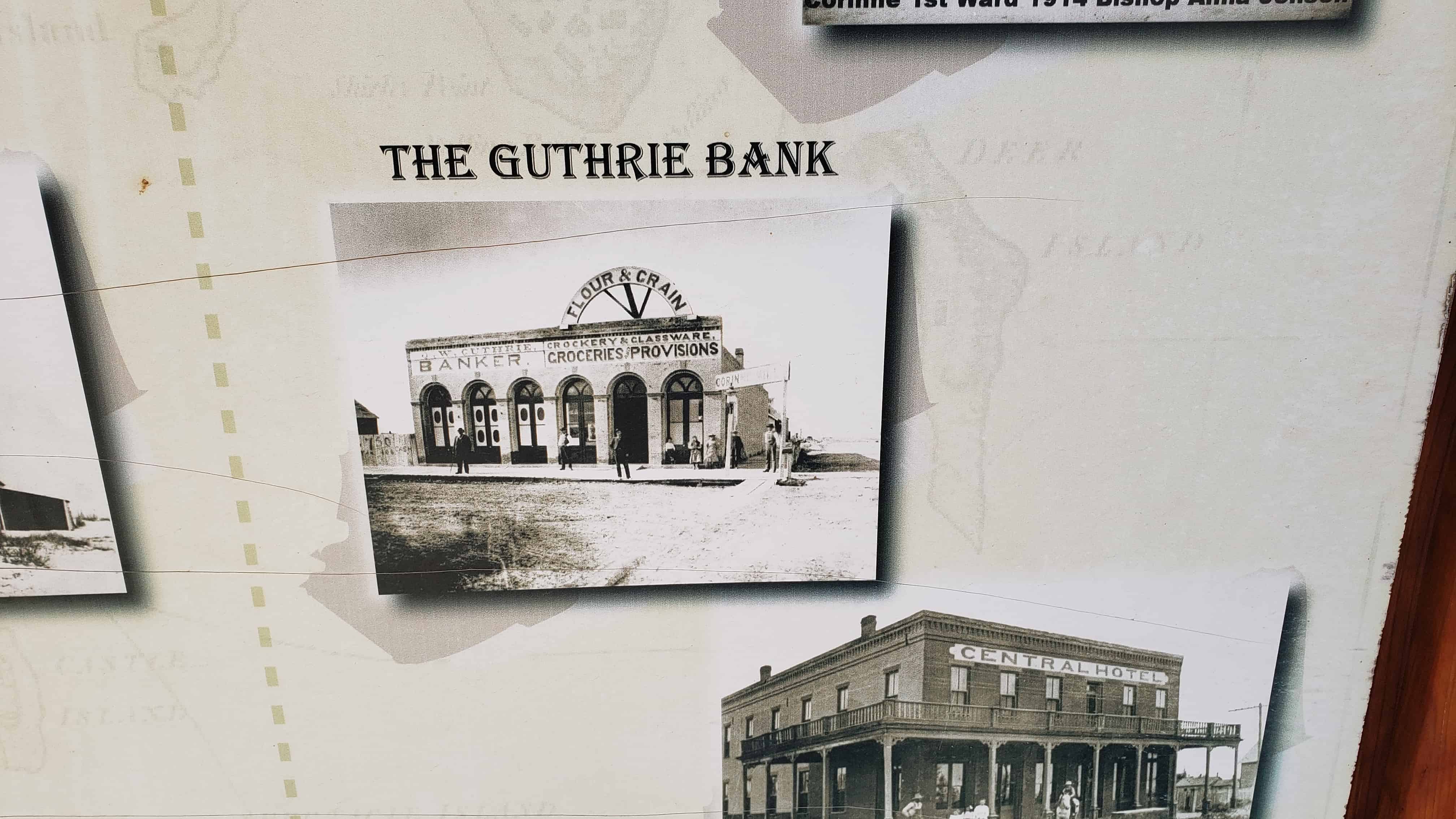
For a time the town flourished to the fullest expectation of its promoters, supporting a newspaper, many businesses & more than 100 saloons & Gambling Houses. In its prime, Corinne was one of Utah’s busiest cities, many times, over 500 freight wagons were congregated here.
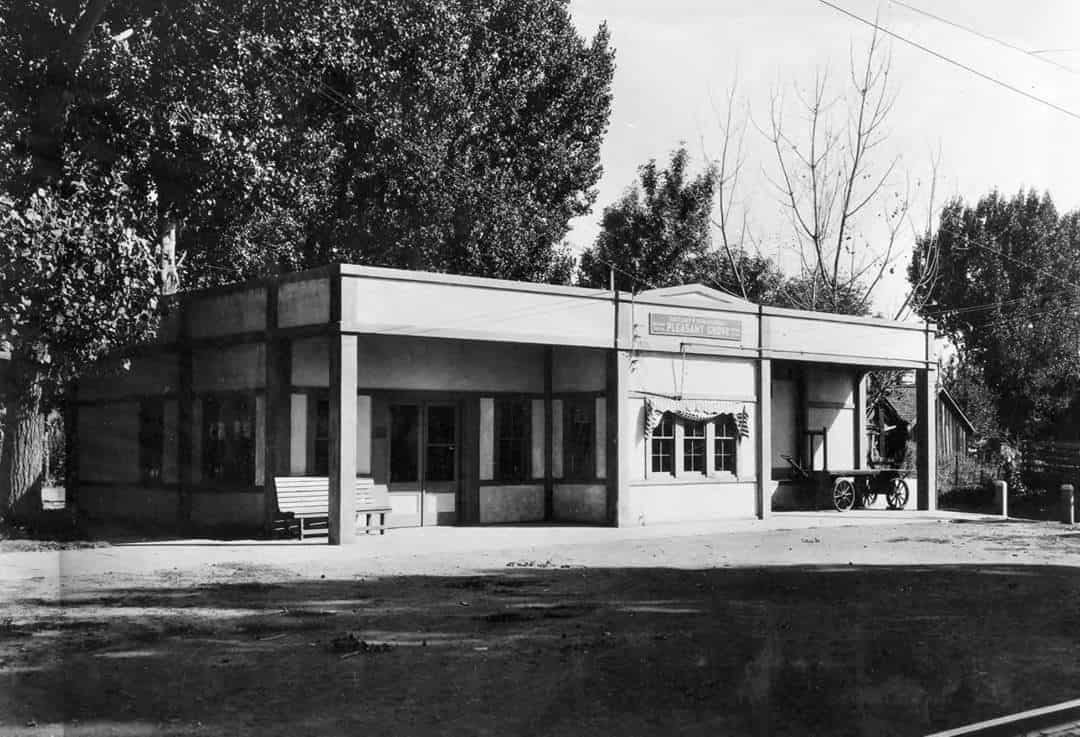
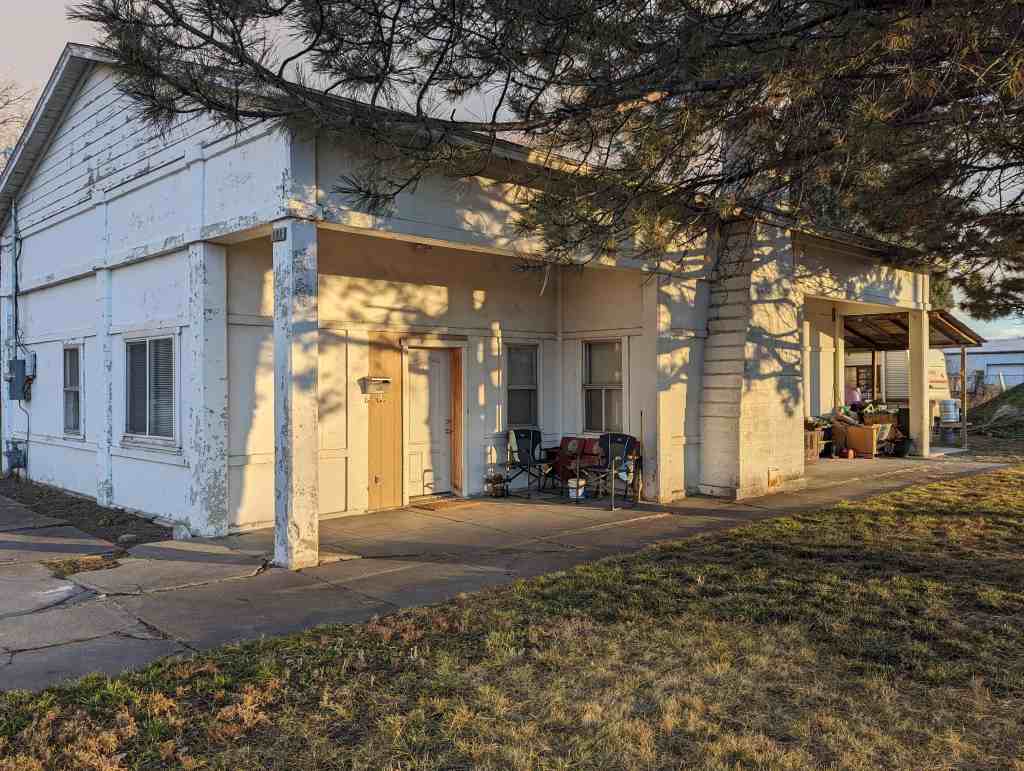
Located at 169 West 200 South in Pleasant Grove, the old railroad depot isn’t very recognizable as such, the original sign was recently found and is at the city’s Rose Garden Park.
History of the Pleasant Grove Train Station
Building the Railroad
As early as 1902, proposals were being made to build a railroad to provide services in Utah County. In 1912, Walter C. Orem, a wealthy promoter from Boston, secured both the rights and the financing (approximately $3 million) to build an electric railroad between Salt Lake City and Payson. Construction began in October 1912. Mrs. W. M. Smith and her daughter, Irene, planned and supervised the construction. Mrs. Smith was said to be the only female railroad contractor in the world at that time. The average cost of the line was $38,000 to $40,000 per mile. Mr. Orem purchased the land his rails used between towns, while securing contracts for the use of public streets in and through the various communities. 500 trackmen were employed to build the railroad.
Electricity to run the train was supplied by Utah Power and Light Company. On April 1, 1914 the electric line and substations were operational providing 1500 volts of direct current to power the trains.
In March 1914, service began between Salt Lake and American Fork. By July 1914, the line was complete and service extended through from Pleasant Grove to Provo. In 1916, service was extended south as far as Payson. A golden spike ceremony was held in Payson to celebrate the completion of the line on May 26, 1916.
In 1914 the Pleasant Grove Station was built using concrete slabs made in Salt Lake and transported to Pleasant Grove on the train. The station was located at 169 West 200 South. It included a waiting room, restroom, ticket window and a two bedroom apartment.
Running the Train
Electric trains provided several benefits. They were more luxurious, quieter, faster and more powerful. They were able to negotiate steeper grades and tighter curves than a steam engine and were cheaper and more convenient.
The SL&U had twelve steel passenger cars, three express cars and eight freight locomotives. The train traveled at 66 mph. The passenger cars were dark red and seated about 66 people. They were heated and lighted drawing power from motors that ran on the electricity of the line. They had smoking and non-smoking compartments as well as a freight compartment. Common nicknames for the train were Red Heifer (due to the dark red cars) and Leaping Lena (due to the rough ride.)
SL&U provided several services to Pleasant Grove. It was used for mail service and transporting goods including fruits and vegetables. SL&U instigated the store to door free delivery system that set a national precedent. It provided transportation to the LDS General Conference and other big events as well as allowing people to visit friends and family. Many people used the train to commute to work or attend dances and other social events.
1913-1925 were considered the golden years of the railroad. During that time passenger revenue accounted for 72 percent of all revenue. In 1919, passenger revenue increased 573% and 3000 passengers were riding daily on 36 trains. The train served more than 60 businesses. Mail was delivered 6 times a week on the evening train. In 1916, the train carried 1200 gallons of milk per day during December and 12,000 beets per year.
The End of the Line
In 1925, the SL&U fell into receivership. Deficits continued until 1929. In 1929, thanks to a massive advertising push, it rebounded. Times were tough in the 1930’s when money was scarce. In 1938, the Salt Lake & Utah Corporation gained control of the railroad. In 1938, Rio Grande Trailways brought bus service to Pleasant Grove. This competed directly with the railroad by running a similar route. The railroad started their own bus service in 1939, but still lost money. There was a brief increase during the early 1940’s because of gas rationing. By 1944, SL&U had reduced service to only seven passenger trains per day. On December 12, 1945 the railroad once again fell into receivership. On March 1, 1946 the SL&U closed down.
Named for Edward F. Beale, this station on the Southern Pacific rail line was established in 1876 as a depot and telegraph office. Service was discontinued in 1913. Beale was superintendent of California Indian Affairs during the 1850’s. In 1865 he became owner of the adjacent Rancho El Tejon.
This historic marker was dedicated July 15, 1962 and placed by Kern County Historical Society.
It is California Historic Landmark #741 – see others on this page.