On September 27, 1872, the first train chugged into Lehi to a cheering crowd and lively band. For the first time, many saw a steam locomotive with its shrieking whistle and blunderbuss smokestack. Days later, a train carrying 1,300 people to Salt Lake City could not make the steep grade at the Point of the Mountain, and passengers had to get out and push.
President Abraham Lincoln signed the Pacific Railway Act into law on 1 July 1862 while the country was embroiled in civil war. The transcontinental railroad, built by the Central and Union Pacific Railroads, linked their roads at Promontory Summit in Utah in 1869. The Mormon Church-owned Utah Central Rail Road Company started construction southward from Ogden one week after the driving of the “Golden Spike.” A year later Utah Central organizers incorporated the Utah Southern Railroad. A symbolic spike was driven by Brigham Young on 1 May 1871. The first train chugged into Lehi City on 27 September 1872.
The effect of the Utah Southern on Lehi was dramatic. For almost a year the town served as the terminus for the line. Teamsters and bullwackers transported goods to and from points south as well as timber and ore from the rich mines in American Fork Canyon and the Tintic District. Many local men found employment in the freighting and forwarding business. Dozens of saloons, boarding houses, and shops sprang up along State Street.
From 1872-73 the American Fork Railroad operated a narrow-gauge branch feeder line on the Utah Southern grade between American Fork and Lehi. In 1881 the Utah Central, Utah Southern, and Utah Southern Extension railroads were consolidated into the Utah Central Railway. In 1889 the line became part of Union Pacific’s Oregon Short Line & Utah Northern Railway Company. In 1897 the organization was renamed the Oregon Short Line Railroad. In 1902 it became part of the Los Angeles & Salt Lake Railroad. Since 1921 the line has remained part of the Union Pacific system.
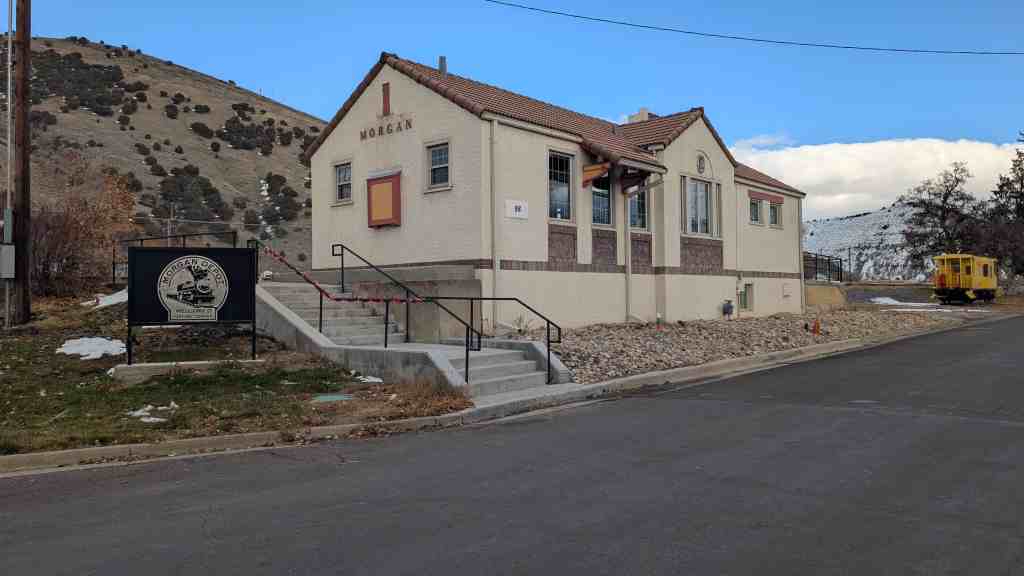
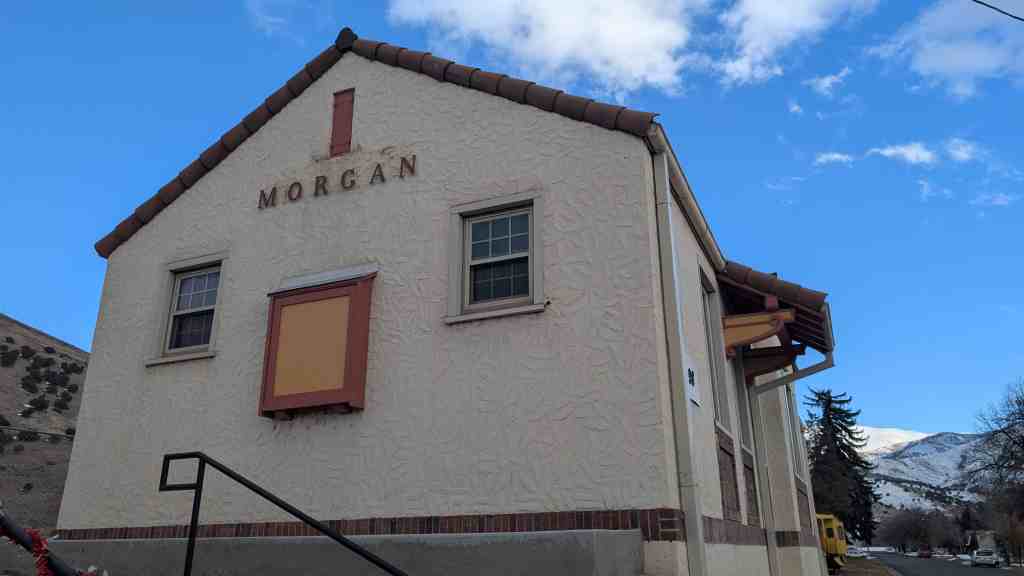
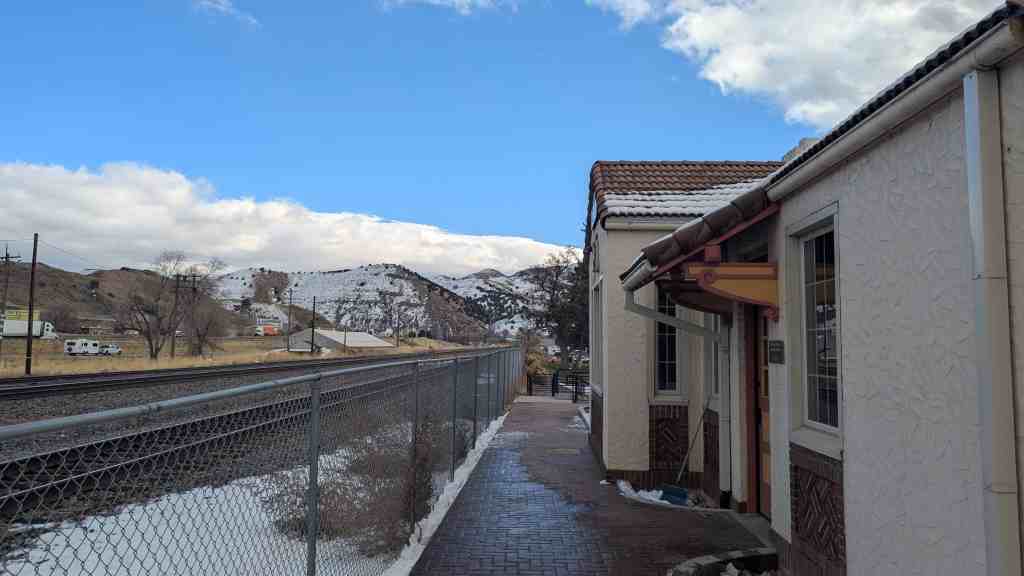
This Utah Southern Railroad Depot, the oldest restored railroad building in Utah, and the only surviving depot of the Mormon railroad empire of the 1870s and 1880s, was restored in 2000 by the Lehi Historical Preservation Commission, a political sub- division of Lehi City Corporation. This station is listed on the National Register of Historic Places.
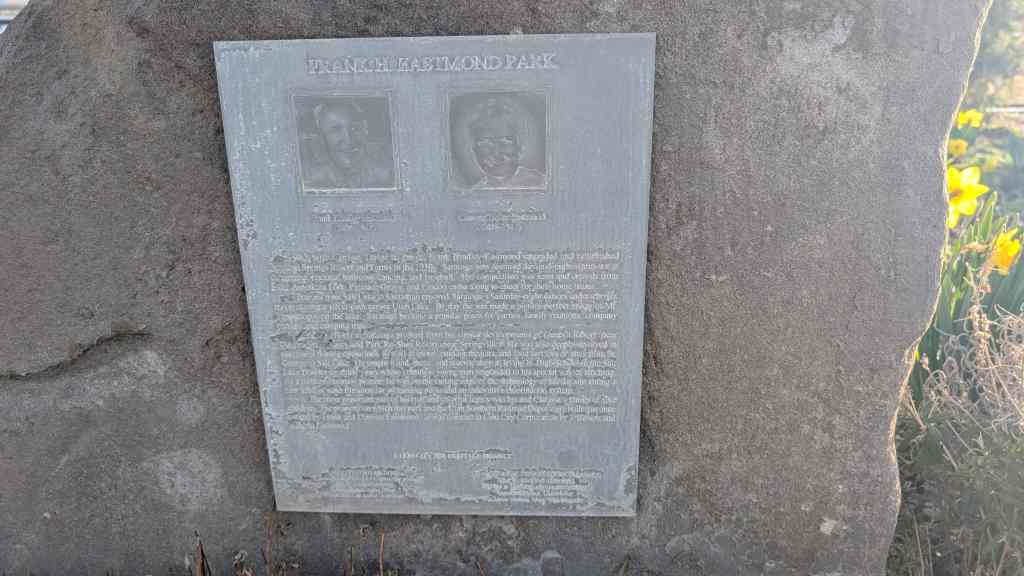
Frank H. Eastmond Park
Frank Hinsley Eastmond (1892-1961) Clarissa Taylor Fastmond (1895-1961)
With wife Clarisse Tayler of Provo, Frank Hindley Eastmond upgraded and refurbished Saratoga Springs Resort and Farms in the 1930s Saratoga now featured day-and-night warm-water Suming regional ballroom dancing, and baseball. The competition was keen and crowds from Bebi American Fork. Pleasant Grove, and Lindon came along to cheer for their home teams.
Patrons from Sak Lake to Santaquin enjoyed Saratoga’s Saturday-night dances under a bright moon casting a silver path across Utah Lake By day the sun made a picture-perfect image of M Timpanogos on the lake. Saratoga became a popular place for parties. family reunions, company pientes and camping trips.
Franks efforts at Saratoga profited from his similar developments of Geneva Resort (near Geneva Steel Plant and Park Ro-Shea Resort (near Springville). He was also deeply involved in successful mining operations, as well as motel, outdoor theaters, and food services or sites from St George to Salt Lake. He taught wood, meta. and electric shop at Irving Jr. High School in the Sal Bake District for thirty years where countless young men responded to his special way of teaching As a modern business pioneer he was on the cutting edge of the technology of his day, inventing a new kind of sand filtration for swimming pools and an innovative chlorination system.
The most important part of his rich and colorful legacy was his and Clarissa’s family of five children: The property on which this park and the Utah Southern Railroad Depot were built was once wned by Frank and Clarissa Eastmond. It was donated to Lehi City Corporation by Jefferson and Alberta Lastmond
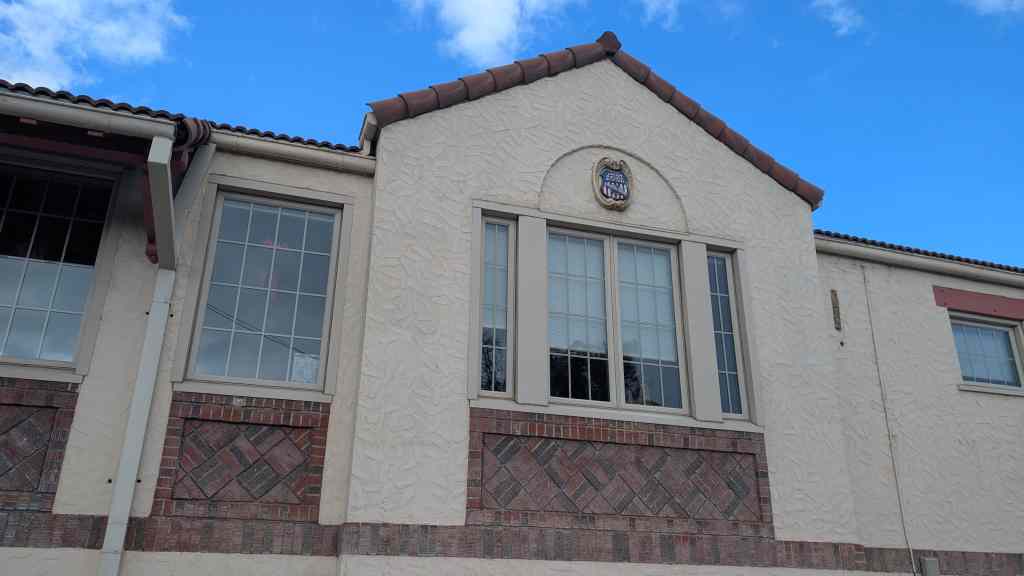
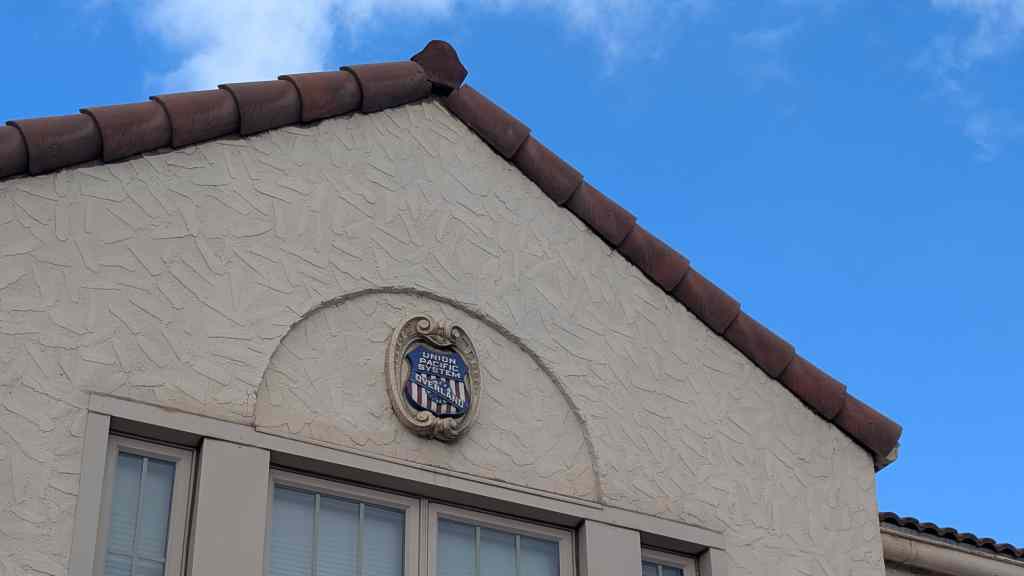
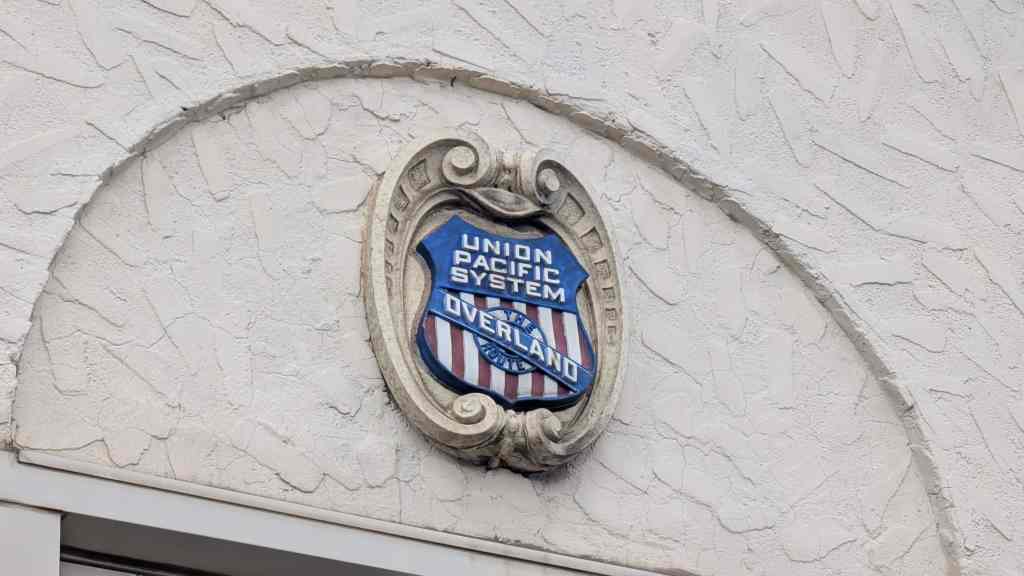
The Cedar City Railroad Depot, built in 1923, is historically significant as the only extant building associated with Cedar City’s railroad connection which, in addition to stimulating the iron ore and livestock industries in the area, contributed greatly to the expansion of the tourism industry in southern Utah and the establishment of Cedar City as the focal point for that industry. As roads to scenic areas in southern Utah were promoted and developed, Cedar City became a strategic center for travel to the national. parks and monuments. After many years of hoping for a railroad connection to boost the iron ore industry in the area the promise of tourist traffic finally drew the railroad to Cedar City in 1923. In addition to constructing the depot, the Union Pacific Railroad became fully involved in the tourist business by purchasing hotels, busses, and building lodges. Automobile traffic gradually superseded railroad traffic and bus tours to the point that the railroad eventually closed its line to Cedar City in 1959. The Cedar City Railroad Depot is the only building that remains in Cedar City to document the important influence that tourism and the railroad had on Cedar City’s development.
Located at 241 North Main Street in Cedar City, Utah and added to the National Register of Historic Places (#84002184) on August 9, 1984.
Cedar City was founded in the fall of 1851 by members of The Church of Jesus Christ of Latter-day Saints (Mormons or L.D.S.) who were sent to establish an iron manufacturing center in the area. The group experienced many, setbacks: floods, collapse of the iron works, technical problems, and the Utah War. To add to these problems, in 1857 members of the community were involved in the Mountain Meadows Massacre. The year following this tragedy, Cedar City’s population went from 928 to 376. Those who remained turned to agriculture as a means of support. Agriculture instead of iron production became the economic base for the area. Various efforts during the 1870s and 1880s were successful in producing iron, however, as the Deseret News commented in 1874, “The successful manufacture of iron in Utah is now demonstrated beyond the shadow of a doubt and it but needs railroad connections between the works (at Iron Town [about 15 miles southwest of Cedar City]) and this city [Salt Lake City]….”‘ Despite such encouragement, it was not until 1905 that the railway reached Iron County, and even then its nearest connection to Cedar City was 30 miles northwest of the city at Lund. For nearly 20 years after the arrival of the railroad to the area wagons were used to haul freight and passengers between Lund and Cedar City.
With the growing popularity of the automobile in the early decades of the twentieth century, the demand for more and better roads developed. Concurrently, the scenic beauty of southern Utah Mukuntuweap National Monument (Zion National Park after 1919), the North Rim of the Grand Canyon, Bryce Canyon, the Kaibab Plateau, and Wayne Wonderland (the Capitol Reef area) was receiving more and more attention, and much of it was national. The assistant director of the National Park Service, Horace Albright, visited the Zion area and realized that it was of national park caliber. When Albright reported his visit to Director Mather, Mather did not reply immediately and “later wrote that he thought Albright must have fallen into the hands of some chamber of commerce directors or had been given some very potent drink, for he had never heard of such country and found it difficult to believe it existed.” Three years later when Zion was made into a national park, Mather visited the area and became an enthusiastic promoter himself. As the reports, pictures, and travel shows spread the word about southern Utah’s scenic beauty, public demand for roads to these areas increased. As roads were developed to the parks and monuments it became obvious that Cedar City, because of its central location, was the strategic center for tourists wishing to see southern Utah’s scenic beauty.
As early as August of 1916 representatives of the Union Pacific and the Oregon Short Line railroads, along with representatives from other travel agencies, made an expedition through the area by bus to scout “the possibilities for railroad traffic in the region.” On March 5, 1920, it was announced that a spur line from Lund to Cedar City would be built. In 1921 the President of the Union Pacific Railroad Company, Carl R. Gray, visited the area to investigate the potential of southern Utah to support a railway line. Gray was impressed with the stability of the communities he visited and the quality of the people he met, “and the next year a spur of the railroad was run from Lund to Cedar City, justified on the anticipated traffic from livestock, agriculture, iron ore, and tourist travel.”
The promise of tourist traffic was obviously Cedar City’s biggest drawing card for the railroad because the Union Pacific soon formed the Utah Parks Company and became heavily involved in the tourist trade. The Union Pacific bought the El Escalante Hotel (which was built 1918-23 by a group of Cedar City citizens who saw the need for larger and more commodious hotel accommodations than Cedar City then offered), set up a large bus station at Cedar City, and in 1927 purchased the Wylie Tourist Camp interests in Zion Canyon and the Parry Transportation Route from Cedar City to Zion. The Parry Brothers had previously provided transportation for park visitors and had set up a 10-day trip from Cedar City to Zion, Kaibab, North Rim, Bryce, Panguitch, and back to Cedar City.
Cedar City’s enthusiasm for the anticipated spur line was great. Citizens set up a committee responsible for raising and purchasing the property and homes over which the railroad would pass. “The City Council voted $5,000 to assist in purchasing this property; but so successful was the committee that, after all the bills were paid (a total of $115,000 was expended), the $5,000 was still intact with $2,500 to add to it. The $7,500 nest egg was put in trust and subsequently used to purchase land for a federal building.” Thirty-eight families donated property and/or money to purchase the railroad right of way and the depot site.
In less than three months and at a cost of $1,049,000 the railroad tracks were brought to Cedar City. The depot building was built by the Union Pacific during 1923. Plans for the building were prepared by the Union Pacific System’s Office of Chief Engineer, Los Angeles and Salt Lake Railroad Company. W.T. Wellman, architect was in charge of the project. George A. Wood of Cedar City was the general contractor. The portico area extending to the south was constructed in 1929 to serve as a passenger waiting area and bus shelter.
The first train over the track was a trial run made on Sunday, June 10, 1923. The event was a cause for celebration, although the laying of the tracks was not yet completed and the train could only reach within 4 miles of the town. In a symbolic act, David Bulloch, who was the first boy to ride a wagon into Cedar City in 1851, rode the cow catcher of the test run engine and photographs were taken. The first official train that crossed the tracks and stopped at the depot was on June 27, 1923. The passengers on this first train included President and Mrs. Warren G. Harding and the presidential party. After a warm greeting at the depot by southern Utah citizens, the entourage loaded into 24 automobiles and traveled south to Zion Park. Upon their return to Cedar City to board the train for their departure, President Harding was honored at a special program.
The depot was officially opened on September 12, 1923, with the ceremonial laying of a golden rail, named the Warren G, Harding Memorial Rail. President Harding had died in Alaska shortly after his visit to southern Utah, and a memorial service was held at the railway opening ceremonies for the president on the spot where his train had stood just weeks before. Among the dignitaries in attendance at the combined ceremonies were Senator Reed Smoot, Utah Governor Mabey, L.D.S. church President Heber J. Grant, Union Pacific Vice-President H.M. Adams, the mayor of Salt Lake City, and the president of the Los Angeles Chamber of Commerce. Speakers at the services talked of the great center Cedar City would become and one speaker even suggested that because of the area’s vast ore deposits and other natural resources Cedar City would soon rival Pittsburgh.
Tourist travel dramatically increased after the railroad was built; visitors to Zion National Park increased from 3,692 in 1920 to 55,297 in 1930. The number of visitors to the national parks and monuments in the area has continued to increase, but as roads were developed private automobiles handled most of the traffic. Rail passenger service into Cedar City was discontinued in 1959 and in the mid 1970s the Utah Parks Company sold out to TWA (Trans World Airways).
In addition to the increased tourism, Cedar City benefitted in other ways from the railroad connection. Iron ore production increased dramatically from annual production of 15,000-45,000 tons to 164,154 tons mined the year after the railroad came. During World War II, Iron County ore production rose to 1 million tons and increased to nearly 2 million tons during the last year of the war. Ore was shipped by rail from Iron County mines to the Ironton plant in Springville, Utah, the Geneva plant in Provo, Utah, the Minnequa plant in Pueblo, Colorado, and the Kaiser plant in Montana.
Growth of Iron County’s livestock industry was also encouraged by the railroad. The railroad was important in transporting wool and lambs from Iron County’s important sheep industry. Iron County purebred Rambouilett sheep became famous in the late 1920s, and buyers from the Russian government came to the area to purchase sheep to improve their native breeds.
However, the most immediate effect of the railroad on Iron County’s economy was seen in the increase of visitors in the area. The Cedar City Railroad Depot is the only building that remains in Cedar City to document early tourism in the area before the nation’s highway system was fully developed. The El Escalante Hotel, Bus Driver’s Dorm, and railroad warehouses have all been torn down.
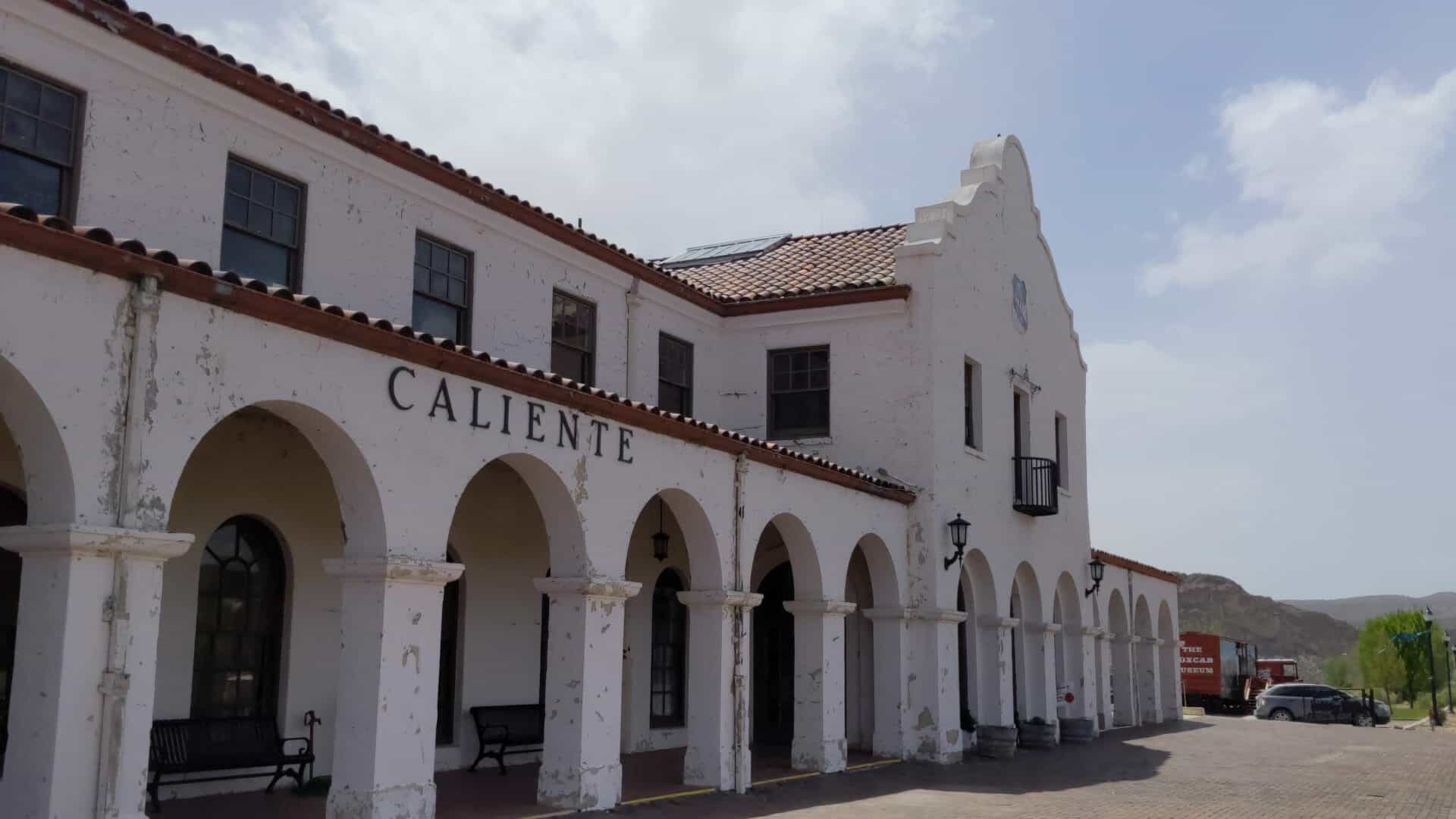
A large Neo-Mission type depot built in 1923, serving not only as Division Offices of the Union Pacific Railroad, but also as a hotel as well as a civic Center. Today it remains the most imposing structure in Caliente. The City of Caliente has taken it over in order to prevent its destruction In order to justify its cost, a City Hall complex and civic center is being constructed within the building. The exterior of the building is being left in its original form. Wherever possible the original wood, etc. is being left in the interior.
Caliente was founded by a railroad whose operations were based on steam motive power. It became U.P.’s best equipped steam facility between Salt Lake City and Los Angeles. For many years Caliente was a division point between Las Vegas and Milford, Utah. Engine and trail crews changed here. in the days of steam locomotives, Caliente also was the center of a helper district – the terminal for locomotives and crews that assisted trails upgrade between Carp and Caliente, Caliente and Crestline, and Modena and Crestline. During World War II, 17 helper crews were assigned here and about 150 were employed in the locomotive, car, and agents departments.
The interior has extensive oak paneling, ornate doors, vaulted ceilings, and tile floors. The City is retaining all original paneling and tile and interior changes are being kept to a minimum.
Located at 100 Depot Avenue in Caliente, Nevada and added to the National Register of Historic Places (#74001146) March 5, 1974.
The building is 54 feet by 341 feet (18,414 sq. ft.), white, with a red tile roof. Railroad tracks immediately adjacent to the depot have been removed and the City plans to landscape a portion of the 2.2 acres now under lease. A few years ago the rows of Lombardy poplars in the lawn on the south end of the building were cut.
The architectural style, generally known as the Mission Revival or the neo-Mission was used on the Union Pacific stations between Salt Lake City and Los Angeles. The Caliente depot is the only station of its type left in Nevada It was designed by the Los Angeles firm of John and Donald Parkinson, Architects. They also designed the Los Angeles depot. A styling note is the full arched openings on the lower floor, with a rectangular pattern around all openings on the second floor. Wrought iron guard rails protect upstairs door openings (fire escapes).
The second floor was originally used as a hotel for the overnight accommodation of train travelers and railroad officers. A separate adjacent dormitory (now removed) served layover train crews in the last years of the Age of Steam. The second floor facilities have been removed and there are no current plans for the use of the area although access has been maintained.
“Following the war Caliente’s importance as a railroad center began to decline. The diesel locomotives, which replaced the steam engines in the late 1940’s and early 1950’s, could be run in multiples with one crew eliminating the need for helpers, nor did they require fuel, water, and servicing as frequently. Forces and facilities were gradually reduced as diesel power gained prominence.
Shop facilities were moved to Las Vegas in 1948. The roundhouse, water tank, and excess yard tracks were removed and the depot turned over to the City of Caliente on a long-term lease (10 years for $1) in 1970.” – Allen Krieg, Union Pacific Railroad
The depot served thousands of train passengers over the years. The trains also handled shipments of coal, locally grown produce, and mail.
During World War II a track was installed between the depot and Brigham City’s Bushnell Military Hospital for transporting wounded servicemen and medical supplies.
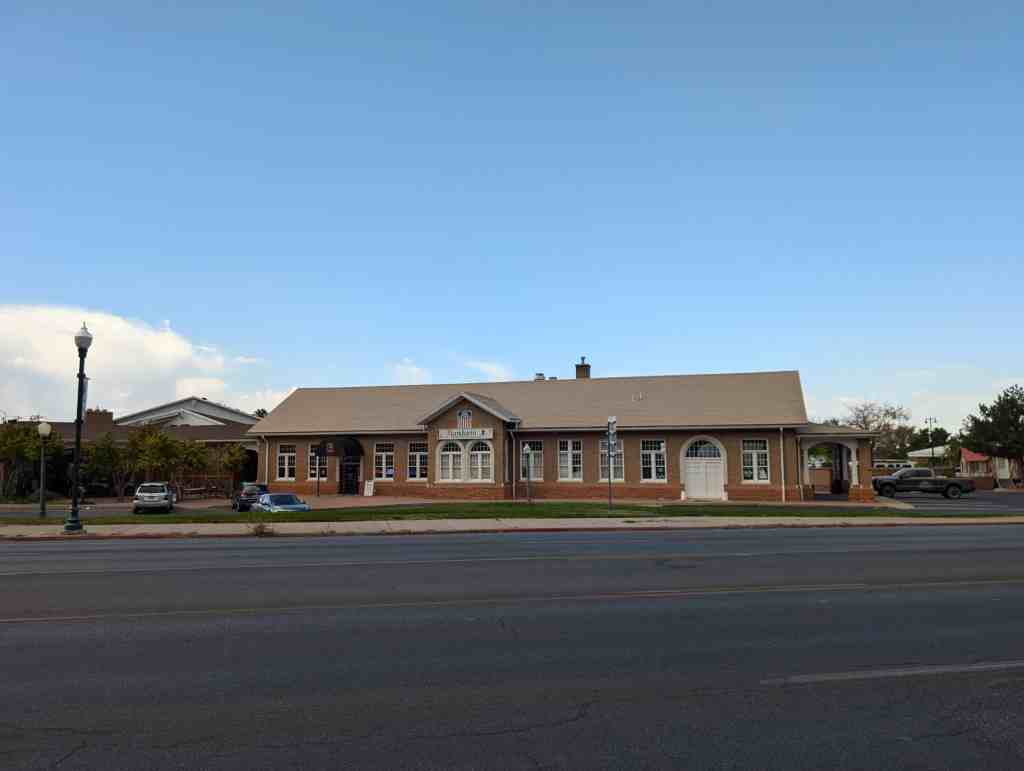
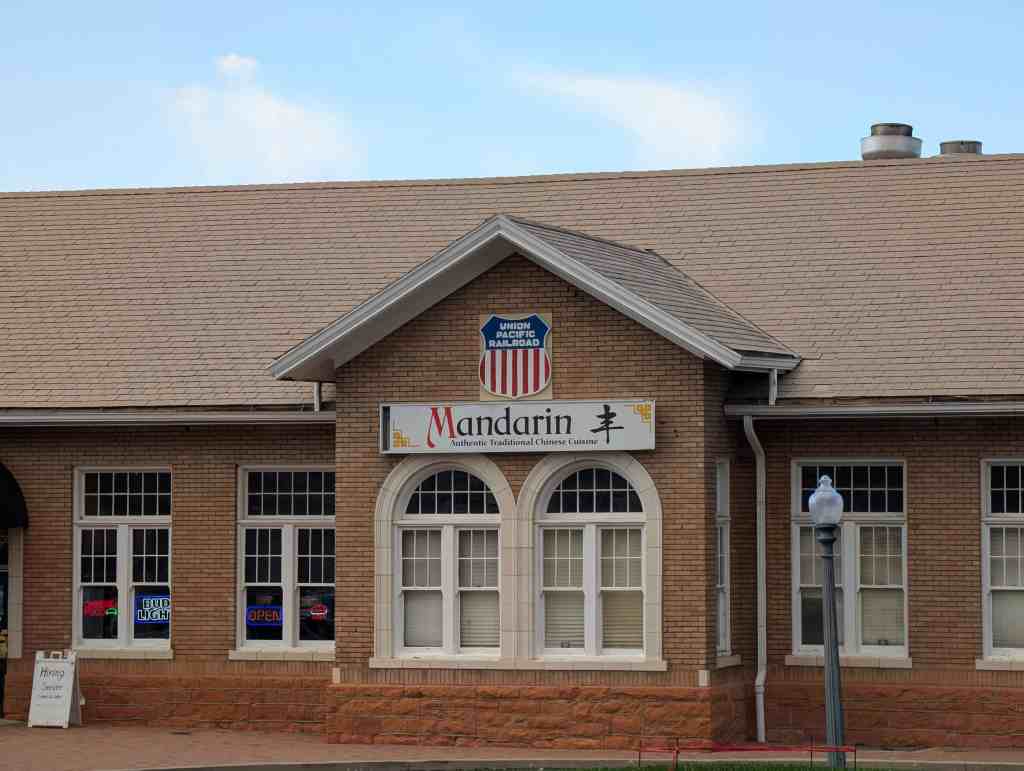
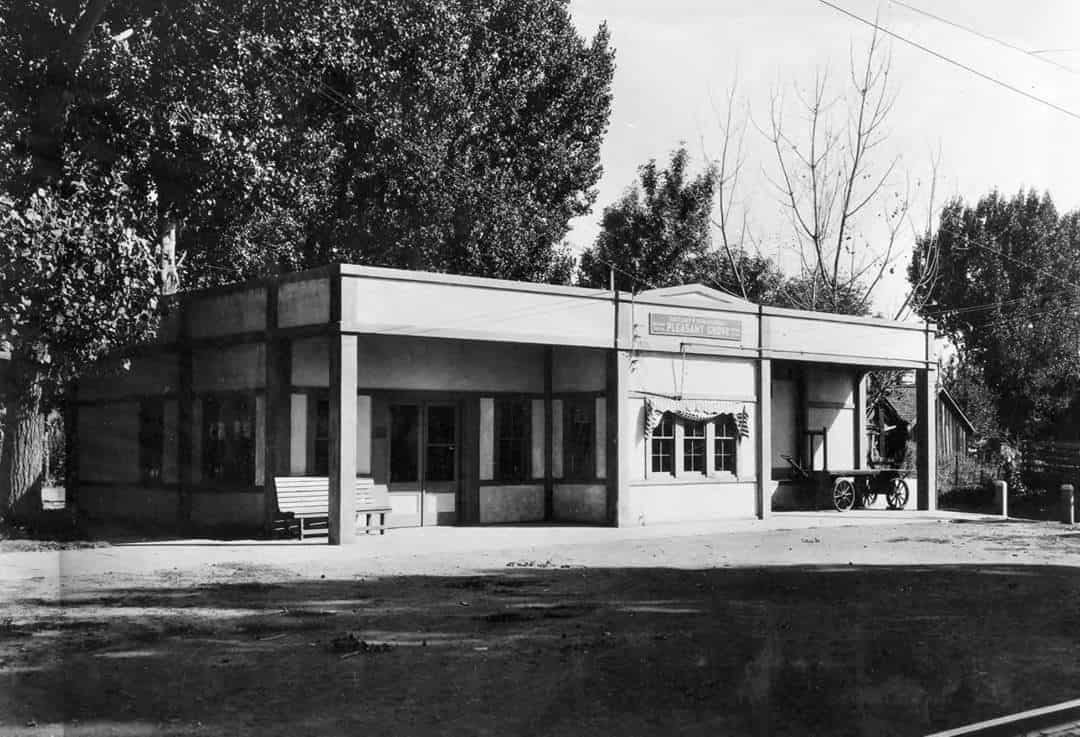
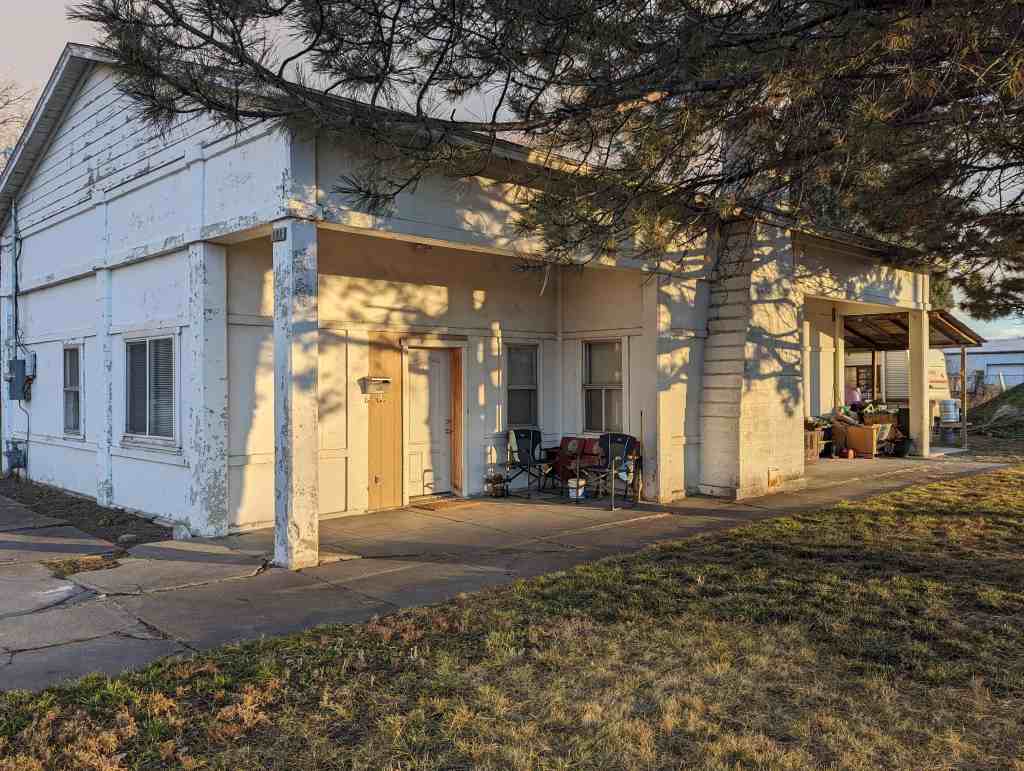
Located at 169 West 200 South in Pleasant Grove, the old railroad depot isn’t very recognizable as such, the original sign was recently found and is at the city’s Rose Garden Park.
History of the Pleasant Grove Train Station
Building the Railroad
As early as 1902, proposals were being made to build a railroad to provide services in Utah County. In 1912, Walter C. Orem, a wealthy promoter from Boston, secured both the rights and the financing (approximately $3 million) to build an electric railroad between Salt Lake City and Payson. Construction began in October 1912. Mrs. W. M. Smith and her daughter, Irene, planned and supervised the construction. Mrs. Smith was said to be the only female railroad contractor in the world at that time. The average cost of the line was $38,000 to $40,000 per mile. Mr. Orem purchased the land his rails used between towns, while securing contracts for the use of public streets in and through the various communities. 500 trackmen were employed to build the railroad.
Electricity to run the train was supplied by Utah Power and Light Company. On April 1, 1914 the electric line and substations were operational providing 1500 volts of direct current to power the trains.
In March 1914, service began between Salt Lake and American Fork. By July 1914, the line was complete and service extended through from Pleasant Grove to Provo. In 1916, service was extended south as far as Payson. A golden spike ceremony was held in Payson to celebrate the completion of the line on May 26, 1916.
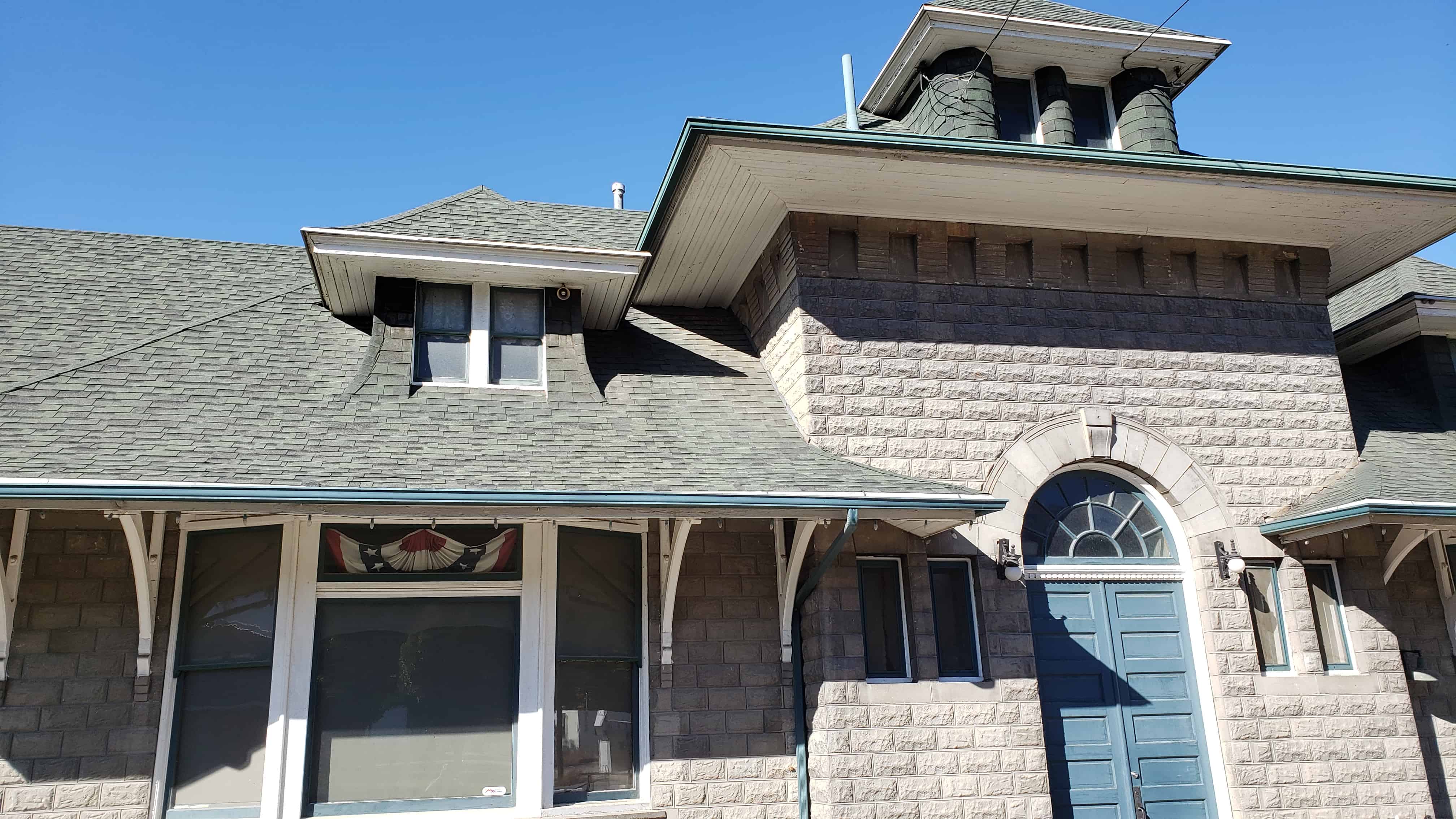
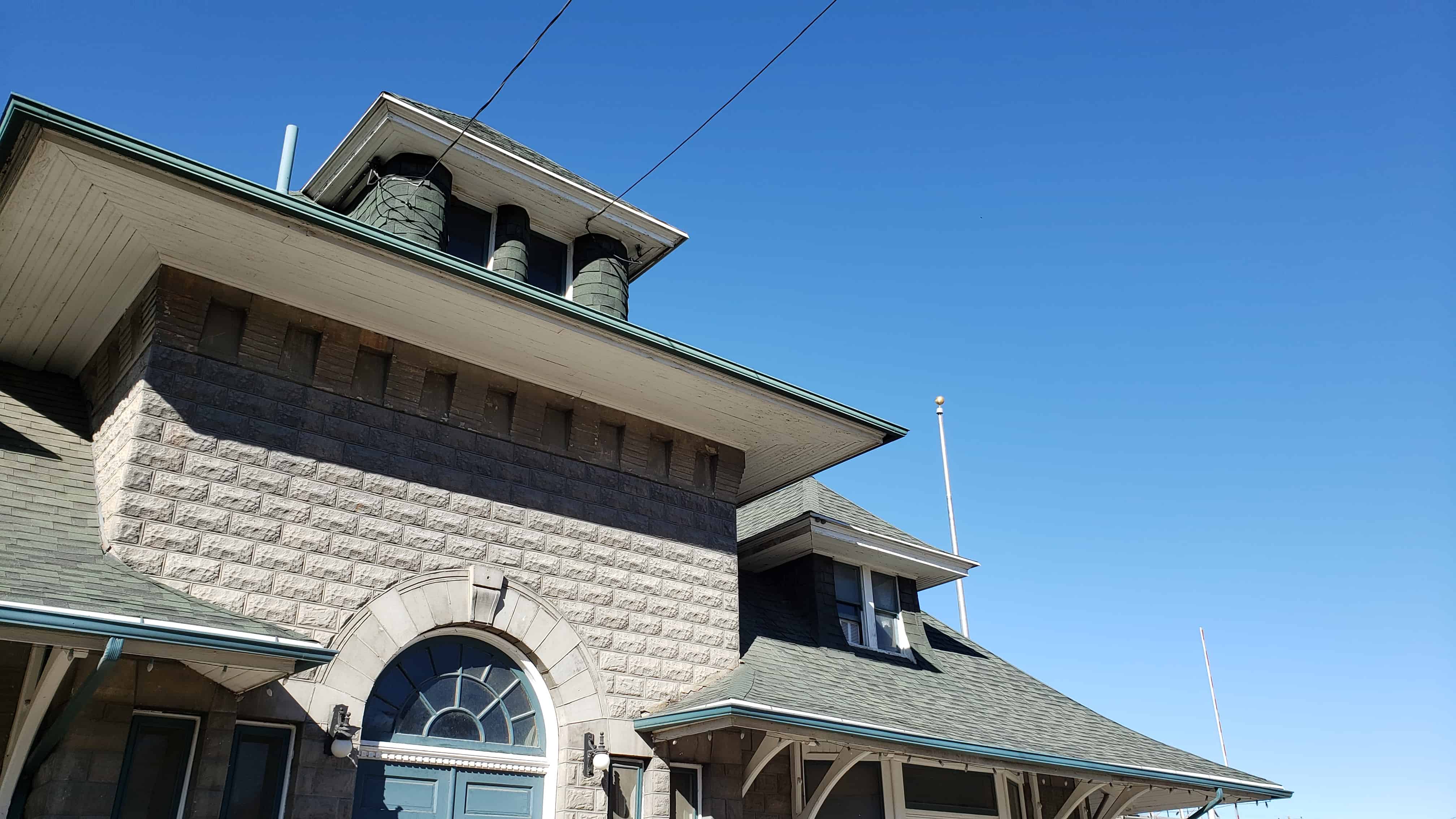
In 1914 the Pleasant Grove Station was built using concrete slabs made in Salt Lake and transported to Pleasant Grove on the train. The station was located at 169 West 200 South. It included a waiting room, restroom, ticket window and a two bedroom apartment.
Running the Train
Electric trains provided several benefits. They were more luxurious, quieter, faster and more powerful. They were able to negotiate steeper grades and tighter curves than a steam engine and were cheaper and more convenient.
The SL&U had twelve steel passenger cars, three express cars and eight freight locomotives. The train traveled at 66 mph. The passenger cars were dark red and seated about 66 people. They were heated and lighted drawing power from motors that ran on the electricity of the line. They had smoking and non-smoking compartments as well as a freight compartment. Common nicknames for the train were Red Heifer (due to the dark red cars) and Leaping Lena (due to the rough ride.)
SL&U provided several services to Pleasant Grove. It was used for mail service and transporting goods including fruits and vegetables. SL&U instigated the store to door free delivery system that set a national precedent. It provided transportation to the LDS General Conference and other big events as well as allowing people to visit friends and family. Many people used the train to commute to work or attend dances and other social events.
1913-1925 were considered the golden years of the railroad. During that time passenger revenue accounted for 72 percent of all revenue. In 1919, passenger revenue increased 573% and 3000 passengers were riding daily on 36 trains. The train served more than 60 businesses. Mail was delivered 6 times a week on the evening train. In 1916, the train carried 1200 gallons of milk per day during December and 12,000 beets per year.
The End of the Line
In 1925, the SL&U fell into receivership. Deficits continued until 1929. In 1929, thanks to a massive advertising push, it rebounded. Times were tough in the 1930’s when money was scarce. In 1938, the Salt Lake & Utah Corporation gained control of the railroad. In 1938, Rio Grande Trailways brought bus service to Pleasant Grove. This competed directly with the railroad by running a similar route. The railroad started their own bus service in 1939, but still lost money. There was a brief increase during the early 1940’s because of gas rationing. By 1944, SL&U had reduced service to only seven passenger trains per day. On December 12, 1945 the railroad once again fell into receivership. On March 1, 1946 the SL&U closed down.
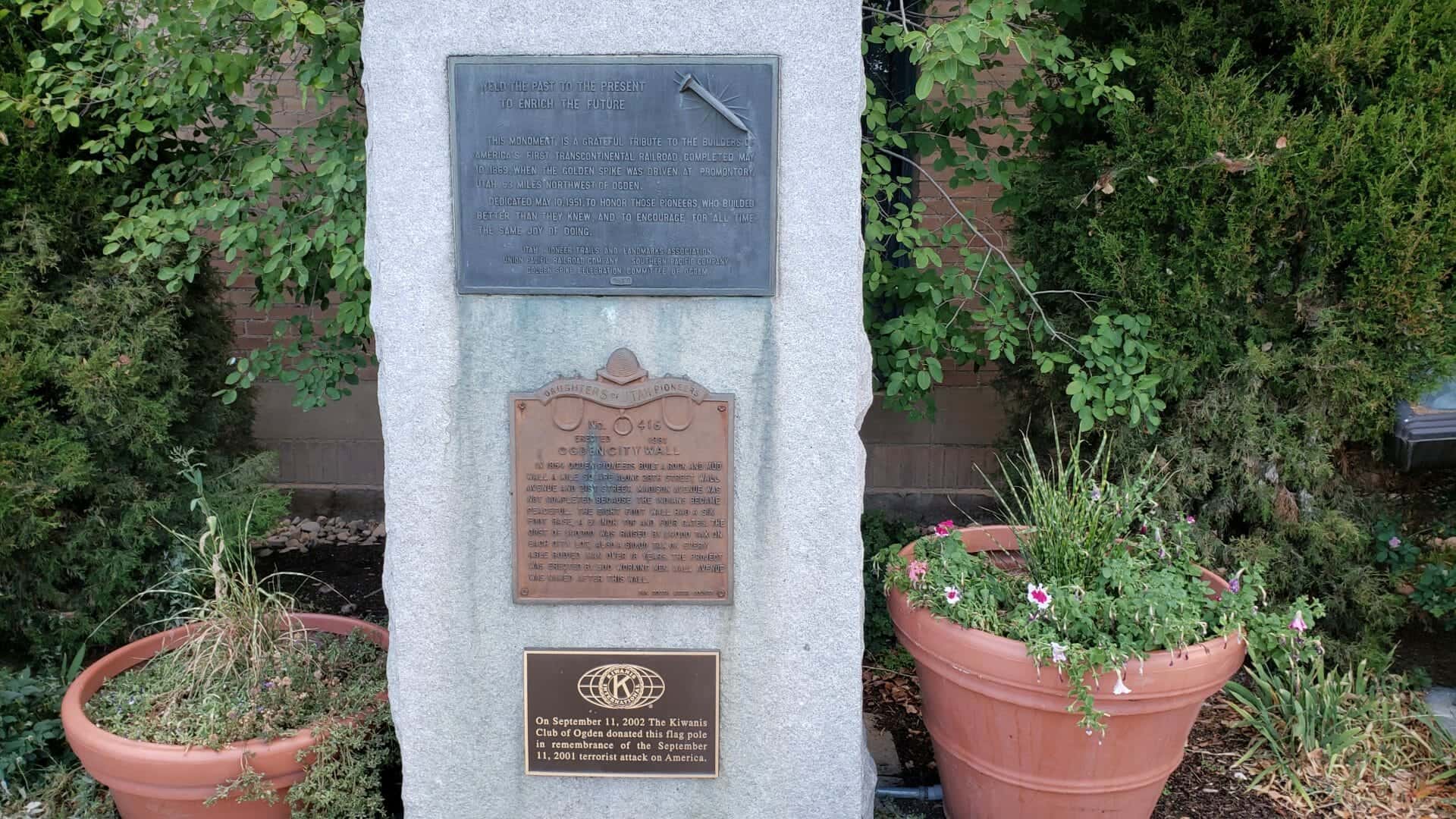
Union Station in Ogden is a historic train station located at 2501 Wall Ave in Ogden, Utah. It is in the Lower 25th Street Historic District. It is now several museums and more. The building was constructed in 1869 and reconstructed after a 1924 fire.
Following the completion of the transcontinental railroad at Promontory Summit on May 10, 1869, four locations were vying for the honor of being the junction for railroad travel in the intermountain West. Within a short time the sites of Promontory’arid Uintah were eliminated. The city of Corrine, founded by non-Mormons in 1869, and the Mormon town of Ogden, established in 1850, soon became rivals as the transportation center.
In November 1869, the Central Pacific purchased forty-seven miles of line from the Union Pacific and leased a remaining six miles to the wooden one-story depot constructed by the Union Pacific in Ogden. As the Utah Northern Railroad pushed north from Ogden in the late 1870’s, the gentile city of Corinne fell into decay.
In 1874 the Ogden City Council passed a resolution appropriating $5,000 “for the purpose of effecting a settlement in relation to establishing the permanent junction at Ogden.” The following year, 1875, Brigham Young deeded 130 acres of land to the railroad companies for the erection of a Union Depot. Eleven years later, in 1886, Charles Francis Adams, President of the Union Pacific Railroad Company, announced plans for the erection of the depot. The impressive depot was dedicated July 31, 1889.
By 1889 Ogden had become the hub of a network of railroad lines: It was the western terminus for the Union Pacific and the Denver & Rio Grande railroads; the eastern terminus of the Central Pacific; the southern terminus of the Utah Northern, which extended through Idaho to Montana where it connected with the Oregon Short Line and the Northern Pacific; the northern terminus of the Utah Central, which ran to the mining town of Frisco in Southern Utah. Ogden was also the terminus for the Echo and Park City railroad, which connected Ogden with the important mining town of Park City.
The depot constructed in 1889 was destroyed by fire in 1923. The present station, which is being nominated to the National Register, was built on the original foundation in 1924. It was designed by john and Donald B. Parkinson of Los Angeles. Although the present building is not a restoration of the 1889 structure, its grand design indicates the importance of Ogden as the railroad center of the Intermountain West.
Because of the decisive role of the railroad in stimulating the economic development of the country and in converting the nation from one of diverse sections into a united and indivisible land, the Ogden Union Depot merits national recognition as a monument to the city of Ogden for its important part in the nation’s railroad story.
Ogden Union Station was added to the National Historic Register (#71000867) on April 11, 1971.
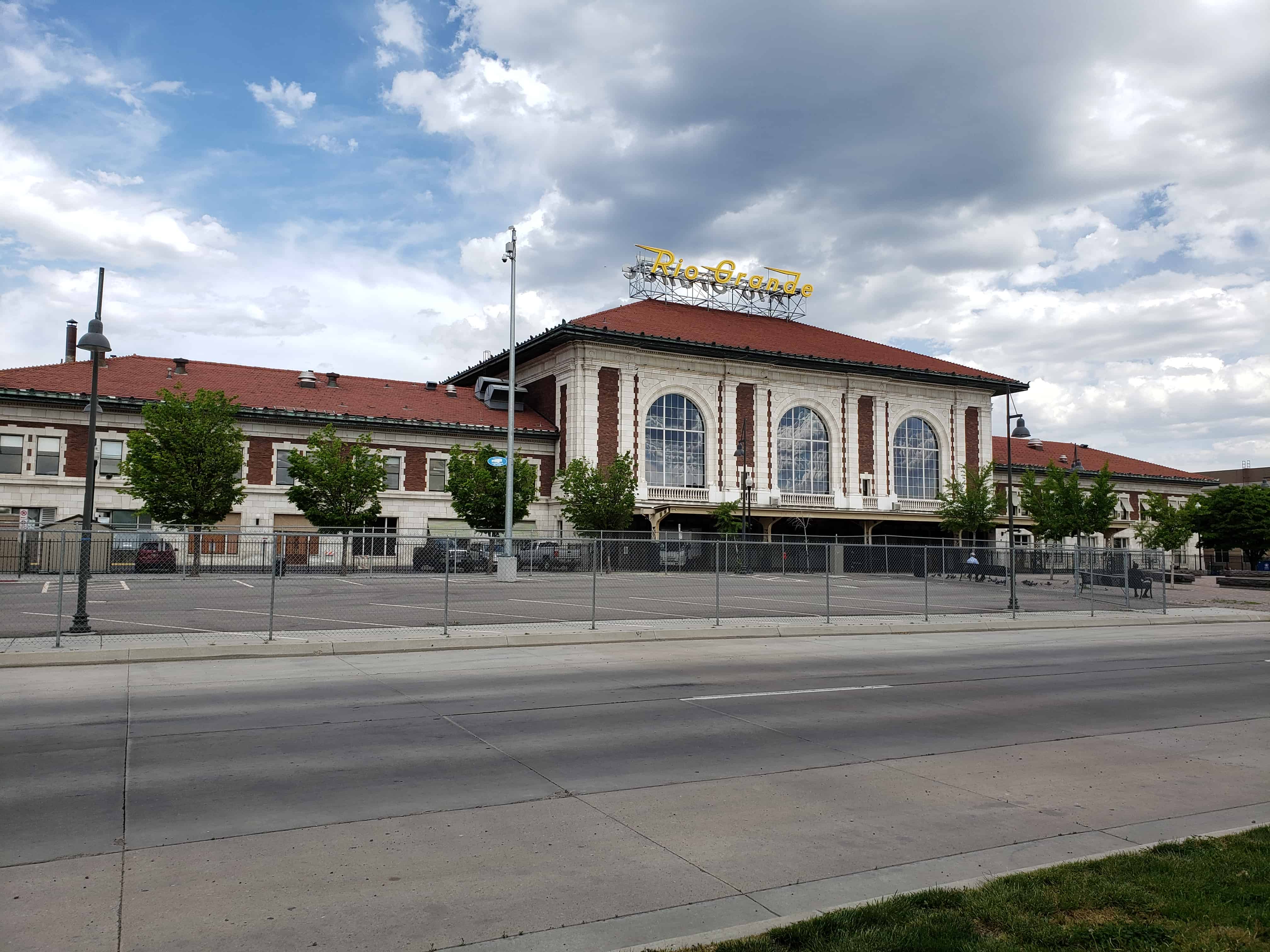
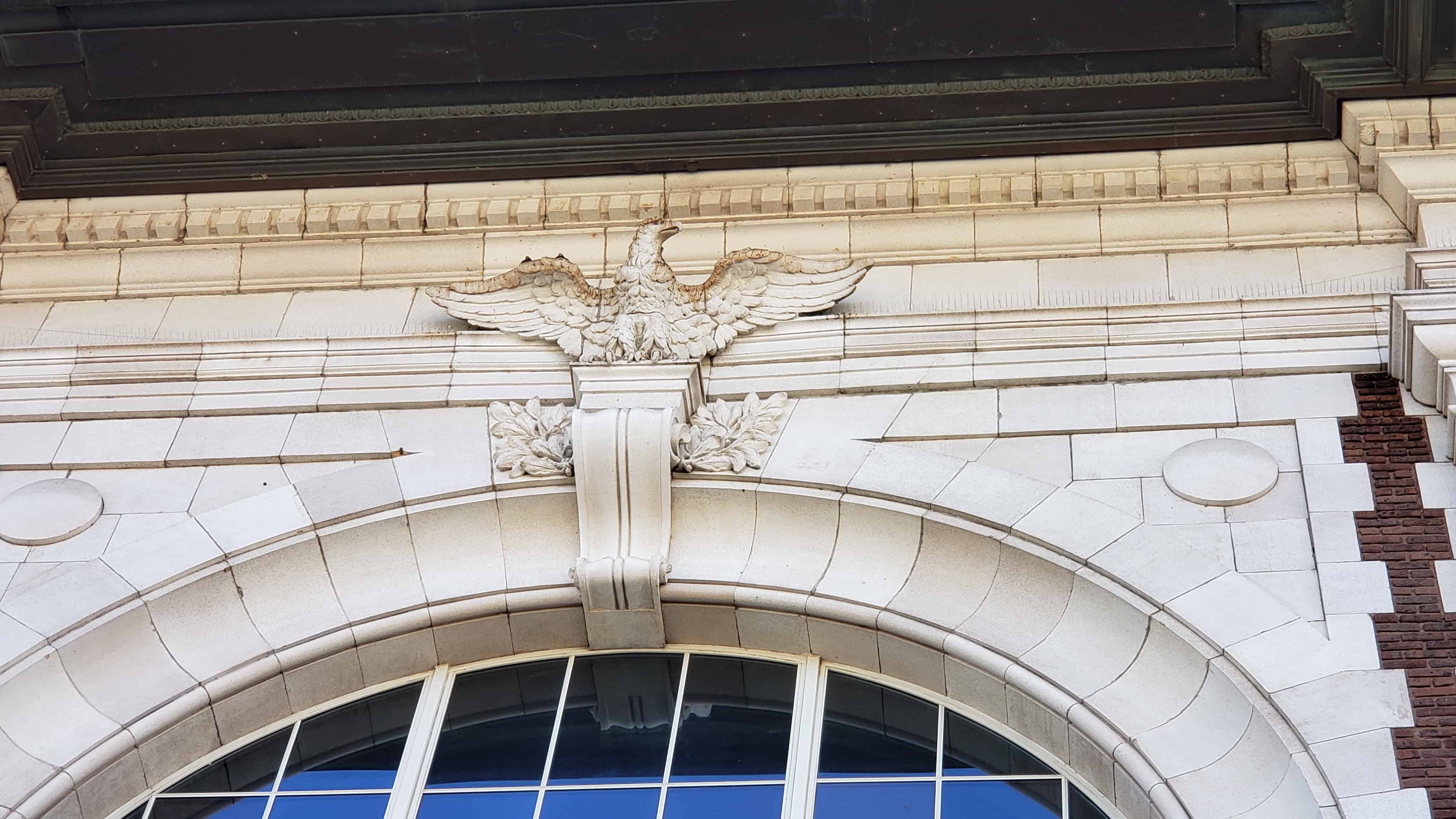
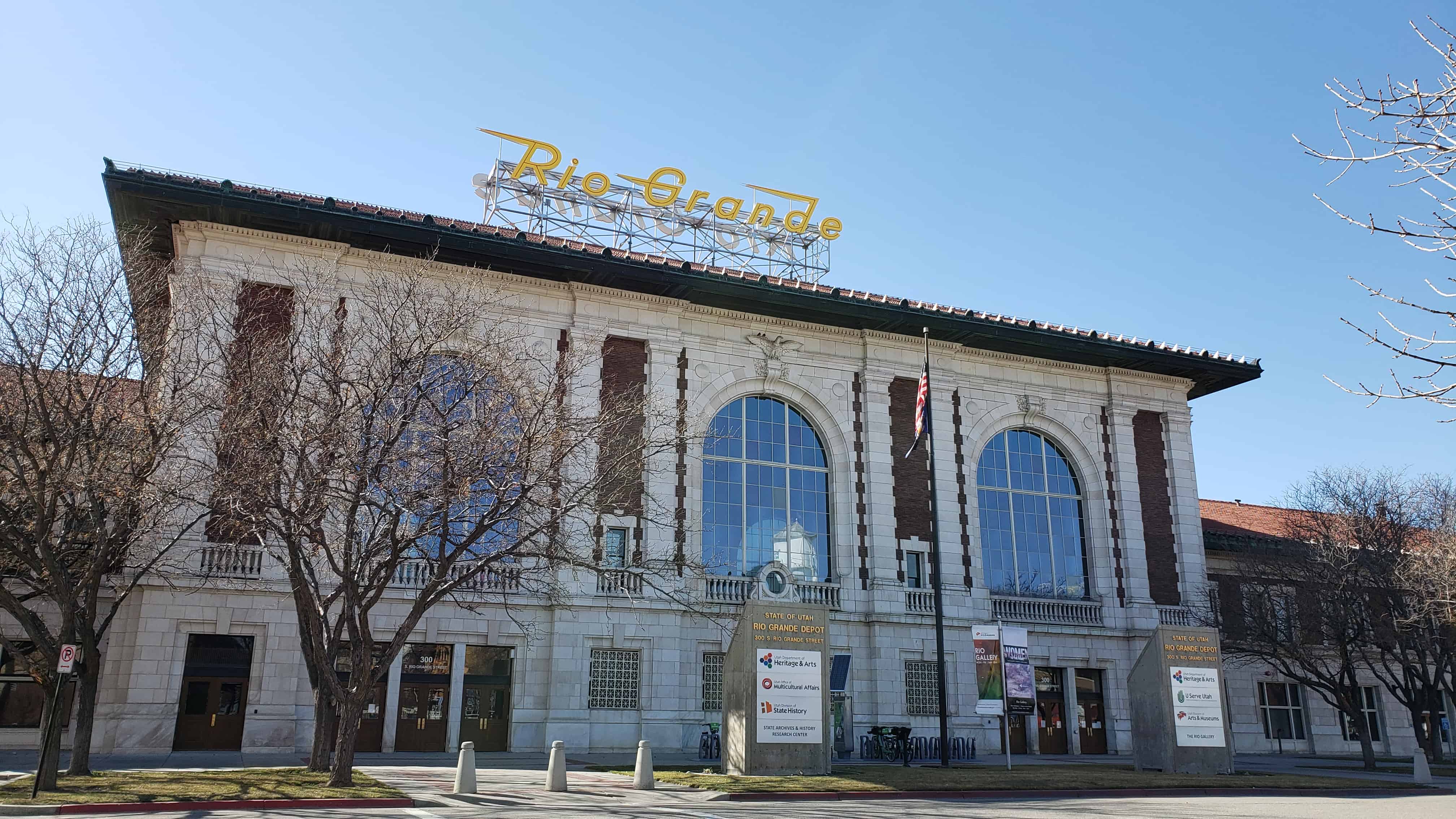
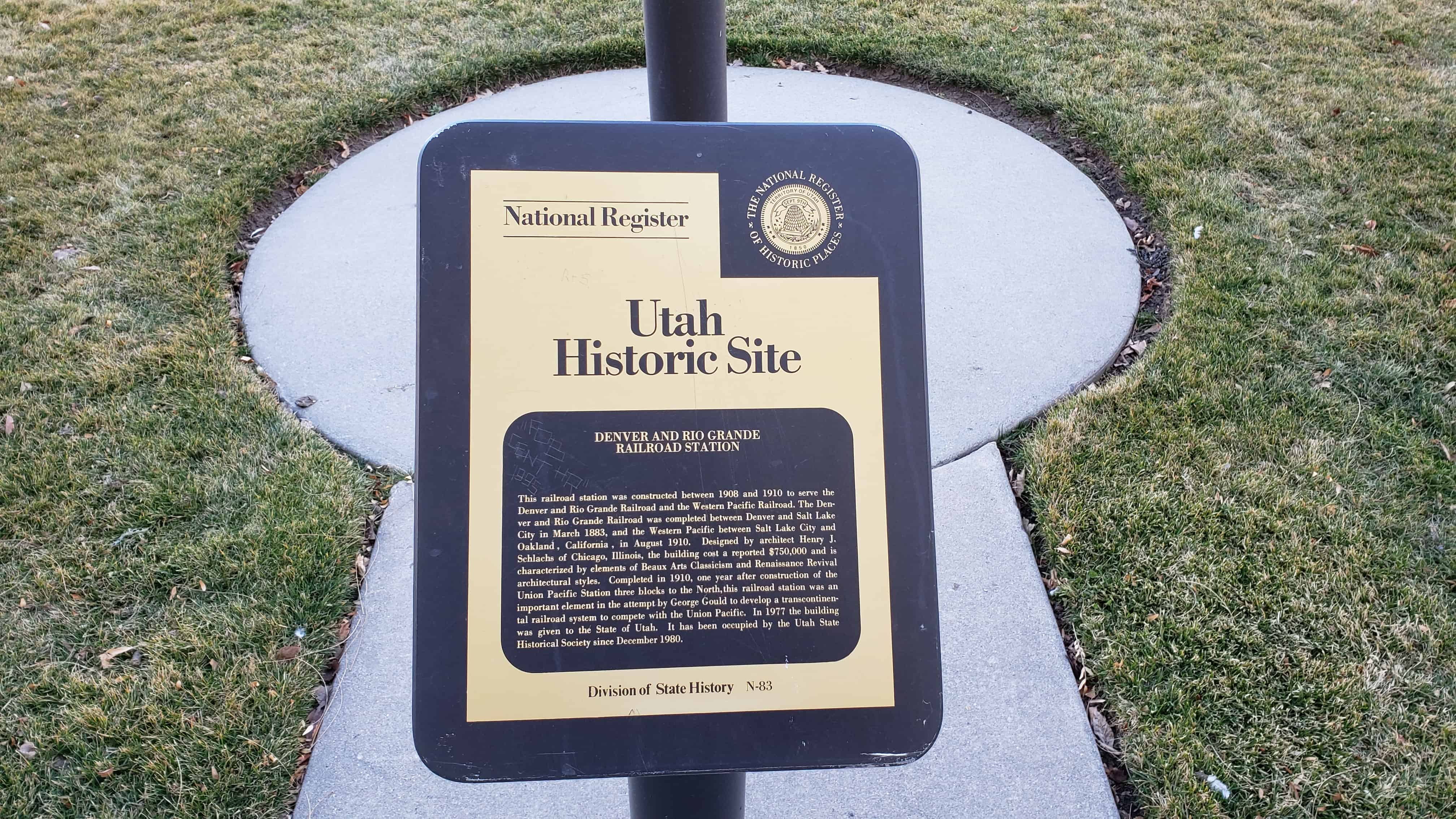
This railroad station was constructed between 1908 and 1910 to serve the Denver and Rio Grande and the Western Pacific Railroad. The Denver and Rio Grande Railroad was completed between Denver and Salt Lake City in March 1883, and the Western Pacific between Salt Lake City and Oakland, California, in August 1910. Designed by architect Henry J. Schlachs of Chicago, Illinois, the building cost a reported $750,000 and is characterized by elements of Beaux Arts Classicism and Renaissance Revival architectural styles. Completed in 1910, one year after construction of the important element in the attempt by George Gould to develop a transcontinental railroad system to compete with the Union Pacific. In 1977 the building was given to the State of Utah. It has been occupied by the Utah State Historical Society since December 1980.
In addition to the architectural significance of the Denver and Rio Grande Station, the building is important for several other reasons. Several historical events, such as the arrival and departure of soldiers during World War I and World War II, the arrival in Utah of prominent public officials as well as other famous people, are associated with the station.
Perhaps of more importance, the station is a tangible monument of the conflict between George Gould, son of the famous financier Jay Gould, and Edward H. Harriman. George Gould constructed a transcontinental railroad to compete with the Union Pacific line which was under the control of Harriman. In order to establish a transcontinental route it was necessary for Gould to finance the construction of a railroad from San Francisco to Salt Lake City, This railroad, financed by the Gould. interests, was the Western Pacific. The large debt incurred by Gould in financing the railroad led Robert G. Athearn in his book, Rebel of the Rockies: A History of the Denver and Rio Grande Western Railroad, to describe the Western Pacific as an albatross hung by Gould around the neck of, the Denver; and Rio Grande railroad. At Salt Lake City, the Denver and Rio Grande railroad, constructed from Denver to Salt Lake City in 1883, connected with the Western Pacific to, form the last link in Gould’s transcontinental railroad system. In order to provide facilities for the district offices of both the Denver and Rio Grande railroad and the Western Pacific, and to provide a modern, impressive station to lure travelers from the Union Pacific, the Rio Grande station was constructed. It stands today as a reminder of the financial struggles for control of the nation’s transportation by the railroad barons during the late nineteenth and early twentieth centuries.
The station, which has been a major Salt Lake City landmark since 1910, serves as a symbol of a by-gone era when railroad transportation was the best form of overland travel available.