• About JacobBarlow.com
  • Cemeteries in Utah
  • D.U.P. Markers
  • Doors
  • Exploring Utah Email List
  • Geocaching
  • Historic Marker Map
  • Links
  • Movie/TV Show Filming Locations
  • Oldest in Utah
  • Other Travels
  • Photos Then and Now
  • S.U.P. Markers
  • U.P.T.L.A. Markers
  • Utah Cities and Places.
  • Utah Homes for Sale
  • Utah Treasure Hunt

JacobBarlow.com

~ Exploring with Jacob Barlow

JacobBarlow.com

Tag Archives: Idaho

Pioneers of Plano

02 Friday Feb 2024

Posted by Jacob Barlow in Uncategorized

≈ Leave a comment

Tags

DUP, Historic Markers, Idaho, Madison County

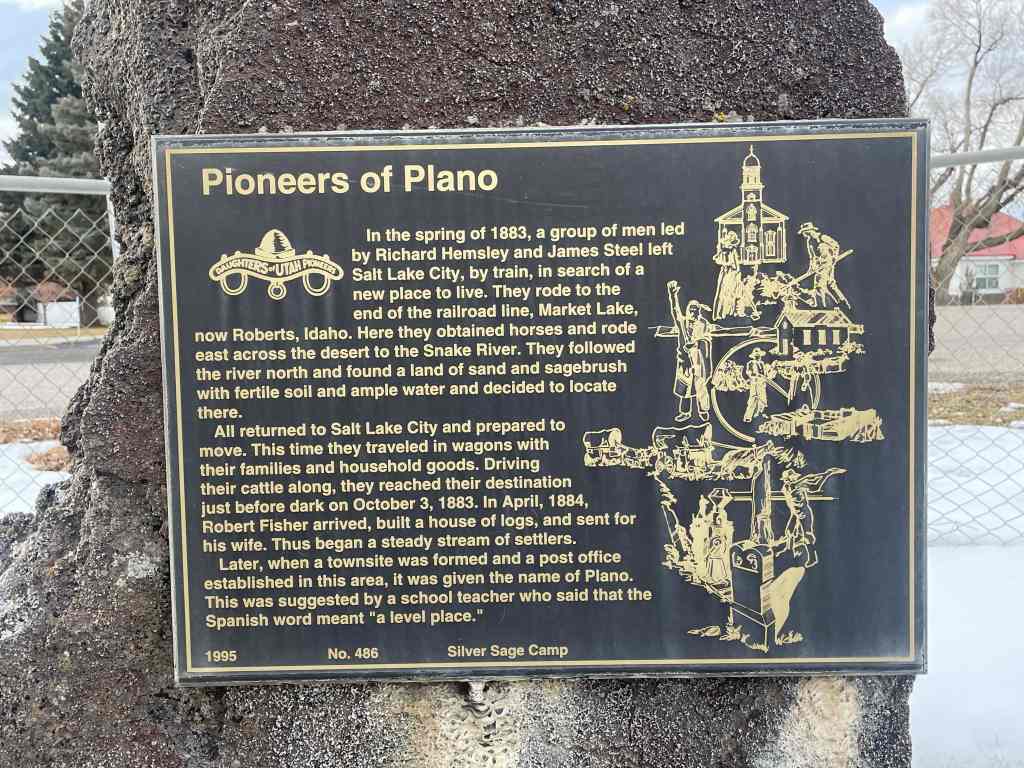
Pioneers of Plano

In the spring of 1883, a group of men led by Richard Hemsley and James Steel left Salt Lake City, by train, in search of a new place to live. They rode to the end of the railroad line, Market Lake, now Roberts, Idaho. Here they obtained horses and rode east across the desert to the Snake River. They followed the river north and found a land of sand and sagebrush with fertile soil and ample water and decided to locate there.

All returned to Salt Lake City and prepared to move. This time they traveled in wagons with their families and household goods. Driving their cattle along, they reached their destination just before dark on October 3, 1883. In April, 1884, Robert Fisher arrived, built a house of logs, and sent for his wife. Thus began a steady stream of settlers.

Later, when a townsite was formed and a post office established in this area, it was given the name of Plano. This was suggested by a school teacher who said that the Spanish word meant “a level place.”

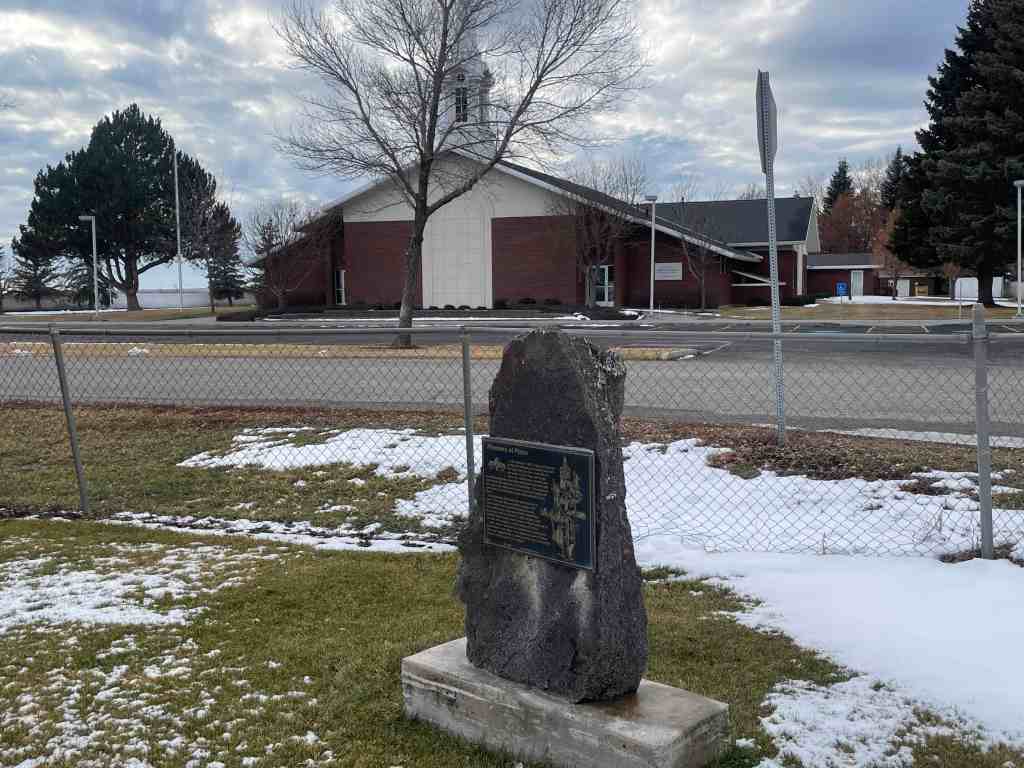
The above text is from the monument (Daughters of Utah Pioneers historic marker #486) located at 5980 North 5000 West in Rexburg, Idaho.

  • D.U.P. Historic Markers

The photos below were submitted by Marshall Hurst:
Jenny Leigh Pioneer Cemetery

28 Thursday Dec 2023

Posted by Jacob Barlow in Uncategorized

≈ Leave a comment

Tags

DUP, Historic Markers, Idaho, Madison County

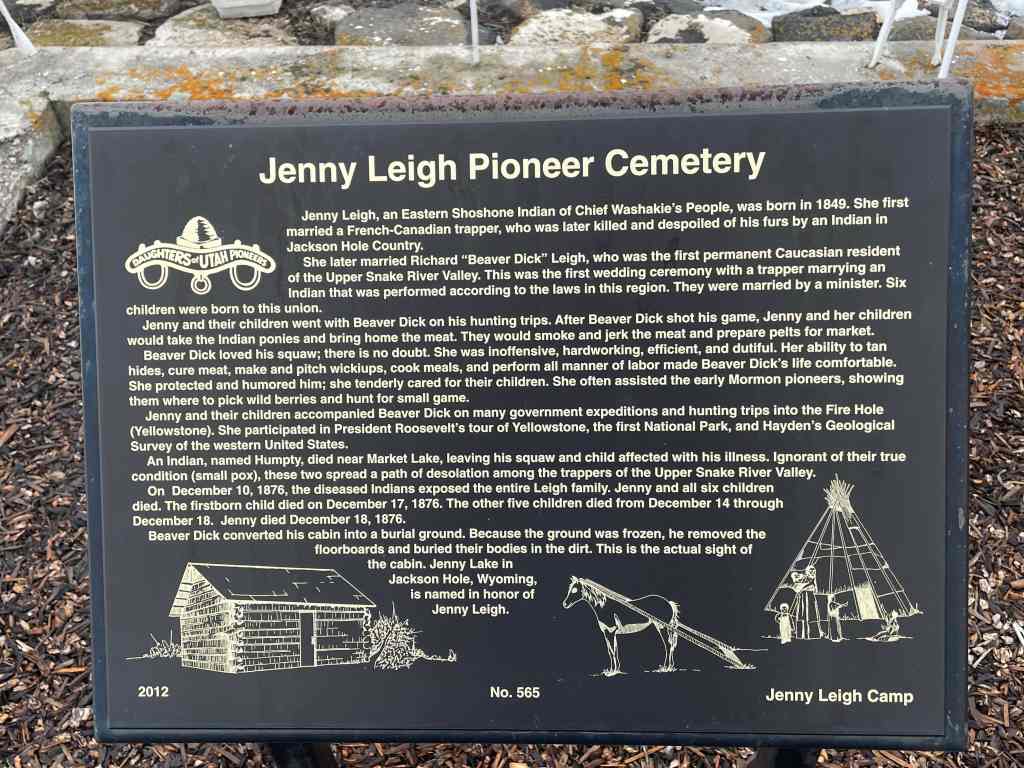
Jenny Leigh, an Eastern Shoshone Indian of Chief Washakie’s People, was born in 1849. She first married a French-Canadian trapper, who was later killed and despoiled of his furs by an Indian in Jackson Hole Country.

She later married Richard “Beaver Dick” Leigh, who was the first permanent Caucasian resident of Upper Snake River Valley. This was the first wedding ceremony with a trapper marrying an Indian that was performed according to the laws in this region. They were married by a minister. Six children were born to this union.

Jenny and their children went with Beaver Dick on his hunting trips, After Beaver Dick shot his game, Jenny and her children would take the Indian ponies and bring home the meat. She was inoffensive, hardworking, efficient, and dutiful. Her ability to tan hides, cure meat, make and pitch wickiups, cook meals, and perform all manner of labor make Beaver Dick’s life comfortable. She protected and humored him; she tenderly care for their children. She often assisted the early Mormon pioneers, showing them where to pick wild berries and hunt for small game.

Jenny and their children accompanied Beaver Dick on many government expeditions and hunting trips into the Fire Hole (Yellowstone). She participated in President Roosevelt’s tour of Yellowstone, the first National Park, and Hayden’s Geological Survey of the western United States.

An Indian, named Humpty, died near Market Lake, leaving his squaw and child affected with his illness. Ignorant of their true condition (small pox), these two spread a path of desolation among the trappers of the Upper Snake River Valley.

On December 10, 1876, the diseased Indians exposed the entire Leigh family. Jenny and all six children died, The firstborn (sic, newborn?) child died on December 17, 1876. The other five children from December 14 through December 18, 1876.

Beaver Dick converted his cabin into a burial ground. Because the ground was frozen, he removed the floorboards and buried their bodies in the dirt. This is the actual site of the cabin. Jenny Lake in Jackson Hole, Wyoming is named in honor of Jenny Leigh.

The above text is from Daughters of Utah Pioneers historic marker #565 located at the Jenny Leigh Pioneer Cemetery north of approximately 5500 West Highway 33 in Rexburg, Idaho.

The photos below were submitted by Marshall Hurst:
Jenny Leigh Pioneer Cemetery

27 Wednesday Dec 2023

Posted by Jacob Barlow in Uncategorized

≈ Leave a comment

Tags

Cemeteries, Idaho, Madison County

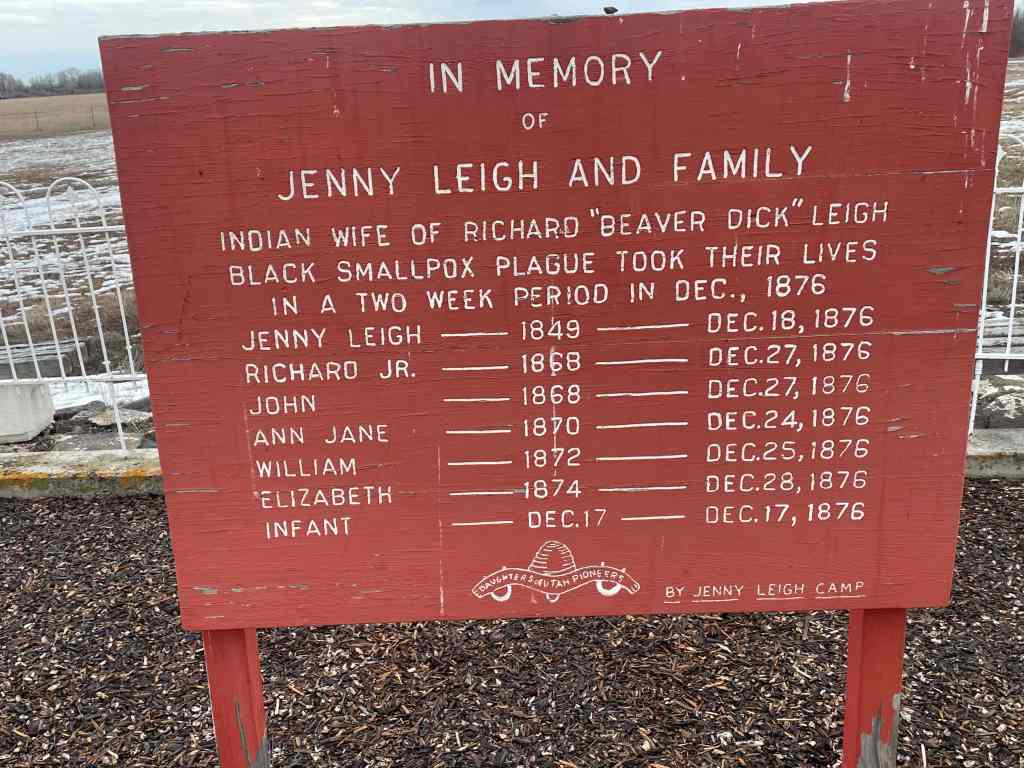
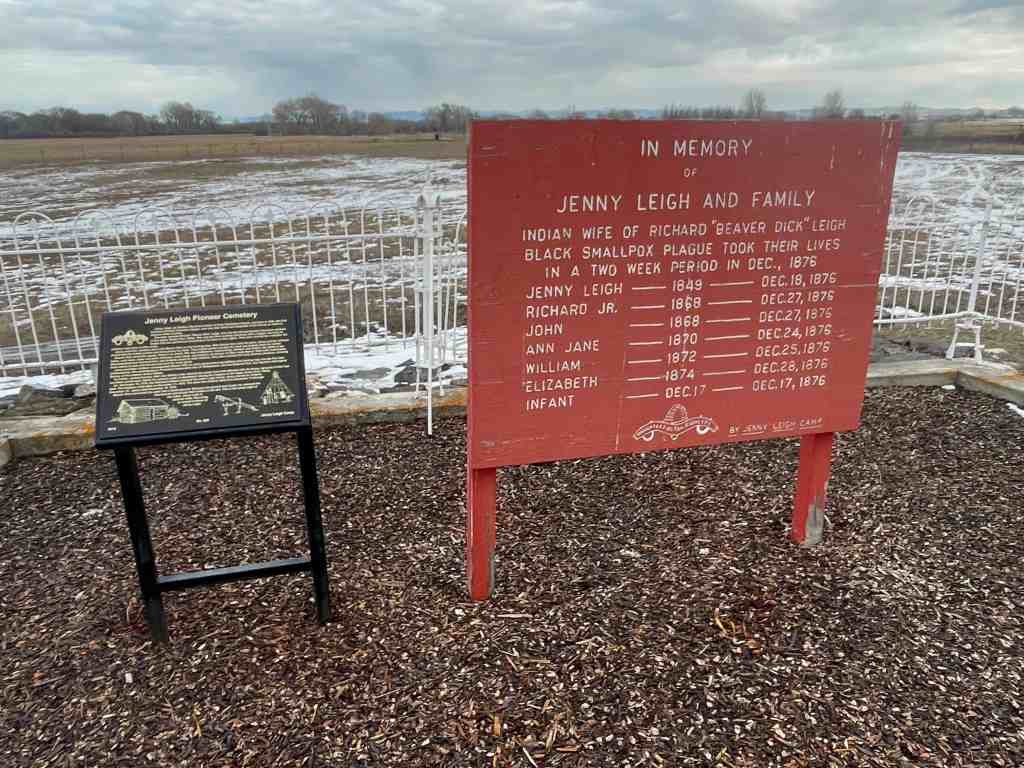
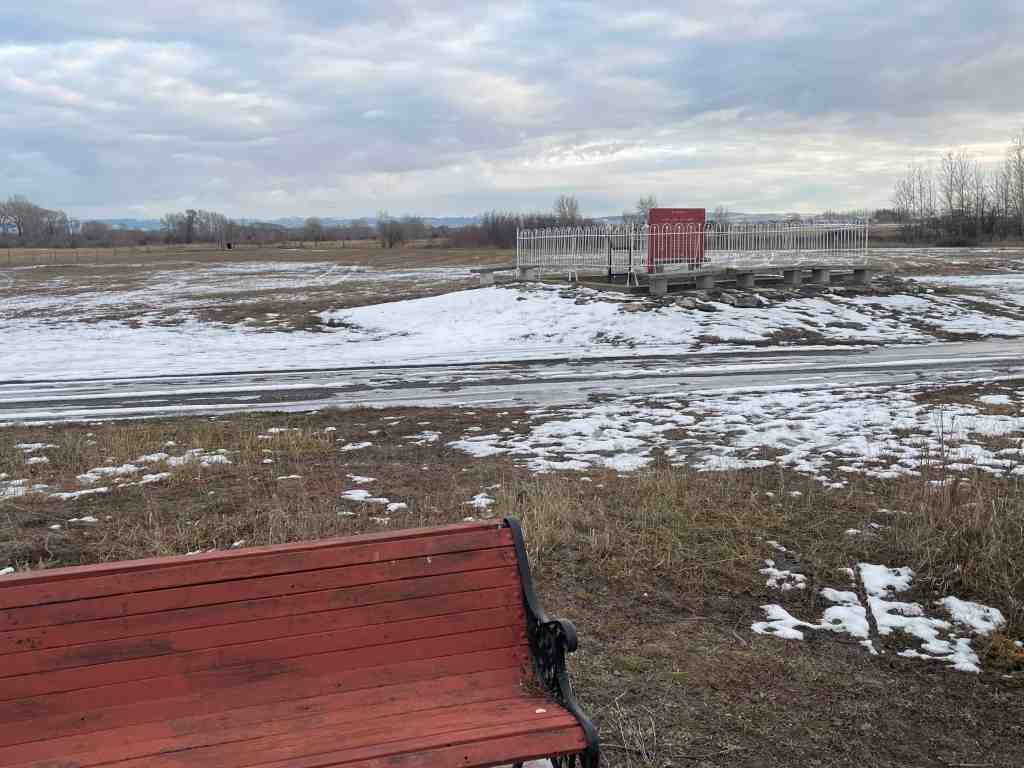
Jenny Leigh Pioneer Cemetery

In memory of Jenny Leigh and family, Indian wife of Richard “Beaver Dick” Leigh. Black smallpox plague took their lives in a two week period in December 1876.

  • Jenny Leigh – 1849 – Dec. 18, 1876
  • Richard Jr. – 1868 – Dec. 27, 1876
  • John – 1868 – Dec. 27, 1876
  • Anne Jane – 1870 – Dec. 24, 1876
  • William – 1872 – Dec. 25, 1876
  • Elizabeth – 1874 – Dec. 28, 1876
  • Infant – Dec. 17 – Dec. 17, 1876

Located here is Daughters of Utah Pioneers historic marker #565.

Last Chance Canal Co., Ltd.

23 Thursday Nov 2023

Posted by Jacob Barlow in Uncategorized

≈ Leave a comment

Tags

Caribou County, DUP, Grace, Historic Markers, Idaho

Last Chance Canal Co., Ltd.

Two miles east is located the dam and headworks of the canal system. Incorporation was effected Feb. 4, 1899 for the purpose of irrigating this valley. First filing on Bear River to supply the canal was Mar. 4, 1897. To perfect the right it was necessary to put the water through the right of way by Feb. 12, 1899. This tremendous task was accomplished through the ingenuity and perseverance of the brave men and women who pioneered this valley.

The text above is from Daughters of Utah Pioneers historic marker #219, located at 206 North Main Street in Grace, Idaho.

  • D.U.P. Historic Markers

The photos below were submitted by Marshall Hurst:
Ivins Pioneer Cemetery

22 Wednesday Nov 2023

Posted by Jacob Barlow in Uncategorized

≈ Leave a comment

Tags

Bancroft, Caribou County, Cemeteries, DUP, Historic Markers, Idaho, Pioneer Cemeteries

Ivins Pioneer Cemetery

This area, known as Ten Mile Sterrett and Ivins, was opened for homesteading in 1880. Emigrants from Utah and Iceland transformed sagebrush lands to productive livestock farms. They befriended the roaming Indians and Oregon Trail travelers. Jared Williams donated this plot 72×105 feet. Twenty person are buried here from 1893 to 1940.

The text above is from Daughters of Utah Pioneers historic marker #348, located on Ivins Road in Bancroft, Idaho.

  • D.U.P. Historic Markers

The photos below were submitted by Marshall Hurst:
Bancroft’s First School

21 Tuesday Nov 2023

Posted by Jacob Barlow in Uncategorized

≈ Leave a comment

Tags

Bancroft, Caribou County, DUP, Historic Markers, Idaho

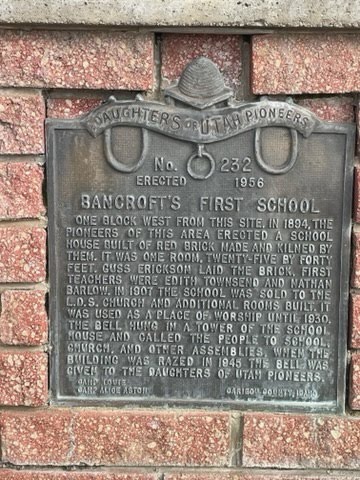
Bancroft’s First School

One block west from this site, in 1894, the pioneers of this area erected a school house built of red brick made and kilned by them. It was one room, twenty-five by forty feet. Guss Erickson laid the brick, first teachers were Edith Townsend and Nathan Barlow. In 1907 the school was sold to the L.D.S. Church and additional rooms built. It was used as a place of worship until 1930. The bell hung in a tower of the school house and called the people to school, church, and other assemblies. When the building was razed in 1945 the bell was given to the Daughters of Utah Pioneers.

The text above is from Daughters of Utah Pioneers historic marker #232, located at 95 South Main Street in Bancroft, Idaho.

  • D.U.P. Historic Markers

The photos below were submitted by Marshall Hurst:
Weston Grist Mill

26 Thursday Oct 2023

Posted by Jacob Barlow in Uncategorized

≈ Leave a comment

Tags

DUP, Historic Markers, Idaho, Weston

Weston Grist Mill

President Brigham Young directed Mariner W. Merrill to explore new town sites. Out of Merrill’s survey, several families from Richmond, Utah crossed the Bear River on April 15, 1865, and settled in the Weston area. The first dugouts were constructed in the Meadows of Cedarville.

The very next year, 1866, a grist mill was constructed by James Mack on Weston Creek south of the present town site. This new mill’s location resulted in the relocation of the proposed town. Rocks were hauled from Cedar Hills to construct the new mill. Mack acquired machinery for the mill from Thatcher’s in Logan. The grist mill used 3 1/2 foot stone burrs to grind grain, a small grain cleaner, two stands of elevators, and one centrifugal reel. Mack also installed a 13 1/4 foot James Leffel turbine that had been freighted to the west in1859.

Brigham Young visited Weston in 1869, and proclaimed that golden fields of hard red wheat would soon surround the community. The grist mill stimulated dry-farm wheat cultivation, and Brigham Young’s proclamation was soon fulfilled. The construction of the mill provided stimulus for several other early businesses, all powered by Weston Creek, including saw mills, iron works, spinning, carding, weaving and dyeing enterprises.

Building of the grist mill launched the new town of Weston. It was the only mill on the west side of Bear River. For many years, the mill operated 24 hours per day to meet the consumptive needs of Weston, Oxford, Clifton, Dayton, Clarkston and Cornish. Weston was also located on the “gold road” to mines in northern Idaho and Montana. Weston settlers shipped flour and other food items northward. The town quickly became a shipping center and was additionally enhanced when the railroad came to Weston in 1890.

The mill was often remodeled over the next 100 years, and it also changed owners several times. The mill operated in a modernized world with steel rollers and advanced technology, but it could not survive for very long in the post World War II Era.

The text above is from Daughters of Utah Pioneers historic marker #561, located on 2nd South in Weston, Idaho.

The pictures below were submitted by Marshall Hurst:
Eagle Rock Crossing

21 Thursday Sep 2023

Posted by Jacob Barlow in Uncategorized

≈ Leave a comment

Tags

Historic Markers, Idaho, Idaho Falls, SUP, UPTLA

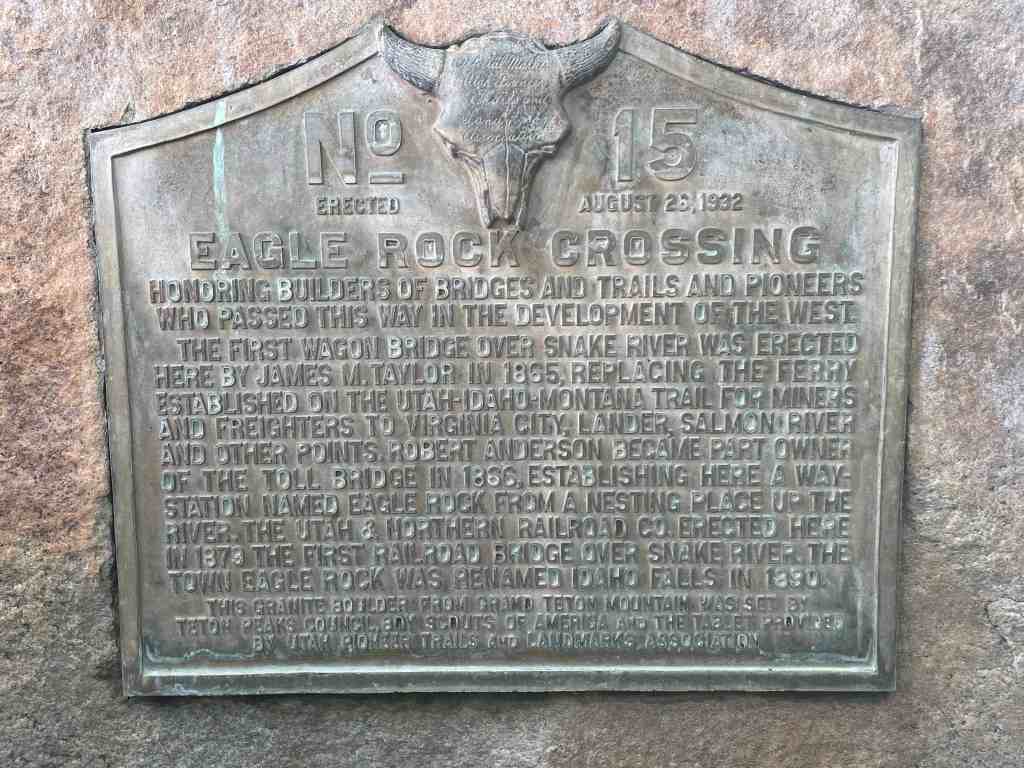
Eagle Rock Crossing

Honoring builders of bridges and trails and pioneers who passed this way in the development of the West.

The first wagon bridge over Snake River was erected here by James M. Taylor in 1865 replacing the ferry established on the Utah-Idaho-Montana trail for miners and freighters to Virginia City, Lander, Salmon River and other points. Robert Anderson became part owner of the toll bridge in 1866, establishing here a way station named Eagle Rock from a nesting place up the river. The Utah & Northern Railroad Co. erected here in 1879 the first railroad bridge over Snake River. The town Eagle Rock was renamed Idaho Falls in 1890.

This granite boulder from Grand Teton mountain was set by Teton Peaks Council, Boy Scouts of America and the tablet provided by Utah Pioneer Trails and Landmarks Association

The above text is from Utah Pioneer Trails and Landmarks Association marker #15 erected August 26, 1932 in Idaho Falls, Idaho.

  • U.P.T.L.A. Markers (these markers were later adopted by the SUP, S.U.P. Markers )

These photos were submitted by Marshall Hurst:
The Idaho Falls LDS Hospital and School of Nursing

27 Sunday Aug 2023

Posted by Jacob Barlow in Uncategorized

≈ Leave a comment

Tags

Historic Markers, Idaho, Idaho Falls, SUP

The Idaho Falls LDS Hospital and School of Nursing

The idea of the hospital was conceived by Heber C. Austin with construction commencing in 1919, though the completion of the building was delayed because of a depressed economy. On 22 October 1923, the hospital was dedicated by President Heber J. Grant of the Church of Jesus Christ of Latter-Day Saints. The school of nursing was essential in the operation of the hospital, the third floor being residence for the student nurses, until it became necessary to erect “The Nurse’s Home.”

The Hospital is remembered for compassionate service to all the people of the Upper Snake River Valley, regardless of race and religion. The Church divested its ownership 1st of April 1975, though under names of Idaho Falls and Riverview, the hospital continued serving the community until December 1986.

The building was located northeast of this monument. The monument resembles the original structure, and bricks therefrom were used in building it.

The text above is from Sons of Utah Pioneers historic marker #30, erected July 24th 1990 and located at Riverside Drive and Memorial Drive in Idaho Falls, Idaho.

  • S.U.P. Historic Markers

These photos were submitted by Marshall Hurst:

Rexburg Public Square

13 Sunday Aug 2023

Posted by Jacob Barlow in Uncategorized

≈ Leave a comment

Tags

Historic Markers, Idaho, Rexburg, SUP

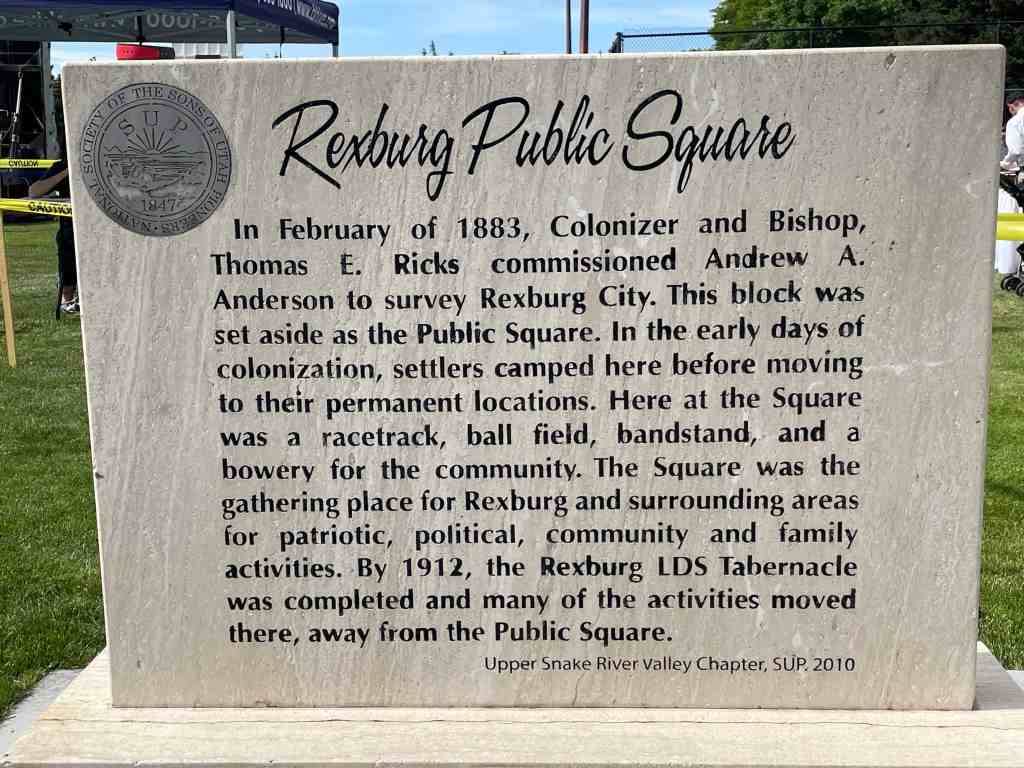
Rexburg Public Square

In February of 1883, Colonizer and Bishop, Thomas E. Ricks commissioned Andrew A. Anderson to survey Rexburg City. This block was set aside as the Public Square. In the early days of colonization, settlers camped here before moving to their permanent locations. Here at the Square was a racetrack, ball field, bandstand, and a bowery for the community. The Square was the gathering place for Rexburg and surrounding areas for patriotic, political, community and family activities. By 1912, the Rexburg LDS Tabernacle was completed and many of the activities moved there, away from the Public Square.

The above text is from the monument, Sons of Utah Pioneers historic marker #161, erected in 2010 in Rexburg, Idaho.

  • S.U.P. Historic Markers

These photos were submitted by Marshall Hurst:

← Older posts
Newer posts →

Follow Jacob

Follow Jacob

Blog Stats

  • 2,012,190 hits

Social and Other Links

BarlowLinks.com

Recent Posts

  • John A. Henrickson Home
  • Fred H. Thompson Home
  • G.W. Thatcher Home
  • Fort Douglas Commanders House
  • Herbert B. Maw Home

Archives


Loading Comments...