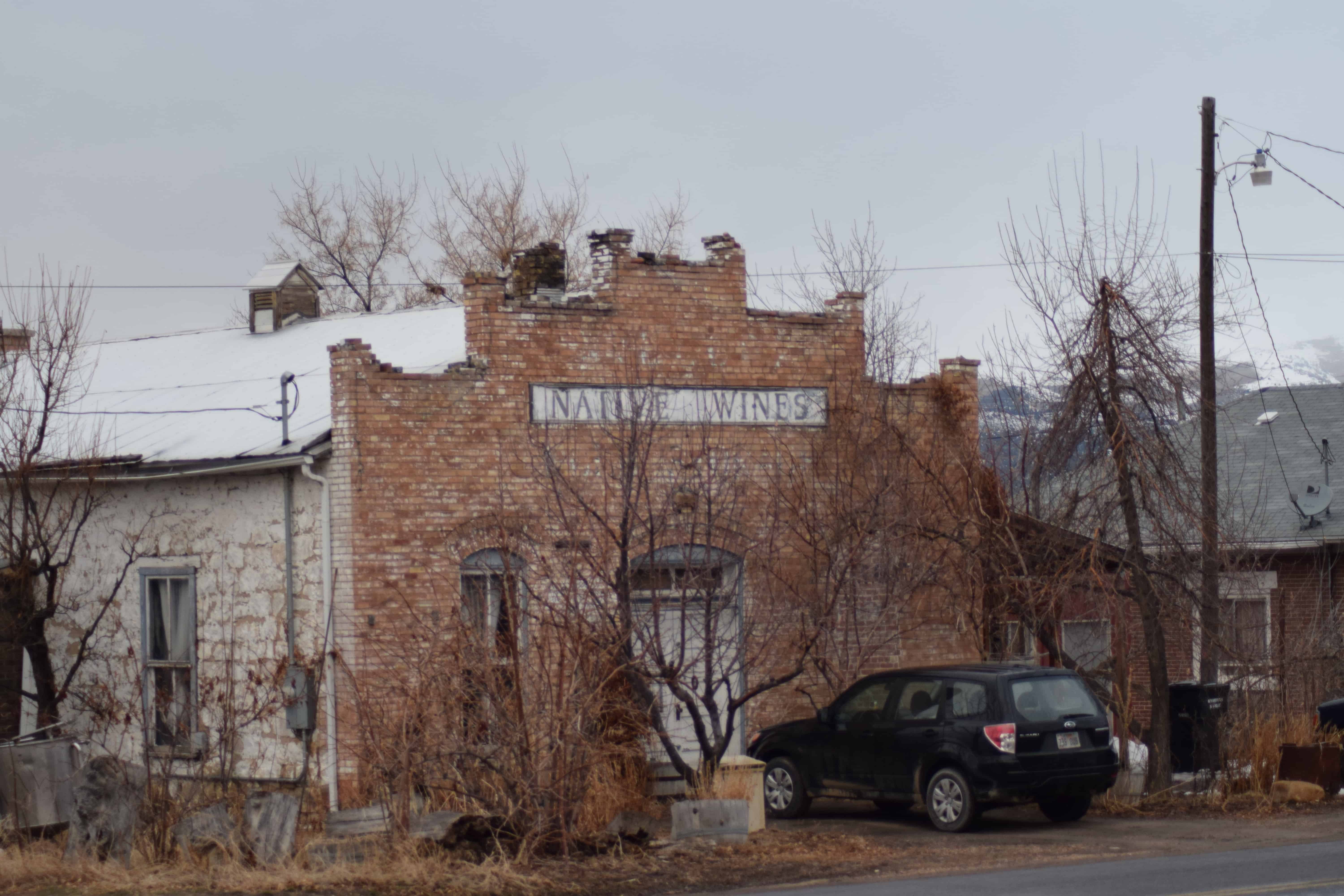
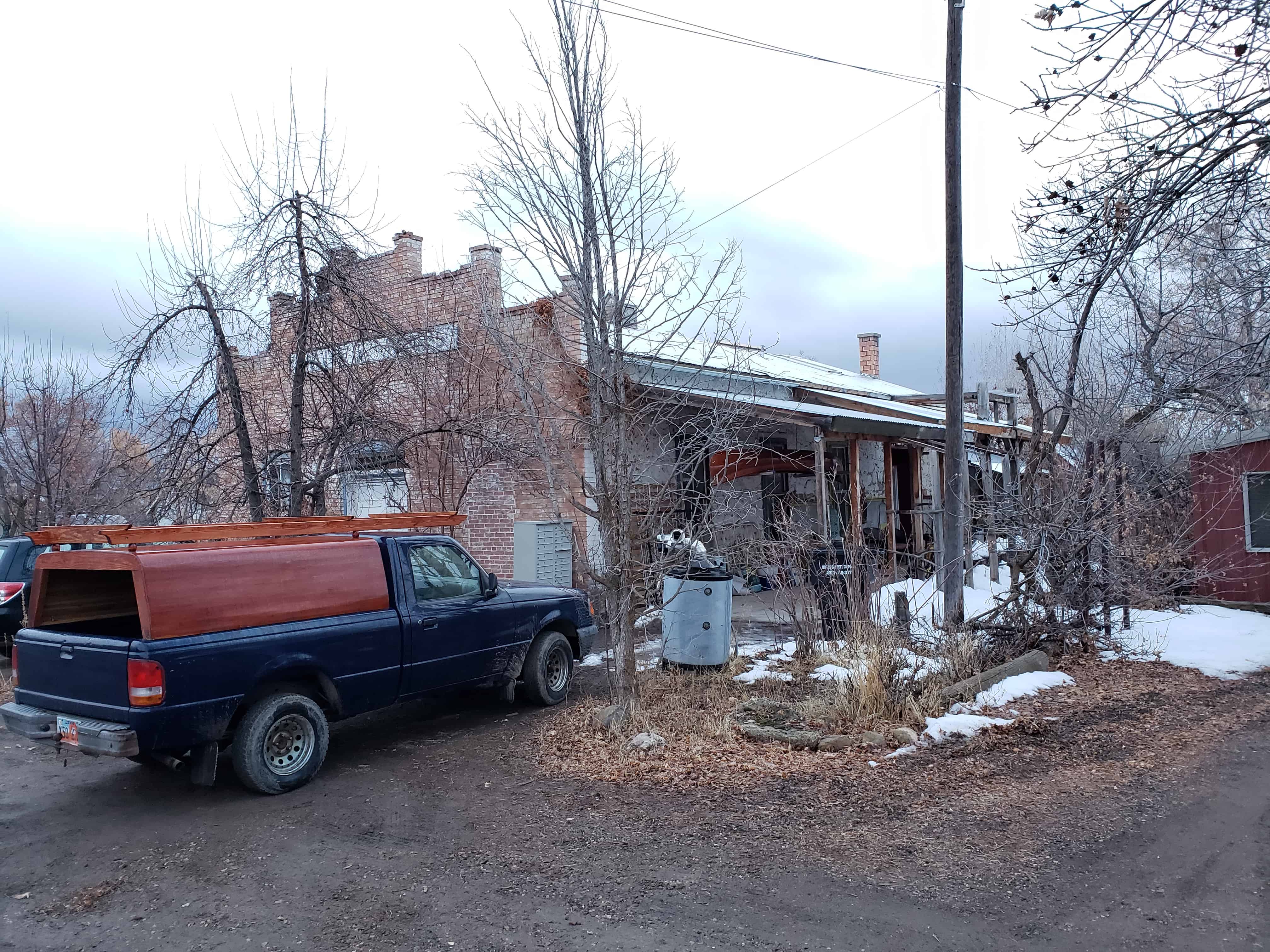
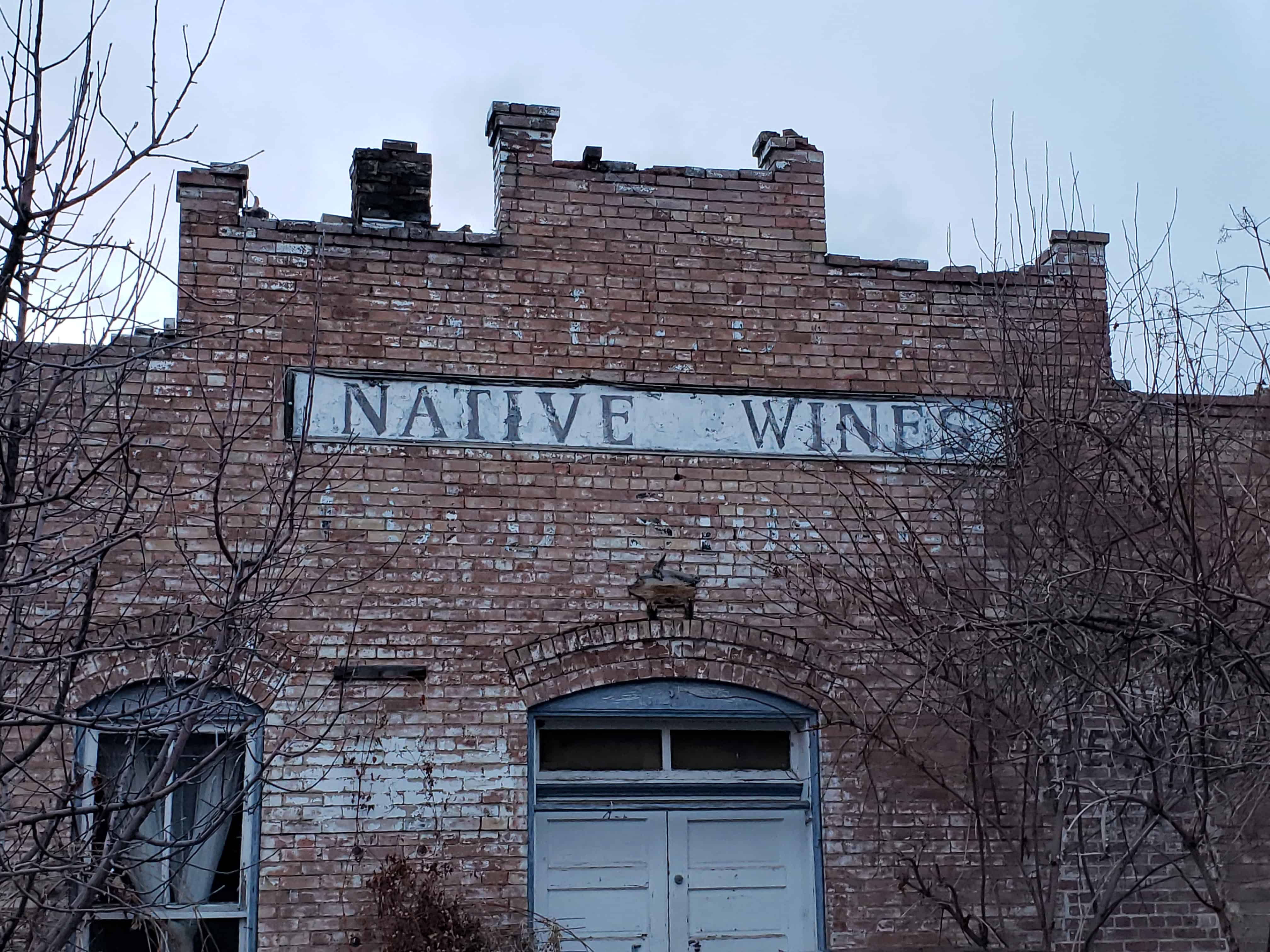
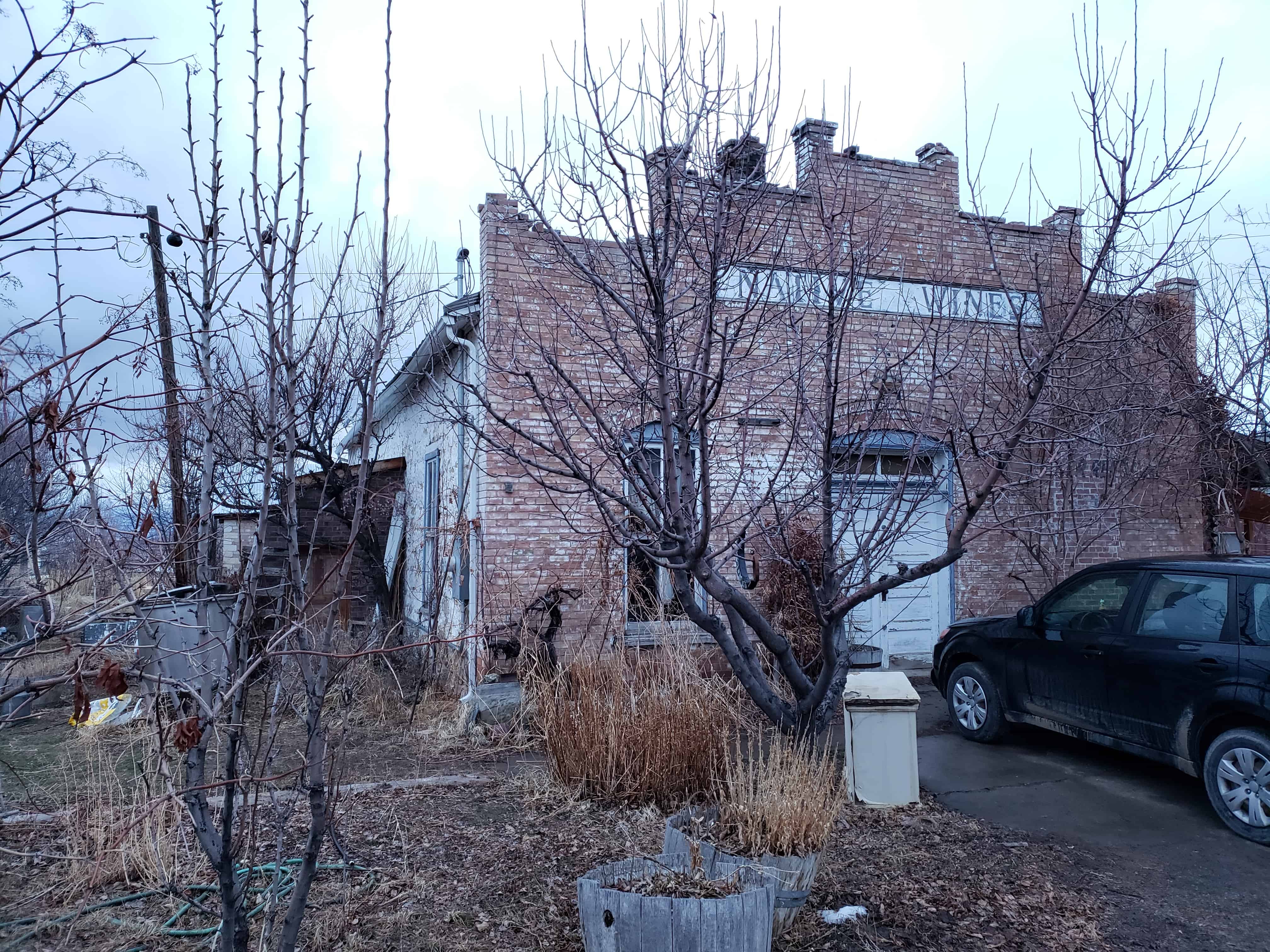
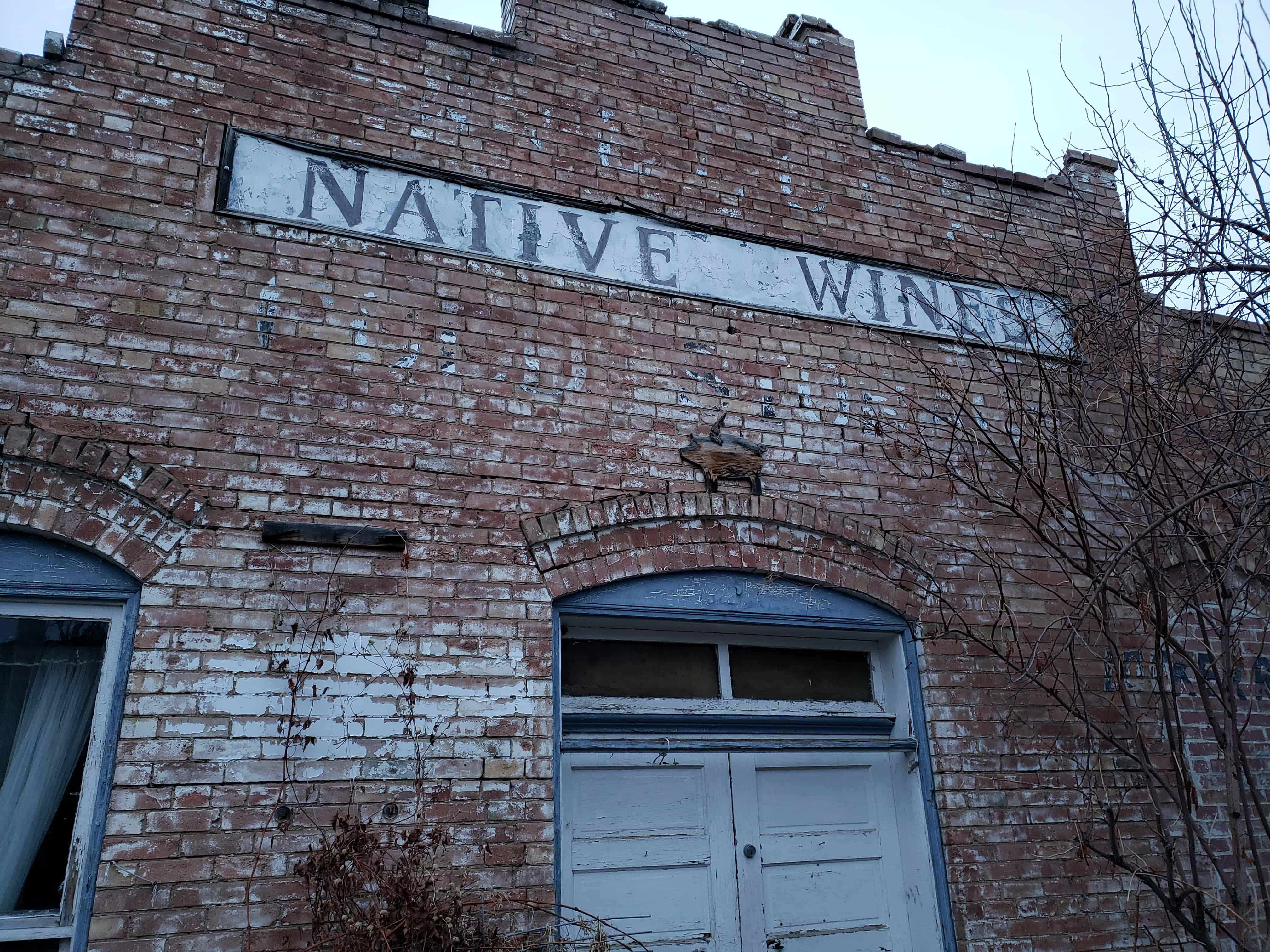
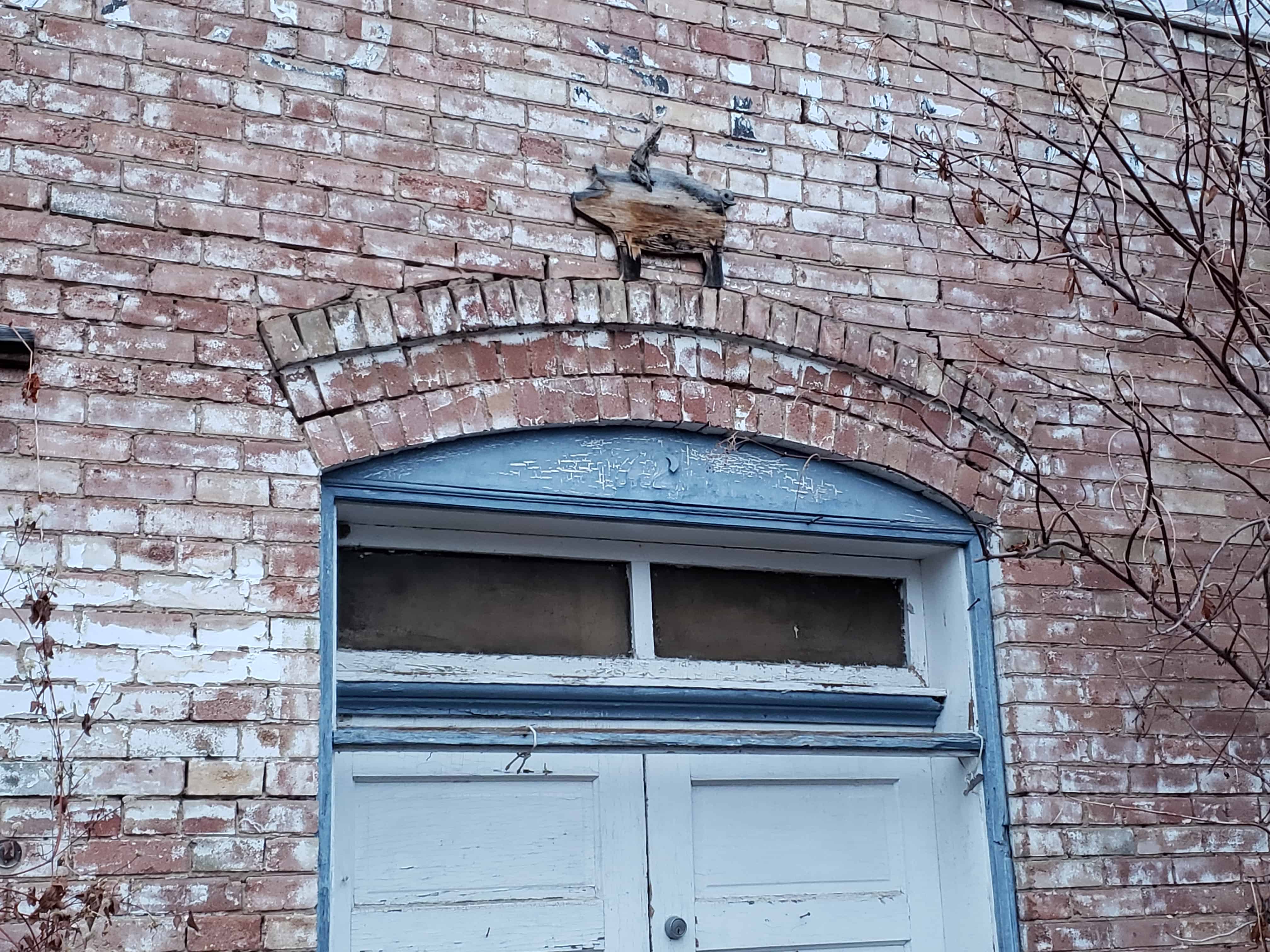
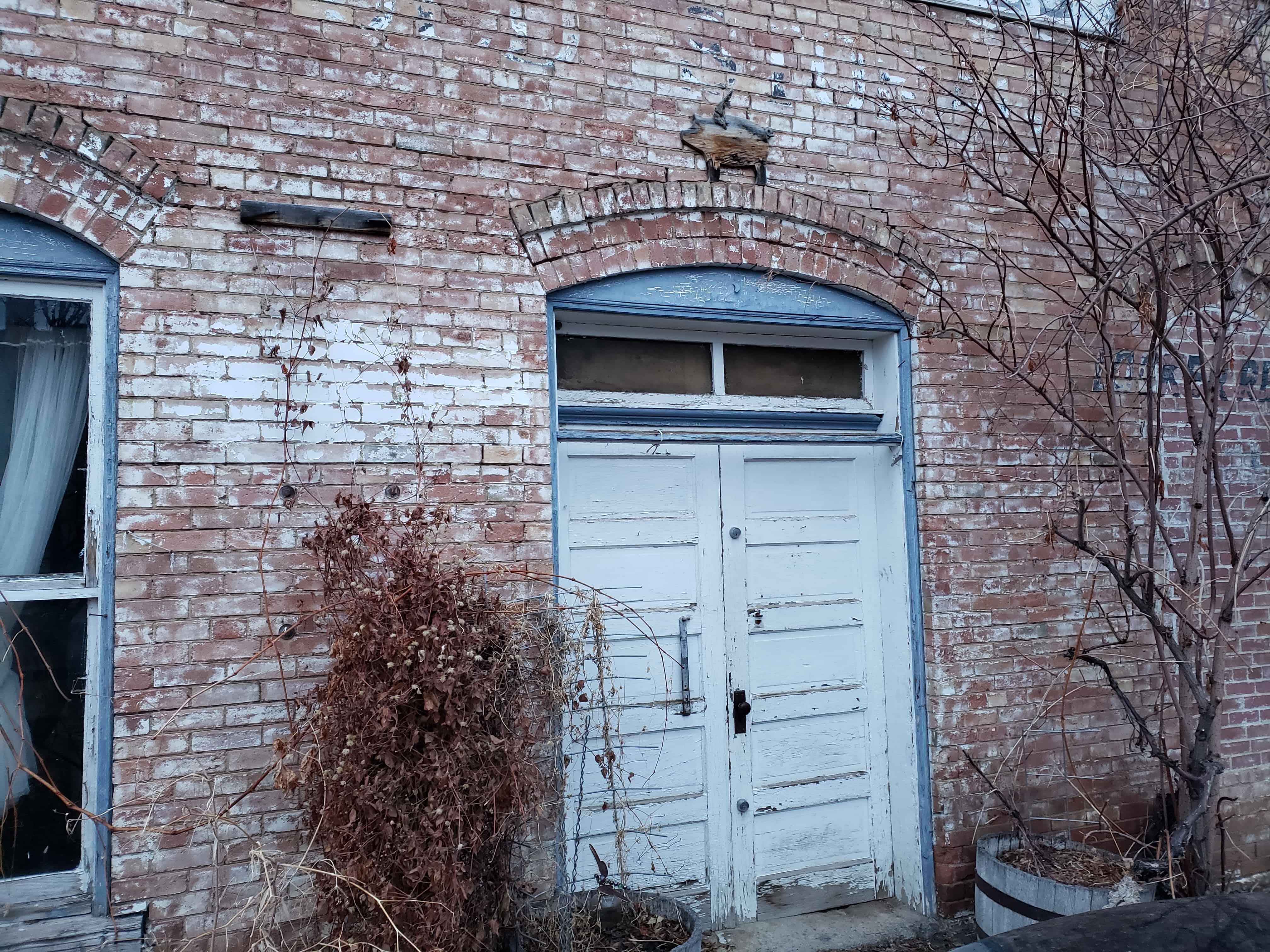
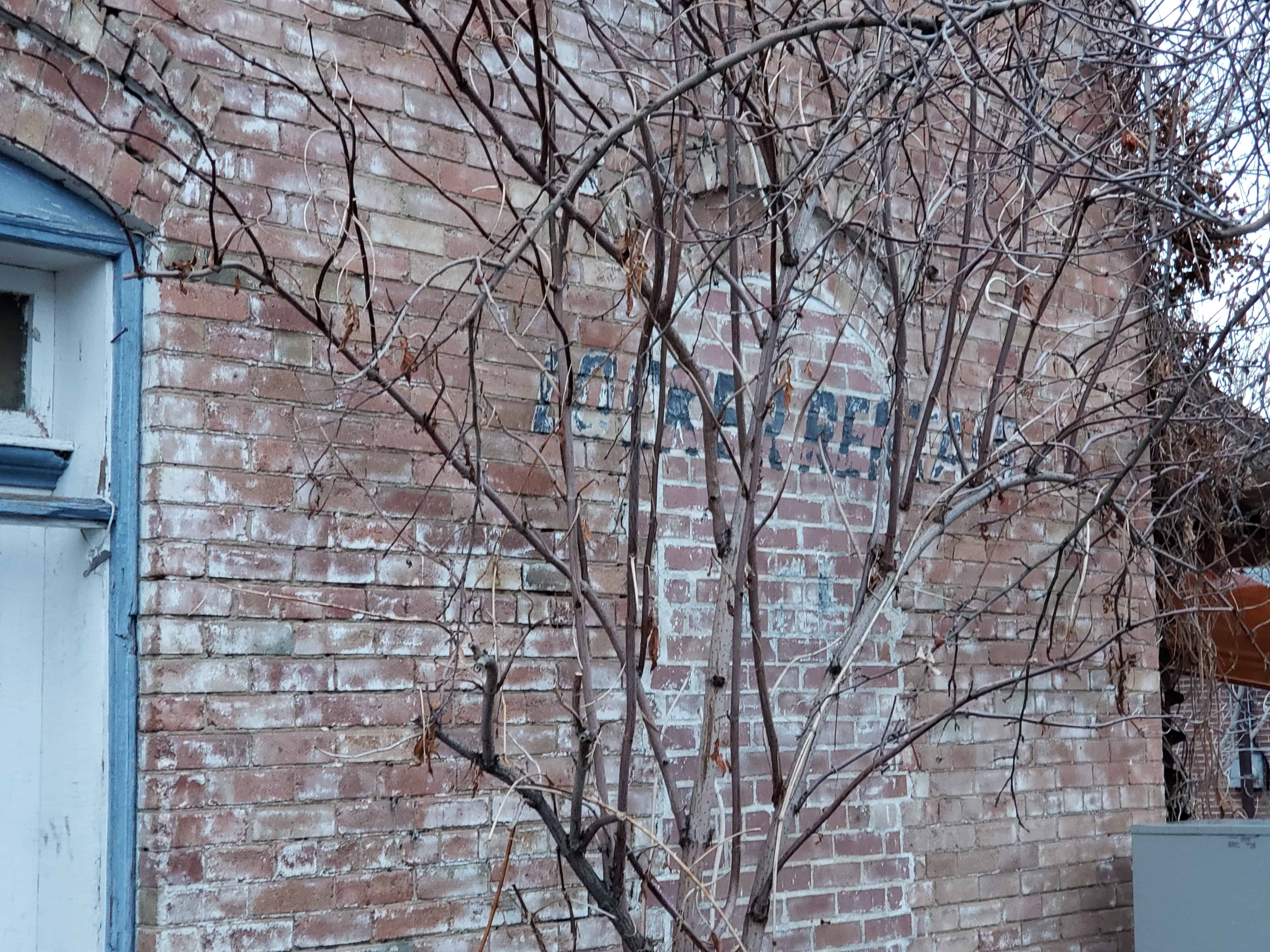
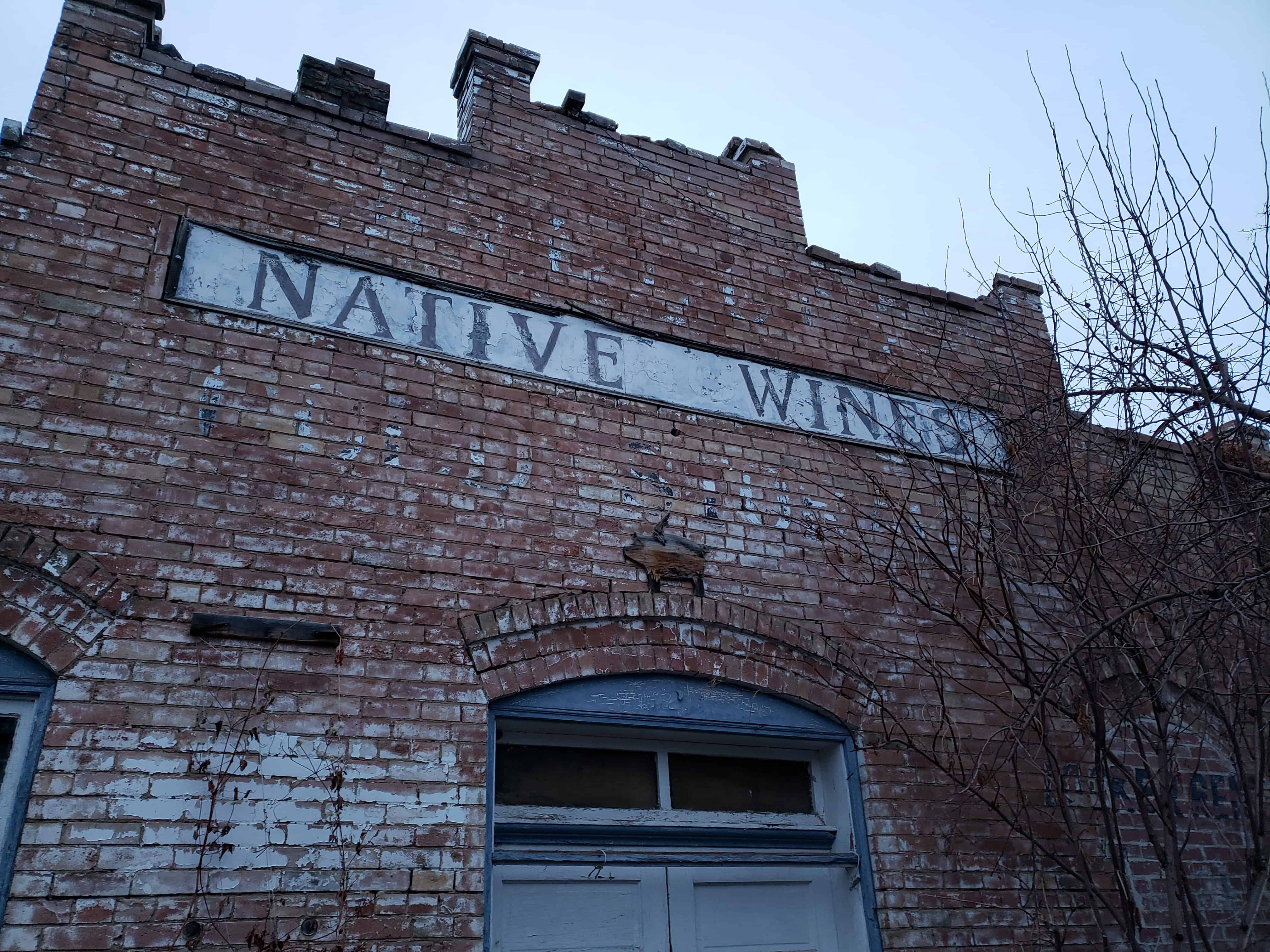
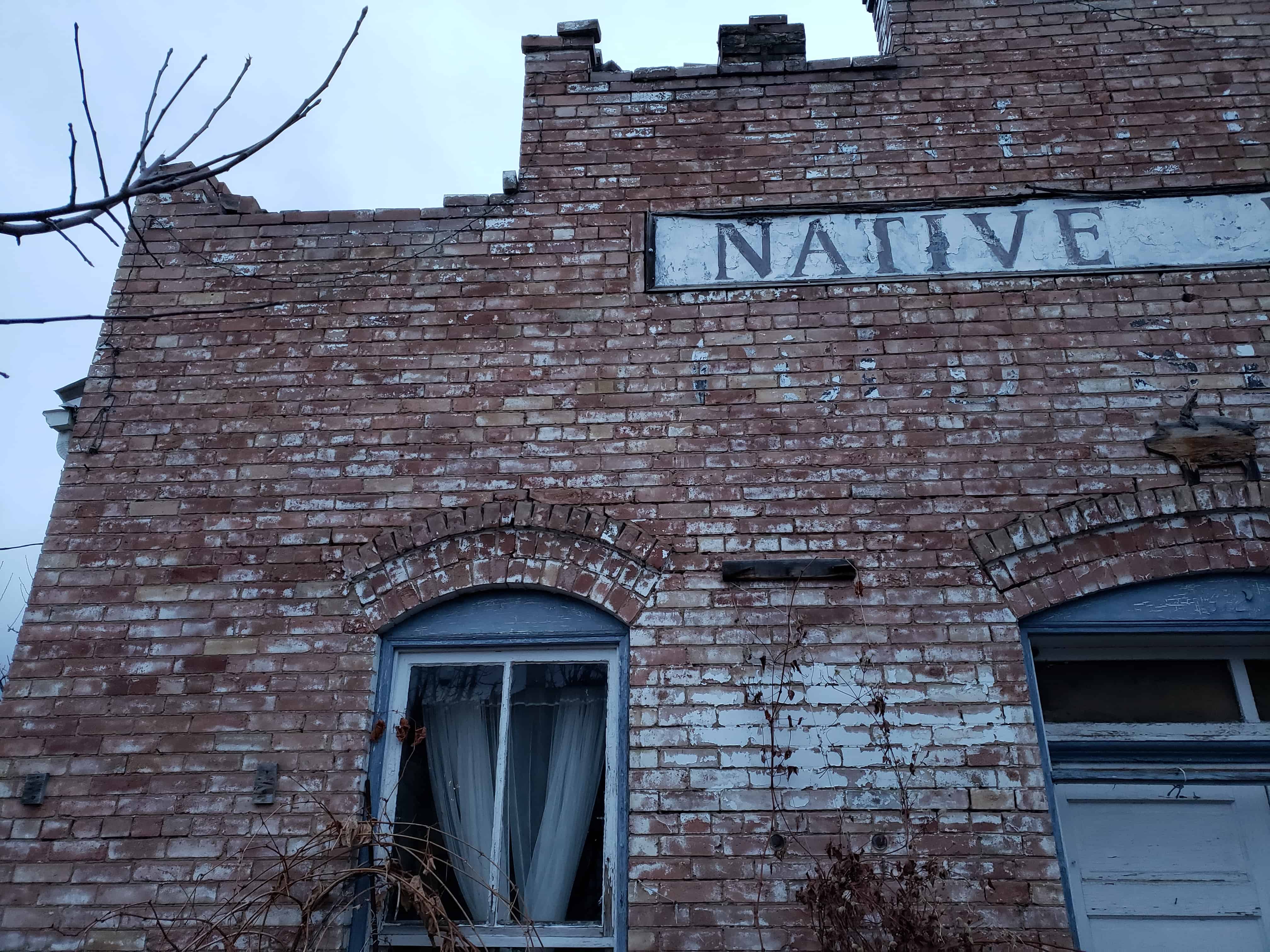
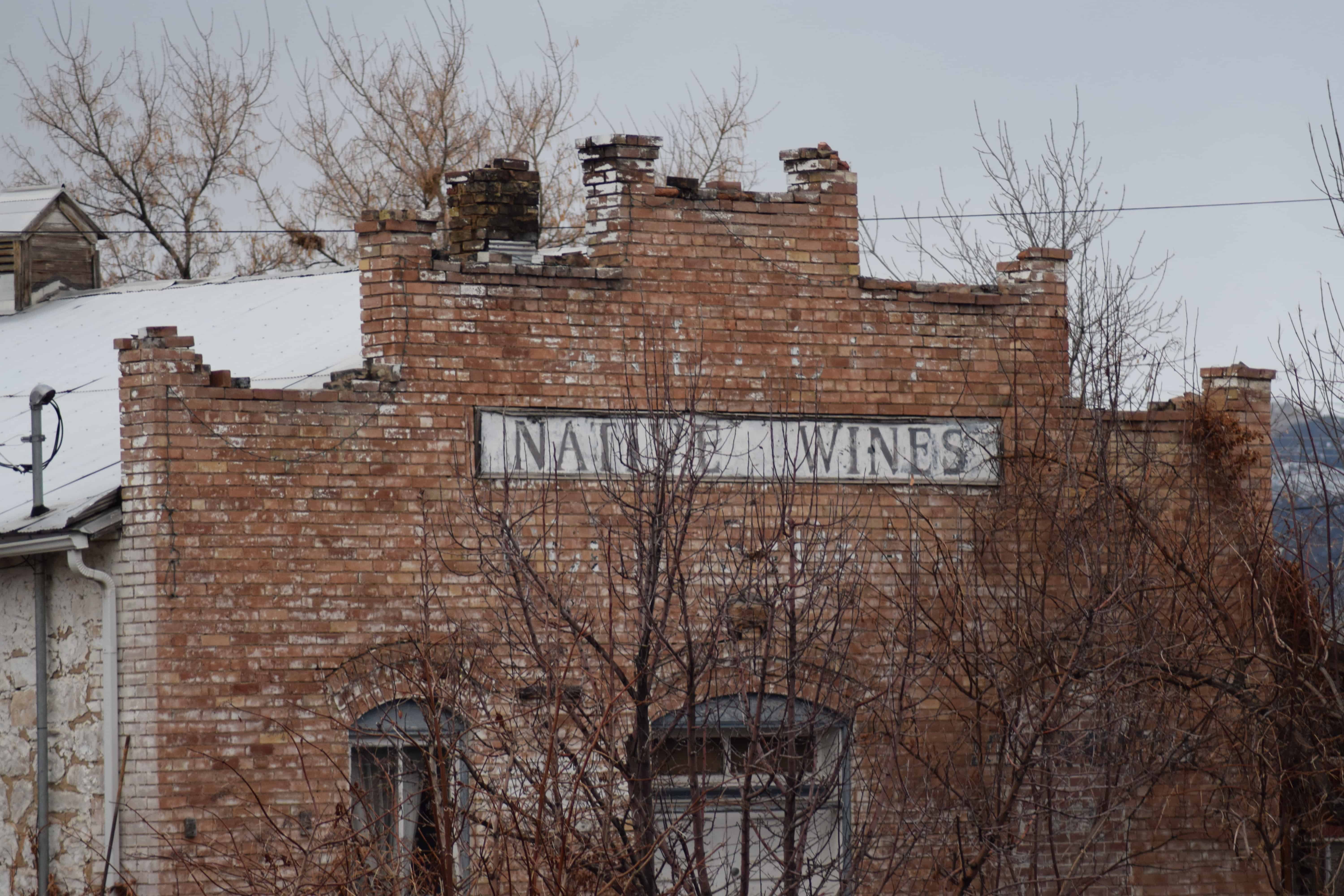
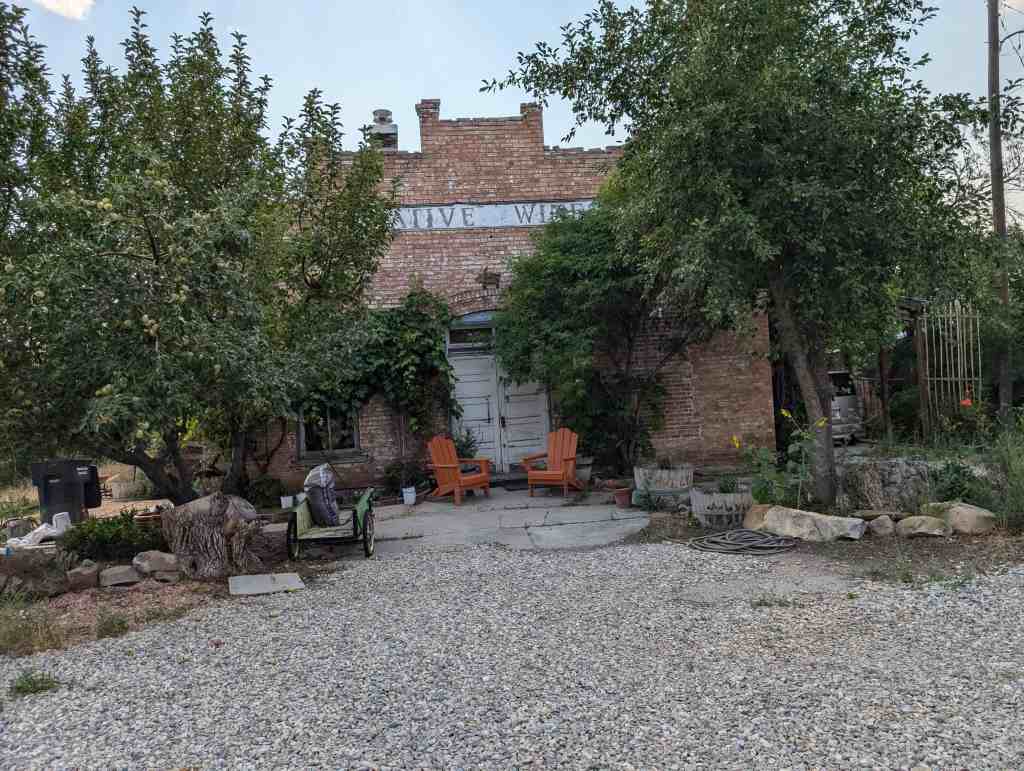
This one-story structure is one of several commercial and industrial buildings that once existed along the west end of Main Street. It was originally a laundry, built at the turn of the century by Wilford Peterson and Ole Hansen of sandstone and brick. It has a stepped front parapet wall concealing a gable roof. The right window has been filled-in but the exterior and interior otherwise retain their original appearance. The central double doors lead to a large, open interior room with wood posts supporting roof trusses. Beyond the original west wall is a masonry addition.
This business collected laundry from Spring City to Thistle using horse-drawn wagons. Here they made their own soap from local tallow, but the scarcity of tallow during World War I caused the closure of this laundry business. Since then, the building has served many uses including a store, a cheese factory, wool storage, ice skating rink, meat processing, cold storage, and wood shop. Many local residents have related childhood memories of gathering soda pop bottles and bringing them here to redeem for money or candy at the old fashioned penny candy counter in the store. It is currently owned by Native Wines.(*)
Built in 1934 and located at 313 S 100 E in Mt Pleasant, Utah.
David and Alta Lowry bought the home in 1962, see more on them here.
This timeline that was put together by Tudy Barentsen Standlee and the below story by Lee R. Christensen were both found on this webpage.
We started construction on the house we latter called “the white house” mid Spring 1934 and hoped to be in by school starting time or mid-September. Construction was delayed during the summer when our two carpenters, Charles Jacobsen and Ferry Peterson took time away from our job to help build the CCC camp. The Wright family did the cement work. Oscar Amundsen and Charles Christensen (Minnie Rutishauser’s father) did the brick work and the Bohne’s the plumbing and electrical. And we moved in just before Thanksgiving 1934.
Our architect was a Mr. Young from Salt Lake City and rumored within the family as a major architect on a number of LDS temples. He was unhappy with what he considered three major mistakes by our builders. The outside brick wall was to have been constructed with “weeping mortar” giving it a very rough look. While the mortaring is thicker than usual it is not weeping. The exterior 2nd floor walls went into the roof line by about 8 inches and had been curved up to meet the roof.
That curving was to have been carried out thru out the 2nd floor on the interior walls even though they did not need it to meet the roof. And the roof shingling was to have been given a wavy effect (I never knew how).
Our family lived here for 10 happy years with these artistic mistakes until we sold in 1945 to the incoming Superintend of Schools.
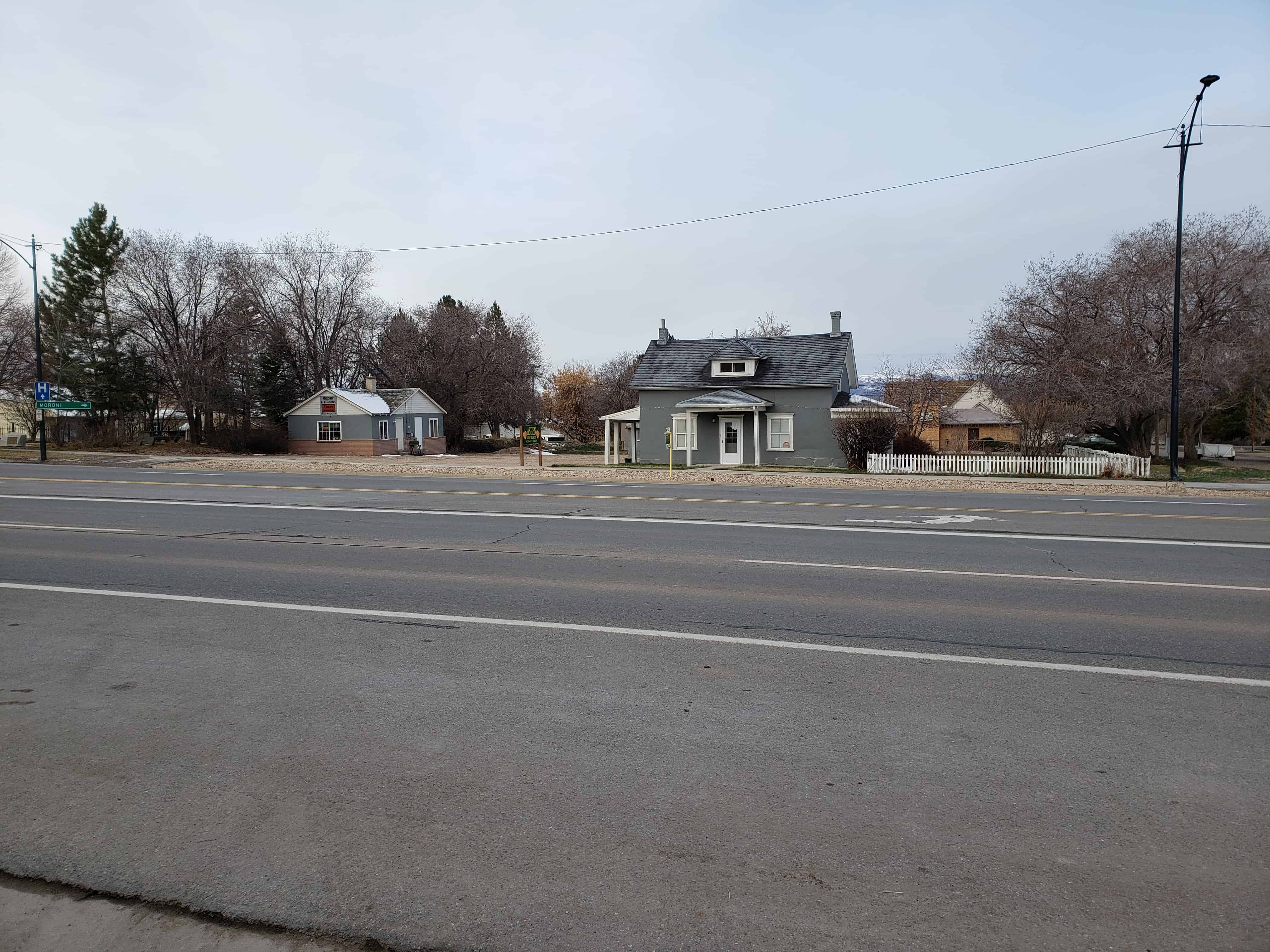
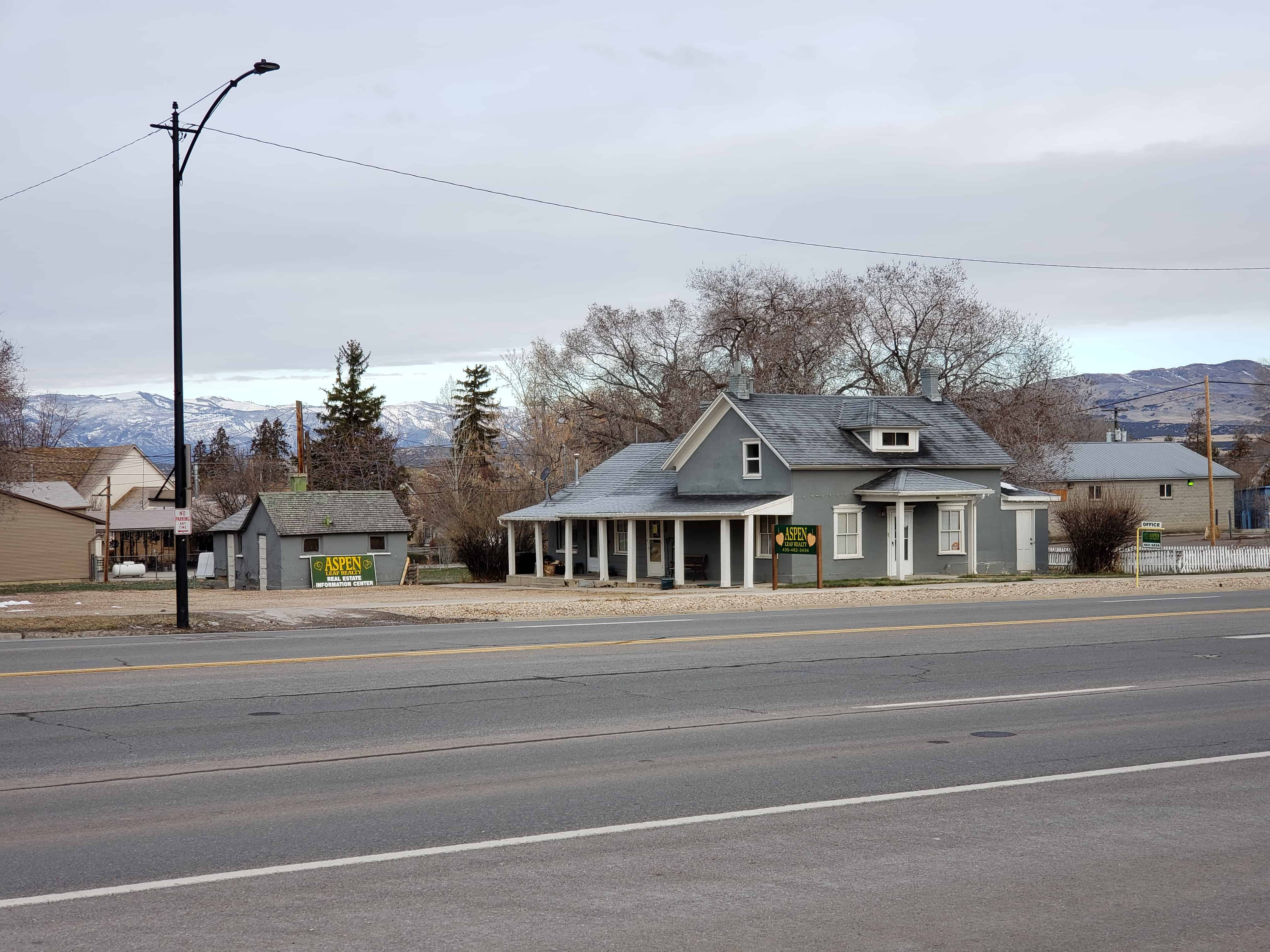
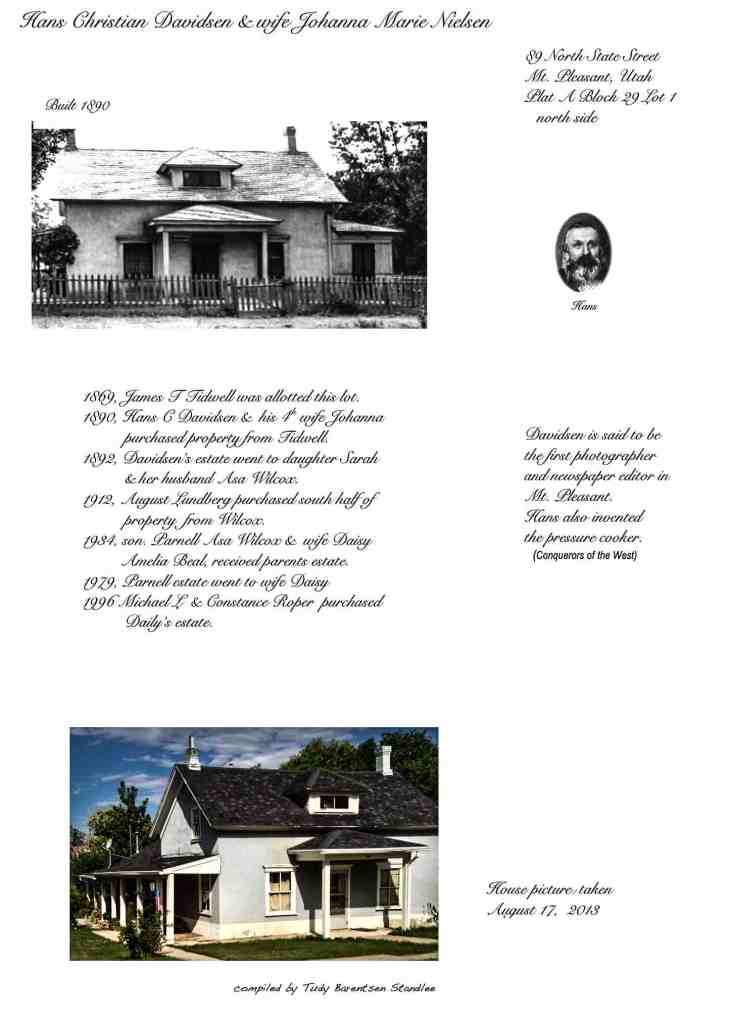
Built in 1890, the Hans Christian Davidsen and Johanna Marie Nielsen home is located at 89 N State Street in Mt Pleasant.
Hans invented the pressure cooker and was also the first photographer and newspaper editor in town. He was born in Denmark and moved to Mount Pleasant in 1866.
Located at 211 N State Street in Mt Pleasant, Utah (209 North on the National Register), the James Staker home is a fine example of folk/vernacular building in the Sanpete Valley. The central passageway type house was built rather sparingly in the early period of local settlement (1850-1870) but became increasingly popular in the area through the late 1870s and early 1880s. The Staker house, while quite elegant in its own right, was typical of the homes that the more affluent members of the community were building during the later pioneer period. In the context of the vernacular architectural style, the Staker house assumes a position near the top of the economic spectrum and illustrates well the building needs of a particular segment of Mt. Pleasant’s 19th century population.
James Staker was born in Pleasant Grove, Utah in 1858, the son of Nathan and Elizabeth Staker. Nathan was an early (1837) Canadian convert to the Church of Jesus Christ of Latter-Day Saints who migrated westward to Utah in 1853. The Stakers moved in 1859 to Mt. Pleasant where young James was educated and raised a farmer. In 1880 James married and in 1881 purchased a building lot from his father for $200. The large brick home was probably built in the early 1880s as James established his family and farming business. In 1892 Staker organised the Planning Mill Company of Hansen, Staker, and Johnson to “manufacture rustic, ceiling, flooring, mouldings, with scroll sawings and turning.” The Staker house remained in the Staker family until the early 1960s when it was acquired by its current owner, Ms. Genevieve Coe Carroll.
The central passageway type vernacular house results from the 18th century marriage of an older two-room wide, one room deep traditional hall and parlor house with the Georgian stylistic preference for an internal entrance hall. The resulting house, two rooms and a hallway wide and one room deep, was distributed widely throughout the eastern united states and quite naturally moved to Utah in 1847. As a building type, it is found in all Utah communities though not in the quantities which some scholars have previously thought. In Sanpete, the central passage entrance hall was found during the early years of settlement only in the homes of the most wealthy and influential individuals. Its frequency increased into the 1870s and by the 1880s most of the larger brick homes – like the James Staker home – were equipped with the entrance hall.
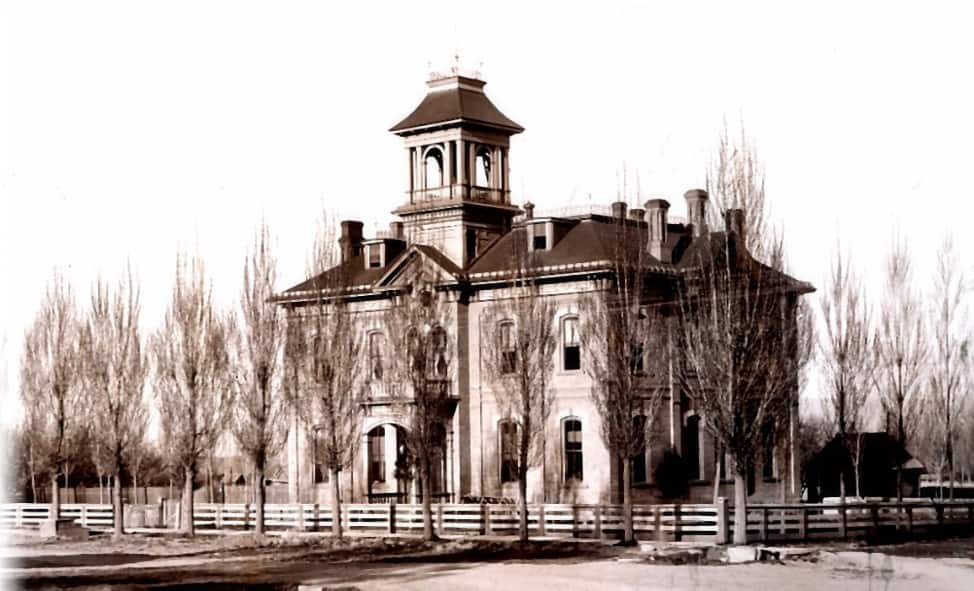
Wasatch Academy is located at 200 South 100 West (it covers multiple city blocks) in Mount Pleasant, Utah and it was added to the National Historic Register (#78002690) on October 2, 1978.
Wasatch Academy occupies two connecting square blocks plus a few parcels of property on parts of two other blocks located in the southwest corner of Mt. Pleasant, Utah, population 1,500. The Academy includes buildings constructed specifically for academic purposes as well as older residences purchased for use by the Academy- Together, the buildings date from the 1890’s to the late 1930’s. They are basically one to three stories in height and include buildings of both masonry and frame construction. Several different building styles are also represented, many of which are vernacular or eclectic or non-descriptive. The buildings have not been extensively altered as the campus population has not increased enough to warrant changes. The larger buildings were built during the 1920’s and include the gymnasium, administration hall and the church. The campus is situated around a large commons area (as indicated on the map) and is enhanced by mature landscaping including large Lombardy poplars and fir trees. To date, little restoration has occurred although plans are underway to restore some of the buildings.
This map (below) of the contributing buildings to the historic site was included in the nomination form when the academy was submitted to the historic register in 1978:
(more from the NRHP nomination form…) Wasatch Academy is the oldest continuously operating high school in the state of Utah. Founded in 1875, by a Presbyterian minister, the Reverend Duncan J. McMillan Wasatch Academy is significant for its role in a major late 19th century Protestant missionary effort aimed at converting the Mormon inhabitants of Utah. The Academy also made important contributions in helping to develop a “free school” system, precursor of the state’s present public school system,
Wasatch Academy was founded on April 19, 1875, by a Presbyterian minister, the Reverend Duncan J. McMillan who had come west to regain his health. He had been assigned by his religious superiors only a month earlier to take up his missionary work in the Mormon community of Mt. Pleasant in Sanpete County. The Presbyterians hoped to capitalize on the hostilities remaining from an apostacy that had divided the community over the issue of Mormon Church authoritarianism. The protesting group had expressed their defiance through the construction of a lumber building known as the Liberal Hall. By the time McMillan arrived in Mt. Pleasant, the apostacy had ended with the conciliation of some of the protestors and the excommunication of the unrepentant. From former Mormons, McMillen purchased the Liberal Hall for use as a mission headquarters and from: among this same group, McMillen acquired his first converts.
McMillen had arrived in Mt. Pleasant with the intention of opening a free grade school, an idea at some variance’ 1 with the established policy of his church. Presbyterians- had had along tradition of high educational standards for their clergy and had vigorously supported secondary and higher education. However, by the mid-nineteenth century they had abandoned their parochial school systems, believing that this level of education was properly a function of public, tax-supported schools. In Utah, there were only a few tax-supported schools prior to 1890 and these were of poor quality. Local Mormon ward schools had very short terms and standards which the Presbyterians considered questionable. In addition, Brigham Young had set a tone of church opposition to tax-supported schools which resulted in few districts availing themselves of the right to levy school taxes as provided for by Territorial Law. Young’s opposition was based on his preference for the “fee” schools operating in his native New England. This usually involved community financing of the school building but left the operation of the school to be supported by the per capita fee paid by the student’s parents. This system prevailed throughout Mormon areas in the West and it was this system that McMillen hoped to change through the introduction of free schools which would utilize properly trained teachers and would operate on a nine-month school year. The Presbyterians justified this incredible missionary expense by reasoning that education would free the young from what they believed to be tyranny and superstitious beliefs.
The first school session in Mt. Pleasant was held on April 19, 1875. Before the term ended that spring, the attendance had reached well over one hundred pupils. In 1880 the school was taken over by the Board of Home Missions of the Presbyterian Church and continued under the control of that body until July of 1973 when the school became financially independent of the Church.
In its early years the scholastic offerings were restricted to the lower grades. The first high school class graduated in 1887 and consisted of two students. As local public schools developed and improved, the Academy gradually discontinued the lower grades and by 1958 had become a 4-year high school.
In 1888 the building on Main Street proved to be too small for efficient work so a group of Mt. Pleasant businessmen subscribed the sum of $2,000.00 to help complete a new structure which was located on the site of the present Administration Hall. Popular demand soon brought about the establishment of the boarding department and by 1896 there were 24 boarding pupils enrolled.
Charles Lee Johns was appointed principal in 1911. During his tenure, much of the present property was secured, a number of new buildings were erected, and the Administration Hall was enlarged. In 1912 a similar school in Springville, Utah, the “Hungerford Academy” was closed and consolidated with Wasatch. The first important dormitory, Finks Memorial Hall, was erected in 1913 by volunteer gifts from all parts of the nation. During the same year, the commercial and home economics department were added. The next year the manual training courses were offered for the first time.
Mrs. Charles F. Darlington of New York City gave funds in 1916 for the first boy’s dormitory. In 1917 the gymnasium corner was purchased, along with a small cottage from a Mr. Johansen. With these purchases, the holdings now included one and a half city blocks.
The Frances Thompson Memorial Infirmary was built in 1921-22 by church friends in Passaic, New Jersey. Earlier the same year the Johns Gymnasium was erected in honor of the principal who was so active in its construction. The following year the Olivia Sage Memorial Hall was built with funds from the estate of the wife of the internationally famous philanthropist. In 1929 the Duncan J. McMillan Memorial Hall was built to house a number of the teachers and to serve as a home for the superintendent.
On April 4, 1933, the Administration Hall was destroyed by fire and the present Craighead School Building was erected on the old foundation. During the summer of 1934, the Craighead Industrial Hall was built to house the manual arts and homemaking courses. In the spring of 1934 the girl’s boarding and day school at Logan, Utah, consolidated with Wasatch.
Realizing the need for additional space, the school purchased the Climenson home north of the Administration Hall in 1928 and the Barnett home in 1935. During the summer of 1938 both of these buildings were razed and a fine new dormitory for girls was erected on the site. This building was also funded from the Craighead estate. In recent years additional faculty homes and academic buildings were added as funds became available. A large multipurpose building with a new gym, a fine arts area and a choir and band rehearsal room with individual practice rooms was opened for classes in the fall of 1969.
The Academy’s philosophy is unique to this area as it actually seeks students from a variety of religious, racial, cultural and economic backgrounds. For over one hundred years, students have been brought together from isolated inter-mountain regions, Indian reservations of the West, urban inner-city centers, overseas countries that do not have a high school program for children of American parents and from countries that send nationals for an American high school education.
Wasatch Academy is ecumenical, its purpose being “to provide a Christian environment with opportunities for growth in mind, body and spirit.” Many of its graduates have made significant contributions to society.
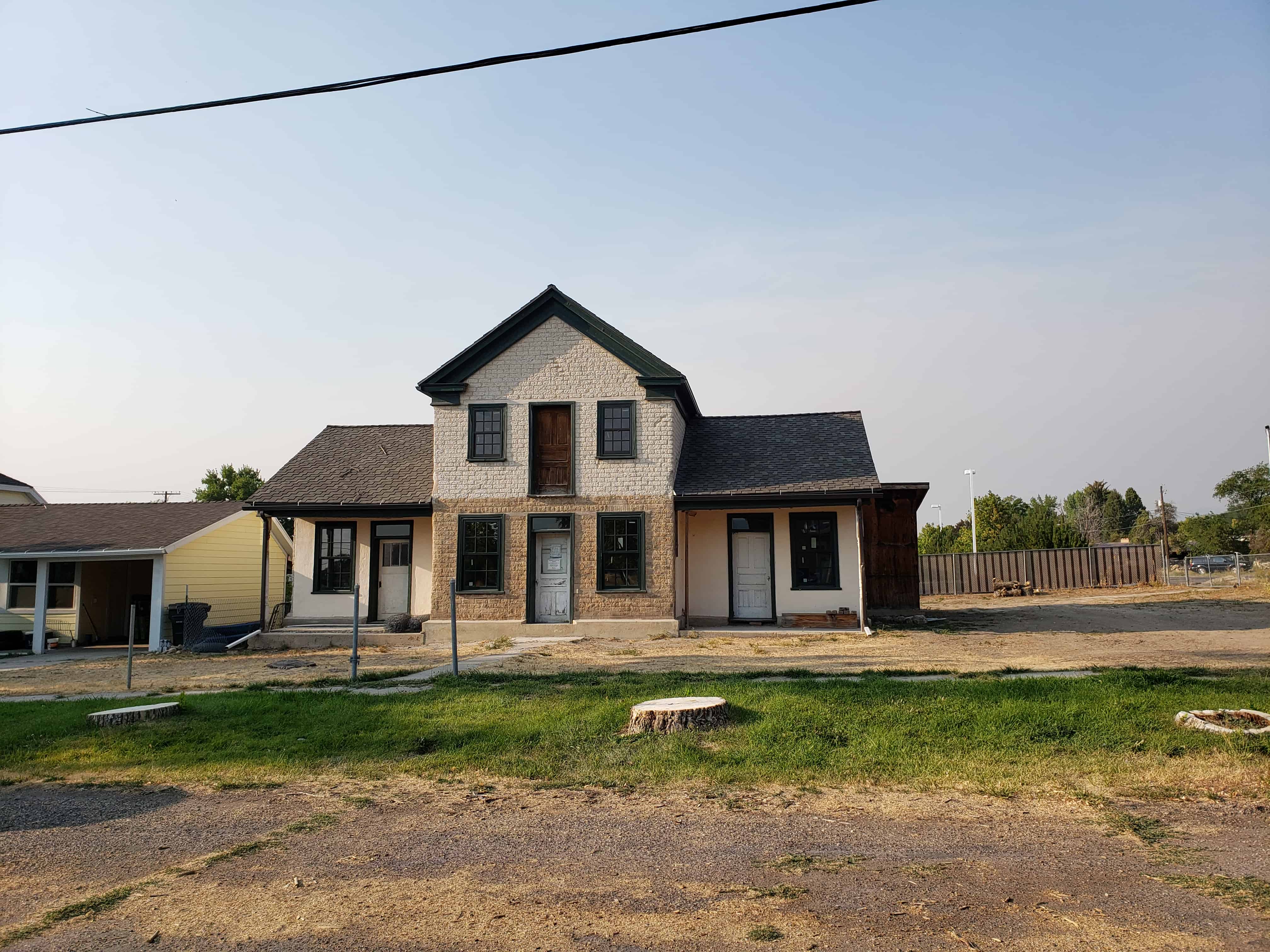
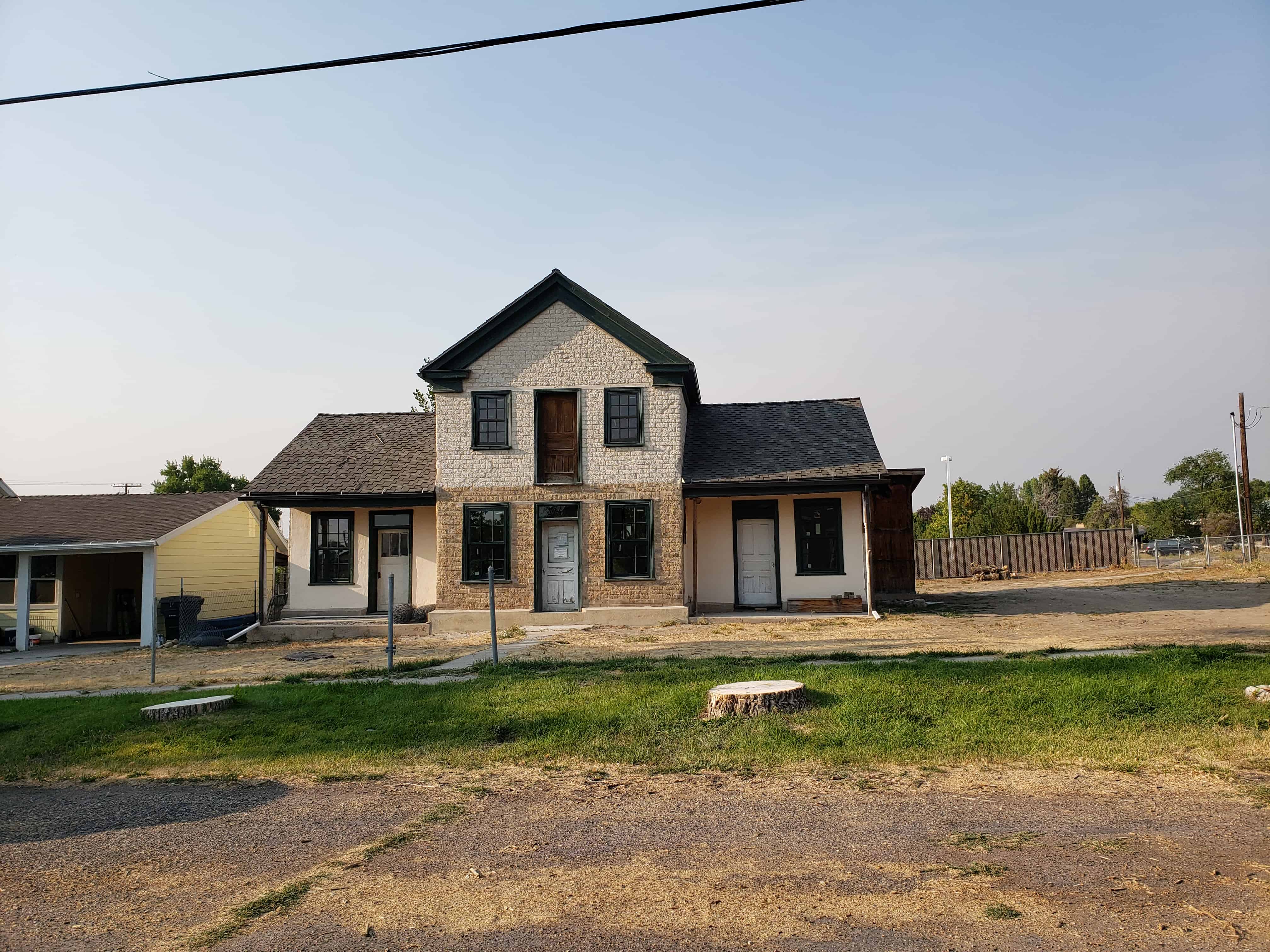
The Alma Staker house is significant on the basis of its architectural style and plan. The Alma Staker house is one of the two best (now the only) extant examples of the Greek Revival-inspired “temple form” vernacular house type in Utah. Early photographs and documents indicate that the “temple form” plan was quite popular in Salt Lake City and other early settlements, yet few of these structures have survived into the 1970s. While other “temple form” houses can be found in Utah and parts of Idaho, the Alma Staker house is the most complete rendering of the house form. The early building date and use of unsheathed adobe make the house additionally important as an example of early vernacular building in Utah.
During the late 18th and early 19th centuries, American architects self-consciously rejected older English-derived styles and in democratic enthusiasm embraced the classical ideals of Greece. The early 1800s witnessed the growth of the Greek Revival architectural period in American building. While the classic style was used primarily for public buildings, domestic architecture in New England was dramatically influenced by classical motifs. A favorite house developed in the Northeast “with a pedimented end toward the street.” This house is often called a “temple form” house, because pf its similarity to Greek monumental architecture. The Greek Revival called for a “monumental type of house with a two-story central body fronted with a pedimented portico arid flanked by one-story wings.”
This “temple form” house is seen in New England areas usually as a magnificent dwelling fronted by colossal columns. Its popularity, however, carried it into upstate New York in the 1830s where the house was geared down to a modest gable-façade-type house. The type was initially considered a “town house,” but after its widespread acceptance came to be a common farm dwelling all along the northern frontier. Full-blown, the house has a central unit flanked by two side wings. Variants of the temple form house can be found with only one or even no side wings. While the early temple form houses had the main door on the central unit, a modified version of the house which moved the door on to the side wing became increasingly popular during the mid-19th century in the northern Midwest.
The above text is from the National Register of Historic Places, it was nominated (#79002509) July 9, 1979 and is located at 95 East 300 South in Mt Pleasant, Utah. for a few years I lived just across the parking lot from it and watched as they remodeled over 2019 and 2020. Continuing on below is more from the nomination form:
Members of the Church of Jesus Christ of Latter-day Saints were familiar with the “temple form” house in upstate New York, they knew it at Kirtland, Ohio, and built numerous examples at Nauvoo. The Vinson Knight House and the Aaron Johnson houses at Nauvoo are all examples of this house-type which do not have side wing extensions. Brigham Young’s stepped gable façade Nauvoo house has the internal floor plan associated with the temple form house even if it lacks external Greek Revival treatment.
The Mormon exodus to the Great Basin brought this familiar house plan-now deeply imbedded in the folk building tradition to Utah. The modified temple plan, with the front door on the side wing, is the variant of the house plan which is found most readily in Utah. Gable-façade houses consisting of only the center unit are also encountered in parts of Utah and Idaho, but the full blown temple plan with side wings is quite rare within the state’s borders. One house at Willard conforms to the plan but lacks the central gable door. The Jacob Houtz House in Springville and the Alma Staker House in Mt. Pleasant are the only two fully realized temple form houses which have been located in the state. As one of the main vernacular house types imported to Utah, these houses are significant as rare but important segments of the historic landscape. In Sanpete County, an area rich in vernacular building, the Alma Staker house is singular in its form and construction.
The Alma Staker house speaks historically in a number of ways. It illustrates dramatically the syncretism of established eastern tradition (the house form) with novel western environment (the use of adobe construction). It at once demonstrates continuity and change, two essential elements of Mormon settlement in Utah. The house also helps to document the range of variation within the Mormon building tradition. This house, taken along with the many central unit and central unit and wing variants also found in the area, helps paint a picture of the rich diversity found in Utah’s early architectural heritage.
The Staker family was originally from Canada. Nathan Staker, Alma’s father, was born in 1801 on a farm near Cataquera, Ontario Province. Nathan studied as a youth to be a Methodist minister and in the early 1830s was converted to Mormonism. Nathan joined the gathering at Kirtland with his wife Jane Richmond. In 1837 their fourth child, Alma, was born.
Richmond. In 1837 their fourth child, Alma, was born. In March of 1838 the family removed to Jackson County Missouri. On the journey to Missouri Nathan found work at Springfield Missouri and the family remained there until moving to Pike County in Illinois just south of Nauvoo.
1846 found the Stakers at Pigeon Grove, Iowa. Nathan’s wife Jane Richmond died of smallpox. In 1852 as the family was preparing to move west. Nathan took his family to Pleasant Grove in 1853. Nathan Staker remarried here to Eliza Cussworth Burton in 1857.
Alma Staker found a bride in the previous year, marrying Elizabeth Young in 1856 at Mt. Pleasant. Alma received the patent deed to the lot where the house now stands in 1870 but possibly could have been living on the lot much earlier. The 1853 attempt to settle Mt. Pleasant was thwarted by Indian hostilities and the first permanent settlement did not occur until 1859. The fort was built that year and activity centered around its protective walls until the late 1860s when a “Co-op” store was organized (1867) and the city incorporated (1868). While dating the Staker house cannot be precise, it seems that the dwelling was probably completed in the early 1870s.
Staker was a sawyer, carpenter, and farmer and was a United Order member and a high priest in the Church of Jesus Christ of Latter-day Saints.
In 1907, the Staker family sold the house to Charles Augusta Jones for $500. Charles married Augusta O. Madsen in 1895 and Carole J. Burton, the present owner, is their daughter.
The temple-form house was found primarily in an area which changed dramatically during the late nineteenth century, consequently very few of these houses survive today. The pure temple-form was often modified in a number of ways. The most common type is referred to as a “modified” temple form in which the door is set in the side wing. Another variant of the house type is evident in the Staker House. The door is centered on the gable façade, it does not have a central or side passage, and may or may not have side wings (see plan). The Staker House is one of only two houses (now the only one) identified in the state to have a door centered on the gable façade and two side wings. The other example is the John B. Kelly House (422 S. 200 W. in Salt Lake City), also listed in the National Register.(*)
Exploring the history of Mount Pleasant, Utah I came across David and Alta Lowry’s names often.
They met in Manti, at the confectionary store where he delivered cream. They raised chickens and turkeys and ended up moving to Mount Pleasant to help his brother Ches at his job at the Brunger Motel. They eventually opened up Lowry’s Cafe less than 2 blocks north of the motel.
Lynette Lowry Southwick, a granddaughter, created this:
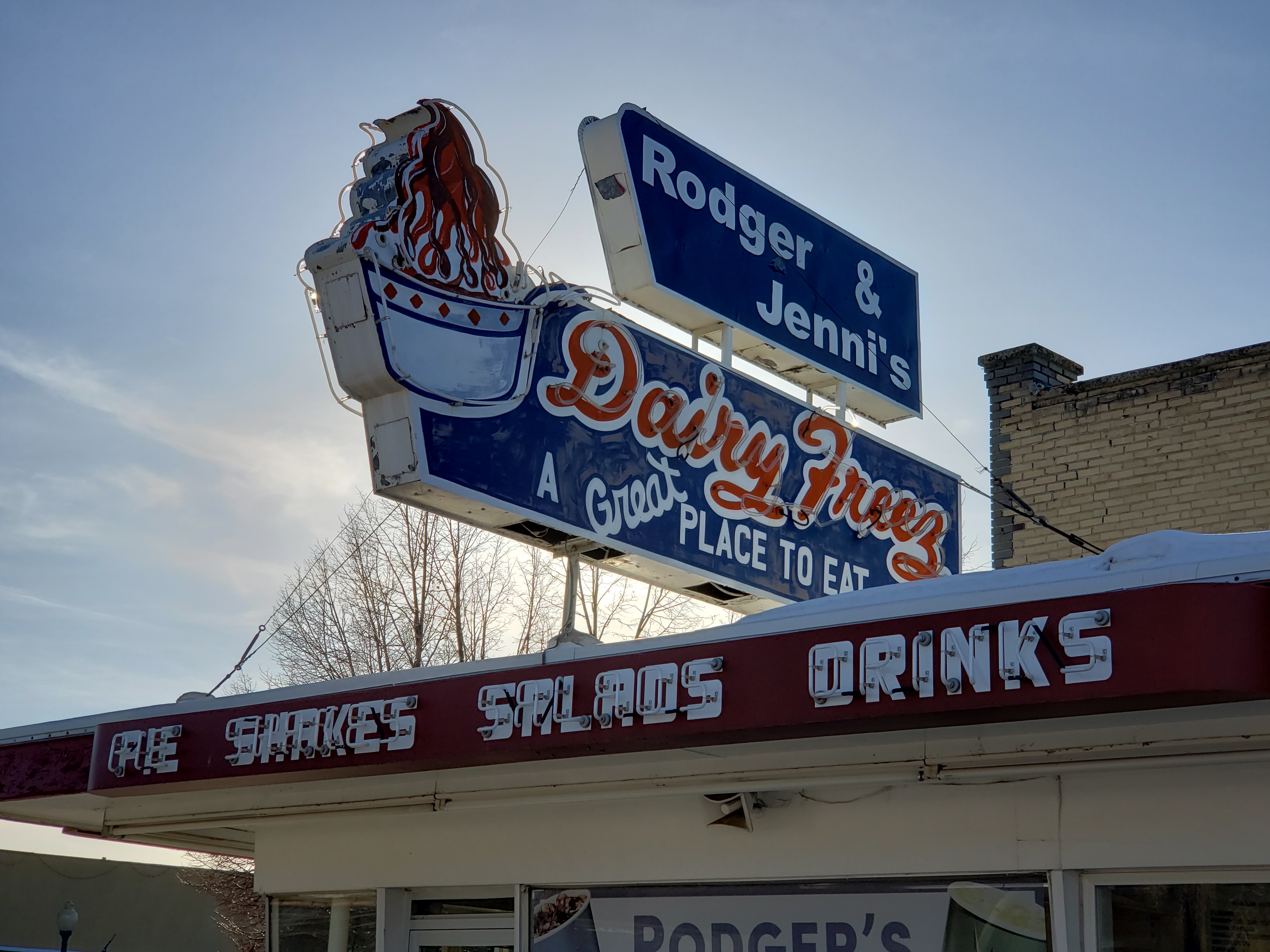
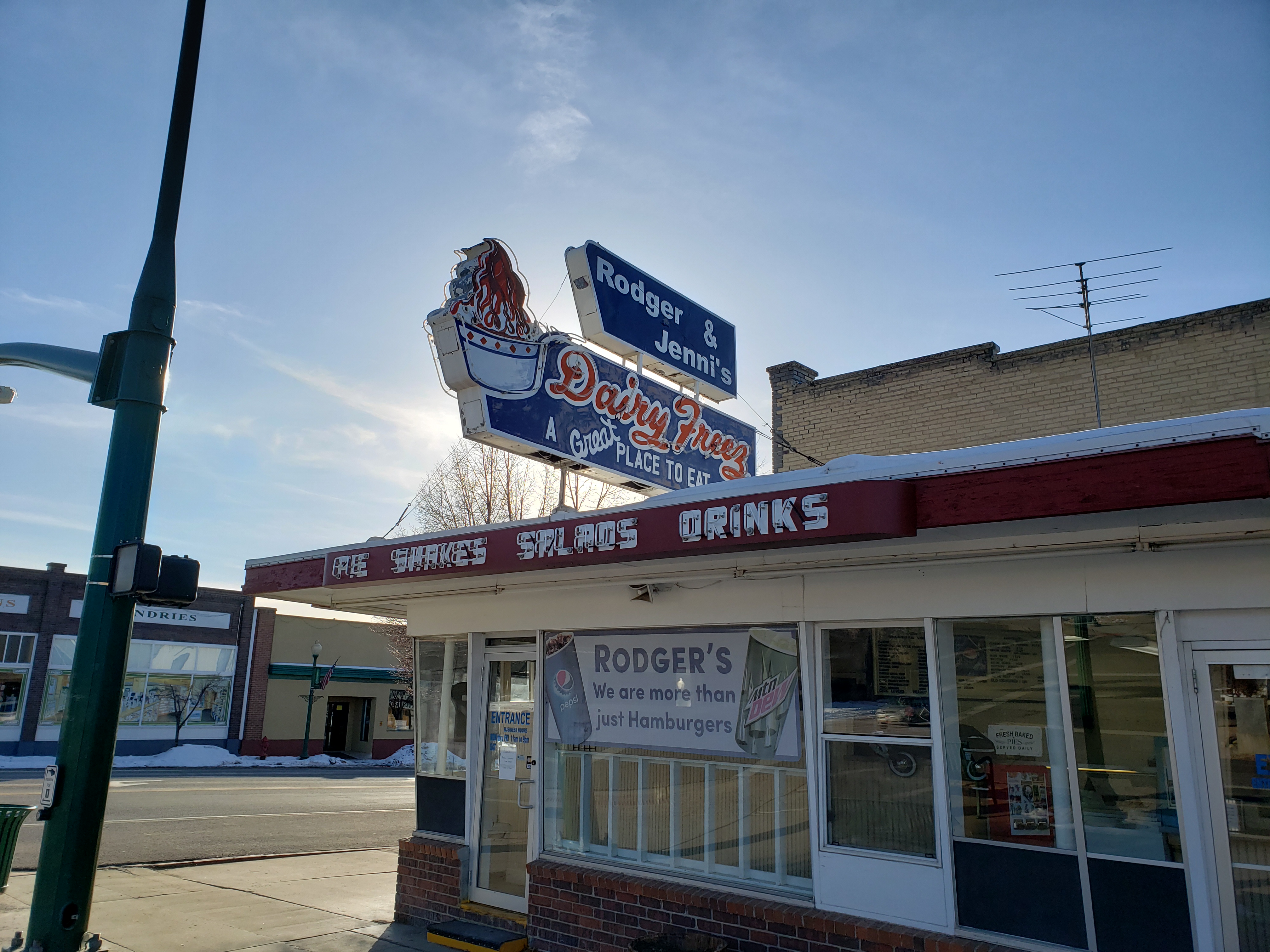
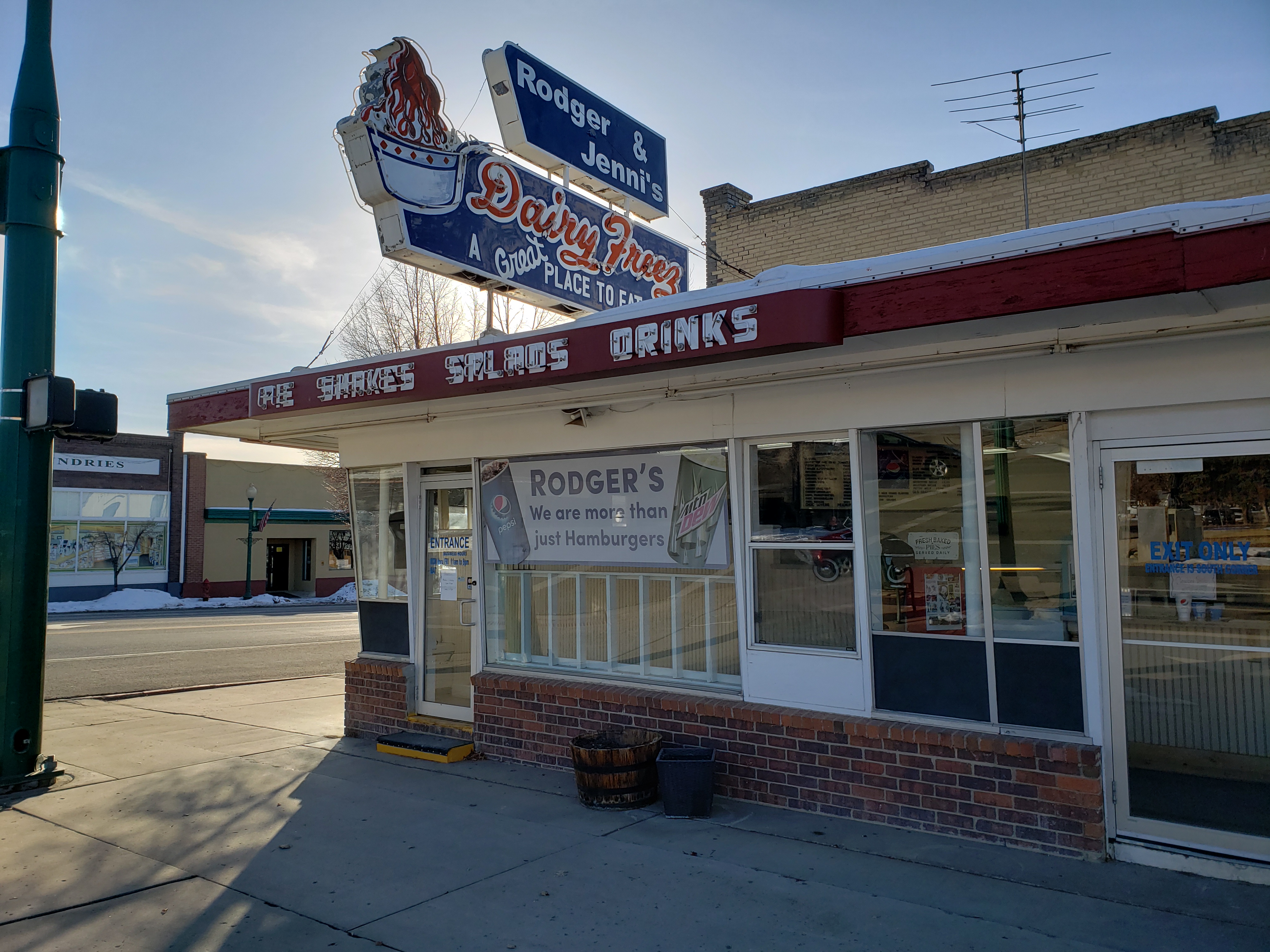
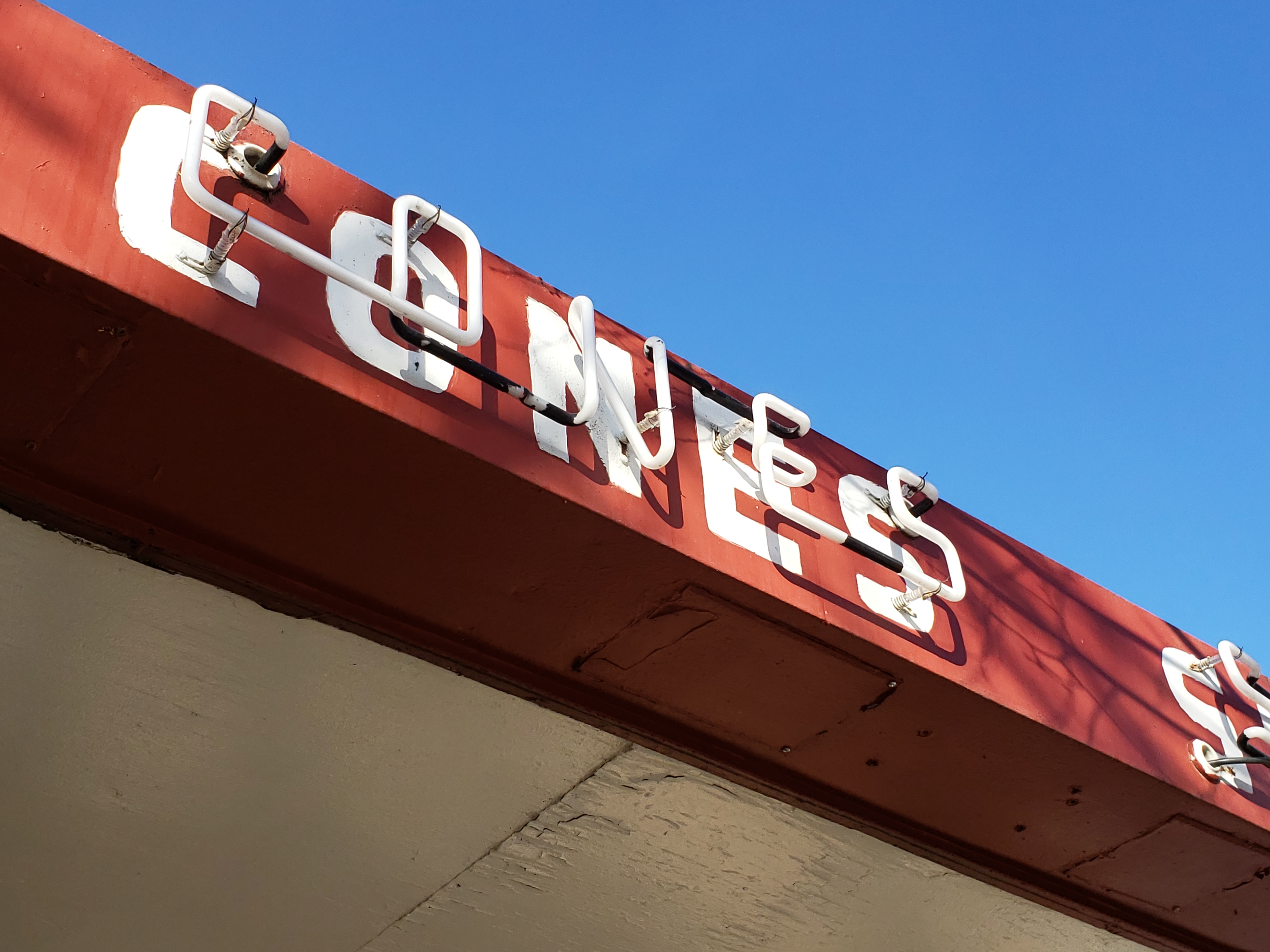
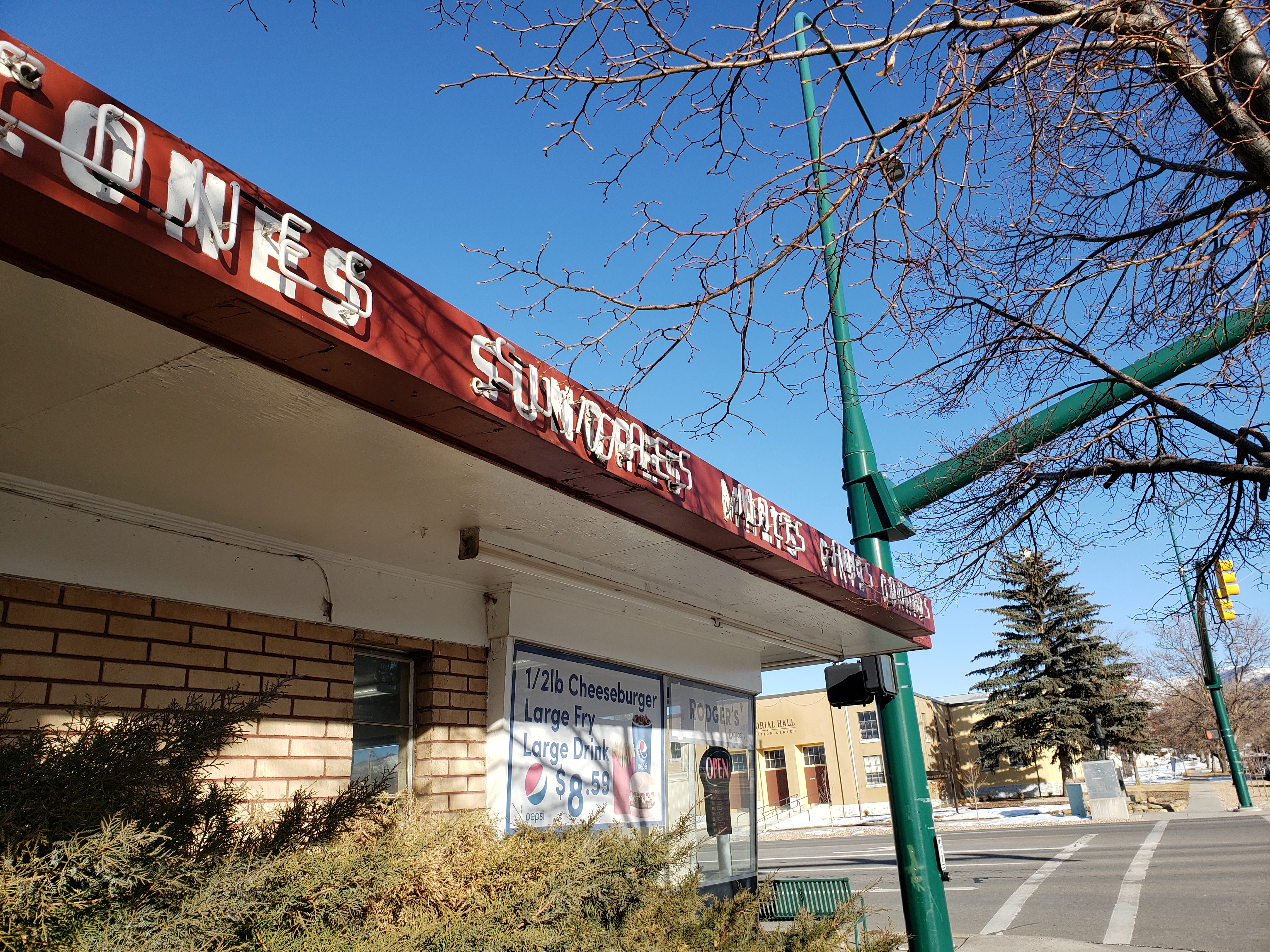
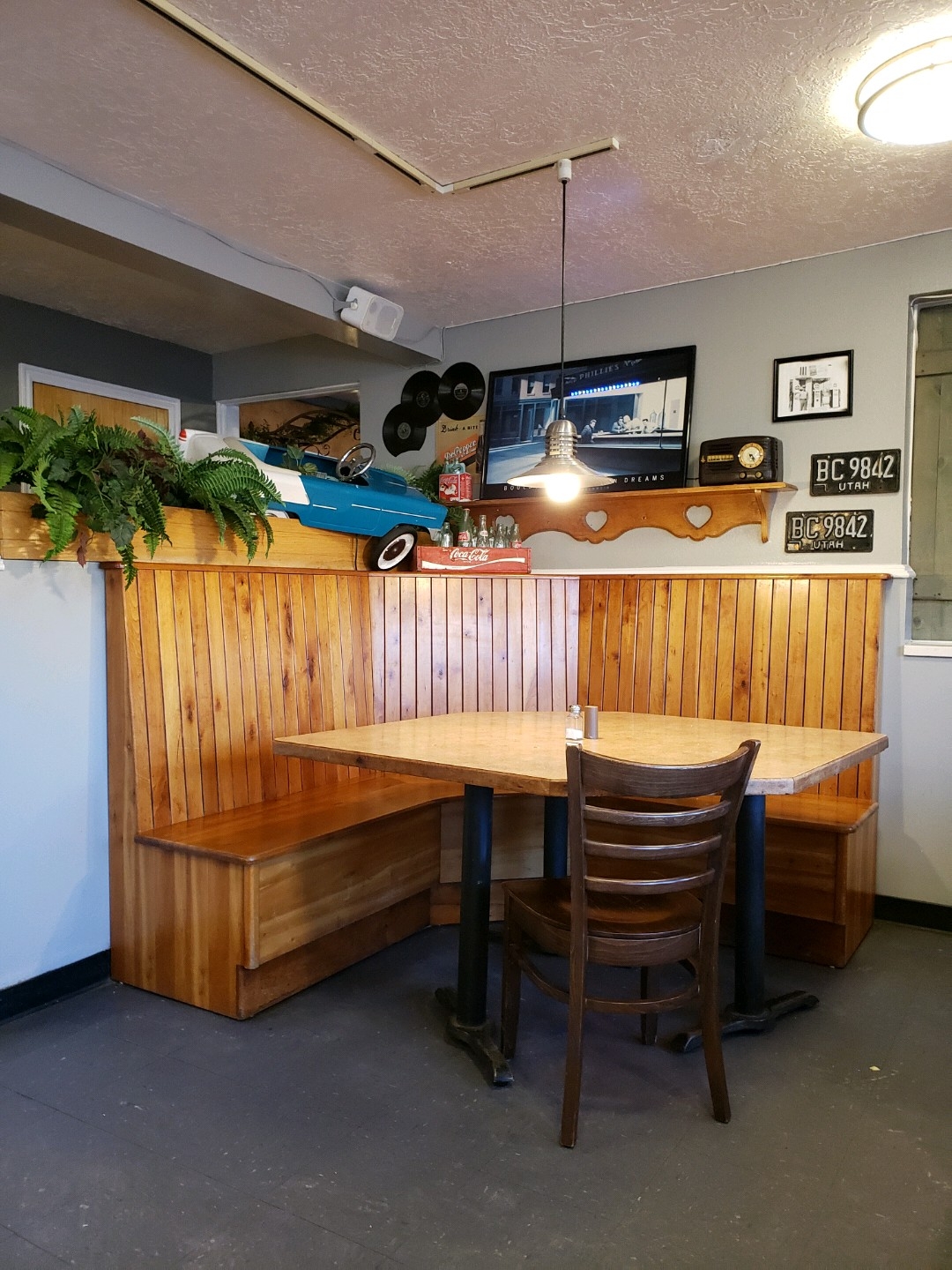
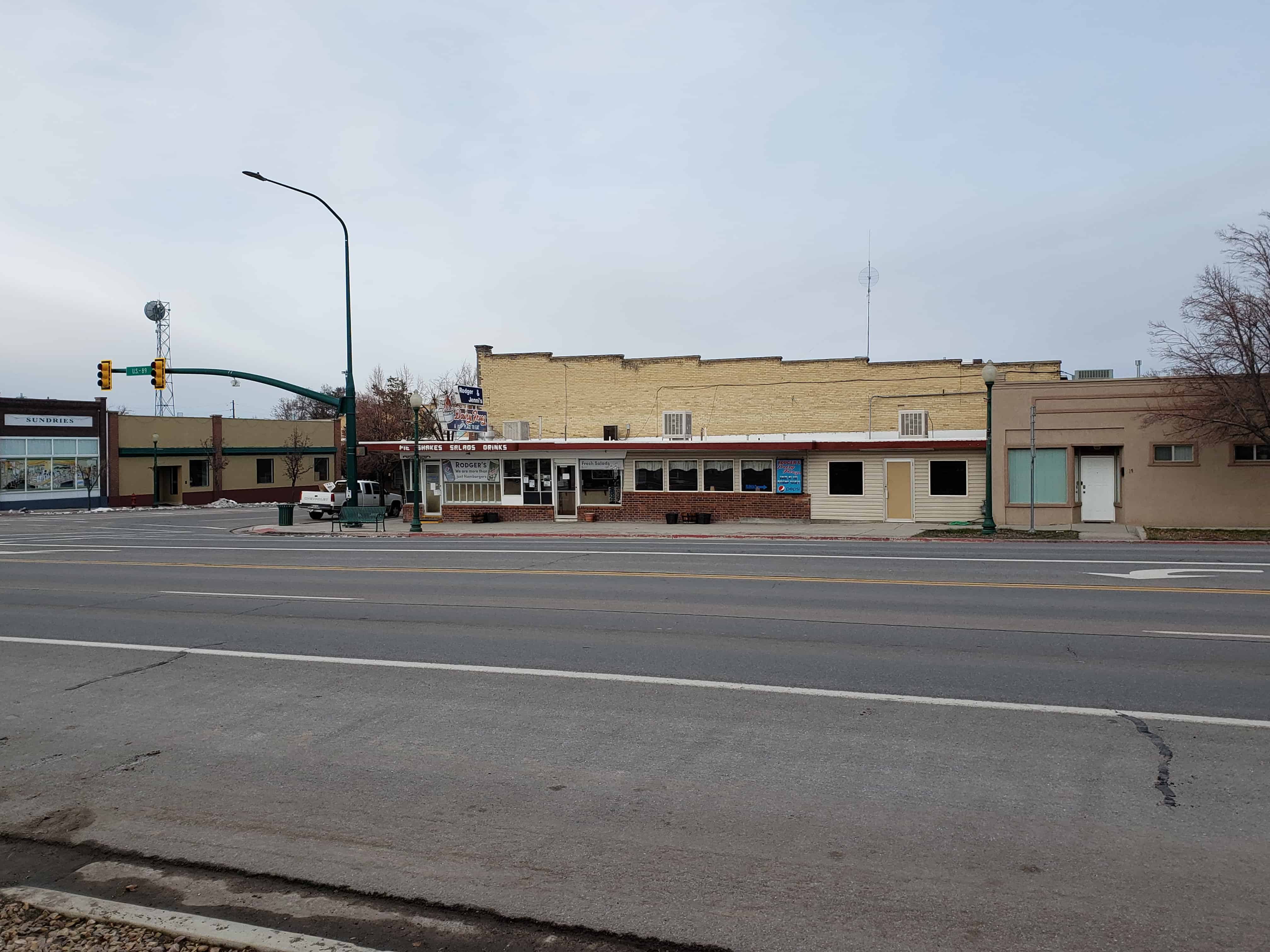
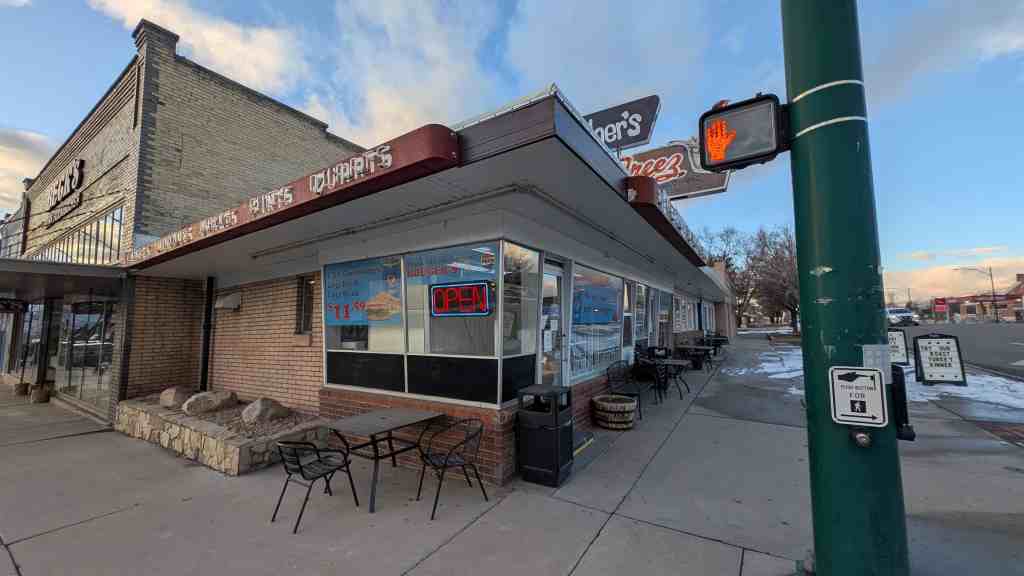
Rodger’s Dairy Freeze is a bit of an iconic sight in Mt Pleasant, Utah.
It has been at the corner of State and Main, right in the middle of town for nearly 70 years. The L.U. Mumford family built it, there have been several owners – most recently Rodger and Jenni Johansen.