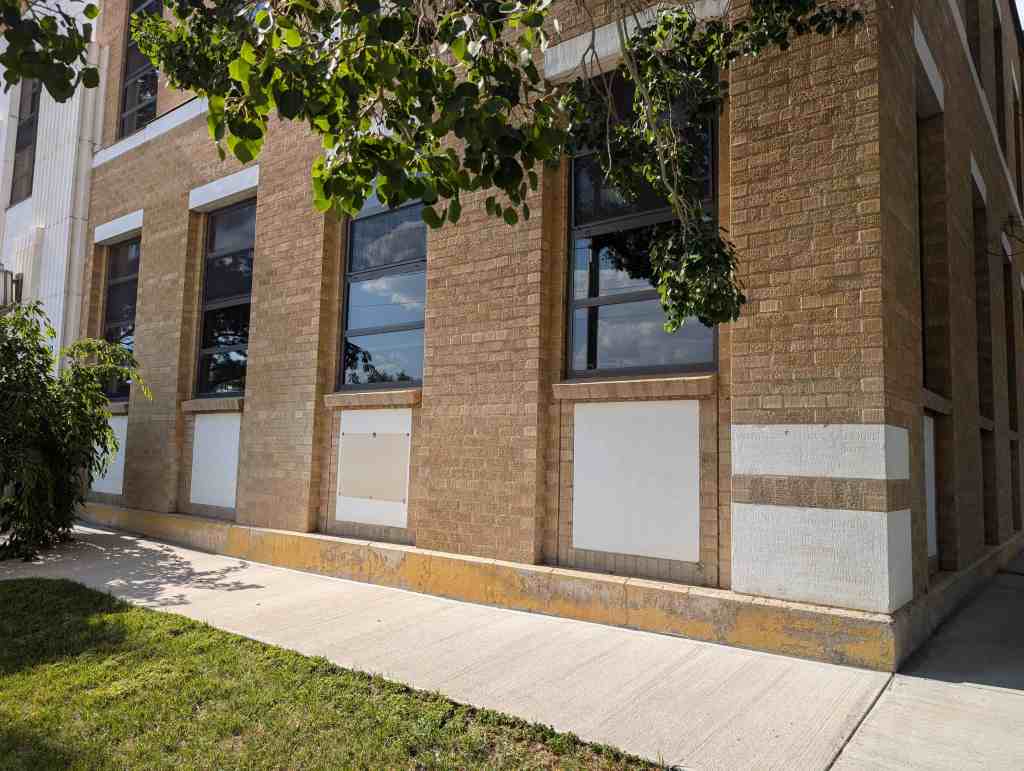
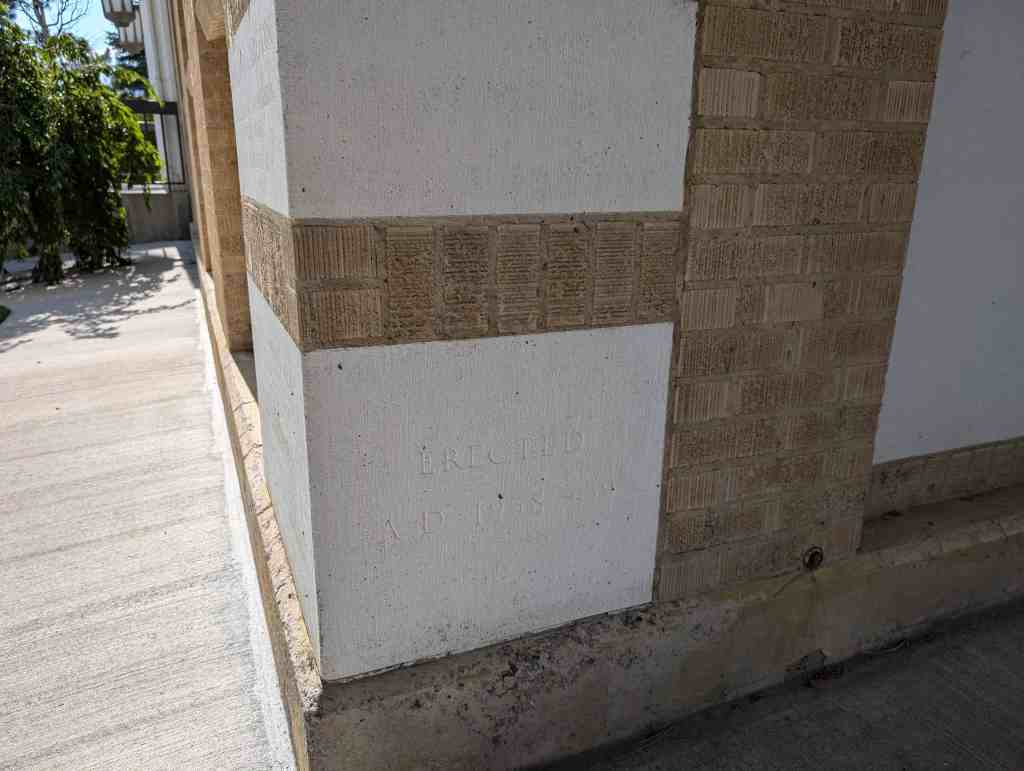
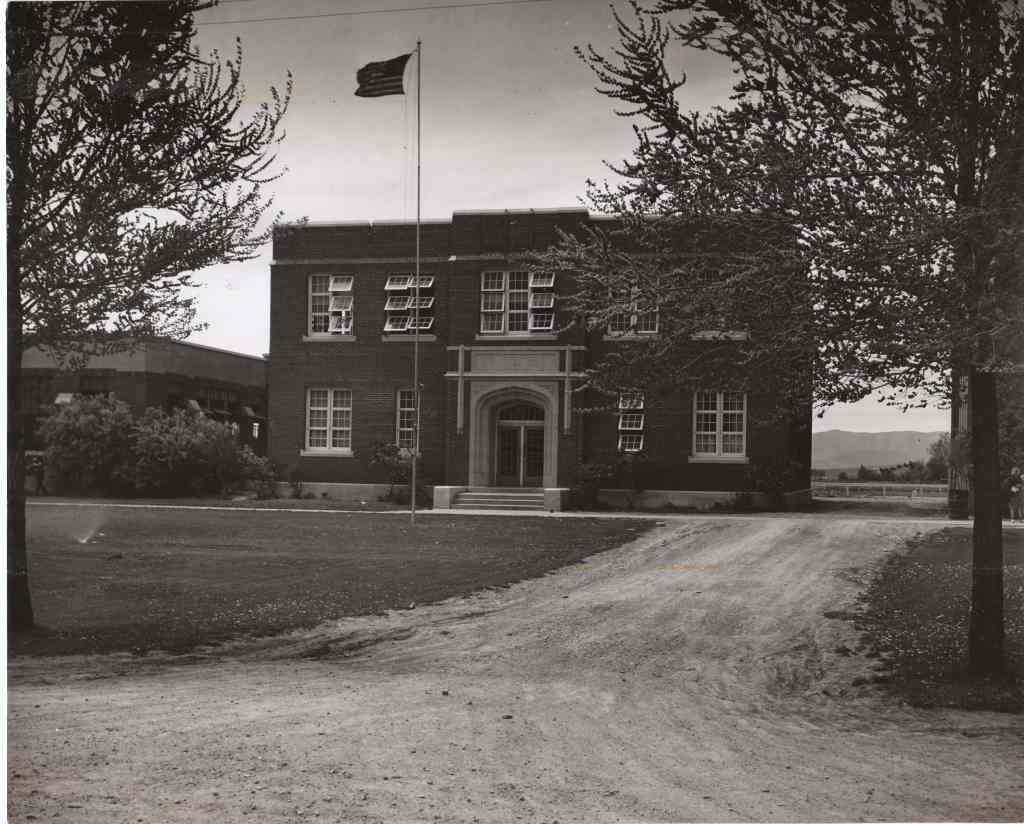
Built in 1935-36, the Boulder Elementary School is part of the Public o Works Buildings Thematic Resources nomination and is significant because it w helps document the impact of New Deal programs in Utah, which was one of the states that the Great Depression of the 1930s most severely affected. In 1933 Utah had an unemployment rate of 36 percent, the fourth highest in the country, and for the period 1932-1940 Utah’s unemployment rate averaged 25 percent. Because the depression hit Utah so hard, federal programs were extensive in the state. Overall, per capita federal spending in Utah during the 1930s was 9th among the 48 states, and the percentage of workers on federal work projects was far above the national average. Building programs were of great importance. During the 1930s virtually every public building constructed in Utah, including county courthouses, city halls, fire stations, national guard armories, public school buildings, and a variety of others, were built under federal programs by one of several agencies, including the Civil Works Administration (CWA), the Federal Emergency Relief Administration (FERA), the National Youth Administration (NYA), the Works Progress Administration (WPA), or the Public Works Administration (PWA), and almost without exception none of the buildings would have been built when they were without the assistance of the federal government.
Boulder Elementary School is located in 351 North 100 East in Boulder, Utah and was added to the National Register of Historic Places (#85000805) on April 1, 1985.
The Boulder Elementary School is one of 233 public works buildings identified in Utah that were built during the 1930s and early 1940s. Only 130 of the 233 buildings are known to remain today and retain their historic integrity. Of the 233, 107 were public school buildings and 55 of them remain. This is one of 43 elementary schools built, 19 of which remain. In Garfield County 7 buildings were constructed; 5 are left. The Boulder Elementary School was built in 1935 and 1936. Construction began in September of 1935 and was completed in the early spring of 1936. It was a Works Progress Administration (WPA) project. Superintendent of construction was Arthur McNelly of Escalante.
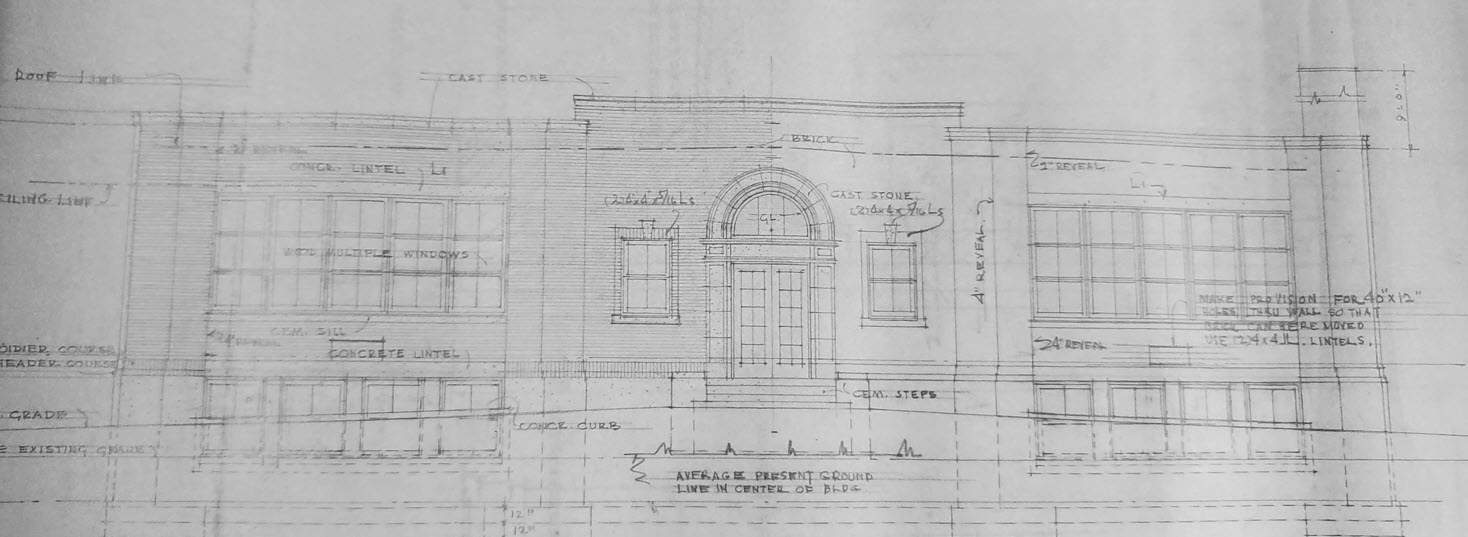
This is a one-story frame school building displaying the blending of classical and moderne elements that characterizes the PWA-sponsored architecture in Utah. It has a hipped roof over a basic rectangular plan. There is a projecting gabled porch on the front that contains a recessed entrance and small flanking windows. A long hipped roof extension on the rear appears to be original. The siding consists of narrow, 4″ clapboards and there is a plain cornice and frieze under the overhanging eaves. Classical motifs dominate the front entrance porch in the form of cornice returns, a pedimented head over the recessed doorway, and a transom above the door itself. The formality of the porch is broken by a zig-zag belt course that circles the building and gives it a sense of the abstract geometric quality associated with the moderne movement. The building remains in excellent original condition.
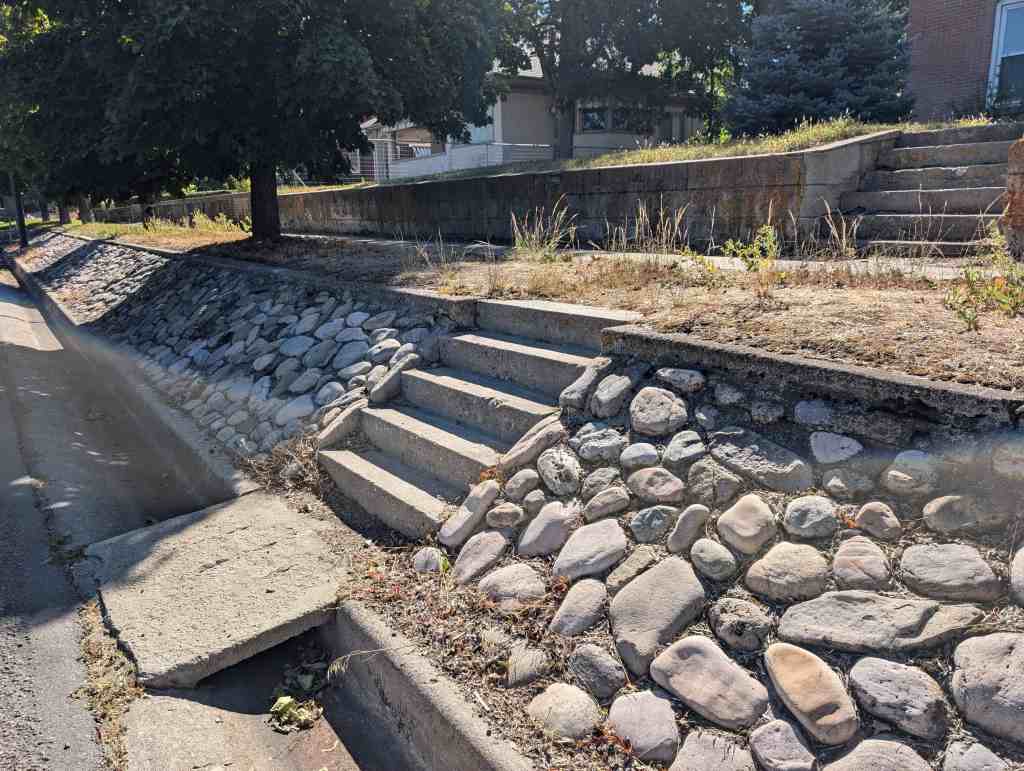
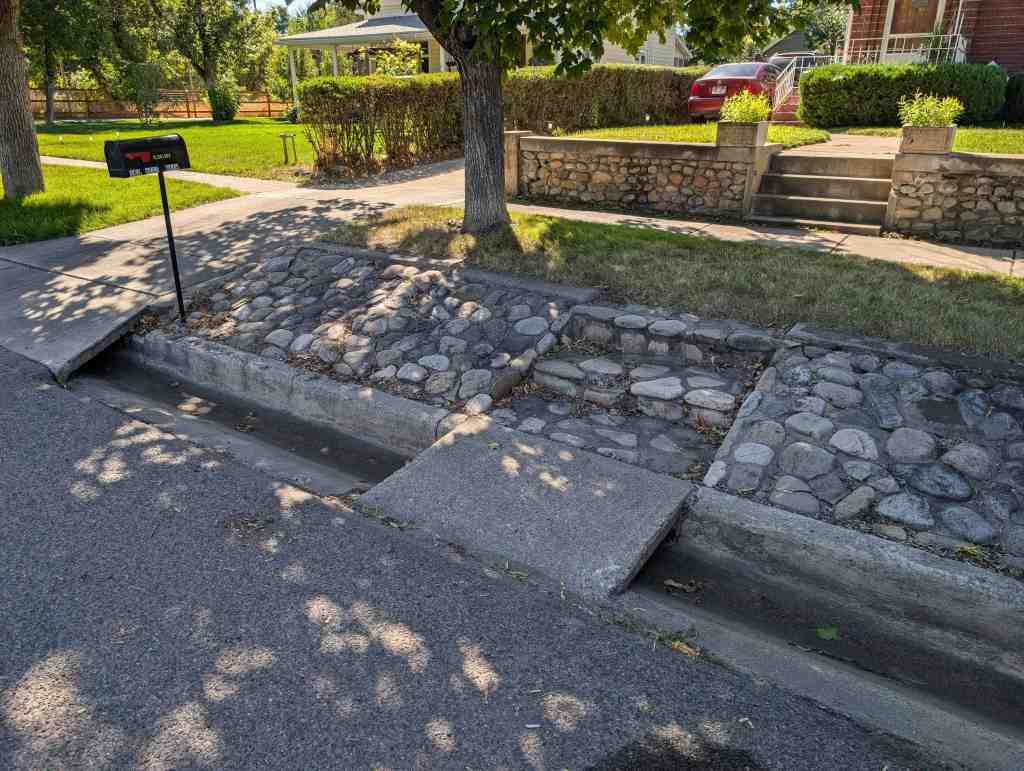
During the 1930s and 1940s, the Public Works Administration provided many projects all over our nation to provide employment for the people. In 1941–1943, Hyrum City took advantage of the opportunity to improve our Main Street and the cemetery under the PWA project. The PWA furnished all expenses and labor, the CCC boys did most of the ordinary work under the jurisdiction of the mayor and city council. The streets were oiled and on Main Street, curb and gutters were installed and the special rock walls were laid. T. W. Petersen hauled all the rock in his truck from Blacksmith Fork Canyon.
200 West to 100 West and 200 East to 300 East Main Street in Hyrum, Utah
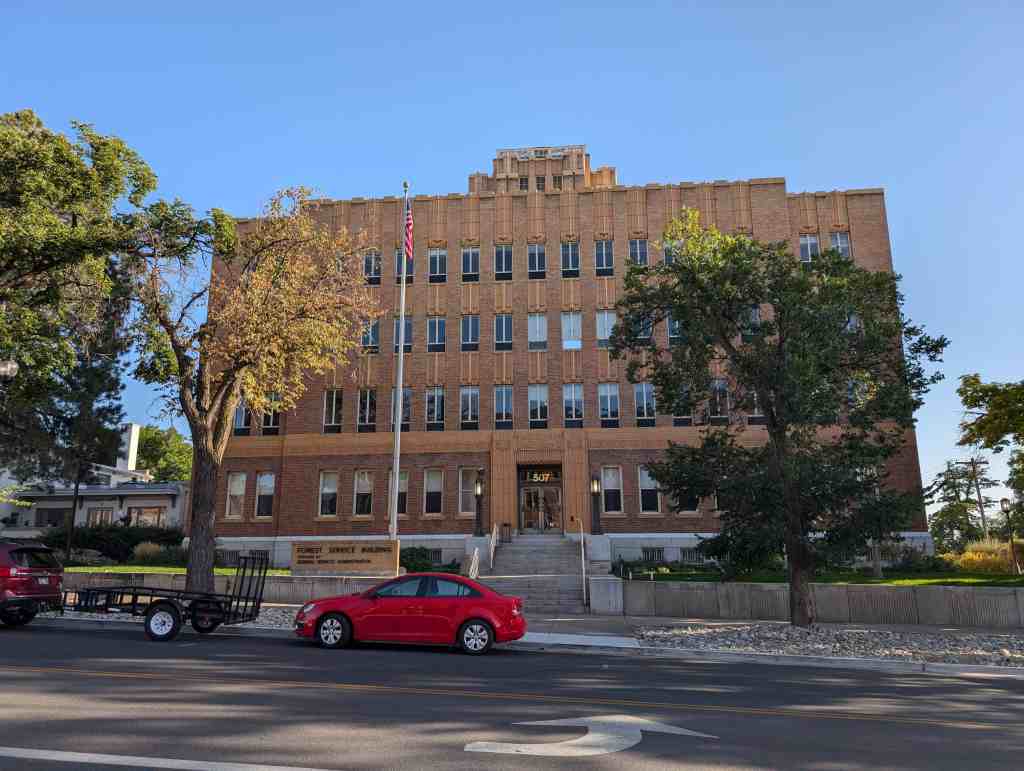
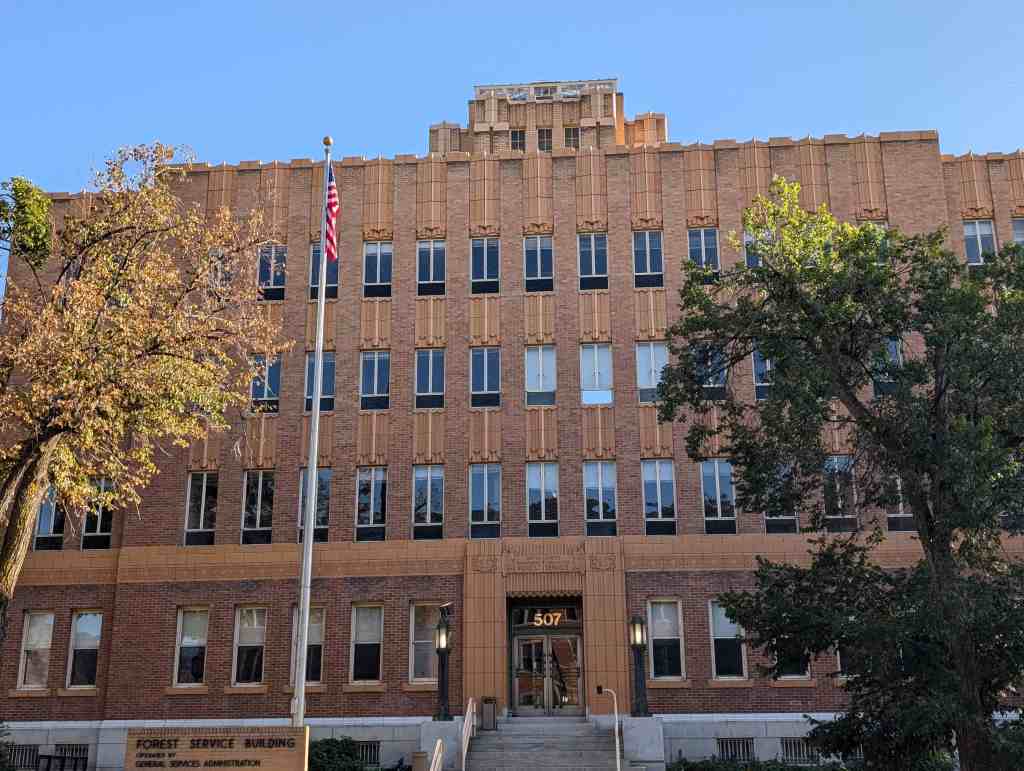
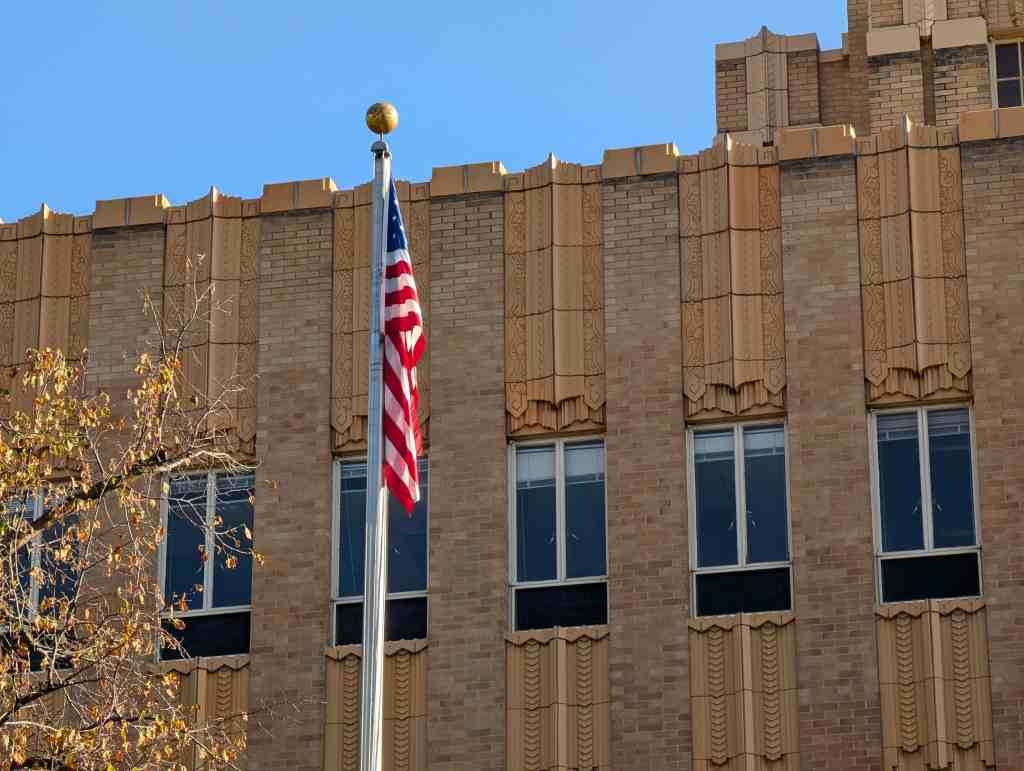
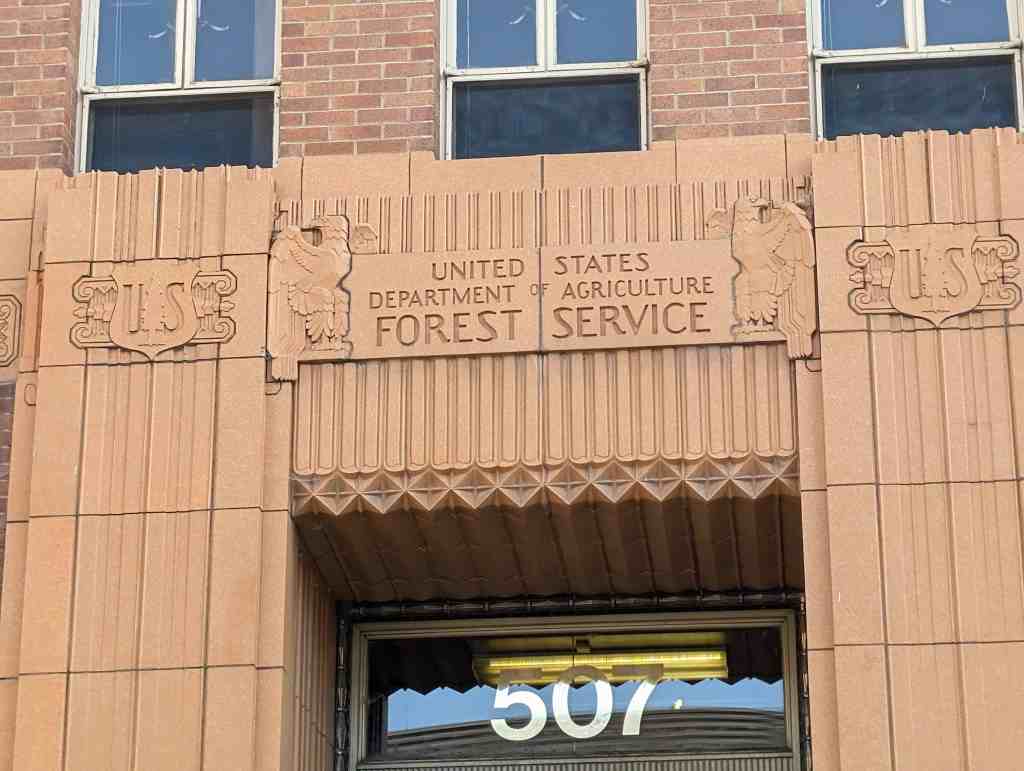
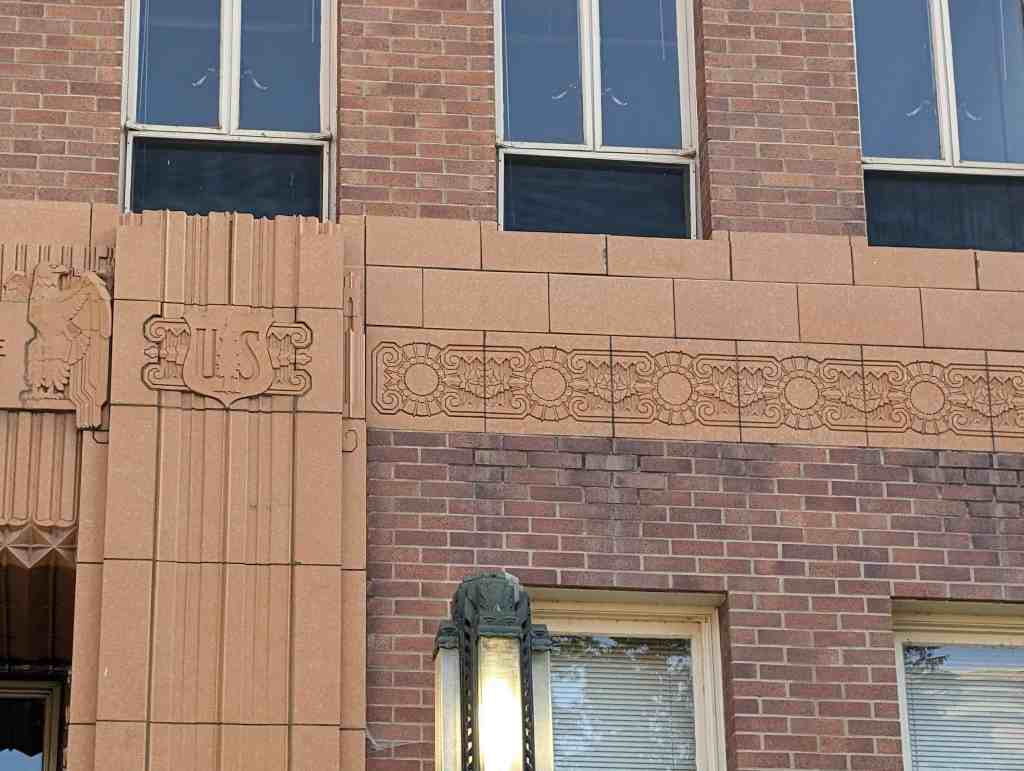
mentioned in Ogden’s Central Bench Historic District: The International and Art Moderne styles were mildly popular, with a total of 20 contributing homes in the district. Although these modern styles were not largely popular in all of Utah, one of the largest concentrations of them in the state can be found at the southeast portion of Ogden’s Central Bench Historic District. Examples of these modern styles include the International style Paul Duplex at 2910 Brinker Avenue and the Art Moderne style Blair Apartments at 541 23rd Street. Two other modern styles can also be found in the district, including the Art Deco United States Forest Service building at 505 25th Street and the PWA Moderne former Weber College Mechanic Arts Building at 2450 Adams Avenue.
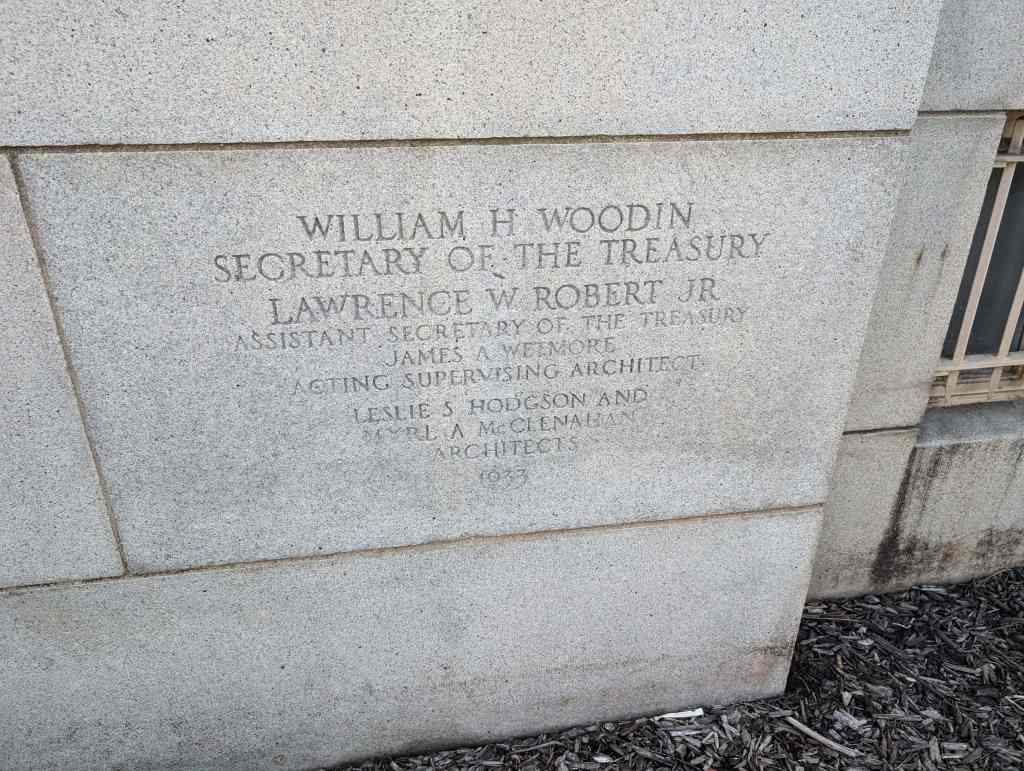
also: An important development in 1930s Ogden was that of federal aid. With the onslaught of depression in the United States, beginning in 1929, the federal government eventually sought to create work and construction projects designed to help the nation’s rising unemployed. In the early 1930s, Congress appropriated $250,000,000 for construction projects, one of which was the U.S. Forestry Building located in the district at 507 25th Street. In 1932 the architectural firm Hodgson and McClenahan was commissioned to design the structure, and by 1933 the construction of the building was underway. The building is done in the Art Deco style and is one of the three most significant Art Deco style buildings in the state, with the other two being the Ogden Municipal Building and Ogden High School.
Mill Creek Canyon lies east of Salt Lake City in the Wasatch Mountains and is a popular recreation area for city dwellers. It is part of the Unita-Wasatch-Cache National Forest
In 1936-37, crews paid under the Employment Recovery Act made extensive improvements to Mill Creek Canyon Park (whether state relief workers or Works Progress Administration crews is unclear). It is likely that Civilian Conservation Corps (CCC) crews were also involved in Mill Creek Canyon, since they were active in the vicinity, working out the Big Cottonwood Canyon CCC camp.
New Deal workers built an extensive system of trails, campgrounds and stone supporting walls. It is unknown exactly what work was done during the New Deal and what was added later. Maple Grove and Elbow campgrounds and the Mount Aire trail stonework are mentioned by Keller (2001). The stone work on walls and pedestrian bridges at Box Elder and Terraces campgrounds appear to be of that era, as well, so are included in the photographs below.*
The Bear River Migratory Bird Refuge was created by Congress in 1928 to protect waterfowl on the flyway through the Great Salt Lake Basin. It covers 80,000 acres of marshes, sloughs and uplands at the delta of the Bear River, flowing out of the northern Wasatch Mountains. Early efforts to improve habitat and water quality for migratory birds in the 1920s had come to naught, so local hunters and conservationists sought the aid of the federal government.
The newly-renamed Bureau of Biological Survey took over management of all national wildlife refuges in 1933 under President Franklin Roosevelt, the number of which doubled during the New Deal years. The Bureau enlisted the Civilian Conservation Corps (CCC) to undertake improvements to most wildlife refuges, including Bear River, Utah’s first NWR.
The CCC established Camp BS-1 in Brigham City to work on the refuge (the name of the camp changed more than once). The CCC men built dikes to hold water in marshes, canals to move Bear River water around, and water control structures to regulate flows and water levels. They also built roads along dikes into the marshlands, planted shrubs and grasses for the wildlife and built artificial islands to protect nesting birds.
One result of the CCC’s seven years of work on Bear River refuge was the end of frequent waterfowl poisoning by botulism in stagnant waters.
In 1940, the Bureau of Biological Survey was incorporated into a new agency, the US Fish and Wildlife Service, which still manages all NWRs around the country.*
The Bear River Migratory Bird Refuge is located west of Brigham City, Utah
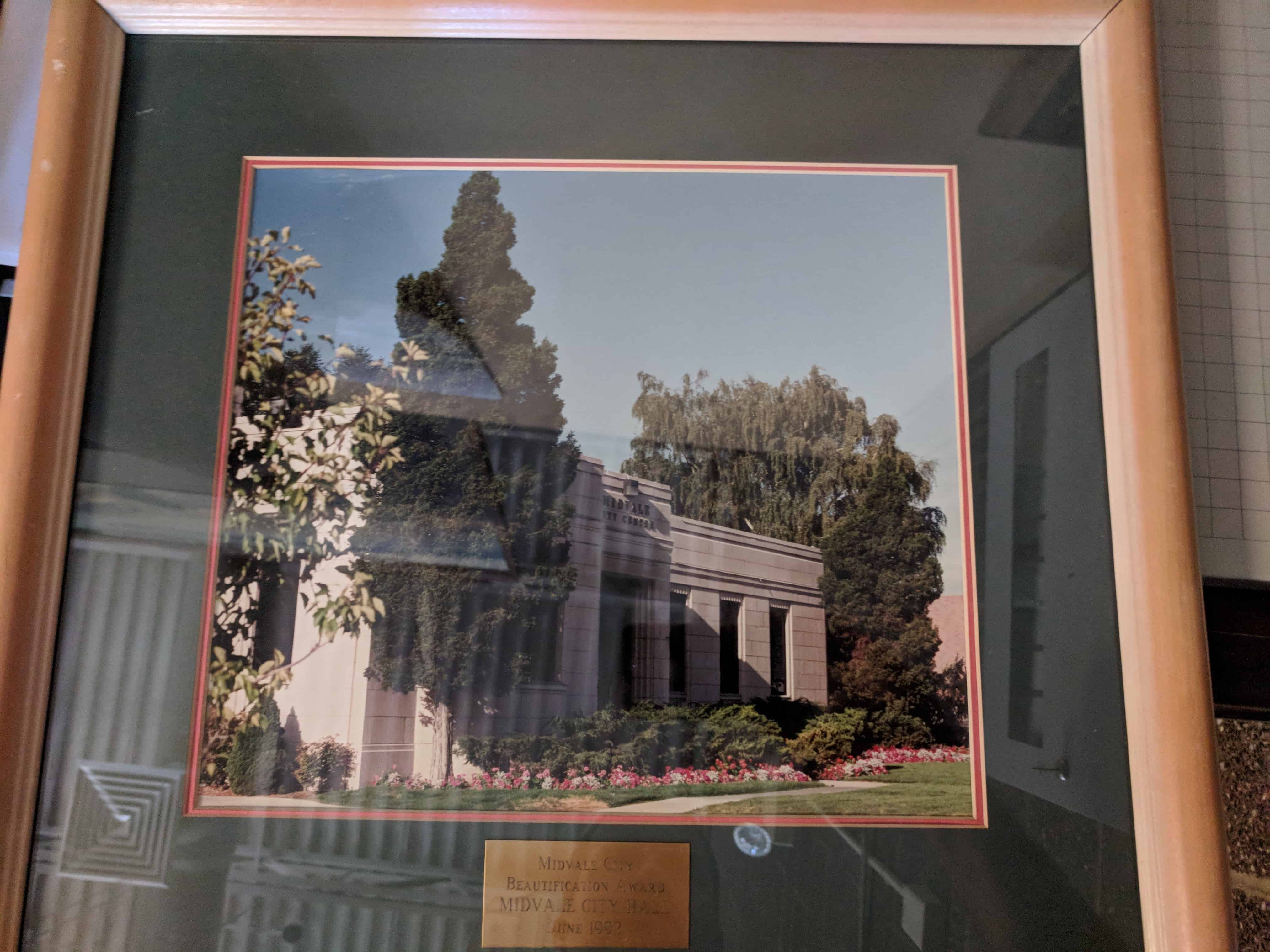
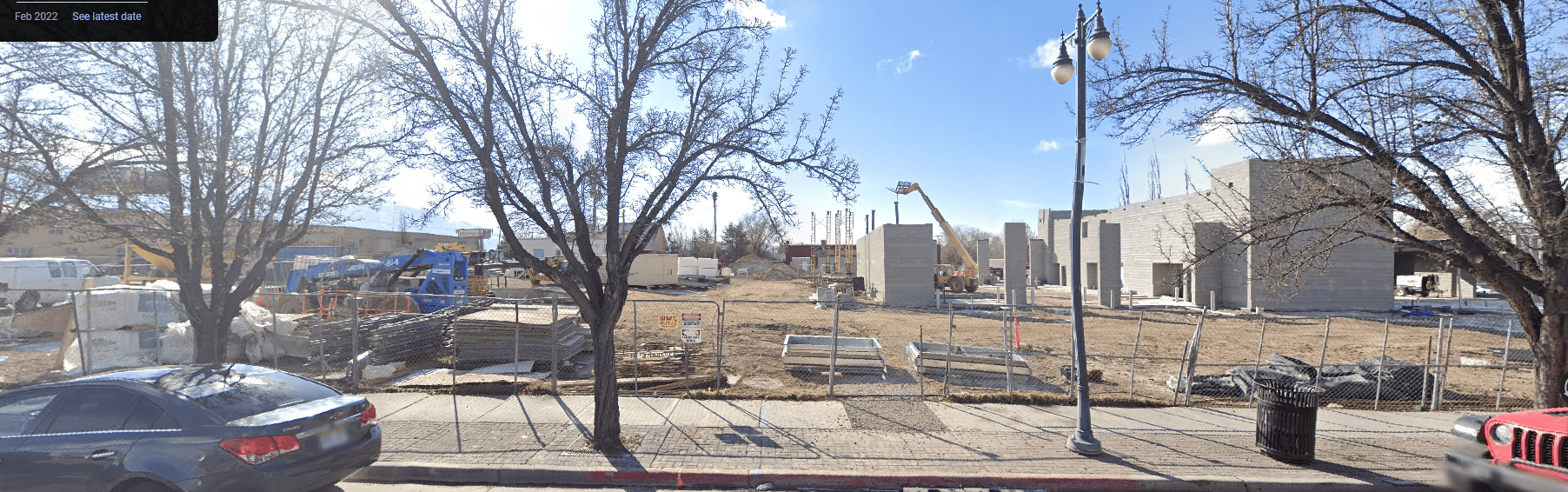
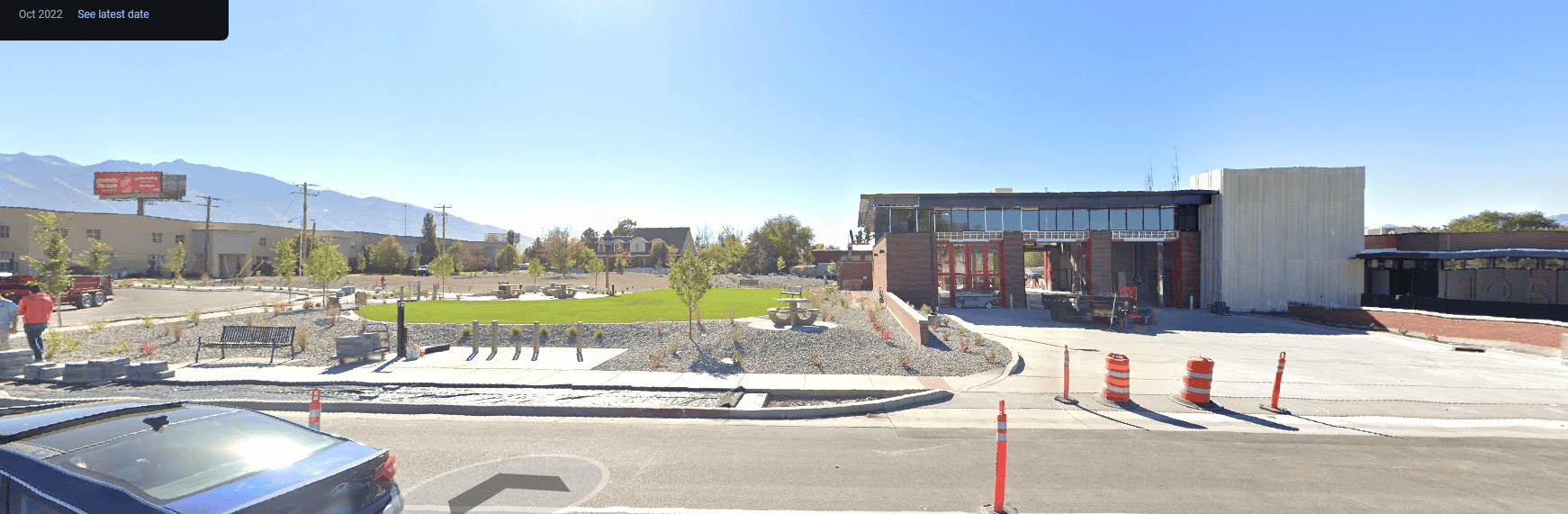
Built in 1940-41 as the Salt Lake County Library and later used as the Midvale city hall building, and eventually demolished. It was located at 665 West Center Street in Midvale, Utah and added to the National Register of Historic Places (#82004129) on July 26, 1982.
From the nomination form for the historic register: Built in 1940-41 as a-UFA-project, the Salt Lake County Library is exceptionally significant the original headquarters of the Salt Lake County Library System, and as part of the Public Works Buildings Thematic Resources nomination. It helps document the impact of New Deal programs in Utah, which was one of the states that the Great Depression of the 1930s most severely affected. In 1933 Utah had an unemployment rate of 36 percent, the fourth highest in the country, and for the period 1932-40 Utah’s unemployment rate averaged 25 percent. Because the depression hit Utah so hard, federal programs were extensive in the state. Overall, per capita federal spending in Utah during the 1930s was 9th among the 48 states, and the percentage of workers on federal work projects was far above the national average. Building programs were of great importance. During the 1930s virtually every public building constructed in Utah, including county courthouses, city halls, fire stations, national guard armories, public school buildings, and a variety of others, were built under federal programs by one of several agencies, including the Civil Works Administration (CWA), the Federal Emergency Relief Administration (FERA), the National Youth Administration (NYA), the Works Progress Administration (WPA), or the Public Works Administration (PWA), and almost without exception none of the buildings would have been built when they were without the assistance of the federal government. The construction of this library marked an important step in the development of a county library system for Salt Lake County. As headquarters of that system, this building was the center for processing and distributing books for the entire 19-branch system.
Midvale is located approximately seven miles south of Salt Lake City. Together with the nearby area of Murray, Midvale became a center in Utah’s mining industry, serving as a central location for the smelting of metal ores. In 1902 the United States Smelting, Refining, and Mining Company completed its smelter at Midvale, and rendered the town as a primary settlement for southern and eastern European immigrants who were utilized as labor for the plant. “Americanization and educational efforts among the state’s foreign-born population, especially during the 1919 national Americanization movement, became important as Utah became one of few states to pass an Americanization law. This act was part of the 1919 Utah Educational Program which also included provisions for county library systems. The reading and writing of English was seen as paramount to Americanization, and as such, libraries became of special significance.
Until 1919, only incorporated cities and towns in Utah could raise taxes for libraries. Consequently, unincorporated areas had no publicly supported library service. In 1919, however, the Utah State Legislature passed legislation providing that county commissions could levy taxes up to one mill to establish and support a county library system. Between May 1919, when the law took effect, and August, 1919, ten counties established library systems: Cache, Grand, Iron, Morgan, San Juan, Tooele, Uintah, Wasatch, Washington, and Wayne. Salt Lake County did not establish its own system until nearly 20 years later. Until then, it had public libraries in only two cities, Murray and Salt Lake City. The rest of the county either had no libraries, or inadequate private library “associations.”
In the fall of 1938, Calvin Smith, Superintendent of the Granite School District, and C. N. Jensen, Superintendent of the Jordan School District, headed a drive for a Salt Lake County Library system, and in the spring of 1939, it was established, with a budget of $33,822; Ruth Vine Tyler as the head; and a staff of four people. The first Library Board was made up of the following members: Superintendents Smith and Jensen, Mrs. Alf G. Gunn, J. R. Rawlins, and J. Hollis Aylett, Mayor of Midvale. Temporary quarters were established in two rooms of the Midvale Elementary School at 575 East Center Street, and plans were laid to construct a new building. The Library Board decided to build it in Midvale, at least partly because Midvale City donated a piece of land 178 feet x 910 feet at the southeast corner of Main and Center Streets on which to construct the building.’ The project became a WPA effort, illustrating the federal government’s role and concern not only in public works, but also in funding buildings to be used for public and educational needs.
The architectural firm of (Raymond J.) Ashton and (Raymond L.) Evans designed this PWA Moderne-style building. Ashton and Evans, a prominent firm, also designed several other public work buildings during the 1930s and ’40s, including the Wayne County High School, the Thomas Library at the University of Utah, and the Wasatch County Library in Heber City, the design of which is very similar to this building.
The architectural drawings for the building were completed by the end of 1939, the building contract was awarded to Jense Bros, in the spring of 1940, and construction began in June of that year. Construction was completed in August 1941 and a grand opening held August 9, 1941. The building was intended to serve as the Midvale City Library, and as the center for processing and distributing books for the entire Salt Lake County system, which by that time had 19 branches: Bacchus, Bingham, Copperton, Draper, East Mill creek, Garfield, Granger, Herriman, Holladay, Magna, Mill creek, Riverton, Sandy (2), South Salt Lake (2), Taylorsville, Union, and West Jordan. Its facilities included an adult reading room, a children’s room, a board meeting room, several offices, a work and stack room, and shelves for 30,000 volumes.
The building served as a library until 1976, when it became the Midvale City Hall.
The Salt Lake County Library is one of 233 public works buildings identified in Utah that were built during the 1930s and early 1940s. Only 130 of those 233 buildings are known to remain today and retain their historic integrity., This is one of 20 buildings constructed in Salt Lake County, of which 10 remain. It is one of six public works library buildings constructed in Utah, of which five are known to remain. Libraries were included in at least five other public works buildings in the state, but the primary function of those buildings was as a city hall.
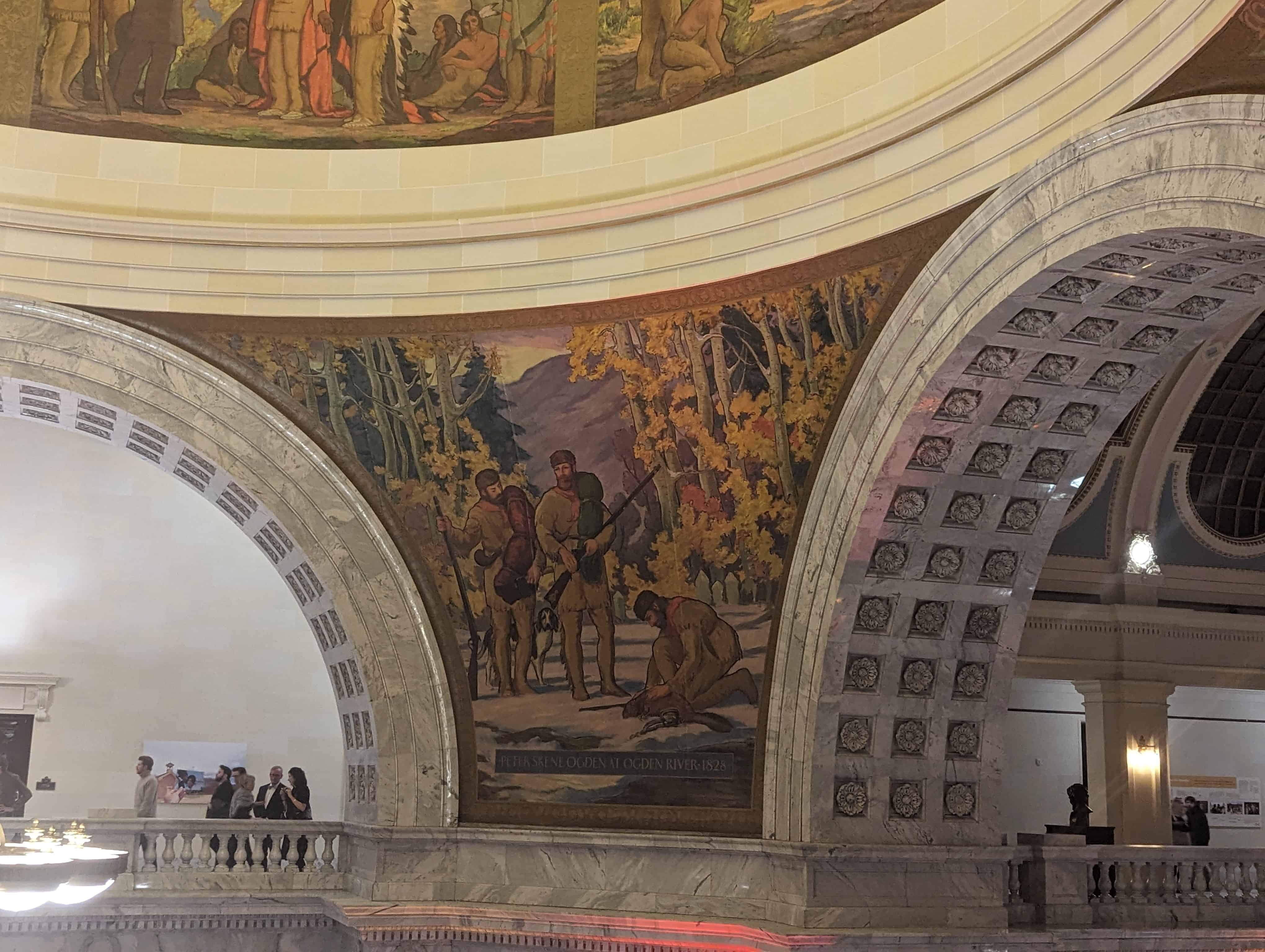
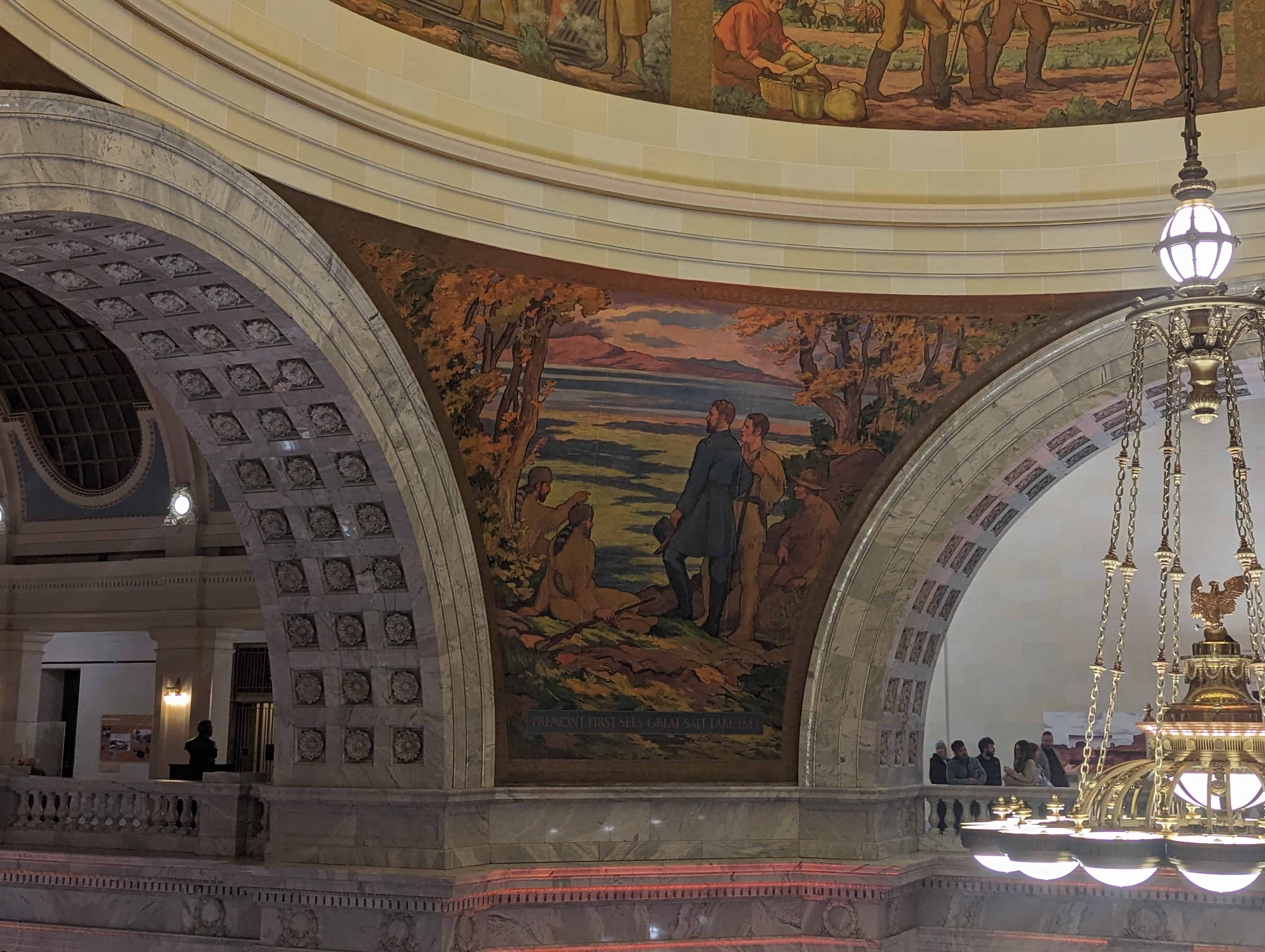
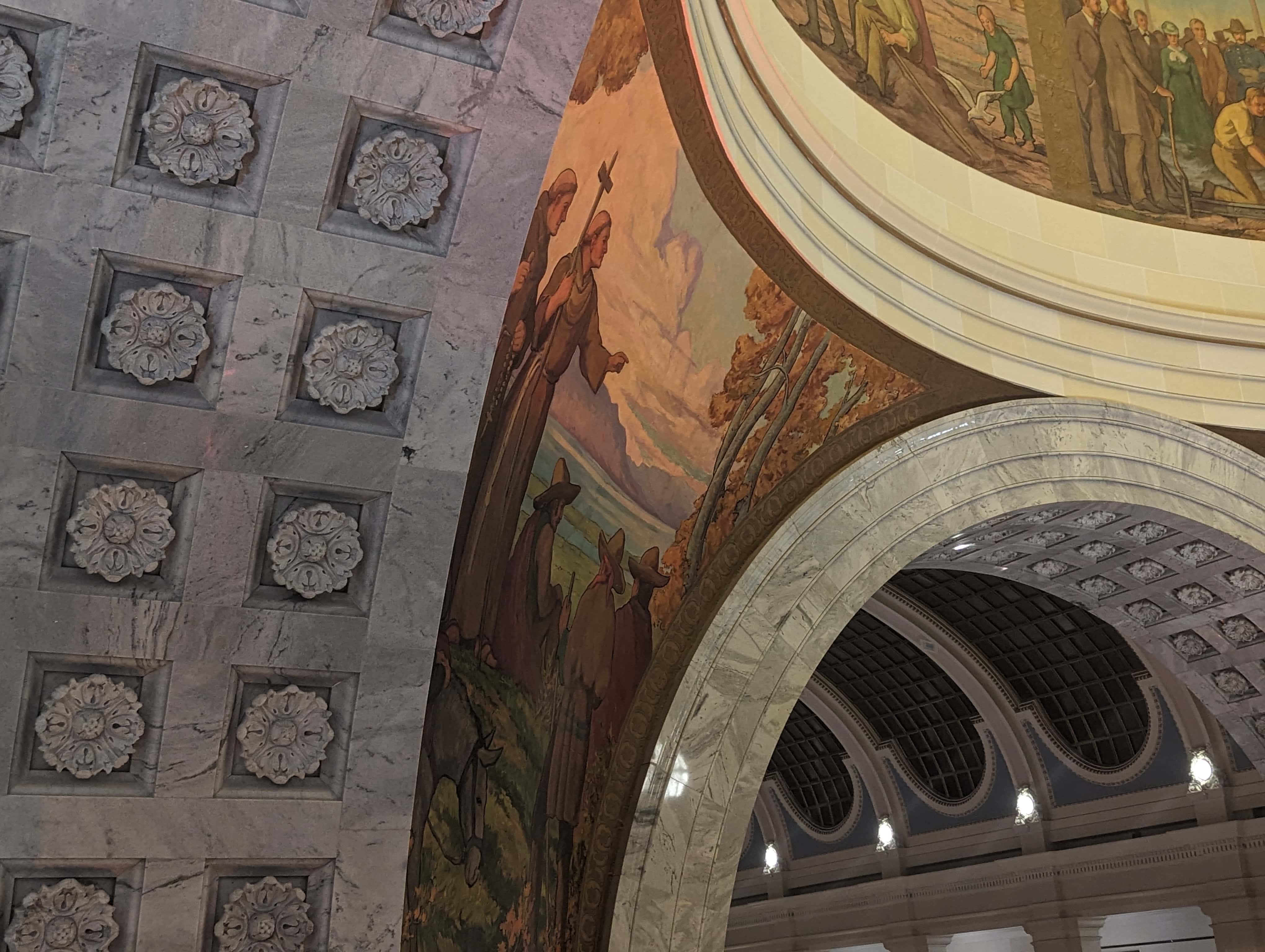
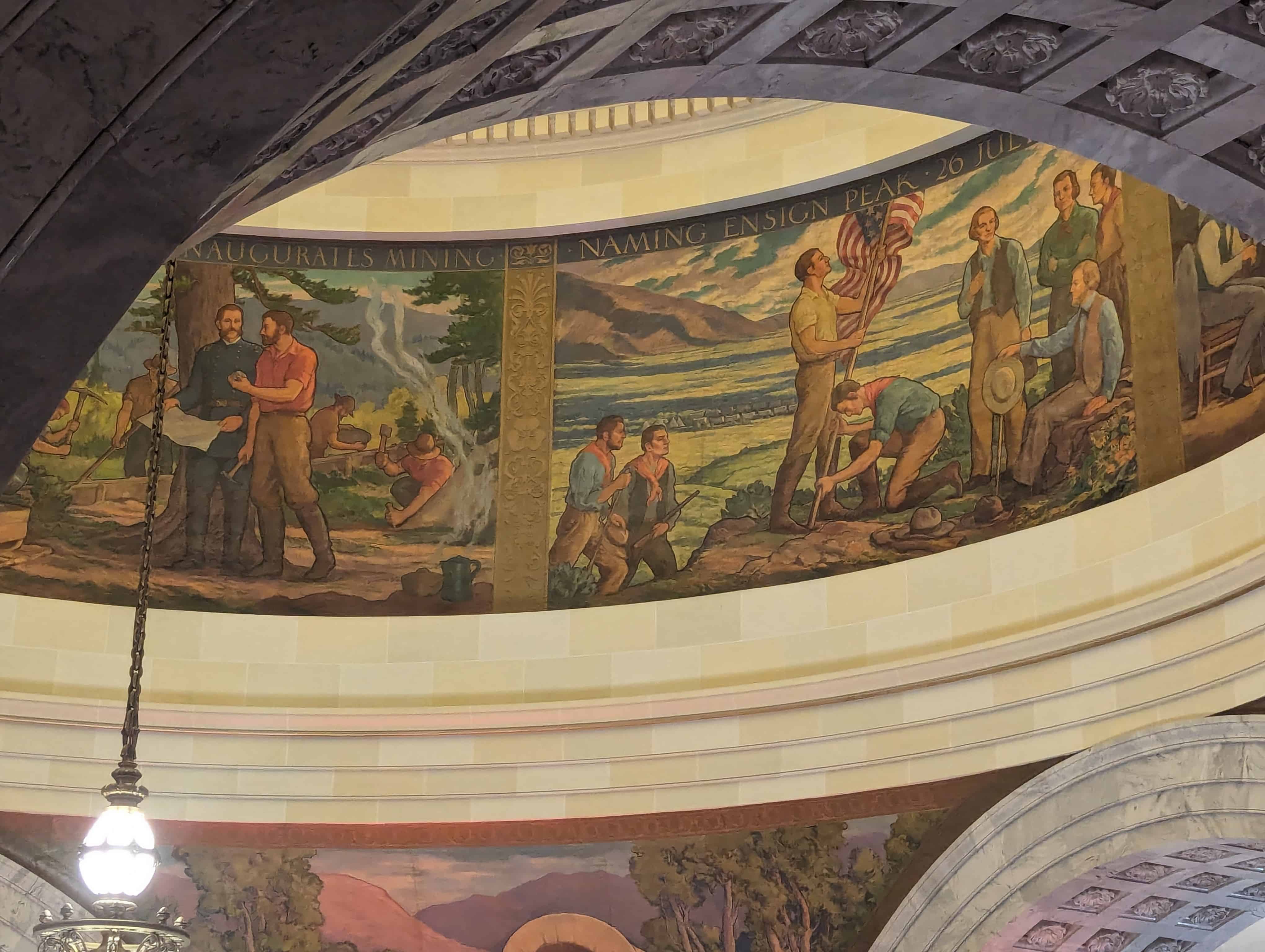
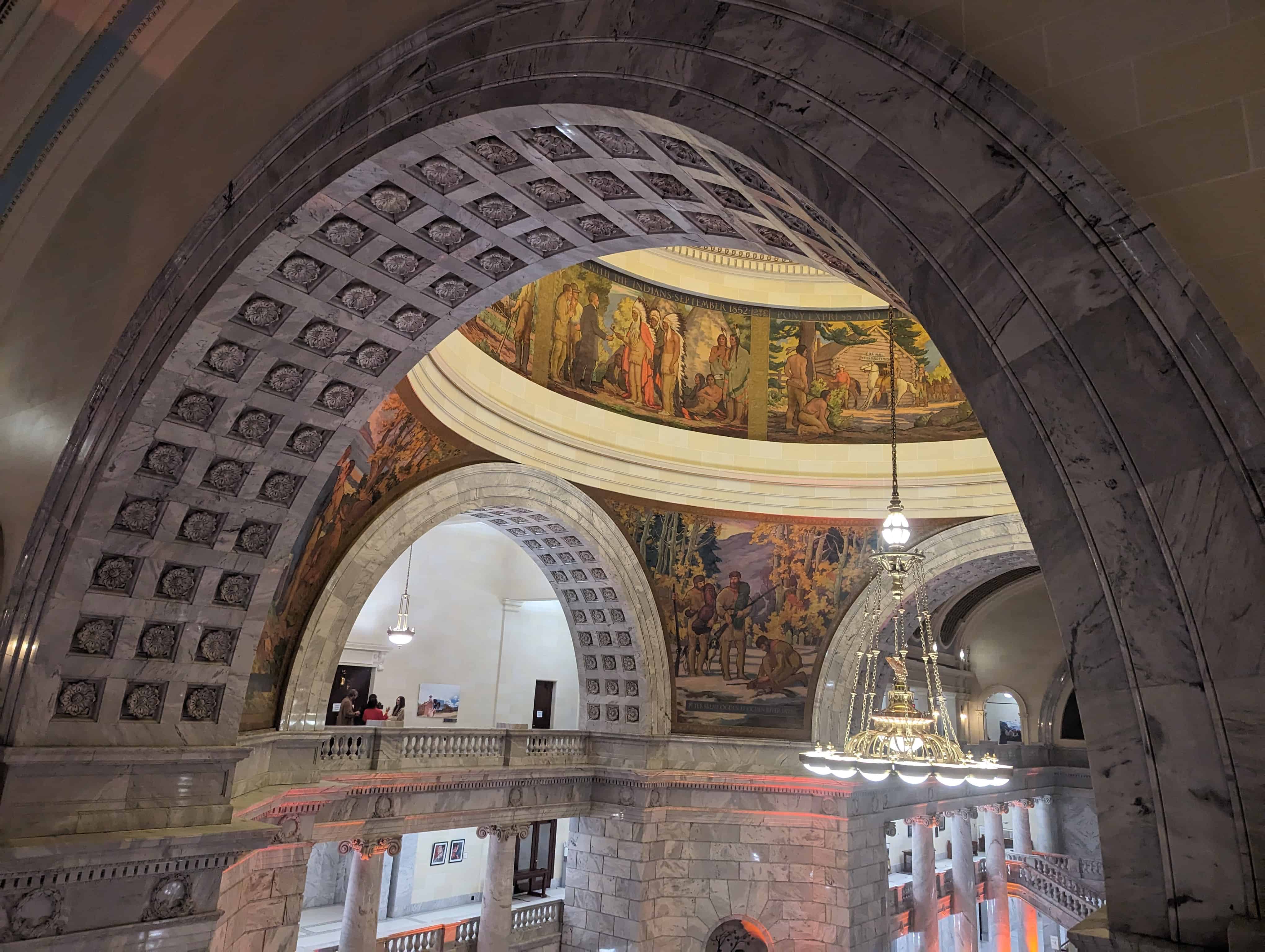
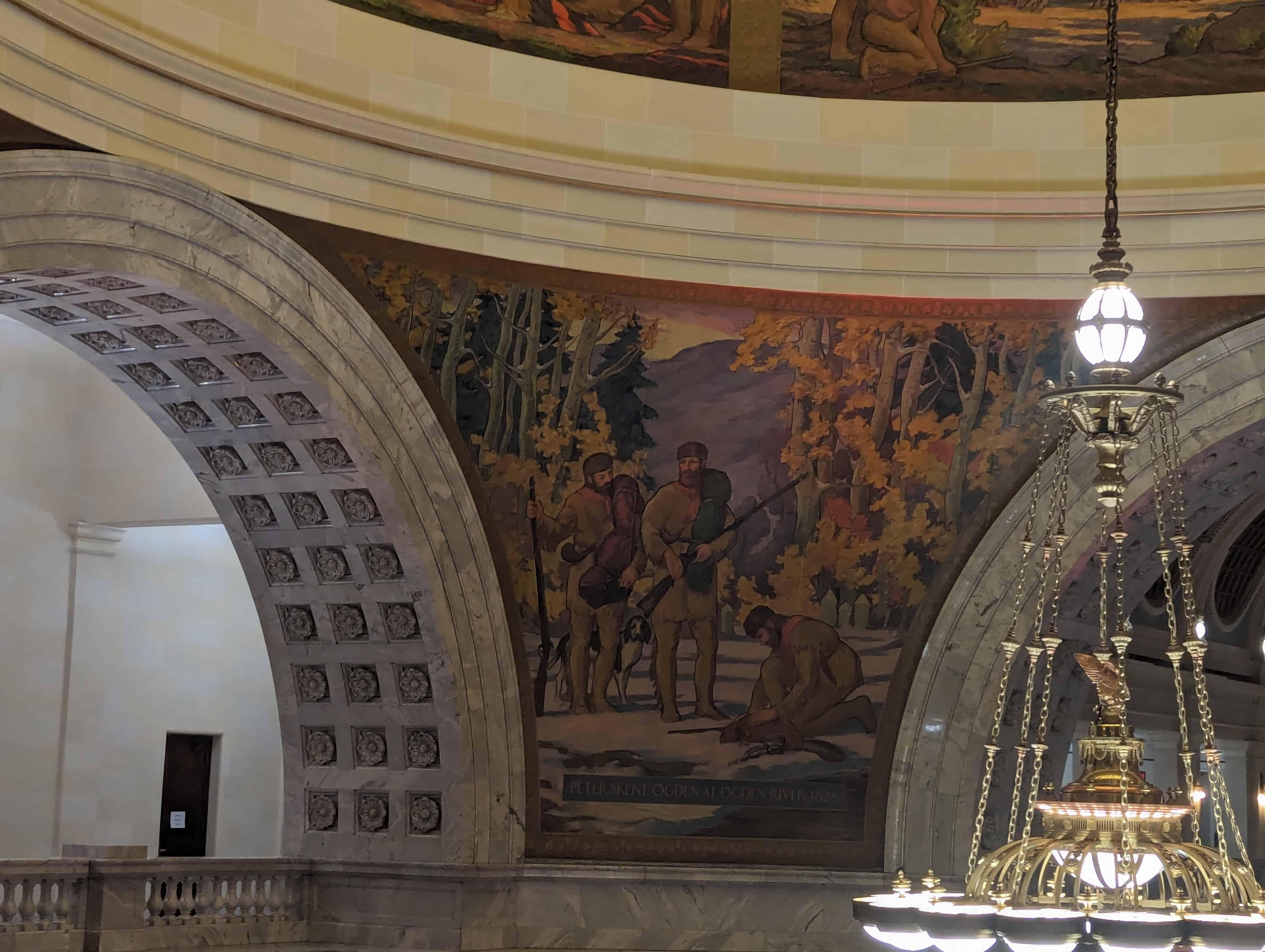
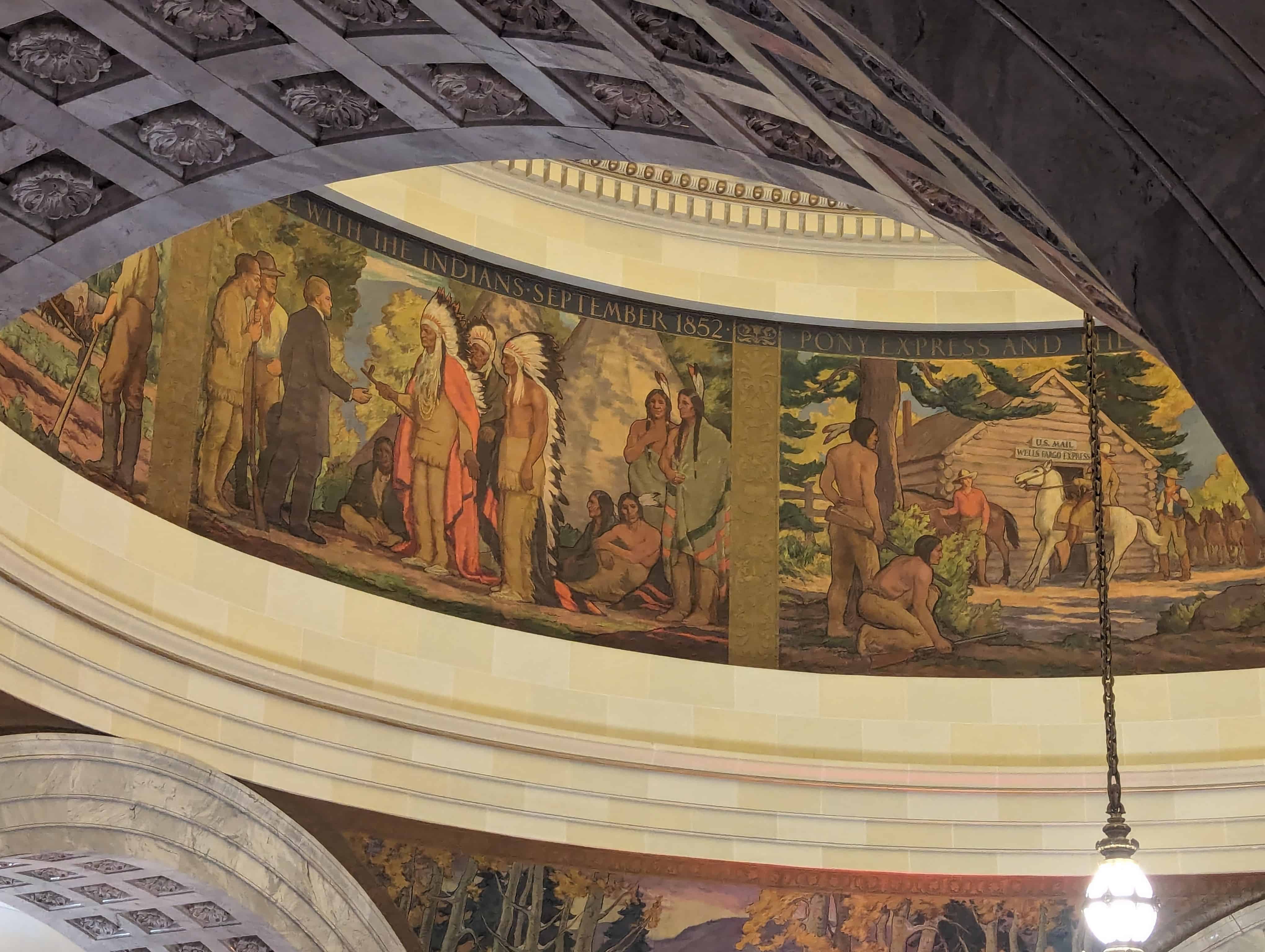
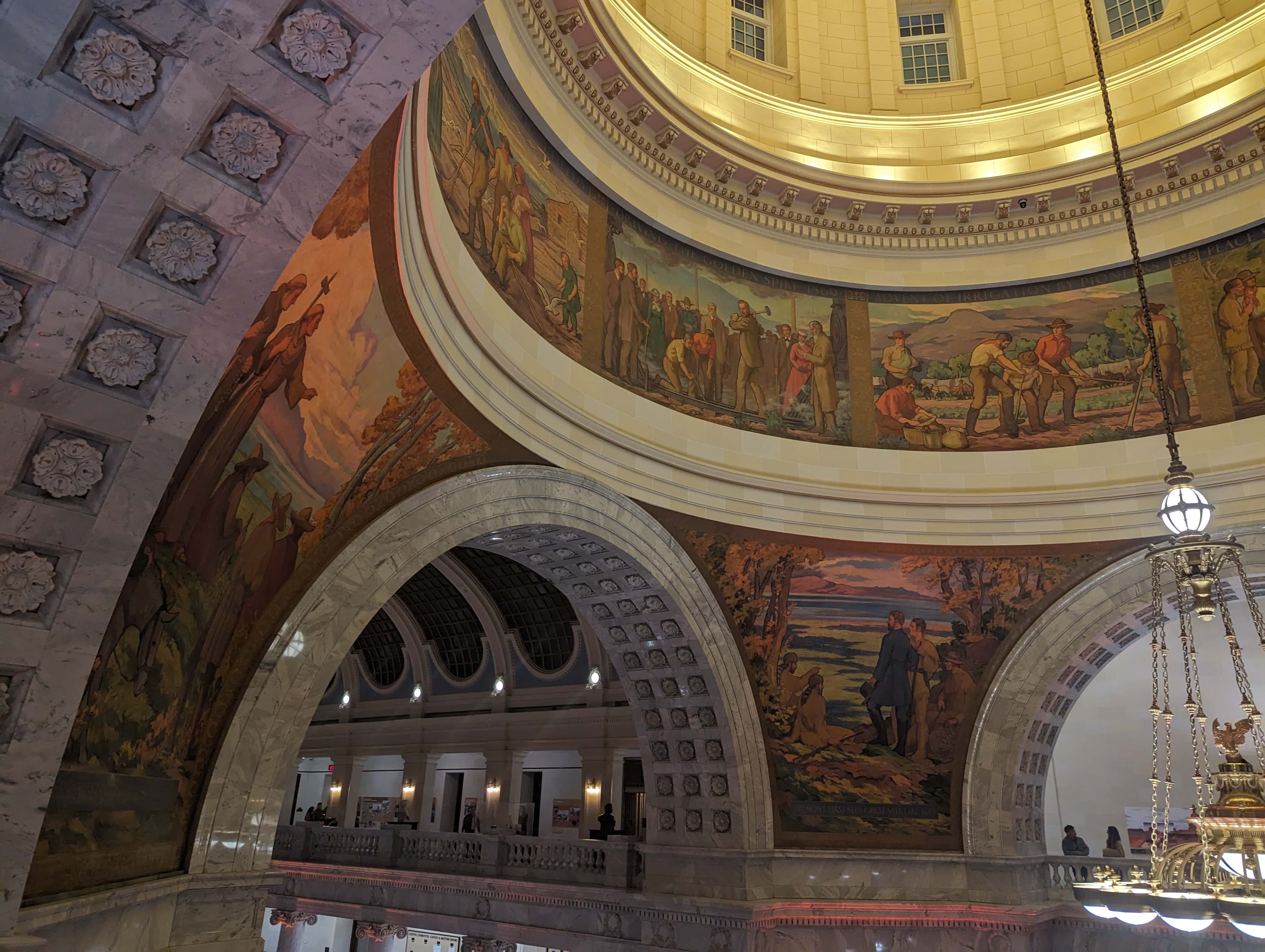
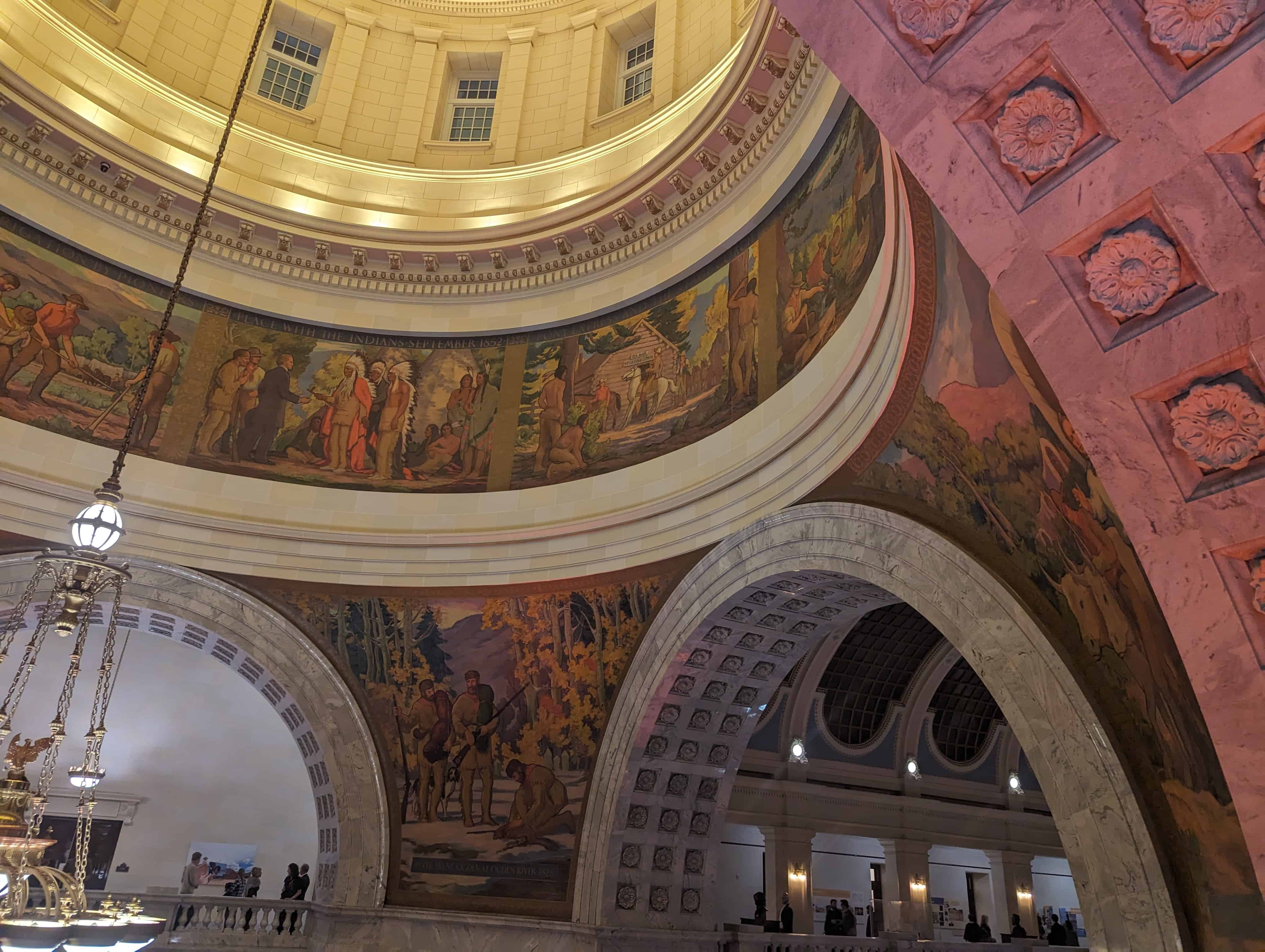
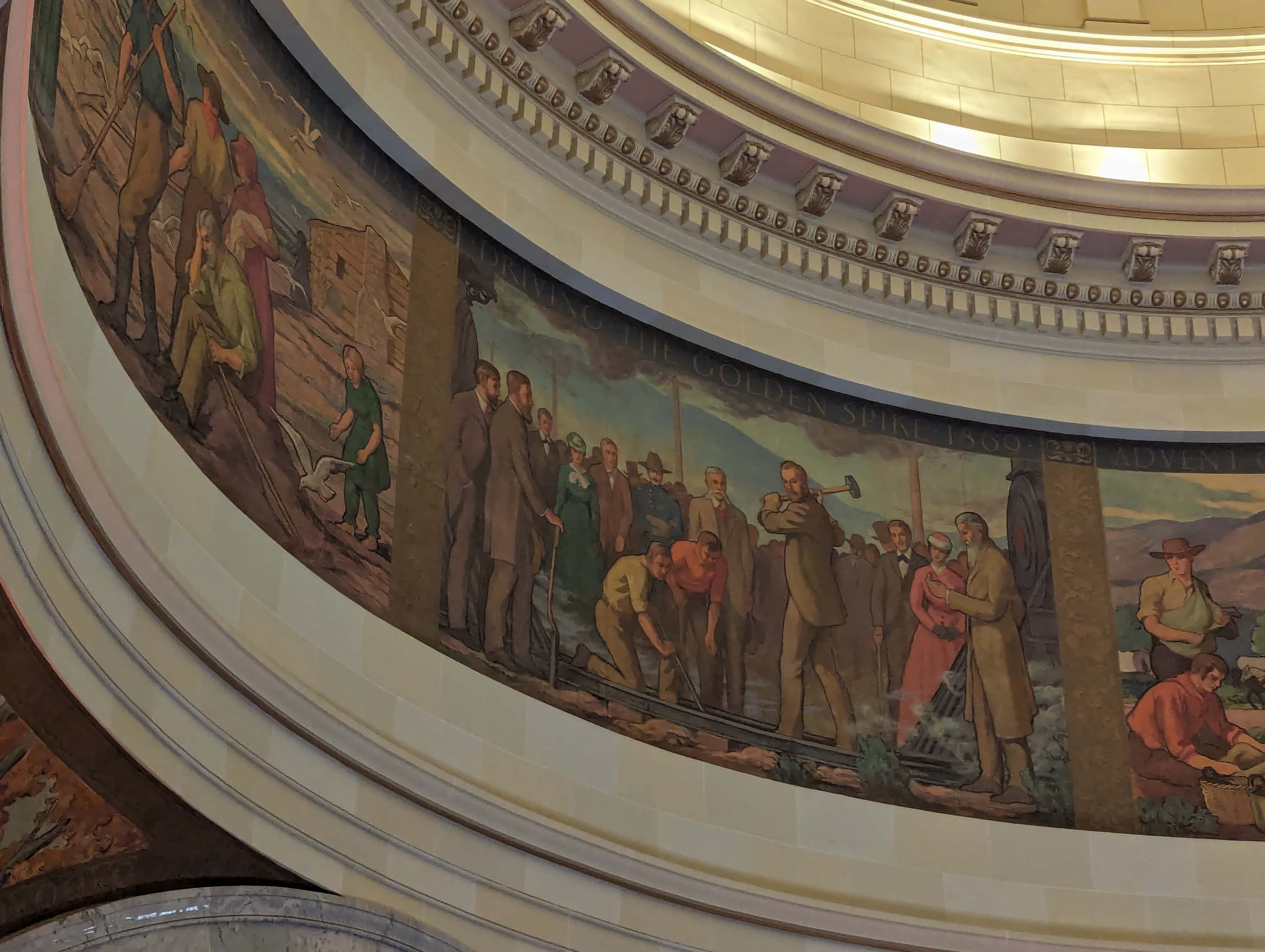
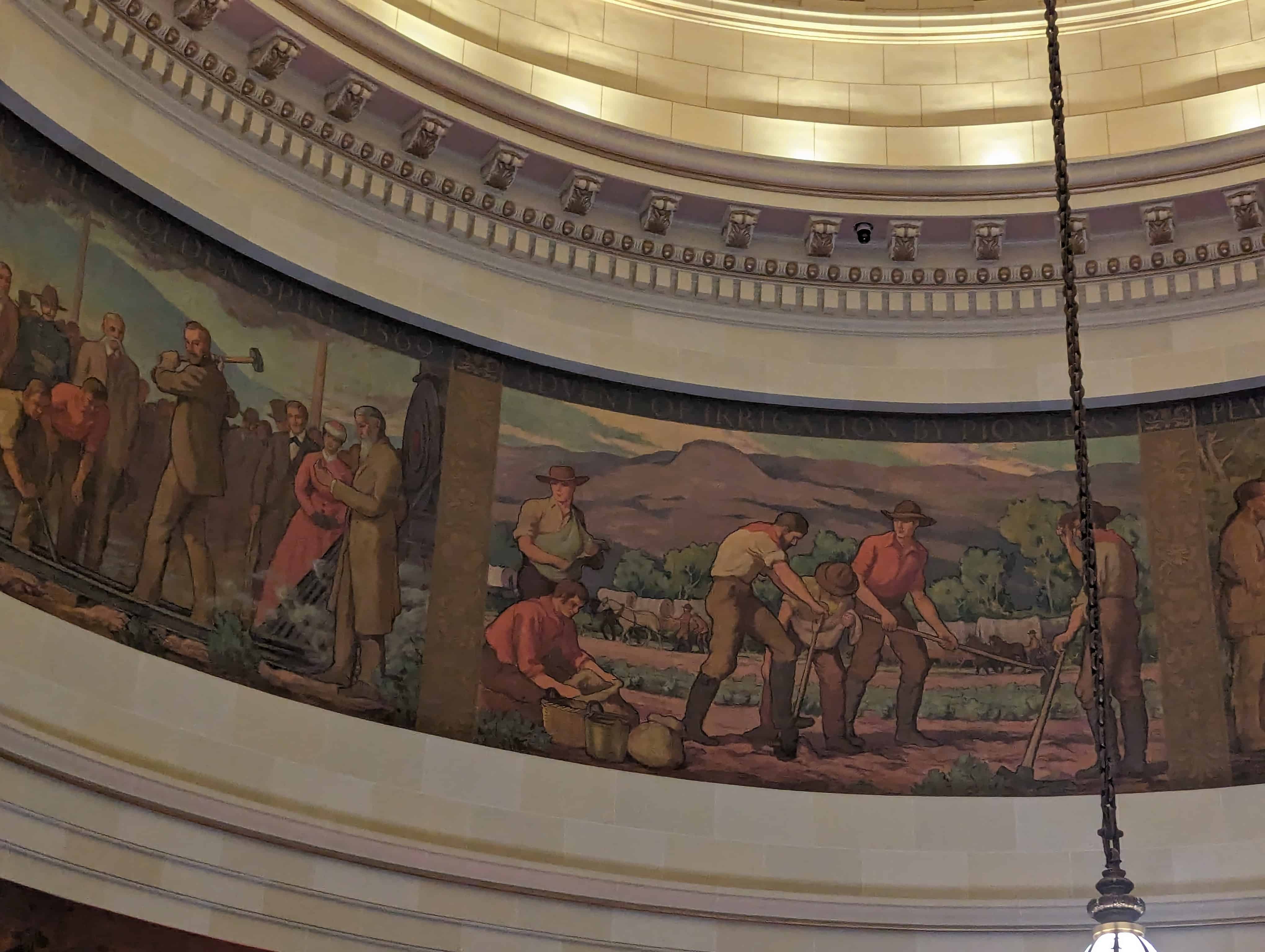
This project was authorized by the civil works administration – December 1933 – to employ artists on public works of art.
Edward Bruce said “This is the greatest opportunity that the artists of this or any other country have ever had to show their metal – it is a call to them to make good and prove that they have something worth while to say – it is an opportunity to sell themselves to the country and I know they will answer the challenge.”
The names and works of Utah artists selected
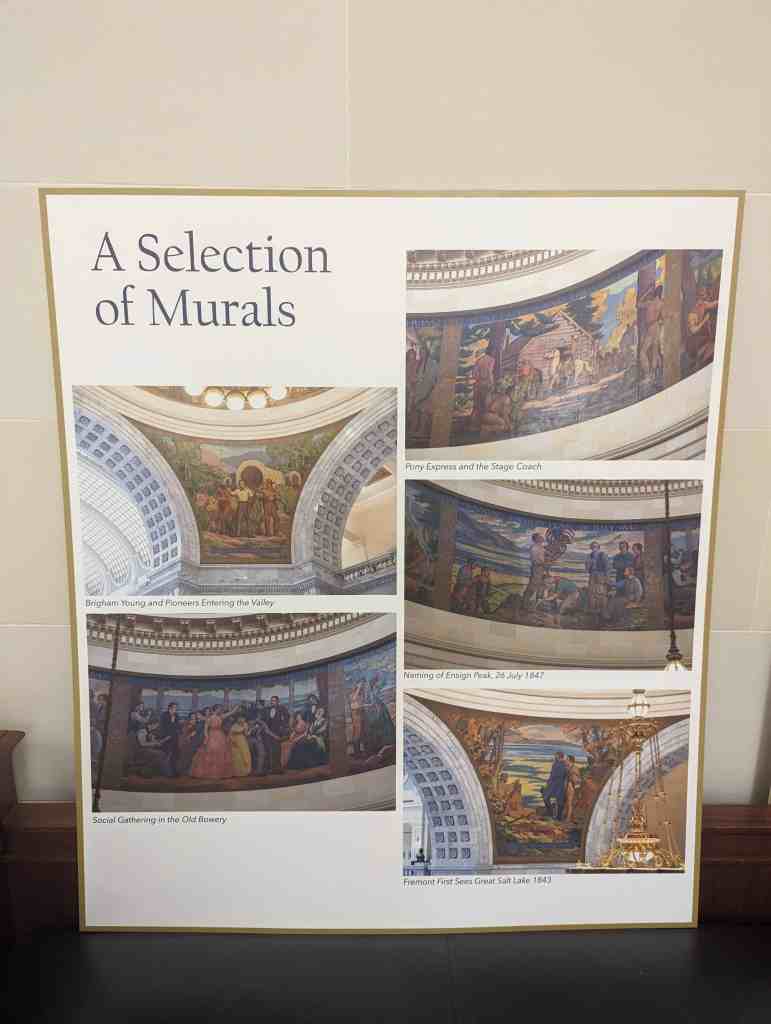
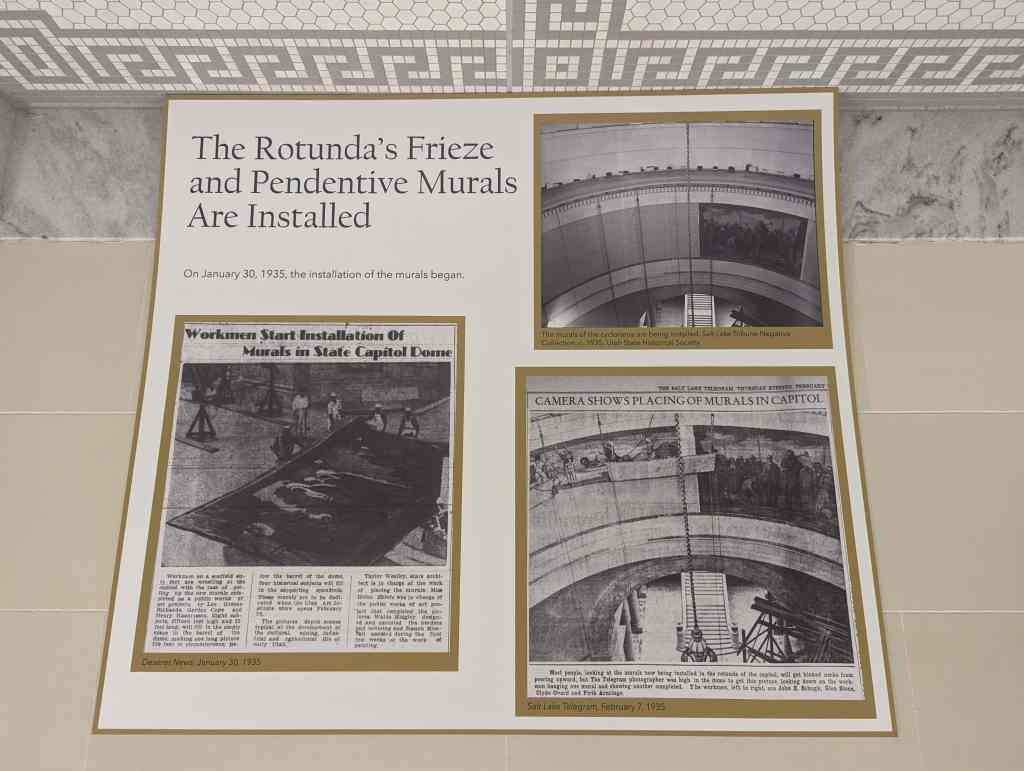
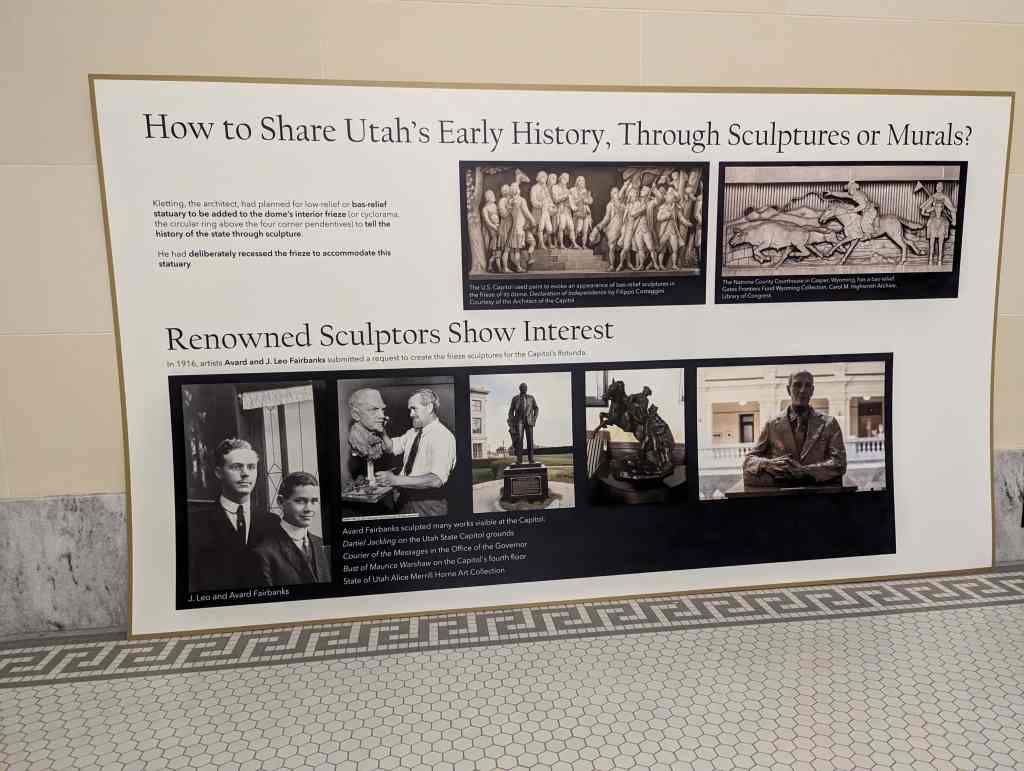
Murals for the State Capitol – designed by Lee Greene Richards, painted by Lee Greene Richards, Gordon Cope, Waldo Midgley, Henry Rasmussen.
Mural for Logan Library – Irene P. Fletcher
Decorative Painting for Veterans Hospital – Edwin Evans
Decoration for Salt Lake City Library – Florence Ware
Drawings of historical buildings of Utah – Carlos Anderson
Pictorial records of Civilian Conservation Camps – Ranch Kimball
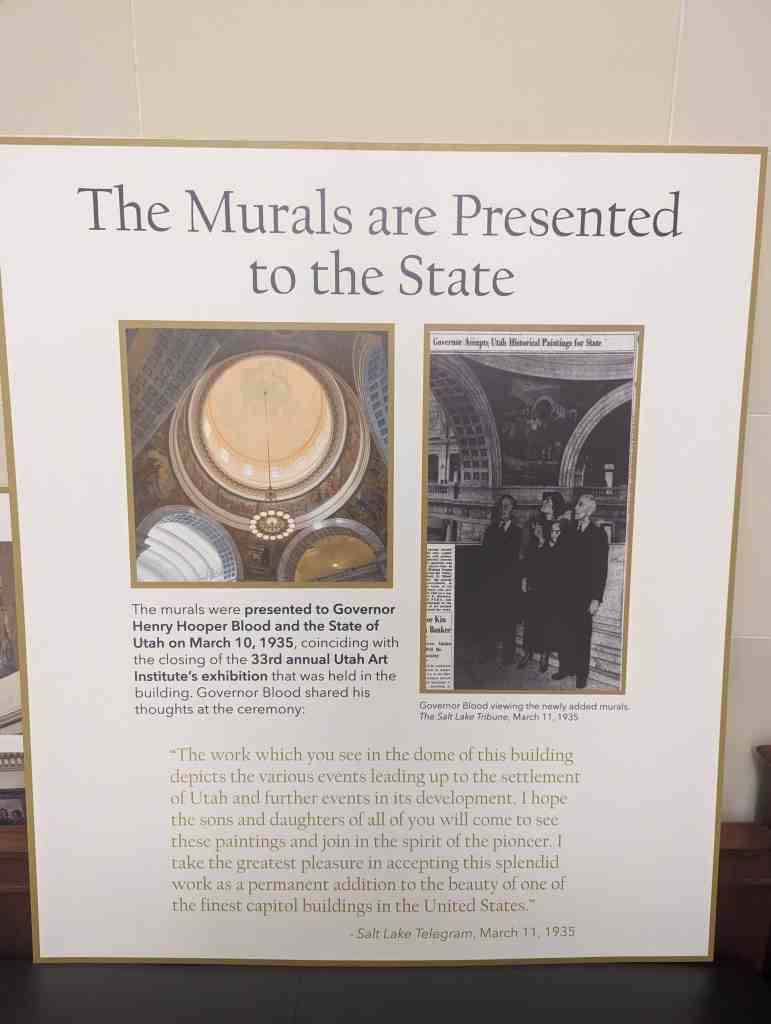
The murals were presented to Governor Henry Hooper Blood and the State of Utah on March 10, 1935, coinciding with the closing of the 33rd annual Utah Art Institute’s exhibition that was held in the building. Governor Blood shared his thoughts at the ceremony:
“The work which you see in the dome of this building depicts the various events leading up to the settlement of Utah and further events in its development. I hope the sons and daughters of all of you will come to see these paintings and join in the spirit of the pioneer. I take the greatest pleasure in accepting this splendid work as a permanent addition to the beauty of one of the finest capitol buildings in the United States.” – Salt Lake Telegram, March 11, 1935