• About JacobBarlow.com
  • Cemeteries in Utah
  • D.U.P. Markers
  • Doors
  • Exploring Utah Email List
  • Geocaching
  • Historic Marker Map
  • Links
  • Movie/TV Show Filming Locations
  • Oldest in Utah
  • Other Travels
  • Photos Then and Now
  • S.U.P. Markers
  • U.P.T.L.A. Markers
  • Utah Cities and Places.
  • Utah Homes for Sale
  • Utah Treasure Hunt

JacobBarlow.com

~ Exploring with Jacob Barlow

JacobBarlow.com

Tag Archives: Provo

Hotel Roberts

07 Thursday Dec 2017

Posted by Jacob Barlow in Uncategorized

≈ 1 Comment

Tags

Historic Buildings, Provo, utah, utah county

  • 52. Hotel Roberts 2nd S and University

Hotel Roberts – Provo

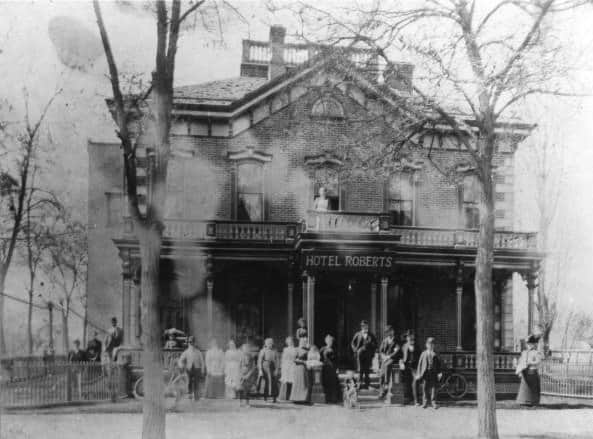
Hotel Roberts was a historic hotel, built in 1882 on University Avenue (US-189) in Provo, Utah, United States. This Mission-style hotel was a famous landmark and a center of Provo social activity for much of the early 20th century. It also served briefly as the Language Training Mission (now called the Missionary Training Center) for The Church of Jesus Christ of Latter-day Saints.

In December 1919 the hotel was purchased by Mark Anderson who would later serve as Mayor of Provo and the namesake of the Provo power plant, “The Mark Anderson Utility Center.” The hotel remained in the family for many years and was run by Anderson’s son, Mark Anderson Jr, until he retired in 1995 at the age of 76 when the family sold the hotel because the upkeep was too much.

In later years, Hotel Roberts fell into serious disrepair, with profound structural and water damage, and was largely known as a residence for transients. Neglect by the owners and lack of community support to maintain the building led to its demolition in 2004. (text from Wikipedia)

Hotel Roberts was at 192 S University.

Related Posts:

  • William Roberts House
  • 52. Hotel Roberts

Provo’s Name Has an Interesting History

07 Thursday Dec 2017

Posted by Jacob Barlow in Uncategorized

≈ 1 Comment

Tags

Provo, utah, utah county

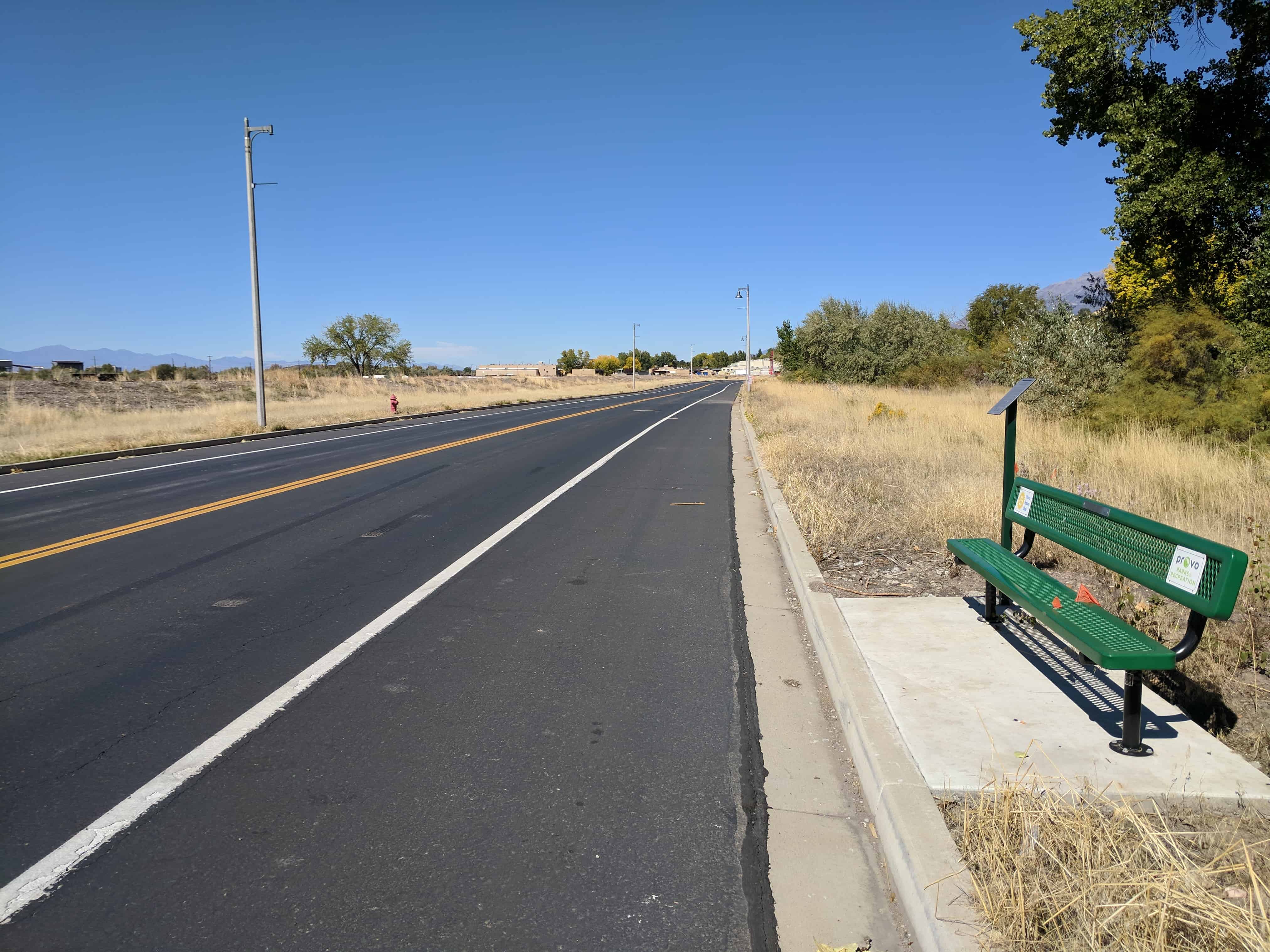
2017-10-07 13.17.10

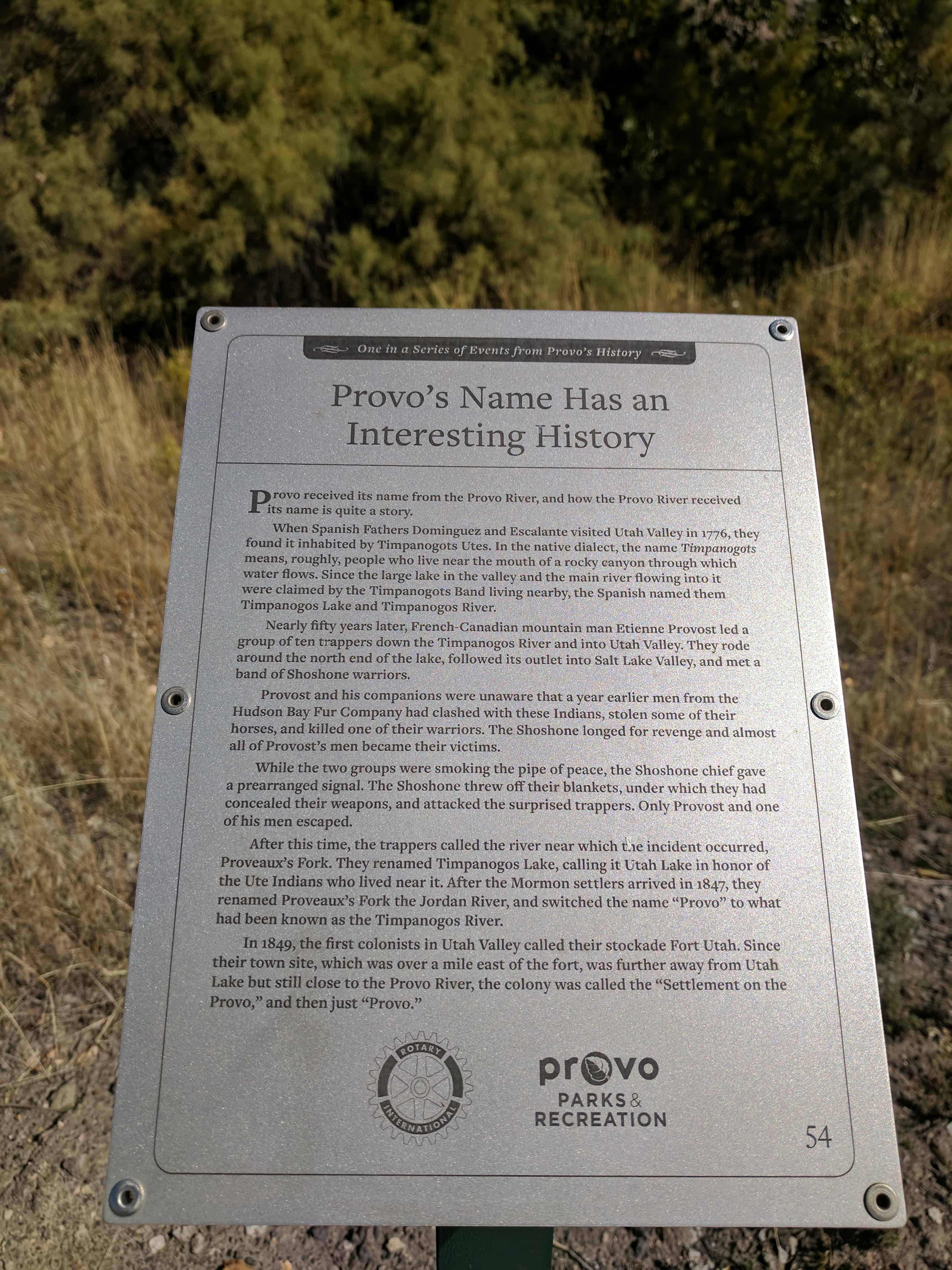
Provo’s Name Has an Interesting History.

Provo received its name from the Provo River, and how the Provo River received its name is quite a story.

When Spanish Fathers Dominguez and Escalante visited Utah Valley in 1776, they found it inhabited by Timpanogots Utes.  In the native dialect, the name Timpanogots means, roughly, people who live near the mouth of a rocky canyon though which water flows.  Since the large lake in the valley and the main river flowing into it were claiming by the Timpanogots Band living nearby, the Spanish named them Timpanogos Lake and Timpanogos River.

Nearly fifty years later, French-Canadian mountain man Etienne Provost led a group of ten trappers down the Timpanogos River and into Utah Valley.  They rode around the north end of the lake, followed its outlet into Salt Lake Valley, and met a band of Shoshone warriors.

Provost and his companions were unaware that a year earlier men from the Hudson Bay Fur Company had clashed with these Indians, stolen some of their horses, and killed one of their warriors.  The Shoshone longed for revenge and almost all of Provot’s men became their victims.

While the two groups were smoking the pipe of peace, the Shoshone chief gave a prearranged signal.  The Shoshone threw off their blankets, under which they had concealed their weapons, and attacked the surprised trappers.  Only Provost and one of his men escaped.

After this time, the trappers called the river near which the incident occurred, Proveaux’s Fork.  They renamed Timpanogos Lake, calling it Utah Lake in honor of the Ute Indians who lived near it.  After the Mormon settlers arrived in 1847, they renamed Proveaux’s Fork the Jordan River, and switched the name “Provo” to what had been known as the Timpanogos River.

In 1849, the first colonists in Utah Valley called their stockade Fort Utah.  Since their town site, which was over a mile east of the fort, was further away from Utah Lake but still close to the Provo River, the colony was called the “Settlement on the Provo” and then just “Provo.”

This is plaque #54 in the Series of Events from Provo’s History.

2017-10-07 13.17.19

Carterville Park

06 Wednesday Dec 2017

Posted by Jacob Barlow in Uncategorized

≈ 1 Comment

Tags

Orem, Parks, Provo, utah, utah county

2017-10-07 12.28.45

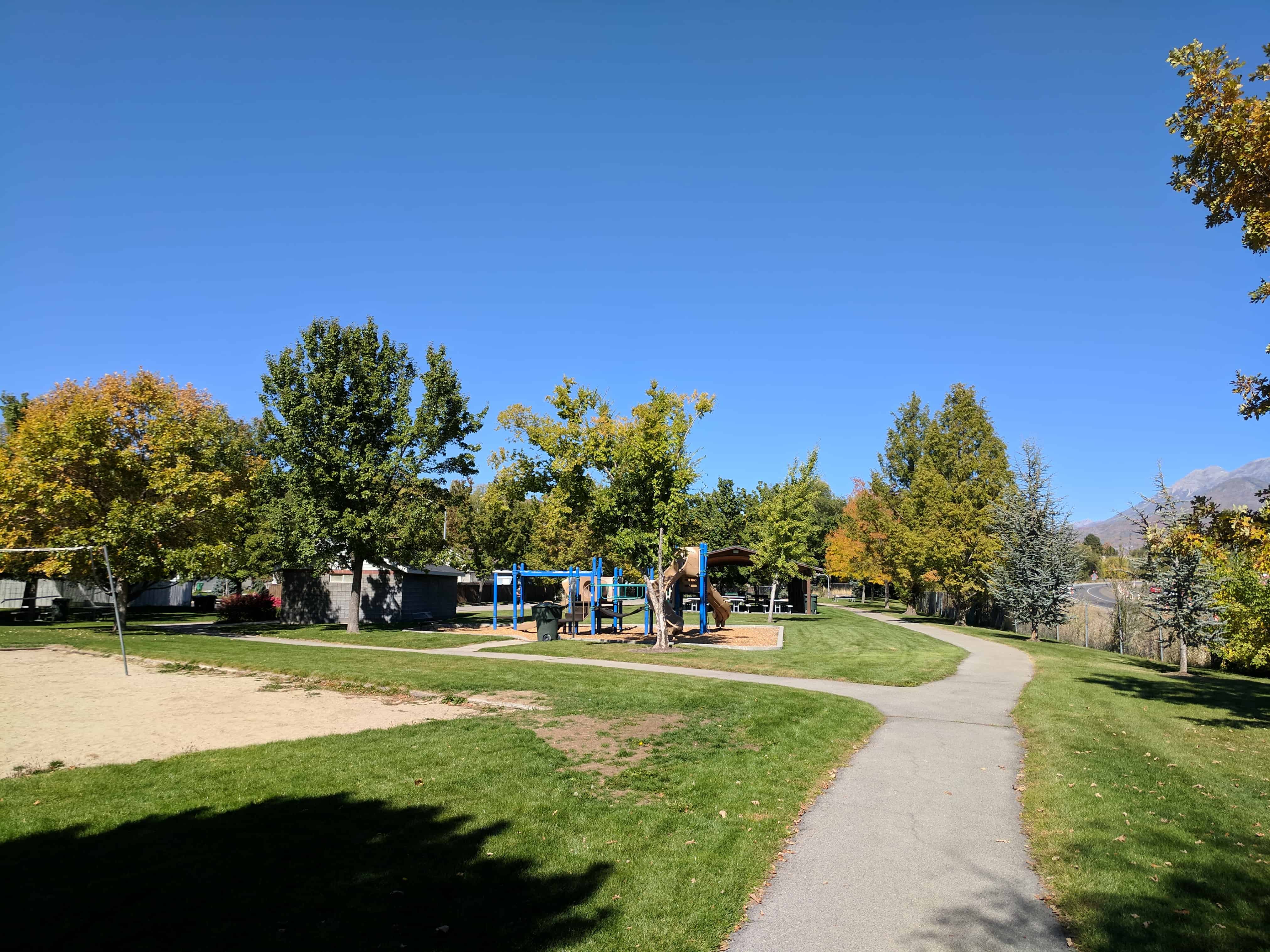
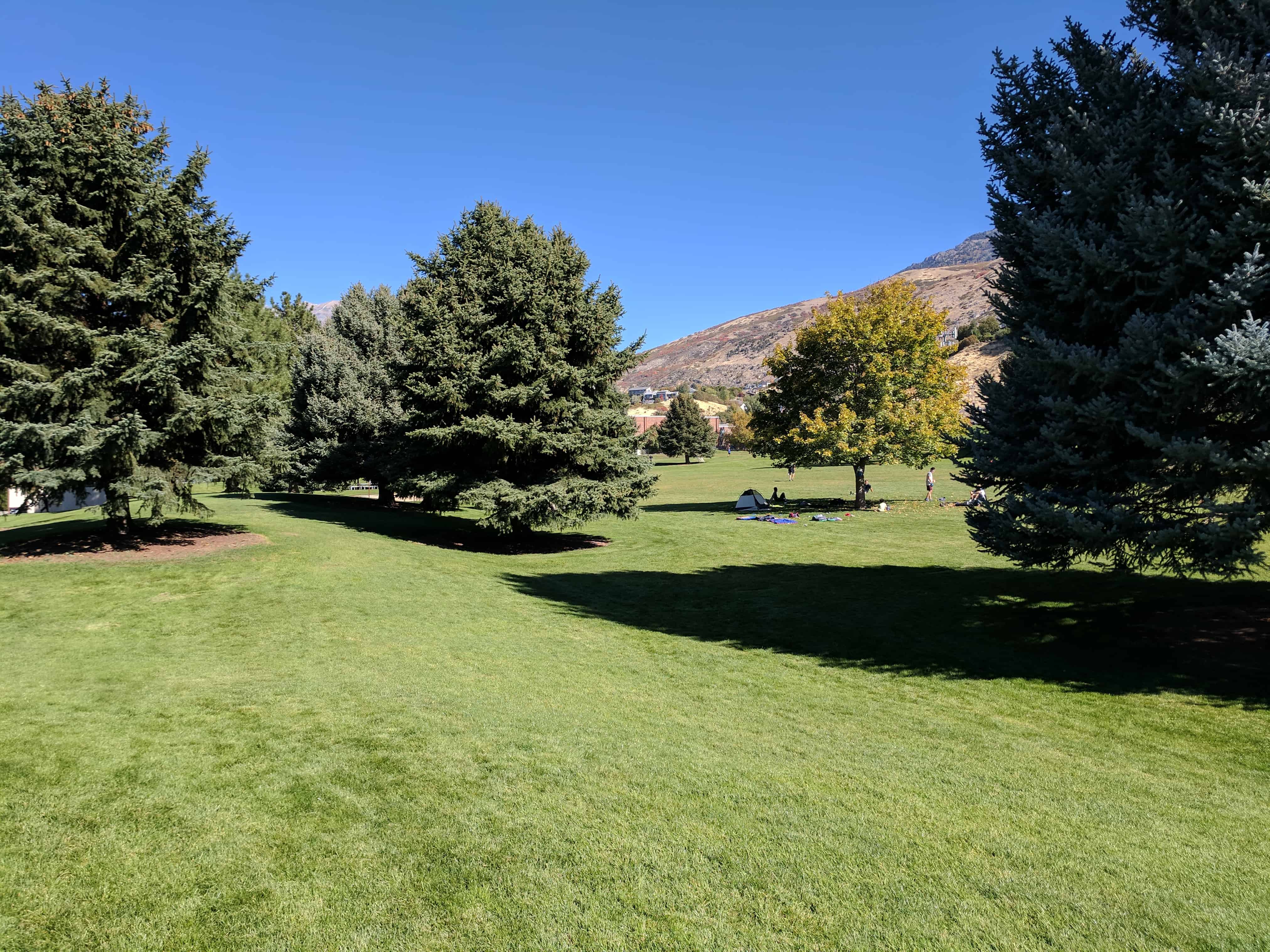
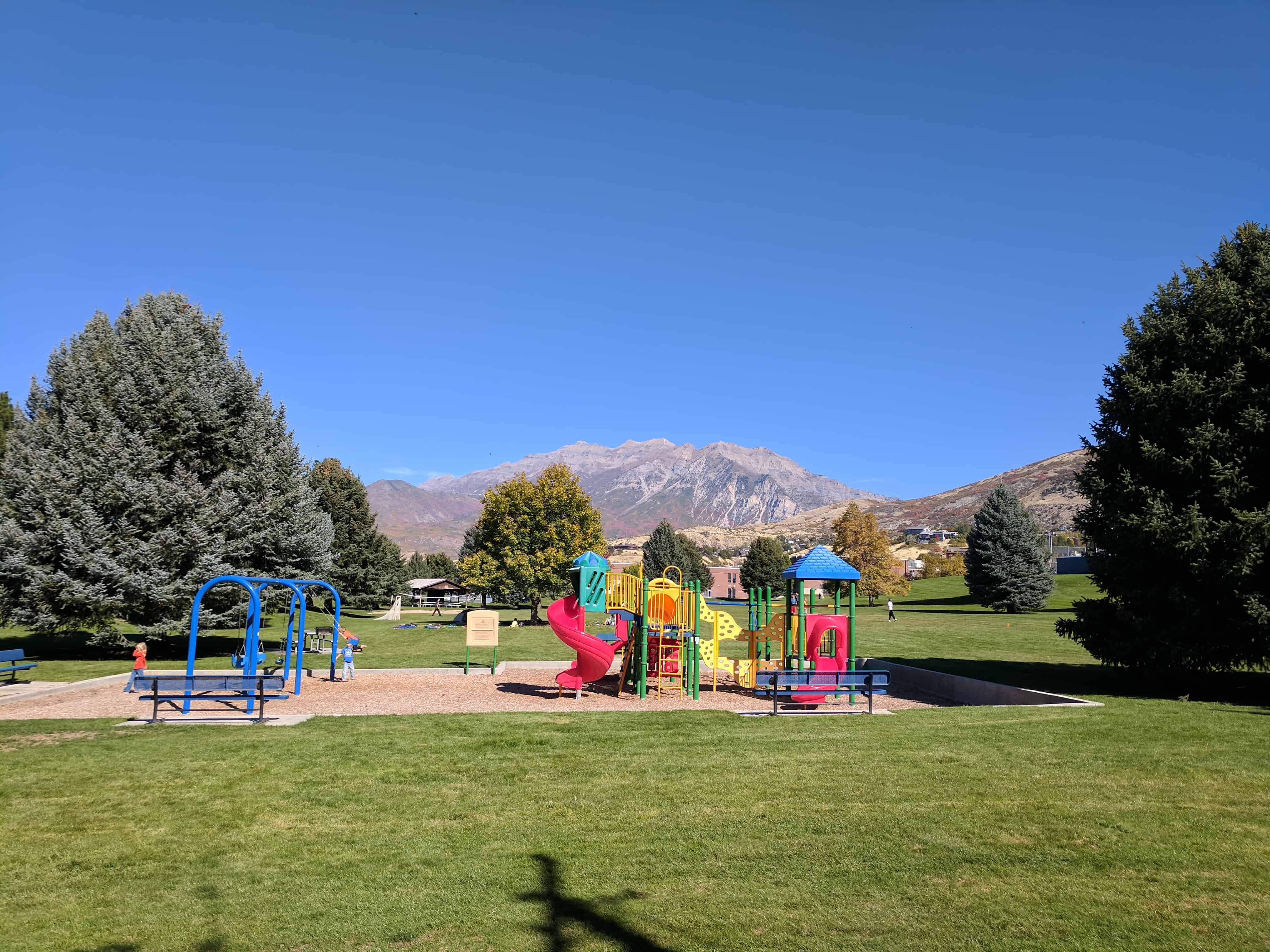
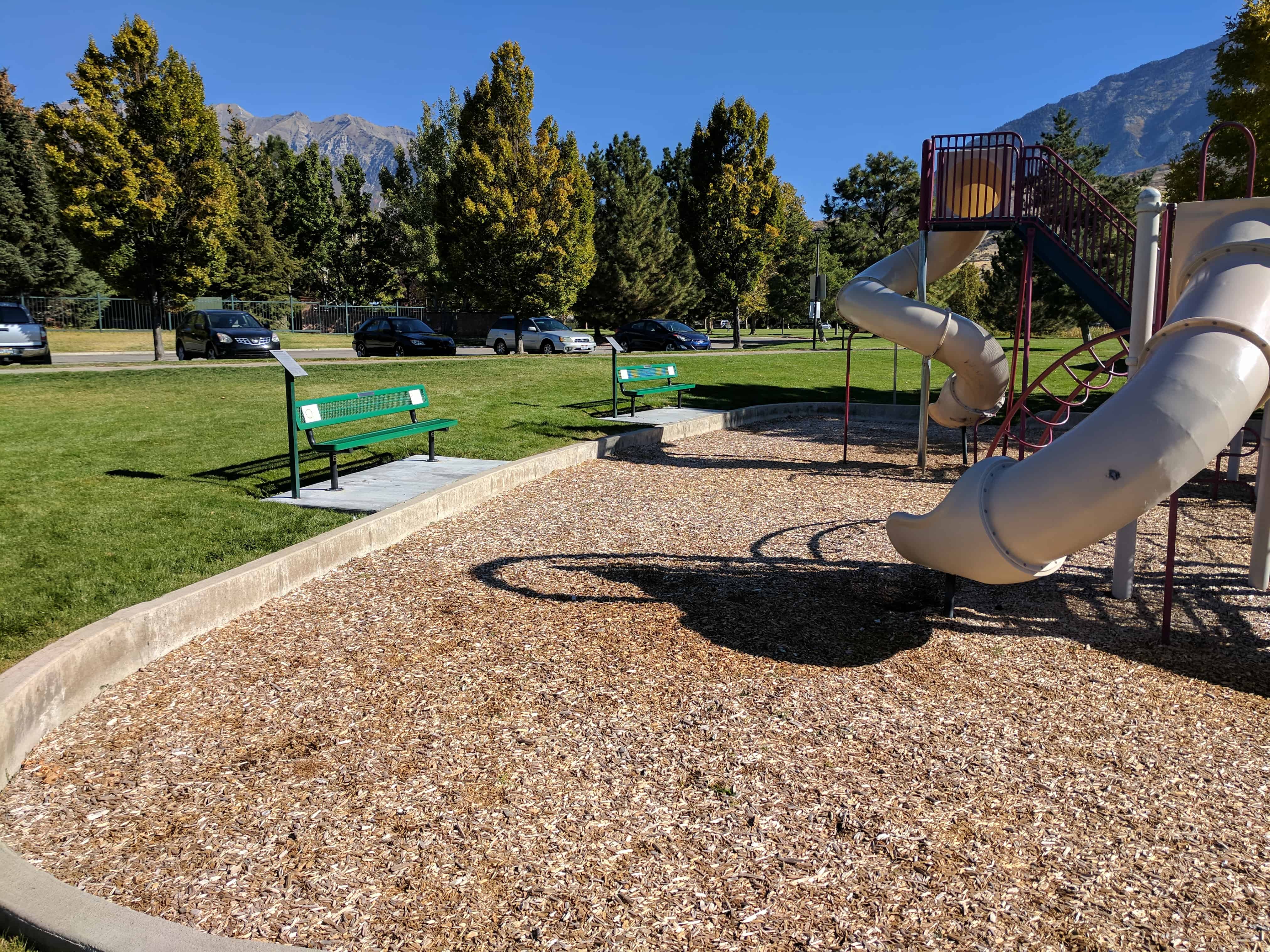
Carterville Park is a cozy neighborhood park that is perfect for small, medium, or large groups. There are many amenities and a variety of activities including a playground, basketball court, non-league softball field, playground and a walking path around the park.(*)

See also:

  • Provo
  • Provo Parks
  • Gold Medal Mile – Carterville

2017-10-07 12.29.57

2017-10-07 12.30.00

2017-10-07 12.30.43

2017-10-07 12.30.05

Carterville Park Gold Medal Mile

06 Wednesday Dec 2017

Posted by Jacob Barlow in Uncategorized

≈ 1 Comment

Tags

Gold Medal Miles, Parks, Provo, utah, utah county

2017-10-07 12.30.05

One of the Gold Medal Miles is located here in Carterville Park in Provo.   For others on the list visit this page.

2017-10-07 12.30.43

2017-10-07 12.30.08

One of Provo’s Oldest Businesses is the Startup Candy Company

06 Wednesday Dec 2017

Posted by Jacob Barlow in Uncategorized

≈ 2 Comments

Tags

Historic Buildings, Provo, utah, utah county

2017-10-07 12.13.29

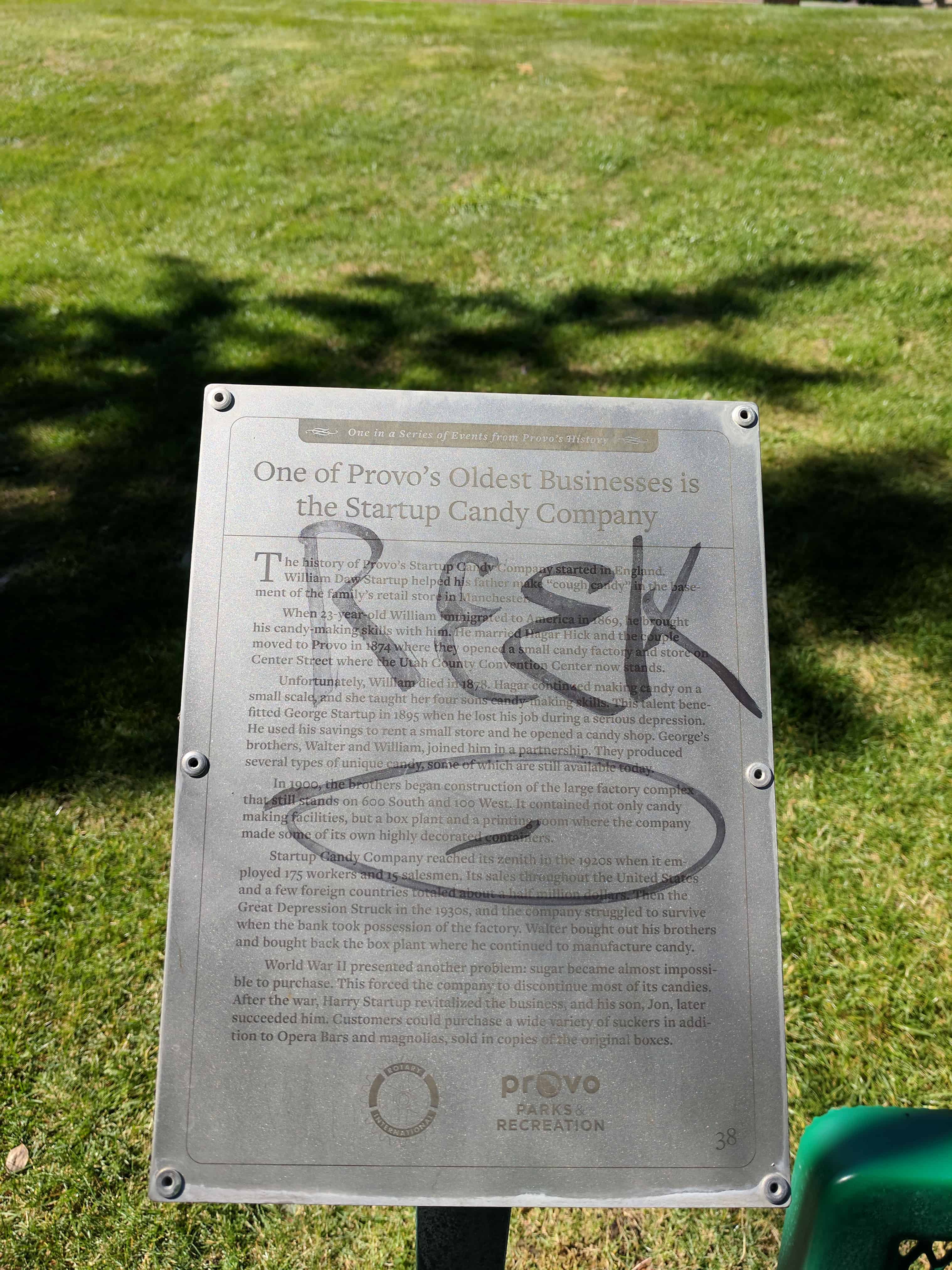
One of Provo’s Oldest Businesses is the Startup Candy Company.

The history of Provo‘s Startup Candy Company started in England.  William Daw Startup helped his father make “cough candy” in the basement of the family’s retail store in Manchester.

When 23-year-old William immigrated to America in 1869, he brought his candy-making skills with him.  He married Hagar Hick and the couple moved to Provo in 1874 where they opened a small candy factory and store on Center Street where the Utah County Convention Center now stands.

Unfortunately, William died in 1878.  Hagar continued making candy on a small scale, and she taught her four sons candy-making skills.  This talent benefited George Startup in 1895 when he lost his job during a serious depression.  He used his savings to rent a small store and he opened a candy shop.  George’s brothers, Walter and William, joined him in a partnership.  They produced several types of unique candy, some of which are still available today.

In 1900, the brothers began construction of the large factory complex that still stands on 600 South and 100 West.  It contained not only candy making facilities, but a box plant and a printing room where the company made some of its own highly decorated containers.

Startup Candy Company reached its zenith in the 1920s when it employed 175 workers and 15 salesmen.  Its sales throughout the united States and a few foreign countries totaled about a half million dollars.  Then the Great Depression Struck in the 1930s, and the company struggled to survive when the bank took possession of the factory.  Walker bought out his brothers and bought back the box plant where he continued to manufacture candy.

World War II presented another problem: sugar became almost impossible to purchase.  This forced the company to discontinue most of its candies.  After the war, Harry Startup revitalized the business, and his son, Jon, later succeeded him.  Customers could purchase a wide variety of suckers in addition to Opera Bars and magnolias, sold in copies of the original boxes.

This is plaque #38 in the Series of Events from Provo’s History.

See also:

  • Startup Candy
  • Startup Candy Factory
2017-10-07 12.13.38

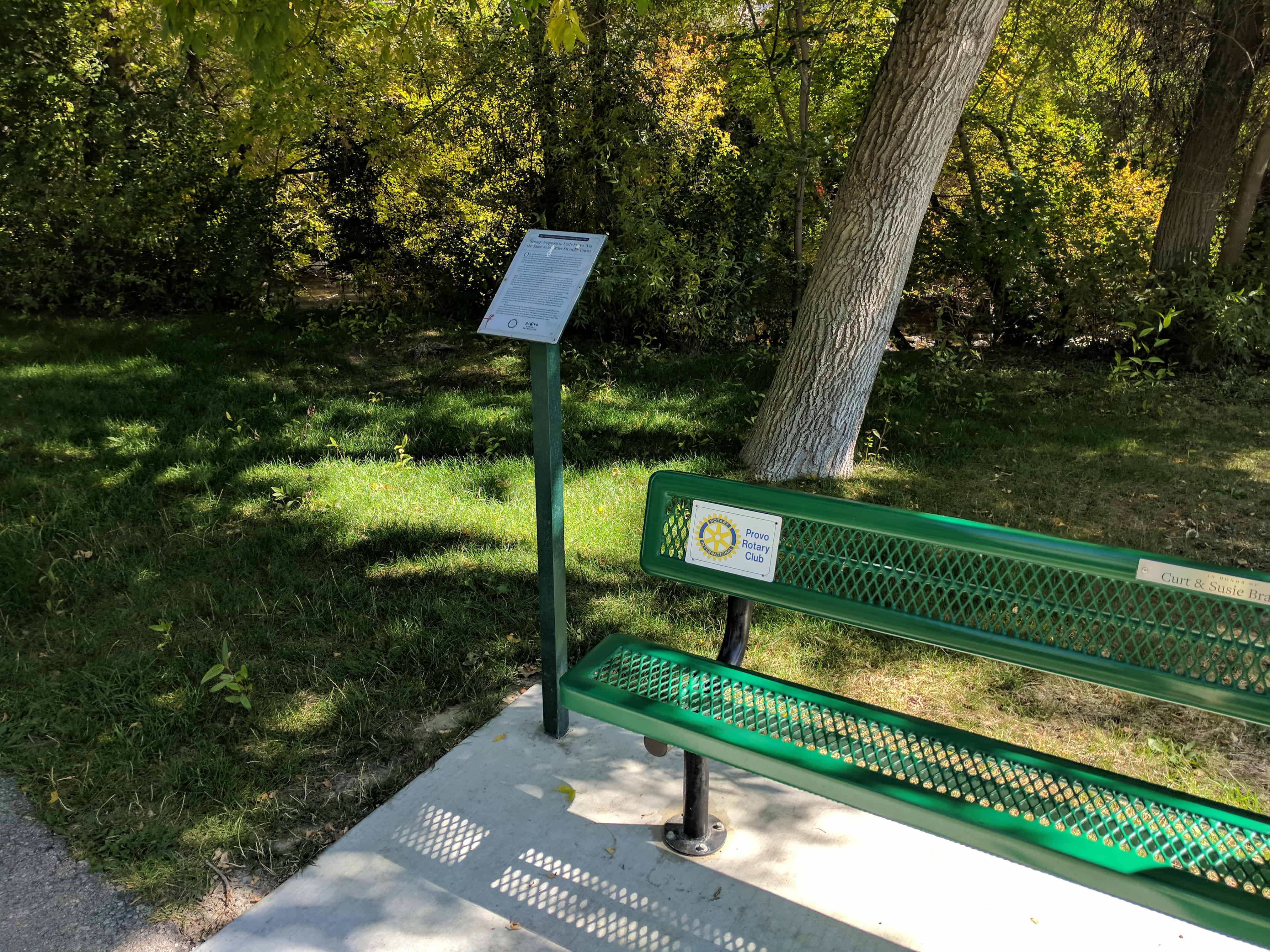
Sewage Disposal in Early Provo

06 Wednesday Dec 2017

Posted by Jacob Barlow in Uncategorized

≈ 1 Comment

Tags

Provo, utah, utah county

2017-10-07 12.14.13

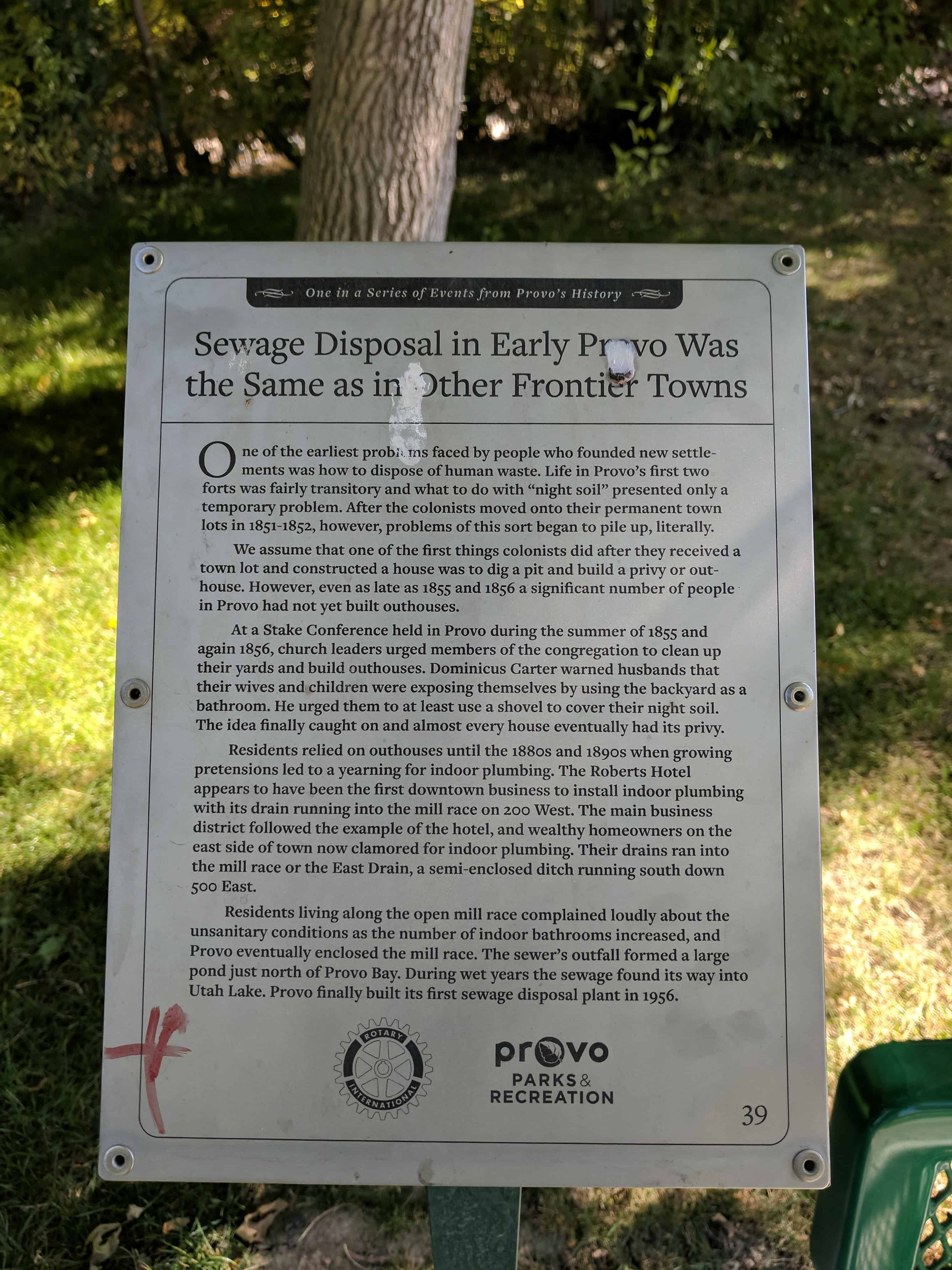
Sewage Disposal in Early Provo Was the Same as in Other Frontier Towns.

One of the earliest problems faced by people who founded new settlements was how to dispose of human waste.  Life in Provo‘s first two forts was fairly transitory and what to do with “night soil” presented only a temporary problem.  After the colonists moved onto their permanent town lots in 1851-1852, however, problems of this sort began to pile up, literally.

We assume that one of the first things colonists did after they received a town lot and constructed a house was to dig a pit and build a privy or outhouse.  However, even as late as 1855 and 1856 a significant number of people in Provo had not yet built outhouses.

At a Stake Conference held in Provo during the summer of 1855 and again 1856, church leaders urged members of the congregation to clean up their yards and build outhouses.  Dominicus Carter warned husbands that their wives and children were exposing themselves by using the backyard as a bathroom.  He urged them to at least use a shovel to cover their night soil.  The idea finally caught on and almost every house eventually had its privy.

Residents relied on outhouses until the 1880s and 1890s when growing pretensions led to a yearning for indoor plumbing. The Roberts Hotel appears to have been the first downtown business to install indoor plumbing with its drain running into the mill race on 200 West.  The main business district followed the example of the hotel, and wealthy homeowners on the east side of town now clamored for indoor plumbing.  Their drains ran into the mill race or the East Drain, a semi-enclosed ditch running south down 500 East.

Residents living along the open mill race complained loudly about the unsanitary conditions as the number of indoor bathrooms increased, and Provo eventually enclosed the mill race.  The sewer’s outfall formed a large pond just north of Provo Bay.  During wet years the sewage found its way into Utah Lake.  Provo finally built its first sewage disposal plant in 1956.

This is plaque #39 in the Series of Events from Provo’s History.

2017-10-07 12.14.18

Timp Kiwanis Bounous Park

06 Wednesday Dec 2017

Posted by Jacob Barlow in Uncategorized

≈ Leave a comment

Tags

Parks, Provo, utah, utah county

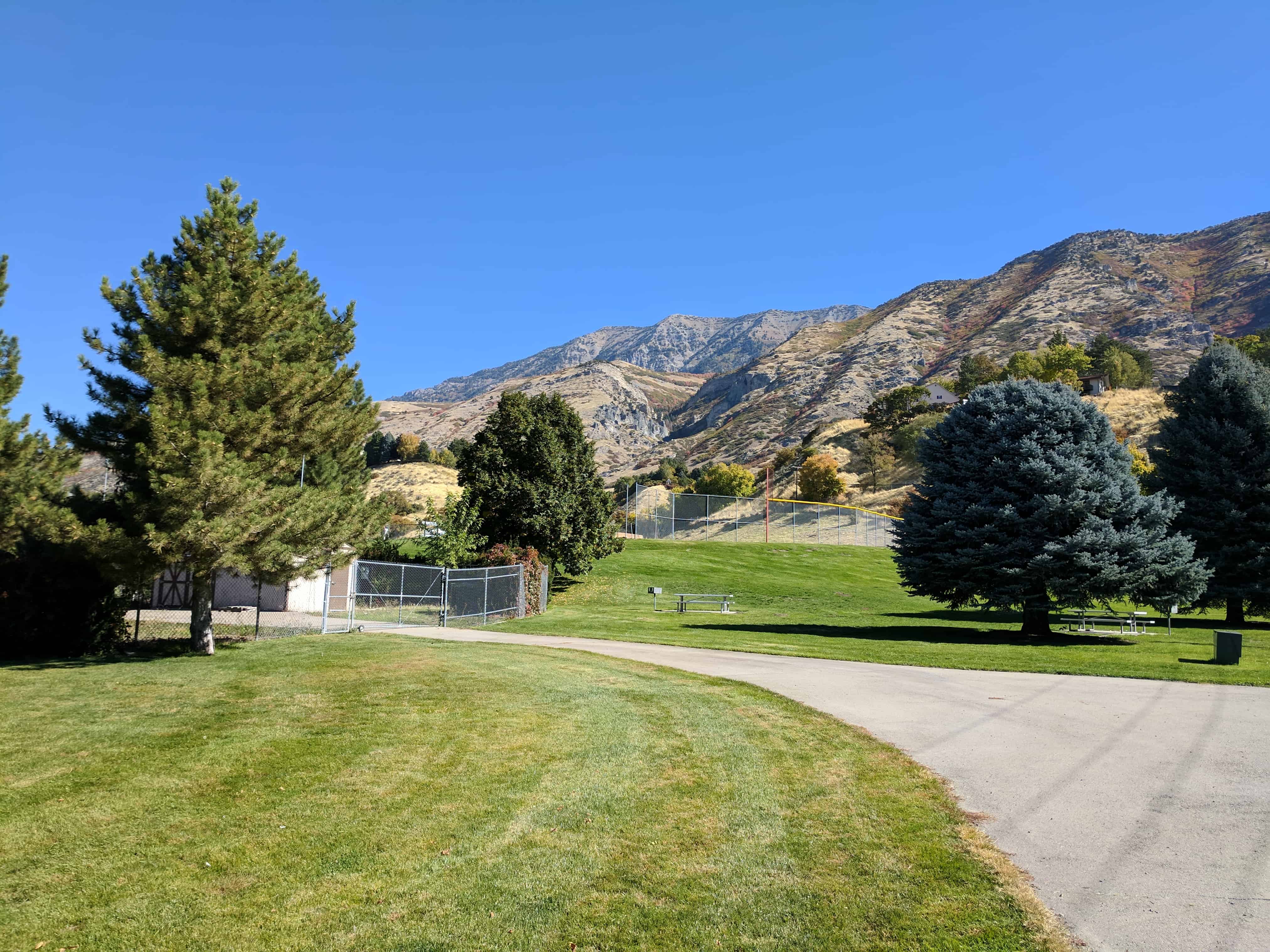
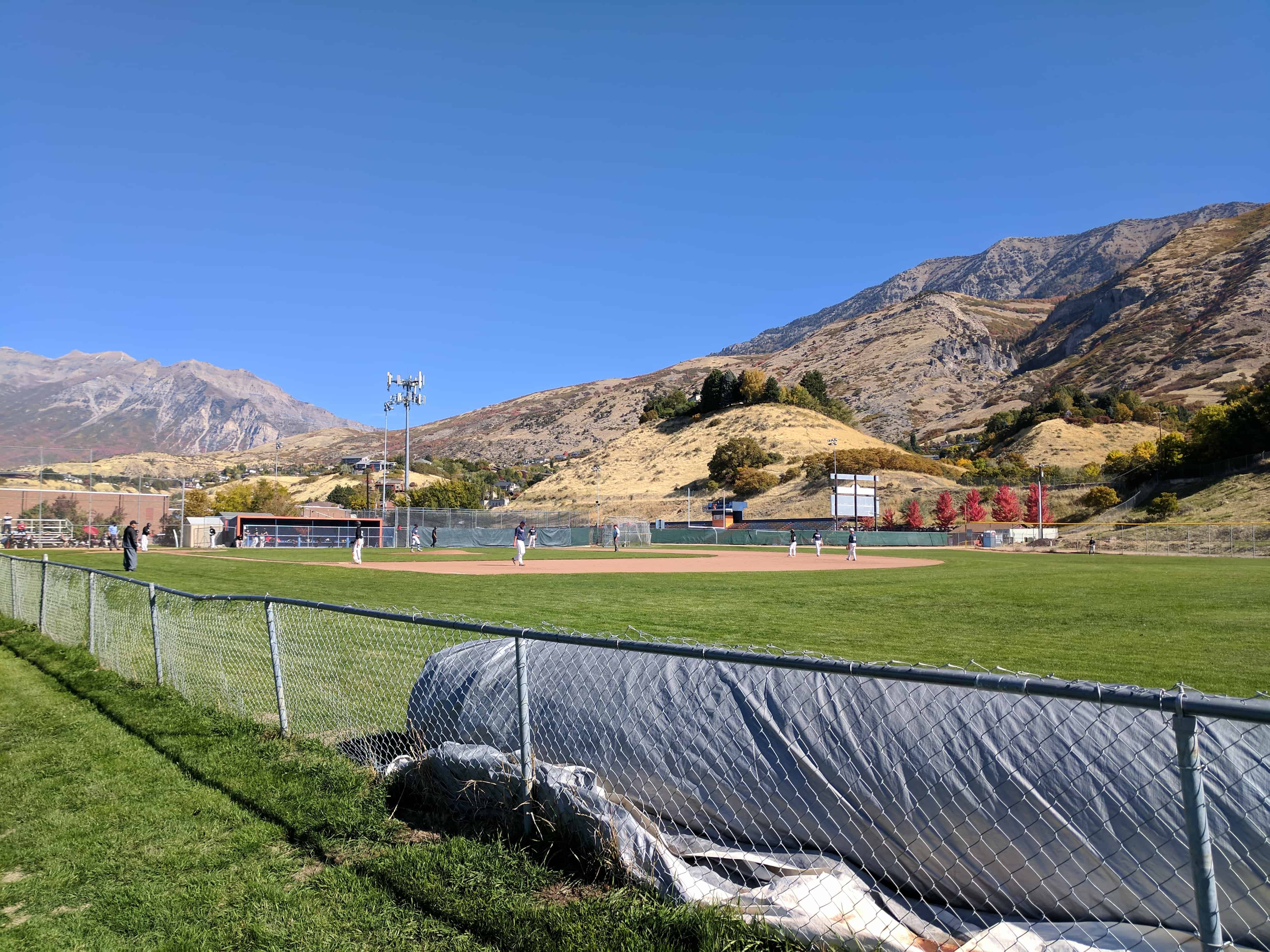
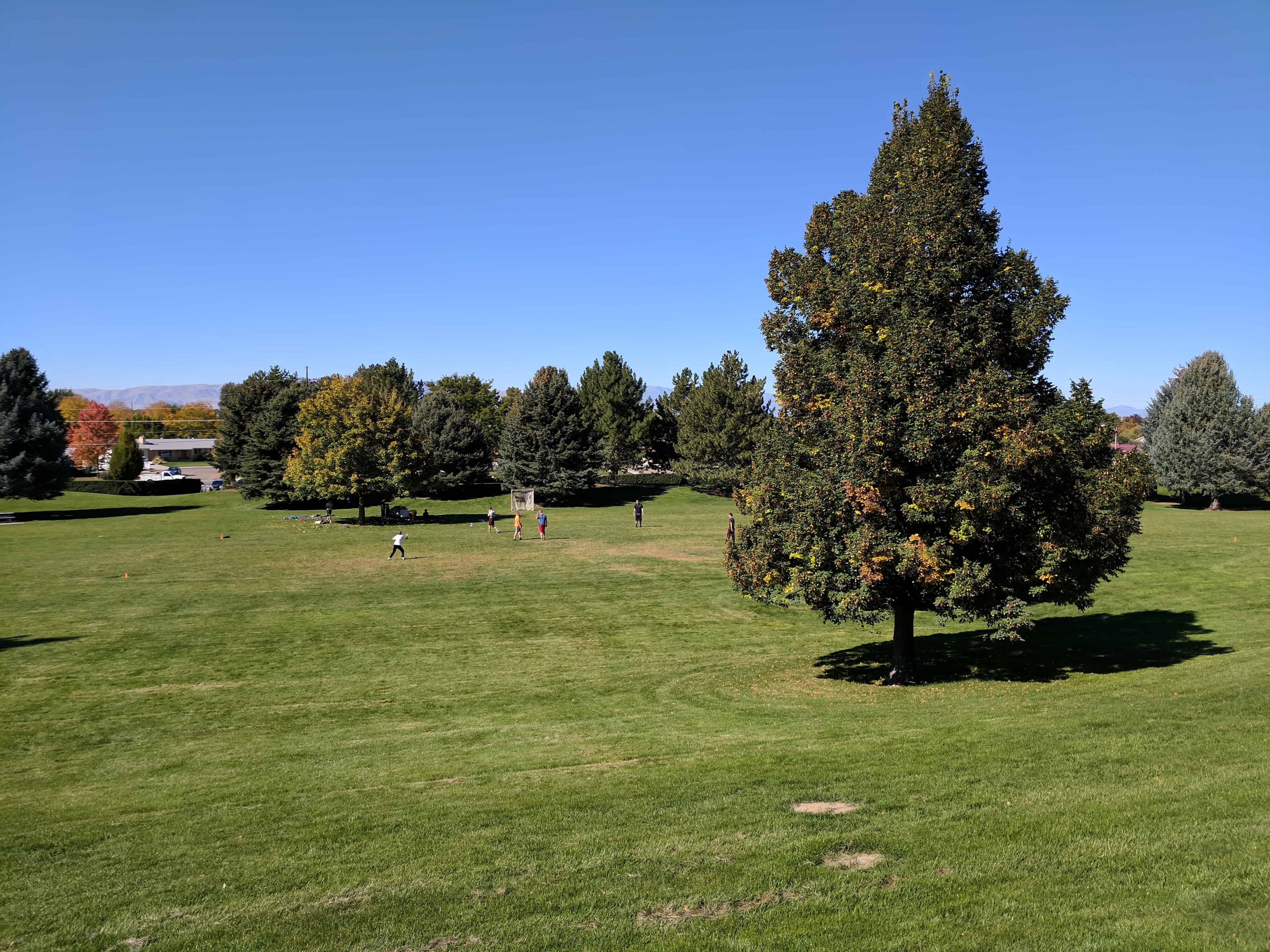
2017-10-07 11.44.26

Timp Kiwanis Bounous Park

Adjacent to Timpview High School baseball field, Timp Kiwanis Bounous Park is a favorite for after-the-game picnics. There is a playground to keep the children occupied while you take advantage of the casual walking path that winds around the park.(*)

See also:

  • Provo
  • Provo Parks

2017-10-07 11.45.03

2017-10-07 11.45.25

2017-10-07 11.46.37

2017-10-07 11.46.41

Provo’s First Fire Station

06 Wednesday Dec 2017

Posted by Jacob Barlow in Uncategorized

≈ 1 Comment

Tags

Fire Stations, Firefighters, historic, Provo, utah, utah county

2017-10-07 11.35.56

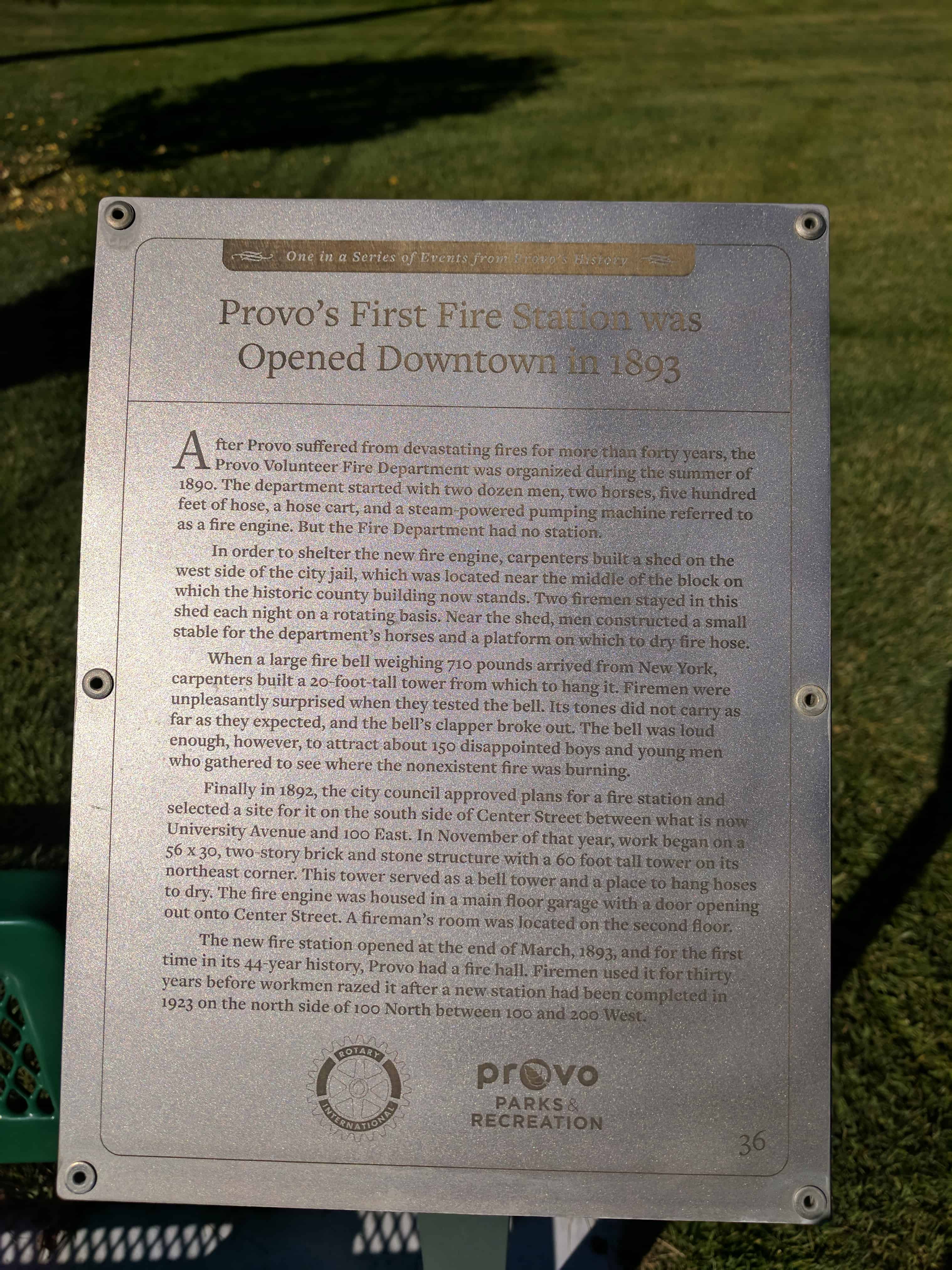
Provo’s First Fire Station was Opened Downtown in 1893.

After Provo suffered from devastating fores for more than forty years, the Provo Volunteer Fire Department was organized during the summer of 1890.  The department started with two dozen men, two horses, five hundred feet of hose, a hose cart, and a steam-powered pumping machine referred to as a fire engine.  But the Fire Department had no station.

In order to shelter the new fire engine, carpenters built a shed on the west side of the city jail, which was located near the middle of the block on which the historic county building now stands.  Two firemen stayed in this shed each night on a rotating basis.  Near the shed, men constructed a small stable for the department’s horses and a platform on which to dry fire hose.

When a large fire bell weighing 710 pounds arrived from New York, carpenters built a 20-foot-tall tower from which to hang it.  Firemen were unpleasantly surprised  when they tested the bell.  its tones did not carry as far as they expected, and the bell’s clapper broke out.  The bell was loud enough, however, to attract about 150 disappointed boys and young men who gathered to see where the nonexistent fire was burning.

Finally in 1892, the city council approved plans for a fire station and selected a site for it on the south side of Center Street between what is now University Avenue and 100 East.  In November of that year, work began on a 56 x 30, two-story brick and stone structure with a 60 foot tall tower on its northeast corner.  This tower served as a bell tower and a place to hang hoses to dry.  The fire engine was housed in a main floor garage with a door opening out onto Center Street.  A fireman’s room was located on the second floor.

The new fire station opened at the end of March, 1893, and for the first time in its 44-year history, Provo had a fire hall.  Firemen used it for thirty years before workmen razed it after a new station had been complaeted in 1923 on the north side of 100 North between 100 and 200 West.

This is plaque #36 in the Series of Events from Provo’s History.

2017-10-07 11.36.19

A Woolen Mill Was Once Provo’s Largest Business

05 Tuesday Dec 2017

Posted by Jacob Barlow in Uncategorized

≈ 1 Comment

Tags

historic, Parks, Provo, utah, utah county

2017-10-07 10.52.46

A Woolen Mill Was Once Provo’s Largest Business.

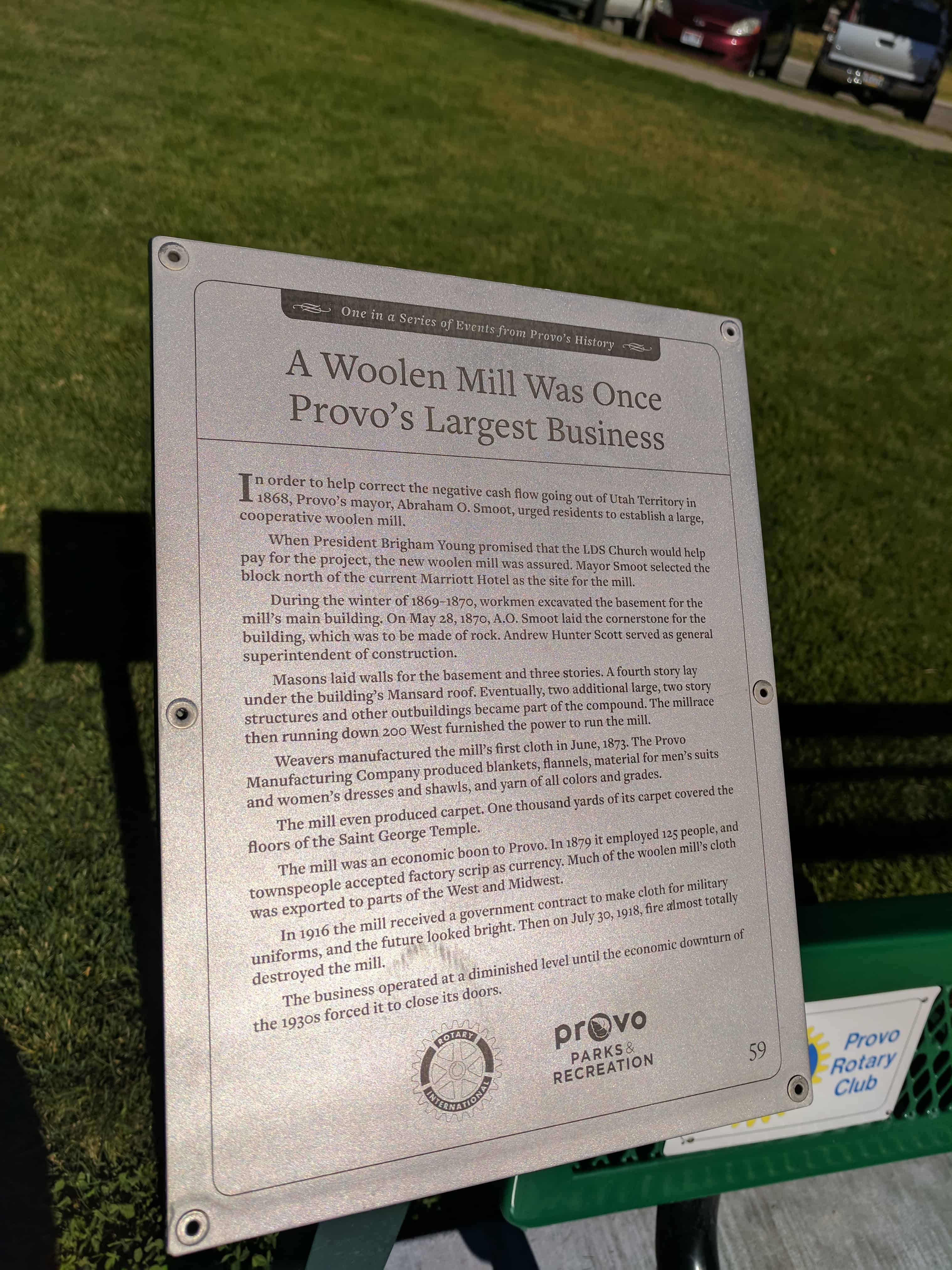
In order to help correct the negative cash flow going out of Utah Territory in 1868, Provo‘s mayor, Abraham O. Smoot, urged residents to establish a large, cooperative woolen mill.

When President Brigham Young promised that the LDS Church would help pay for the project, the new woolen mill was assured.  Mayor Smoot selected the block north of the current Marriott Hotel as the site for the mill.

During the winter of 1869-1870, workmen excavated the basement for the mill’s main building.  On May 28, 1870, A.O. Smoot laid the cornerstone for the building, which was to be made of rock.  Andrew Hunter Scott served as general superintendent of construction.

Masons laid walls for the basement and three stories.  A fourth story lay under the building’s Mansard roof.  Eventually, two additional large, two story structures and other outbuildings became part of the compound.  The millrace then running down 200 West furnished the power to run the mill.

Weavers manufactured the mill’s first cloth in June, 1873.  The Provo Manufacturing Company produced blankets, flannels, material for men’s suits and women’s dresses and shawls, and yard of all colors and grades.

The mill even produced carpet.  One thousand yards of its carpet covered the floors of the Saint George Temple.

The mill was an economic boom to Provo.  In 1879 it employed 125 people, and townspeople accepted factory script as currency.  Much of the woolen mill’s cloth was exported to parts of the West and Midwest.

In 1916 the mill received a government contract to make cloth for military uniforms, and the future looked bright.  Then on July 30, 1918, fire almost totally destroyed the mill.

The business operated at a diminished level until the economic downturn of the 1930s forced it to close its doors.

This is plaque #59 in the Series of Events from Provo’s History and it is located in Riverview Park.

2017-10-07 10.53.09

Provo Police Chief Killed in 1873

05 Tuesday Dec 2017

Posted by Jacob Barlow in Uncategorized

≈ Leave a comment

Tags

historic, Provo, utah, utah county

2017-10-07 10.53.28

Provo Police Chief Killed in 1873.

Provo‘s Leaders contended with an alarmingly high number of younger boys and young men who suffered from behavioral problems during the late 1860’s and early 1870s.  These Street hoodlums roamed to the town unattended, swore, stole, raced horses on Sunday, threw rocks at people’s houses, rustled calves,  destroyed fences, vandalized the meetinghouse, and formed opposing gangs called the Provo Roughs and the Salt Lake Roughs.

These deplorable actions caused mayor Abraham O. Smoot to say “A check must be put upon this, that our mountains may not be filled with Gadianton Robbers.” One of Smoot’s  best friends, David John, declared that although Provo’s boys “were sons of Zion, their actions at times makes them more the sons of hell than anything else.”

One of Provo was bad boys, Harrison Carter, caused Smoot some of his most mournful moments as mayor. Carter’s father seem to powerless to correct him.  The young man used vile and vulgar language, disturb dances and church meetings, and maliciously damage the interior of the meetinghouse.  He also displayed a fondness for drink. Carter earned the reputation for being “the wickedest young man in the country.”

One crisp fall night in 1873, Carter’s drunken revelry disturbed the peace in downtown Provo.  Albert H. Bowen, a 51-year-old man with a wife and nine children, had become Provo’s chief of police just a year earlier.  He arrived at the scene and attempted to calm and disarm the intoxicated youngster.  During the resulting struggle, Carter shot Bowen in the side of the head and escaped.  Bowen died three days later.

Lawmen captured Carter two months later in Nevada.  A Utah court tried him, found him guilty, and sentenced him to life in Prison.  As it turned out, his stay in prison was a short one.  Prisoners who were attempting to escape shot and killed Provo’s first convicted murderer in 1876.

This is plaque #51 in the Series of Events from Provo’s History and it is located in Riverview Park.

2017-10-07 10.53.46

← Older posts
Newer posts →

Follow Jacob

Follow Jacob

Come wander with me on Youtube.

Blog Stats

  • 2,098,678 hits

Social and Other Links

BarlowLinks.com

Recent Posts

  • Scout Monument
  • Provo High School Seminary Building
  • 821 E 100 S
  • 820 E 100 S
  • 817-819 E 100 S

Archives

Loading Comments...