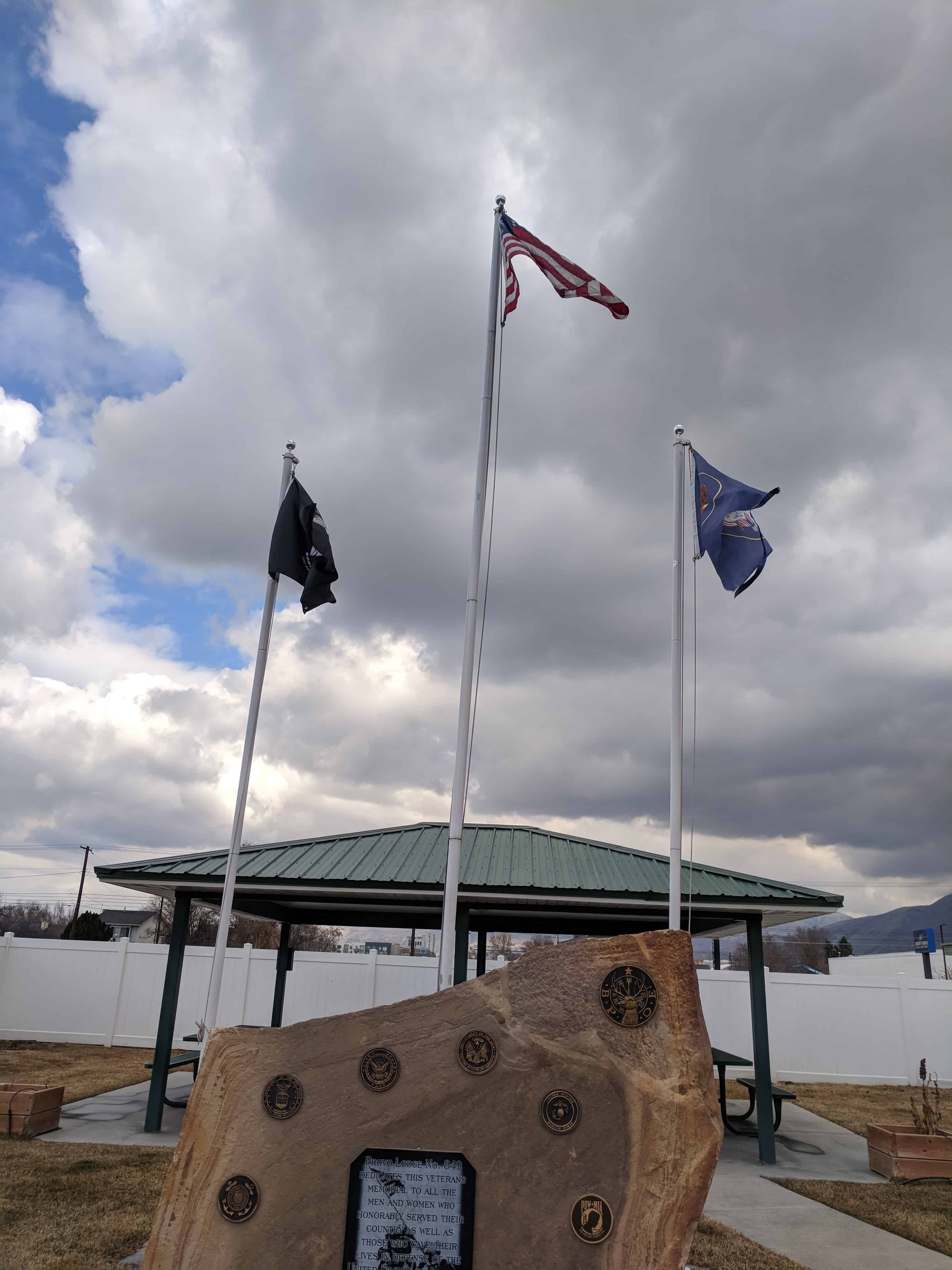
Provo Lodge No. 849 dedicates this Veterans Memorial to all the men and women who honorably served their country as well as those who gave their lives in defense of the United States of America. God Bless You!
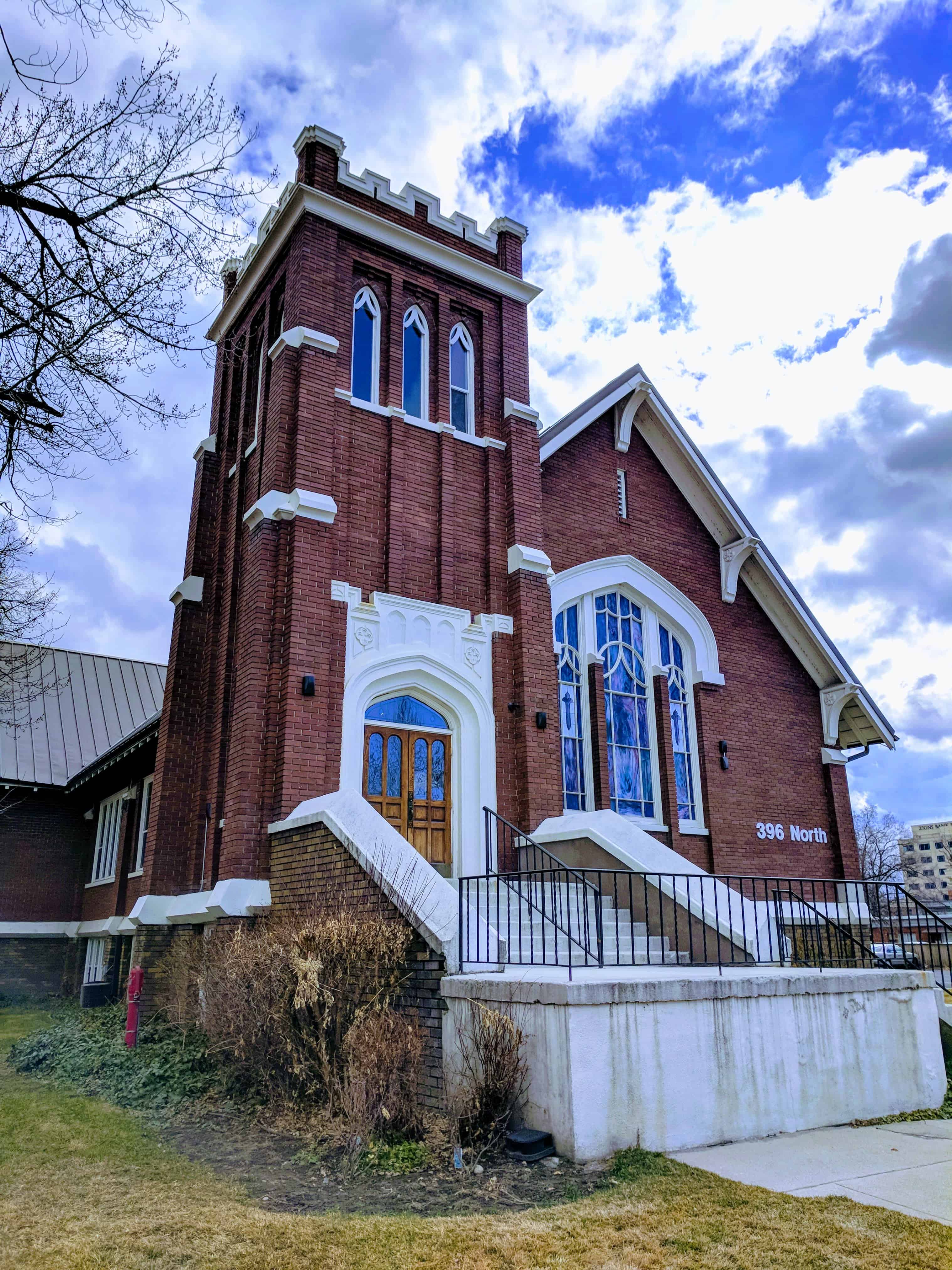
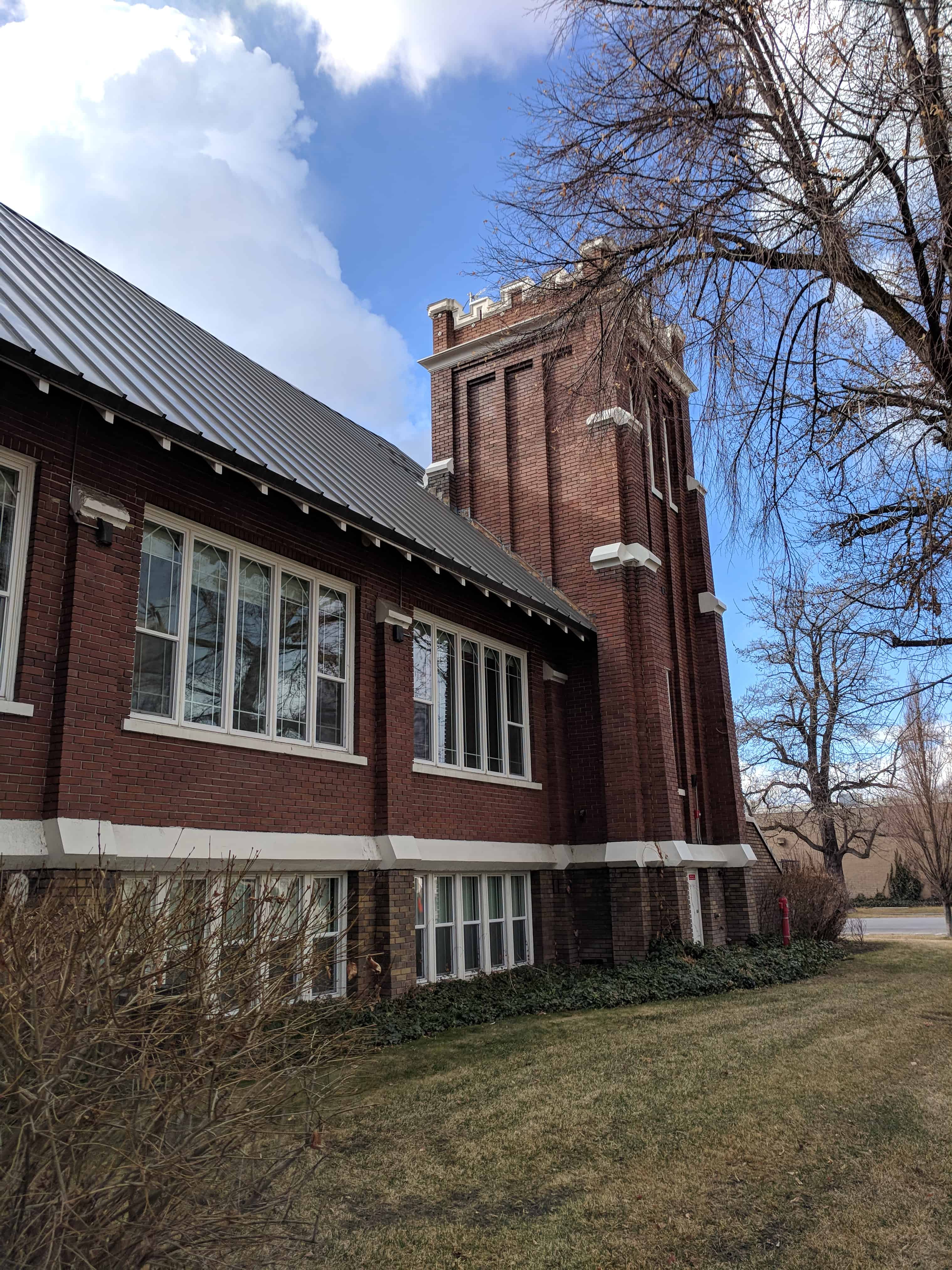
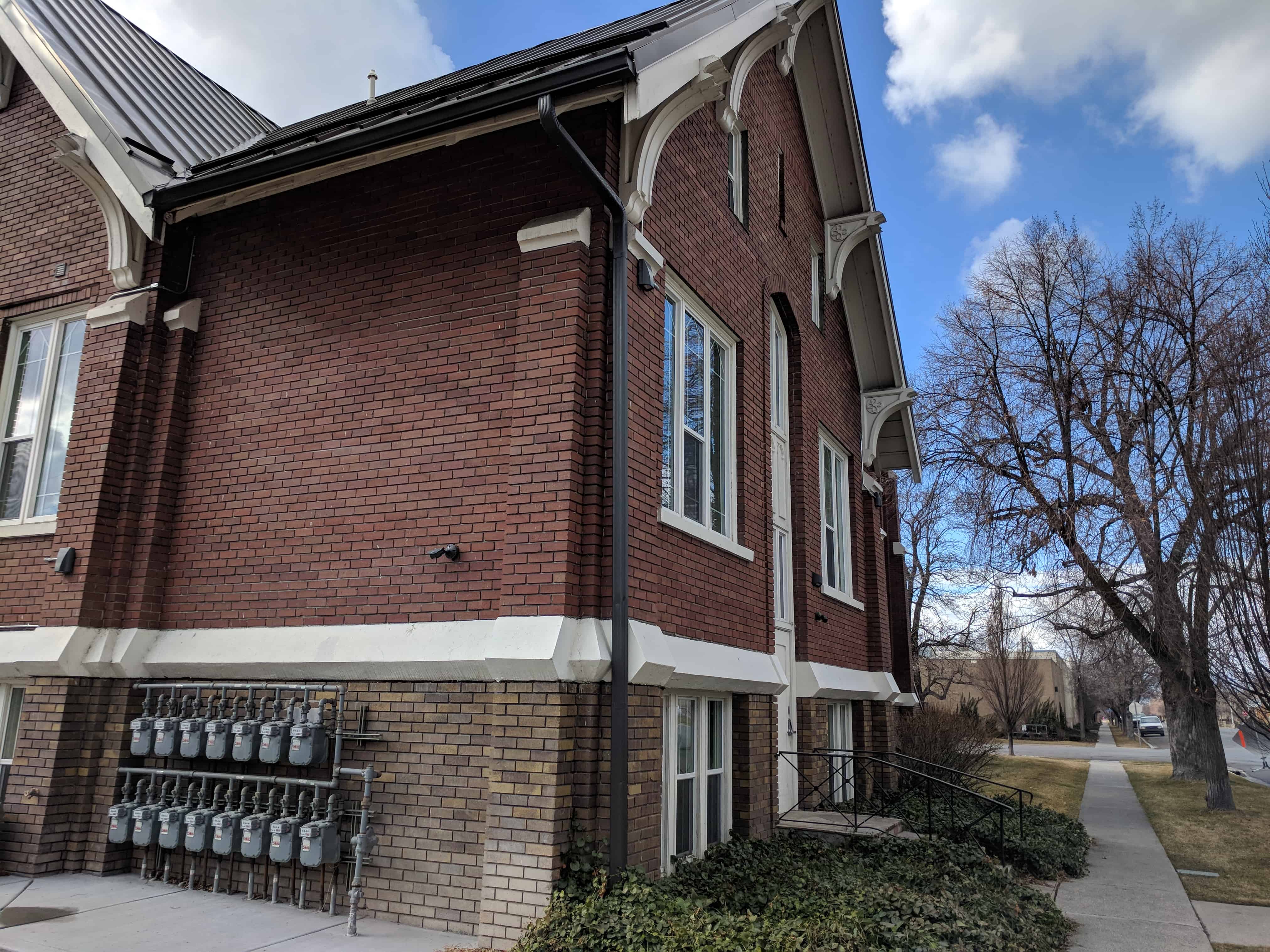
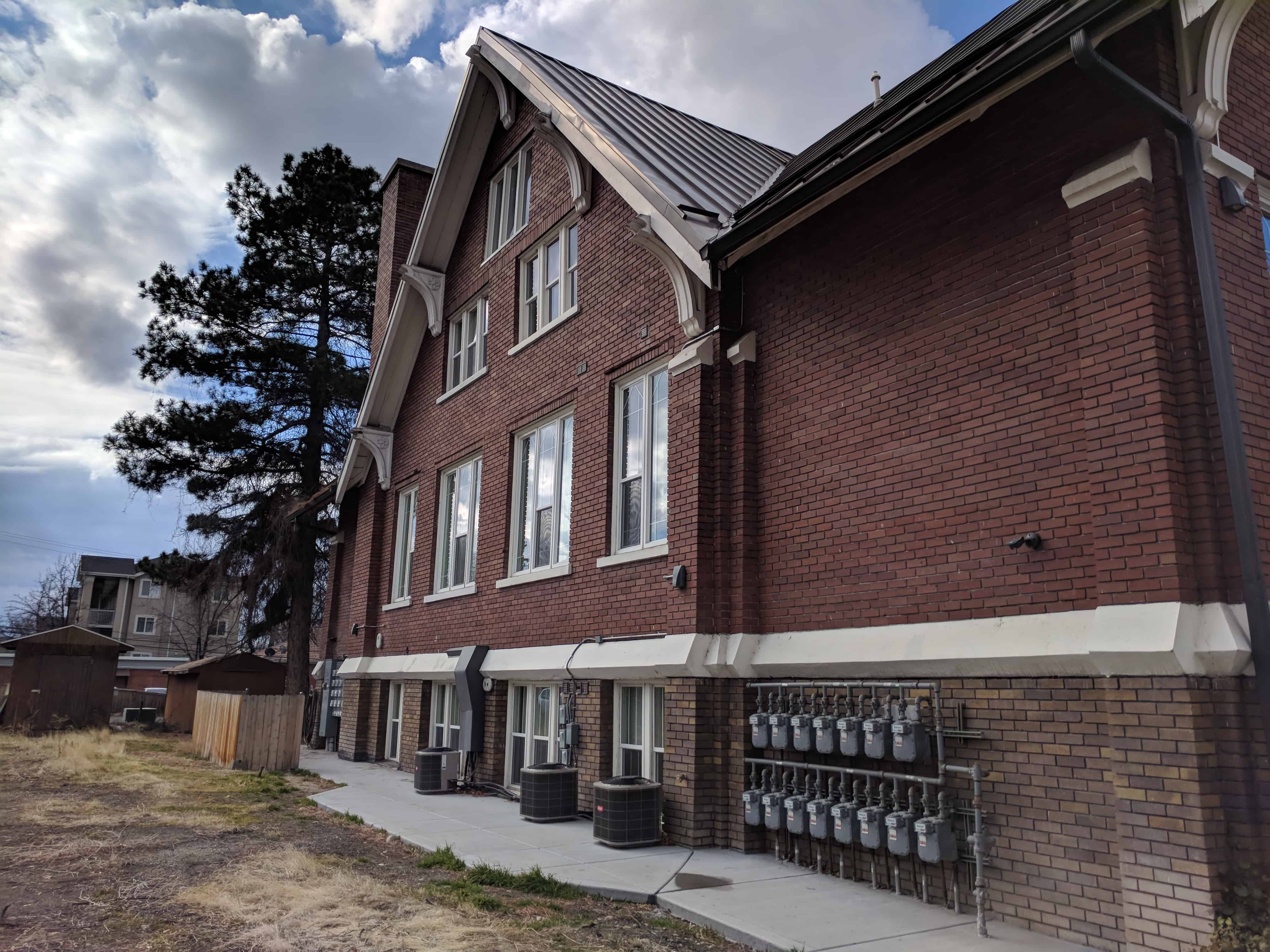
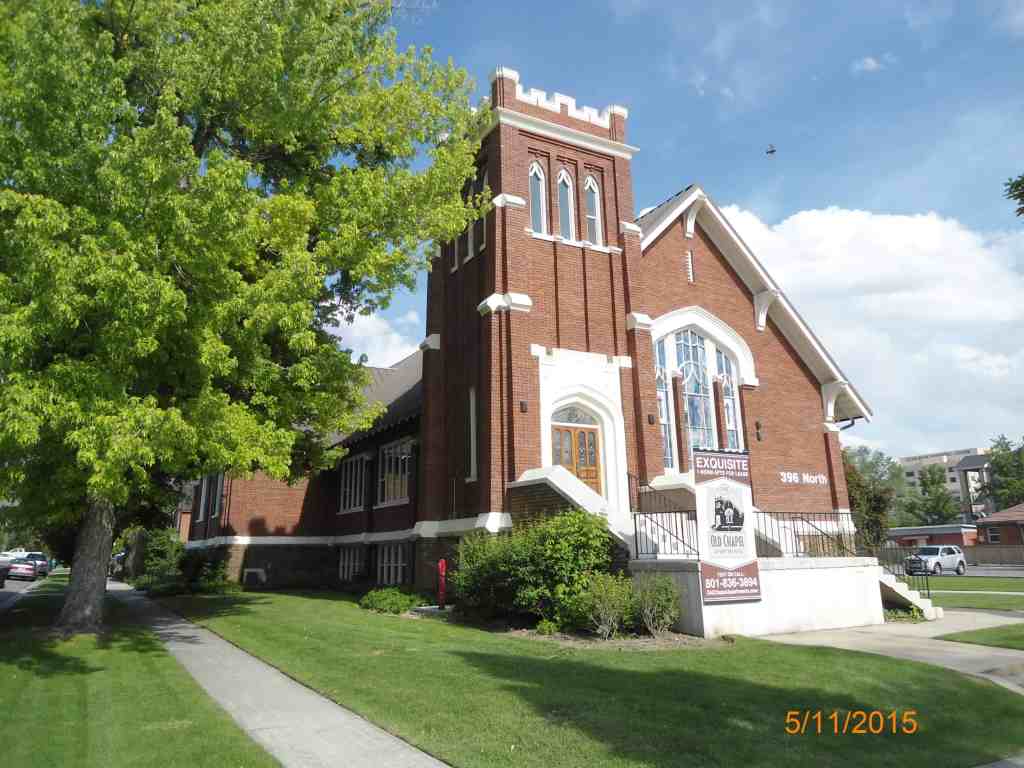
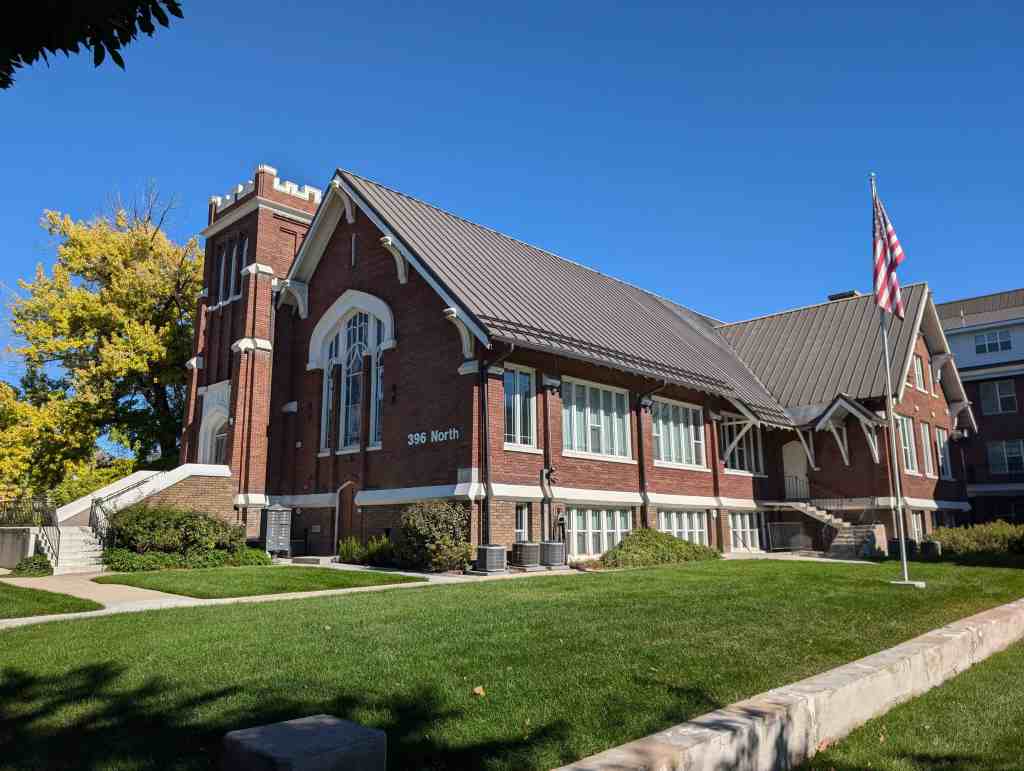
Located at 396 North 100 West in Provo and built 1925, the Provo 4th Ward Building stands out as another gorgeous formal chapel.
It is now an apartment building, but was in the past started being built in 1915, but stopped because of World War I. The saints met in the basement. After the war they continued building and finally dedicated it in 1925. Church President Heber J. Grant came from Salt Lake City to dedicate the building. They even had door prizes at the dedication. They included a lifetime Schaeffer Pen set, a 1925 Chevrolet car and a live bull.
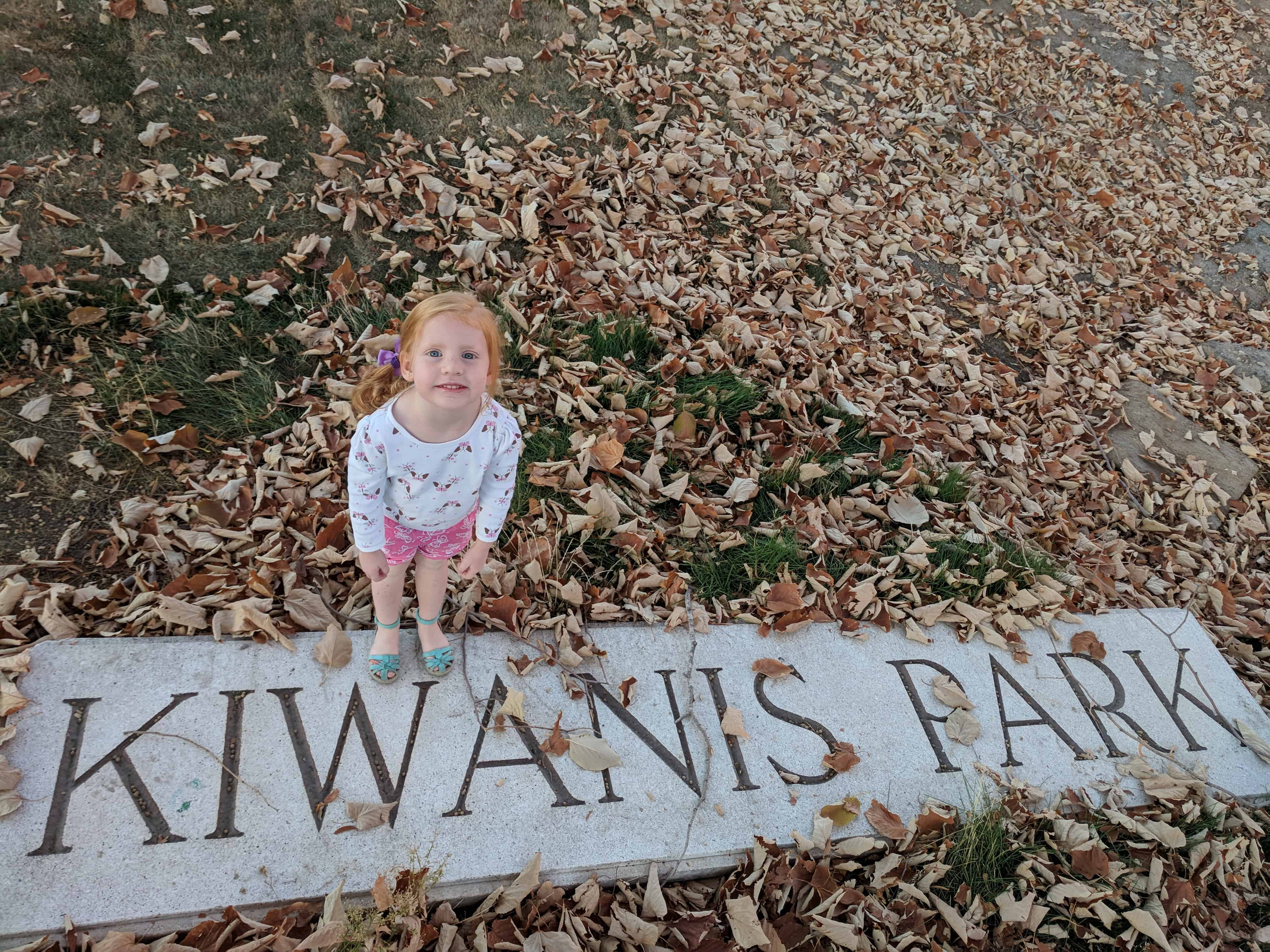
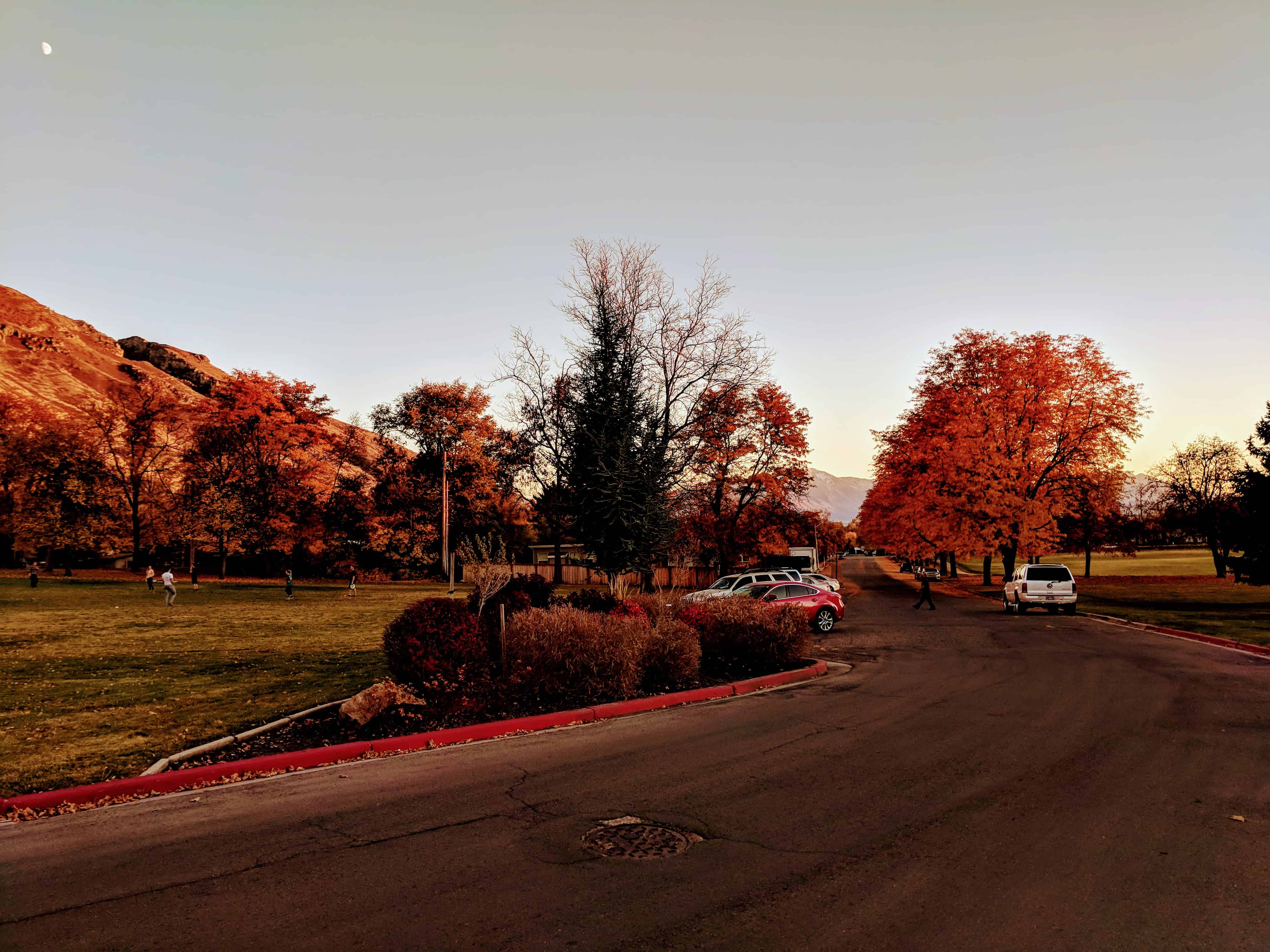
Kiwanis Park is located next to BYU and is used for league and non-league sporting events, cross- country training, ROTC training maneuvers, school club activities and of course – family gatherings. Kiwanis Park is the only park in Provo City with a fire pit, which is located next to pavilion #1.(from Provo’s website)
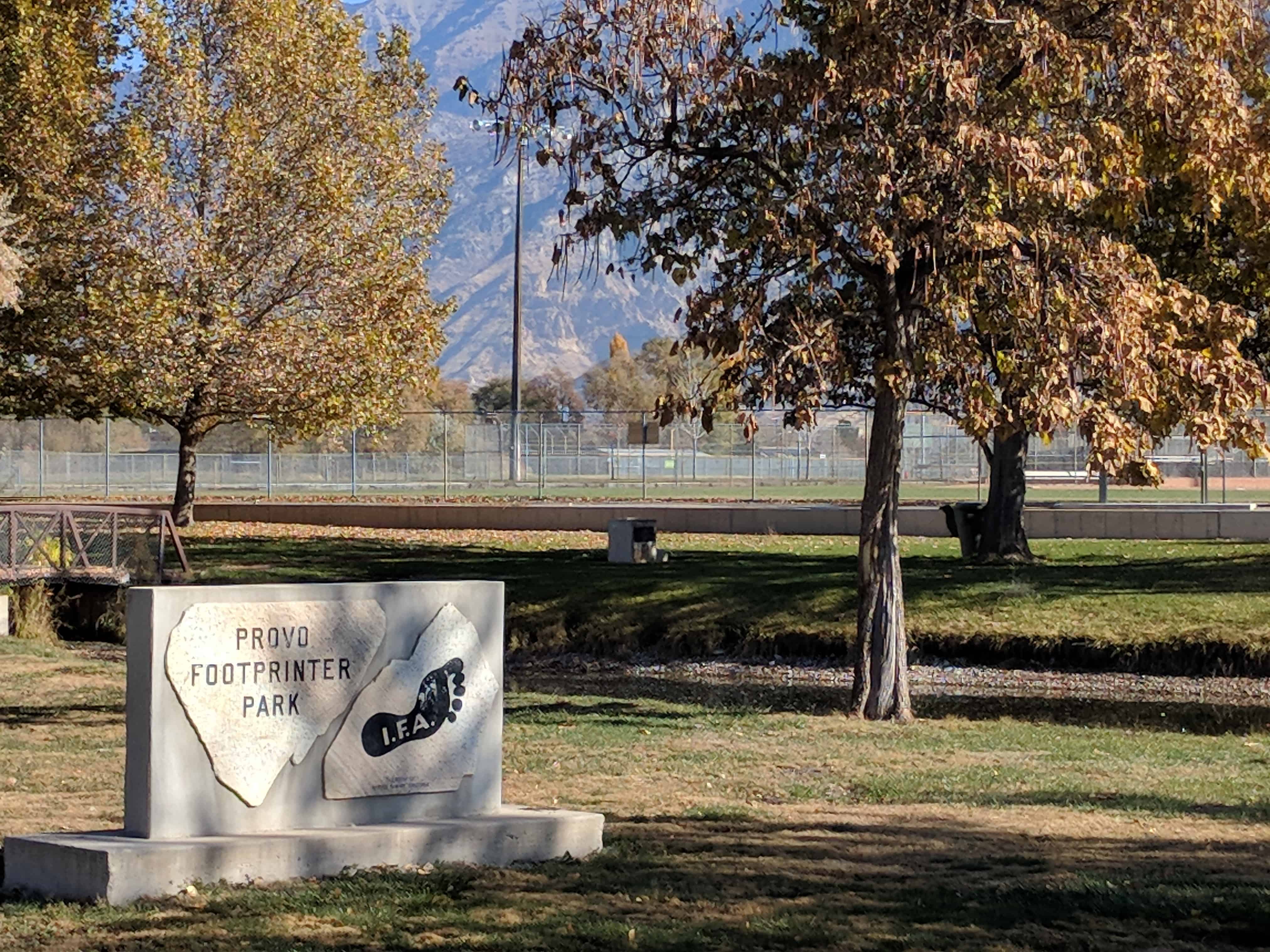
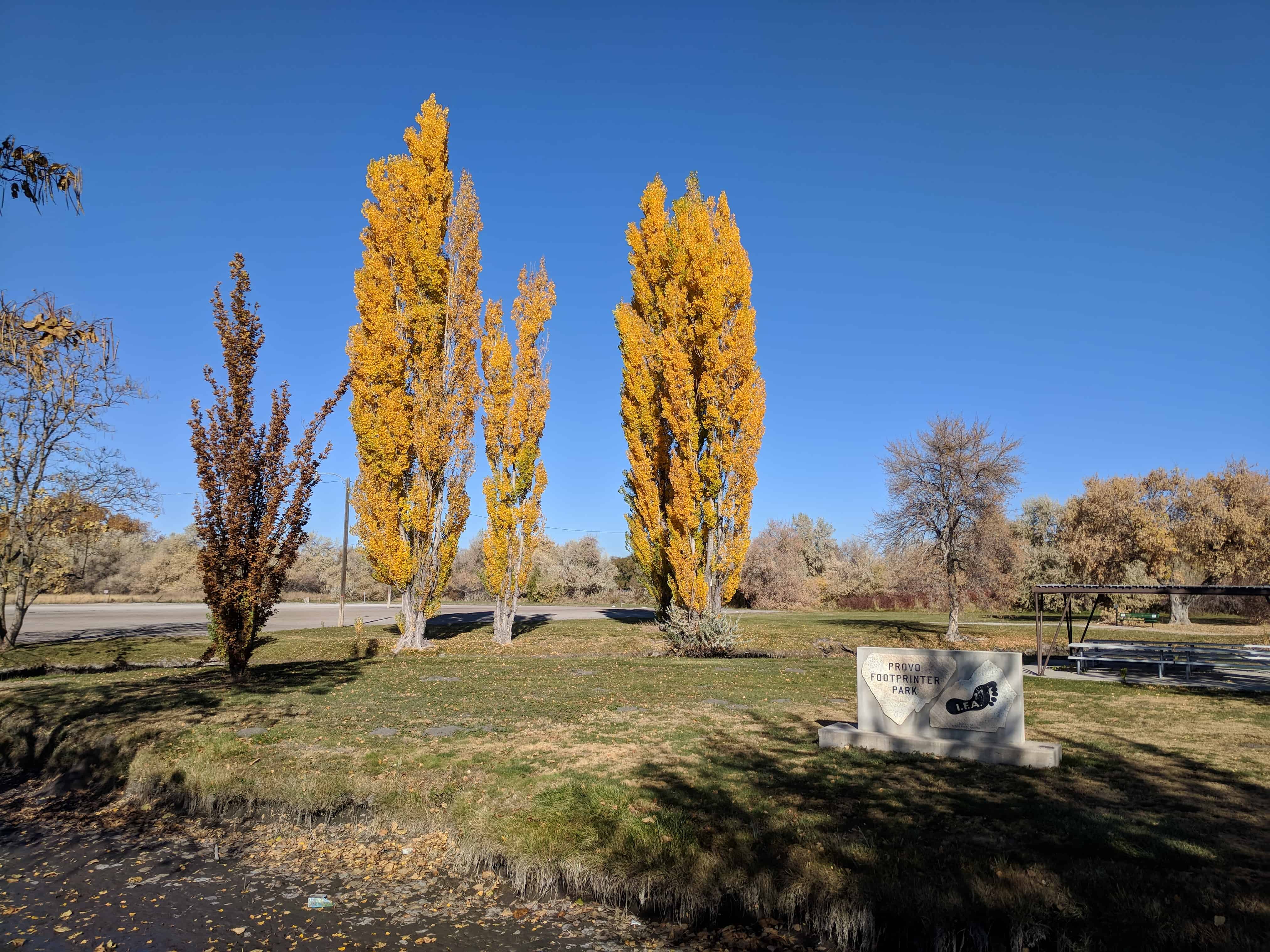
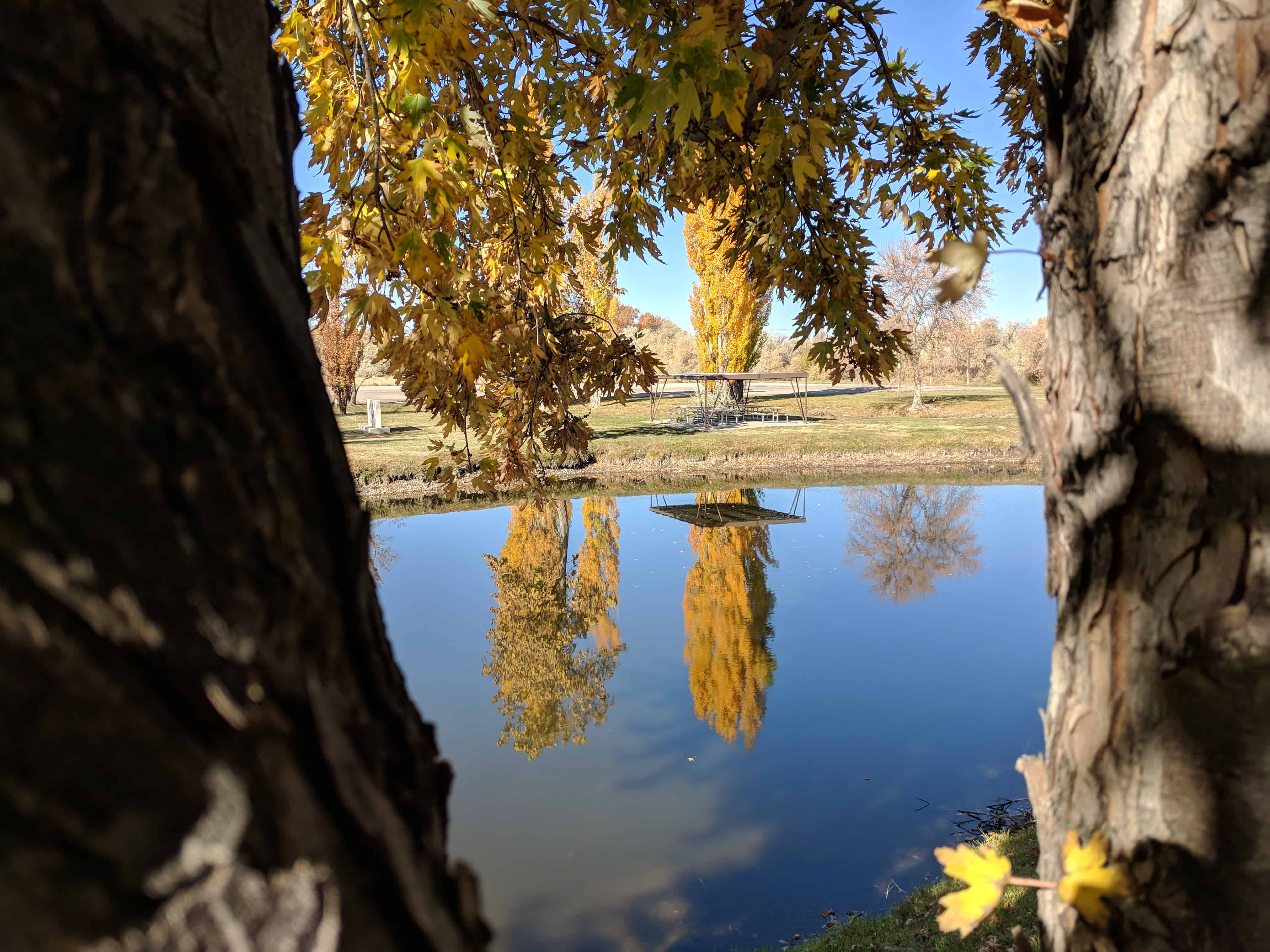
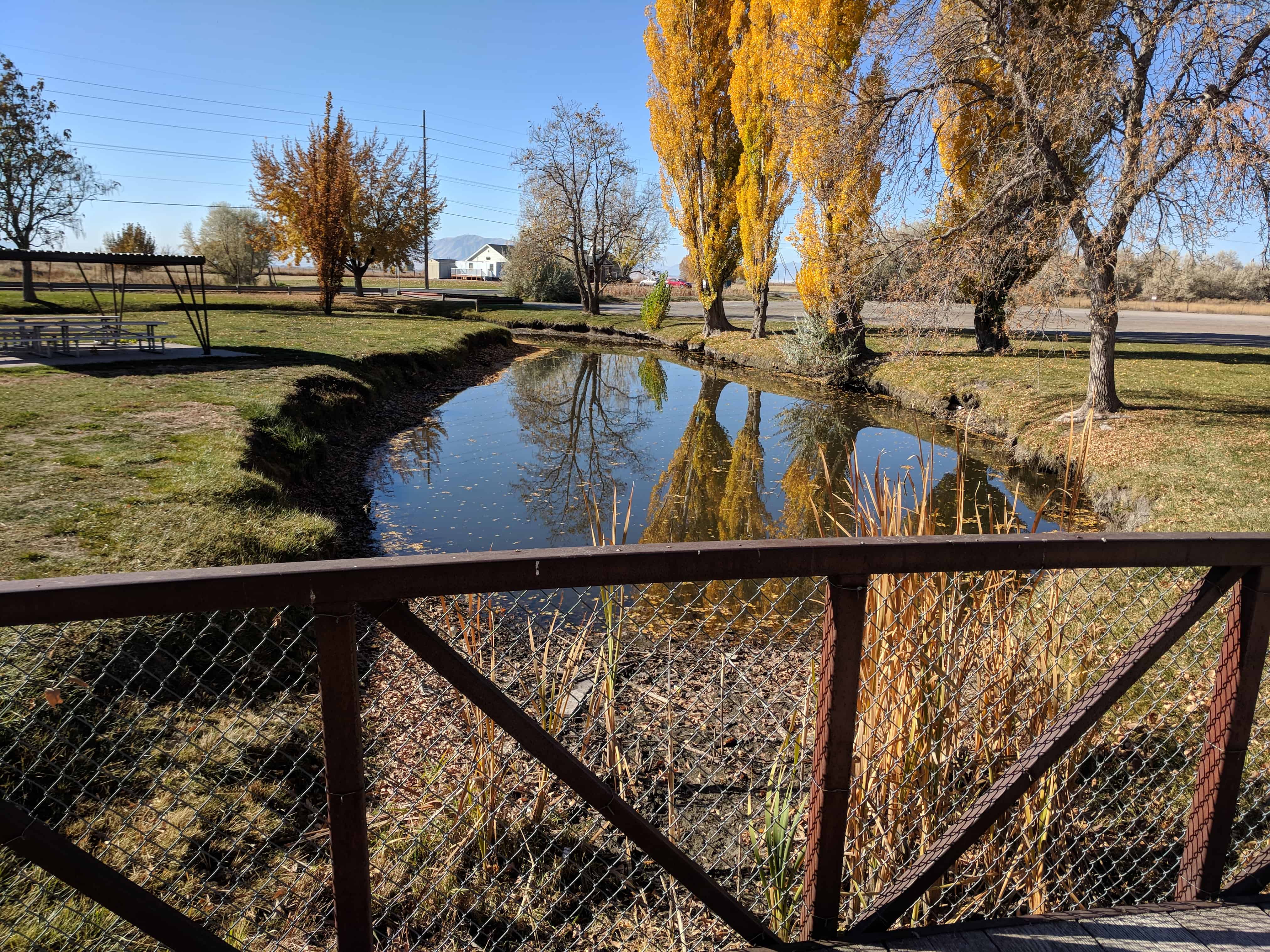
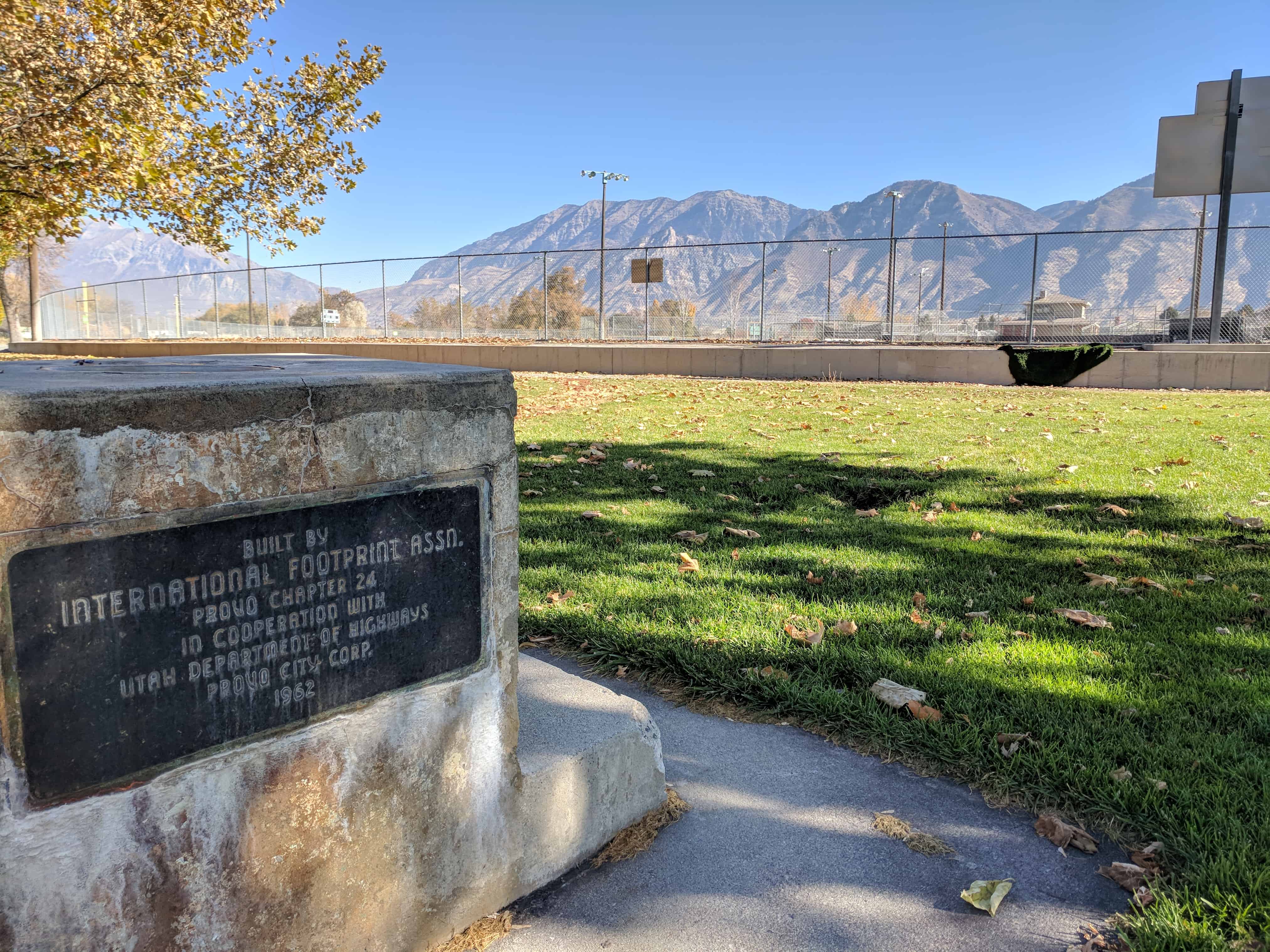
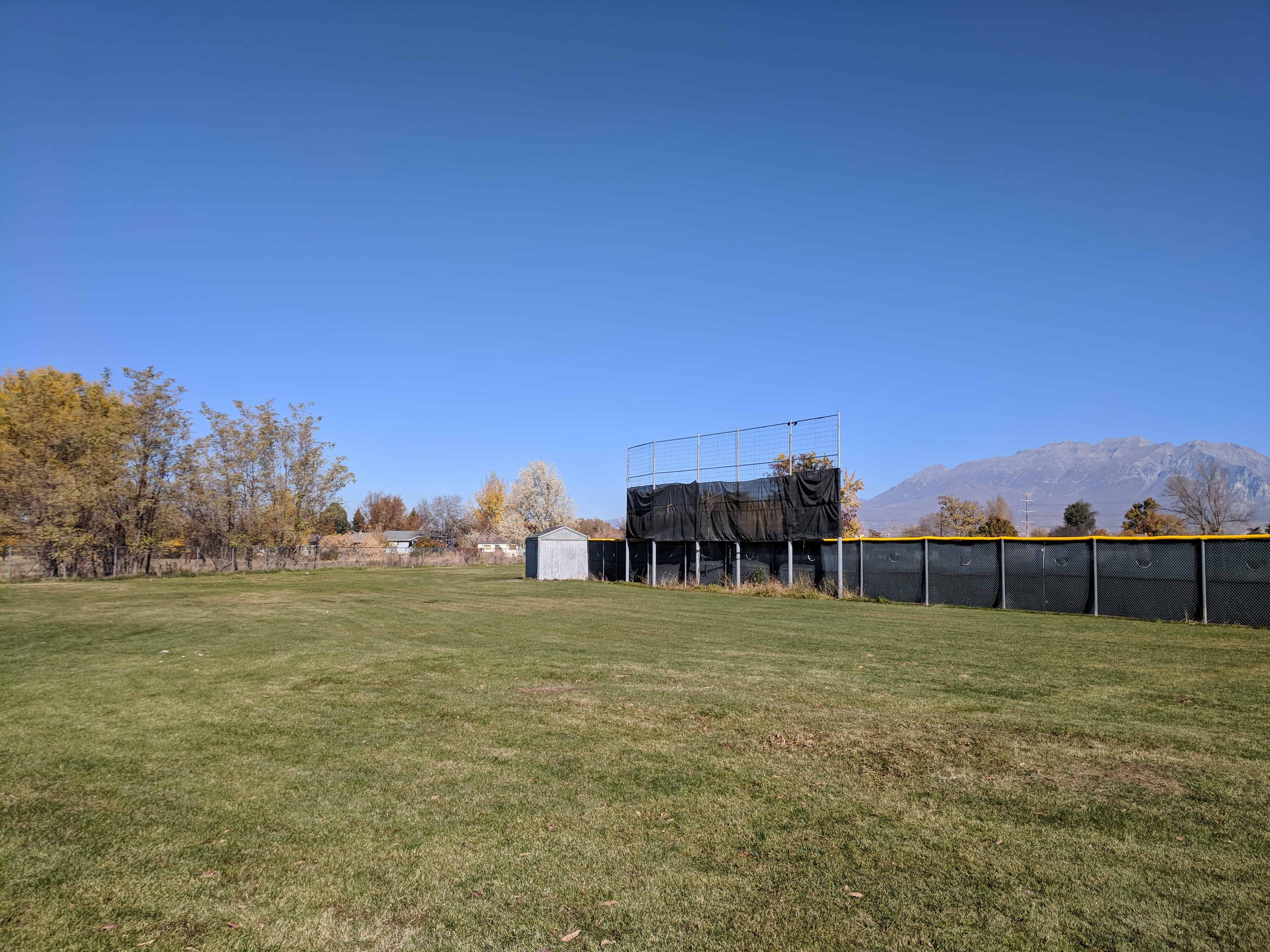
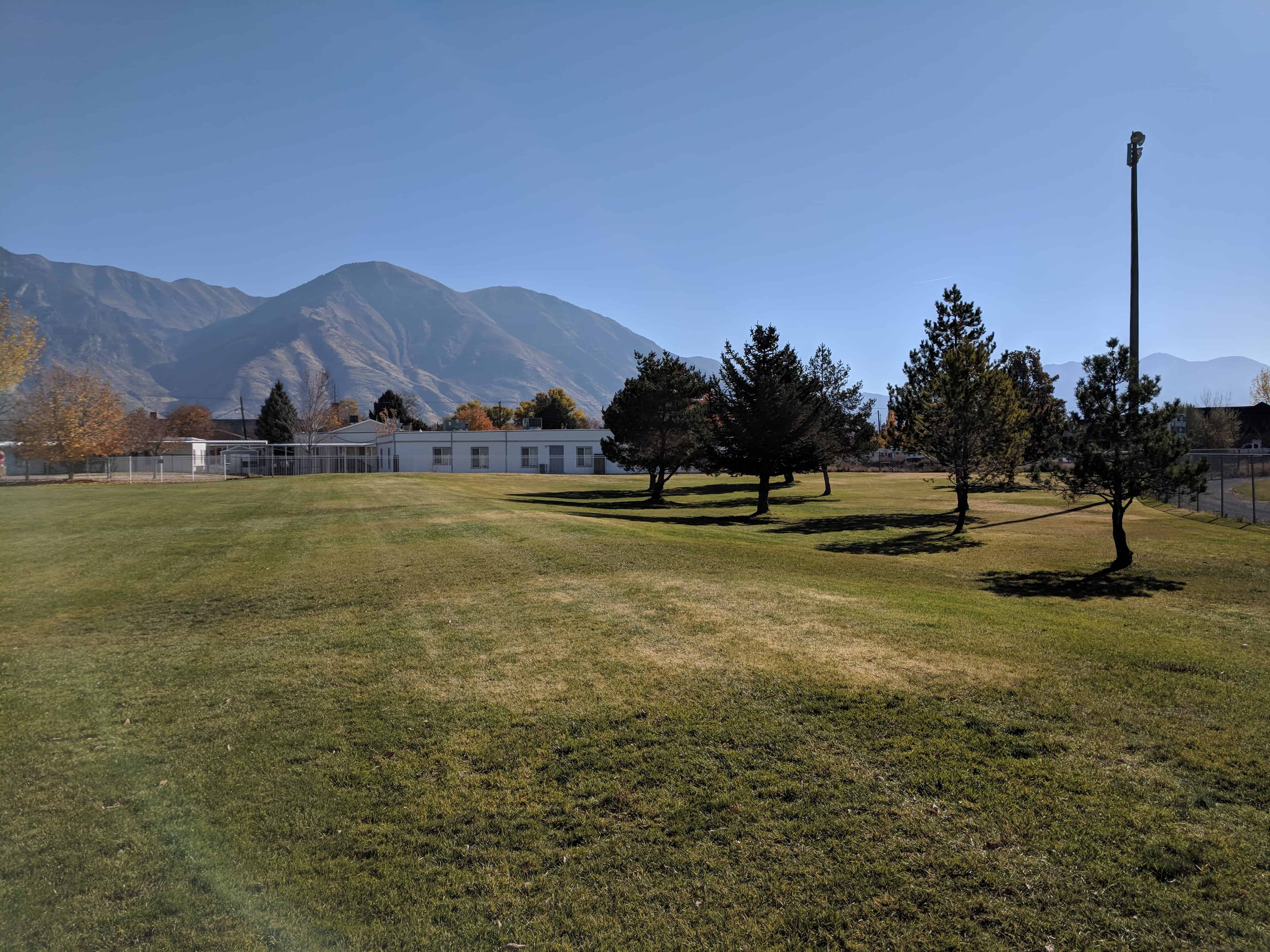
Footprinter Park was constructed in 1991 and was built to facilitate baseball games for the community. A small pavilion, nestled on an island in the center of a small pond, was built to provide a comfortable area to have a fun-filled intimate family picnic.(from Provo’s website)
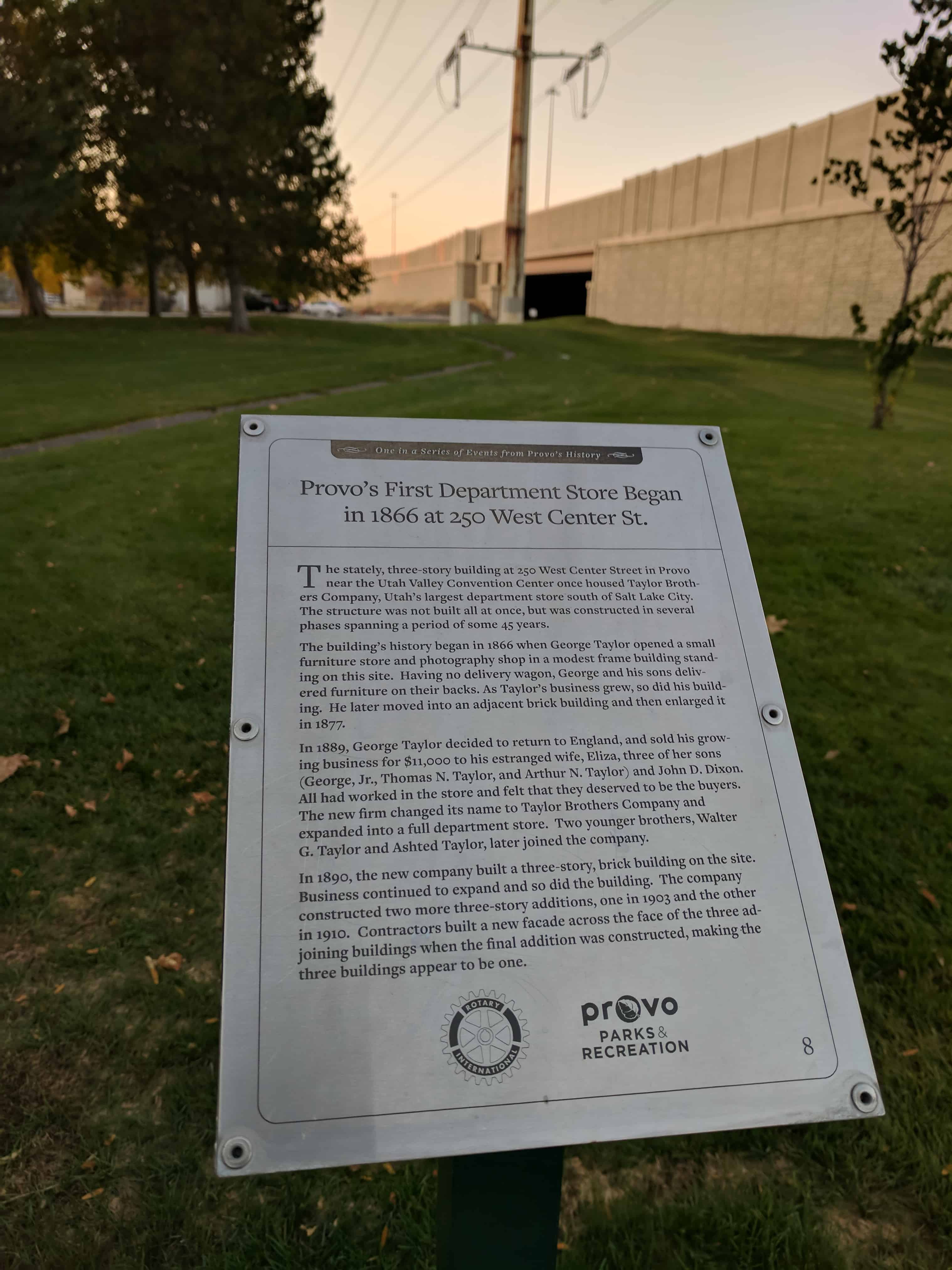
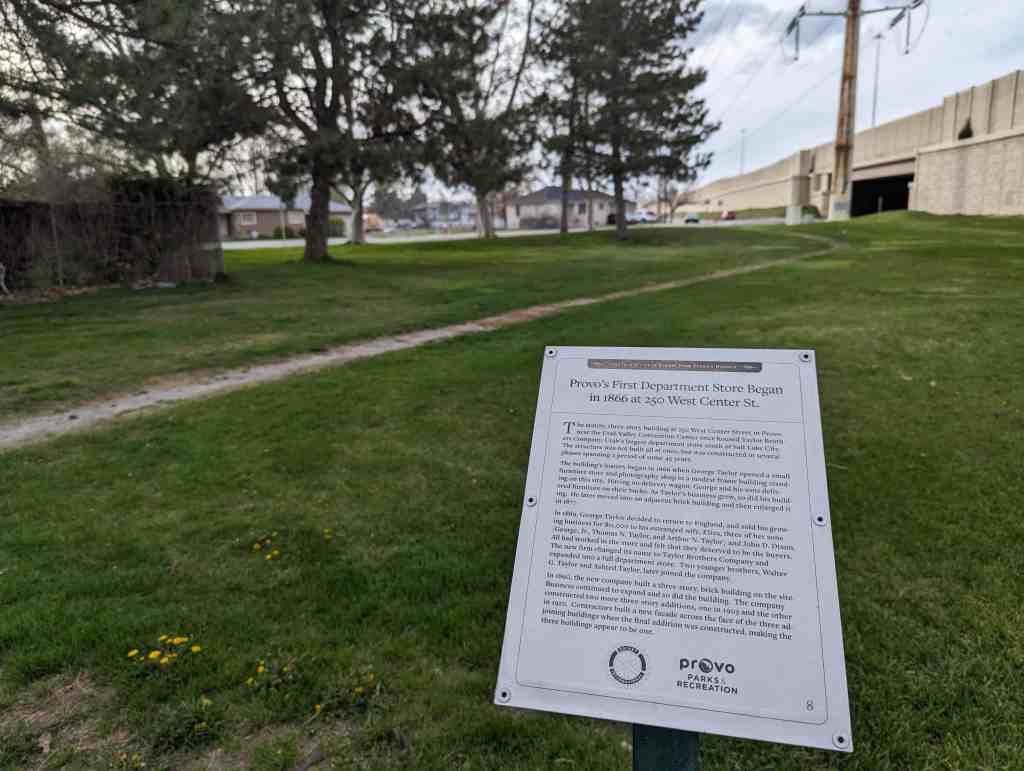
Provo’s First Department Store Began in 1866 at 250 West Center St.
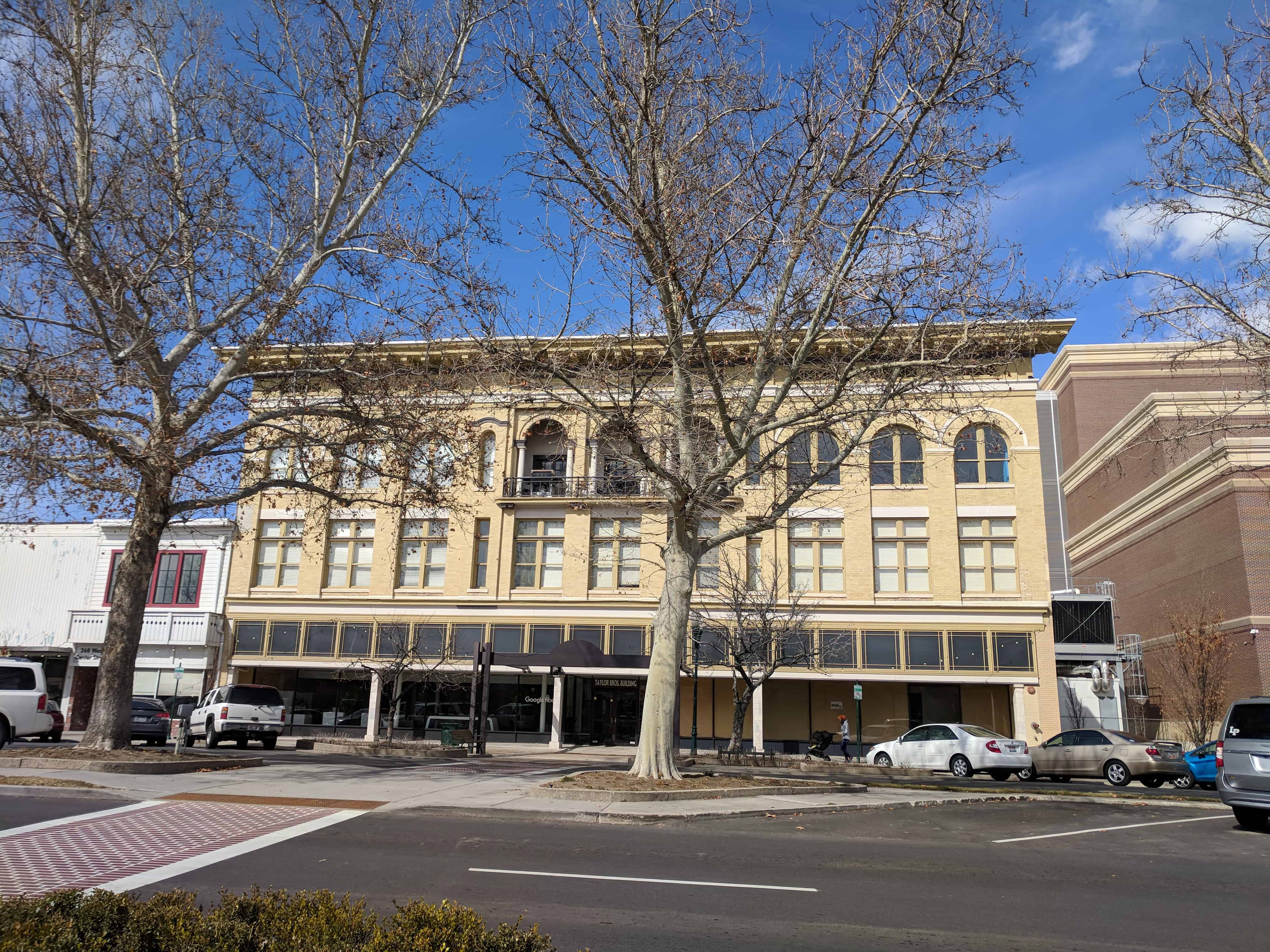
The stately, three-story building at 250 West Center Street in Provo near the Utah Valley Convention Center once housed Taylor Brothers Company, Utah’s largest department store south of Salt Lake City. The structure was not built all at once, but was constructed in several phases spanning a period of some 45 years.
The building’s history began in 1866 when George Taylor opened a small furniture store and photography shop in a modest frame building standing on this site. Having no delivery wagon, George and his sons delivered furniture on this backs. As Taylor’s business grew, so did his building. He later moved into an adjacent brick building and then enlarged it in 1877.
In 1889, George Taylor decided to return to England, and sold his growing business for $11,000 to his estranged wife, Eliza, three of her sons (George, Jr., Thomas N. Taylor, and Arthur N. Taylor) and John D. Dixon. All had worked in the store and felt that they deserved to be the buyers. The new firm changed its name to Taylor Brothers Company and expanded into a full department store. Two younger brothers, Walker G Taylor and Ashted Taylor, later joined the company.
In 1890, the new company built a three-story, brick building on the site. Business continued to expand and so did the building. The company constructed two more three-story additions, one in 1903 and the other in 1910. Contractors built a new facade across the face of the three adjoining buildings when the final addition was constructed, making the three buildings appear to be one.
By the 1870s, available local wood that could be used for winter fuel had become scarce. Fortunately for Utah Territory’s settlers, coal mines opened in Pleasant Valley (Scofield and Winter Quarters – see the disaster at the Winter Quarters Mine here) in 1875. However, hauling coal by wagon down Spanish Fork Canyon to the settlements along the Wasatch Front proved to be too slow to supply the huge demand.
Two Springville men, Milan Packard and M.P. Crandall, joined by other interested businessmen, founded the Utah & Pleasant Valley Railroad Company in 1877 to haul coal from the mines in Pleasant Valley to Utah Valley. Since money was scarce, the railroad company partially paid for their workmen with goods. These goods often included fabric used for making clothing. Hence, the railroad received the nickname “Calico Road.”
The new tracks arrived in Provo late in 1880. Workmen transferred most of the coal brought to Provo by the Utah & Pleasant Valley Railroad to the Utah Southern Railroad for shipment to Salt Lake City or points south.
During the spring of 1881, a railroad with more ambitious goals planned to build through Provo. The Denver & Rio Grande Western hoped to eventually ship freight, carry passengers, and service Utah’s mines. The new railroad laid tracks between Provo and Salt Lake City in 1881. Unemployed men in Provo found work constructing the grade and laying the tracks.
The Denver & Rio Grande Western soon bought the Utah Southern, and the Denver & Rio Grande, ultimately connected Provo with the rest of the nation. Competition between the two companies helped keep freight prices more reasonable for Provo’s farmers and manufacturers.
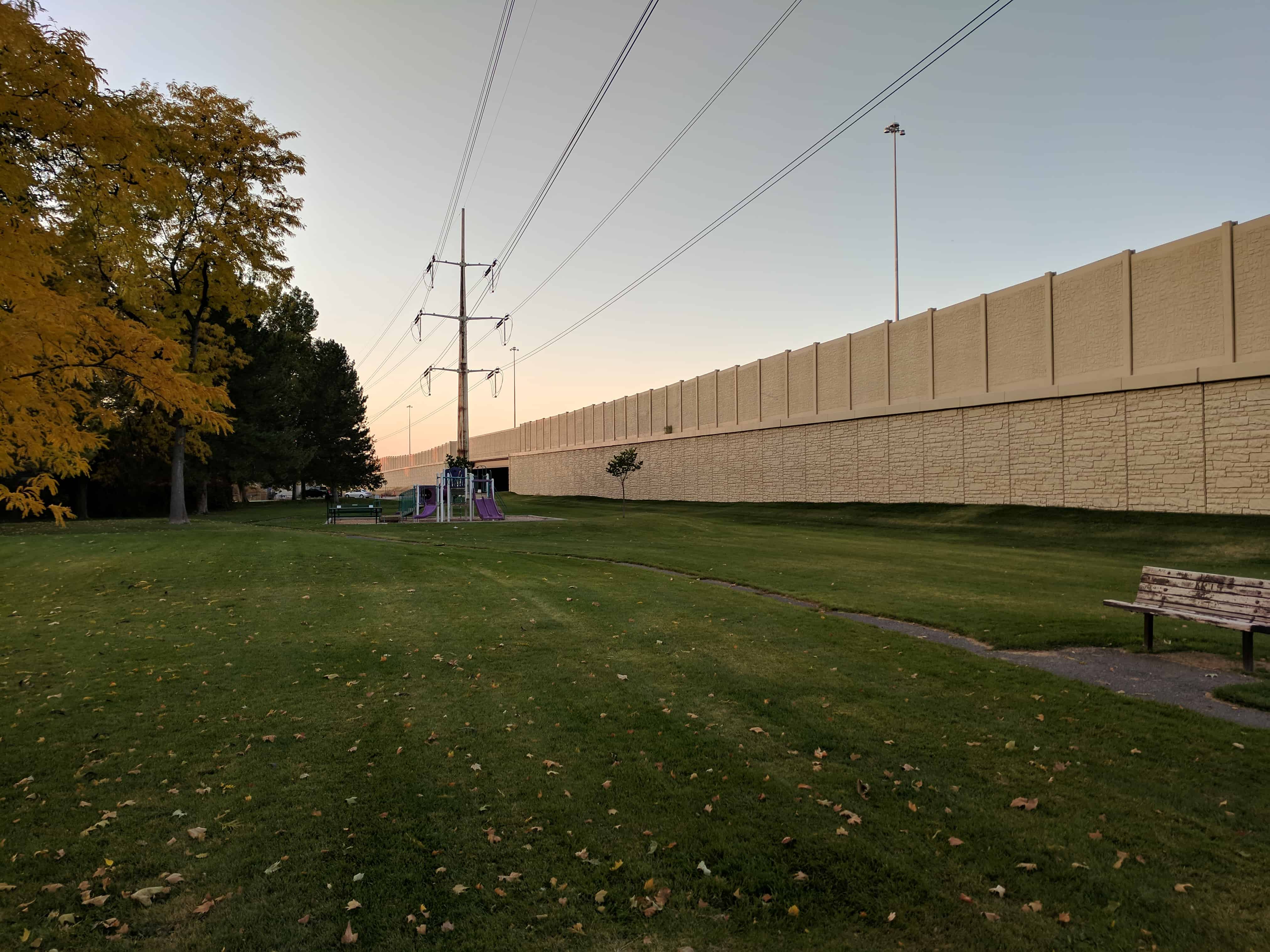
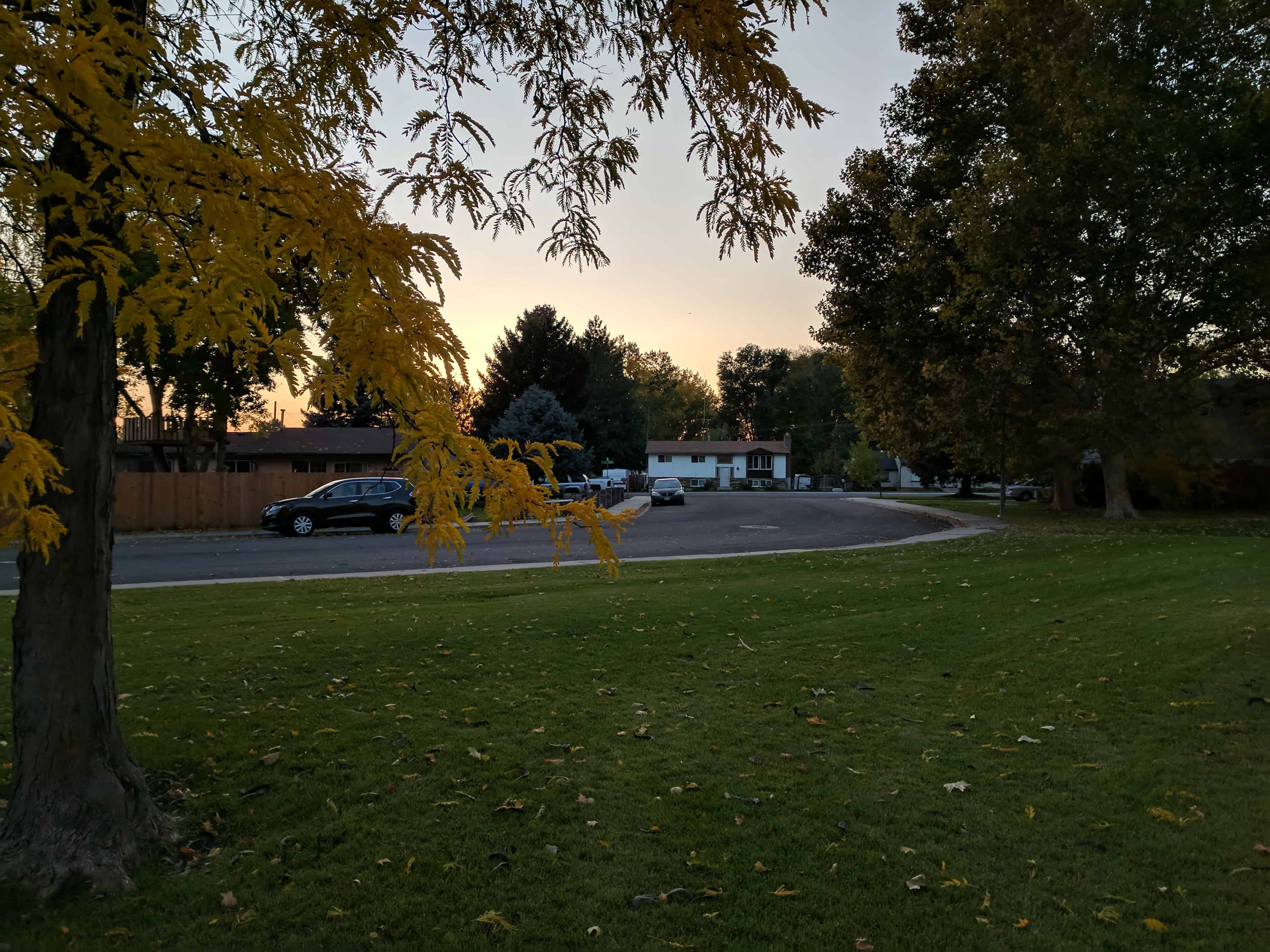
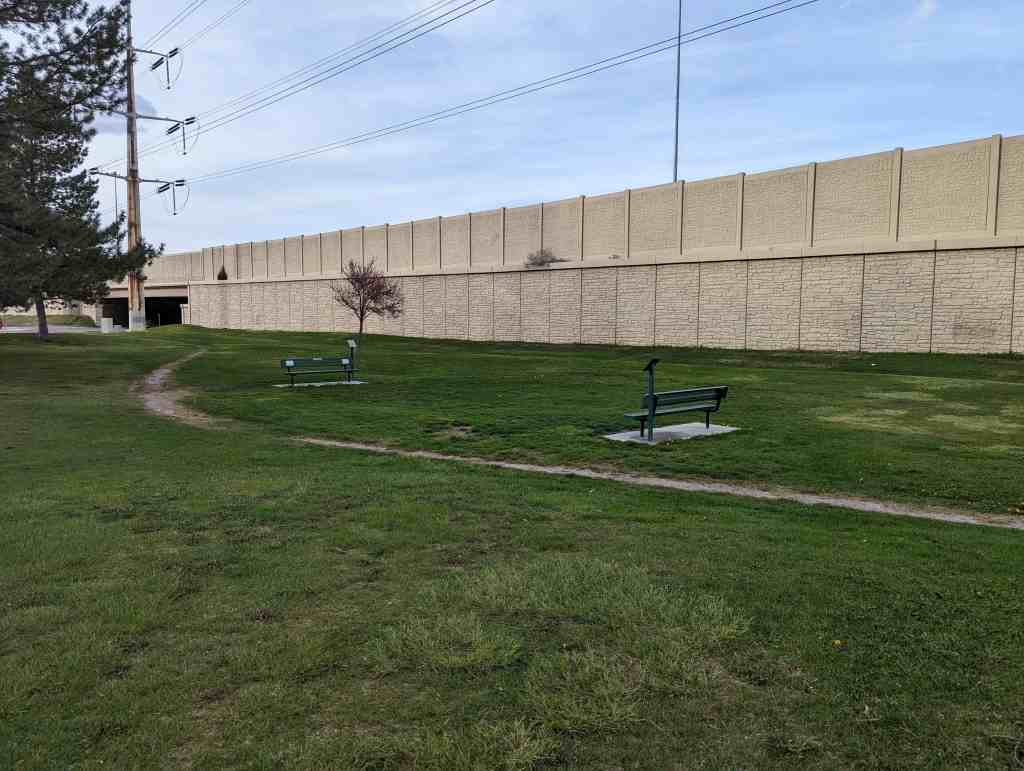
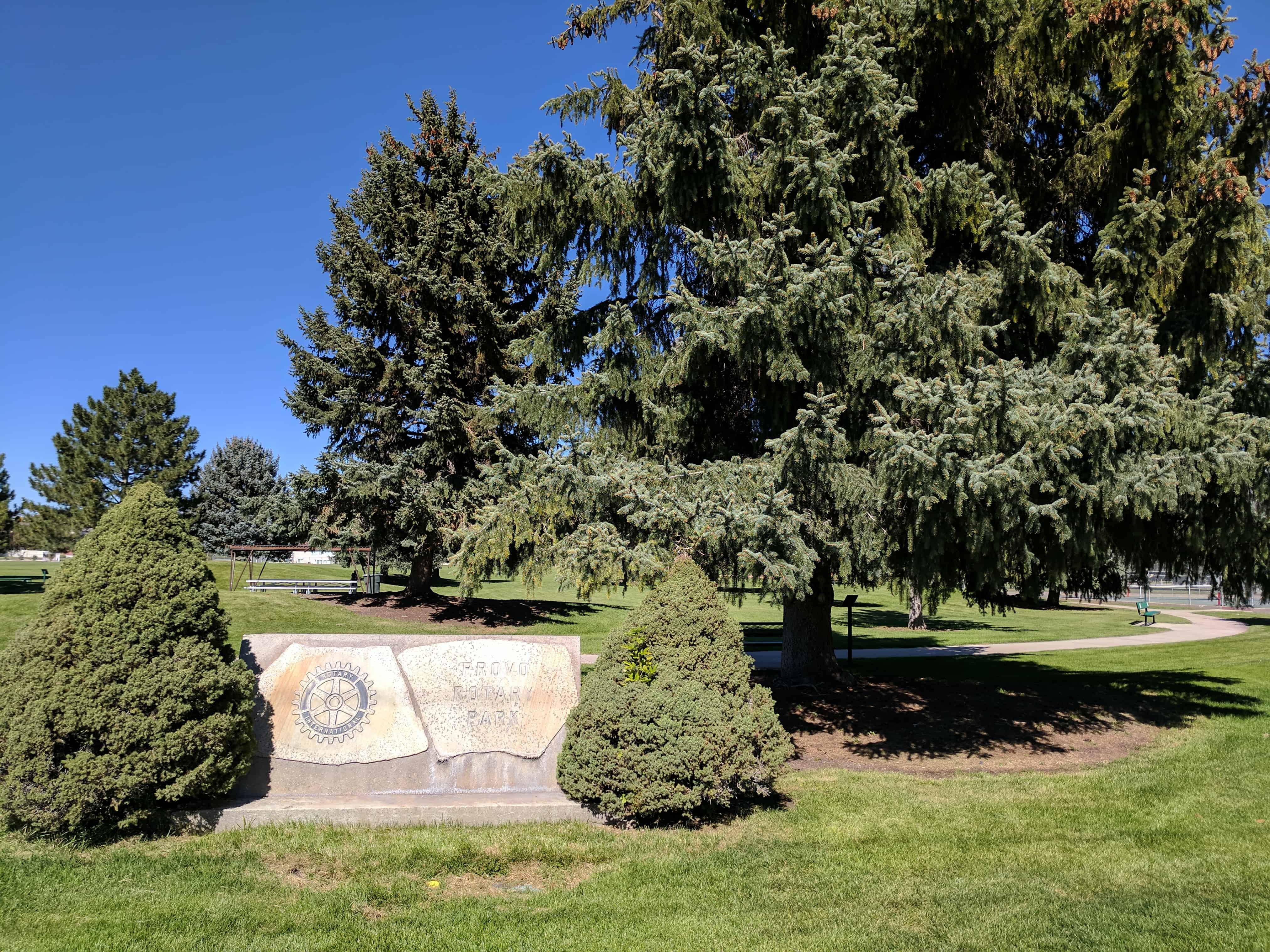
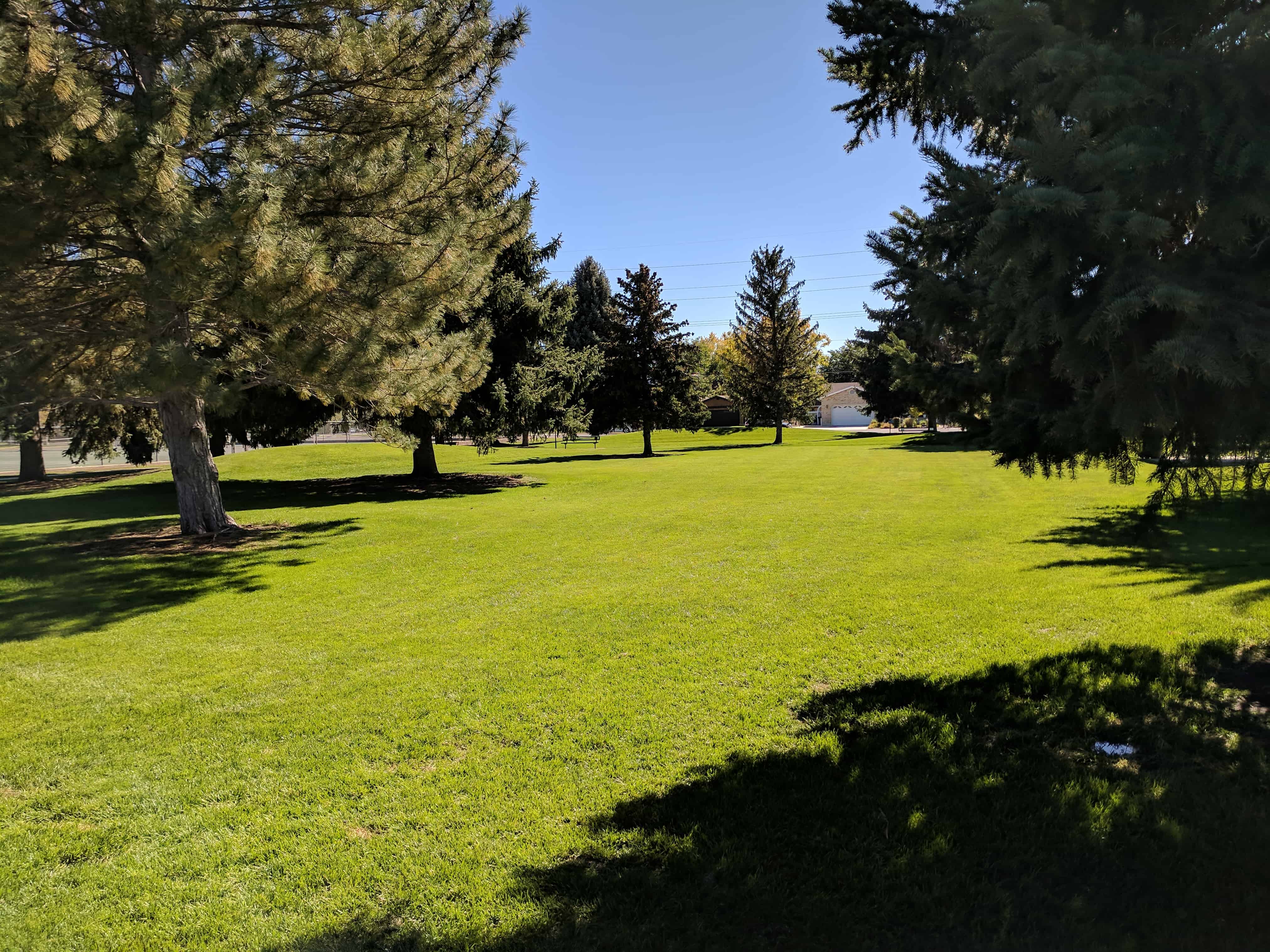
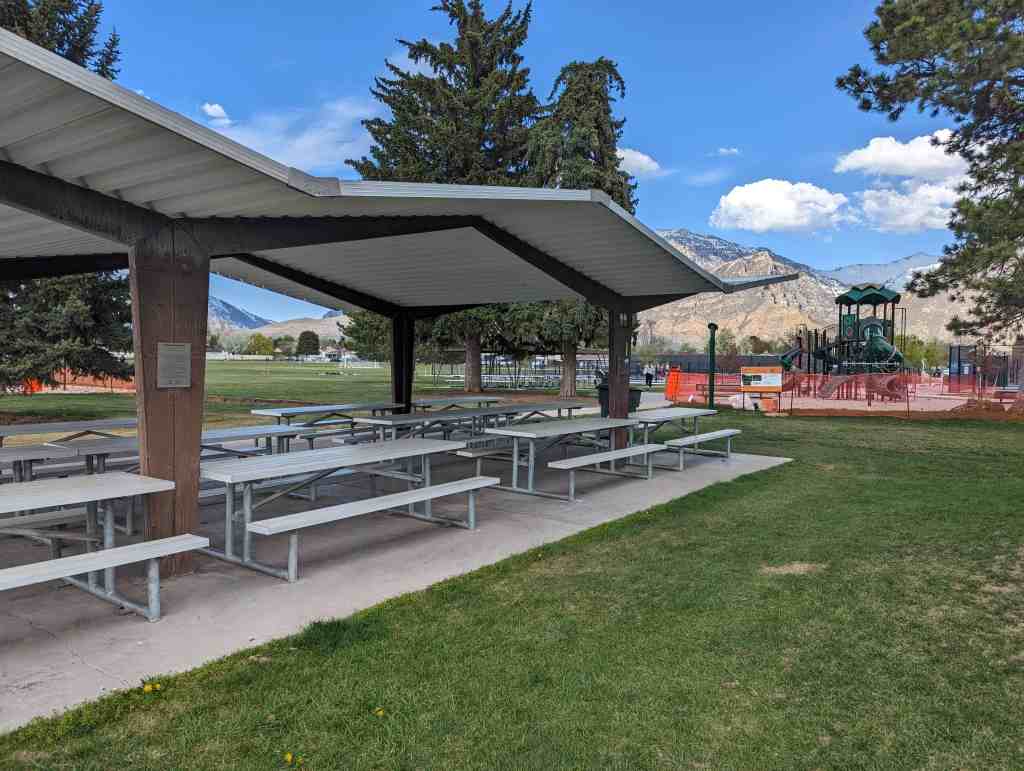
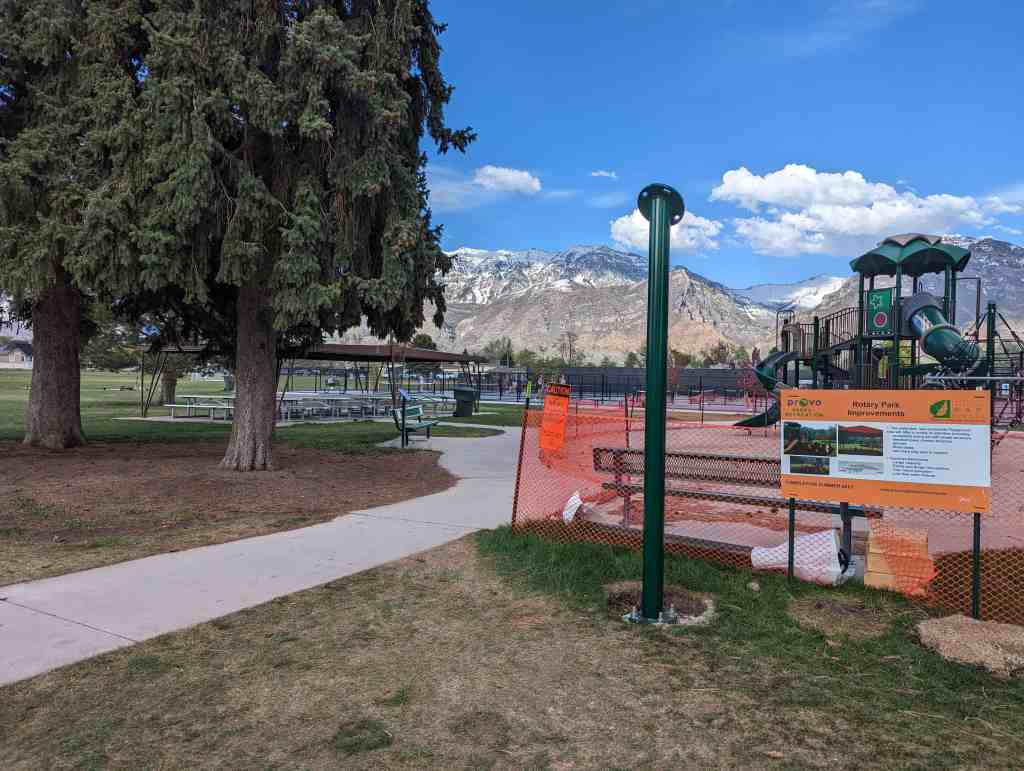
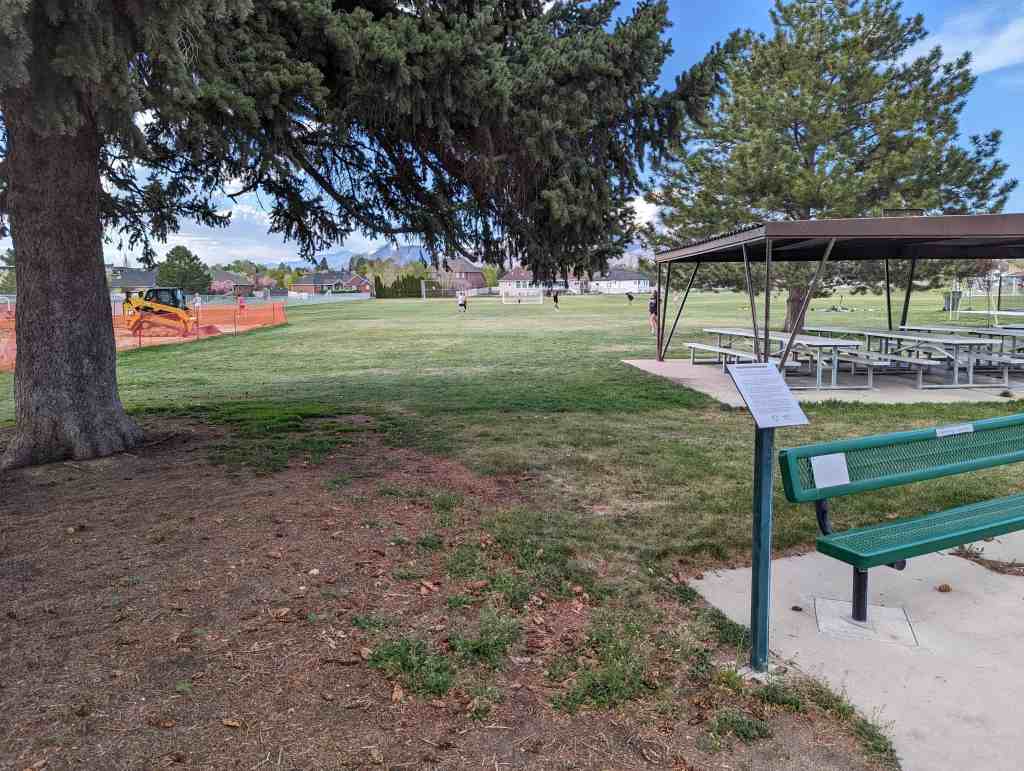
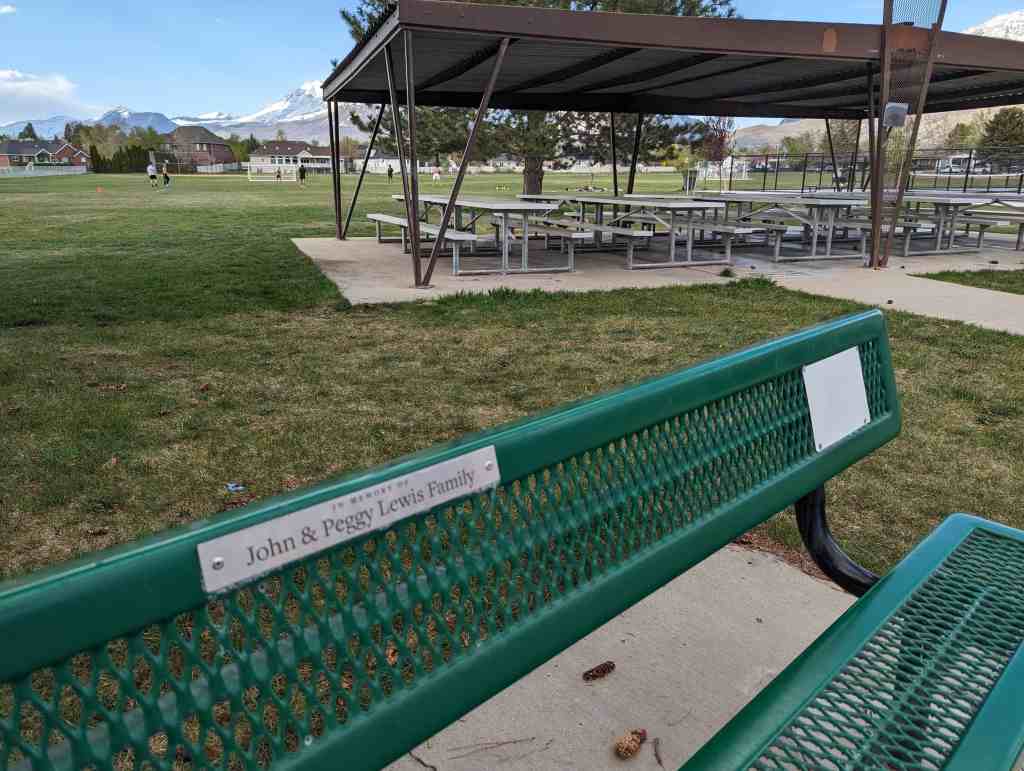
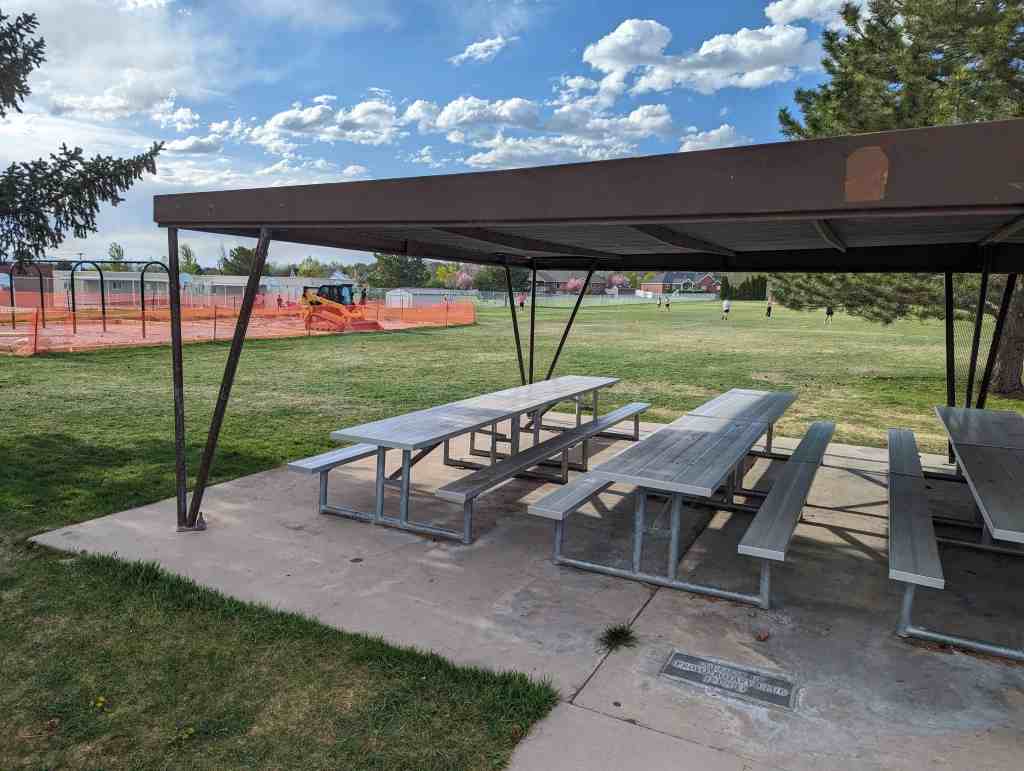
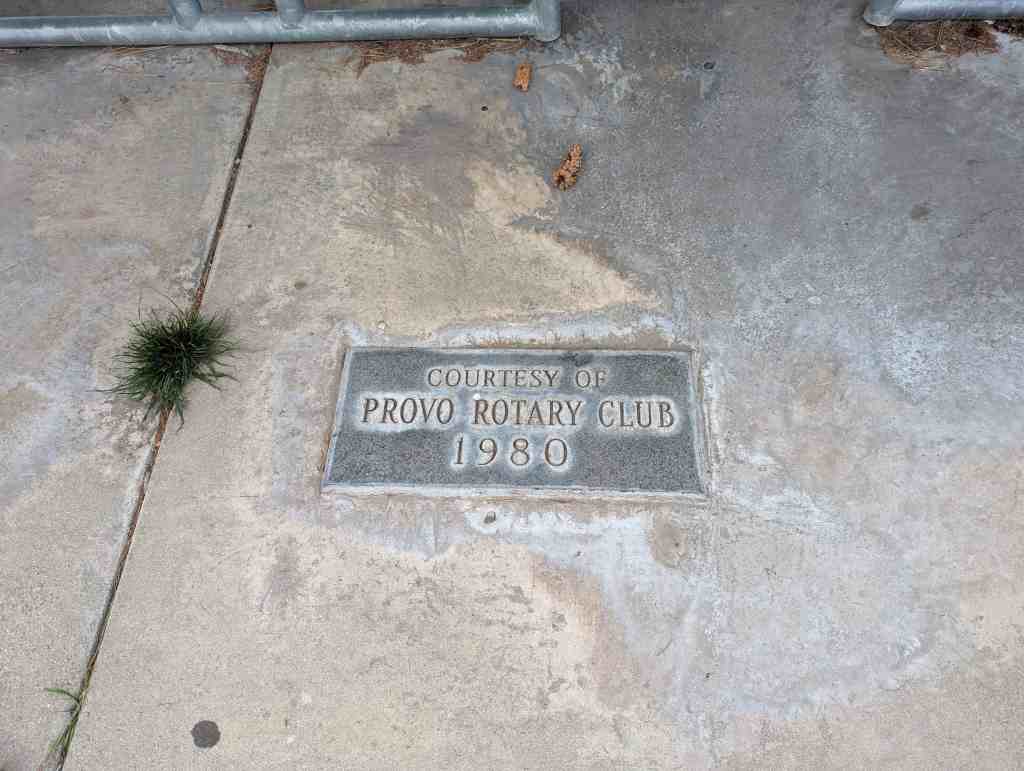
Rotary Park in Provo is mostly used for Recreation league games, but it also has many other family friendly activities to enjoy. Tennis courts are available and a playground is in the center area surrounded by three pavilions for easy monitoring of children at play, see this list for other parks in Provo.
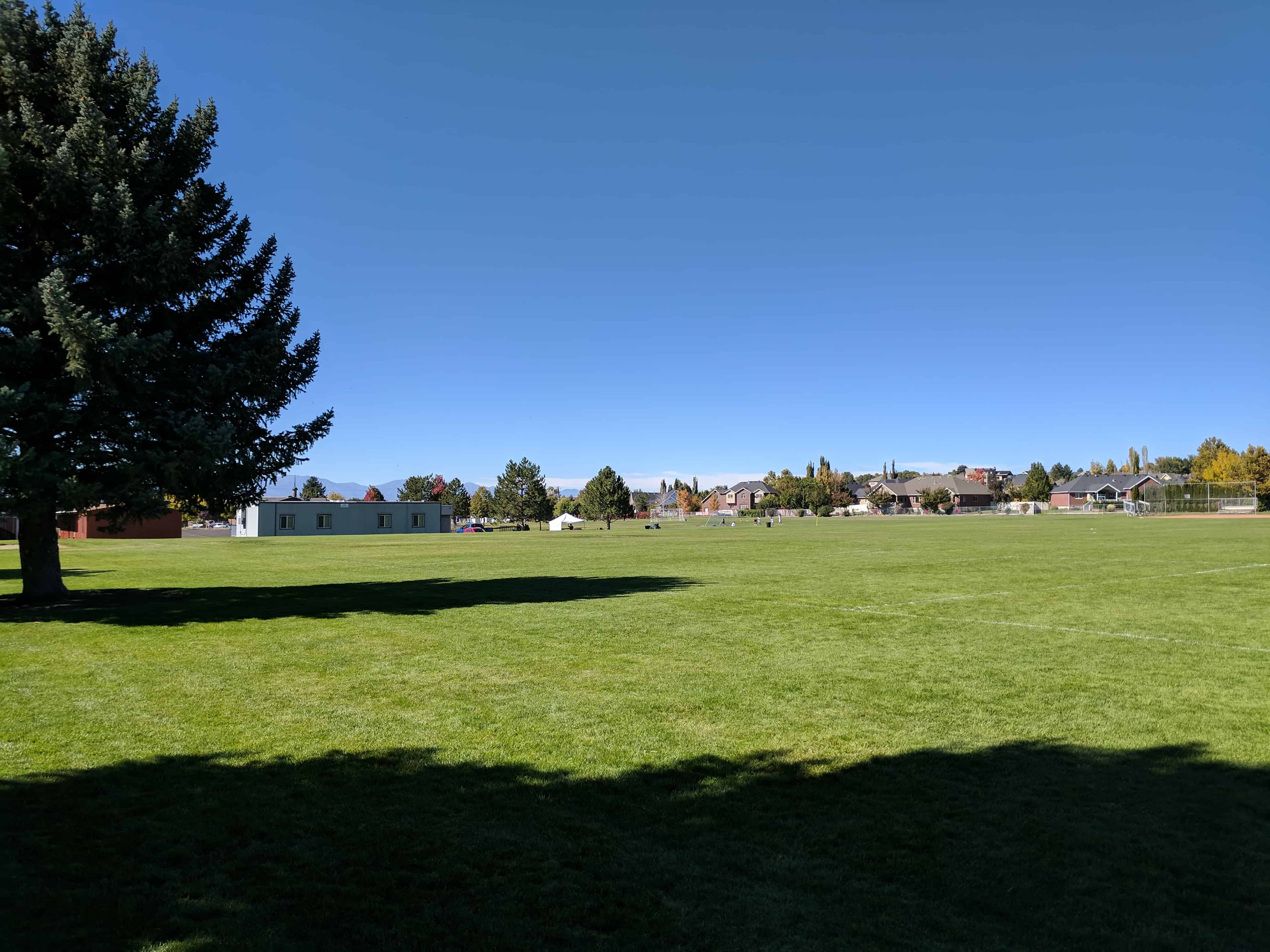
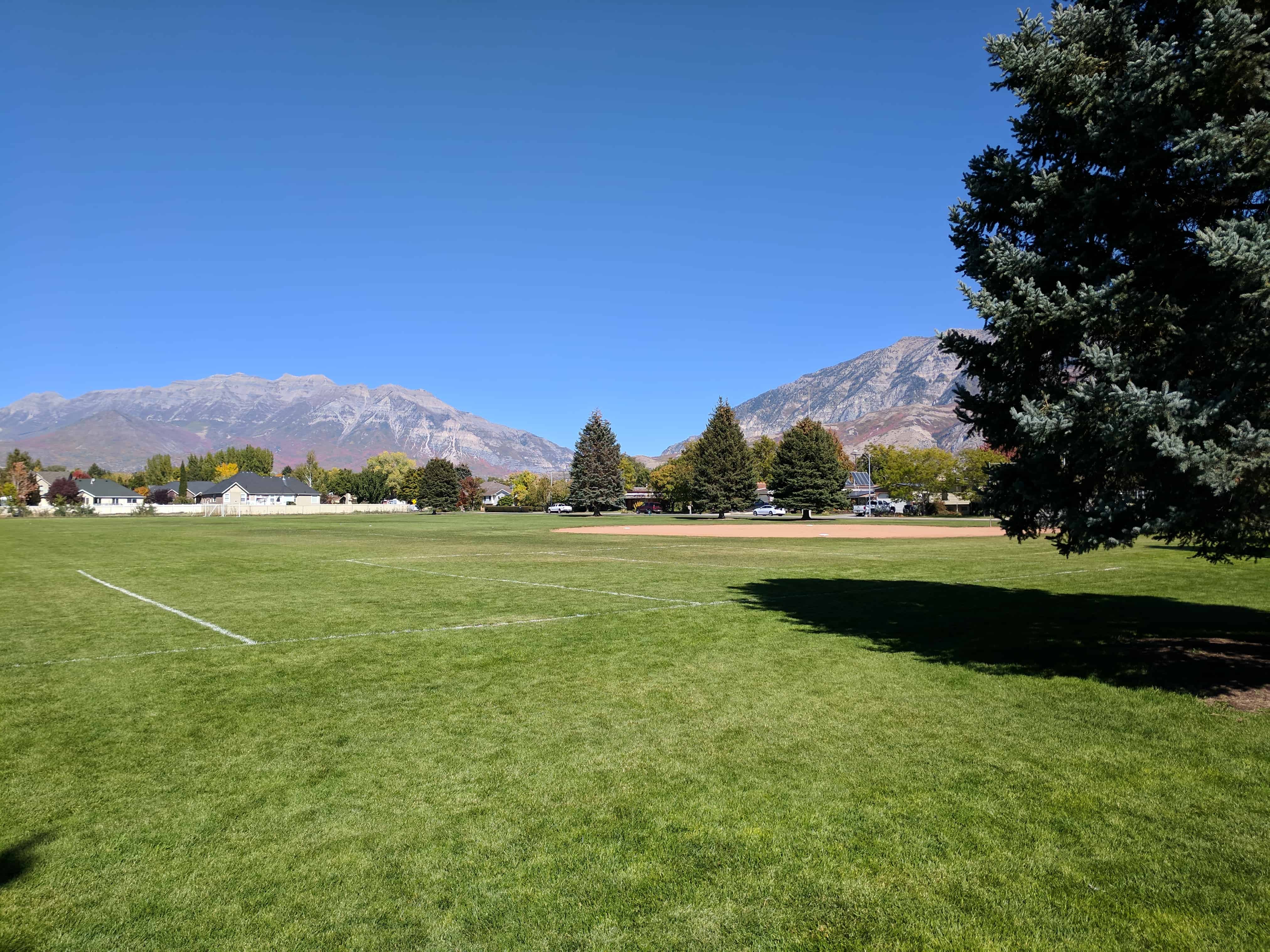
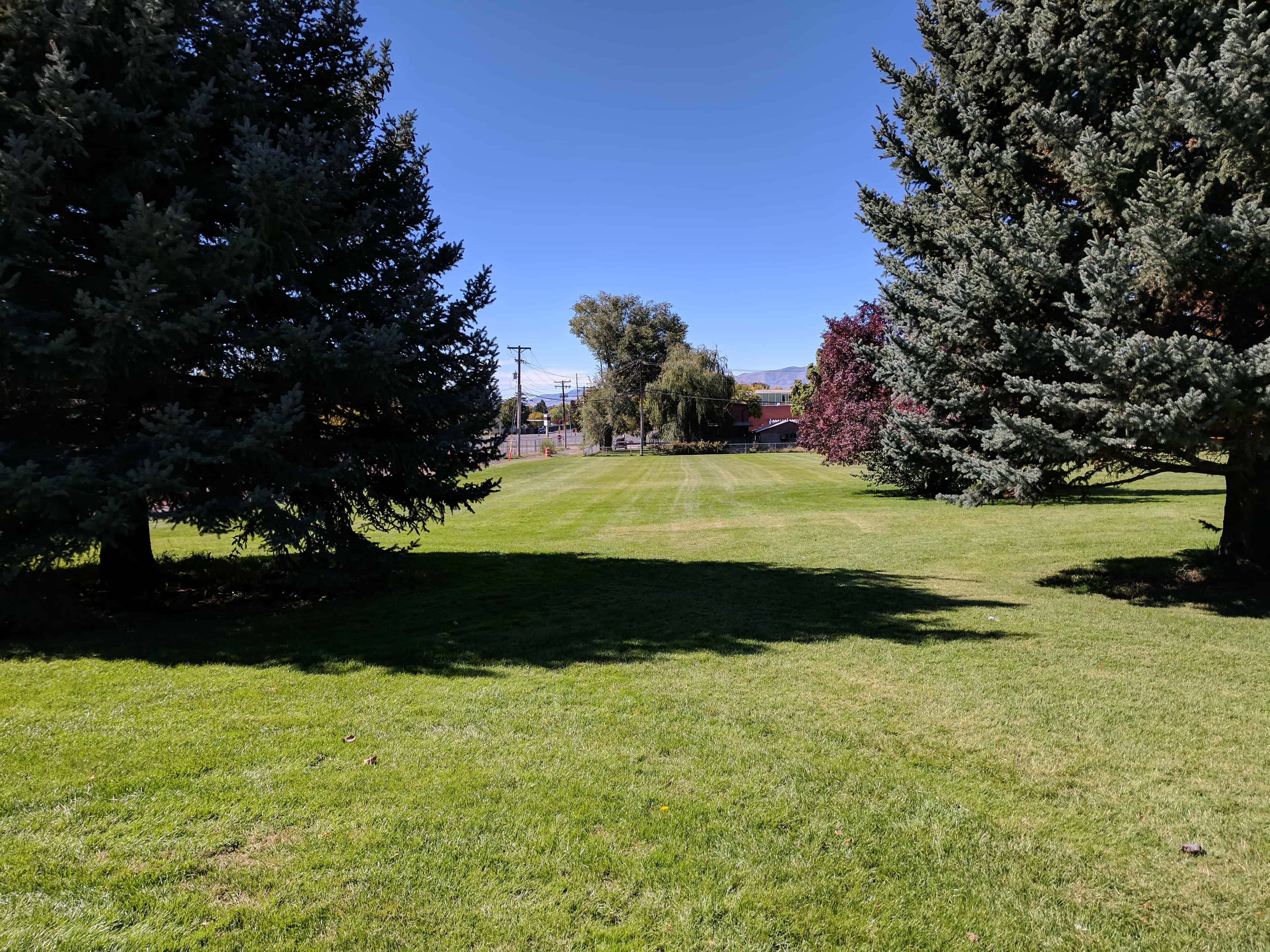
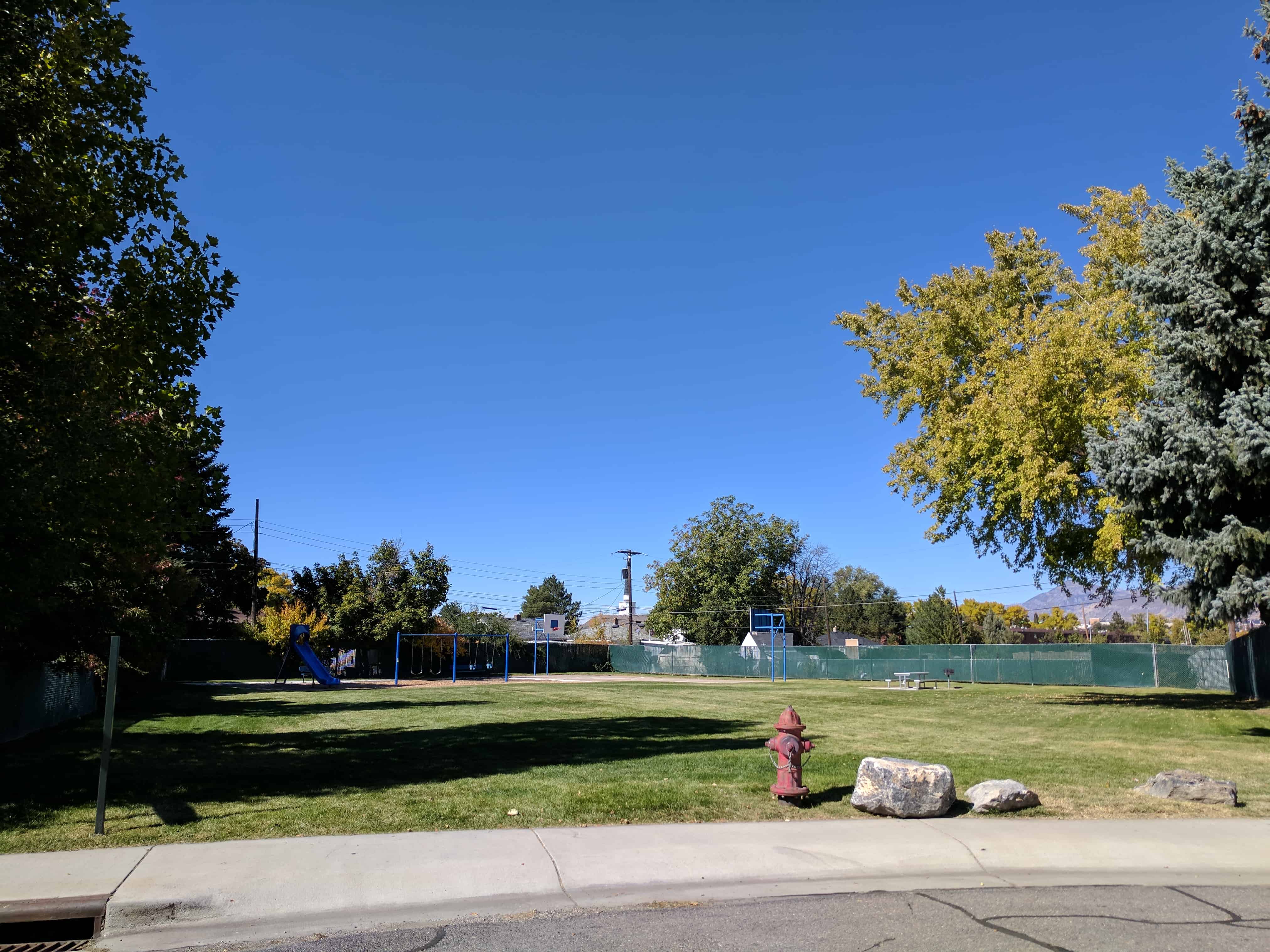
Provost Park is located next to Provost Elementary in Provo and is used mostly for Recreation league games. There is a small pavilion that can be used for intimate family gatherings, but be aware that there are no restroom facilities or water taps available. The elementary playground can be used during non-school hours.