Tags

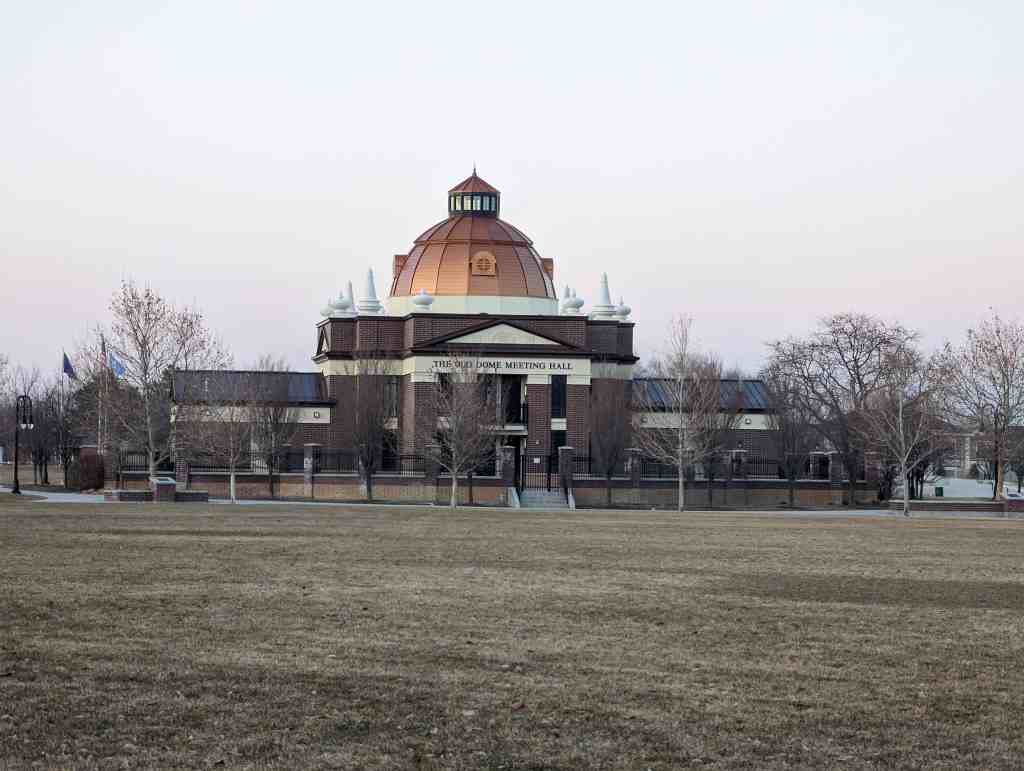
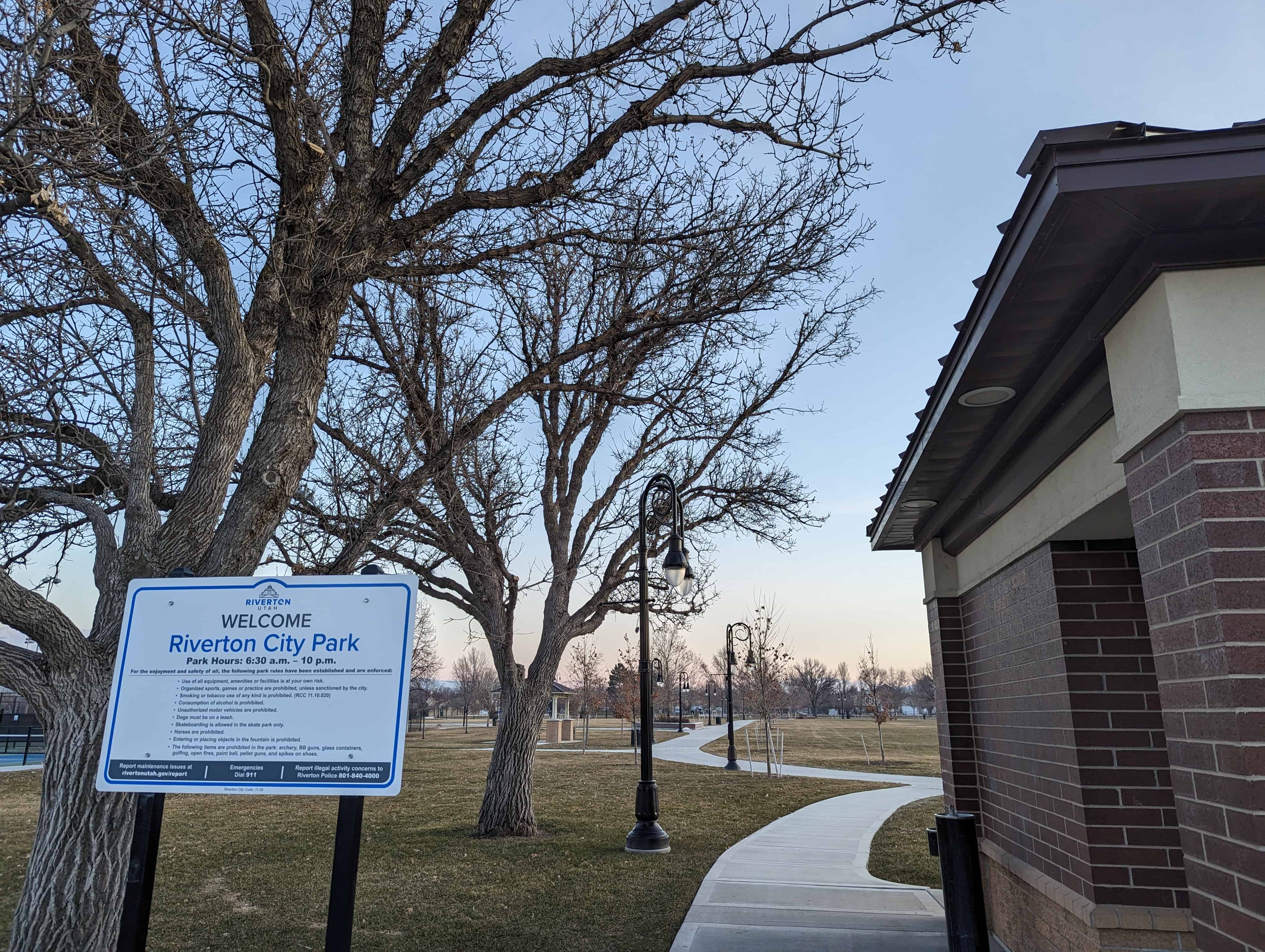
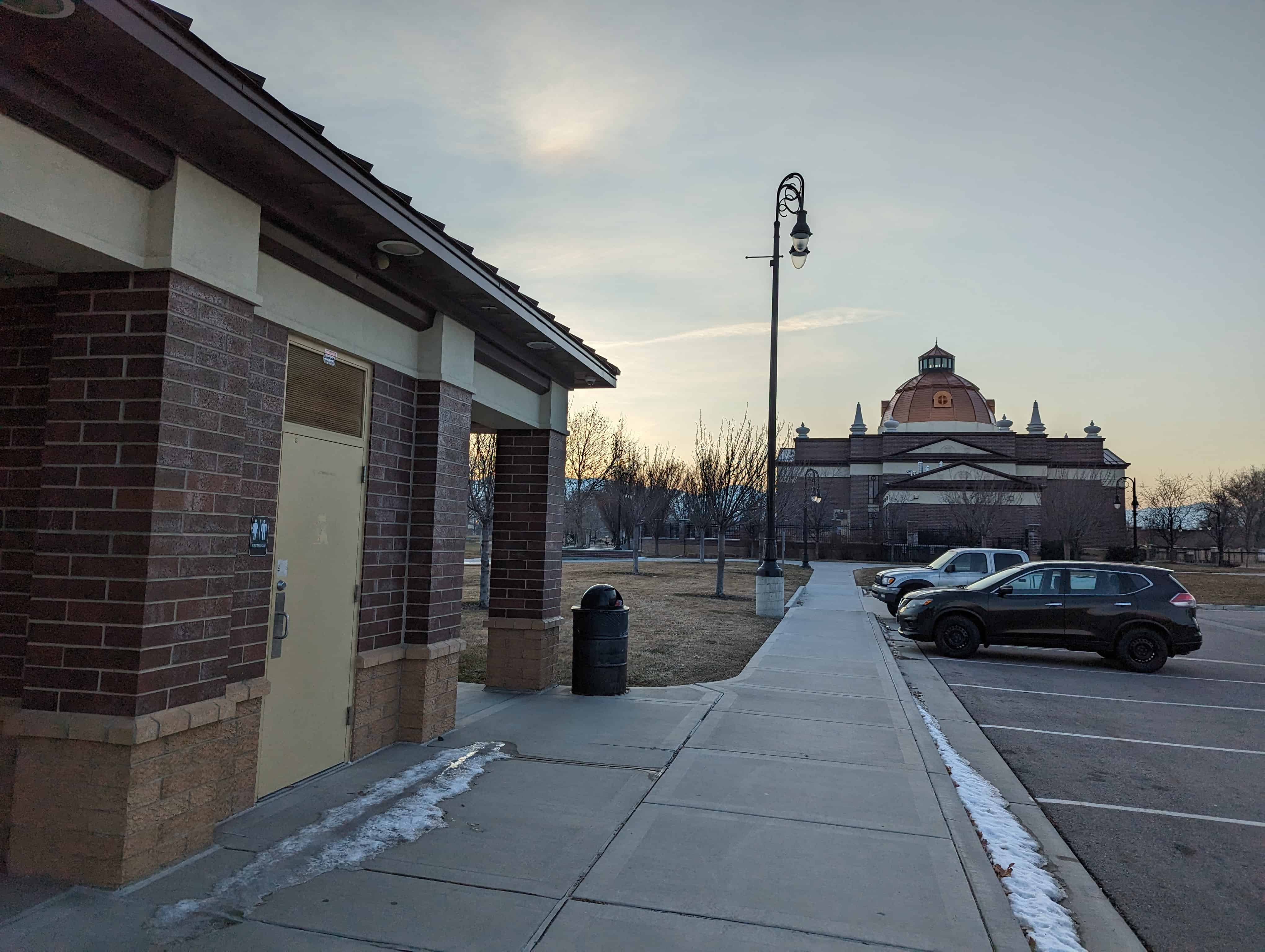
Riverton City Park
Dedicated June 22, 2015
To the residents of Riverton City
Located in the park:
Located at 1452 West 12600 South in Riverton, Utah



25 Saturday Feb 2023
Posted in Uncategorized
Tags
Riverton City Park
Dedicated June 22, 2015
To the residents of Riverton City
Located in the park:
Located at 1452 West 12600 South in Riverton, Utah
05 Sunday Feb 2023
Posted in Uncategorized
Tags
Art, Libraries, Murray, Salt Lake County, Stained Glass, Statues, utah

166 East 5300 South in Murray, Utah.

This plaque talks about the old Carnegie Library:
Murray City Vine Street Public Library
As early as 1900, a collection of books was made by a women’s club. This club maintained a library reading room in a home until 1912
In 1912, with the donation of the women’s club’s 515 books valued at $1,000.00, and through a petition, one mill was levied for a public library. A room in the original city hall was used for this purpose.
In 1915, the Carnegie Foundation, together with the city furnished $21,129.00 for the building of the original library. The board of education had donated the ground and the building was built in 1915.
In 1970 through action of present and former library board members, city officials and a united community effort, funds were raised for the present addition.


“Take Me There” – a Legacy Art Project of stained glass created by Donna Pence and Paul Heath.


This statue by Jim Davidson, presented by The Friends of the Murray Library to commemorate the library’s centennial, 1912-2012.


31 Saturday Dec 2022
Posted in Uncategorized
Tags
Beaux Arts style, high-style architecture, Magna, Neo-Classical style, Neon Signs, NRHP, Salt Lake County, Theaters, utah, Vintage Signs

The Empress Theatre, built in 1917, is both historically and architecturally significant. The design of the building, a combination of Neo-classical and Beaux Arts styles, makes it the most outstanding example of high style architecture in Magna. Though not a premier example of the Neo-classical style in Utah, the Empress Theatre is one of a number of distinctively styled theatres in small Utah towns that are dominated by relatively plain commercial buildings. Historically, the Empress Theatre is one of the oldest and best preserved commercial buildings in Magna, and it is the oldest theatre in the community.
The theater was added to the National Historic Register (#85000962) in 1985 and is located at 9104 West 2700 South in Magna, Utah

The Empress Theatre was built on Main Street in Magna in 1917 by the Western Theatre Corporation, about which nothing is known. The theatre was owned by Western Theatre Corporation only until October 1918, when it was sold to Thirza A. Hemingway, also an unknown. During Hemingway’s years of
ownership, 1919-23, the theatre was listed in the city directories only in 1919 and 1923, indicating that it was not in operation for 3-4 years. Frank Burgner, who bought the theatre in 1923, owned and operated it until 1932, after which it was owned for three years by State Building and Loan Association. From 1931 through 1935 the theatre was once again left vacant, as indicated by the city directories. George and Alice Smith bought the Empress Theatre in 1935 and operated it for almost 20 years. The building has been virtually unused for the past 30 years.

At the time of its construction the Empress Theatre was the second theatre in Magna. The other theatre, the Palace Theatre, operated from 1914-17, but its location is currently unknown. Two other theatres also operated in the town during the period from the 1920s through the 1940s, the Rialto (1921-26) and the Gem (1927-44+). Only the Gem remains and it has been significantly altered.

The Empress Theatre was constructed during the period of greatest growth in Magna, the 1910s-20s. The Utah Copper Corporation was established in 1903, incorporating numerous small mining operations into one large one, and soon after erected the Magna and Arthur concentrators near the site of Pleasant Green, which several years later became known as Magna. The Empress Theatre was one of a number of buildings that were erected along Main Street during the decades of the 1910s and ’20s, creating a substantial commercial district. Most of those buildings have been left vacant and neglected over the past 20-30 years, however, as the prime commercial district has shifted further west and south and the depressed local economy has dried up most businesses in the old Main Street area. The Empress Theatre is one of the best preserved of the older commercial buildings along Main Street, and it is easily the most sophisticated in terms of its architectural design. Most of the remaining buildings in the area are relatively plain, nondescript commercial buildings.

This is a 1-story one-part commercial block type building that is constructed of brick and has a flat roof. The design is essentially Neo-Classical, although some Beaux Arts influences are in evidence. The most distinctive features of the building are its pressed tin dentiled” cornice and decorative curvilinear gable on the parapet. At the center if the gable is a rectangular panel framed by rosettes and topped by scroll work and a flag pole. There are swags and garlands on the frieze above the recessed front entrance. The façade is broken up into three bays by brick piers. The entrance bay is highlighted by ornate, pressed tin pandrels at both corners. These spandrels appear to be inspired by the Beaux Arts style. The brick piers have vertical recessed panels, a decorative motif that is carried over on horizontal panels on each of the side bays. Narrow transom lights are found above the openings on each of the side bays. The building is currently vacant but remains in good condition and retains its historical integrity.

The Empress Theatre was built in 1917 by the Western Theatre Corporation. Originally a burlesque theater for the local miners, the theater soon began showing silent movies. The Empress is one of four theaters that were erected along Magna’s Main Street during the decades of the 1910s-1930s. This followed the establishment of Utah Copper Corporation, which brought jobs and population growth to the area.
For many years, the Empress went through a number of owners as well as periods of vacancies. The theater was abandoned for several decades and was purchased in 1978 by the Barker family who began restoring the building. Leo Ware took over ownership in 1983 and continued the project. However, in July 1984, the Salt Lake County Commission threatened to have the building demolished because it was unsafe. After an appeal, the Commission reversed their decision and allowed Ware until the end of the year to stabilize the building, which he did. He continued working on the building for more than a decade, using state and federal grants to help with the expenses. Unfortunately, Ware was injured in an auto accident in 2002 and could not finish the rehabilitation of the building. In 2006, a local non-profit organization, Oquirrh Hills Performing Arts Alliance, was formed to take over the project from Ware. The Alliance continued to receive grants and completed the work. The Empress finally reopened as a live performing arts theater in November 2006 and has seen over 100 productions since then.
The design of the building, a combination of Neo-classical and Beaux Arts styles, makes the Empress Theatre the most outstanding example of high-style architecture in Magna. This theater is an example of the many distinctively styled, early 20th-century theaters found in small Utah towns, which are dominated by relatively plain commercial buildings. Historically, the Empress Theatre is one of the oldest and best preserved commercial buildings in Magna.


31 Saturday Dec 2022
Posted in Uncategorized

9124 West 2700 South in Magna, Utah
Built in 1912.
This building, long a print shop, was home to the Magna Times and Garfield Ledger for many years. Like many of its neighbors, this building’s front was greatly altered by the SL County RDA as a part of a façade renewal program conducted in the 1990s.


27 Tuesday Dec 2022
Posted in Uncategorized

9139 West 2700 South in Magna, Utah
Built in 1924.
This building’s first occupant was the well-loved Magna Merc. In the 1950s, this building houses the Union of Mine, Mill, and Smelter Workers. Later that same decade this building hosted the McDougal Funeral Parlor.
9139 W, 9145 W and 9147 W are represented here.
This building once housed Copper Printing where, for years, editions of the Magna Times were produced.
While old, the exterior of this and several neighboring building appears new. In an effort to “restore” many buildings along Magna Main Street, Salt Lake County’s RDA refaced these buildings with brick c. 1990.
Magna, initially called Pleasant Green, was established by a Salt Lake County Court order issued on July 21, 1874.


26 Monday Dec 2022
Posted in Uncategorized

9131 West 2700 South in Magna, Utah
Built in 1924.
During World War II, Magna Drug was designated as a depository where people were encouraged to leave toothpaste rolls, shaving cream tubes, and other tin scraps which were useful to the war effort. In the 1970s Barbara Wingate ran a dance studio from this building.


25 Sunday Dec 2022
Posted in Uncategorized

9120 West 2700 South in Magna, Utah
Built in 1916.
For many years, this building housed the offices of Judge John A. Rokich. Judge Rokich served as Executive Secretary of the Magna Community Council and was instrumental in bringing a municipal swimming pool and ice skating rink to the township.


24 Saturday Dec 2022
Posted in Uncategorized

9113 West 2700 South in Magna, Utah
Built in 1924.
This is a two-part commercial block, the most common 19th and early 20th century American commercial building. The building’s horizontal division delineates a separation between the business spaces on the ground floor and residential / storage spaces on the second floor.


19 Monday Dec 2022
Posted in Uncategorized

1213 East 1300 South in Salt Lake City, Utah
16 Friday Dec 2022
Posted in Uncategorized

Kaden Baxter
12-22-1999 – 9-24-2020
Forever
#8

This memorial is located on 2nd Avenue just east of State Street in Salt Lake City, at City Creek Park.

