• About JacobBarlow.com
  • Cemeteries in Utah
  • D.U.P. Markers
  • Doors
  • Exploring Utah Email List
  • Geocaching
  • Historic Marker Map
  • Links
  • Movie/TV Show Filming Locations
  • Oldest in Utah
  • Other Travels
  • Photos Then and Now
  • S.U.P. Markers
  • U.P.T.L.A. Markers
  • Utah Cities and Places.
  • Utah Homes for Sale
  • Utah Treasure Hunt

JacobBarlow.com

~ Exploring with Jacob Barlow

JacobBarlow.com

Tag Archives: Boulder

Boulder Elementary School

31 Saturday Jan 2026

Posted by Jacob Barlow in Uncategorized

≈ Leave a comment

Tags

Boulder, City Hall Buildings, Garfield County, New Deal Funded, NRHP, PWA Moderne, PWA Projects, Schools, utah

Boulder Elementary School

Built in 1935-36, the Boulder Elementary School is part of the Public o Works Buildings Thematic Resources nomination and is significant because it w helps document the impact of New Deal programs in Utah, which was one of the states that the Great Depression of the 1930s most severely affected. In 1933 Utah had an unemployment rate of 36 percent, the fourth highest in the country, and for the period 1932-1940 Utah’s unemployment rate averaged 25 percent. Because the depression hit Utah so hard, federal programs were extensive in the state. Overall, per capita federal spending in Utah during the 1930s was 9th among the 48 states, and the percentage of workers on federal work projects was far above the national average. Building programs were of great importance. During the 1930s virtually every public building constructed in Utah, including county courthouses, city halls, fire stations, national guard armories, public school buildings, and a variety of others, were built under federal programs by one of several agencies, including the Civil Works Administration (CWA), the Federal Emergency Relief Administration (FERA), the National Youth Administration (NYA), the Works Progress Administration (WPA), or the Public Works Administration (PWA), and almost without exception none of the buildings would have been built when they were without the assistance of the federal government.

Boulder Elementary School is located in 351 North 100 East in Boulder, Utah and was added to the National Register of Historic Places (#85000805) on April 1, 1985.

  • New Deal Projects in Utah

The Boulder Elementary School is one of 233 public works buildings identified in Utah that were built during the 1930s and early 1940s. Only 130 of the 233 buildings are known to remain today and retain their historic integrity. Of the 233, 107 were public school buildings and 55 of them remain. This is one of 43 elementary schools built, 19 of which remain. In Garfield County 7 buildings were constructed; 5 are left. The Boulder Elementary School was built in 1935 and 1936. Construction began in September of 1935 and was completed in the early spring of 1936. It was a Works Progress Administration (WPA) project. Superintendent of construction was Arthur McNelly of Escalante.

This is a one-story frame school building displaying the blending of classical and moderne elements that characterizes the PWA-sponsored architecture in Utah. It has a hipped roof over a basic rectangular plan. There is a projecting gabled porch on the front that contains a recessed entrance and small flanking windows. A long hipped roof extension on the rear appears to be original. The siding consists of narrow, 4″ clapboards and there is a plain cornice and frieze under the overhanging eaves. Classical motifs dominate the front entrance porch in the form of cornice returns, a pedimented head over the recessed doorway, and a transom above the door itself. The formality of the porch is broken by a zig-zag belt course that circles the building and gives it a sense of the abstract geometric quality associated with the moderne movement. The building remains in excellent original condition.

Hell’s Backbone

21 Saturday Jan 2017

Posted by Jacob Barlow in Uncategorized

≈ 1 Comment

Tags

Boulder, Escalante, Garfield County, utah

picture27sep08-080

Hell’s Backbone Road is a 38-mile  gravel road that was built by the Civilian Conservation Corps in the 1930s, and connects the towns of Boulder, Utah and Escalante, Utah. Halfway along the road is Hell’s Backbone Bridge, which is 109 feet long, and 14 feet wide. A 1,500-foot  drop is on either side. Near the bridge are spectacular views of the Box-Death Hollow Wilderness. From late spring to autumn, the road, which climbs to more than 9,000 feet elevation, is easily passable by ordinary passenger vehicles, but it is very narrow and winding, and not for the faint of heart.

picture27sep08-079


picture27sep08-078

Head of the Rocks Overlook

14 Wednesday Dec 2016

Posted by Jacob Barlow in Uncategorized

≈ 1 Comment

Tags

Boulder, Escalante, Garfield County, Highway 12, Overlooks, utah

picture24jul07-124

An overlook with breathtaking views, as the sign at the location says, on a clear day you can see forever.

This is a pull-out on Highway 12 between Escalante and Boulder.

picture24jul07-121
picture24jul07-122
picture24jul07-123
picture24jul07-125

Anasazi State Park Museum

14 Wednesday Dec 2016

Posted by Jacob Barlow in Uncategorized

≈ 3 Comments

Tags

Anasazi, Boulder, Garfield County, museums, NRHP, State Parks, utah

picture24jul07-118

Anasazi State Park Museum (formerly Anasazi Indian State Park) is a state park and museum in Southern Utah, United States, featuring the ruins of an ancient Anasazi village referred to as the Coombs Village Site.

The Coombs Site is the site of one of the largest Anasazi communities known to have existed west of the Colorado River. The name Anasazi, Navajo for “Ancient Enemies,” or “Enemies of Our Ancestors” describes the Pueblo culture that existed in the Four Corners area from about 1 AD to 1300 AD. This village is believed to have been occupied from 1160 AD to 1235 AD. As many as 250 people lived there.

The village is largely unexcavated, though there was a brief excavation during 1958 and 1959, conducted by the University of Utah as part of the Glen Canyon Dam Project. During that excavation, archaeologists uncovered thousands of artifacts, and discovered a community of about 90 rooms divided into two separate one-story apartment complexes. An L-shaped building has been reconstructed and can be entered into by visitors. The cluster featured open shelters for working in the shade, storage pits, and adobe pit houses large enough for five or six residents. All together, about 100 structures have been found.

  • Utah State Parks

The Coombs Village Site is part of Anasazi State Park Museum at 460 North Highway 12 in Boulder, Utah and was listed on the National Historic Register on (#76001815) on January 1, 1976

Boulder, Utah

10 Wednesday Dec 2014

Posted by Jacob Barlow in Uncategorized

≈ 3 Comments

Tags

Boulder, Garfield County, utah

picture24jul07-117

Boulder Posts:

  • Boulder Elementary School
  • The Coombs Village Site at Anasazi State Park Museum
  • Old Boulder Mail Trail

Boulder is a town in Garfield County, Utah, United States, 27 miles (44 km) northeast of Escalante on Utah Scenic Byway 12 at its intersection with the Burr Trail. As of the 2000 census, the town population was 180, a modest increase over the 1990 figure of 126.

Boulder, quite isolated until the Civilian Conservation Corps built a road from Escalante, did not get electric power until 1947. The town marks the western terminus of Burr Trail, a mostly paved road that runs eastward through spectacular red rock country to the Waterpocket Fold in Grand Staircase-Escalante National Monument. Boulder is the home of Anasazi Indian State Park.

picture24jul07-120
picture27sep08-081

Click here to see other places in Utah.

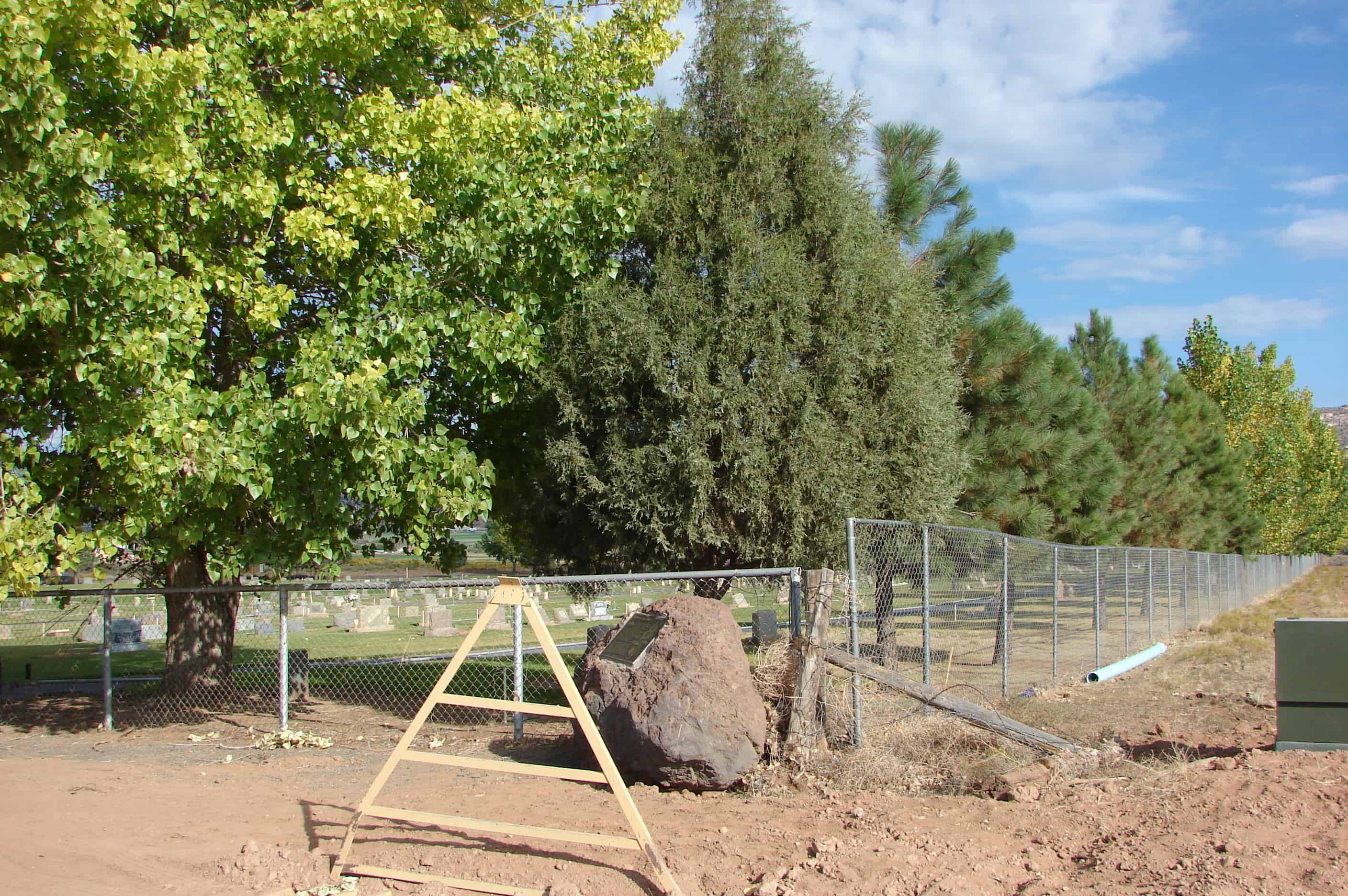
Old Boulder Mail Trail

20 Monday Jan 2014

Posted by Jacob Barlow in Uncategorized

≈ 2 Comments

Tags

Boulder, DUP, Escalante, Garfield County, historic, utah

picture27sep08-077

The isolated trails between Boulder and Escalante, Utah, were important in the history of the two towns. The foot trail, used by Indians for centuries, connected the two areas and was known as the Death Hollow Trail. Mules, horses, or people traversed this steep and dangerous area.

In 1902 a contract at $200 per year by the U.S. Postal Service was given to James Schow for the twice-weekly mail delivery over the shorter Indian trail. He used two to ten mules to carry mail, medicine, and occasional travelers. This Old Boulder Mail Trail left Escalante, crossed the creek, and climbed the hill on the white rocks seen just above the dark ridge. In some places steps were cut into the rocks. At the top of the hill, going was easier across the Antone Flat, then became more perilous at the famous descent into Death Hollow. The trail crossed Mamie Creek and Sand Creek, then arrived at New Home Bench where mail for Salt Gulch was left in a wooden box nailed to a tree.

In 1910 the U.S. Forest Service ran a telephone line along the trail to Boulder, attaching the wires to rocks and trees. Some of the glass insulators can still be seen in the treetops. In 1924 Parcel Post became available, and the mules carried in sewing machines, boots, pots, pans, machine parts, and cans of cream which were sent on to the creamery.

In the early 1930s, the Civilian Conservation Corps built better roads, and when the Hell’s Backbone Bridge was completed, this mail trail was unnecessary. The trail was still a shortcut and was often used by young men hurrying to a dance in either town. This monument is a tribute to those who endured the trail.

picture27sep08-076

Follow Jacob

Follow Jacob

Blog Stats

  • 2,006,635 hits

Social and Other Links

BarlowLinks.com

Recent Posts

  • Herbert B. Maw Home
  • Marriner S. Eccles Home
  • William and Grace Ebaugh Home
  • Emma Thatcher Jeppeson Home
  • William Bowen Home

Archives


Loading Comments...