• About JacobBarlow.com
  • Cemeteries in Utah
  • D.U.P. Markers
  • Doors
  • Exploring Utah Email List
  • Geocaching
  • Historic Marker Map
  • Links
  • Movie/TV Show Filming Locations
  • Oldest in Utah
  • Other Travels
  • Photos Then and Now
  • S.U.P. Markers
  • U.P.T.L.A. Markers
  • Utah Cities and Places.
  • Utah Homes for Sale
  • Utah Treasure Hunt

JacobBarlow.com

~ Exploring with Jacob Barlow

JacobBarlow.com

Tag Archives: Cache County

Smithfield Tabernacle

24 Monday Jan 2022

Posted by Jacob Barlow in Uncategorized

≈ Leave a comment

Tags

Cache County, Cache Valley, Historic Buildings, Historic Churches, NRHP, Smithfield, Tabernacles, utah, Yellow Brick of Smithfield

Smithfield Tabernacle

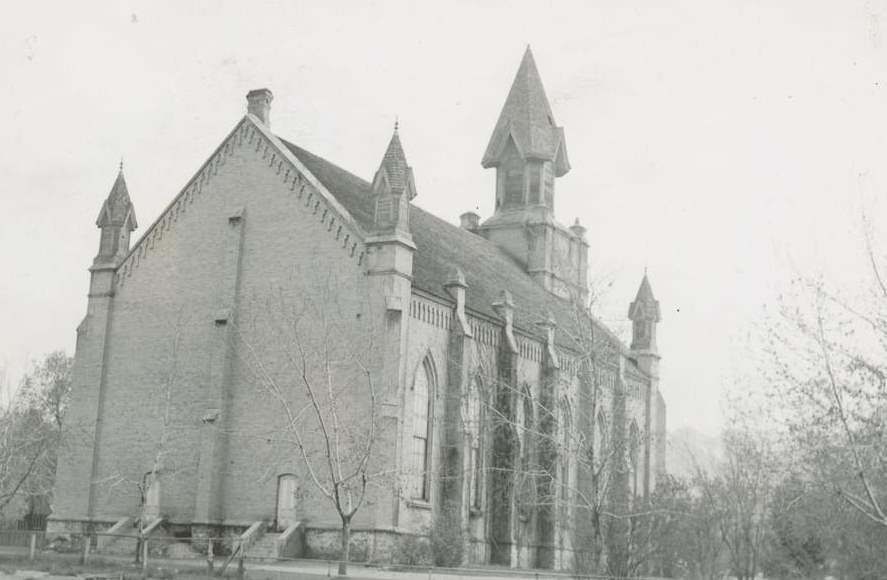
Construction for this large, Victorian Gothic style Smithfield Tabernacle began in 1883, was completed in 1902, and was renovated in 1955. The building is significant as it was the primary place of worship for the LDS community in Smithfield for many decades. The tabernacle was financed and constructed by the local Smithfield LDS Ward congregation. Constructing such a large edifice was unusual for a small congregation. The majority of LDS tabernacles were constructed by and for multiple LDS congregations to meet in a larger congregation called a Stake. The building is also important for its association with the planning and development of Smithfield City, specifically in the use of public space. Typical of early Mormon settlements in the Great Basin region, this large edifice was constructed on the public square to serve as the community center and to establish a feeling of permanence.

From the time of its construction, the Smithfield Tabernacle was the largest building in Smithfield and was the symbolic center of the community. Its distinctive yellow brick was locally manufactured in Smithfield. In addition to religious meetings, the building was used for all large community gatherings, including plays, concerts, graduation ceremonies, and political and agricultural meetings.

When the local LDS congregation outgrew the Smithfield Tabernacle in 1942 and out of concern for the deterioration of the unused building, residents found a new purpose for the building as a much-needed youth recreation center. It served as the only public recreation facility in Smithfield from 1955 until the construction of a new recreation center in 2000. Although some architectural details have been altered or were removed, the building still clearly reflects its original use as a place of worship while accommodating the more recent use as a recreation facility.

Located at 99 West Center Street in Smithfield, Utah and added to the National Historic Register (#100000509) on January 17, 2017

Related:

  • LDS Tabernacles
  • Yellow Brick Homes of Smithfield

Original Settlement of Smithfield

11 Tuesday Jan 2022

Posted by Jacob Barlow in Uncategorized

≈ Leave a comment

Tags

Cache County, Cache Valley, DUP, Historic Markers, Smithfield, utah

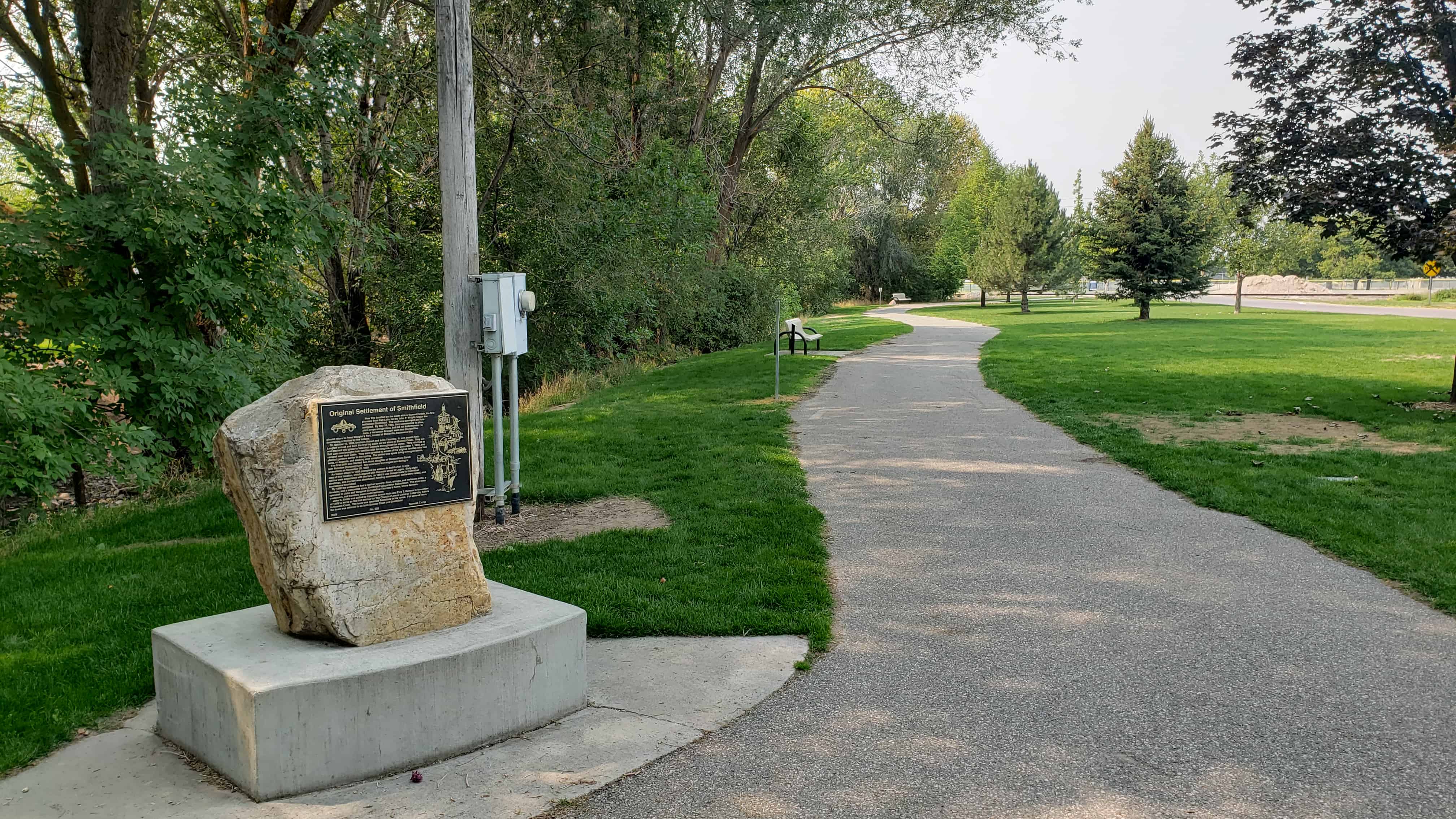
Near this location on the south side of Summit Creek, the first pioneers from Salt Lake, led by John P. Wright, began the settlement Smithfield. The land was surveyed and lots assigned. By May 10, 1859, they commenced to plow, plant crops and gardens, but did not build homes. In June, a horseman brought word that the families should return to Peter Maughn’s Fort, located at Wellsville, because of the threatening activities by the Indians.

On October 10, 1859, brothers Robert and John Thornley, Jr. and cousin Seth Langton arrived and built the first log cabin on the shore of Summit Creek. The cut and stacked wild grass to feed their animals throughout the winter. They returned to Salt Lake and brought their families with ten wagons, arriving December 1, 1859, and camped near their cabin. They were greeted by seven of the original families who had planted gardens earlier in the spring. The winter was spent living in wagon boxes, tents, or dugouts, and cooking over campfires.

The first birth was Harriet Ann Hunt, daughter of Marshall and Sarah Ann Runnion (Runyon) Hunt. She was born in a wagon box during a snowstorm on November 20, 1859.

An Indian attack in 1860 prompted the settlers to build a fort 1/2 mile east of this location, which aligned with the main street in Logan. Sixty-eighth cabins were associated with the fort. In 1864 it was thought safe for individual dwellings, and the fort was abandoned; farming commenced , cattle were raised, and businesses flourished.

By 1868 the settlement had a leather tannery; flour, shingle, and molasses mills; a limekiln; and a mercantile store, Smithfield Cooperative Association. The store was operated in John and Margaret Stringfellow Thornley’s home, where farmers, customers, and travelers were made welcome.

John G. Smith was called by Apostles Orson Hyde and Ezra T. Benson in November of 1869 to serve as the first bishop for The Church of Jesus Christ of Latter-day Saints in Summit Creek. The town was renamed Smithfield in his honor. For several years, the town was referred to as both Summit Creek and Smithfield.

This is D.U.P. Marker #550 (see others on this page) and it is located on the Smithfield walking path in Heritage Park at about 335 West Center Street in Smithfield, Utah.

Douglas General Mercantile

30 Thursday Dec 2021

Posted by Jacob Barlow in Uncategorized

≈ Leave a comment

Tags

1880s, Cache County, Cache Valley, Mercantile Buildings, NRHP, Smithfield, utah

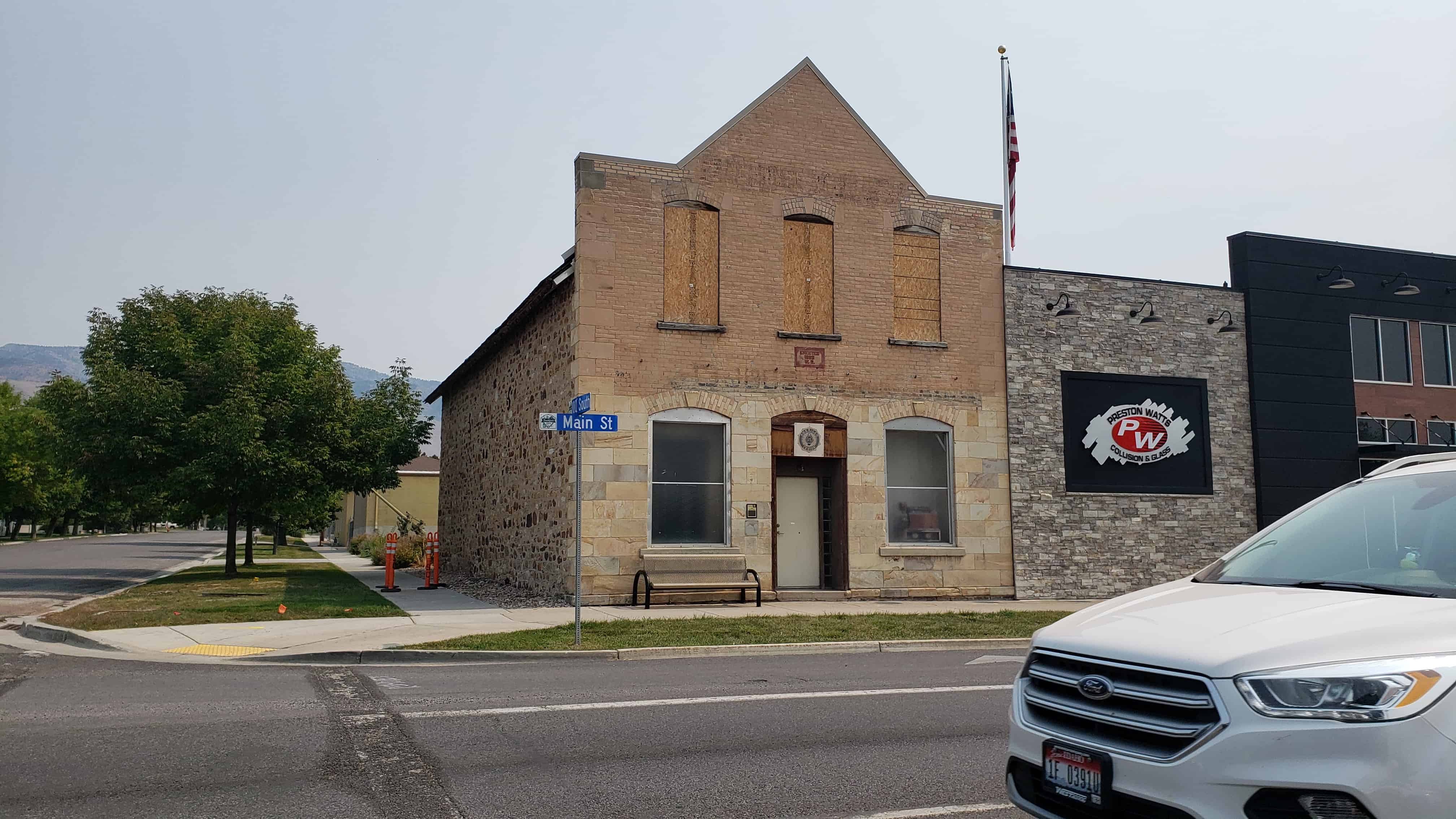
Built in 1883, the Douglas General Mercantile Store is locally significant as the oldest remaining commercial building in the town of Smithfield, Cache County, Utah. The town was founded in October 1859 as part of Cache Valley, which was itself settled in 1856 during the first stage of the Mormon colonization of Utah. William Douglas, who operated the store, began business in Smithfield in 1865, obtaining goods from the East and wholesaling them throughout the area. In 1883, when the building was constructed, it was one of only three such establishments in the town, and remains as the only physical structure tied to Smithfield’s early commercial history. The building has been associated with the commercial activity in the town through the firms of Douglas Mercantile, James Cantwell & Son, and the Union Merc Company since 1883. In addition, the building is the second oldest mercantile building identified to date that is located outside Utah’s heavily populated area known as the Wasatch Front, which comprises four of Utah’s twenty-nine counties. The oldest building is the Ephraim United Order Cooperative Building constructed in 1871-71. Also, the building gains added importance in the history of Smithfield because of its unique construction, the only one of its type in the town. Stone was used for the rear and two side walls in a rubble construction technique, while brick was utilized on the upper half of the façade and coursed sandstone for the
lower half. Thus, the building represents the use of four different building materials as wood was also utilized.

Located at 101 South Main Street in Smithfield, Utah and added to the National Historic Register (#82004113) on August 4, 1982.

Related:

  • 1980 Photos

The town of Smithfield in Cache Valley, Utah, was tied to the early Mormon colonization of Utah. Part of what has been labeled “the inner cordon of settlements,” Cache Valley was itself settled in 1856, and Smithfield in 1859. As an agricultural region in northern Utah, Cache Valley aided in the supplying of goods not only to northern Utah, but also to mining regions in Idaho and Montana. Smithfield, which began as a settlement of dugouts and wagons, in 1860 became a village with houses arranged in “fort style” (forming a square where the rear portions of the buildings constituted the walls of the fort). It had been named Smithfield in 1859 for John Glover Smith, the first Mormon bishop, who exercised power in both church and civic affairs.

William M. and Cyntheann Merrill Douglas arrived in Smithfield in 1862. Douglas was born in Scotland in 1839, came to Utah in 1854 as a convert to the Mormon church, and settled in Salt Lake City. He established a general store in Salt Lake in partnership with Thomas Richardson. It was with Richardson that Douglas operated a store in 1865 in Smithfield. Goods were hauled from Chicago, Illinois to Ogden, Utah (about 35 miles north of Salt Lake), then to Smithfield by team. There, these goods would be wholesaled to nearby towns such as Richmond and Logan (eventually the Cache County seat). According to one local source, the indication was that Douglas and Richardson served as early distributors of general merchandise for the entire Cache Valley area.

William Douglas and Thomas Richardson were both called to serve missions for the LDS church in 1869, closing the store. In 1871 Douglas reopened his business in a frame structure. By 1883 business was such that the merchant could afford to construct the present wood, stone, brick, and sandstone building. Architecturally, the Douglas General Mercantile represents a unique type of construction in Smithfield, utilizing four different building materials–the only one of its kind in town.

In 1897 Douglas sold the structure and business to James Cantwell, who had settled in Smithfield in 1862. Cantwell served as the town’s postmaster and city councilman for nearly 20 years. The store operated as James Cantwell & Son until 1910, when it was sold to William L. Winn and Lorenzo Toolsen, who established the Union Mercantile corporation. Thus, the building served as a main commercial establishment for the agricultural town of Smithfield, and as it is the only remaining commercial building from the town’s early history, gains local significance and importance. Since 1964 the Smithfield American Legion Post has occupied and used the building. No immediate plans have been
made to rehabilitate or restore the building.

Pioneer Park

20 Monday Dec 2021

Posted by Jacob Barlow in Uncategorized

≈ Leave a comment

Tags

Cache County, Parks, Time Capsules, utah

Pioneer Park in Mendon, Utah

Pioneer Park was conceived and constructed by the friends and neighbors of the Greater Mendon area as part of the Sesquicentennial Celebration marking 150 years since the first Mormon Pioneers made the trek from Nauvoo, Illinois to the Salt Lake Valley.

Related:

  • The Family, an Everlasting Heritage by Bill L. Hill (sculpture in the park)
  • Mendon, Utah

Dedicated July 12, 1997 by Elder M. Russell Ballard
Quorum of the Twelve Apostles
Church of Jesus Christ of Latter-day Saints

Mendon Time Capsule
Deposited July 22, 2000
To be opened and redeposited July 24, 2050
To be opened July 24, 2100

Nestled between our ancestors in the cemetery to the west and our citizens to the east, Mendon Pioneer Park embodies the spirit of all eras of Mendon’s history. The park has evolved from a sagebrush flat, to a beautiful park.

With its new covering of grass, trees, flowers, and monuments it’s now time to enjoy a quieter time of life – a time to reflect on our heritage and look forward to new generations. It symbolizes the development of our town and its people from the earliest days to far into the future. May God always bless this park with peace, happiness, and the serenity we feel today. May we, the citizens of Mendon, live worthy of the efforts to preserve this parcel of land and of those who had a hand in this Park’s completion and the establishment of our town.

We express our gratitude to the early settlers who cleared the fields, built the streets, planted the trees, founded the town, and left us with a wonderful legacy.

May those who follow do the same.

The Citizens of Mendon City
July 22, 2000

Mendon, Utah
Latitude: 41° 42′, 32.91387″ West
Longitude: 111° 59′, 55.58957″ North
Elevation: 4562.632 feet above sea level
Number of homes: 265
Population: 905
2000 A.D.

Located at the base of the Mendon Mountain on the western side of Cache Valley, this area was once a favorite hunting ground for the Shoshone Indians. White settlement began in 1859 when eight Mormon emigrant families from England, Wales, Scotland and Denmark built the first permanent log cabins in a fort arrangement on the town square just east of here. As of 2000 A.D., five generations have called Mendon home. Its picturesque setting, strong community traditions and secluded rural location continue to make Mendon a favorite hometown to many.

In this millennial year, we the citizens of Mendon have deposited in the enclosed time capsule some mementoes that give a glimpse of our day and the community in which we live.

Looking back, we offer profound thanks for a rich heritage that makes Mendon our home.

To future generations, we look forward to your contributions to the next millennium. May you love Mendon as we have and may your contributions built upon the strengths of this community.

Mendon Millennial Time Capsule Committee
Kristine Sorensen Groll
Rodney Sorensen
June Bowen
Paul R. Willie
Justin J. Anderson

Mendon City
Sydney K. Larsen, Mayor

City Council
Leslie Jensen
Joe Yonk
Tamara Jensen
Rodney Sorensen
Bruce W. Anderson

Pioneer Park Contributors

  • Cache County
  • George & Delores Dor’e Eccles Foundation
  • Mendon City
  • Justin J. & Doris W. Anderson
  • Paul R. & Kim Willie
  • William (Bill) L. & Carolyn Hill
  • Lisa Jenson
  • Adonis Bronze
  • LeGrand Johnson Construction
  • Bruce & Lisa Miller
  • Gaylen & Elaine Ashcroft
  • Gale & Dorothy Leetzow
  • Dell Loy Hansen
  • DeVerle & JoAnn Hoth
  • Cache Title
  • Clark & Joan Muir
  • Sid & Kristine Groll
  • Dr. Gary & Debra Gibbons
  • Robert F. & Dianna Brunner
  • Hickman Land Title
  • Jay Neilson
  • Dixon Paper
  • Jan & Katherine Lindbloom
  • James & Beverly Kirshbaum
  • Linzy Larsen
  • Cache Valley Builders
  • Autoliv
  • Square One Printing
  • Ron & Mary Jean Campbell
  • William & Kathy Fletcher
  • Marvin & Karen Hansen
  • Clyde & Margene Hurst
  • Donald & Rae Leishman
  • Mervyn & Margene Willie
  • Merlin & Blanche Yonk
  • Icon Health & Fitness
  • L. W. Miller
  • George & Regina Miller
  • Wesley & Merlene Johnson
  • Clyde & Geniel Anderson
  • Rod Hughes
  • A. Z. Richards
  • Joyce Hiibner
  • Dr. Gary Maynard
  • Ford & Carol Call
  • Helen Crane
  • Murrell Martin
  • Gem Valley Incorporated
  • Glenna Markey
  • Sydney & Valerie Larsen
  • Dan Kropf
  • Ray Olsen Construction
  • Don Dodgen Construction
  • Kim Johnson Construction
  • Tom Crookston Construction
  • Raymond Construction
  • Kelly Loosle Construction
  • Dave Grange Construction
  • Thayne & Susan Anderson
  • Joshua & Jacob Anderson
  • Blaine Bingham
  • Bill Hall
  • Wayne & Annetta Andersen
  • Paul & Nola Murray
  • Barry & Tawna Fonnesbeck
  • David & Kristen Jarrett
  • Gaylen Baker
  • David & Lee Ann Ferrara
  • Douglas Kerr
  • Tracie Hillyard
  • John Davidson
  • Rod & Karole Sorensen
  • David Kotter
  • G.F. Productions
  • David & Kaye Taylor
  • Richard & Paula Watkins Family
  • School of Natural Learning
  • First Ward Quilters
  • Patchwork Quilters
  • Mendon L.D.S. Wards
  • Eagle Scout Project: (Landscaping, 1997) Spencer Chandler
  • Eagle Scout Project: (Pioneer Sign, 1997) Preston Chandler
  • Eagle Scout Project: (Time Capsule, 2000) B. J. Yonk

Ole Peder Sorensen Pioneer Cabin

18 Saturday Dec 2021

Posted by Jacob Barlow in Uncategorized

≈ Leave a comment

Tags

1850s, Cabins, Cache County, Cache Valley, DUP, Historic Markers, Mendon, utah

Ole Peder Sorensen Pioneer Cabin

This original log home was first constructed as a part of the Mendon Fort in 1859. It was owned by Ole Peder (Peter) Sorensen (from Denmark), one of the first settlers of Mendon.

The two rows of 25 log homes in the fort were built close together, facing each other. Peter with his wife, Fredrrika (Rikke) Andersen Sorensen, and three children lived in this home and then moved it to a lot one block south of here when the Mendon Fort was dismantled in 1864.

The logs came from the mountains west of Mendon and were hewn by hand, utilizing a 90 degree V notching system. Small wood branches were tightly wedged between the large logs, and the remaining gap was filled with a lime and clay daubing mortar. The top two logs on the east and west ends of the home were spliced with wooden dowels, as the constructors apparently ran short of logs of sufficient length.

Originally the home had a dirt floor and a sod roof. The home served for 130 years as the kitchen/cooking area for the Sorensen’s framed home. The last person to live in the log home was Peter’s daughter, Hannah (Ann), who moved out in 1964. In 1992 the home was dismantled and the logs were stored. In 2013 the original logs were carefully assembled in their correct order on the present location.

Three of the original logs had to be replaced, and a new roof was built to replace the earlier that had been altered over the years.

Located at approximately 115 West 100 North in Mendon, Utah, just behind the James G. Willie House.

Related:

  • DUP Markers
  • Oldest Homes in Utah

James G. Willie House

15 Wednesday Dec 2021

Posted by Jacob Barlow in Uncategorized

≈ Leave a comment

Tags

Cache County, Cache Valley, Historic Homes, Mendon, utah

James G. Willie House

Located at 97 N 100 W in Mendon, Utah

(Taken from: James Gray Willie, Man of Faith and Devotion By Glenna King Austin September 1997)
James was born on November 1, 1814, at Murrell-Green, Southampton, Hampshire, England, to good parents who were industrious and had financial means. James was the seventh of eight children in the family; one older brother and one younger brother died in their youth. He lived in Taunton, Somersetshire with his parents, Mary and William, four sisters (Mary, Amy, Elizabeth, and Amelia), and a brother (John).

On June 1, 1836, when he was 21 years old he set sail for America, the land of adventure and opportunity. In New York City he found employment in the tanning business.

Five years later in December 1841 he was introduced to The Church of Jesus Christ of Latter-day Saints and was baptized a month later in January 1842 by Charles Wandell.

While living in New York City, James met a lovely young lady, Elizabeth Ann Pettit. She was born on December 3, 1818, in New Rochelle, New York, the daughter of Mary and William Pettit. James and Elizabeth were married in New York on June 13, 1846 by Samuel Brannan.

James and Elizabeth started across the plains on June 17, 1847, in Jedediah M. Grant’s company.

In a special conference of the Elders held at the Salt Lake Tabernacle on August 28-29, 1852, James was called and set apart for a mission to England. During his four-year mission, James kept a daily diary. He was diligent in making daily entries of his travels, meetings, association with the saints and presiding brethren, events, sightseeing, correspondences, health, feelings, and where he obtained food and lodging.

James was released as a pastor (Presiding Elder) of the Southampton and Dorsetshire Conferences February 1, 1856. When James was released from his mission, he was appointed president of the 764 saints bound for Zion on the ship Thornton. They left England on May 4, 1856, and arrived at New York on June 14, 1856.

The Saints proceeded by train to Iowa City, arriving there on June 26. In Iowa City, James was appointed captain of the fourth handcart company, consisting of 500 saints from the ship Thornton, 120 handcarts, 5 wagons, 24 oxen, and 45 beef cattle and cows. From James’ account, “On the 12th [of July] President [Daniel] Spencer appointed me as captain over the Fourth Handcart Company, consisting of the passengers of the ship Thornton, with Elders Millen Atwood, Levi Savage, William Woodward, John Chislett, and Johan A. Ahmanson respectively captains of hundreds.” An official account of their trek was recorded by camp clerks, one of which was William Woodward.

The Willie Handcart Company arrived in the valley of the Great Salt Lake Sunday, November 9, 1856.

James was ordained a bishop and set apart as the bishop of the Seventh Ward in Salt Lake City on December 27, 1856.

James served as bishop until the spring of 1859, when he and his family were called by Brigham Young to settle Cache Valley. James, his wife Elizabeth, and their four children settled in Mendon, on the west side of Cache Valley.

James served faithfully for many years in various calling in the community in Mendon, and on the 9th of September 1895, the earthly mission of James Grey Willie came to it’s conclusion. He died as he had lived a faithful Latter-day Saint.

James G. Willie is buried in the Mendon, Utah Cemetery.


Mendon’s First Settlers

14 Tuesday Dec 2021

Posted by Jacob Barlow in Uncategorized

≈ Leave a comment

Tags

Cache County, Cache Valley, Historic Markers, Mendon, utah

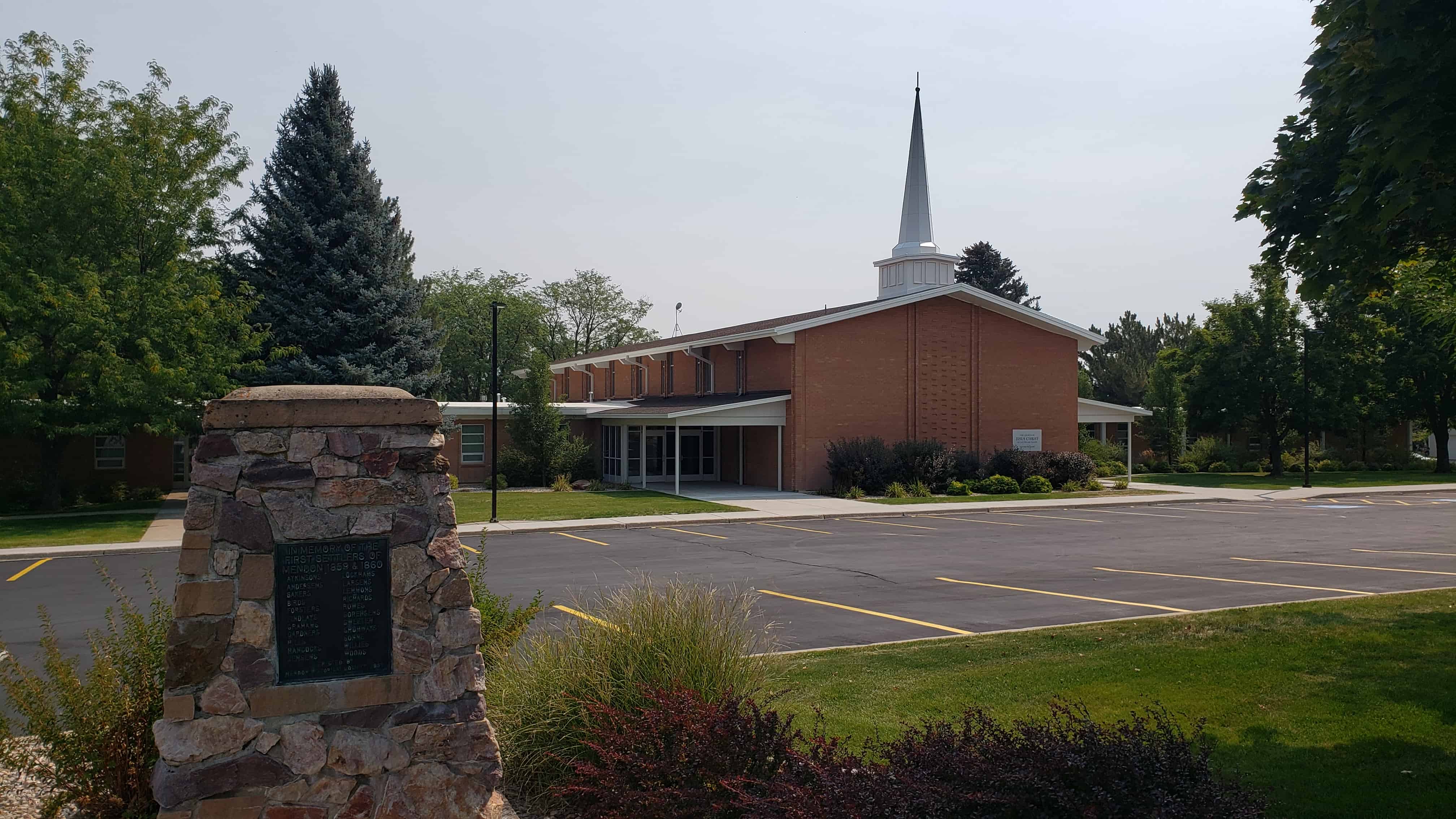
In Memory of the first settlers of Mendon 1859 & 1860
Atkinsons
Andersens
Bakers
Birds
Forsters
Findlays
Grahams
Gardners
Hills
Hancocks
Jensens
Luckhams
Larsens
Lemmons
Richards
Rowes
Sorensens
Sweeten
Shumways
Sonne
Willies
Woods

Erected by Mendon Historical Society, 1957

Located at 20 North 100 West in Mendon, Utah

Wellsville Tabernacle

09 Thursday Dec 2021

Posted by Jacob Barlow in Uncategorized

≈ Leave a comment

Tags

Cache County, Historic Buildings, NRHP, Tabernacles, utah, Wellsville

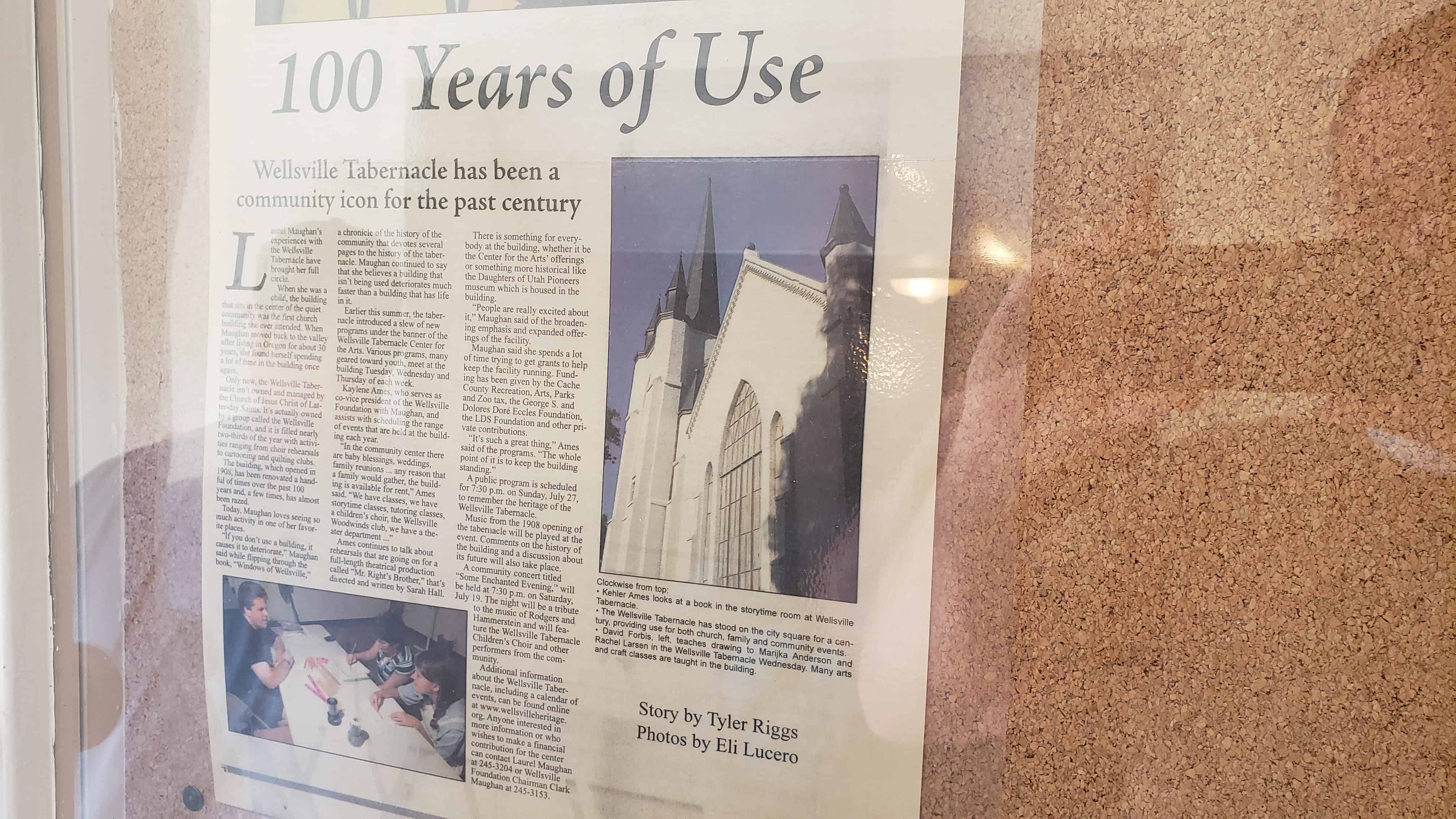
The Wellsville Tabernacle is one of two tabernacles in Cache Valley, and dominates the south end of the valley. Built during the years 1902 to 1908, it demonstrates the persistence of the Mormon village form, based on cooperative idealism. In spite of alterations, primarily to the tower, the architectural form and imposing scale make the tabernacle one of the four major landmarks in the Mormon settlements of northern Utah.

Plans for the Wellsville Tabernacle were prepared by the architect C.T. Barrett under the direction of Bishop Evan R. Owen. Ground was broken in 1902 by former Bishop William H. Maughn who had served as bishop for forty years.

The cornerstones were laid by Apostle Owen Woodruff and President Seymour B. Young in 1903. It was dedicated June 28, 1908 by Anton H. Lund of the Mormon Church’s First Presidency.

All the materials came from local sources. A rock quarry, a lime kiln and a brickyard were operated by local men. William S. Poppleton supervised the stone work, quarried in nearby Sardine Canyon. Job Miller Sr. made the red brick, which was laid by Fred Douglas and Co. Alex Hill provided the rough lumber from his sawmill in Blacksmith Fork Canyon. Thomas Thorpe Sr. directed the plaster work and the Brenchley Brothers did the iron work. Daniel and William Walters and Francis O. Gunnell were responsible for the carpentrywork. Professor Emil Hansed, a landscape gardener, supervised the planting of the lawn, shrubs, and trees. The total cost of the building was $65,000.

Located at 75 South 100 East in Wellsville, Utah and added to the National Register of Historic Places (#80003893) November 26, 1980.

Related:

  • LDS Tabernacles

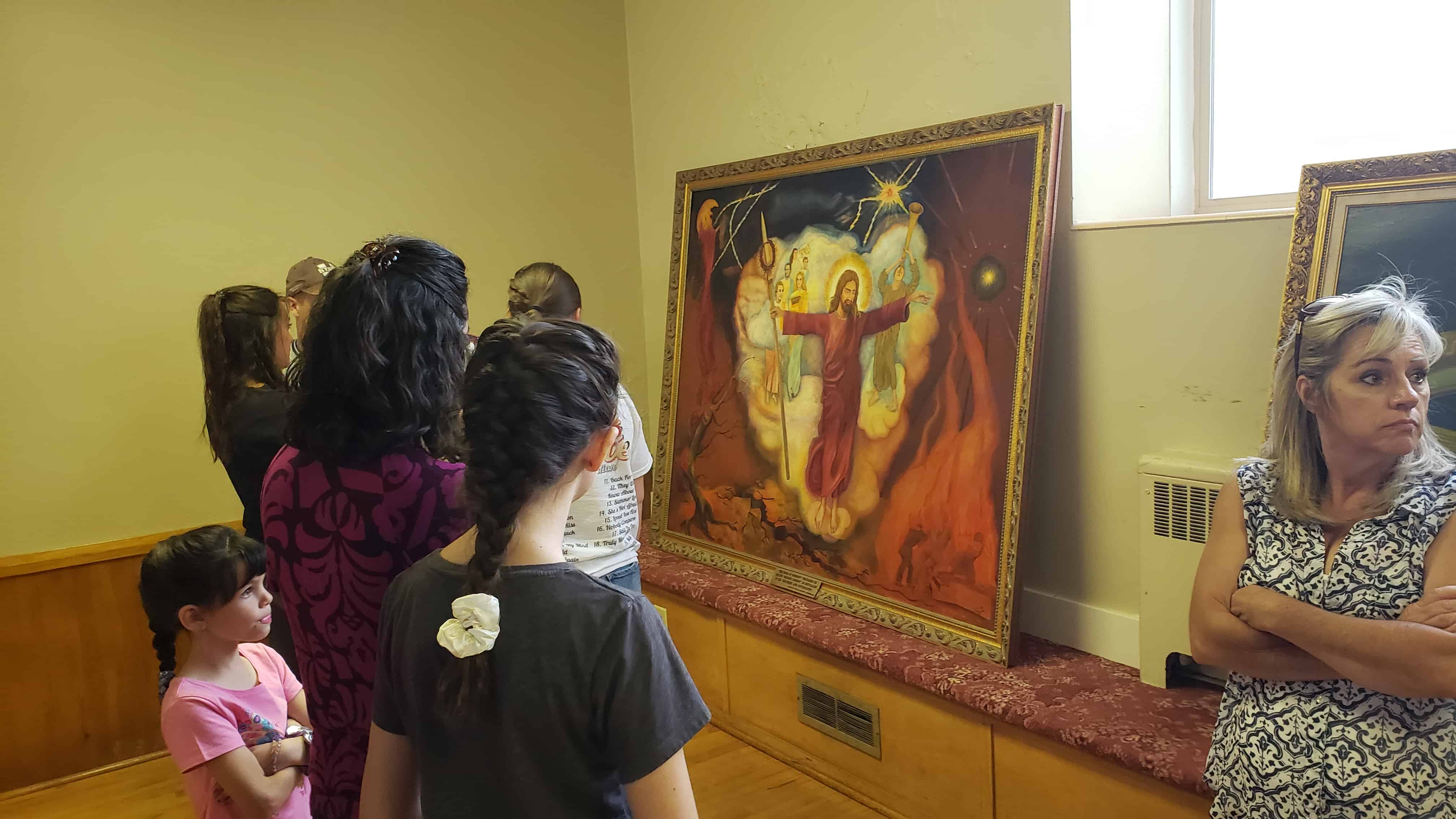
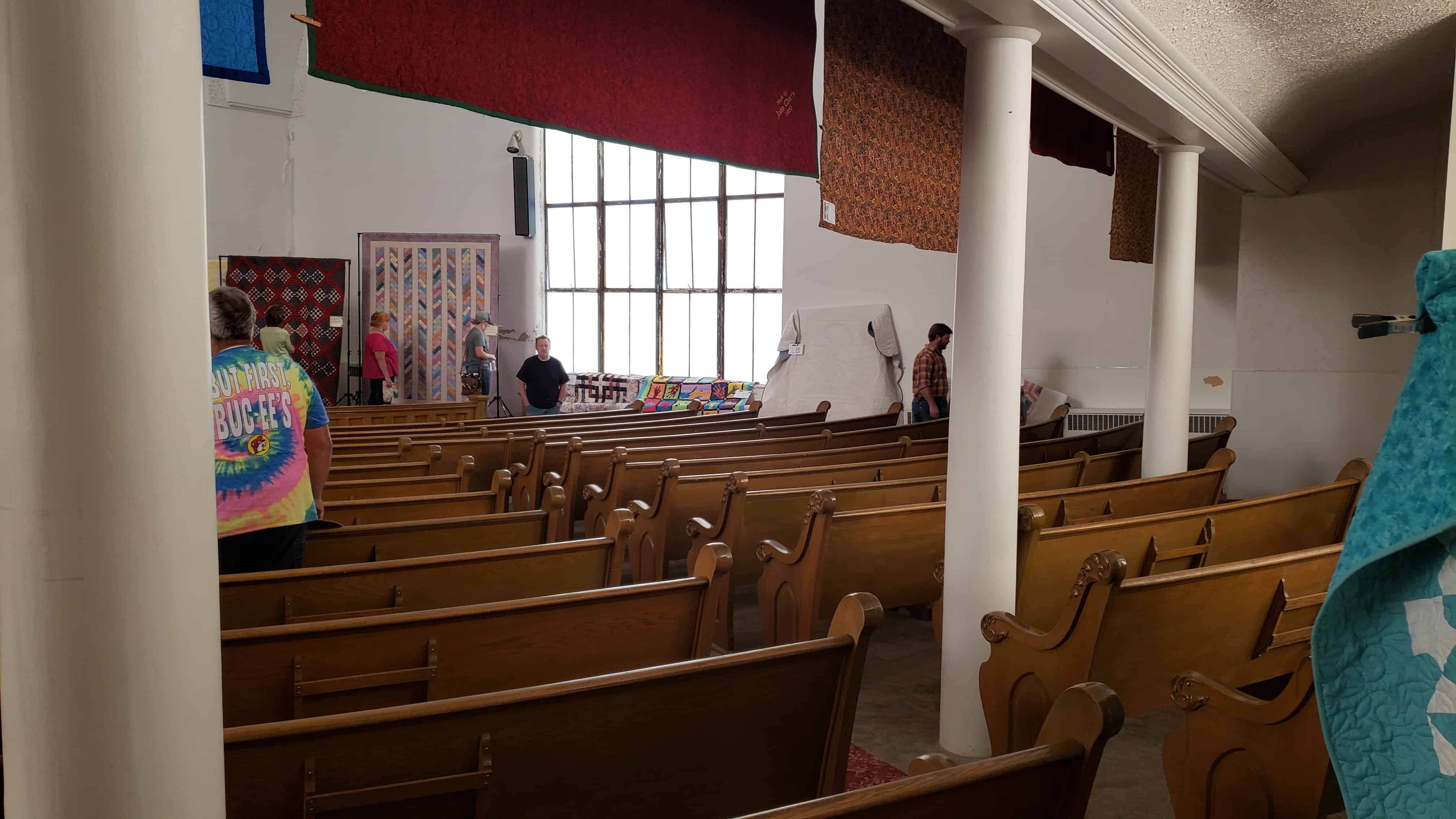
I stopped by the town celebration on September 6th, 2021 and they were letting people inside – they said nobody had been let inside for ten years. Here are some interior photos:

The Wellsville Tabernacle is one of two tabernacles in Cache Valley, and dominates the south end of the valley. Built during the years 1902 to 1908, it demonstrates the persistence of the Mormon village form, based on cooperative idealism. In spite of alterations, primarily to the tower, the architectural form and imposing scale make the tabernacle one of the four major landmarks in the Mormon settlements of northern Utah.

Plans for the Wellsville Tabernacle were prepared by the architect C.T. Barrett under the direction of Bishop Evan R. Owen. Ground was broken in 1902 by former Bishop William H. Maughn who had served as bishop for forty years. The cornerstones were laid by Apostle Owen Woodruff and President Seymour B. Young in 1903. It was dedicated June 28, 1908 by Anton H. Lund of the Mormon Church’s First Presidency.

All the materials came from local sources. A rock quarry, a lime kiln and a brickyard were operated by local men. William S. Poppleton supervised the stone work, quarried in nearby Sardine Canyon. Job Miller Sr. made the red brick, which was laid by Fred Douglas and Co. Alex Hill provided the rough lumber from his sawmill in Blacksmith Fork Canyon. Thomas Thorpe Sr. directed the plaster work and the Brenchley Brothers did the iron work. Daniel and William Walters and Francis 0. Gunnell were responsible for the carpentrywork. Professor Emil Hansed, a landscape gardener, supervised the planting of the lawn, shrubs, and trees. The total cost of the building was $65,000.

Richmond Carnegie Library

08 Monday Nov 2021

Posted by Jacob Barlow in Uncategorized

≈ Leave a comment

Tags

Cache County, Carnegie Libraries, Libraries, Richmond, utah

Built in 1913-14, the Richmond Carnegie Library is significant as one of sixteen remaining Carnegie libraries of the twenty-three built in Utah. Thirteen of the sixteen library buildings maintain their original integrity and are included in the Carnegie Library Thematic Resource Nomination. In addition to making important contributions to public education in their respective communities, these libraries are Utah’s representatives of the important nation-wide Carnegie library program, and they document its unparalleled effect in the establishment of community-supported, free public libraries in Utah.

Located at 38 West Main Street in Richmond, Utah and added to the National Historic Register (#84000147) on October 25, 1984.

Related:

  • Carnegie Libraries in Utah

The Richmond Carnegie Library was built in 1913-14 with an $8,000 grant from millionaire/philanthropist Andrew Carnegie. Carnegie funded the construction of over 1650 library buildings in the U.S., 23 of which were built in Utah
communities. The major conditions upon which all Carnegie grants were given were that the recipient community donate the building site and provide an annual maintenance budget of at least 10% of the grant amount.

On July 1, 1912, a special election was held in Richmond to determine public
support for a city library tax. Approval for the tax was overwhelming, with
95 of 107 voters chosing to support the move. Five days after the vote, a
special session of the city council was held to appoint members of the Board
of Directors for the Public Library. Three months later, on October 14, 1912,
the city council passed a resolution accepting an $8000 grant from Andrew
Carnegie for the construction of a library building, concurrently accepting
the accompanying $800 annual maintenance commitment.

Although the town received the Carnegie grant in the fall of 1912, it was not until the fall of 1914 that the building was completed. Land for the library was purchased in March 1913 from Mary J. Hendricks for $800, and in April library board members traveled to Salt Lake City to inspect the library facilities there in order to get a better idea what they wanted in their own library. The architectural firm of Watkins & Birch were awarded the design contract for the building, and August S. Schow was given the construction contract. The building was officially opened on October 20, 1914, and Lulu Burnham was appointed librarian.

Watkins & Birch, a Provo, Utah based architectural firm, actively pursued Carnegie library contracts throughout the state and were responsible for designing several other library buildings besides this one. Their design for this and other library buildings conformed to the rectangular, one-story with raised basement design recommended by the Carnegie Library Board as being the most efficient and economical plan for a small town library. Other library buildings designed by the firm include those in Ephraim, Provo, Eureka, Manti, Cedar City, and possibly Garland, since it closely resembles this building in Richmond.

Although the Richmond Carnegie Library was apparently not the first library in
the town, it has continued to serve as the town’s library since its
construction up to the present, and it is the only building in town known to
have served as a library.

The form of the Richmond Carnegie Library is similar to that of many other Carnegie Libraries in Utah. It is a one story yellow brick rectangular building with a raised basement and a flat roof. It was designed in no particular style, but the symmetrical facade, the division of the facade by pilasters, the raised basement, the capitals of the pilasters, the wide
cornice, and the parapet above the cornice reflect Classical Revival influences.

Pilasters with simple geometric capitals divide the building into bays. The façade is five bays wide, the center bay being a projecting pavilion with the main entrance set into it. Each of the window bays is a large three pane opening with a transom that is also divided into three panes. The entrance pavilion not only projects beyond the rest of the wall, but it is framed by brick piers which have geometric capitals that differ from those on the rest of the building. Into each pier is set a small rectangular window, each highlighted by a band of red brick. The entry itself is also framed by thin bands of red brick. The original door has been replaced by a modern glass door, and the transom has been filled in.

The ends of the building are two bays wide, again defined by pilasters, and there are two oblong three part windows per end. The rear of the building like the façade is divided into five bays. The pilasters along that wall, however, have no capitals and there are no distinctive decorative features on that side of the building. There are small square windows in four of the five bays, and long, narrow windows have been set into the central bay.

Red brick which contrasts with the yellow brick of the building, has been used to provide visual interest and is the key to the decorative scheme of the building. Narrow strips of it have been arranged to create the geometric capitals, to frame the rectangular windows in the entrance piers, and to frame the entrance area. Red brick has also been used to outline rectangles of yellow brick on each end of the building and to create a keystone centered in the lintel of each window on the front and sides of the building.

Except for the change made to the entrance, the exterior of the building is virtually unaltered. That change in no way affects the original integrity of the building.

Smithfield Carnegie Public Library

29 Wednesday Sep 2021

Posted by Jacob Barlow in Uncategorized

≈ Leave a comment

Tags

Cache County, Cache Valley, Carnegie Libraries, Historic Buildings, Libraries, NRHP, Smithfield, utah

Smithfield Carnegie Public Library

On February 3, 1916, the Daughters of the Utah Pioneers, along with several other civic groups, presented the idea of establishing a public library to Mayor Joseph J. Richardson and the Smithfield City Council. Constructed in 1921 at a cost of $20,000, the Smithfield Carnegie Public Library is significant as the first public library in Smithfield and is a fine example of the work of Fred. W. Hodgson, a prominent local architect who designed many other buildings in Cache Valley. The Smithfield Public Library was one of more than 1,400 public libraries established throughout the U.S. between 1898 and 1920, primarily through grants from Andrew Carnegie, a multi-millionaire and steel magnate who felt that the rich had an obligation to use their excess wealth for the benefit of mankind. Carnegie hoped to stimulate a community’s commitment to establishing a free library program by giving it much, but not all, of the money required to build the library, with the understanding that the community would be responsible for furnishing and maintaining it; this was the case in Smithfield. Continually used as a public library, the building is a key historic resource within the community of Smithfield. A new addition to the building was completed in 2014.

Related:
  • Carnegie Libraries in Utah
  • Pilkington Memorial

Located at 25 North Main Street in Smithfield, Utah

← Older posts
Newer posts →

Follow Jacob

Follow Jacob

Blog Stats

  • 2,049,041 hits

Social and Other Links

BarlowLinks.com

Recent Posts

  • Battle Line at Railroad Cut
  • Woodson House
  • 10904 E Winner Rd
  • 10906 E Winner Rd
  • 10915 E Winner Rd

Archives


Loading Comments...