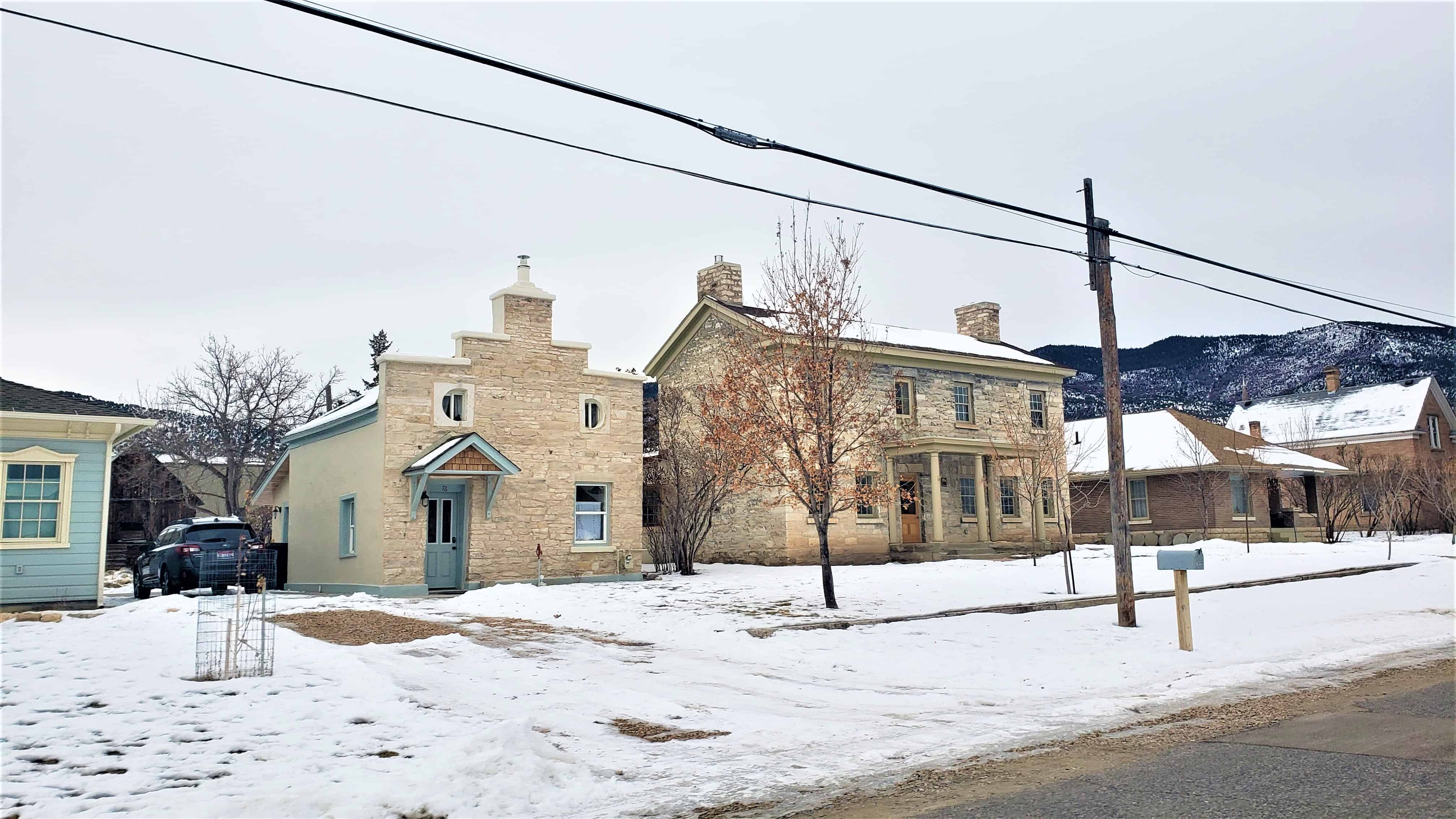
The two-story limestone home built by John Patten, Jr., c. 1854 is a well-preserved example of early vernacular Mormon architecture in Utah. Patten played a prominent role in the settlement of Manti, established in 1849 as one of the earliest of approximately 400 colonies in the “Mormon Corridor.”
Located at 84 West 300 N in Manti, Utah and added to the National Historic Register (#77001315) on August 22, 1977.
John Patten was born in Fairplay, Green County, Indiana, June 20, 1825. His family was among the earliest converts to the Church of Jesus Christ of Latter-day Saints (Mormon Church). As John grew up, he experienced the many persecutions of the Mormons in Missouri and in 1839 was among those to sign a covenant of protection and removal, authored by Brigham Young in response to an order of extermination by General Clark of Missouri. Patten came to Utah in 18SO and located in Manti, one of Utah’s oldest cities, where he assisted in building the first fort in 1852. He took an active part in the Walker and Black Hawk wars and was one of three witnesses to receive a treaty of peace and deed to Sanpete County from Arapine, Chief of the Ute Indians, May, 1855. Patten was prominent in civic activities, serving as a representative to the Territorial Legislature, Sheriff of the county and member of the City Council. He was married in Manti to Candace Smith who later died, leaving two sons and three daughters. He was married again to Emily, a widow and sister of his first wife. She had three sons and two daughters.
Patten was a farmer by occupation. He built the Patten Reservoir and Patten Ditch, an irrigation system still in use which runs water to farmland five miles north of Manti. Somewhat of an inventor, Patten is credited with constructing the first “go-devil,” a device used to lay off furrows for irrigation flow in farm fields. As a sideline, he also tried to develop a “perpetual motion” machine.
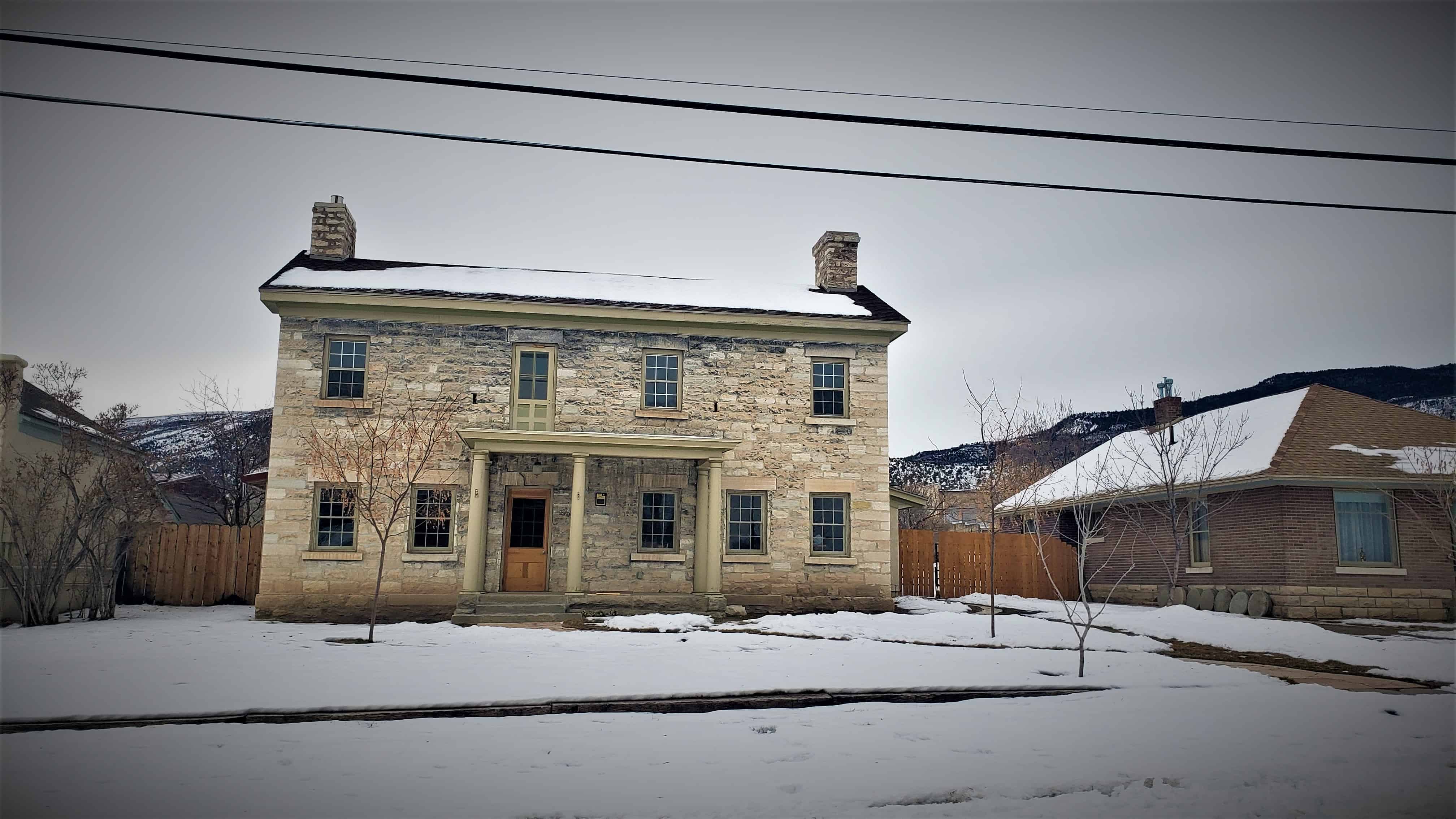
John Patten built his two-story limestone home c. 1854 after living next to the oolitic limestone quarry for a few years. The vernacular style home represents the earliest and most primitive form of stone masonry construction in pioneer Utah. The walls of the home were laid in coursed rubble using crude mud mortar, most of which has washed away. Local residents call this mode of construction “dry wall.” The two-over-two plan with dirt floor cellar also documents a typical early Mormon pioneer plan type. Although some alterations and small additions of brick and wood have been made, the John Patten Home is basically well-preserved. The home was lived in continuously until 1975 when it became a museum for the Daughters of the Utah Pioneers.
The John Patten Home is a primitive vernacular residence, constructed of native oolitic limestone and red pine in about 1854. The home has a 2/2 plan over a full basement cellar. The basement has a pressed dirt floor, contains two rooms and has access from an outside door on the west and from stairs under a trap door in the floor of the northern room above. The stone walls in the basement are exposed, as are the large split-log puncheons which support the first floor. In the northern basement room is a large stone table used for butchering and processing food.
Built in three compatible stages between the 1850’s and 1880’s, the Tuttle-Folsom Home was the residence of several of Manti’s and Utah’s significant historical figures. The original owner is unknown, but Luther T. Tuttle, the first known owner, was two term mayor of Manti and the mayor who received title to all of surveyed Manti from President U. S. Grant in 1872. Tuttle was also a leading merchant, banker, livestock raiser and served four terms as a territorial legislator. In 1880, Tuttle sold his home to William H. Folsom who had been called to Manti to be architect for the Manti Temple. While living in the home, Folsom designed other notable structures including tabernacles in Manti, Provo and Moroni, the Provo Opera House and many important residences. In 1890, John C. Witbeck, known for his development of the controversial Kofod or Ancient Mound wheat, purchased the home. He sold it in 1895 to John E. Metcalf, a prominent merchant and stockraiser who partitioned off some of the rooms and converted the home into an hotel known as “the Metcalf House.” The partitions were removed and the original plan restored by Mr. and Mrs. Clarence Miller, owners for 40 years prior to the recent purchase of the home by Historic Utah, Inc.
Built of native oolitic limestone, the home is in nearly original condition today and documents craftsmanship and design typical of early vernacular masonry architecture in Manti.
Located at 195 West 300 N in Manti, Utah and added to the National Historic Register (#77001316) on July 21, 1977.
A comparative study of Manti architecture and building technology indicates that the earliest portions of the Tuttle-Folsom home was constructed in the 1850’s, although no known records show original ownership or date of construction. Property records from 1872 show that when Luther T. Tuttle, then mayor of Manti, received title to Manti through a land patent from President Ulysses S. Grant, the home he deeded to himself is the Tuttle-Folsom home here discussed.
Luther T. Tuttle was born November 19, 1825 in New York City and came to Utah in October, 1847, as a member of the Mormon Battalion. After serving with the battalion, Tuttle engaged in fur trading as an agent for Peter A. Sharpey of the American Fur Company. A Mormon convert, Tuttle settled permanently in Manti, Utah, in 1863. Tuttle soon became a leading citizen. He was elected mayor for two terms (1867-1873) and became a prominent merchant, banker and sheepraiser. Upon arriving in Manti, Tuttle opened a general store under the firm name of Tuttle and Fox. After selling out to the local co-op, Tuttle entered the general merchandise and lumber business with Harrison Edwards. As the firm grew, it erected the Tuttle Block in 1894, a large two story commercial building with an iron front. In 1890 Tuttle organized and was president of the Manti Savings Bank. He also owned 3500 head of sheep and was a major stockholder in the Co-op Roller Mills.
In addition to being mayor of Manti, Tuttle served several terms on the Manti City Council and four terms on the Territorial Legislature. He was a prominent church man, holding a position on the High Council of the Sanpete Stake.
In 1880 Luther T. Tuttle sold his home to William H. Folsom who owned the home for the next ten years. Folsom, considered by many to be Utah’s most accomplished pioneer architect, came to Manti in 1877 to supervise construction of the Manti Temple. Folsom was born March 25, 1815 in Partsmough, New Hampshire, the third child of a carpenter. He learned carpentry from his father and worked on the Mormon temple in Nauvoo, Illinois, after accepting the Mormon faith in 1843. After a notable career in building, which saw Folsom construct the forty foot tall Corinthian columns for the territorial capitol in Omaha, the builder/architect moved to Salt Lake City. His significant achievements prior to moving to Manti included the Salt Lake Theatre (1860), Council House (1864, NR), Amussen’s Jewelry (1869, NR), Gardo House, Devereaux House addition (1874, NR), and Z.C.M.I Department Store (1875-1876, NR). He also worked on the tabernacle and temple on Temple Square (1867, 1852-1893 resp., NR)
Through the Manti Temple Association, Folsom, as superintendent, was acquainted with Luther Tuttle, the chairman. After living in the Manti Fort since 1877 Folsom purchased Tuttle’s home in 1880 and thereafter added the 2 story, 4 bedroom wing to accommodate two of his three polygamous families. While working on the Manti Temple (1879-1888, NR) Folsom also prepared plans for several local Mormon tabernacles, public buildings, and homes. Among his more noteworthy designs during his Manti period were the tabernacles in Moroni (1879), Manti (1878-1882, SR) and Provo (1882-1896, NR).
While in Manti, Folsom experienced much persecution as a result of his practice of polygamy. The addition to his home included a secret hiding place in the back of a closet under the stairs (hideout still intact). Once he had to flee from the county disguised as a prospector in order to avoid capture by federal marshals. Folsom was eventually captured and convicted of violating the Edmunds-Tucker Act and was forced to sell his Manti home in 1890 to pay the fine for his conviction.
John C. Witbeck next owned the home. Witbeck gained local fame through his involvement with Amasa Potter who reportedly discovered a stone box filled with ancient wheat, along with two skeletons of early Indians. The “Ancient Mound” wheat was planted and grew. With Witbeck, Potter distributed the wheat throughout the territory and, by one account, “it proved to be the best dry land wheat that they ever tried, and a greater yielder.” Although this story is challenged as being mythical, dry farming wheat bearing the name Kofod or Ancient Mound is still used locally. In 1895 Witbeck sold his home to John E. Metcalf.
John Metcalf was born in England in 1839. After joining the Mormon Church in 1849 he came to Utah with his family in 1853. John engaged in farming and stock raising before moving to Gunnison in 1876 where he operated the local co-op store. After serving as a Mormon missionary in the Southern states, Metcalf came to Manti in 1891. He leased the Temple House, a large hotel built to house men working on the temple. In 1895 Metcalf purchased the Tuttle-Folsom Home, naming it the Metcalf Hotel, and became its proprietor.
The Metcalf family sold the home to Mr. and Mrs. Clarence Miller, ranchers, who removed the extraneous partitions added by Metcalf. In 1976 the Tuttle-Folsom Home was purchased by Historic Utah, Inc., a private preservation association.
Architecturally, the Tuttle-Folsom Home is important for its documentation of pioneer craftsmanship and design. Due to its excellent state of preservation, early building technology in Utah can be appreciated in the home. The exposed puncheon beams, primitive stone cutting and painting, early 6 over 6 double-hung sash windows, porch, roof framing and low ceilings in the oldest part of the home attest to the limitations of pioneer construction methods in the 1850’s. The Folsom addition, however, with its high ceilings, plaster centerpieces and decorative trim, show the advances made in building by the 1880 f s.
L. R. Anderson Home / Lewis and Clara Anderson House
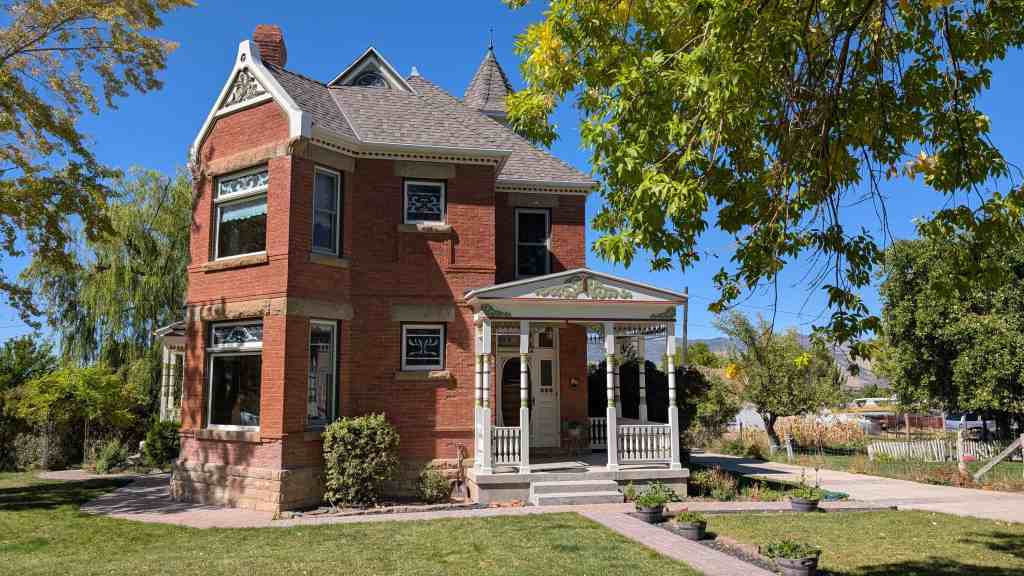
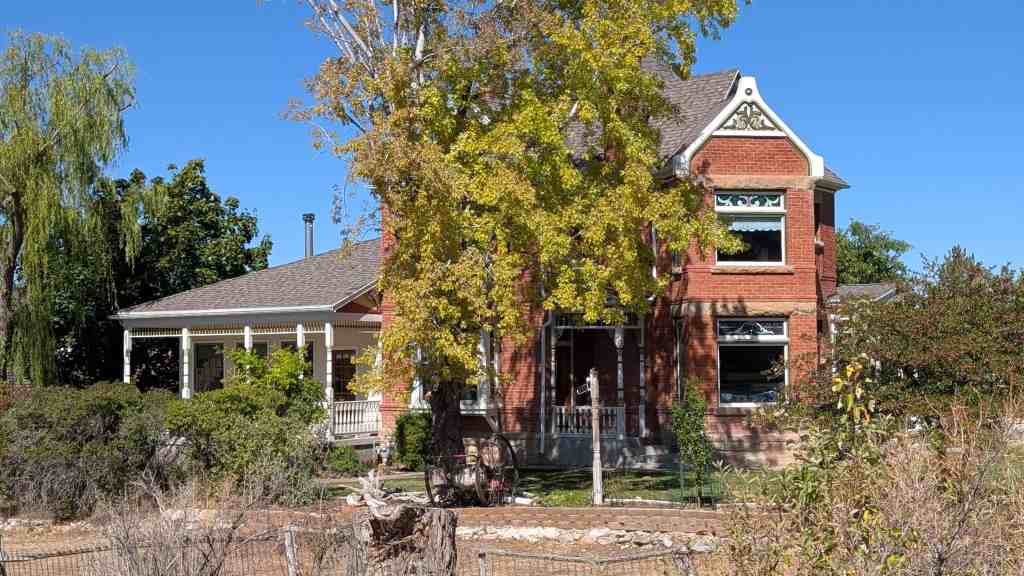
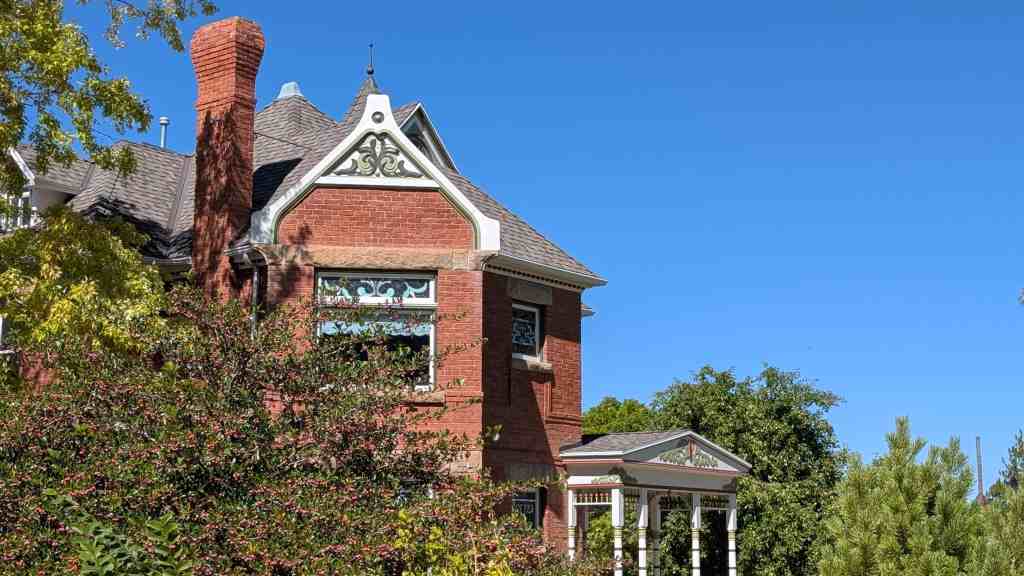
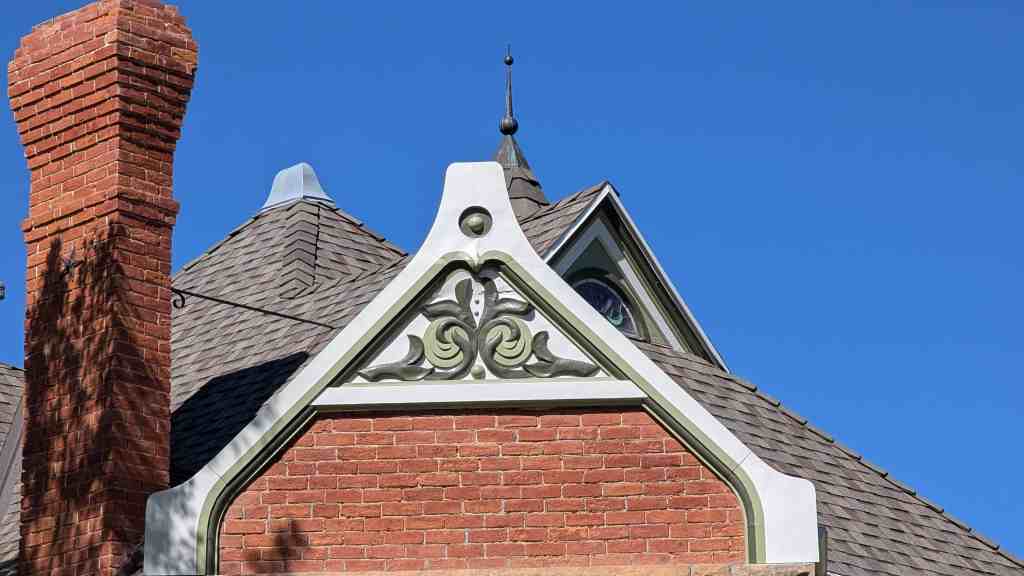
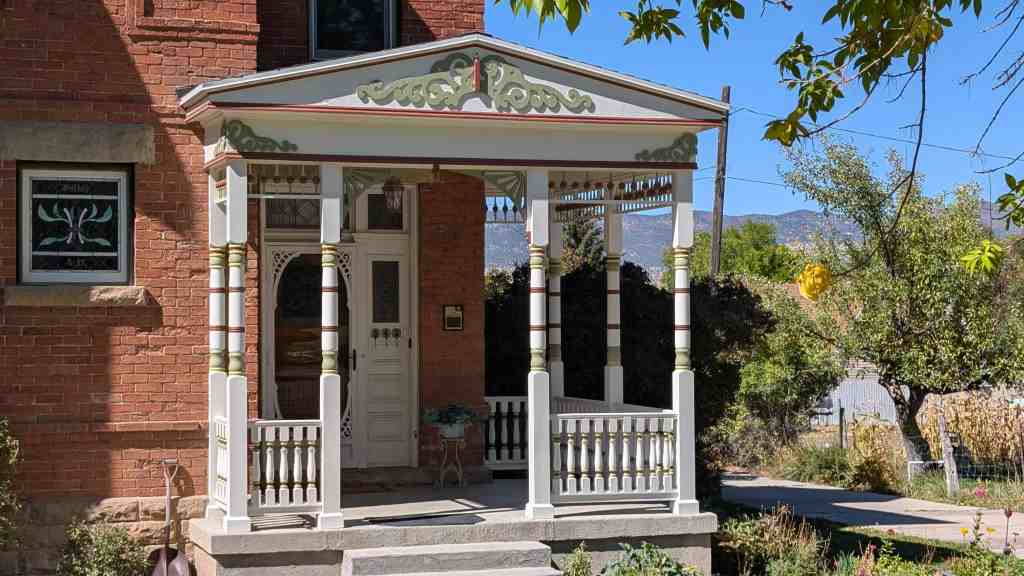
The Lewis and Clara Anderson House, built 1886-1915, is an excellent example of a Victorian Eclectic with Queen Anne detailing house style remaining from the historic period in Manti. This style of architecture documents an important period of growth in Manti and the Sanpete Valley. The design, though executed by a local builder influenced by pattern-books, combines a remarkable unity of composition with elaborate decoration. With its prominent position on Main Street, the Anderson house is one of the most distinctive architectural landmarks of Manti. Both the exterior and interior details of the home have been extraordinarily well-preserved. The Anderson house is also significant for its association with L. R. Anderson, a prominent church leader, politician, and rancher in the area. His leadership in the town of Manti was extensive and impacted the direction of its growth during the first part of the twentieth century.
The Victorian Eclectic style is reflective of changes that occurred in Utah near the turn of the century. The architecture in Utah was founded in American building traditions and the early builders had been, for the most part, isolated from the secular influences of much of the country and used established methods brought with them from their homes of origin. As Utah grew and became more integrated with non-Mormons, the architectural styles that were made popular through pattern books were readily available to Utah builders. The building boom of the 1880s and 1890s corresponded with the growth of the non-Mormon population in Utah and brought with it the opportunity to bring in new building traditions such as those published in the style books, popular in Utah during the late nineteenth and early twentieth centuries. With the introduction of plan books, “the former isolation of rural areas was no longer an obstacle to building due to the widespread dissemination of information and building materials.” Plan book Victorian stylistic features were based upon the use of multiple forms and elements and were probably influential in building the uniquely stylized, eclectic, Lewis and Clara Anderson. The Victorian Eclectic style was popular in Utah between 1885-1905.
Located at 542 South Main Street in Manti, Utah and added to the National Historic Register (#97001629) on January 12, 1998.
Anderson History
Lewis R. (L. R.) Anderson was born in Fountain Green on March 26,1872 to Lewis and Mary Ann Crowther Anderson. L. R. attended Snow College and Brigham Young Academy before becoming a wool broker and rancher. He worked with his father and brothers in the industry and in 1907, along with other investors, acquired ranches in Salina Canyon and incorporated the Manti Livestock Company. He was a prominent personality in the community. He served as mayor of Manti for six years (1902-08). He ran for mayor on a “no more floods program” platform. Under his leadership as mayor, the town of Manti petitioned President Theodore Roosevelt to create a national forest reserve on their mountain. President Roosevelt did so by executive order on May 29,1903. As a result livestock grazing and other use in Manti Canyon was placed under proper management, vegetation was restored on the steep slopes and no more serious floods occurred.
L. R. was an LDS stake president and temple president for 16 years (1943-59), performing the ordinances and ceremonies sacred to the Mormon culture. He and his wife, Clara, entertained LDS general authorities, civic leaders, and numerous businessmen in their home. L.R. served on the Utah State Legislature beginning in 1913 for two terms and was selected as the Speaker of the House of Representatives. During the legislative session, his family lived with him in Salt Lake City. His wife, Clara Maria Munk, was born in Manti on September 4,1873 to Peter Mikkel and Eunice Ann Brown Munk. She and L.R. were married in the Manti Temple on December 11,1895. During the first years of their marriage, L.R. was employed to run the Central Utah Wool Company for $75/month, and Clara was a school teacher for $25/month. L.R. and Clara raised four girls and three boys in this home. During the time L.R. was president of the Manti Temple, Clara was the matron. She also held many positions in the Relief Society, and was president of the Manti Camp of the Daughters of Utah Pioneers. Clara was interested in music and taught it to her children. She considered her primary responsibility to be homemaking, and she helped L. R. entertain the many dignitaries that visited their home.
L. R. began building this house in 1896. The house initially consisted of only two rooms. L. R. was called on an LDS mission for two years and when he returned he began construction on the staircase and upper bedrooms. He later added the back bathroom and kitchen, as well as the basement. Most of these additions were completed by 1899. In 1910, he fenced in the front yard with a wrought iron fence. The last addition to the house was made in 1915 when L. R. built a large bay window in the dining room to display Clara’s plants. In the 1920s, L. R. built a chicken coop and a brick carriage house in the back yard. The Andersons lived here until their deaths, L. R. on October 19,1968, and Clara on May 22,1978.
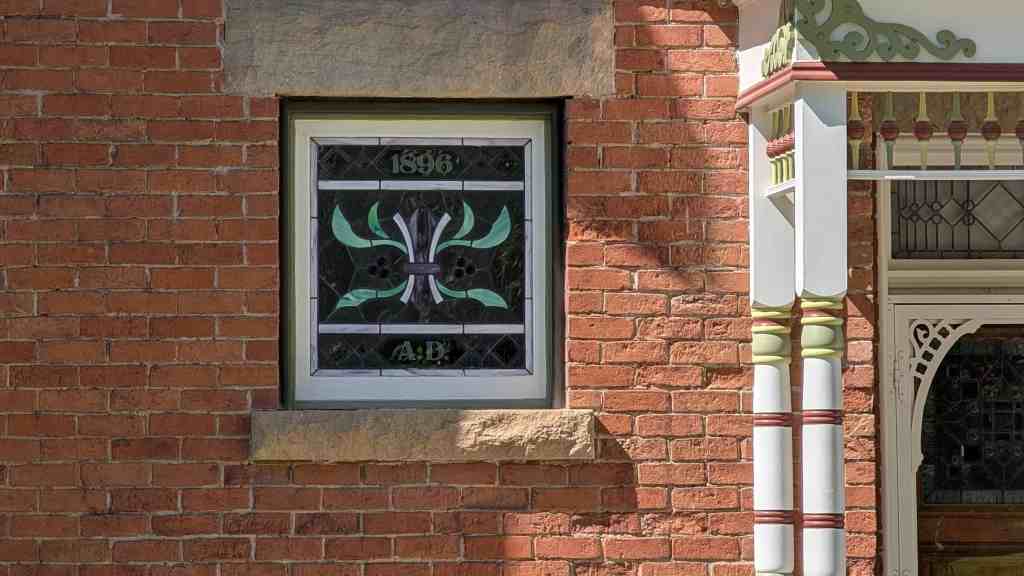
Ronald and Eleanor Mason Sessions purchased the house in 1992. Since then they have done extensive restoration work, such as removing the paint from the exterior brick, restoring the wood finishes throughout the house, and refinishing the floors. They have also reproduced leaded glass windows through the use of historic photos. They added the turret dormer on the north side of the house.
Manti History
Manti, the county seat of Sanpete County, was settled in late November 1849 by 224 men, women, and children, the first settlement south of Provo, Utah. Ute chief Walker invited President Brigham Young of the Church of Jesus Christ of Latter-day Saints (the Mormons) to send a colony of his people to join the encampments of Chief Sanpeetch’s people already in the valley. Jesse W. Fox surveyed the plat 1 for the “city” in the same summer, and Manti was incorporated in February 1851.
Pioneer subsistence agriculture soon gave way to the production of grain for the market. The Indian hostilities that had began in the 1850s ended in the 1870s opening. Adjacent mountain rangelands during the summer for a range livestock industry, mostly large sheep herds. Hay production increased subsequently. Then between 1889 and about 1905 most Sanpete Valley towns experienced annual summer floods, which followed cloudbursts on overgrazed lands at elevations over 8,000 feet. In the 1890s the Manti City Council put into effect the political action that by 1903 resulted in the protection of its watershed by the federal Forest Service: the Manti National Forest.
The railroad system was important to the town’s agricultural and ranching industries. The first into Manti was the Sanpete Valley Railway in 1880, from Nephi. The Denver and Rio Grande Western (D&RGW) completed its line to Manti from thistle Junction in 1890, and extended its operations beyond Manti the following year. The D&RGW purchased the Sanpete Valley Railway in 1910, and immediately abolished its section between Ephraim and Manti. The last passenger train left Manti for Salt Lake City in 1949.
The Church of Jesus Christ of Latter-day Saints is a significant part of the town of Manti and is closely tied to its leadership. The Mormon temple, begun in 1877 and dedicated in 1888, is an important part of the community’s cultural makeup and is a central focus of the town. The LDS concept of the relationship between this world and the next is related to the sacred ceremonies of the temples. Only active Latter-day Saints may enter the temples. Mormons attend the temples to perform baptism, “endowment,” marriage, and “sealing,” and other ordinances for themselves and vicariously in behalf of the dead, especially loved ones and ancestors, in the belief that the dead will hear the gospel preached, that these earthly ordinances must be performed for them, and that they will have their own opportunity to accept or reject. The site of the Manti Temple is where over 100,000 people come yearly to witness the “Mormon Miracle Pageant”.
L.R. & Clara Anderson House
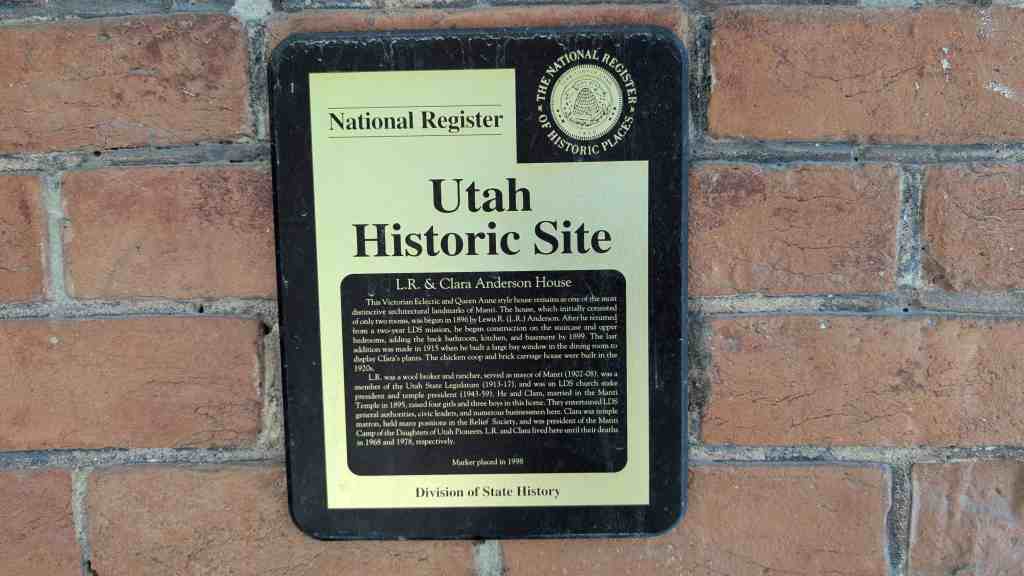
This Victorian Eclectic and Queen Anne style house remains as one of the most distinctive architectural landmarks of Manti. The house, which initially consisted of only two rooms, was begun in 1896 by Lewis R. (L.R.) Anderson. After he returned from a two-year LDS mission, he began construction on the staircase and upper bedrooms, adding the back bathroom, kitchen, and basement by 1899. The last addition was made in 1915 when he built a large bay window in the dining room to display Clara’s plants. The chicken coop and brick carriage house were built in the 1920s.
L.R. was a wool broker and rancher, served as mayor of Manti (1902-08), was a member of the Utah State Legislature (1913-17), and was an LDS church stake president and temple president (1943-59). He and Clara, married in the Manti Temple in 1895, raised four girls and three boys in this home. They entertained LDS general authorities, civic leaders, and numerous businessmen here. Clara was temple matron, held many positions in the Relief Society, and was president of the Manti Camp of the Daughters of Utah Pioneers. L.R. and Clara lived here until their deaths in 1968 and 1978, respectively.
This house was the first home in Manti to have electricity. It was built in 1851 by Ezra Shomaker. The east addition was added around 1900. Shomaker served as Manti mayor twice. the house was recently rescued from demolition and is being restored by Shannon and Jim Miller.
The house is the 2nd oldest home still standing on its original foundation in Utah (after the Fielding Garr Ranch House).
It is located at 194 West 400 North in Manti, Utah and was added to the National Historic Register (#14000864) on October 15, 2014.
The Ezra and Abigail Tuttle Shomaker House, is a 1½-story stone and brick house, located at 194 W. 400 North in Manti, Sanpete County, Utah. The Greek Revival and Victorian Eclectic-style house was built in three major phases between 1866 and 1895. The earliest section of the house is a 1½-story Greek Revival-style hall-parlor house built of cream-colored limestone circa 1866. Around 1880, a one-story stone ell was built on the rear. The final wing was built of brick circa 1895, and modified the floor plan to a double cross wing or H plan. The north porch was enclosed a few years later, and later rebuilt in 2010. The house is built on a stone foundation with some areas of newer concrete. The roof was resheathed with small grey fiberglass shingles in 2004. The Shomaker House sits on the southwest corner of a one-acre lot with new landscaping. The property includes a non-contributing altered stone garage, and a contributing group of small, connected agricultural structures. A non-contributing garage and workshop was built behind the house in 2007. The current owners, who purchased the house in 2002, have completed a substantial eight-year rehabilitation of the house. The 2003 to 2011 rehabilitation has reversed a considerable amount of damage and alteration to the property that occurred during in the 1980s and 1990s, and has modified the interior plan.
The Shomaker house faces west. The walls of the hall parlor (west wing) are built of a cream-colored oolite limestone laid in coursed ashlar. The blocks are finished to various lengths but trimmed to a uniform height to allow for even courses. The surface of the stones is only lightly tooled. The mortar was later replaced with a Portland cement mix, but the current owners have recently removed the concrete and replaced it with a lime-based mortar. The foot print of the west wing is approximately 36 feet by 19 feet. The ridgeline of the simple gable roof runs parallel to 200 West. The façade (west elevation) of the hall parlor is symmetrical with a full-width porch. The porch deck is a circa 1950s concrete replacement for the original wood deck. The porch roof is hipped and supported on square columns featuring paneled-box capitals and plinths. There are four full columns and two engaged columns with slender arched brackets between them. This Victorian Eclectic-style porch was probably added to the house circa 1895. A similar porch is found on the south elevation of the ell. The porch elements were rehabilitated and missing pieces replicated during the recent rehabilitation. The porch wood is painted white.
Around 1920, the front porch was altered to add a sleeping-porch dormer to the center of the façade. The sleeping porch had screened windows and a shingled base. The screens were replaced with aluminum windows in the 1970s. During the recent rehabilitation, the heavily damaged dormer was retained, but rebuilt to be open with simpler style to complement the classical elements of the façade. The dormer is sheathed with narrow boards. It has a new door flanked by two double-hung windows. The pedimented dormer roof is supported by columns similar to the main porch, and a wood balustrade with simple square balusters runs between each of the columns. The west-facing principal façade is symmetrically composed, with a center door flanked by a pair of double-hung vinyl windows on the main floor with false muntins in a nine-over-nine pattern. The original wood casings were retained to frame the window openings. The limestone stone lintels and sills are dressed, and also serve as a decorative element for all the window openings.
This house is a one story brick example of a TYPE II pair-house. The house is three rooms wide and is unusual in that it has a symmetrical six-opening façade rather than the three-bay pattern normally employed on houses with this plan. There is a limestone foundation which supports the locally produced, yellow brick walls. Decorative external features are non-existent and the house remains a straight-forward articulation of this vernacular type.
The Peter Hansen house in Manti is architecturally significant as an example of Scandinavian folk building in Utah. The house contributes historically to | the thematic nomination, “The Scandinavian-American Pair-house in Utah.”
Peter Hansen was born in Denmark and emigrated to Utah in the 1860s. Hansen was a brick mason who utilized his special skill in building his own house, probably about 1875. Brick was a rare construction material in Manti prior to the opening of the Jacobsen brickyard in the late 1880s. Hansen probably fired his bricks in a kiln located on the property. In 1882, the house was sold to Sarah Bell Peacock for $500.
Located at 247 South 200 East in Manti, Utah and added to the National Register of Historic Places (#83003187) on February 1, 1983.
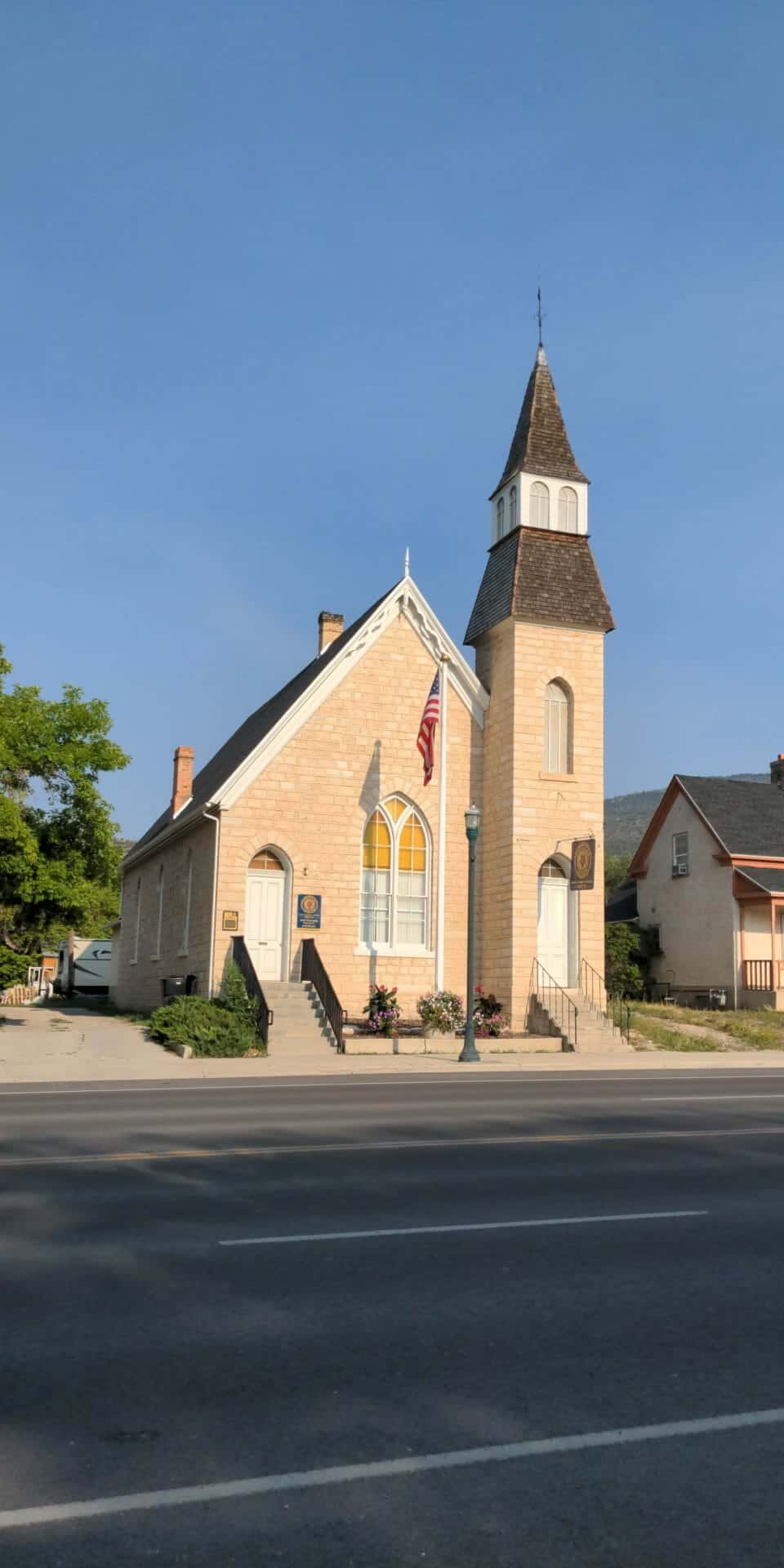
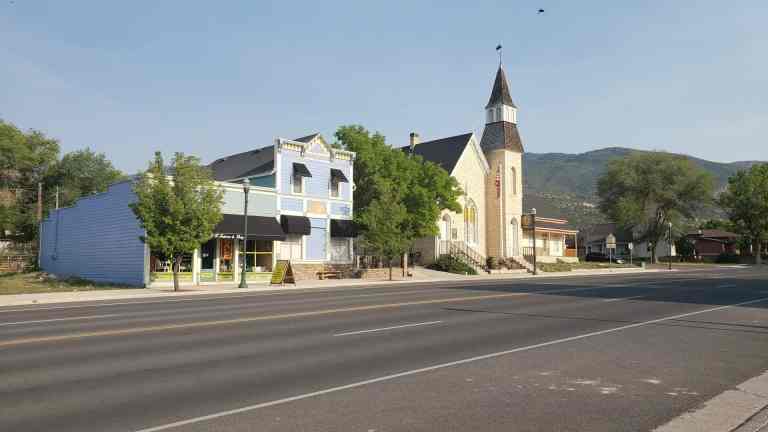
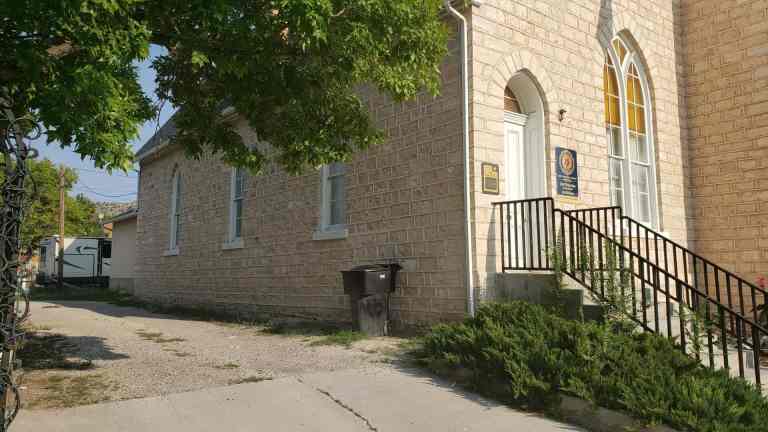
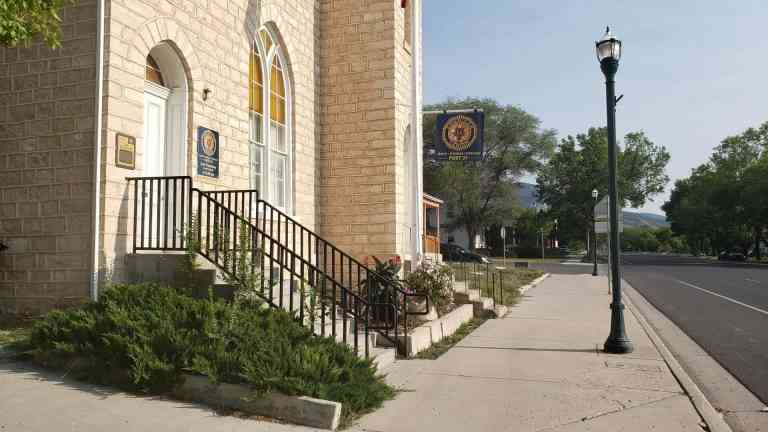
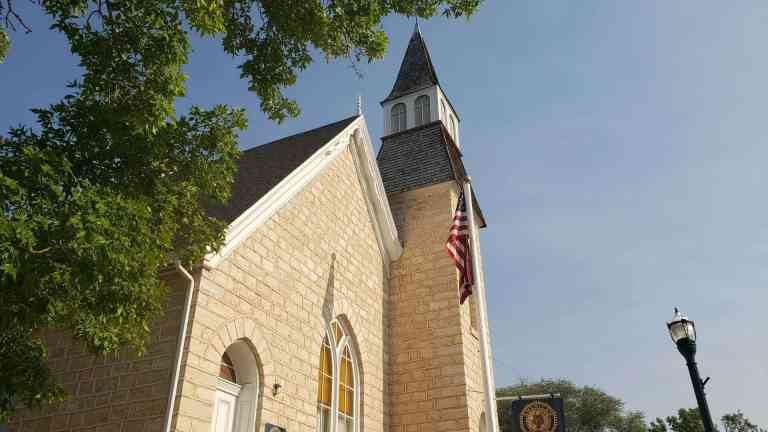
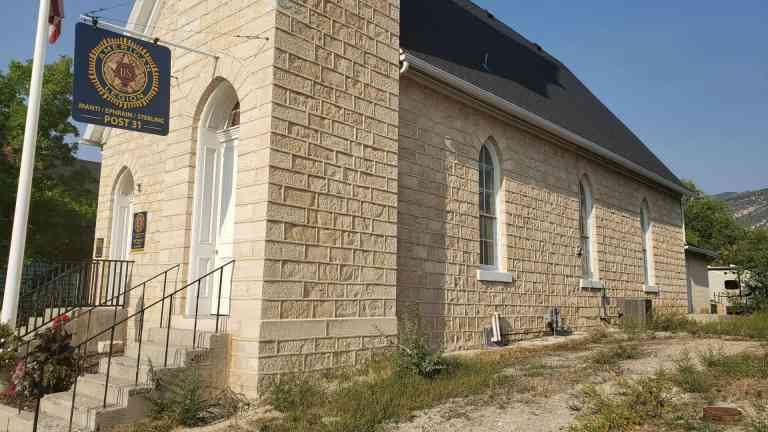
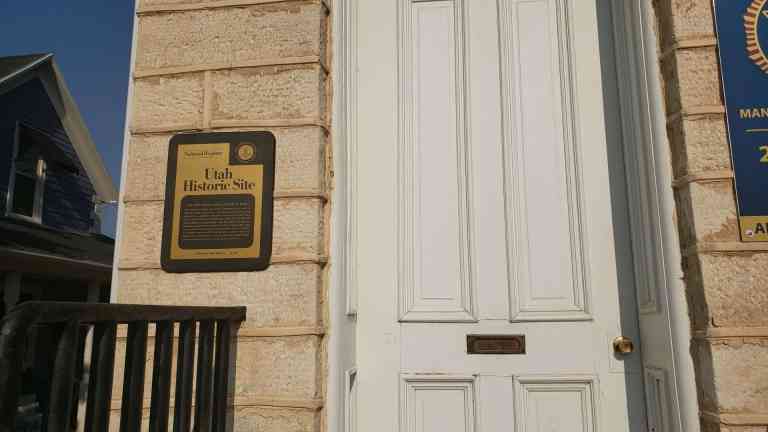
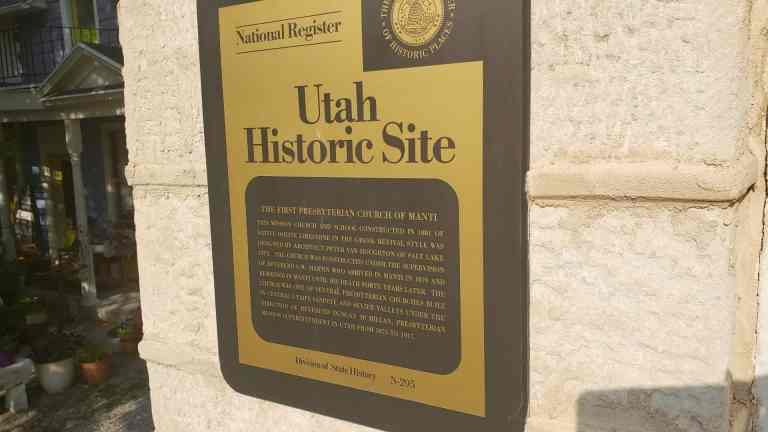
This mission church and school constructed in 1881 of native oolite limestone in the Greek Revival style was designed by architect Peter Van Houghton of Salt Lake City. The church was constructed under the supervision of Reverend G.W. Martin who arrived in Manti in 1879 and remained in Manti until his death forty years later. The church was one of several Presbyterian churches built in central Utah’s Sanpete and Sevier Valleys under the direction of Reverend Duncan McMillan, Presbyterian Mission Superintendent in Utah from 1875 to 1917.
Located at 165 South Main Street in Manti, Utah and added to the national register of historic places (#80003951) on March 27, 1980.
From the national register’s nomination form: The First Presbyterian Church of Manti is significant because it documents the important role of a non-Mormon religious organization in stimulating improved educational opportunities in Utah and because the circumstances surrounding its being brought into existence place aspects of Mormon settlement into a new perspective. The building is a distinguished addition to the built environment of Manti.
Presbyterianism was established in Utah on June 11, 1869, with the arrival of the Reverend Melancthon Hughes to begin a pastorate in Corinne, Utah. Although begun with work in a Gentile boom town, Presbyterianism in Utah quickly became a determined missionary and youth education program aimed principally at converting Mormons.
As a religion whose own beliefs demanded an educated understanding of Christian doctrine, and whose style of religious organization was democratic, Presbyterians perceived Mormonism as a perversion, “a sort of cross between Roman Catholicism and Protestantism with vestigal marks of paganism, too eclectic to be evangelical and yet too evangelical to be wholly non-Christian.”1 Similarly, the authoritarian nature of the Mormon Church and its internal discipline was seen as “despotic suppression of liberty among its votaries and victims.” Convinced that Mormonism was both false and un-American, and, strengthened by the resolve that “Christianity and patriotism are natural allies … the Presbyterian Church discovered that it had mission work in Utah requiring intellectual strength, fervent piety, and executive ability.”
The missionary who epitomized these qualities, the Reverend Duncan McMillan, was also the man who brought into being the Presbyterian missionary strategy in Utah of offering superior educational facilities that would in time create an educated populace who would turn away from Mormonism. McMillan’s first venture demonstrated his ability to capitalize on available opportunities. Hearing of a group of disaffected Mormons in Sanpete County, he received permission from the Presbytery of Utah to proceed to Mt. Pleasant.
When he arrived on March 3, 1875, the Reverend McMillan found a group of potential converts in the Mt. Pleasant Liberal Club. These people were former members of the Mormon Church, either apostate or excommunicated, who had been growing in number since 1862 when a rift in the local Mormon Church organization had produced the defection of a sizeable number of Swedes. They had been joined over the years by others, Anglo-American and from the other Scandinavian groups, whose common bond was that they were now no longer Mormon. Politically they supported the Liberal Party against the People’s (Mormon) Party in territorial politics, but religiously they were adrift.
Since they had progressed far enough in organization to have completed a Liberal Hall just the year before, the situation for the Reverend McMillan was well-nigh perfect … to have both a congregation and a meeting place.
The other situation from which the Reverend McMillan was able to profit was the poor quality of public schools in Utah. While Mormon communities had generally established schools as among their settlement priorities, the nature and product of this schooling left much to be desired. Lack of trained teachers and an irregular and often-interrupted school year meant that most children received an indifferent education at best, but often, none at all. Fashioning benches with his own hands, McMillan opened his first school in Mt. Pleasant on April 20, 1875, with 35 students in attendance.
After overcoming some initial financial problems and with the help of other ministers and a corp of dedicated female Presbyterian missionary teachers, McMillan would establish congregations or schools throughout Sanpete and Sevier counties and in other parts of Utah territory. His school at Mt. Pleasant would become the Wasatch Academy, still operating and listed on the National Register.
In 1877 two former Mormon missionaries, Andrew Jenson and Andrew Nelson, called on McMillan and invited him to start a school in Manti. McMillan quickly called upon his brother and sister-in-law to undertake the project The school grew to 122 pupils, the largest of any school in Sanpete County,’ and a congregation was begun with twelve new Presbyterian converts. The most active elder of the new church was Andrew Nelson, a polygamist with four wives, 24 children, and 118 grandchildren. In order to accommodate to his new Presbyterian sensibilities, Nelson abandoned three of the wives.
McMillan, always sensitive to charges levelled by other Presbyterians that the Utah mission to the Mormons was inordinately expensive, triumphantly reported:
there are more converted Mormons in that one church than in all the churches of Salt Lake City put together …. Now I should like those pious economists to know that our noble, wealthy, Presbyterian Church has “wasted” only $75.00 in the conversion of those ten families, and the planting of Presbyterianism in the midst of this wilderness of sin.
The First Presbyterian Church of Manti had been firmly established by the time the Reverend G. W. Martin and family arrived in 1879 to take up the post of minister. The Reverend Martin would remain at his post in Manti for over forty years, and during that time would witness both the first flush of success as Presbyterian schools and churches sprang up in Sanpete and Sevier county under the prodding of the dynamic McMillan and, sadly, he also witnessed the gradual stagnation of Presbyterian effort. Because the Presbyterian schools had offered solid curricula and able, well qualified teachers, Mormon parents had rarely hesitated to take advantage of this educational opportunity for their children. But by the mid-1890s Mormon Stake Academies and the improved public education system made the Presbyterian schools less attractive, and gradually with the exception of Wasatch Academy the mission schools went out of existence. Proselyting, after the first harvest of Mormon dissidents, became increasingly difficult and conversions were slow. The Manti congregation dwindled through migration and reconversion to Mormonism, and when the Reverend McMillan died in 1917 the Presbyterian Church in Manti died with him. However, unlike some of his firey colleagues, the Reverend Martin was held in considerable esteem by the Mormon community of Manti. They valued his educated (a B.A. from the University of Ohio and a B.D. from Union Theological College) commitment to civic affairs in their community, and his consistently friendly and broad-minded attitude toward Mormonism. His funeral, in the church he had built and served for forty years, was attended by dignitaries of the Mormon Church who had offered the Manti Tabernacle to accommodate the large crowd who attended the service.
Subsequently the First Presbyterian Church of Manti, with its bell that had once rung for city curfews as well as church services, fell into disuse and disrepair. It is currently operated as a lodge hall.
The Victorian influenced home was built in 1894 for James Crawford. It includes an oak staircase, stained glass and etched windows and carved fireplaces. Each room has an outside door with its own private balcony. Crawford was a successful sheep rancher and hired the work done for ten cents an hour. A man and his team were paid $2 for a ten-hour day. Behind the house is a well-preserved barn and carriage house. The home has been in the Dyreng family since the 1930s.
Built c. 1880 of native rock, it served as a hotel for many skilled workers on the Manti Temple. It was acquired in 1897 by John D. T. McAllister, prominent Utah pioneer and churchman.
This house, built about 1858, is a significant example of one of the traditional building designs found in early Utah Vernacular architecture. Three of Manti’s most prominent families lived here. Orville Southerland Cox, the builder, was a leading Mormon colonizer. Jezreel Shoemaker who took over the house in 1861, was three times mayor of Manti. In 1879, Edward Parry, a stone mason from Wales, moved into the house to supervise the masonry work on the Manti Temple.
Located at 50 North 100 West in Manti, Utah – this home was added to the National Historic Register (#82004157) on August 4, 1982.
The Cox-Shoemaker-Parry house is an excellent example of early vernacular architecture in Utah. Constructed around 1858, the six-bay, double-pen plan is representative of the range of traditional building designs found in the state during the second half of the nineteenth century. The house also demonstrates the process by which older houses were remodeled to meet the demands of changing architectural fashion. The home is also significant as the residence of three of Manti’s most prominent families. The builder was Orville Southerland Cox, a leading colonizer of the Mormon West who personally figured in founding and settling a dozen towns. When Cox was called in 1861 by Church authorities to colonize the Big Muddy in Nevada, the home became the property of Jezreel Shoemaker. Shoemaker was a wealthy convert to the LDS Church who arrived in Manti in 1849 with the first contingent of pioneers. He participated on the first city council and later, in addition to his many ecclesiastical duties as a member of the local church hierarchy, served three terms as mayor of the city. Shoemaker died in 1879, just as work was commencing on the monumental temple which the Mormons were planning to build in Manti. Edward Parry, a stone mason from Wales, was called to Sanpete County to supervise the masonry work on the massive limestone edifice. In local tradition, the home is primarily associated with Edward Parry, the master mason of the Manti Temple.
Manti was settled by members of the Church of Jesus Christ of Latter-day Saints, the Mormons, in 1849 as part of their larger colonization of much of the Intermountain West. Although the town was surveyed in 1850, tension between the newcomers and the native Utahns, the Sanpitch (Shoshone) Indians, confined most families to the protective forts which were constructed in the town during the first decade of settlement. 2 A large fort, enclosing nine city blocks was completed in 1854 and several families began building private residences within its stone walls. Orville Southerland Cox, one of the members of the first company to reach Manti, began hauling oolite limestone from the nearby quarry in 1858 for his two-story home.
Orville S. Cox was born in 1815 in Plymouth, New York. 4 A blacksmith by trade, Cox followed the westward moving frontier, landing by 1837 in the Mormon settlement near Lima, Illinois. Here he met and married a Mormon girl, Elvira P. Mills. In 1839, the young couple visited Nauvoo, where Orville was converted and baptized by the Mormon prophet, Joseph Smith. After the martyrdom of Smith and the expulsion of the Saints from Illinois, the Coxes followed the general exodus to Utah in 1847. Orville served two years as the presiding bishop of Bountiful, a town several miles north of Salt Lake City, before being sent in the pioneer party to Sanpete County in 1849. In the new community of Manti, Cox was primarily engaged as a blacksmith and lumber dealer as well as serving as counselor to Bishop John Lowery, Sr. By 1860, Orville Cox had entered into Mormon sanctioned polygamy and had three families. In 1861-1862, he moved his first wife, Elvira Mills, to the town of Fairview, Sanpete County. In 1864, Cox moved with his two other wives, Mary Alien and Eliza J. Losee, to the LDS settlement on the Big Muddy, in Nevada.5 In later years, the Coxes also participated in the cooperative, Utopian experiment at Orderville. Orville S. Cox died in 1888 at Fairview. When Orville Cox pulled out of Manti for Nevada, the big stone house was purchased by Jezreel Shoemaker.
Jezreel Shoemaker was born in Bourbon County, Kentucky, in 1796. Brought up along the frontier, Shoemaker was involved in farming and lumbering when he moved to Adams County, Illinois in 1828. Near Quincy, along the Mississippi, he homesteaded 160 acres and eventually built up the largest farm in the county. When he joined the LDS Church in the early 1840’s, he was one of the wealthiest men to affiliate with the young religious movement. When the church was forced from Illinois in 1846-1847, he sold or gave away his lands and migrated west to Salt Lake City. In 1849 he was called by Brigham Young to settle Manti in Sanpete County. Here he continued to prosper in the accumulation of material wealth as well as spiritual favor. Shoemaker served on the High Council of the local ecclesiastical ward and carried out three terms as mayor of Manti City. He died in 1879.
As the principal city in Sanpete County, Manti was selected in the late 1870’s as the site of a Mormon temple.8 Brigham Young, the church president, dedicated the land in 1877, shortly before his death. William Folsom from Salt Lake City was selected as temple architect in 1875 and work commenced in 1879. Since the monumental building was to be constructed of the local oolite limestone, a mason of considerable talent was required to supervise the work. Edward L. Parry, an immigrant from Wales, was brought into the project in the spring of 1877 as chief mason. Parry had been born in 1818 in Denbigshire, Wales, where he learned the mason’s trade from his father. He joined the LDS Church in 1853 and emigrated to Utah. During the late 1850’s he was instrumental in laying the foundations of the Salt Lake City Temple (not completed until 1893), but in 1862 he was sent south to St. George in Washington County. Here he built the city hall and courthouse and served as master mason on the St. George Tabernacle and temple. In 1877, Parry moved on, well-qualified, for his role in raising the Manti temple, a building considered by many to be the finest example of nineteenth century Mormon architecture. The temple was dedicated in 1888 and Parry then formed the company, E. L. Parry and Sons, specializing in stonework and marble cutting. Edward L. Parry died in 1902. The house remained in the Parry family until 1961.