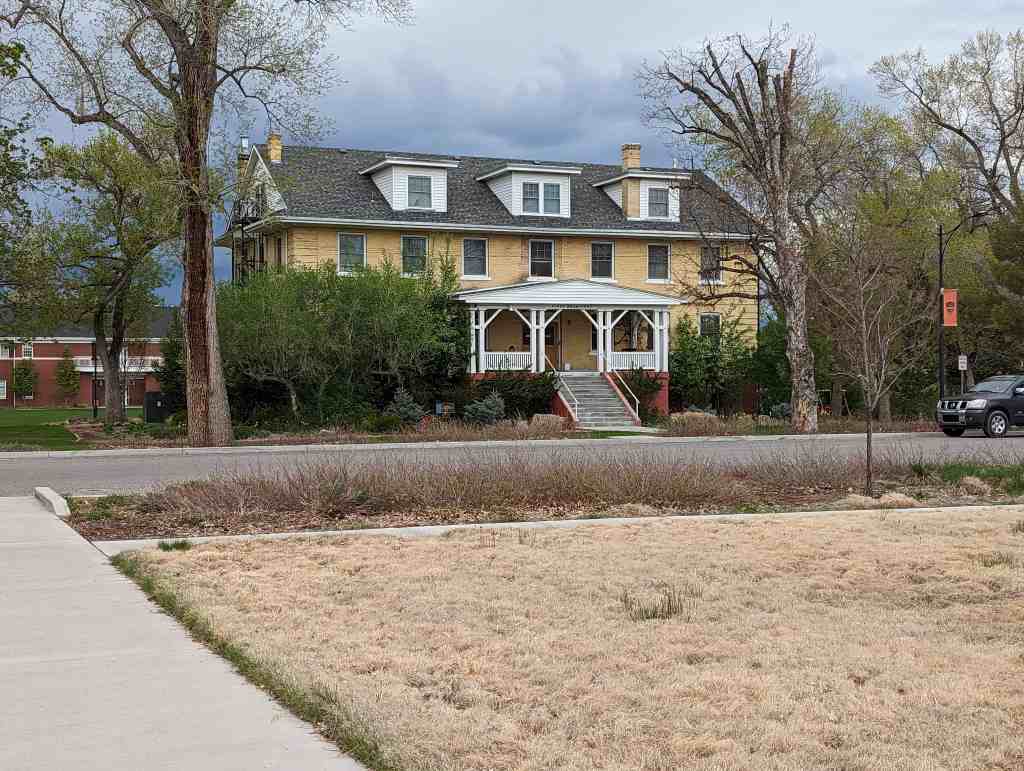
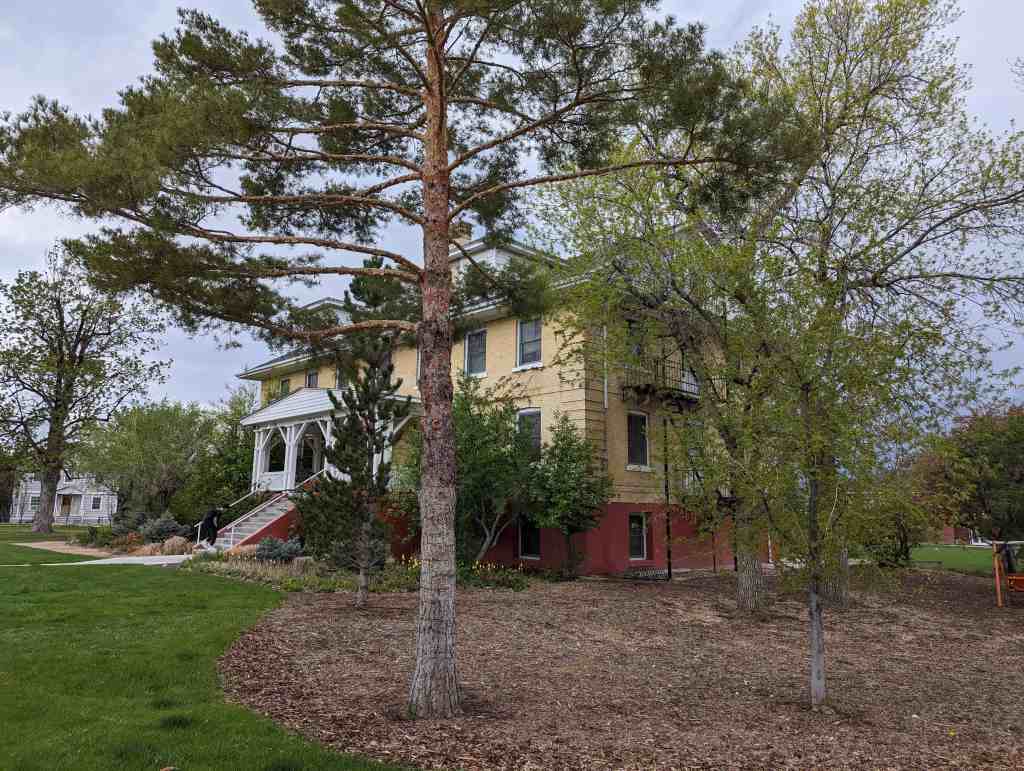
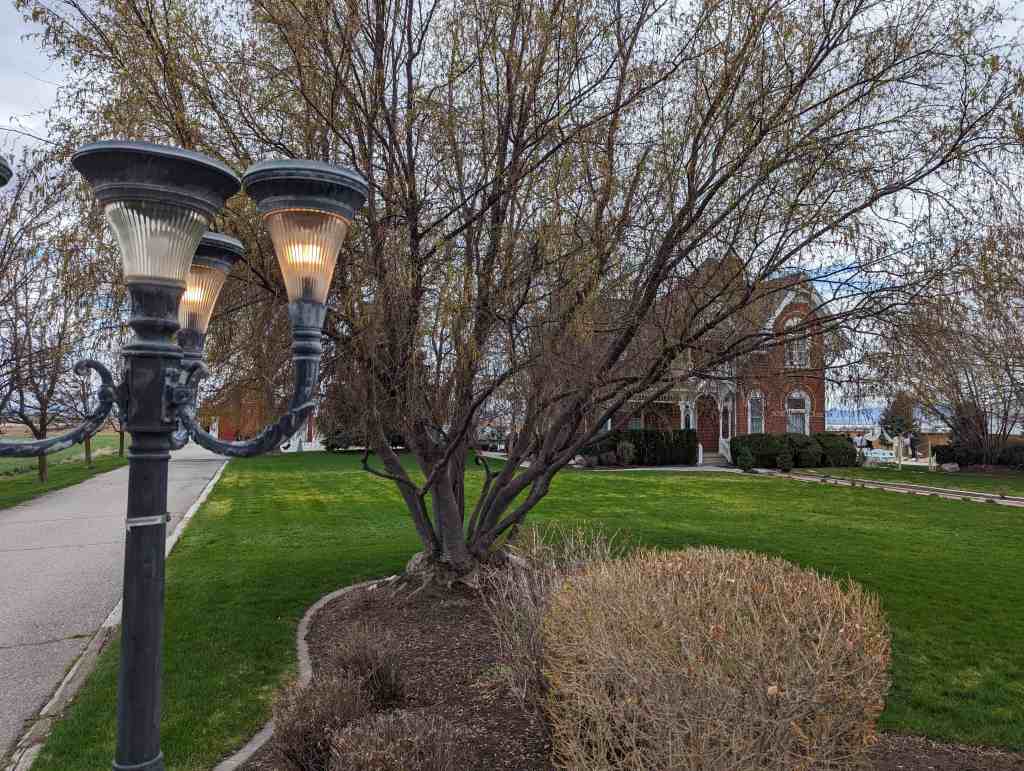
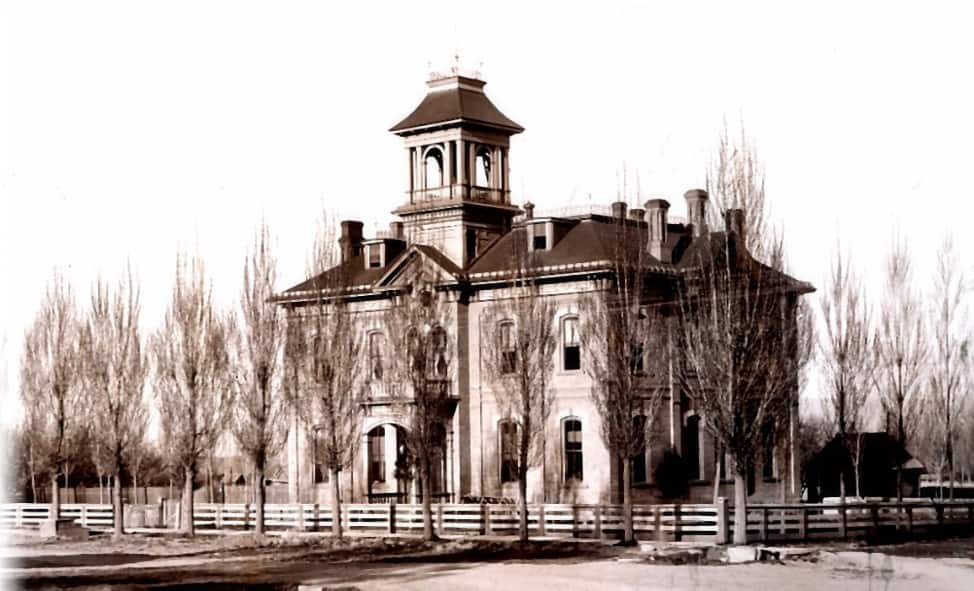
Olivia Sage Dormitory (Sage Hall), built in 1923. Three-story brick and frame building; rectangular plan; features first and second story porches with squared columns, a hip roof and square window bays with small paned lights. The frame upper story was added at a later date.
Charles F. Darlington, Jr. Dormitory (Darlington Hall), built in 1916. Two-story frame building with a shingled exterior; rectangular plan; features a gabled roof and six-over-six double hung sash windows in rectangular bays.
Duncan J. McMillen Memorial Hall (Wellness Center), built in 1929. Two-story plus attic; rectangular plan; features a gabled roof, Roman-arched door bay, dormers and eight-over-eight double hung sash windows.
On 13 July 1901, the American Fork 2nd ward of The Church of Jesus Christ of latter-day Saints was created along with the 1st, 3rd, and 4th wards of the new American Fork Stake on 9 October 1902, Joseph H. Storrs, who served as bishop from 1901 to 1942 announced that brick had been contracted for a new meetinghouse. James H. Pulley designed the architecture in the Victorian Gothic style. The cornerstone was laid in April 1903, and the first meeting was held in the unfinished chapel on 31 January 1904. Robert L. Ashby, teacher of woodworking at the high school, took charge of the interior woodwork, and upon completion reported that he wanted no fee. Pres Anthon H. Lund dedicated the building on 17 February 1907. Total cost was $10,000.
On 15 June 1929 major alterations and additions totaling $48,555 were commenced under the direction of Don Carlos Young, church architect. The original brick architecture was carefully preserved and matched by the new construction. On account of a $15,000 donation by John (Jack) Firmage, the new recreation hall became known as Firmage Hall. Dedication was by Pres. Heber J. Grant on 4 September 1932.
Vacated by the church in October 1979, the building was purchased in May 1984 by M. L. Bigelow & Co., Inc., Organ Builders. It has housed the pipe organ shop and Michael Bigelow’s residence since that time. (text from plaque on site)
Note: The wards were actually part of the Alpine Stake originally, unlike what the plaque says. In 1963 the Stake was split.
Olive Chipman sold this property to the church for $400.
Located at 130 West 100 South in American Fork, Utah and added to the National Historic Register (#92000101) on March 10, 1992.
From the NRHP Nomination Form: The American Fork Second Ward Meetinghouse is significant as the only intact example of the eclectic Gothic Revival architecture once employed widely throughout the community by the LDS church during a period of ecclesiastical expansion after the turn of the century. It was one of four ward (congregation) meetinghouses constructed in the city around 1903-04. Each was a tall, brick, late Gothic Revival edifice with a corner steeple tower. Each had a combination of Gothic and Romanarched windows, corbeled brick ornamental motifs, art glass transoms and accent windows, stone foundations, steeply pitched gable roofs, and other shared features. The Second Ward Meetinghouse is the only one of those four churches to retain its architectural integrity. The large, well-matched 1929-30 addition to the meetinghouse is also significant. It documents two important changes in LDS church architecture after about 1920. First, it reflects the influence of the church’s newly created centralized architectural department and its emphasis on standard plans. Second, it illustrates the church’s new policy of including all church auxiliaries and their functions in a single building rather than in separate structures. The addition is a successful blending of functional and aesthetic considerations. It provided the necessary space for the ward’s varied activities and did so in a manner that conformed with both the new standard plan and the original eclectic Gothic Revival design.
Historical Background:
The town of American Fork was founded in 1850 by members of the Church of Jesus Christ of Latter-day Saints (Mormon or LDS church). This was just three years after the Mormons immigrated from the Mid-west and began establishing their new home in the Utah territory. American Fork was one of several towns established in Utah Valley by the Mormons during the 1850s. Agriculture was the principal local industry throughout the 19th century, though the coming of the railroad in 1873 and mining in the nearby mountains also influenced the local economy. The town, always predominantly Mormon, grew slowly but steadily and by 1900 the population was estimated to be over 2300.
Growth in the community was sufficient by 1901 to prompt the division of the single Mormon ward (congregation) into four separate wards. The process of dividing wards was common in many Mormon communities at this time, brought on by population growth, the death of many long-time local leaders, and changing church policies.
The Second Ward, along with the other three wards, soon felt the need for its own building. In a ward council meeting of 29 September 1901, Second Ward Bishop Joseph H. Storrs proposed that the ward begin efforts to provide a new building. He named a committee of five to recommend a building site. This was accomplished by November 1901, but planning for the construction continued for nearly a year. At a special meeting on 9 October 1902, the Bishop reported that they had taken upon themselves the responsibility of contracting for the brick and obtained the members’ approval. The bishop appointed a finance committee, and James H. Pulley, a local carpenter/ builder, presented a plan for the building. Pulley had recently been given the assignment to “get the plans” for the city hall, which was also being built at the same time. It also seems likely that Pulley designed the other three ward meetinghouses, given the similarity of their appearances.
Each of the four wards in American Fork were building new meetinghouses during this period and found “they could get brick cheaper in large quantities, so they all ordered their brick together, thus all the four ward chapels were constructed of the same color red brick.” According to the ward minutes, all the required brick was on hand by 5 July 1903 and “the masons would finish their work in a few days and the material was on the ground for the roof. Ward members all working together were doing a fine job, but it was slowed down for lack of finances.”
The ward began using the meetinghouse on January 31, 1904, even though all of the work on the building was not completed. By June of 1904, the ward still owed $700.00 and needed an additional $1,050.00 to finish the building and the tower. The tower, easily the most distinctive feature of the building, included a special room for Mormon prayer circles. That same month, Robert L. Ashby, a high school woodworking teacher, moved into the ward building to work on the interior woodwork. When he finished, Ashby rejected attempts to pay him for his work. Other members of the ward similarly donated labor and money to the project, which cost a total of $10,000.20. After the final debts were paid, the Second Ward Meetinghouse was dedicated on 17 February 1909.
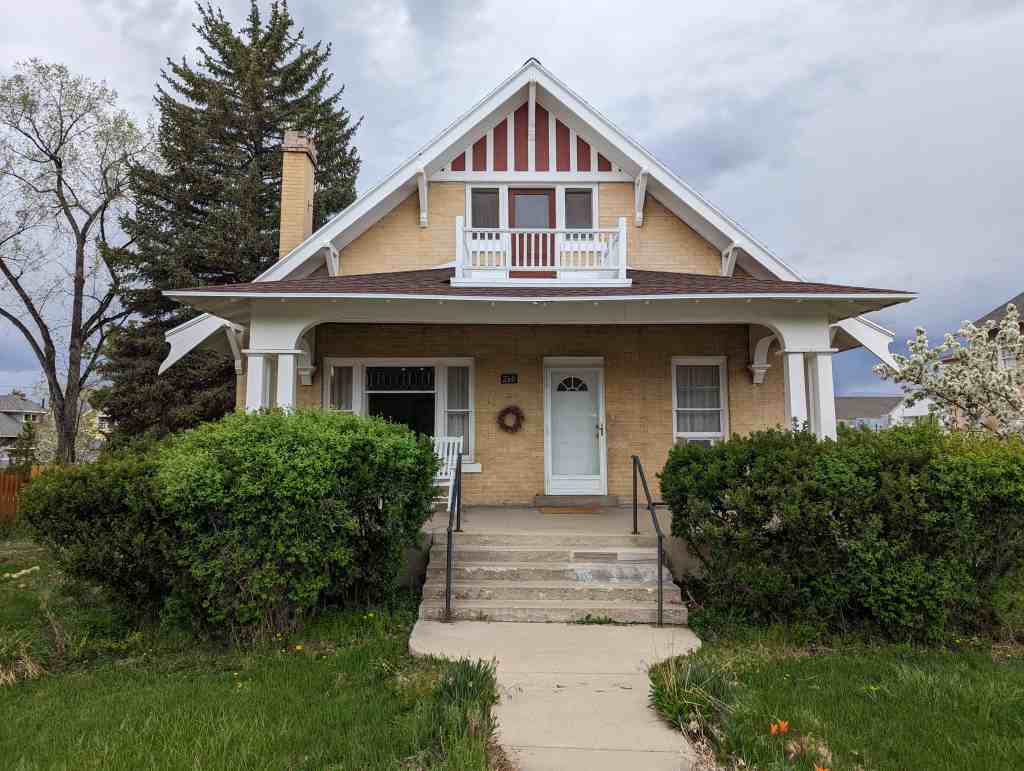
Hungerford Cottage Residence, c. 1920. One-and-a-half story brick residence bungalow style; rectangular plan; features a gabled roof, wood trim, a small second story porch and square window bays.
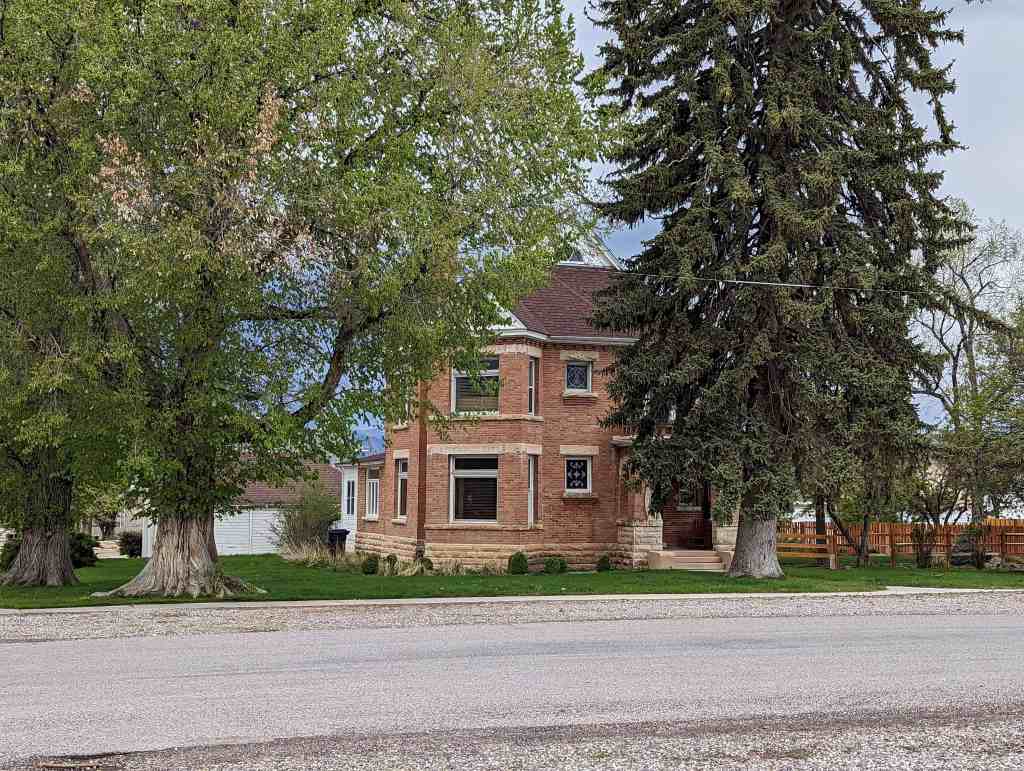
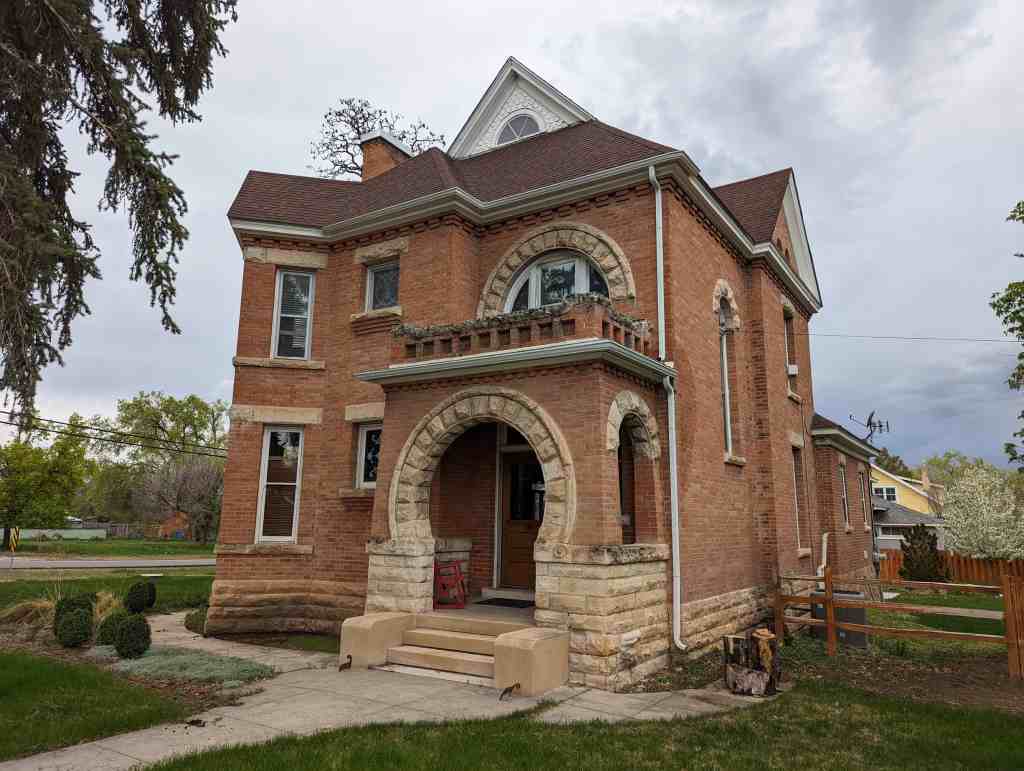
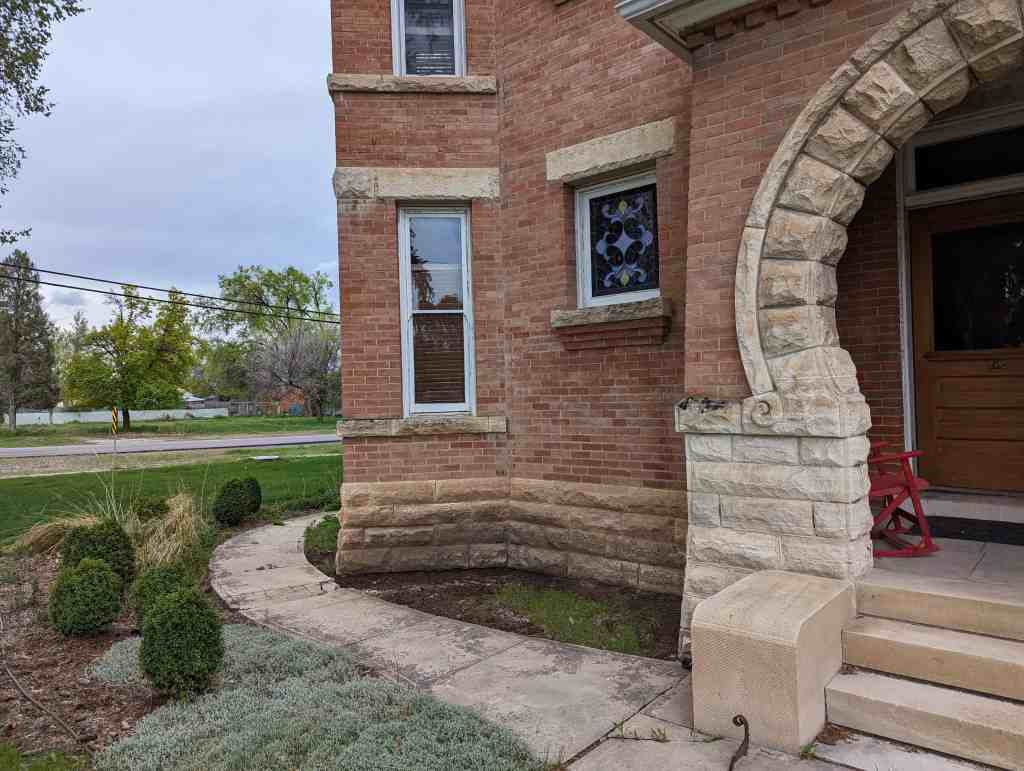
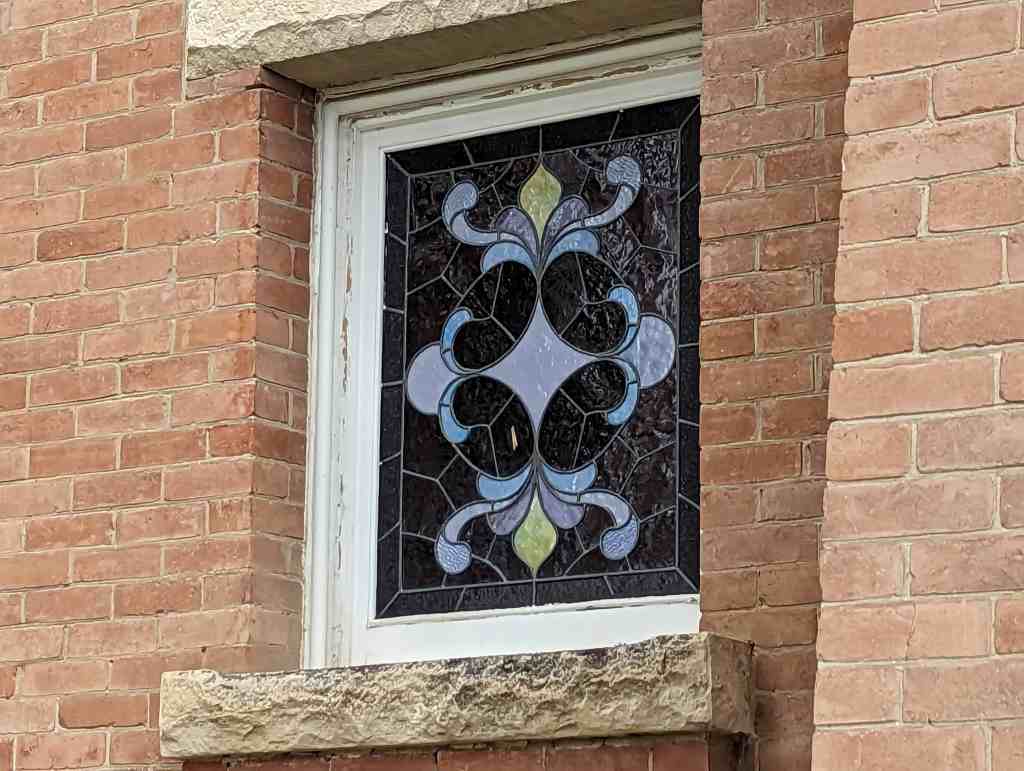
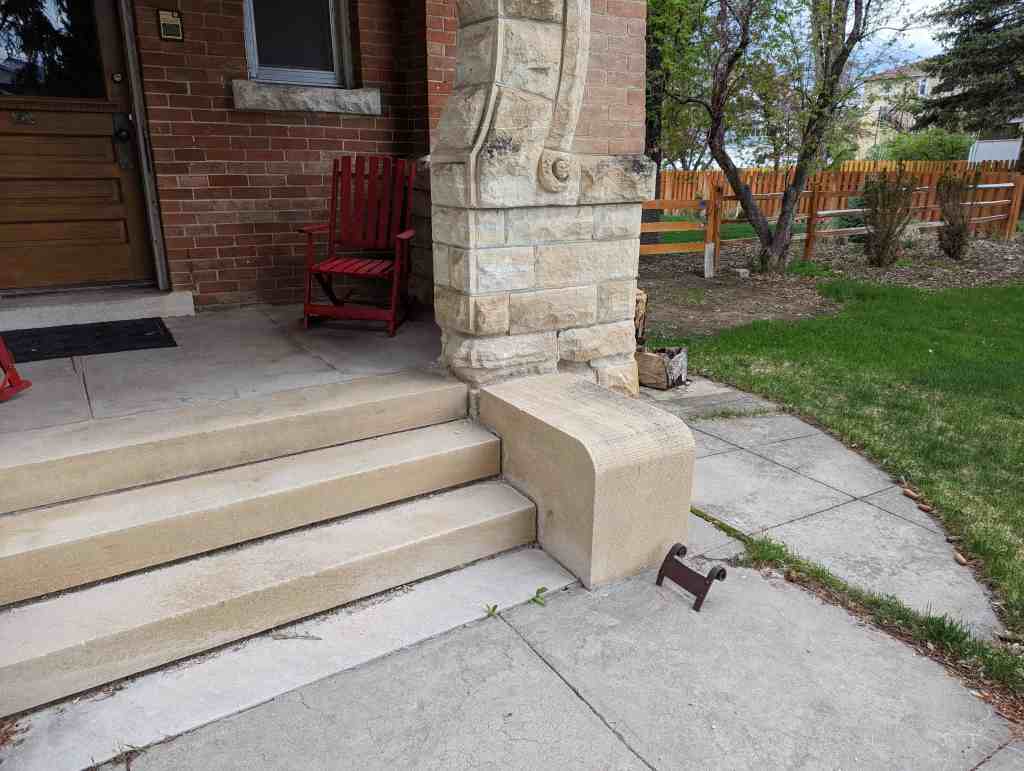
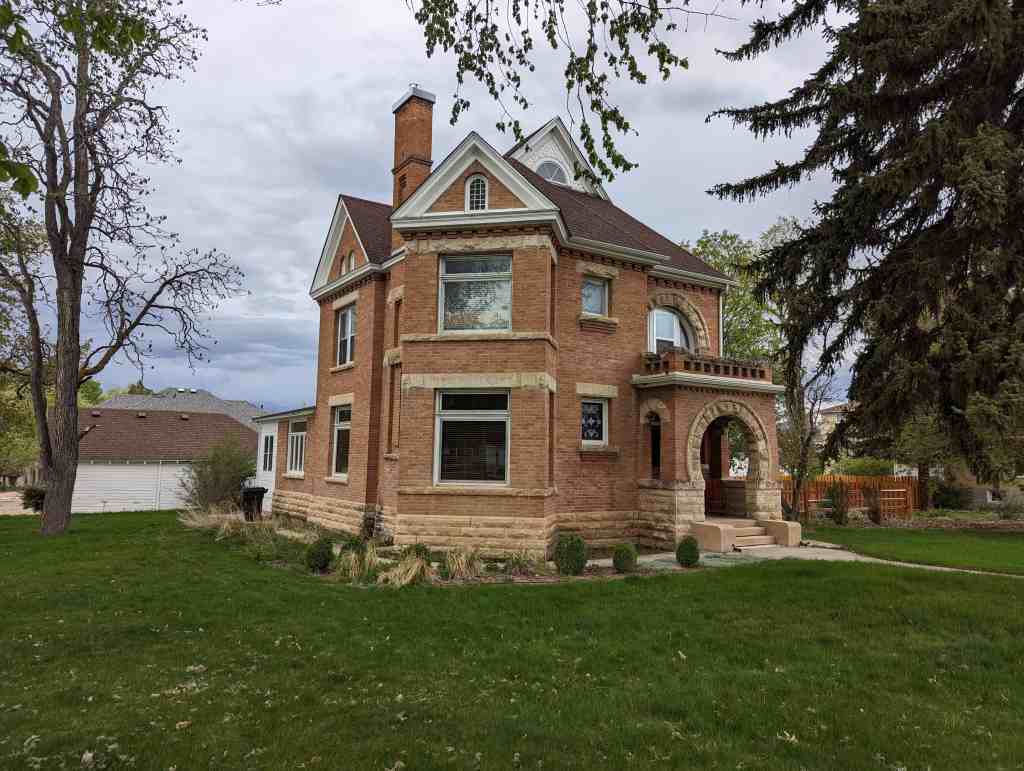
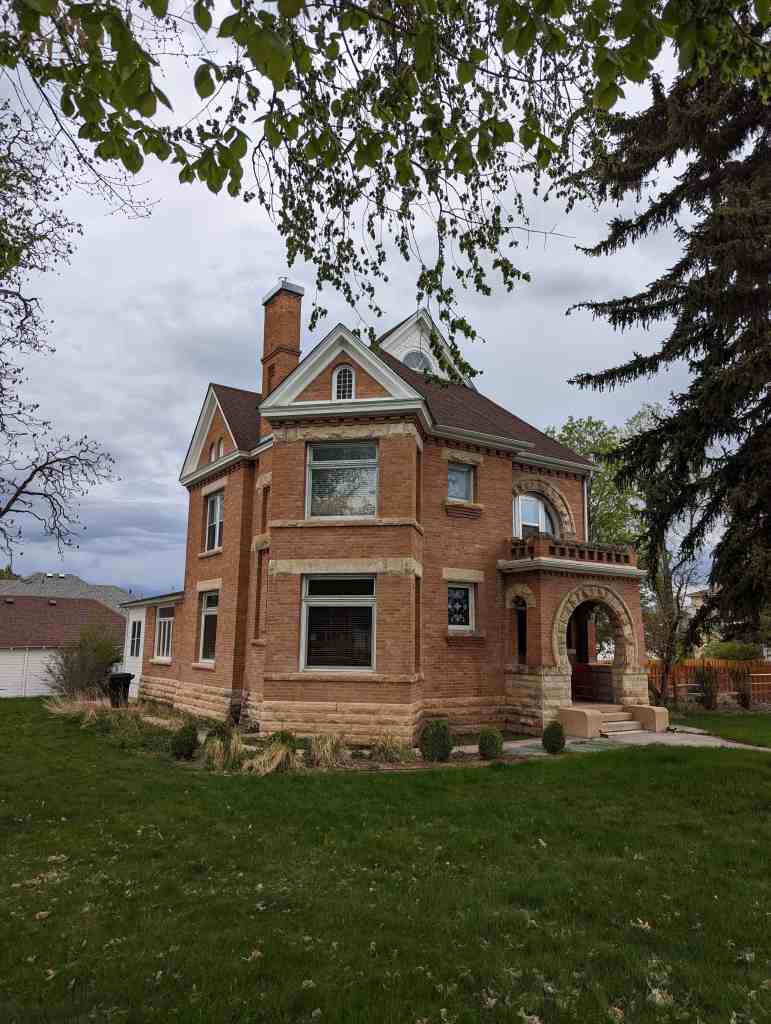
One of the oldest historic Wasatch Academy buildings, the two-story brick and stone President’s House was constructed c. 1895 by Judge Ferdinand Ericksen for his wife Carrie Lofgren. Prominent architectural features of the Victorian home include its irregular floor plan, hip and gable roof, rusticated stone lintels, art-glass windows, stone-framed entry vestibule, and small stone porch. Retaining its historic and architectural integrity, the house is a contributing element to the Wasatch Academy Historic District.
From the NRHP Nomination Form: President’s House, c. 1895. Two-story brick and stone building, Victorian Style; irregular plan; hip and gable roof; features rusticated stone sills, lintels, and foundation; horseshoe arch of rusticated stone frames the entry vestibule; several rectangular art-glass windows are featured and a small stone porch rests on top of the ground story vestibule.
Finks Dormitory, built in 1913-14. Two-and-one-half story brick and frame building; rectangular plan; features a partially submerged basement, an extended frame porch, dormers on the upper story and qoins at building corners; six-over-six double hung sash windows have cast stone sills.
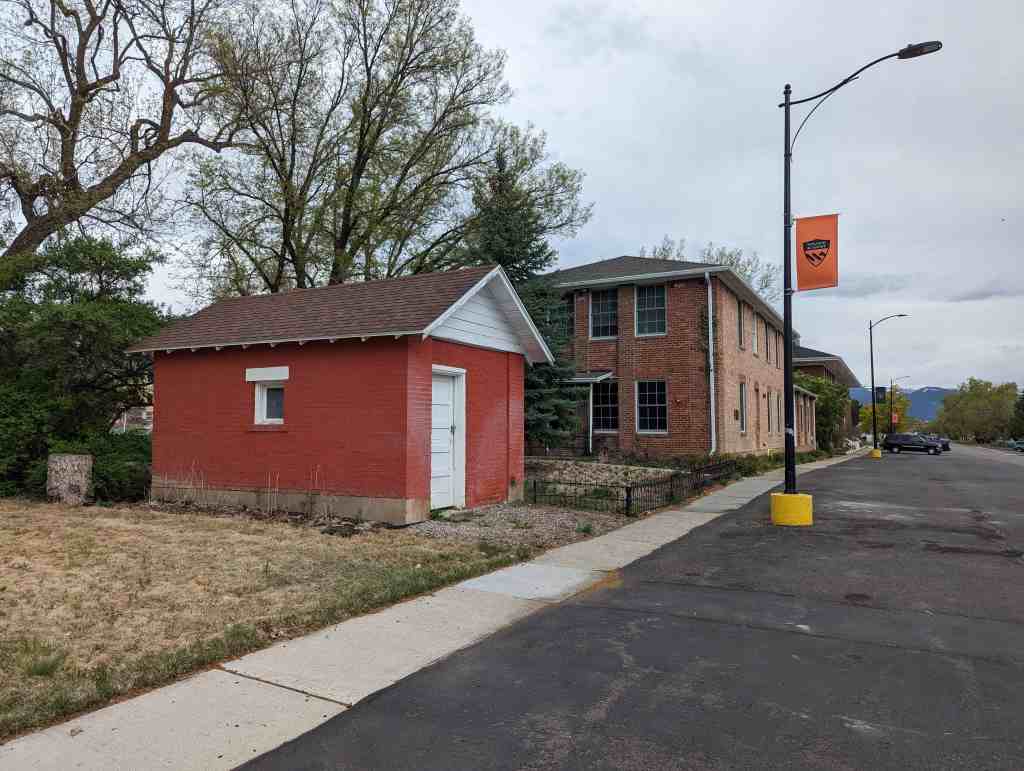
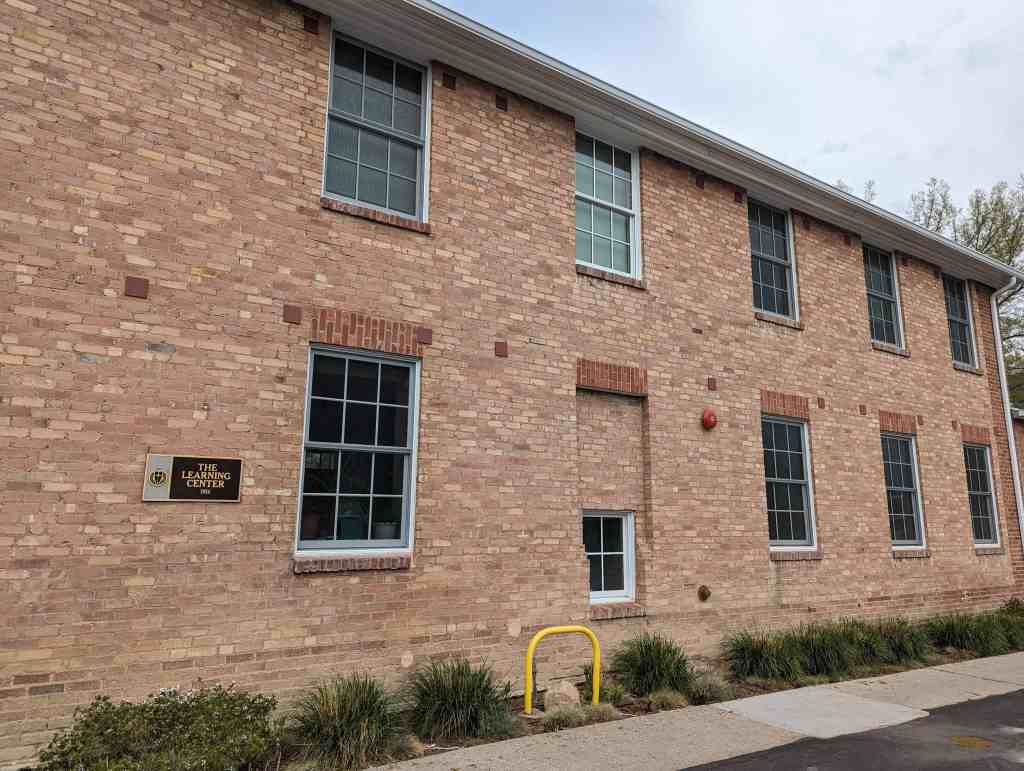
Craighead Industrial Hall (The Learning Center), built in 1934. Two-and-one-half story brick building; a rectangular plan; features a frame pediment gable, square bays containing six-over-six double hung sash windows.
Craighead Administration Building, built in 1934; It was built on the foundation of the 1891 administration hall which burned in 1933; it is a two-story brick building; L-shaped plan; it features a moderately projecting central entranceway, six-over-six double hung sash windows with square bays and a hip roof. Original interior and exterior intact.
The George W. Layton house, built in about 1897, is significant as one of a very limited number of houses designed by the Kaysville architect William Allen, that is virtually unaltered. William Allen was the only architect in Davis County at the time that the Layton house was designed, and continued to be the leading architect in the county until the 1920s. The Layton house also documents the use of pattern book house types in the late nineteenth century, and it is the same pattern that Allen used in the John Henry Layton house in West Layton, and possibly in the Joseph Adams house in East Layton. Of the three houses the George W. Layton house received the most ornate program of ornament, and thereby records one extreme of the stylistic possibilities of pattern book design. The complexity of the brick and wood ornamentation, and its unaltered and well preserved condition make the George W. Layton house one of the most distinctive Victorian pattern book houses in Utah. In addition, Layton, who is credited with the resident’s actual construction, served in a number of capacities within the community.
Located at 2767 West Gentile Street in Layton, Utah and added to the National Historic Register (#82004123) on February 11, 1982.
The George W. Layton Farm House, in West Layton, was built c. 1897. According to Vera Louise Layton Merrill, a daughter of Layton, the house incorporated an earlier three-room structure. The house was designed by William Alien, a prominent Davis County architect, and the actual construction of the residence is credited to Layton himself. The George W. Layton house is a two story red brick house with a stone foundation that was designed by the Kaysville architect, William Alien. It is a pattern book design with an impressive program of East lake and Queen Anne ornamentation. The pattern Alien chose for this house is almost exactly the same as the one he used for the John Henry Layton house which is several miles east on West Gentile Street. The John H. Layton house has longer proportions, but in general massing it is the mirror image of the George W. Layton house.
In 1851, Joseph (Cap) Hill “I” homesteaded at the mouth of Kay’s Creek. In 1862, James Sevens built a house on the south side of Kay’s Creek. Seven years later, Christopher Layton and some of his sons and sons-in-law cleared six sections of land to be dry farmed. This dry farm and the adjacent areas became known as West Layton. The early settlers of the area were sons and daughters of people who had settled in Kaysville and other areas of Davis County.
George Willard Layton was born November 11, 1863, in Kaysville, Utah. He was a son of Christopher and Rose Ann Hudson Layton. George W. spent his early years in Kaysville. It was there that he met and married Jeanette Maria Hill on December 18, 1884. Layton purchased 82 acres of land located in West Layton in 1891 from William and Aaron Call. At that time, there was a three room structure located on the site, and in about 1897 Layton had Allen design the present structure, with Layton himself involved in its construction.
Layton’s activities were not limited to farming. He has been characterized as being involved in “everything from baseball diamonds to banking.” He raised cattle and livestock and also grain to provide feed. He was president of the First National Bank of Layton and was a major stockholder in the Layton Sugar Company and the Ellison Cattle Ranch. He is also credited with building eleven other houses, in addition to his own. The Laytons were members of the LDS Church and were active in church activities. The couple had eight children, two of whom died in early infancy.
In the early 1900s the Laytons moved from the farmhouse to a house located nearer to the town of Layton. The farmhouse was used as the residence of the hired farmhand. This enabled George W. to take care of his responsibilities at the farm and in town. The children loved the new location because it was located nearer to the train station which provided transportation to Lagoon, a popular resort.
Mrs. Layton died in 1933. George lived eleven years after her death, passing away on January 10, 1944.
The house was deeded to Glen Seymour Layton and other members of the family in 1931. In 1961, the property was acquired to Sheron Layton Ahlstrom and Patricia Layton Evans, who presently (1980) own the property. The house is being used as rental property.