Keith-Brown Mansion and Carriage House
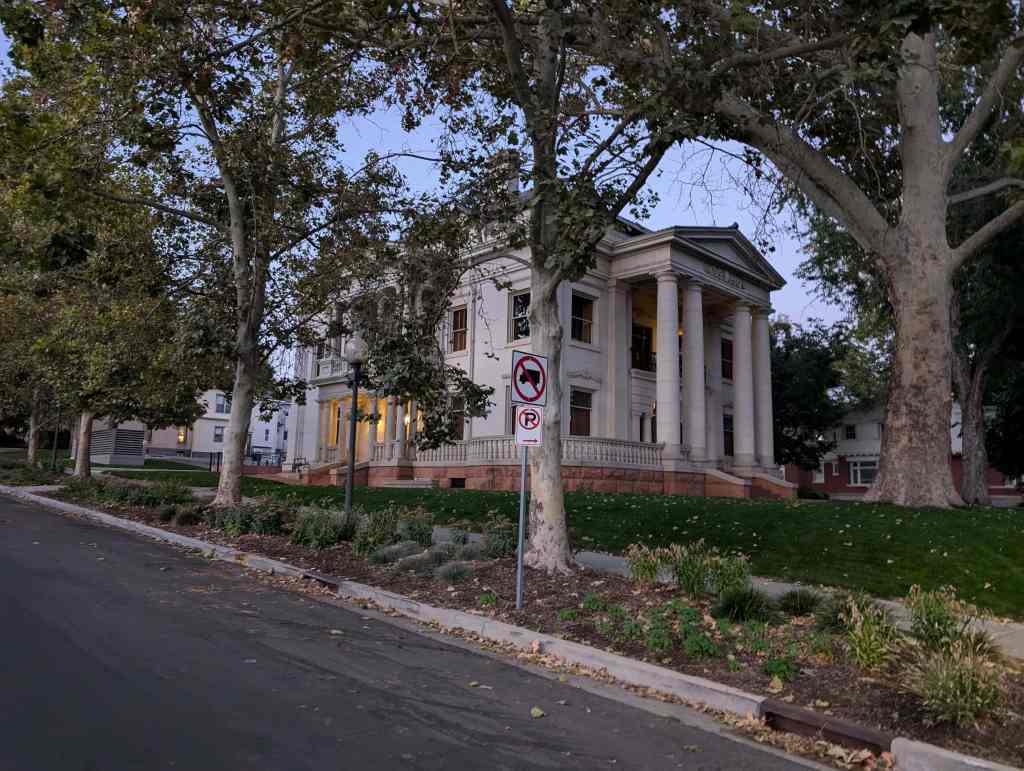
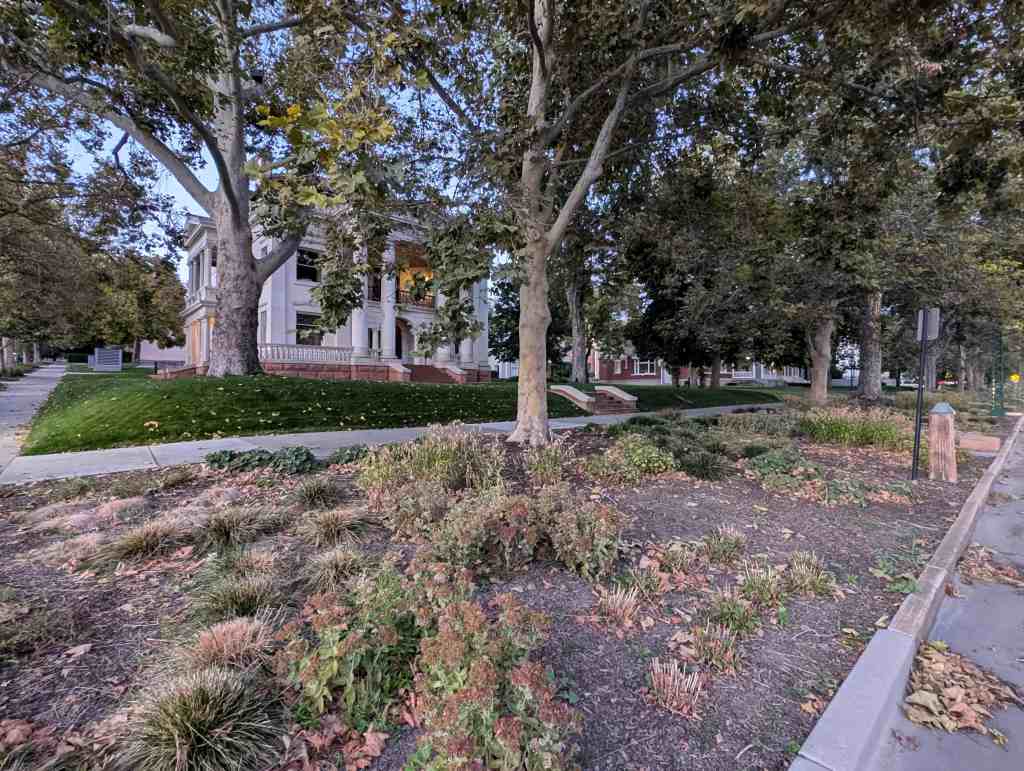
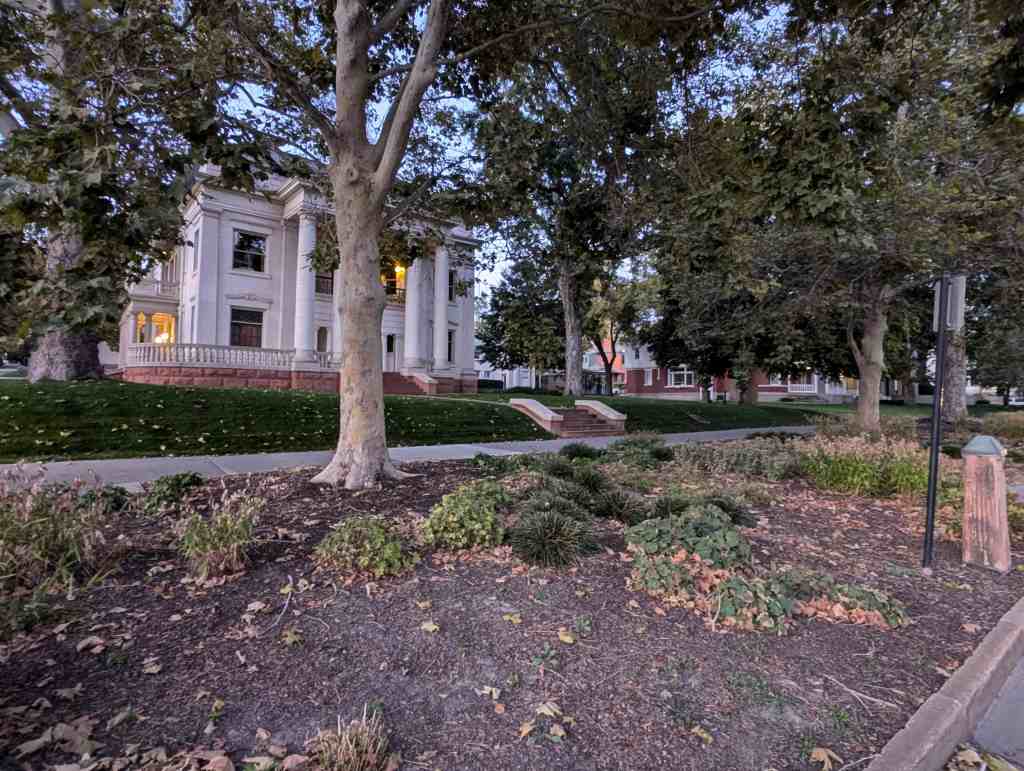
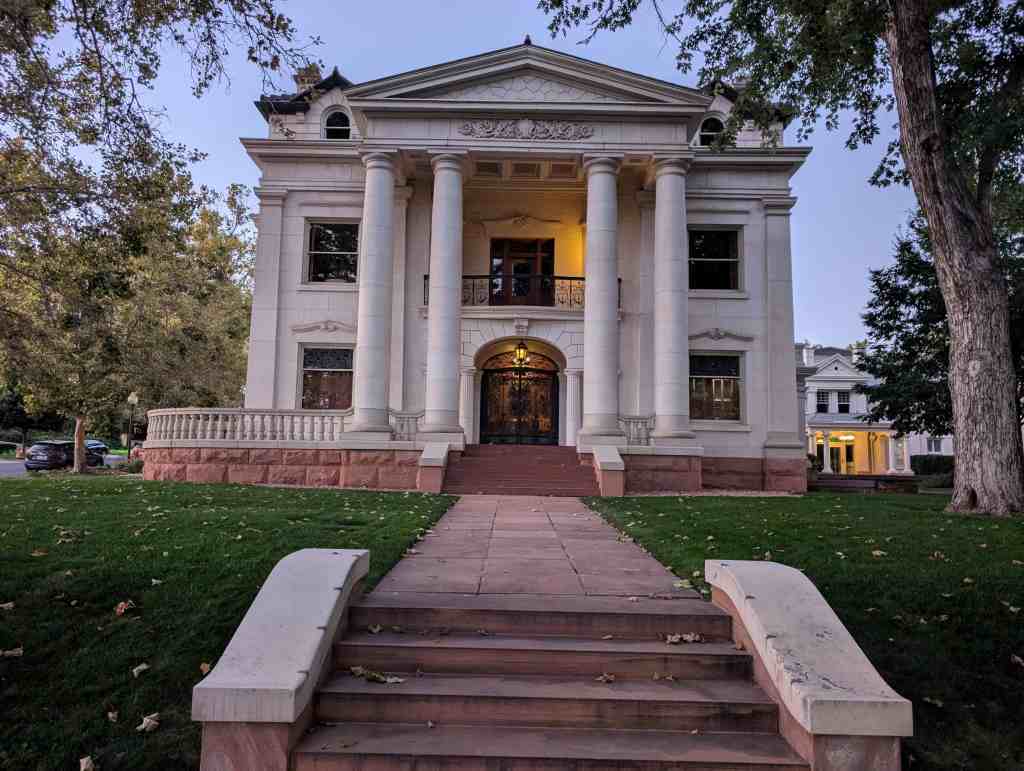
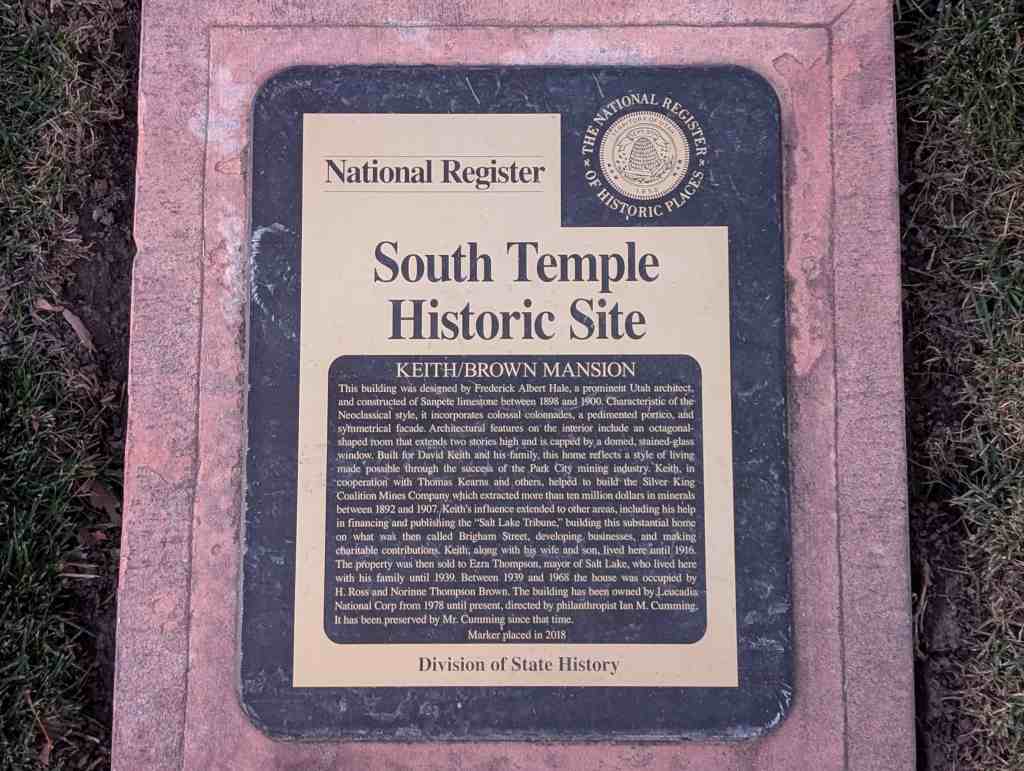
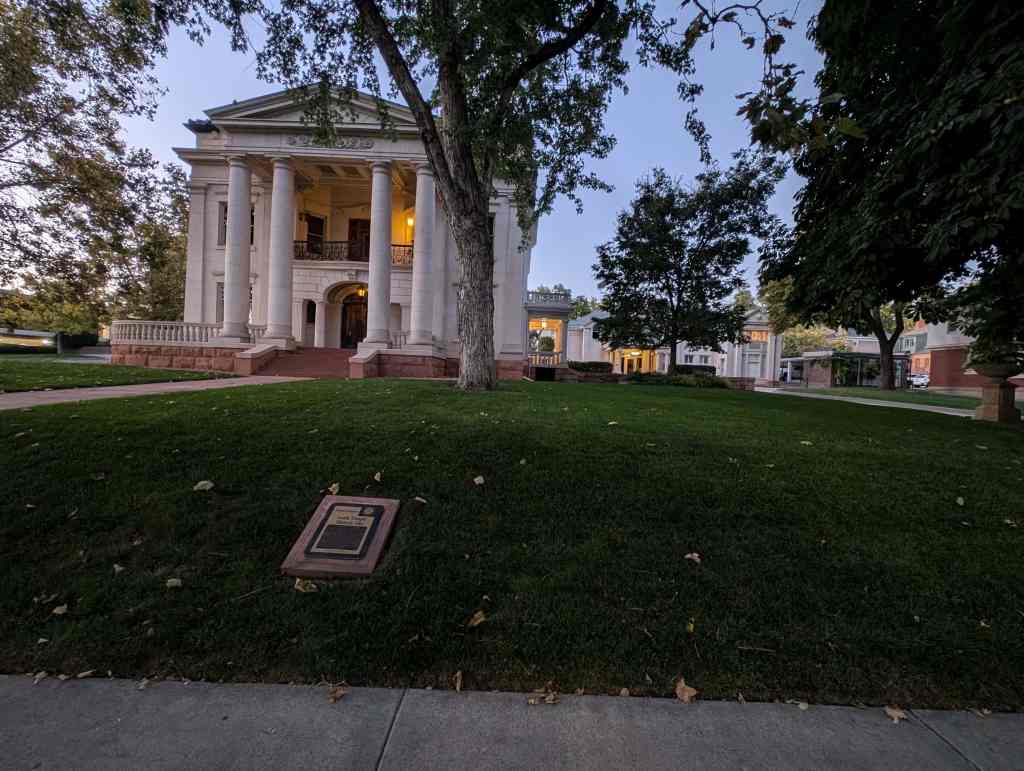
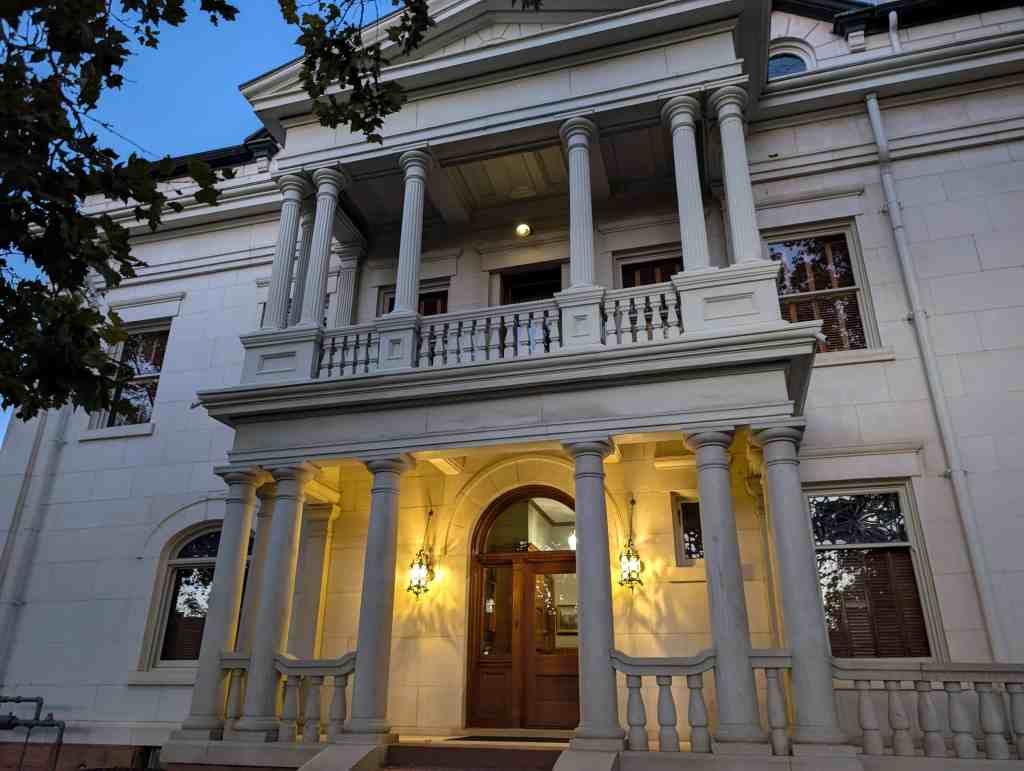
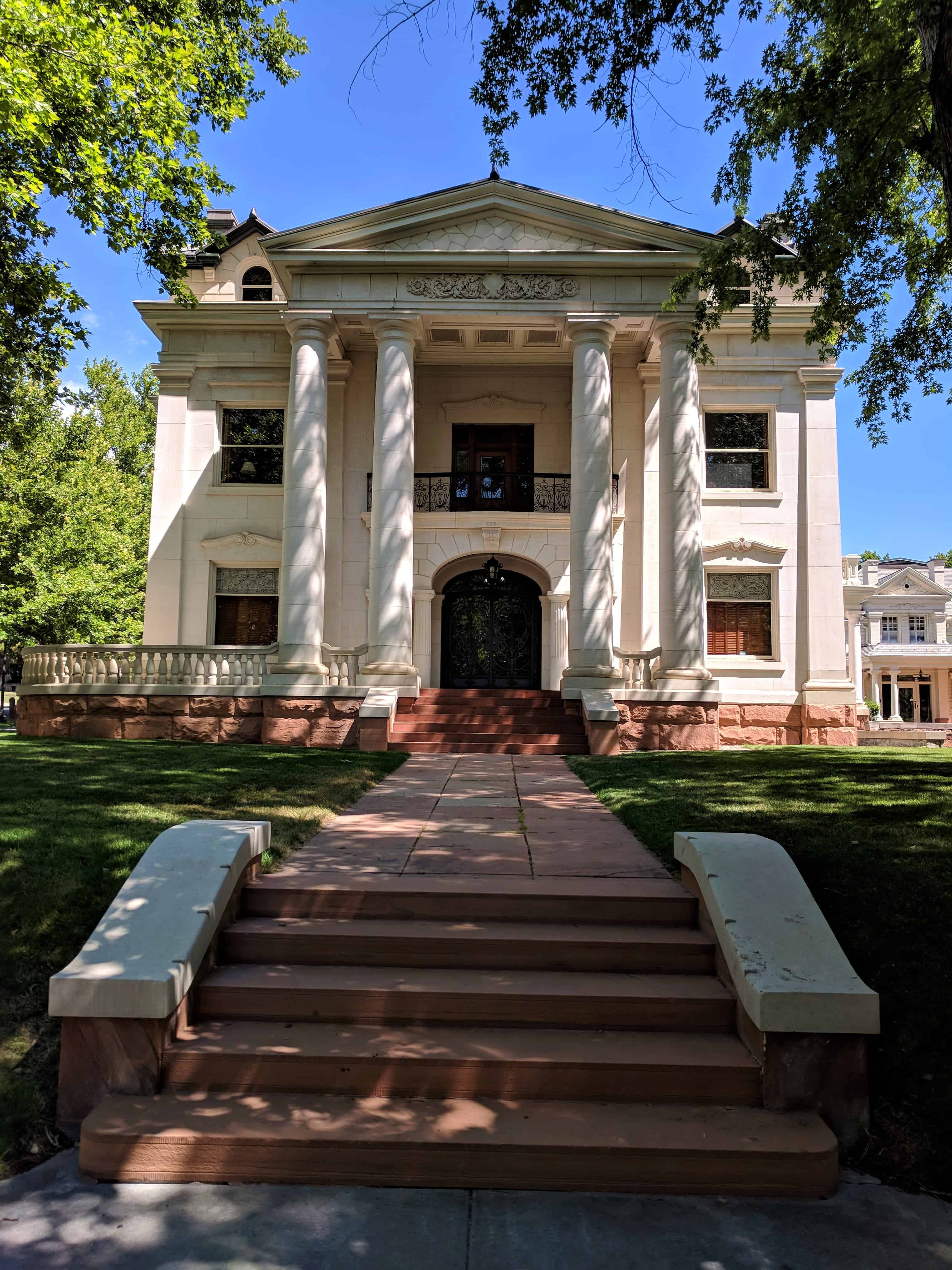
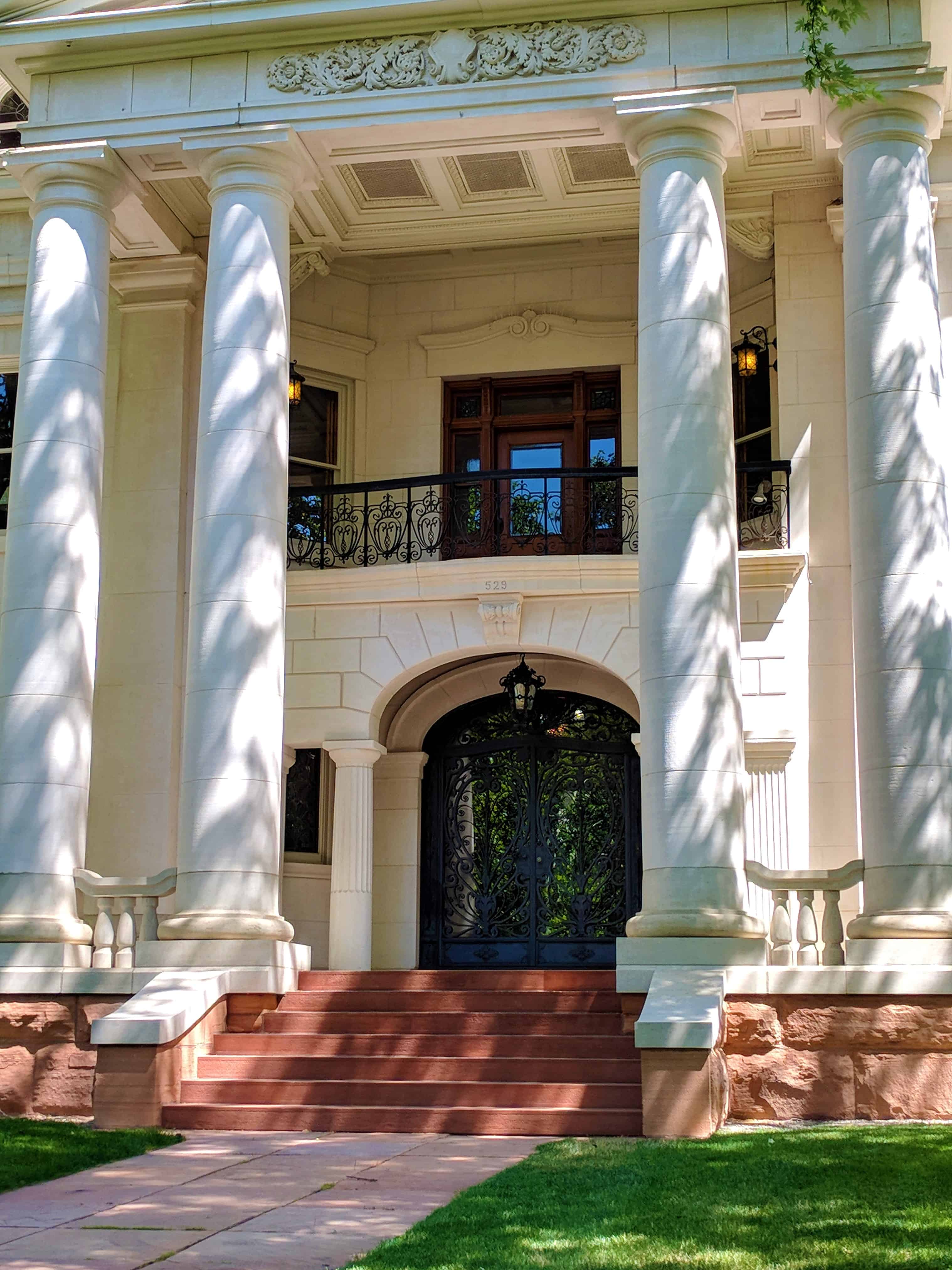
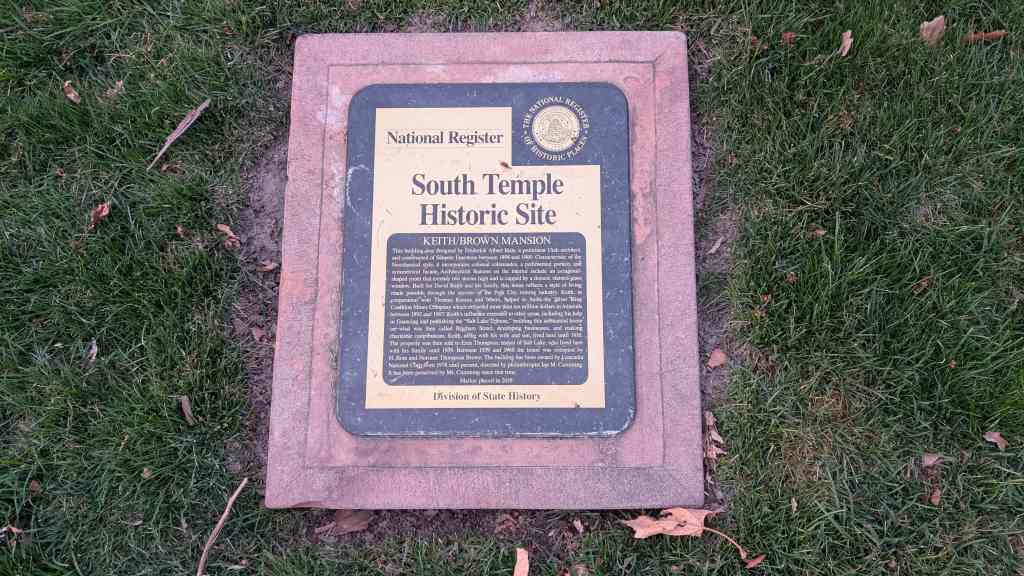
This building was designed by Frederick Albert Hale, a prominent Utah architect, and constructed of Sanpete limestone between 1898 and 1900. Characteristic of the Neoclassical style, it incorporates colossal colonnades, a pedimented portico, and symmetrical façade. Architectural features on the interior include an octagonal-shaped room that extends two stories high and is capped by a domed, stained-glass window. Built for David Keith and his family, this home reflects a style of living made possible through the success of the Park City mining industry. Keith, in cooperation with Thomas Kearns and others, helped to build the Silver King Coalition Mines Company which extracted more than ten million dollars in minerals between 1892 and 1907. Keith’s influence extended to other areas, including his help in financing and publishing the “Salt Lake Tribune”, building this substantial home on what was then called Brigham Street, developing businesses, and making charitable contributions. Keith, along with his wife and son, lived here until 1916. The property was then sold to Ezra Thompson, mayor of Salt Lake, who lived here with his family until 1939. Between 1939 and 1968 the house was occupied by H. Ross and Norinne Thompson Brown.
Built 1898-1900 for David Keith, mining magnate.
Architect: Frederick Albert Hale Purchased and renovated 1914 by Ezra Thompson former Mayor of Salt Lake
Presently owned by H. Ross and Norinne Thompson Brown.
Leased and renovated 1969 by Terracor
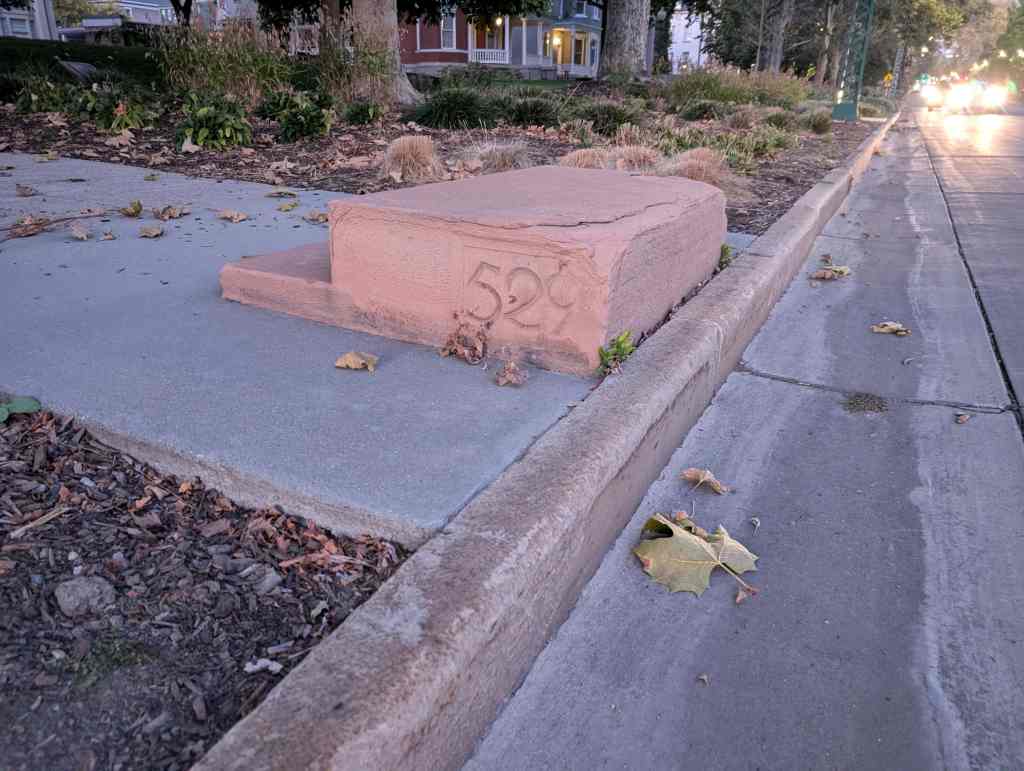
Located at 529 East South Temple in The Avenues neighborhood in Salt Lake City, Utah (535 East for the carriage house) and added to the National Register of Historic Places (#71000849) on May 14, 1971.
Related:
- A. E. Tourssen Motor Company Photo Shoot (100 Year Car Tour)




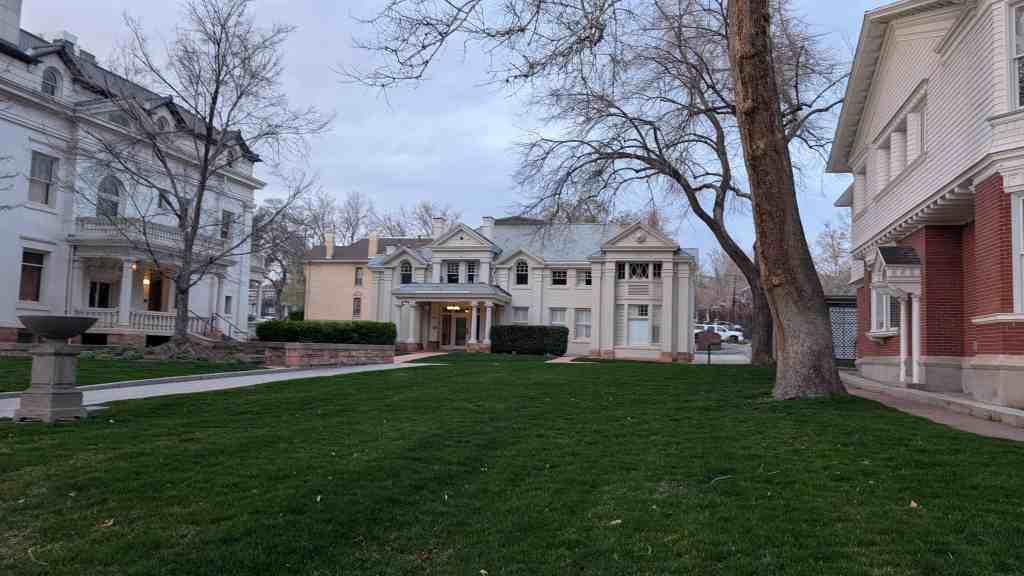
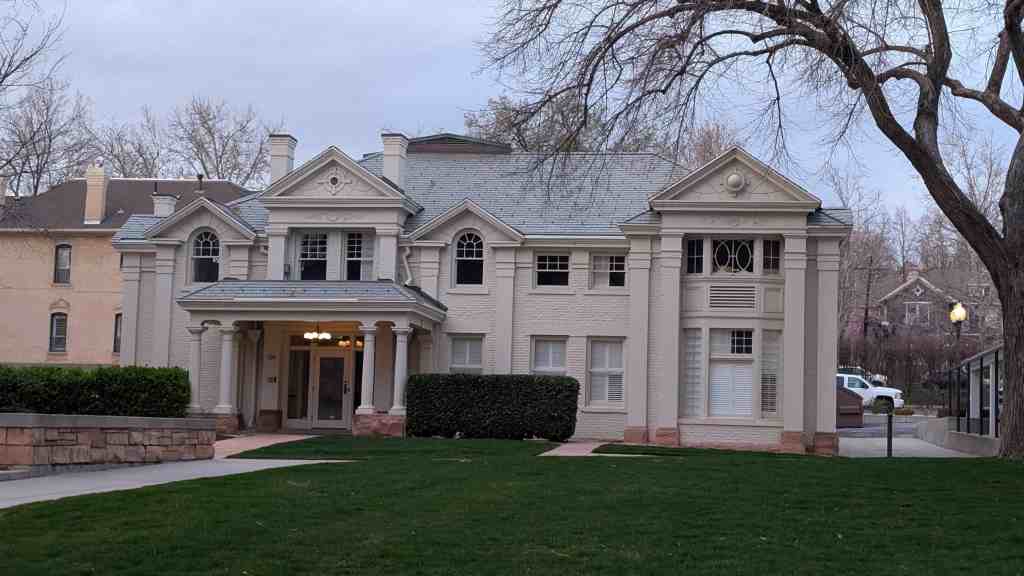
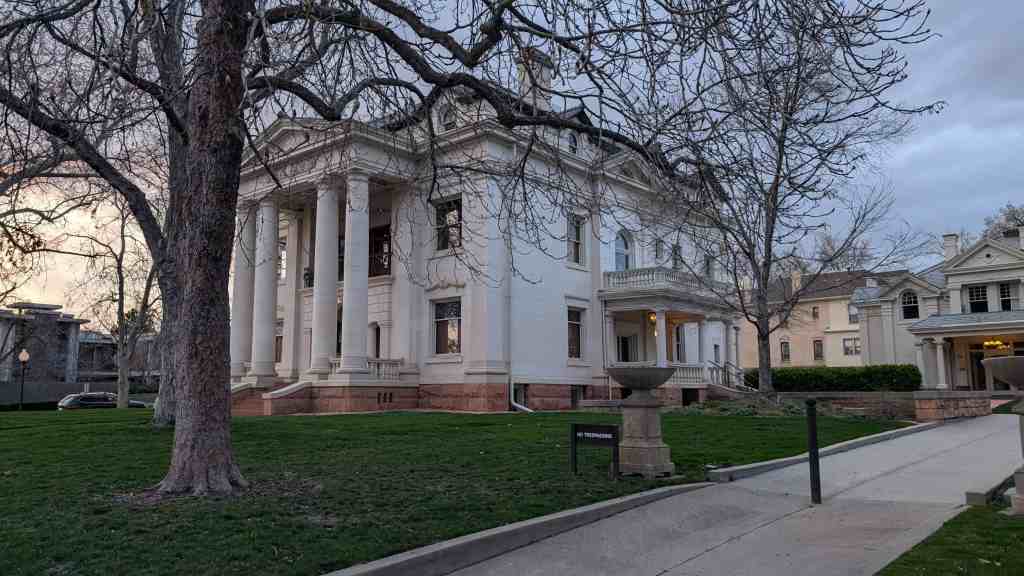
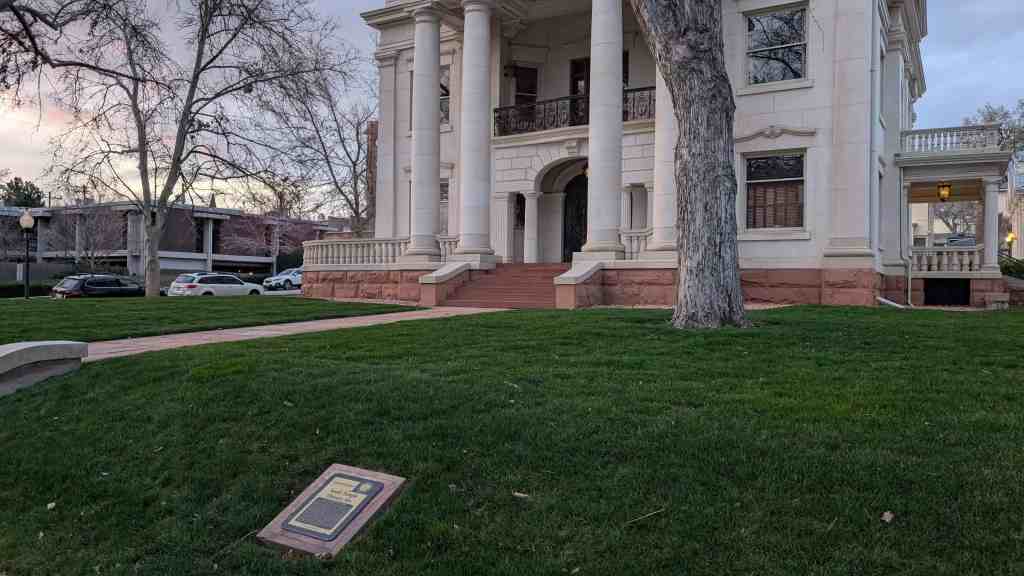
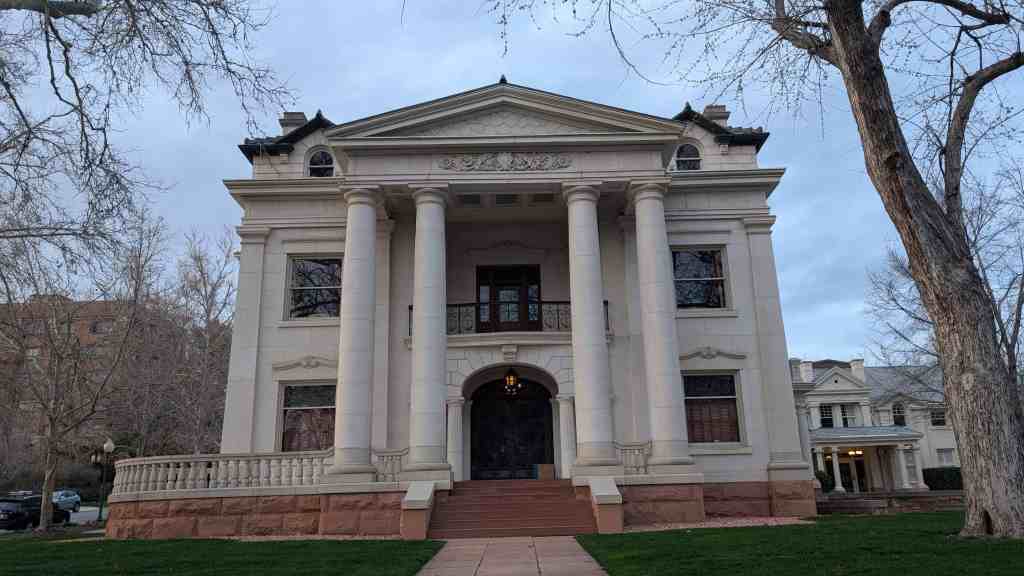
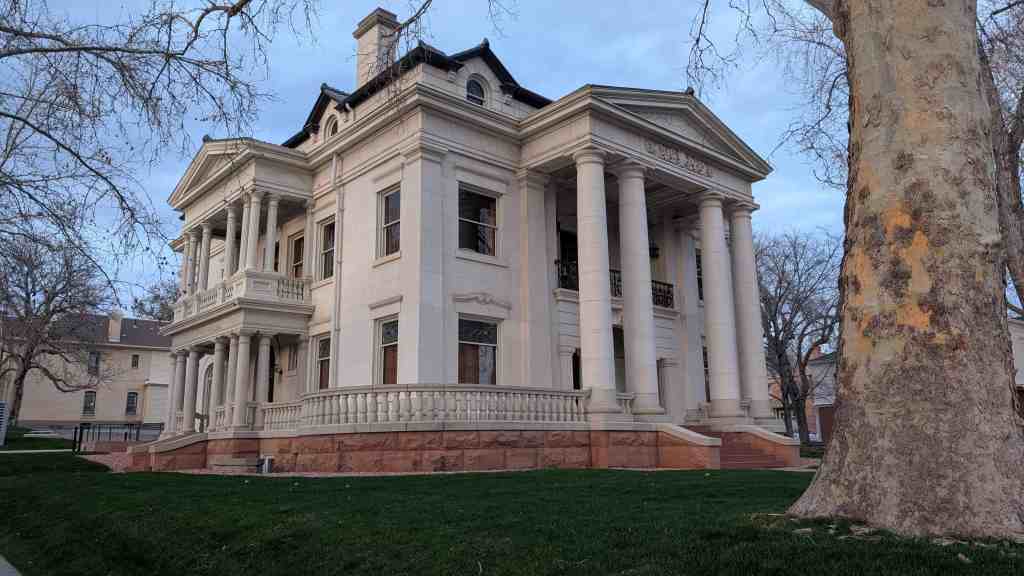
Built of Sanpete limestone in 1898-1900, this three-story mansion was designed by Frederick Albert Hale, who was also architect for the Alta Club, the Salisbury Mansion, the Salt Lake Public Library (Hansen Planetarium), the Continental Bank Building, and the Administration Building for the University of Wyoming.
With wealth obtained from his interests in the Silver King Coalition Mines at Park City, Mr. David Keith built his lovely mansion on Brigham Street in Salt Lake City, where he lived with his wife and son until 1916. The property was then sold to Ezra Thompson, whose family lived in the home until 1939.
The Thompson’s daughter, Norinne, then wife of H. Ross Brown, lived in the home between 1939 and 1968 when Terracor Corporation received from them a twenty-five year lease on the property. The company has since spent over $250,000 in restoration and renovation. The company now uses it for business purposes.
This mansion and carriage house reflect the quality living in early twentieth century Utah, made possible because of the wealth of Park City’s mines.
David Keith, the youngest of fourteen children, was born in Nova Scotia n 1847. Twenty years later he set sail for California to seek his fortune. His mining know-how and business acumen produced limited rewards there and in Virginia City, Nevada. Because he was an authority on water sumps, he s later employed at Park City, Utah in 1883. There, in cooperation with Thomas Kearns and others, he helped build the Silver King Coalition Mines Company, which extracted some ten and one-quarter million dollars worth of mineral between 1892 and 1907.
With this affluence, Keith and Kearns became influential in Utah, financing and publishing the new Salt Lake Tribune, building lovely homes, developing businesses, and making charitable contributions. Both men were members of Utah’s Constitutional Convention.
Keith died in 1918. His wife followed in death soon after, leaving the business empire to their son, David.
The home is important because of its quality architecture, because it tells much of the mining wealth’s story in Utah, and because David Keith was himself a prominent figure in the American West’s history.
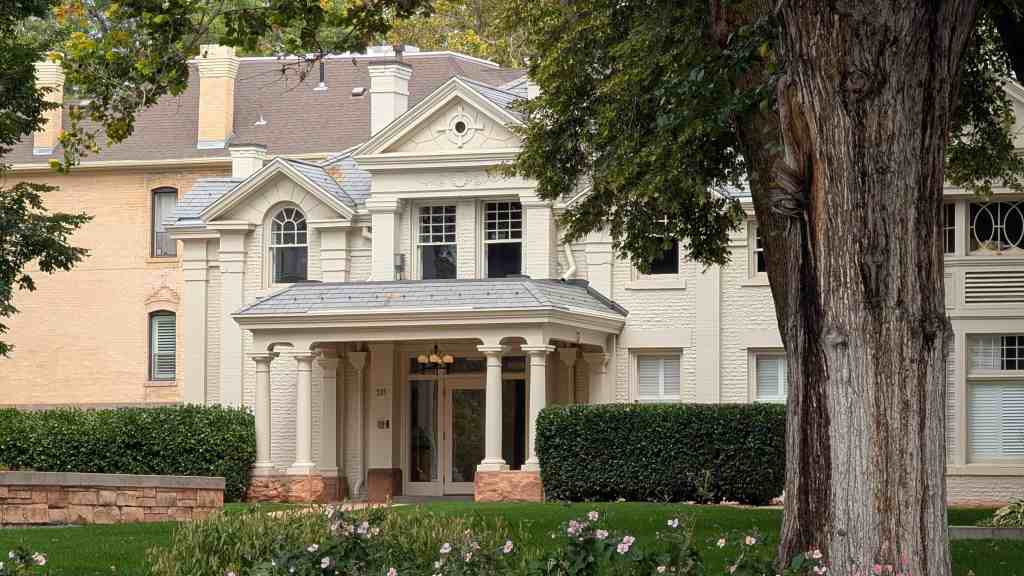
(from Preservation Utah’s walking tour)
David & Mary Keith Mansion
529 E. South Temple 1900, Frederick A. Hale, SLC
Tours can be arranged by calling Utah Heritage Foundation, (801) 533-0858, at least two weeks in advance.
David Keith made his fortune on a lucky hunch. Orphaned at the age of 14, Keith went to work as a miner. He eventually became a foreman in a Park City silver mine where he met another hard-working miner, Thomas Kearns (see entry #15). Keith and Kearns leased an undeveloped Park City mine after noticing a rich ore vein headed toward the property. Their hunch about the ore proved correct. The two men became multi-millionaires and remained lifelong friends, business partners, and neighbors.
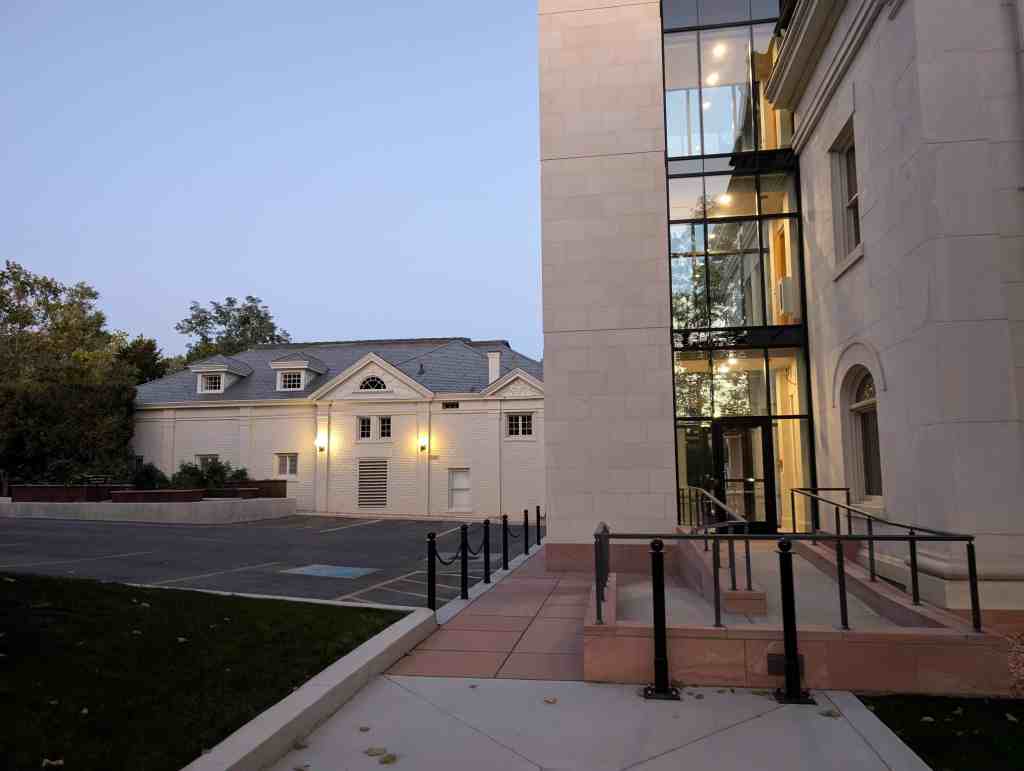
The newly-wealthy Keith and his second wife, Mary, hired Frederick A. Hale to design this stately mansion on fashionable South Temple Street. The mansion’s Neoclassical facade features a pedimented portico supported by four colossal columns. The interior is organized around an octagonal rotunda of polished cherrywood with a beautiful stained glass skylight. The carriage house, located to the east of the mansion, housed a bowling alley, shooting gallery, and servants’ quarters.
The Keiths lived in the mansion until 1916 when they sold the property to their neighbors, the Ezra Thompson family. Members of the Thompson family lived in the house until 1969 when Terracor acquired it and adapted it for office space. After a fire caused severe damage to the mansion in 1986, Terracor conducted an extensive restoration and continues to operate in the building today.