• About JacobBarlow.com
  • Cemeteries in Utah
  • D.U.P. Markers
  • Doors
  • Exploring Utah Email List
  • Geocaching
  • Historic Marker Map
  • Links
  • Movie/TV Show Filming Locations
  • Oldest in Utah
  • Other Travels
  • Photos Then and Now
  • S.U.P. Markers
  • U.P.T.L.A. Markers
  • Utah Cities and Places.
  • Utah Homes for Sale
  • Utah Treasure Hunt

JacobBarlow.com

~ Exploring with Jacob Barlow

JacobBarlow.com

Tag Archives: Salt Lake City

Nelson Wheeler Whipple House

07 Sunday Dec 2025

Posted by Jacob Barlow in Uncategorized

≈ 1 Comment

Tags

NRHP, Salt Lake City, Salt Lake County, utah

Nelson Wheeler Whipple House

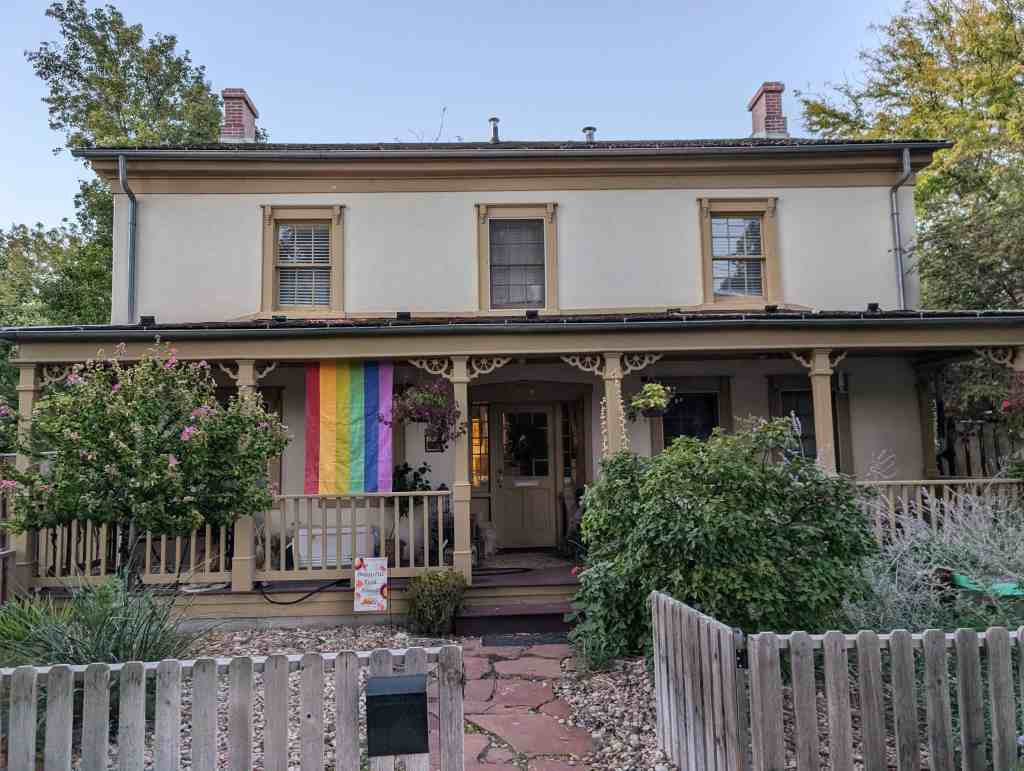
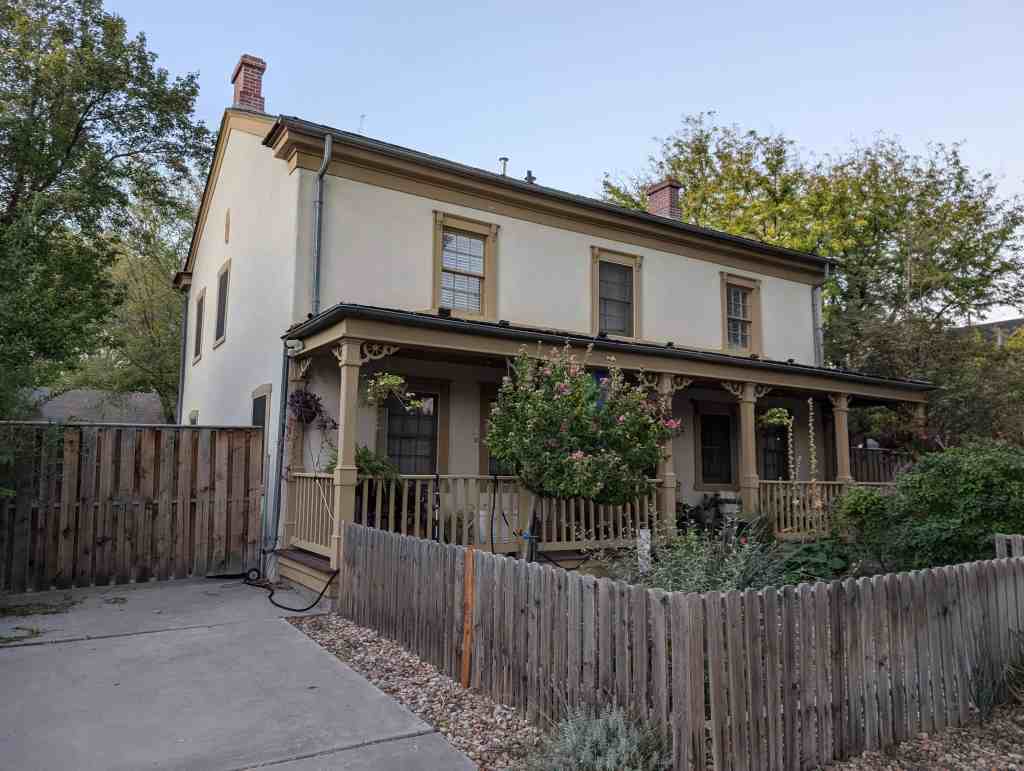
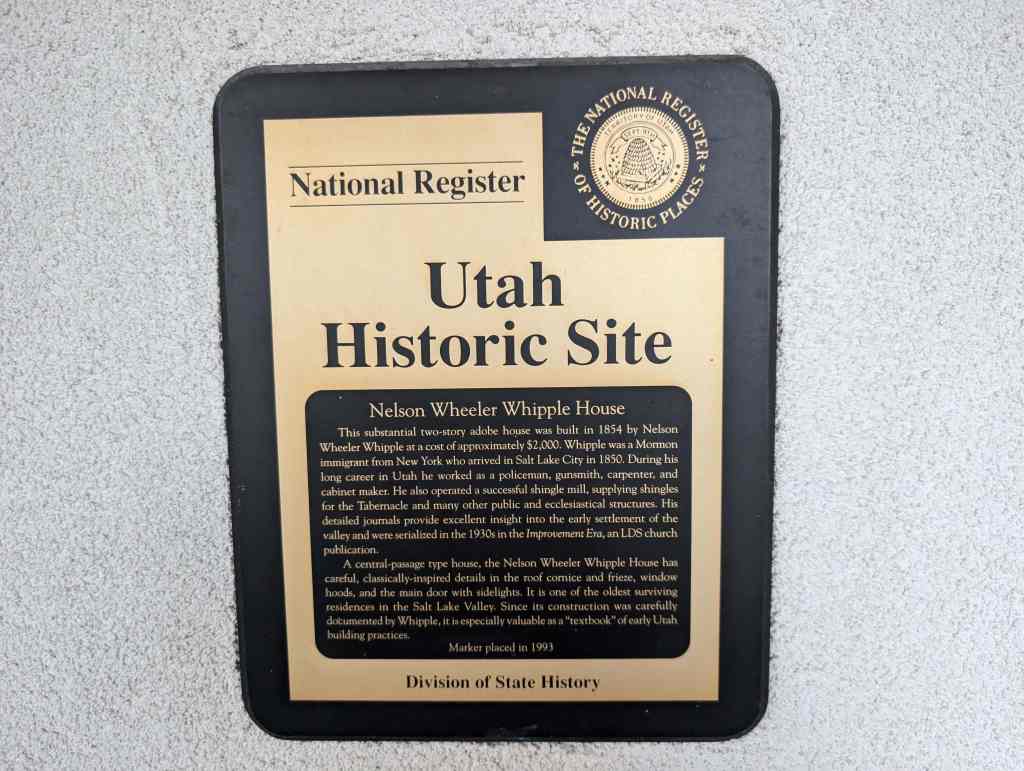
This substantial two-story adobe house was built in 1854 by Nelson Wheeler Whipple at a cost of approximately $2,000. Whipple was a Mormon immigrant from New York who arrived in Salt Lake City in 1850. During his long career in Utah he worked as a policeman, gunsmith, carpenter, and cabinet maker. He also operated a successful shingle mill, supplying shingles for the Tabernacle and many other public and ecclesiastical structures. His detailed journals provide excellent insight into the early settlement of the valley and were serialized in the 1930s in the Improvement Era, an LDS church publication.

A central-passage type house, the Nelson Wheeler Whipple House has careful, classically-inspired details in the roof cornice and frieze, window hoods, and the main door with sidelights. It is one of the oldest surviving residences in the Salt Lake Valley. Since its construction was carefully documented by Whipple, it is especially valuable as a “textbook” of early Utah building practices.

564 West 400 North in Salt Lake City, Utah.
  • mentioned in Salt Lake Northwest Historic District:
    There are 742 contributing single-family dwellings located within the Salt Lake City Northwest Historic District, only eleven of which have been identified as having been built before 1879. However, historical documents suggest the actual number is much higher. Unfortunately additions, alterations, and the general lack of documentation makes it difficult to come up with an exact number. The eleven also include the district’s two properties previously listed on the National Register: the Nelson Wheeler Whipple House at 564 West 400 North (built in 1854 and listed in 1979), and the Thomas and Mary Hepworth House at 725 West 200 North (built in 1877 and listed on April 21, 2000).

    and again:
    The majority of these houses were single-story, one or two-room (single cell and hall-parlor) dwellings, which were plastered as soon as the owner had the resources. The Nelson Wheeler Whipple House, an eight room, two-story house built in 1854, was one of the few exceptions. Whipple, who immigrated to Utah in 1850, had various occupations (policeman, gunsmith, carpenter, cabinet maker and superintendent of the Municipal Bath House), but is best known for his lumber business and shingle mill. The house at 564 West 400 North (within the 19th Ward boundaries) was home to his entire family: himself, three wives and seventeen children. The house was listed on the National Register of Historic Places in 1979.
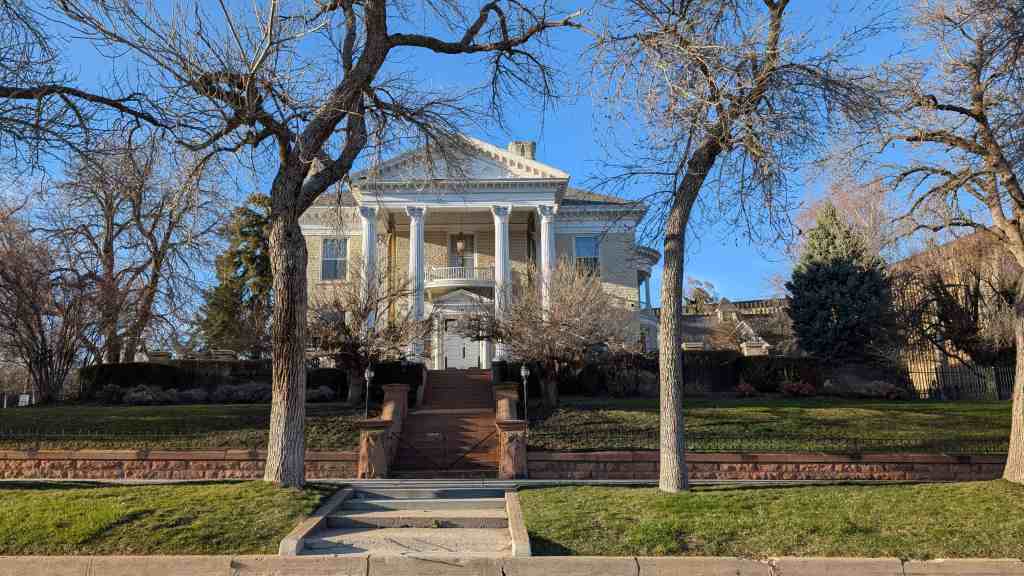
William H. McIntyre House
20 Thursday Nov 2025

Posted by Jacob Barlow in Uncategorized

≈ 4 Comments

Tags

Avenues Historic District, NRHP, Salt Lake City, Salt Lake County, utah

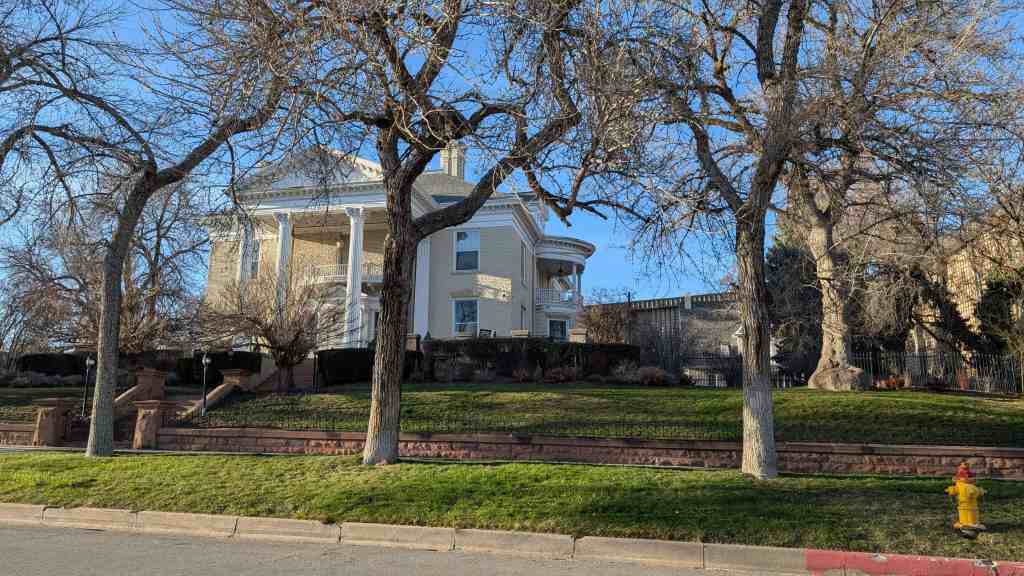
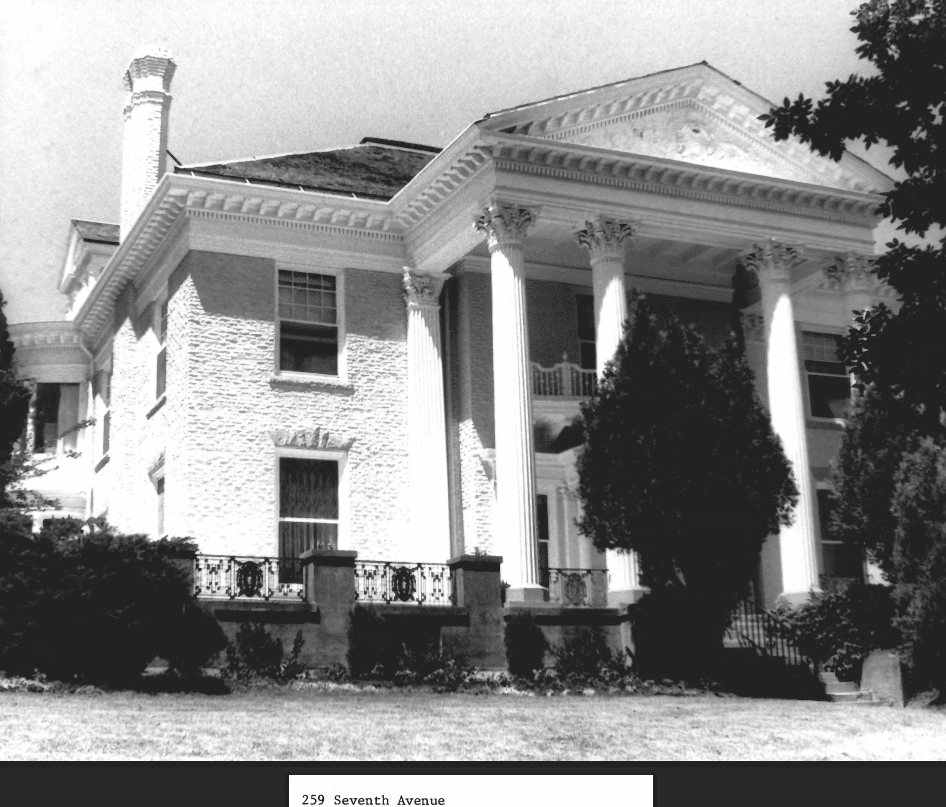
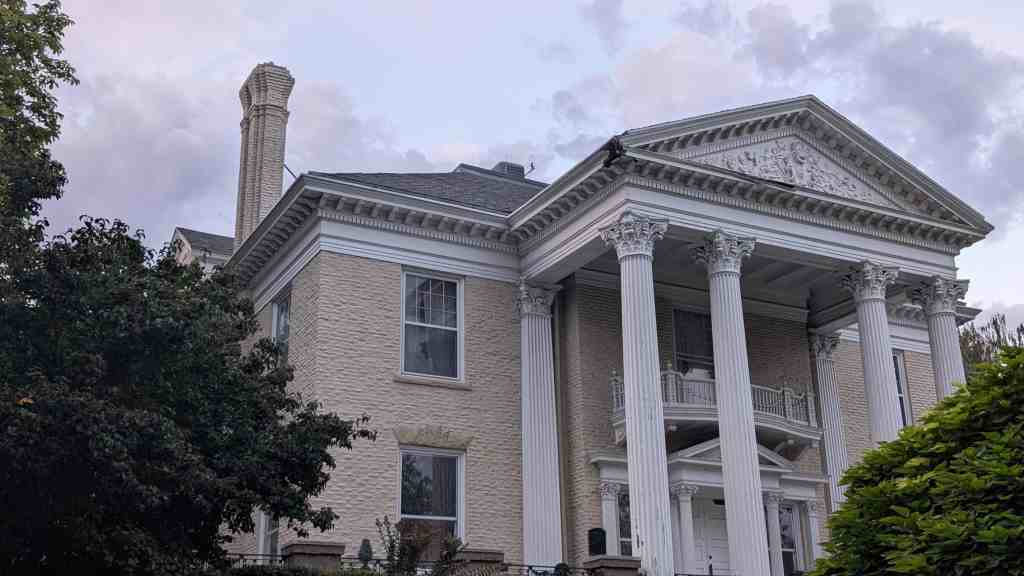
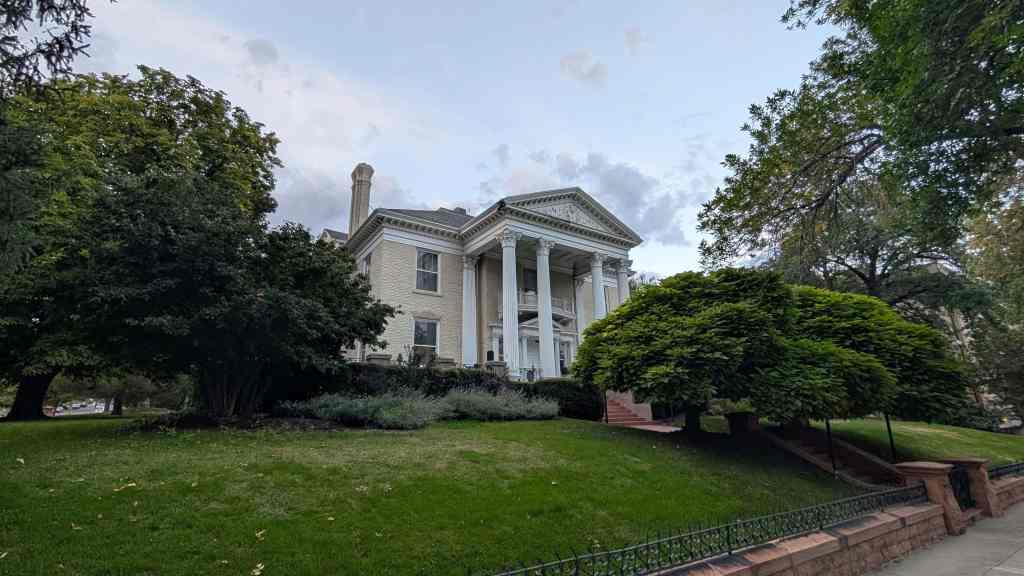
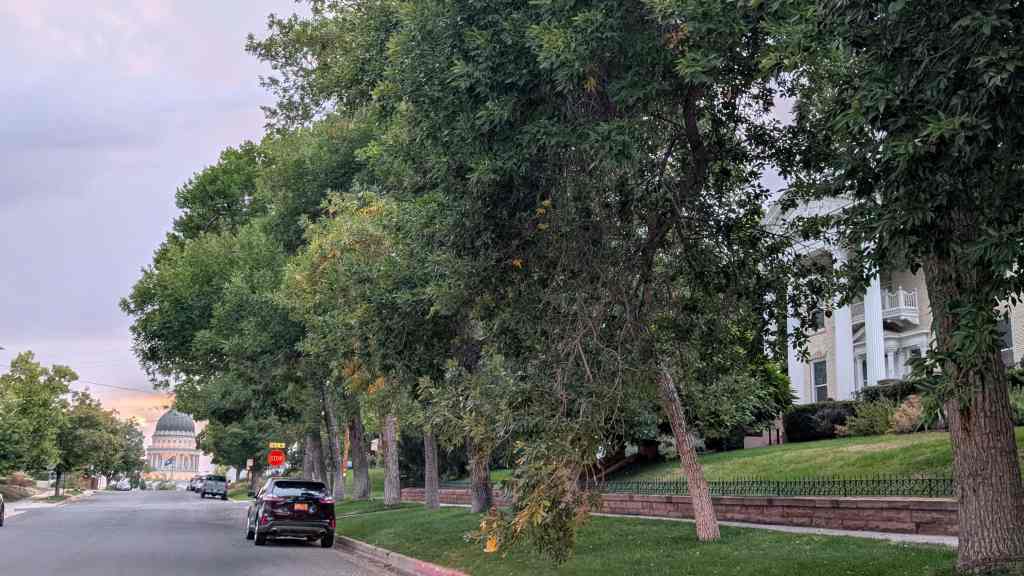
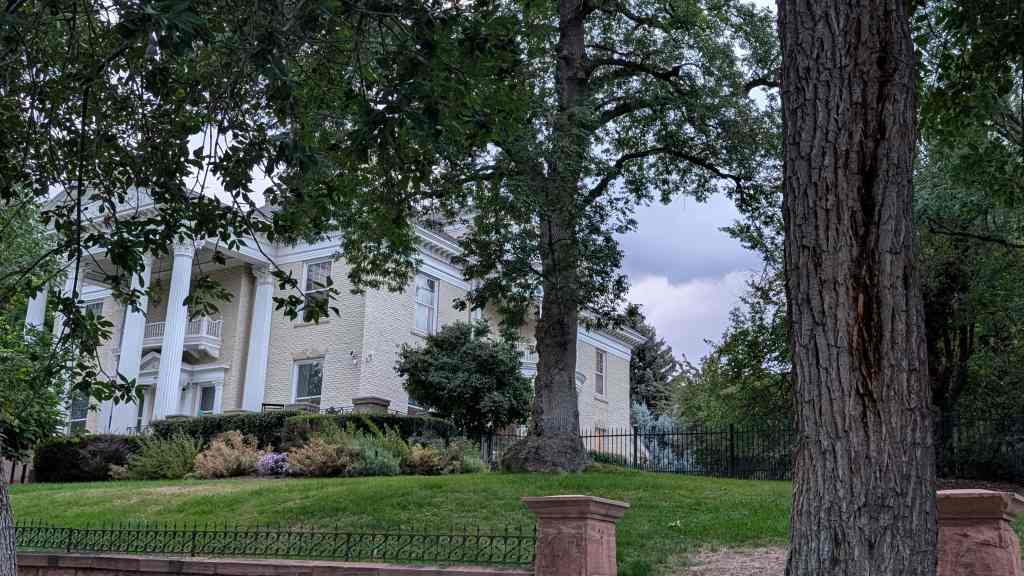
The McIntyre House, located at 259 East Seventh Avenue in The Avenues in Salt Lake City, Utah was added to the National Register of Historic Places (#78002677).
The property on which the McIntyre House sits was registered to C. J. Sandbech on June 27, 1874, as lot 2, Block 101, Plat D. The lot was purchased by Gill S. Peyton on January 26, 1894, for a price of $2,500.00.

The structure was designed by architect Fredrich Hale and was first inhabited in 1898 and was called Payton Hall. The property, house, and carriage house was sold to Henry w. Brown on July 18, 1900, for a price of $15,000.00.

William H. McIntyre acquired the house on December 5, 1901 for a price of $19,000.00 and the adjacent lot (Lot #2) for a price of $2,000.00. From this date on the structure has been known as the Mclntyre House.

Service connections are recorded as being made on April 17, 1906 and additional services and repairs were made August 8, 1910.

William H. Mclntyre died on August 20, 1926. Mrs. Phoebe McIntyre resided in the house until her death in 1945. William H. McIntyre came to Utah as a boy from Texas and his adventurous life was bound up with the development of the Utah cattle business. In later life Mr. McIntyre developed large holdings in Alberta, Canada, where he established the McIntyre Ranch but he retained many interests in Utah and spent his last years there; dying in Salt Lake City in 1926 at ‘the age of ‘seventy-eight.

He was born in Grimes County, Texas about forty miles, north of what is now the city of Houston, in the year 1848, the son of William McIntyre who was of Scotch-Irish descent.

William’s brother, Samuel, along with William traveled to Texas about 1870 to sell some property owned by, t;heir father. After the sell was completed they bought cattle and made the long trek back to Utah. In the spring of the next year, they sold the cattle for more than five times what they had paid. This gave them enough money to buy more cattle in Omaha and drive them to Utah. This partnership continued until sometime in the 1880s and gave the two brothers enough money to enter into several ventures, including the Mammoth Mine at Mammoth, Utah which then developed into a successful operation.

During the 1880s, William had hard times in the cattle business losing almost an entire herd in the winter of 1886-87. In 1891 to 1894 William began investigating the possibility of purchasing land and in 1894 he purchased a full section of land near Cardston in Alberta, Canada. Ranching began shortly after the purchase.

William H. McIntyre was married to Phoebe, Ogden Chase. She was the granddaughter of Isaac Chase, the first flour miller in Utah. Liberty Park was once the Isaac Chase farm, later passing to Brigham Young. Phoebe Chase was torn at the caretaker’s house which still stands on Liberty Park.

Mentioned in the national register’s nomination form:
While they account for less than one percent of all residences, the very large, often architect-designed homes in the Eastlake, Queen Anne and Shingle styles, and later the Prairie and Craftsman styles greatly influence the visual character of the Avenues. Some of the state’s best examples of residential architectural styles were built there, including the William Barton house, 231 B Street, (vernacular/Gothic); the Jeremiah Beattie house, 30 J Street, (Eastlake); the David Murdock house, 73 G Street, (Queen Anne); the E.G. Coffin house, 1037 First Avenue, (Queen Anne); the N.H. Beeman house, 1007 First Avenue, (Shingle style); the Vto. Mclntyre house, 257 Seventh Avenue, (Classical Revival); the James Sharp house, 157 D Street, (Craftsman); and the W.E. Ware house, 1184 First Avenue, (Colonial Revival).

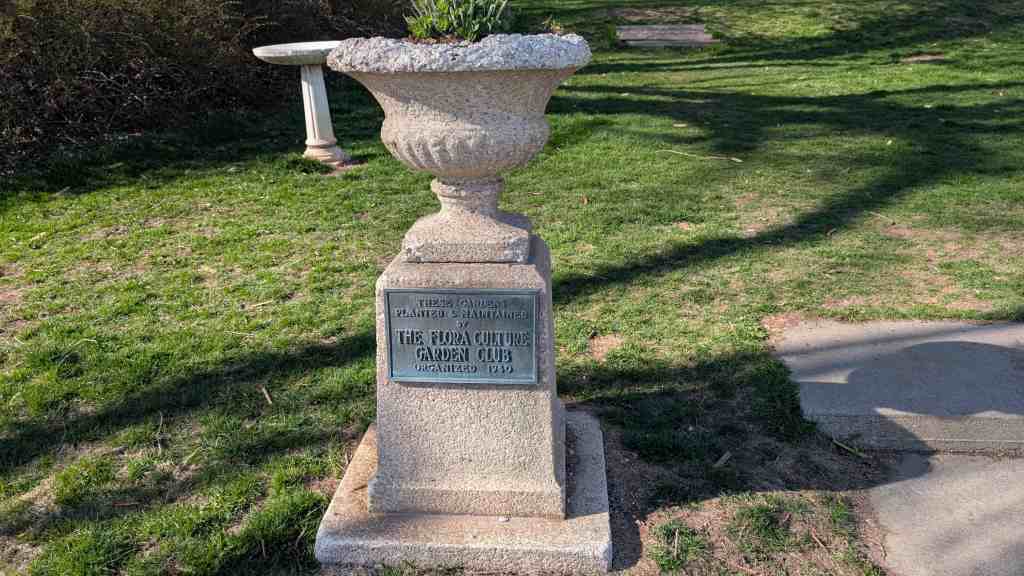
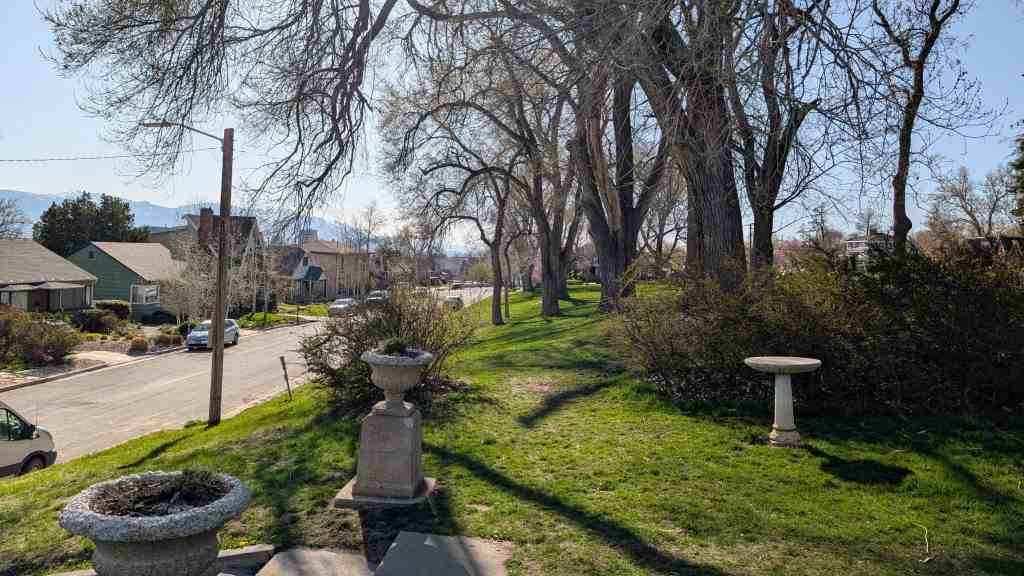
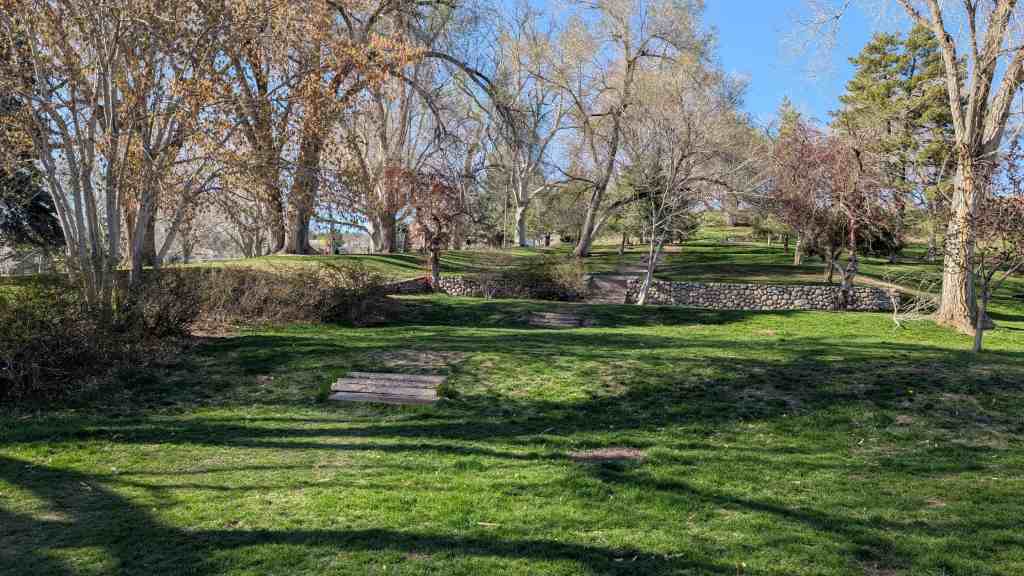
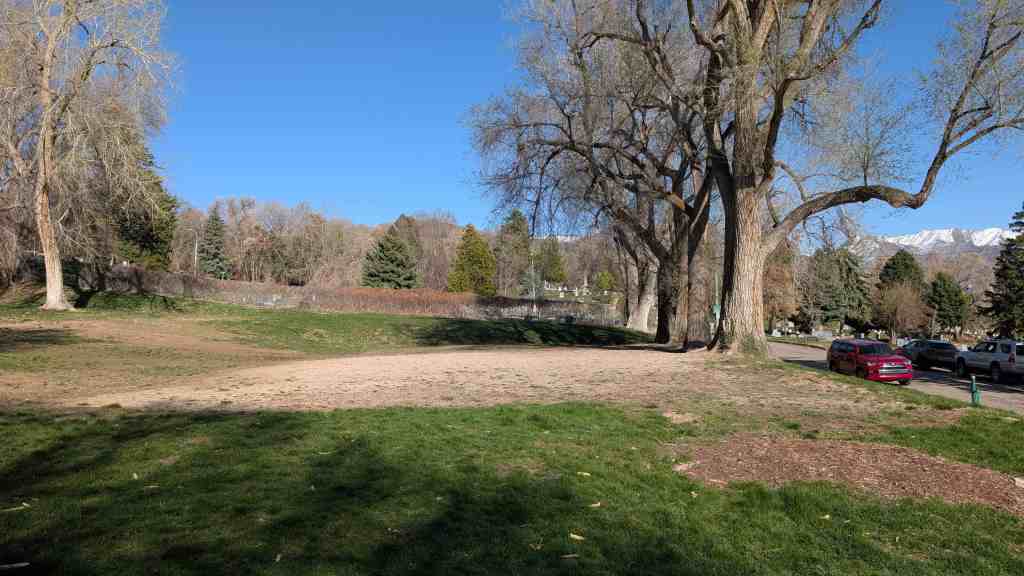
Lindsey Gardens

12 Wednesday Nov 2025

Posted by Jacob Barlow in Uncategorized

≈ Leave a comment

Tags

Parks, Salt Lake City

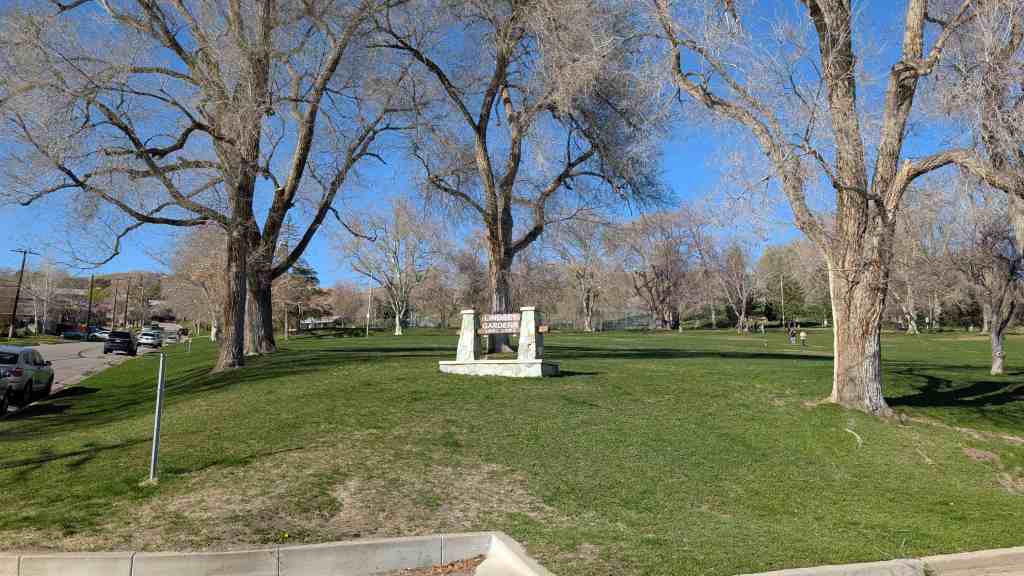
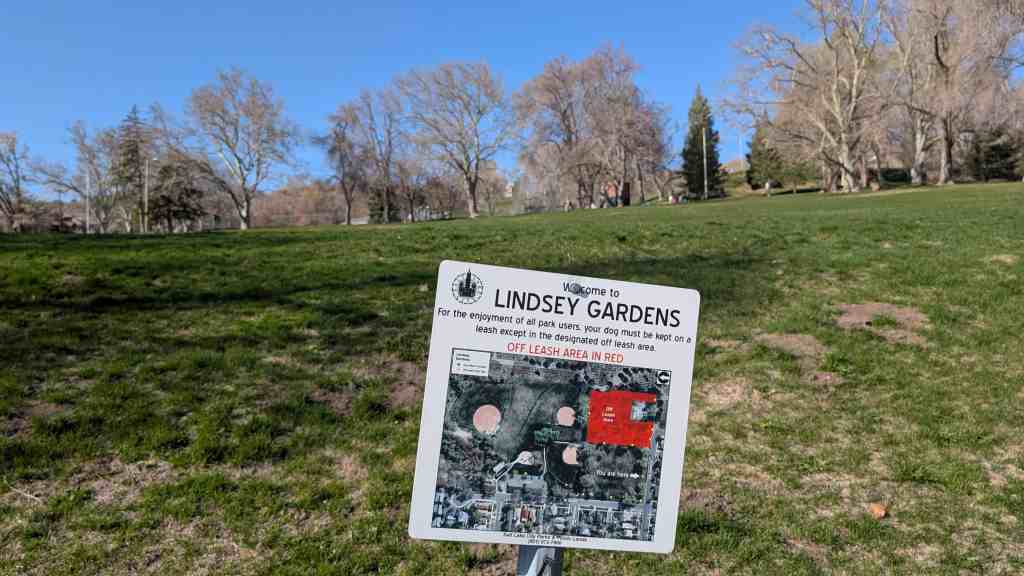
Lindsey Gardens
376 North M Street in The Avenues in Salt Lake City, Utah

  • Salt Lake City Parks
  • First Playground (historic marker located here)

William A. Byers Home

30 Thursday Oct 2025

Posted by Jacob Barlow in Uncategorized

≈ Leave a comment

Tags

NRHP, Salt Lake City, Salt Lake County, utah

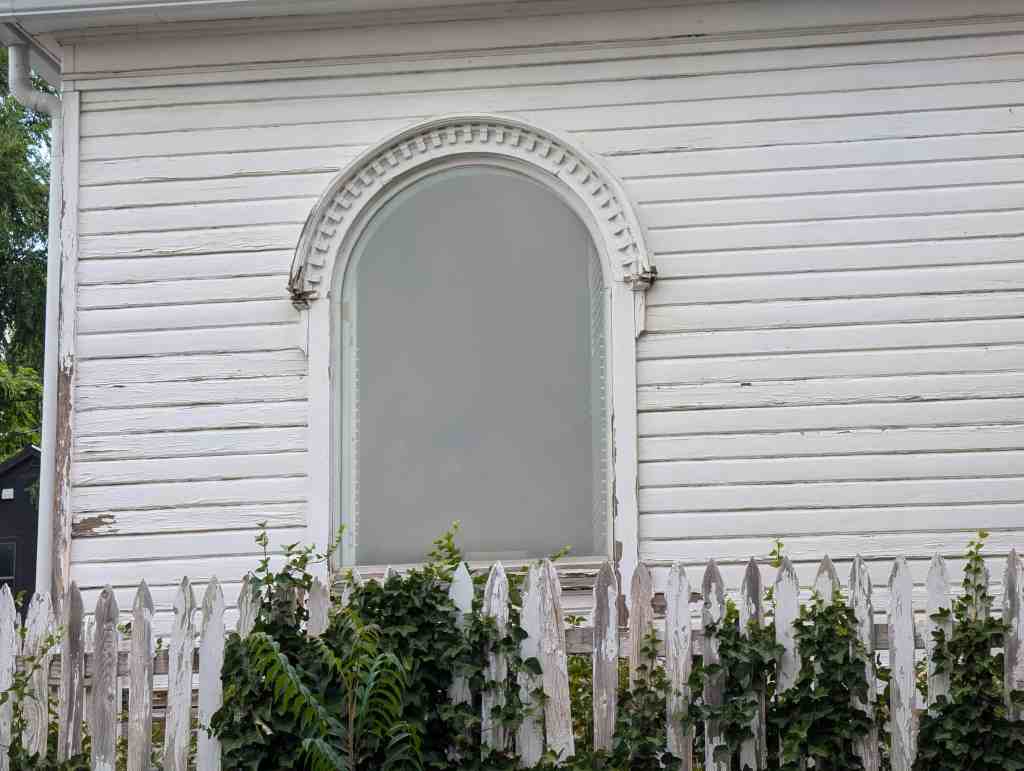
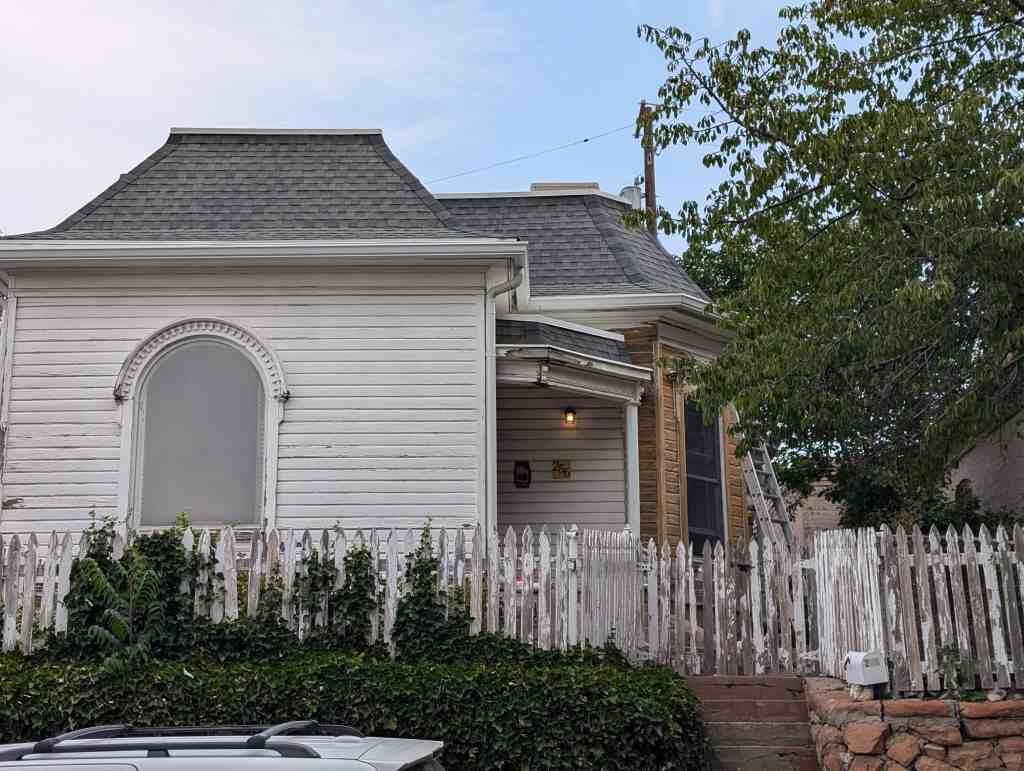
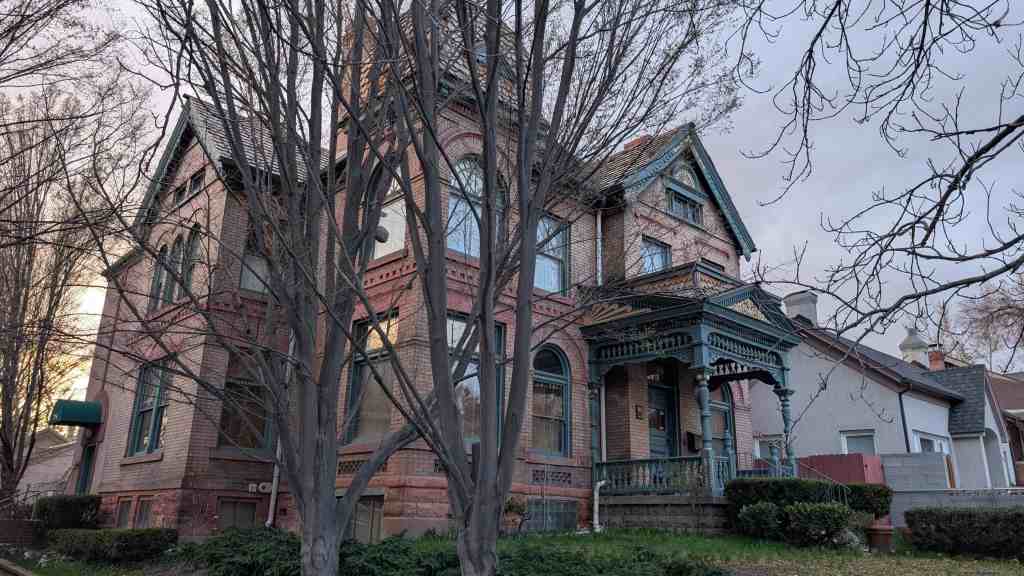
William A. Byers Home

Home built 1891 for William A. Byers. Frame construction with mansard roof. Registered October 3, 1973 by Messrs Randall K. Jensen and Lamont B. Vail.

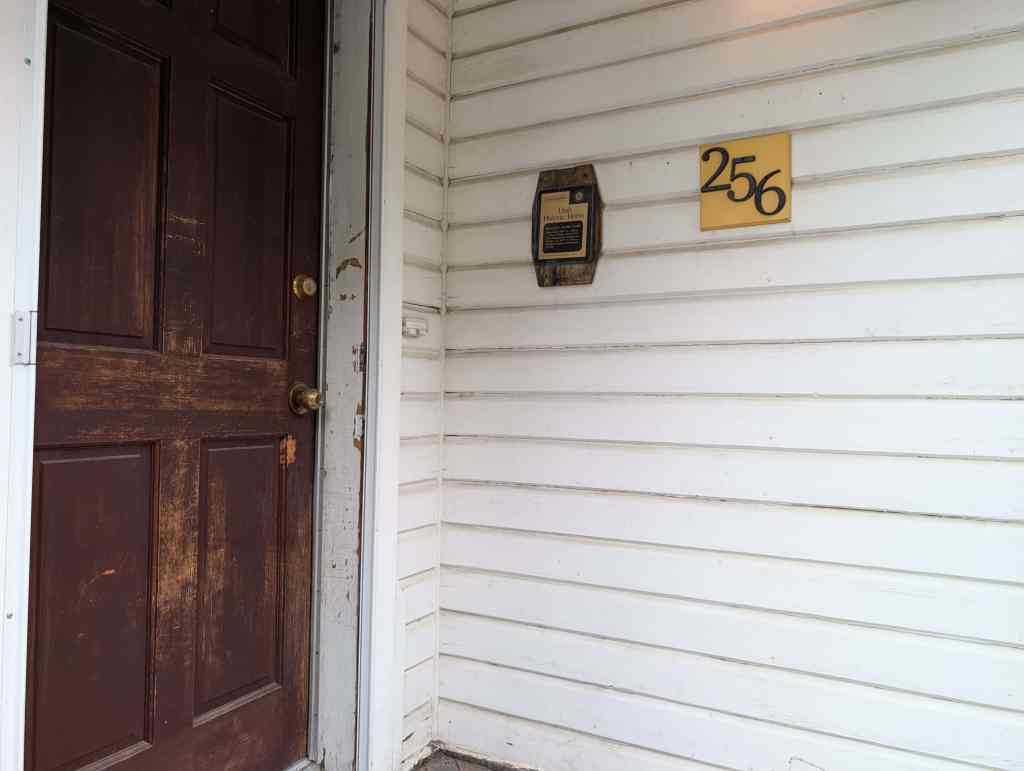
256 North Vine Street in Salt Lake City, Utah

(county records)

Congregation Montefiore Synagogue

03 Friday Oct 2025

Posted by Jacob Barlow in Uncategorized

≈ 1 Comment

Tags

Chapels, Churches, historic, Historic Chapels, Historic Churches, Jewish, NRHP, Salt Lake City, Salt Lake County, Synagogues

Congregation Montefiore Synagogue

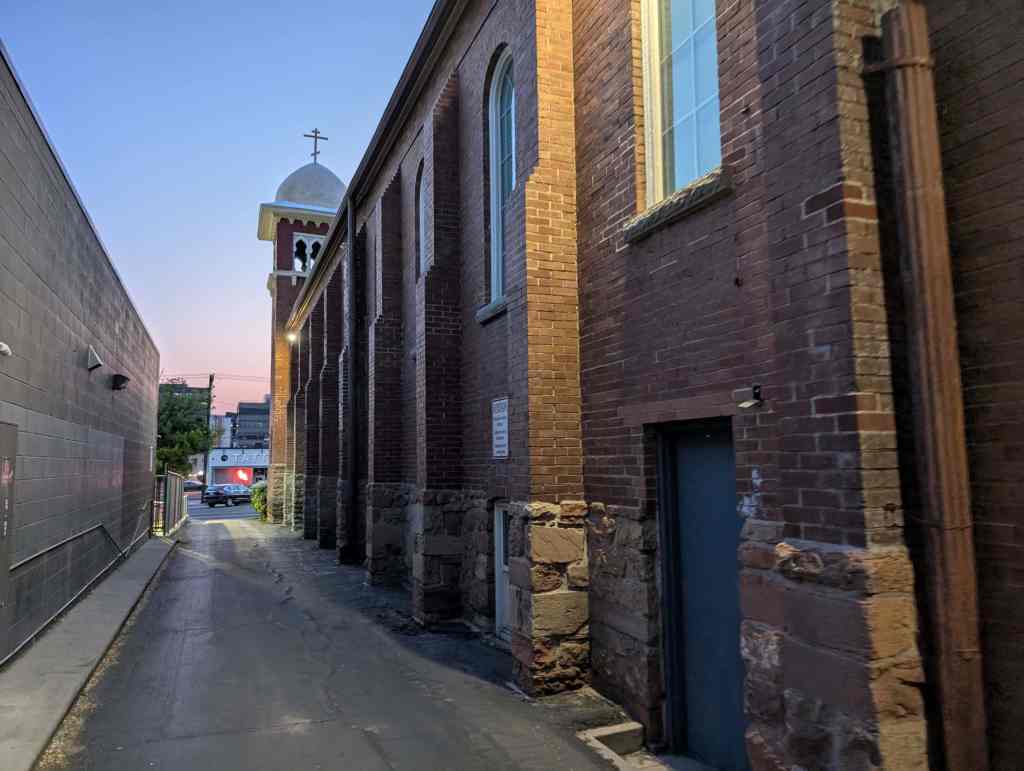
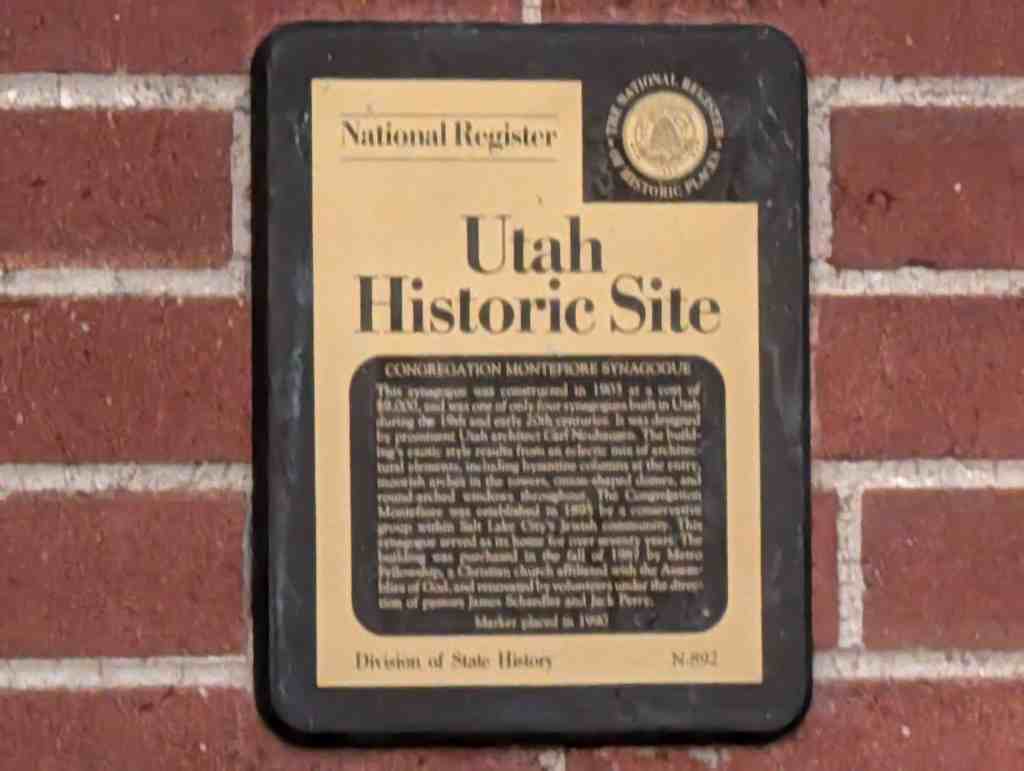
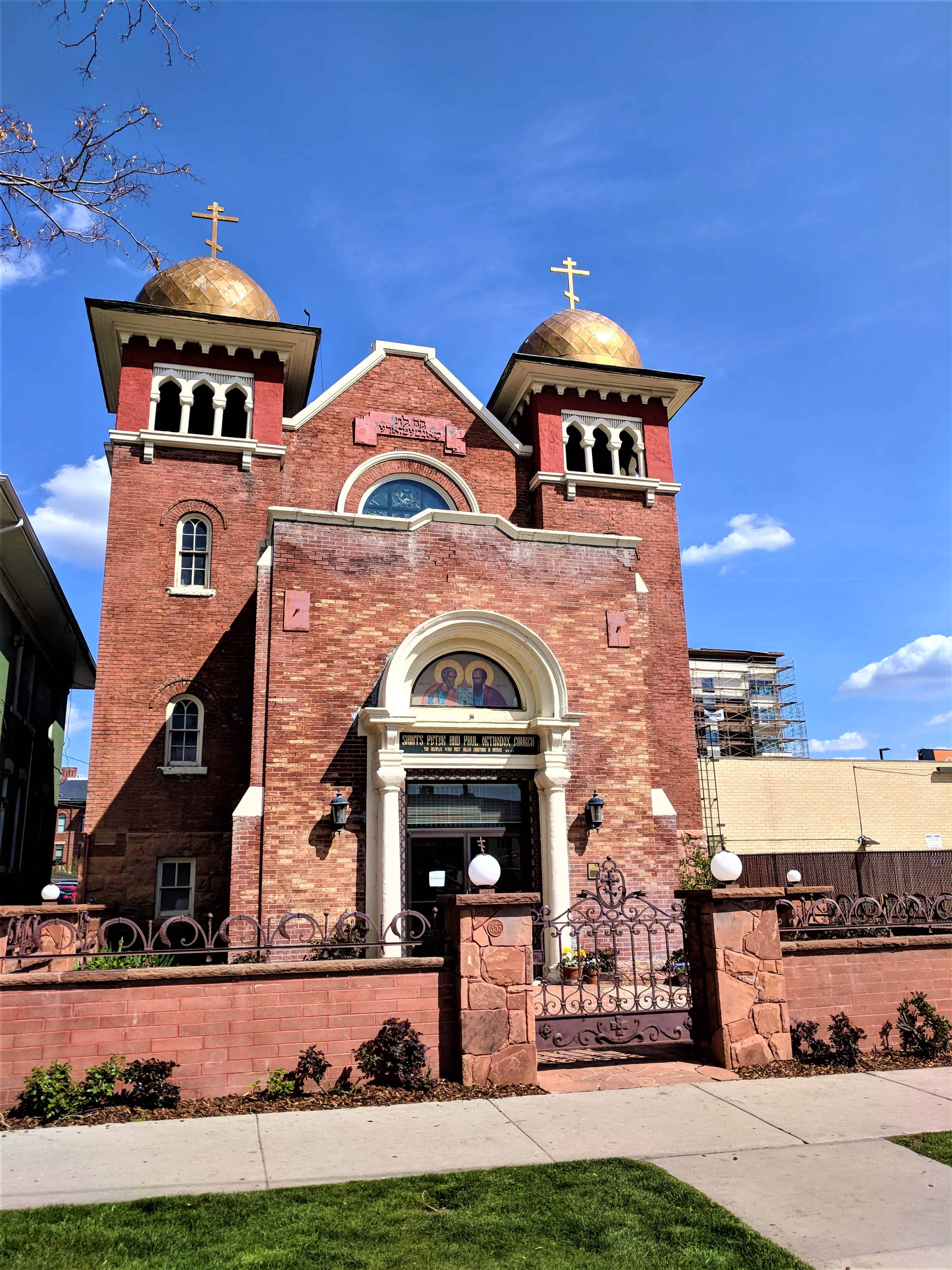
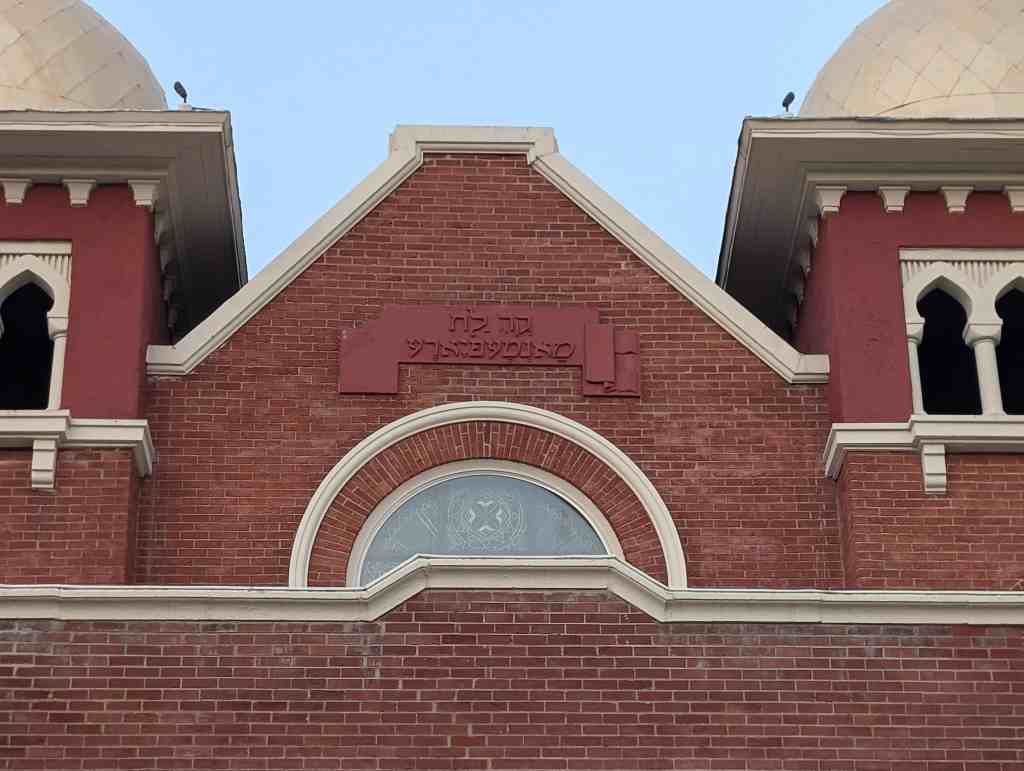
This Synagogue was constructed in 1903 at a cost of $9,000, and was one of only 4 synagogues built in Utah during the 19th and early 20th centuries. It was designed by prominent Utah architect Carl Neuhausen. The building’s exotic style results from an eclectic mix of architectural elements, including Byzantine columns at the entry, Moorish arches in the towers, onion-shaped domes, and round-arched windows throughout. The Congregation Montefiore was established in 1895 by a conservative group within Salt Lake City’s Jewish community. This Synagogue served as its home for over 70 years. The building was purchased in the fall of 1987 by Metro-Fellowship, a Christian Church affiliated with Assemblies of God, and renovated by volunteers under the direction of Pastors James Schaedler and Jack Perry.

The Synagogue is located at 355 South 300 East in Salt Lake City, Utah and was added to the National Register of Historic Places (#85001395) on June 27, 1985.

Text below is from the national register’s nomination form:

The synagogue of the Congregation Montefiore is significant for its association with Utah’s conservative Jewish population. The third Jewish house of worship to be constructed in two decades, the 1903 Moorish Revival synagogue is testimony to the diversity in religious practices within Utah’s Jewish community. The conservative or ‘Modern Orthodoxy,’ as it was then known, grew in numbers as a direct result of Utah’s development from territory to statehood. As Utah became part of the nation, national trends in emigration acted towards augmenting Utah’s Jewry, particularly in the conservative fold.

Since 1884 when Issidore Morris left the congregation B’nai Israel in disagreement over the adoption of the Reform practices, tradition oriented Utah Jews have met to celebrate festivals and holidays. Usually they met in members’ homes because their numbers were too few to support a synagogue. An 1892 estimate placed the entire Utah Jewish population at 1,050, over half of which were conservatives. The conservatives appealed to the Board of B’nai Israel to use their new synagogue for traditional services to no avail. Yet, the financial situation at B’nai Israel was so desperate by 1895 – they had gone through three rabbis in three years and were then without one—that a motion to dissolve the congregation was raised. The incident is indicative of the animosity, real or imagined, which existed between the two groups. With their numbers growing as a direct result of the influx of Russian and eastern European immigrants, who were more likely than not to be traditional, the conservative population met in 1895 to incorporate as the Congregation Montefiore.

Named after the 19th Century British Jewish philanthropist, trouble shooter and financial adviser to the queen, Moses Montefiore, the congregation planned to raise another synagogue in Utah. They were given a parcel of land by their fellow congregant, Morris Levy, located on Third East between Third and Fourth South in Salt Lake City. With the cornerstone laid in August, 1903, in the presence of L.D.S. Church President Joseph F. Smith, it was largely the completed by the end of the year. The building was designed by local Salt Lake architect Carl Neuhausen and cost $9,000. The benign respect extended by Mormon authorities towards particularly Montefiore’s members was a way of thanking the Jews for Issidore Morris’ key role in securing the release from the federal penitentiary of Mormon polygamous Bishop William Smith. The congregation was financially aided by the Mormon church which gave $2,000 toward the construction of this building. Built without central heat, the basement was also unfinished. The congregation joined the United Synagogues of America National Union in 1966. Finally in 1972 the congregation voted for merger with B’nai Israel. An addition housing religious school activities was added to the rear after World War II.

The synagogue is a long rectangular building, the primary portion of which is defined by brick gabled walls facing east and west. The north and south walls, also of brick which appear to have been painted from the start are divided into nine bays – each containing a tall round arched window – by projecting pilasters. It is not known whether the pilasters serve to brace load bearing walls or whether they conceal steel columns which in turn might be attached to steel roof trusses. At both ends of the west facade are square towers with onion shaped domes atop broad bracketed cornices below which are arcades of Assyrian arches on columns. The tower shafts are brick; their bases and the entire original building base is of rusticated Ashlar stone, to the water table. In the center of the east gable wall is a metal plaque with a raised Hebrew inscription. Below the plaque is a round window with a six-pointed star pattern. Below this is a projecting entry vestibule with a flat roof and parapet walls. The west wall of the vestibule has an elaborate entrance composed of double doors surmounted by a transom and flanked by Byzantine columns which support a projecting semi-circular pediment. The Tympanum is glass, with diagonal and horizontal divisions. The rear addition is of masonry construction, probably with a steel frame. There is a flat roof on steel bar joists. The brick is the same color as the painted brick on the original building. The brick vestibule on the facade is an early, well-matched addition.

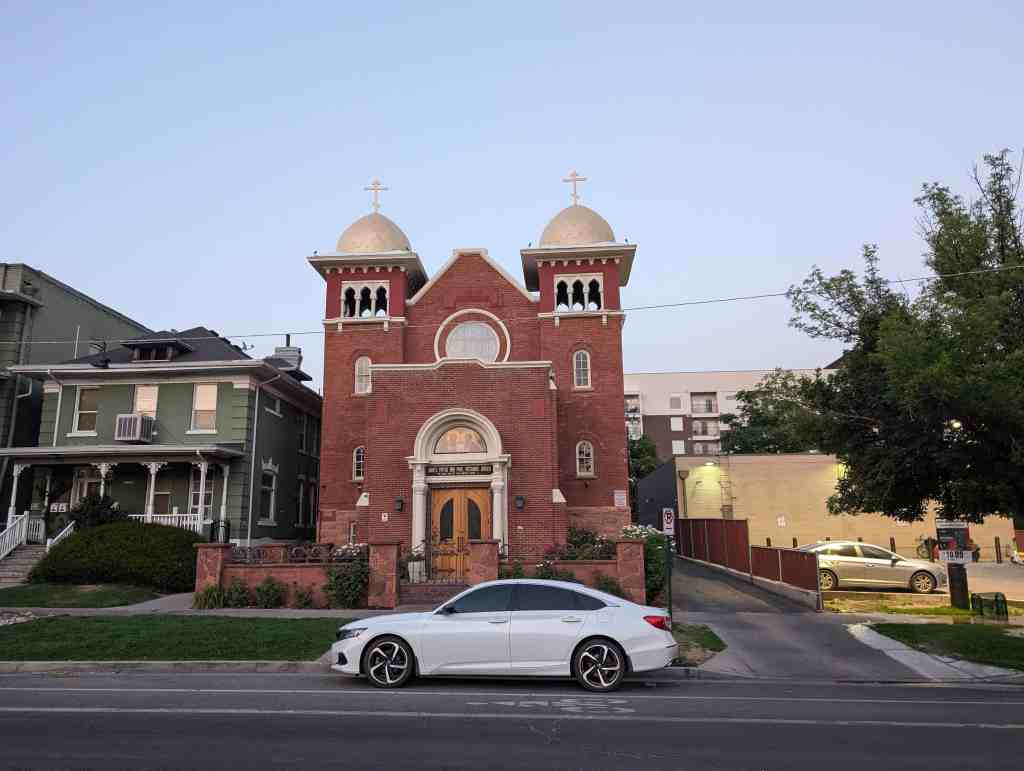
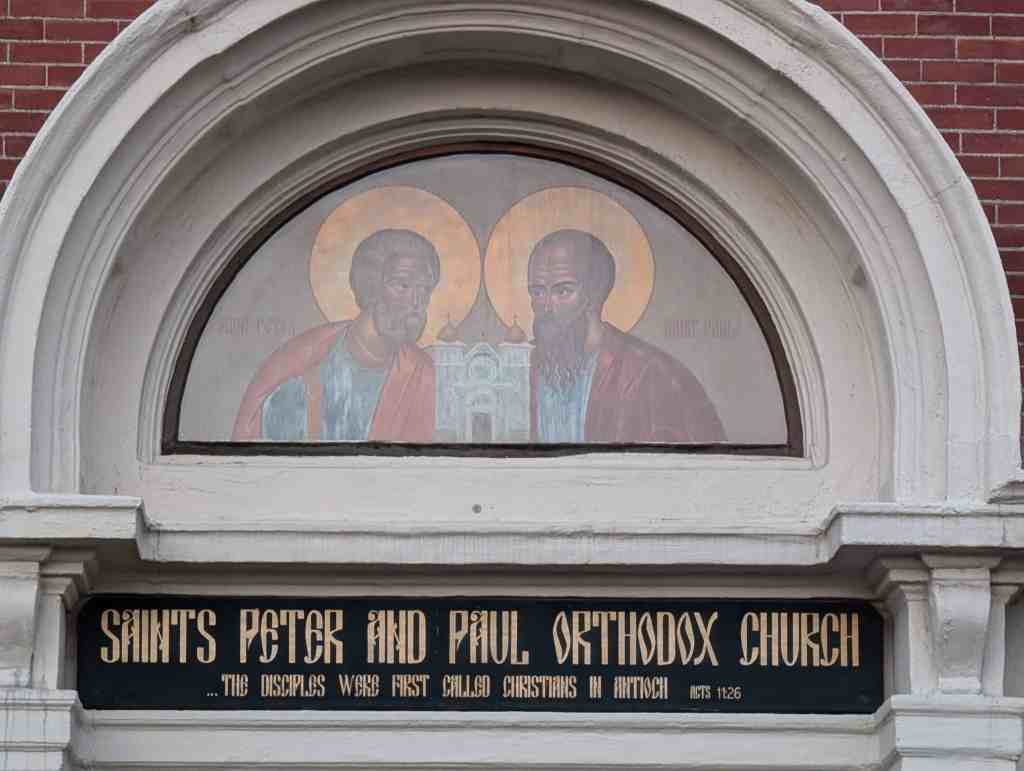
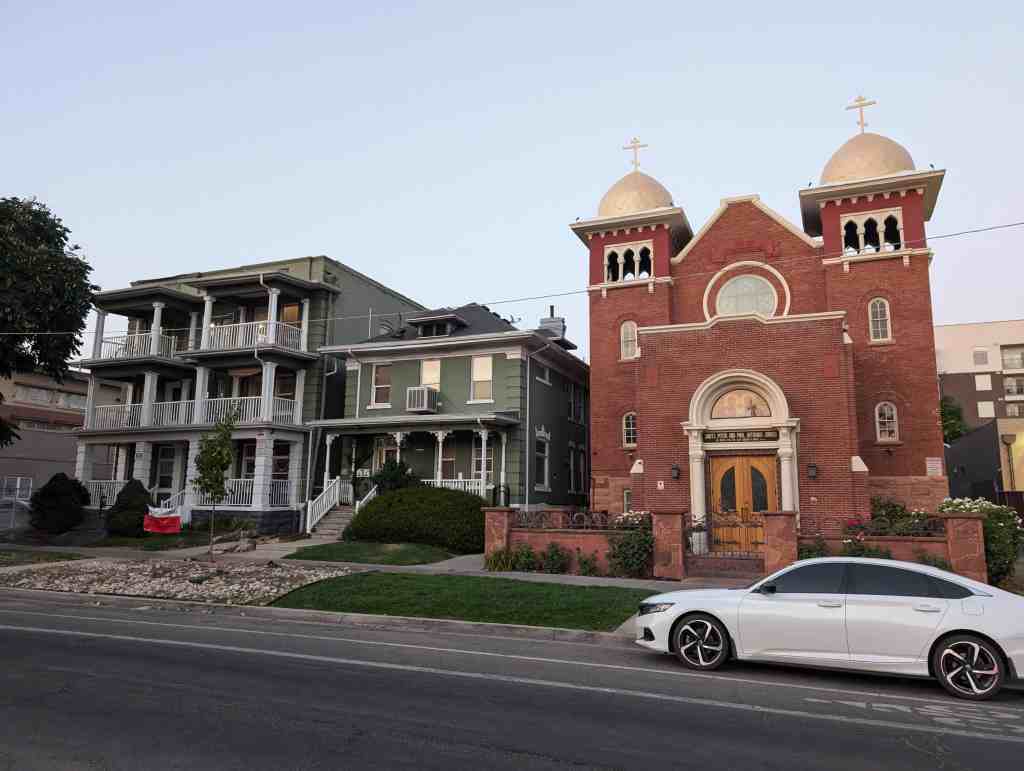
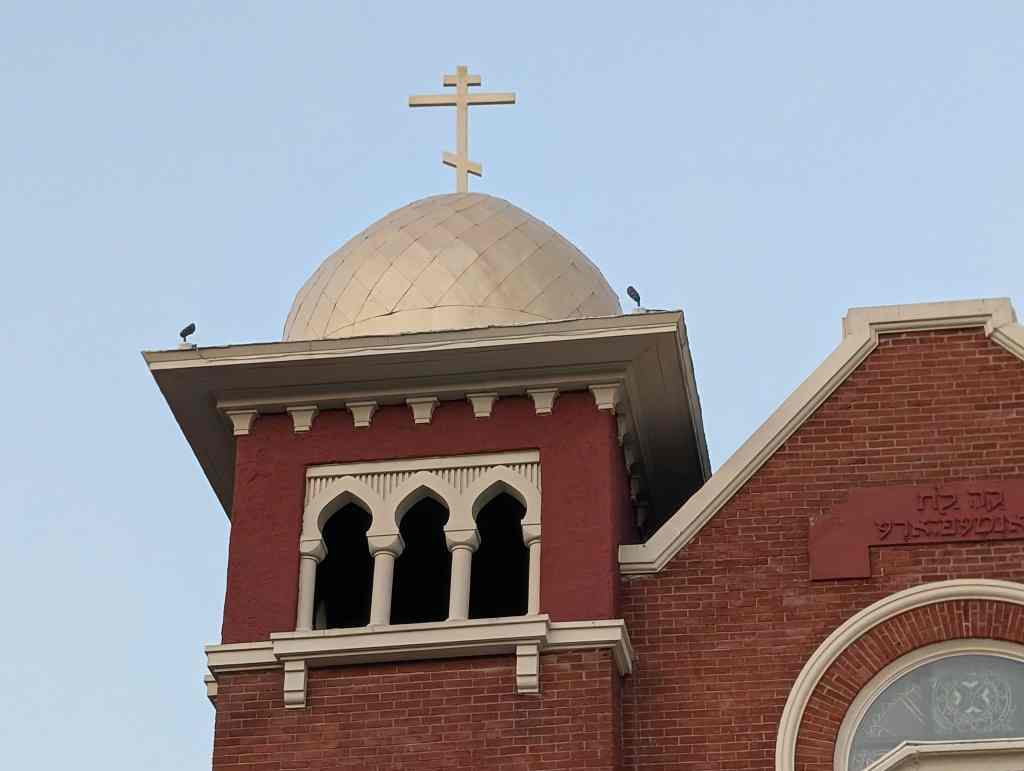
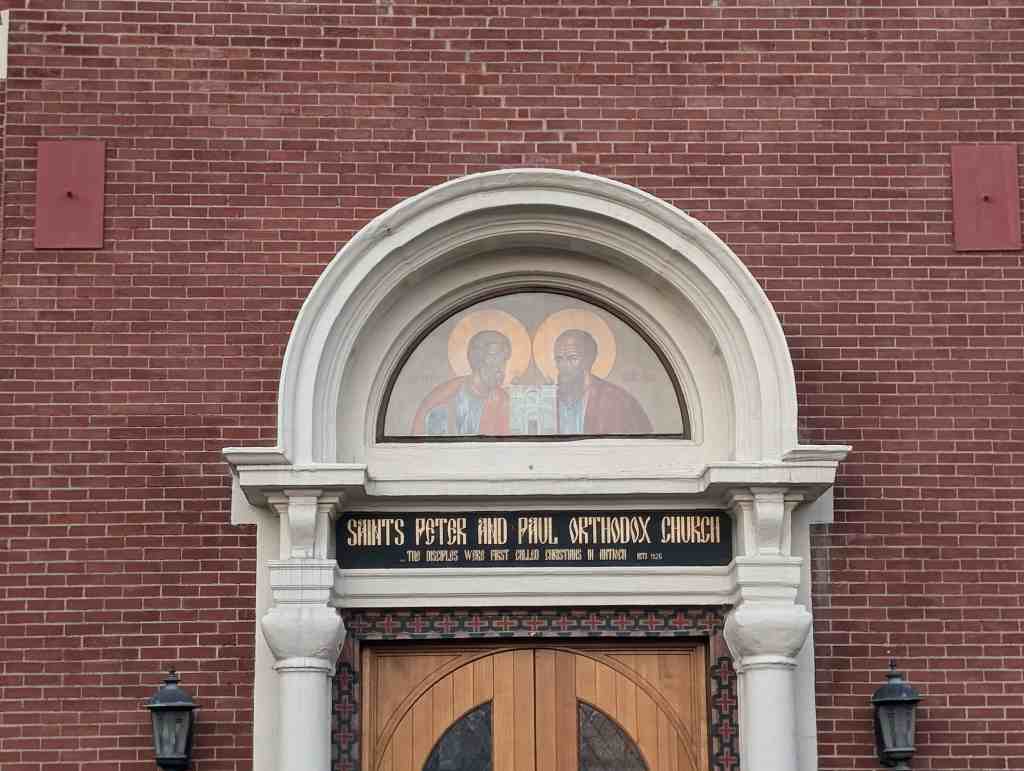
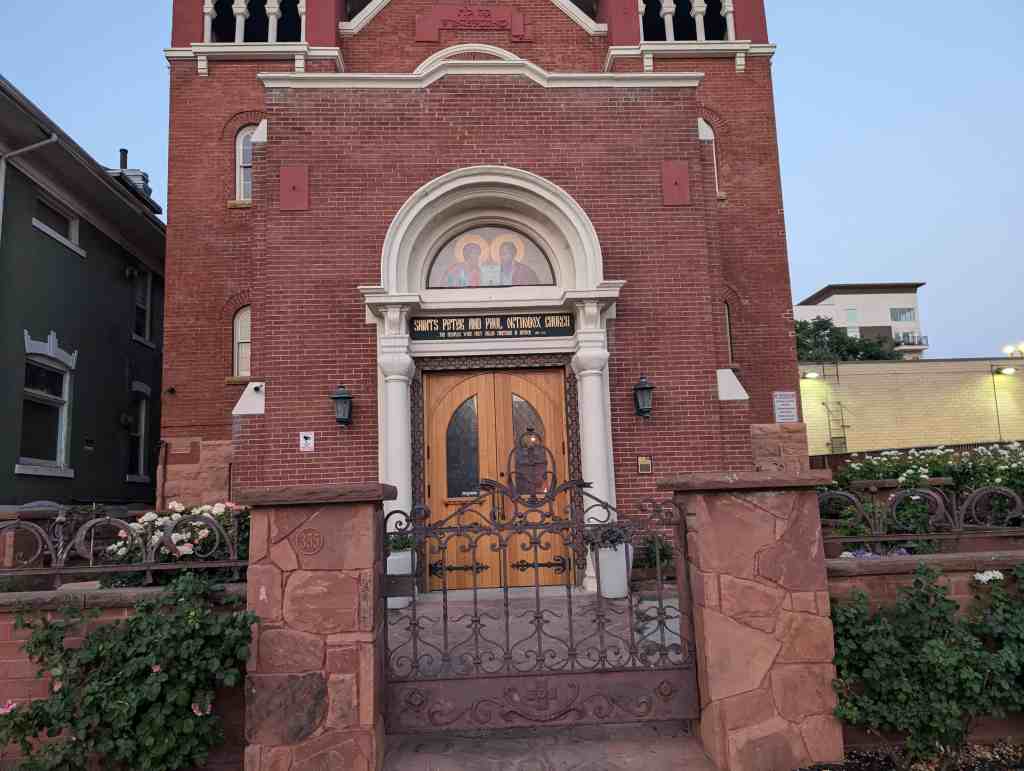
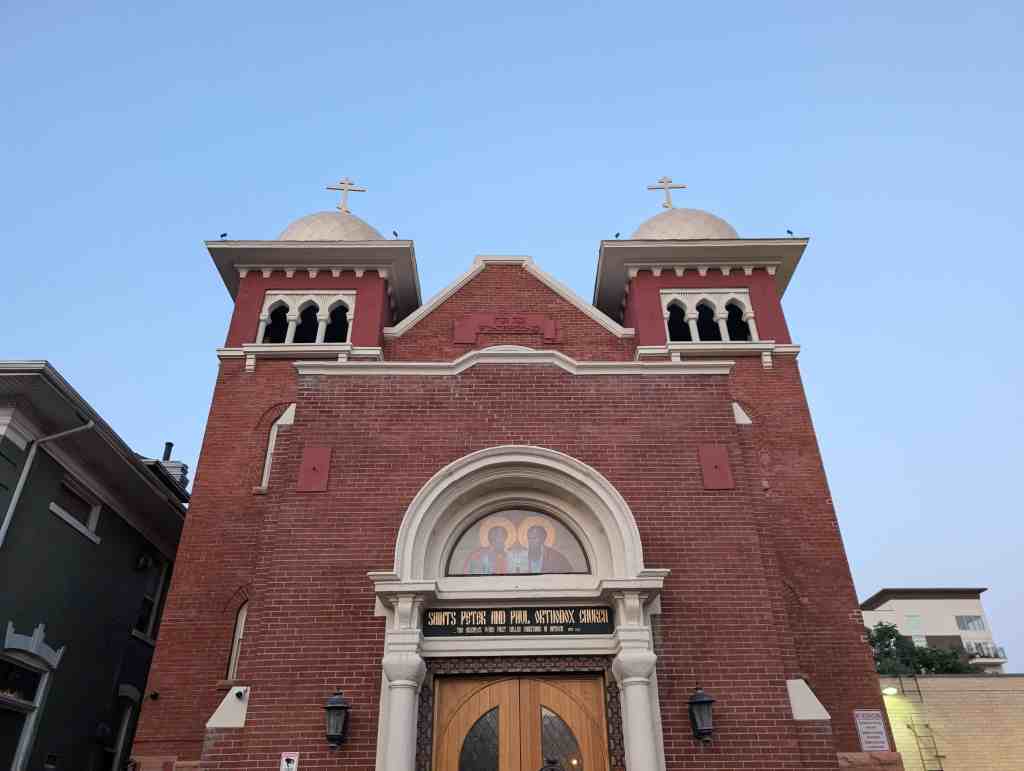
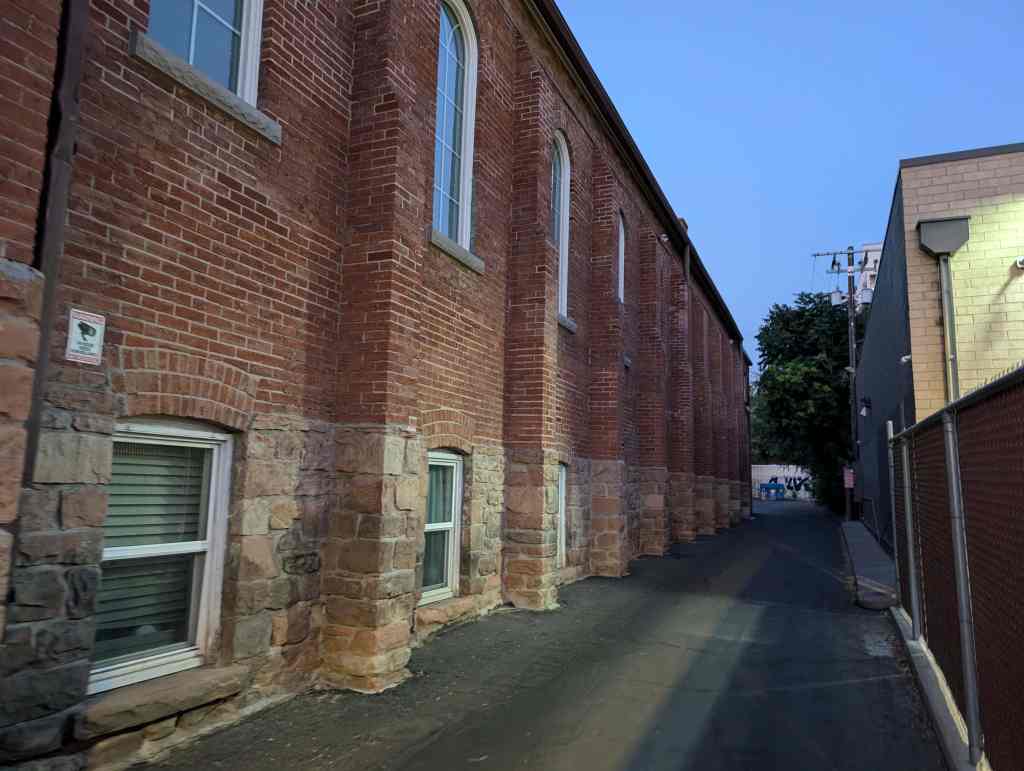
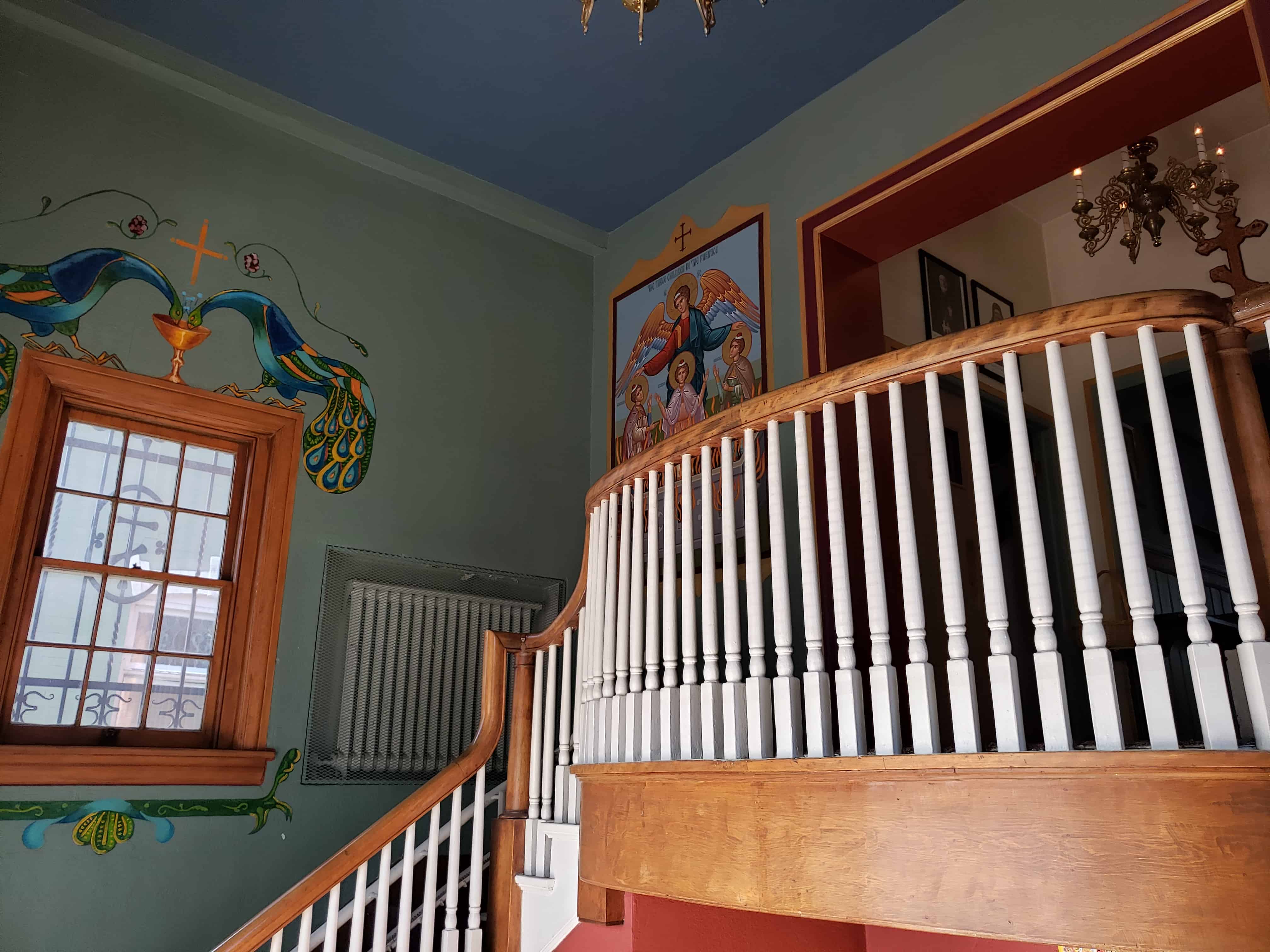
Saints Peter and Paul Orthodox Church

2018-04-14 15.40.36

Saints Peter and Paul Orthodox Church

For other Historic Churches in Salt Lake City visit this page.

2018-04-14 15.40.51
2018-04-14 15.40.57
2018-04-14 15.41.00
2018-04-14 15.41.06
2018-04-14 15.41.18
2018-04-14 15.42.03
2018-04-14 15.42.15

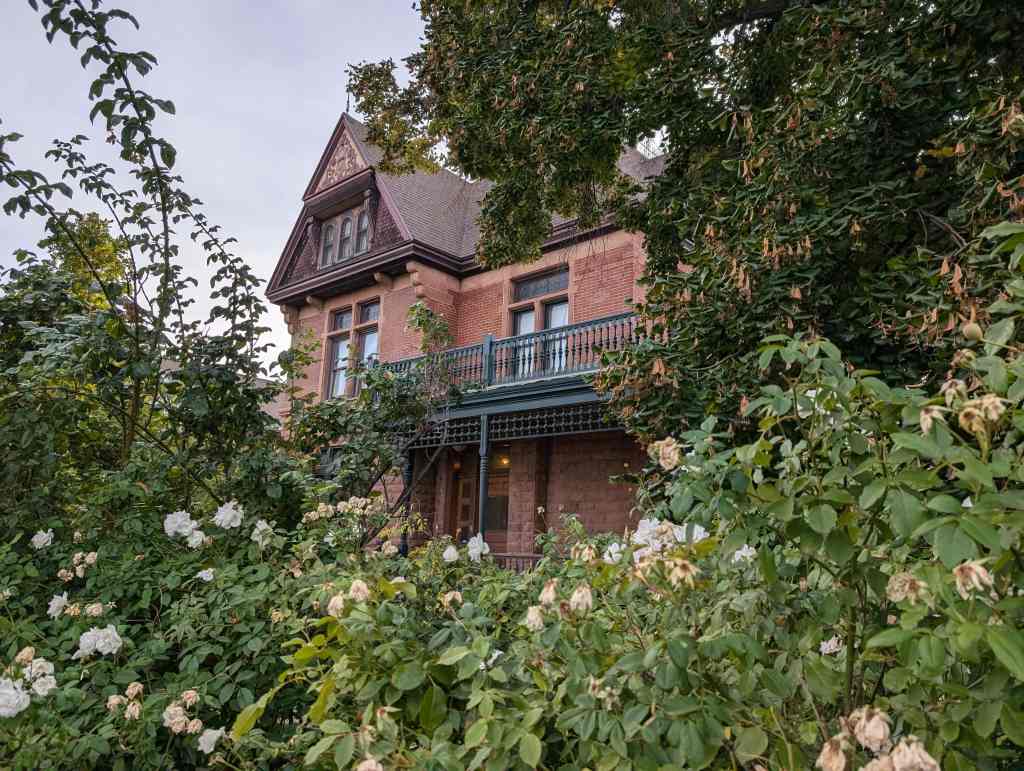
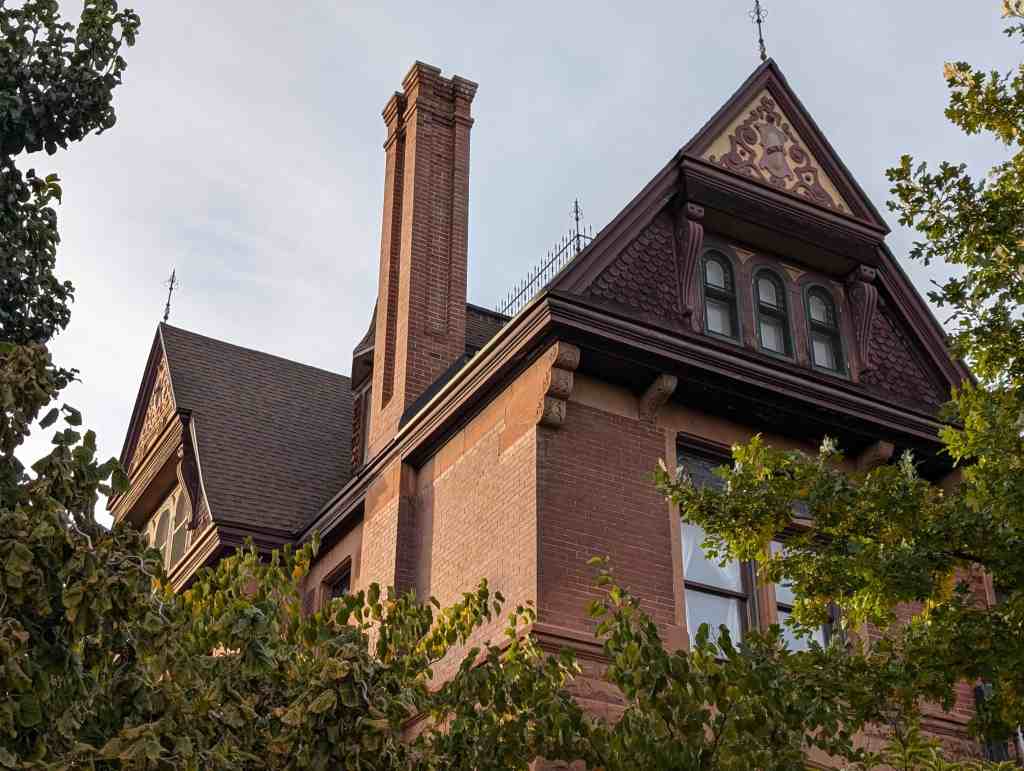
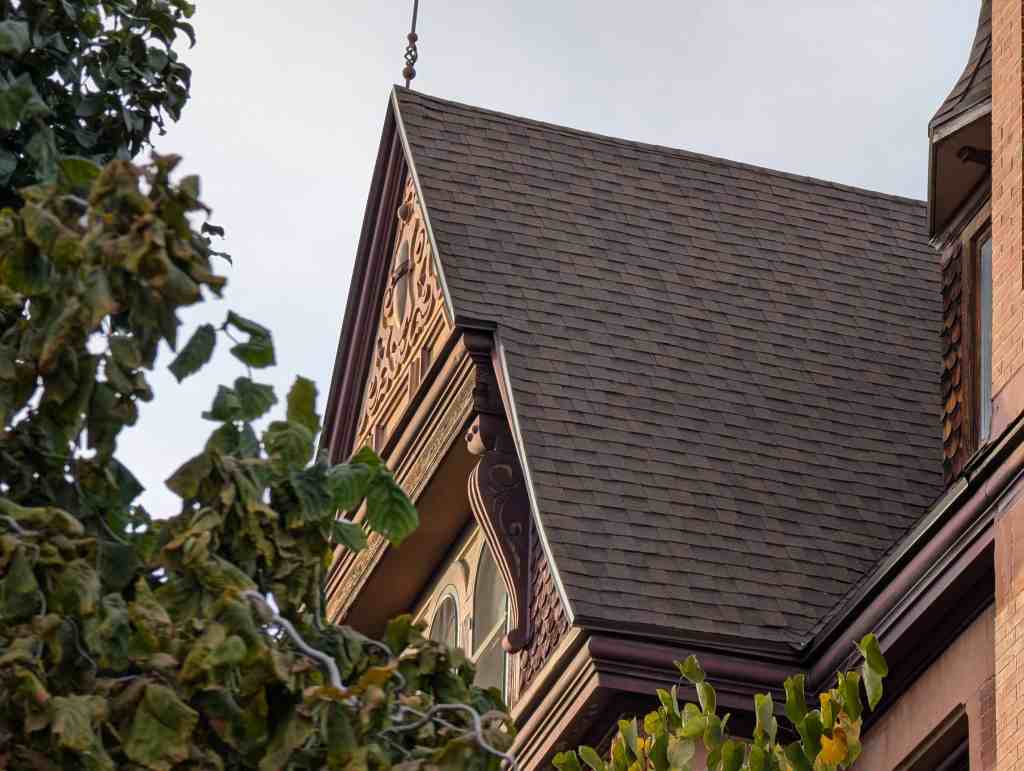
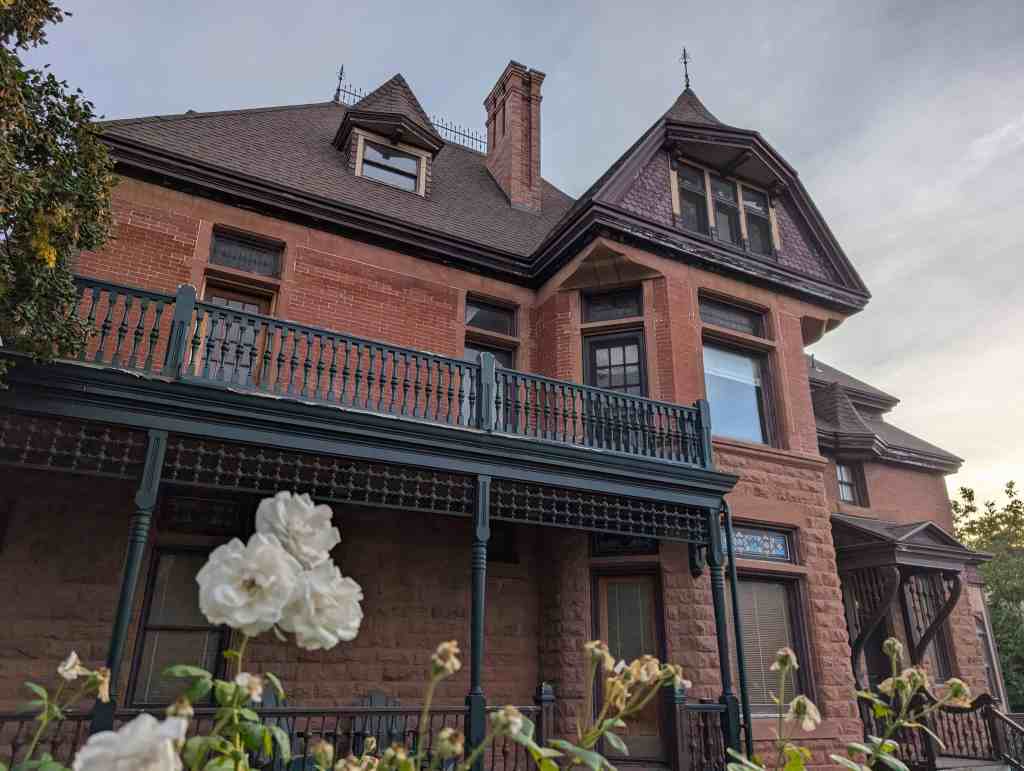
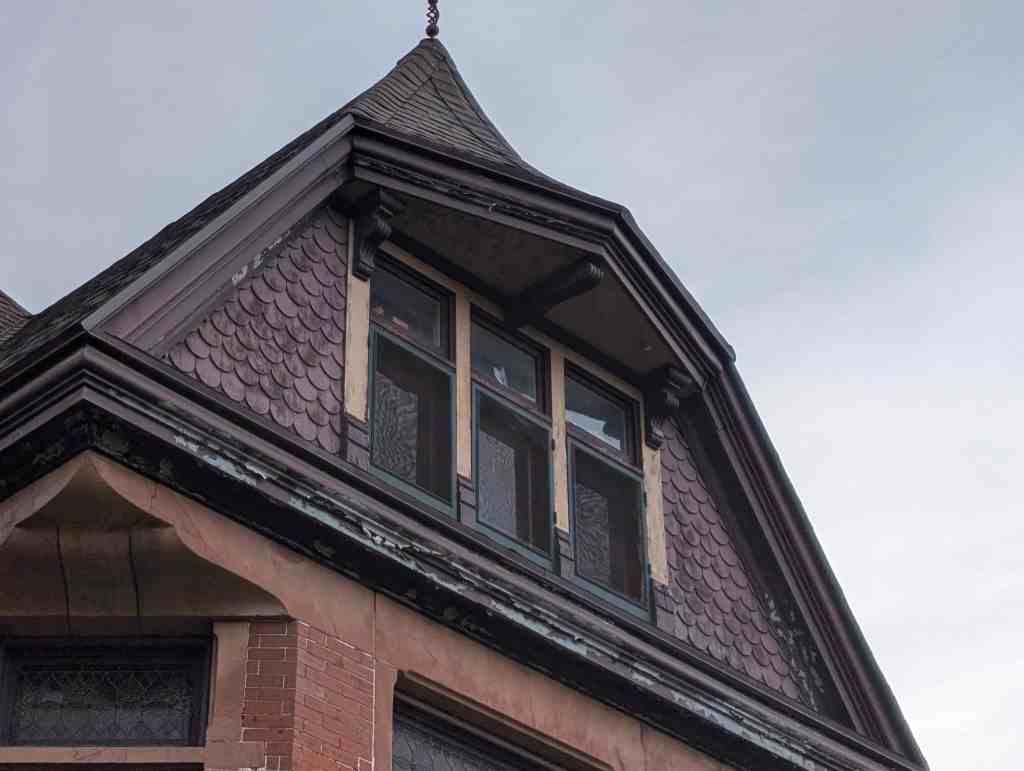
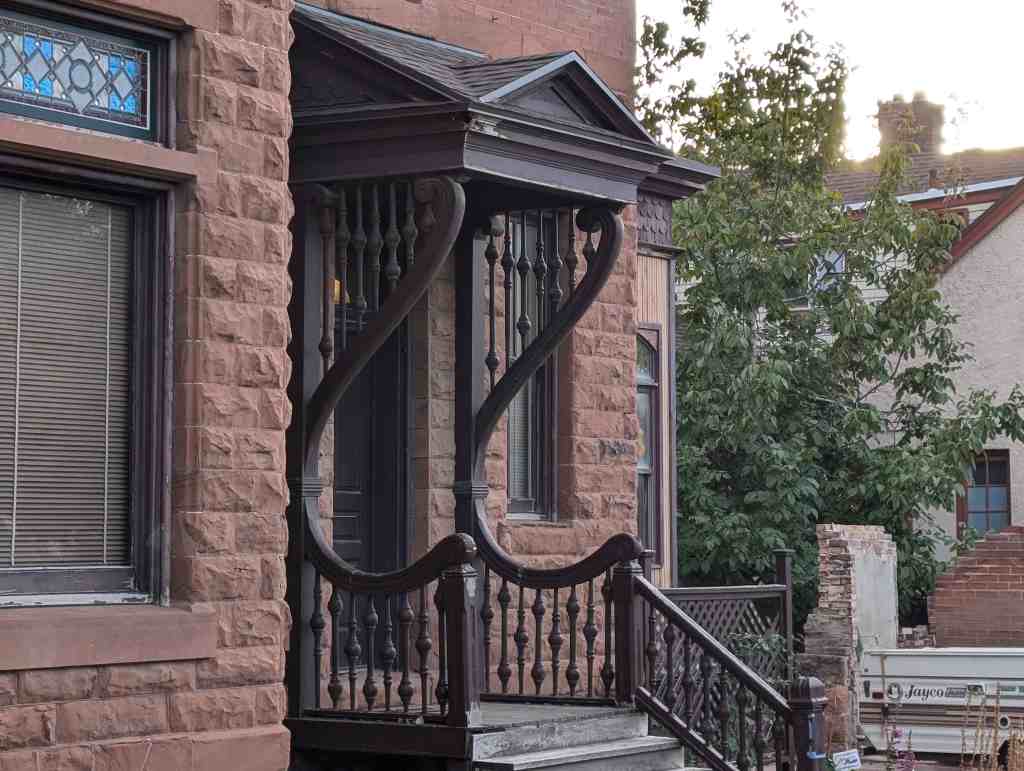
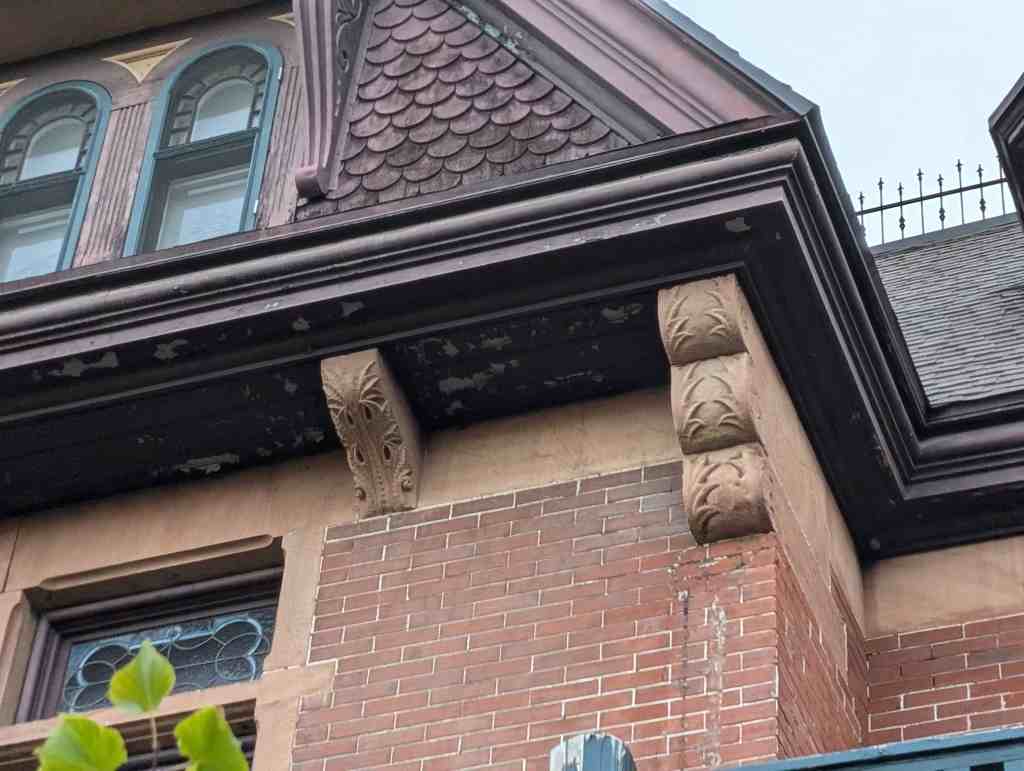
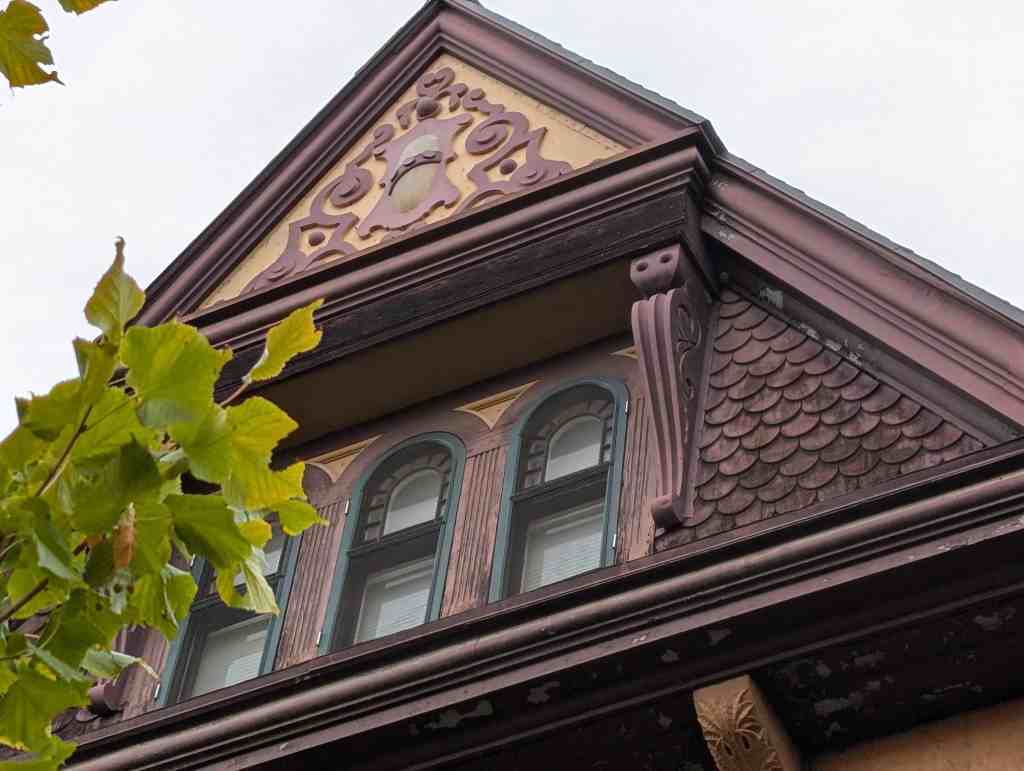
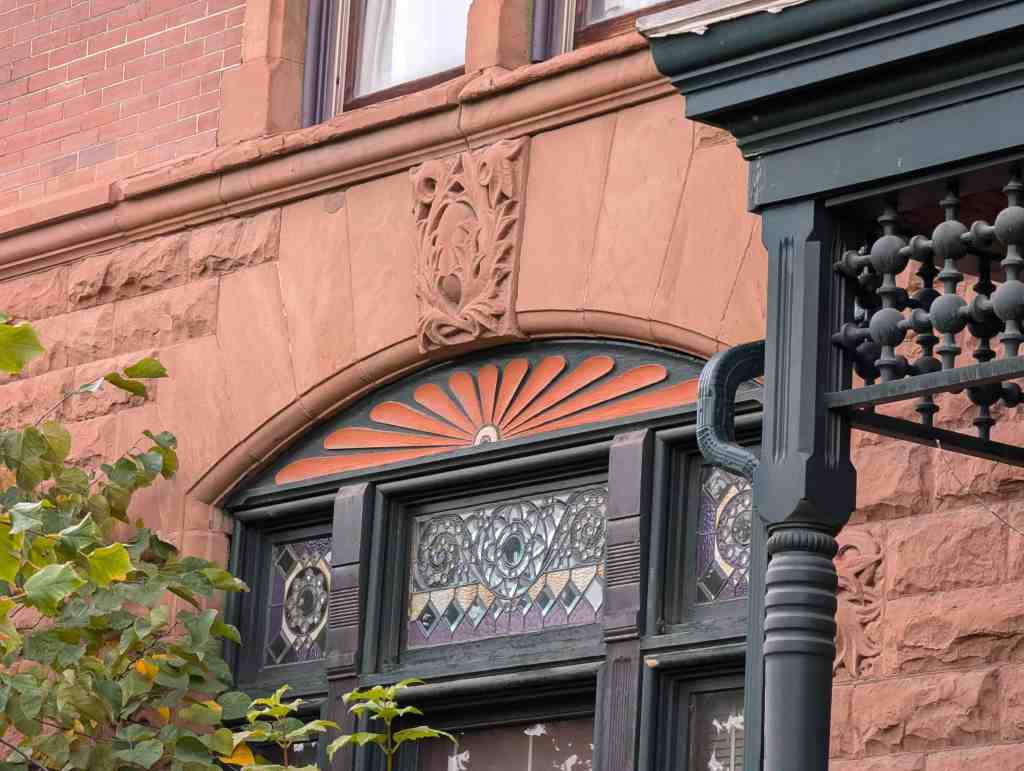
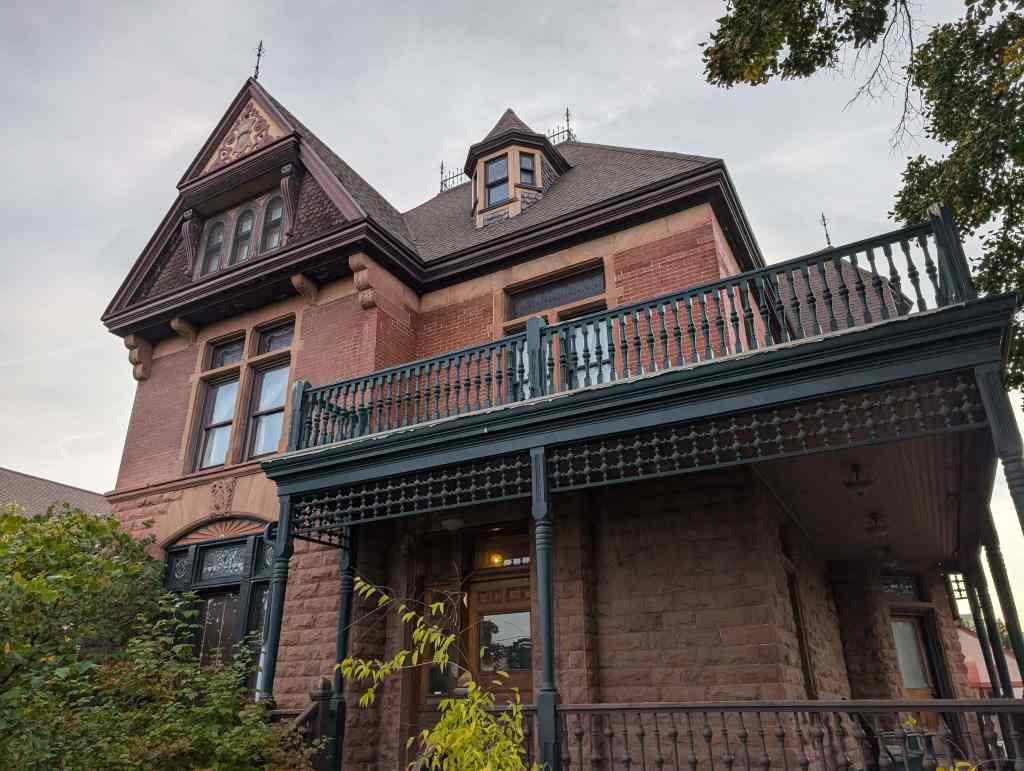
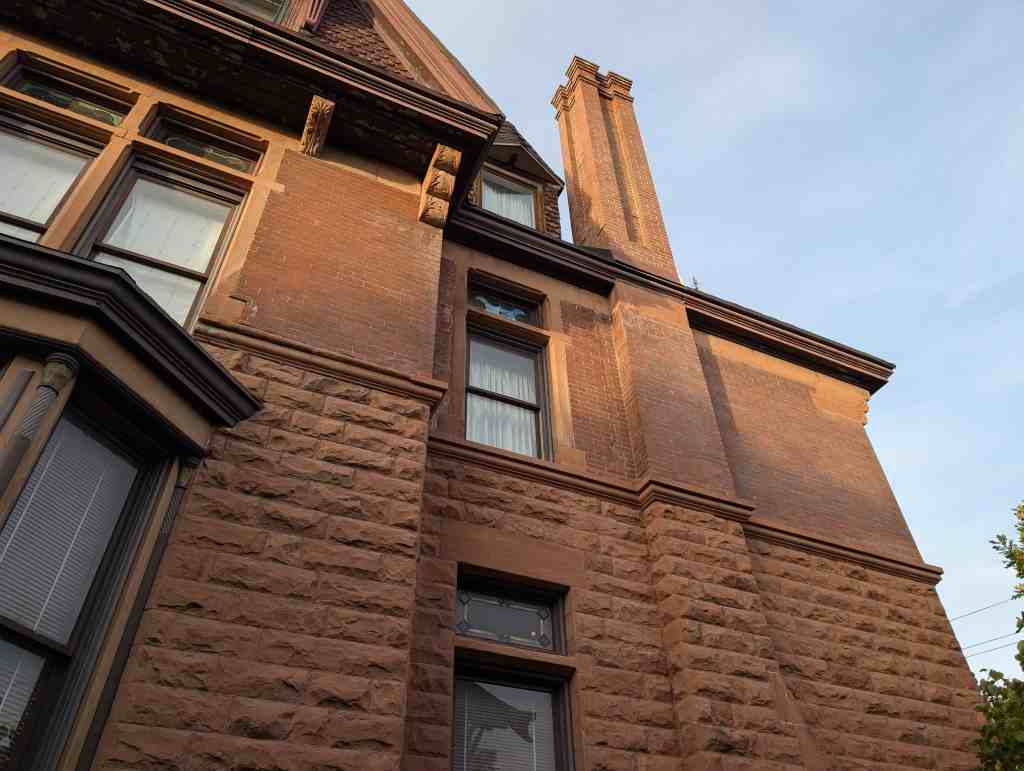
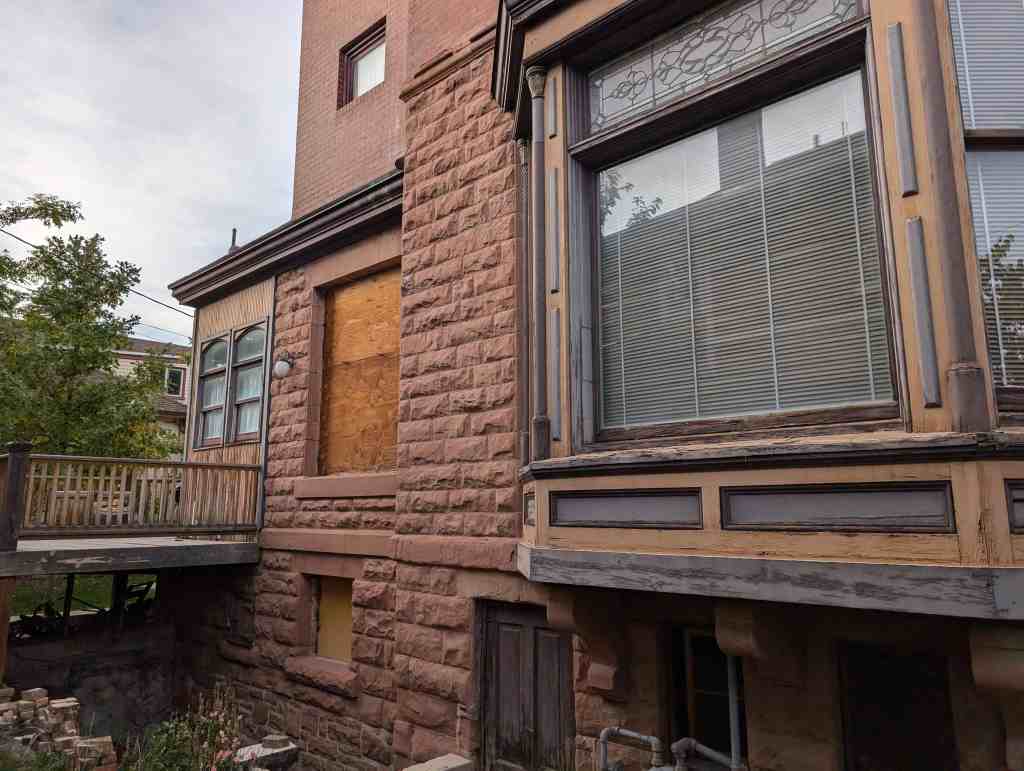
87 E Street

09 Saturday Aug 2025

Posted by Jacob Barlow in Uncategorized

≈ Leave a comment

Tags

Avenues Historic District, Cartouches, Historic Homes, Porch Spandrels, Salt Lake City, Salt Lake County, utah

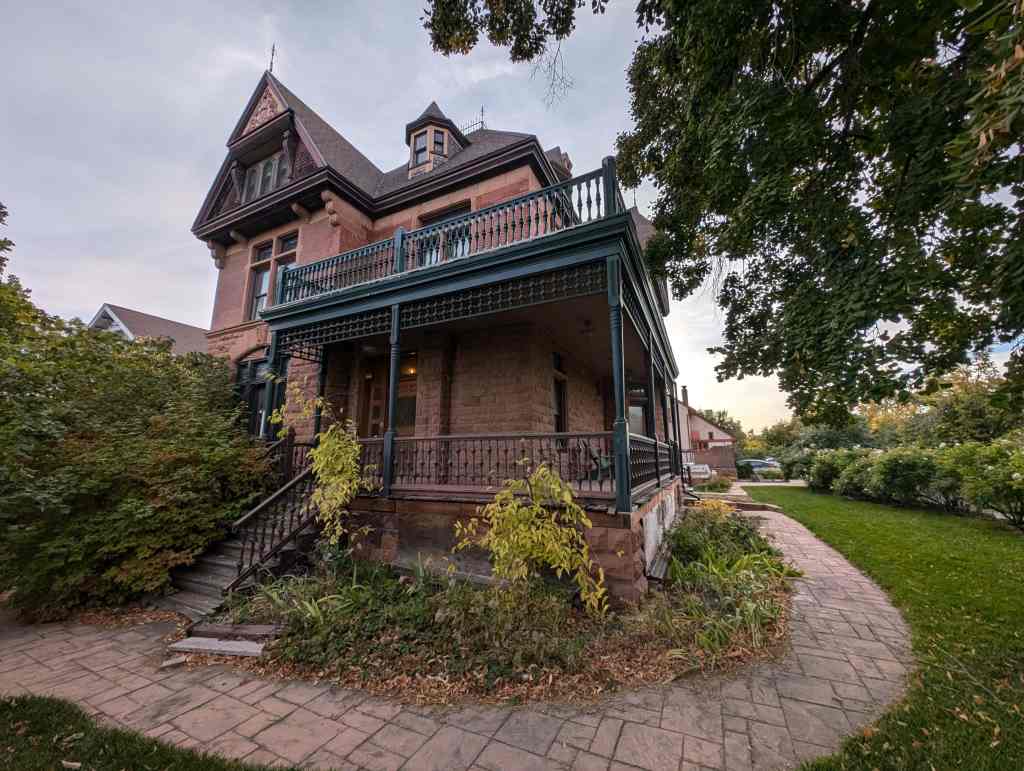
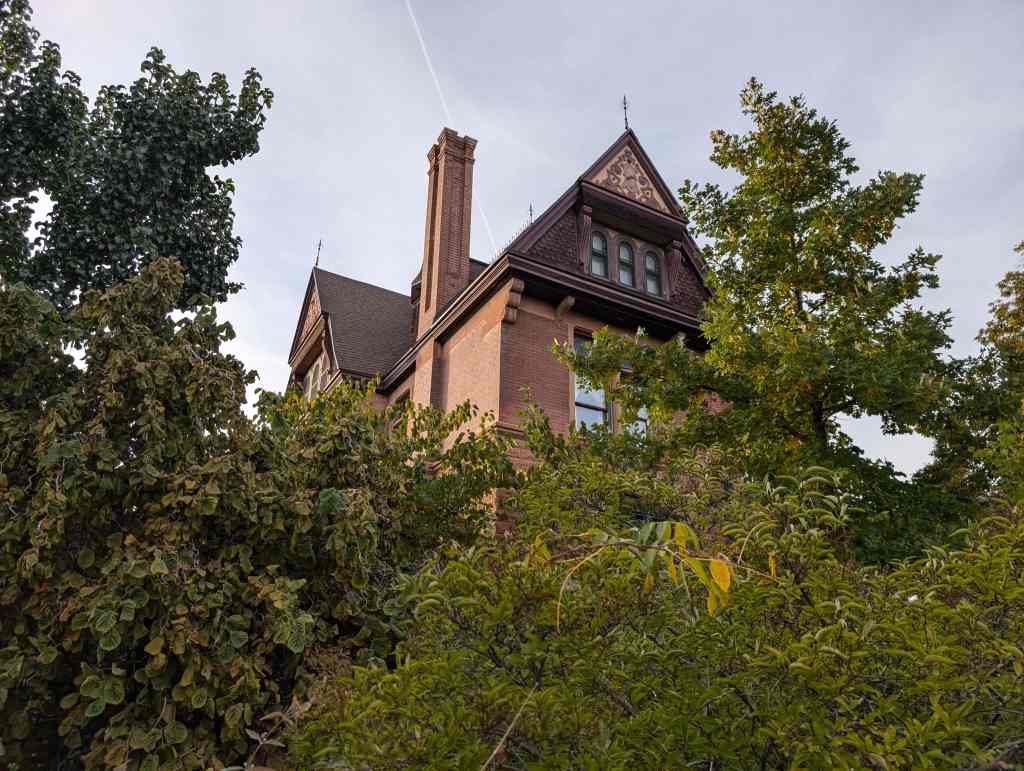
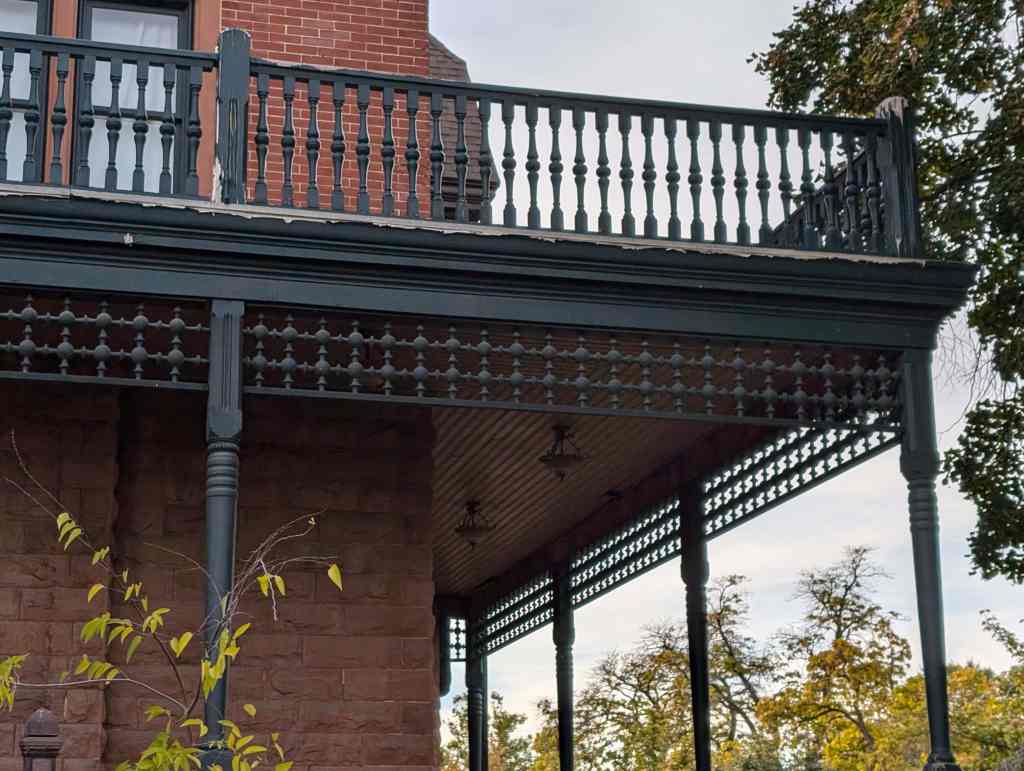
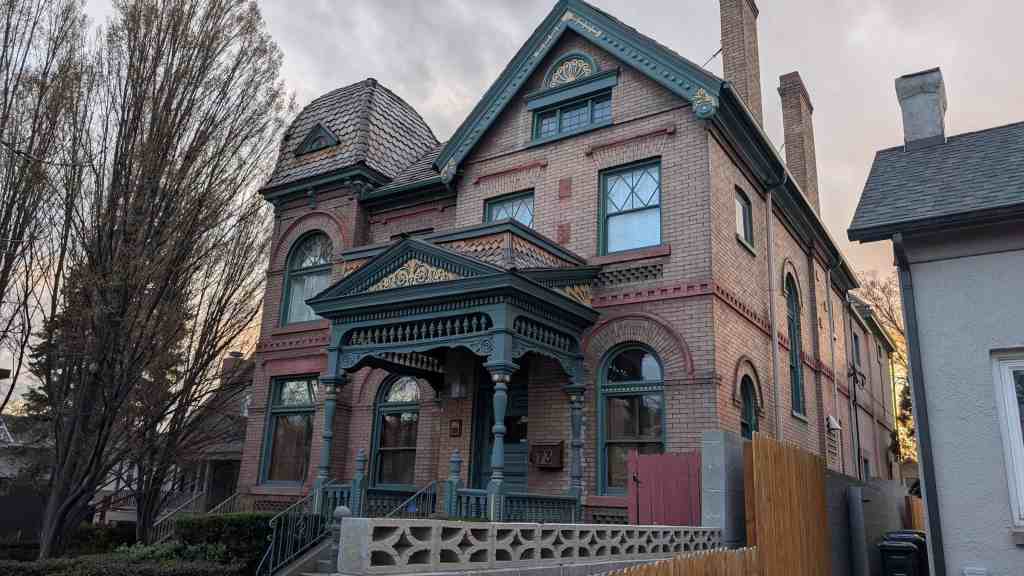
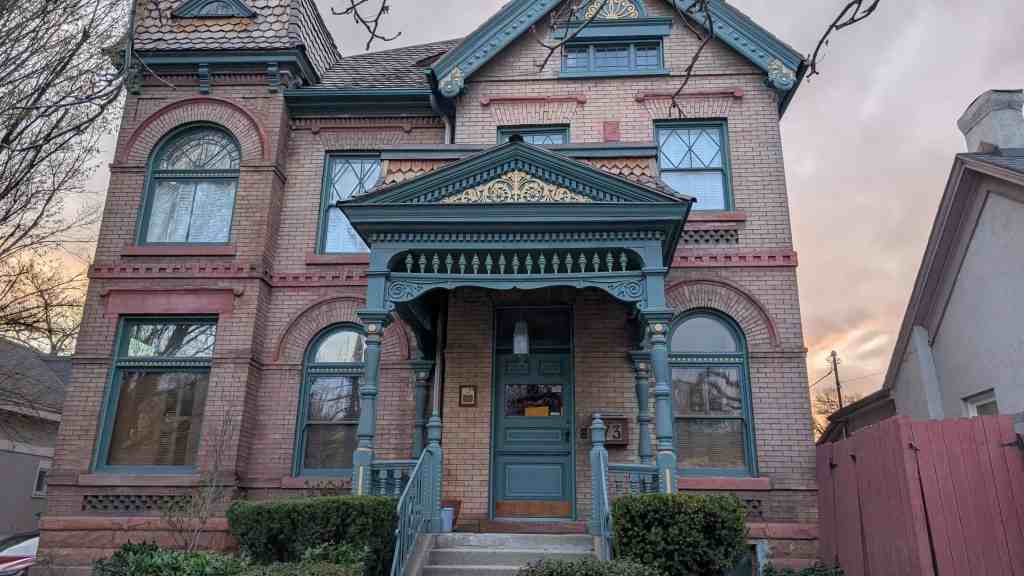
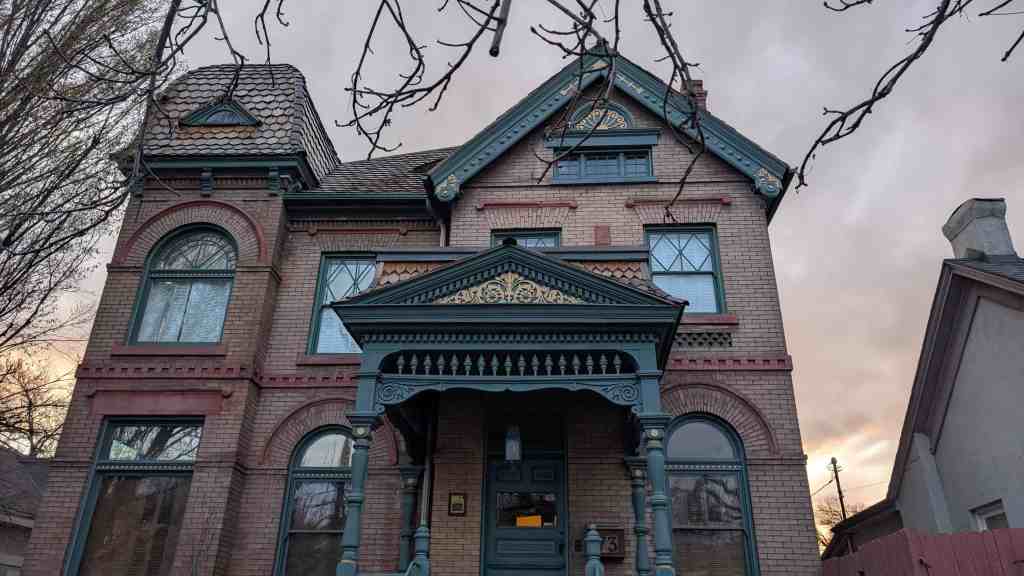
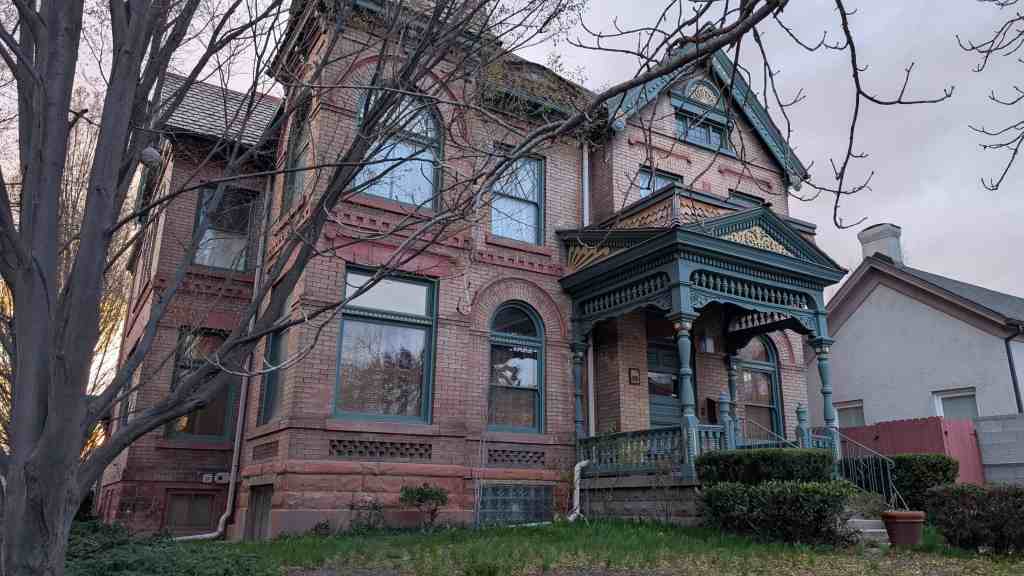
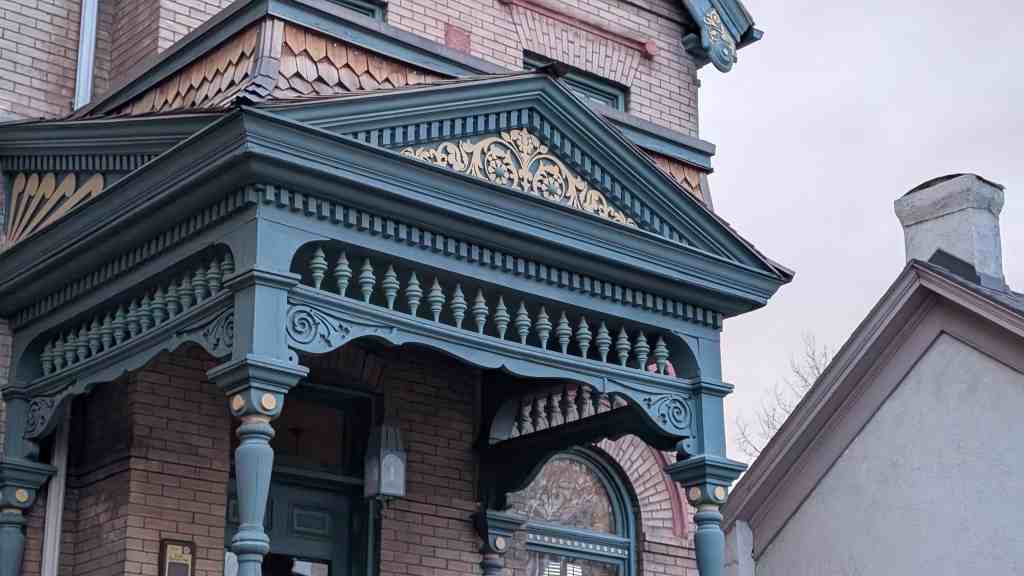
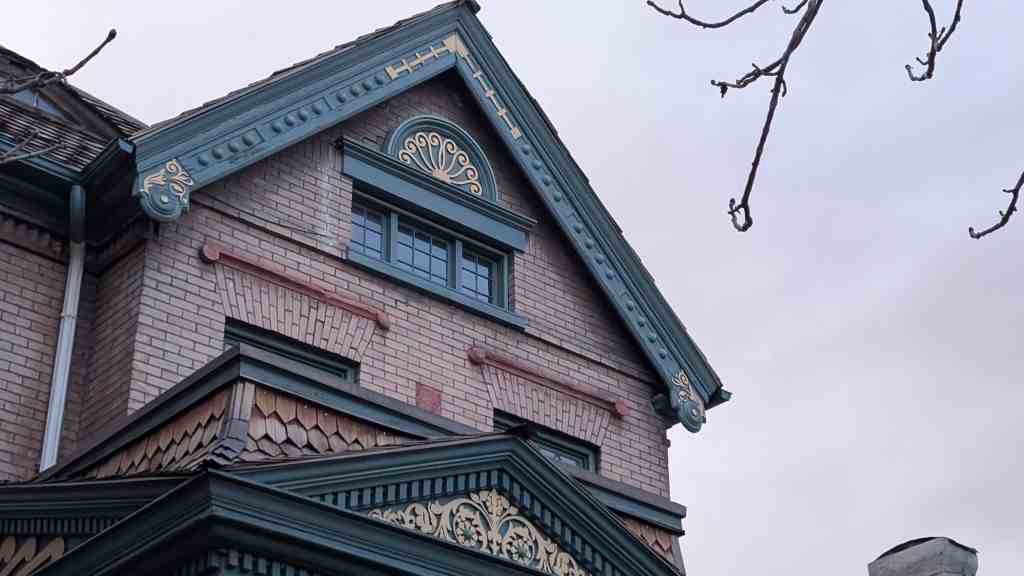
Located at 87 North E Street in The Avenues in Salt Lake City, Utah

1135 1st Avenue

09 Saturday Aug 2025

Posted by Jacob Barlow in Uncategorized

≈ Leave a comment

Tags

Avenues Historic District, historic, Historic Apartments, NRHP, Salt Lake City, Salt Lake County, utah

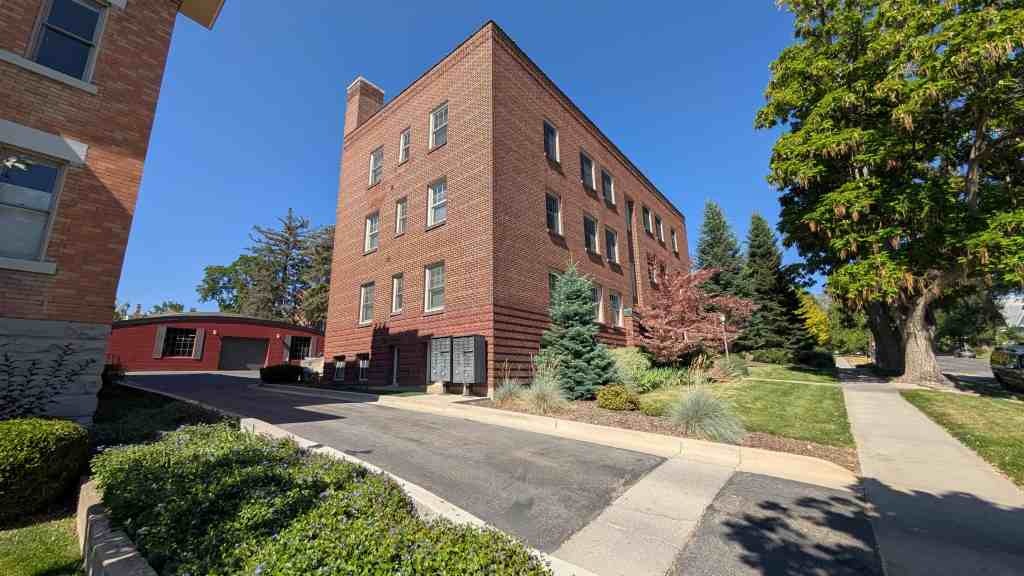
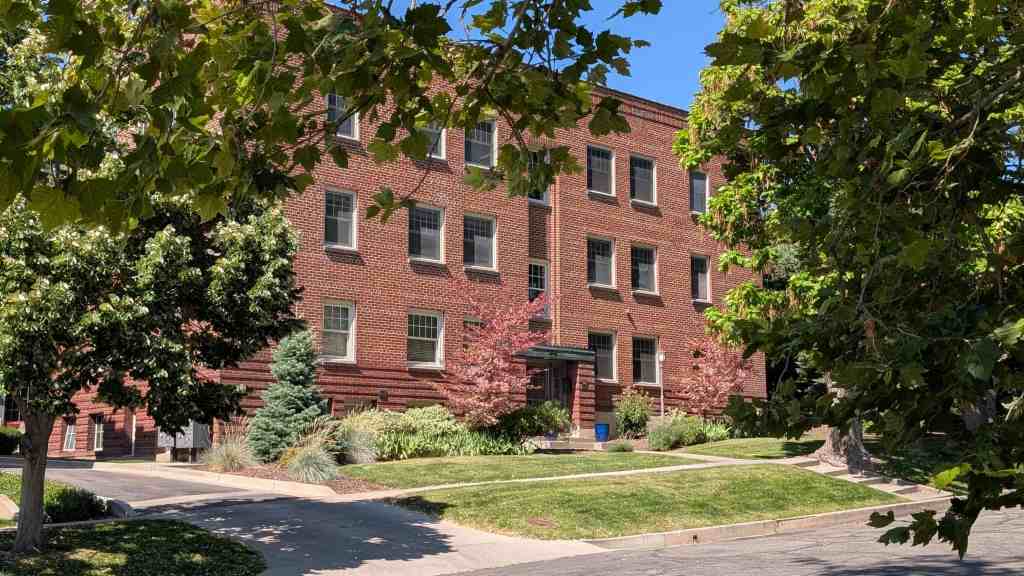
In 1938, Albert H. Walsh hired the Fullmer Bros. Construction Company to build this large, three-story brick apartment building, featuring 18 units. Albert Walsh was the founder of the A.H. Walsh Plumbing Company, and the company’s office building was located on the same block as the apartments. Mr. Walsh resided nearby at 1120 East 2nd Avenue. The apartment building retains its historic and architectural integrity and is a contributing resource within the Avenues Historic District.

1135 East First Avenue in The Avenues of Salt Lake City, Utah (technically 61 T Street is the parcel)

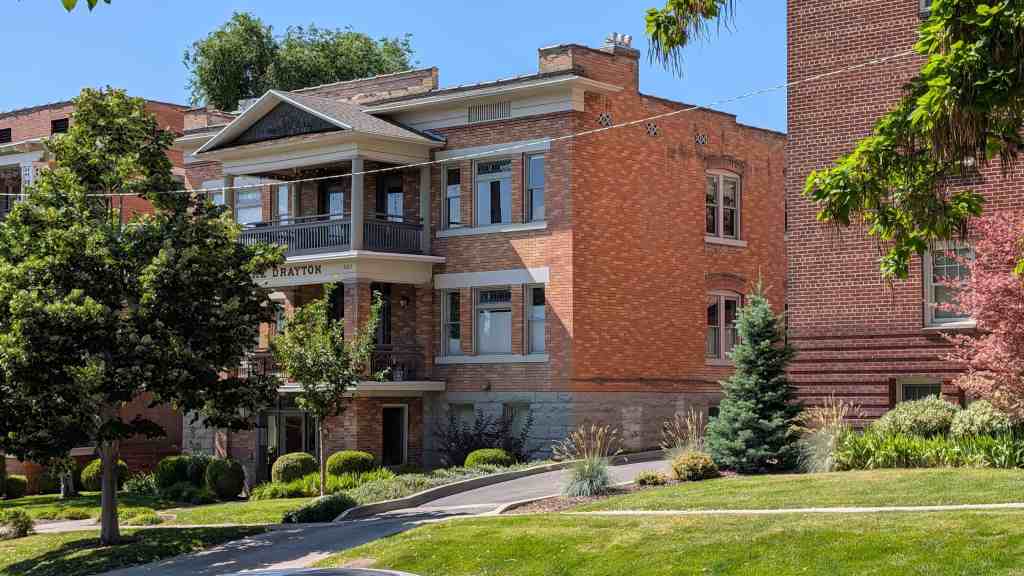
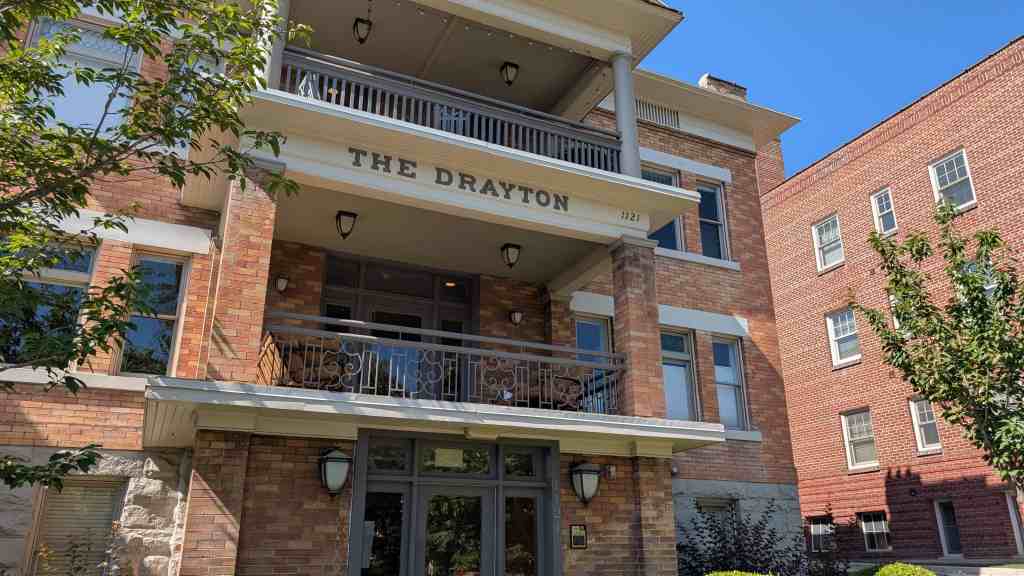
The Drayton Apartments

08 Friday Aug 2025

Posted by Jacob Barlow in Uncategorized

≈ Leave a comment

Tags

Avenues Historic District, historic, Historic Apartments, NRHP, Salt Lake City, Salt Lake County, utah


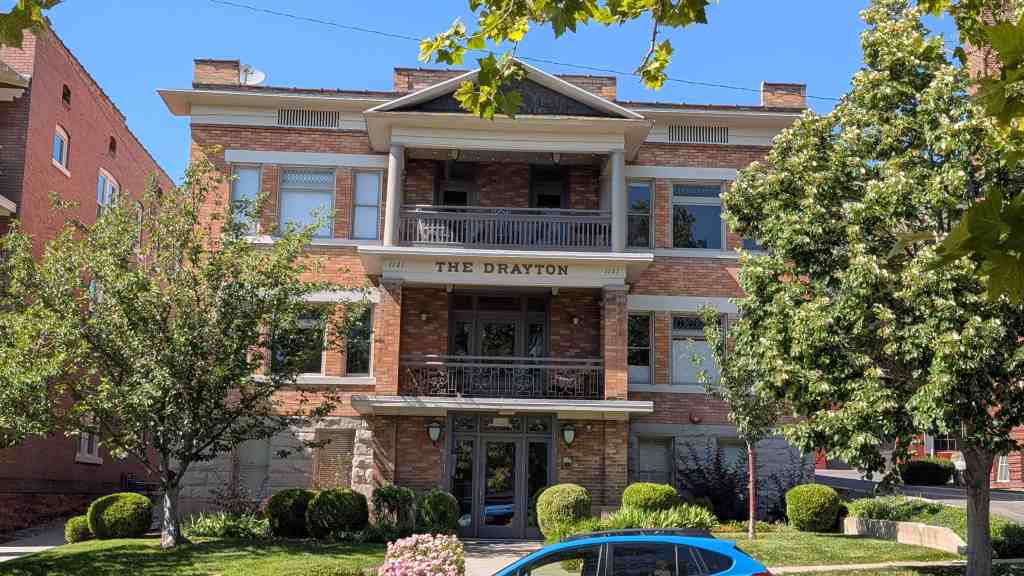
Constructed circa 1908, this three-story, brick apartment building was likely constructed by John H. Hilton and in 1916 was sold to Albert H. Walsh. Albert Walsh was the founder of the A.H. Walsh Plumbing Company. Mr. Walsh resided nearby at 1120 East 2nd Avenue and he owned the apartment building through 1950. The building was constructed at a time when an increasing number of multi-family structures were being built in the Avenues, transitioning away from single-family, owner-occupied residences. It features a prominent, centrally located pedimental bay for the front entry and large balconies.

1121 East First Avenue in The Avenues of Salt Lake City, Utah (technically 61 T Street is the parcel)

1119 1st Avenue

06 Wednesday Aug 2025

Posted by Jacob Barlow in Uncategorized

≈ Leave a comment

Tags

Avenues Historic District, historic, Historic Apartments, NRHP, Salt Lake City, Salt Lake County, utah

1119 East 1st Avenue

Constructed circa 1913, this three-story, brick apartment building was constructed by Albert H. Walsh and named for his wife, Emma N. Walsh. Albert Walsh was the founder of the A.H. Walsh Plumbing Company. The building was built at a time when an increasing number of multi-family structures were being built in the Avenues, transitioning away from single-family, owner-occupied residences. Character defining features of the building include its centrally located stairs and central hallway, sandstone foundation, and its front porch with massive two-story Doric columns and decorative entablatures.

1119 East First Avenue in The Avenues of Salt Lake City, Utah

David L. Murdoch House

09 Wednesday Apr 2025

Posted by Jacob Barlow in Uncategorized

≈ Leave a comment

Tags

Avenues Historic District, NRHP, Queen Anne style, Salt Lake City, Salt Lake County, utah

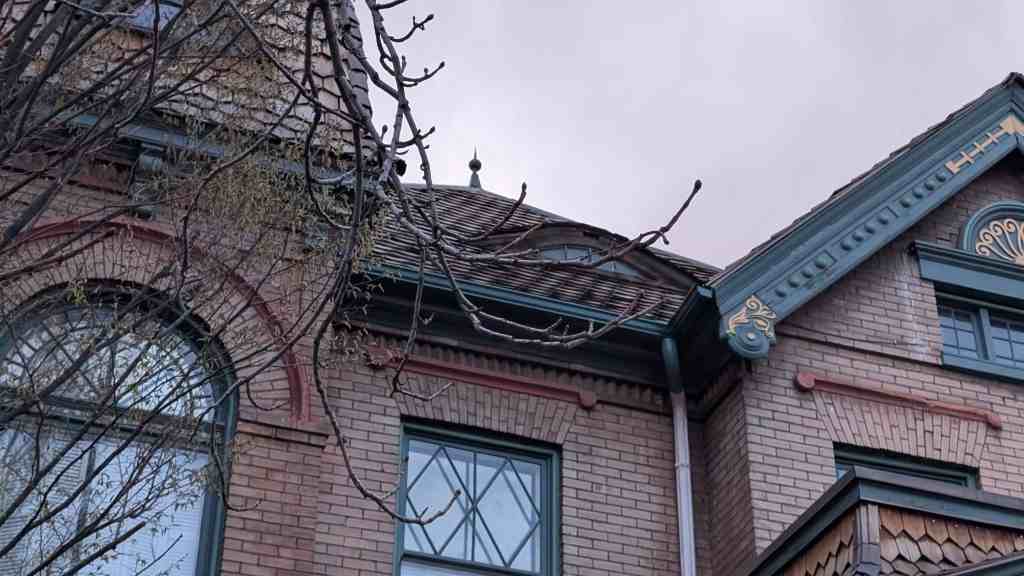
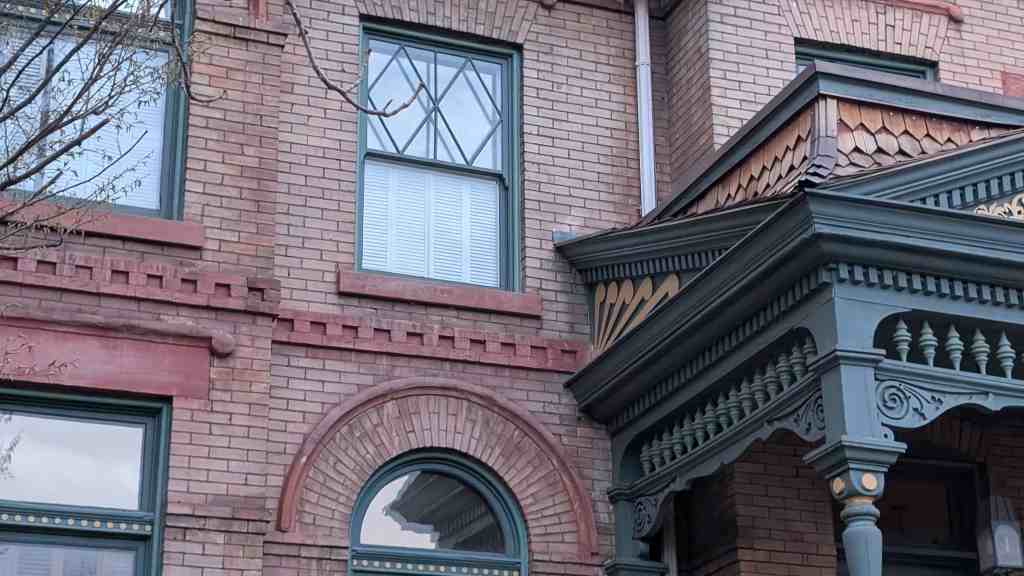
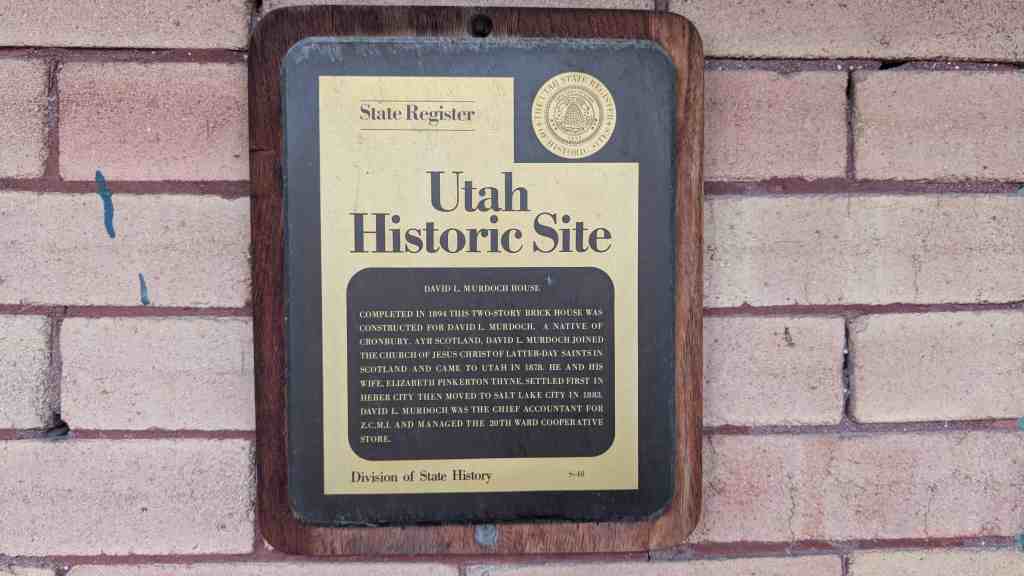
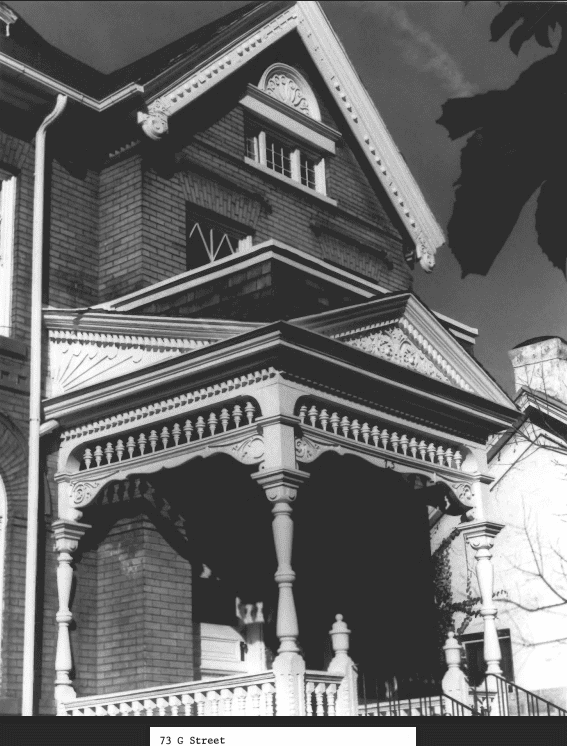
David L. Murdoch House

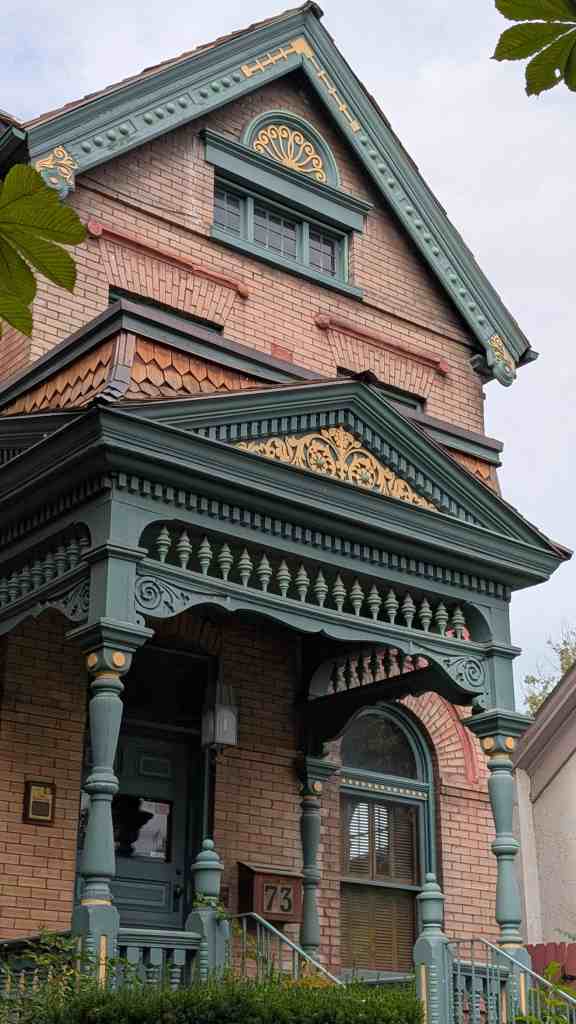
Completed in 1894 this two-story brick house was constructed for David L. Murdoch. A native of Cronbury, Ayr Scotland, David L. Murdoch joined The Church of Jesus Christ of Latter-day Saints in Scotland and came to Utah in 1878. He and his wife, Elizabeth Pinkerton Thyne, settled first in Heber City then moved to Salt Lake City in 1883. David Lennox Murdoch was the Chief Accountant for Z.C.M.I. and managed the 20th Ward Cooperative Store.

Designed by Herman Holstain Anderson and located at 73 North G Street in The Avenues in Salt Lake City, Utah

The nomination form for the national historic register mentioned the home here:
While they account for less than one percent of all residences, the very large, often architect-designed homes in the Eastlake, Queen Anne and Shingle styles, and later the Prairie and Craftsman styles greatly influence the visual character of the Avenues. Some of the state’s best examples of residential architectural styles were built there, including the William Barton house, 231 B Street, (vernacular/Gothic); the Jeremiah Beattie house, 30 J Street, (Eastlake); the David Murdock house, 73 G Street, (Queen Anne); the E.G. Coffin house, 1037 First Avenue, (Queen Anne); the N.H. Beeman house, 1007 First Avenue, (Shingle style); the Vto. Mclntyre house, 257 Seventh Avenue, (Classical Revival); the James Sharp house, 157 D Street, (Craftsman); and the W.E. Ware house, 1184 First Avenue, (Colonial Revival).

← Older posts
Newer posts →

Follow Jacob

Follow Jacob

Come wander with me on Youtube.

Blog Stats

  • 2,099,020 hits

Social and Other Links

BarlowLinks.com

Recent Posts

  • Scout Monument
  • Provo High School Seminary Building
  • 821 E 100 S
  • 820 E 100 S
  • 817-819 E 100 S

Archives

Loading Comments...