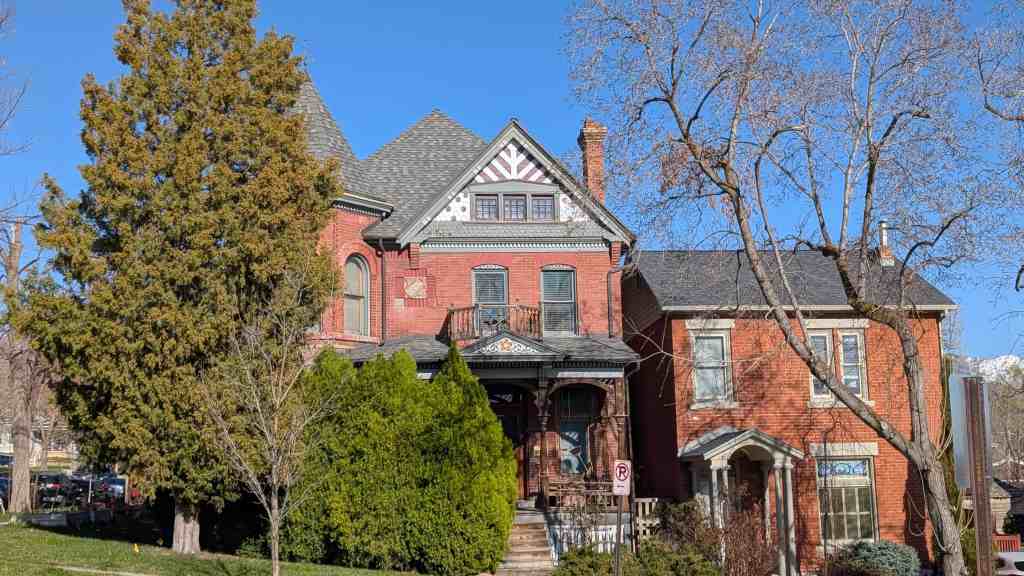
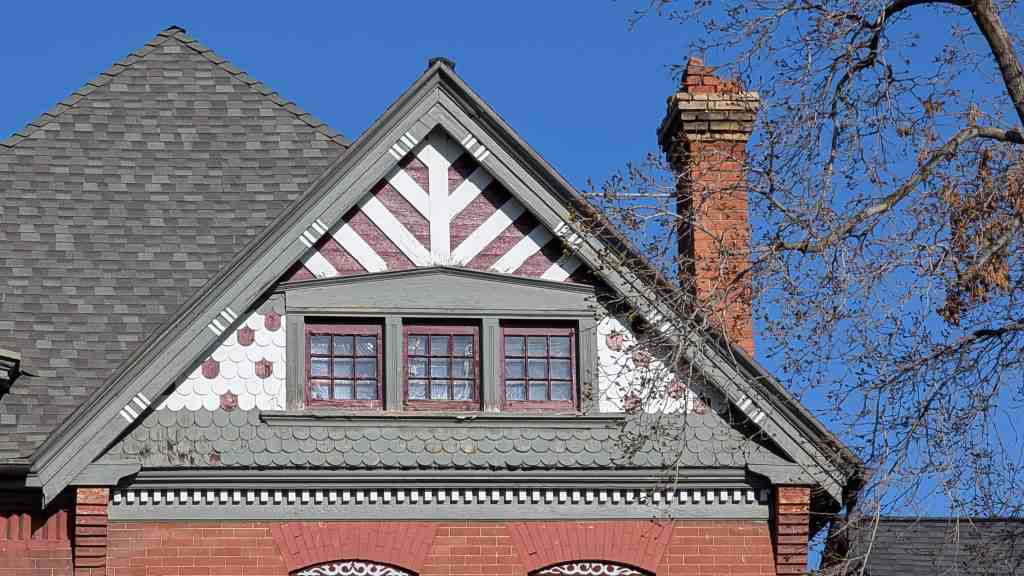
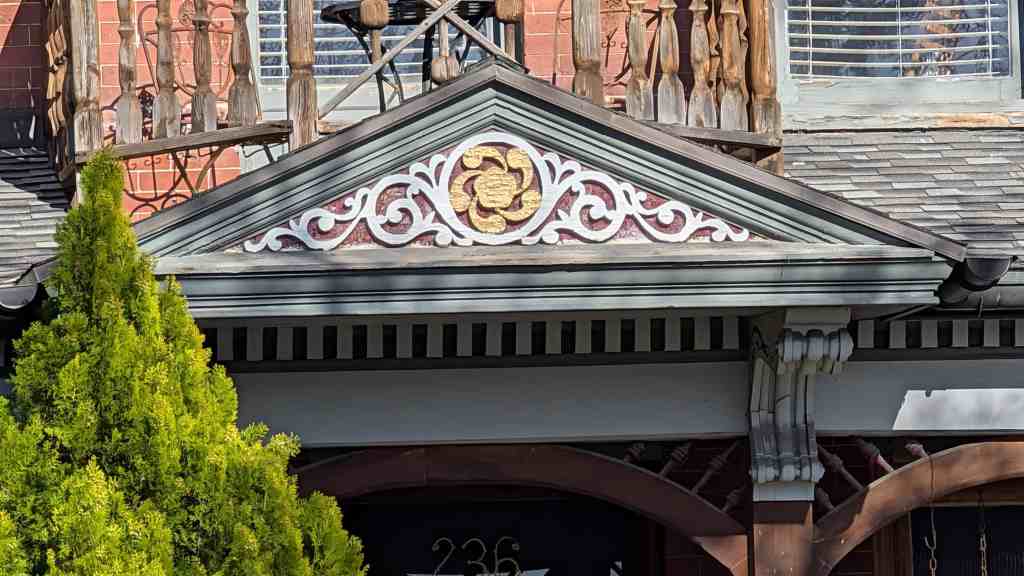
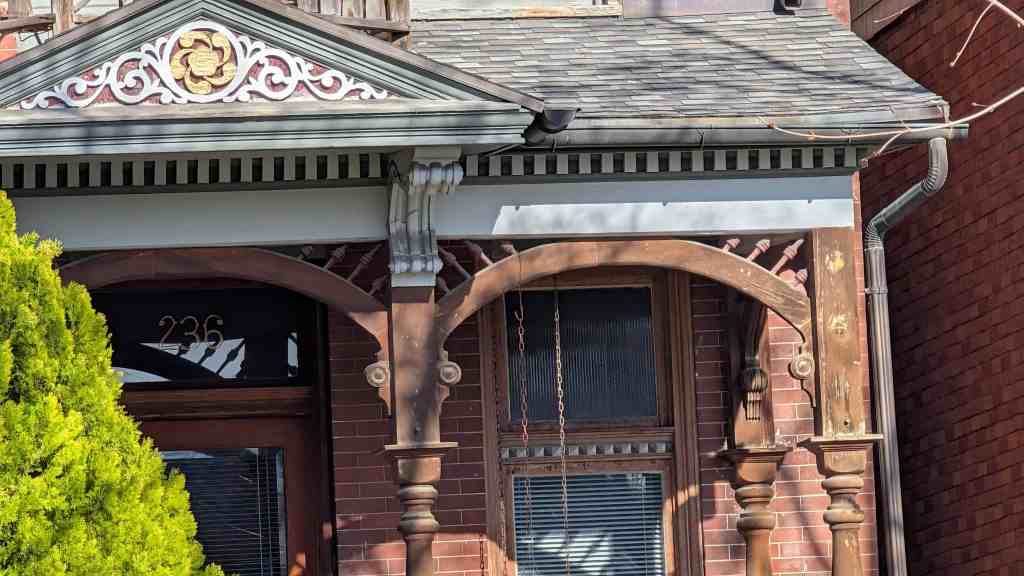
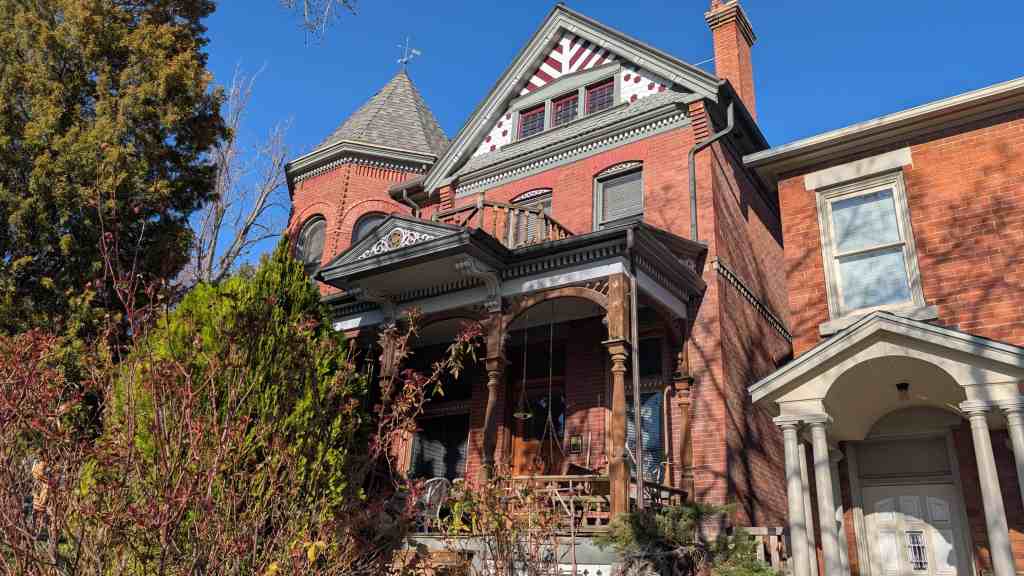
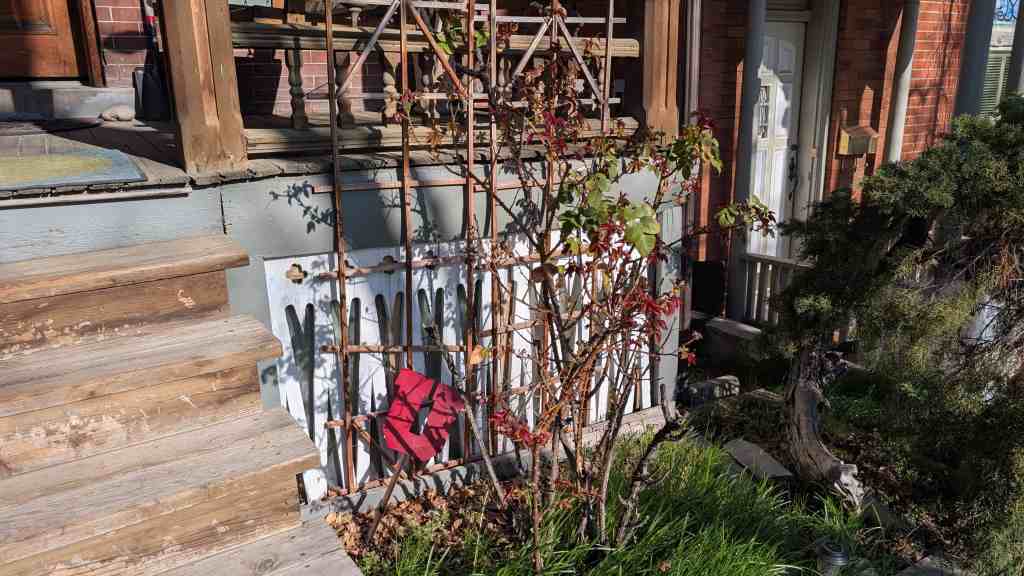
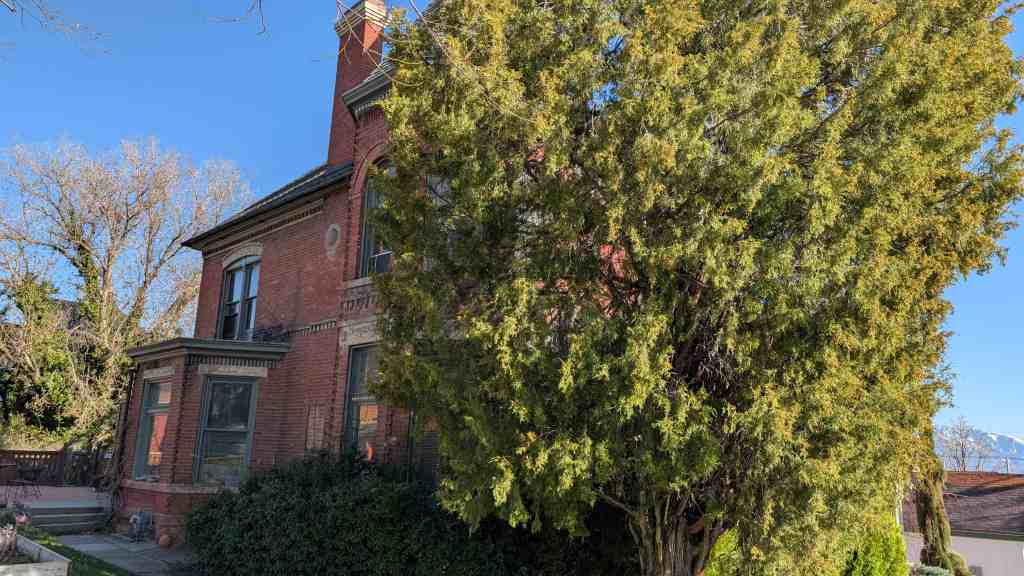
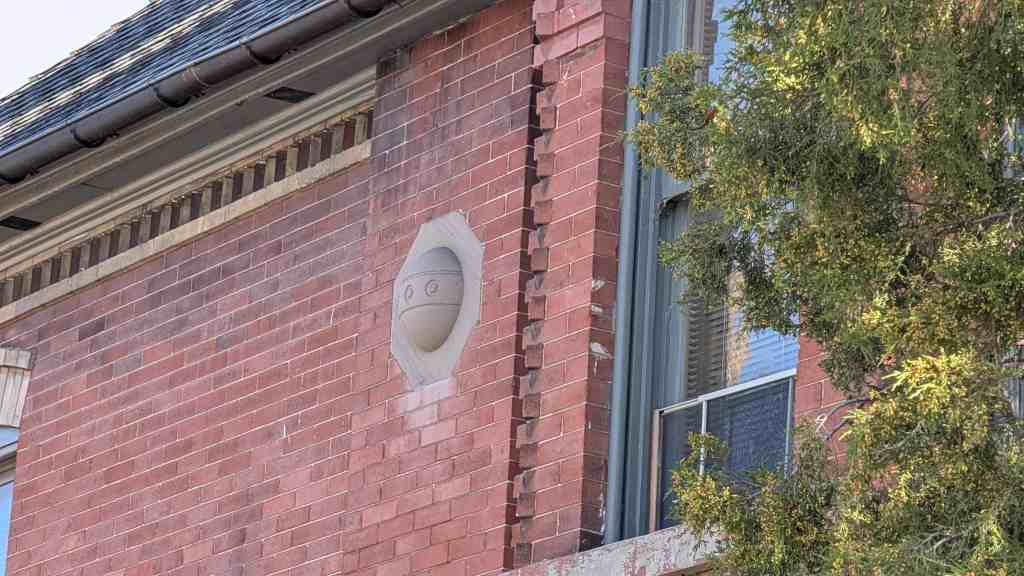
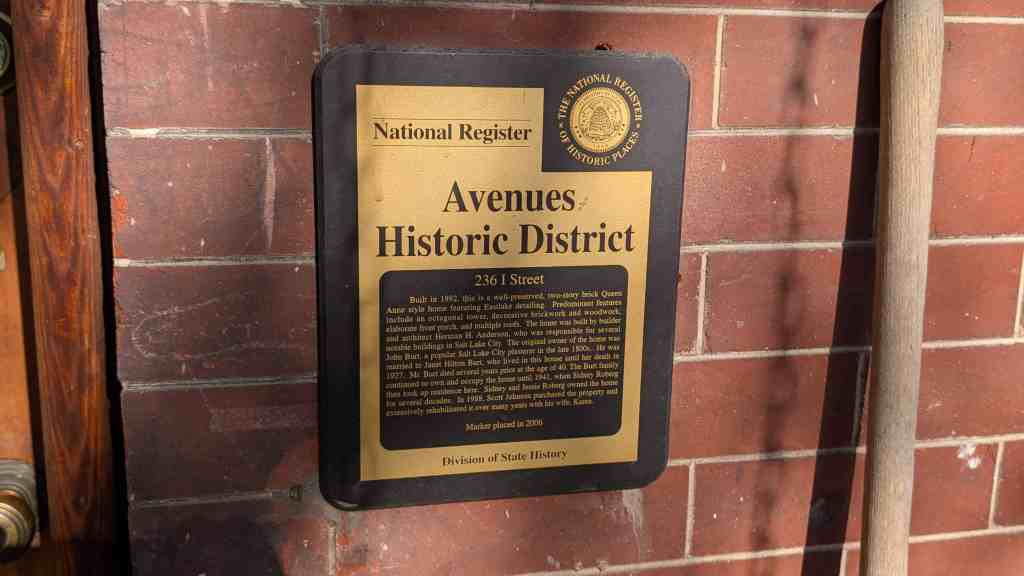
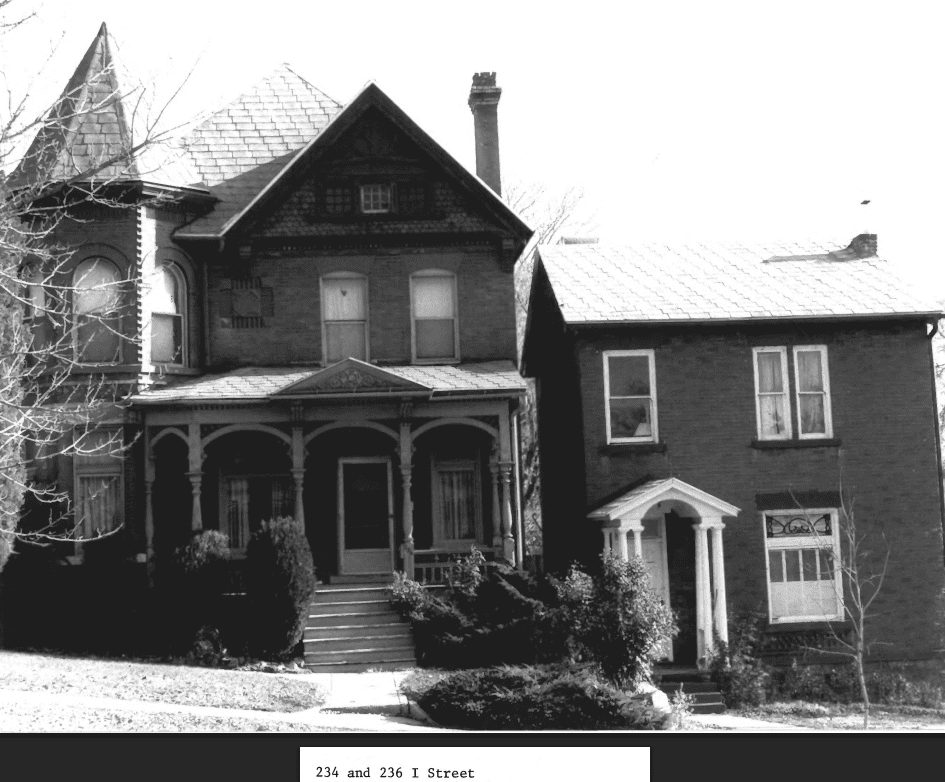
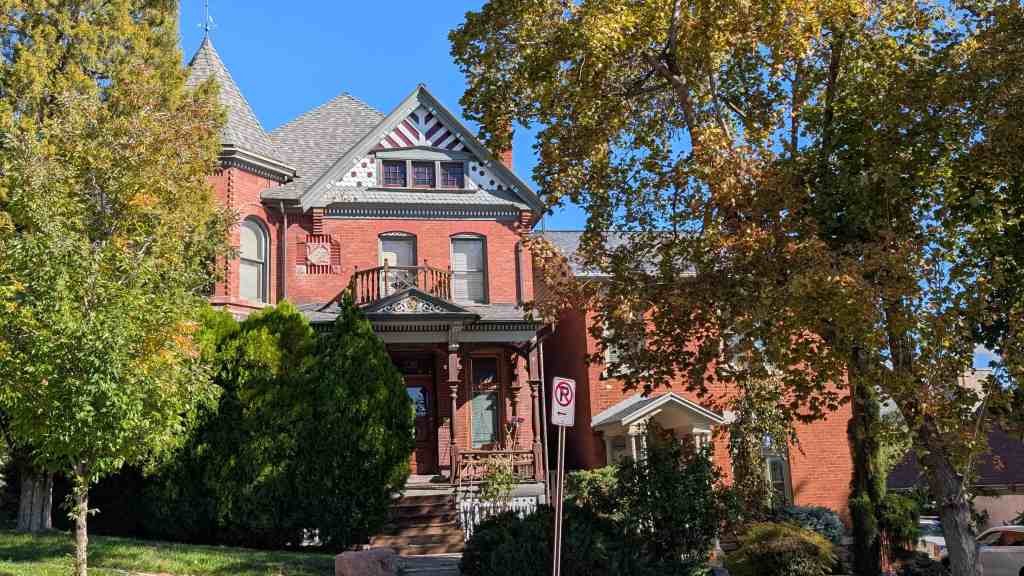
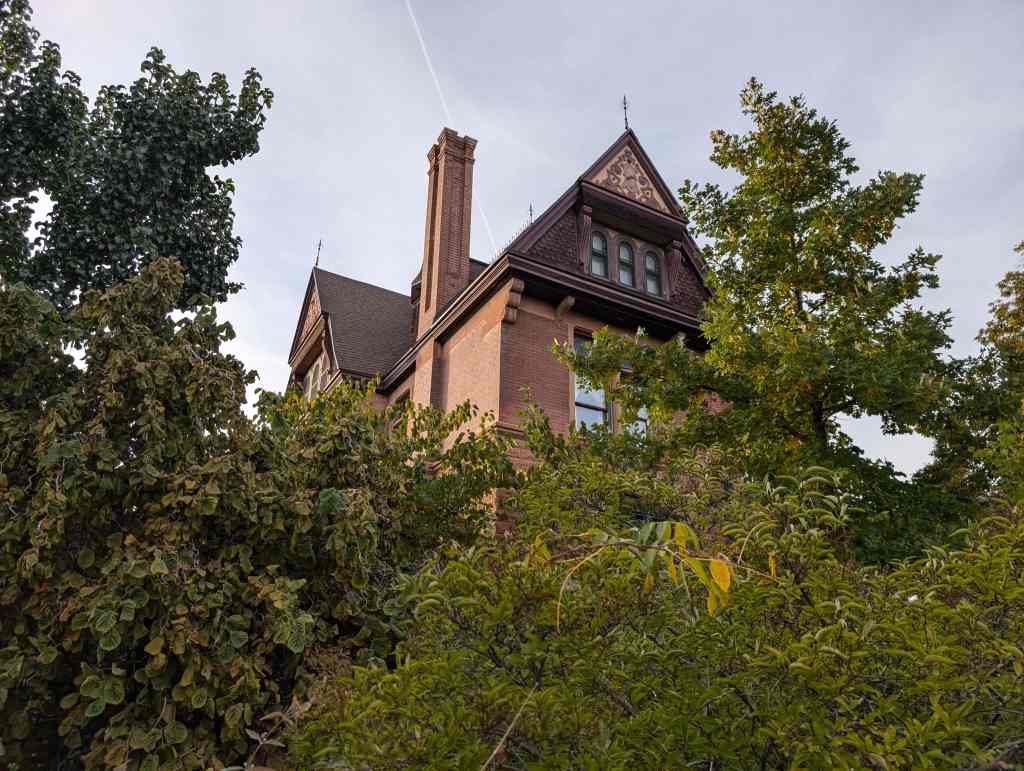
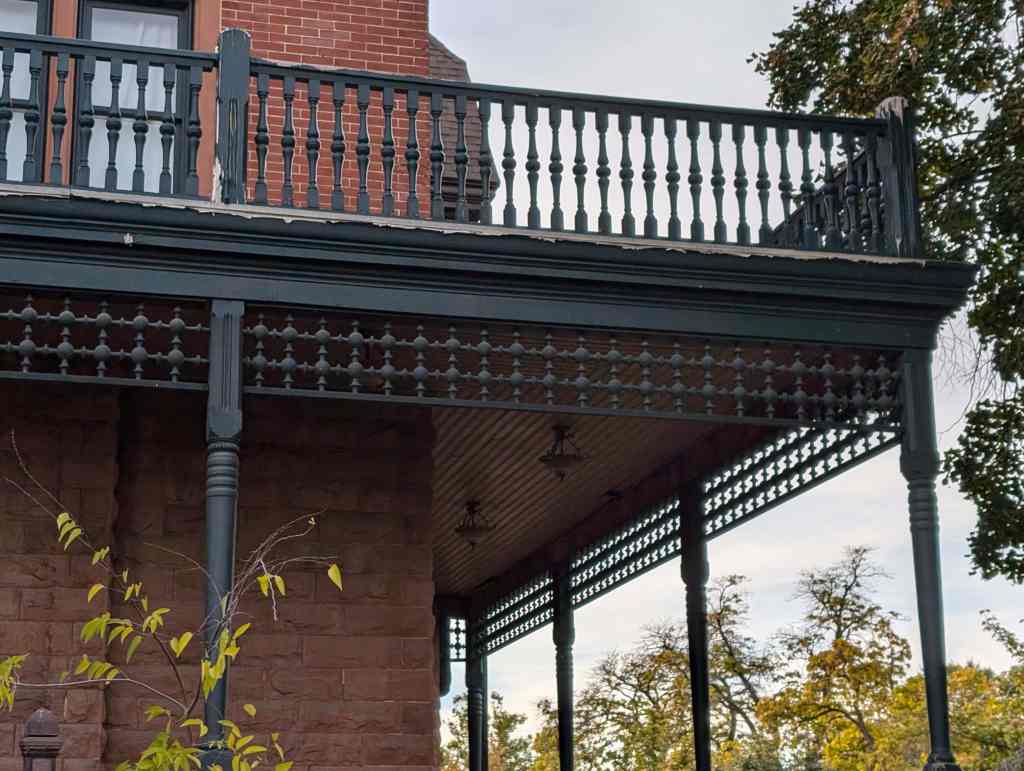
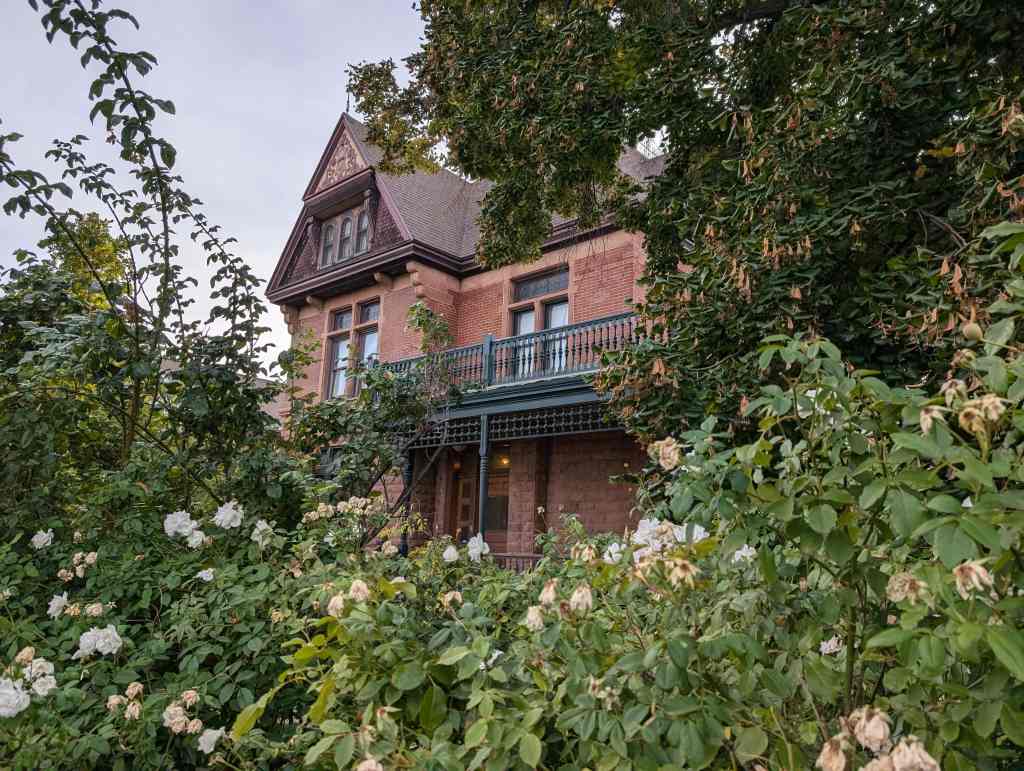
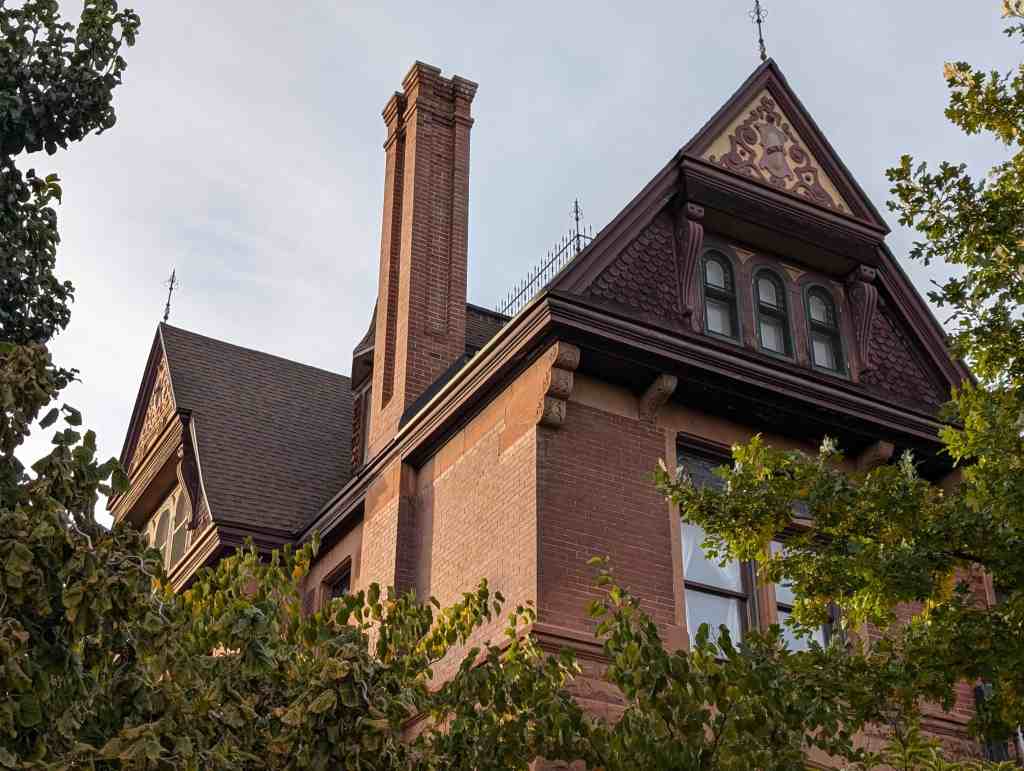
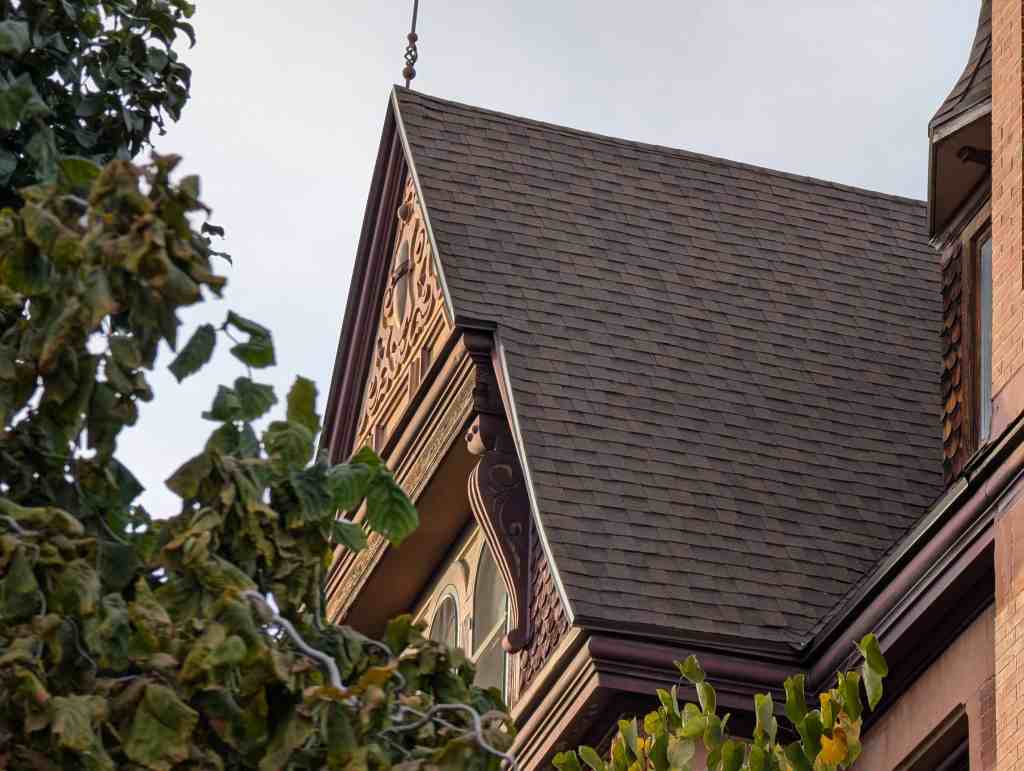
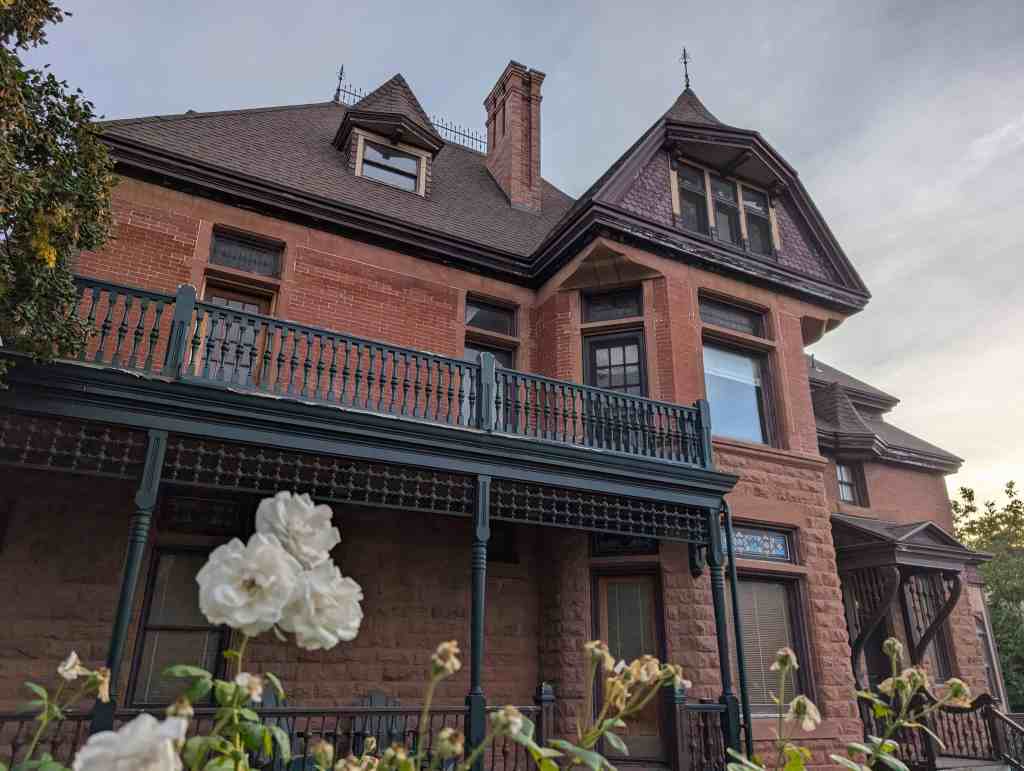
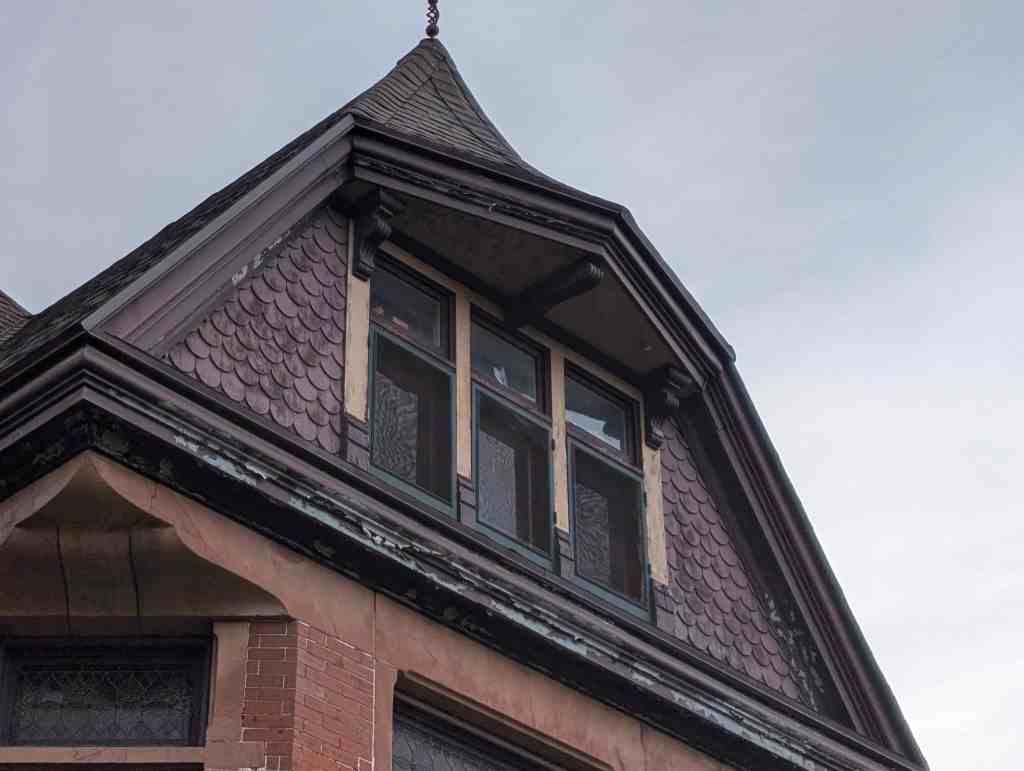
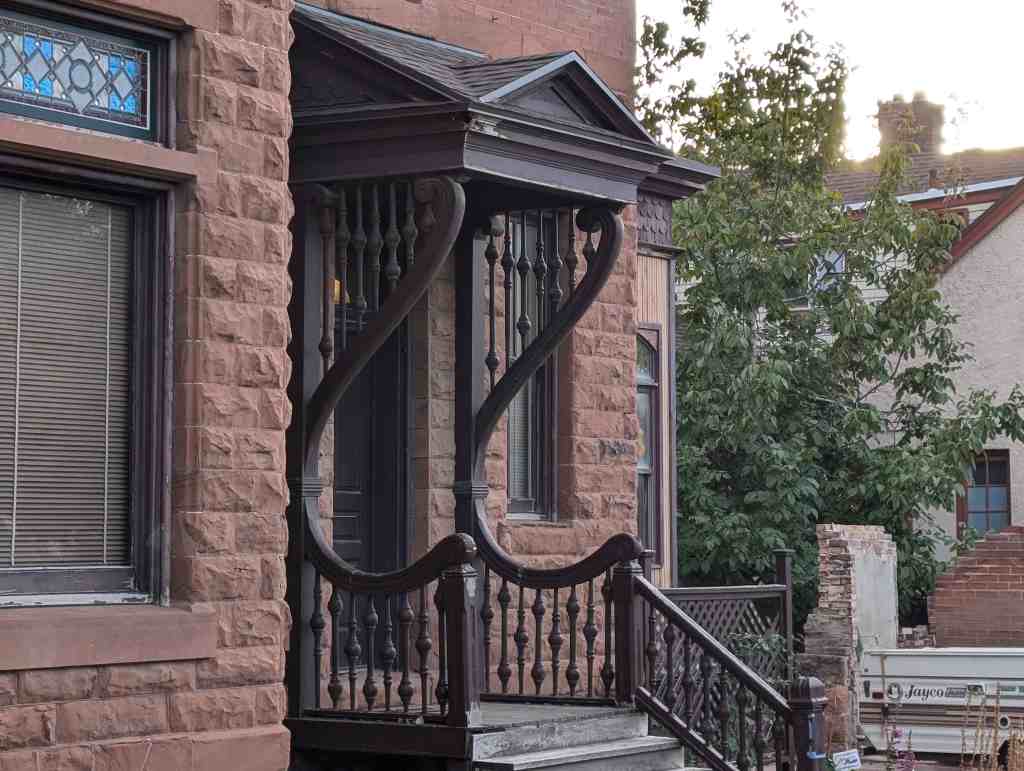
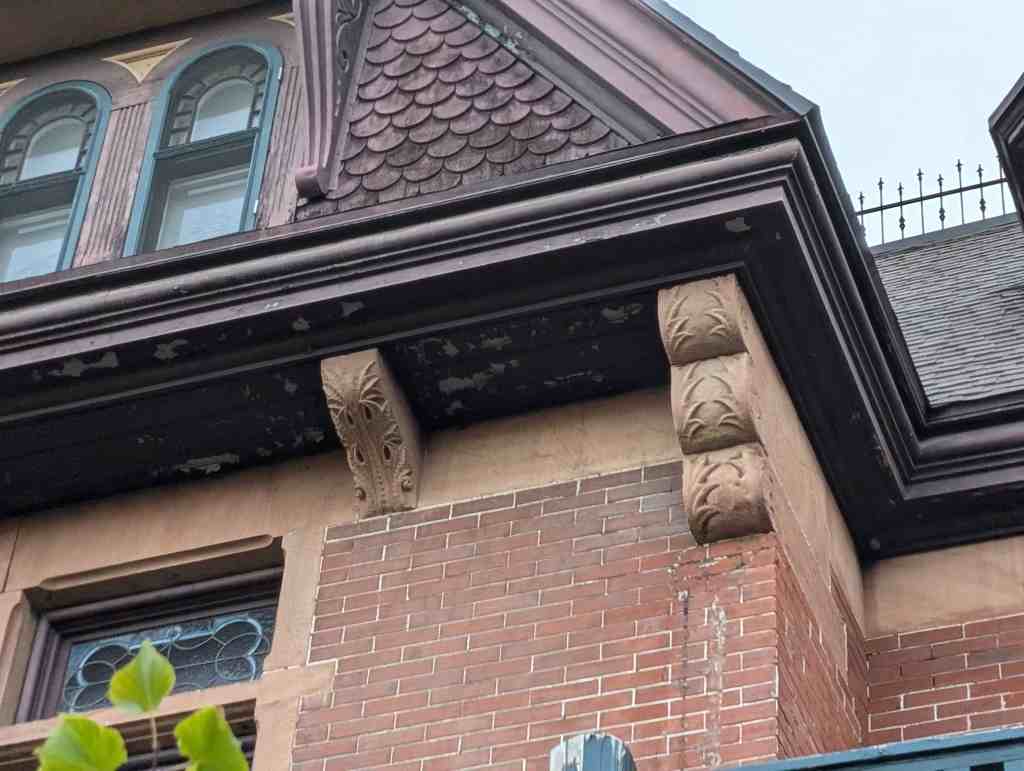
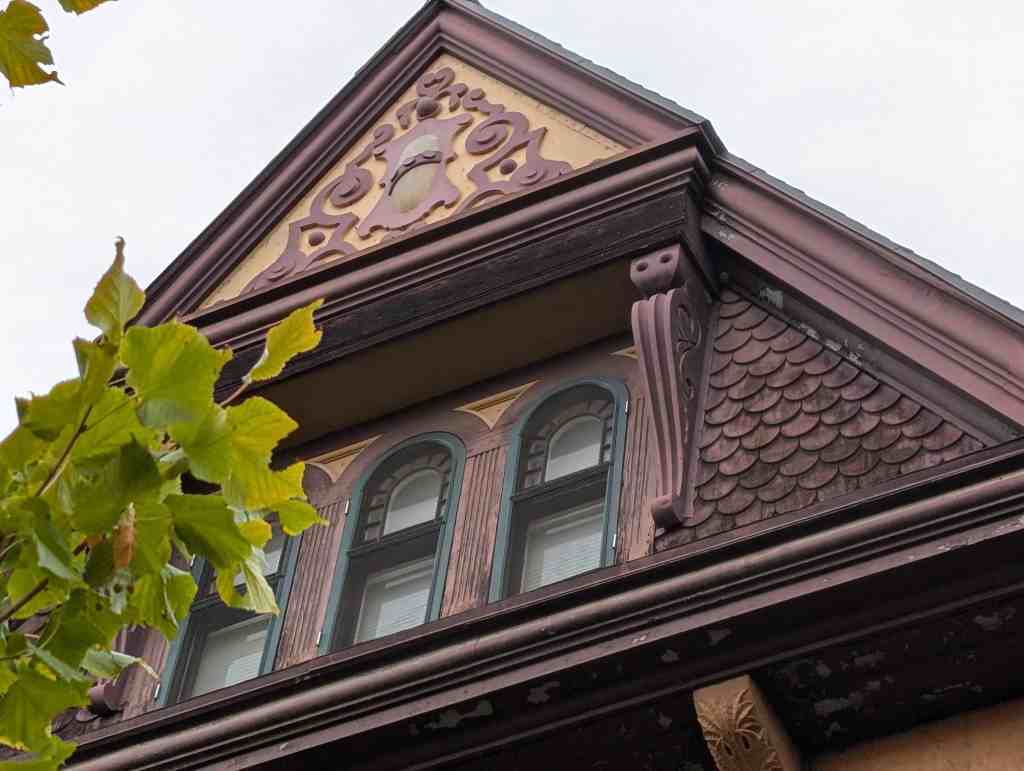
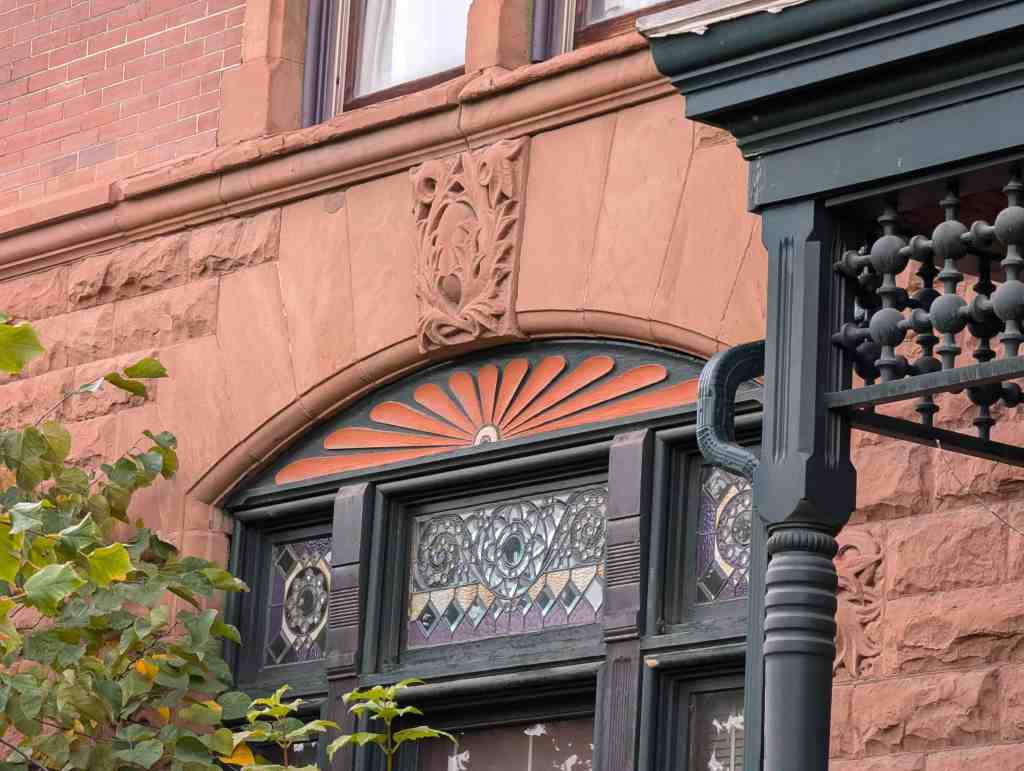
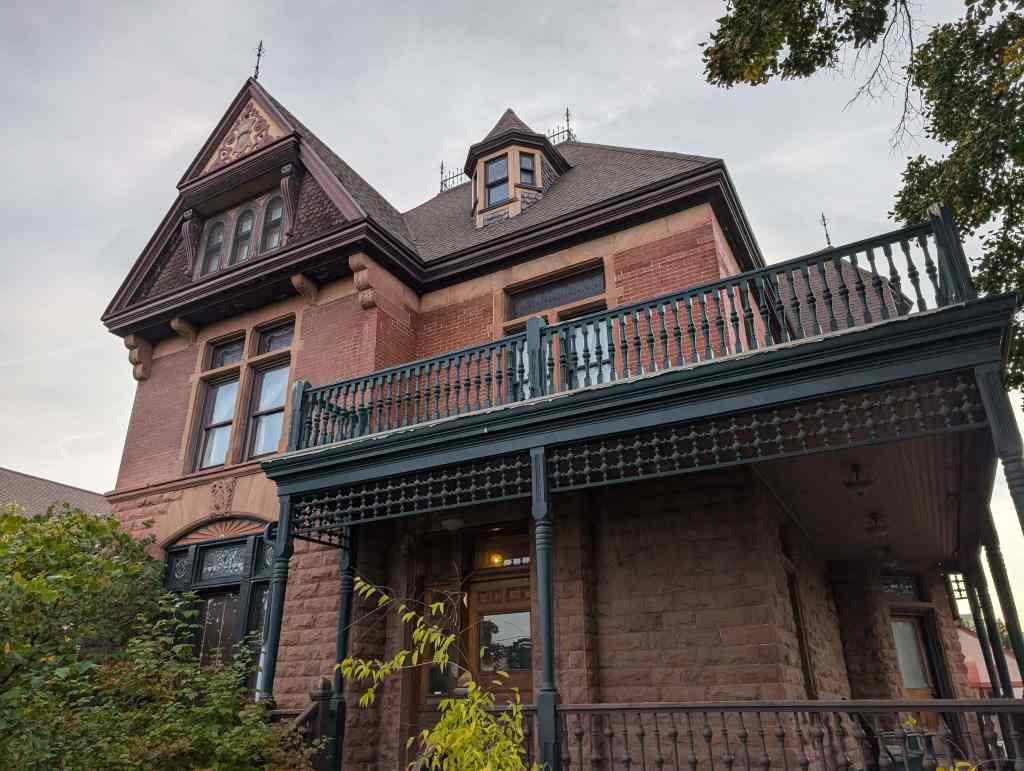
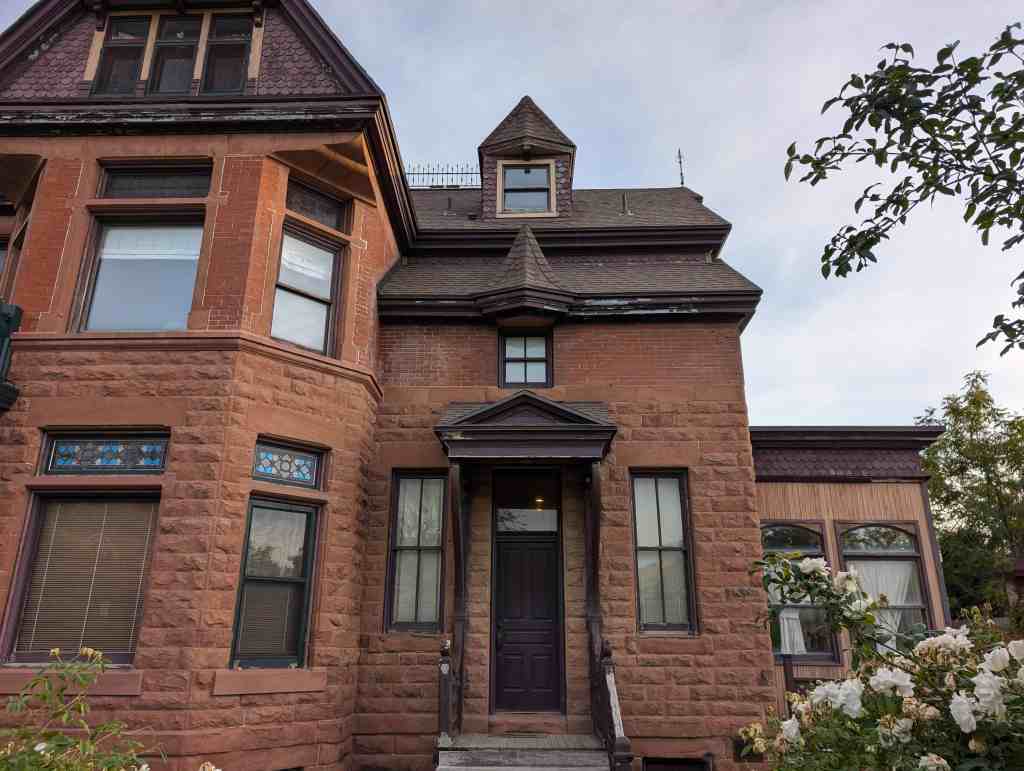
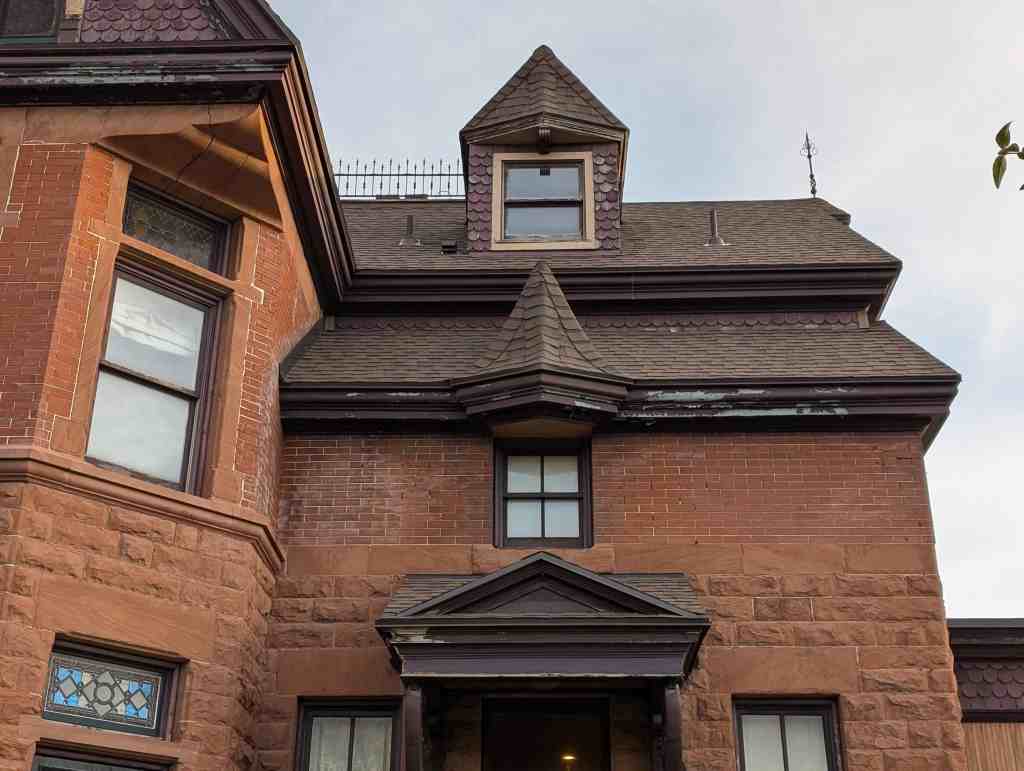
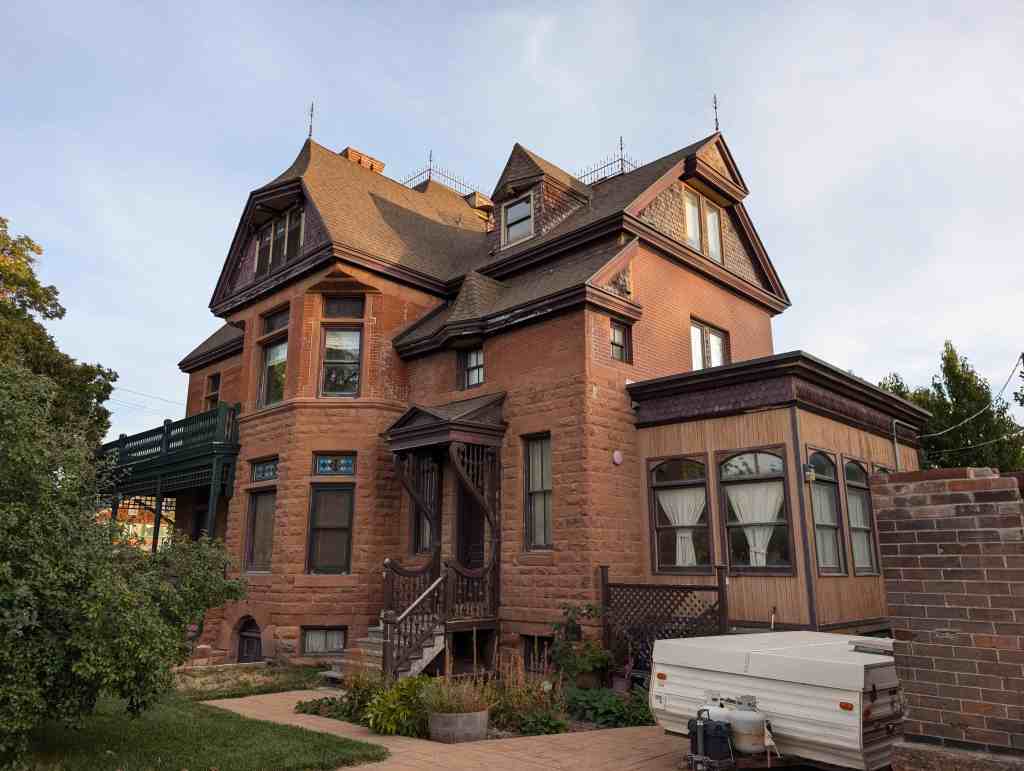
Built in 1892, this is a well-preserved, two-story brick Queen Anne style home featuring Eastlake detailing. Predominant features include an octagonal tower, decorative brickwork and woodwork, elaborate front porch, and multiple roofs. The home was built by builder and architect Herman H. Anderson, who was responsible for several notable buildings in Salt Lake City. The original owner of the home was John Burt, a popular Salt Lake City plasterer in the late 1800s. He was married to Janet Hilton Burt, who lived in this house until her death in 1927. Mr. Burt died several years prior at the age of 40. The Burt family continued to own and occupy the home until 1941, when Sidney Roberg then took up residence here. Sidney and Jessie Roberg owned the home for several decades. In 1988, Scott Johnson purchased the property and extensively rehabilitated it over many years with his wife, Karen.
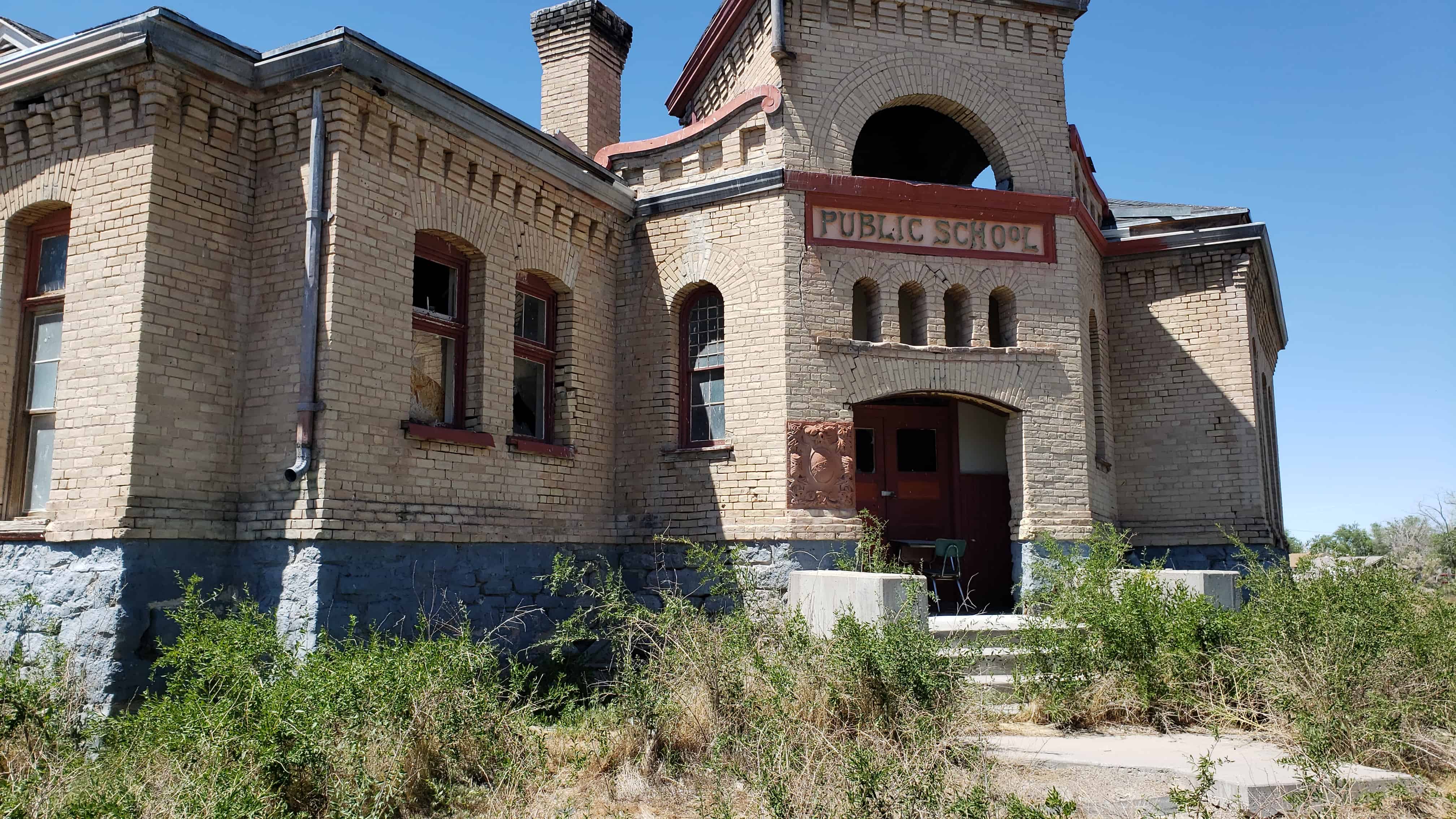
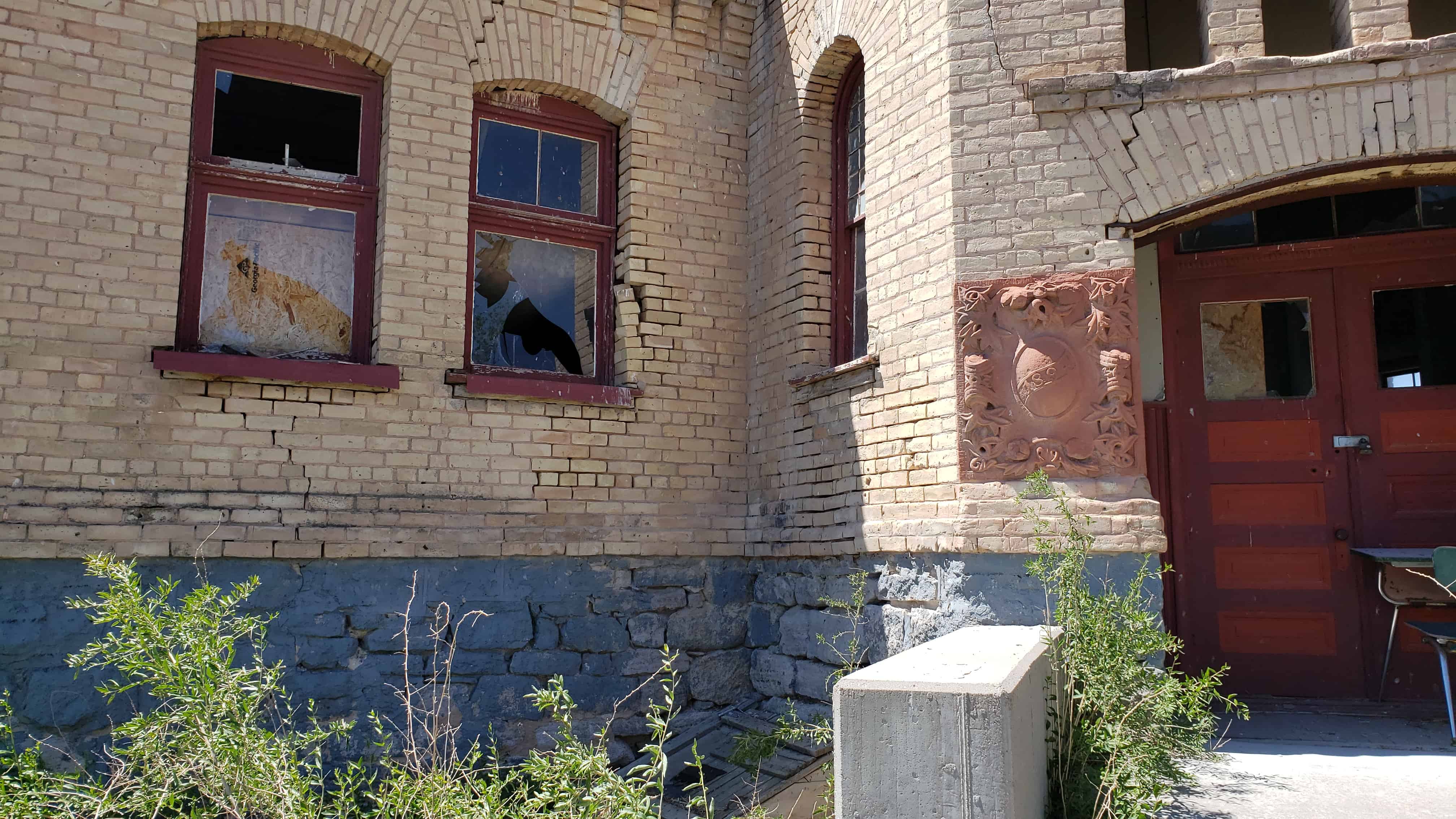
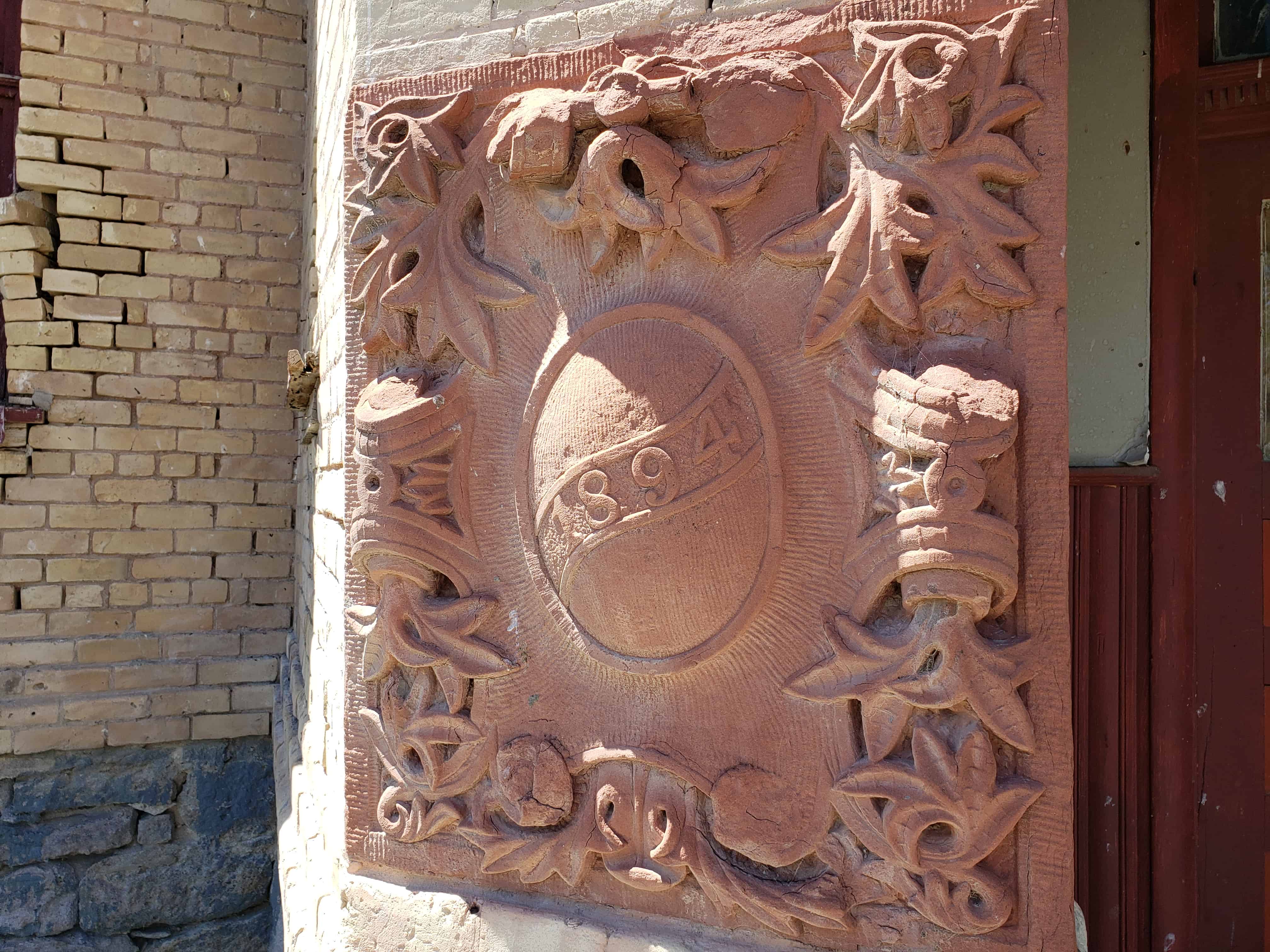
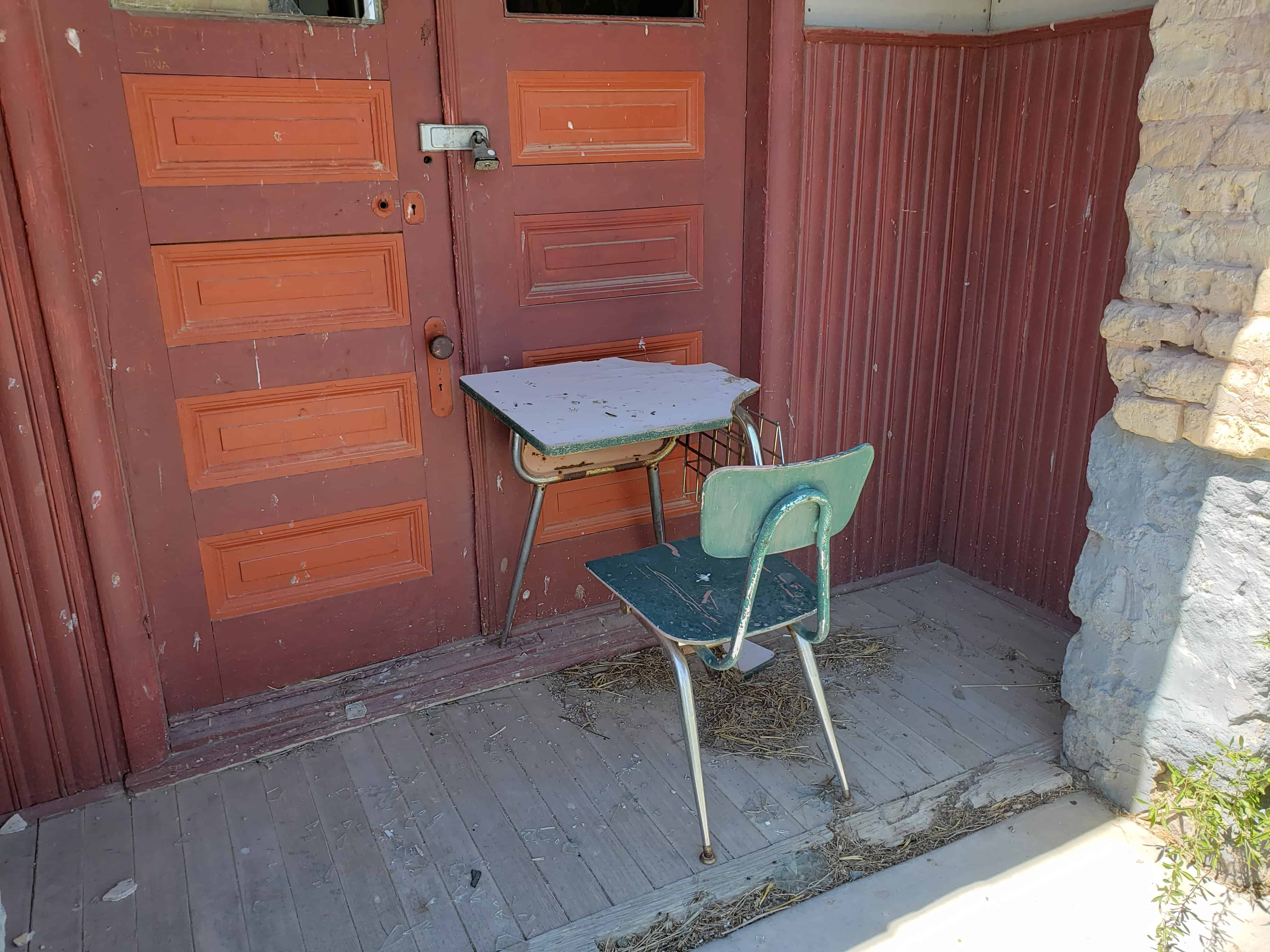
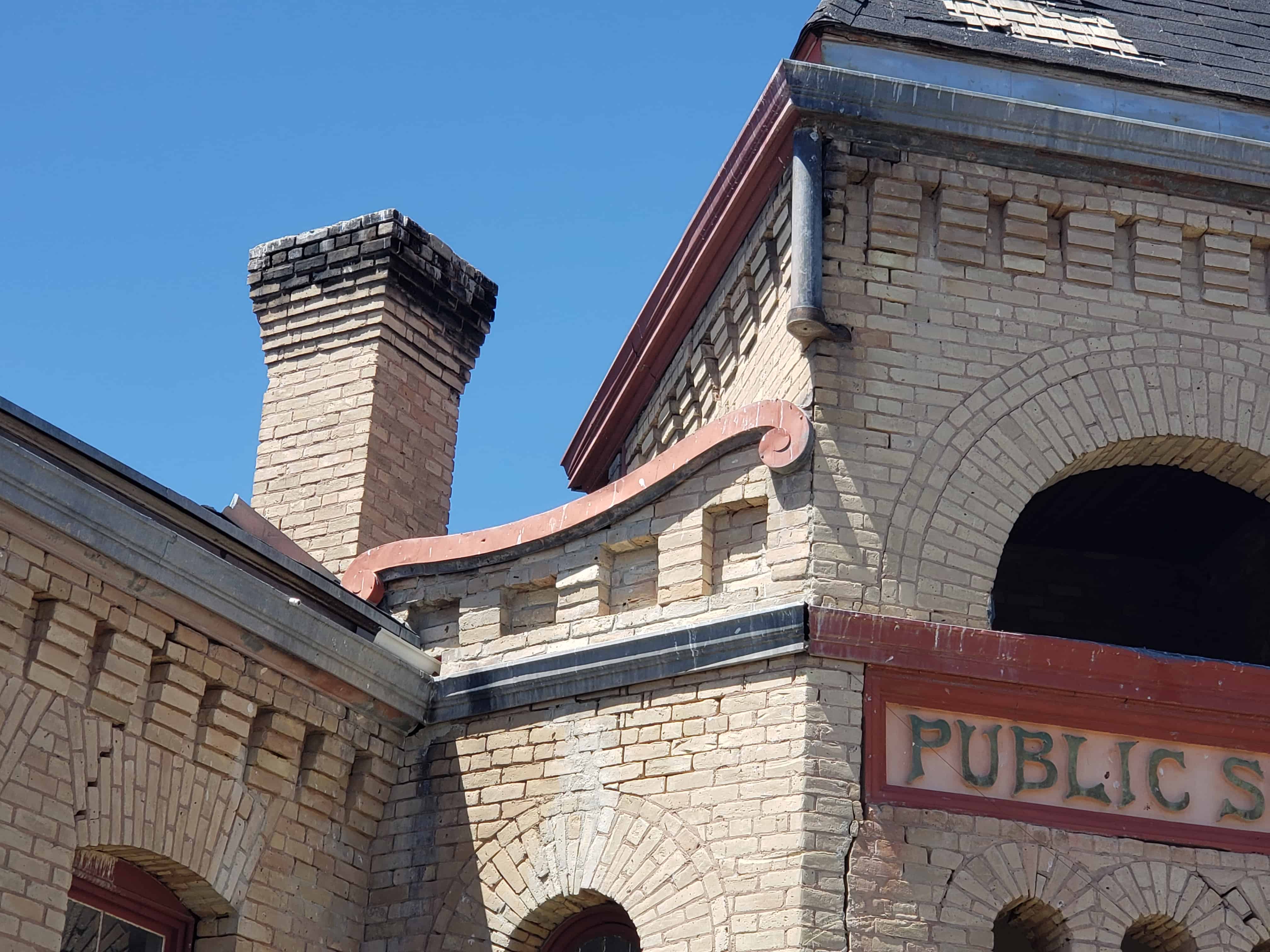
The following was posted to my facebook group by Doug Cahoon: This school was built in 1895, replacing an early school on the same site. It only served as a school until 1914 when a larger school was built. It was sold at auction in 1919 when Louis Schoenberger purchased the school. He remodeled it into a home and boarding house for school teachers. He lived there until his death in 1972. Locally the old school is known as the “Schoenberger Place.”
My grandfather went to this school and lived next door. He remembered, ““I started school at six years old. I attended elementary school in Deseret, Utah. The schoolhouse had three big rooms with a big pot-bellied stove in each room. They let bids out for the wood; they hauled cedar wood from the hills. And the older boys in the class would feed the stoves with this wood, and we seemed to be very comfortable. There was one teacher in each room in the school. Two years had passed after I had entered school, and my brother Clayton started to school. And my mother had made him a book sack, and he was in the same room with me. And he would keep putting the book sack over his head. The teacher told him to stop, and the children in the room were laughing at him. And so, the teacher finally had to take him up to the head of the class and put him on a stool and put the book sack over his head. That made me very mad and disturbed, and I went up to the head of the class and took him by the hand and took him home. We had no more landed home than the schoolteacher was there, and my mother and the school teacher talked it over. We lived just over the fence from the school.”
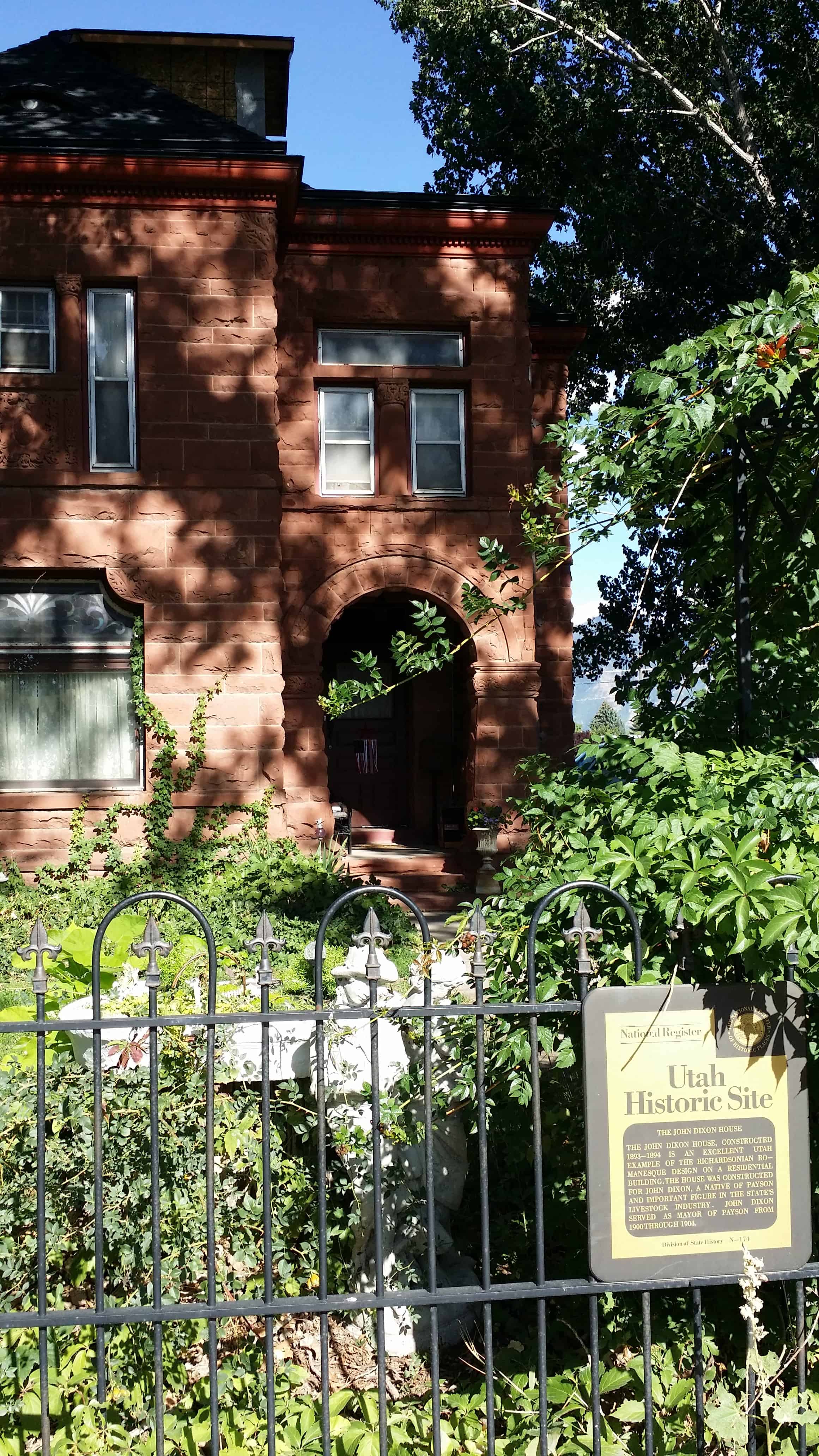
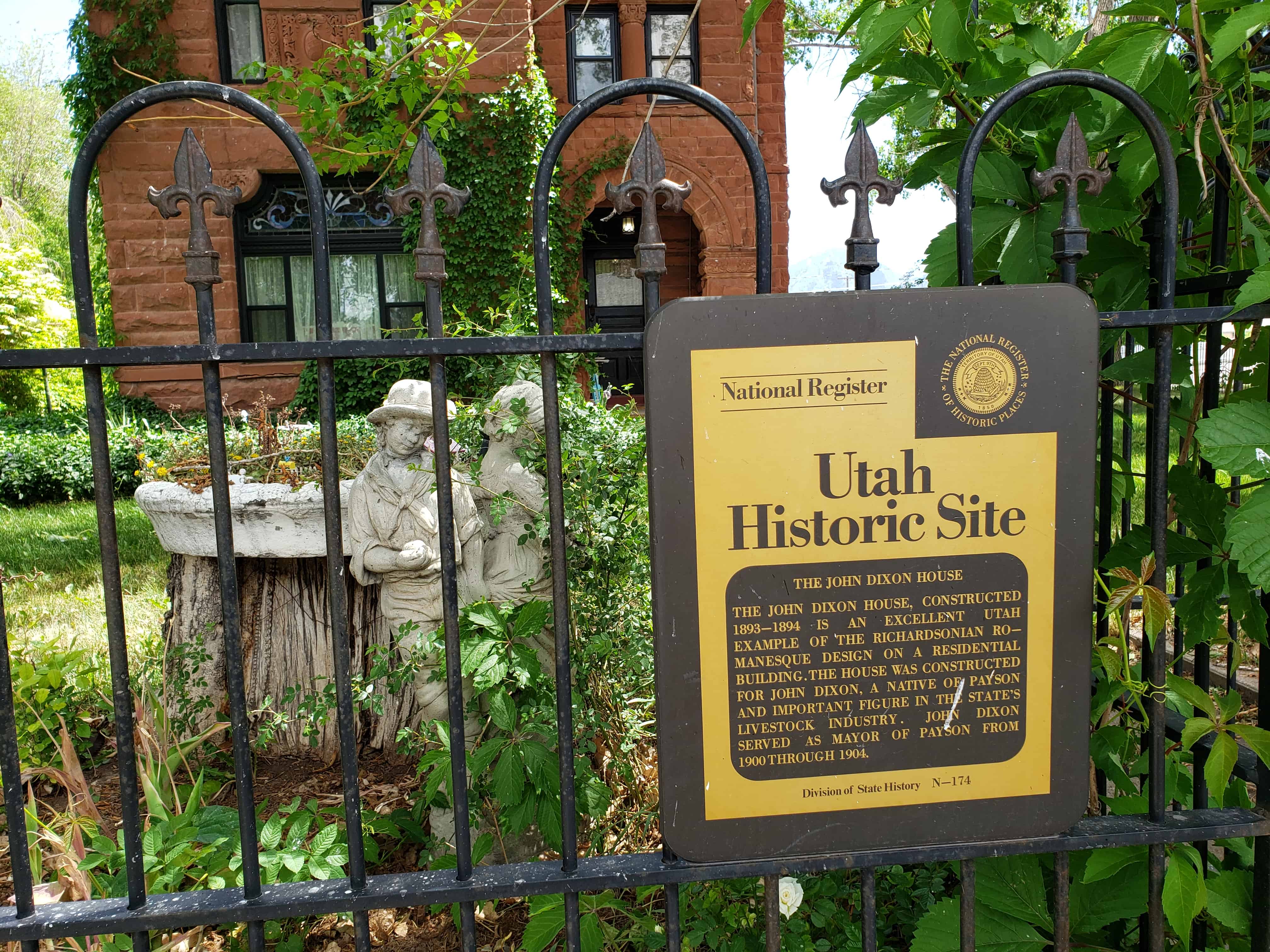
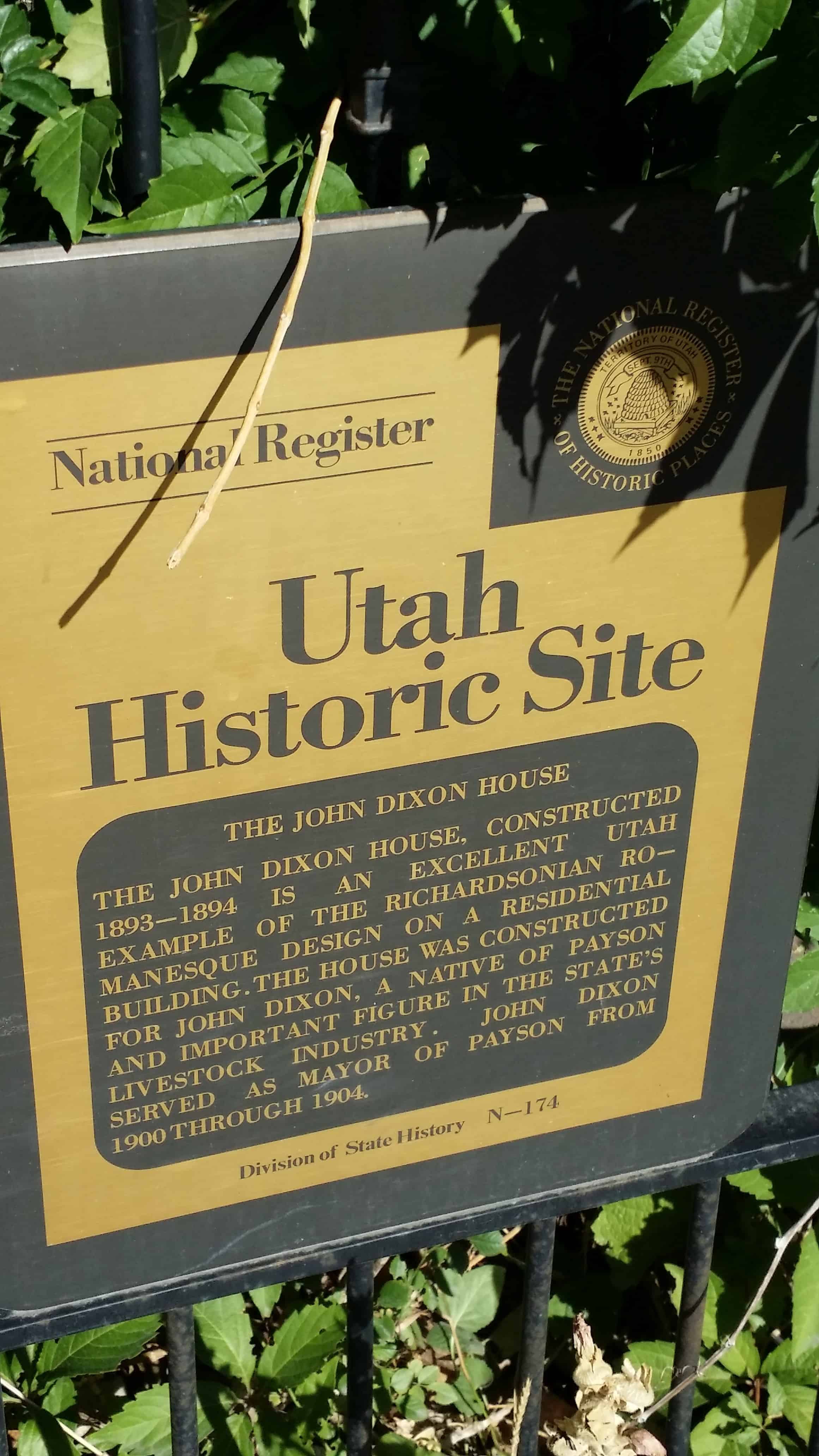
The John Dixon House, constructed in 1893-1894 is an excellent Utah example of the Richardsonian Romanesque design on a residential building. The house was constructed for John Dixon, a native of Payson and important figure in the state’s livestock industry. John Dixon served as mayor of Payson from 1900 through 1904.
According to its 1977 NRHP nomination, the house “is architecturally significant as a rare example of the influence of the Richardsonian Romanesque mode of design on residential architecture of the state. The high quality of craftsmanship represented in the building is also significant.”
The John Dixon House at 218 North Main Street in Payson, Utah was built in 1893. It was listed on the National Register of Historic Places (#78002701) on February 17, 1978.
The John Dixon Home, a substantial two-story stone building, helps document the life and accomplishments of one of the more prominent citizens of Payson, Utah. Dixon served as the town’s mayor, was a leader in developing the livestock industry in Payson and served in other capacities in local commercial and religious circles.
John Dixon came to Utah as a child following his family’s conversion to the Mormon Church in Ohio. The Dixon family came to Payson in 1862 to help permanently establish the young community. John’s father, Christopher Flintoff Dixon, engaged in the freighting business using the two teams of mules he had crossed the plainswith to haul local farm products to Iowa and Missouri. Upon his return he brought fruit and shade trees and building materials for his own use or for trading purposes. When the Dixons arrived in Payson, they acquired a farm of sixty acres adjoining the city on the north. There they built a house of adobe, planted a ten-acre apple orchard and irrigated the land with water out of Peteetneet Creek.
John Dixon grew to manhood experiencing the agricultural environment common to his family and the vast body of Mormon pioneers in general. With his father and brothers, he shared in dairy operations and in raising beef cattle. In 1890 he traveled to Dixon, California, where his father’s two brothers were living, and while there purchased one thousand head of Merino sheep which he shipped to Utah. He ran the sheep on Loafer Mountain southeast of Salem, Utah and thereby began his career in livestock raising.
Dixon and his family partners capitalized on the inability of Jesse Knight and his sons to buy from the government all of Payson Canyon. Knight, a developer of mines and other Utah industries, elected to raise his livestock in Canada and therefore sold his Thistle Valley ranch, and leased his 2,900 acres West Mountain Ranch to the Dixons. With this range and additional acreage purchased west of Goshen Bay on Utah Lake, John Dixon and partners assembled sufficient land to develop a large sheep and cattle raising business. In this enterprise they continued to associate with the Knight family through Raymond Knight, Jesse’s son. Together the two families weathered the panics of 1893 and 1897 and eventually assumed a role as regional cattle barons.
As his career grew, John Dixon entered commercial and public circles in his community. He was owner, with Hyrum Lemons, of the First Bank of Payson. Dixon also served as Payson’s mayor from 1900 through 1904. He was also an active member of the Mormon faith and was a High Priest and High Counselor, positions of leadership in the Nebo Stake, the major ecclesiastical unit of the Mormon Church in that area. Dixon erected his impressive hone on Payson’s Main Street. Later the Nebo Stake Tabernacle was built directly South of his home while the C.F. (Jack) Dixon residence was built to the north. The home is therefore not only individually distinctive, but is a key structure in the street-scope of Payson’s historic Main Street
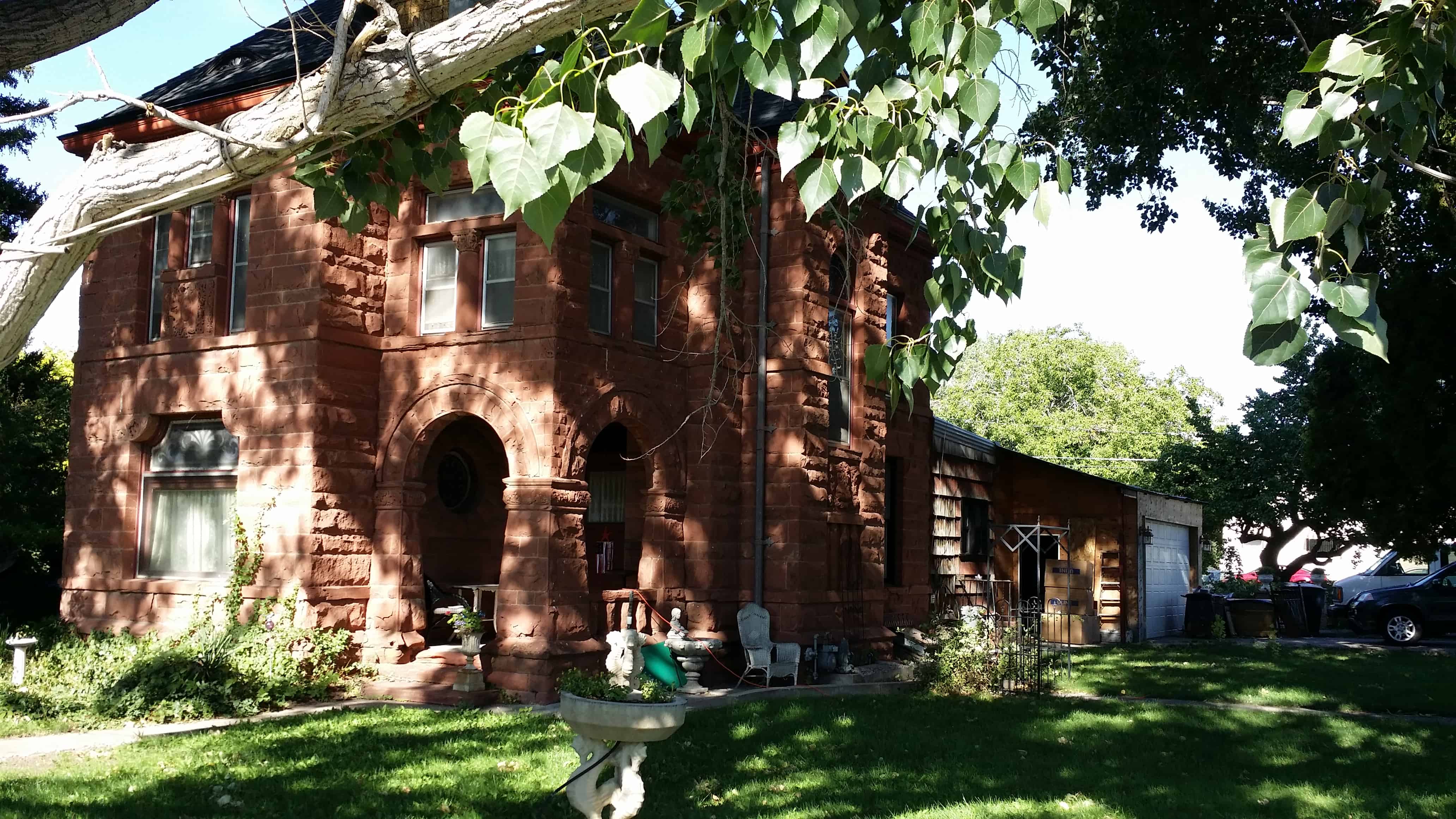
The John Dixon Home is architecturally significant as a rare example of the influence of the Richardsonian Romanesque mode of design on residential architecture of the state. The high quality of craftsmanship represented in the building is also significant.
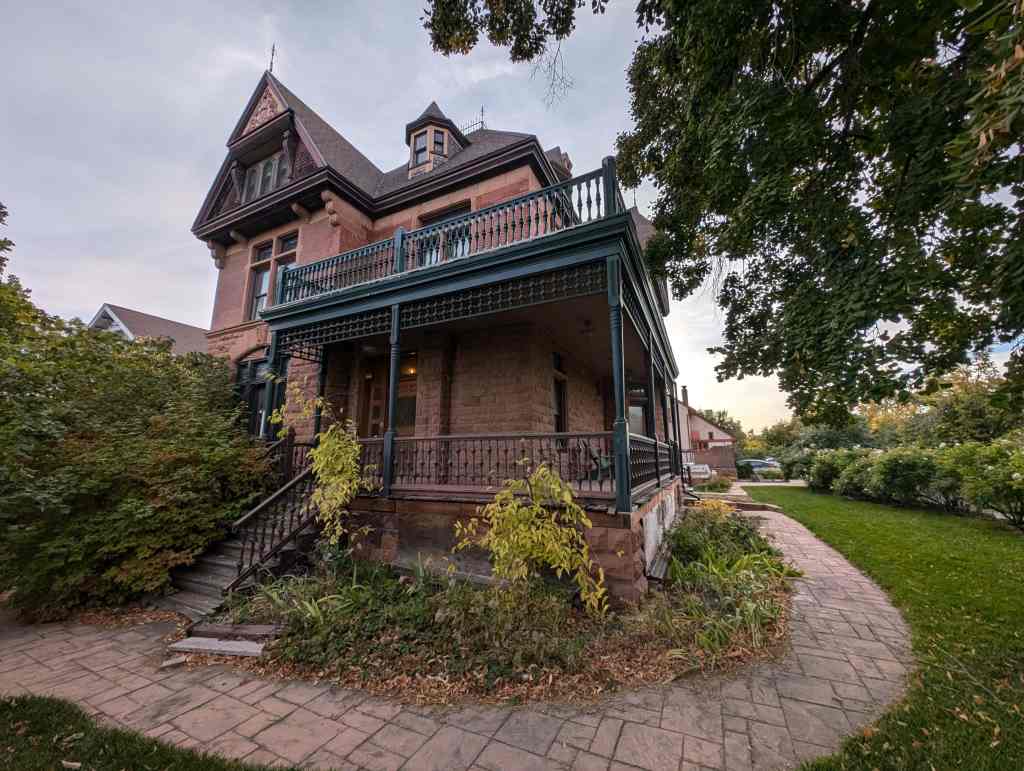
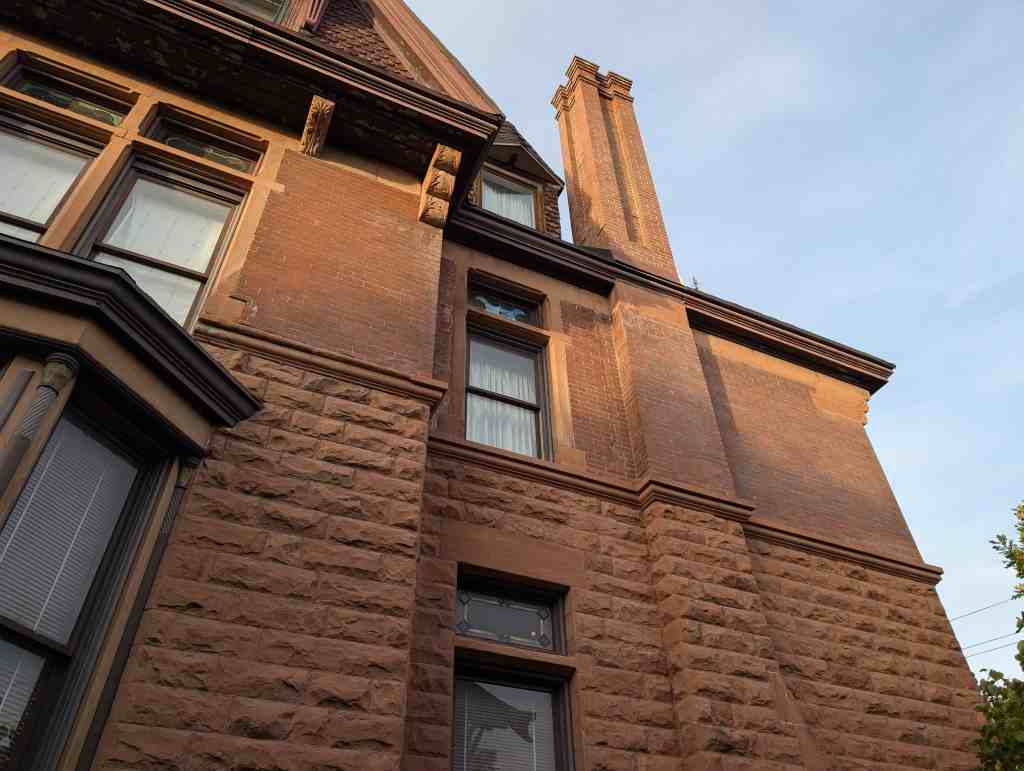
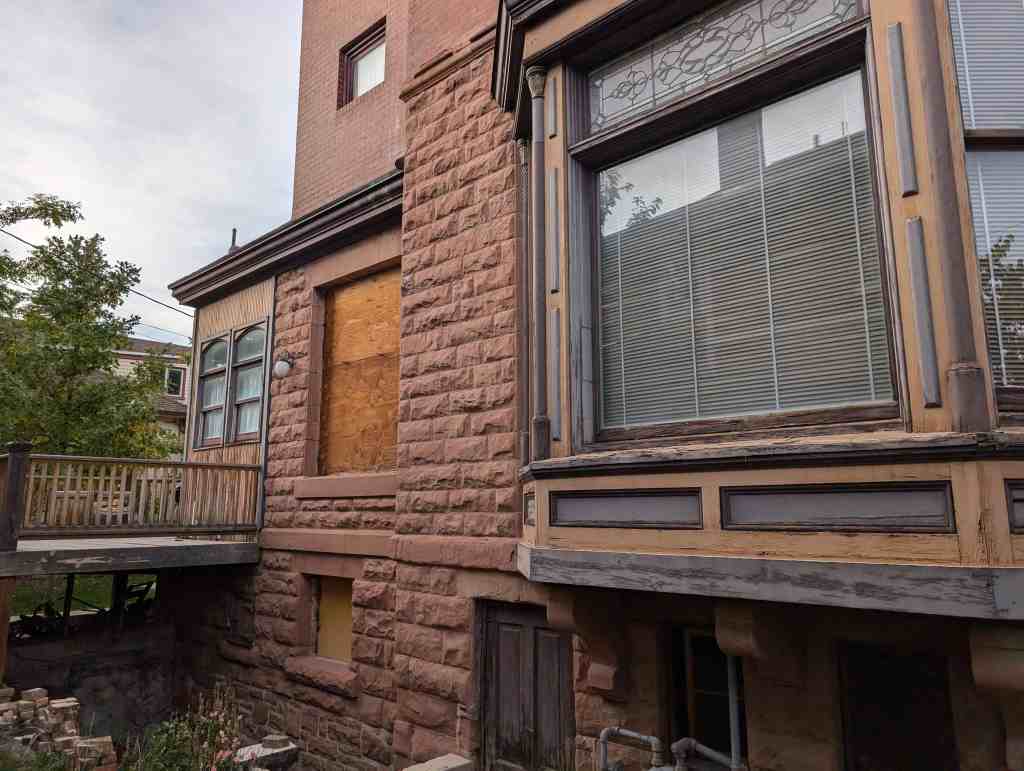
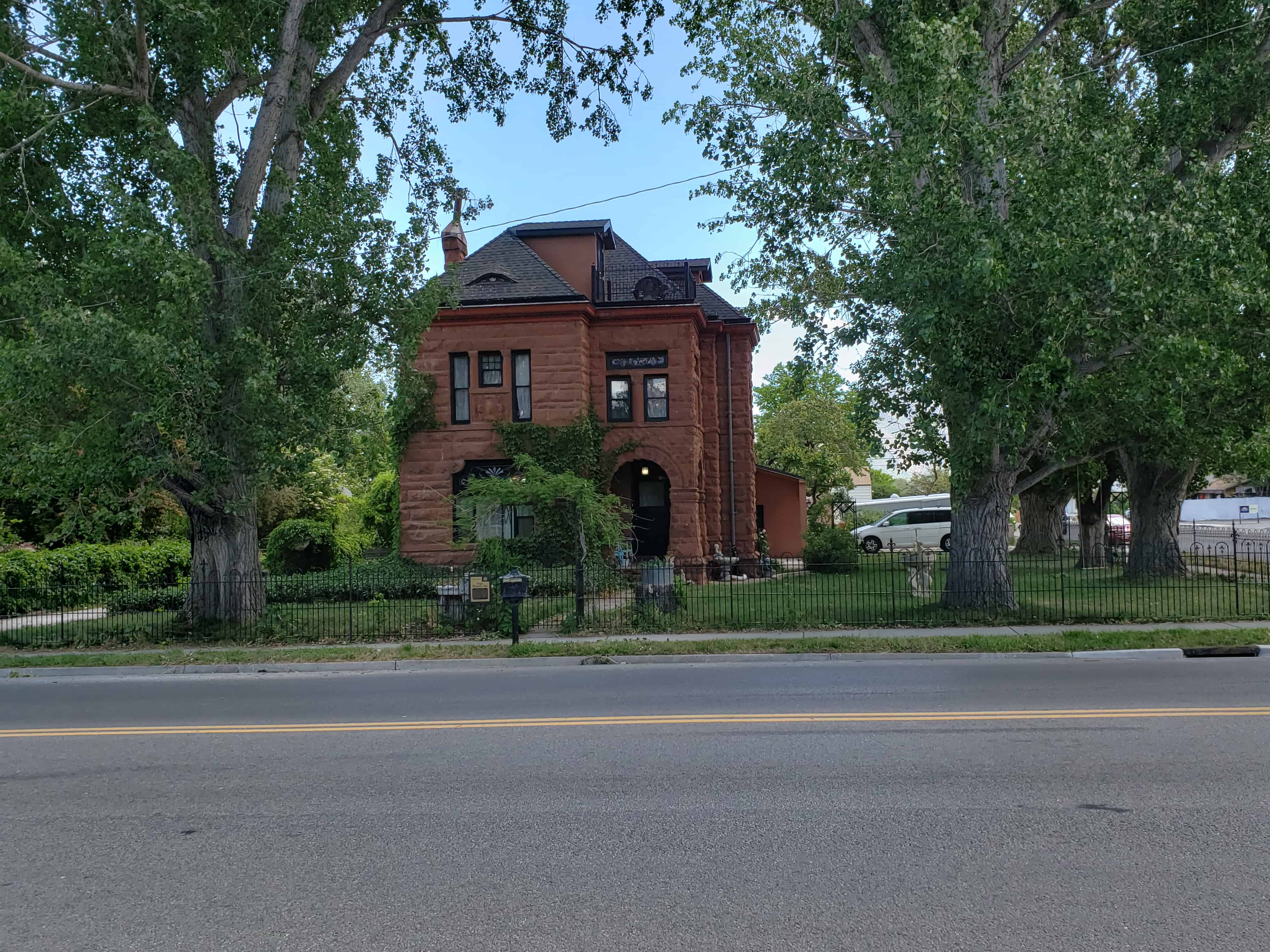
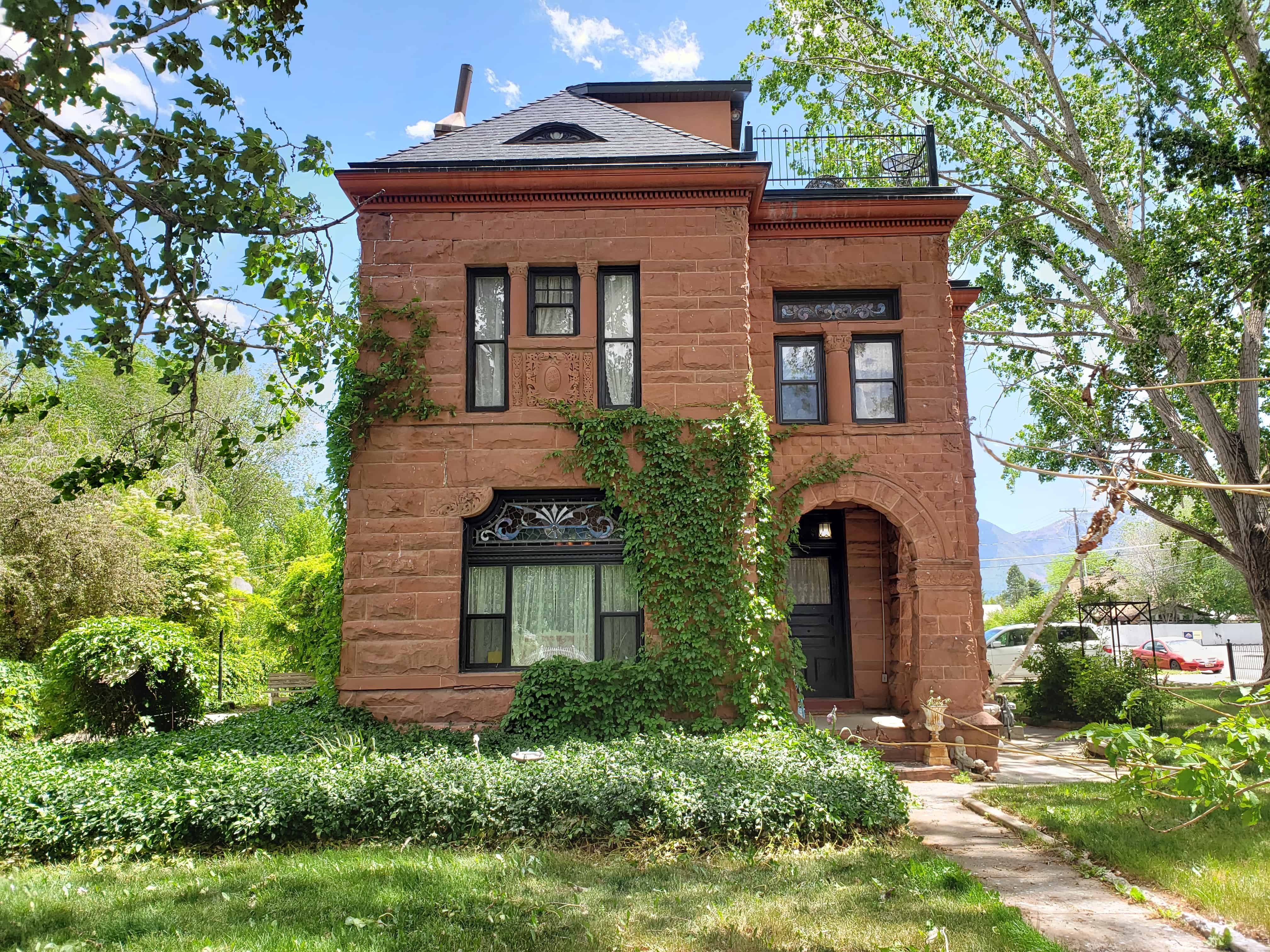
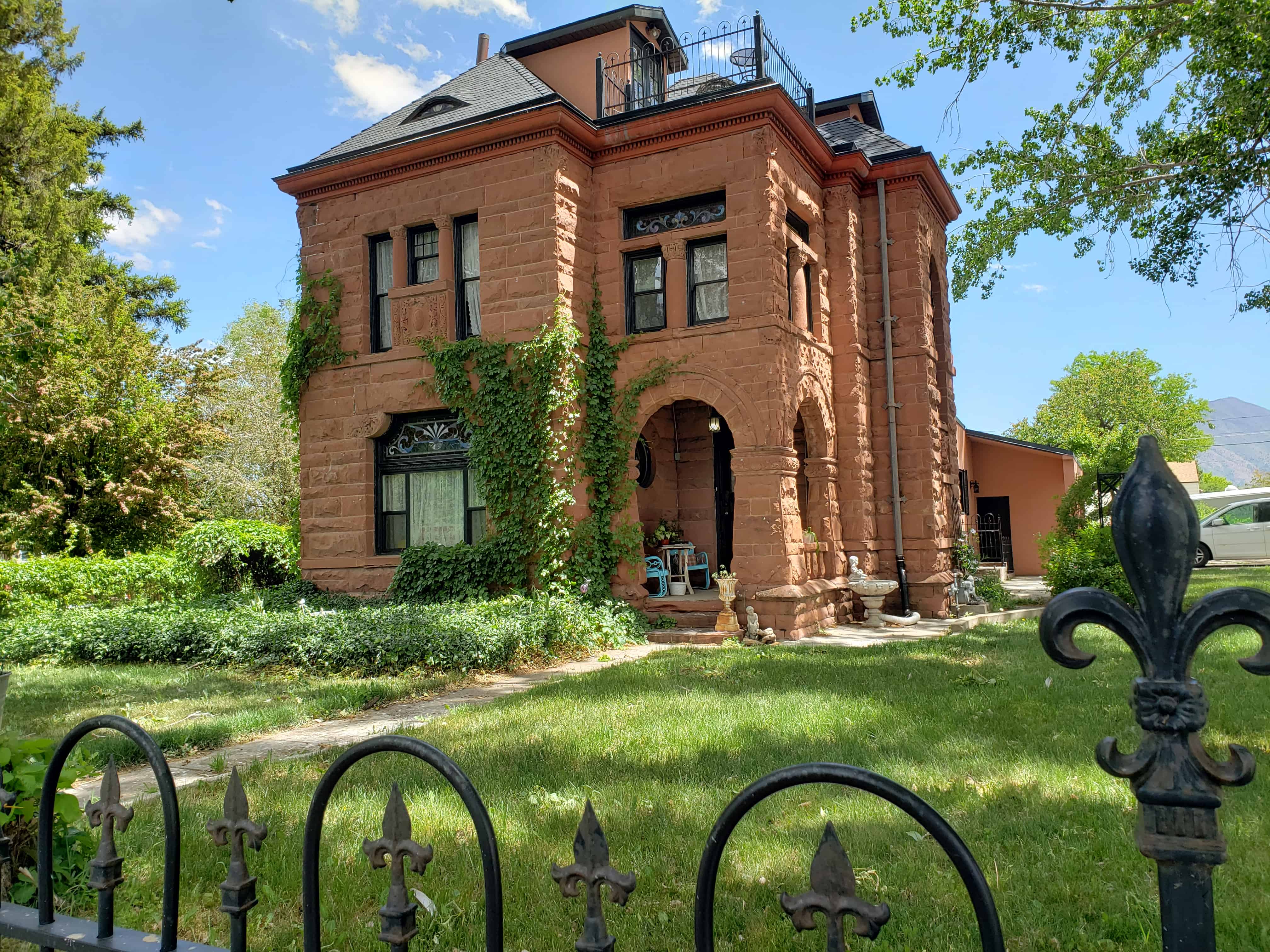
Built during the Victorian era, the Dixon Home is one of the few residences in the state to employ aspects of Richardsonian Romanesque styling, a design trend which was confined almost entirely to commercial and public structures in Utah. The Dixon Home, however, with its simple but heavy massing, rock-faced masonry, hip roof and decorative carved stone, makes definite reference to Richardsonian Romanesque. The two-story home is constructed of dark red sandstone and features fine workmanship in its masonry, both structural and ornamental, and in its art glass windows and woodworking. The well preserved residence has experienced no important changes with respect to original appearance and is considered one of Payson’s most distinctive cultural assets.
The John Dixon Home is a 2 story structure built in 1893-4 of dark red sandstone. The building has an irregular plan but is straightforward in its form and massing. Due to its dark color and rock-faced masonry exterior, the building possesses qualities of heaviness and strength. The home has most in common with the Richardsonian Romanesque mode in style.
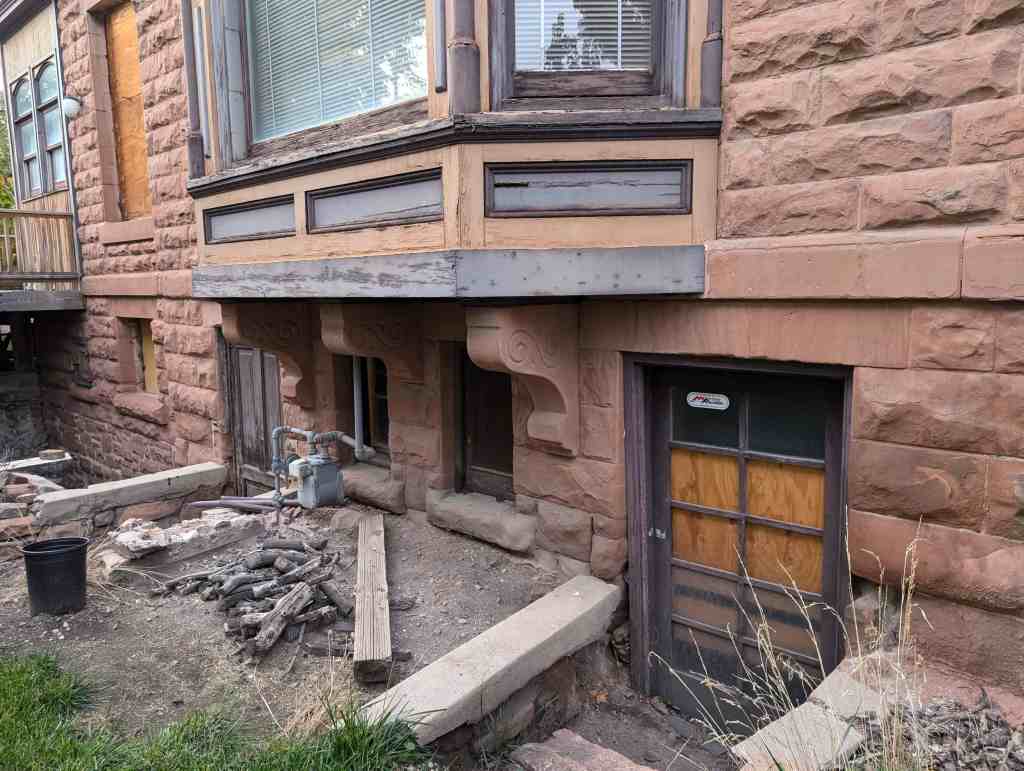
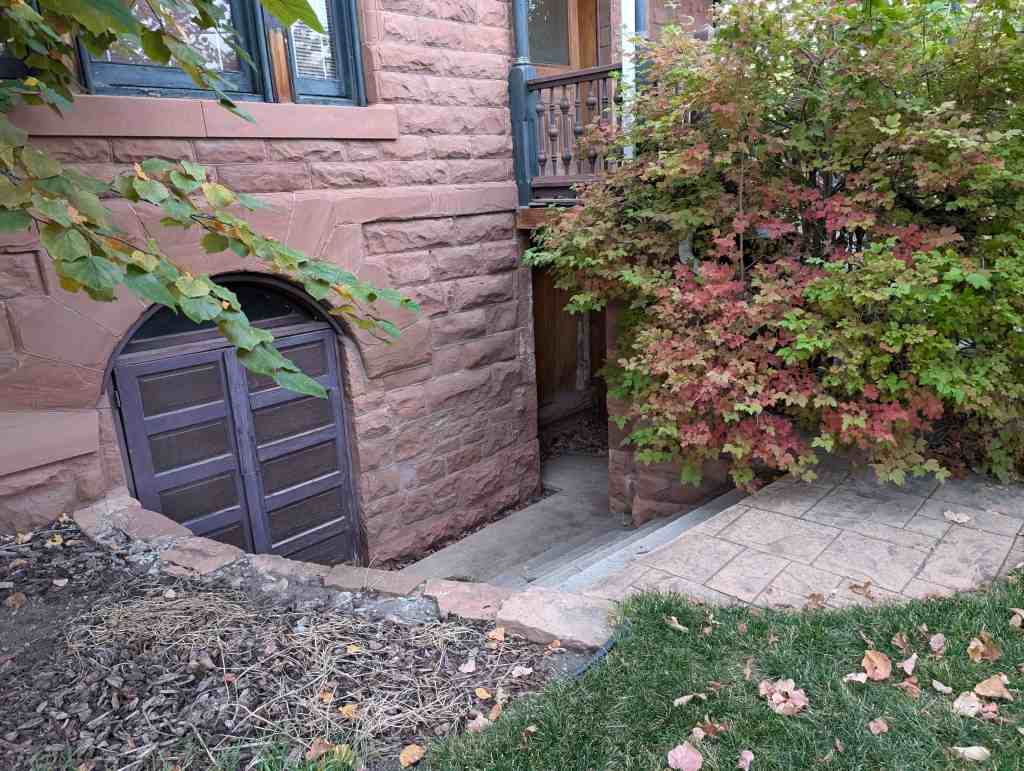
The facades of the Dixon Home are asymmetrical and feature large square bays on both floors. The windows, several of which feature art glass, are recessed, giving the walls an effect of depth. Entry to the home is made through vestibule which has two Roman-arched openings. All exterior walls surfaces feature rock-faced stone, excepting the two belt courses at the sill lines which are of smooth stone. The home has a hip roof and features small eyebrow windows. The cornice is shallow, molded and has a dentiled frieze. Of particular interest to the exterior design is a variety of ornamental carved stone. The inscription plaque in the front façade reads, “John Dixon, 1894” and has small faces and arabesque foliation of carved stoned. The capitals of the second story mullion-columns, pedestals of the Roman arches and lentil brackets in the first floor window bays also display carved foliation. The interior of the Dixon Home is also rich in design and materials and retains most of its original character. The only important alteration of original appearance consists of a small frame addition which was made to the rear of the building.