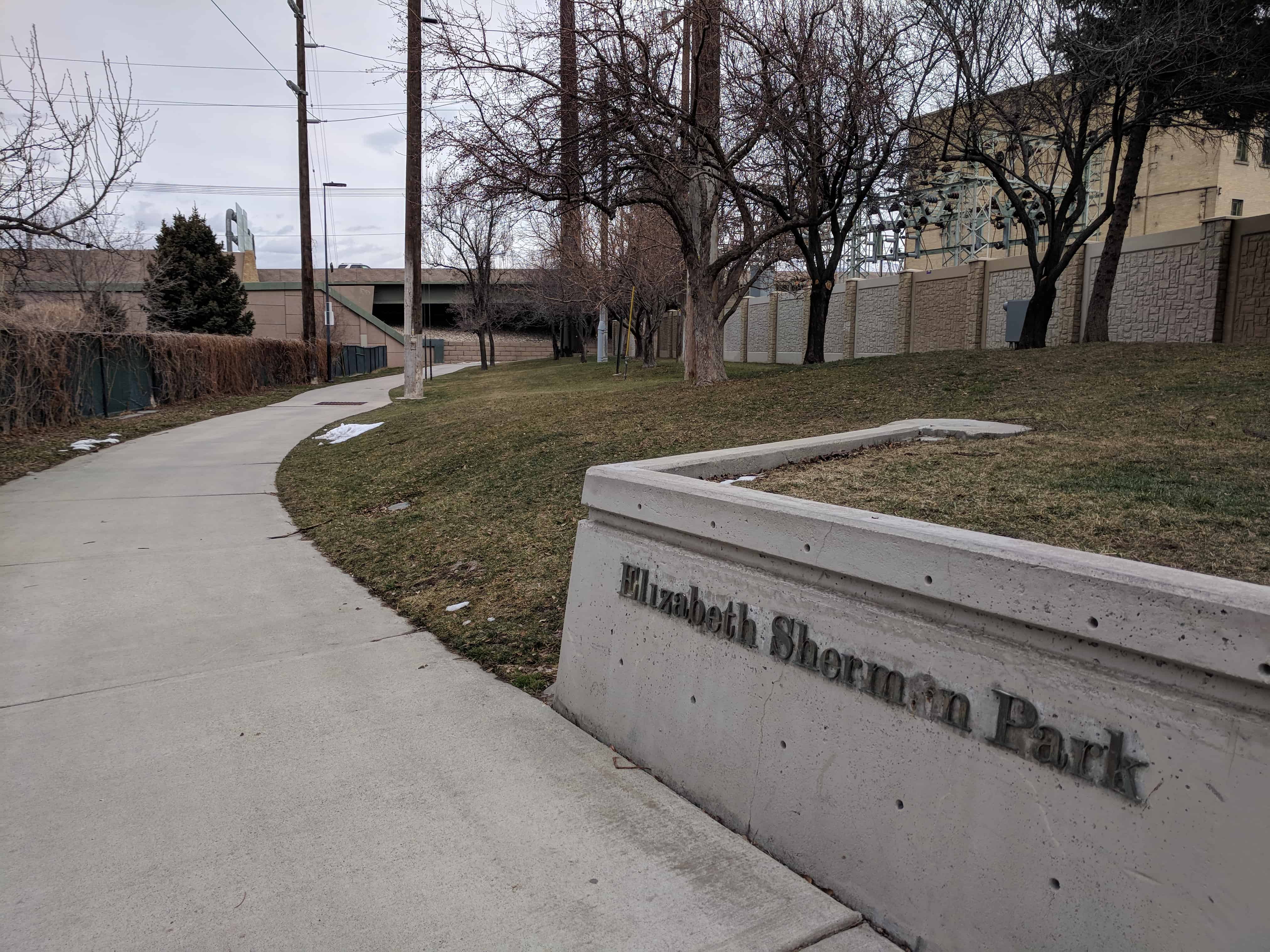
Elizabeth Sherman Park, a park in Sugar House in Salt Lake City. For other parks in Salt Lake visit this page.
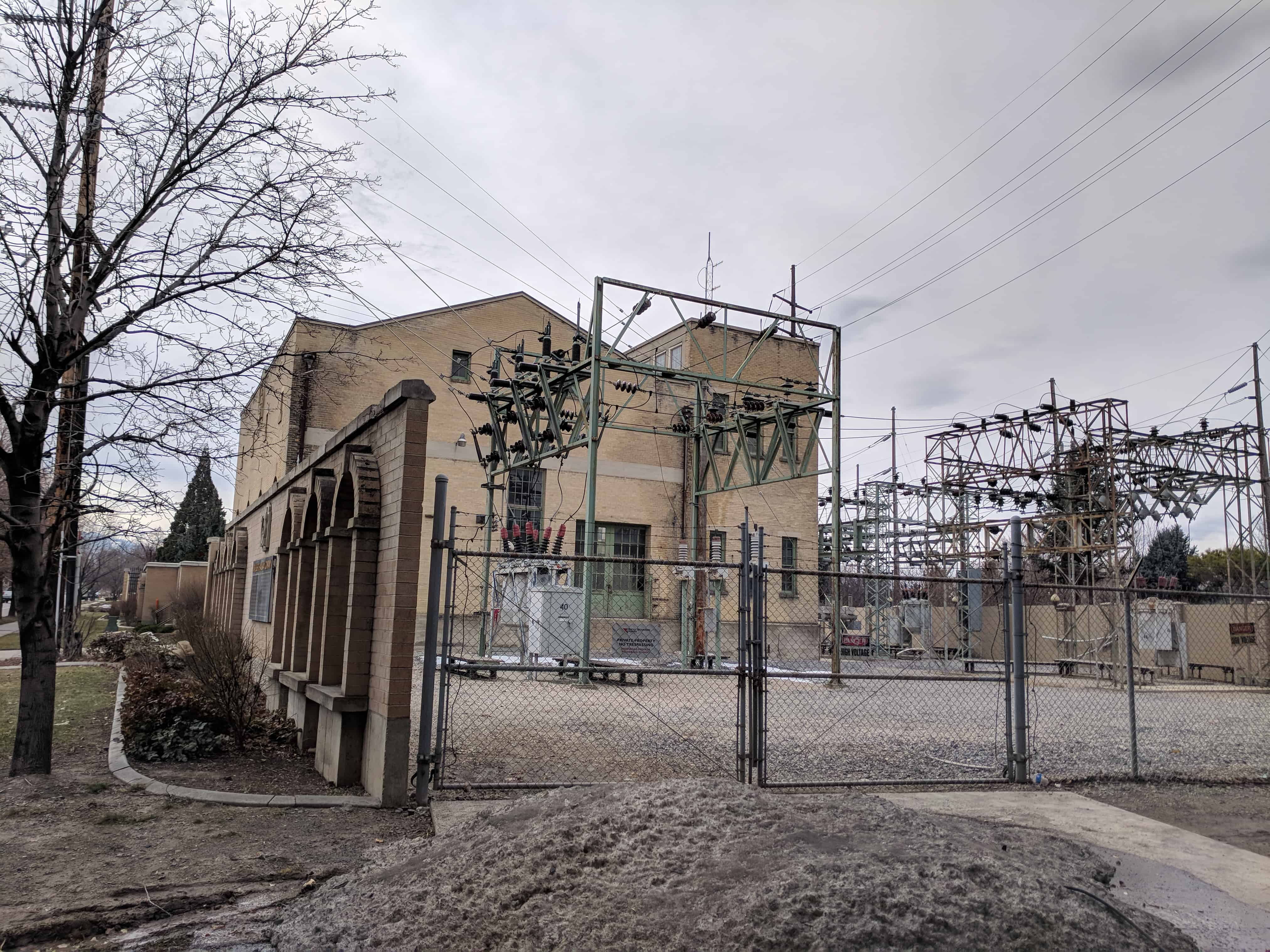
This park is next to the Utah Power – Southeast Substation.



24 Sunday Jun 2018
Posted in Uncategorized
Elizabeth Sherman Park, a park in Sugar House in Salt Lake City. For other parks in Salt Lake visit this page.
This park is next to the Utah Power – Southeast Substation.
17 Sunday Jun 2018
Posted in Uncategorized
Tags
historic, Historic Buildings, Historic Markers, Salt Lake City, Salt Lake County, Sugar House, utah

Utah Power – Southeast Substation
In 2004 Utah Power expanded the Southeast substation and the three houses shown below were removed. These homes were constructed by Kimball & Richards Building Company as part of the Highland Park Subdivision at a time when the population of Salt Lake City was approximately 93,000.
By 2004, the Salt Lake City population had increased to nearly 179,000, increasing the demand for electricity and necessitating the expansion of the Southeast substation. Prior to their removal, members of the Sugarhouse community were invited to salvage items from the bungalows such as bricks, doors, windows, moldings, flooring, light fixtures, etc.
Related Posts:


17 Sunday Jun 2018
Posted in Uncategorized
Tags
historic, Historic Buildings, Historic Markers, Salt Lake City, Salt Lake County, Sugar House, utah

Utah Light & Railway Company
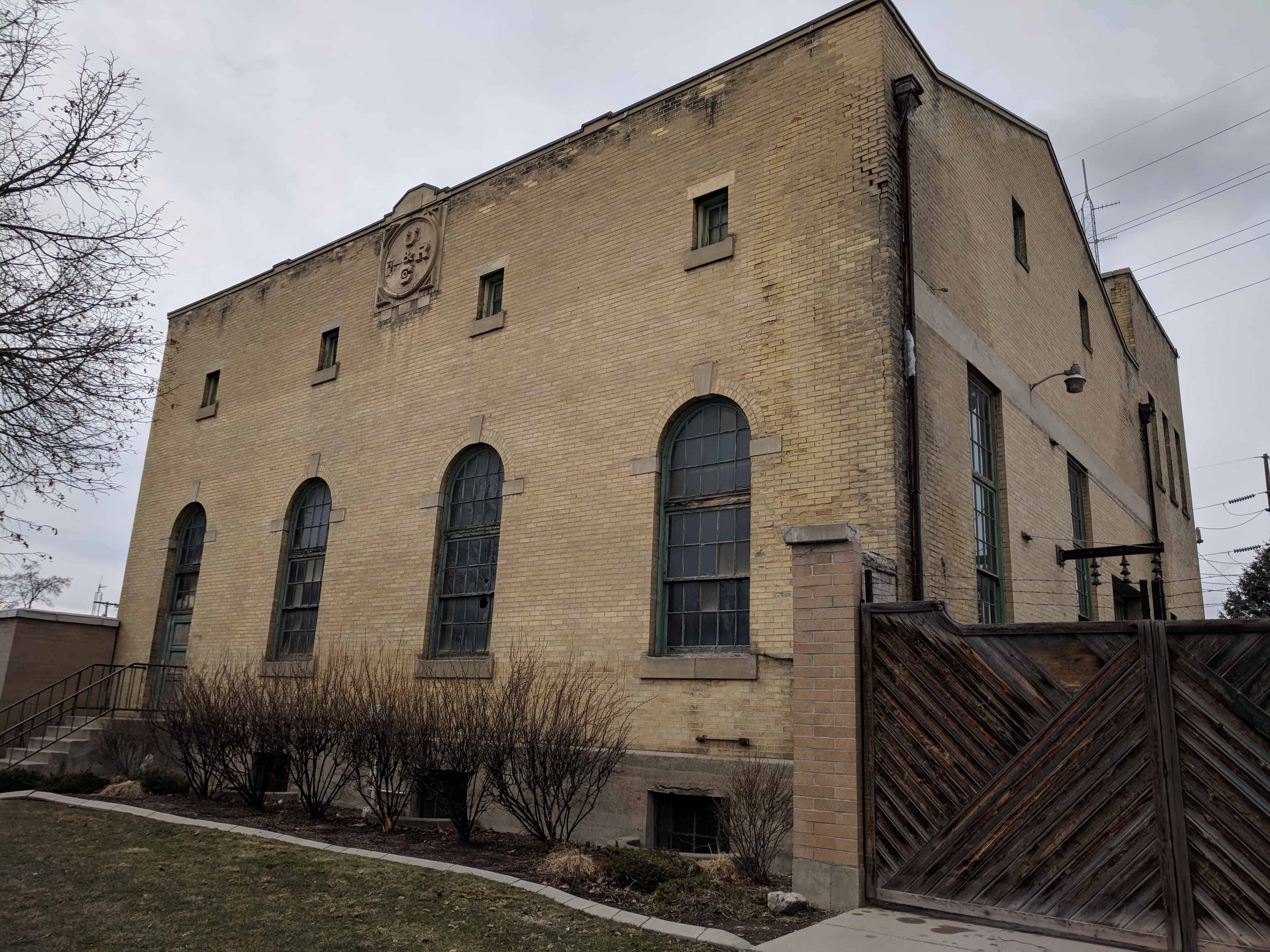
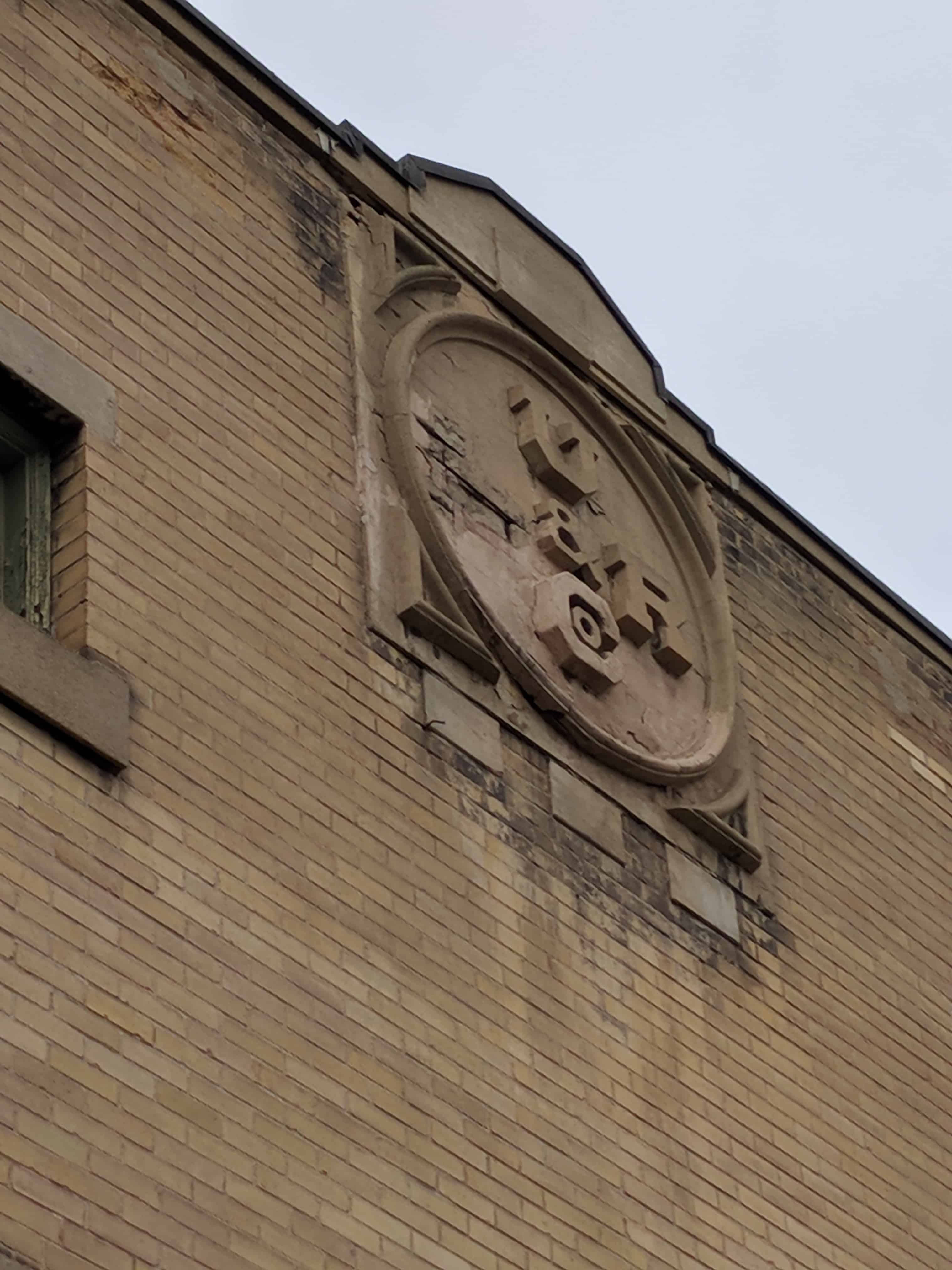
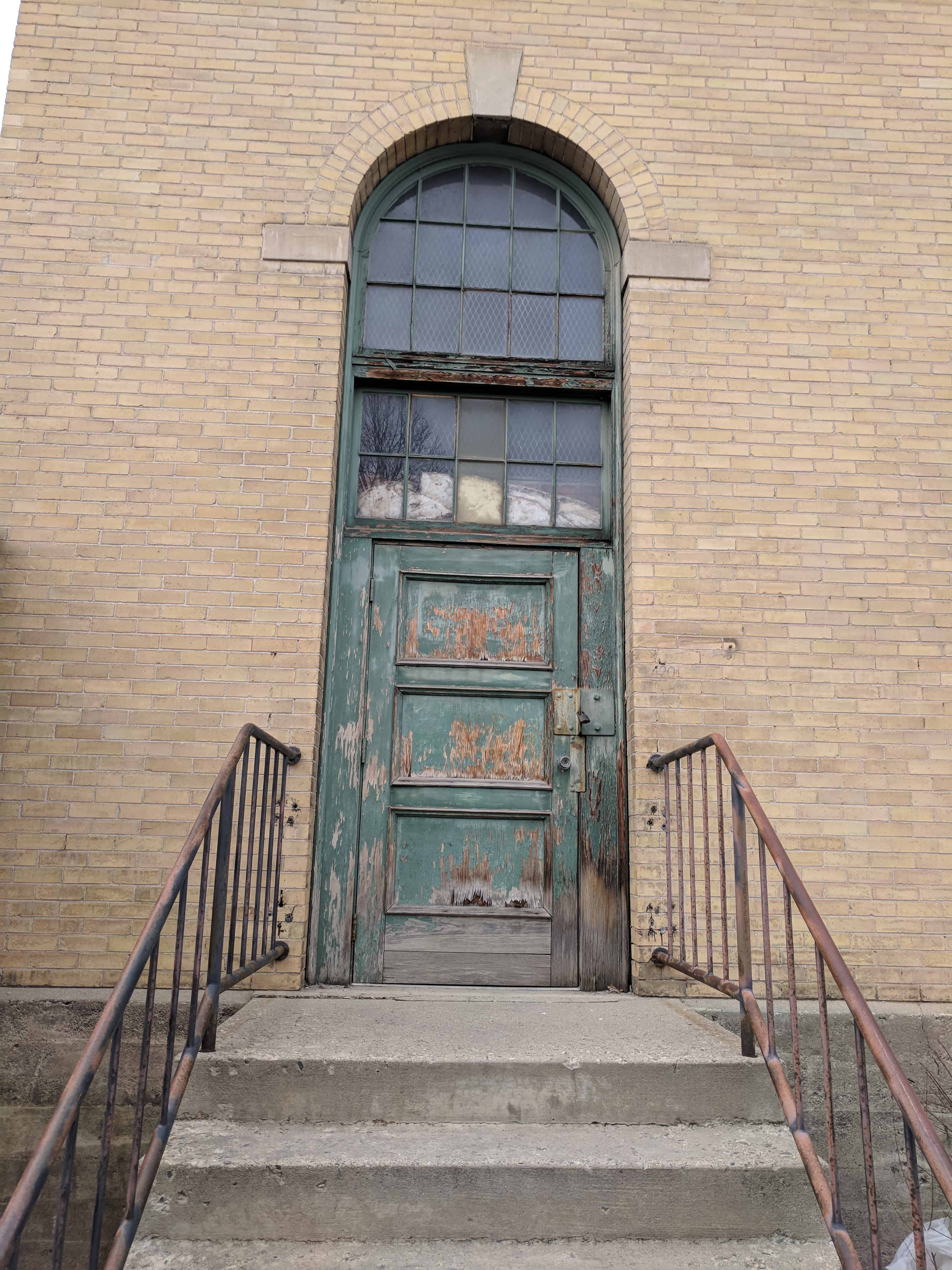
In 1911, Utah Light and Railway Company constructed this power distribution substation on the present site. The building was the finest of its kind for the times and cost in excess of $20,000.00.
The southeast substation became one of six distribution transformer stations in the Utah Light and Railway (later Utah Light and Traction Company) power system, all of which were leased in 1915 to Utah Power and Light Company, which had been organized three years earlier for the purpose of consolidating the numerous small independent electric companies then operating in Utah. Utah Power and Light Company subsequently utilized the southeast substation as the tie-in point at which the system of Provo-based Knight Consolidated Power Company was integrated with that of Utah Light and traction Company.
The southeast substation by the 1930’s was the largest such facility in the Utah Light and traction portion of Utah Power and Light’s distribution system.
Related posts:



30 Wednesday May 2018
Posted in Uncategorized
Tags
Colleges, Historic Buildings, Historic Markers, NRHP, Salt Lake City, Salt Lake County, Sugar House, utah

Converse Hall
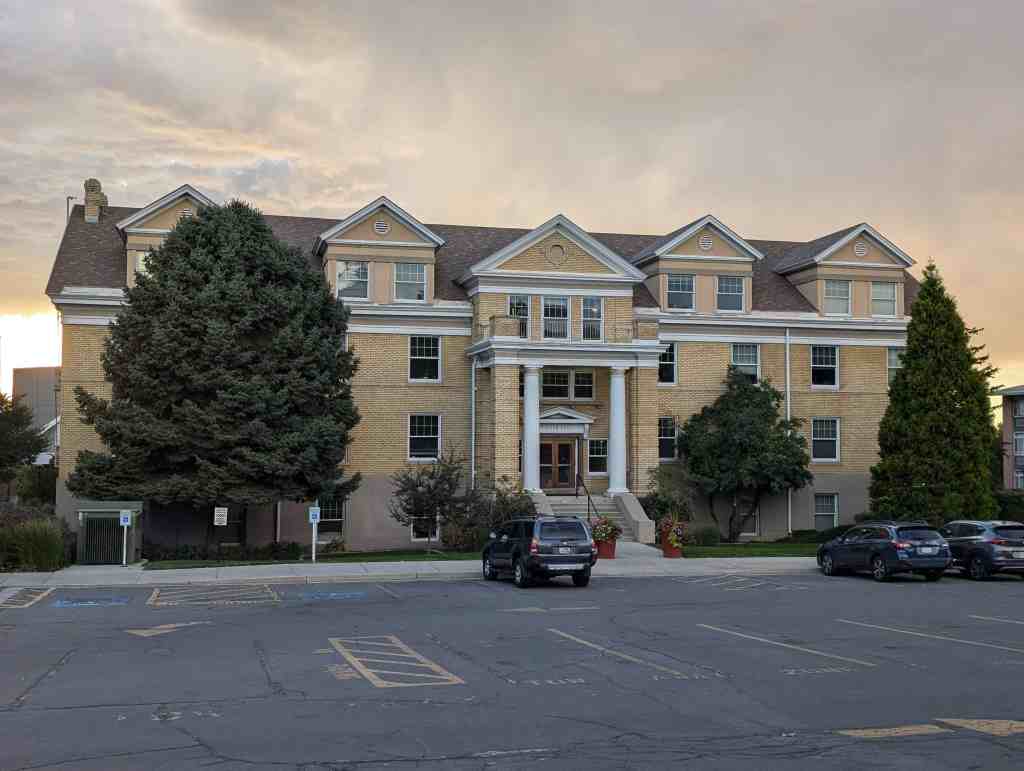
Although the origins of Westminster College date back to the establishment of the Salt Lake Collegiate Institute on April 12, 1875, Converse Hall, constructed in 1906, was the first building erected on the campus of Westminster College. The building was designed by architect Walter E. Ware and named for John Converse, president of the Baldwin Locomotive Works in Philadelphia, who donated 20,000 dollars of the 27,000 dollar costs of the building. As the first building on campus, it served many functions including the boys dormitory, administration offices, assembly hall, chemistry lab, lecture hall, classrooms and library. It currently houses administrative and faculty offices, classrooms and a lounge theater.
It is one of the oldest and central buildings on the campus of Westminster College in Sugar House.
https://youtube.com/shorts/6-NzCztUw7k
Related Posts:
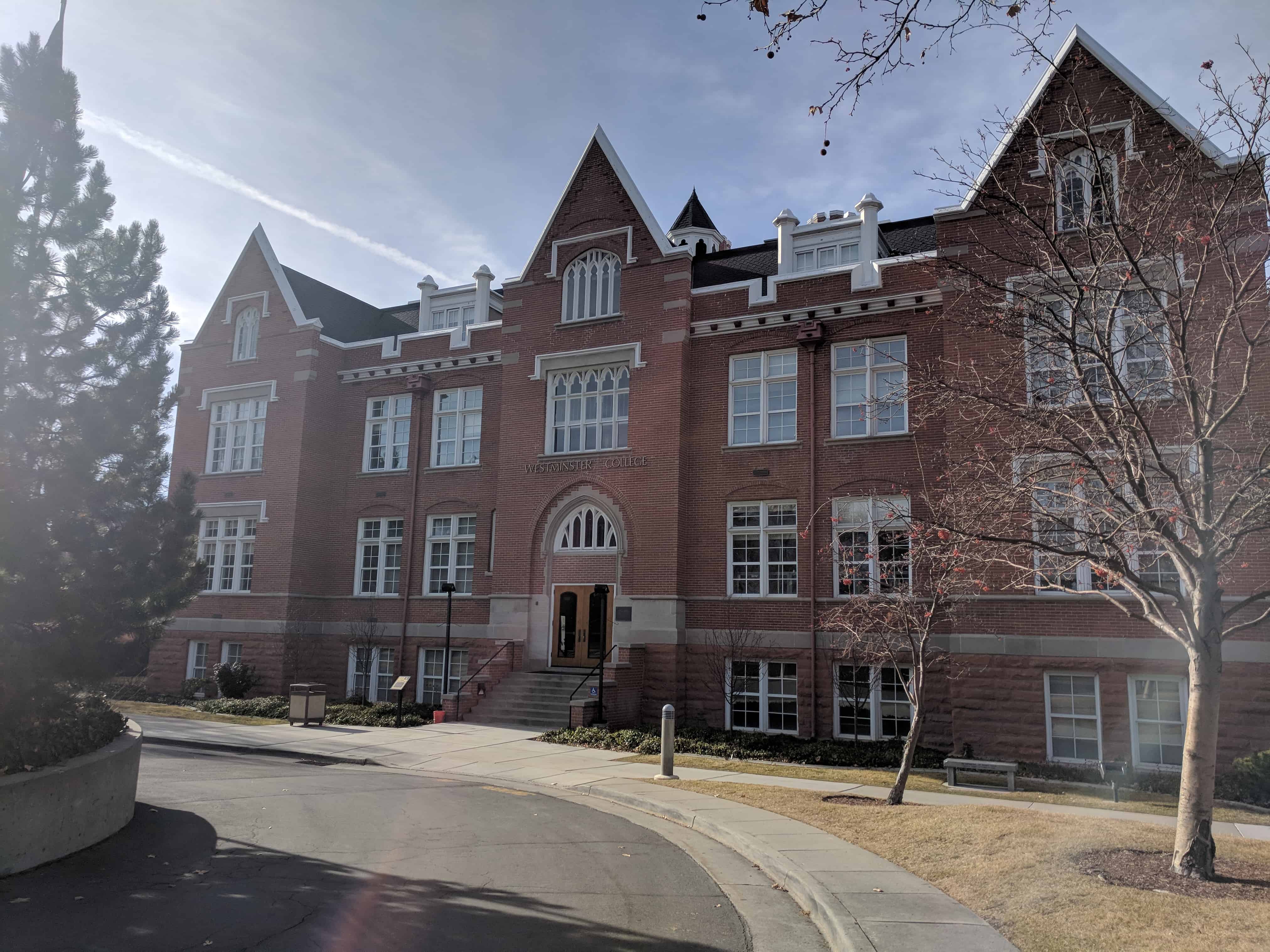


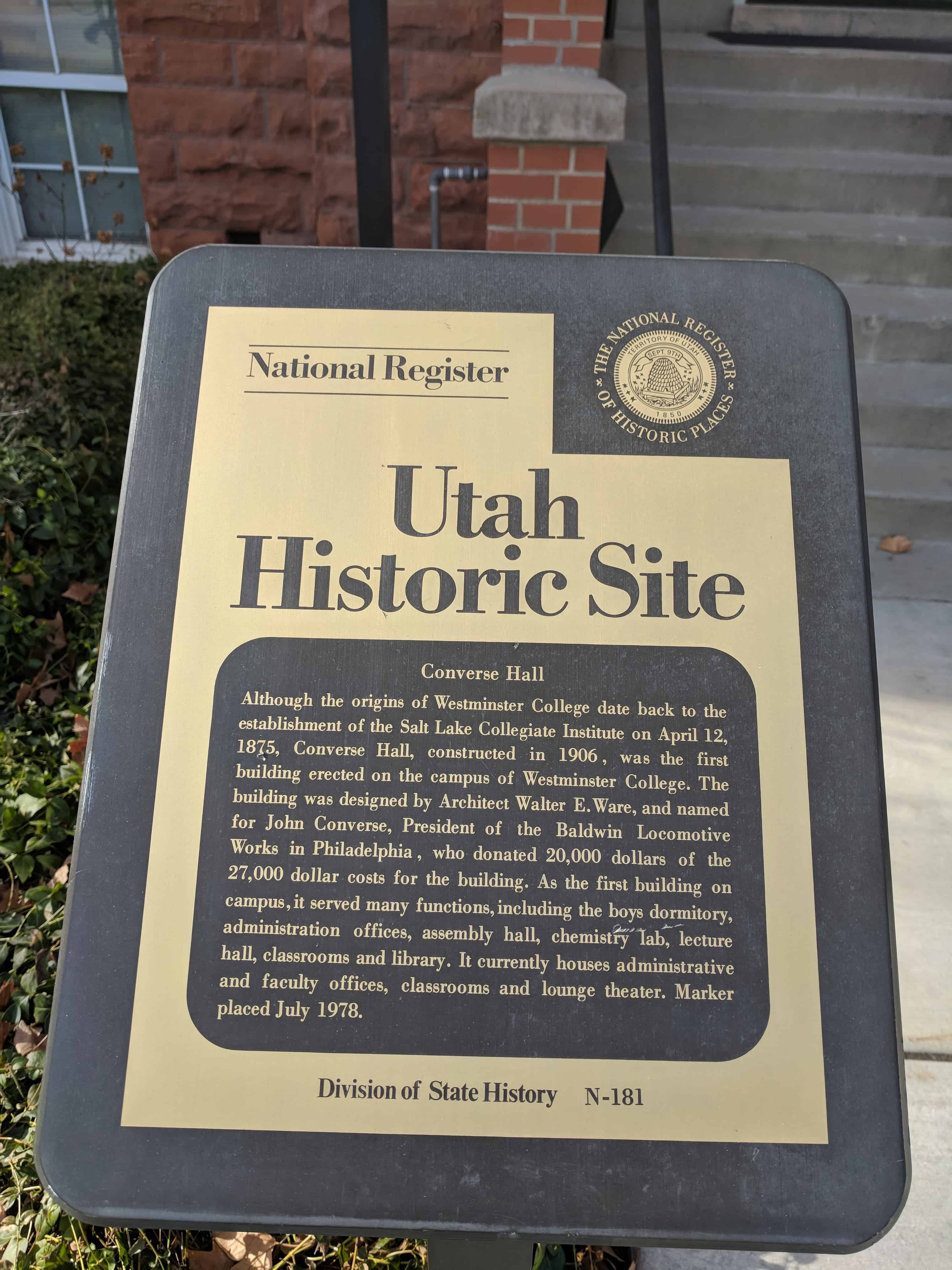
Converse Hall was the first building to be erected on the campus of Westminster College, the only Protestant institution of higher education in the state of Utah and the only private liberal arts college “for a million square miles.” The hall was built in 1906 at a cost of $27,000 and was designed by Walter E. Ware, a prolific Salt Lake City architect whose best known works include First Presbyterian Church, First Church of Christ, Scientist, the Chamber of Commerce Building, and a number of outstanding residences. Architecturally, Converse Hall is significant as a rare example of the seventeenth century J English-inspired Jacobean Revival Style. Built of sandstone and brick, it displays the same “strictness as to detail” that characterized similar revival buildings in the East where the style was popular after 1890.
Converse Hall is perhaps the purest and best preserved of the few Jacobethan Revival. Built of sandstone in 1906, the three and one half story structure was during a period “Educational Gothic”, a movement within the late Gothic Revival. A coincident trend, the English inspired Jacobethan Revival, was never widespread in Utah but was occasionally used by well-traveled architects as Walter E. Ware.
Ware, the son of Elijah Ware, whose 1865 invention, ,a combination steam carriage and engine is recognized as a forerunner of the automobile, was born in Needham, Massachusetts, August 26, 1861. He gained his architectural training while employed by the Union Pacific Railroad in Omaha, Nebraska and later worked in Laramie, Wyoming and Denver, Colorado before settling in Salt Lake City in 1889. He quickly became one of the City’s leading architects. Among Ware’s best known extant buildings are the First Presbyterian Church (1903), First Church of Christ,Scientist (1898), Matthew H. Walker Home (1903) and Henderson Block (1897).
After a successful independent practice, Ware took on Albert O. Treganza as a partner in 1901, forming the firm of Ware and Treganza. Treganza, born in Denver in 1876, graduated in architecture from Cornell University and later worked in the office of Hubbard and Gill of San Diego, California. Treganza was a skillful designer and became responsible for the firm’s design department. Ware became responsible for the supervision of the projects and did little designing until the partnership was dissolved in 1926. Due to Treganza’s eccentric tastes, the firm produced designs in a wide variety of styles, including Neo-Classical Revival, Prairie Style, and the Arts and Crafts Style. That a Jacobethan design should be proposed by Ware and Treganza comes as no surprise, though it is uncertain who created the design for Converse Hall. Ware is given official credit although it was more likely Treganza who authored the design. In any event, Converse Hall is a very literal translation of the turn-of-the-century Jacobethan architecture developed in the Eastern U.S. and may have been patterned after a specific model.
Typical Jacobethan characteristics found in Converse Hall are the steep pedimented gables with cut stone copings, Gothic, Tudor Gothic, rectangular and segmented windows with stone mullions and label arches, crenellated parapets, octagonal turrets, tabernacle-framed dor bays and extensive stone ornamentation. The exterior of Converse Hall is well preserved, though the original polychrome brick and stone walls have been painted. The interior has been remodeled extensively, though some original features have been retained. Still used by Westminster College, the college administration has expressed a desire to restore Converse Hall.
30 Wednesday May 2018
Posted in Uncategorized
Westminster College
The school was founded in 1875 as the Salt Lake Collegiate Institute, a prep school under the supervision of the First Presbyterian Church of Salt Lake City. The church’s first building was the college until the congregation grew to 500 members and that building was moved (see this page).
The college changed its name to “Westminster College” in 1902 to better reflect a more general Protestant education. The name is derived from the Westminster Confession of Faith, a Presbyterian confession of faith, which, in turn, was named for the district of London where it was devised. The University of Westminster, London is a separate higher education institution in the United Kingdom and is not affiliated with Westminster College.
Related posts:
1840 South 1300 East in Salt Lake City, Utah
21 Wednesday Mar 2018
Posted in Uncategorized

The settlement of the area later known as Sugar House began in 1848; the year after the Mormon (LDS or Church of Jesus Christ of the Latter-day Saints) pioneers entered the Salt Lake valley in 1847. Sugar House is four and a half miles southeast of the downtown area of Salt Lake City and located on land that was initially set apart for agricultural use in what was known as the “Big Field Survey.” Unlike most other early Utah Mormon communities, Sugar House was not a planned town but a settlement that grew in response to industrial and later transportation needs and opportunities. It was initially known as Canyon (or Kanyon) Creek from the stream that came through the area from the canyon directly to the east. The creek was important in the development of Sugar House as it provided water for early settlement and agriculture and later powered the early mill-related industries. Sugar House developed as an early industrial center based on the waterpower of Parley’s Creek that was used to power the machinery in the mills.
Transportation connections were important in the early growth of the Sugar House business district. Residential development followed the streetcar tracks, particularly in the southeast section in the 1890s. Streetcar access made it possible to live in the outlying areas and get rapidly to and from work in downtown Salt Lake City. Railroad connections helped the commercial center expand by directing passengers and freight through Sugar House. The Jordan and Salt Lake City Canal, begun in 1864 to use as a method of getting granite blocks from Little Cottonwood Canyon to the Salt Lake Temple, passes through Sugar House and crosses Parley’s Creek at the end of the Sugar House Plaza at 1100 East and 2100 South. The commercial center grew up where it did because of natural and manmade features that are no longer visible. The railroad and streetcar tracks have been removed and the canal and the creek are below ground in the commercial center. The major street in Sugar House, 2100 South, was part of the nation-spanning Lincoln Highway and later interstate U.S. 40. It was a major east-west road across the United States and routed traffic through the Sugar House business district.
Posts about places in the Sugarhouse Neighborhood:


27 Sunday Nov 2016
Posted in Uncategorized

Sugar House Park, (sometimes mistakenly called Sugarhouse Park) is located between I-80, 2100 South, 1300 East, and 1700 East in the Sugar House neighborhood of Salt Lake City, Utah, United States. The 110-acre park is at the heart of the Sugar House neighborhood and is the site of a fireworks show and concert every Independence Day (July 4th) and a popular sledding location in the winter.
The park was the location of Sugar House Prison, Utah’s first state prison, until 1951 when the current prison was opened in Draper.
Related:

