• About JacobBarlow.com
  • Cemeteries in Utah
  • D.U.P. Markers
  • Doors
  • Exploring Utah Email List
  • Geocaching
  • Historic Marker Map
  • Links
  • Movie/TV Show Filming Locations
  • Oldest in Utah
  • Other Travels
  • Photos Then and Now
  • S.U.P. Markers
  • U.P.T.L.A. Markers
  • Utah Cities and Places.
  • Utah Homes for Sale
  • Utah Treasure Hunt

JacobBarlow.com

~ Exploring with Jacob Barlow

JacobBarlow.com

Tag Archives: Uintah County

40 E Main St

14 Wednesday Sep 2022

Posted by Jacob Barlow in Uncategorized

≈ 1 Comment

Tags

Theaters, Uintah County, utah, Vernal

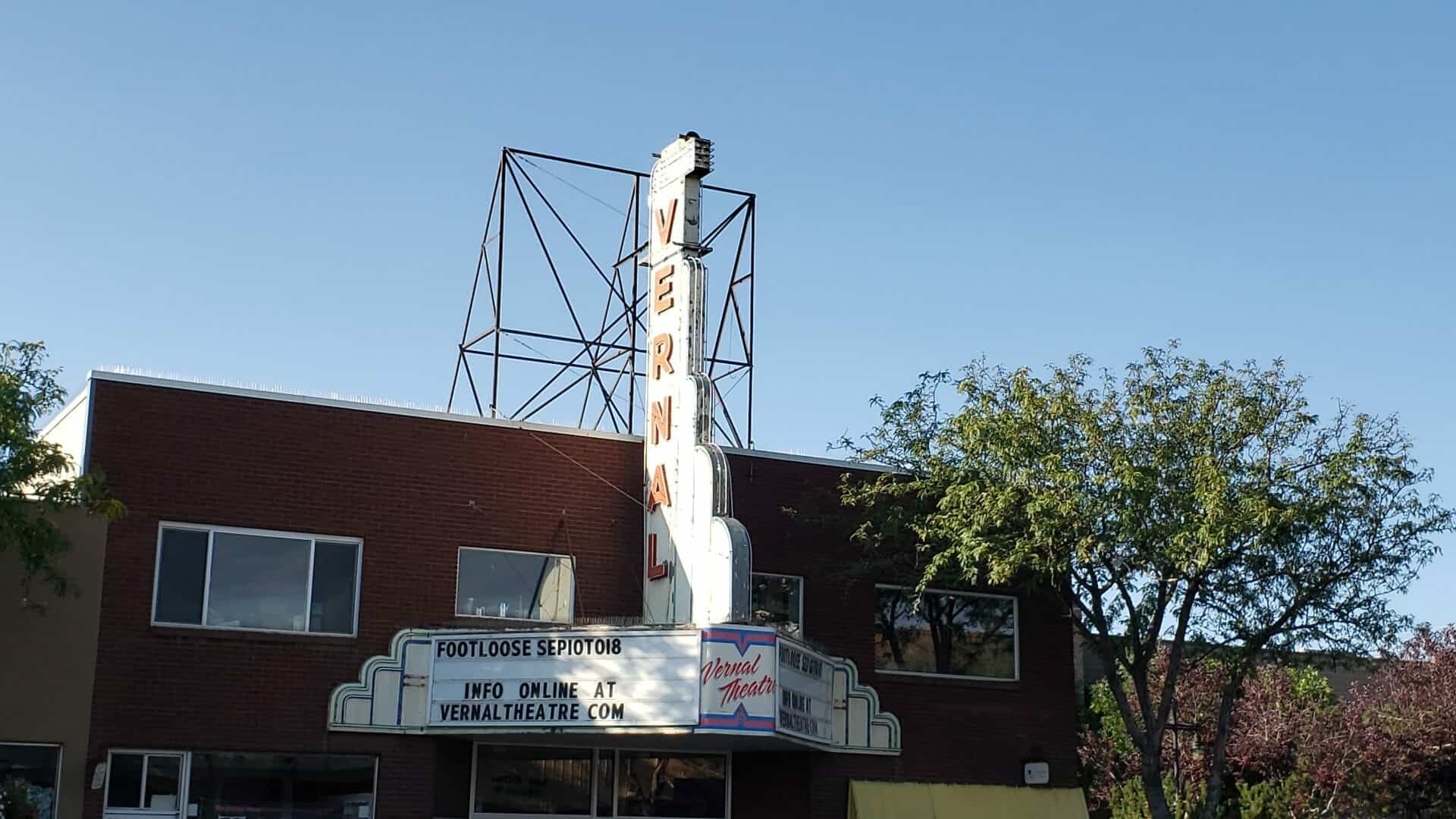
Vernal Theatre
40 East Main Street in Vernal, Utah

The historic marker across the street says:
The Shiner brothers, Deward and Alson, opened the luxurious Vernal Theatre, across the from you, in March 1946. Patrons stepped on beautiful carpets as they chose between three sizes of “body-form” seats. Plush draperies hid the giant screen. A marimba player entertained guests before the movie began. That the rest room fixtures didn’t match was trivial. Everyone knew builders had to make do with whatever they could get immediately after World War II.

While the theater had a classy atmosphere, it specialized in second-run films during its first eighteen months. It took that long for a film to work its way through the distribution system after its release in New York.

Saturday matinees were eagerly attended by anxious youngsters. Although the theater seated 530 people, the odds were you might not find a seat if you came late. Matinees included a cartoon, a “short” (weekly installment of a serial starring popular actors), and a full-length movie. On weekdays, a cartoon and a newsreel preceded the feature film.

Being a theater usher became the most popular job in town for teens. Ushers escorted late customers to their seats and were allowed to watch the shows. The worst theater job was sitting alone in the box office on cold winter nights.

Over the years, the arts of film making and projecting have changed immensely, but the Shiners, who still own the theater, have kept up with the changes. They renovated the Vernal Theatre in 1984. The bathroom fixtures match now.

Old Ashley Postoffice

14 Wednesday Sep 2022

Posted by Jacob Barlow in Uncategorized

≈ Leave a comment

Tags

DUP, Historic Buildings, Historic Markers, Post Offices, Uintah County, utah, Utah Register of Historic Places, Vernal

Old Ashley Postoffice

Ashley Valley, settled in 1873, had its first postoffice in this structure. Built in 1879 by Wilbur C. Britt, the first postmaster. Logs hauled from nearby forests were put together with wooden pegs and square nails to erect one large room. A partition separated the postoffice from a store. Once a week carriers, riding horseback or wearing snowshoes, delivered the mail to and from Greenriver, Wyo. Mail service here was discontinued in 1899. This building now belongs to the Daughters of Utah Pioneers.

This is Daughters of Utah Pioneers historic marker #313, located at 1333 West 2000 North in Vernal, Utah

Related:

  • D.U.P. Historic Markers

The Ashley Post Office was established in the center of Ashley Town on December 27,1878. At that time there were about 300 settlers in Ashley Valley. Wilbur Carlton Britt and Finley Britt used logs from nearby mountains, wooden pegs, and square nails in constructing this building. It had a dirt roof and wide board floors. The cracks between the logs which were filled with mud. A log partition separated the post office from a grocery store. Wilbur Britt was appointed first postmaster on April 16, 1879. The Ashley Post Office is also on the Utah Register of Historic Places.

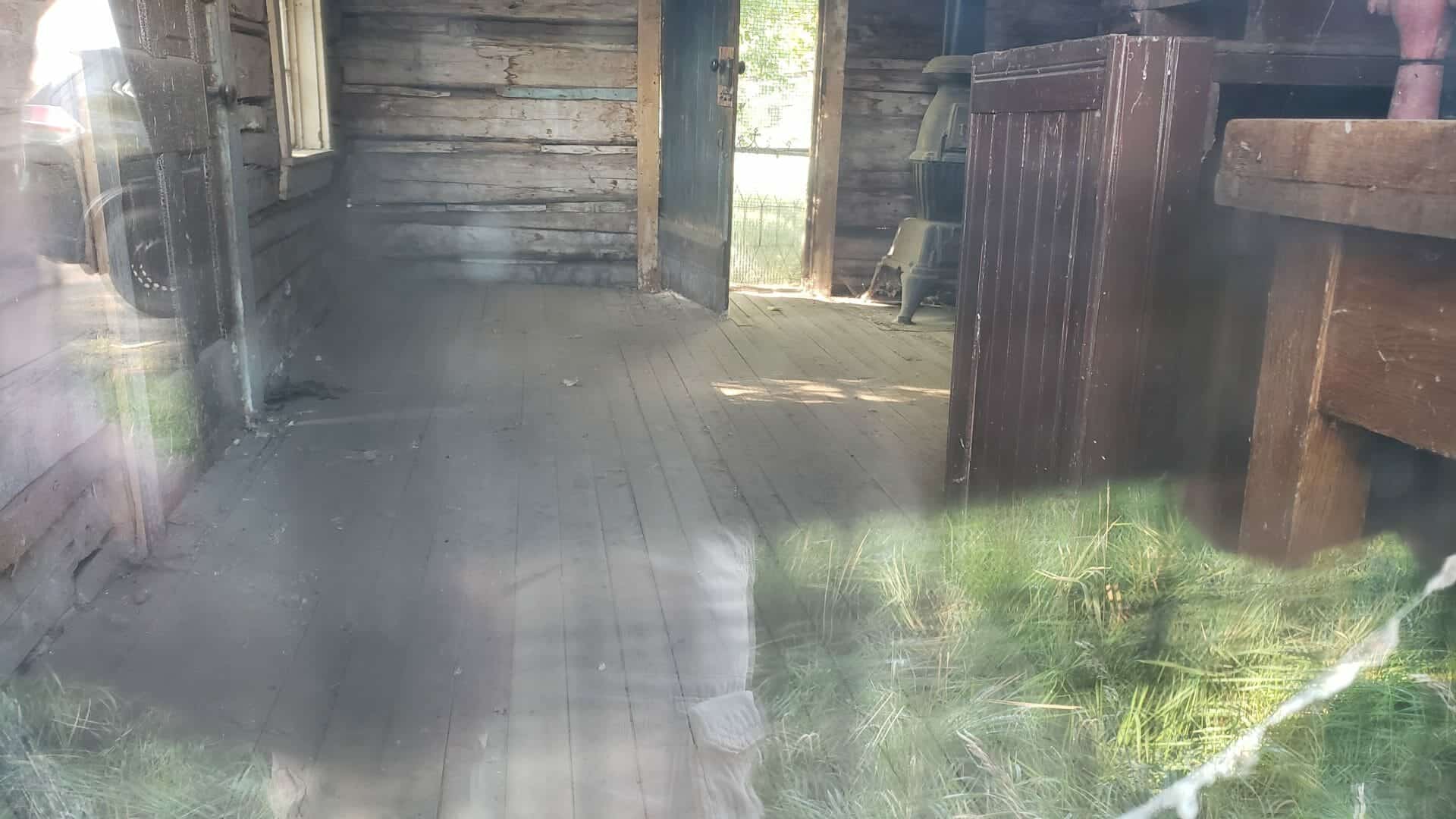
Interior of Old Post Office
In the southwest corner of the post office was a pot-bellied stove with places all around to sit and visit. These visits were mostly of a social nature, but from these visits the pioneers also acquired knowledge and news from the outside world. At about the time the post office was built there were around 300 settlers in the valley.

Railway Depot Built, But No Train Arrived!

28 Thursday Jul 2022

Posted by Jacob Barlow in Uncategorized

≈ Leave a comment

Tags

Gilsonite, Historic Markers, Narrow Gauge Railroad, Railroad, Uintah County, utah, Vernal

Railway Depot Built, But No Train Arrived!

The leading area industry of the late 1800s and early 1900s was mining Gilsonite, a glossy black hydrocarbon-resin. Henry Ford used it to produce the lustrous black paint on his Model T, and Anheuser Busch lined beer barrels with the tar-like substance. Today it is used in inks, building products, and protective coatings. The Uinta Basin lays claim to the only commercial mining of this substance. This industry sparked the construction of a narrow gauge railroad in 1904 to ship Gilsonite to the world market.

In 1905 the Uintah Railway and Freight Company constructed its railroad station, directly across from you, for the purpose of housing a railroad depot, freight station, and telegraph office. Despite the fervent efforts of the community, the rails never reached Vernal. The freight station continued to ship produts such as local wool. Until the 1940s, when modern highways and the trucking industry took over, the freight station also provided service to and from the rail line, located 57 miles southeast of the now-deserted ghost town of Watson.

Freight and passengers were transported from Vernal to the railway on a daily basis in wagons and, later, in modern motor coaches. This building now serves as a warehouse.

This is #19 of the 21 stop history walking tour in downtown Vernal, Utah. See the other stops on this page:

  • Vernal’s Walking History Tour

This marker is located at 90 North Vernal Avenue in Vernal, talking about the location across the street at 89 North Vernal Avenue.

Fort Thornburgh

05 Tuesday Jul 2022

Posted by Jacob Barlow in Uncategorized

≈ Leave a comment

Tags

DUP, Forts, Historic Markers, Uintah County, utah, Vernal

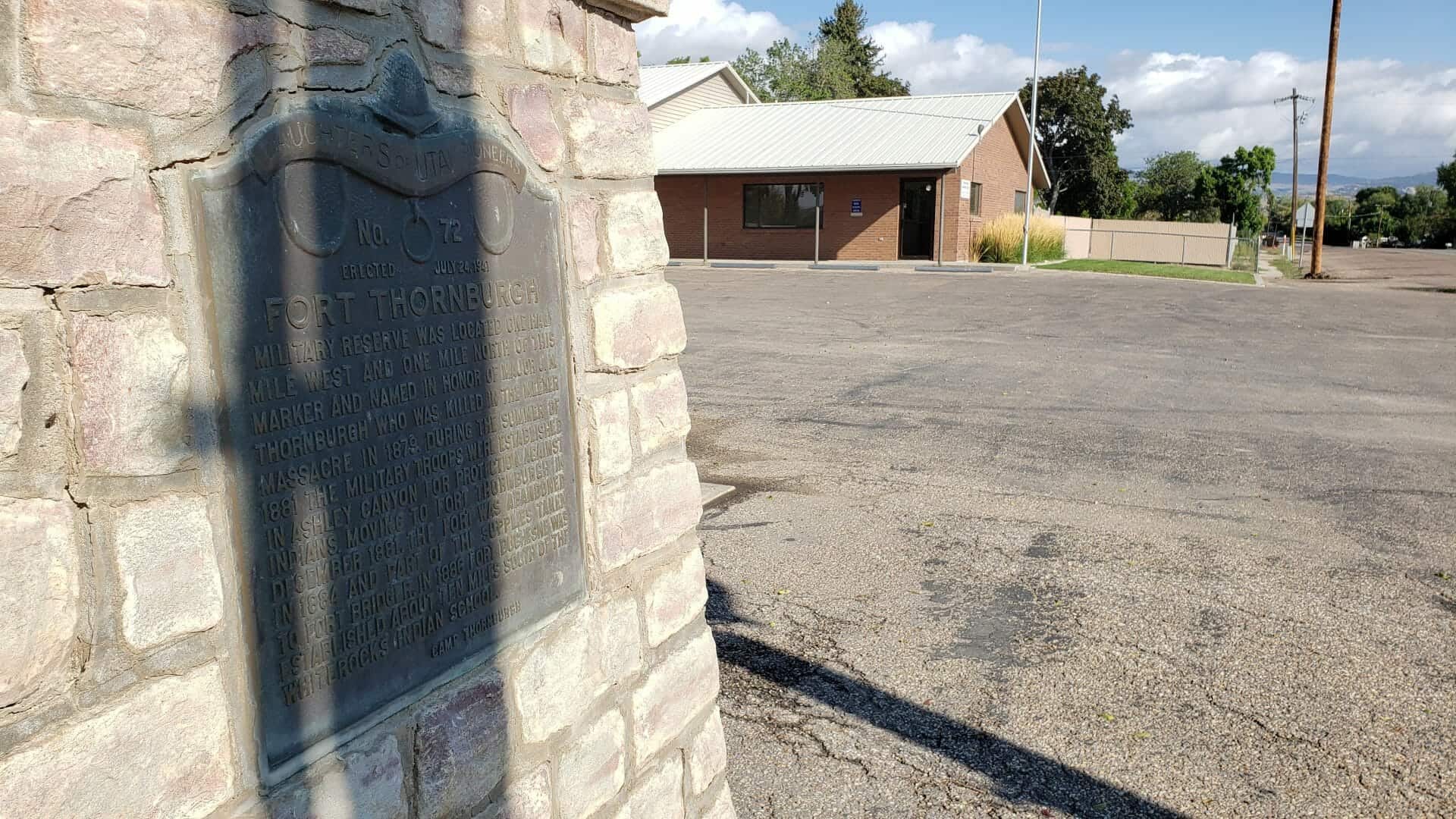
Military reserve was located one half mile west and one mile north of this marker and named in honor of Major J. N. Thornburgh who was killed in the Meeker Massacre in 1879. During the summer of 1881 the military troops were established in Ashley Canyon for protection against Indians. Moving to Fort Thornburgh in December, 1881. The fort was abandoned in 1884 and part of the supplies taken to Fort Bridger. In 1886 Fort Duchesne was established about ten miles south of the Whiterocks Indian School.

This is Daughters of Utah Pioneers historic marker #72 located at 1063 North 2500 West in Vernal, Utah.

Related:

  • D.U.P. Markers
  • Forts

Fort Thornburgh

30 Thursday Jun 2022

Posted by Jacob Barlow in Uncategorized

≈ 1 Comment

Tags

Forts, Uintah County, utah

Fort Thornburgh

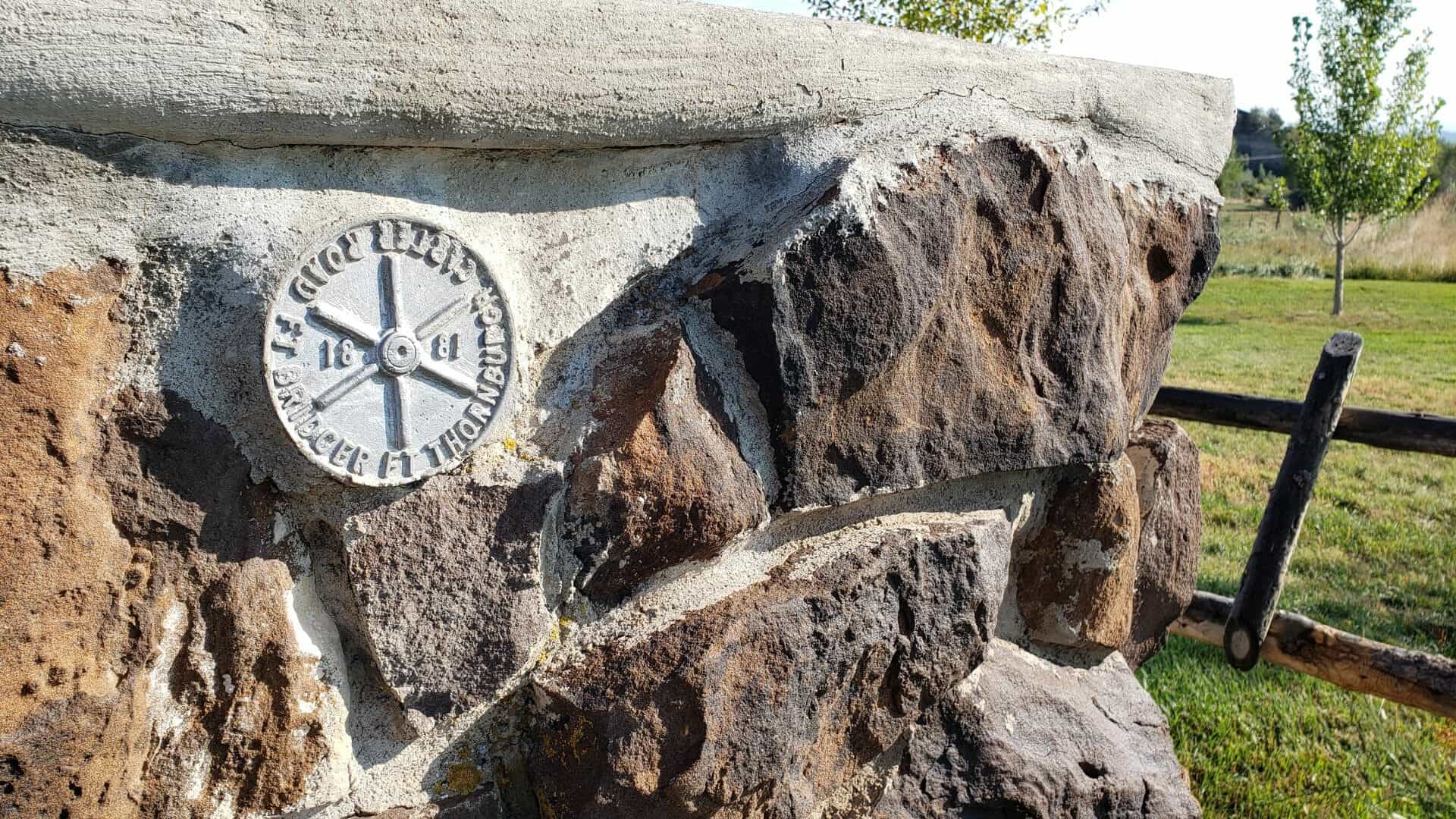
This monument marks the site of the second Fort Thornburgh – established in April 1882 after its removal from the first location near the site of Ouray, Utah. The fort was founded by the United States Army as an outpost for Military troops assigned to prevent Indian – White hostilities. It was named in honor of Major Thomas T. Thornburgh who was killed by Ute Indians on September 29, 1879 in Western Colorado while attempting to quell an alleged uprising. The military reserve encompassed 21,851 acres to the west, north and east of this point. An infantry garrison of 100 to 200 men occupied the fort from April 10, 1882 until October 3, 1883. Several adobe and stone buildings, no longer evident, were constructed on the fort 300 yards east of this point.

Located at 2450 North 3250 West in Vernal, Utah

Related:

Boy scouts of America troop 246, Eagle Scout Project 2019, Aaden Frederic Clyde

How Far Would You Carry a Brick for Seven Cents

30 Thursday Jun 2022

Posted by Jacob Barlow in Uncategorized

≈ Leave a comment

Tags

Banks, Historic Markers, Uintah County, utah, Vernal

How Far Would You Carry a Brick for Seven Cents

The prominent building located diagonally from you is the Zions First National Bank, originally, the Bank of Vernal. Did you know that this building was shipped to Vernal through the US Post Office brick by brick?

All of the decorative brick, 5,000 packages weighing 50 pounds each, were sent from Salt Lake City, Utah, by parcel post because it was half the rate of normal freight.

Today, Salt Lake City is only 3 hours away by automobile. In 1916, it took approximately 4 days to receive a parcel post shipment. The brick first had to travel 309 miles by the Denver and Rio Grande Western Railway to Mack, Colorado. It was then transferred onto the narrow gauge railroad of the Uintah Railway. From Mack, it climbed 63 miles north, up the steepest railroad grade in North America into the desert mining town of Watson. From here, the brick was loaded onto 17 six-horse wagons for the 2-day and 60 mile ride through Devil’s Playground and over the Alhandra River Ferry to Vernal.

Imagine, all of that work for only seven cents postage per brick!

This is #16 of the 21 stop history walking tour in downtown Vernal, Utah. See the other stops on this page:

  • Vernal’s Walking History Tour

This marker is located at 80 North Vernal Avenue. in Vernal, Utah and is about the Bank of Vernal across the intersection at 3 W Main in Vernal, Utah.

Related:

  • Parcel Post Bank (D.U.P. Marker #247)

Do Religion and Money Mix? A Tale of Two Banks

26 Sunday Jun 2022

Posted by Jacob Barlow in Uncategorized

≈ Leave a comment

Tags

Banks, Historic Markers, Uintah County, utah, Vernal

Do Religion and Money Mix? A Tale of Two Banks

Diagonally across the street is the First Security Bank building. When it first opened on August 10, 1910, it was called the Uintah State Bank. The local Mormon population did not like the loan policies of the Catholic-managed Bank of Vernal, which is directly behind you. After much discussion, their general dissatisfaction resulted in the establishment of a rival bank. Mormon S. R. Bennion became the President of the Uintah State Bank.

The Uintah State Bank prospered, despite depression and wars. Following are notes taken from their board meeting of January 1937: “Lambs were sold at from three cents to nine cents per pound and cattle sold as high as fourteen cents per pound during July and August. Feed was plentiful and cheap, hay selling for five dollars and seven dollars per ton and grain for one cent per pound.”

Shortly after the bank opened, the Vogue Theater (right photo) was built. It was the community center for current news reels and a way for Vernal to see what was happening in world. A ticket cost twelve cents. Unbeknown to the building owners, the janitor operated an alcoholic still in the basement.

  • Architect: Bernard O. Mecklenburg

This is #4 of the 21 stop history walking tour in downtown Vernal, Utah. See the other stops on this page:

  • Vernal’s Walking History Tour

This marker is located at 3 West Main Street in Vernal, Utah and is about the building across the intersection at 3 East Main Street.

Biggest Little City off the Railroad

26 Sunday Jun 2022

Posted by Jacob Barlow in Uncategorized

≈ Leave a comment

Tags

Historic Markers, Uintah County, utah, Vernal

Biggest Little City of the Railroad

While the settlers were still in their fort, they sometimes called their community “Jericho,” for the Biblical Walls of Jericho; “Hatch Town,” because of the three Hatch families that lived there; or simply “The Bench,” because the settlement lay on a rise four miles due south of Ashley, the first little frontier town in the valley. Although residents eventually wanted to call the place Ashley Center, the federal postal service refused their request and assigned them the name Vernal in 1886. Few people liked it then, but it obviously stuck.

It wasn’t too many years before Ashley was nothing more than a ghost town. Led by prominent saloon keeper and mayor S. M. Browne, Vernal had become the “biggest little city off the railroad” and a “model of city government.” In 1902 Missouri’s St. Louis Globe gushed:

This little burg is governed in such a manner as to make it the envy of all the other cities in the state. The one thing which makes Vernal unique among the cities of the United States, if not the whole world, is that there has never been a dollar of money raised by a city tax since it incorporated.

There are no boodlers [bride-takers] in Vernal and there never has been a suspicion of scandal since it became a city.

Politics cut no figure in the city elections, and the best men in the place are chosen to fill the offices. To be a member of the city government is considered a high compliment to the business ability of the man, so the offices are sought by the leading businessmen of the place and, when once elected, they gladly served out their terms without pay.

While elected officials have since levied taxes to pay for city services, Vernal continues to be the biggest little city in northeastern Utah.

This is #12 of the 21 stop history walking tour in downtown Vernal, Utah. See the other stops on this page:

  • Vernal’s Walking History Tour

This marker is located at Cobble Rock Park, which is at 25 South Vernal Avenue in Vernal, Utah.

One of the Top 50 Small Cities in the U.S.

25 Saturday Jun 2022

Posted by Jacob Barlow in Uncategorized

≈ Leave a comment

Tags

Historic Markers, Uintah County, utah, Vernal

One of the Top 50 Small Cities in the U.S.

While the Uinta Basin was originally founded on agriculture and ranching, the area is now a major hydrocarbon producer, and Vernal City serves as the hub of these vast natural resources in northeastern Utah. Vernal’s present economy revolves around the oil and gas industry, enjoying the prosperity that comes with boom years, but suffering periodic busts as well. Among the other products mined from the earth here are Gilsonite, coal, phosphate, oil shale, and asphalt.

Vernal is also a starting point for outdoor enthusiasts and tourists who visit Ashley National Forest, the High Uinta Mountains, with their sparkling natural lakes, and Flaming Gorge Reservoir. The wild Green River watershed, including Split Mountain, Yampa, and Echo canyons, attracts river runners from around the world.

Dinosaur National Monument, established in 1915 after the discovery of an ancient dinosaur fossil bed, lies fourteen miles east of Vernal. The Utah Field House of National History and Dinosaur Gardens, which showcase numerous prehistoric artifacts, call Vernal’s Main Street home and attract thousands of visitors annually. This archeologically-rich region is known as Dinosaurland and provides Vernal with its Apatosaurus-like mascot, Dina.

Not to be outdone by their predecessors, Vernal residents today still take pride in their city. As one of the best equipped inland cities in America, Vernal was named to the top fifty list of small cities in America in 1993 and again in 1995. By 2002, the city’s population has grown to approximately 7,000 residents in a county of 25,000 people. Civic and government organizations continue to be actively involved in the community, promoting economic growth, supporting youth programs, and undertaking city beautification projects, such as the establishment of Cobble Rock Park.

This is #11 of the 21 stop history walking tour in downtown Vernal, Utah. See the other stops on this page:

  • Vernal’s Walking History Tour

This marker is located at Cobble Rock Park, which is at 25 South Vernal Avenue in Vernal, Utah.

Fort Scared-to-Death

24 Friday Jun 2022

Posted by Jacob Barlow in Uncategorized

≈ Leave a comment

Tags

Forts, Historic Markers, Uintah County, utah, Vernal

Fort Scared-to-Death

During the Meeker (Colorado) Incident of September 1879, provoked and infuriated White River Utes killed a dozen soldiers and Indian Agency employees. The incident so badly frightened the white settlers scattered throughout this area that they decided to band together and build a fort for protection. The settlers, most of whom were only recently arrived in Ashley Valley, dismantled their newly built cabins, numbered the logs, and reassembled them here on the fort site, building cedar post buttresses between them.

Original plans called for building a square fort, but by the time the people have completed three sides of the square, government forces had gained control of the Utes and construction stopped on what was sometimes called “Fort Scared-to-Death.”

The south row of houses ran one block west from the middle of the present Main Street/Vernal Avenue intersection, in front of you, nearly to 100 West. The east row ran a half block north of the intersection along Vernal Avenue and connected with the north row, which ran from there again due west, forming the third side of a “U.”

Although there were no further incidents with Native Americans that hall, in hindsight, it was fortunate the people had “forted up.” The following season, which came to be known as the Hard WInter, was so harsh that solitary families might have perished had it not been for the fort. In early spring 1880, the settlers chose several of their number to travel on horseback and foot to Green River, Wyoming, for supplies. Despite severe hardships, they were successful and brought life back to the valley.

This is #10 of the 21 stop history walking tour in downtown Vernal, Utah. See the other stops on this page:

  • Vernal’s Walking History Tour

This marker is located at Cobble Rock Park, which is at 25 South Vernal Avenue in Vernal, Utah.

← Older posts
Newer posts →

Follow Jacob

Follow Jacob

Come wander with me on Youtube.

Blog Stats

  • 2,106,176 hits

Social and Other Links

BarlowLinks.com

Recent Posts

  • Scout Monument
  • Provo High School Seminary Building
  • 821 E 100 S
  • 820 E 100 S
  • 817-819 E 100 S

Archives

Loading Comments...