• About JacobBarlow.com
  • Cemeteries in Utah
  • D.U.P. Markers
  • Doors
  • Exploring Utah Email List
  • Geocaching
  • Historic Marker Map
  • Links
  • Movie/TV Show Filming Locations
  • Oldest in Utah
  • Other Travels
  • Photos Then and Now
  • S.U.P. Markers
  • U.P.T.L.A. Markers
  • Utah Cities and Places.
  • Utah Homes for Sale
  • Utah Treasure Hunt

JacobBarlow.com

~ Exploring with Jacob Barlow

JacobBarlow.com

Tag Archives: utah

George M. Brown House

13 Saturday Sep 2014

Posted by Jacob Barlow in Uncategorized

≈ 2 Comments

Tags

historic, Historic Homes, NRHP, Provo, utah, utah county

2014-08-17 19.34.23

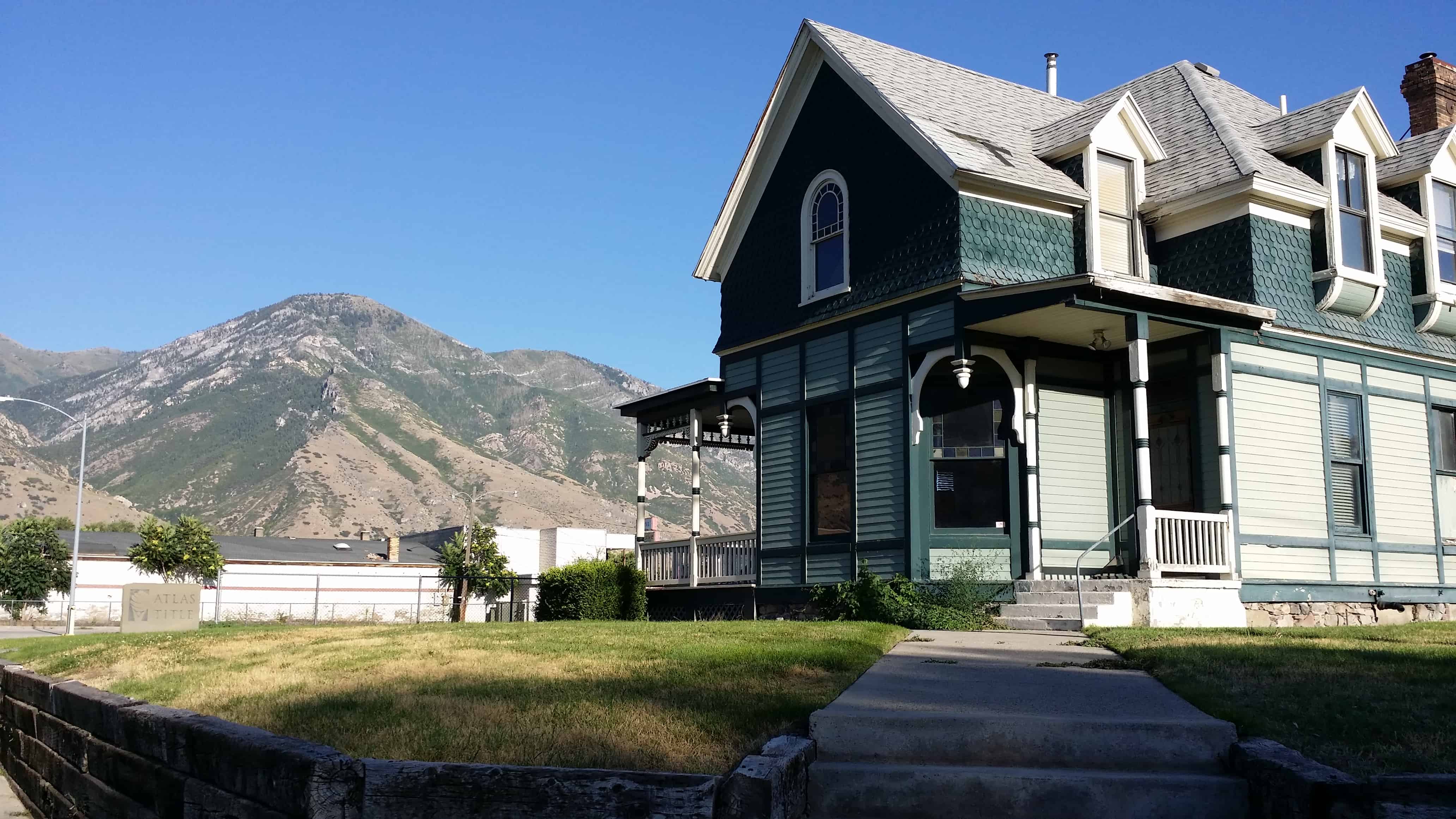
Located at 284 East 100 North in Provo is the George M. Brown House, it was built as a home for a “polygamous wife” of lawyer George M. Brown.  It is listed on the National Register of Historic Places.

The George M. Brown House was built in the 1880s, on property obtained from Abraham O. Smoot. This is a two-story, central-hall, vernacular type house. “The Brown House exhibits the versatility and decorative jigsaw work usually found in the Gothic Revival, but displays the horizontal siding, simulated quoins, and symmetry of the local building tradition.” The George M. Brown House was designated to the Provo Historic Landmarks Registry on March 21, 1996.

Though built during the Victorian era, the George M. Brown House is a distinguished example of carpenter Gothic architecture. Containing thin wooden tracery, a monochromatic color scheme, and steep gables as well as other features, the Gothic style is very evident in this home. The Carpenter Gothic style emerged as builders became more concerned with costs, namely the cost of stone. “The Brown home attempts to combine the best of two generations with its asymmetrical Victorian east elevation and its symmetrical, dormered north elevation which contains nearly all the elements of typical pioneer homes of the mid-1870s (Roberts p. 2).” Decorative elements on the home include bargeboards, Quoins, a bay window, chimneys, window trim, door trim, dormers, a cornice, siding, and windows.

Born on April 5, 1842, in Macedonia, Illinois, George Mortimer Brown settled in Utah with his family in 1842. A member of the Mormon faith, George served a mission to Norway in 1866, the same year he began his marriage to Elizabeth Olsen. After his mission, George became an attorney. In addition to Elizabeth, George married two more women – Amelia West and Pearl Wilson.Shortly after the initial construction of the home, Brown’s first wife attained the title to it, and Brown and his two other wives and children left and settled in Colonia Diaz, a Mormon settlement in Mexico. He ran a store there until he died on July 6, 1894.

Sutton House

13 Saturday Sep 2014

Posted by Jacob Barlow in Uncategorized

≈ 1 Comment

Tags

historic, Historic Homes, Provo, utah, utah county

2014-08-17 19.32.50

Ephraim Sutton House
description

ca. 1940s. 2003

261 East 100 North
Status: Provo City Landmarks Register

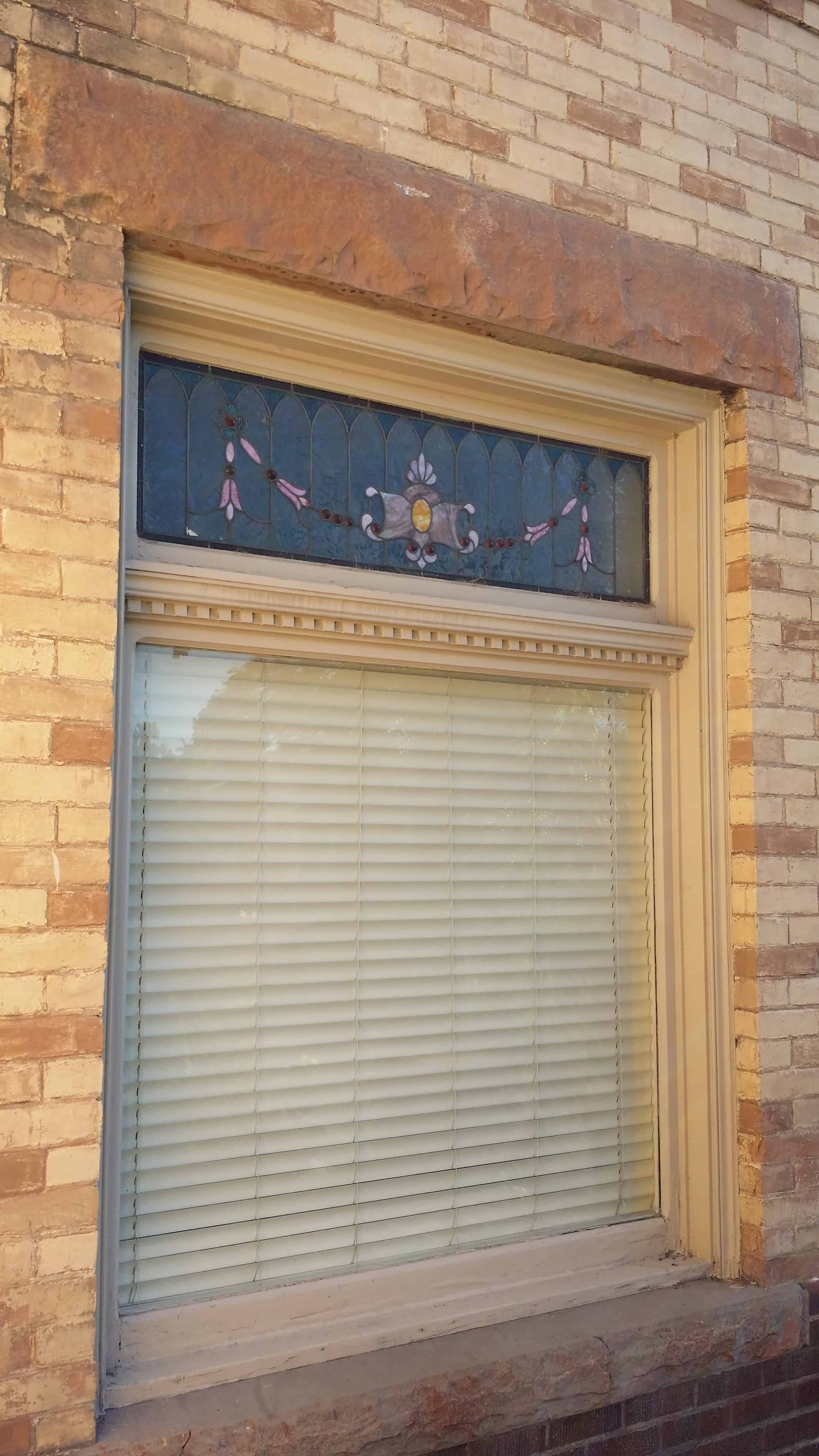
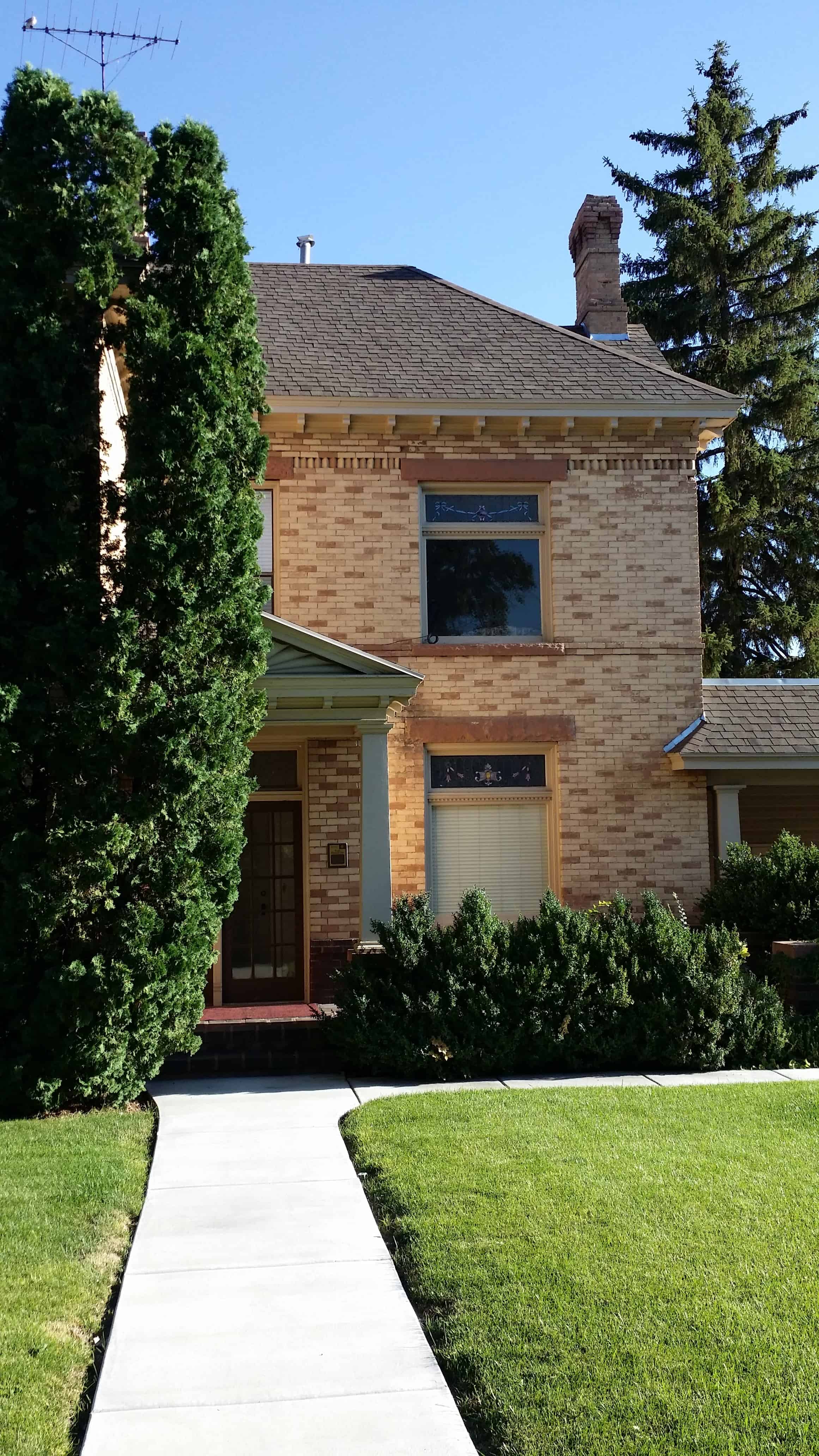
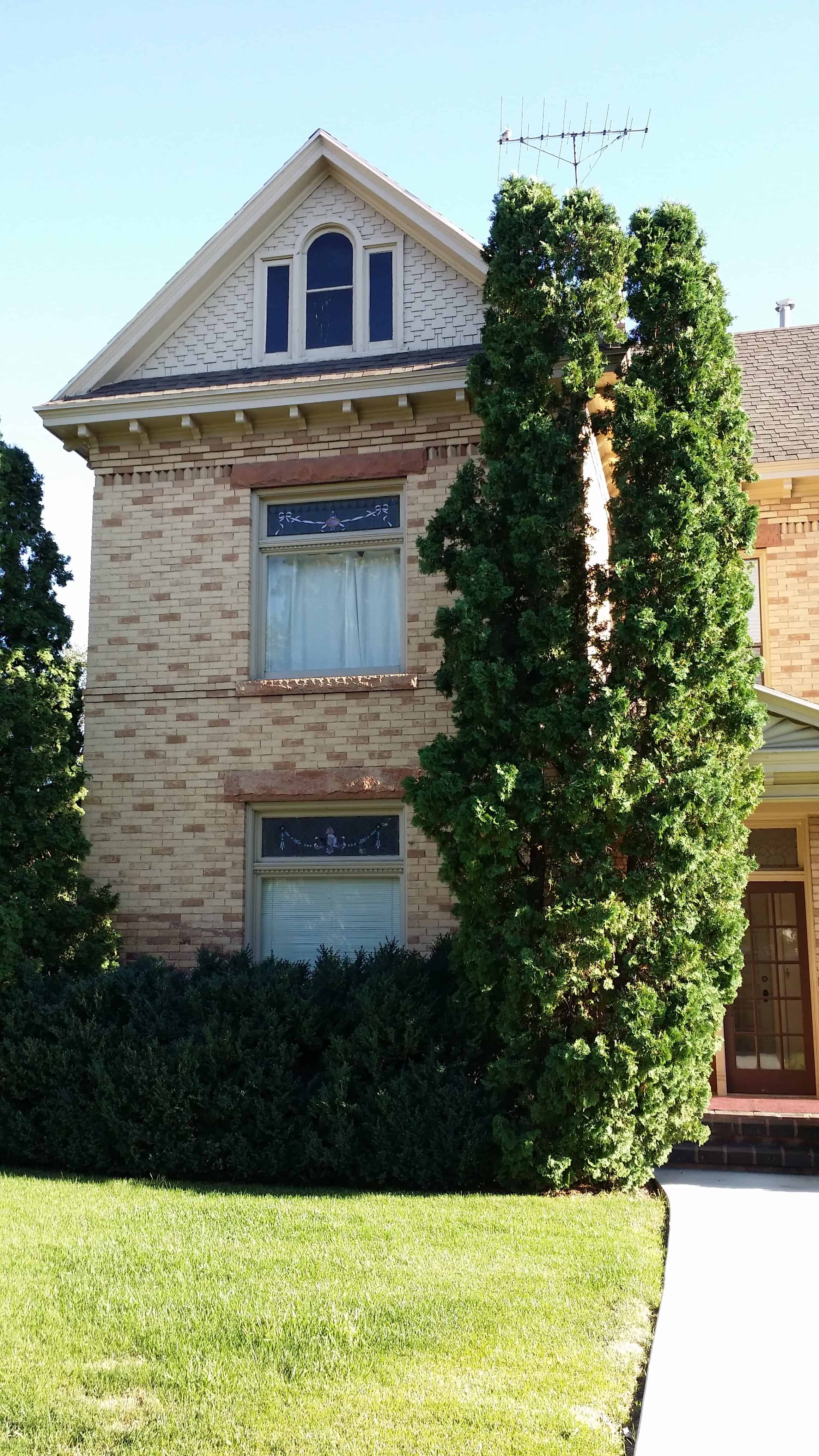
After Mayor Abraham O. Smoot divided the lots in 1872, this parcel was purchased by Ephraim’s father, Isaac Sutton. Isaac deeded the lot to his oldest son, who then built the house in 1897. Isaac and Emma Sutton were early Mormon pioneers sent by Brigham Young to help settle Provo. Ephraim built a home very typical of what was popular in turn-of-the-century Provo. The home is Victorian-Eclectic, featuring neoclassical details on the front porch, heavy drip hoods of rusticated brick above the windows and doors, and segmental arch openings. Other artistically-noticeable details include the transom window above the front entrance with rusticated drip head, a half-round window above the porch, sitting in a small gablet, and gabled windows on the front and west facades.

2014-08-17 19.33.07

John R. Twelves House

13 Saturday Sep 2014

Posted by Jacob Barlow in Uncategorized

≈ 1 Comment

Tags

historic, Historic Homes, NRHP, Provo, utah, utah county

Located at 287 East 100 North in Provo, the John R. Twelves House is a historic house listed on the National Register of Historic Places.

2014-08-17 19.31.30

This home was built in 1906 by John R. Twelves. John R. Twelves was a central figure in Utah’s history, being involved in the Grand Central Mining Company and serving as Utah County’s treasurer and recorder. The John R. Twelves House was designated to the Provo City Historic Landmarks Registry on April 26, 1996.

Since 2005 the Twelves House was the home of independent filmmaker Richard Dutcher’s Main Street Movie Company, a motion picture production and distribution company. I remember there was a 9 foot marble sculpture of Jesus, which dominated the front lawn, it was a prop which plays prominently in Dutcher’s film FALLING.

Graham House

12 Friday Sep 2014

Posted by Jacob Barlow in Uncategorized

≈ 1 Comment

Tags

historic, Historic Homes, Provo, utah, utah county

2014-08-17 19.26.04 2014-08-17 19.26.21 2014-08-17 19.26.42

The Graham House, built in 1904 and located at 90 North and 200 East was the original home of the first Mayor of Provo.

Angus G. Beebe House

12 Friday Sep 2014

Posted by Jacob Barlow in Uncategorized

≈ 3 Comments

Tags

historic, Historic Homes, NRHP, Provo, utah, utah county

Constructed C. 1902 by the owner, Angus G. Beebe, this one-story brick house is a well-preserved example of an early twentieth century house pattern book design.

The Beebe House is a restrained example of the small, pattern-book house of the Victorian era.  A comprehensive survey of the city of Provo concluded that it is one of the best of only a few remaining examples of this type.  With its arrangement of square corner tower, gables and corner porches, it is the more sophisticated of only two pattern book houses in the city with an entry vestibule in the corner tower.  While few houses in Utah are exact copies of the most widely published pattern books, the influence of suck books is shown in the sparse ornamentation and irregular plan of residences like the Beebe House.

The house was built for Angus G. Beebe, son of a flour-milling family, who was himself employed as bookkeeper of the Provo Roller Mills managed by his brother David R. Miller.  Angus later became a found of the Beebe Lumber Company.  The style and substance of the home, probably loosely copied from a pattern book bought by mail by the owner or builder, suggests the aspirations to fashion of many second-generation Provo residents.  Of interest in the interior is the interior woodwork.  The oak hardwood flooring is also intact.

Located at 489 West 100 South in Provo, Utah

William D. Alexander House

08 Monday Sep 2014

Posted by Jacob Barlow in Uncategorized

≈ 1 Comment

Tags

historic, Historic Homes, NRHP, Provo, utah, utah county

  • 2014-08-16 18.37.43
  • 2014-08-16 18.37.46
  • 2014-08-16 18.37.50

The William D. Alexander House is a historic house located at 91 West 200 South in Provo, Utah. It is listed on the National Register of Historic Places. It is asserted to be the only period example of Stick Style architecture in the state of Utah.

The William D. Alexander House was built in 1891 by William Denton Alexander. This home is perhaps the only example of Stick Style architecture in Utah. “The overall design of the house integrates Eastlake porch details and Queen Anne wall shingling on the upper story with the dominant ground level Stick Style to form a complete, cohesive, architectural composition… The visual complexity of the house is further accentuated by the mixing of hip and gable roof forms, the use of projecting wall dormers, and the presence of clipped corners on the house body and wing (National Park Service p. 1).” The William D. Alexander House was designated to the Provo Historic Landmark registry on March 7, 1996.

BYU Womens Gymnasium

08 Monday Sep 2014

Posted by Jacob Barlow in Uncategorized

≈ 2 Comments

Tags

BYU, historic, Historic Buildings, Provo, utah, utah county

2014-08-16 18.28.48
2014-08-16 18.28.52

Brigham Young Academy Women’s Gym

This building, constructed after 1912, was constructed under the leadership of BYU President Brimhall after obtaining a church appropriation for construction of a large gymnasium-dance hall on the west side of University Avenue across the street from the Brigham Young Academy main campus. Women’s physical education activities were relocated there, and it was named the Ladies Gymnasium. In the early 1930s the name was changed to the Women’s Gymnasium.

515 North University Avenue in Provo, Utah

default

John E. Booth House

05 Friday Sep 2014

Posted by Jacob Barlow in Uncategorized

≈ 1 Comment

Tags

Historic Homes, NRHP, Provo, utah, utah county

2014-08-16 18.23.21 2014-08-16 18.23.24 2014-08-16 18.23.40 2014-08-16 18.23.43 2014-08-16 18.23.48

The John E. Booth House house is a historic house located in Provo, Utah. John E. Booth was a significant Provoan, and was extensively involved in Provo’s community and religious affairs. Located at 59 West and 500 North and less than one acre in size, the John E. Booth House was built in 1900, and happens to be the only two-and-a-half story Victorian Mansion in Provo, Utah. This house is significant not only as a Victorian mansion, but due to the fact that its “Bricks were individually painted to create a variegrated design effect” (Historic Provo p. 10). The house was added to the National Register of Historic Places in 1982. The house was designated to the Provo City Historic Landmark Register on May 26, 1995.


“The plan of this two and one half story brick house derives from the vernacular L-plan and has a T extension in the rear. A hip roof and a gable roof section intersect to form the L. The extension has a hip roof. From each end of the hip roof are gable projections with pent roofs like the pent roof of the gable on the facade. Two tall chimneys with elaborate corbelling project from the hip roof section. Divisions between stories are subtley emphasized. Pairs of stringcourses divide the basement, first, second and third stories from one another. The division between the basement and first floor is further emphasized by color differentiation in the brick. The red brick of the basement was left unpainted, whereas the brick and mortar joints of the rest of the house except that on the T extension, have been painted various shades of brown and tan to that on the T extension, have been painted various shades of brown and tan to create a varigated effect. The division between the second and third floors has, in addition to the stringcourses, a line of obliquely set bricks that runs beneath the stringcourses at the height of the second story lintels. The fenestration of the facade is simple and carefully balanced. On the east half, the gable end, a simple Palladian window is centered on the top half story and a broad single sash window with a stained glass transom and stone lintel and lugsill is centered on each of the two lower stories. A single story square hip roof brick entrance chamber fills the angle of intersection of the hip and gable roof sections. Above it is a simple double hung sash window. On each story of the west half of the hip roof section is centered a single window similar to those on the gable end. Windows on the east, west and south sides of the building are long, narrow, have jigsaw cut detailing in the decorative arch above them, and are topped with a segmented reliving arch. Classical detailing includes: a boxed cornice on the main roofline and on that of the brick entry which is completely supported by brackets except on the T addition; the pediment over the entrance supported by a Classical pier and pilaster which has a fan type of decoration on the tympanum; and dentils which line the lower edge of the transom of each single sash window. Major alterations include a change in the size of the opening of a window on the east wall and the addition of two frame extensions to the east and west sides of the T extension.” The changes to the building do not affect the historical meaning of the house.


John E. Booth:
Born in England in 1847, John E. Booth traveled to Utah with his parents in 1857 as a result of his family converting to the L.D.S. faith. Attaining his early education in England and his latter in the United States, studying at the University of Deseret and teaching in various towns throughout Utah, Booth eventually began to study law under the direction of John B. Milner. Booth began practicing law in 1875, the same year that he became the city attorney for the city of Provo. While serving in Provo, Booth was also a district judge. Active in politics as well as law, Booth served in the Utah Territorial Senate from 1890 to 1891, Mayor of Provo, and president of the local schoolboard. Booth was also a businessman, serving as director of several businesses and banks in the city of Provo, and heading the Utah Valley Iron Mining and Manufacturing Company.

Very stalwart in his faith, John E. Booth served in many capacities in the Mormon religion throughout his life. He served in the position of a bishop (the man who presides over the local congregation), for the Provo Fourth Ward for over twenty years. Although he was a polygamist, having taken two wives in the early 1870s, both died approximately ten years later. He married again, but only one wife. John E. Booth died in 1920, and left the house to his widow. Selling it to her daughter and spouse, Elsie and Isaac E. Brockbank in 1923, the house still remains in the Brockbank family today.

Ira W. Gardner House

05 Friday Sep 2014

Posted by Jacob Barlow in Uncategorized

≈ 2 Comments

Tags

Historic Homes, NRHP, Salem, utah, utah county

2014-08-15 18.18.13
2014-08-15 18.18.18

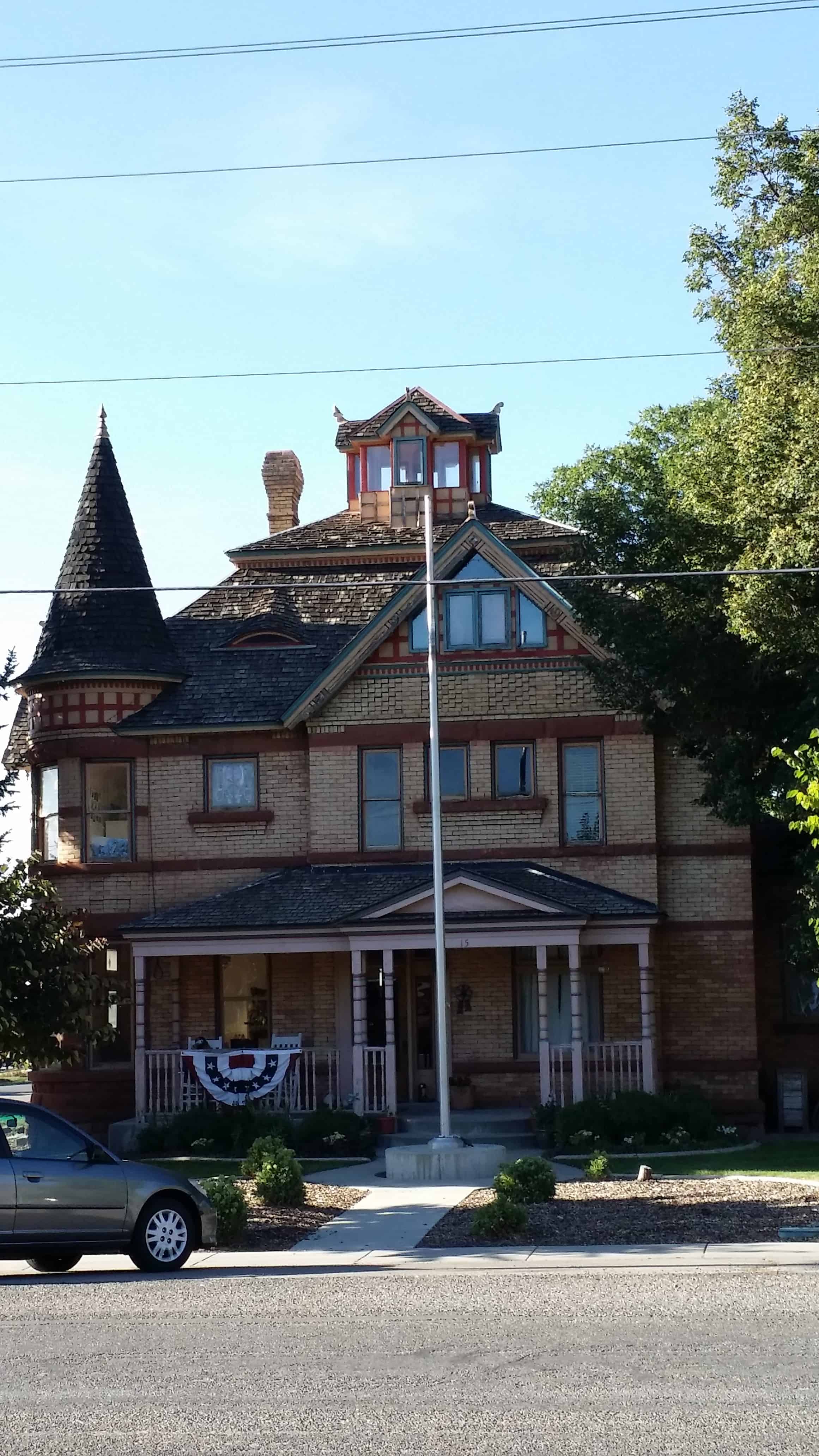
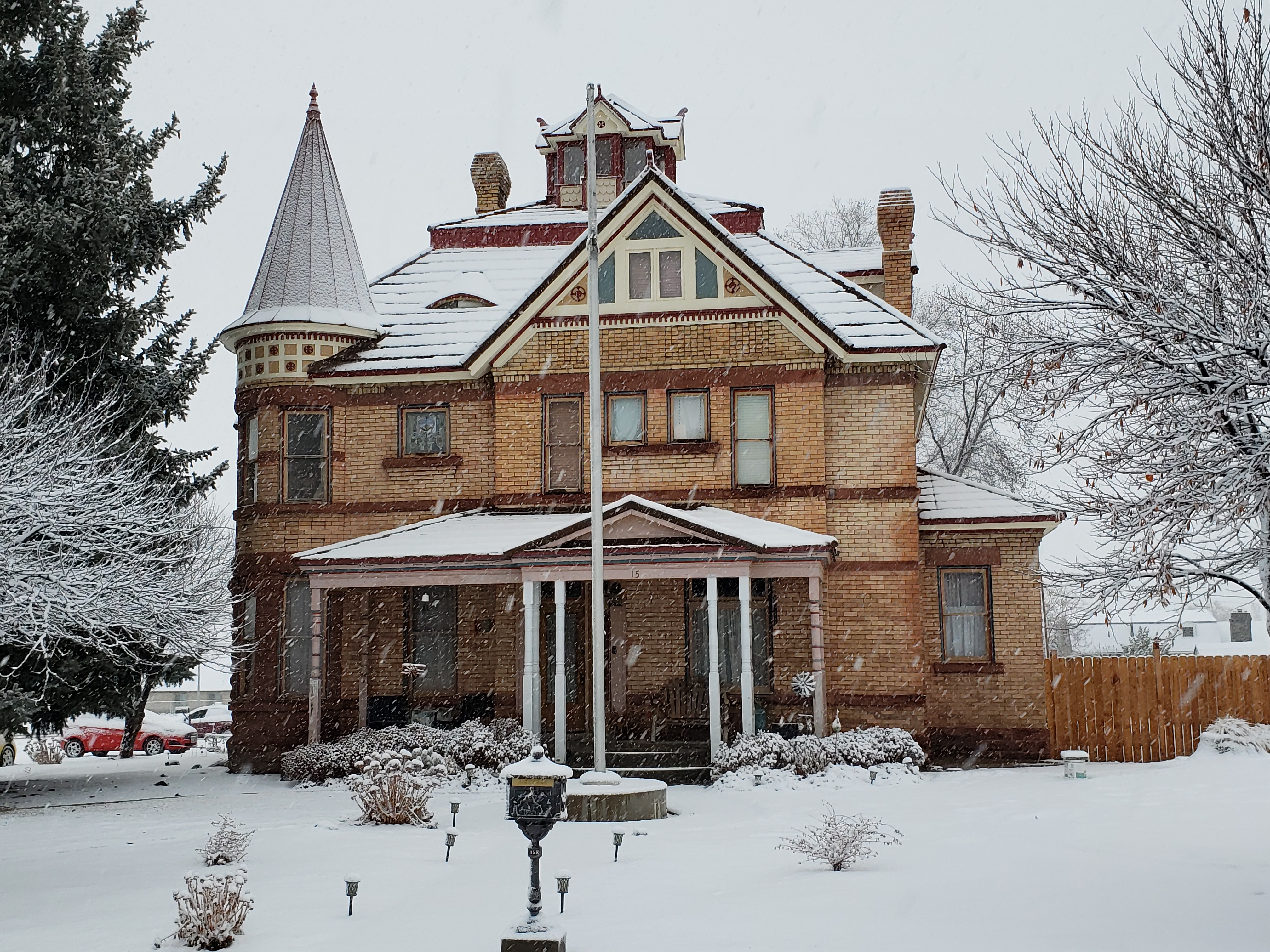
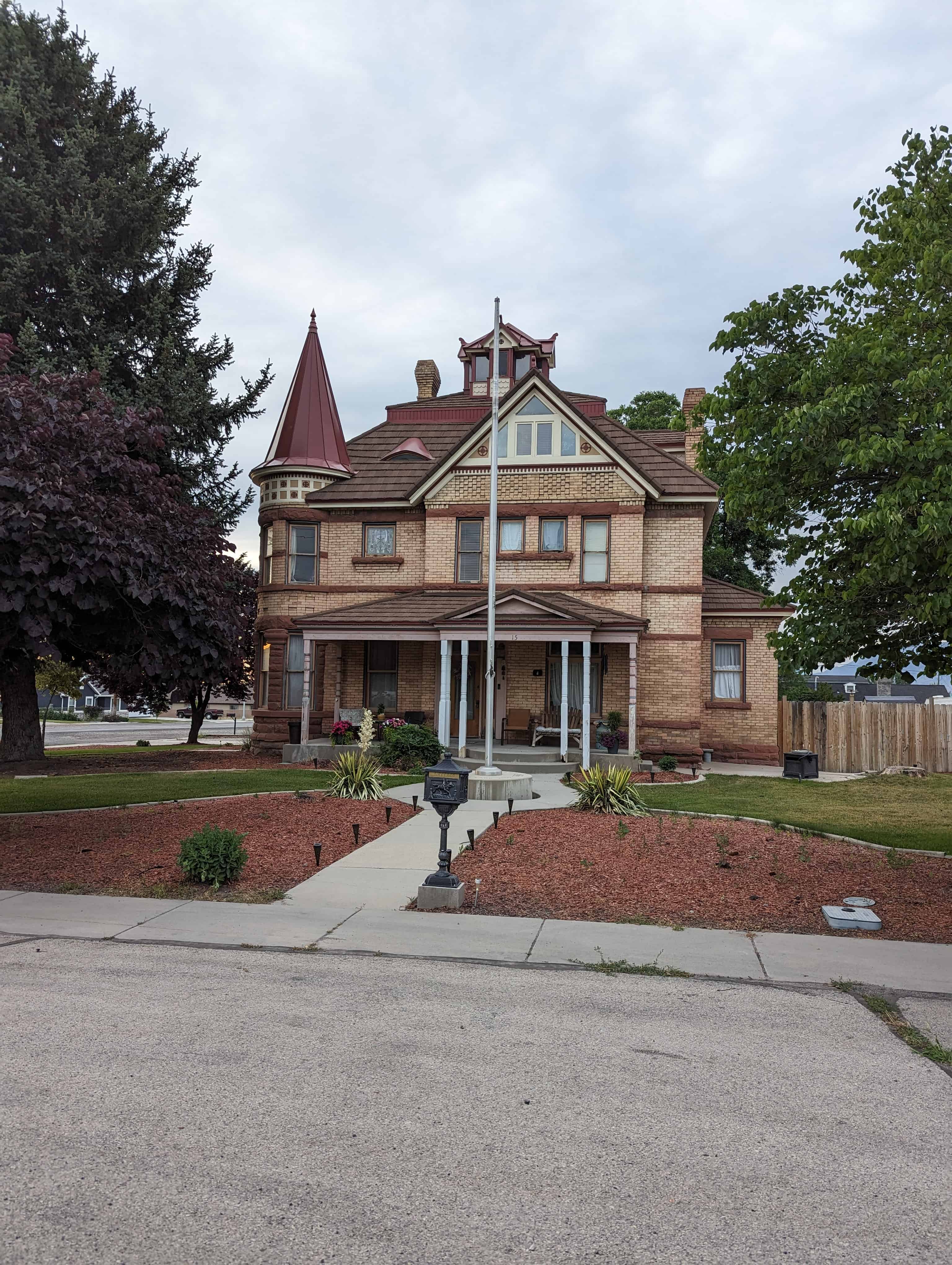
The Ira W. Gardner Home was built in Queen Anne Victorian style over several years during the 1890’s for one of Utah County’s prominent ranchers. In Salem, Utah, (population 920) the Gardner Home is considered the town’s landmark residence.

The Ira W. Gardner House was built in 1895 and is located at 15 East Center Street in Salem, Utah. It was added to the National Register of Historic Places (#77001323) on July 28, 1977 and the text on this page is from the nomination form when it was added.

The Ira W. Gardner Home is a two-story Queen Anne style building constructed of light tan colored brick and dark red-brown colored sandstone. The asymmetrical facades, irregular plan, and massing combination roof, variety of textures and colors, and corner turret are among the Queen Anne elements.

The main floor has three entries from the outside and contains living and dining rooms, parlor, kitchen and one bedroom. There are several bedrooms upstairs. The original spacial arrangements of the plan are basically intact. Interior walls, ceilings, stairways, mouldings, fireplaces, and floors are in good condition. The kitchen and bathrooms have been remodeled, but the main living areas have been respectfully treated and are well preserved.

The exterior retains its original appearance with the exception of the porches on the west and south which have been modified. The western porch is particularly out of character.

The Gardner Home is roughly square shaped but is given variety by projecting gabled wings, porches and the corner turret. The vertical effect of the exterior composition is balanced by numerous horizontal belt courses of dark red-brown sandstone. All window bays are square and 1/1 double-hung wood sash windows dominate, although fixed sash picture windows also exist on the first level. The wall surface is given relief by small panels in the brick and corbeled brick patterns in the gable. The gables and tower also have coffered wood panels. Rusticated stone lintels, sills and pilasters and foundation wall add to the textural mix. The cornice is boxed, moulded and has a dentiled frieze. The overall effect of the exterior is one of massiveness and variety with appropriate but not overwhelming detailing.

Ira W. Gardner was born January 9, 1848, at Sweetwater, Wyoming, while his parents were en-route to Salt Lake City after joining the Church of Jesus Christ of Latter-day Saints (Mormon Church) in Massachusetts. The Gardners were among the earliest settlers of Salem, Utah. Following his education in Salem, Ira became a barber, though his major accomplishments were won later in the occupation of agriculture and livestock raising. He became the owner of a large ranch estate and was considered one of the most successful breeders and growers in Utah County.

Because he grazed his livestock in the meadows near Scofield, Carbon County, Ira Gardner worked on his house only during the winter. Though assisted by his son, Eben, it took several years to construct the impressive brick and stone residence. Plans for the home were prepared by Daniel M. Cummings and are still extant. Cummings was a draftsman for the Provo Lumber Manufacturing and Building Company in 1890 and was later listed in Provo directories as an architect. The two-story residence was designed during Utah’s “late” (though not “high”) Victorian period and is possibly more akin to Queen Anne than any other Victorian sub-type. The substantial home has undergone few significant changes and is currently being restored by the owners, Mr. and Mrs. Tom Womble.

Payson Presbyterian Church

04 Thursday Sep 2014

Posted by Jacob Barlow in Uncategorized

≈ 3 Comments

Tags

Churches, historic, Historic Churches, NRHP, Payson, utah, utah county

2014-08-15 17.27.09
2014-08-15 17.27.12

2014-08-15 17.27.21
2014-08-15 17.27.40
2014-08-15 17.27.44

The Payson Presbyterian Church at 160 S. Main in Payson, Utah was built in 1882. It has also been known as Payson Bible Church. It was listed on the National Register of Historic Places (NRHP) in 1986; the listing included two contributing buildings.

According to its NRHP nomination, it is “one of a number of Protestant churches constructed in Utah during the 1870s-90s, the period of most concentrated and active missionary work by Protestants among the Mormons.”

It is also a contributing building in the Payson Historic District, which was listed on the National Register in 2007.

Here is the NRHP listing text:
The Payson Presbyterian Church, constructed in 1882, is a one-story Gothic Revival brick building with a rectangular plan and a steeply pitched gable roof with a bell tower. Despite a few minor alterations, the building retains its historical integrity.

Evidence of the building’s Gothic Revival style is found in the use of pointed arches over the windows and door and in the decorative bargeboards on the gable end of the façade. Also located on the front gable are a circular window and a decorative corbeled brick belt course which arches over the window and door openings. All elevations of the building are symmetrically composed, with four evenly spaced windows on each side and a central doorway flanked by two windows on the façade. The bell tower, located at the peak of the front gable, is an original feature. The building rests on a stone foundation.

Alterations made to the church over the years are minor and do not significantly affect the building’s integrity. The most noticeable change is the small one-story frame addition on the rear which was built sometime after 1930. The front doorway has been altered slightly by the replacement of the original door with the existing modern one (n.d.) and by the removal of what was probably a window or transom above that door; the opening itself has not been altered, however. The only alteration of note on the interior is the
addition of a small, enclosed entrance vestibule.

There is one other building located on the property, a one-story brick “education building” situated just south of the church building. Since it was built in the 1970s it does not contribute to the significance of this property.

Built in 1882, the Payson Presbyterian Church is historically significant as one of approximately ten remaining Presbyterian churches built in Utah as part of the church’s missionary program among the Mormons during the late nineteenth century. The Payson Presbyterian Church, which was the first Protestant church built in Payson, served for over 25 years as both a school and church, making it one of the longest-lived of the approximately 20 church/schools operated by the Presbyterians. The Presbyterian Church was one of several Protestant denominations which operated day schools as an important part of their missionary work among the Mormons in Utah. Though those facilities were not successful at winning converts, they were effective in providing some of the highest quality education available in Utah prior to the
establishment of a publicly funded school system in the 1890s. The Payson Presbyterian Church is also architecturally significant as one of the best examples, if not the only example, of the Gothic Revival style in Payson.

Though an architectural survey of Payson has not yet been completed, it is known that there are relatively few examples of the Gothic Revival style in the community. The Gothic Revival style was a popular choice for small Protestant churches throughout the state, though it was not common for Mormon churches built during the same period.

← Older posts
Newer posts →

Follow Jacob

Follow Jacob

Come wander with me on Youtube.

Blog Stats

  • 2,099,228 hits

Social and Other Links

BarlowLinks.com

Recent Posts

  • Scout Monument
  • Provo High School Seminary Building
  • 821 E 100 S
  • 820 E 100 S
  • 817-819 E 100 S

Archives

Loading Comments...