Calvin Harris Chandler was born in Boonville, N.Y. in 1844. At the age of 17 he enlisted in the 127th Regt III Infantry, under Gen. Sherman, in his ‘march to the sea.’ After the war he moved west to recover from Tuberculosis. He later settled in the Granite areas and worked in the quarry at Little Cottonwood Canyon.
In 1874 he married Elizabeth Mckay Treseder, a pioneer who came from the Isle of Jersey. They lived in the Granite area until moving to North Ogden. Calvin Chandler died in 1881 and Elizabeth Treseder died in 1936. Their son, Calvin Harris Chandler, is the grandfather to Bryson Garbett, the owner of the Garbett Homes and developer of Treseder at Little Cottonwood.
I really like this old ranch along the Minersville Highway between Black Point and Rush Lake, not far west of Parowan Gap. The stone walls all around look really cool and look like they were a ton of work to put together. It looks like it has been abandoned a while but still looks to be in pretty good shape.
Hastings Cutoff – James Mathers – Weber Canyon Devils Gate
James Mathers recorded on August 2nd, 1846:
*2nd. Went down and examined the pass and found it to be impracticable for waggons to go thro’ although a number of men were at work removing all rocks that were not immovable and digging down the hills to make a way over — an exhibition of most consumate folly.
Marker H JM UT 1 by the Utah Crossroads Chapter – OCTA
This is part of the series of California Trail markers I’ve been documenting on these pages:
Constructed in 1909, the Cedar Fort School is historically significant as the only remaining two-room schoolhouse in Utah County, and one of a small handful in the state of Utah. This building is a rare extant example of the many schoolhouses that were built in the twenty years after the state legislature created the Free Public School Act in 1890 for the purpose of greatly increasing the number of schools in the state. Architecturally, the school is important for retaining its distinctive character-defining features on the principle facades. Its Victorian Eclectic style combines a mix of Romanesque Revival (popular in the late nineteenth century for institutional buildings) and the then newly emerging Prairie School style. This mix of styles was quite common in the state during the first two decades of the century. The building particularly contributes to the town of Cedar Fort, Utah, which retains few examples of its historic architecture.
The 17th Ward Chapel, originally located at 101 W 100 N in Salt Lake. Some of the stained glass was preserved in the chapel built north of it at 142 W 200 N.
The resting place of 21 German Prisoners of War who died at Fort Douglas during the World War.
1917 – 1918
Stanislaus Lewitski Henry L. Zinnel Frank Stadler Arthur Ruebe Karl G.W. Blaase Erich Laevemann Friedrich O. Hanf Walter J. Piezareck Emil Laschke Georg Schmidt Charles Morth Roko Zilko Felix Behr Maximilian Kampmann Max Leopold Joseph Fuckola Herman Lieder Frank Benes Adolf Wachenhusen Herman German Walter Topff
German War Memorial
The German War Memorial to the Victims of War was erected by the German-Americans of the United States of America in cooperation with the American Legion of the State of Utah in memory of the men who died while interned at Fort Douglas during World War I.
The monument was designed and constructed by Arno Steinecke. It was dedicated on Memorial Day, May 30, 1933.
Fifty-five years later, in 1988, the monument was restored by sculptor Hans Huettlinger and his son John under arrangements made by the German Air Force and German War Graves Commission.
Today the restored monument stands in of the victims of both World Wars who are buried here in Fort Douglas Cemetery and to the victims of war and despotism throughout the world.
Little Moab is on the west side of Utah Lake, it is popular for Jeeping and off roading and named as it is because the white rocks are similar to the red rock formations of Moab, Utah.
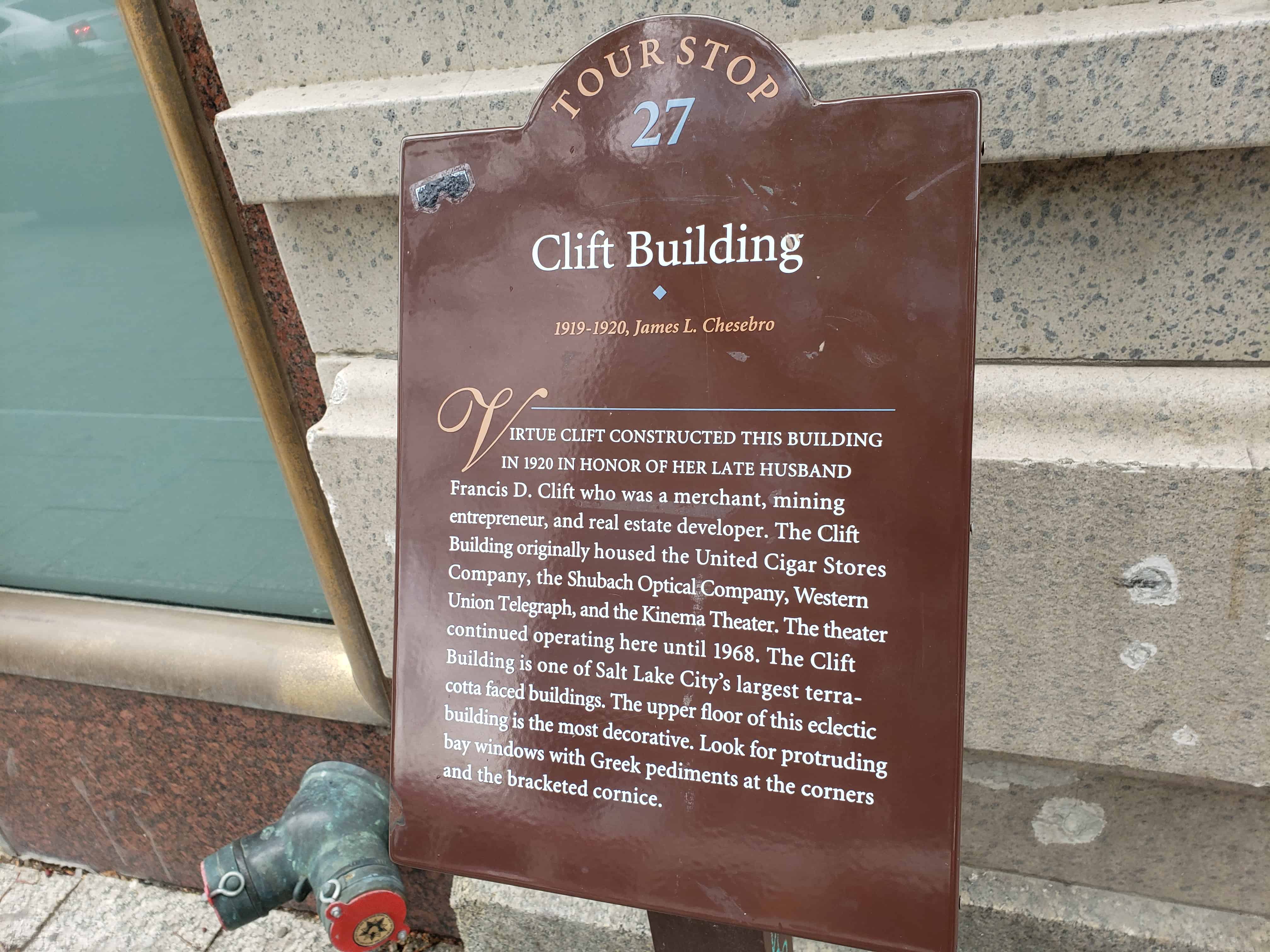
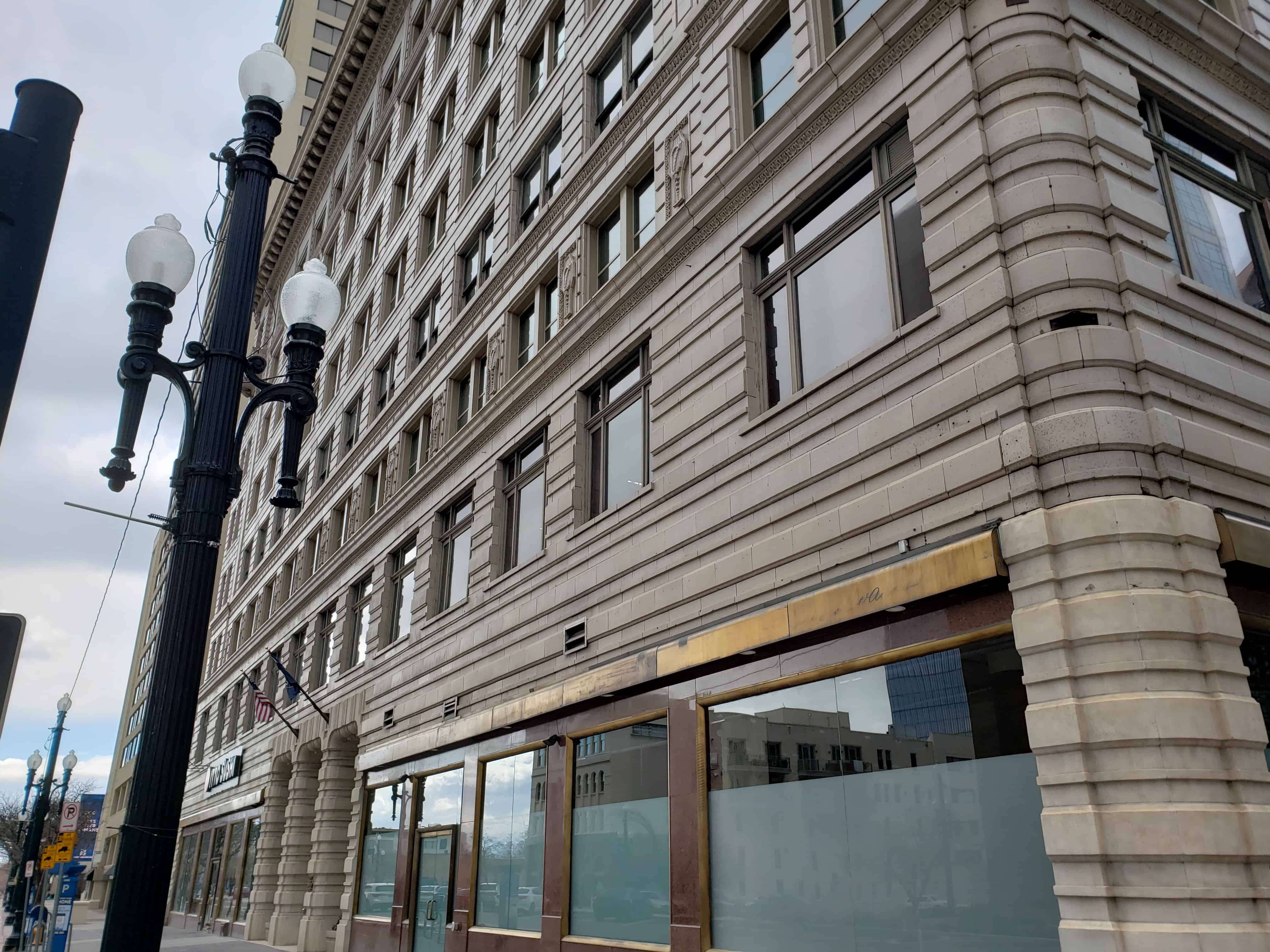
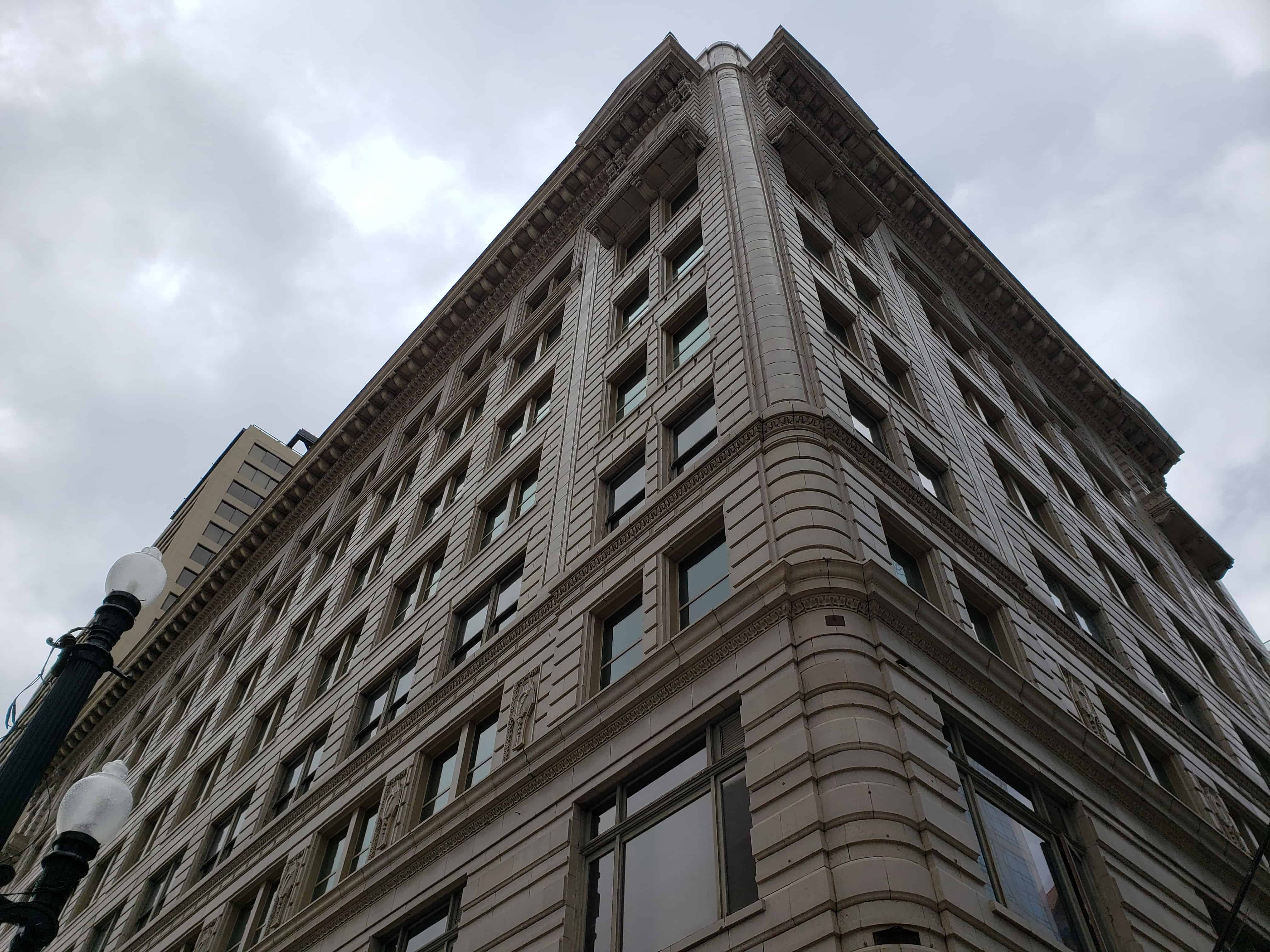
Virtue Clift constructed this building in 1920 in honor of her late husband Francis D. Clift who was a merchant, mining entrepreneur, and real estate developer. The Clift Building originally housed the United Cigar Stores Company, the Shubach Optical Company, Western Union Telegraph, and the Kinema Theater. The theater continued operating here until 1968. The Clift Building is one of Salt Lake City’s largest terra-cotta faced buildings. The upper floor of this eclectic building is the most decorative. Look for protruding bay windows with Greek pediments at the corners and the bracketed cornice.
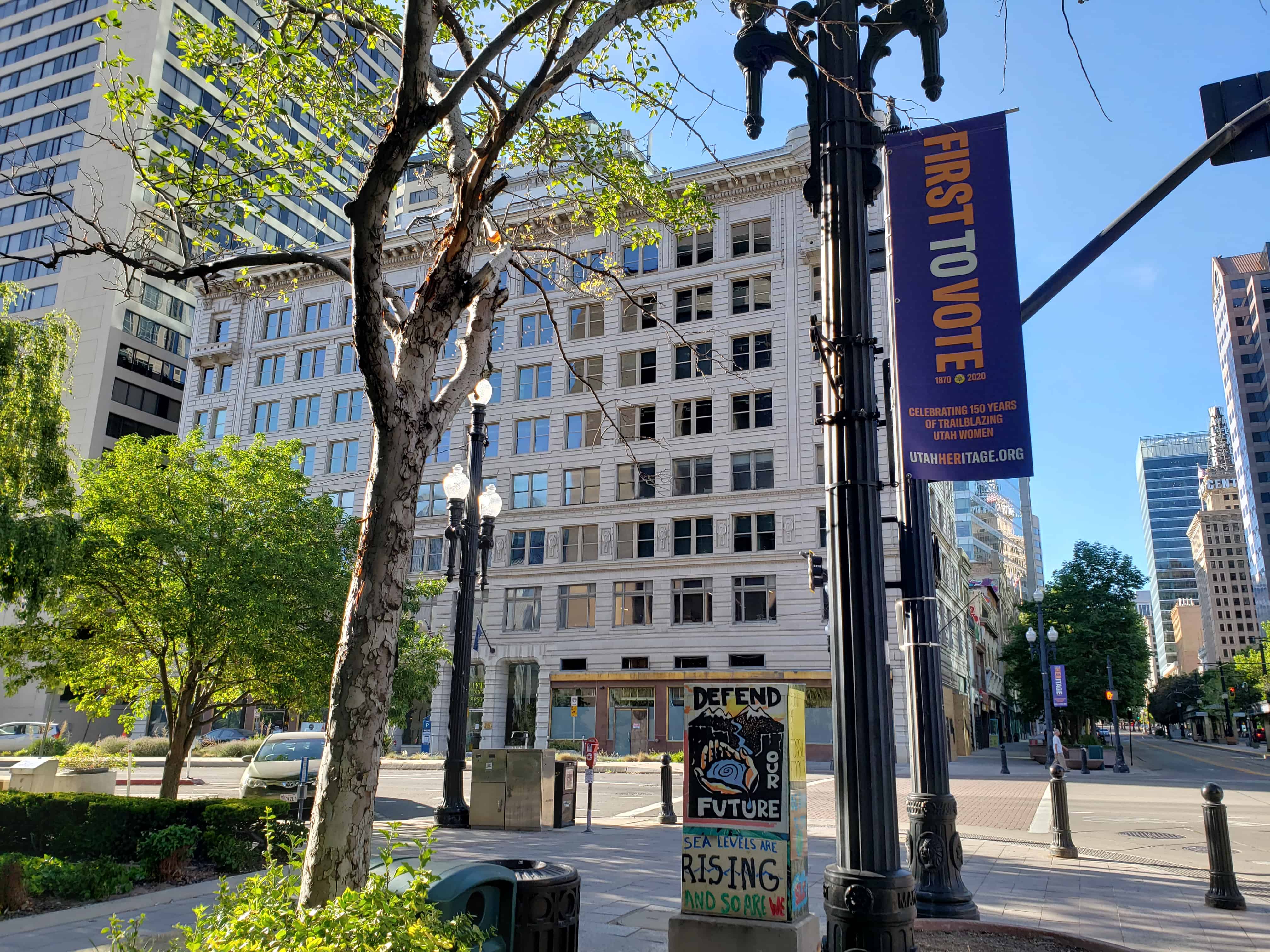
Pleasing in scale, proportion, and style treatment, the Clift Building has been an integral part of Salt Lake City’s central business district since it’s construction in 1919. It displays the use of glazed terra cotta on a grand scale, to entirely face the primary facade of an eight story building. The Clift Building retains it’s original character and integrity except for some street level modifications.
The Clift Building was constructed in 1919 by Virtue Clift in honor of her late husband, Francis D. Clift. This was originally the site of the old Clift Hotel, a popular Salt Lake boarding house in the late 19th century.
The Clift family has a long history in the state of Utah. Francis Clift was a pioneer mining man and financier who came to Utah by ox team with the Walker Brothers, Henry Lawrence and John Clark, a former mayor of Salt Lake City. They arrived in the valley in 1851. Soon after arriving, Francis Clift opened the “Town Clock Store” a general merchandising store, at 154 South Main. He made eight trips across the plains by ox team hauling goods from St. Louis and other points in Missouri where he bought goods to supply this store. He was one of the first men in Utah to invest in mining. He early bought an interest in the Emma Mine in Big Cottonwood Canyon the first discovered and worked mine in Utah. With the profits from this venture, he invested in Salt Lake real estate. In addition to this property, he owned the building at 262 South Main, occupied for many years by the Boston Store, and the Gladstone Building at 117 South Main. Francis Clift was born in England December 7, 1832 and died in Halt Lake City December 21, 1913. Only his wife, Virtue Clift, survived him.
Virtue Butcher Clift was also born in England, March 10, 1838. Her family joined the LDS Church there and she came to the United States with her mother and two misters in 1849. She married Francis D. Clift in 1854 at the age of sixteen. At the time of his death, she inherited her husband’s large estate and proved herself a wise businesswoman in dealing with his affairs. She had the Clift House torn down and replaced with a new commercial office building bearing the same name.
Following her death in 1925, title to the building fell to the Clift Building Corporation, then to the Utah Oil Refining Co. in 1958 and the American Oil Co. in 1960. American Oil changed the name of the building to the American Oil Building. In 1971 American Oil sold the building to Elizabeth Simmons. Ilene J. Wagner of the Wagner Investment Co. is the current owner.
The first occupants of the Clift Building in 1920 were the United Cigar Stores Co., the Schuback Optical Co., Western Union Telegraph Co. and the Kinema Theater, By 1928, the Kinema, managed by William Cutts, had become the Rialto Theater, but otherwise, the four companies occupied the building for twenty years. The Rialto still operated as a theater in 1968, a near 50 year term of occupancy. Fernwood’s Candy Co. had their offices in this building from 1952-60, Western Union and United Cigar Stores from 1920 to 1956. The building is currently used, as it has been historically, as commercial office space.