4732 S Commerce Drive
16 Wednesday Sep 2020
Posted in Uncategorized

16 Wednesday Sep 2020
Posted in Uncategorized
15 Tuesday Sep 2020
Posted in Uncategorized
Tags
Granaries, Historic Homes, NRHP, Sanpete County, Spring City, utah

This house offers a view of the range of Spring City’s architectural tradition. Built c. 1875, the original structure was a stone, hall-parlor house. The rear adobe addition was probably completed within just a few years after the main portion. Little is known about Iver Petersen, except that he also built the stone granary located on the property. The granary is one of the best preserved and most substantial granaries of Spring City.
Located at 309 North Main Street in Spring City, Utah

Iver Petersen (1844-1881), a Danish immigrant, built this stone, hall-parlor plan house in the mid 1870s. A rear adobe addition was constructed shortly thereafter. He died at a young age leaving a widow with several young children. A stone granary behind the house has been made into a living space.(*)


15 Tuesday Sep 2020
Posted in Uncategorized
15 Tuesday Sep 2020
Posted in Uncategorized
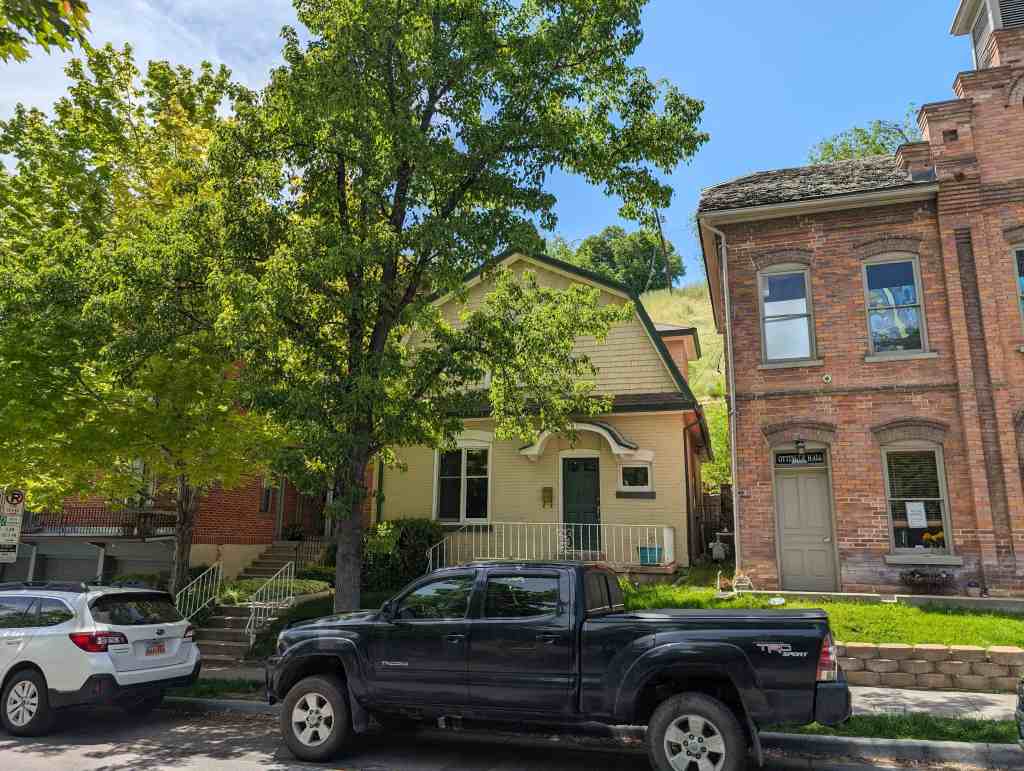
One and one-half story “Dutch” house plan with the first story of brick and the second story of frame. Gambrel roof.
Walter Squires, a Salt Lake barber, received this piece of property from the city in 1905. He probably rented the house after it was built. Later his daughter, the wife of John Raymond, lived in this house.
This 1905 Dutch style house was built as a rental unit by Walter Squires, a barber. It is typical of the house pattern plan houses that were built in Salt Lake City at the turn of the century.
Located at 231 Canyon Road in the City Creek Canyon Historic District of Salt Lake City, Utah.
14 Monday Sep 2020
Posted in Uncategorized

The Chipman Mansion was built in 1853 by Washburn Chipman.
In 1955 Afton Fitzen and her husband David started restoring it along with adding to it pieces of buildings that were being demolished.
The trees and bushes are so thick it is hard to see much, but the arches at the roadside are from the Grant School in Salt Lake.
Located at 280 South Center Street in American Fork, Utah
VISIT SPOOKY SITE IN AM.F.
Published: Oct 9, 1990, 12:00 a.m. MDT
By Deseret News
They tell stories about the old Chipman Mansion. Strange, scary stories.
It was built in 1853 by Washburn Chipman. After his death, three unmarried sisters lived in the home. The home got little care and the gardens grew wild.After the sisters died, the home sat vacant for 25 years. Stories of strange happenings at the Chipman Mansion abound.
Brave souls Dave and Afton Fitzen bought and restored the home and its gardens some years ago. They did not lay the stories to rest, however.
Enticed? Curious? Want to know more? The American Fork Ambulance Association invites other brave souls to come see what’s up at the Chipman Mansion for themselves this Halloween. It will be a night to remember, the association vows.
The American Fork Ambulance Association is sponsoring a good scare at the mansion for a good cause. A $5 fee for adults and $3 fee for children under 12 will go toward purchase of a new ambulance for use in American Fork, Highland and Alpine.
The mansion is located at 280 S. Center Street in American Fork. Beginning Wednesday, Oct. 10, the mansion will be open after 7 every night except Sunday through Halloween.
13 Sunday Sep 2020
Posted in Uncategorized
Tags

This building, now part of JW Storage at 1940 S State St in Springville, Utah was part of the Springville-Mapleton Sugar Company until 1930 when it was purchased by the U and I Sugar Company, it was shut down in 1940.


12 Saturday Sep 2020
Posted in Uncategorized

The old 33rd Ward Chapel of The Church of Jesus Christ of Latter-day Saints in Salt Lake City, Utah.
Related Posts:


12 Saturday Sep 2020
Posted in Uncategorized
Tags
12 Saturday Sep 2020
Posted in Uncategorized
Tags

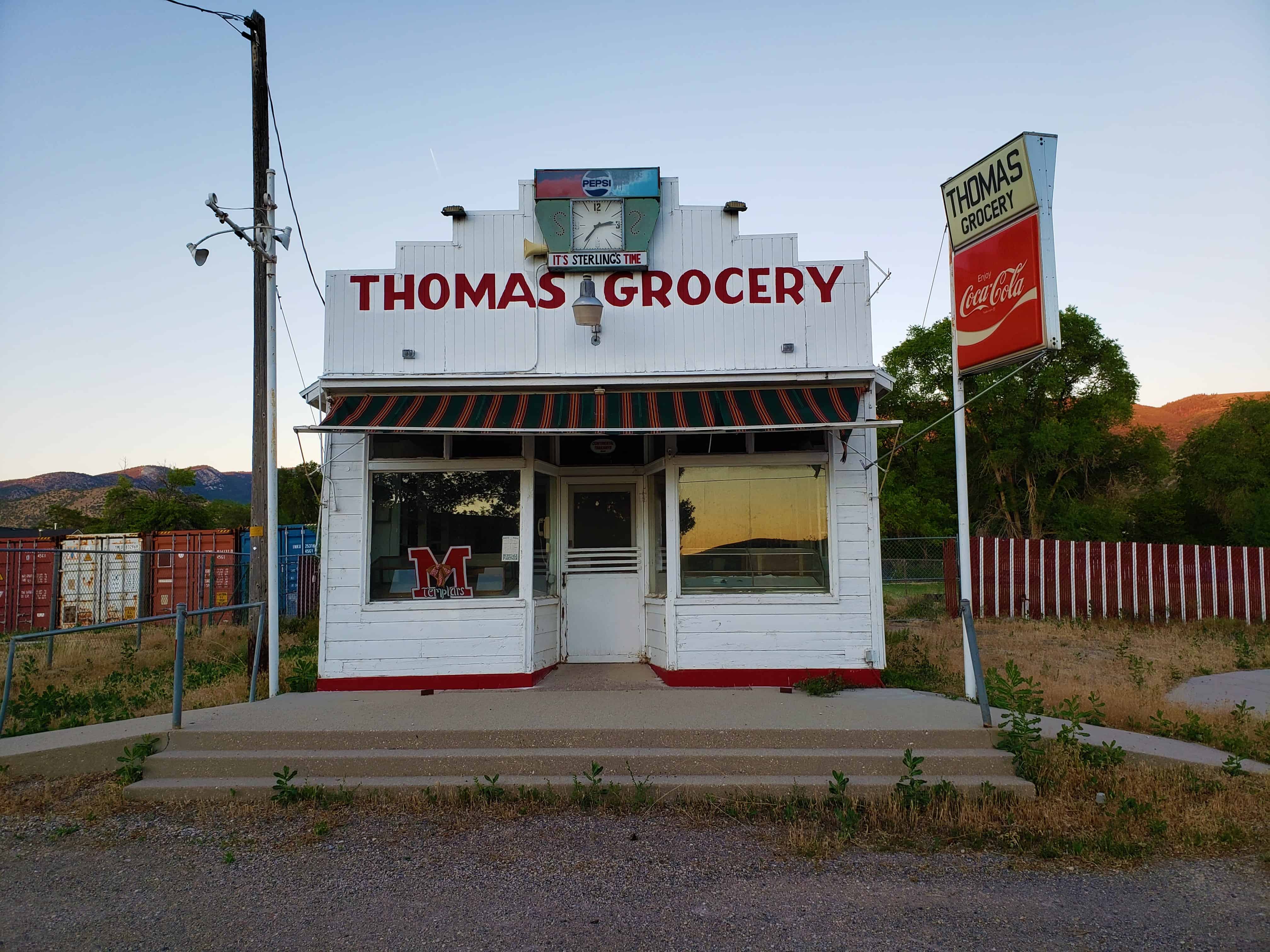
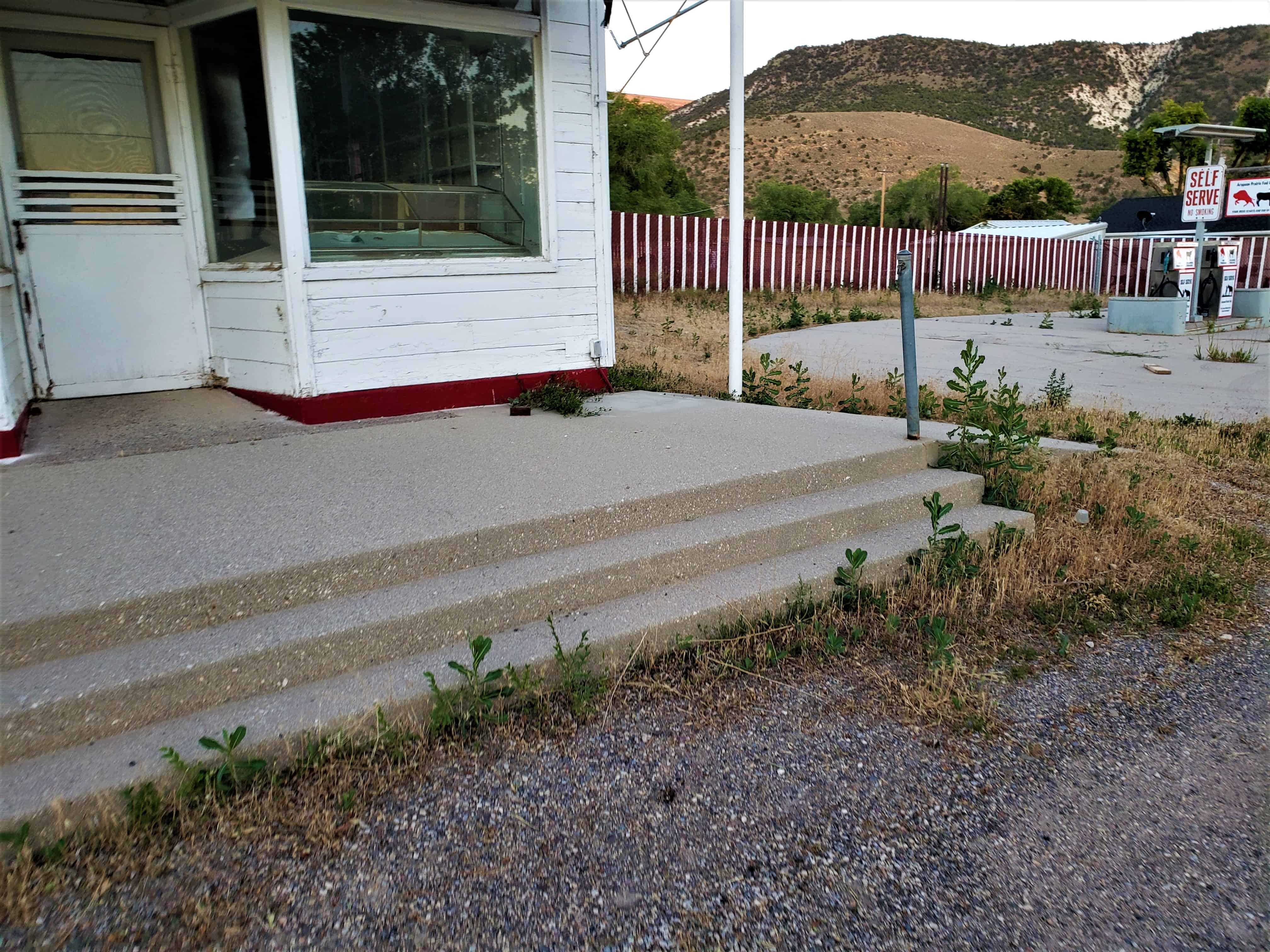
Thomas Grocery in Sterling
51 South Main Street, Sterling, Utah
In the 1920’s, N. E. Larsen opened this General Store in the center of Sterling. The painted masonry storefront with its stepped gable and varied collection of colorful signs remains in operation today as one of the few “mom and pop” grocery stores to survive modernization.
The store opened when Larsen’s daughter Lillie was six months old; from that time on Lillie spent her life in the Sterling General Store. The general merchandise store has changed with the times. Originally, the merchandise came in bulk so people bought fifty pound sacks of flour and sugar. A black ring on the floor marks the spot where the old vinegar barrel stood. Kerosene was sold in bulk for lanterns, commonly used in Sterling homes that lacked electricity. Milk and eggs from local farmers were sold here and the children often traded farm eggs for pieces of penny candy. In August of 1945, Lillie and her husband Evan Thomas opened their own business in Lillie’s father’s old store and moved in. The the past 63 years, Lillie has served three generations of Sterling residents and travelers from behind the Counter of the Thomas Grocery. Lillie passed away May 14, 2008 at her home in Sterling at age 93.(*)





11 Friday Sep 2020
Posted in Uncategorized

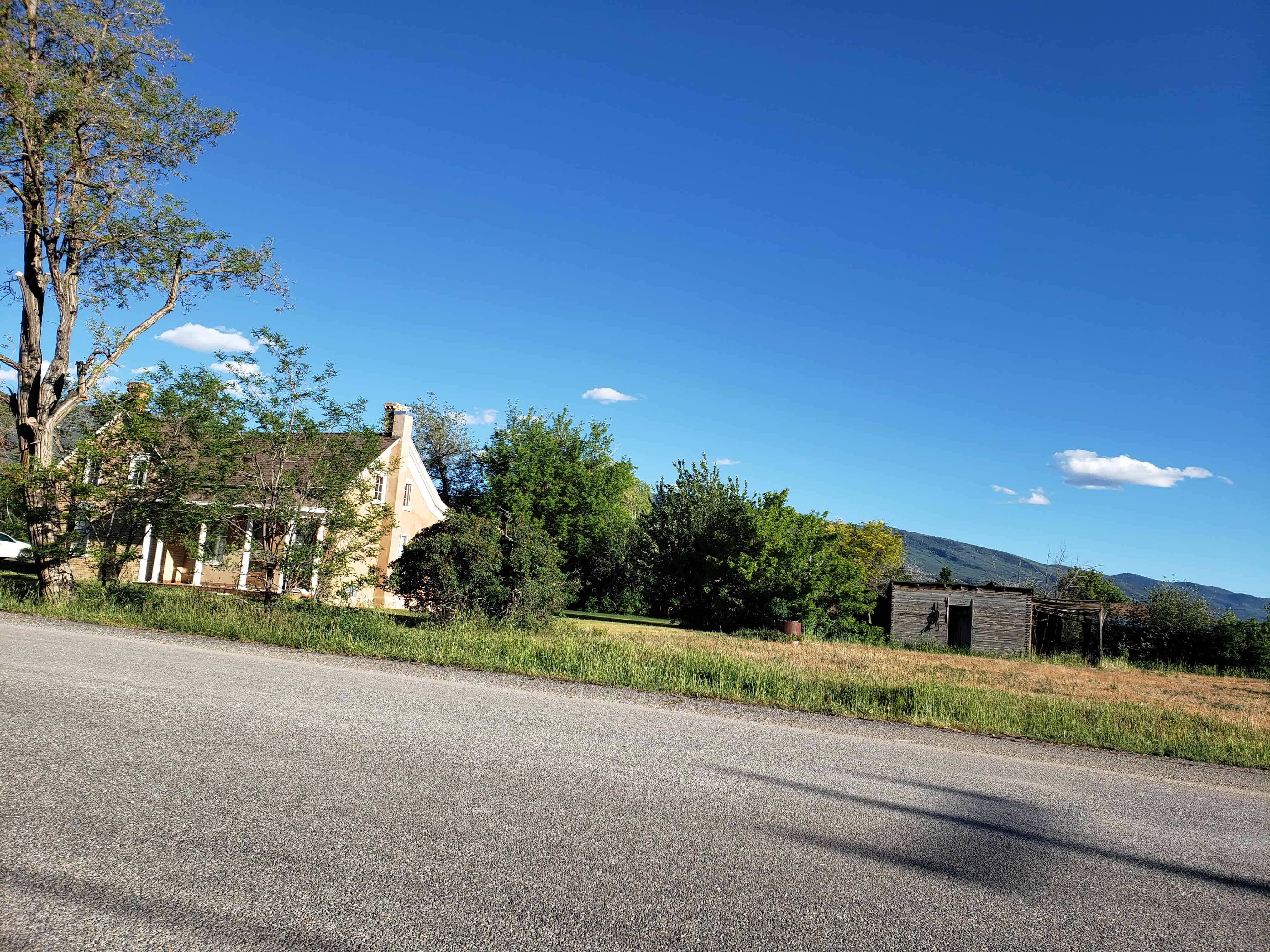
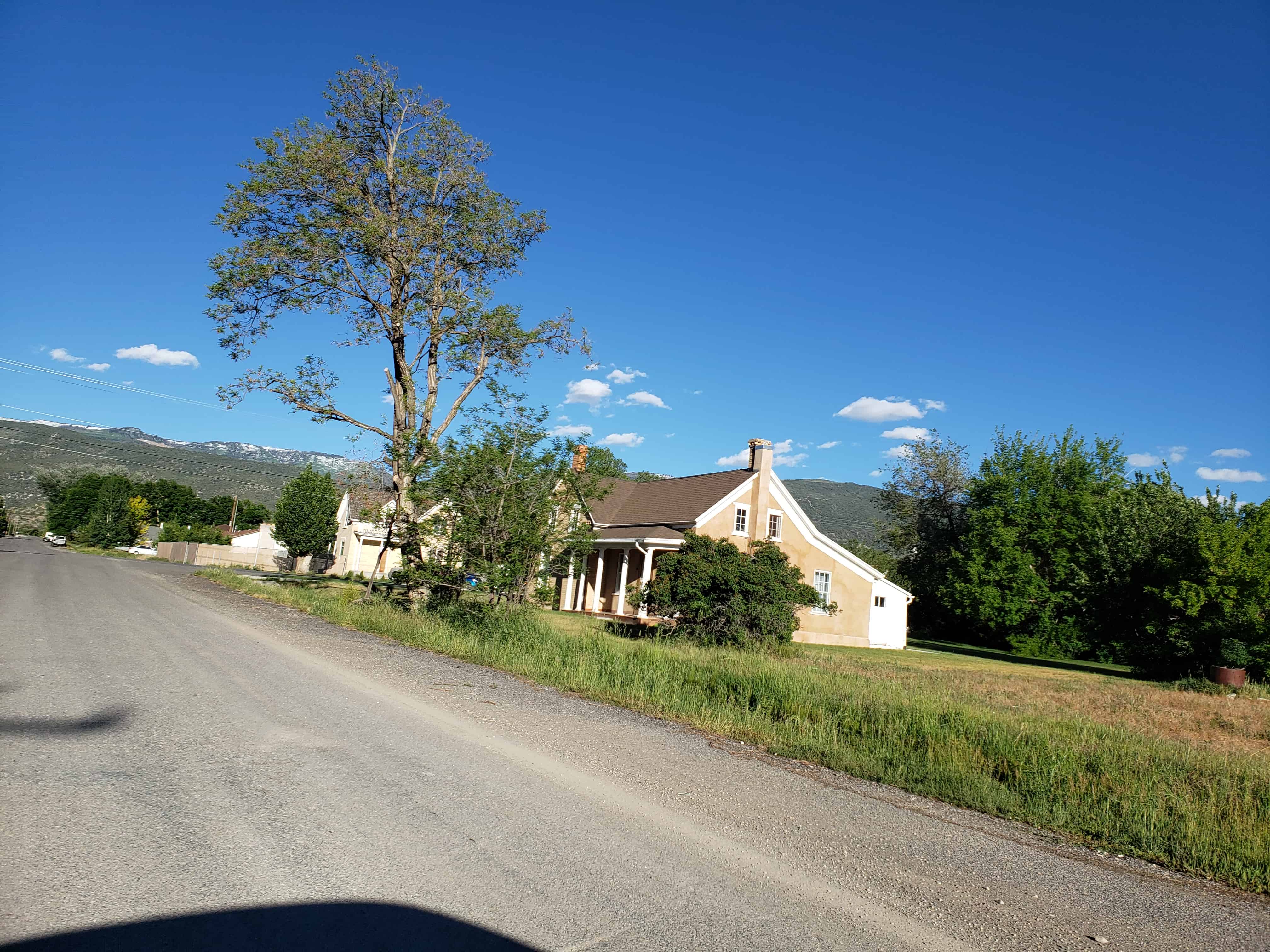
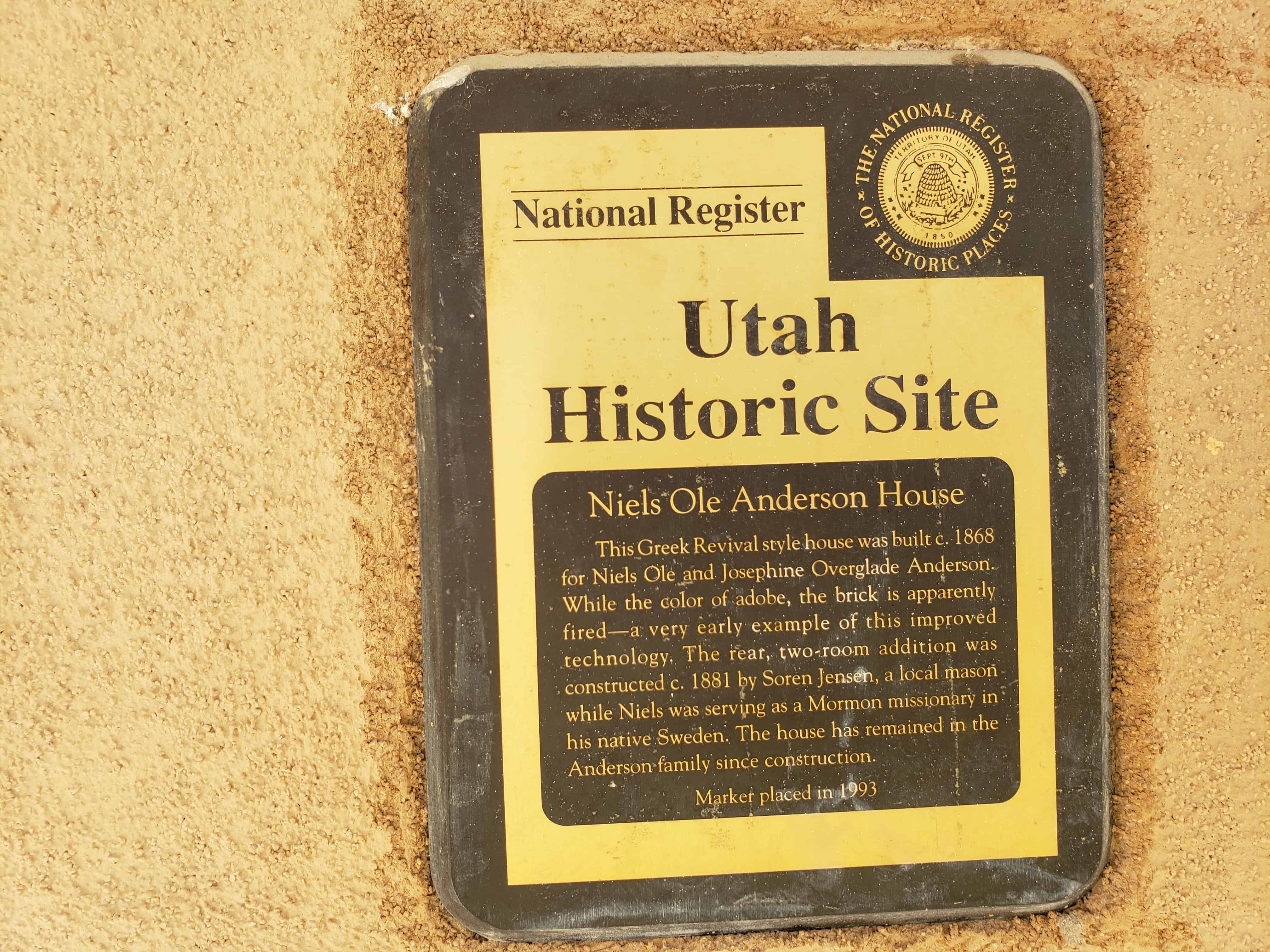
Niels Ole Anderson House
Located at 308 S 100 E in Ephraim, Utah.
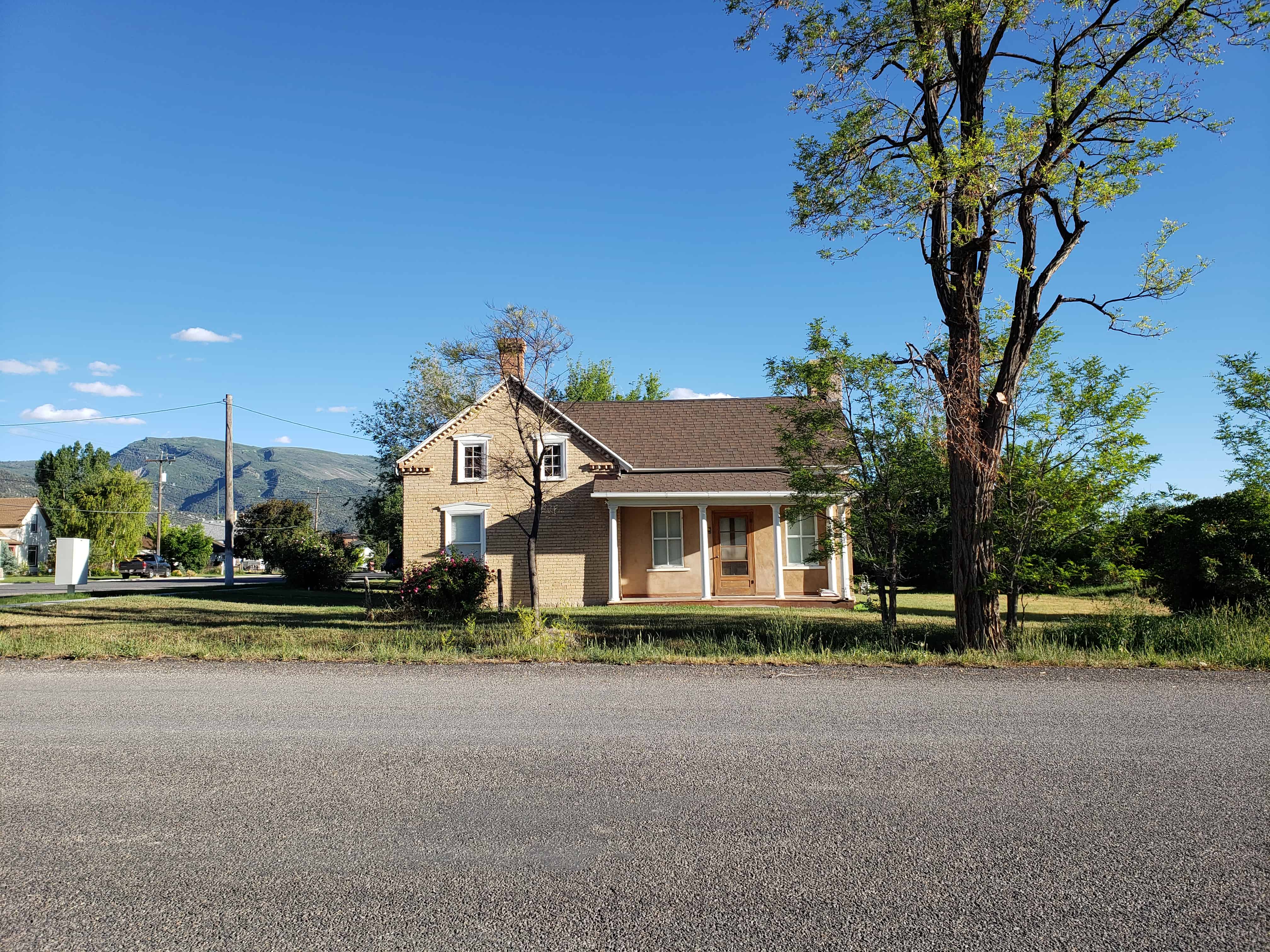
This Greek Revival style house was built c. 1868 for Niels Ole and Josephine Overglade Anderson. While the color of adobe, the brick is apparently fired – a very early example of this improved technology. The rear, two-room addition was constructed c. 1881 by Soren Jensen, a local mason while Niels was serving as a Mormon missionary in his native Sweden. The house has remained in the Anderson family since construction.
Related:
The significance of the Niels Ole Anderson House relates to its builder and principal occupant, Niels Ole Anderson, an early settler of Ephraim, Utah. Anderson played an important role in the pioneer settlement of his community. His journal accounts of pioneer life and Indian encounters in particular, are a valuable local history resource, The Anderson House is representative of local pioneer architecture and craftsmanship and features the unusual use of fired adobe brick, a transitional, homemade building
material used before the advent of commercially made brick.
Niels Ole Anderson was born in Sweden in 1845 and immigrated to Utah in 1854-55 with his family who became converts to the Church of Jesus Christ of Latter-day Saints. After crossing the plains with Captain Noah T. Guyman’s company, the Andersons arrived in the Salt Lake Valley of the Territory of Utah. As was customary, the family received instructions from, their religious leaders and was sent to Fort Ephraim, Sanpete County, where Niels resided the rest of his life.
By necessity, Niels Anderson quickly became experienced in the rigors of pioneer life. At the age of ten he helped build the “outside fort” where his family lived until 1860. Niels’ father, Ola, died in 1857, after which Niels assumed more than normal responsibility for his family. Ephraim, like almost all other early Mormon settlements, had an economy based primarily on agriculture. Thus Niels spent his early manhood plowing, planting and harvesting for local farmers.
While in his teens, Niels had many experiences with the local Indians, even before he took part in the Black Hawk War in 1865. He carefully recorded his various encounters with the Indians. His written accounts are now valued as an important, local history resource, particularly because of his detailed descriptions of Indian skirmishes. He collected and recorded the events of October 17th and 18th, 1865 when Indians ambushed, tortured and killed in different attacks, seven loggers and farmers from Ephraim.
Anderson also obtained and recorded an account entitled “Skirmish at Ephraim, Battle at Rock Lake,” in which settlers and Indians maintained a day-long battle over the possession of a herd of horses. Anderson also recorded a number of Indians encounters in which he was personally involved. Largely because of his long-standing acquaintance with many of the Indians, he was never harmed by them. During his life, Anderson personally knew several chiefs, including Black Hawk, Arrapean, Sanpitch and Tabby. In his later life, Niels Anderson became known as a folklorist who liberally shared his stories with newer generations.
Niels O. Andersen’s pioneer experiences continued to broaden after the Black Hawk War. In 1866 he went to the Missouri River as a Church Teamster and helped bring a company of immigrants to Utah. He again served in a similar capacity for Captain Lewis Larson’s Company in 1867.
Niels married Josephine Overglade on November 2, 1867 in the Endowment House in Salt Lake City. Shortly thereafter, the first part of the present Anderson House was built. The Andersons became parents of nine children and the house was expended to its present size while Niels was serving as a Mormon missionary in Sweden from 1880 to 1882. The two-room addition was built by Soren Jensen, a local mason.
Two years after returning from his mission, Josephine Anderson became ill and died. In 1885, Niels married Matilda Nielson. They had one child, Niels Henry.
After becoming a family man, Niels O. Anderson took active part in community and church affairs. He served several terms as a member of the Ephraim City Council. He also headed various leadership positions in the Mormon church. He was director and part owner of a sawmill which produced lumber for the Manti Temple. Anderson eventually took charge of the “temple sawmill” and was thus instrumental in the construction of this
landmark building.
Anderson became expert in many crafts, including marksmanship, braiding, puppet-making, knot-tying, teaming and ox training and livestock raising. His leadership abilities were widely respected and he was a popular local figure.
The Niels Ole Anderson House has remained in the family since its construction. In style the vernacular building with Federal/Greek Revival detailing is representative of early Sanpete County architecture and craftsmanship. The original part of the home is built of an unusual handmade, fired adobe brick, a brick which was apparently a transitional material used after the sun-dried adobe period but before the commercially-made kiln-fired brick was available. Andersen’s brick has the color and texture of adobe but has sharp edges and a hard, dense exterior, showing evidence of having been baked in some kind of kiln. As commercially-made brick did not become popularized in Sanpete County until after 1870, the Anderson House represents one of the region’s earliest attempts to make and use fired brick, a fact which underscores Anderson’s role as a pioneer leader and innovator.