Tags
The Sentinel
03 Wednesday May 2023
Posted in Uncategorized

03 Wednesday May 2023
Posted in Uncategorized
Tags
29 Saturday Apr 2023
Posted in Uncategorized

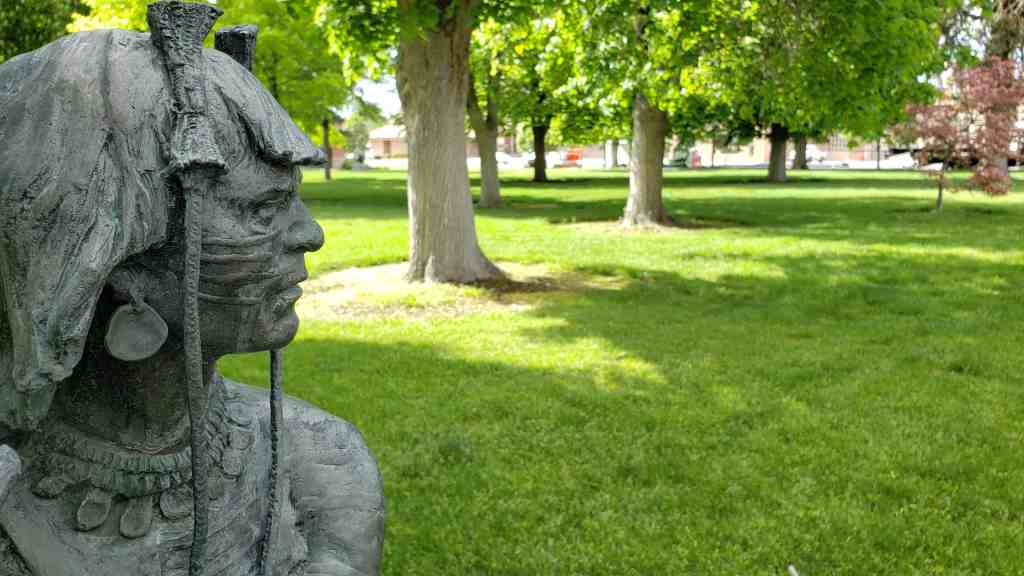
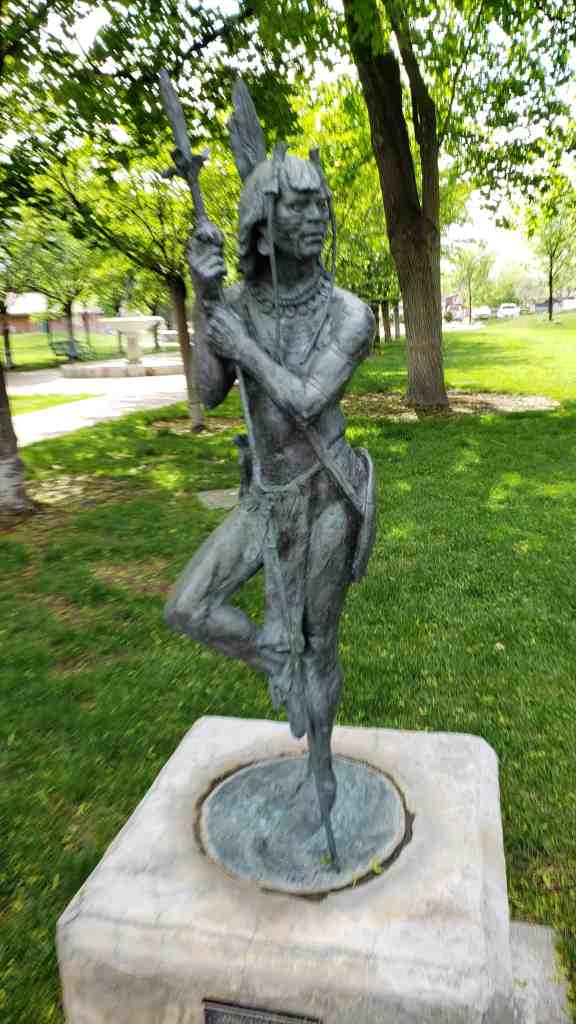
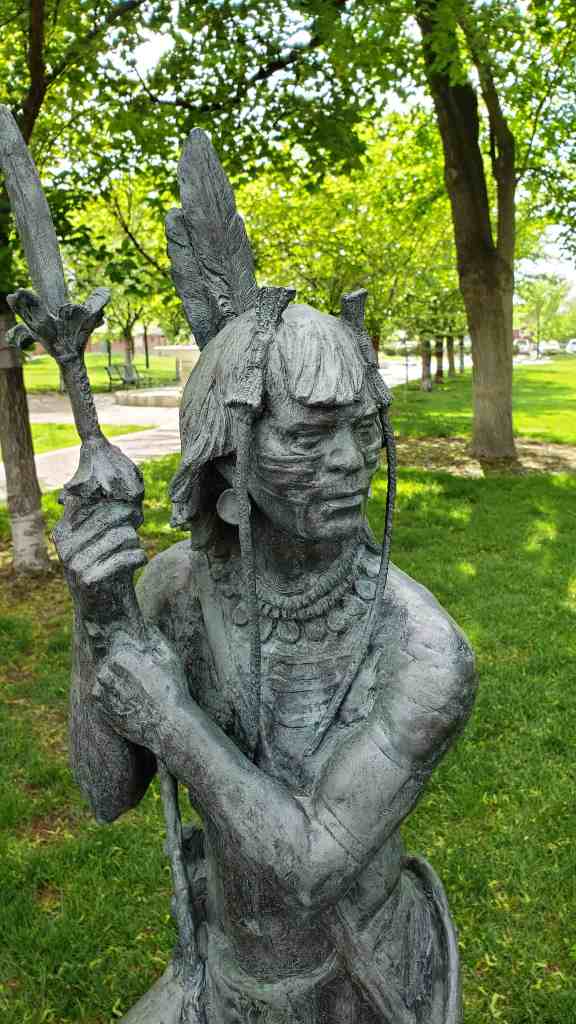
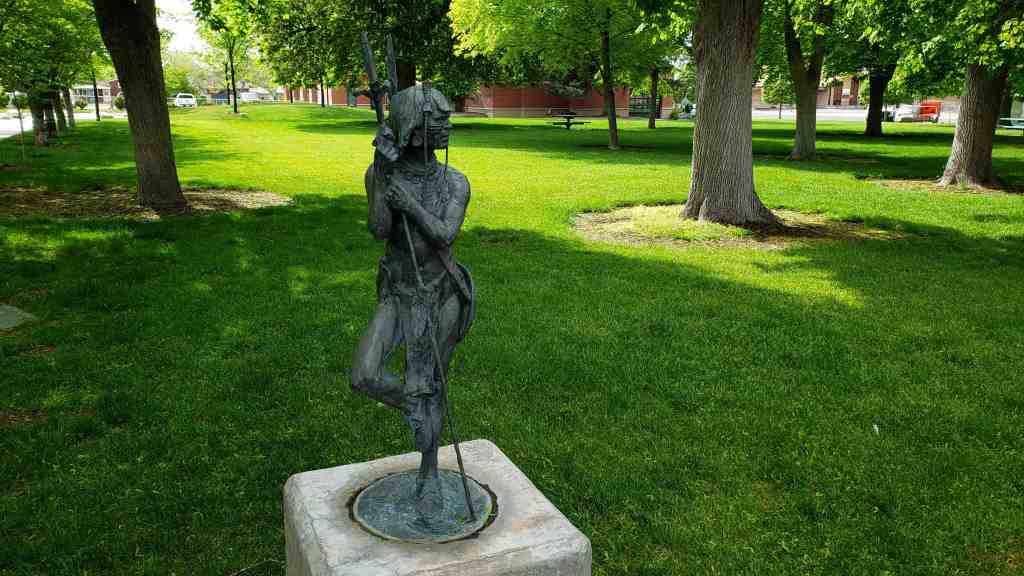
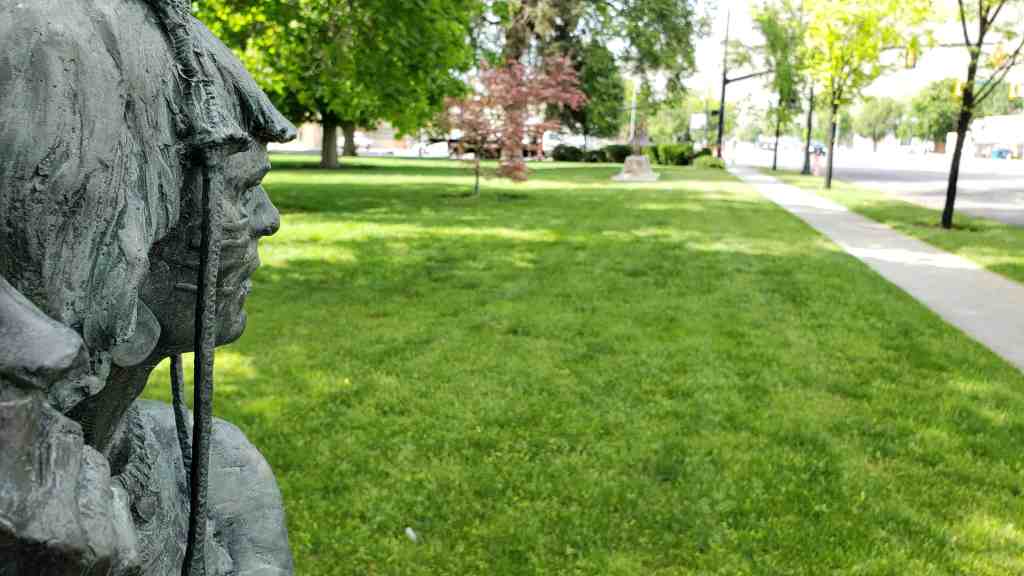
Kokopelli
Who was Kokopelli?
The legends are many, and no one really knows. I do not discount any of the interpretations made by the various Indian cultures or modern day authorities. I am just doing my thing as an artist and a free agent.
Ancient rock art suggests strongly that Kokopelli was a flute player who wandered from place to place leaving his legend behind him as a teacher and entertainer.
I have chosen to portray Kokopelli idealistically as a handsome young man with a slightly hump back. A wanderer, a teacher of flutes, a dancer and a womanizing rascal. A concept that many would like to relate to.
I would like to acknowledge Doctor Eldon Dorman who inspired me to sculpt Kokopelli, and Elias Perez who helped me follow Kokopelli by the types of flutes he played. Both of who are both historians in their own right.
Sculptor: Gary Prazen


96 North 100 East in Price, Utah
28 Friday Apr 2023
Posted in Uncategorized
Tags

Plates, a 2020 fiberglass and steel art piece by German/American artist Gorden Huether. Located at the Salt Lake City International Airport.


23 Thursday Mar 2023
Posted in Uncategorized

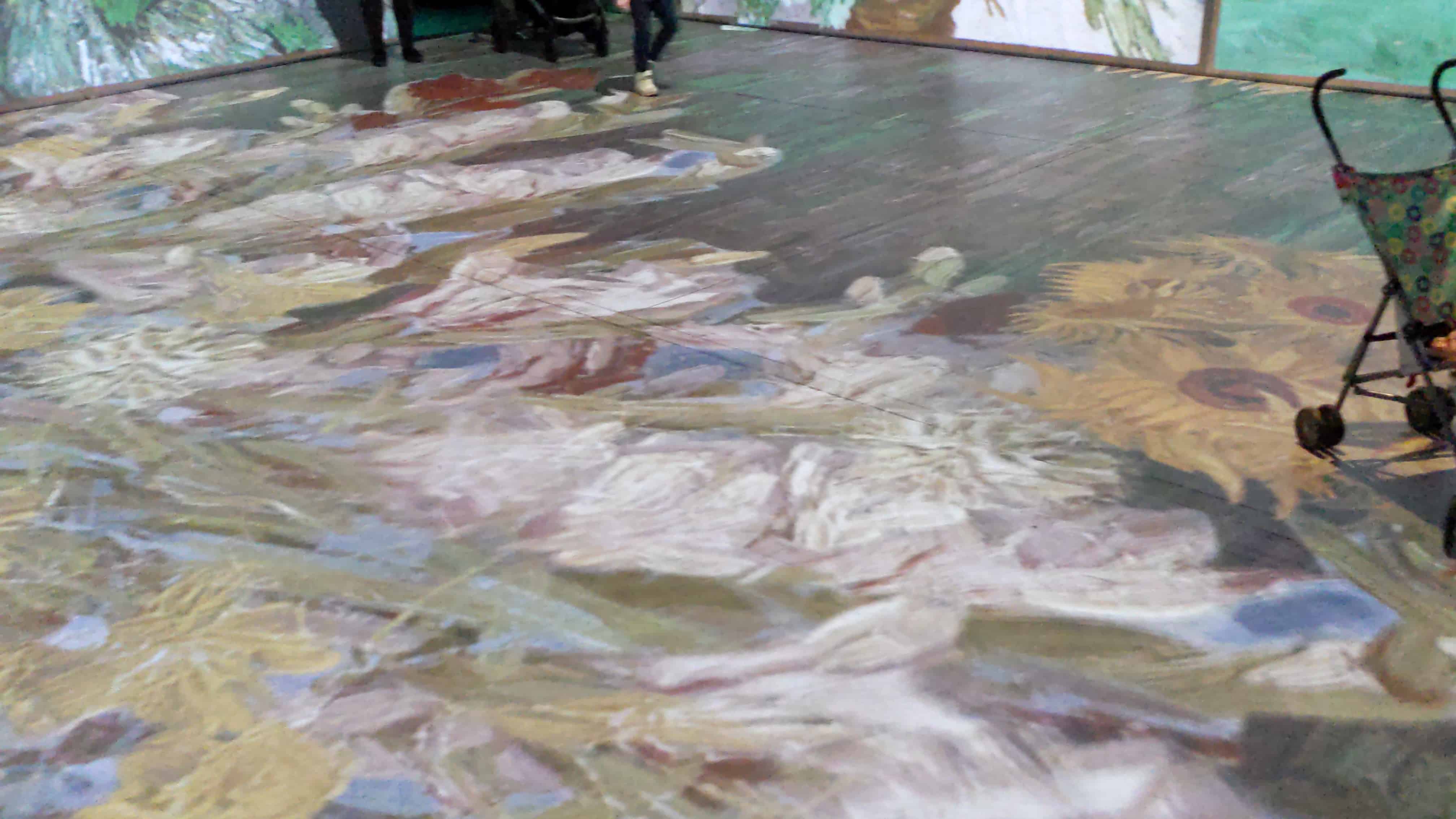
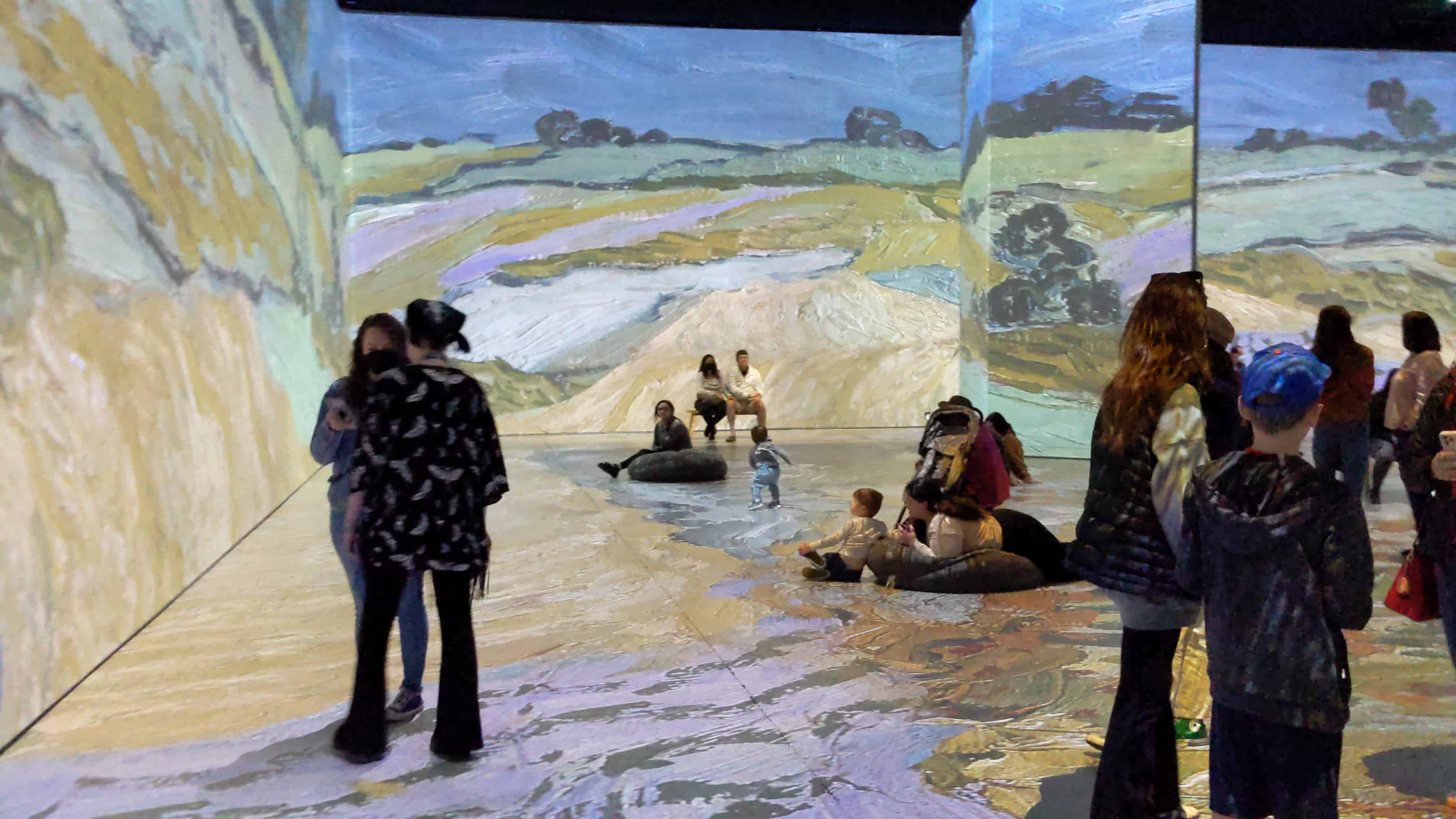
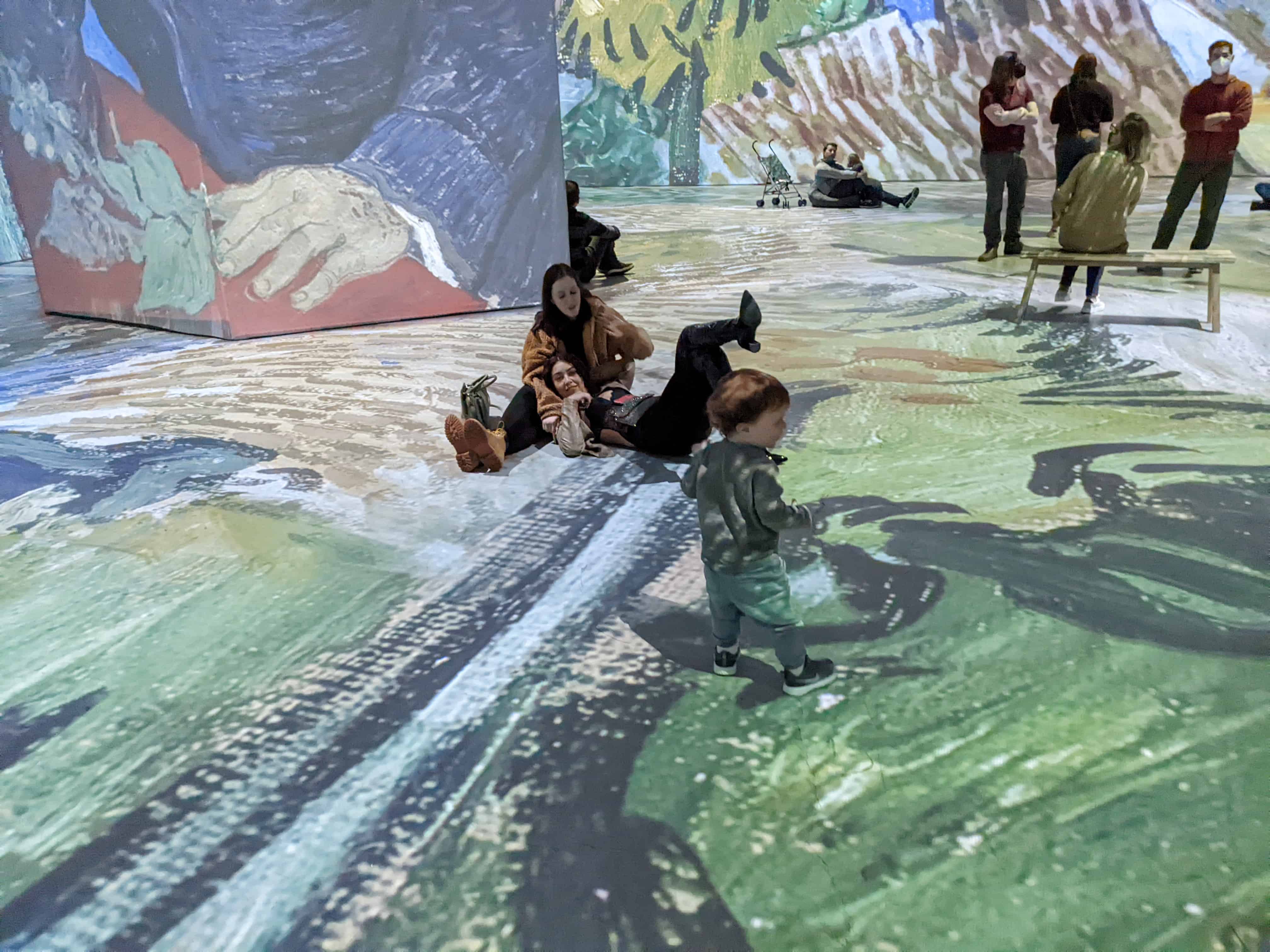
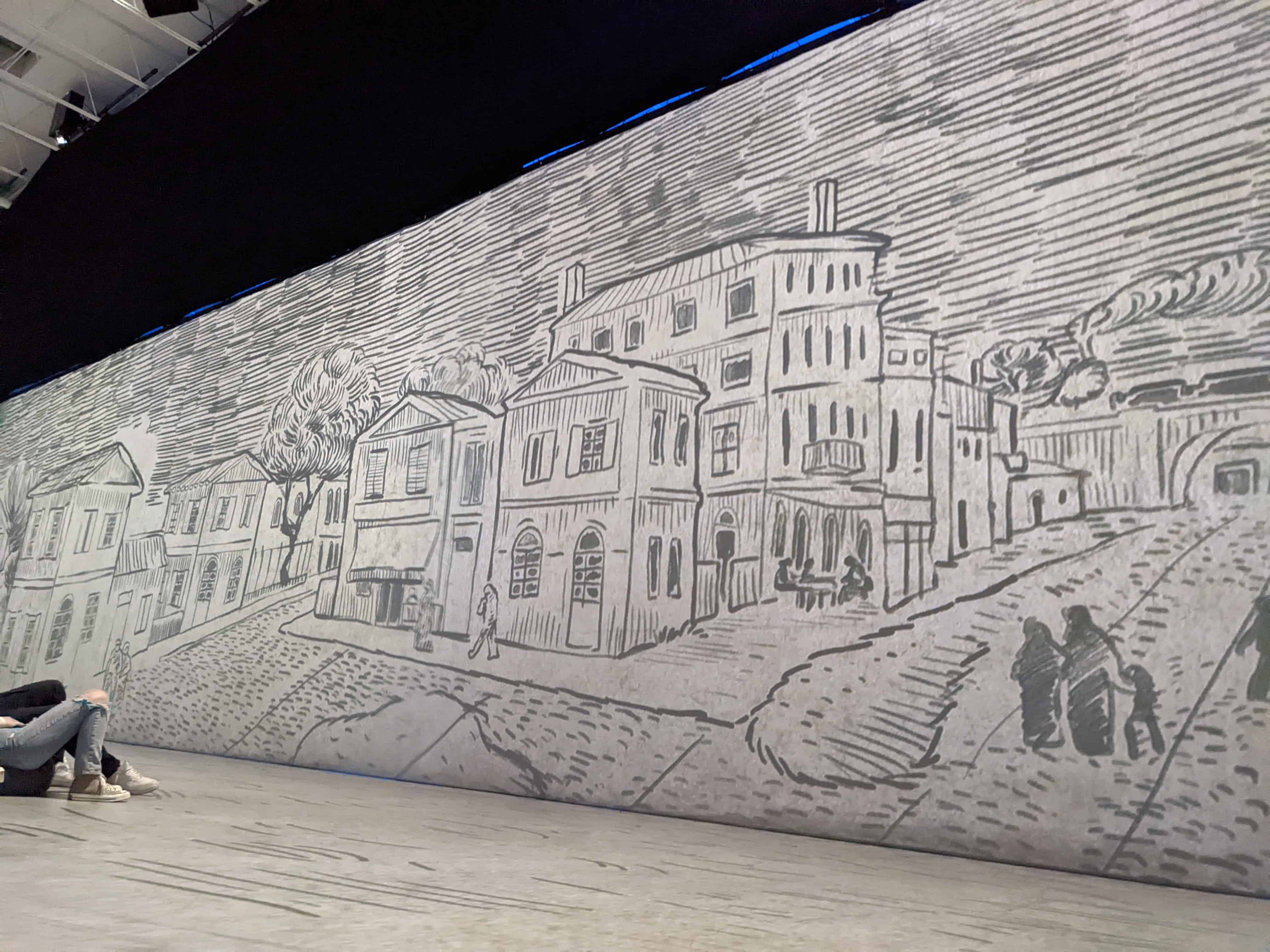
Beyond Van Gogh – The immersive Experience was a temporary exhibit held at 326 West 700 South in Salt Lake City, Utah









06 Monday Mar 2023
Posted in Uncategorized
Tags

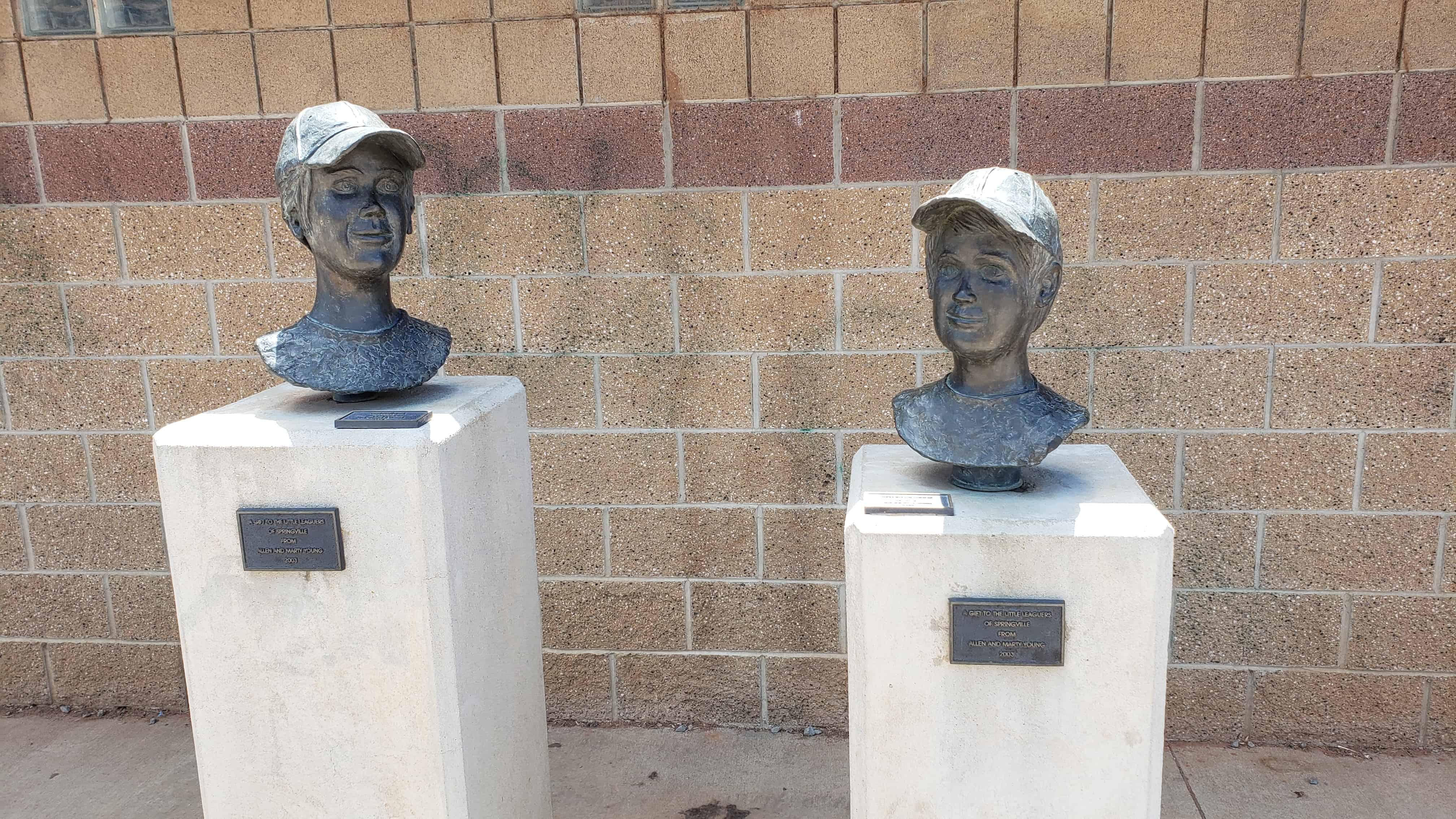
Some more of Springville, Utah’s (Art City’s) statues. These two are located at Memorial Park.
Related:

Miss First Base
Sculptor: Dr. Glade Y. Creer, 2003
A gift to the little leaguers of Springville form Allen and Marty Young, 2003

Man on the Mound
Sculptor: Dr. Glade Y. Creer, 2003
A gift to the little leaguers of Springville form Allen and Marty Young, 2003




17 Friday Feb 2023
Posted in Uncategorized
Tags

Manneken Pis is the most widely visited and photographed statue in Belgium. While smiling coyly, he remains the emblem of the rebellious spirit of Brussels. The original Manneken Pis has been taking matters into his own hand since 1619 and has continuously made visitors smile, laugh and benefit from the legend of the good fortune for all who visit.
My brother and I have brought an oversized replica to the D Las Vegas as a “tip of the cap” to our parents and our Belgian descent and to warm the hearts of visitors and locals alike. Manneken Pis has been described as hard working yet fun loving, affable and slightly irreverent, all qualities embraced by the D Las Vegas.
Manneken Pis Las Vegas will continue to aim to please for many years to come.
Derek and Greg Stevens
This is located outside The D Casino & Hotel at the northeast corner of Carson Avenue and 3rd Street in Las Vegas, Nevada.


This water feature is operating in compliance with the City of Las Vegas Title 14.11 requirements and a water use reduction plan for this facility is on file with the District and the City.


05 Sunday Feb 2023
Posted in Uncategorized
Tags
Art, Libraries, Murray, Salt Lake County, Stained Glass, Statues, utah

166 East 5300 South in Murray, Utah.

This plaque talks about the old Carnegie Library:
Murray City Vine Street Public Library
As early as 1900, a collection of books was made by a women’s club. This club maintained a library reading room in a home until 1912
In 1912, with the donation of the women’s club’s 515 books valued at $1,000.00, and through a petition, one mill was levied for a public library. A room in the original city hall was used for this purpose.
In 1915, the Carnegie Foundation, together with the city furnished $21,129.00 for the building of the original library. The board of education had donated the ground and the building was built in 1915.
In 1970 through action of present and former library board members, city officials and a united community effort, funds were raised for the present addition.


“Take Me There” – a Legacy Art Project of stained glass created by Donna Pence and Paul Heath.


This statue by Jim Davidson, presented by The Friends of the Murray Library to commemorate the library’s centennial, 1912-2012.


14 Friday Oct 2022
Posted in Uncategorized
Tags
Art, Carbon County, Helper, Roadside Attractions, Statues, utah
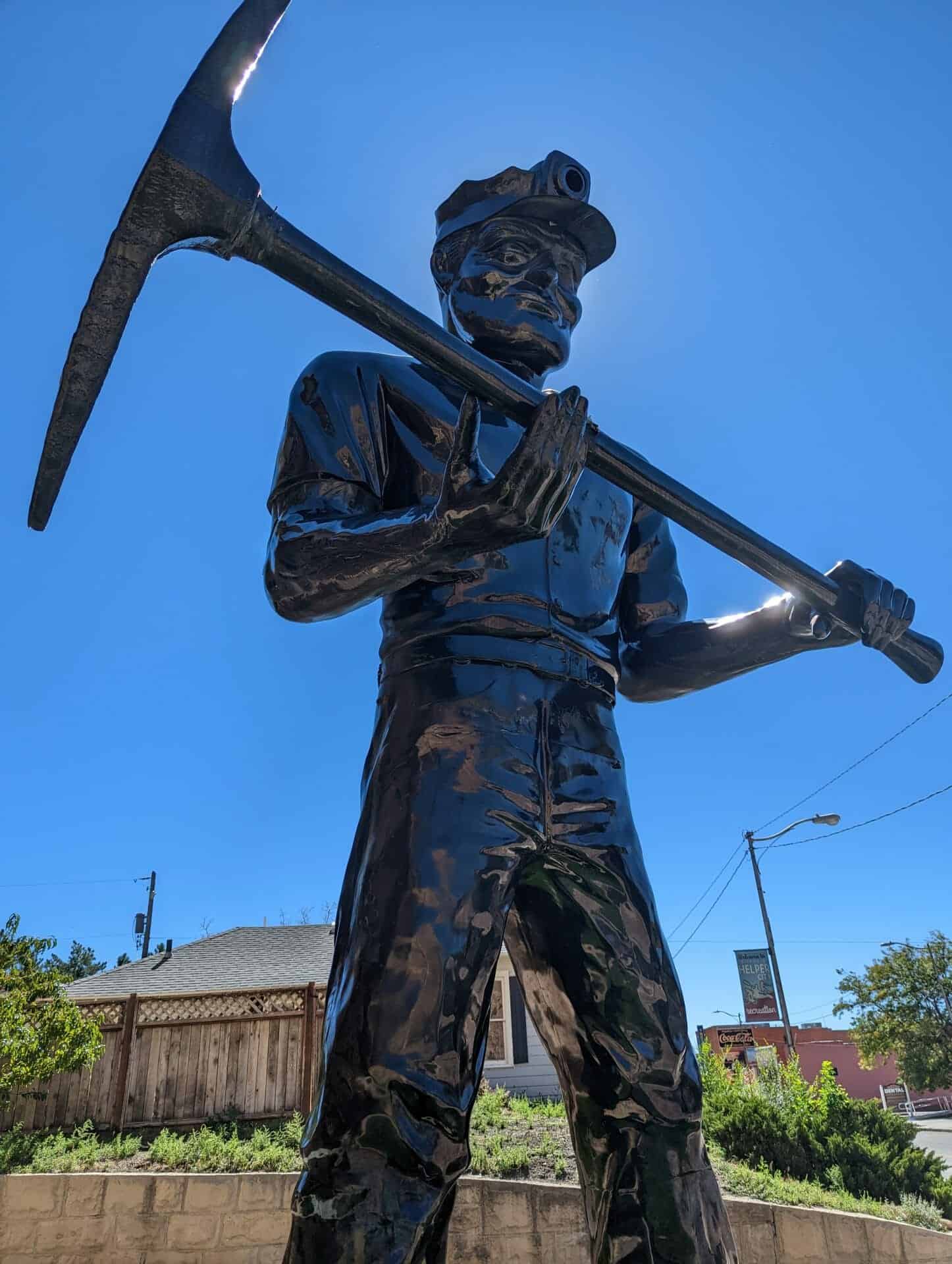
The History of Big John
Big John was an original idea, born from the creativity and enthusiasm of Helper citizens, the Mayor and the City Council. In February of 1964, many of the movers and shakers of Helper decided the city needed a civic attraction. On February 27, 1964, the first meeting for the formation of a museum was held, where Councilman Al Veltri was appointed chairman. Things snowballed from there.
By March 12, 1964 the Western Mining Museum was on its way. It was discovered that a firm, – International Fiberglass in Venice, CA. – made large fiberglass figures for promotional purposes. The company was a fiberglass boat builder that had begun making tall advertising figures in 1963. With some discussion, the order went out and created the largest resident of Helper. Paul Bunyan became a miner.
Of course the miner still needed a name, but that didn’t take long. In 1961, the song of fame (the first was “16 Tons”) about mining won the best Country Song and Album of the Year. It was of of course “Big Bad John”. What other name was fitting for the 18 foot miner in Helper except “Big John.”
Big John is a proud symbol of pride for the mining industry. John also signifies the memory of all those who have given their lives in the local mines since the late 1890’s. John is the foundation of civic pride and strong work ethic for a unified community.
Stand was built from rails, spikes, and plates gathered from Castle Gate Mine Tram Way.
Located outside the Helper Civic Auditorium at 19 South Main Street in Helper, Utah.


13 Thursday Oct 2022
Posted in Uncategorized
Tags
Art, Cedar City, Historic Markers, Iron County, Statues, SUP, utah

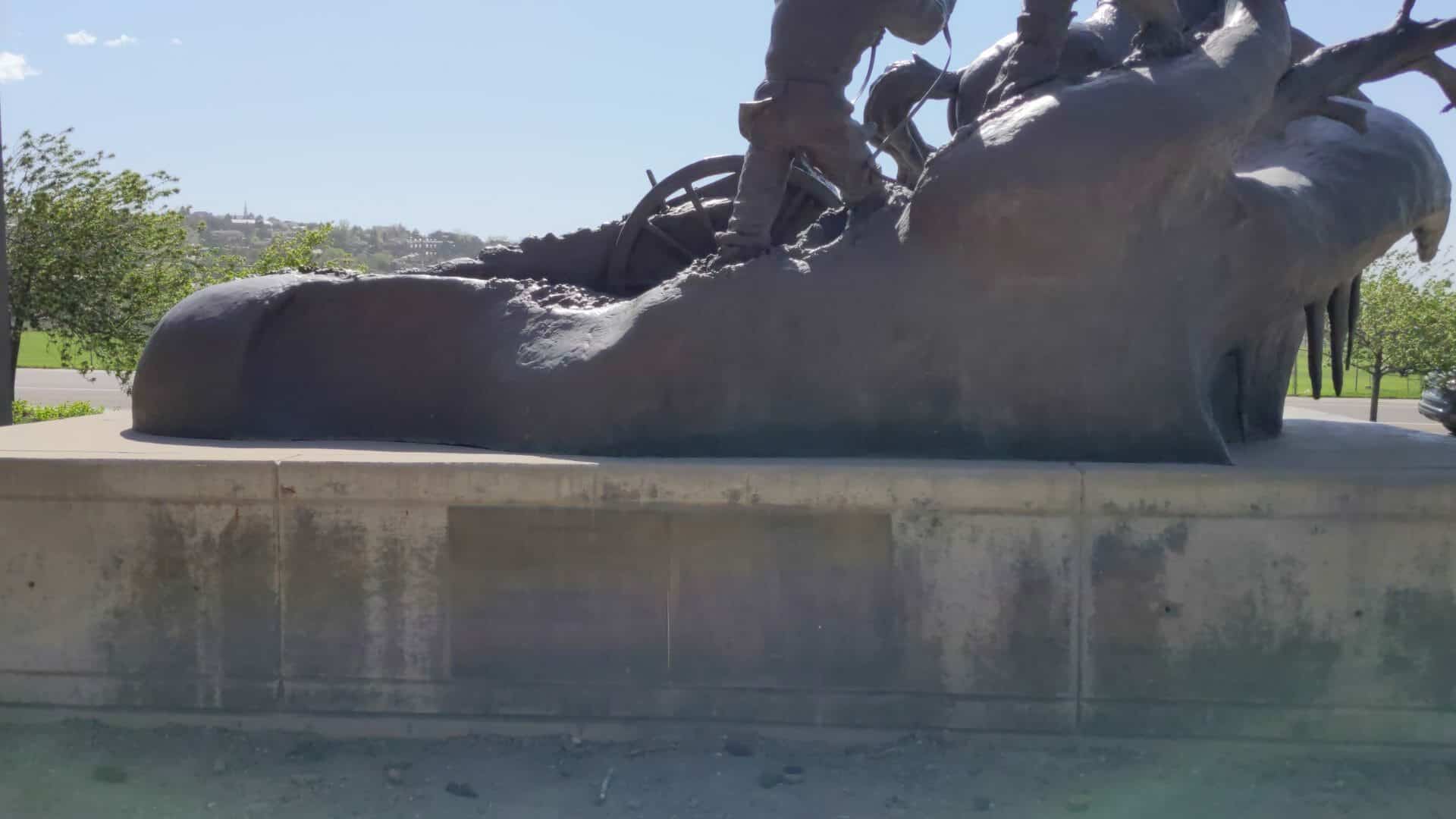
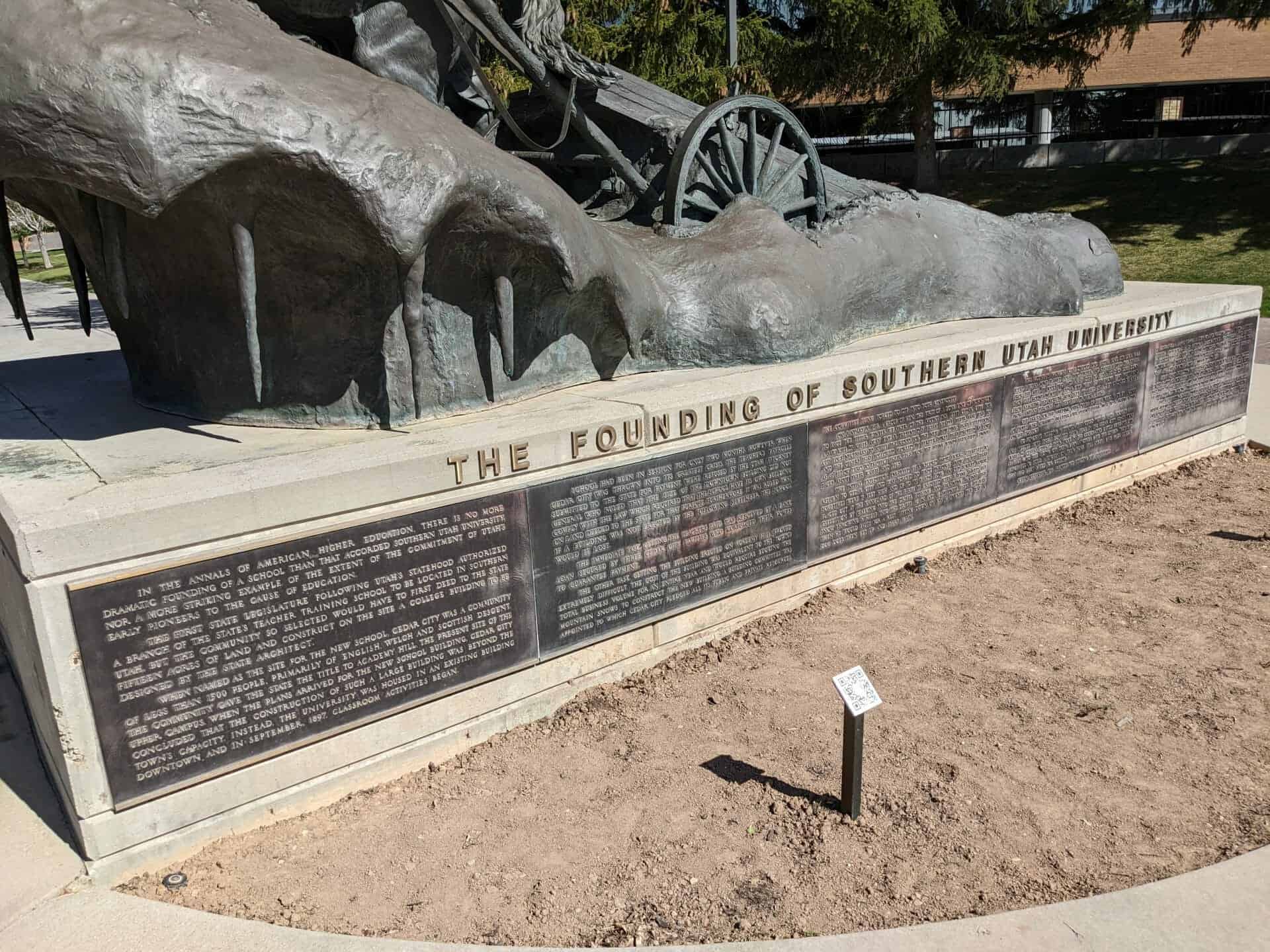
The Founding of Southern Utah University
In the annals of American higher education, there is no more dramatic founding of a school than that accorded Southern Utah University, nor a more striking example of the extent of the commitment of Utah’s early pioneers to the cause of education.
The first State Legislature following Utah’s statehood authorized a branch of the state’s teacher training school to be located in Southern Utah, but the community so selected would have to first deed to the state 15 acres of land and construct on the site a college building to be designed by the state architect.
When named as the site of the new school, Cedar City was a community of less than 1500 people, primarily of English, Welch and the Scottish descent. The community gave the state the title to Academy Hill, plans arrived for the new school building, Cedar City concluded that the construction of such a large building was beyond the town’s capacity. Instead, the University was housed in an existing building downtown and in September 1897 classroom activities began.

School had been in session for only two months, however, when Cedar City was thrown into its greatest crisis. The teacher’s payrolls submitted to the state for payment were refused by the Utah Attorney General who ruled that size of the downtown building did not comply with the law which required that the school have its own building on land deeded to the state for that purpose. Furthermore, it was ruled that if a building was not erected by the following September, the school would be lost.
The immediate task, getting the teachers paid, was resolved by a bank loan secured by three Cedar City families who mortgaged their homes to guarantee payment.
The other task, getting the building erected on Academy Hill, proved extremely difficult. The cost of the building was equivalent to the town’s total business volume for an entire year and would require beating the mountain snows to construct the new building. A building committee was appointed to which Cedar City pledged all its public and private resources, the committee being forced to dip into both generously.

On January 5, 1898, a group of men, the first of a long line of townsmen to face the bitter winter weather of the mountains left Cedar City for a saw mill 35 miles away (near present day Brian Head). Their task was to cut logs necessary to supply the wood for the new building. That expedition, and the others that followed, worked in temperatures that dropped as low as 40 degrees below zero. To protect their legs from the biting winds they tied gunny sacks about their waists and legs.
The initial expedition, engulfed by a record snow storm, attempted to return to Cedar City and was forced to wade through snow drifts that sometimes were 15 feet high and 100 yards long. An old Sorrel horse, placed out at the vanguard of the party, is credited with having saved the expedition by walking into the drifts, pushing and straining against the snow, throwing himself into the drifts again and again until they gave way. Then he would pause for a rest, sitting down on his haunches the way a dog does, then get up and start again.

The mountain workers were divided into groups. Some cut logs, some were sawers, some planed logs into lumber, and others hauled the lumber from the mill. It took two and a half days to get a load of logs down from the mountain tops to Cedar City. When heavy snows kept provisions from reaching the working men, they subsisted on a diet of dried peaches. From January through July they kept up their labors.
The bricks for the building, over 250,000 of them, were made by a corps of people who remained in Cedar City, often putting in 12 to 14 hours a day on the project.
To purchase building materials that could not be made locally, cash was needed. Some people donated their stock in the Cedar City Co-op store while others offered their stock in the cooperative cattle company. One family gave the siding off their barn, another gave the lumber they had purchased to build a kitchen on their home. Still others gave prize lumber that had been saved for coffins.
When September 1890 arrived, the building was completed.

It contained a large chapel, a library, and reading room, a natural history museum, biological and physical laboratories, classrooms, and offices. It stands today at the end of the founders’ walkway, directly east of this monument. Its interior has been remodeled several times but the exterior walls are the original ones constructed in 1898.
That first building was literally torn from icy crags and molded by the hands of more than 100 men and women. The community of Cedar City had met its greatest test, and the University was given a heritage unmatched by any other educational institution in the United States.
The preserving of the University was achieved by people who would never attend it, indeed some of them never had the opportunity of attending any school. They were hardy, rough-spoken, courageous men and women, people of the type without whom the frontiers of the west could never have been conquered.

This monument is Sons of Utah Pioneers historic marker #214 located at Southern Utah University in Cedar City, Utah
Related:





12 Wednesday Oct 2022
Posted in Uncategorized
Tags

Courage
Best defined by volunteer soldiers with the winds of freedom at their back, hope and faith of loved ones left behind. Raised on the soil of freedom stand mighty warriors unwavering in their call to protect our liberties at all costs. Those who have fallen only strengthen their resolve.


“Windows” was sculpted by Ron Brunson (2013) and is located at 152 East Main Street in Vernal, Utah