• About JacobBarlow.com
  • Cemeteries in Utah
  • D.U.P. Markers
  • Doors
  • Exploring Utah Email List
  • Geocaching
  • Historic Marker Map
  • Links
  • Movie/TV Show Filming Locations
  • Oldest in Utah
  • Other Travels
  • Photos Then and Now
  • S.U.P. Markers
  • U.P.T.L.A. Markers
  • Utah Cities and Places.
  • Utah Homes for Sale
  • Utah Treasure Hunt

JacobBarlow.com

~ Exploring with Jacob Barlow

JacobBarlow.com

Tag Archives: Elberta

Tintic Standard Reduction Mill – Harold, Utah

19 Tuesday Nov 2013

Posted by Jacob Barlow in Uncategorized

≈ 2 Comments

Tags

Elberta, Eureka, Genola, Goshen Valley, Mining, Silver City, utah, utah county

12-5dd8dbf1fa

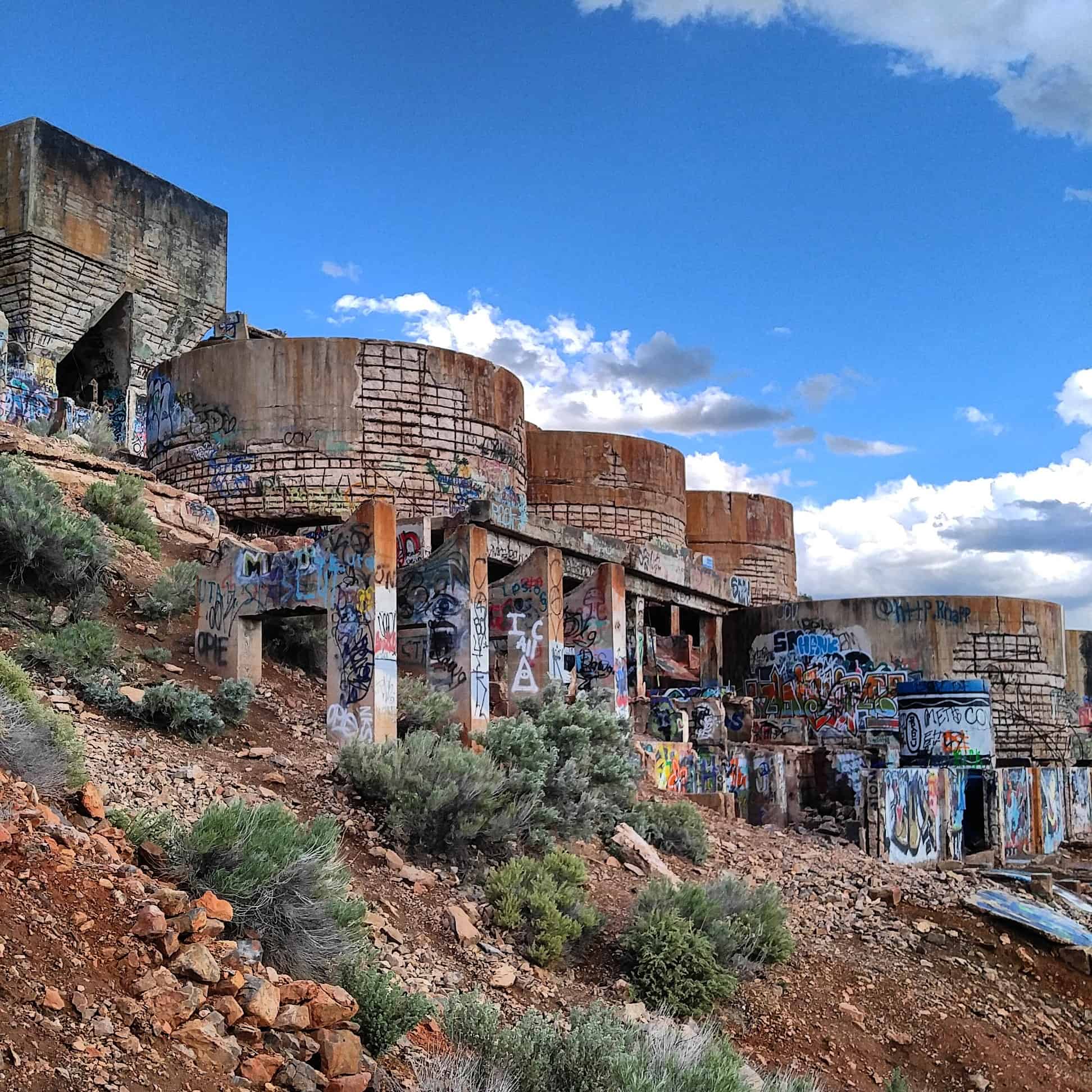
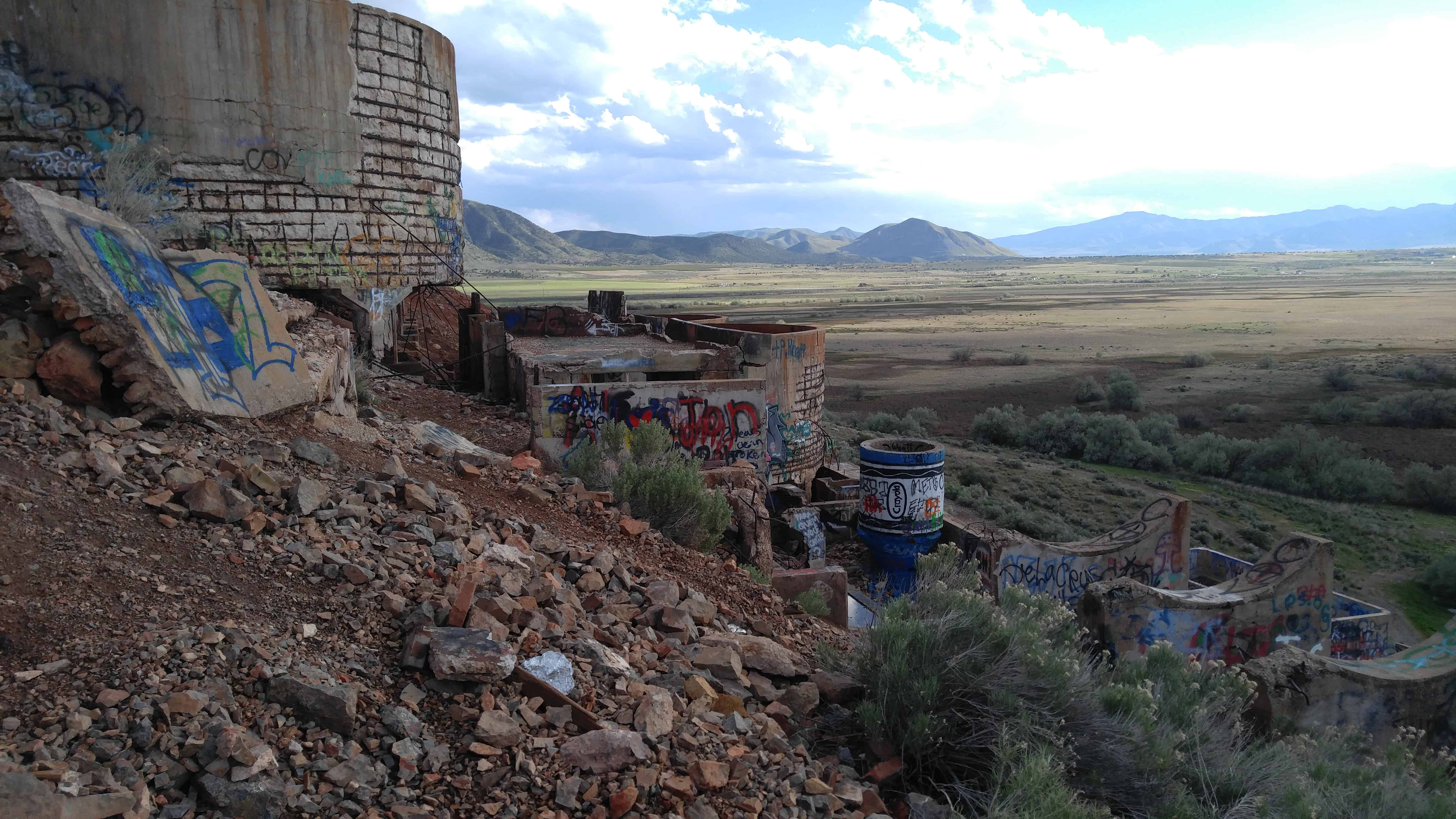
The Tintic Standard Reduction Mill presently stands in partial ruin. Drawings prepared by the HAER survey show front and side elevations, as well as a general plan of the mill’s remains. Enough exists to identify the structure as a mill, and to visualize the procedures involved in the milling process. It remains at the original location, Warm Springs, Utah, some two miles east of the town of Goshen in Utah County. The mill was erected on a hillside for gravity purposes.

Originally the mill contained water tanks, ore bins, crushing rolls, Holt-Dern roasters, iron boxes, leaching tanks, and to the side, drain boxes for lead precipitate. While the actual machinery is gone, the shell of the structure remains.

The Tintic Standard Reduction Mill (Harold Mill) was constructed during the 1919-1921 period by the Tintic Standard Mining Company, under Emil John Raddatz, prominent Utah mining entrepreneur. It served as the mill for the Tintic Standard, which became one of the nation’s leading silver producers, operating from 1916 to approximately 1945.

The significance of the mill, in addition to its place as a part of Tintic Standard’s operation, is attributable to its importance in the themes of engineering and industry. W. C. Madge designed and constructed the mill after having consulted with Theodore P. Holt and George H. Bern, Utah developers of the Holt-Dern Roaster. It was built at a cost of $580,000. The Tintic Standard Reduction Mill was the only use of the “antiquated” Augustin process in the United States during the early years of the 1920s. The plant was an acid brine chloritizing and leaching mill. Ore was first roasted with salt, then leached in a strong brine solution and finally precipitated with copper. Recovery rates were fairly high, as in 1924, when the mill recovered 88% of the silver, 60% copper. 32% lead and 7% of the gold held in the ore.

As related to industry, the mill was an important part of Tintic Standard’s operation. In addition, the construction of the plant also reflected the battle, then waging, over railroad transportation rates, which mine owners believed were too high. By milling the ore themselves, owners could save the shipping costs. By 1925, the mine could no longer supply ore of the grade for which the mill was designed. Also, by then, shipping rates declined, therefore, in the fall of that year, the plant shut down.

A town grew up near the mill, named “Harold” after Raddatz’s son. Only the site remains, nevertheless, the town site and especially the mill, aids both in the documentation of mining history and also in the affect this operation had upon nearby small fanning communities such as Goshen, causing them to experience “Boom periods” in their development,

Many people driving from Goshen towards Genola and Santaquin see the Mill up on the mountain and wonder what it is, it is quite curious looking.

The Tintic Standard Reduction Mill is located on the hillside above Genola, Utah and was added to the National Register of Historic Places (#78002700) on September 13, 1978.

tintic-reduction-mill-goshen-utah

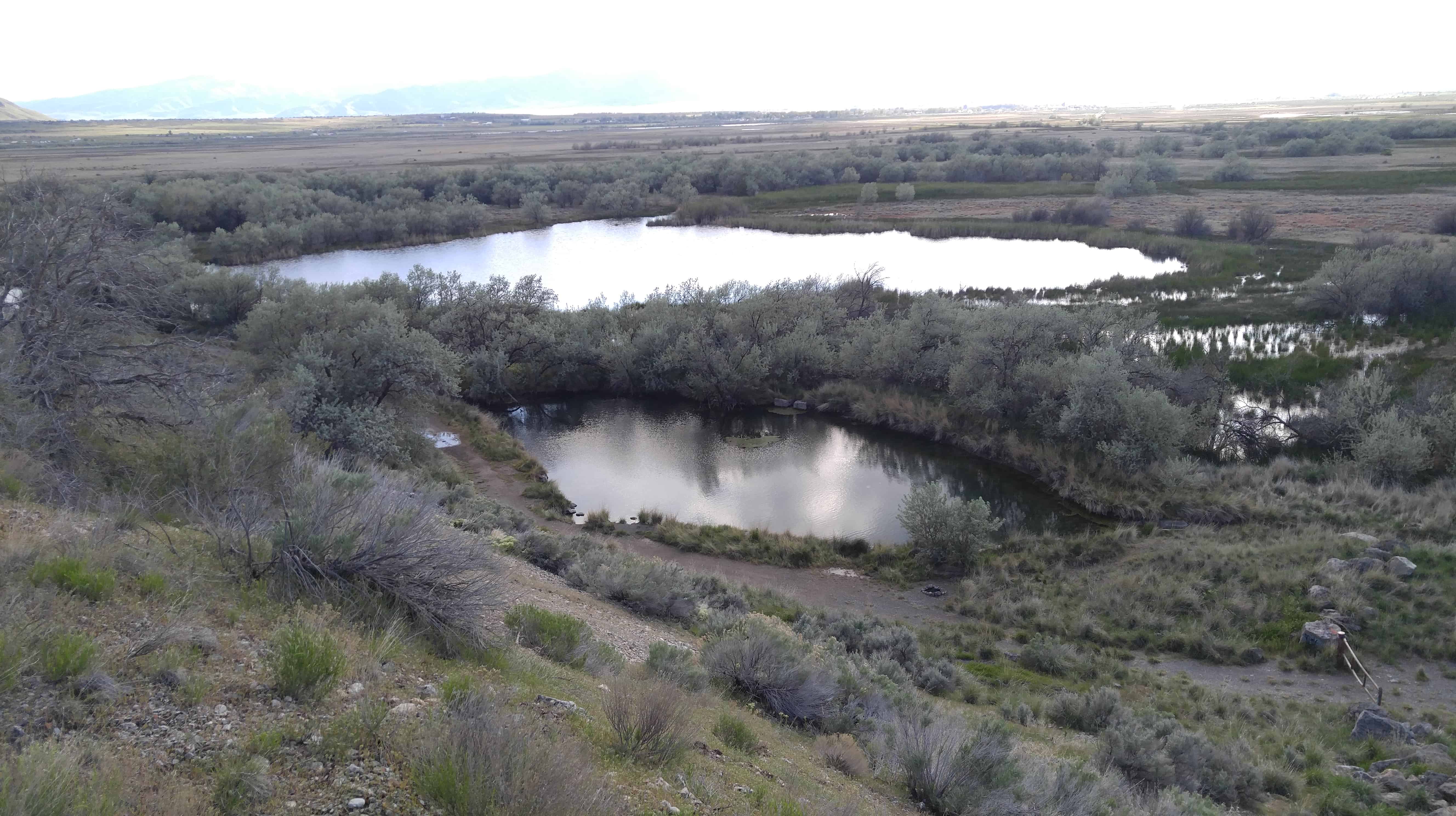
Here are my photos from a trip on 09 May 2016:

IMG_20160509_184724
IMG_20160509_184557
IMG_20160509_184007

The Tintic Standard Reduction Mill (Harold Mill) was constructed during the 1919-1921 period by the Tintic Standard Mining Company, under Ernie J. Raddatz, prominent Utah mining entrepreneur. It served as the mill for the Tintic Standard, which became one of the nation’s leading silver producers, operating from 1916 to approximately 1945.

The significance of the mill, in addition to its place as a part of Tintic Standard’s operation, is attributable to its dunportance in the themes of engineering and industry. W. C. Madge designed and constructed the mill after having consulted with Theodore P. Holt and George H. Bern, Utah developers of the Holt-Dern Roaster. It was built at a cost of $580,000. The Tintic Standard Reduction Mill was the only use of the “antiquated” Augustin process in the United States during the early years of the 1920s. The plant was an acid brine chloridizing and leaching mill. Ore was first roasted with salt, then leached in a strong brine solution and finally precipated with copper. Recovery rates were fairly high, as in 1924, when the mill recovered 88% of the silver, 60% copper. 32% lead and 7% of the gold held in the ore.

As related to industry, the mill was an important part of Tintic Standard’s operation. In addition, the construction of the plant also reflected the battle, then waging, over railroad transportation rates, which mine owners believed were too high. By milling the ore themselves, owners could save the shipping costs. By 1925, the mine could no longer supply ore of the grade for which the mill was designed. Also, by then, shipping rates declined, therefore, in the fall of that year, the plant shut down.

A town grew up near the mill, named “Harold” after Raddatz’s son. Only the site remains, nevertheless, the town site and especially the mill, aids both in the documentation of mining _ history and also in the affect this operation had upon nearby small fanning communities such as Goshen, causing them to experience “Boom periods” in their development,
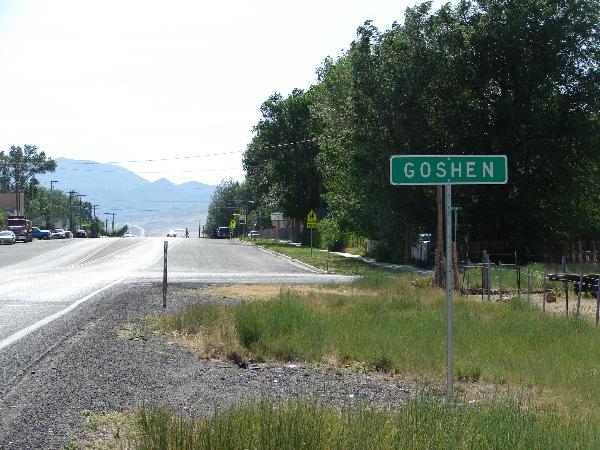
Goshen, Utah

19 Tuesday Nov 2013

Posted by Jacob Barlow in Uncategorized

≈ 4 Comments

Tags

Elberta, Genola, Goshen, Goshen Valley, utah, utah county

  • 48c59f34-0033-4d09-a57a-a83b80bd7b33

Goshen is the slowest growing city or town in Utah County and is the smallest city or town in the County by land size and has 952 residents. It was incorporated in 1910. It was previously known as Sodom, Mechanicsville, Lower Goshen and also Sandtown before being named after Goshen, Connecticut by Phineas Cook.

Related:

  • Cemetery
  • Chapel
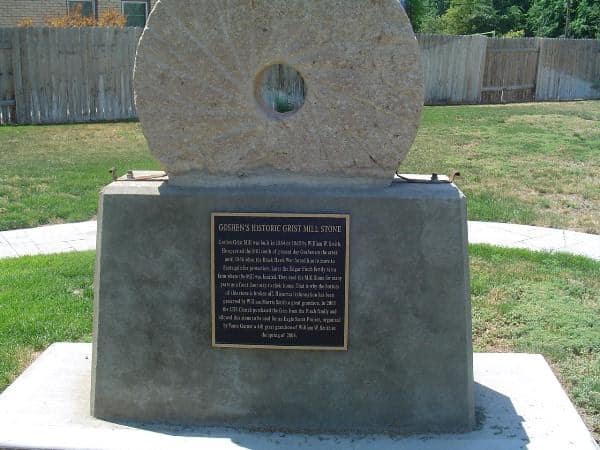
  • Goshen’s Historic Grist Mill Stone
  • Gymnasium
  • Original Goshen Pioneer Cemetery
  • Post Office
  • Senior Center
  • Goshen posts sorted by address
  • Image
  • Image
  • Image

Big Canyon

12 Tuesday Nov 2013

Posted by Jacob Barlow in Uncategorized

≈ Leave a comment

Tags

Dividend, Elberta, Eureka, Goshen Valley, utah, utah county

Big Canyon takes you from the West end of Goshen Valley (west of Elberta) up to Eureka, there are many mines in the hills and a lot of fun area to explore. A favorite place to stop with the kids is the old railroad bridge on the abandoned railroad line that goes through there, you can’t miss it just off to the left as the Canyon starts if you’re going up it (west).

  • Image
  • Image

Mosida, Utah

12 Tuesday Nov 2013

Posted by Jacob Barlow in Uncategorized

≈ 4 Comments

Tags

Elberta, Mosida, utah, utah county

Image

Mosida Utah

Image

Bateman’s Mosida Farms

Mosida is near the south-west shore of Utah Lake, eleven miles north of Elberta. on December 5th, 1908, R.F. Morrison, Joseph A Simpson, and J.E. Davis purchased 6,880 acres of land to establish a new community. Within four to five years a hotel, schoolhouse, post office, and general store were operating. In 1915 the town was hopelessly in debt and by 1924 it was a ghost town. The community name was coined from the first two letters of the three promoters, Morrison, Simpson, and Davis.

In 1911 a telephone line from Lehi was completed and 20 new homes were built. The following year, a 25-room hotel was constructed, as well as a schoolhouse, a post office, and a general store. Mosida boasted a population of almost 600. Mosida was growing, but in 1914 something unexpected happened — the water level in Utah Lake was going down, and by the summer of 1915 the lake had receded a record setting three-eighths of a mile, leaving the pump house useless. The crops soon died. Debts went unpaid and people started leaving.(*)

Image

Mosida Lodge and Wildlife Refuge

Image

Mosida Hotel

Image

Remains of the hotel

Mosida has a church replica handcart trek (my parents are in the stake that runs it), they allow people to reenact the pioneers coming across Wyoming trying to get to Utah. (visit link)

Here’s a cool website talking about Mosida.

Another good one, http://www.waterhistory.org/histories/mosida/mosida.pdf

On 3/19/16 I stopped by with my family and the property owner and took some pictures that can be seen here:


Elberta, Utah

01 Friday Nov 2013

Posted by Jacob Barlow in Uncategorized

≈ 5 Comments

Tags

Elberta, Goshen, Goshen Valley, Mosida, utah, utah county

  • Image

Elberta was originally established in the early 1900′s as two separate settlements Elberta and also Verda, four miles south of this location. The surrounding 15,000 acres were purchased in 1892 by Gilbert Payton and Ernest Rigdon with visions of a fruitful valley and an opportunity to make their fortune in mining. In 1907 Matthew B. Whitney purchased the project from Payton and Rigdon and named Elberta after the delicious Elberta peaches that were growing here.

It was founded as “Mt. Nebo”. After the water failed in 1901 most of the early settlers moved away.

Related Posts:

  • Currant Creek Convenience
  • Abandoned Train Bridge
  • Big Canyon
  • Elberta Slant Train Tunnel
  • Lant, Utah
  • Mosida, Utah
  • Post Office
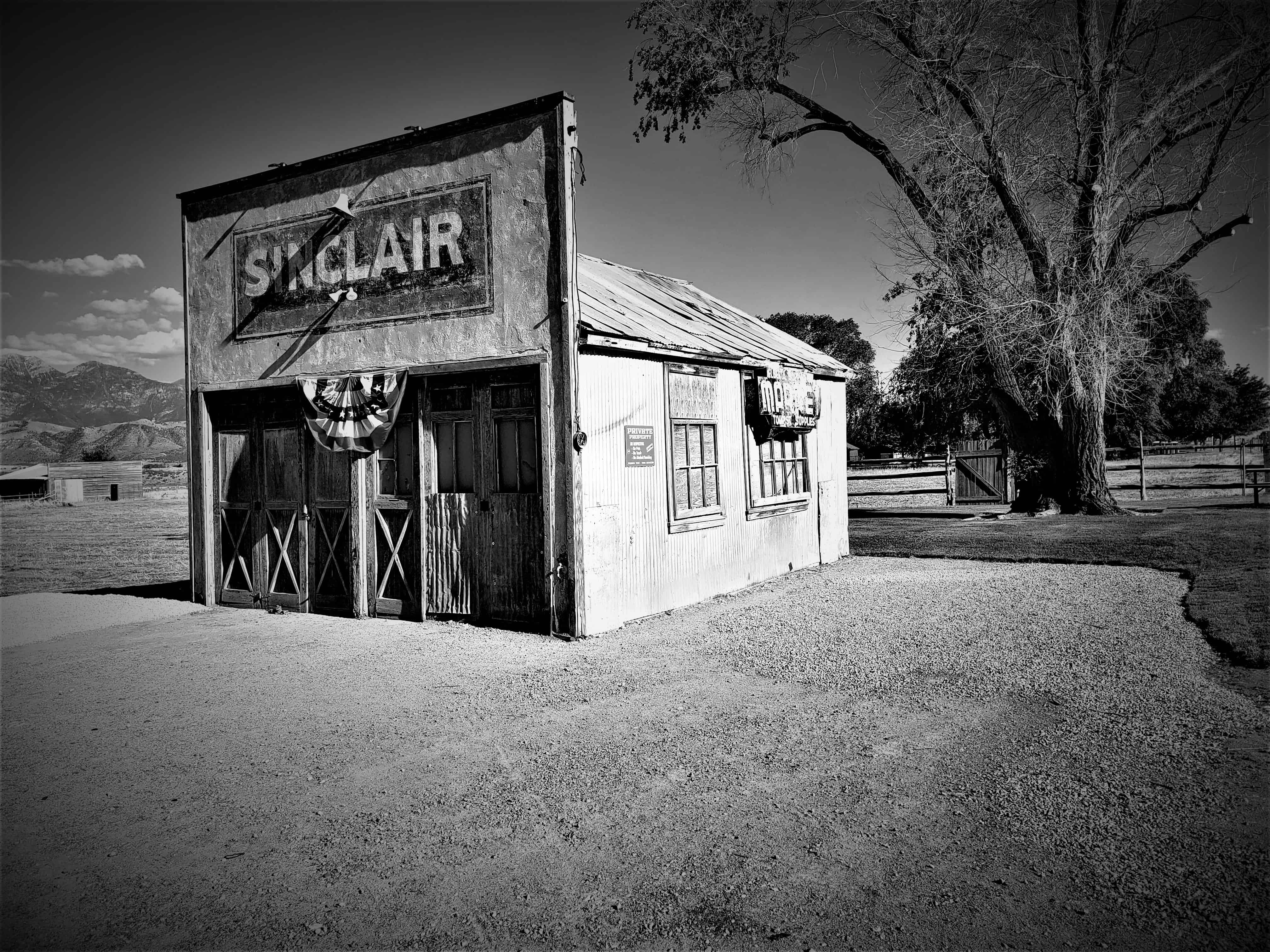
  • Sinclair Station
  • War Memorial

Also, check out: http://www.spanishforkriver.org/history/elberta/

Lant, Utah

30 Wednesday Oct 2013

Posted by Jacob Barlow in Uncategorized

≈ Leave a comment

Tags

Elberta, Goshen, Goshen Valley, Lant, utah, utah county

lant

I don’t know much about Lant yet, it shows up on my maps and it’s between Goshen and Elberta.

There was a fun little herd of buffalo that could be seen near the highway too.

Image

Newer posts →

Follow Jacob

Follow Jacob

Come wander with me on Youtube.

Blog Stats

  • 2,099,054 hits

Social and Other Links

BarlowLinks.com

Recent Posts

  • Scout Monument
  • Provo High School Seminary Building
  • 821 E 100 S
  • 820 E 100 S
  • 817-819 E 100 S

Archives

Loading Comments...