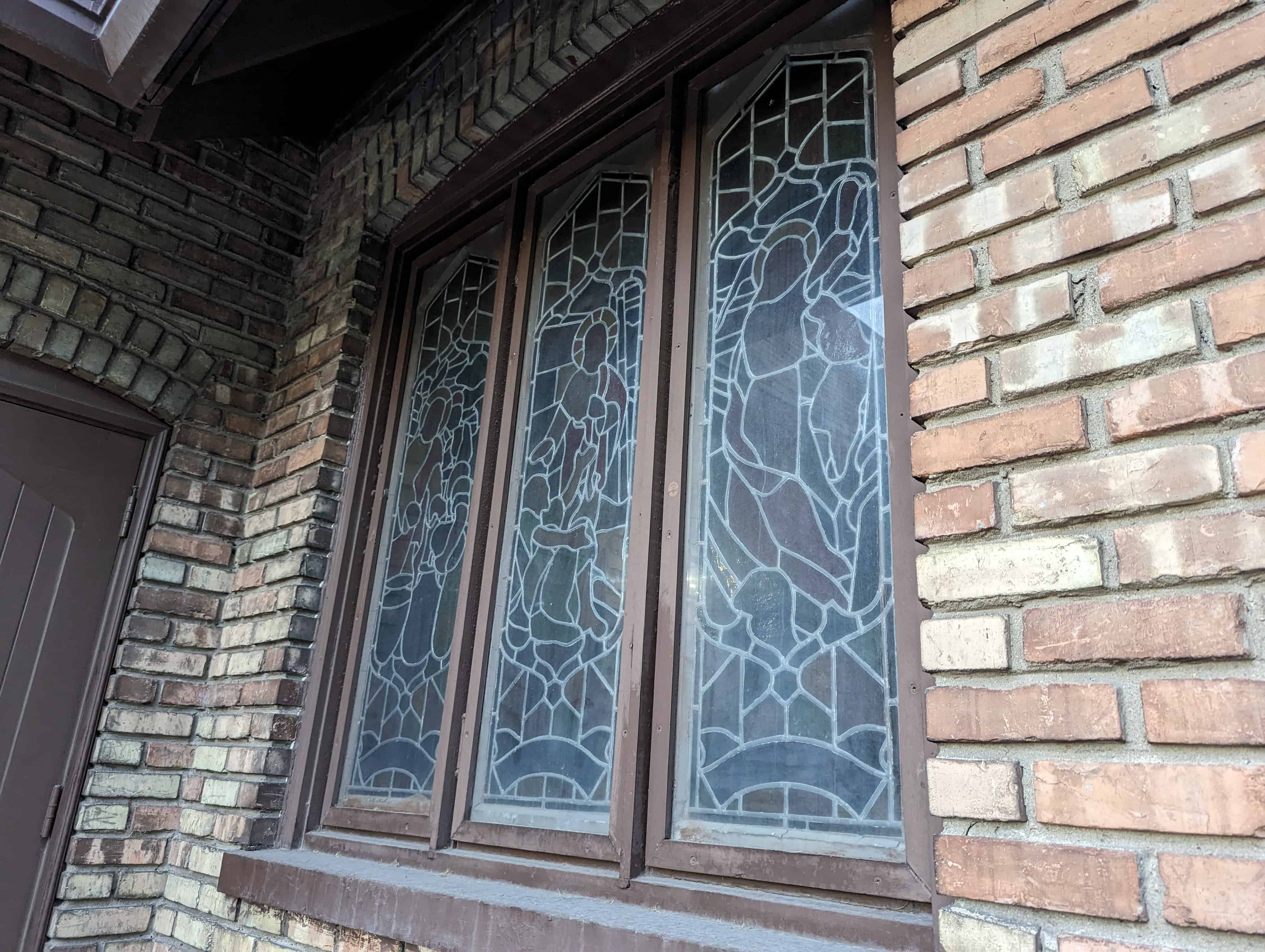
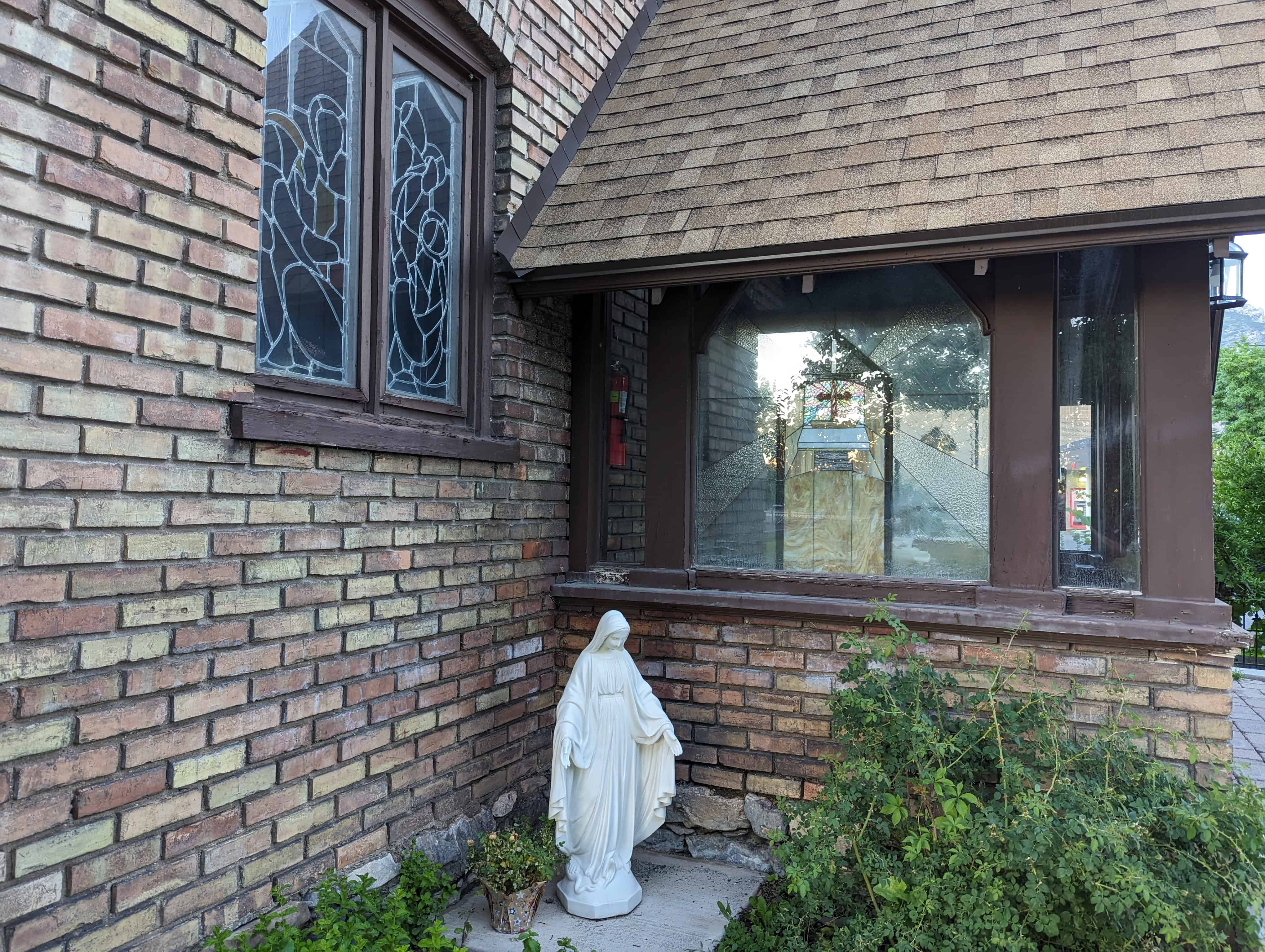
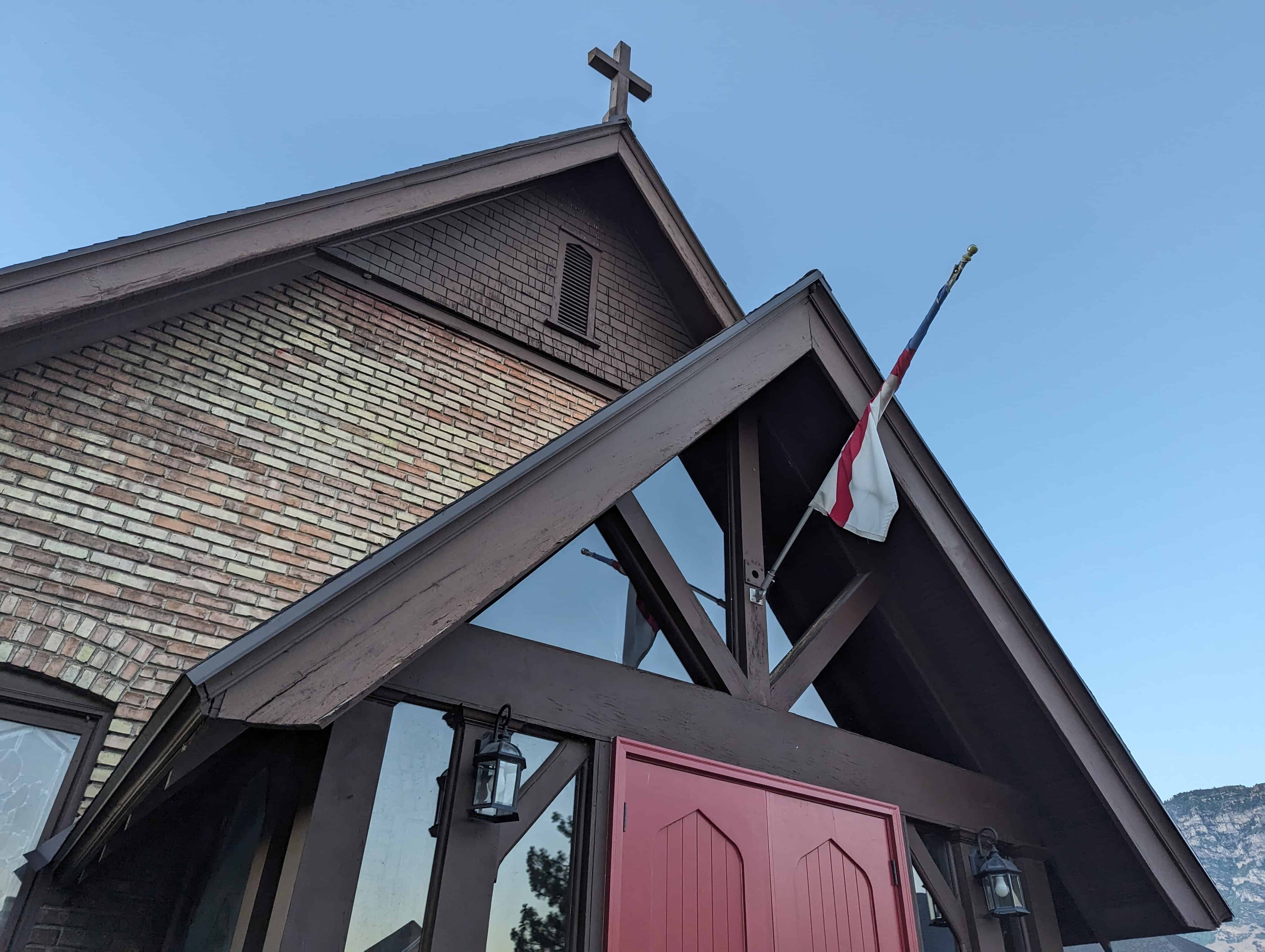
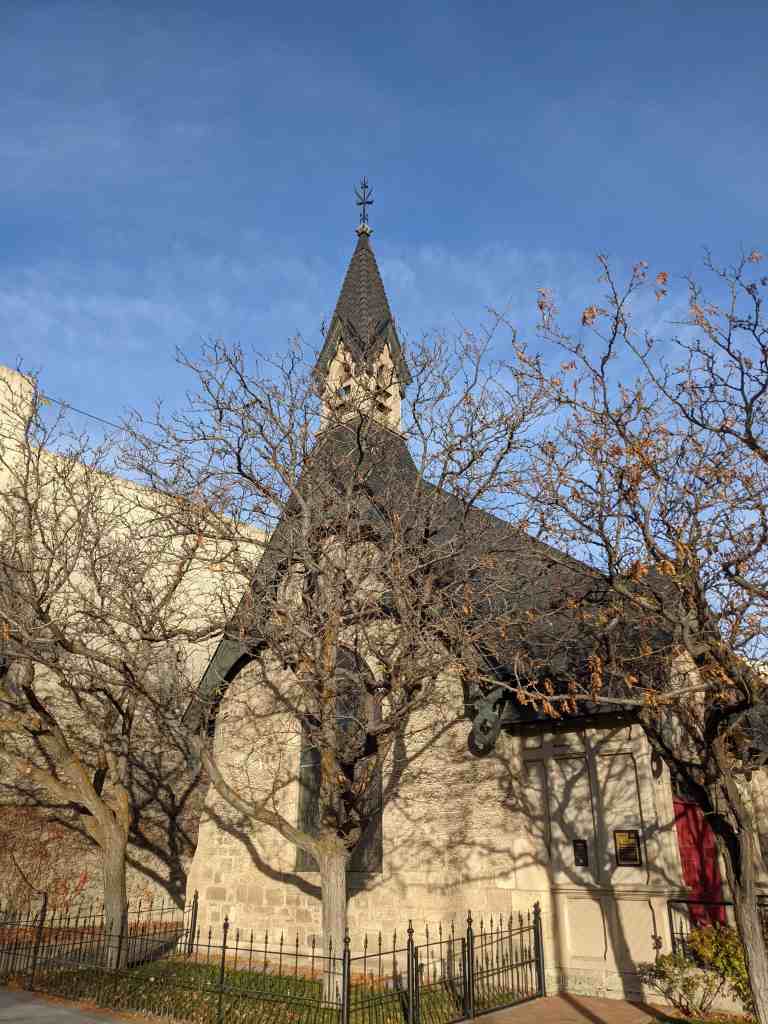
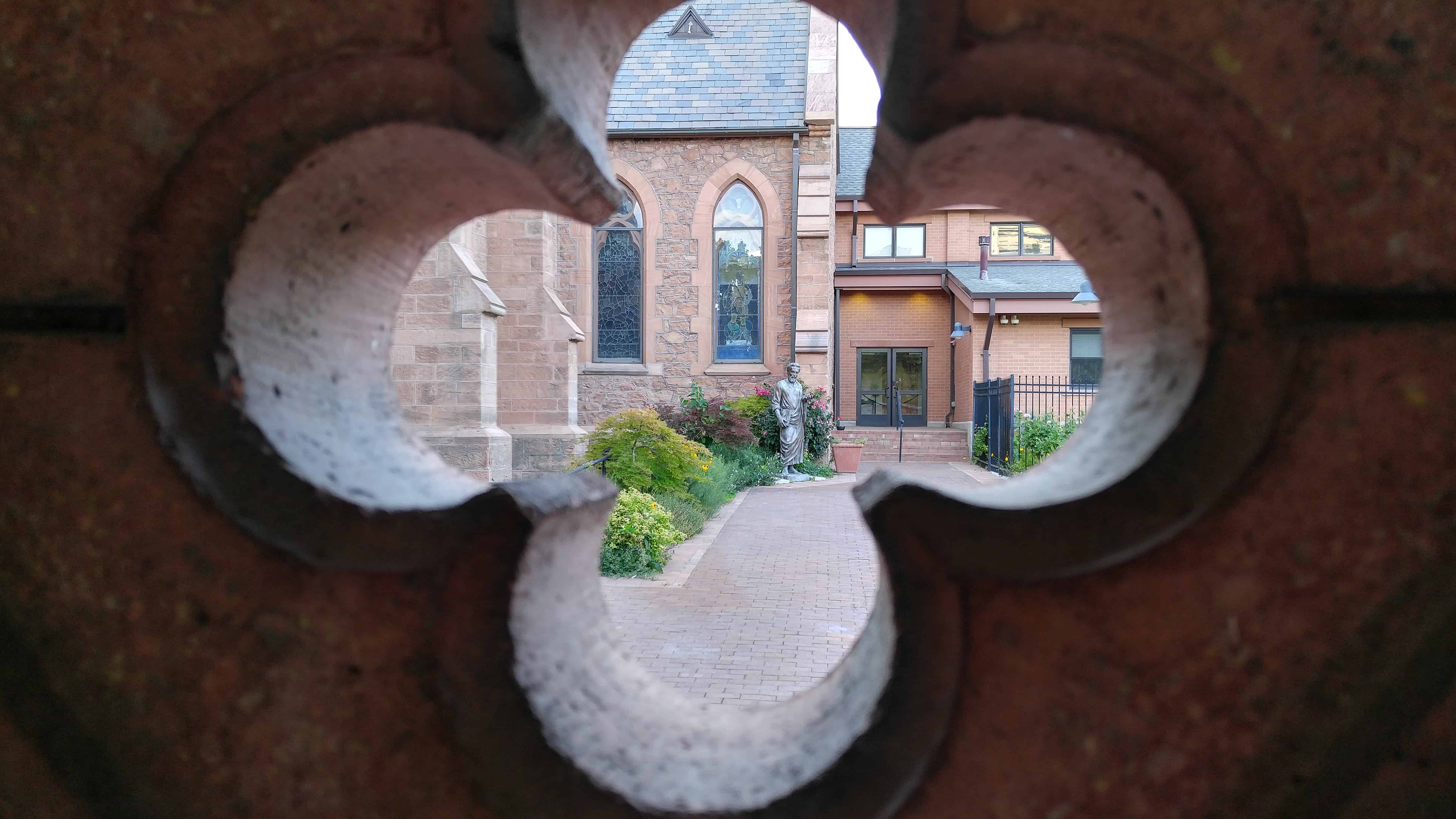
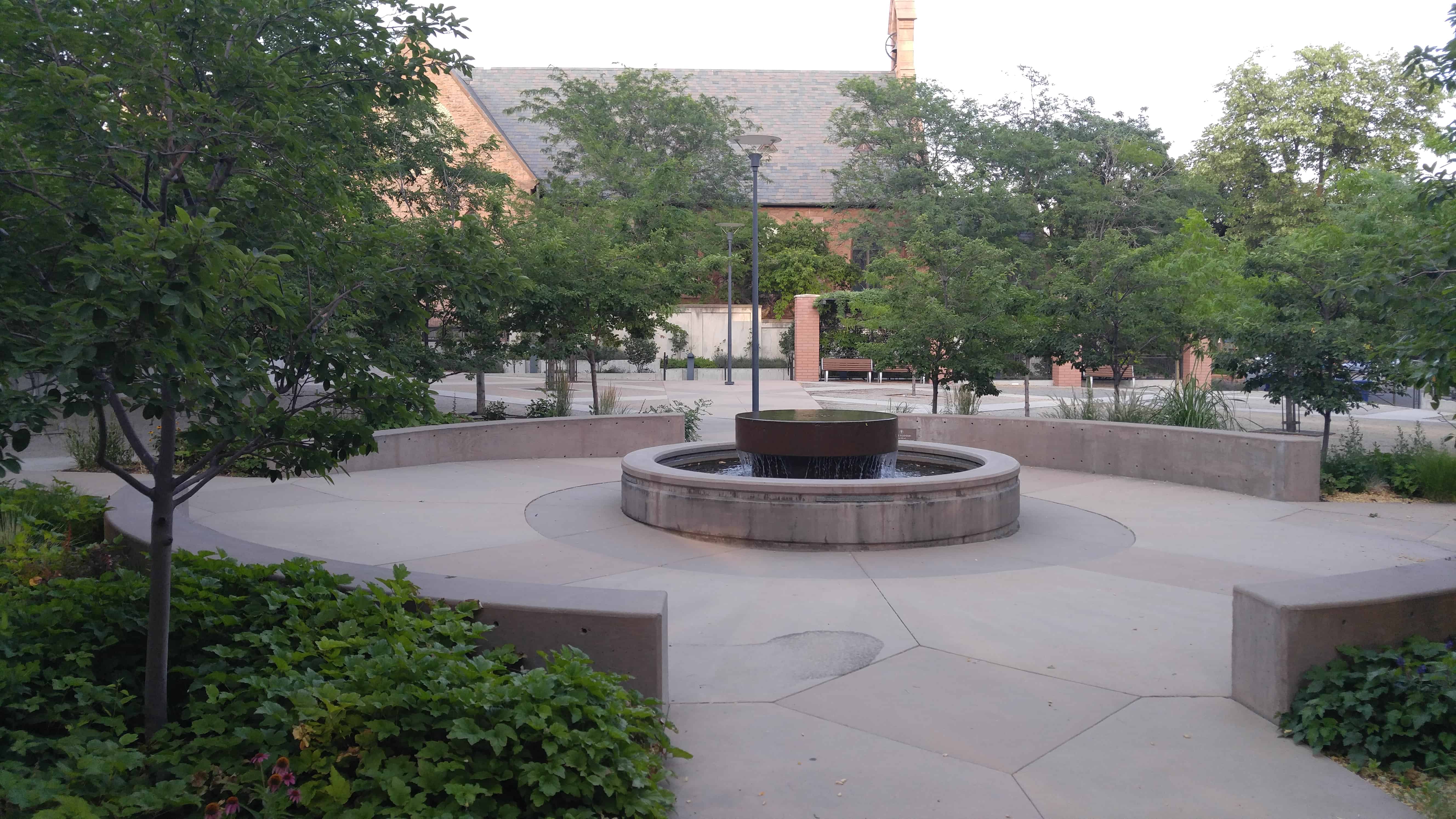
Saint Mary’s Episcopal Church Built in 1907 and located at 50 West 200 North in Provo, Utah
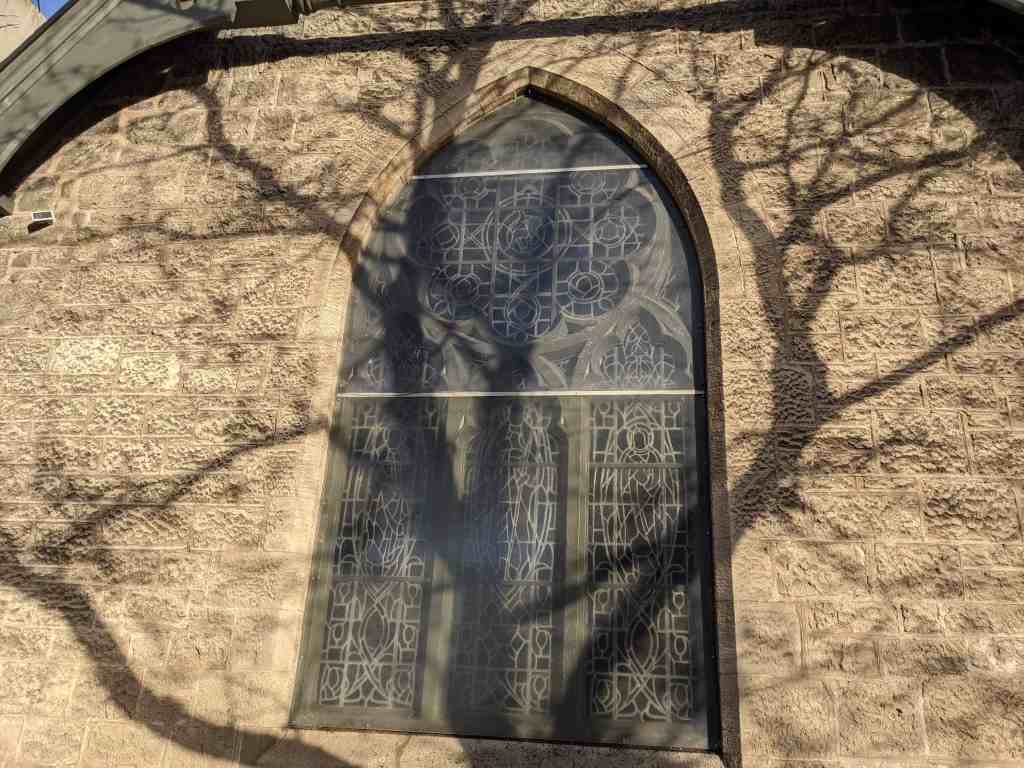
In 1907, the property where St. Mary’s is now located, was purchased and under the direction of Rev. George Townsend the present building was erected. The story is told that Father Townsend drove to the brickyard with his horse and wagon once a week and was given the imperfect bricks, those with corners chipped off, cracked, or rejected for any other reason. The cracks, chipped corners, difference in colors, which add to the beauty of the church, the story is very believable. The corner stone was put in place and the church formally consecrated by Bishop Tuttle, the Third Missionary Bishop of Utah on September 12, 1907. The Rev. Townsend was the Vicar with a congregation consisting of 11 communicants and 18 children in the Sunday school. St. Mary’s started to grow and over the succeeding years several different Priests served as Vicar. By 1920 the size of the congregation had more than tripled. In 1937 the Rev. John Howes came to St. Mary’s. He is especially remembered, for it was during his stay that the ordinary glass windows in the church were replaced with beautiful stained glass windows. These windows are some of the most outstanding and beautiful stained glass in Utah County.
Built in 1901, St. Paul’s Episcopal Church was the first building constructed in Vernal by the Episcopal Church and the second to be built in the Uintah Basin; the first was the Indian Mission church at Randlett. Designed by John P. Hill, an architect from Salt Lake City, the building is a good example of the Gothic Revival style. St. Paul’s Lodge was constructed in 1909 as a home for girls who came to Vernal to work or attend school. It also served as the center of the auxiliary activities of the Episcopal Church in the community and, from the late 1920s until 1947, as the major hospital in the Uintah Basin. During the past forty years it has continued in use as the center of church and community activities.
Located at 226 West Main Street in Vernal, Utah and added to the National Historic Register (#85000049) on January 3, 1985.
St. Paul’s Episcopal Church, built in 1901, and St. Paul’s Lodge, built in 1909, are significant for their historical role as the center of the Episcopal church activities both in Vernal and in the entire Uintah Basin of northeastern Utah. Both buildings are also architecturally significant. St. Paul’s was the first building constructed by the Episcopal Church in Vernal, a predominantly Mormon town, and the second church con- structed by the Episcopal church in the Uintah Basin; the first was the Indian Mission church at Randlett, which has been moved from its original location in recent years. St. Paul’s is second only to the church at Randlett as the oldest church building of any denomination in the Uintah Basin. The building documents the spirit of expansion and missionary activity that characterized the Episcopal church in Utah at that time. Architecturally, it is significant as a good example of the Gothic Revival style. St. Paul’s Lodge, which was constructed as a home for girls who came to Vernal to work or attend school, is significant for its central role in the auxiliary activities of the Epsicopal Church in the community. The building also served as one of the early hospitals in the Uintah Basin and was the major hospital in the area between the late 1920s and 1947. It is architecturally significant as a good example of the Craftsman style.
The Reverend O. E. Ostenson arrived in Vernal on September 20, 1900 to begin the work which would lead to the building of St. Paul’s. Regular services began on September 30, 1900 in Jake Workman’s Opera House, but were moved on October 22 to the Odd Fellows Lodge room. The first church committee was appointed by the missionary, Reverend Ostenson, on April 23, 1901.
Property was purchased by the Corporation of the Episcopal Church in Utah for $325 on the H7th of February, 1901 for construction of the church in Vernal. On May 16 of the same year, plans for the building had been completed by Salt Lake architect John P. Hill. Very little is known about Hill or his career in Utah. The church committee let the brick and stone work contract to Andrew Burkley and the carpentry work to William Cook on July 18, 1901. Ground was broken for the church on July 26. Three weeks later on August 20 the Rev. Ostenson, assisted by Indian missionary M.J. Hersey of Randlett, laid the cornerstone for the new church. With the permission of the rector, Miss Anna Forrest named the church that same day. It was named St. Paul’s after St. Paul’s Church in Washington, D.C.
Another building on the site is the parish house. Built in 1909, it was originally called St. Paul’s Lodge and was built by the Girl’s Friendly Society of New York as a home for girls who came to Vernal to attend school or to work. It also served as a center for civic activities and club meetings. In 1928, St. Paul’s church was closed because of inactivity. Four years later the lodge was sold and served for the next several years as the major hospital in Uintah County. Dr. Parley G. Eskelson ran the hospital, and even built his own house next door so that he would always be nearby. At the time that the building was converted into a hospital, its interior was renovated and remodeled in order to meet the needs of a medical care facility. The building had previously been used temporarily as a hospital during the flu epidemic of 1918, and was reportedly used again for a short time in the late 1920s under the direction of Mrs. Jane Murray.
St. Paul’s was reactivated in January of 1947 when Rev. Walter F. Cable was sent to be Deacon-in-charge by the Bishop of Utah. Two years later the lodge was repurchased by the church and has since served as the parish house with apartments for the vicar and meeting rooms for the church. The church building itself has continually remained in the hands of the Episcopal Church.
St. Paul’s Church is the second oldest religious structure still standing in the Uintah Basin. An Indian mission church of the Episcopal Church was built in Randlett in 1896, but it has been moved from its original location. St. Paul’s was completed prior to any of the existing religious buildings in the Vernal area – including LDS structures. The relatively late construction dates of church buildings in Vernal can be attributed to the fact that permanent settlers were not established in Vernal until after 1870.
St. Paul’s Episcopal Church is a small town parish church designed in the Gothic Revival style. It is a rectangular building and has a steeply pitched gable roof, brick exterior walls, and sandstone sills, foundation, and water tables. A large, pointed arch window is centered in the gable end wall facing the street, and it features ornate stained glass and wooden tracery elements. Two brick buttresses flank the stained glass window. The buttresses are decorative and are not repeated on the rear of the building, which has wood shingle siding instead of brick exterior walls. There are five buttresses along each side of the building which appear to be structurally supporting the roof trusses that are exposed on the interior. Pointed-arch, stained glass windows are evenly spaced on the sides of the building between the buttresses.
Alterations to the building are minor and do not detract significantly from the original integrity of the building. A small, concrete block addition was built on the rear of the church (n.d.), but it is not visible from the front or public views. The original wood shingles on the roof were replaced by asphalt shingles a number of years ago. On the interior, carpet has been added in the center aisle and in the altar area, and an entry cubical has also been added (n.d.). In recent years, in order to protect the stained glass windows on the building, sheets of transparent, hard plastic have been fitted into the window openings on the outside of the stained glass.
St. Paul’s is an excellent example of a small Gothic Revival church building. Elements which distinguish the church as a Gothic Revival building are the steeply pitched gable roof, the buttresses, and the pointed arch stained glass window with tracery and colored glass. It is probably the best example of the Greek Revival style in both the city of Vernal and the Uintah Basin.
St. Paul’s Lodge is a two-story, brick Craftsman style house with a gable roof and a full-width, one-story front porch. Elements of the Craftsman style include the broad gable roof, the half timbering in the upper portion of the gable end, and the exposed rafters and purlins, and the exposed woodwork in the gables of the wall dormers and porch on the west side of the building. The four symmetrically spaced windows on the upper story of the façade have pointed relieving arches. There is a bay window on the west side of the building. The foundation is constructed of coursed sandstone. There is a one-story gabled section on the rear of the building, which, judging from its appearance and materials, was probably built at the same time as the main portion of the house.
Alterations that have been made on the exterior of the house are minor and do not significantly detract from its original appearance. The exterior brick walls have been painted (n.d.), and the openings on the front porch have been filled in with windows (n.d.). The interior of the house was altered somewhat when the building was converted into a hospital.
Houses designed in the Craftsman style in Utah are quite limited, based on the results of the partially completed state survey of historical and architectural sites. The Craftsman influence, however, was profound, especially in the first two decades of the twentieth century. Broad gable roofs, exposed rafters and half timbering are the most prevalent evidence of the Craftsman influence and occur on bungalows in most Utah towns. Even though St. Paul’s Lodge is not a premier example of the style in the state, it is significant as one of the few houses that were specifically designed in the Craftsman style.
The Episcopal Church of the Good Shepherd is an example of “Carpenter Gothic” style of architecture. Some of the buildings defining features are the stained glass contained in the Tudor windows, the bell tower which contains the first church bell ever to be rung in Ogden, and the wrought iron fence across the front of the courtyard.
The Episcopal Church was the first Protestant religion to locate in Utah. Bishop Daniel Tuttle arrived in Utah in 1867. Three years later, in 1870, Reverend James Lee Gillogly was sent to Ogden as a resident missionary. In 1874, Bishop Tuttle obtained a $4,000 donation from John W. Hammersly of New York for the erection of a church in Ogden in memory of his daughter, Mrs. Catherine L. Livingstone.
The cornerstone was laid April 29, 1874 and the building was consecrated on February 6, 1875. It stands today as a reminder of the pioneering work of the early Episcopalians in the west.
Located at 2374 Grant Avenue in Ogden, Utah and added to the National Historic Register (#73001864) on April 3, 1973.
Twenty years after the arrival of the first Mormons in Utah other religious groups began to make inroads into the Mormon Zion, The first Protestant group to set up a permanent organization in Utah was the Episcopal Church. The Episcopalians did not come West with the express purpose of making converts of the Mormons but rather to find its members and offer services to them.
Brigham Young said that he did not expect any “abuse and detraction from an Episcopal bishop. They are men of education and better sense; they are gentlemen, and any gentleman is welcome here, no matter what his creed.” (Daniel Sylvester Tuttle, Reminiscences of a Missionary Bishop, p. 59-60)
Bishop Daniel Tuttle arrived in Utah in 1867, Three years later, in 1870, Reverend James Lee Gillogly was sent to Ogden as a resident missionary. Church services were first held in the passenger room of the Ogden train station. That same year an old building which had been used as a saloon was secured for church and educational purposes.
In 1874 Bishop Tuttle obtained a $4000 donation from John W. Hammersley of New York for the erection of a church in Ogden in memory of his daughter, Mrs. Catherine L, Livingstone, The designs for the church were provided by Gordon W. Lloyd of Detroit, Michigan.
The cornerstone was laid April 29, 1874 and on February 6, 1875 the church was consecrated. The total cost was near $11,000 and Mr. Hammers ley willingly provided the extra money.
From the time of his arrival Mr. Gillogly assumed an attitude of strong and square opposition to the Mormons, As a result antagonisms did develop between the two churches. In this sense the Church of The Good Shepherd serves as a reminder of that conflict, but even more so it stands as a monument to the pioneering work of the early Episcopalians in the West.
Church of the Good Shepherd (Episcopal)
Congregation established 1870. Cornerstone laid April 29, 1874 by Bishop Daniel S. Tuttle. Consecrated February 6, 1875. Funds donated by John W. Hammersley of New York.
Dedicated to the Glory of God Tuttle Hall In memory of The Rt. Rev. Daniel Sylvester Tuttle First Bishop of Utah
A fire in 1935 gutted the sanctuary, but the church was rebuilt following the original design.
Located in the Central City neighborhood at 231 East 100 South in Salt Lake City, Utah. The building was added to the National Historic Register (#70000630) on September 22, 1970.
The original plan for the Cathedral was drawn by Richard Upjohn. His design called for an east-west transept on a Latin cross plan. The cornerstone was laid in 1870, but only part of the nave was built in 1871. However, the original plan was completed in two later stages, 1882 and 1902.
It was built of red sandstone, cutstone, and rubble, with one story, a basement and a gabled roof. The belfry and chimney are extensions of the façade. The nave windows have Gothic arches; the; gables contain rose windows. Arched roof beams are supported on hammerbeams and stone corbels. The stained glass windows represent the tastes of a ninety-year period and include several from Tiffany Studios.
Several alterations have been made. The east transept and an organ were added in October 1882; the west transept and chancel were added in 1902 (architect: Mr. Hall). The west transept and chancel were rebuilt after fire on March 31, 1935. The interior alterations to the main and second floor were by architects, Snedaker & Macdonald (November 1946). The front was extended with a new vestibule and cloisters were added in 1958 (architect: Ashley T. Carpenter). The balcony and organ were installed at rear of nave in 19&7 by Mr. Carpenter. Present condition of fabric is excellent. The additions obscure, but have not changed, the original building.
St. Mark’s Episcopal Cathedral is the oldest non-Mormon cathedral in Utah and probably the oldest religious structure in continuous use in Salt Lake City. It was designed by famed architect, Richard Upjohn, architect of the Trinity Church, New York City, and founder and first president of the American Institute of Architects. It is said to be the last church designed by Mr. Upjohn and is a good example of his Gothic Revival style. Its location in Utah is significant.
Now owned by the Corporation of the Episcopal Church of Utah, 1911, St. Mark’s Episcopal Cathedral, Parrish of Salt Lake City, Utah, who held the cornerstone centennial celebration April, 1970. This lovely cathedral sits in downtown Salt Lake City as a monument to a great architect and pioneer church construction in Utah.