
Located in Fountain Green, Utah
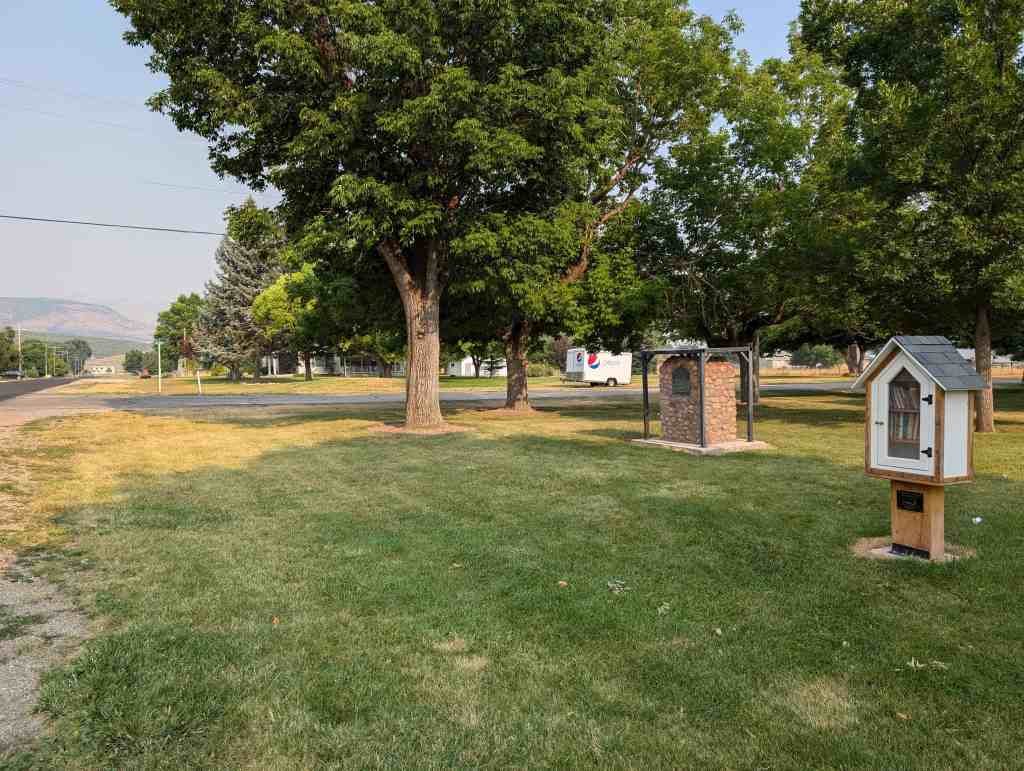
Located here among other things are the Uinta Springs D.U.P. Marker and a Little Free Library.

28 Sunday Jul 2024
Posted in Uncategorized
Located in Fountain Green, Utah
Located here among other things are the Uinta Springs D.U.P. Marker and a Little Free Library.
05 Wednesday Apr 2023
Posted in Uncategorized

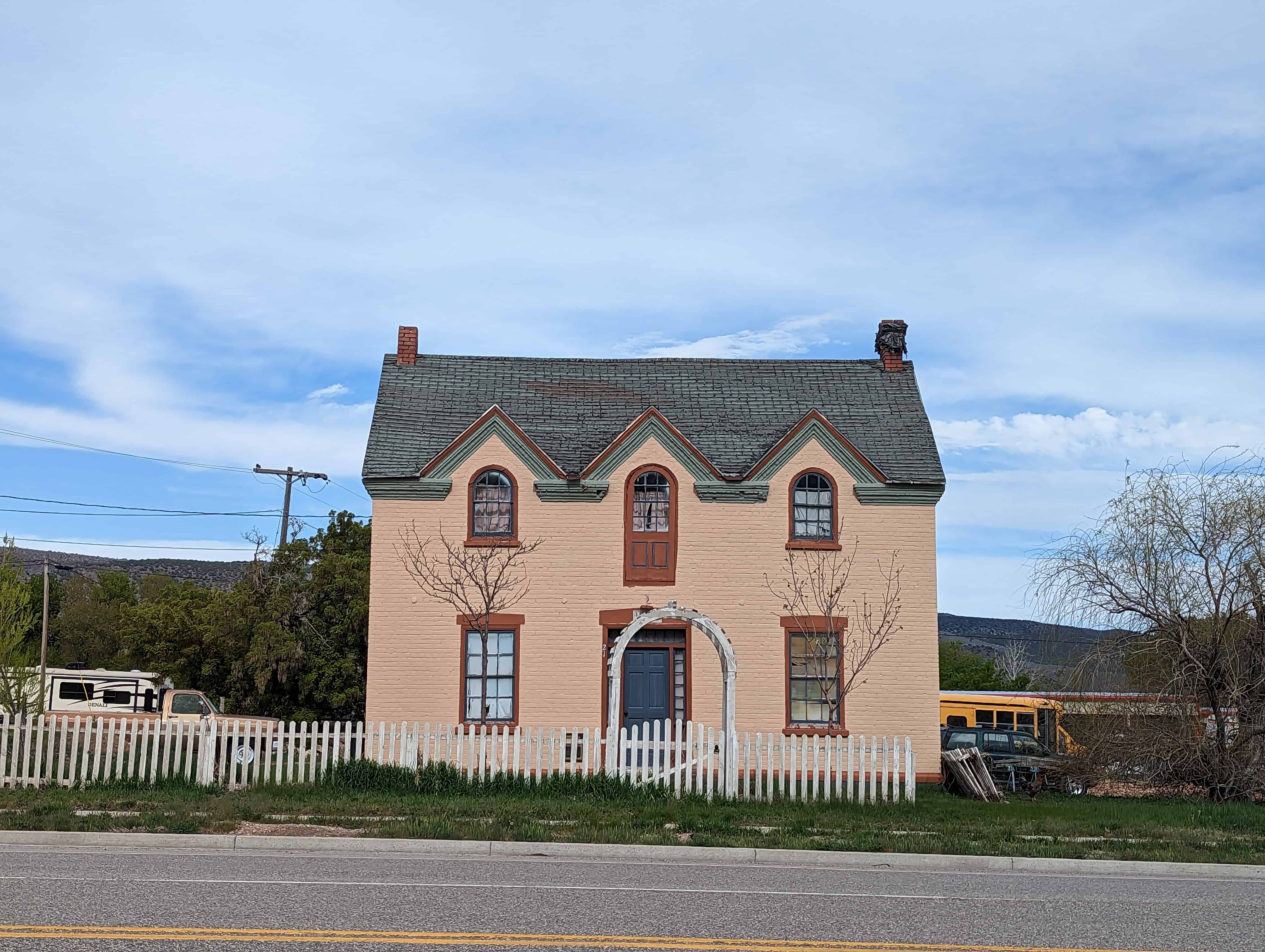
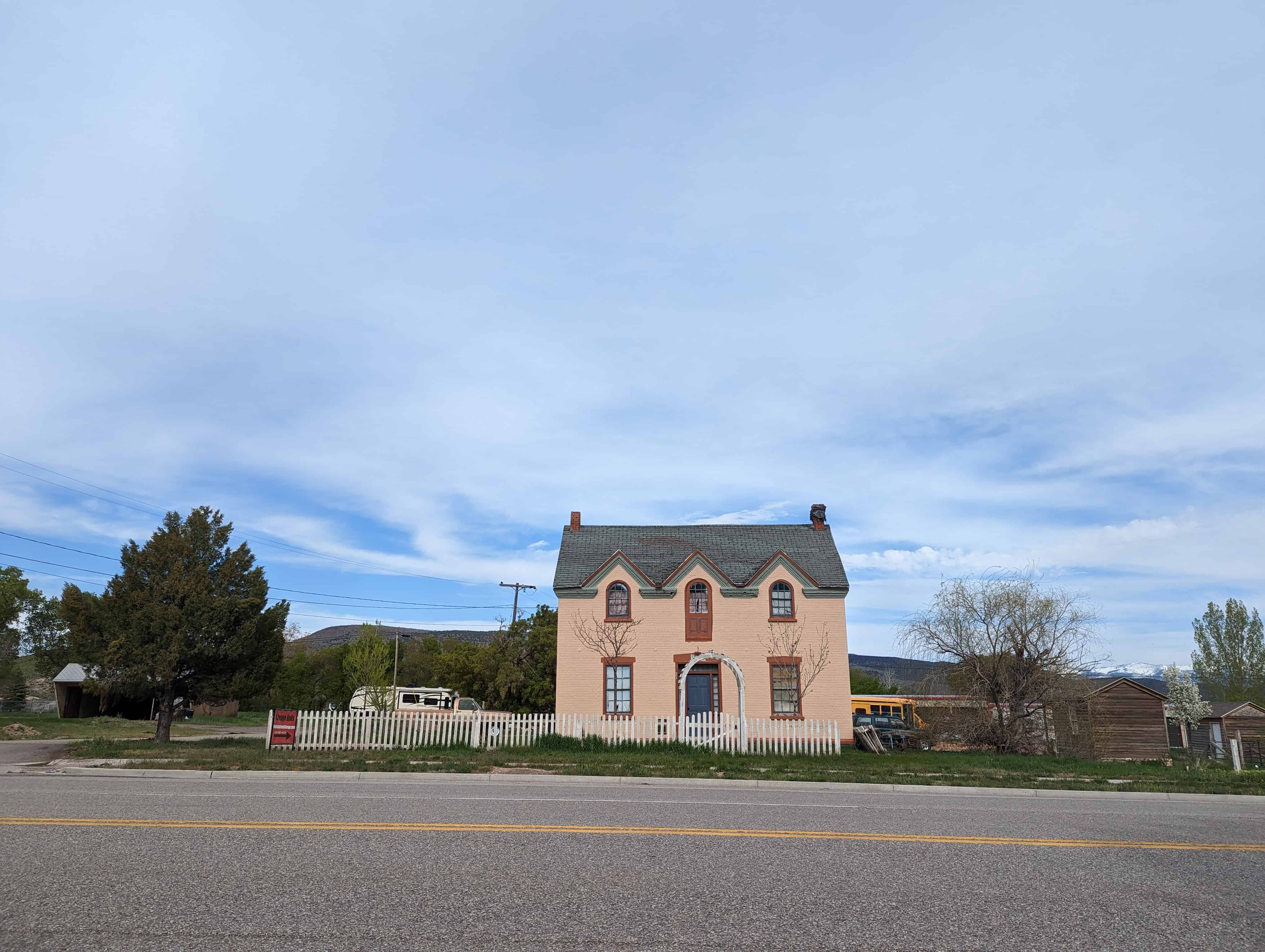
Hans Peter Olsen House
The Hans Peter Olsen home was constructed in 1877, nineteen years after Mr. Olsen came to Utah from Denmark. Born May 30, 1833, in Jutland, Denmark, Hans Peter Olsen grew up on his father’s farm, In 1853 he joined the Mormon Church and spent the next four years as a traveling elder in his native country, In 1858 he sailed from Denmark on board the John Bright. Although the Utah War forced most of the European emigrants remain at Iowa City and Florence, Nebraska, until the following year, a group of fourteen “Danish Fellows” of which Hans Peter was a member, was allowed to journey to Utah with a group of missionaries returning to Utah in the Eldredge company. In November 1858 he settled in Manti and the following spring moved to Moroni as one of the first settlers of that community. In 1867 he moved to Fountain Green and ten years later constructed the lovely brick home. He returned to Denmark on two missions for the LDS Church first in 1869 and again in 1891, While living in Fountain Green, he was a farmer and director of the local co-op store.
The significance of the Hans Peter Olsen home is that it is one of the finest pioneer brick homes in Sanpete Valley.
Located at 211 South State Street in Fountain Green, Utah and added to the National Historic Register (#76001834) on April 22, 1976.

The Hans Peter Olsen home is significant architecturally as an outstanding example of pioneer industry, design and craftsmanship. The well preserved residence embodies the best elements of representative pioneer building during the transitional period of vernacular to “high-style” architecture. Late pioneer features such as the symmetrical 3-bay front façade, four-over-four plan, end wall chimneys and Federal entry bay are combined with less typical decorative embellishments such as Roman-arched upper windows and an unusual corbeled brick cornice with dentil band where a wooden frieze would ordinarily appear. In an area of predominantly white limestone homes, the Olsen home stands out as being unique to the region. Craftsmanship throughout the structure is excellent, a fit compliment to the stateliness and utility of the design. Qualities of permanence and beauty in the building reflect Olsen’s philosophic commitment to Mormon concepts of Kingdom-building in the Sanpete County community of Fountain Green.
01 Monday Aug 2022
Posted in Uncategorized
Built in 1917 by The Church of Jesus Christ of Latter-Day Saints as a recreation hall with a theater and dance hall, it has been beautifully restored.
Located at 74 South State Street in Fountain Green, Utah.


22 Tuesday Jun 2021
Posted in Uncategorized

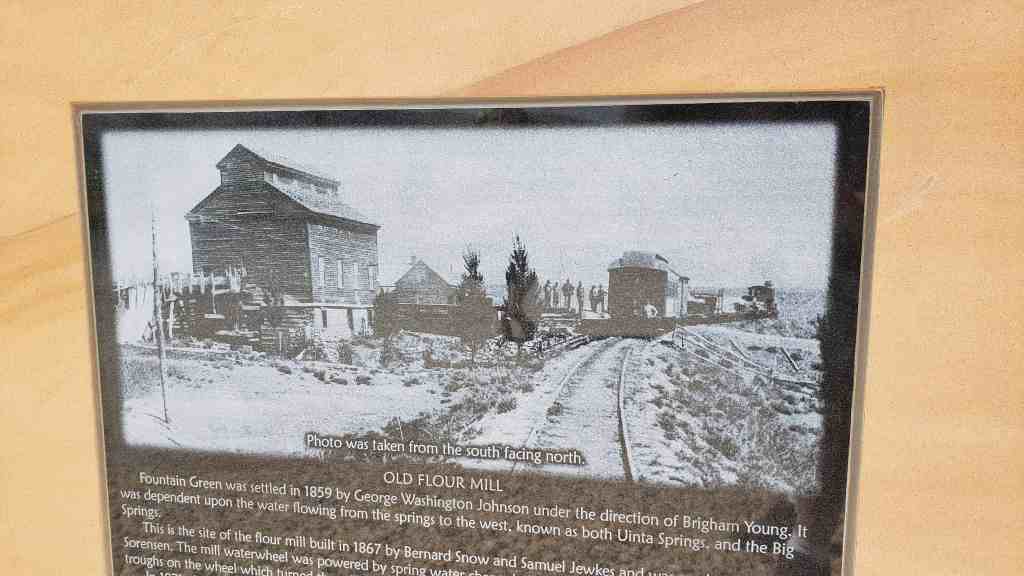
Old Flour Mill
Fountain Green was settled in 1859 by George Washington Johnson under the direction of Brigham Young. It was dependent upon the water flowing from the springs to the west, known as both Uinta Springs, and the Big Springs.
This is the site of the flour mill built in 1867 by Bernard Snow and Samuel Jewkes and was run by Miller Ole Sorensen. The mill waterwheel was powered by spring water channeled through a flume that filled small wooden throughs on the wheel which turned the millstones inside the mill.
In 1871, the mill was destroyed by fire and replaced by a larger mill built in 1872. People brought wheat or a grist to the mill in exchange for bran, shorts, germade and flour. Fountain Green flour, Phoenix Rolling Mill brand, was of the highest quality and established Sanpete County as the “Breadbasket of Utah.”
1875 brought the addition of a narrow gauge railroad that stopped in Wales, Fountain Green, and Nephi. The railroad berm located to the southeast of the mill formed a commerce hub. The train transported flour and grist, coal from Wales, adobe brick made at the brickyard northeast of the flour mill, livestock, mail and passengers. Ole Sorensen served as the express agent and had the first telephone in Fountain Green.
In 1889, the mill burned again and was rebuilt with an up-grade to produce 40 barrels a day. The new company owners were Charles Foote, Lewis Anderson, A.J. Aagard and Ole Sorensen. Ole Sorensen continued to supervise the mill operations. The mill converted to electrical power in 1903.
Niels Hansen purchased the mill in 1904 and continued operations until 1918. It was then managed by Lawrence Hermansen and others. In the 1930s the mill closed and the lumber and machinery were moved to Gunnison.
This monument is D.U.P. Marker #589 (see others on this page) and was dedicated June 19th, 2021.
Related:



24 Friday Apr 2020
Posted in Uncategorized

Built in 1906, this is one of 28 still extant, well-preserved tithing buildings in Utah designed from one of at least three standard plans. It is almost identical to the design of the Ephraim, Spring City, and Fairview tithing offices. One half of the facade consists of an arched porch set in the northeast corner; the other half has three windows. This is a one-story building with tall sandstone foundation and red brick walls plus a pyramid-shaped hip roof. A carved stone inscription plaque distinguishes it from its neighbors. The building is very well-preserved and has undergone some careful restoration. Bishop C.J. Christensen had this building constructed at a cost of $2300. He managed this tithing office between the 1850’s and 1910. It was also used as women’s Relief Society building. Vacant during the 1950’s it is now used by the Daughter of the Utah Pioneers.(*)
Related Posts:


29 Thursday Aug 2019
Posted in Uncategorized
26 Sunday Apr 2015
Posted in Uncategorized
Hans Peter Olsen Home
This two-story brick home was constructed in 1877 by Hans Peter Olsen. A Mormon convert who left his native Denmark in 1853 at the age of twenty, Mr Olsen was a farmer and director of the Fountain Green Co-Op Store.


16 Monday Feb 2015
Posted in Uncategorized
Tags

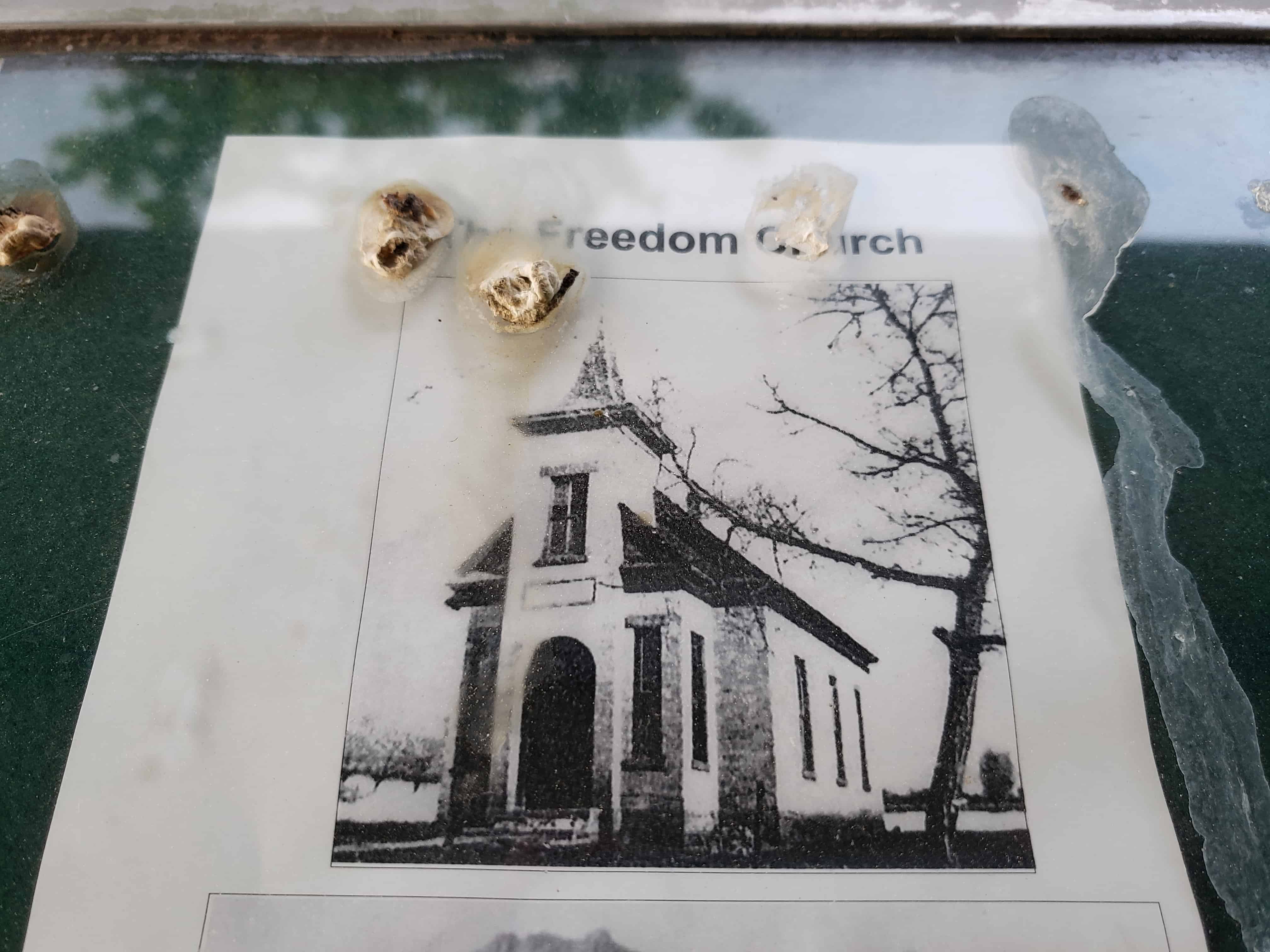
Originally called Draper, Freedom began in 1871 and is located just west of Moroni in Sanpete County.
History of Freedom, Utah by Janice and Marlyce Rawlings
L.D.S. Ward organized: 1877-1881
L.D.S. Ward reorganized: 1897-1926
Population at its maximum; About 20 families, over 200 people
Electricity came to Freedom: 1935
The fruit orchards in Freedom were known as the best in Sanpete County. They grew apples, peaches, apricots, cherries, pears and plums. At the top of the street at the foot of the mountain there was a large piece of ground planted in strawberries and raspberries.
William L. Draper, known as “Doc Draper”, moved his family to Freedom in 1870 because it was a very lush, fertile valley where grain would grow very tall. William’s brothers Henry, Grant, Parley and Albert followed him to homestead in Freedom. They originally called this place Draper. The postal authorities made them change the name because there was already a town called Draper, Utah, south of Salt Lake. They then renamed it Freedom because freedom was what they wanted and they felt free now to do
anything they wanted. Freedom became a County Precinct in 1875. The Drapers filed on their homesteads in 1878. The town was never incorporated. William Draper died in Freedom.
Freedom grew as many people found it a desirable place to live. At one time there were as many as twenty families making a population of over 200 people residing in Freedom. There were approximately 30 houses in Freedom during the depression. Many of the families were polygamist families. There are those who say Freedom, in the springtime, looked like the Garden of Eden.
The railroad was run from Nephi through Freedom to the coal mines in Wales. Martin Van Buren Taylor had a contract to build some of the grade for the railroad. He took his boys and some other people and built the grade from Fountain Green to Wales. There was a little shack about a mile south of Freedom which was a depot where they could flag down the train so people could get on.
The town of Freedom had a school house, church, town hall, and a small store that was connected to Dorcey Draper’s home. At first they had to go to town for their mail but eventually they had their own Post
Office.
Freedom Schoolhouse
Freedom had its own school house. In the front of a book that belonged to Glen Taylor’s sister, in the possession of Margaret Taylor at this time, it states that school started October 6, 1902. Her husband Glen Taylor told her his memory of the school as it was when he attended in 1906. The school was built of lumber and was approximately 30 feet by 50 feet in size. It was built between the old home of Joseph Draper (Dorcey’s Dad) and Frank Eliason’s fence line.
The one room school house had two large windows on the west side and had two windows on the opposite side. There were also two smaller windows on the entrance side of the school. The heating stove was located in the center of the room. The school benches and the desks were lined up on each side of the stove. There were two students to a desk and they were seated according to the grade they were in from beginner to sixth grade. Later on single desks were purchased. There was a blackboard at the front of the room and the teacher’s desk. The children wrote on slates. There were between eight and sixteen children at various times in attendance depending on the number of eligible aged children. The children started school at the age of six and there were six grades taught in the Freedom School House.
The children of Freedom walked to school as well as the children from Jerusalem, which is a mile or more to the north of Freedom. They took their lunches with them. School started at 8:00 a.m. and let out at 4:00 p.m. They had a morning and afternoon recess at which time they played marbles, baseball, tag and other sports.
Some of the teachers were Mary D. Taylor, Hannah Hardy, Myrtle Thorpe, Sarah Sumsion, Delphia Rees and Marie Anderson. Most of them lived with families in Freedom during the school year.
After the sixth grade the children rode in a covered wagon to Moroni to school, but the children from Jerusalem still had to walk to Freedom to ride in the wagon to school. They had blankets and heated rocks to keep them warm on the trip during the winter. The trip took two hours with the horses at a fast trot. It was dark when they left Freedom and dark when they returned. The children did their studies at night by lamplight. Lather on they got a school bus. The one room school house in Freedom was closed down in about 1918. The children were then bused to Moroni and it was only a ten to fifteen minute ride.
Freedom’s L.D.S. Church
When the Sanpete Stake of Zion was organized July 4, 1877, the saints of Draper were organized into a ward called Freedom, with Henry Draper as Bishop. He acted as Bishop until 1880, soon after this the ward organization was discontinued, and the members were transferred to Moroni.
When the polygamist family of Martin Van Buren Taylor moved to Freedom a new ward was organized on May 5, 1897, with Martin Van Buren Taylor as Bishop. The church house was on the north east corner where the road turns to go to Maple Canyon. It had a nice organ in it, which the people of Freedom purchased. The organ, pulpit and clock from the church are in the DUP room in Moroni. In 1926 the Freedom Ward was dissolved because so many families had moved away. The few remaining families were put in the Moroni West Ward.
Freedom Cemetery (see this page for photos)
After Doc Draper lost a four month old son and a five year old girl in 48 hours he buried them side by side on his farm. This was the beginning of the Freedom Cemetery in 1885. Doc Draper’s father then came to live with them in Freedom, and he died one year later on May 28, 1886. He was the next person to be buried in the cemetery. The Doc, himself, died May 2, 1887 and was buried there too. There are many children buried in the cemetery because there was an epidemic of Diphtheria which took the lives of many of them.
There is one Indian buried in the cemetery and his name is “Indian Jim” or Jin Wanup. The Mt. Pleasant DUP put a beautiful marble headstone on his grave in 1975 but his name is misspelled on it. It is spelled James Onump on his headstone. He was a full blooded Ute Indian. Indian Jim was a good friend to the people of Freedom and he would spy for them and let them know when the Indians were going to attack. The people of Freedom built him a dugout to live in on the west side of Freedom.
The cemetery is still visited by many people each Memorial Day and other times during the year. It is still a very peaceful and quaint little cemetery where those that come can remember what Freedom used to be like.




12 Tuesday Nov 2013
Posted in Uncategorized
Tags
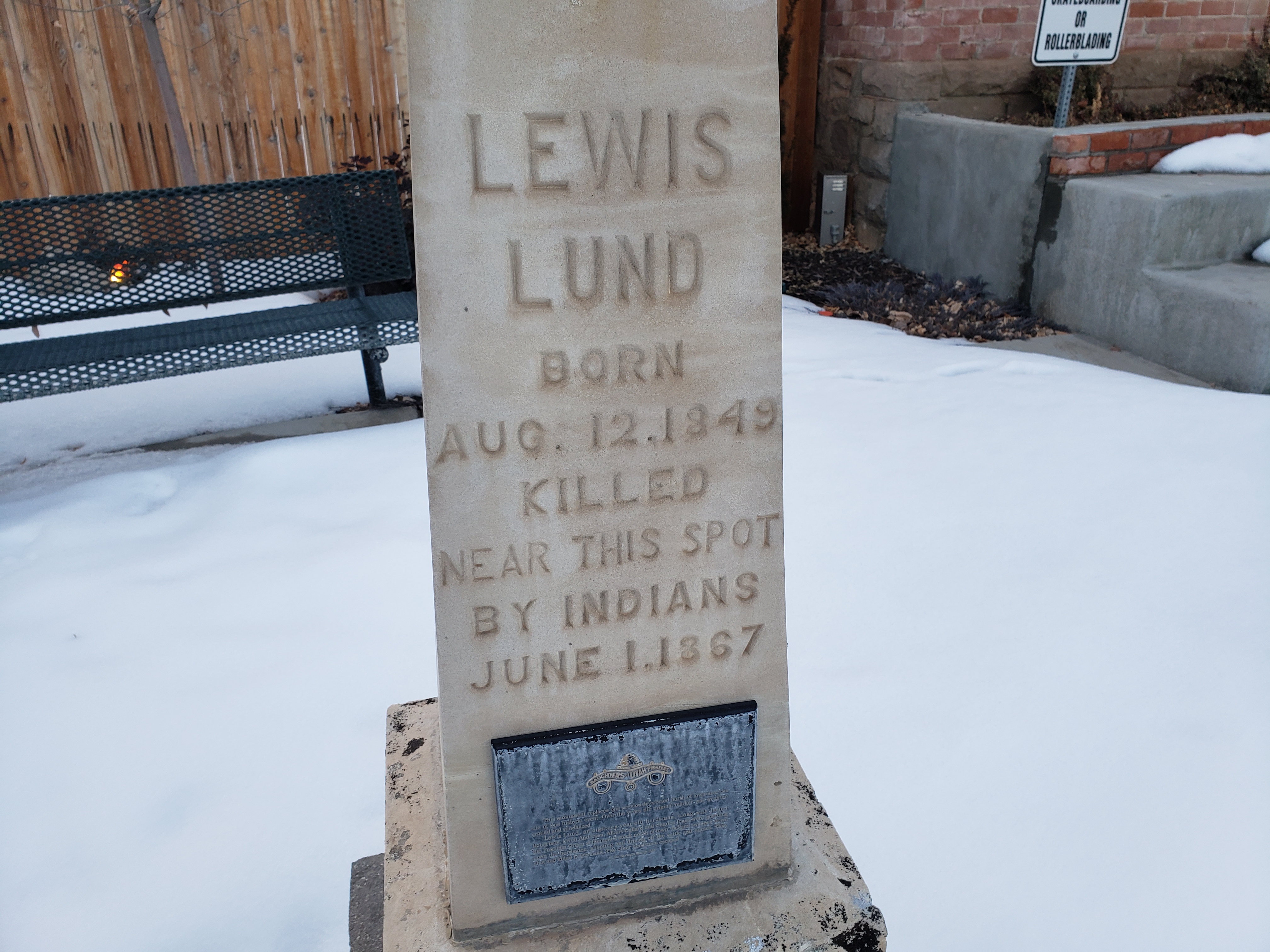
This marker is on a memorial obelisk for an 18 year-old herdsman killed by Indians.
Located outside the Fountain Green Tithing Office at 10 South State Street in Fountain Green, Utah

Lewis Lund
Born Aug. 12, 1849
Killed Near This Spot By Indians June 1, 1867
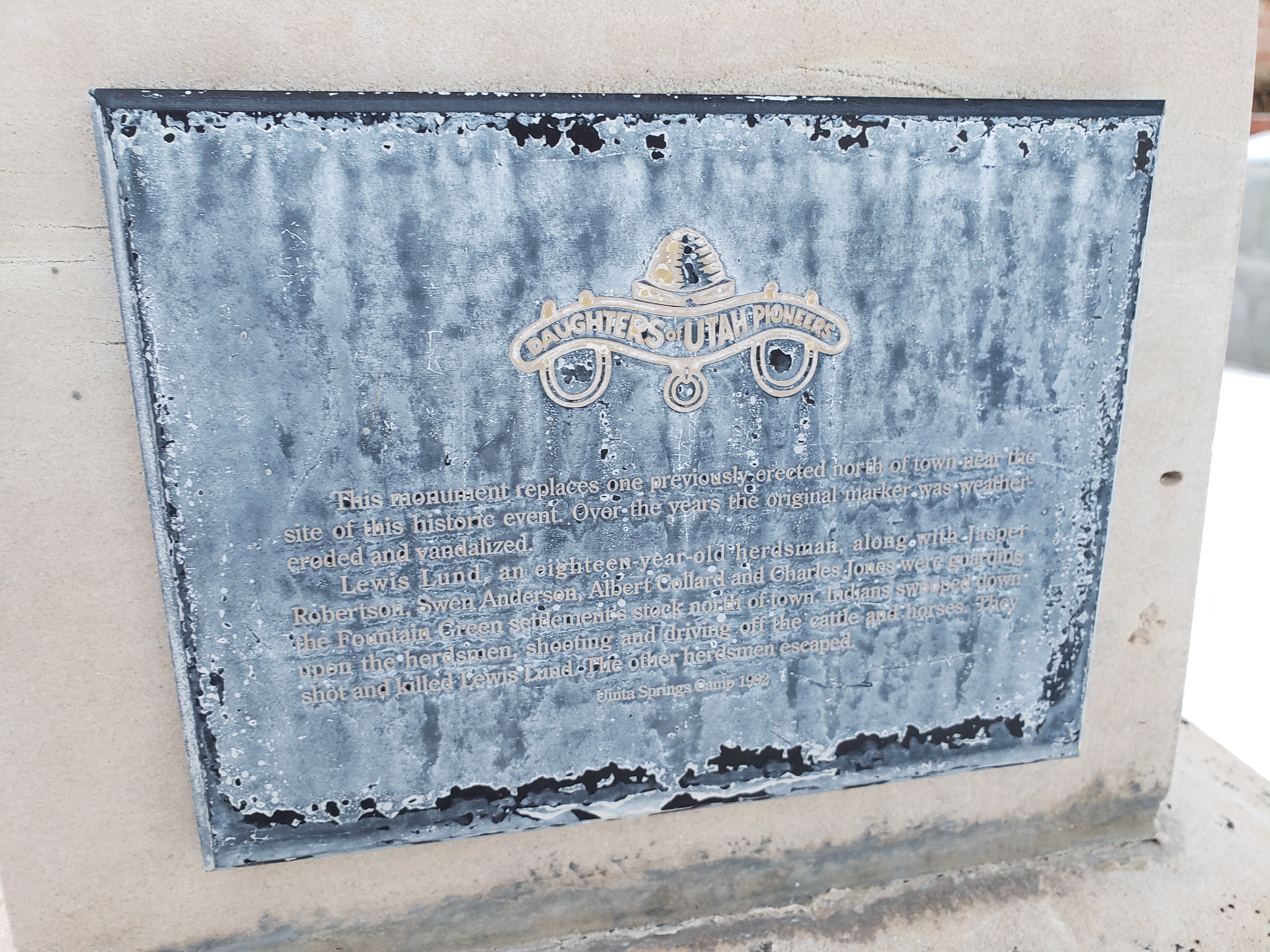
This monument replaces one previously erected north of town near the site of this historic event. Over the years the original marker was weather-eroded and vandalized.
Lewis Lund, an eighteen-year-old herdsman, along with Jasper Robertson, Swen Anderson, Albert Collard and Charles Jones were guarding the Fountain Green settlement’s stock north of town. Indians swooped down upon the herdsmen, shooting and driving off the cattle and horses. They shot and killed Lewis Lund. The other herdsmen escaped.


12 Tuesday Nov 2013
Posted in Uncategorized

After Albert Petty surveyed this site in 1859, pioneers came, built homes, erected a meetinghouse of logs cut by William Gibson and Asbury Parks. In 1861, Bishop Robert L. Johnson opened first store and hotel. Polly Johnson was first Relief Society President; Catherine Oldroyd served as midwife. Bernard Snow supplied flour from his burr mill in 1867. John Green operated adobe and brickyard. Black Hawk War forced settlers to move for safety. They returned and built fort in fall of 1866. Plaque below: The bell atop this monument rang its message from the tower of the first schoolhouse, 1880. As each new schoolhouse was built, the bell was transferred; tolling time, fire and curfew for 88 years.


This is Daughters of Utah Pioneers historic marker #394 located outside the Fountain Green Tithing Office at 10 South State Street in Fountain Green, Utah

