Built of wood after the great fire of 1898, this building has always functioned as a restaurant or saloon, and was originally called the Silver King Restaurant. Construction took place in two phases: the southern half built first, and a mirror image of it added to the north several years later. In 1907 the building shared the same wood porch with the two buildings to the north.
The interior walls are hung with a collection of animal trophies which have been looking down on the The Club’s patrons since longtime proprietor Heinie Hernan installed them in the 1930’s. Moonshine was sold here during prohibition, and a memorable party occurred when President Roosevelt legalized alcoholic beverages in 1932. This is the only saloon from Park City’s mining heyday whose interior remains substantially unchanged.
Although fairly typical of other commercial facades built along Main Street in its day, The Club is distinguished by its ornate wood cornice and bracketed wood lintels above the two double hung windows. Its recessed entry and two story height are consistent with most commercial structures built in Park City at the turn of the century.
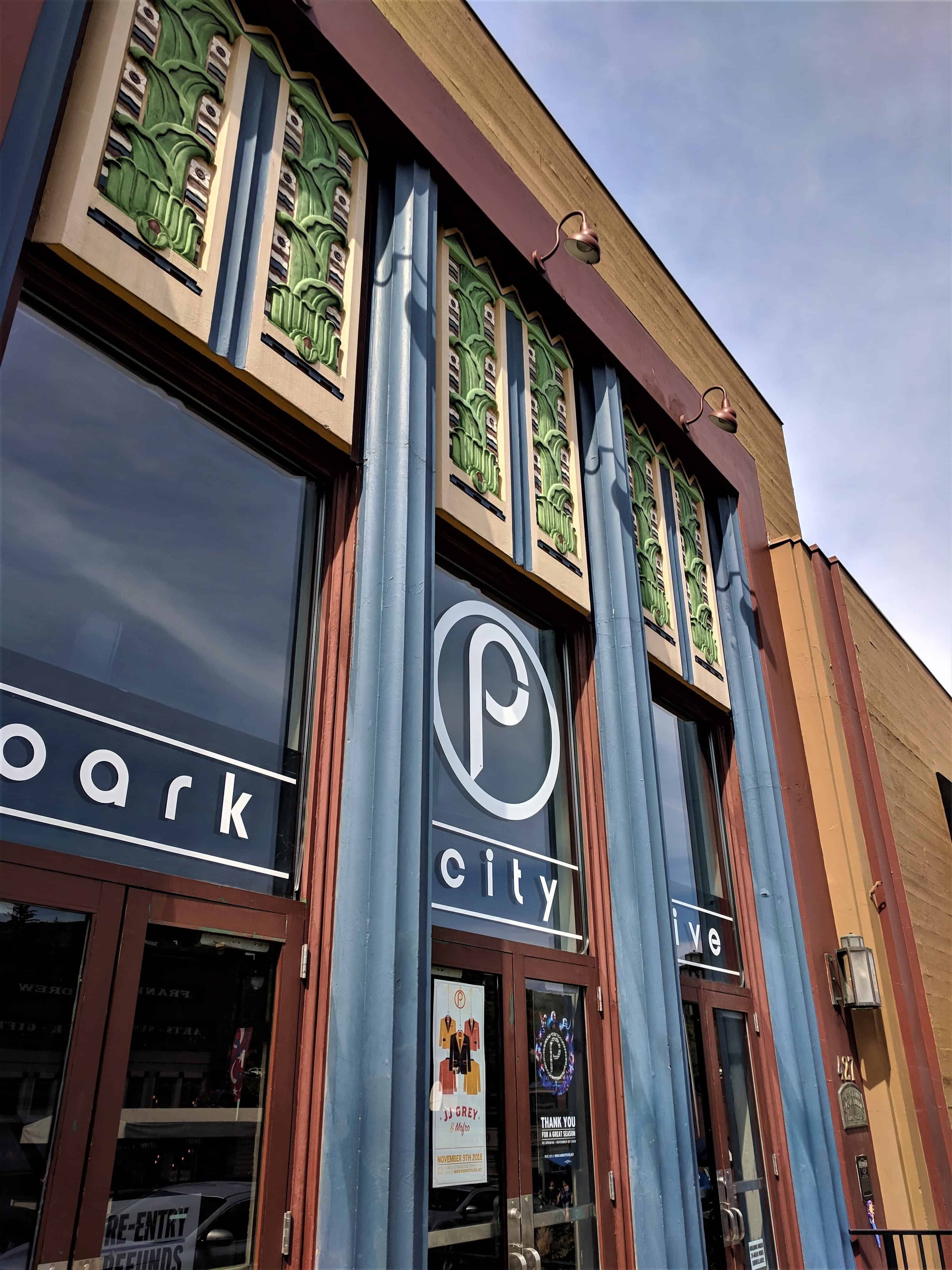
In 1919 Park City’s newly-organized American Legion proposed to build a meeting hall in honor of Summit County’s World War I veterans. Plans were drawn up, but had to be tabled when funding could not be found. The project was reactivated in the mid-1930s when Summit County commissioners purchased this site, and approved a tax assessment of one mill to be allocated for the building. Additionally, grant monies were obtained from the Work Progress Administration. Park City civic leader Ed McPolin was instrumental in obtaining county support for this endeavor.
The cornerstone of the War Veterans Memorial Building was laid in April, 1939; by January 1940 the building was completed and dedicated. The structure’s design represents the Art Deco Style popular from 1925 to 1940. Art Deco floral relief sculpture is featured on the central portion of the front facade, and is typical of the hard-edged relief ornamentation found around door and window openings of this building style. The stopped, set back facade is also characteristic of the Art Deco style.
With its auditorium, lounge, kitchen and dining room, bowling alley, pool and game rooms, and meeting rooms, the building became a significant part of Park City’s recreation and culture life. Most recently the building has been headquarters for the Park City Recreation Department, and was base for community radio station KPCW until late 1984. The Park City City Council held meetings here until 1982, and the building still provides facilities for nonprofit and civic organizations. It is listed on the National Register of Historic Places.
Jenkins Photography Studio – Jenkins Confectionery
The Jenkins Photography Studio, which produced many significant historical photographs, was opened in 1919 by Joseph Edward Jenkins and his wife, Marjorie Wilkes Jenkins.
In the 1920’s, the storefront advertising introduced the residents of Park City to the advent of the radio and photograph. J. E. Jenkins proudly played a radio on Main Street in front of the store so everyone passing by could listen to the new history-making invention.
A big change came in 1934 when the photography studio was converted to a confectionery named Pop Jenks. From then on and for the rest of their lives, J. E. Jenkins and Marjorie Jenkins would be known as “Pop Jenks” and “Ma Jenks” to scores of children, customers and friends.
Pop enjoyed his photography for many years. his daughter, Thelma Uriarte, later donated these photographs and negatives to the Park City Historical Society, so that all could enjoy the history he captured on film.
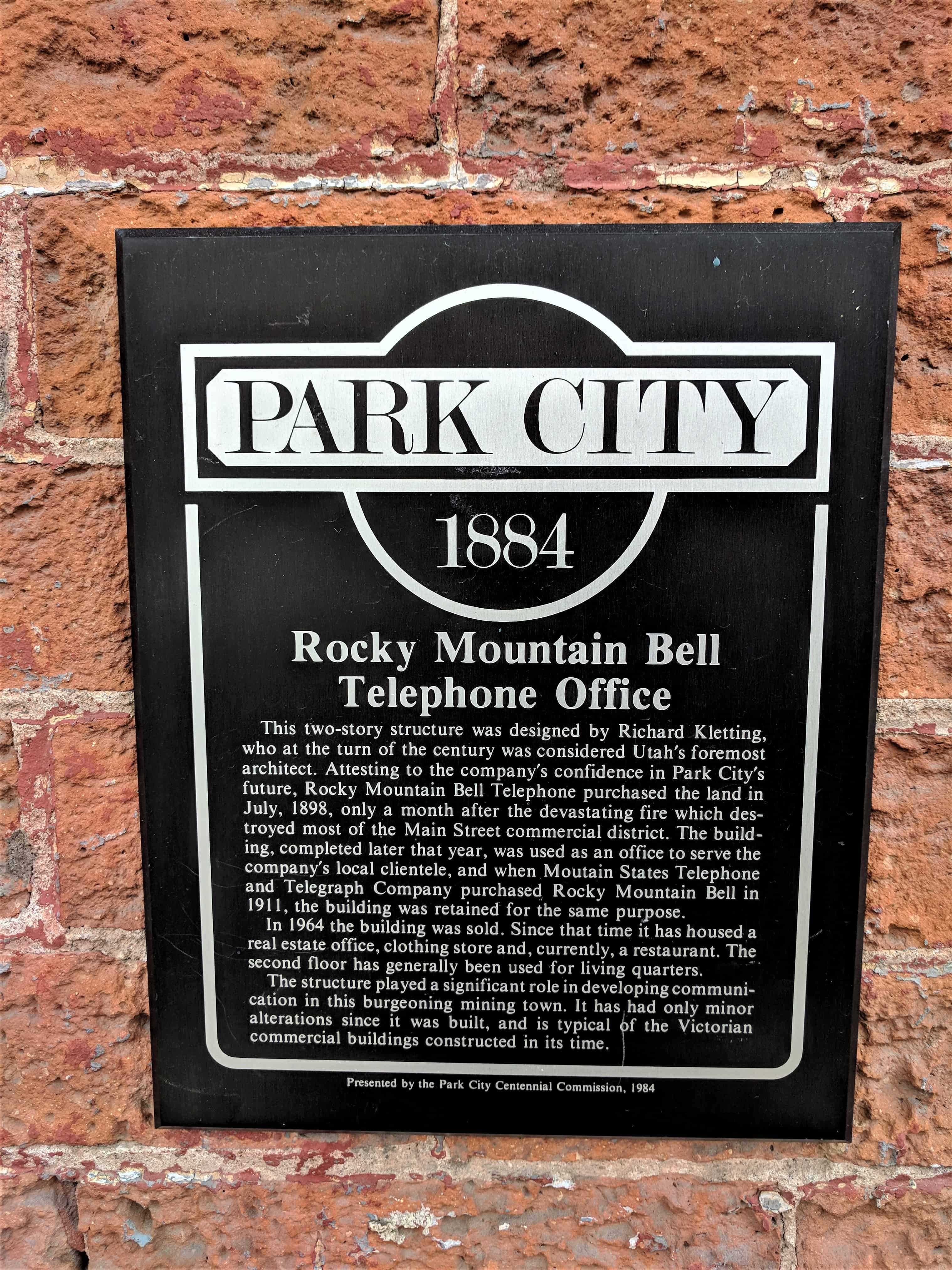
This two-story structure was designed by Richard Kletting, who at the turn of the century was considered Utah’s foremost architect. Attesting to the company’s confidence in Park City’s future, Rocky Mountain Bell Telephone purchased the land in July, 1898, only a month after the devastating fire which destroyed most of the Main Street commercial district. The building, completed later that year, was used as an office to serve the company’s local clientele, and when Mountain States Telephone and Telegraph Company purchased Rocky Mountain Bell in 1911, the building was retained for the same purpose.
In 1964 the building was sold. Since that time it has housed a real estate office, clothing store and, currently, a restaurant. The second floor has generally been used for living quarters.
The structure played a significant role in developing communication in this burgeoning mining town. It has had only minor alterations since it was built, and is typical of the Victorian commercial buildings constructed in its time.
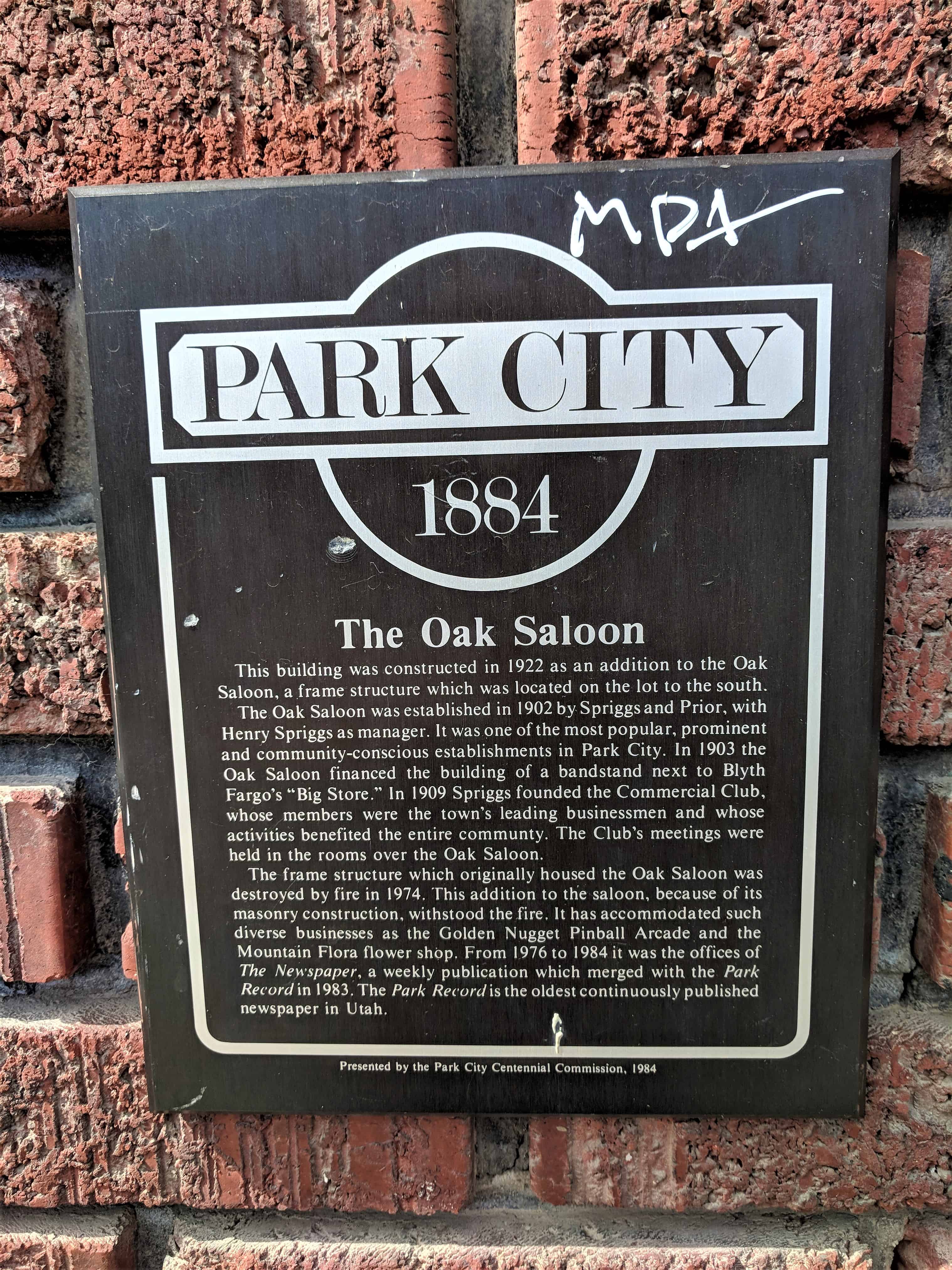
This building was constructed in 1922 as an addition to the Oak Saloon, a frame structure which was located on the lot to the south.
The Oak Saloon was established in 1902 by Spriggs and Prior, with Henry Spriggs as manager. It was one of the most popular, prominent and community-conscious establishments in Park City. In 1903 the Oak Saloon financed the building of a bandstand next to Blyth Fargo’s “Big Store.” In 1909 Spriggs founded the Commercial Club, whose members were in the town’s leading businessmen and whose activities benefited the entire community. The Club’s meetings were held in the rooms over the Oak Saloon.
The frame structure which originally housed the Oak Saloon was destroyed by fire in 1974. This addition to the saloon, because of its masonry construction, withstood the fire. It has accommodated such diverse businesses as the Golden Nugget Pinball Arcade and the Mountain Flora flower shop. From 1976 to 1984 it was the offices of The Newspaper, a weekly publication which merged with the Park Record in 1983. The Park Record is the oldest continuously published newspaper in Utah.
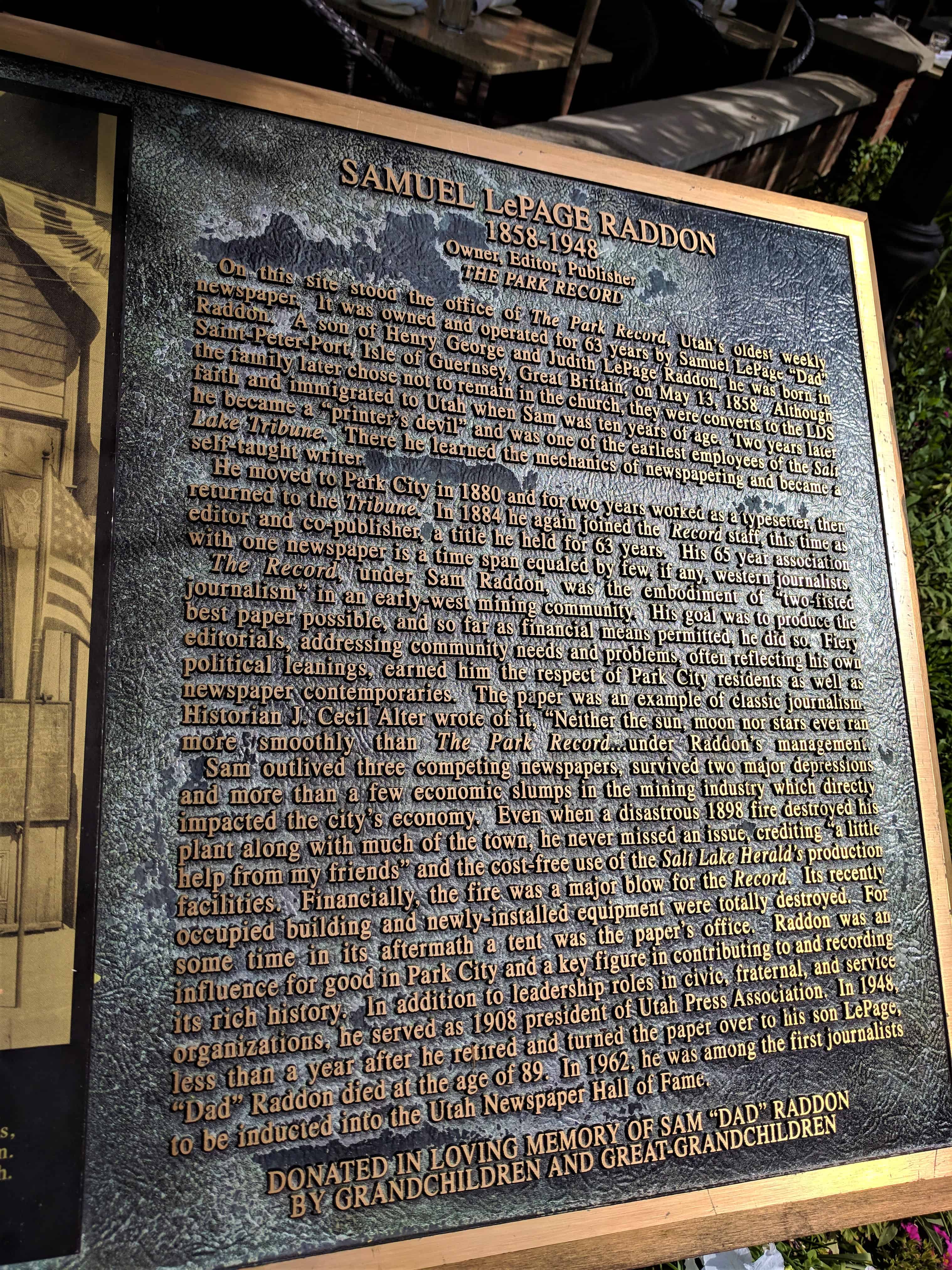
On this site stood the office of The Park Record, Utah’s oldest weekly newspaper. It was owned and operated for 63 years by Samuel LePage “Dad” Raddon. A son of Henry George and Judith LePage Raddon, he was born in the Saint-Peter-Port, Isle of Guernsey, Great Britain, on May 13, 1858. Although the family later chose not to remain in the church, they were converts to the LDS faith and immigrated to Utah when Sam was ten years of age. Two years later he came a “printer’s devil” and was one of the earliest employees of the Salt Lake Tribune. There he learned the mechanics of newpapering and became a self-taught writer.
He moved to Park City in 1880 and for two years worked as a typesetter, then returned to the Tribune. In 1884 he again joined the Record staff, this time as editor and co-publisher, a title he held for 63 years. His 65 year association with one newspaper is a time span equaled by few, if any, western journalists.
The Record, under Sam Raddon, was the embodiment of “two-fisted journalism” in an early-west mining community. His goal was to produce the best paper possible, and so far as financial means permitted, he did so. Fiery editorials, addressing community needs and problems, often reflecting his own political leanings, earned him the respect of Park City residents as well as newspaper contemoraries. The paper was an example of classic journalism.
Historian J. Cecil Alter wrote of it, “Neither the sun, moon nor stars ever ran more smoothly than The Park Record…under Raddon’s management.
Sam outlived three competing newspapers, survived two major depressions and more than a few economic slumps in the mining industry which directly impacted the city’s economy. Even when a disastrous 1898 fire destroyed his plant along with much of the town, he never missed an issue, crediting “a little help from my friends” and the cost-free use of the Salt Lake Herald‘s production facilities. Financially, the fire was a major blow for the Record. Its recently occupied building and newly installed equipment were totally destroyed. For some time in its aftermath a tent was the paper’s office. Raddon was an influence for good in Park City and a key figure in contributing to and recording its rich history. In addition to leadership roles in civic, fraternal, and service organizations, he served as 1908 president of Utah Press Association. In 1948, less than a year after he tired and turned the paper over to his son, LePage, “Dad” Raddon died at the age of 89. In 1962, he was among the first journalists to be inducted into the Utah Newspaper Hall of Fame.
The building originally located on this site is believed to have been constructed in the mid-1800s, but was leveled by the great fire of 1898. The lot stood empty until 1907 when this one-story brick structure was built for prominent Park City merchant Julius Frankel. His clothing store was housed here and was a thriving part of Park City’s commercial district for several decades.
Renovation of the building in 1966 created the Silver Palace Saloon. In the 1970s the Mt. Air variety store was located here and then the structure was converted to a restaurant in 1980. In 1983 the building reverted to its original use as a clothing store, and then was completely renovated in 1988 and used again as a restaurant.
The Frankel Building is a typical example of mining town vernacular architecture and features the large display windows and recessed entryway seen in most commercial buildings of its time. The brick walls illustrate the preoccupation with using more fire retardant materials generated by the 1898 fire. Of particular interest are the pressed metal ceiling and the exposed brick foundation on the south side of the building. The building is listed on the National Register of Historic Places as a contributory period structure to the main street commercial district.
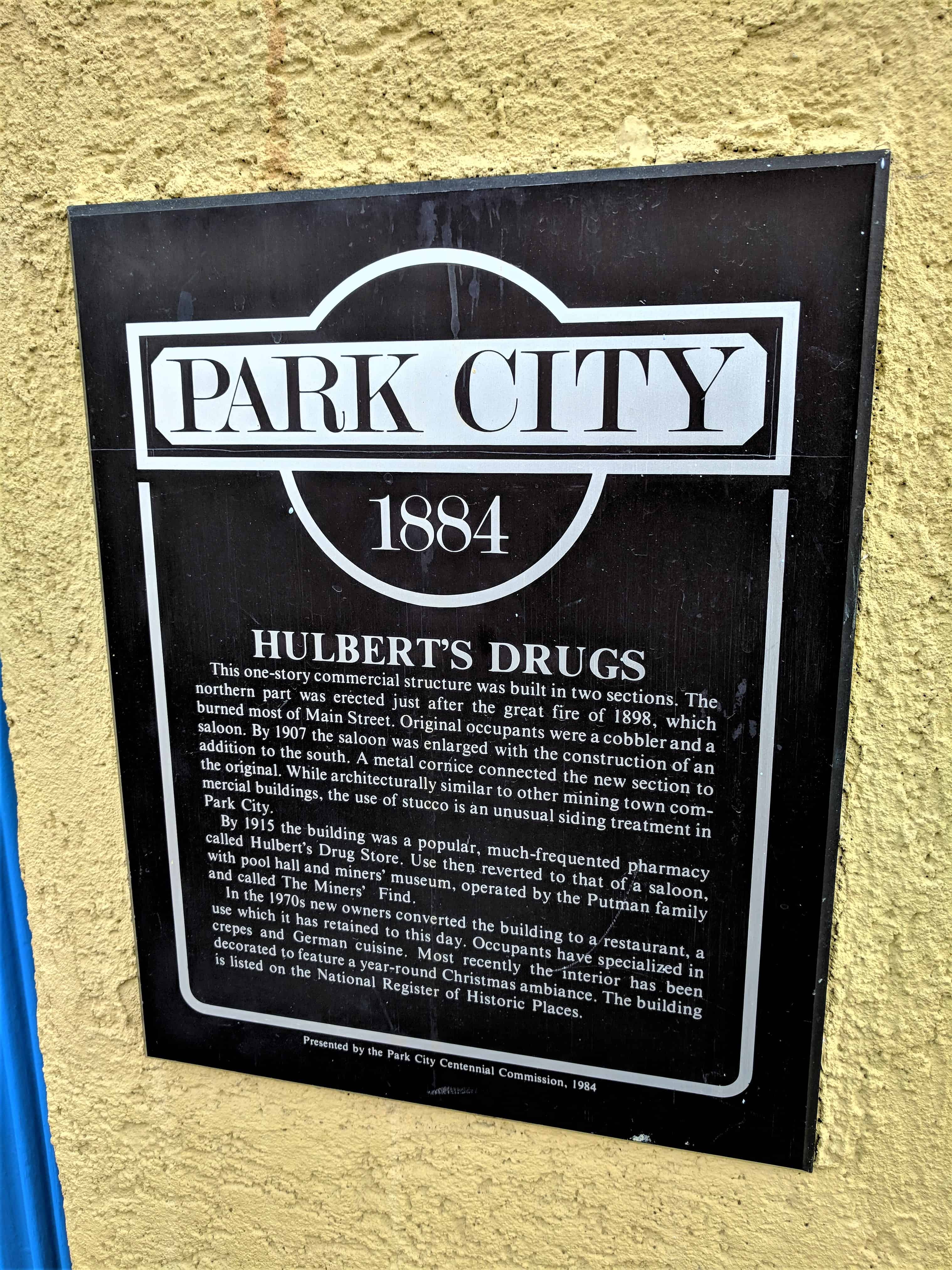
This one-story commercial structure was built in two sections. The northern part was erected just after the great fire of 1898, which burned most of Main Street. Original occupants were a cobbler and a saloon. By 1907 the saloon was enlarged with the construction of an addition to the south. A metal cornice connected the new section to the original. While architecturally similar to other mining town commercial buildings, the use of stucco is an unusual siding treatment in Park City.
By 1915 the building was a popular, much-frequented pharmacy called Hulbert’s Drug Store. Use then reverted to that of a saloon, with pool hall and miners’ museum, operated by the Putman family and called The Miners’ Find.
In the 1970s new owners converted the building to a restaurant, a use which has been retained to this day. Occupants have specialized in crepes and German cuisine. Most recently the interior has been decorated to feature a year-round Christmas ambiance. The building is listed on the National Register of Historic Places.
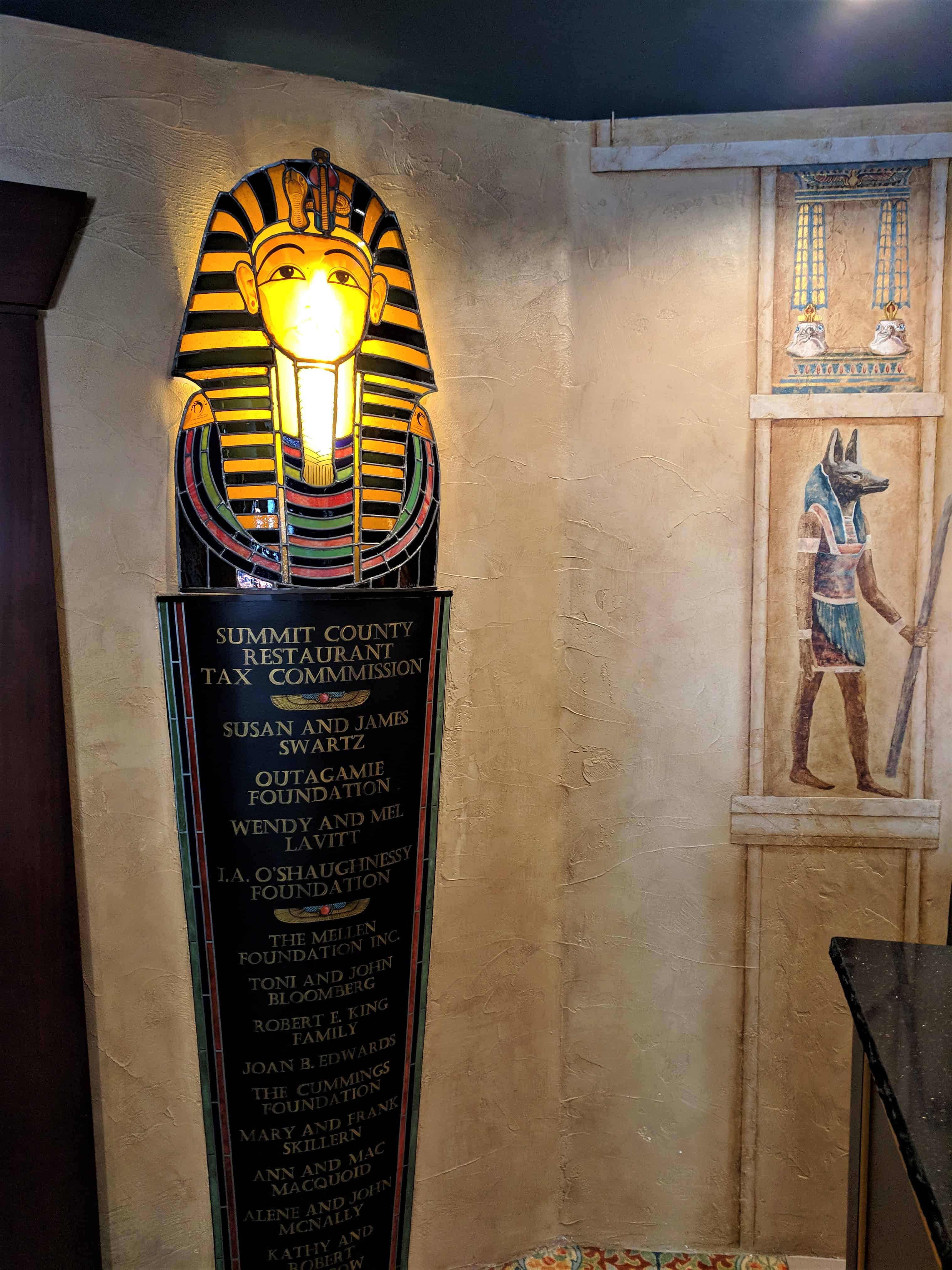
In the early 1900’s Park City’s social and entertainment needs were served by a number of flourishing theaters and social halls. When the Dewey Theatre, originally on this site, collapsed under a heavy snow load, John Rugar replaced it with the Egyptian Theater built in 1926. It was designed to seat 400 and to accommodate both movies and vaudeville. It became the first “sound movie” theater in Park City.
After being remodeled in 1963, the building opened as the Silver Wheel Theatre, and old fashioned “meller dramas” were performed for the next 15 years. In 1978 the building’s architectural integrity was threatened by an attempt to change its facade to a western motif. Preservation of its distinctive Egyptian features was achieved, however, when the building became home of Park City Performances in 1981.
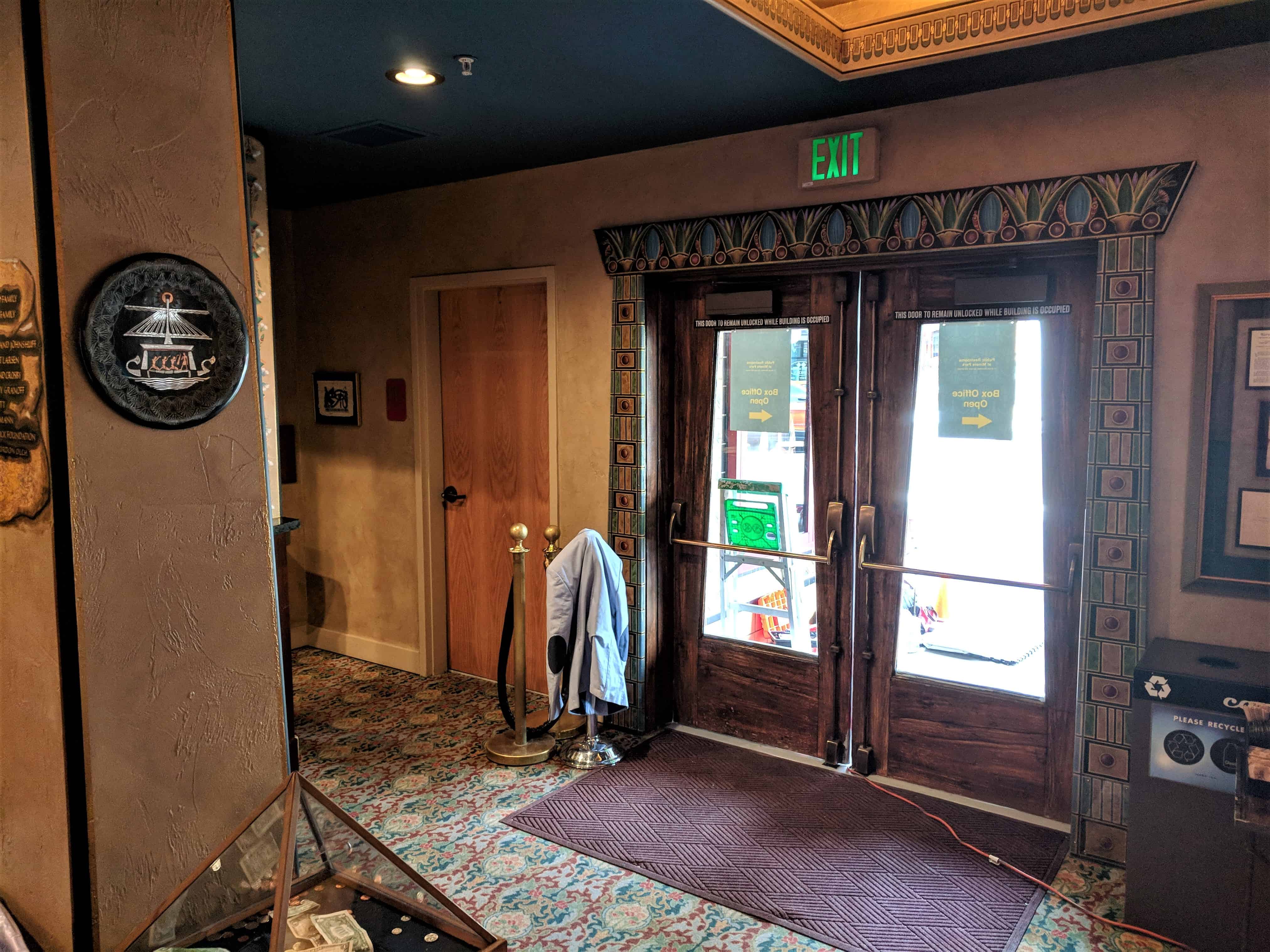
The Egyptian Revival Style represents a unique period architecture which peaked in American around 1930. Egyptian theaters are rare, and this is only one of two remaining in Utah. Originally the interior combined replicas of Egyptian artifacts. This is a masonry structure with a false front shielding its hip roof. Tiles at the base of the ticket booth and pilistars in obelisk shape reinforce the Egyptian motif.
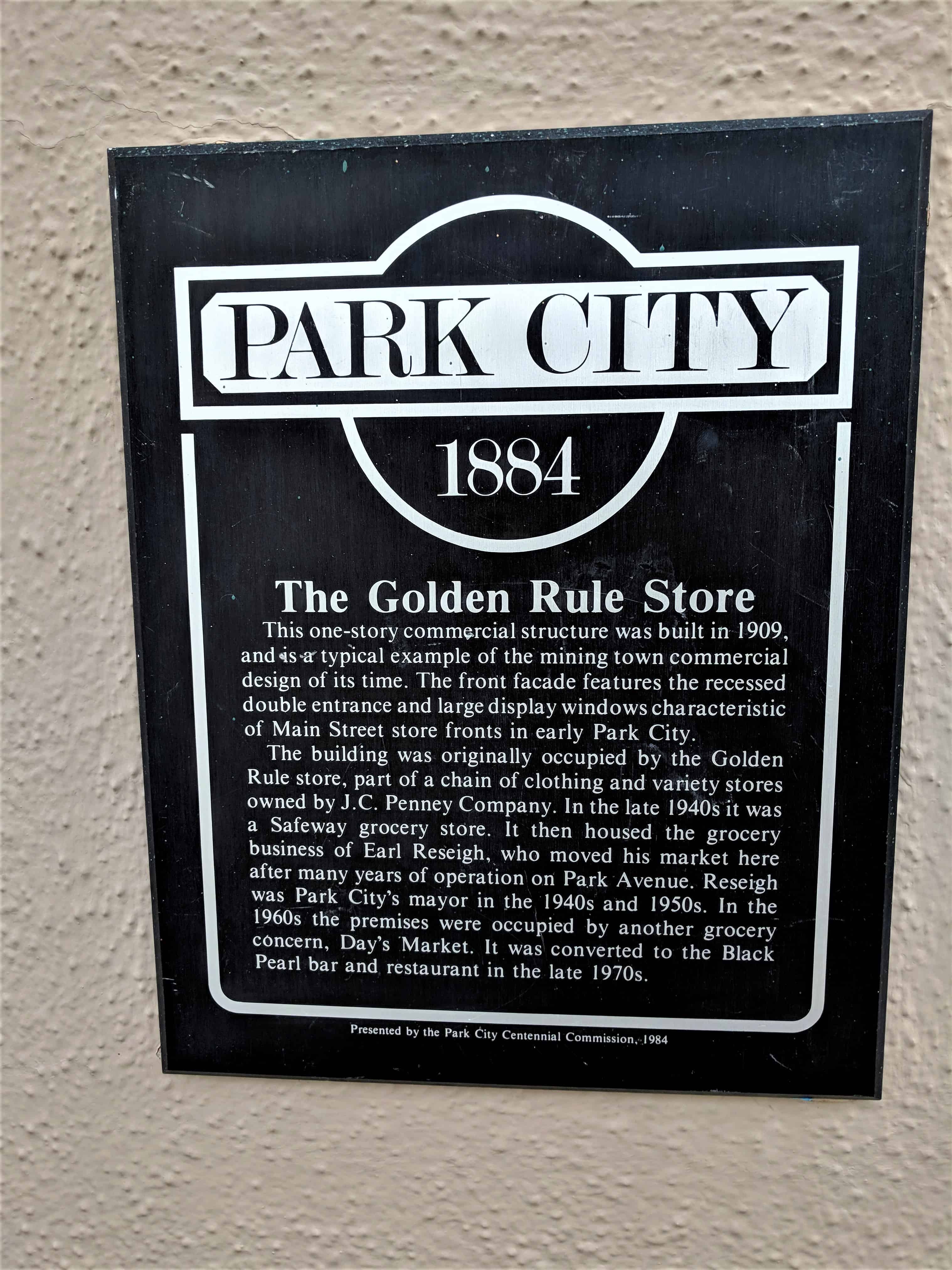
This one-story commercial structure was built in 1909, and is a typical example of the mining town commercial design of its time. The front facade features the recessed double entrance and large display windows characteristic of Main Street store fronts in early Park City.
The building was originally occupied by the Golden Rule store, part of a chain of clothing and variety stores owned by J.C. Penney Company. In the late 1940s it was a Safeway grocery store. It then housed the grocery business of Earl Reseigh, who moved his market here after many years of operation on Park Avenue. Reseigh was Park City’s mayor in the 1940s and 1950s. In the 1960s the premises were occupied by another grocery concern, Day’s Market. It was converted to the Black Pearl bar and restaurant in the late 1970s.