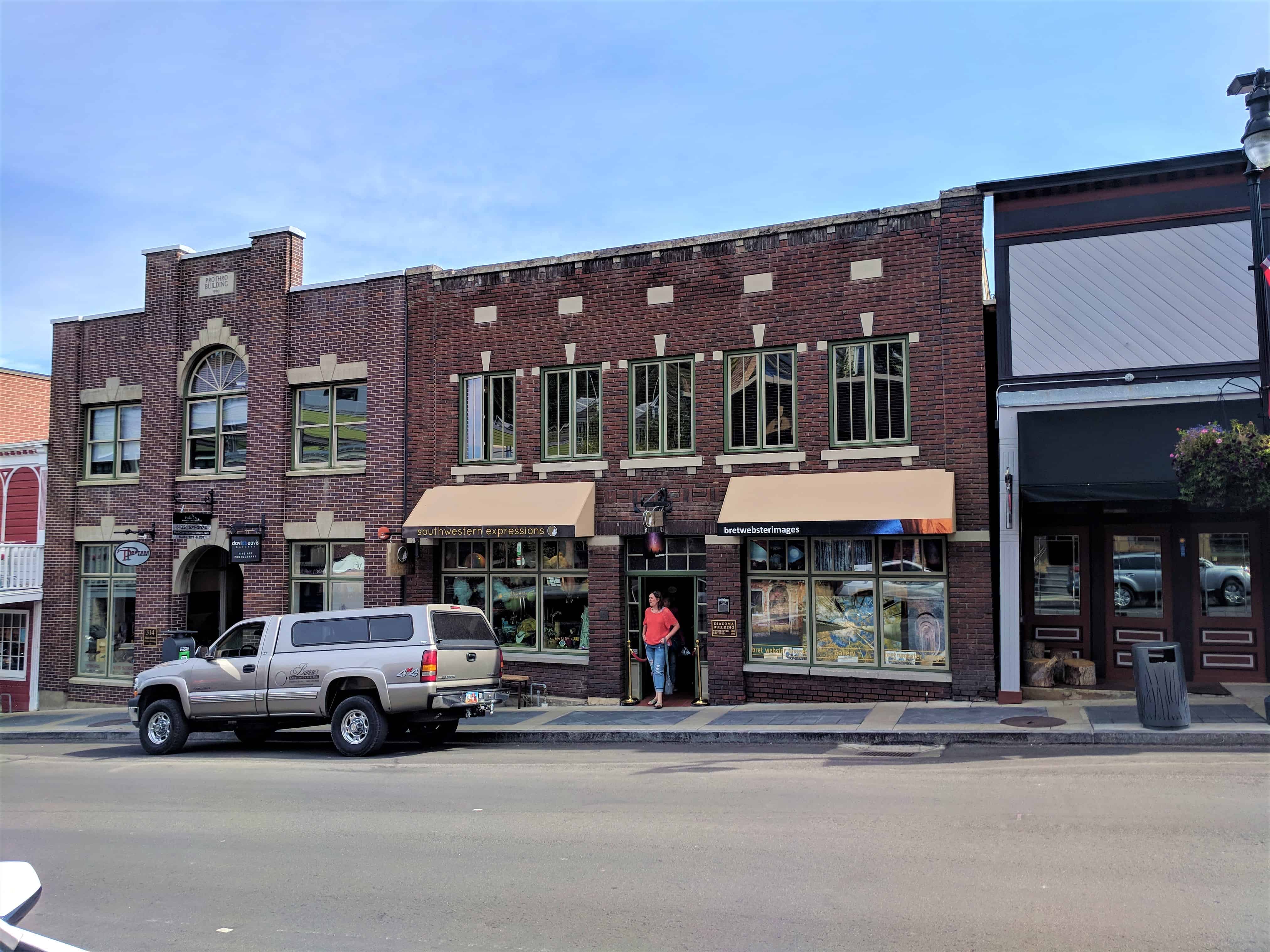
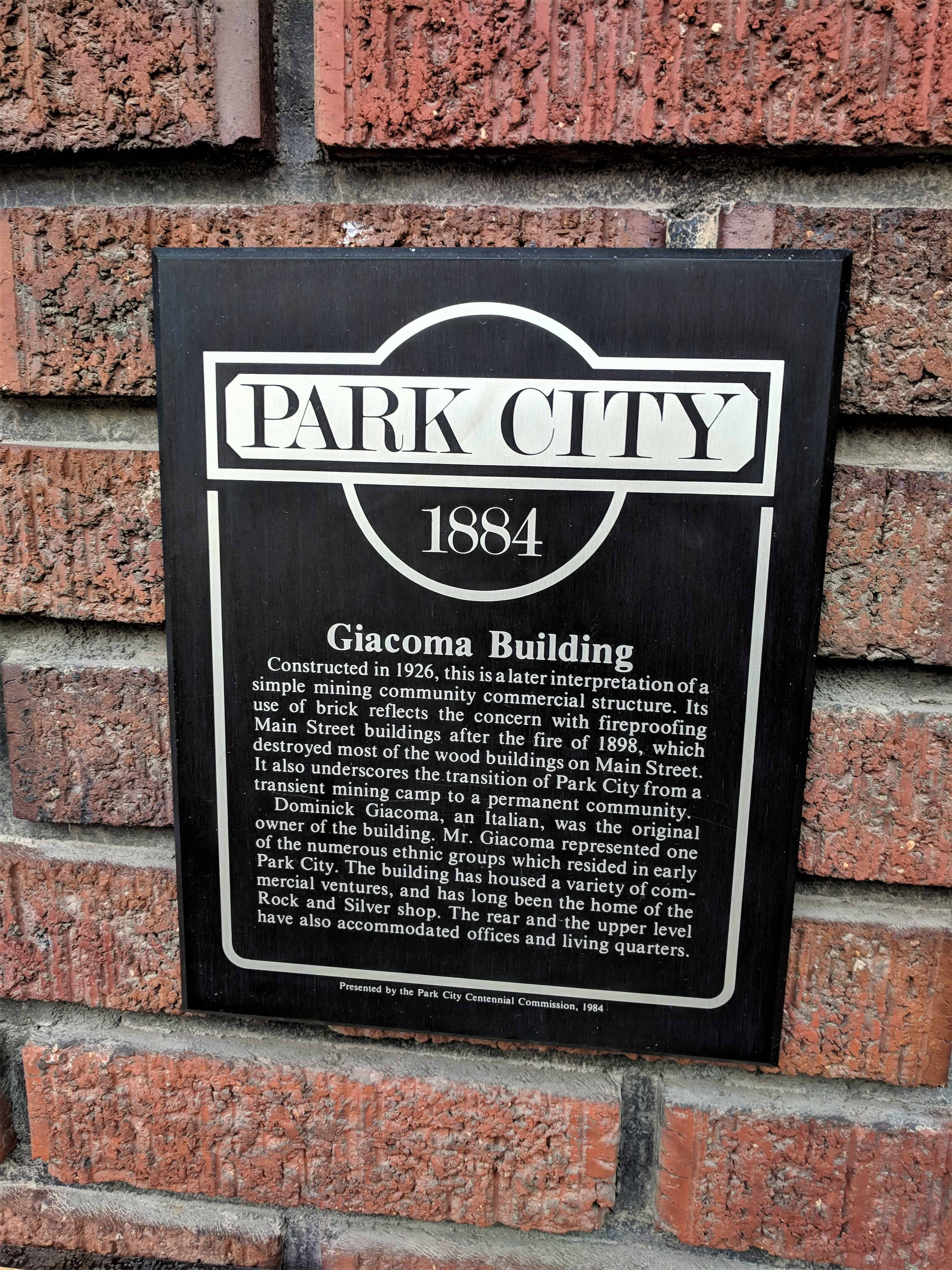
Constructed in 1926, this is a later interpretation of a simple mining community commercial structure. Its use of brick reflects the concern with fire proofing Main Street buildings after the fire of 1898, which destroyed most of the wood buildings on Main Street. It also underscores the transition of Park City from a transient mining camp to a permanent community.
Dominick Giacoma, an Italian, was the original owner of the building. Mr. Giacoma represented one of the newer ethnic groups which resided in early Park City. The building has housed a variety of commercial ventures and has long been the home of the Rock & Silver shop. The rear and upper level have also accommodated offices and living quarters.
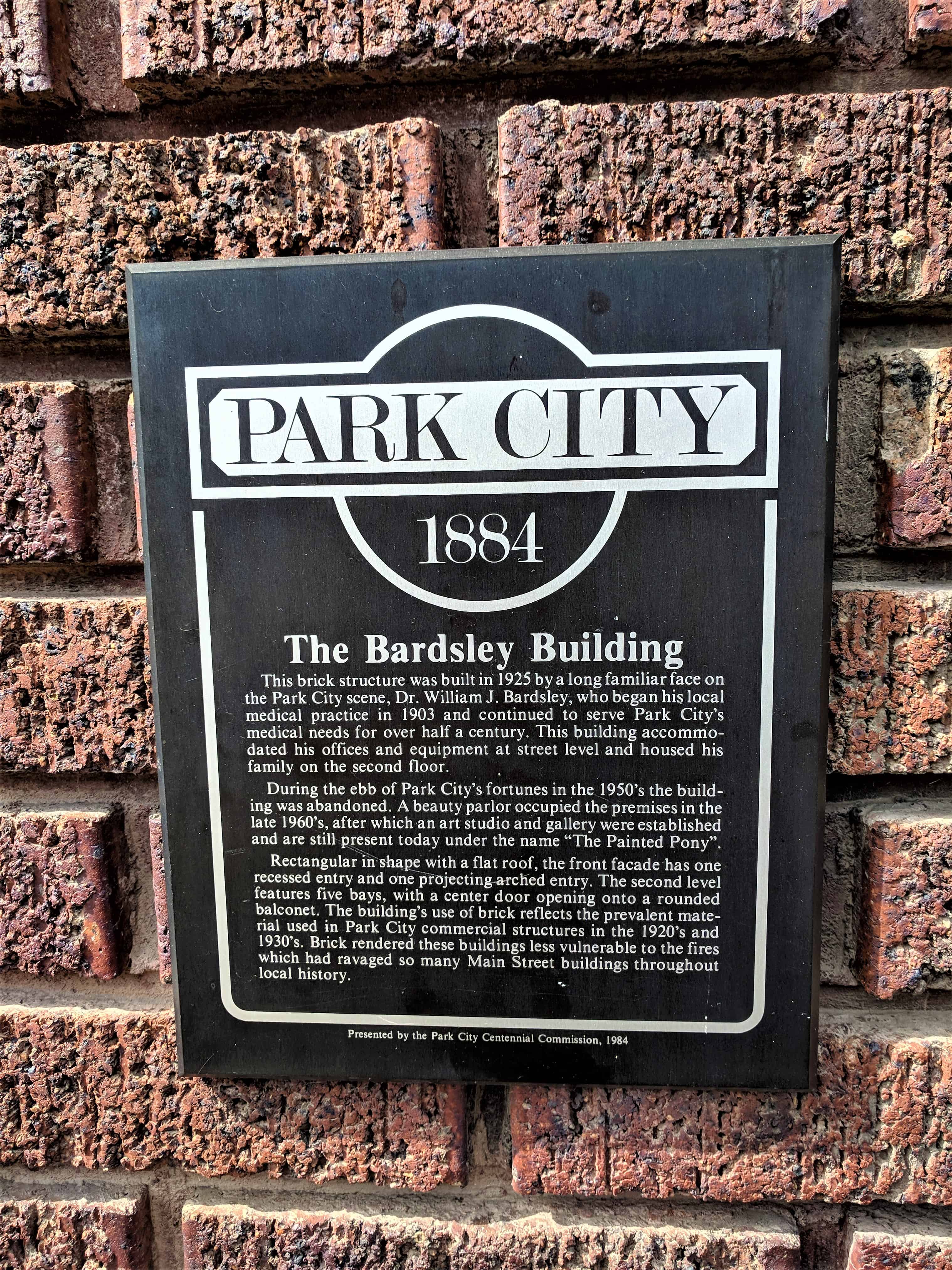
This brick structure was built in 1925 by a long familiar face on the Park City scene, Dr. William J. Bardsley, who began his local medical practice in 1903 and continued to serve Park City’s medical needs for over half a century. This building accommodated his offices and equipment at street level and housed his family on the second floor.
During the ebb of Park City’s fortunes in the 1950’s the building was abandoned. A beauty parlor occupied the premises in the late 1960’s, after which an art studio and gallery were established and are still present under the name “The Painted Pony”.
Rectangular in shape with a flat roof, the front facade has one recessed entry and one projecting arched entry. The second level features five bays, with a center door opening onto a rounded balconet. The building’s use of brick reflects the prevalent material used in Park City commercial structures in the 1920’s and 1930’s. Brick rendered these buildings less vulnerable to the fires which had ravaged son many Main Street buildings throughout local history.
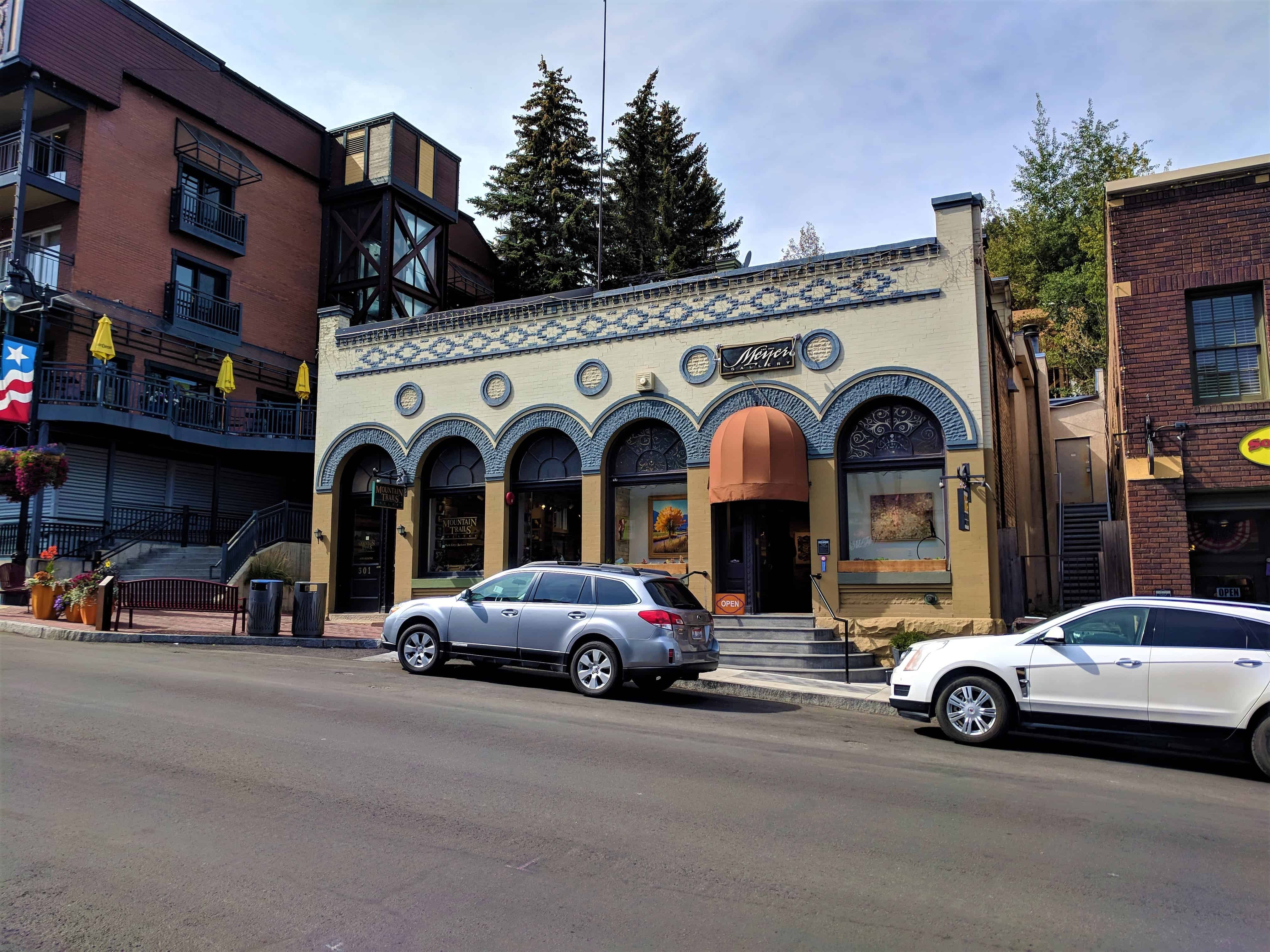
One of the first brick buildings begun after the 1898 fire, this commercial structure served the banking, mining, and general business activity of the First National Bank and Silver King Mining Company, and such prominent Utah mining entrepreneurs as David Keith, James Farrell, W.V. Rice and Senator Thomas Kearns.
Victorian commercial in style, the building features an ornate brick cornice and a stone foundation. The facade is comprised of six glass arches with leaded glass transom windows. It was originally, and remains, divided into two sections in the interior. Then, as now, the two halves of the building served separate business entities.
One of the most architecturally interesting buildings on Main Street, it is also highly significant for its contribution to the commercial and mining activity of turn-of-the-century Park City.
The Masonic Temple is the meeting place of a fraternal organization called the Masons. The word mason refers to a person who builds with brick or stone. The Masons began as a club for builders in the Middle Ages (500 – 1,500 AD). Today, the Masons sponsor many charitable activities such as Shriners Hospital, which provides free medical care for children with special needs.
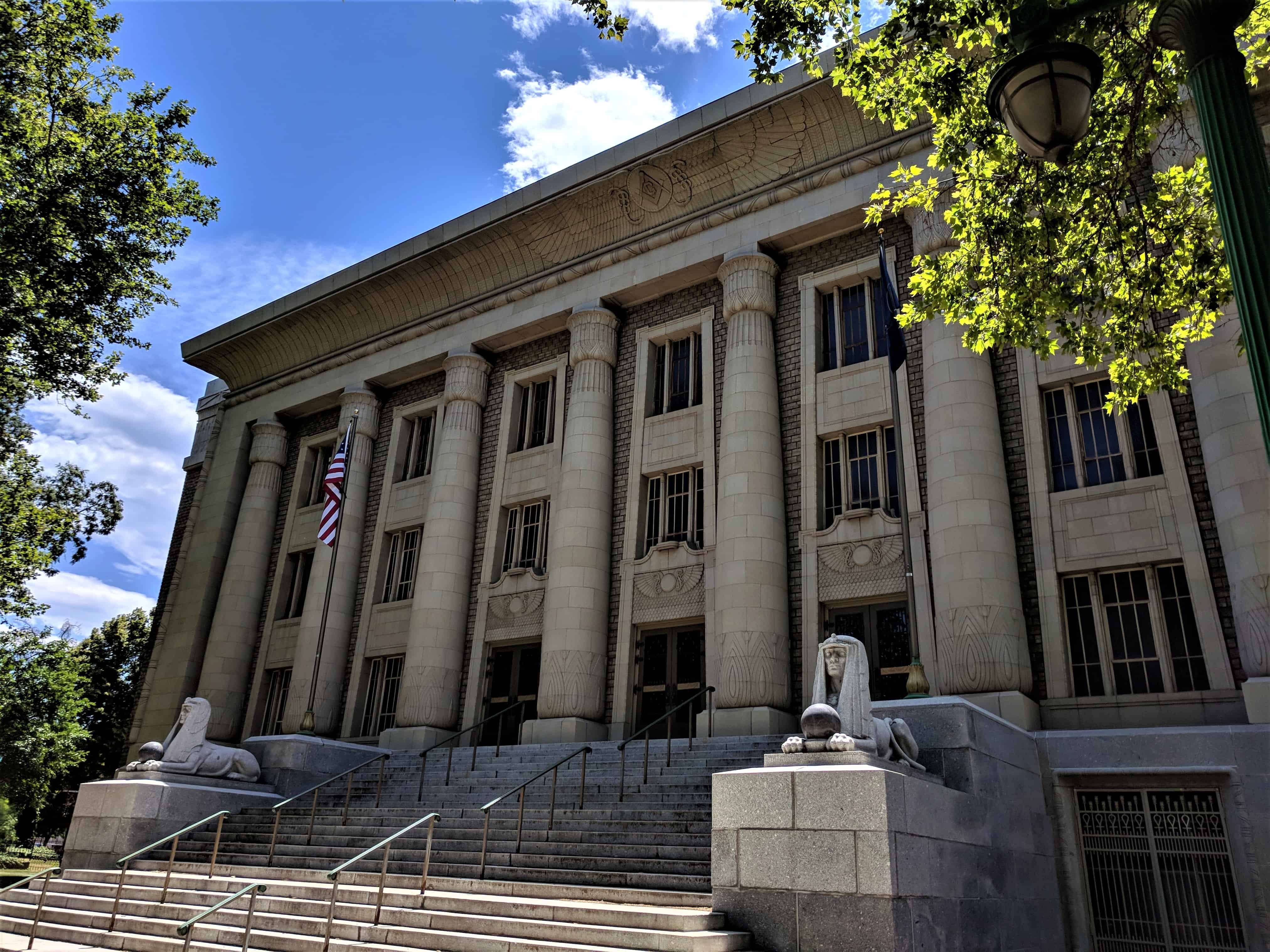
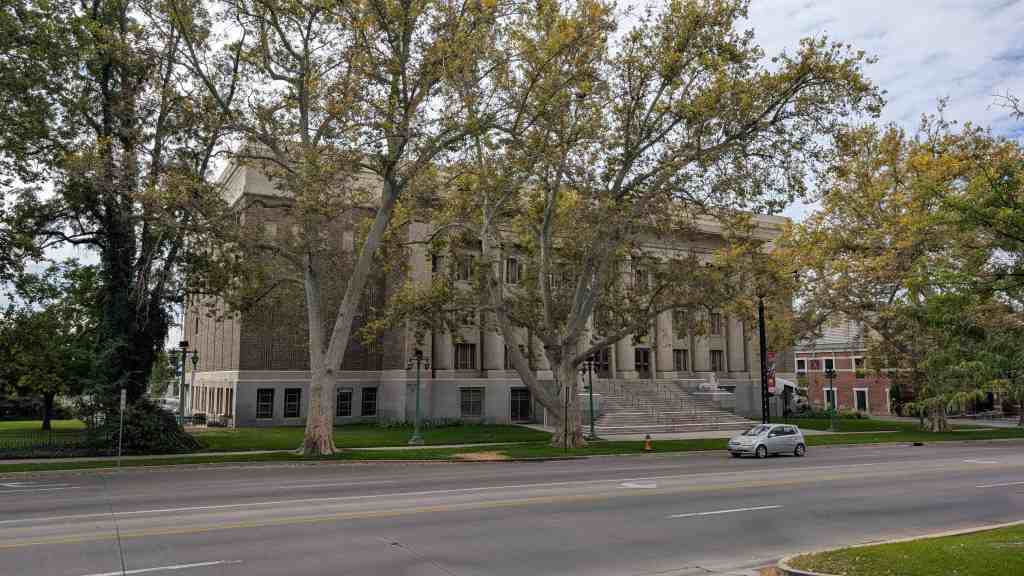
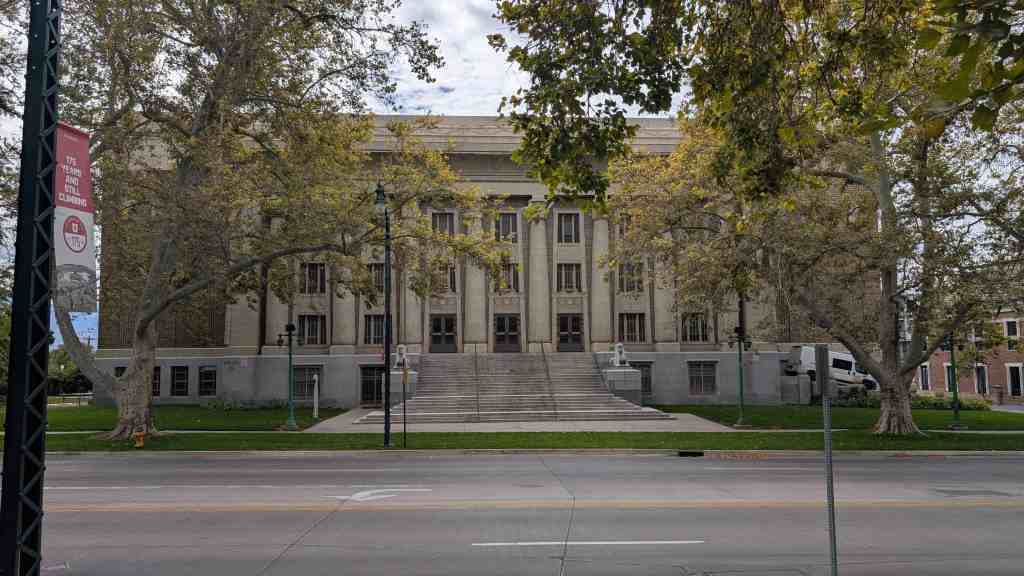
The Masonic Temple is built in an architectural style called Egyptian Revival. This style became popular for a short time after further exploration of the Egyptian pyramids and the discovery of King Tutankhamen’s tomb in 1922.
The Masonic Temple, is a large Egyptian Revival Style structure built according to Masonic Law and tradition, The measurements of the building and the dimensions of the interior follow the exact number system laid out in Masonic ritual. Because of the importance of the numbers three, five and seven in Masonry, these numbers were used as a base for the design, Since the number seven was considered the perfect, number, seven and numbers divisible by seven were used in all spacing and measurement. The columns on the building are fourteen feet apart (or multiples of seven) . The Temple is three stories high, to signify the three degrees of Masonry.
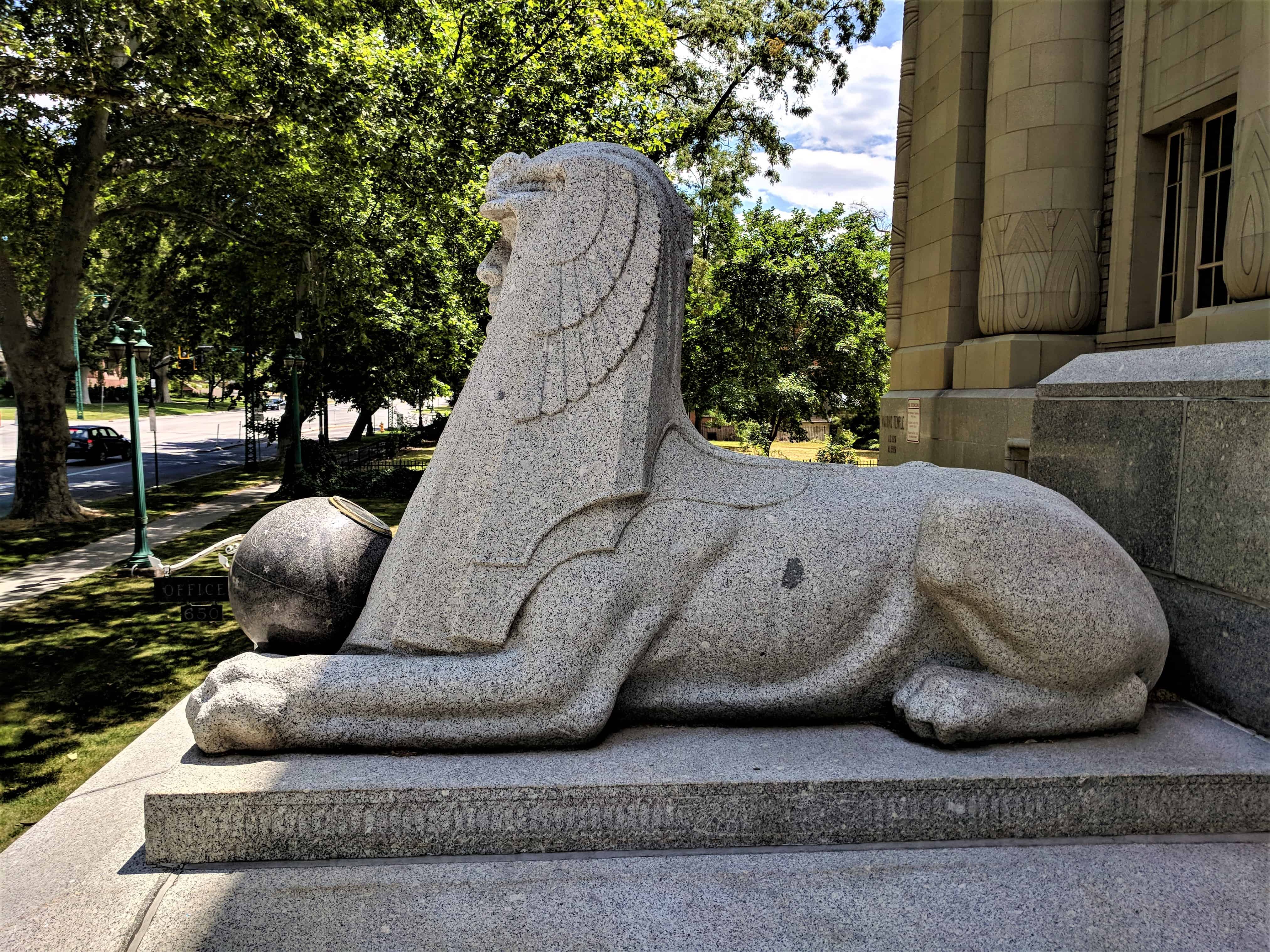
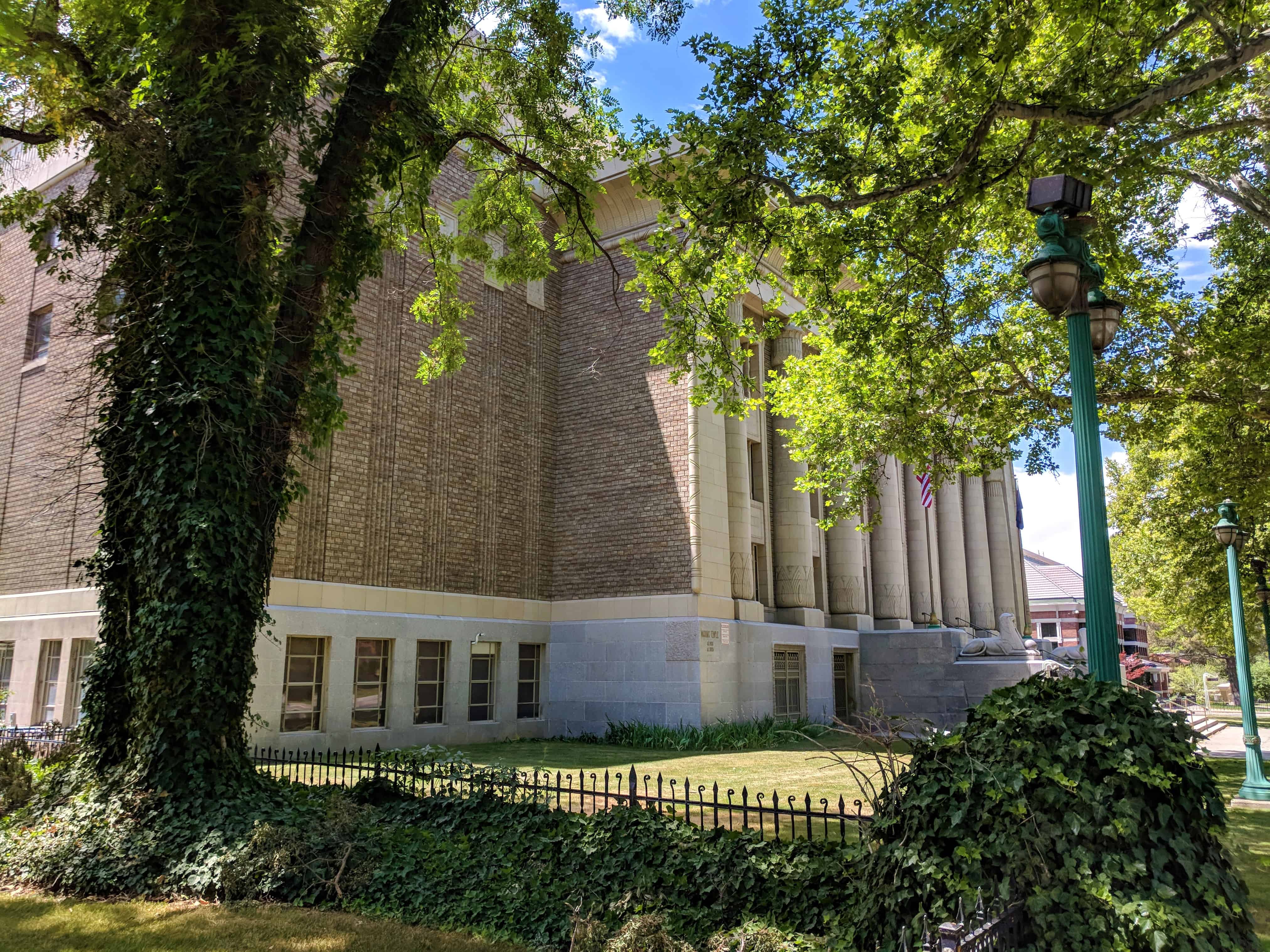
The Temple’s base is made of seven finished courses of ashlar of Utah granite. On the ground floor are non-ritualistic rooms for banquets, offices, etc, The exterior is of Egyptian Style architecture to allow for figures and inscriptions to appear and not give away their significance, There are three entrances, flanking the entrances is a pair of sphinx carved of Utah granite t The walls are of large brick laid in block fashion.
This building has always been the home of the Salt Lake Masons. The design of this Masonic Temple was derived from Masonic numerology and ritual.
This building was dedicated on November 20, 1927. The architect, Carl W, Scott, and the building committee went to other cities to view other Masonic Temples before the design for this one was chosen, The Salt Lake Masons decided to design their Temple according to Masonic ritual, which deals mainly with the work of the builders of King Solomon’s Temple, One of the major problems encountered by the architect was to build it according to Masonic law without giving away any Masonic secrets, Many plans for the building were abandoned entirely because there was no way to use them and conceal their meaning. The cornerstone was laid in an elaborate ceremony on the afternoon of November 5, 1926, with the Masons wearing formal top hats and tails. The public is only allowed in certain lodge rooms, where people who are not masons will not understand what they see. Each of the three degrees of Masonry has its own meeting room.
(from Preservation Utah’s walking tour) Salt Lake Masonic Temple 650 E. South Temple 1927, Scott & Welch, SLC Tours available on Tuesday and Thursday afternoons by calling in advance, (801) 363-2936.
The Masonic Temple is Salt Lake City’s best example of Egyptian Revival style architecture. This style was popularized by the discovery of King Tutankhamen’s tomb in 1922. The temple’s design also includes a variety of symbols and elements significant to the Masons.
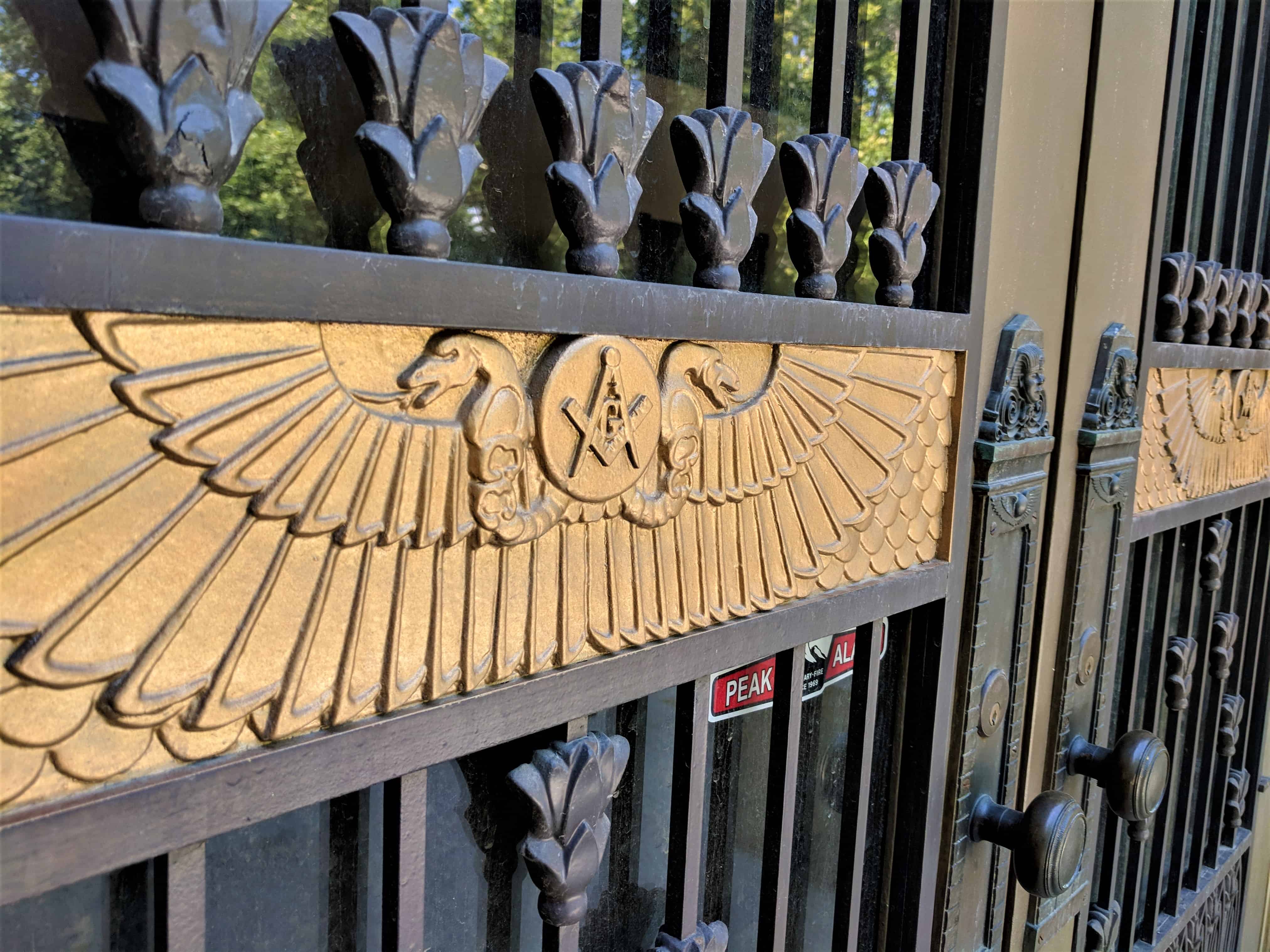
The temple’s massive portico features eight lotus capitol columns supporting a curved, or cavetto, cornice. Engraved on the cornice is a double-headed, feathered serpent symbolizing Horus, Egyptian god of light or life. An Egyptian sun disk with the Masonic square, compass, and letter “G” appears in the center of this carving. Together these symbols represent the “light of Masonry.”
The steps leading to the temple’s entrance are laid out in levels of three, five, seven, and nine, numbers with Masonic significance. The steps are flanked by two Egyptian-style sphinxes contemplating spheres. On the west side of the portico is a ramp and door designed for funeral services. Above this door is an Egyptian scarab signifying immortality.
The three upper levels of the temple, representing the three degrees of Masonry, contain meeting rooms and a 1,400 seat auditorium. The ground level houses administrative offices, banquet facilities, and a library open to the public. The Masonic Temple continues to serve Masonic Lodges in Salt Lake City.
The Bell Wines apartments were built in 1927 by a married couple, Hazel Bell and Stanley Wines, who combined their surnames. It is located at 530 East 100 South. The building is evocative of a southern plantation home, with a center porch and tall columns around a courtyard.
The building contains 30 units opening off a long hallway. One early resident, Eva Harmer, became engaged to her sweetheart, Blaine Allan, while living here in 1934. She was alarmed when she discovered she had dropped her engagement ring down the apartment’s sink. Fortunately, city water officials blocked off the pipes until the ring could be found.
Note the tall portico and pillars, echoing a southern mansion, with a large center courtyard. It has stone quoins at the building corners, and the neon sign is still lit.
See other historic apartment building in Salt Lake City here.
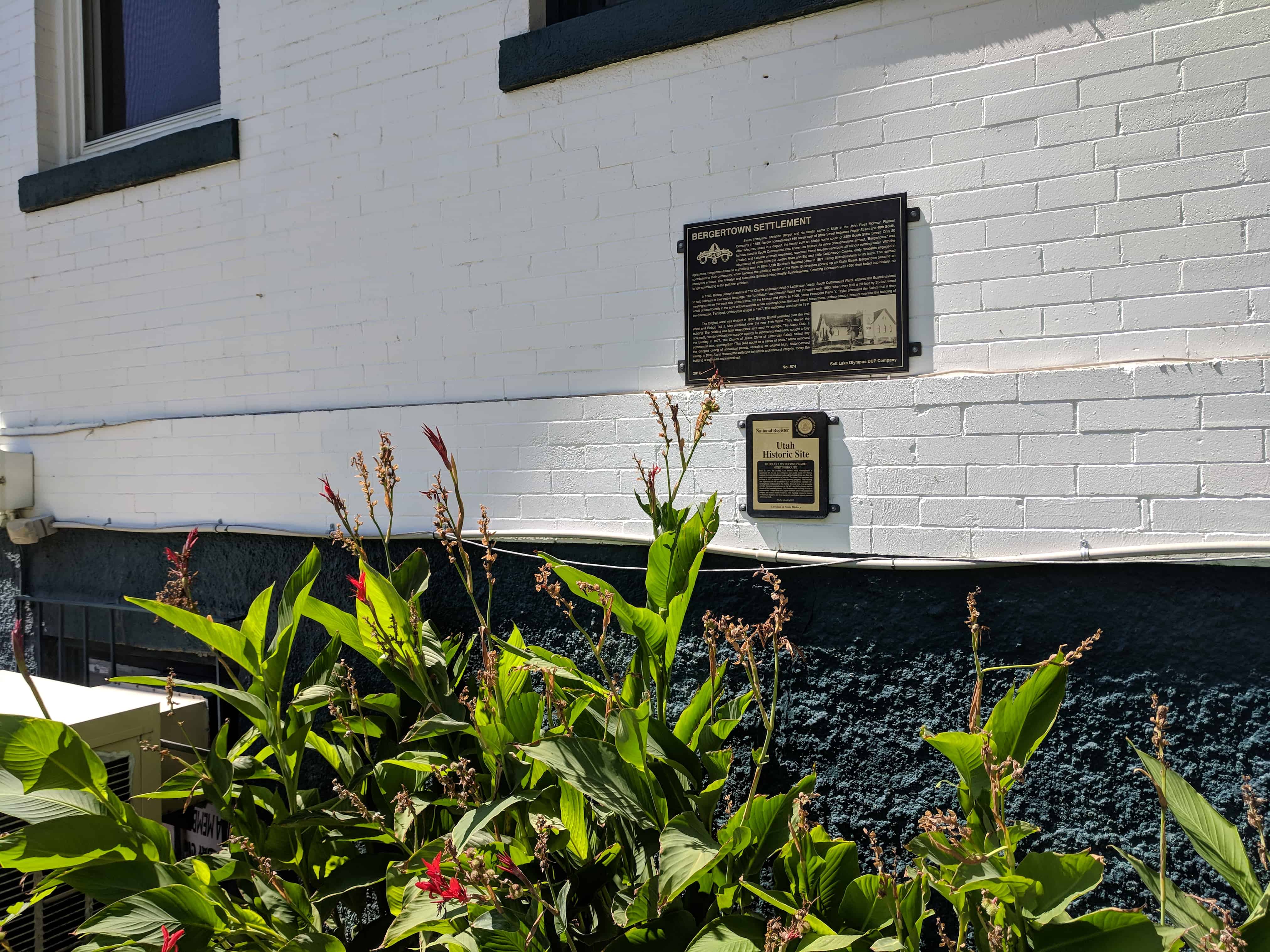
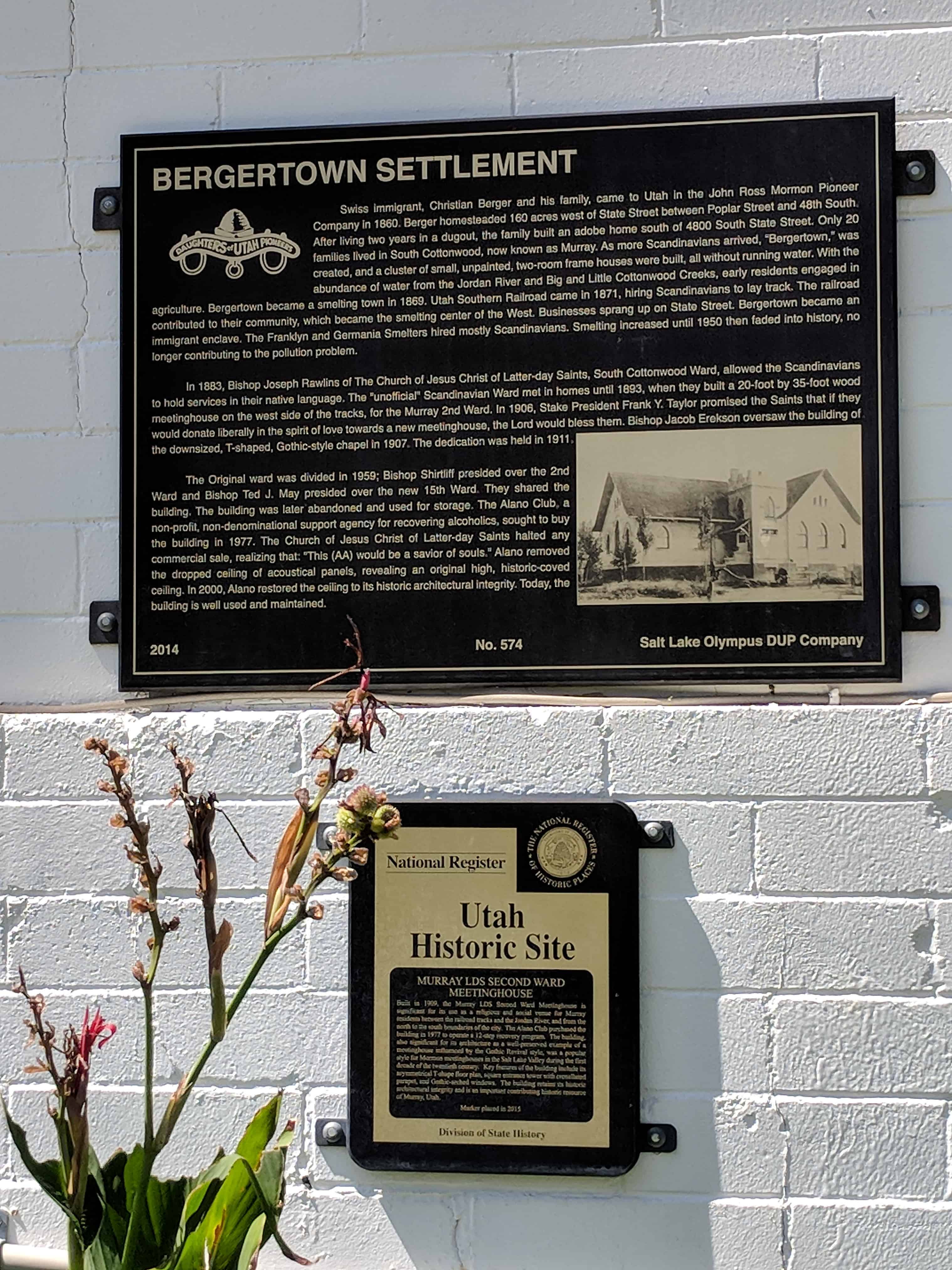
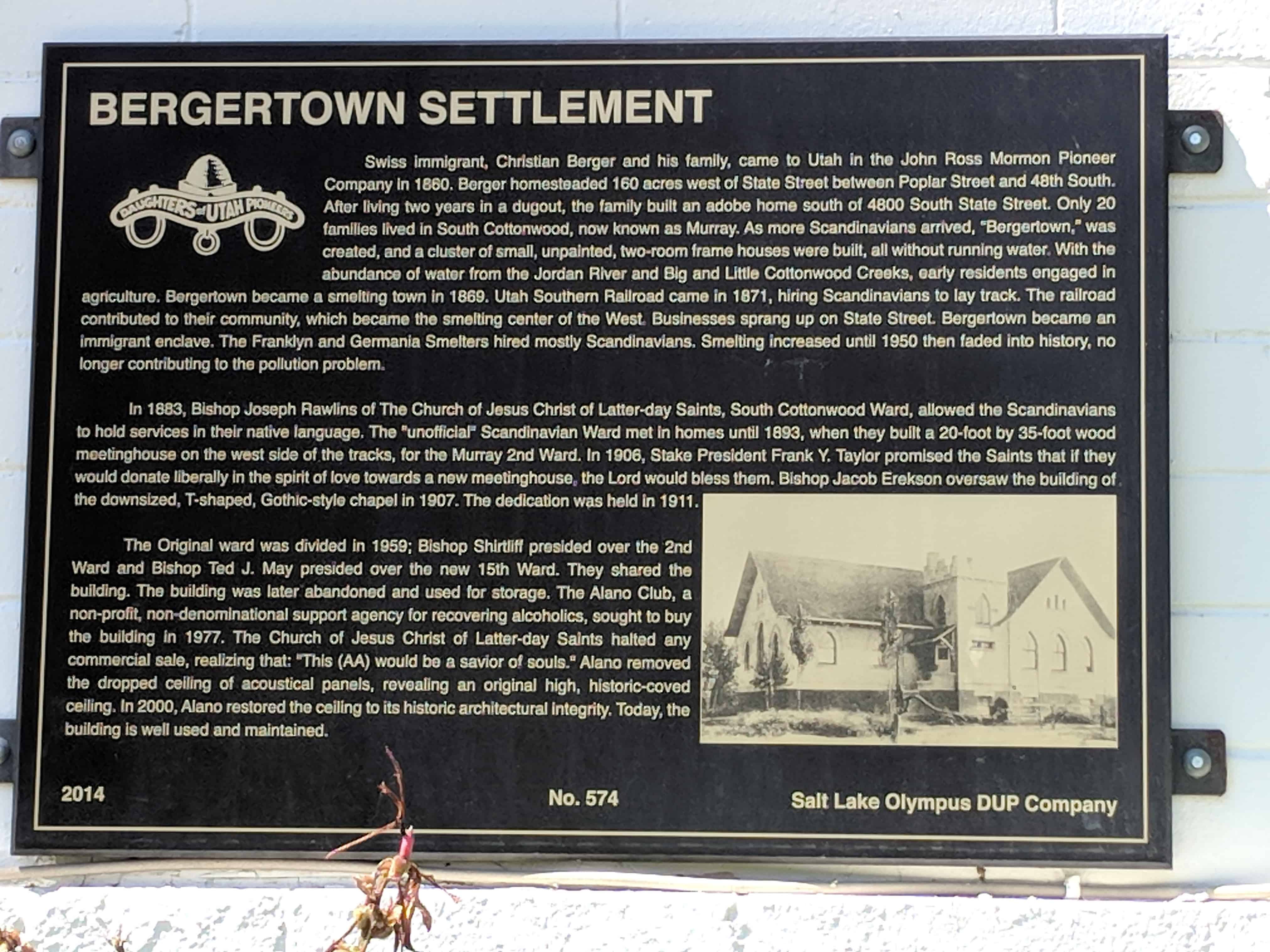
Swiss immigrant, Christian Berger and his family, came to Utah in the John Ross Mormon Pioneer Company in 1860. Berger homesteaded 160 acres west of State Street between Poplar Street and 48th South. After living two years in a dugout, the family built an adobe home south of 4800 South State Street. Only 20 families lived in South Cottonwood, now known as Murray. As more Scandinavians arrived, “Bergertown,” was created, and a cluster of small, unpainted, two-room frame houses were built, all without running water. With the abundance of water from the Jordan River and Big and Little Cottonwood Creeks, early residents engaged in agriculture. Bergertown became a smelting town in 1869. Utah Southern Railroad came in 1871, hiring Scandinavians to lay track. The railroad contributed to their community, which became the smelting center of the West. Businesses sprang up on State Street. Bergertown became an immigrant enclave. The Franklyn and Germania Smelters increased until 1950 then faded into history, no longer contributing to the pollution problem.
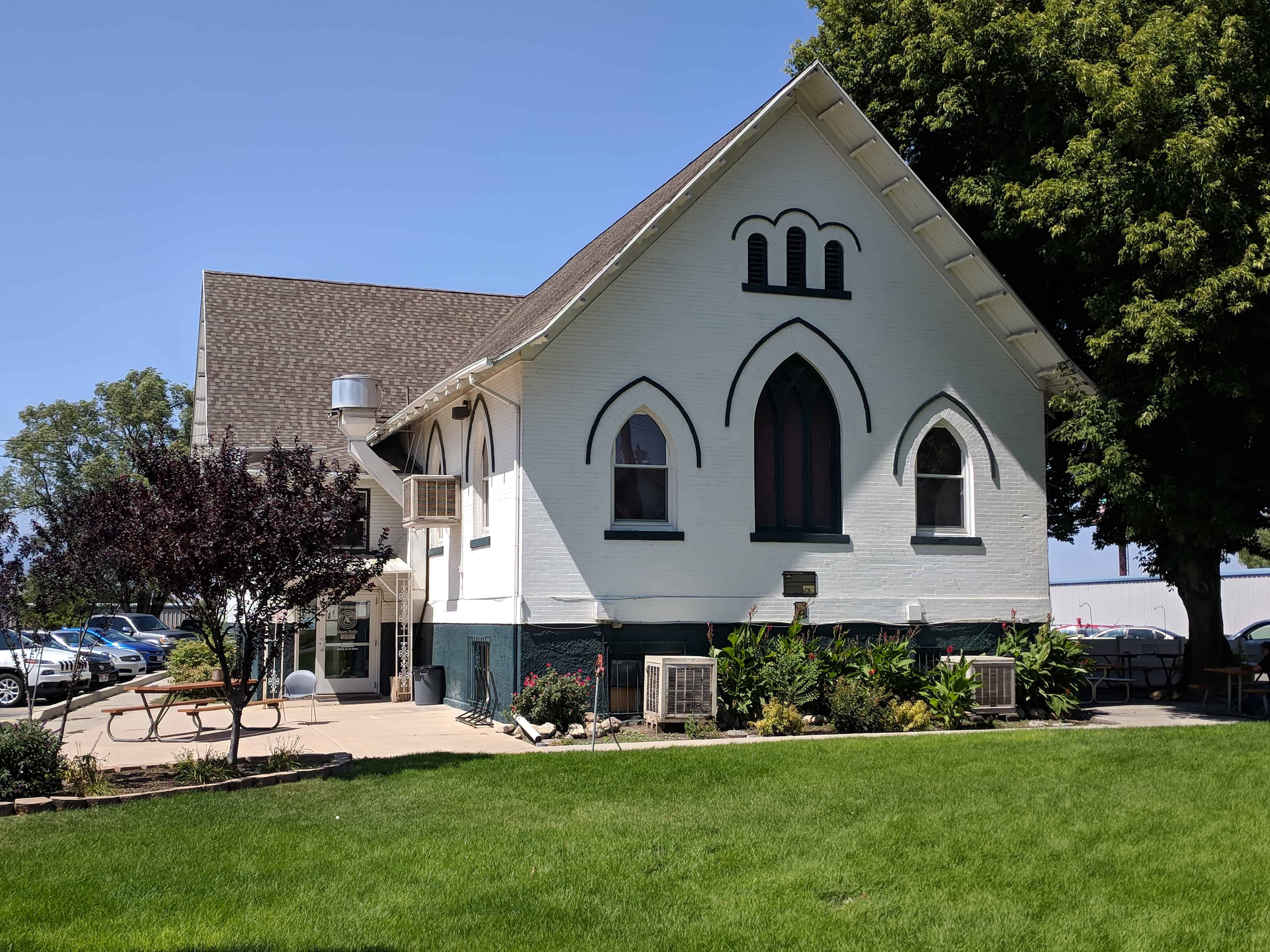
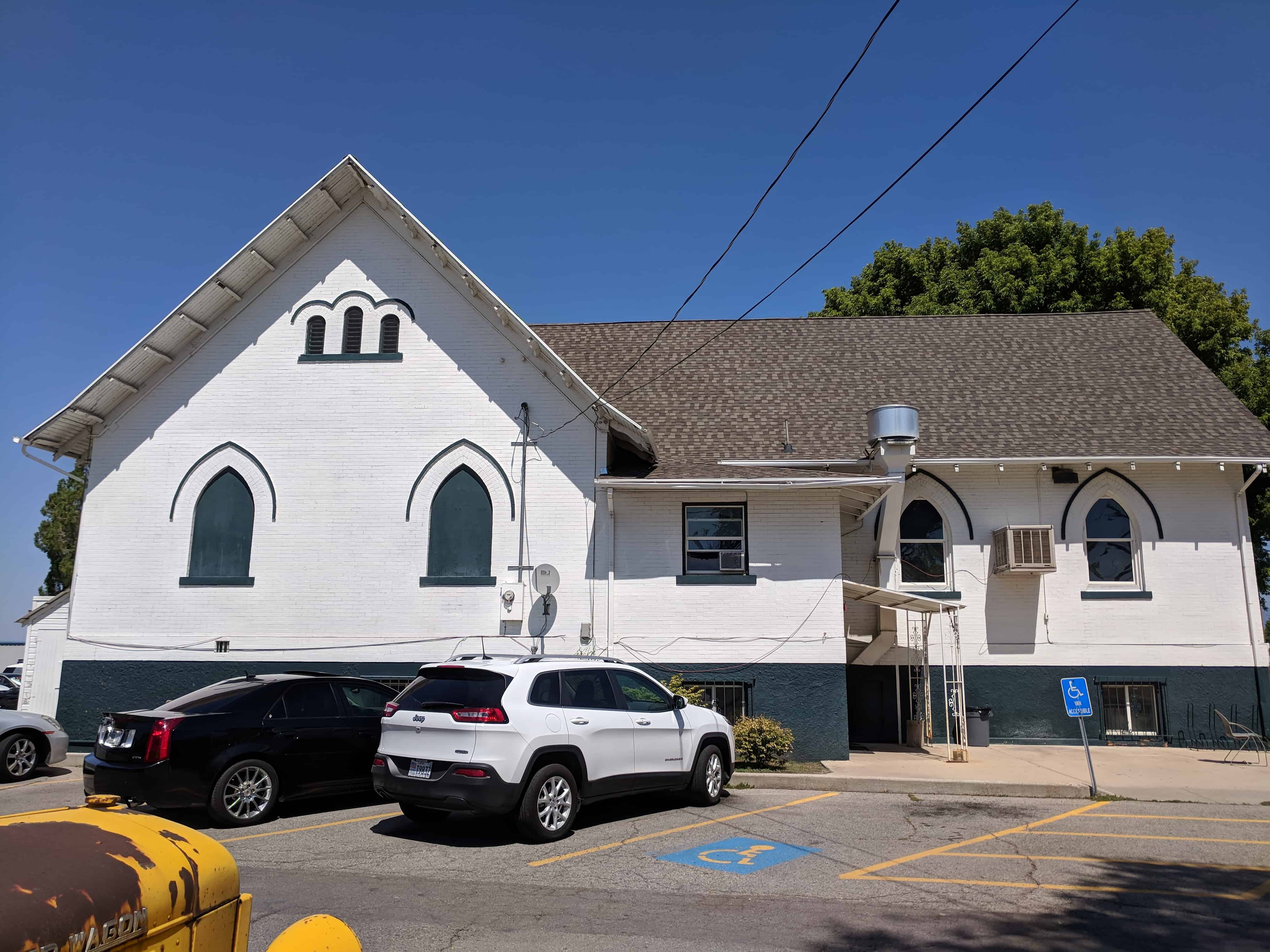
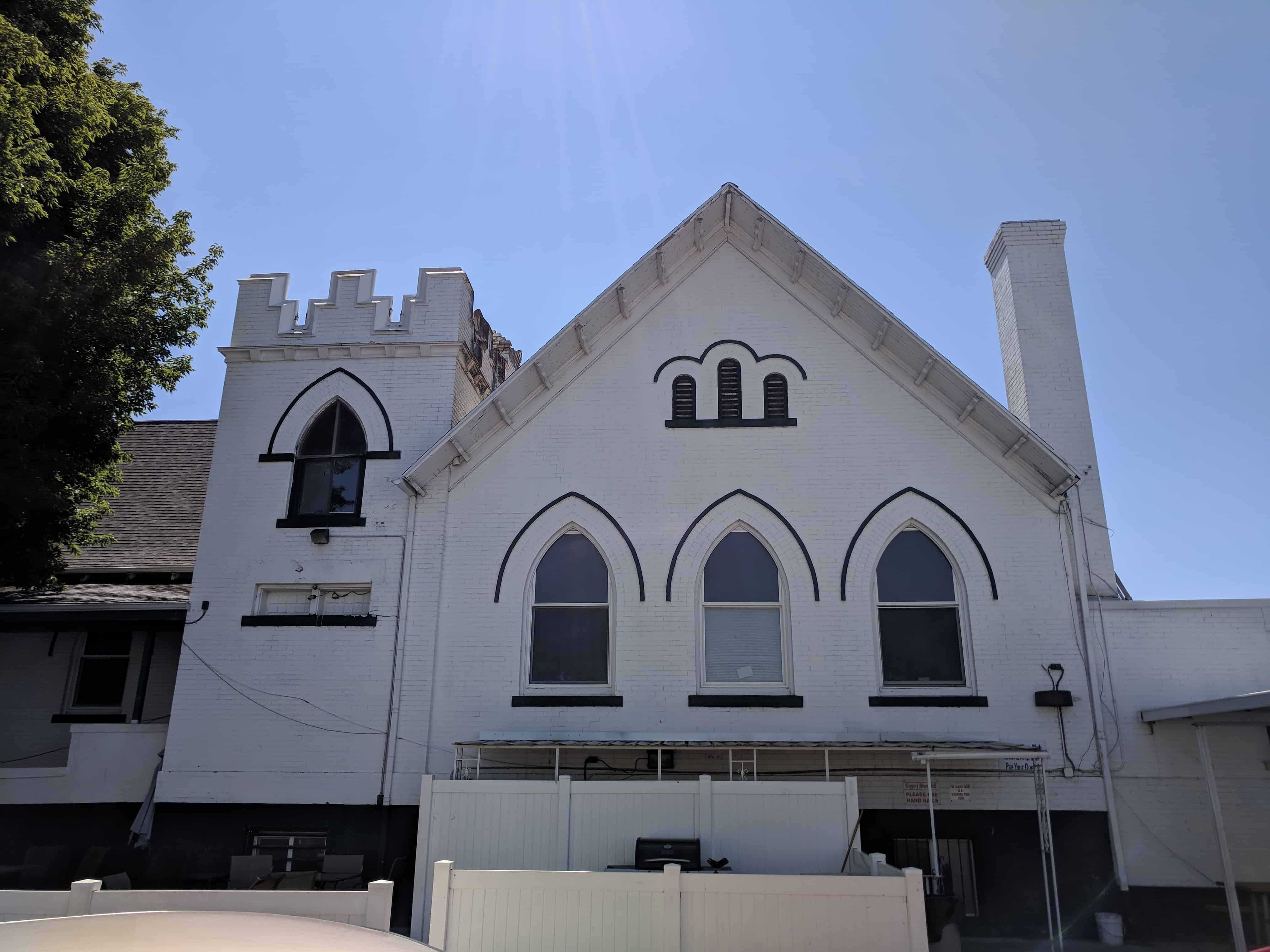
In 1883, Bishop Joseph Rawlins of The Church of Jesus Christ of Latter-day Saints, South Cottonwood Ward, allowed the Scandinavians to hold services in their native language. The “unofficial” Scandinavian Ward met in homes until 1893, when they built a 20-food by 35-foot wood meetinghouse on the west side of the tracks, for the Murray 2nd Ward. In 1906, Stake President Frank Y. Taylor promised the Saints that if they would donate liberally in the spirit of love towards a new meetinghouse, the Lord would bless them. Bishop Jacob Erekson oversaw the building of the downsized, T-shaped, Gothic-style chapel in 1907. The dedication was held in 1911.
The Original ward was divided in 1959; Bishop Shirtliff presided over the 2nd Ward and Bishop Ted J. May presided over the new 15th Ward. They shared the building. The building was later abandoned and used for storage. The Alano Club, a non-profit, non-denominational support agency for the recovering alcoholics, sought to buy the building in 1977. The Church of Jesus Christ of Latter-day Saints halted any commercial sale, realizing that: “This (AA) would be a savior of souls.” Alano removed the dropped ceiling of acoustical panels, revealing an original high, historic-coved ceiling. In 2000, Alano restored the ceiling to its historic architectural integrity. Today, the building is well used and maintained.
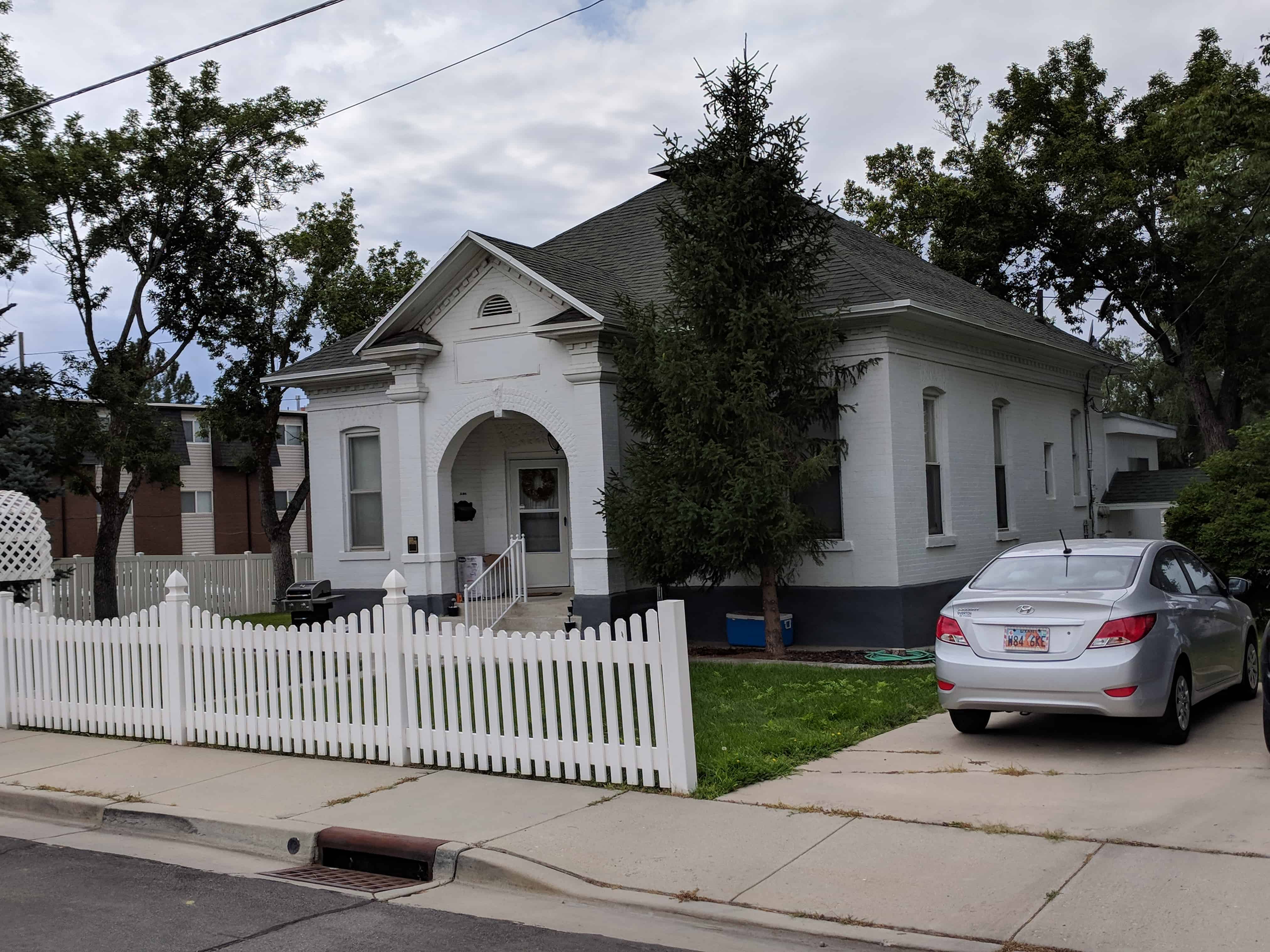
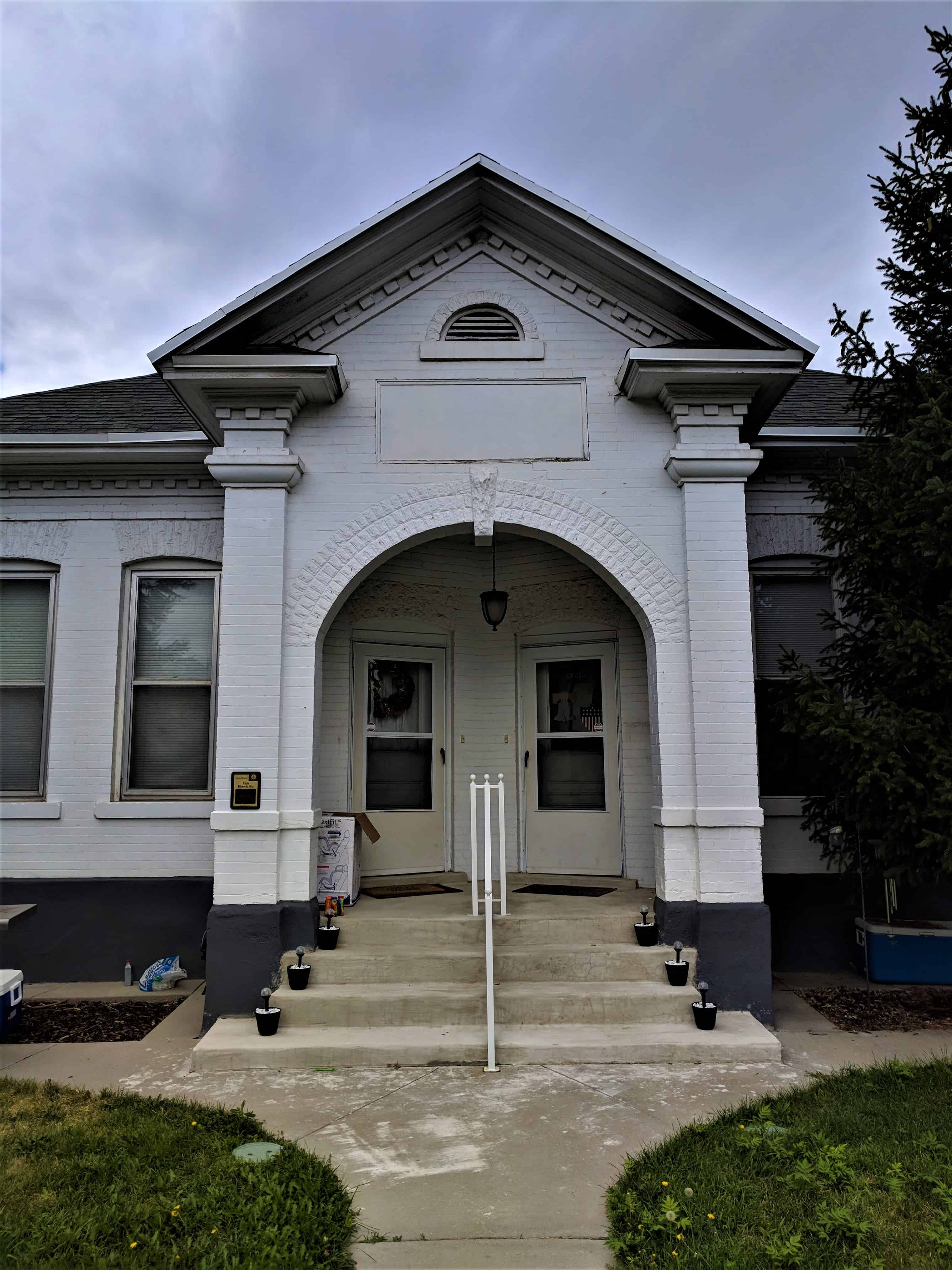
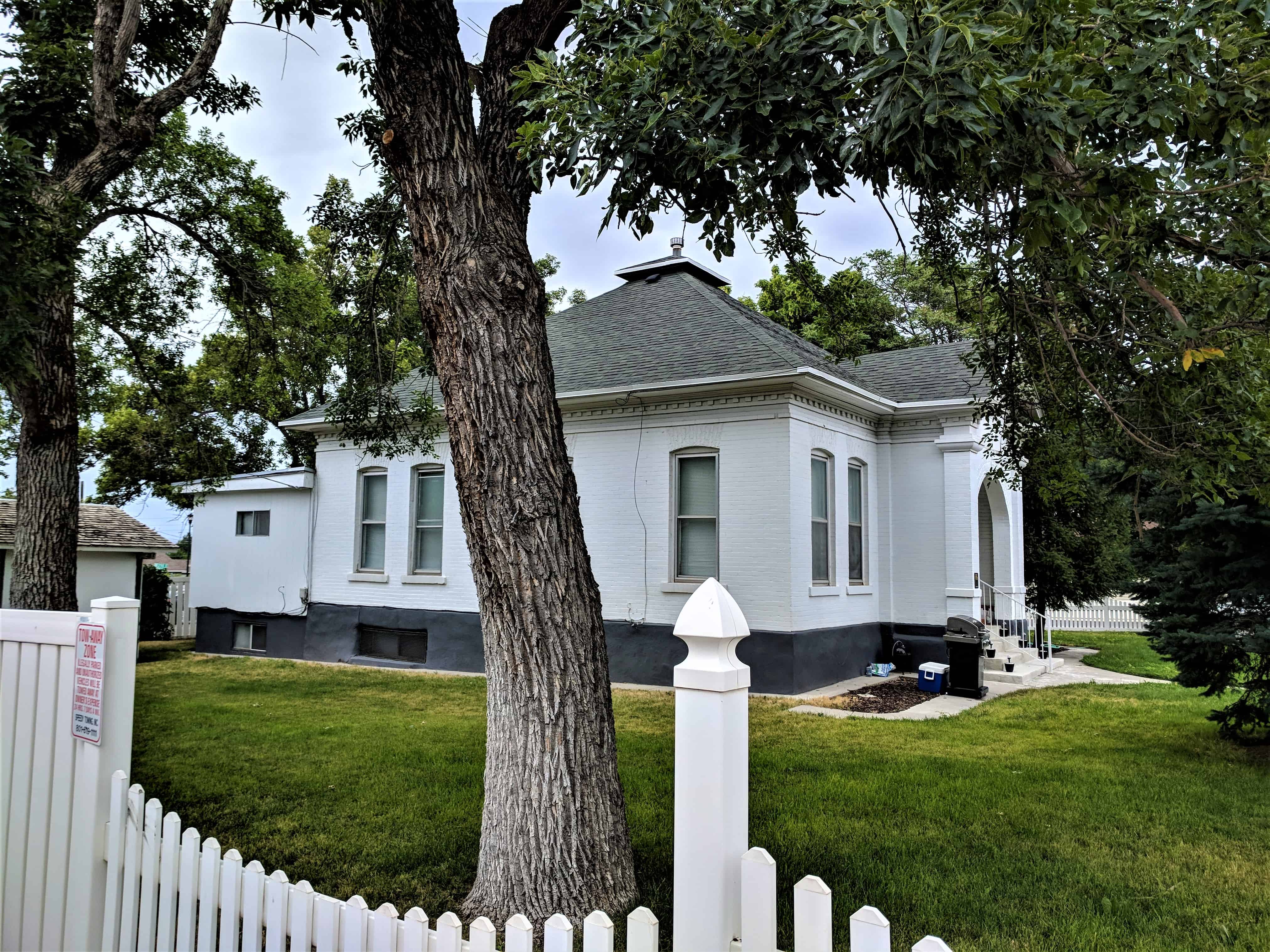
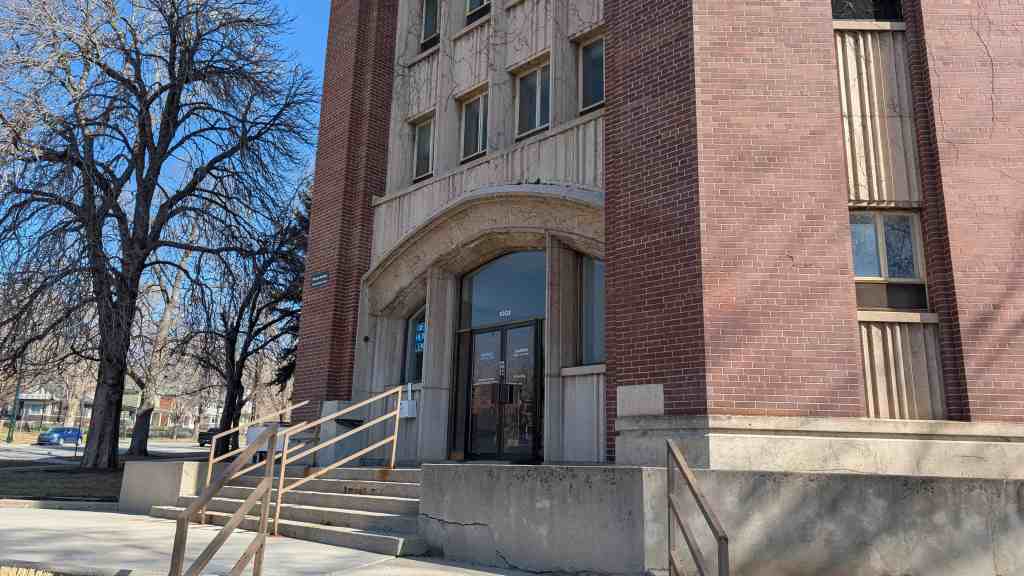
Built in 1909, the Murray LDS Second Ward Meetinghouse is significant for its use as a religious and social venue for Murray residents between the railroad tracks and Jordan River.
From the historic marker on the building:
In 1906, Stake President Frank Y. Taylor promised the Saints that if they would donate liberally in the spirit of love towards a new meetinghouse, the Lord would bless them. Bishop Jacob Erekson oversaw the building of the downsized, T-shaped, Gothic-style chapel in 1907. The dedication was held in 1911.
The Original ward was divided in 1959; Bishop Shirtliff presided over the 2nd Ward and Bishop Ted J. May presided over the new 15th Ward. They shared the building. The building was later abandoned and used for storage. The Alano Club, a non-profit, non-denominational support agency for the recovering alcoholics, sought to buy the building in 1977. The Church of Jesus Christ of Latter-day Saints halted any commercial sale, realizing that: “This (AA) would be a savior of souls.” Alano removed the dropped ceiling of acoustical panels, revealing an original high, historic-coved ceiling. In 2000, Alano restored the ceiling to its historic architectural integrity. Today, the building is well used and maintained.
Built in 1906, the Sandy Tithing Office is one of 28 well-preserved buildings in Utah that were part of the successful “in kind” tithing system of The Church of Jesus Christ of Latter-day Saints (LDS or Mormon church) during the 1850s-1910s. Tithing offices were a vital part of almost every Mormon community, serving as local centers of trade, welfare assistance, and economic activities, and they were important as the basic units of the church-wide tithing network that centered in Salt Lake City.
Bishop William D. Kuhre was granted permission by the church to build this office and use $2000 in tithes for its construction. The building’s design was one of at least two standard plans developed at church headquarters c. 1905. Those plans were perhaps the first examples of what eventually became a policy with the LDS church for developing standard plans rather than having each ward generate its own. Other tithing offices with the same basic design as this one are seen in Manti, Richmond, Panguitch and Hyrum.
The above text is from the plaque on the home, placed in 1997. The home is located at 8844 South 280 East in the historic sandy area of Sandy, Utah
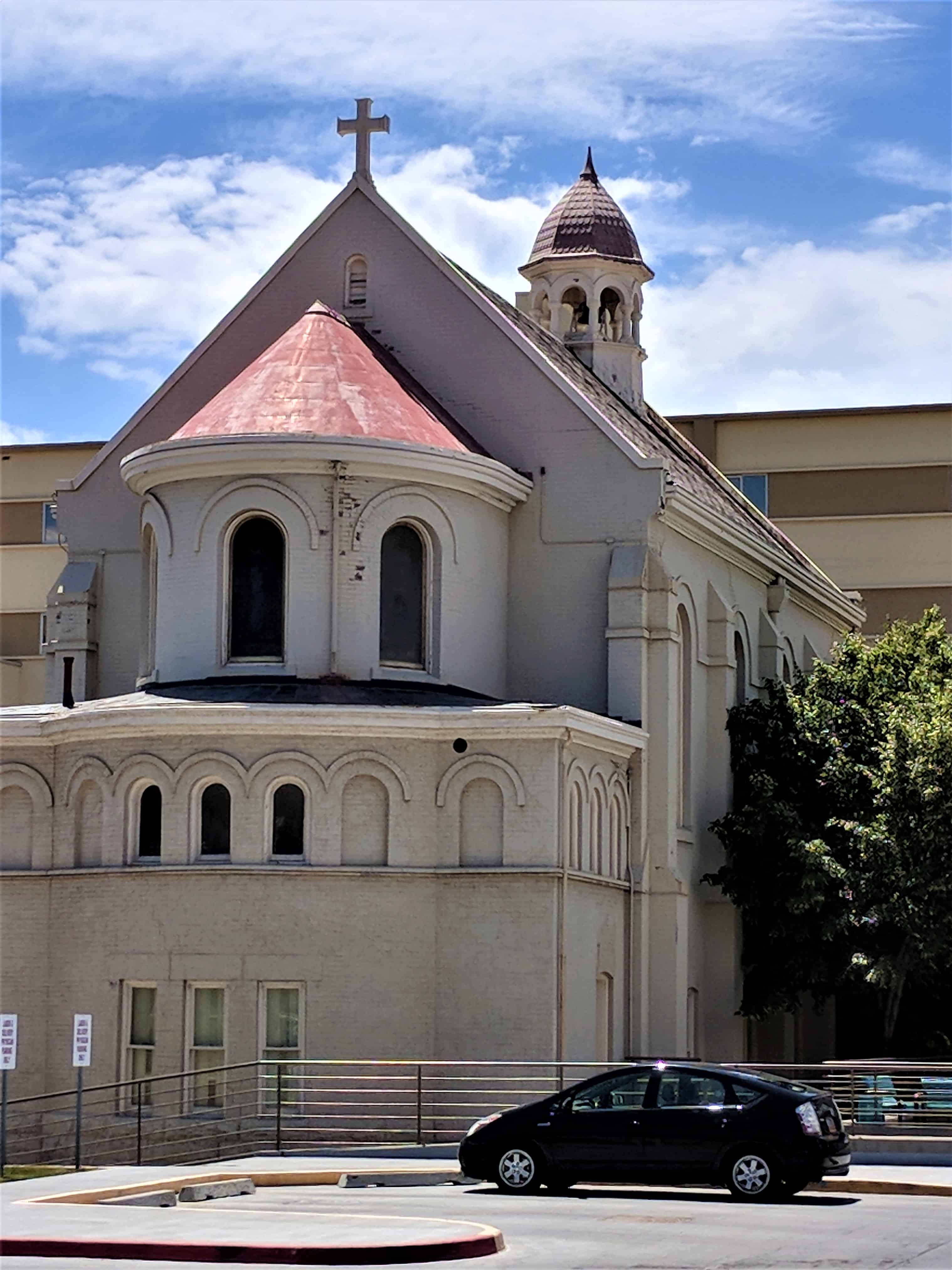
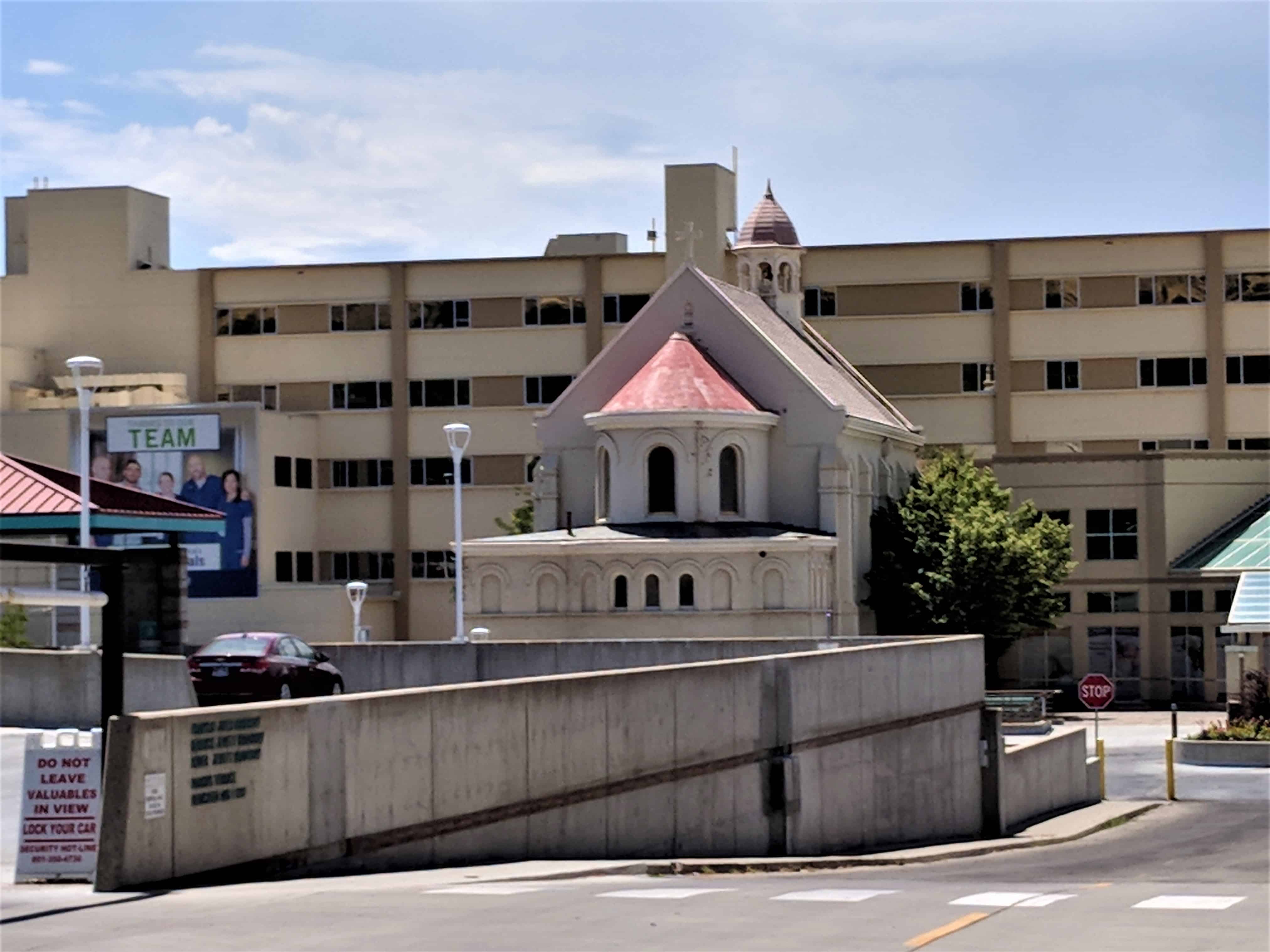
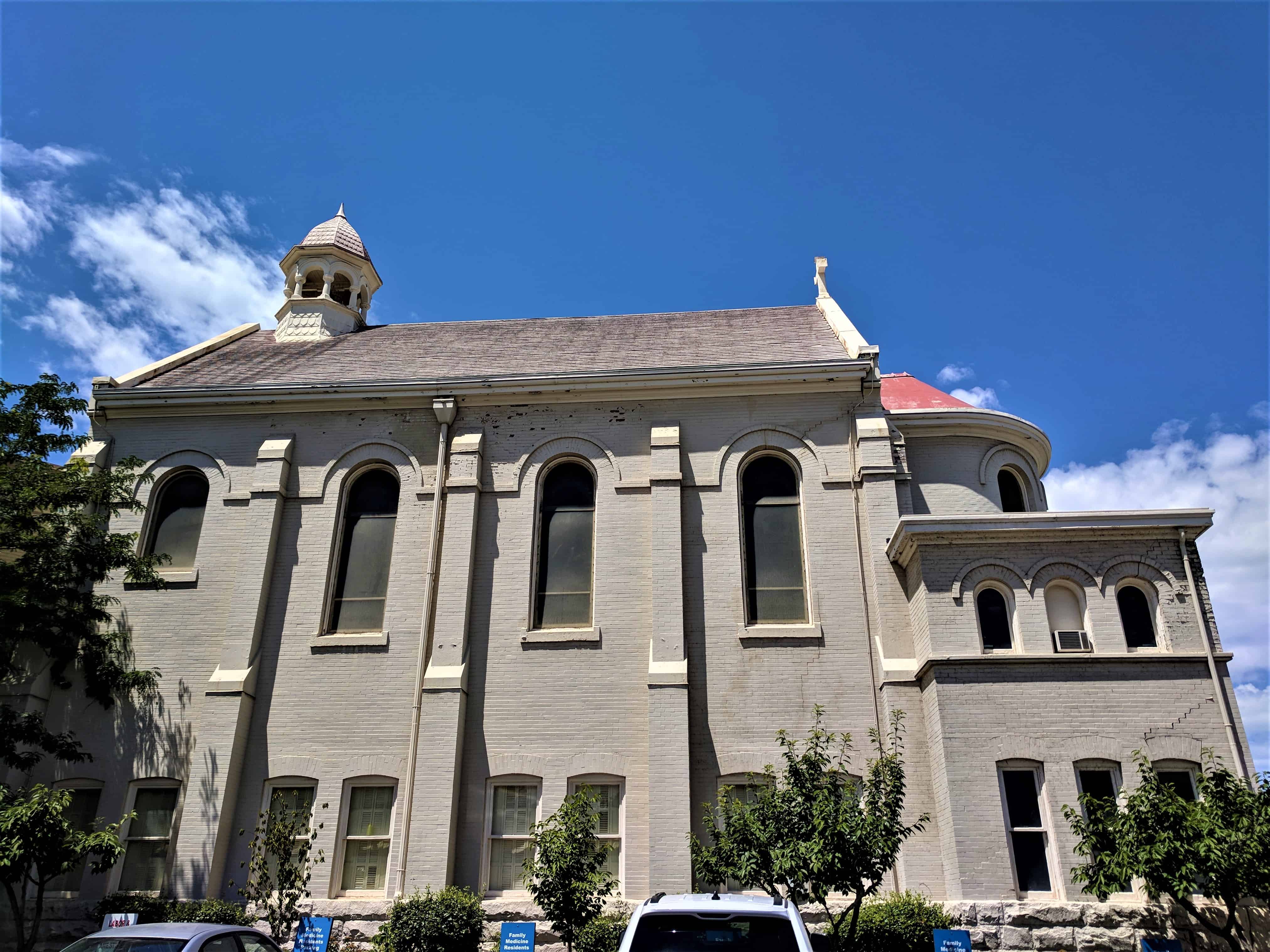
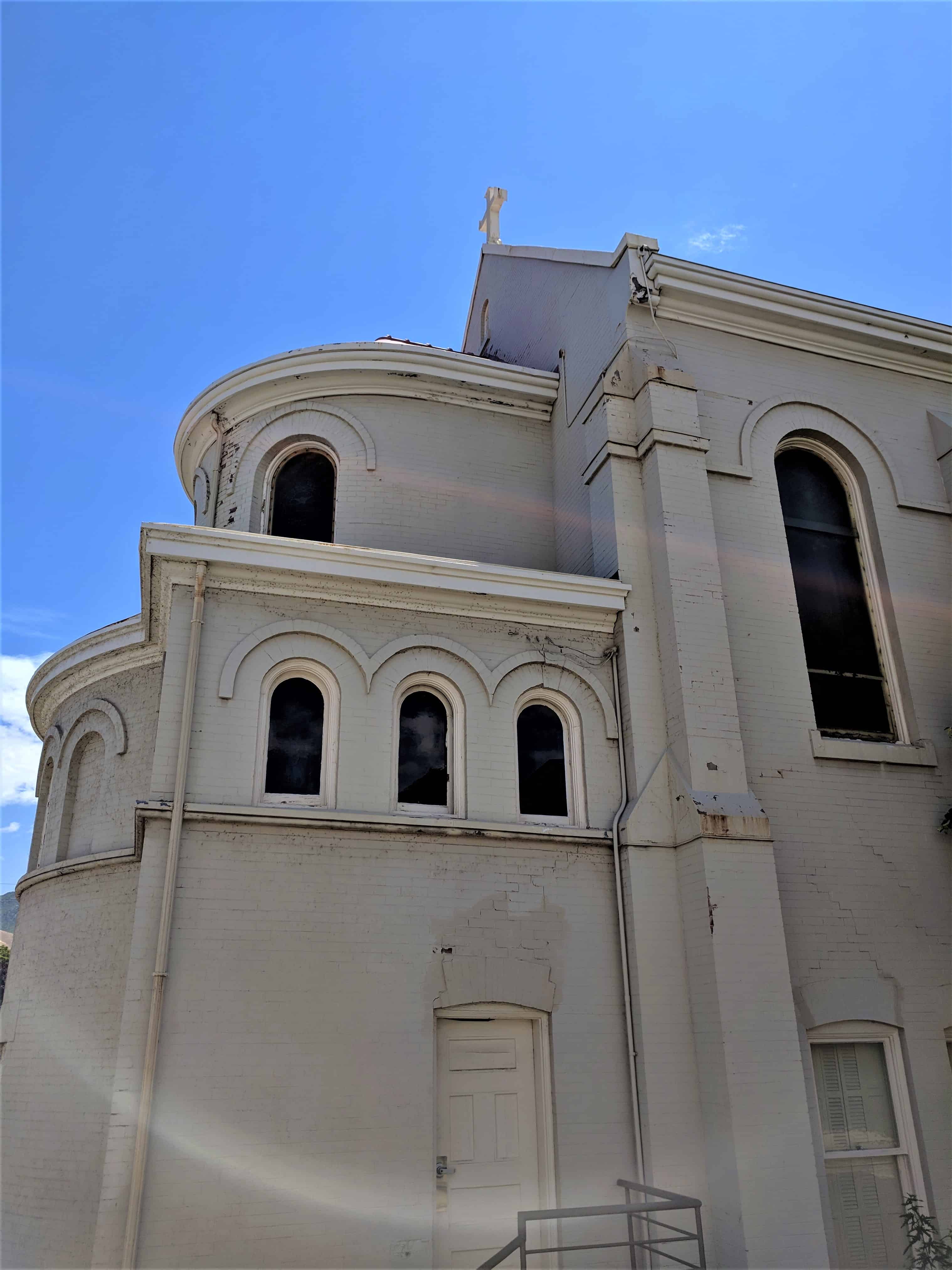
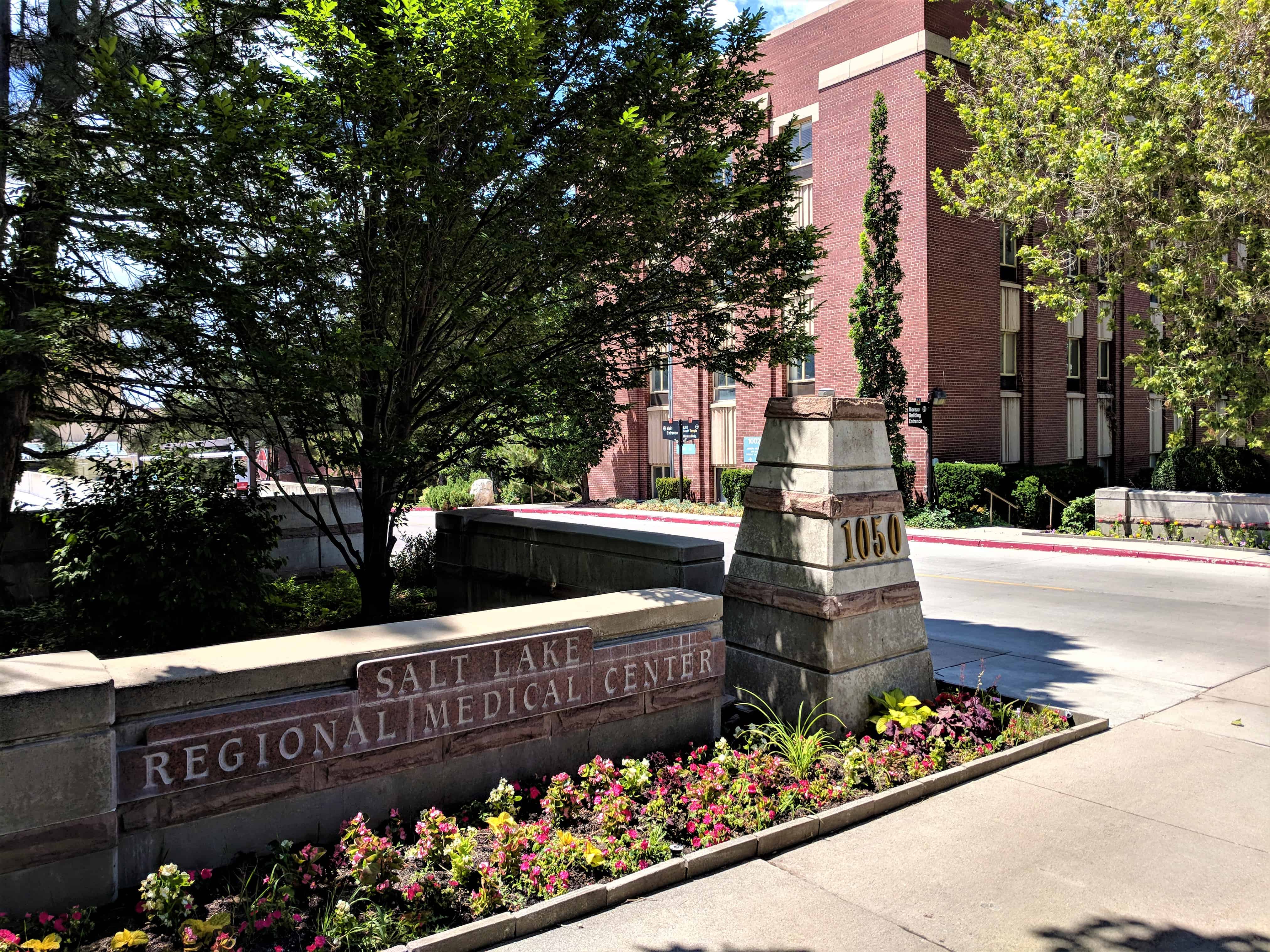
The Holy Cross Chapel at the Salt Lake Regional Medical Center in Salt Lake City, Utah.
Dedicated in 1904, the chapel was originally part of Holy Cross Hospital, established in 1875 by the Sisters of the Holy Cross. It was one of the first hospitals in the Salt Lake Valley.
Holy Cross Hospital & Chapel 1050 E. South Temple Main Building—1881-83, Henry Monheim, SLC West Wing—1903, Carl M. Neuhausen, SLC Chapel—1904, Carl M. Neuhausen, SLC East Wing—1916, Bernard O. Mecklenburg, SLC West Wing Remodeled—1920, Bernard O. Mecklenburg, SLC
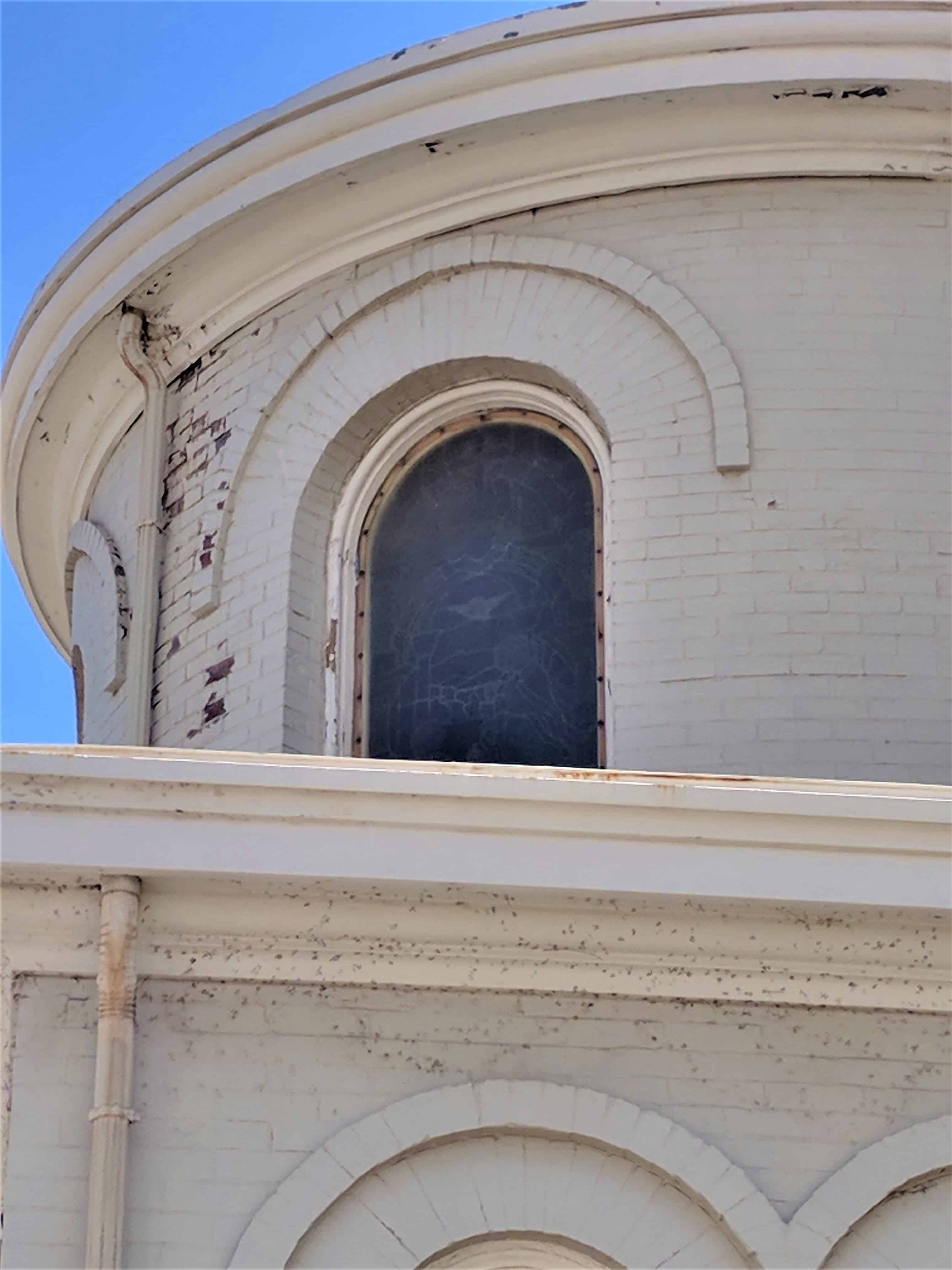
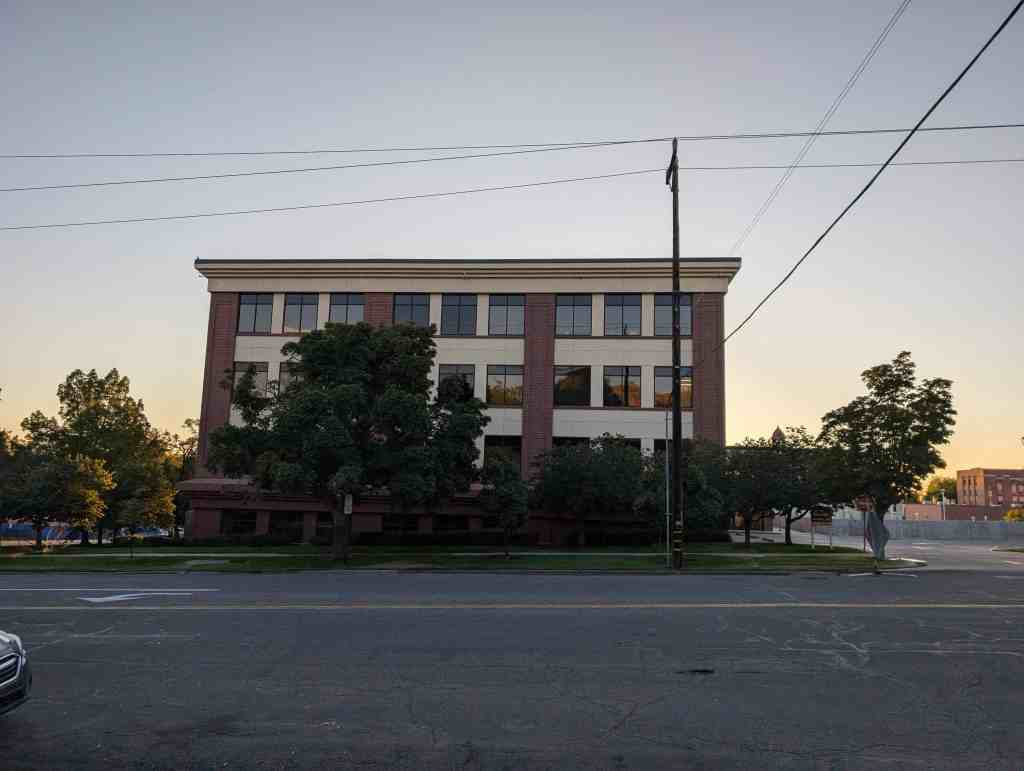
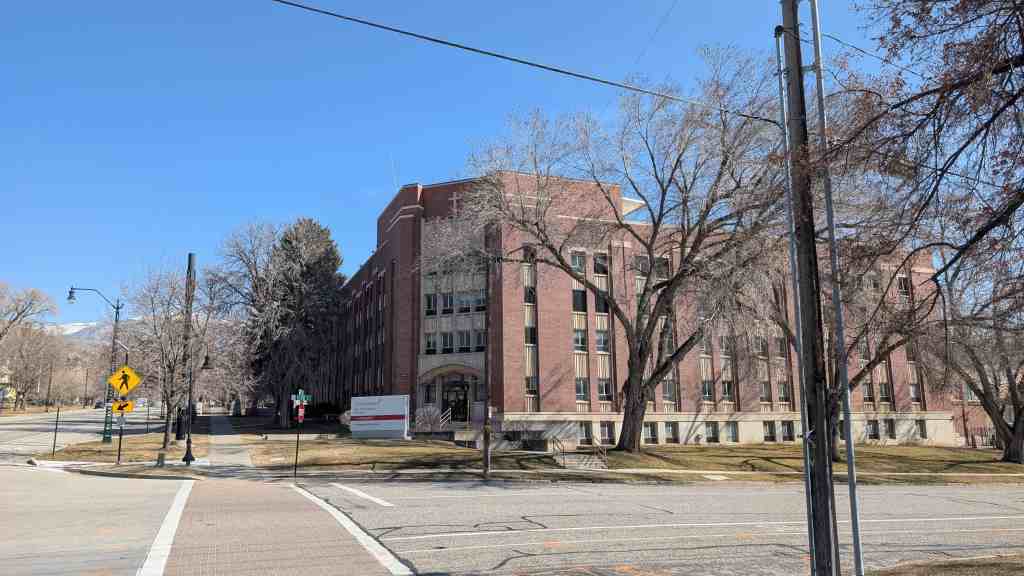
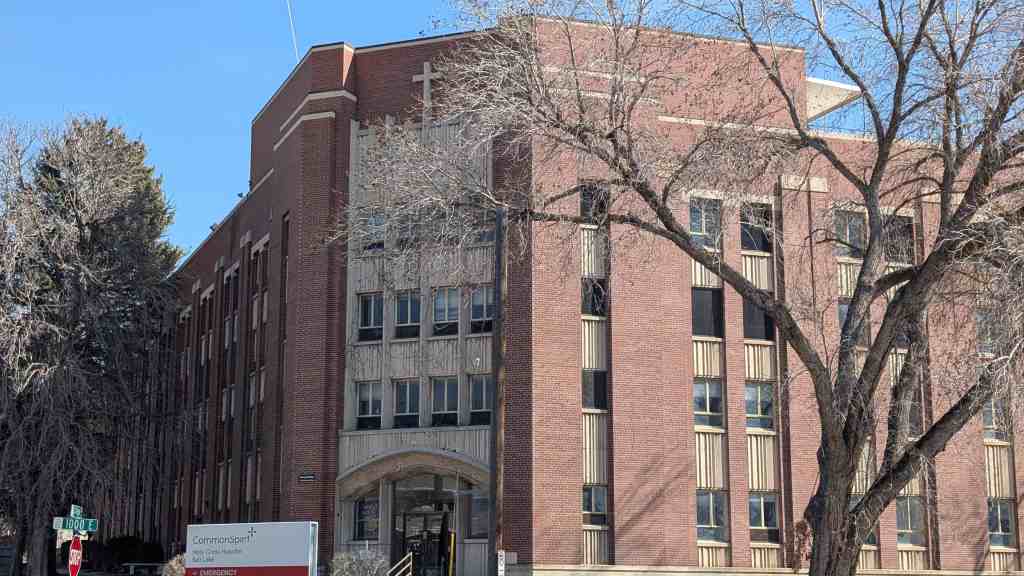
The two remaining historic sections of Holy Cross Hospital, now the Salt Lake Regional Medical Center, are visible from South Temple. The historic chapel, located in the large center courtyard, was dedicated in 1904. It was designed by Carl M. Neuhausen, the architect of The Cathedral of the Madeleine and the Kearns Mansion. The interior of the chapel was decorated by Italian artist Achille Peretti in 1909. The paintings he created for the dome above the alter and the choir loft remain a focal point of the chapel today.
The east wing of the hospital, completed in 1916, was designed by Bernard O. Mecklenburg. This Gothic style building features crenelated gable parapets and square corner buttresses with pyramidal caps. Mecklenburg also worked on the matching west wing of the hospital which was demolished in 1988. Neuhausen designed a one-story west wing in 1903 and Mecklenburg converted it into three stories in 1920. The original central building which connected the east and west wings was completed in 1883. Designed by Henry Monheim, this building was demolished and the new hospital building constructed in 1960.
Holy Cross Hospital was founded under the auspices of the Catholic Church in 1875 by Sisters Holy Cross and Bartholomew. Only the second hospital established in Utah, it was originally located in a small house with just 13 beds. The Sisters worked with three doctors who offered their medical services for free. (from Preservation Utah’s walking tour)
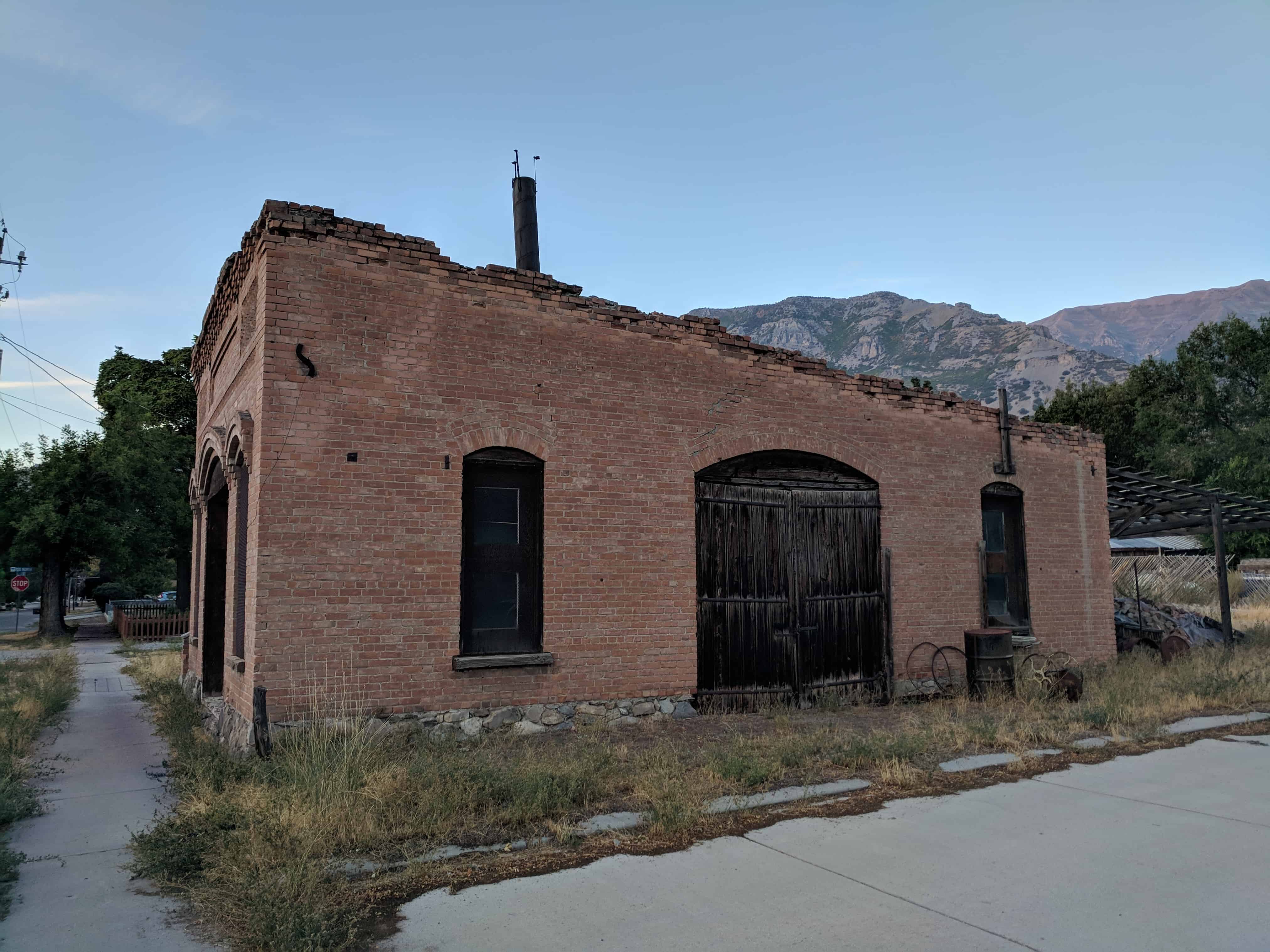
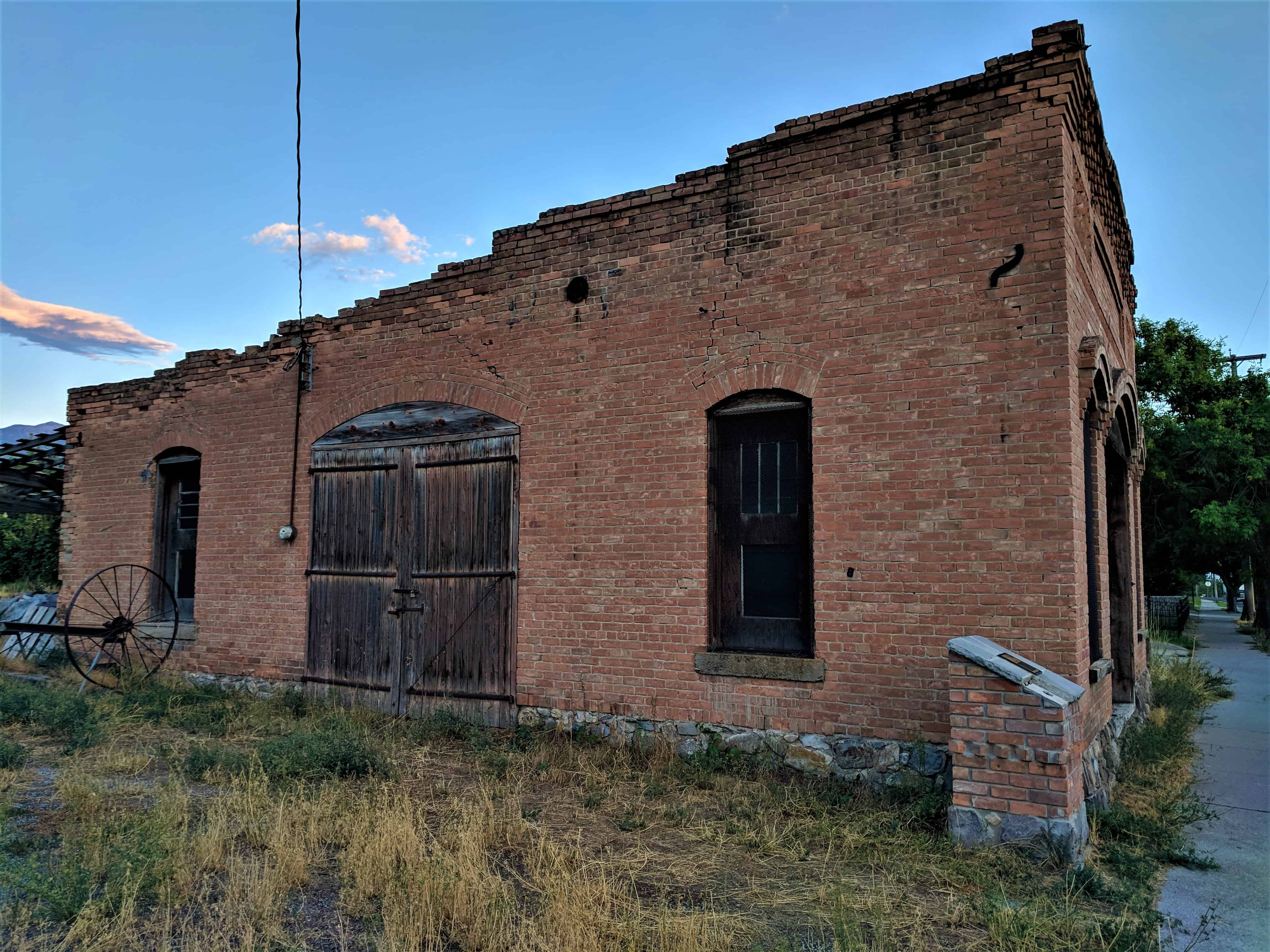
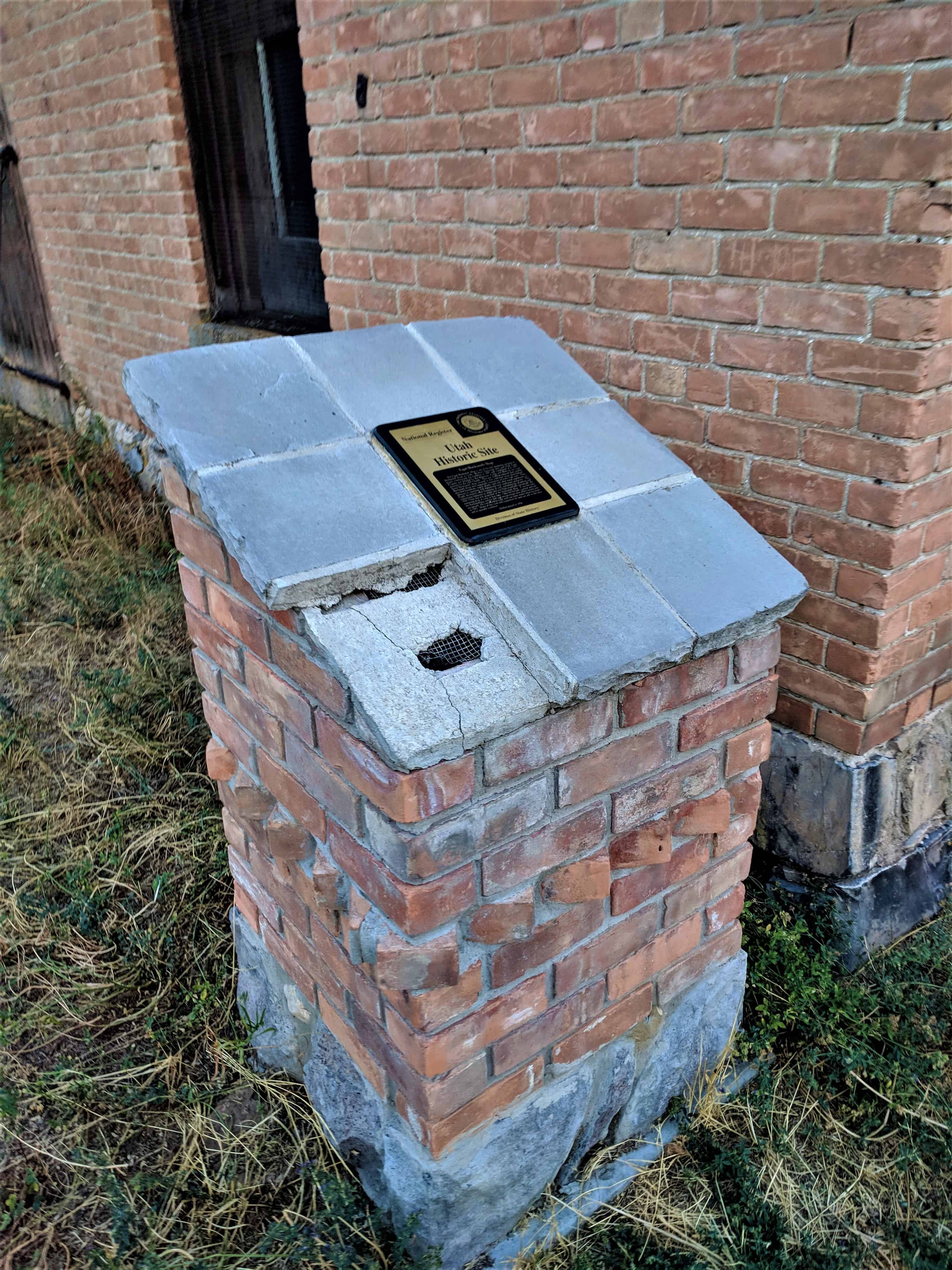
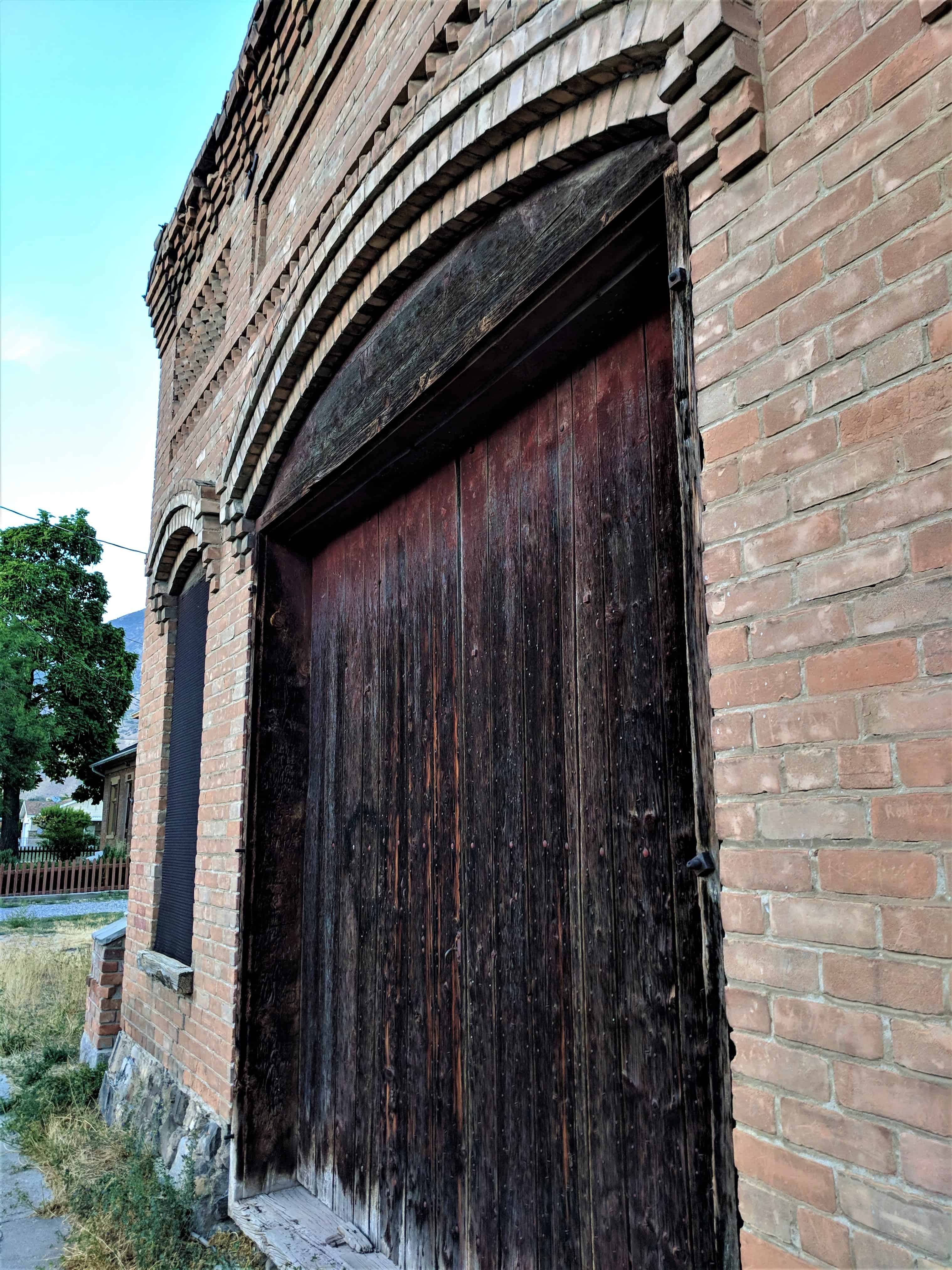
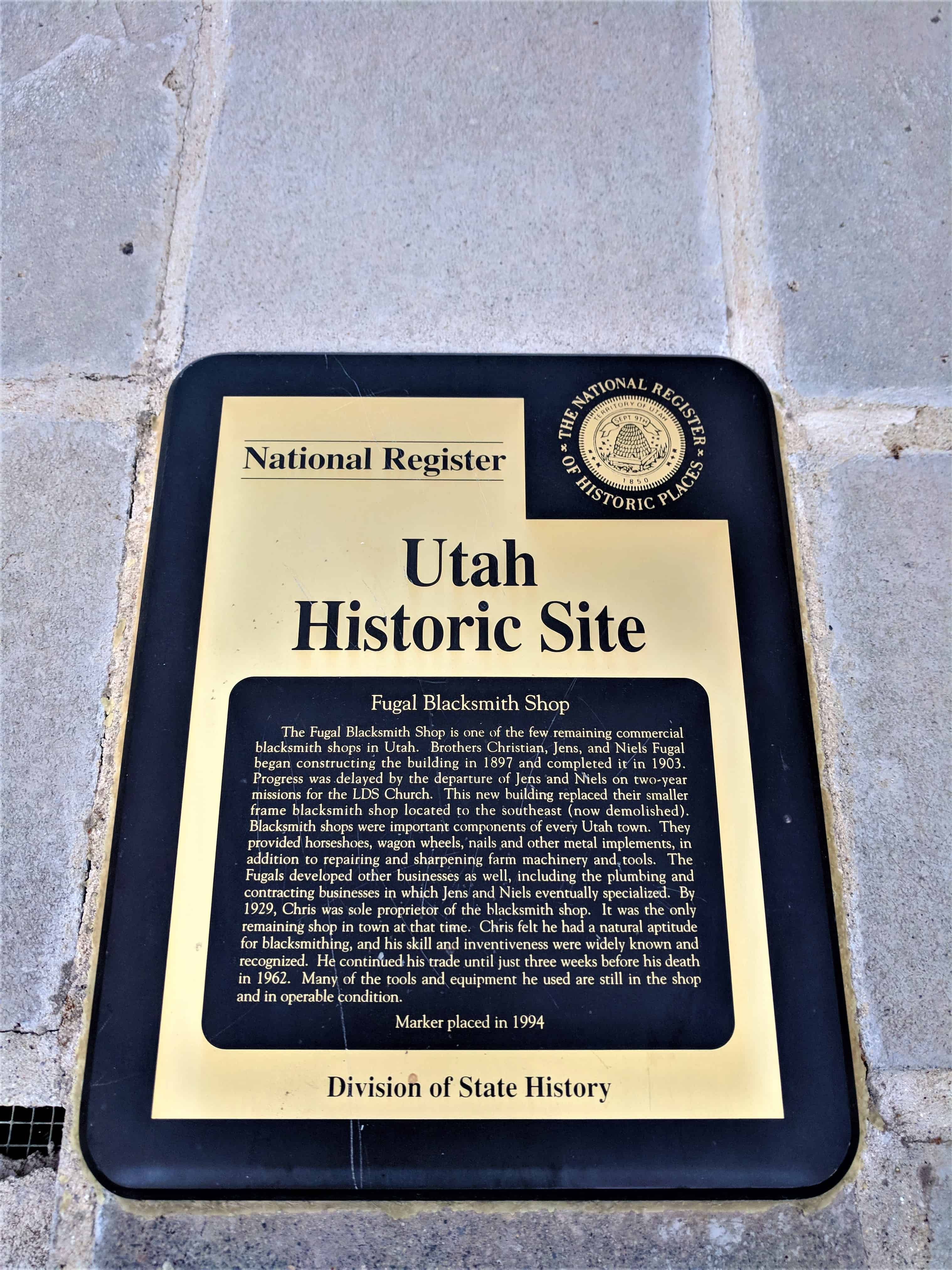
The Fugal Blacksmith Shop is one of the few remaining commercial blacksmith shops in Utah. Brothers Christian, Jens, and Niels Fugal began constructing the building in 1897 and completed it in 1903. Progress was delayed by the departure of Jens and Niels on two-year missions for the LDS Church. This new building replaced their smaller frame blacksmith shop located to the southeast (now demolished).
Blacksmith shops were important components of every Utah town. They provided horseshoes, wagon wheels, nails and other metal implements, in addition to repairing and sharpening farm machinery and tools. The Fugals developed other businesses as well, including the plumbing and contracting businesses in which Jens and Niels eventually specialized. By 1929, Chris was sole proprietor of the blacksmith shop. It was the only remaining shop in town at that time. Chris felt he had a natural aptitude for blacksmithing, and his skill and inventiveness were widely known and recognized. He continued his trade until just three weeks before his death in 1962. Many of the tools and equipment he used are still in the shop and in operable condition.