• About JacobBarlow.com
  • Cemeteries in Utah
  • D.U.P. Markers
  • Doors
  • Exploring Utah Email List
  • Geocaching
  • Historic Marker Map
  • Links
  • Movie/TV Show Filming Locations
  • Oldest in Utah
  • Other Travels
  • Photos Then and Now
  • S.U.P. Markers
  • U.P.T.L.A. Markers
  • Utah Cities and Places.
  • Utah Homes for Sale
  • Utah Treasure Hunt

JacobBarlow.com

~ Exploring with Jacob Barlow

JacobBarlow.com

Tag Archives: Historic Homes

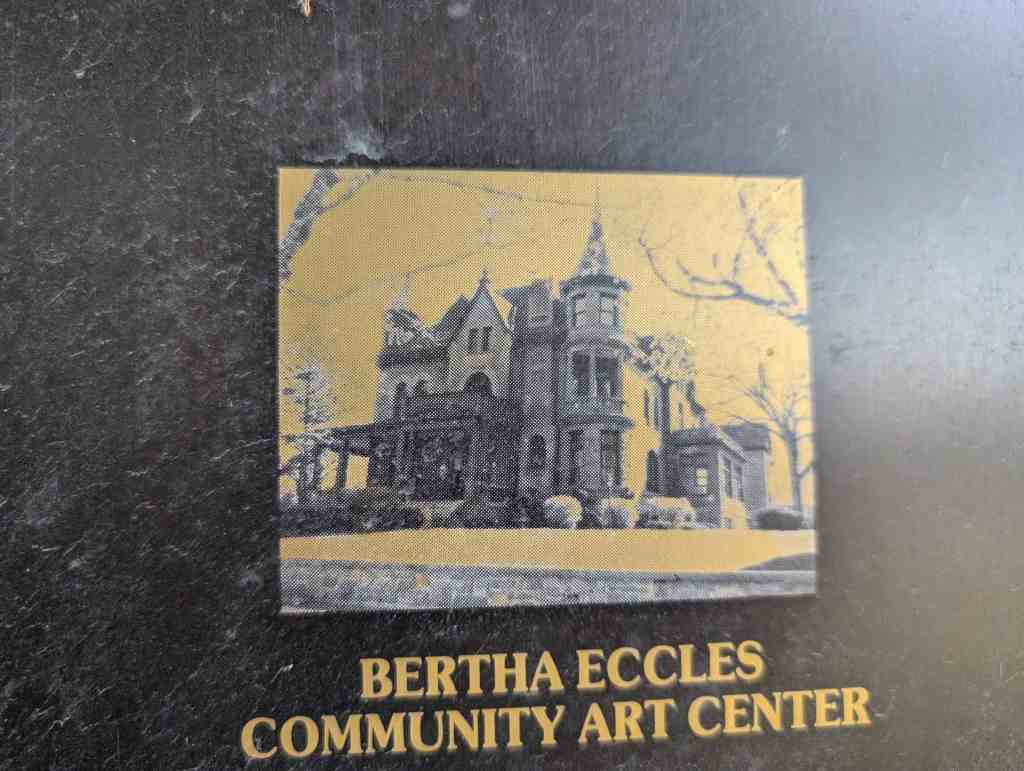
Bertha Eccles Community Art Center

19 Friday May 2023

Posted by Jacob Barlow in Uncategorized

≈ Leave a comment

Tags

Historic Homes, NRHP, Ogden, utah, Weber County

Bertha Eccles Community Art Center / Bertha Eccles Hall

One of the primary sources of wealth in 19th Century Utah was mining. Often this revenue was then invested in banking, commercial and agricultural ventures to multiply the wealth of already successful entrepreneurs. The case of James C. Armstrong is no exception.
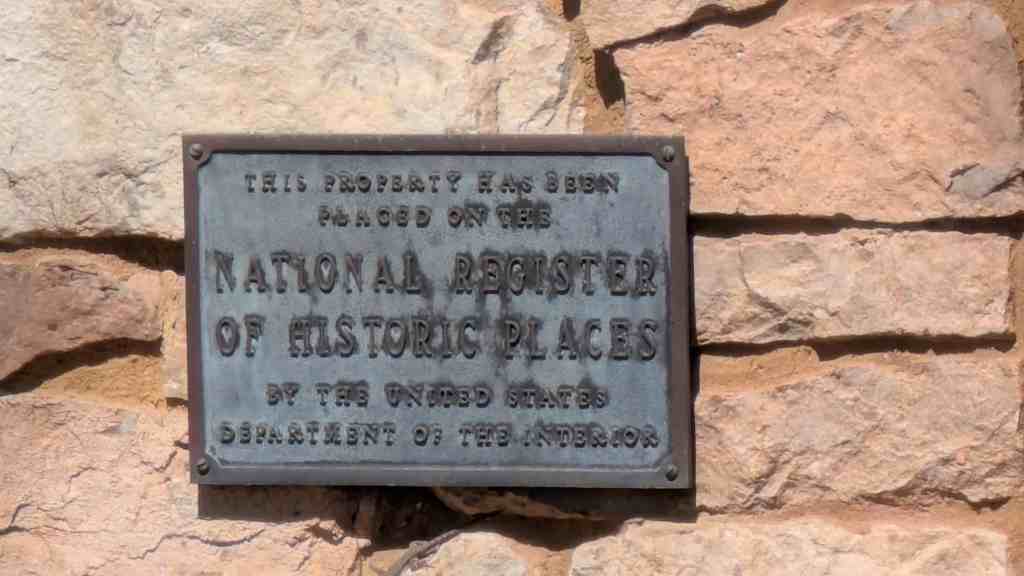
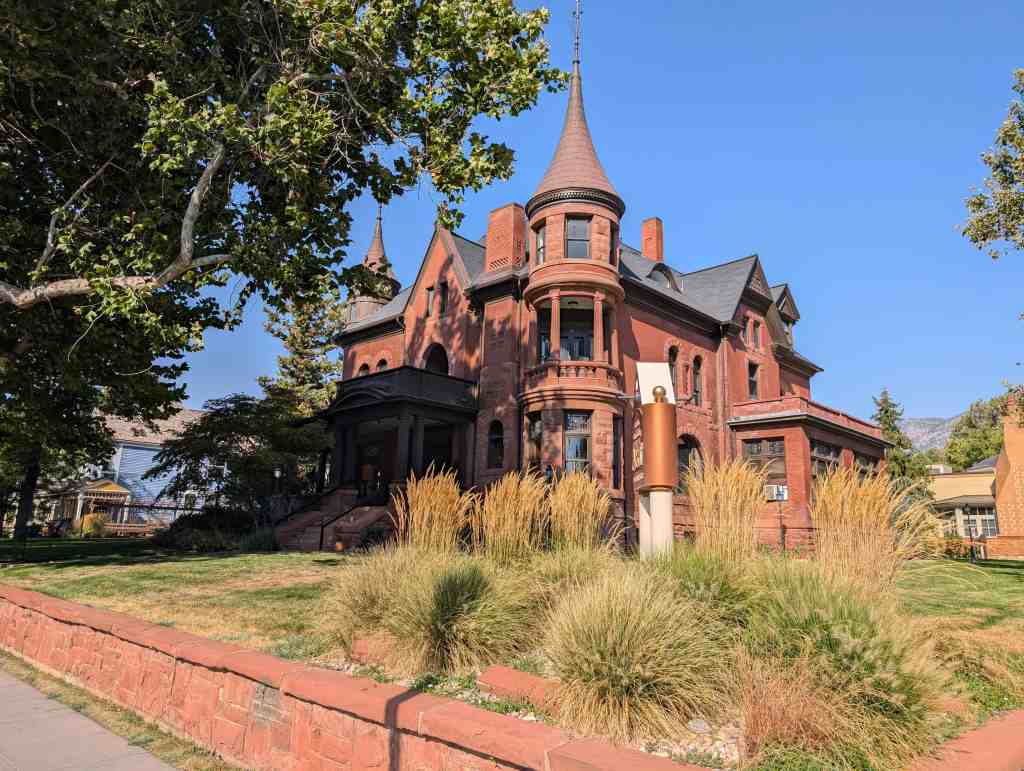
The Bertha Eccles Community Art Center is located at 2580 Jefferson Avenue in the Jefferson Avenue Historic District and in Ogden’s Central Bench Historic District in Ogden, Utah and added to the National Historic Register (#71000865) on May 14, 1971.

  • mentioned in Jefferson Avenue Historic District:
    Two buildings within the district were already listed individually in the National Register prior to the district being listed. These include the Bertha Eccles House, built in 1893, and located at 2580 Jefferson.

    also,
    Some architect-designed homes are known (i.e., 2523 Jefferson was designed by William W. Fife, a prominent Ogden architect), while others show the originality and sophistication that suggest an architect’s involvement (i.e., 2580 Jefferson and 2504 Jefferson).

    also,
    The townspeople built impressive brick buildings and invested in a host of new export industries which were serviced by the railroad: canning, flour mills, sugar beet production. One example of this is David Eccles (2580 Jefferson) who was the president of the Amalgamated Sugar Company and was instrumental in the development of other Ogden industries as mentioned previously. After his death, his son David C. Eccles (607 25th Street) took over as vice-president and general manager.
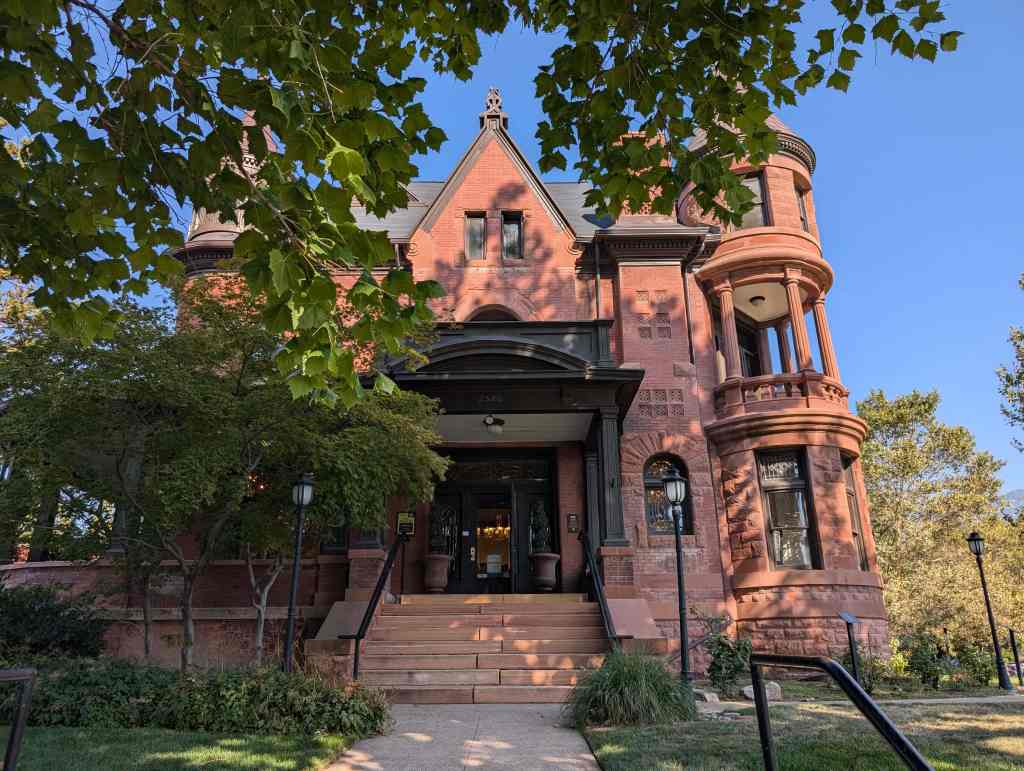
With wealth from the mines, he invested in the Commercial National Bank of Ogden and became its president. He also served on the Bear River Water Board, as treasurer of the Union Publishing Company and as a Weber County commissioner in 1897 and 1898. Armstrong used part of his money to build a lovely home on Jefferson Avenue in 1893. The architect is unknown. Apparently the contractor was Joseph T. Johnson.

In 1896, Armstrong sold the home to David Eccles, another prominent businessman in northern Utah. His interests extended to lumber, land, railroads, banking and sugar industry. In time he became one of the state’s most significant financiers with his Influence extending far beyond the state’s boundaries.

David Eccles’ story is in the Horatio Alger’s tradition. Born in Scotland, he immigrated to Utah with his family, new converts to Mormon ism in 1863.

After locating in the Ogden area, David’s father, who was blind, made various articles on his wood lathe which his son peddled to people in the Ogden area. From this lowly beginning the young man rose to great financia prominence before his death in 1912.
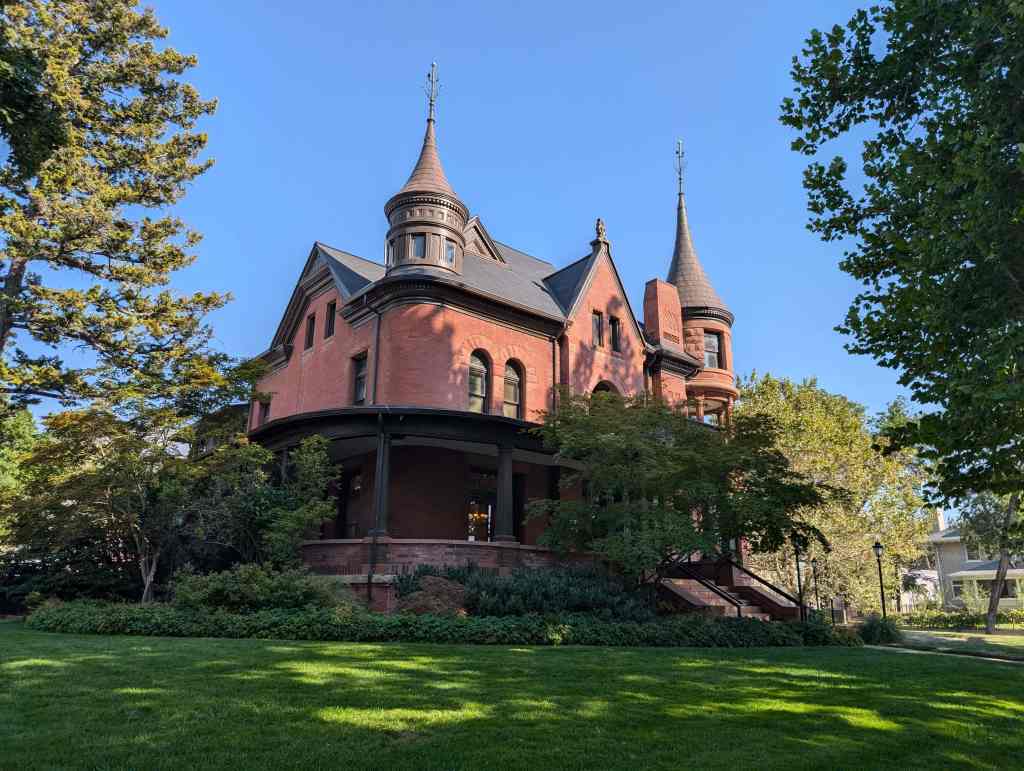
His first wife, Bertha Jensen Eccles, was born in Denmark in 1857. At age ten, she also came to Utah with her family, walking much of the way. Living in Huntsville also, she grew up knowing the boy she later married. (1875) Their lovely home on Jefferson Avenue was many years removed from that beginning.

Because of her wealth and the opportunities it provided for travelling Bertha Eccles became a prominent influence in Ogden ‘s educational and social life. Not only did her home provide her family with the best in cultural opportunities, but it became a center for Ogden’s cultural festivities and social activities. Mrs. Eccles became one of the founders of the Girl Scout movement in Utah. She requested that her home remain in use as a center for these kinds of activities. After her death it was given to the L.D.S. Church. Then, in June, 1948, the home was presented to Weber Ste College by the Church, where it became a women’s dormitory and College Social Center. When the college moved to its new campus in about 1956, the home reverted to the L.D.S, Church again. About this time (1956-1959), the art council acquired the home for its use, as a gift from the church.
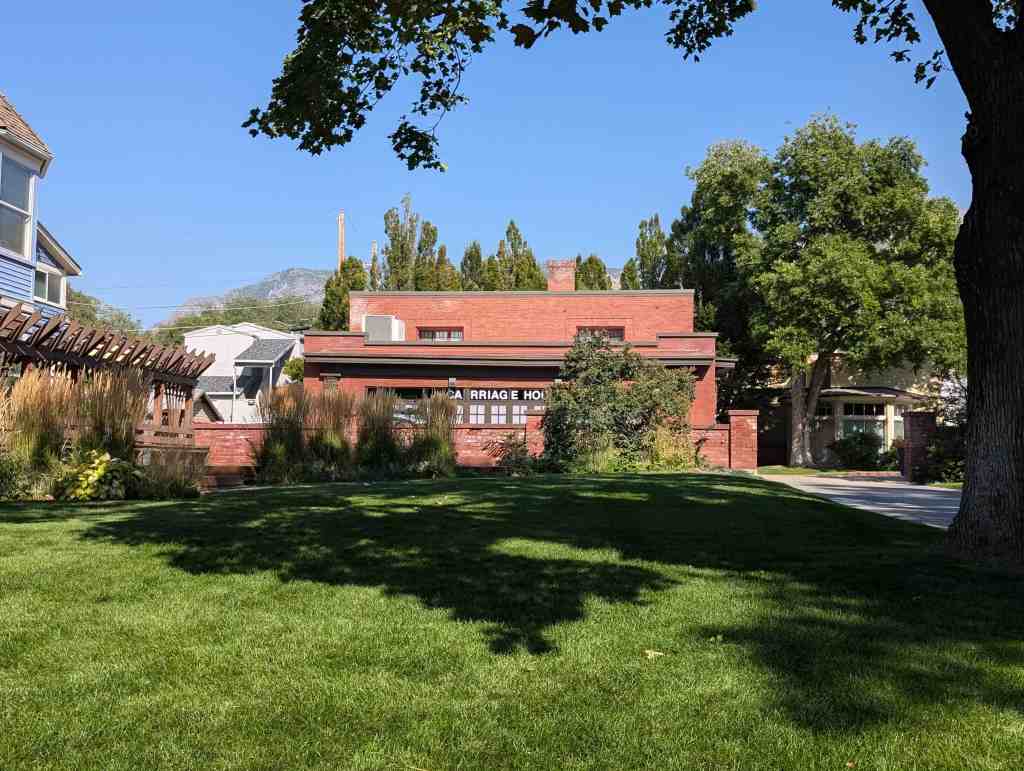
Since that time it has served as the Bertha Eccles Community Art Center. Various groups make direct use of it — the Junior League of Ogden, Ballet West’s Ogden Office, Ogden’s Symphony Guild, the Palette Club, and the Child Culture Club, In addition, art works are constantly on display. Classes in graphics, ceramics, painting, drawing, sculpture, drama, ballet, etc., are taught during nine months of the year. Last season over 35,000 people visited and used the center.

Thus this lovely Victorian home remains an example of early mining and commercial wealth spent on architecture which remains a cultural catalyst for the community. The qualities of Bertha Eccles still permeate the premises. With pride the community now honors her and seeks the preservation of this center.
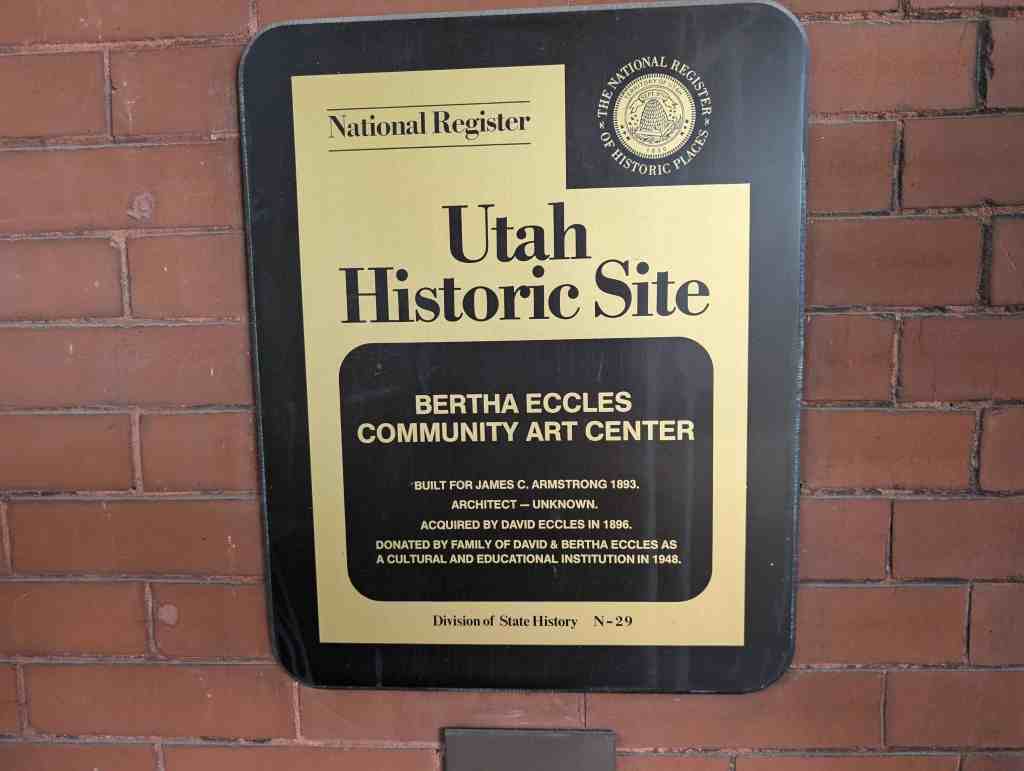
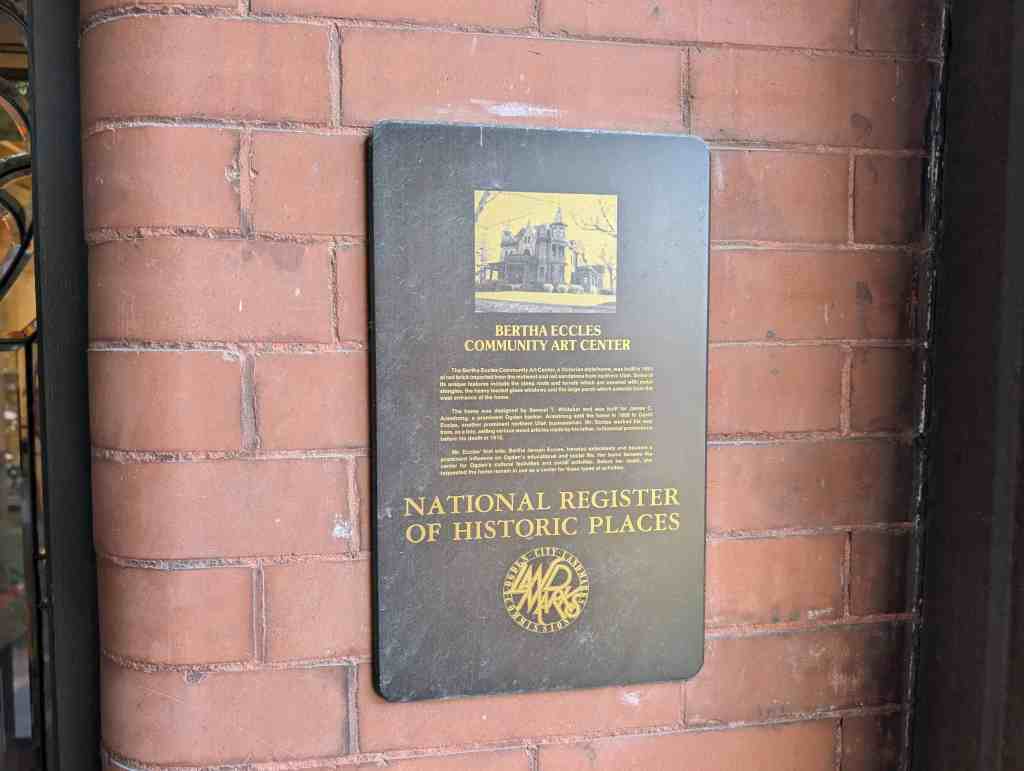
Bertha Eccles Community Art Center

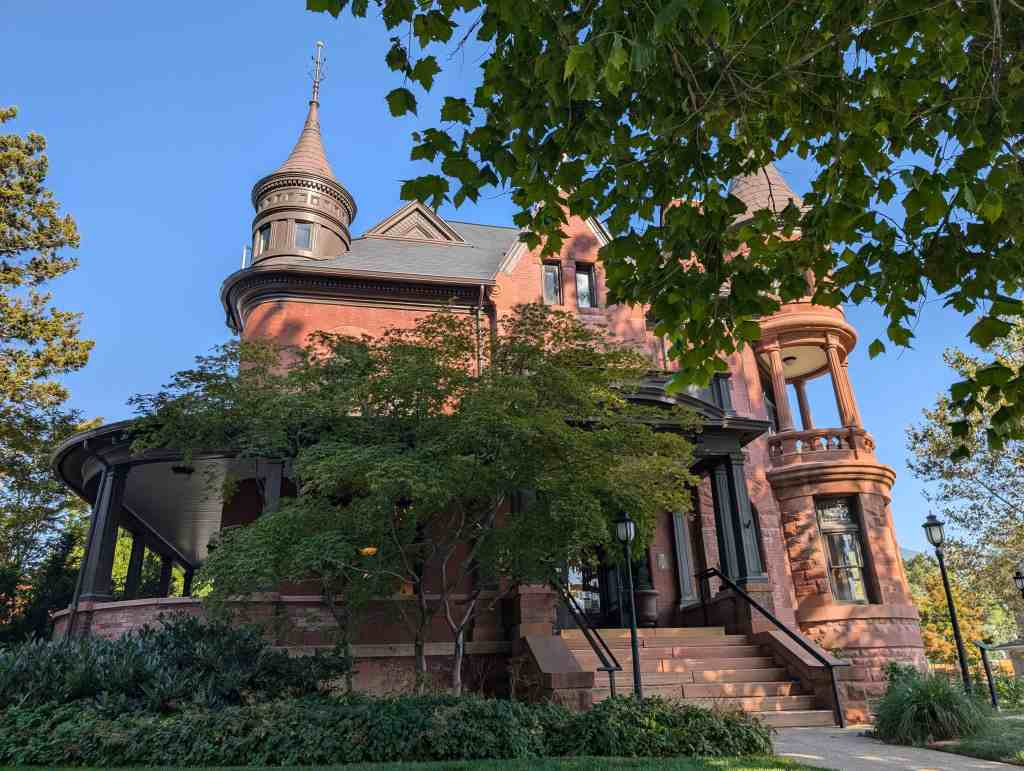
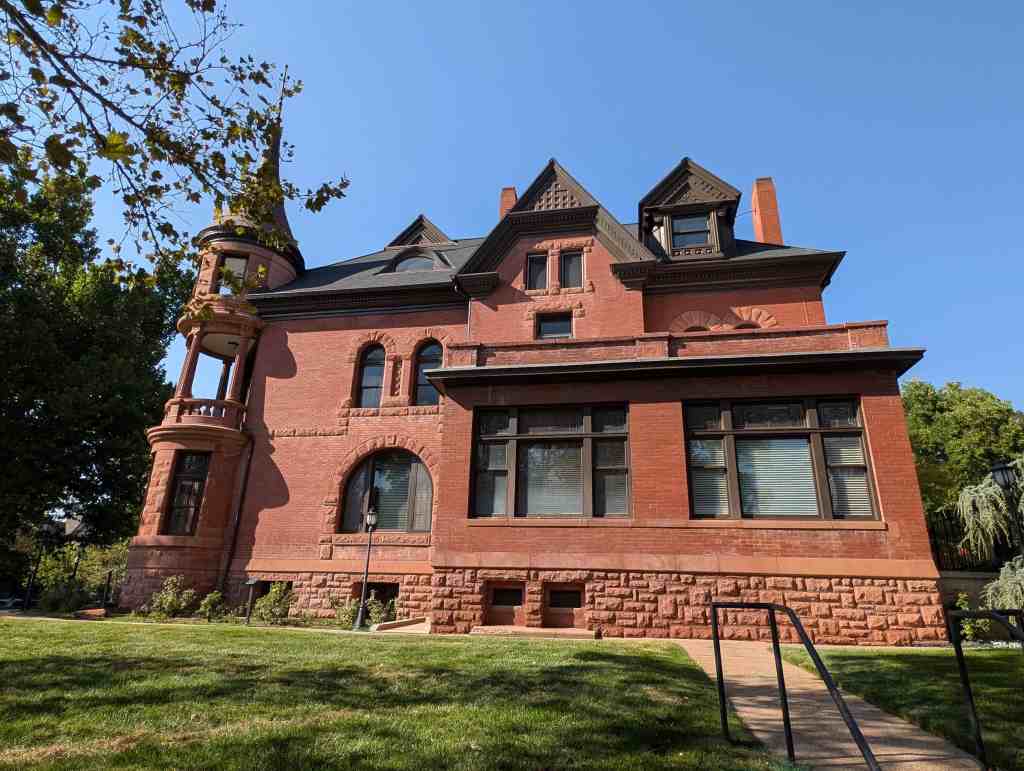
The Bertha Eccles Community Art Center, a Victorian style home, was built in 1893 of red brick imported from the midwest and red sandstone from northern Utah. Some of its unique features include the steep roofs and turrets which are covered with metal shingles, the heavy leaded glass windows and the large porch which extends from the west entrance of the home.

The home was designed by Samuel T. Whitaker and was built for James C. Armstrong, a prominent Ogden banker. Armstrong sold the home in 1896 to David Eccles, another prominent northern Utah businessman. Mr. Eccles worked his way from, as a boy, selling various wood articles made by his father, to financial prominence before his death in 1912.

Mr. Eccles’ first wife, Bertha Jensen Eccles, traveled extensively and became a prominent influence on Ogden’s educational and social life. Her home became the center for Ogden’s cultural festivities and social activities. Before her death, she requested the home remain in use as a center for these types of activities.
Jacob Hamblin House

19 Friday May 2023

Posted by Jacob Barlow in Uncategorized

≈ 1 Comment

Tags

Historic Homes, NRHP, Santa Clara, utah, Washington County

Jacob Hamblin House

Jacob Hamblin arrived in Santa Clara, Utah as early as 1854 with several other young Indian missionaries. Their task was to convert the Lamanites to the Mormon Church, if possible, and develop peaceful relationships with them in any case.

The Jacob Hamblin House is located at 3400 Hamblin Drive in Santa Clara, Utah and was added to the National Historic Register (#71000860) on March 11, 1971.

By 1856 the missionaries brought their wives to Fort Clara where a meager livelihood was obtained by hard work and irrigation. In 1857 Jacob was appointed president of all the Southern Indian Missions by Brigham Young His duties increased greatly with the unrest associated with the Mountain Meadows Massacre in September 1857. Hamblin and Thales Haskell both were in the north courting and marrying young wives, The foursome returned to Santa Clara via Mountain Meadows, one of the first groups to witness the carnage. Hamblin aided in the recovery and return of the surviving children.

The Buckskin Apostle had a difficult time pacifying the Indians toward the Mormons, while seeking their alliance against Johnston’s Army during the Mormon War of 1857-1858. Jacob Hamblin was trusted by the Indians. He believed in absolute honesty when dealing with them, in showing no fear under any condition, but he also demanded justice from them as well.

Life at Fort Clara continued difficult. Tragedy came often. In the fall of 1861 Swiss colonists arrived at the new settlements, but barely in time to witness a large flood in the Clara River wipe out the whole settlement early in 1862. As Hamblin was constantly away exploring or negotiating with the Indians, he was unable to provide for his families. Consequently, in 1863 missionaries were called to build Hamblin a home. His two wives moved in as soon as it was finished.

Jacob Hamblin made several exploring trips across the Colorado between 1858-1863, being the first person to circumnavigate the region of the Grand Canyon. He also explored a wagon route to the Colorado River near Callville (Las Vegas area) in 1864. In conjunction with Henry W. Miller and Jesse W. Crosby, Hamblin took a boat to the Colorado River at the mouth of Grand Wash in 1867, and they were the first white men known to have navigated the river from that point to the Virgin Rivers confluence about 75 miles down stream. Hamblin also assisted John Wesley Powell in his surveys of the Colorado River area. Together they helped negotiate a peace treaty with Navajo at Fort Defiance.

When Hamblin moved to Kanab, the home was leased to a Mr. Bauman who used the home to produce wine. Later his daughter married into the Samuel Knight family, which retained control of it until Clara Hamblin Harmon, a granddaughter of Jacob, purchased it. The home was very de lapidated when the State Parks and Recreation Division took custody of it in 1959.

It is fitting that Jacob Hamblin’s church-built home should be preserved as a monument to this southwestern pioneer. Because he was also a polygamist the Buckskin Apostle, when he died August 31, 1886, was a fugitive from justice. His last years were spent in southern Utah, Arizona, New Mexico and Old Mexico.

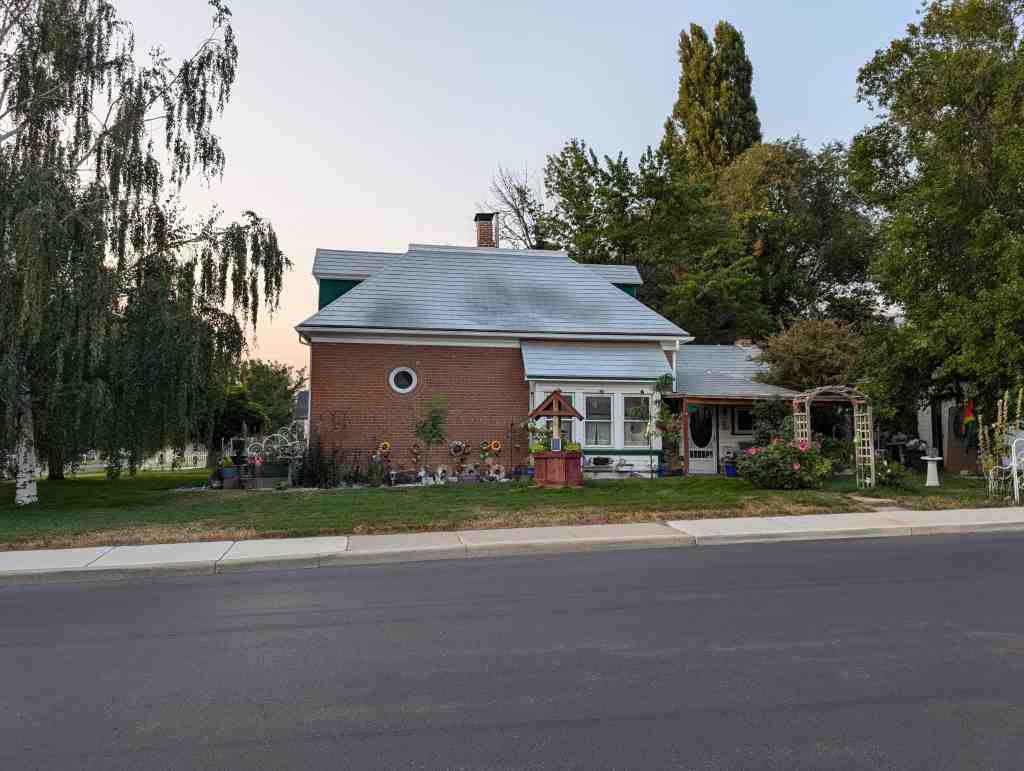
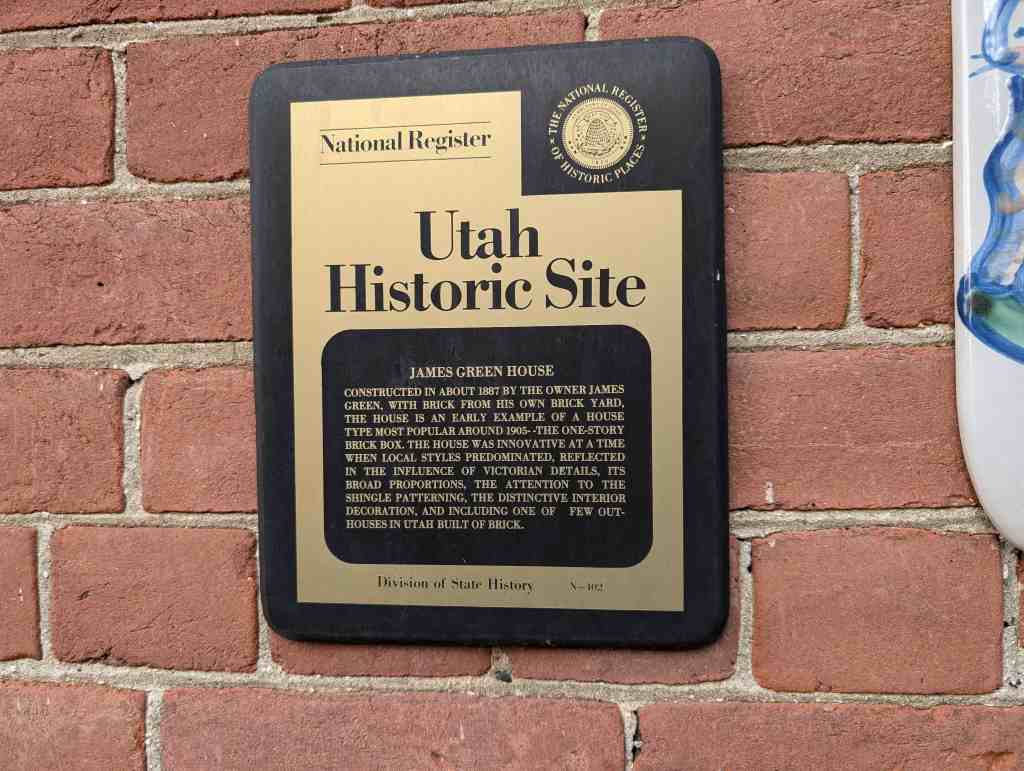
James Green House

14 Sunday May 2023

Posted by Jacob Barlow in Uncategorized

≈ Leave a comment

Tags

Historic Homes, NRHP

James Green House / Green/Sabin House

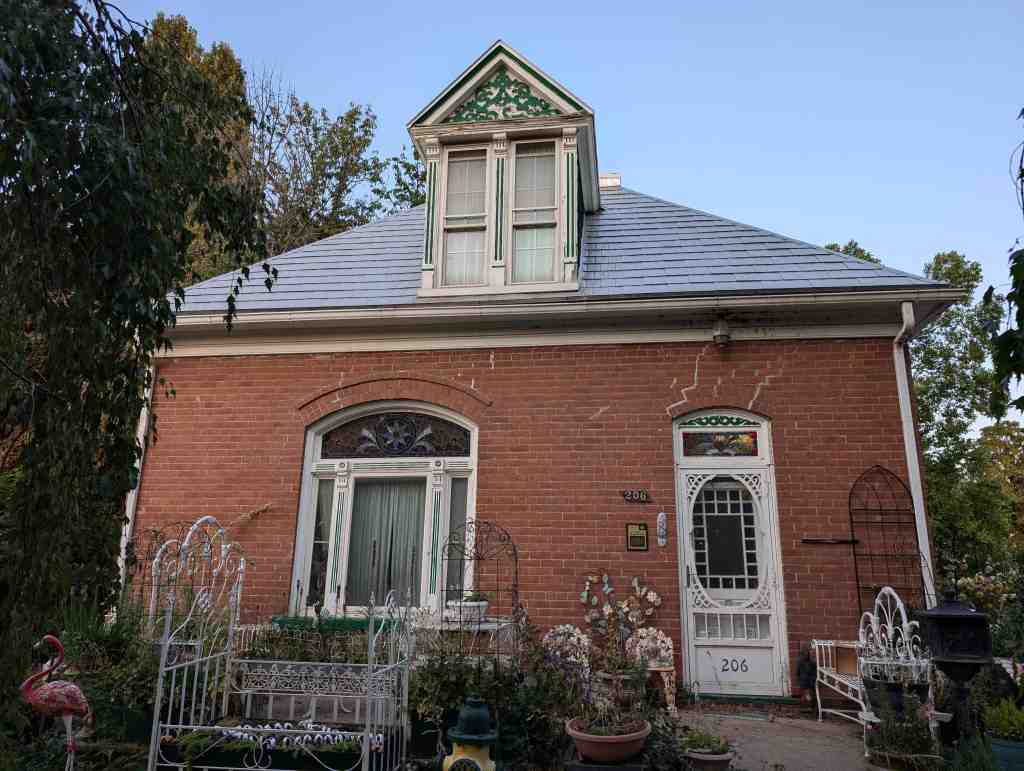
The James Green house, built in about 1887, is significant as an isolated early example of a house type that would reach the height of its popularity at about 1905, the one story brick box. It was built at a time when vernacular house forms still predominated, and reflects the influx of Victorian patterns and details into the vocabulary of the builders of the day. The treatment of the interior of the Green house is particularly significant because it reflects the range of possibilities open to a builder at a time when the use of standard patterns for interior decoration was becoming the norm. Its outhouse is significant as one of few outhouses in Utah that were built of brick. Its broad proportions and the attention given to the patterning of its shingle roof also make it a particularly distinctive example.

The James Green House is located at 206 North 100 East in Bountiful, Utah and was added to the National Historic Register (#82004118) on February 11, 1982.

James Green was born February 22, 1833 at Huntley Hills, Gloucester, England. He was a son of James and Esther Bur low Green. On March 21, 1853, he married Caroline Millington at Parker Row, Gloucester, England. The couple had eight children, the first, Emily Adeline, was born in 1854 and the youngest, John Henry, was born in 1869.

Greens joined the L.D.S. Church while in England and James came to Utah in 1872. One year later, his wife and several of their children arrived here. The family located in Bountiful and James Green purchased land near the tabernacle and built a small home for his family.

After settling in Bountiful, Green began to work as a farmer, but he soon gained interest in the occupation of brick making. The first brickyard in Bountiful was begun by Joseph Holbrook in 1850. Brick making was quite a prosperous business in Bountiful and by the late 1870s there were as many as five brickyards in the town. Of these brickyards were Joseph Holbrook, Angel Bolwell, William Garrett, Parley Hatch, Samuel S. Howard, and James Green. Green’s brickyard was located at Woods Cross and operated from c. 1879 to as late as 1893. Many of the older houses in south Davis County that still stand today are made of brick from Green’s brickyard.

In 1887, Emily A. Green, a daughter of James and Caroline, purchased a building lot on the corner of 200 North and 100 East. Shortly after the lot was purchased, the building of this house was started. Oral tradition credits James Green with building the house. It was to serve as a showplace of his abilities as a builder and also serve as a house for his thirty-three year old daughter, Emily Adeline Green.

By 1893, Emily had married Edward M. Cook and was residing in Anaconda, Montana. The house continued to be owned by members of the Cook and Green families until about 1901, when the house was deeded to Ara William Sabin.

In 1890 Ara William Sabin, his wife Marie, and their two daughters, Birdie and Zara, arrived in Utah from Lincoln, Nebraska. First settling near Vernal, where Ara planned to ranch and raise cattle, the family decided to seek a residence near Salt Lake City, ultimately purchasing the Bountiful house from Green. The Sabins bought the home sometime around 1901 for a relatively small price and moved in promptly. The Sabins, however, were not members of the Mormon Church. Consequently, Marie was not included in social activities as she had been in Nebraska. They soon decided to move, but keep the house as a stop-over place during their frequent trips to Vernal and eastern Utah. Eventually it was decided that it would be wise to rent out the home while the family was away. Zara Sabin remembers no less than ten families living in the house during that time, and stated that they were, “Always good people, but papa made sure they were not Mormons.” The Sabins did eventually retire from the cattle business and settled in their home until they both passed away in the 1940s. Zara never married and continued to live alone in the house. She was active in community affairs and became a member of the L.D.S. Church, as well as the Daughters of the American Revolution, and the Daughters of Utah Pioneers. She attended and graduated from the University of Utah with a degree in English, and became a noted Utah poet.

She died in September 1980. In October 1979 the house was purchased by Alex Lisman, who plans on maintaining the house as a residence.

Description of home:

The James Green house is a simple brick box to which typically Victorian elements have been attached. The brickwork is common bond, tie house is one and one half stories in height, and it has a truncated hip roof. It originally had a railing at the roof edge which recalled a widow’s walk. It has gable dormers projecting from the east and west roof sections. The dormer on the façade has a boxed cornice and a pediment decorated with jigsaw cut ornament. Three pilasters accent the two windows of the dormer. On the façade there is a three part window capped by a stained glass transom and brick relieving arch, and a single long, narrow door with a transom and brick relieving arch. The door is multi-paneled, both in the wooden lower half, and in the upper half of stained glass.

As designed, the house had four rooms on the first floor: a hall, a parlor, a kitchen, and one bedroom. There were two bedrooms on the second floor. The original kitchen was changed into a dining room between 1900 and 1915, but the size of the room was not changed. An addition was made to the rear of the house, and by 1923 it included a porch, a kitchen, a bathroom, and a pantry.

While the design of the exterior of the house is not remarkable, the interior is particularly unique, especially for so small a house. Because the design of the exterior is austere, only hinting at Victorian influences, one necessarily expects the interior of the house to have received the same treatment. The builder, however, chose the interior as the showplace where his skills were to be displayed. James Green took great pains to stock this house with the variety of elements with which he could proficiently design a house. There is an impressive staircase with spools joining the balusters, and a hand carved newel post. The staircase is reported to be all fitted woodwork with no visible nails or reinforcements. Green included the full range of possibilities in the design of doors and moldings. A different style of door was used for each room. The parlor doors have multi-paned glass panels and carved panels, and the bedroom door has two arched clear glass windows. Every room has a different corner motif in the door and window moldings. While the designs he used were common types, the use of more than one type of motif in a house is unusual. Other elements which indicate that Green was interested in advertising the extent to which he could provide a house with visual variety are the door knobs which vary from the intricate brass knob on the front door to the black ebony, knobs with brass plated keyhole covers in the living room. The stained glass transom over the living room window and the plaster cast ceiling medallion in that room to which an intricate lamp was attached both add an extra touch of richness to that central gathering place. The medallion is approximately four feet across.

Major alterations to the interior of the original rooms include the addition of a fireplace to the living room in about 1920, the addition of a bay window to the area that became a dining room, and the lowering of the ceiling of that room. The current owner is in the process of raising that ceiling to its original height, and in the process of doing so uncovered another smaller ceiling medallion.

Visible alterations to the exterior of the building include the removal of the roof railing, the addition of the frame window bay off of the dining room, the change from wood shingles to asphalt shingles, and the addition of a one story rear extension. These changes, however, do not greatly affect the original appearance of the house, and have not affected the integrity of the internal features which make the house particularly unique.

The Green house is an unusual house in that a handful of Victorian elements have been applied to a simple box form without any real attempt having been made to integrate those elements into some kind of distinctive design. The house has the look of never having been finished. A porch across the façade or part of the façade which would have given it some unity was never added. The raised platform in front of the house which was included in the earliest known photograph of 1882 and still exists today, adds to the unfinished appearance of the house, looking like the base for a porch. The contrast between the austerity of the exterior of this house and the variety of the interior too mark it as a distinctive dwelling. It is particularly unusual that there was so much attention to detail on the interior of so small a house. Small houses generally had their notable accents on the exterior, their interior having been simply treated.

There is one significant outbuilding on the property, a brick outhouse. It has generous proportions, having been designed with three seats. It is capped with a patterned wood shingle, pyramid roof, and has a four panel wood door with a porcelain knob.

Earle-Tibby House

11 Thursday May 2023

Posted by Jacob Barlow in Uncategorized

≈ Leave a comment

Tags

Historic Homes

The historic Earle-Tibby House, circa 1887.
934 East 200 South in Salt Lake City, Utah.

The John E. Booth Home

10 Wednesday May 2023

Posted by Jacob Barlow in Uncategorized

≈ Leave a comment

Tags

Historic Homes

14 South 100 West in Spanish Fork, Utah

The John E. Booth Home, he was the mayor of Spanish Fork for four terms and pharmacist, he started World Drug 200 N Main with Alma Jensen, and also owned the World Drug in Orem.

(from county records)

John Babcock Home

09 Tuesday May 2023

Posted by Jacob Barlow in Uncategorized

≈ Leave a comment

Tags

Historic Homes

John Babcock Home
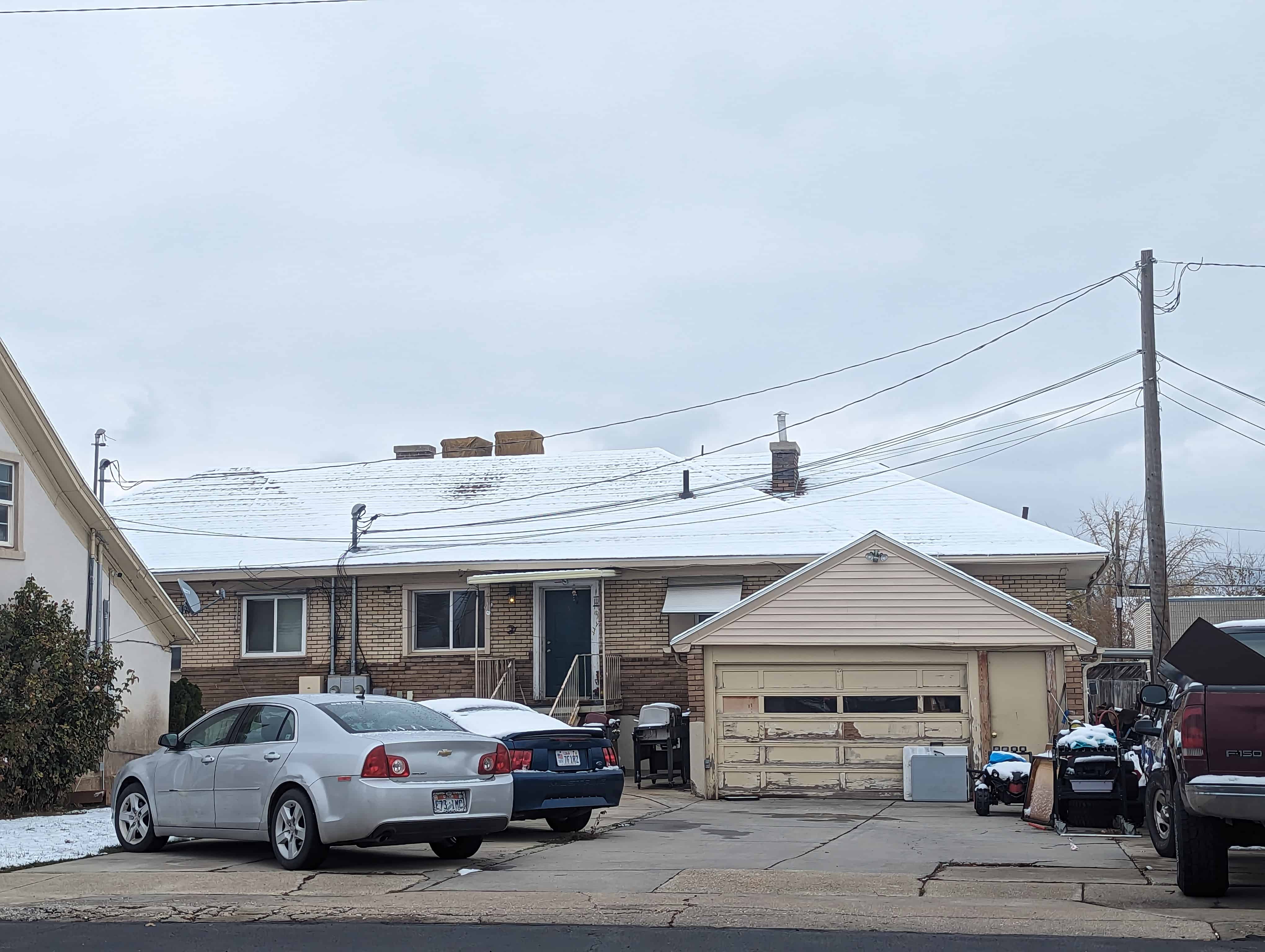
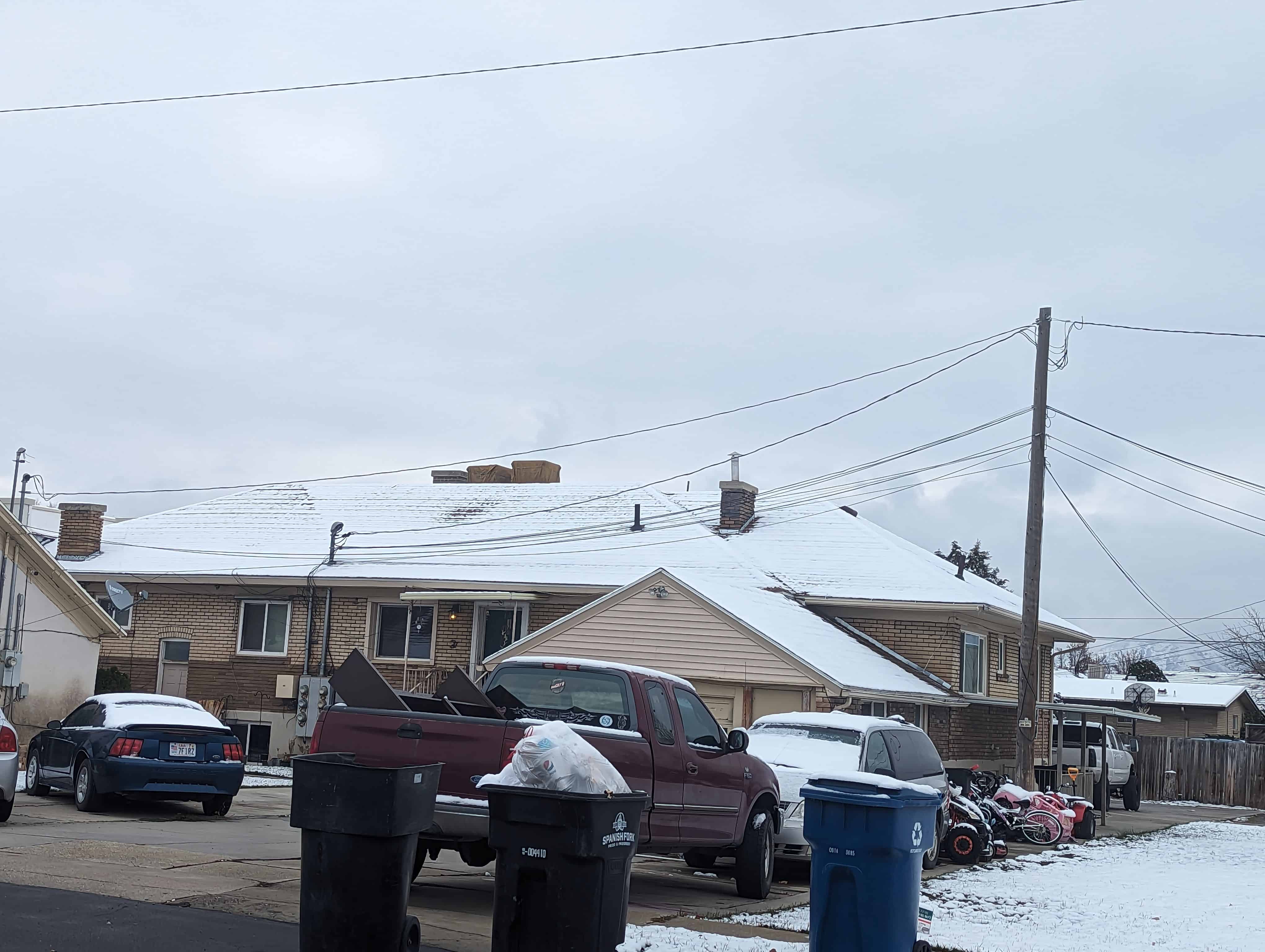
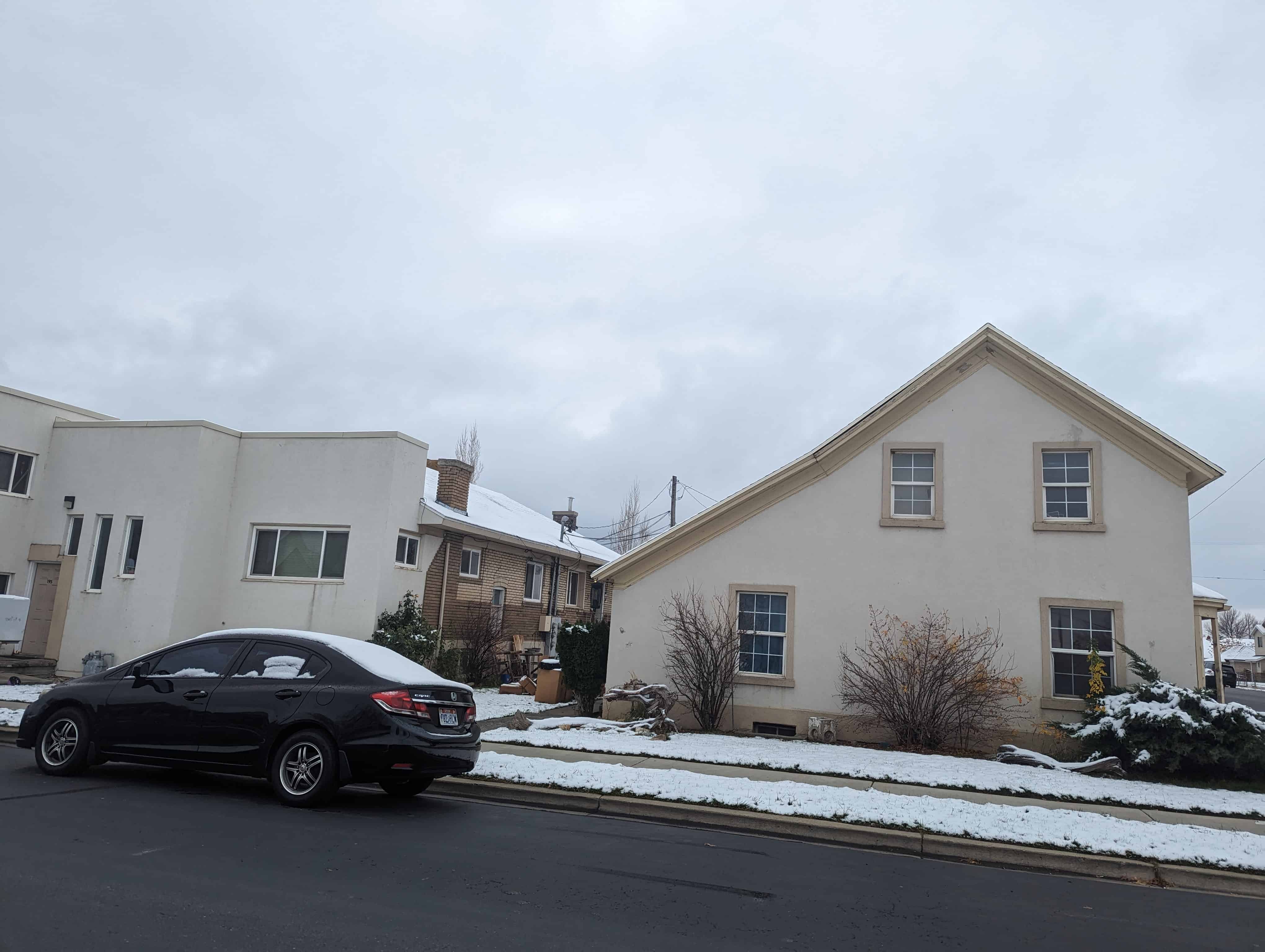
Built in 1871 at 191 West 200 North in Spanish Fork, Utah, it has been connected to the Hughes Memorial Hospital and together they are an apartment building and they share a parcel with the Morgan Hughes Home.

John was born in Nauvoo and came to Spanish Fork, This is the first brick home in Spanish Fork.

Richard & Ann Slater Home

01 Monday May 2023

Posted by Jacob Barlow in Uncategorized

≈ Leave a comment

Tags

Historic Homes, Historic Markers, Marriott Slaterville, utah, Weber County

Richard & Ann Slater Home

Richard Slater and Ann Corbridge were immigrants from England. Richard served in the Mormon Battalion before relocating his family to Utah as part of the early pioneer movement. In 1852, he acquired land in Slaterville and constructed an adobe home for his wife and twelve children. In approximately 1898, he constructed this brick home on Pioneer Road. This home is typical of the architecture of the late 19th Century. Richard Slater is the namesake of the Slaterville settlement. He served in a variety of community and ecclesiastical leadership positions.

Marriott-Slaterville City Historical Marker historical marker #10, located at Slaterville Park at 2699 West Pioneer Road in Marriott-Slaterville, Utah

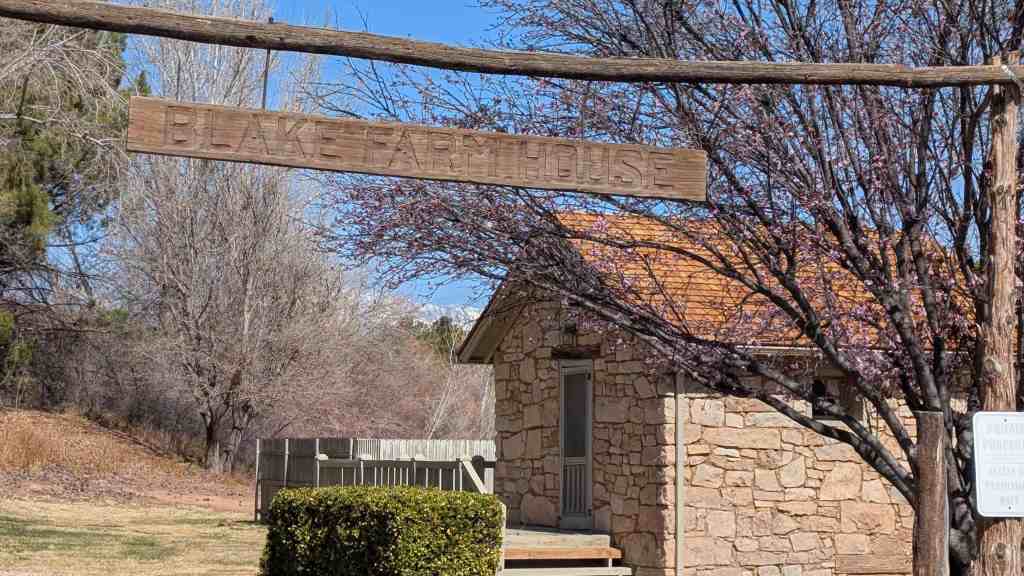
Wallace Blake House

01 Monday May 2023

Posted by Jacob Barlow in Uncategorized

≈ 1 Comment

Tags

Historic Homes, NRHP, St. George, utah, Washington County

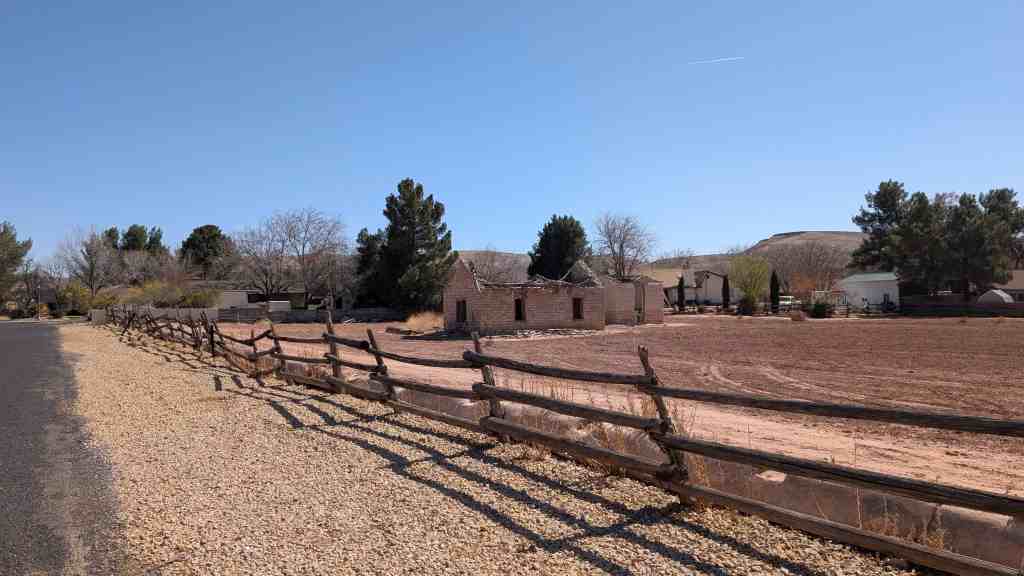
Wallace Blake House

The Wallace Blake House is significant as an excellent example of the vernacular style of architecture using native materials in Utah’s Dixie. Although it was constructed in 1908, more than fifty years after the initial settlement of the area, the Wallace Blake House reflects the style and craftsmanship of houses constructed a half century earlier. In this vein the house stands as one of the last of the pioneer era and marks the transition from house construction characterized by a local style, the use of local materials and local craftsmen to one more general and universal in nature.

The Blake House is located at 965 Manzanita Road in St. George, Utah (coordinates N 37.04631 W 113.60530 )and was added to the National Historic Register on (#78002709) November 14, 1978.

The Wallace Blake house was constructed in 1908 with native stone originally used in the construction of the Price City LDS Chapel built in 1876. The house was constructed by Dode Wirthen a local stone mason who constructed many rock buildings in Utah’s Dixie. Woodwork on the house was done by Brigham Carpenter.

Wallace Blake was born January 31, 1880 at St. George, the son of Frederick and Eliza Barnett Blake. He married Isadore Larsen, a native of Bloomington on October 24, 1901. They purchased the home site and farm in June 1908 and immediately commenced construction of the house. Wallace Blake was initially a farmer and stockman by profession but later turned his attention to mining activities. In 1920 Isadore Blake died shortly after giving birth to the couple’s sixth son. The loss of his wife was a tragic event to Wallace Blake and he soon lost interest in farming or remaining in the house he had shared with his wife for twelve years. On October 31, 1921 Blake exchanged his house and property for a house in St. George owned by James S. Jones.

The Jones family lived in the house until 1928 when they sold the property and house to Albert A. McCain who remained in the house until 1937. Both James S. Jones and Albert McCain continued to farm the land. Albert McCain also helped make brooms with a nearby neighbor, Alfred Carpenter.

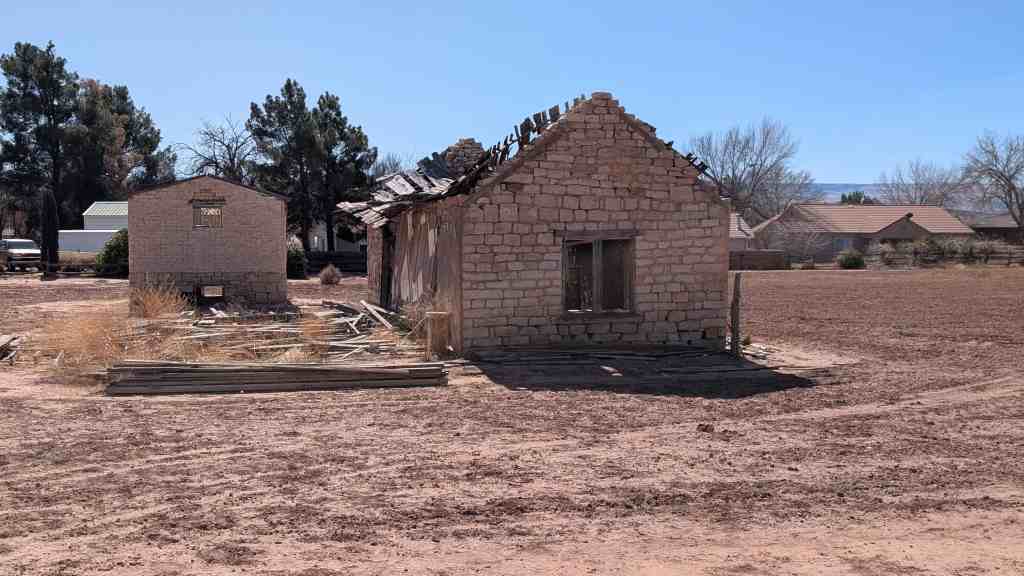
On December 21, 1937, Washington County took over the McCain property and held it until March 26, 1940 when D. H. Heaton redeemed it. The house was used on occasion by Heaton and his sons while they raised cattle and sheep in the area. However during the last quarter century the house has been allowed to deteriorate through neglect and lack of use. ln June 1976 the house was purchased by Mr. and Mrs. Matthew R. Simmons who plan to restore the house. The house is located in the new community of Bloomington and and serves as an important tie to the past for the residents of the modern recreation community of Bloomington.
Description:

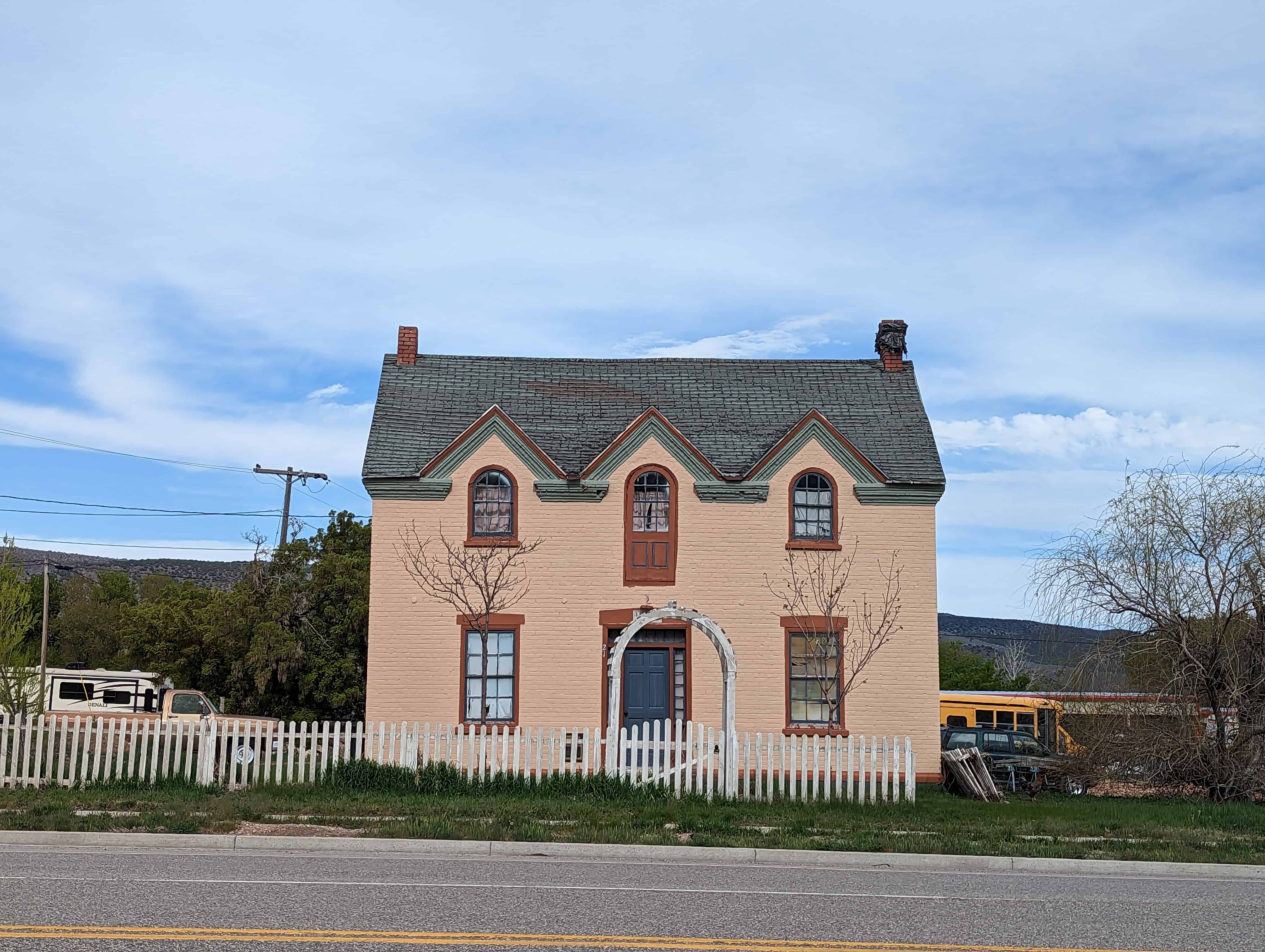
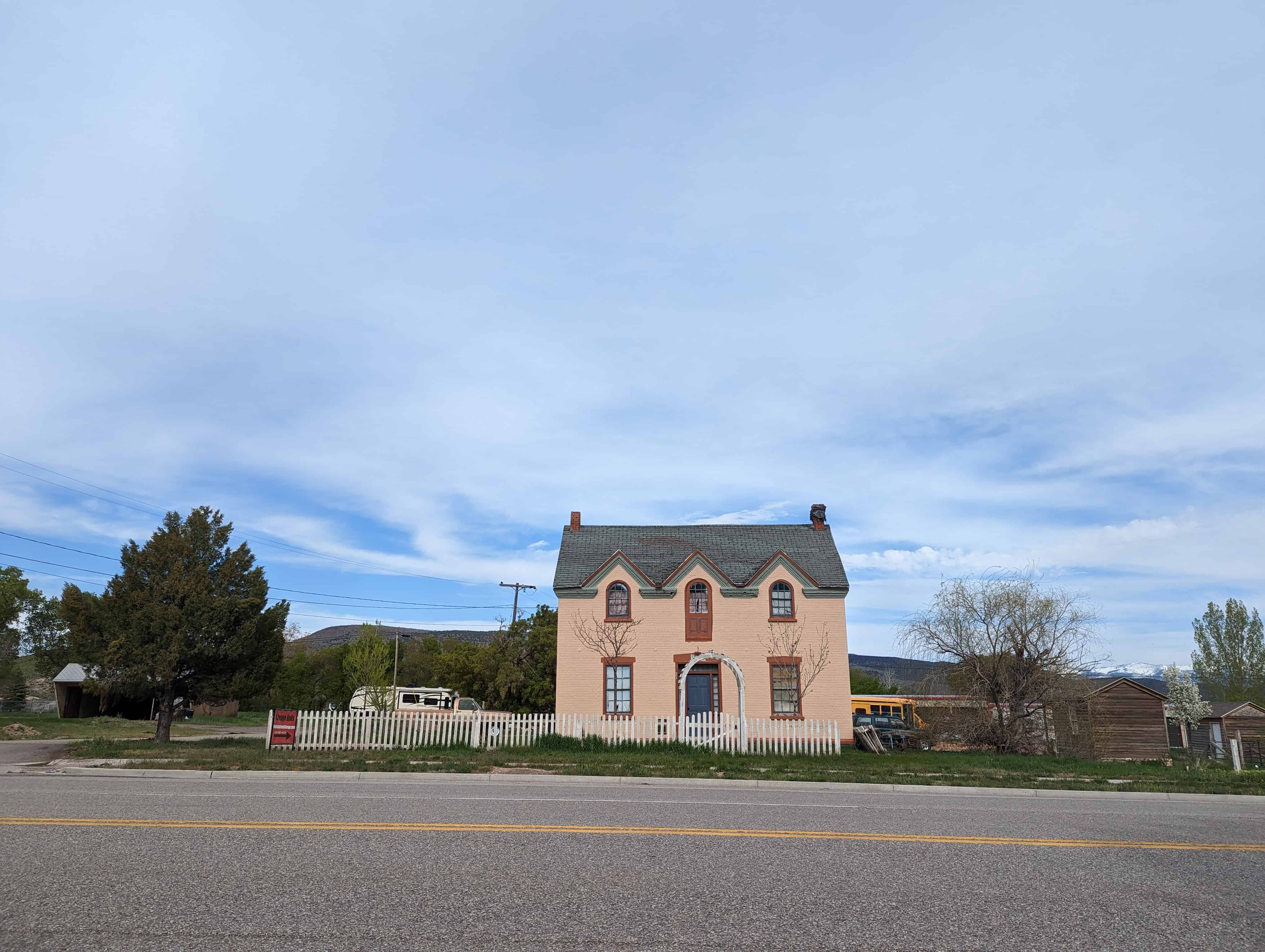
The main structure of the Wallace Blake House is a one room, one story three bay front farm house rendered in coursed rubble limestone having one chimney of stone at the east gable end. The massing of the various sections of the structure indicate that the three bay rectangular possibly one room house was built first with a centered rear projecting bay added later to form a ‘T’ shape plan. This rear addition has a hipped roof with an off-centered stone chimney at its rear wall.

The third addition also in stone was added as a wing to the east gable end of the original structure. This addition extends back connecting with the rear bay of the house making the overall plan somewhat resemble an “L” shape. The addition was made shortly after completion of the original structure. A lean-to shed was the last apparent addition to the building, it extended along the east side of the third addition.

Entry portals are to be found on all sides of the building and its various additions. The windows flanking the original entry on the structure are the largest and were probably two-over-two sashes or possibly six-over-six. The remainder of the windows to be found in the structure are somewhat smaller and were most likely two-over-two. The third addition has two sets of windows set side by side into the front wall of the house. All window and door tops are flat supported by wood lintels. All walls are load bearing masonry with the original portion of the house showing some evidence of stucco having been applied to the exterior of the walls. An ancillary out building used &s a granary is set just to the west and has its rear wall in line with the rear wall of the second addition rear wall. This structure has a rectangular shape having a west entry. Stone used in this structure is also covered rubble and is somewhat larger than that found in the adjacent house. The roof is a gable shape having a roof slope less than that of the main house. The windows in this building are set high in the walls, set under the eaves. Their shape is basically rectangular laid out vertically. Basement windows in this structure project about two feet above the ground level with the opening supported by heavy timber lintels.

Both the main house and granary were built approximately at the same time and have walls about 18″ thick, the roofs of the buildings were composed of vertically layed flat sawed lumber with shingles covering the surface. The ridge lines of the roof were capped with one of four inch boards.

The timbers used throughout the house are from Main & Trumbull, Arizona, an important source for lumber for construction projects in Utah’s Dixie. Many of the original shingles remain on the roof. The interior walls are plastered and several rooms covered with wallpaper. Originally there was a fireplace in the living room (later closed and replaced by a stove) and stoves in each of the other three rooms.

Hans Peter Olsen House

05 Wednesday Apr 2023

Posted by Jacob Barlow in Uncategorized

≈ Leave a comment

Tags

Fountain Green, Historic Homes, NRHP, Sanpete County, utah

Hans Peter Olsen House

The Hans Peter Olsen home was constructed in 1877, nineteen years after Mr. Olsen came to Utah from Denmark. Born May 30, 1833, in Jutland, Denmark, Hans Peter Olsen grew up on his father’s farm, In 1853 he joined the Mormon Church and spent the next four years as a traveling elder in his native country, In 1858 he sailed from Denmark on board the John Bright. Although the Utah War forced most of the European emigrants remain at Iowa City and Florence, Nebraska, until the following year, a group of fourteen “Danish Fellows” of which Hans Peter was a member, was allowed to journey to Utah with a group of missionaries returning to Utah in the Eldredge company. In November 1858 he settled in Manti and the following spring moved to Moroni as one of the first settlers of that community. In 1867 he moved to Fountain Green and ten years later constructed the lovely brick home. He returned to Denmark on two missions for the LDS Church first in 1869 and again in 1891, While living in Fountain Green, he was a farmer and director of the local co-op store.

The significance of the Hans Peter Olsen home is that it is one of the finest pioneer brick homes in Sanpete Valley.

Located at 211 South State Street in Fountain Green, Utah and added to the National Historic Register (#76001834) on April 22, 1976.

The Hans Peter Olsen home is significant architecturally as an outstanding example of pioneer industry, design and craftsmanship. The well preserved residence embodies the best elements of representative pioneer building during the transitional period of vernacular to “high-style” architecture. Late pioneer features such as the symmetrical 3-bay front façade, four-over-four plan, end wall chimneys and Federal entry bay are combined with less typical decorative embellishments such as Roman-arched upper windows and an unusual corbeled brick cornice with dentil band where a wooden frieze would ordinarily appear. In an area of predominantly white limestone homes, the Olsen home stands out as being unique to the region. Craftsmanship throughout the structure is excellent, a fit compliment to the stateliness and utility of the design. Qualities of permanence and beauty in the building reflect Olsen’s philosophic commitment to Mormon concepts of Kingdom-building in the Sanpete County community of Fountain Green.

Benjamin Isaac Home

04 Tuesday Apr 2023

Posted by Jacob Barlow in Uncategorized

≈ Leave a comment

Tags

Historic Homes

Benjamin Isaac Home
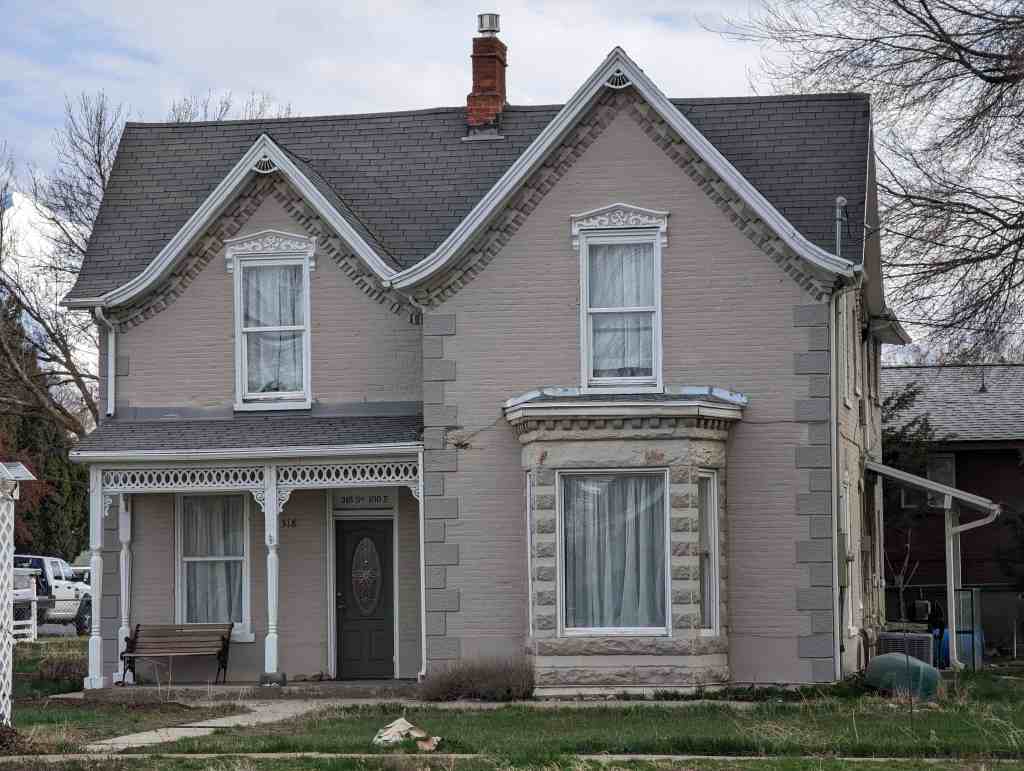
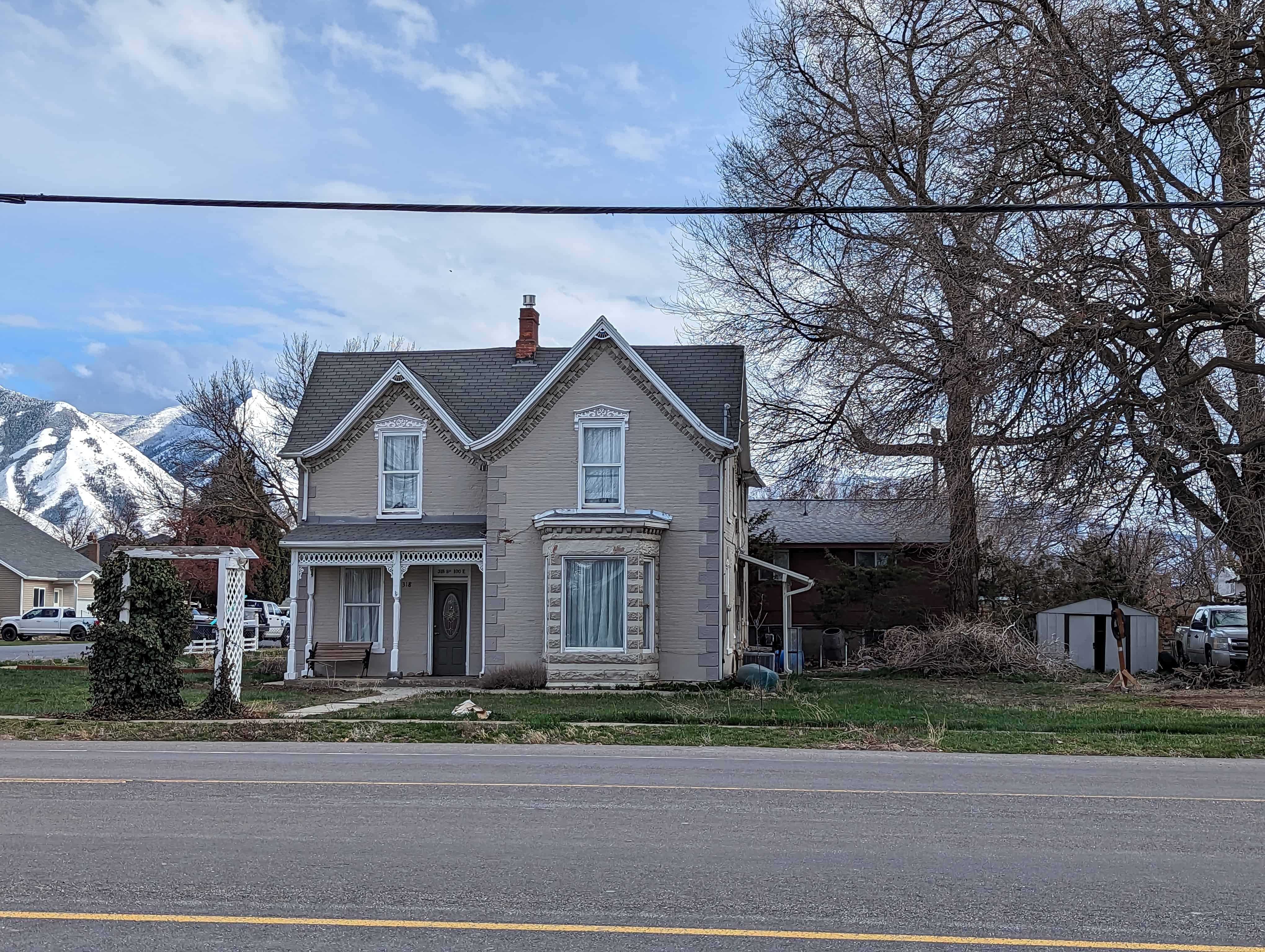
Born in Wales, Issac and Phoebe moved into the home in 1869, he was a bricklayer and did the brickwork for the Central School (now the city office).

The first telegraph office in Spanish Fork was located in this home.

318 South 100 East in Spanish Fork, Utah

← Older posts
Newer posts →

Follow Jacob

Follow Jacob

Come wander with me on Youtube.

Blog Stats

  • 2,098,487 hits

Social and Other Links

BarlowLinks.com

Recent Posts

  • Scout Monument
  • Provo High School Seminary Building
  • 821 E 100 S
  • 820 E 100 S
  • 817-819 E 100 S

Archives

Loading Comments...