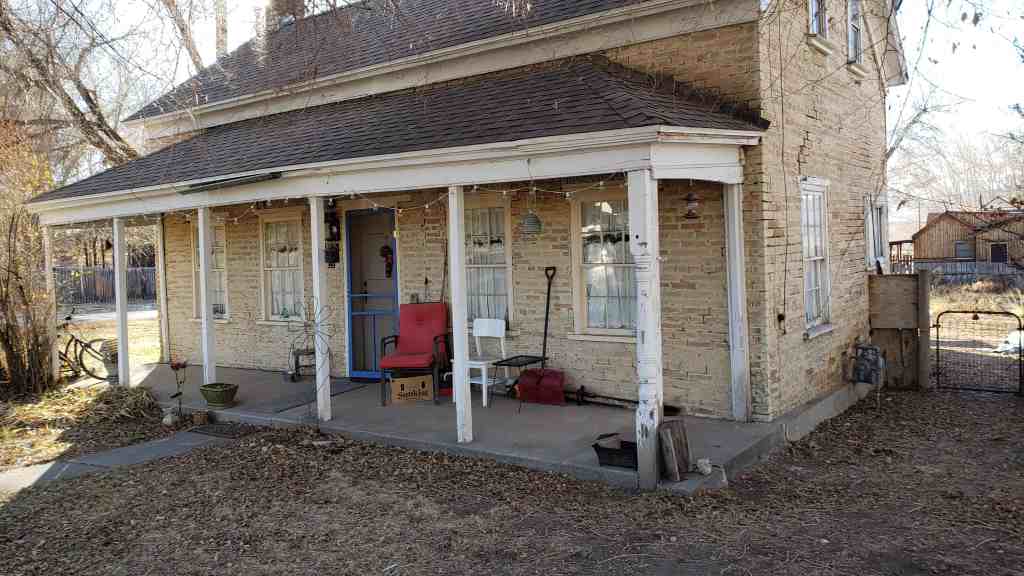
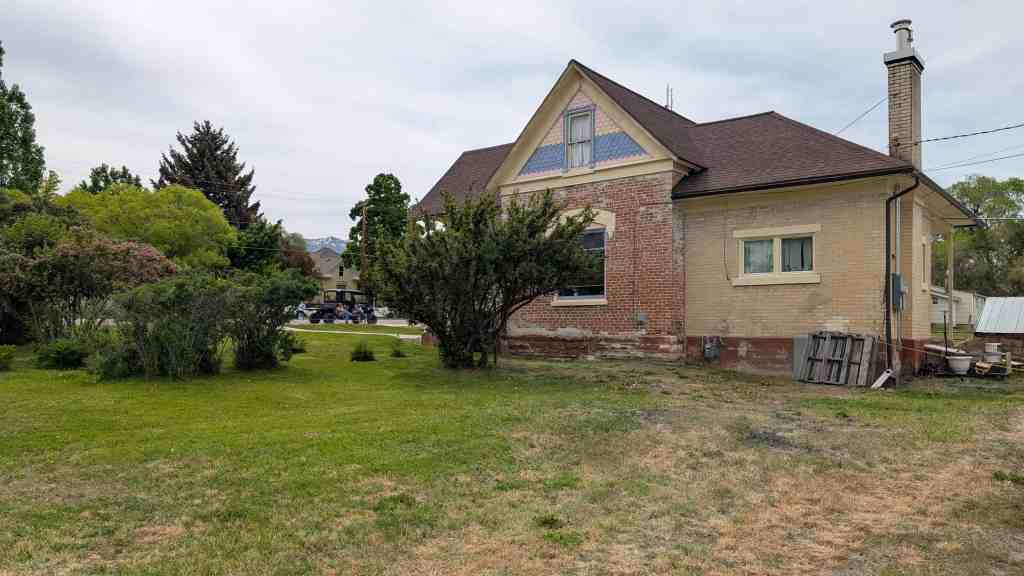
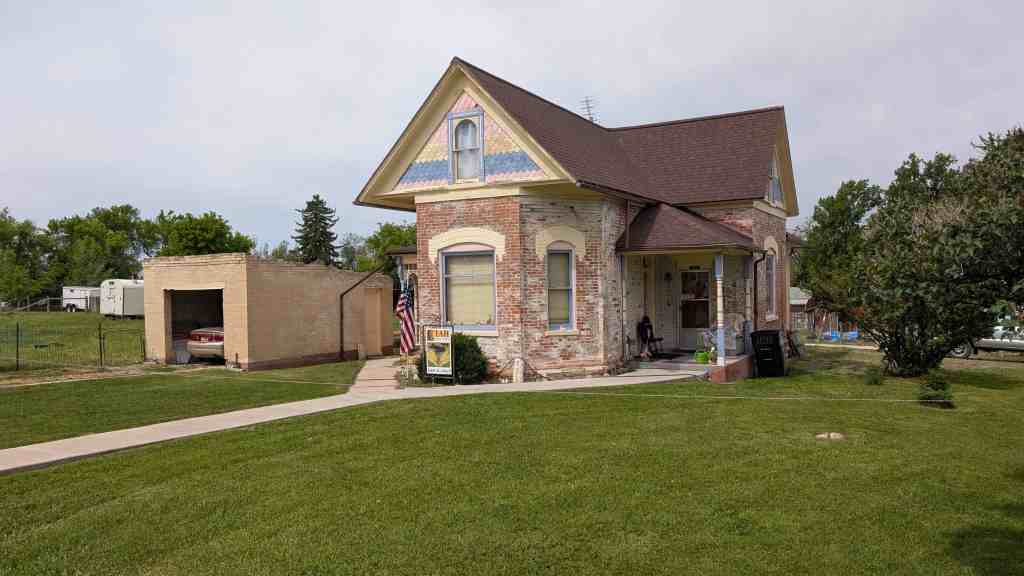
This one-and-one-half-story hall-parlor house of locally fired yellow brick was built in the mid-1870s. A rear addition was added in the 1890s. Adler, born in Sweden, was a convert to the LDS Church. He and his wife arrived in Salt Lake City in 1858. They later moved to Spring City where three of their children were born.
Located at 296 South Main Street in Spring City, Utah
From Sanpete.com: This one and one half story yellow brick house was one of the first fired brick houses in Spring City. It is a hall-parlor plan with a rear lean-to addition. Neils Adler (1828-1921), an early Utah immigrant, joined the LDS church in 1853, was in Spring Town by 1867 and died at the age of 93 in Castle Dale, Utah.
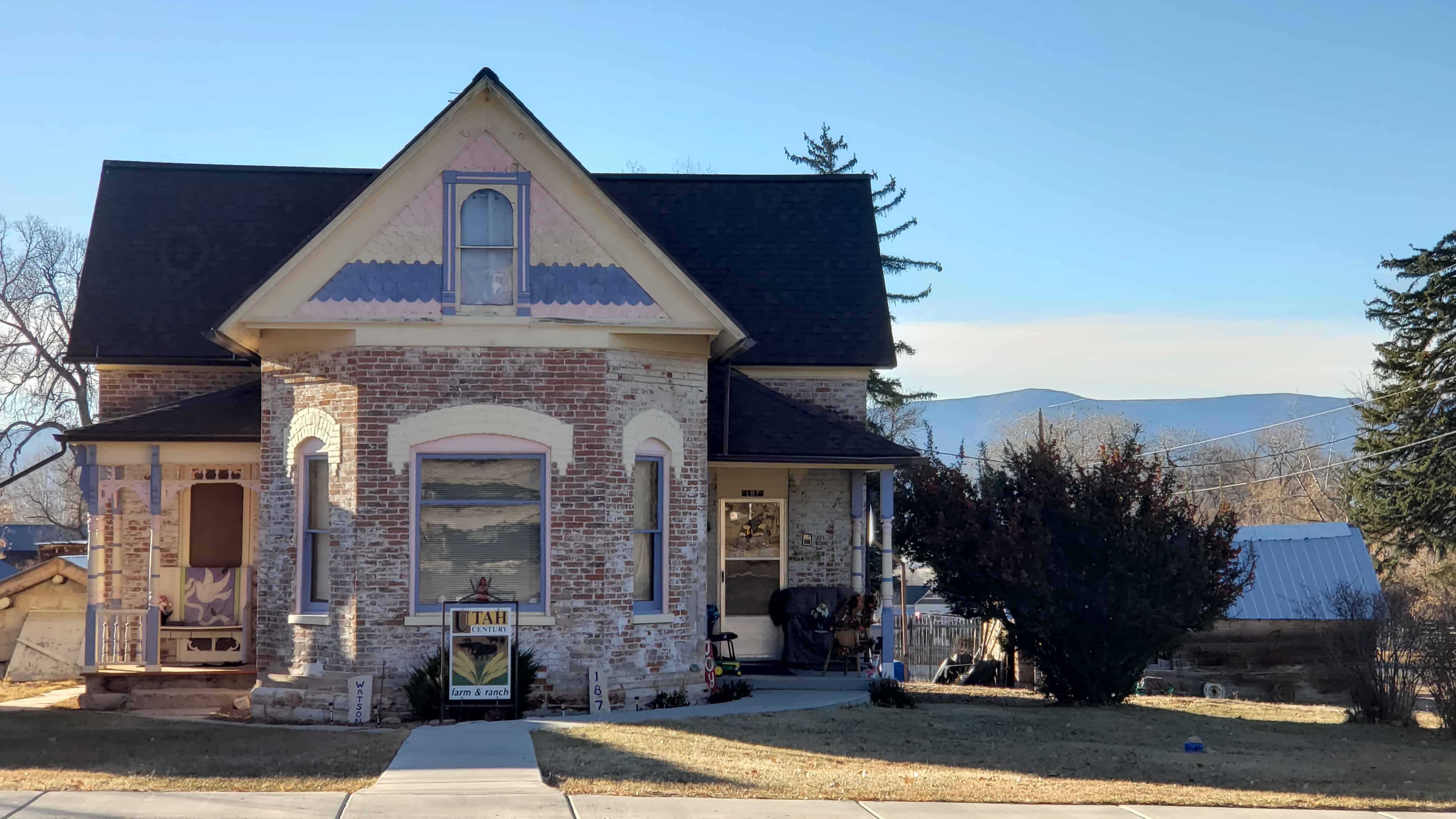
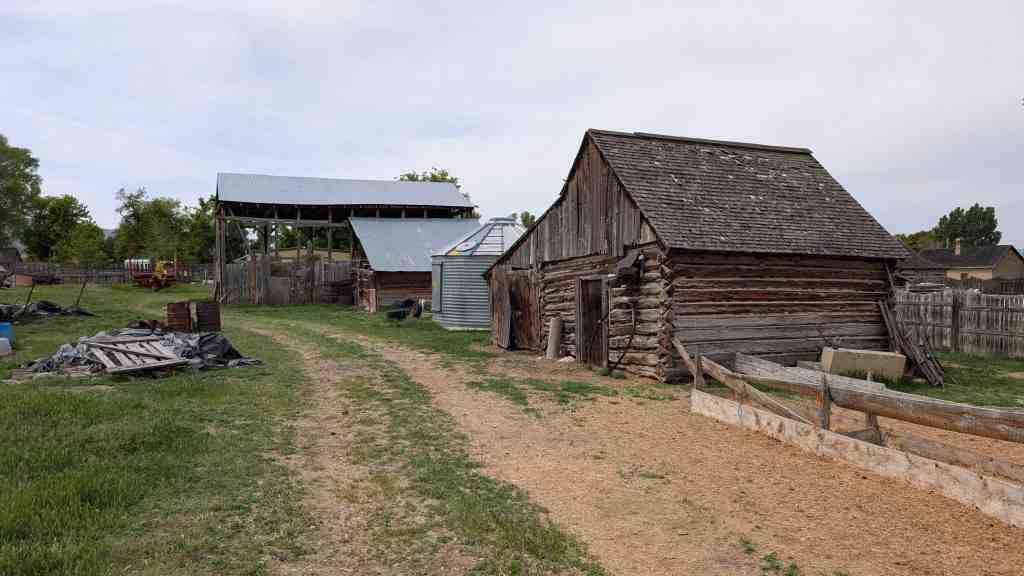
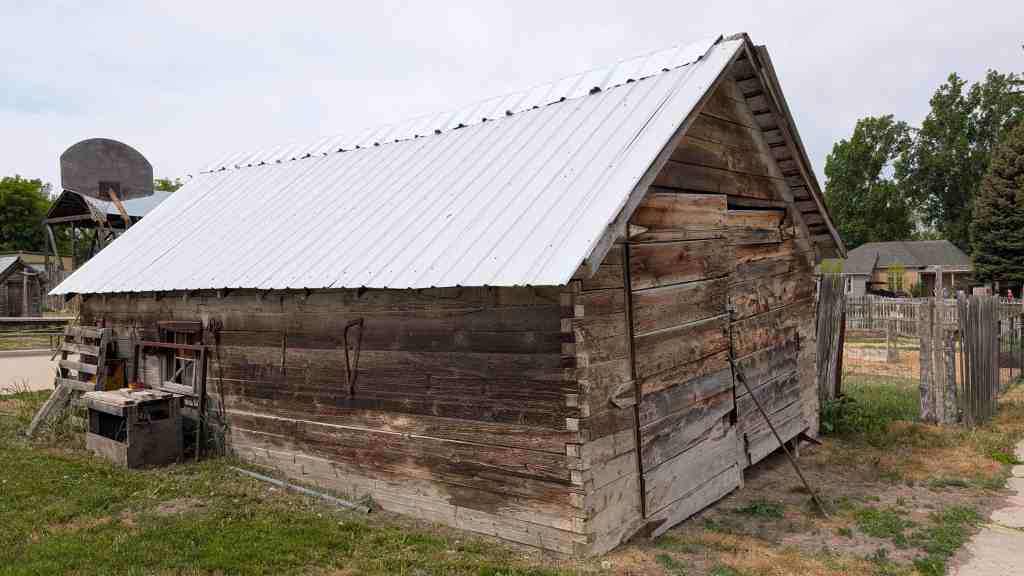
In 1898 Alex Justesen purchased the land from Simon T. Beck and built this brick Victorian cottage. The brick used to construct this house was fired by H.H. Omansen. Several outbuildings remain, typifying the agrarian pattern of the Mormon village. The house has been in the Watson family since 1909. Two rooms were added to the rear of the house in 1916.
Located at 187 North Main Street in Spring City, Utah
As is typical of the “Mormon Village” idea, the property has several outbuildings on the 1.06 acre lot. The small outhouse and wood granary were built along with the main house in 1900. Sidewalk viewing only.*
William A. Ford, a blacksmith, built this frame and adobe house with clapboard siding about 1880. The house is a hall-parlor plan with a rear addition. Ford’s blacksmith shop was located west of the house. The house was sold to Edward Sahlberg about 1920. John R. Baxter purchased it in 1927, and it still remains in the Baxter family (as of 2001).
Located at 13 North Main Street in Spring City, Utah
From Sanpete.com: William Ford, a blacksmith, owned this adobe-lined, wood frame house. The hall-parlor has a rear addition, form that is not uncommon to the area. Ford’s blacksmith shop was likely situated to the west of the house. The house was sold to Edward Sahlburg about 1920. John R. Baxter, Jr.(1888-1978), owner and operator of the nearby confectionery and Lyceum Theater lived here for many years. Baxter’s descendants still own the home.
Lauritz Larsen built this one-and-one-half-story adobe hall-parlor house in the 1860s. The house was later stuccoed. Lauritz passed the house on to his son and daughter-in-law, Lauritz O. and Deseret Anderson Larsen. “L.O.” was a merchant, manager of the Young Men’s Co-op, and LDS Bishop from 1904 to 1913. The house was later occupied by the town music teacher Ernest B. Terry. Terry was the LDS Bishop from 1942-1947. The house was owned from the late 1970s to the late 1990s by the notable Sanpete County painter, Ella Peacock.
One of the better examples of a vernacular folk building in Spring City, this symmetrical one-and-a-half story Hall and Parlor house was constructed in 1873-74 by John Frantzen. An early convert to the LDS Church, Mr. Frantzen emigrated from Norway to Utah in 1857. Frantzen served a two-year church mission in Denmark, was a first counselor to the Spring City LDS Bishop for fifteen years, and he practiced polygamy – marrying two wives.
Located at 73 South Main Street in Spring City, Utah
This one and one half story hall-parlor house was built by John Franzten (1837-1905). It is one of the few remaining adobe houses along Main Street. A Mormon convert, Frantzen immigrated from Norway in 1857, settling first in Lehi, then Spring City in 1860. Active in the LDS church as first counselor to the Spring City bishop for 15 years, he was a practicing polygamist with two wives and served a jail term for cohabitation. It is likely that one room of the house served as the first store in town.*
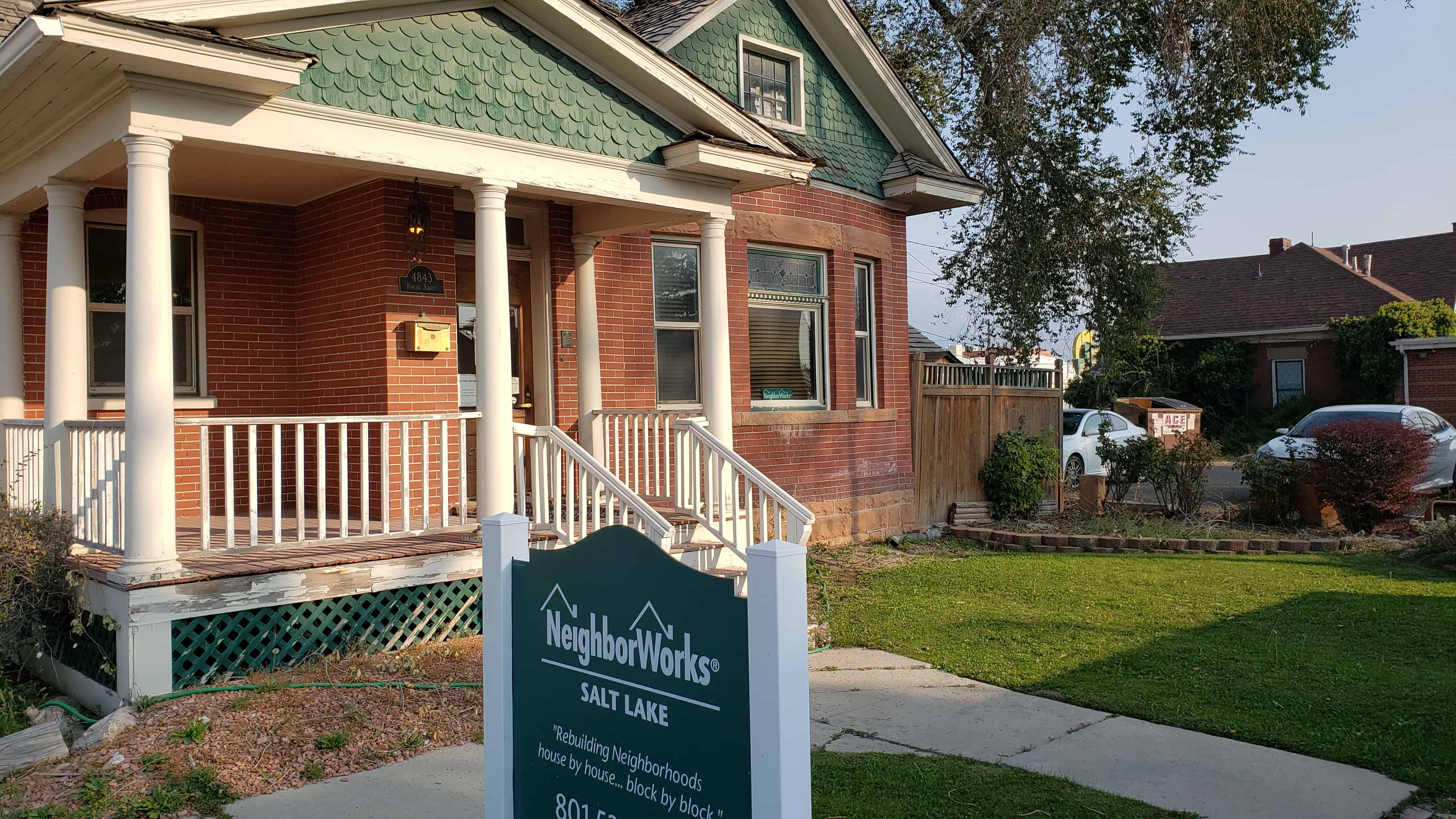
This house built of brick, sandstone foundation, interior lath and plaster walls, and wood moldings exemplifies Murray City 20th Century architecture.
Originally constructed for Arthur Townsend, Murray City Mayor (1930-1931), it provided convenient access to the Murray Mercantile, which Arthur founded in 1900.
Sold by the Townsend family years later, the property was used as a rental until purchased and restored by its owner in 1990.
The home boasts of sliding pocket doors, hardwood floors, ten-foot ceilings, period light fixtures, and an iron claw-foot tub.
Exterior brick, cedar roof, and front porch have been restored.
Located at 4843 South Poplar Street in Murray, Utah
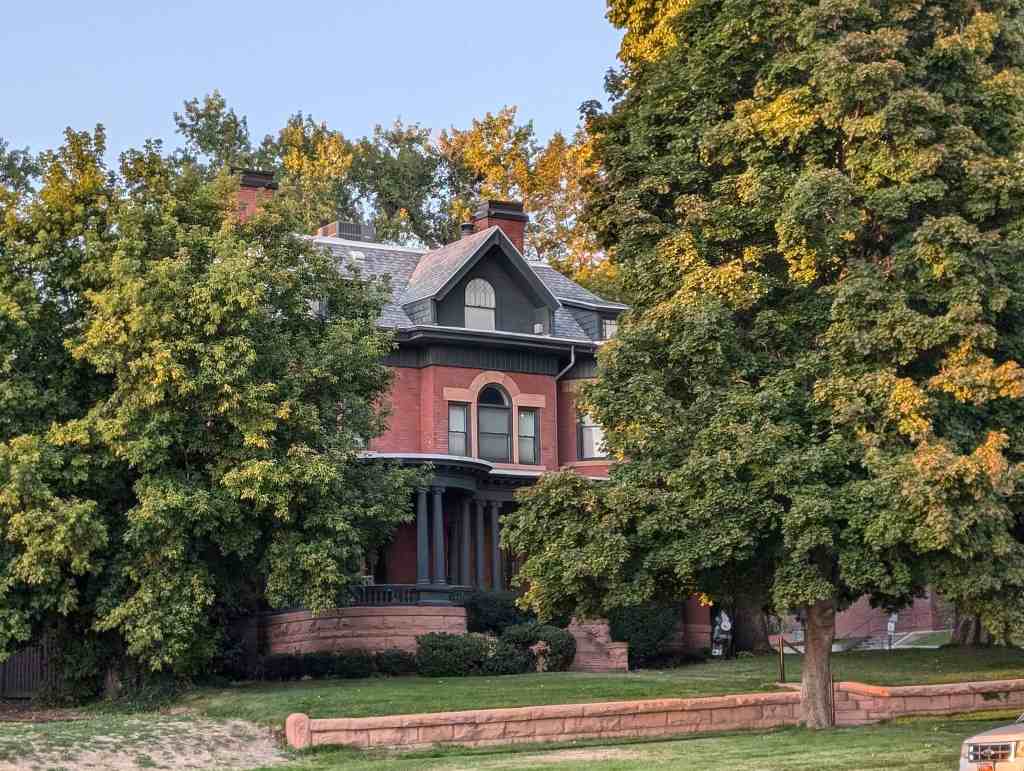
Built in 1898 by architect/builder Jasper N. Melton for Walter C. Lyne, the Lyne House is significant as a landmark structure in Salt Lake City’s East South Temple Street Historic District. The two-and-a-half story brick and stone residence is Georgian Revival in style but incorporates a columned portico and rounded bay projection, both off-centered, which add an element of balanced asymmetry to the design. The Lyne House also serves to document the career of its owner, a prominent wool dealer, city councilman and civic leader. The home, although somewhat altered, is considered to be the finest remaining work of Jasper N. Melton, a local builder who also designed the homes he built.
Walter Cogswell Lyne was born December 8, 1857, in Wisconsin and followed his father to Salt Lake City, Utah, in 1871 when he was 14 years old. Walter was one of a prestigious group of businessmen to establish a firm near the intersection of 200 South and Main Streets, one of the city’s most popular commercial corners in pioneer days. Here, on the site of the present Walker Bank, Lyne operated a drug store under the name of W. C. Lyne and Company. He later went into business with James ; E.. Paine, .and was a successful wook broker, a profession he followed for the remainder of his life. In 1889, at the age of 32, Lyne married Grace Coons of Nebraska. Nine years later he built his large home, the subject of this history, on East South Temple, Salt Lake City’s boulevard of mansions. The Lynes had three children: Norman Cogswell, Walter Jr., and Alice.
Among the significant accomplishments of Walter C. Lyne was his service as Salt Lake City councilman from 1910 to 1912 under Mayor John S. Brads ford. During these mining boom years of great expansion, Lyne played a significant role in the development of Salt Lake City from a quiet pioneer town to a major commercial and industrial center in the Intermountain West. His work in organizing the Salt Lake City Chamber of Commerce of which he was a charter member was also important. An active member of the First Presbyterian Church, Lyne maintained an active interest in the development of Westminster College. He also served on the Board of Directors of the Salt Lake Hardware Company. Considered a very generous man, Lyne was an anonymous benefactor to many organizations and individuals.
Walter C. Lyne died January 9, 1935, at the age of 77 and was preceded in death by his wife who died May 21, 1922. Following Lyne’s death,, Mrs. Alice Gurnsey, his daughter, lived in the home until 1944. Later the Lune house was used as a boarding house and halfway house. The house is currently being restored to its original appearance by the owners, with Raymond Jones, the project architect.
The Walter Lyne House was constructed by Jasper N. Melton, a local carpenter, contractor, and architect. Born in Harrison County, Indiana, on June 16, 1837, Melton pursued the profession of contracting in Lafayette, Indiana, following his service in the Civil War. He came to wait Lake City in 1889 and designed and built many of the city’s important residences and smaller commercial buildings.
Melton’s design for the Lyne House is basically Georgian Revival but incorporates a few as symmetrical elements more commonly associated with the Adamesque-inspired Georgian Revival. Aside from the Greek-ordered portico along the center and left of the front façade, and the two story semi-circular bay projection at the right of the façade, the exterior composition features characteristic Georgian Revival elements. The truncated hip roof (originally with a railing or iron crestwork), classically treated eave and cornice (now hidden), projecting, pedimented central part of the front façade, symmetrically arranged chimneys, portico with free-standing columns, and double-hung windows of the Lyne House re typical in Georgian Revival residences.
The Walter C. Lyne House was one of the first and largest Georgian Revival homes built on South Temple Street. Following the lead of the Lyne House, several other homes of this style were built to the east, giving upper South Temple Street the stately appearance for which it is noted today.
The Lyne House is a Victorian Eclectic building with many Colonial Revival details, including a classical front porch with pairs of Ionic columns and Palladian windows. The asymmetrical facade of the house is given a more classical feel by the balance of the semi-circular bay on the east with the rounded porch on the west. The Lyne House has lost some of its Victorian ornamentation, including decorative bargeboard in the front center gable and iron cresting along the roof. The house also once featured a balustrade on the porch roof and modillion brackets and dentil molding along the cornice.
Walter and Alice Lyne built this house in 1898. Walter Lyne owned a drug store on Main Street and later became a successful wool broker. The Lynes’ daughter continued to live in the house until 1944. Over the next 40 years, the Lyne House served as a boarding house, an optometrist’s office, and was finally abandoned. In 1981, Nancy and John Pace bought the house and renovated it as a bed and breakfast inn.
To the east across R Street from the Lyne House is the entrance to the Wasatch Elementary School “Pedestrian Subway.” This tunnel was built in 1931 to provide safe access to the school’s playground on the south side of South Temple. Wasatch Elementary students continue to use the tunnel today.
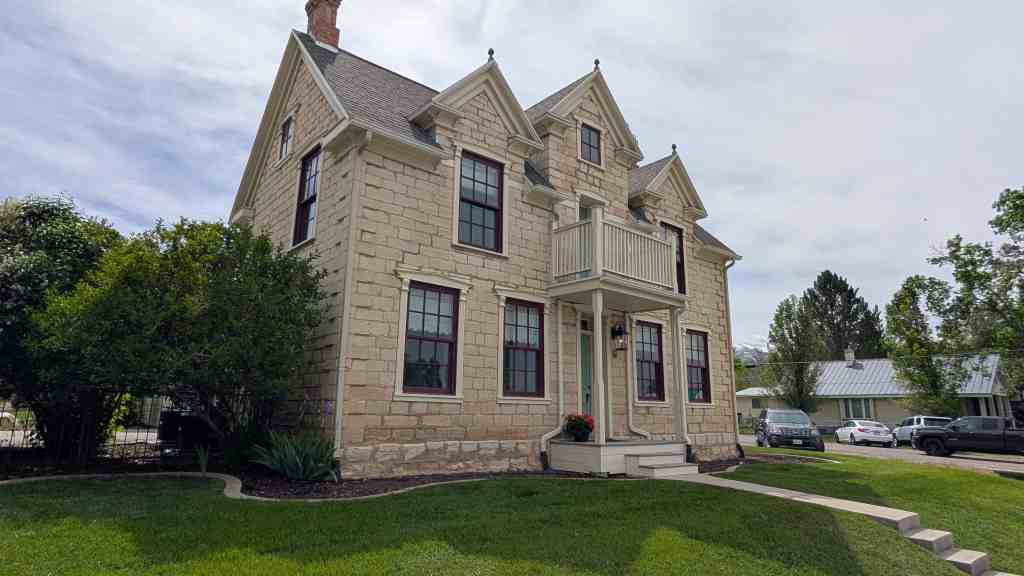
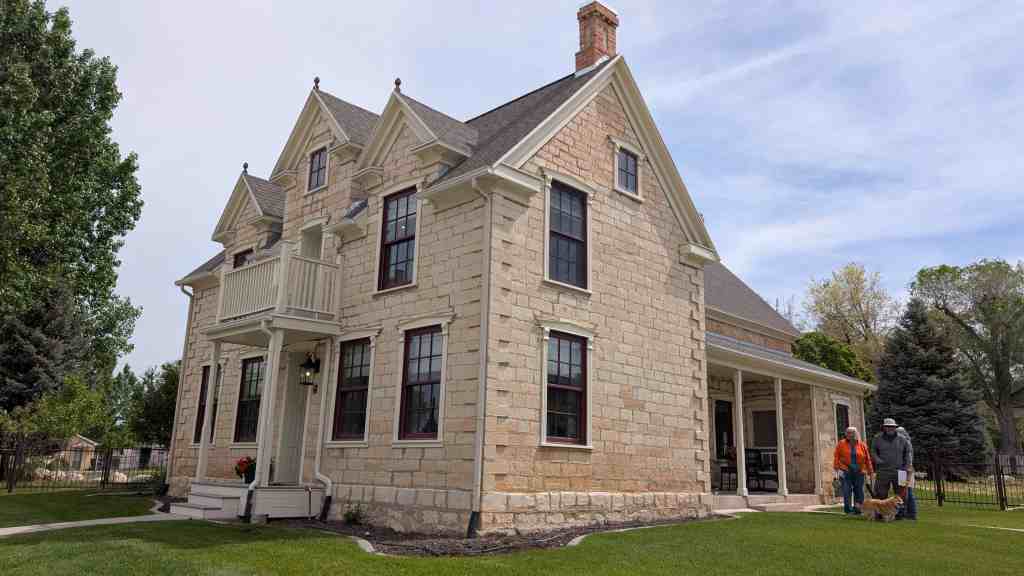
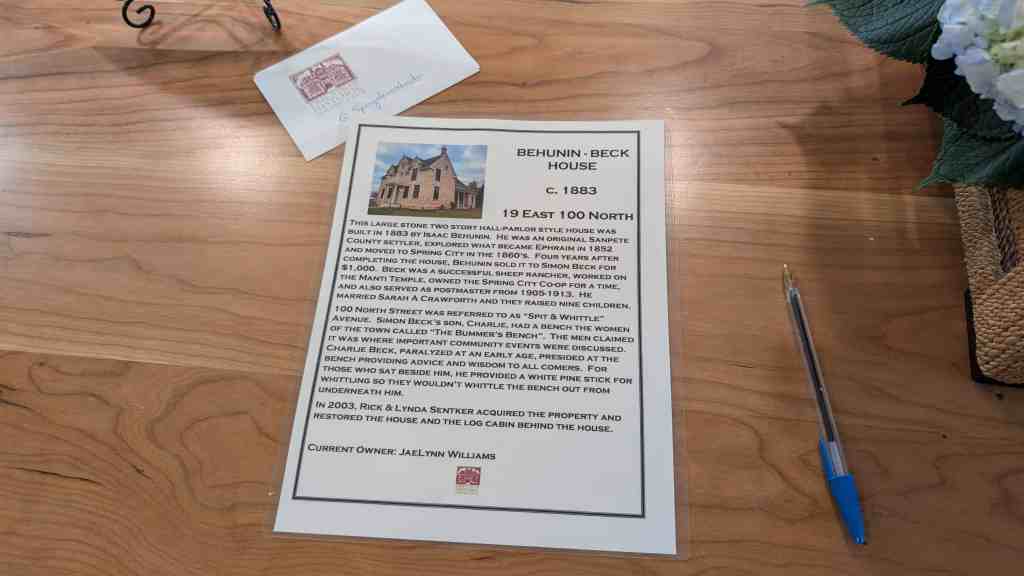
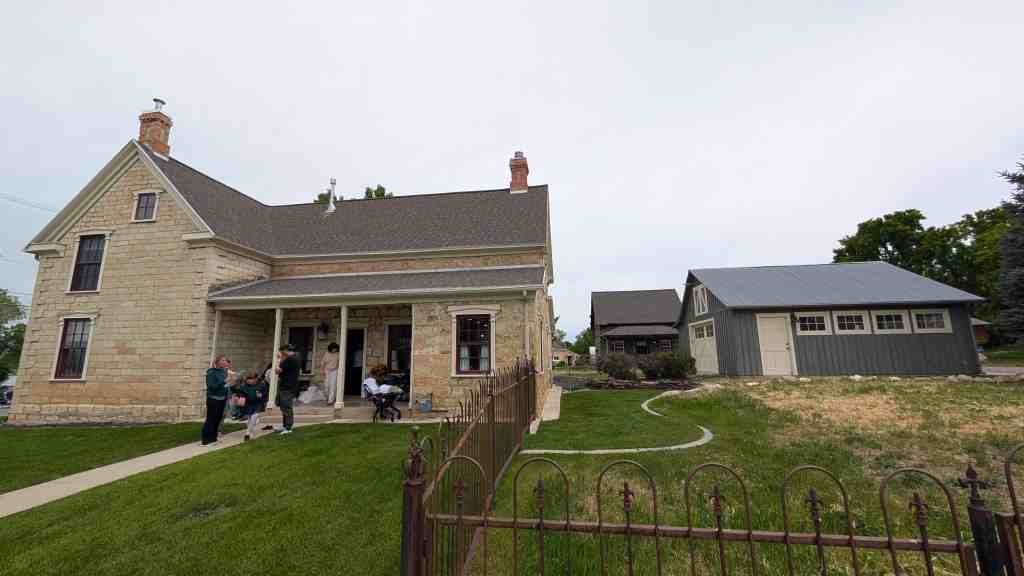
This elegant stone house was built in 1883 for Isaac Behunin, one of the first settlers in Sanpete County. Mixing Gothic style inspired dormers with Greek cornice detailing, the house exemplifies the decorative eclecticism found in Mormon domestic architecture of the period. Behunin sold the house to Simon T. Beck in 1887 for $1,200. Mr. Beck was a wealthy sheepman.
This large stone house was built in 1883 by Isaac Behunin, who explored what became Ephraim. He was an original Sanpete County settler and moved to Spring City in the 1860s.*
This Victorian Eclectic style house was probably built about 1903 by Ephraim Jensen, a businessman and an official of the LDS Church. Jensen built several houses along the block, including 140 W. Clinton in which he lived. Upon completion the house was sold to Mrs. Anna Cornelia Tjirno about when little is known. Anna lived here until her death in 1924.
The Anthony W. Bessey Home 415 North 300 West in Manti, Utah
Anthony Bessey probably had this small stone house built shortly after his arrival in Manti in 1858. The home has a long association with the Bessey family and certainly construction features indicate an early building date. The house is historically important because as one of the first group of homes built outside the Manti forts, it represents the initial stage of local community development. Architecturally the Bessey House is significant as one of a number of typical house types utilized by the early Utah settlers and becomes an important example of Sanpete vernacular building.
The town of Manti, settled in 1849 by members of the Church of Jesus Christ of Latter-Day Saints, was the first town in the Sanpete Valley Colony. Colonists arrived in the fall of 1849 and after wintering in dugouts and wagon boxes, laid out a city in the spring and summer of 1850.1 By the winter some 20 log homes had been erected and work was beginning on a meetinghouse. One year later travelers to Manti reported seeing “several handsome two-story adobe houses, many one story dwellings, a good grist mill and a sawmill.” Threat of Indian attack caused a general pattern of fort building in the 1852-1854 period. Mormon forts were erected to enclose rows of small dwellings and the Walker War (1853-1855) made the security of protected habitation attractive to Manti residents. Peace in the later years of the decade allowed Manti residents to move out to their city lots and begin again the process of city building It was about this time, in 1858, that Anthony Bessey arrived in Manti.
Anthony Wayne Bessey was born in 1835 in Bethel, Maine. In his early years Bessey followed both the cabinetmaking and shoemaking trades. By the 1850’s Bessey had joined the Mormon church and in 1857 he migrated westward to “Zion” in Utah. At first he made shoes in Salt Lake City but in 1858 he moved his family south to the Sanpete Valley and settled in Manti. Here Bessey farmed and pursued his shoe making trade and by 1870 had a personal value of about $700 in property. For 18 years Bessey occupied a position on the high council of the Sanpete Stake of the Mormon church. In 1873-1875 he served as City Mayor and was elected to the city council in the years 1883-1890. Bessey probably had this small stone house built shortly after his arrival in Manti, c.1860. The house is an excellent example of the sturdy homes the Mormon pioneers built during the early stages of great basin settlement. In selecting a house design, Bessey followed a well-known traditional plan.
The Anthony Bessey House, built c.1860, is a 1-1/2 story square cabin folk/vernacular house type (see plan drawing). Measuring 22’x 17′ on the exterior, the house is one of the larger single unit square homes to be found in Utah. The second story is quite spacious and is reached by a boxed staircase which runs along the south wall. The stairs to the cellar run underneath those leading to the upper floor. On the north wall is the fireplace which is extremely large, more than 6′ in width. The interior has been remodeled to contemporary standards.
Externally the Bessey House is in excellent condition and virtually unaltered. The wall material is oolite limestone most certainly extracted from the “Temple Hill Quarry” several blocks to the east. The façade is coursed ashlar; the mortar is flush with incised lines emphasizing the geometrical coursing. Other walls are less handsomely treated and while they are cut-stone they lack the even coursing present on the façade.
The house has a simple gable roof with stone fireplace at the north located internally in the wall. The stone end walls extend up to the ridge of the roof in the gables. Decoration is minimal with the heavy stone lintels over the façade openings the only suggestion of ornamentation. The façade itself is unusually asymmetrical. The front door is placed centrally, but windows occur only to the right or north side. The upstairs window is a “half” window, typical of 1-1/2 story structures. To the left of the door the wall is blank. This fenestration pattern is distinctive in its unabashed asymmetry but can possibly be partially explained by internal factors. On the south wall, beginning right at the southeast corner, the staircase extends about 3′ into the room. Windows on this end of the façade would be partially blocked by the staircase so were deleted from the overall design.
Alterations which detract from the home’s historic appearance are few. There is a one story plastered adobe room added to the rear. This west room is gabled with a brick stone flue chimney and is undoubtedly a 19th century addition to the original square house. A modern gabled front door canopy is the only serious alteration of the original house.
The square bay (roughly square) evolved as a folk building unit in England during middle ages and was employed extensively in cottage construction. The house appeared as a one-room type (with or without upper loft) as was utilized extensively throughout the English American Colonies.” Advancing westward, the “square-cabin” type house is ubiquitous on the American frontier. Mormon examples have been recorded at Nauvoo, Illinois and the square cabin house was extensively dispersed throughout the IDS western communities. Anthony Bessey most certainly would have been familiar with such a square house plan in his native Maine and opted for this rather modest design in his new western home.
The Bessey House is one of a number of folk building types employed by Manti residents in the first stages of settlement. The house is typical of smaller, more inexpensive homes built by the pioneers. Despite its rather distinctive façade, this house gains its architectural and historical significance through its unexceptional nature, i.e., its ability to define the capabilities of the average. There are both larger and smaller homes in Manti, built by people who had both more and less than Anthony Bessey. Bessey’s home, taken in the larger context of vernacular building tradition of the area, helps expand the historical record to include the total population, not just a small percentage of exceptional individuals.