Tags
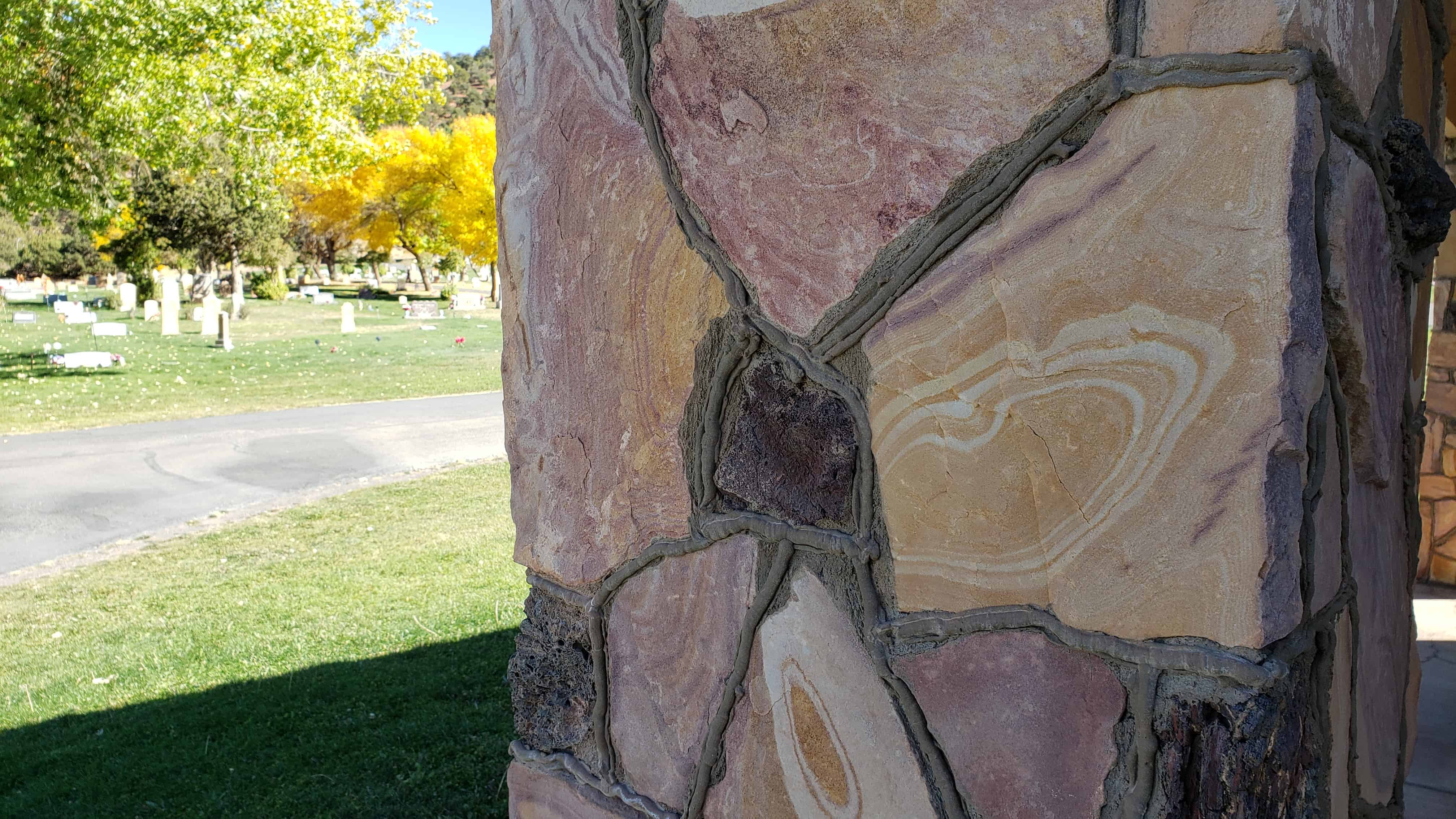
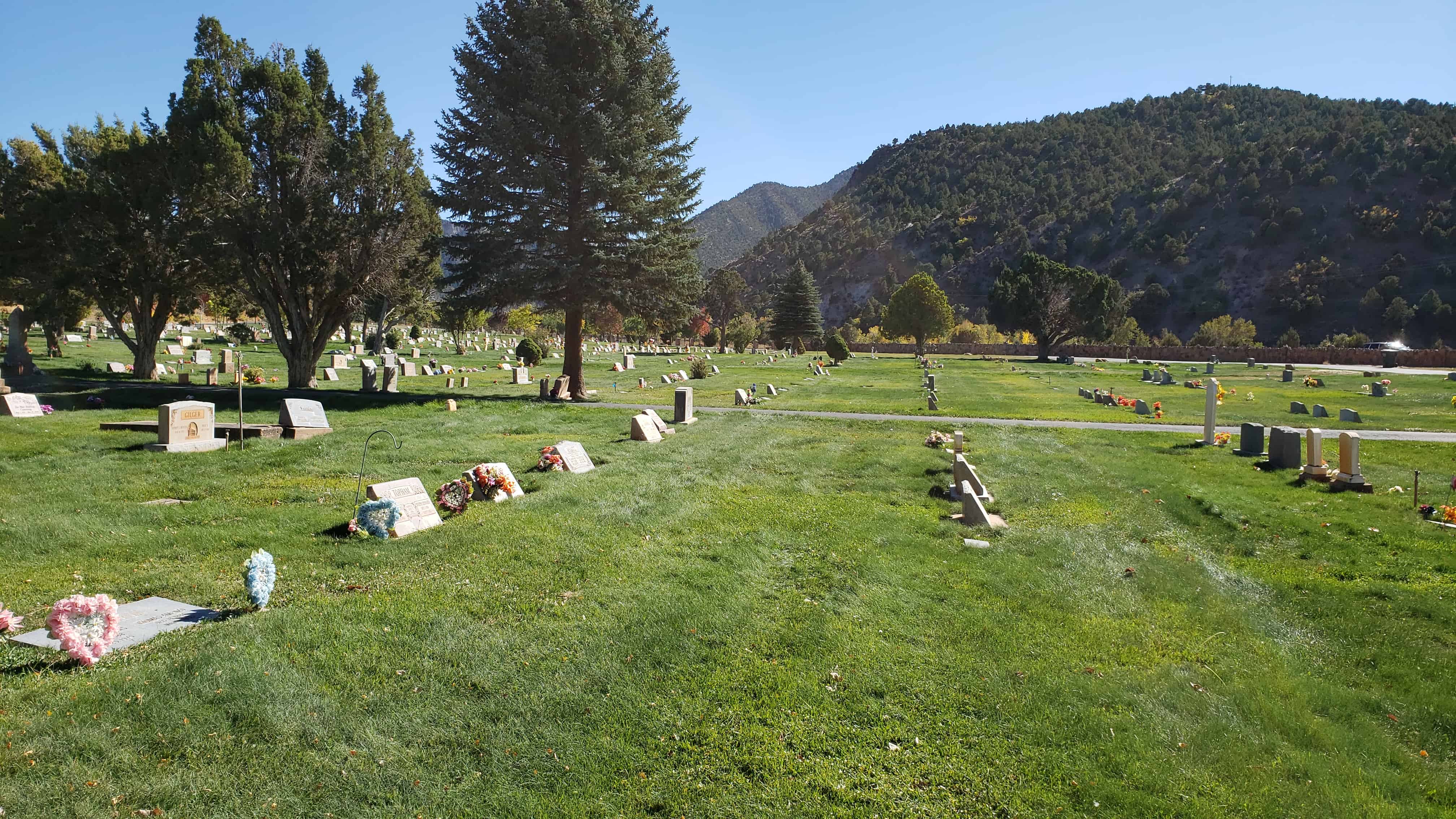
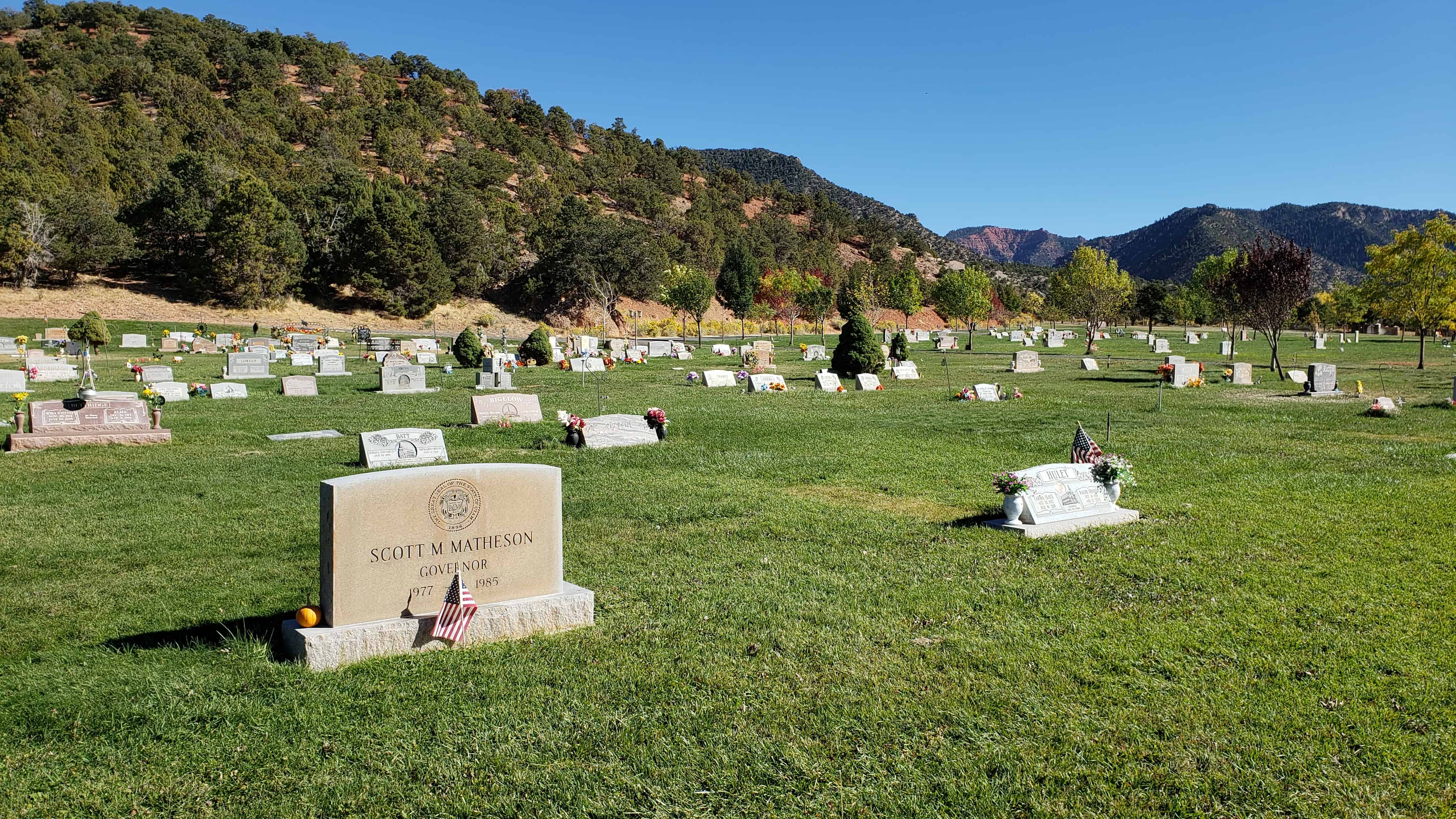
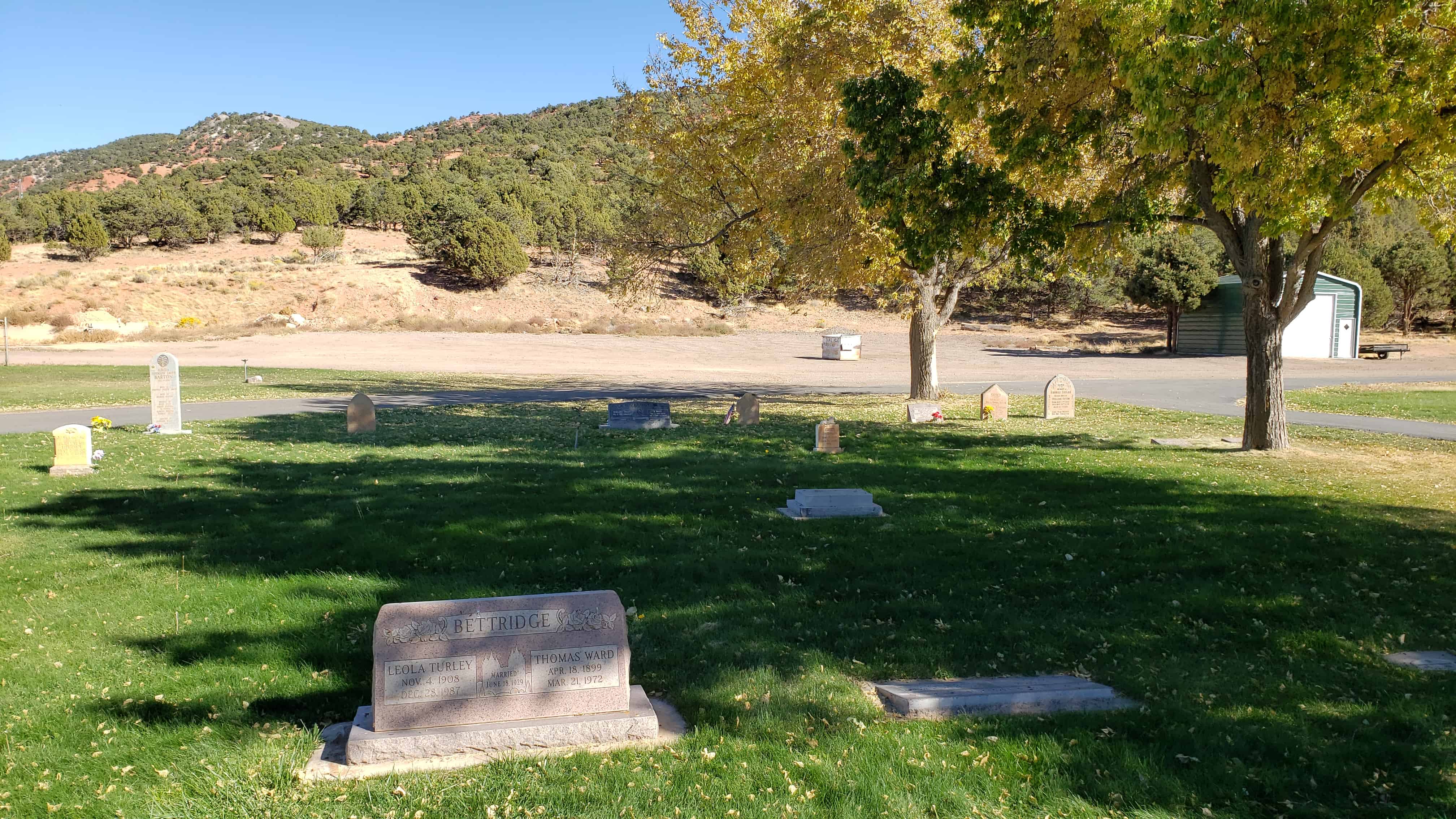
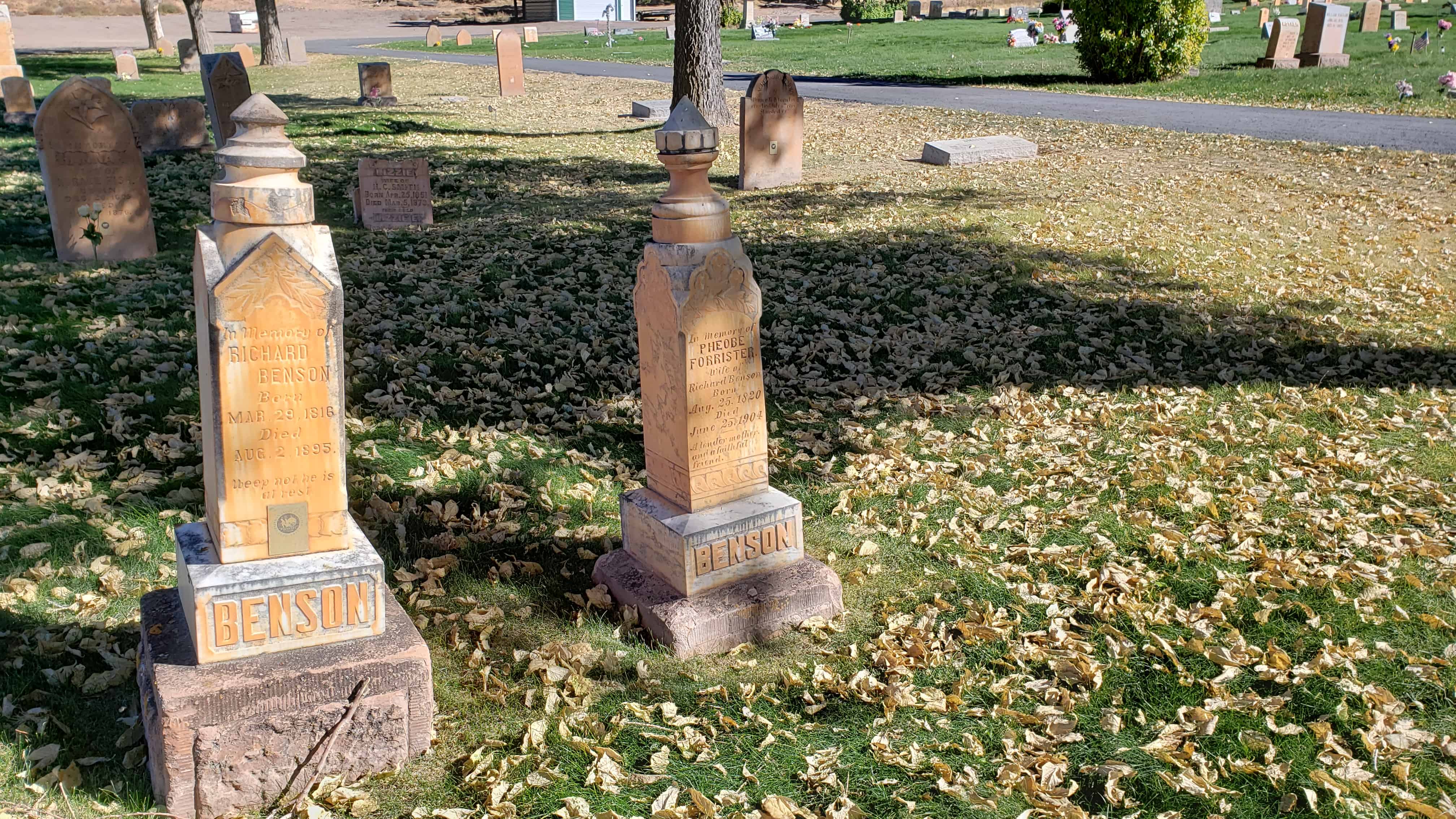
Parowan Cemetery
19 Thursday Nov 2020
Posted in Uncategorized

19 Thursday Nov 2020
Posted in Uncategorized
Tags
28 Monday Sep 2020
Posted in Uncategorized
Tags
Hornet Hill Monument – Captain Maurice Francis Graham
The disappearance of a Western Air Services Boeing 95 mail plane during an intense snow storm thrust Cedar City, Utah, into the sharp focus of world attention. It was not because such accidents were uncommon, for air crashes were quite common in early aviation. But the pilot of this airplane was a very uncommon person—internationally renowned for his courage and flying ability.
Captain Maurice (Maury) Francis Graham was a hero of WWI, credited with saving the lives hundreds of American servicemen of the Lost Battalion when their unit was overrun by German ground forces in a dense fog. He was a recipient of both the Distinguished Flying Cross (DFC) and the French Legion of Honor (LOH), and Maury was considered by many to be the world’s foremost weather‐capable pilot. He pioneered a viable airmail route from Los Angeles to Salt Lake City for Western Air Services, of which he was also a co‐founder; he was at home in the air and on the mail route.
Maury Graham departed from Los Angeles on January 10, 1930 with a scheduled refueling stop at Las Vegas, NV. Finding he was pacing a fast‐moving snow storm Maury elected to continue ahead of the storm to deliver the mail on time. Smoke pots and flares were lighted and waiting at Cedar City but his intended landing was thwarted by heavy snow. Maury was last reported over the Cedar City airport flying to the northwest. He was never heard from again.
The search for Maury eventually involved resources of the US Postal Service, air lines, Iron County residents and the entire Army Air Corps, the largest and longest aerial search in history, all to no avail. It was not until late spring that the mail plane was eventually discovered by Parowan residents Elburn Orton and Ward Mortensen, 2 miles east of Hornet Hill on Kanarra Mountain.
In an extraordinary feat of airmanship Maury Graham had managed to land safely in the dark of night, in a howling snow storm, on top of a 9,500 ft mountain, in the dead of winter, and with no beacon or visual reference to guide him! Maury had only a turn & bank indicator, airspeed indicator, altimeter and a compass in the airplane; no radio, no attitude gyro and no means of communication.
The mail bin was found to be sealed and there was fuel in the wing tanks, the engine and airframe were both intact and returned to service. Messages left for rescuers indicated Maury was proceeding eastward. Some 500 Iron County residents searched for weeks for the missing mail pilot, with ample rewards to encourage them in their quest. His remains were eventually discovered in late July by his friends and wingmen in Spanish Hollow, Crystal Creek Canyon. The securities mail bag was in his arms. He had given his life to see the mail go through.
This historic marker is S.U.P. Marker #158 (see other SUP markers here) and it is located at N 37.48960 W 113.01945.
07 Tuesday Jul 2020
Posted in Uncategorized
Tags

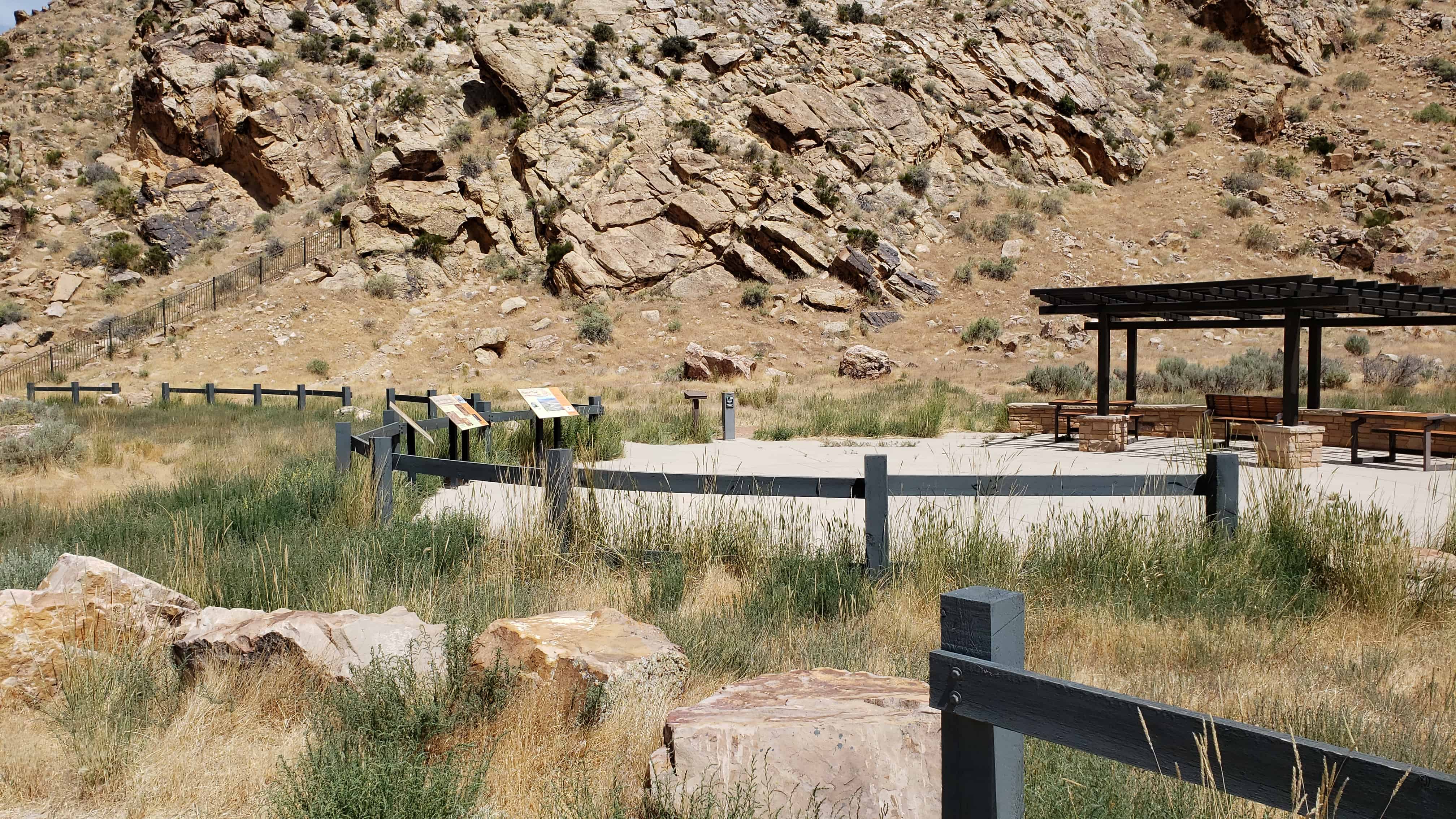
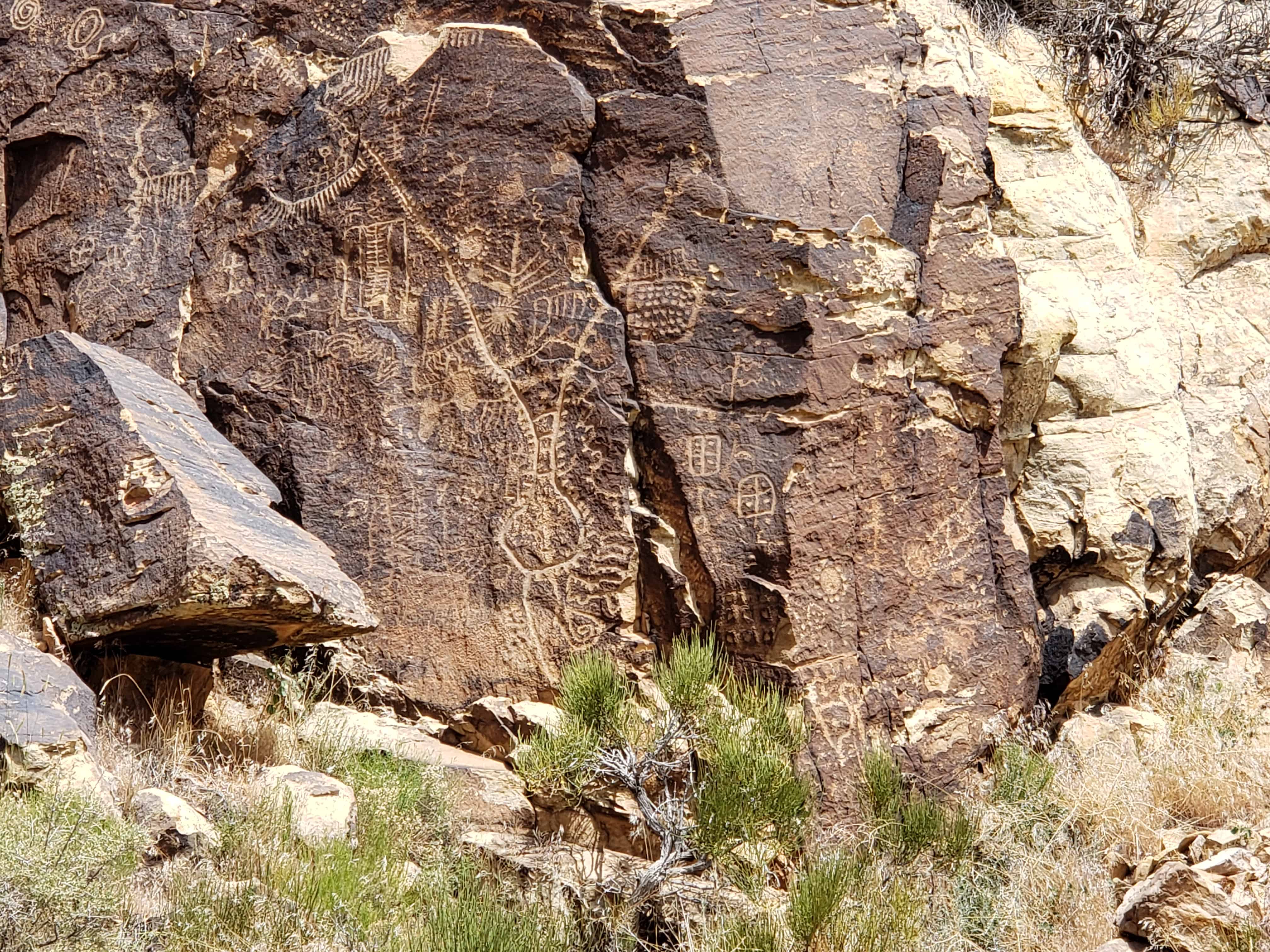
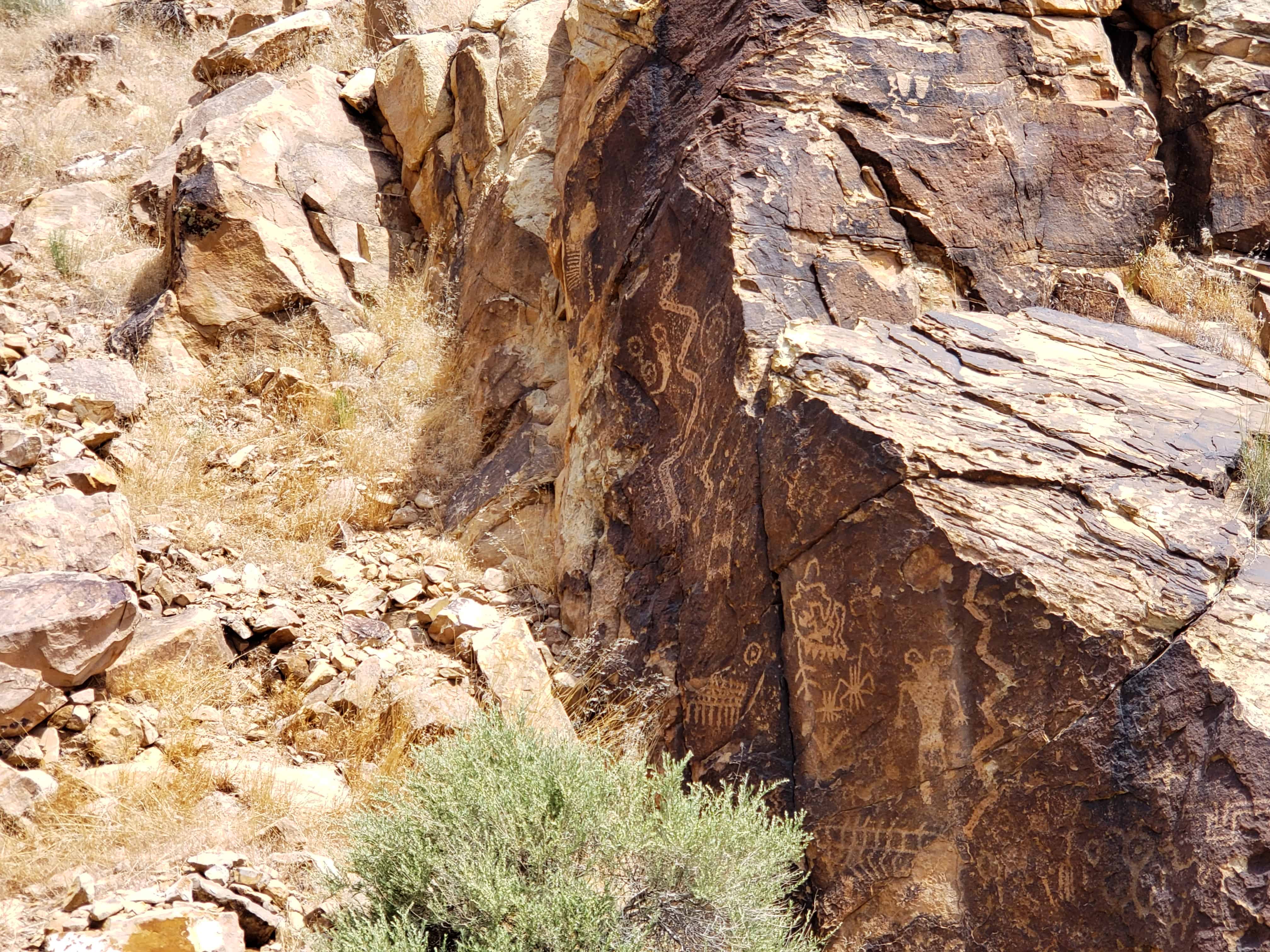
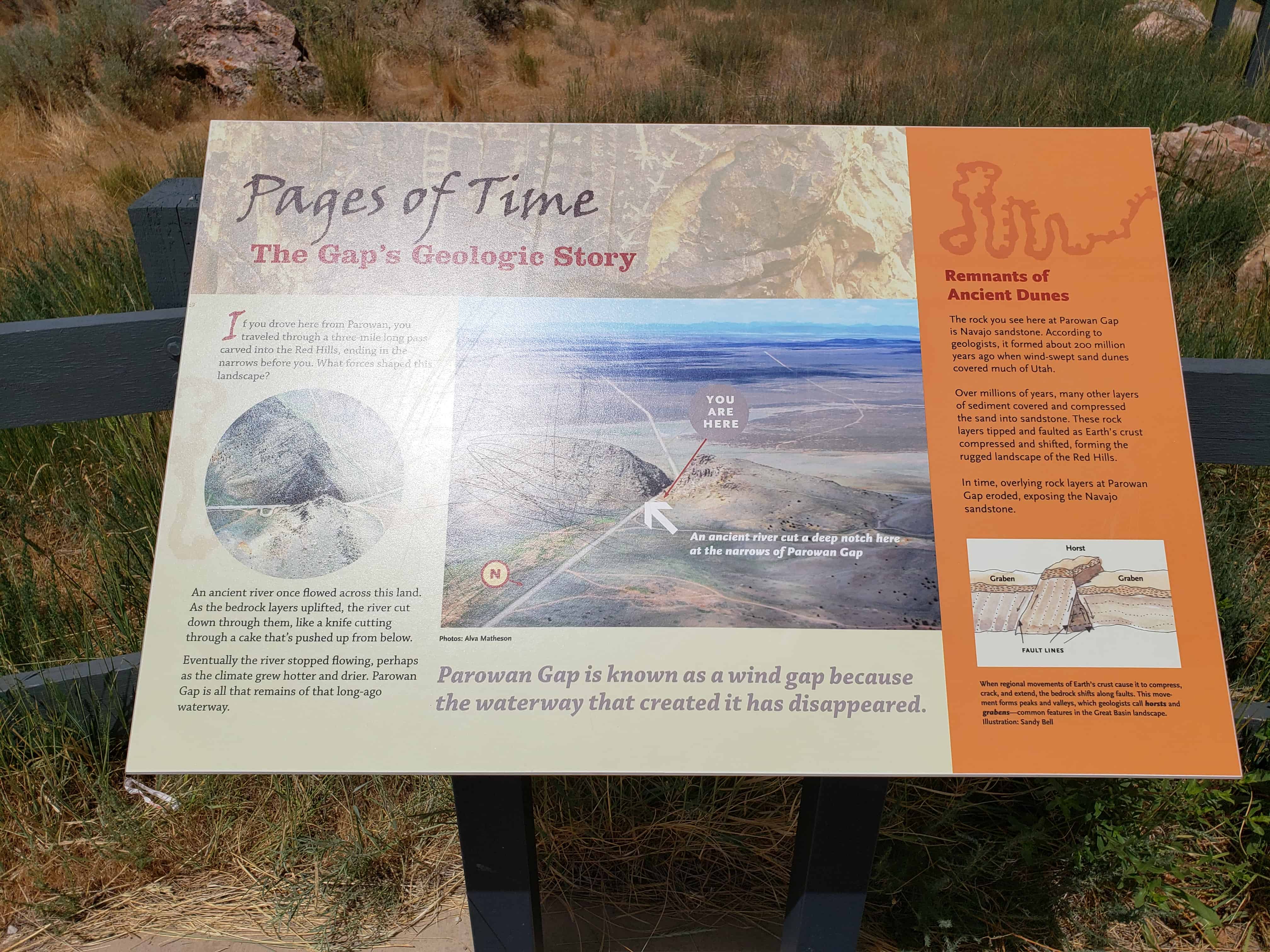
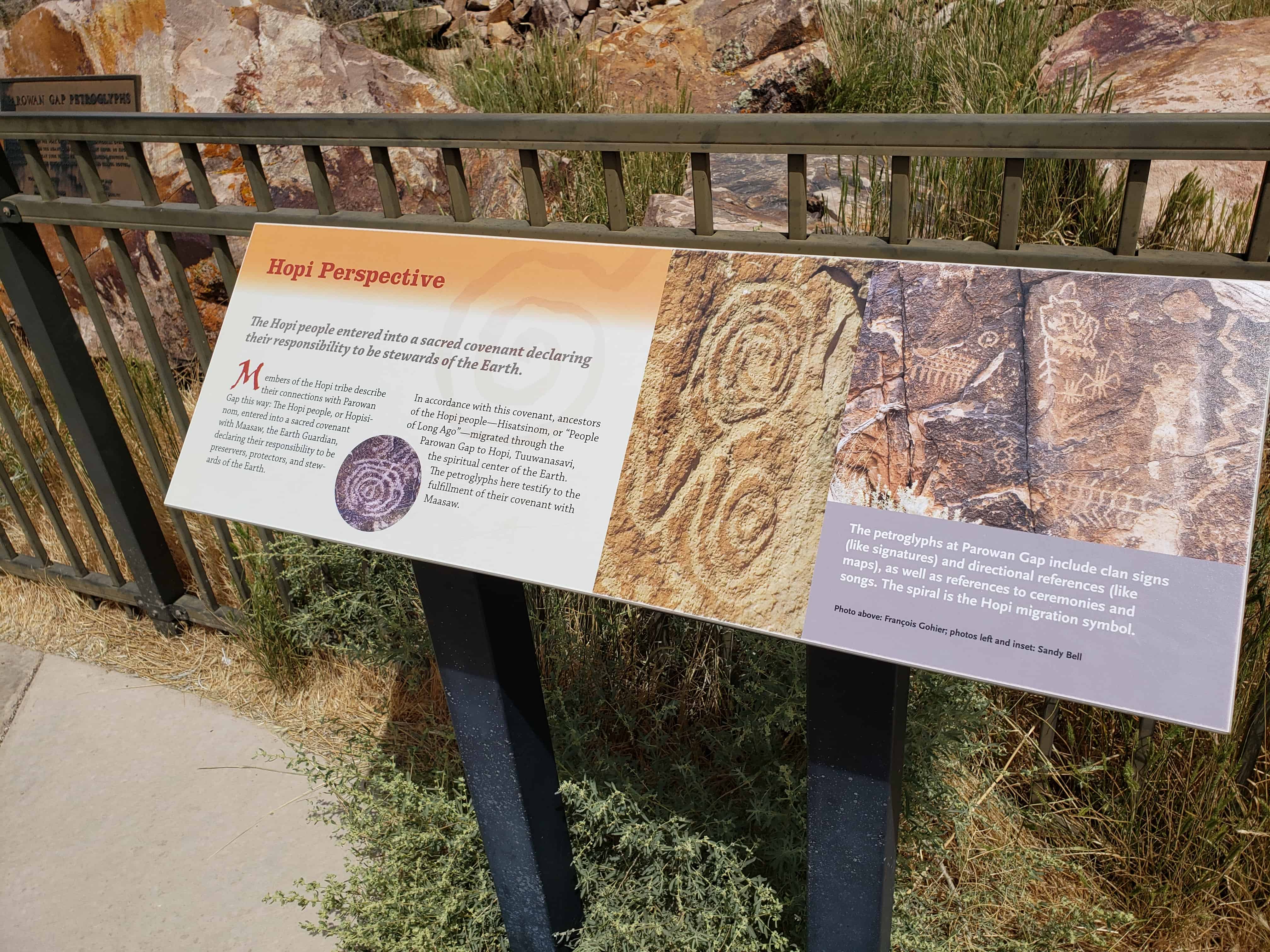
Parowan Gap Petroglyphs
This archaeological site was placed on the National Register of Historic Places in 1969. The petroglyphs displayed here represent the work of prehistoric Fremont and Southern Paiute cultures. The figures and drawings are likely the work of many different individuals over a long period of time. While the meaning of the figures may never be known, they probably portray such tribal pursuits as religion, hunting and gathering trips, family history, sources of water and travel routes.
Located on Gap Road northwest of Parowan, Utah, the site was added to the National Register of Historic Places (#75001806) on October 10, 1975.












24 Sunday May 2020
Posted in Uncategorized
Tags

Another in my collection of hillside letters I’ve been documenting, see the link below to see the others.
This one is pretty faded and hard to see but from above (satellite view) it is still pretty readable.

Related Posts:


16 Saturday May 2020
Posted in Uncategorized

I haven’t been able to find out exactly where this was located, if you know please comment on this page or let me know.
During the 1930s, UTNG used federal money, often supplied through the Works Progress Administration (WPA), to build or expand a number of UTNG facilities. The WPA funded eight armories and several garage and storage areas for the UTNG. By 1940, 13 armories were in use by the Utah Guard including” that in Cedar City.
The location of the historic armory is presently unknown to Living New Deal. The building has since been demolished.
Related Posts:
29 Wednesday Apr 2020
Posted in Uncategorized
Tags


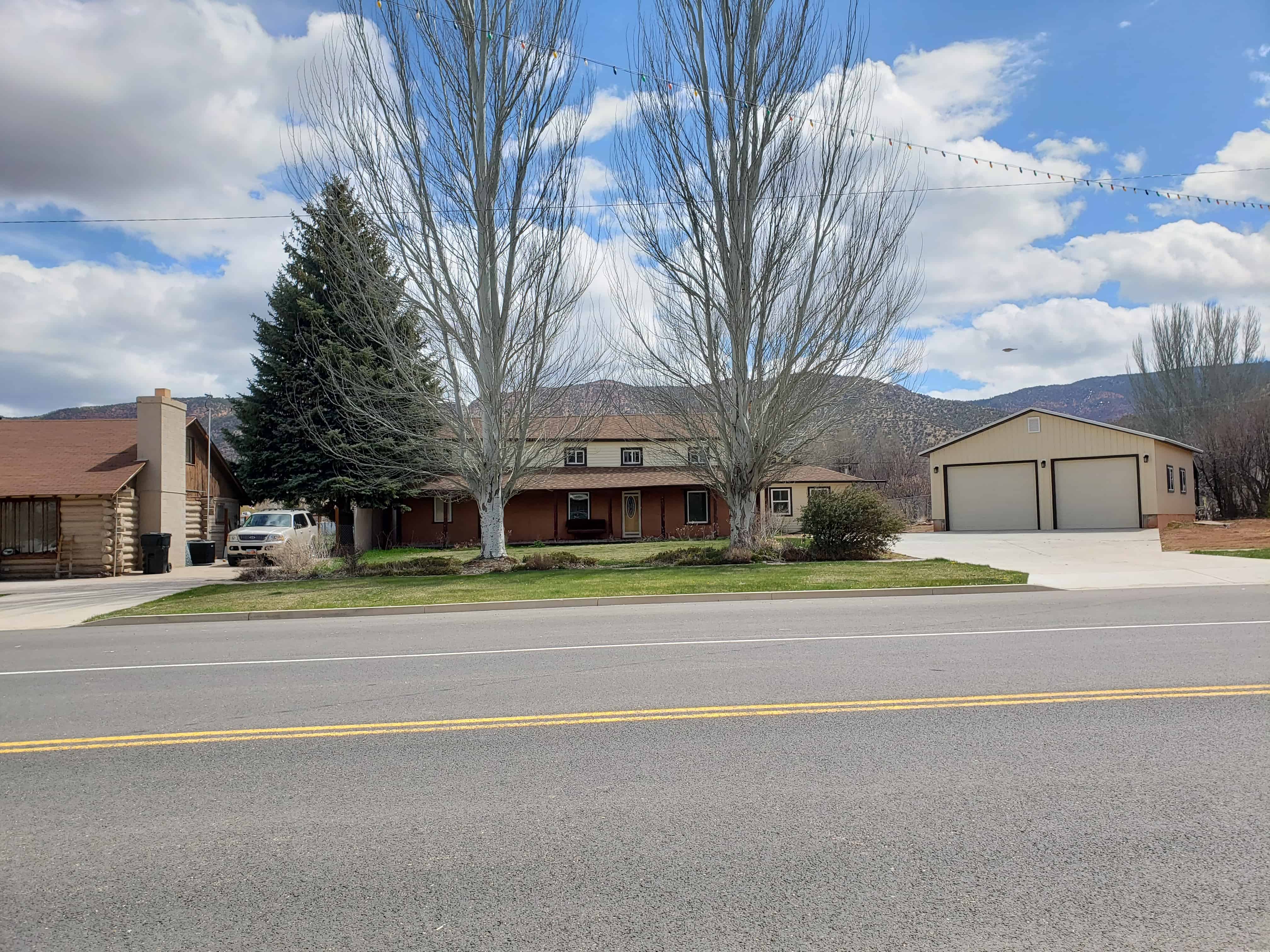
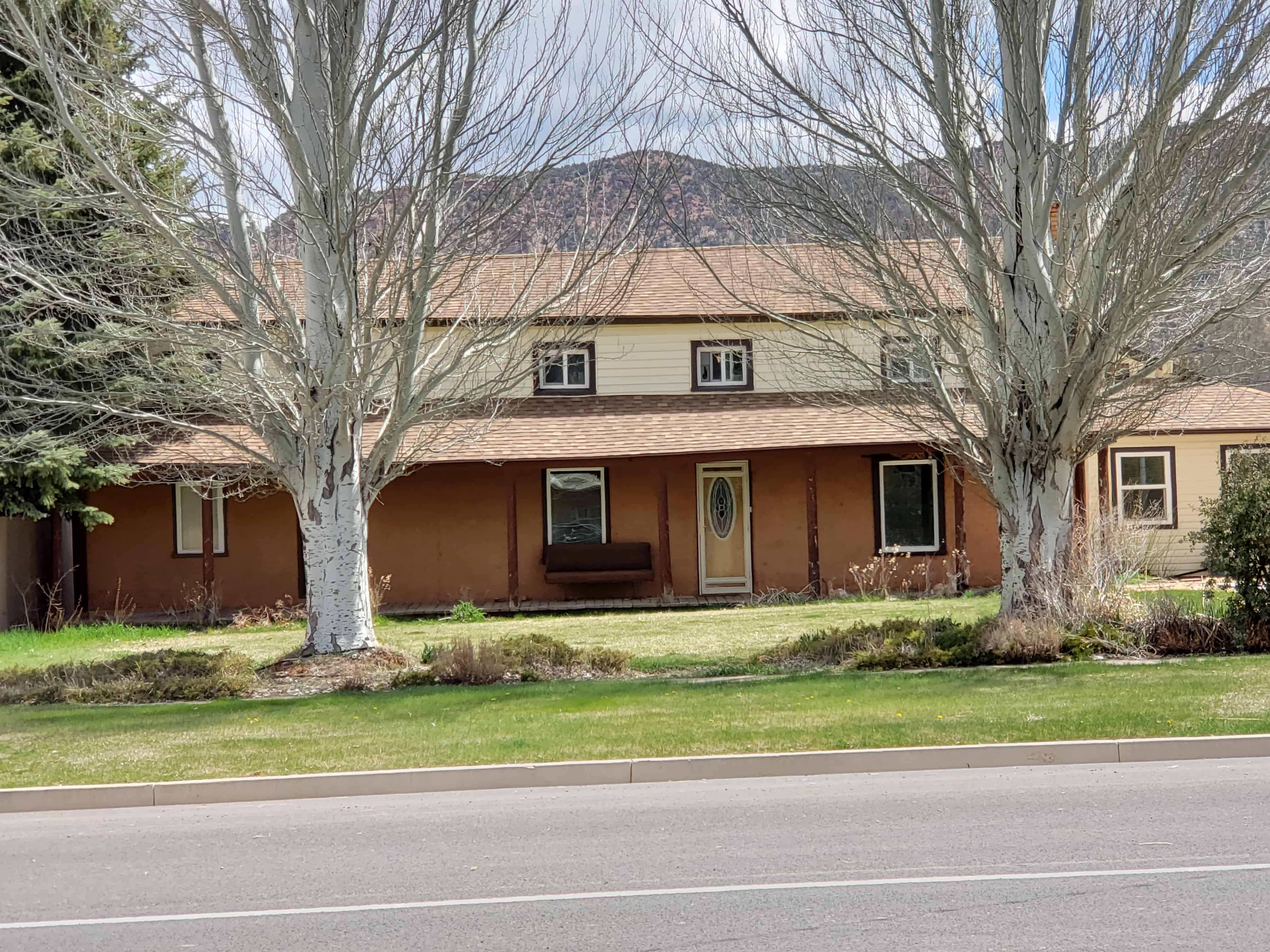
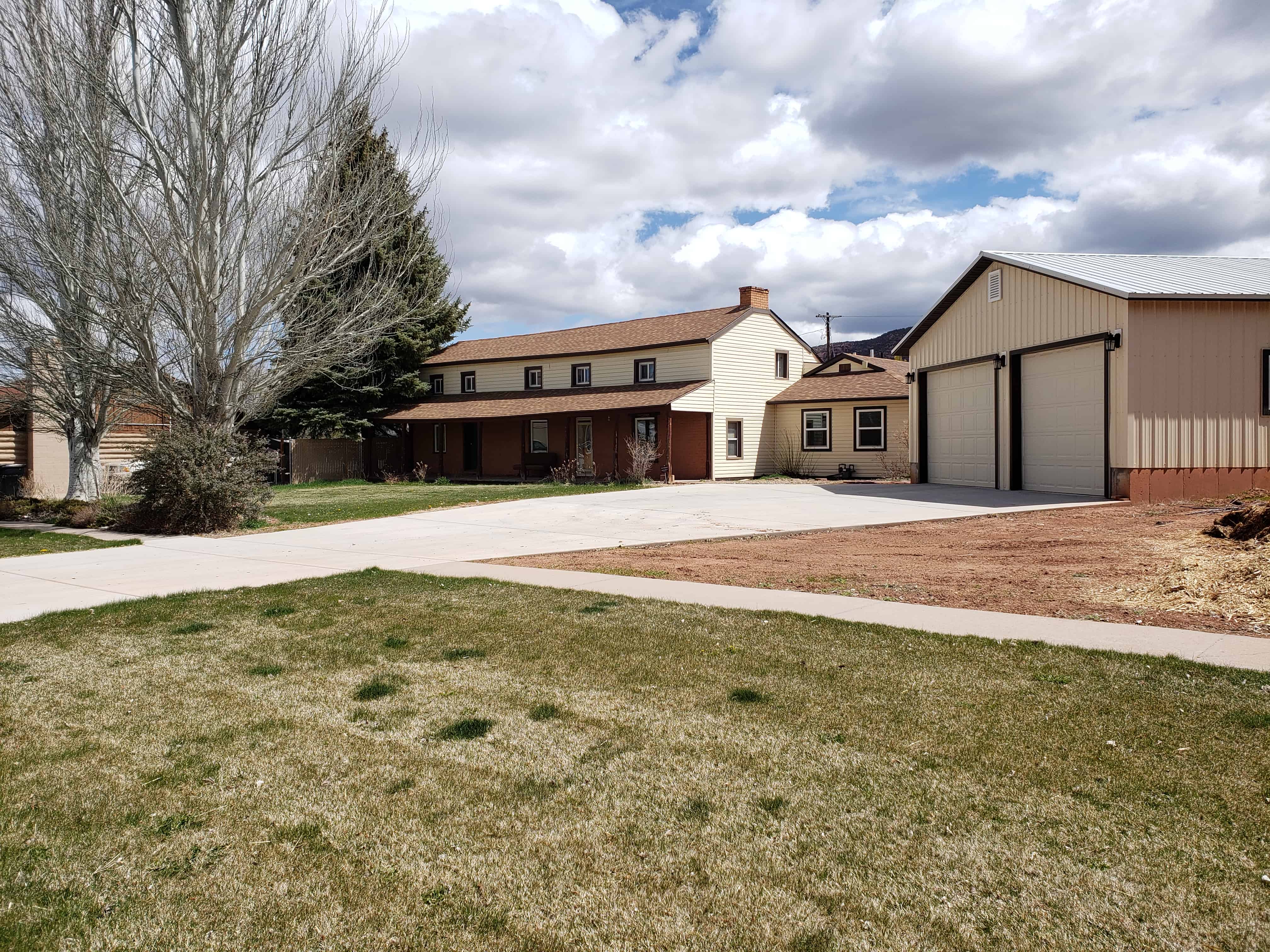
The Ensign-Smith House in Paragonah, built in 1862, is primarily significant due to its association with Silas S. Smith, an important early Utah settler and the leader of the legendary “Hole-in-the-Rock” expedition of 1880 in which a small group of Mormon pioneers cut their way across what is now considered an impassable section of the Colorado River canyon. Listed in the National Register in 1982, the Hole-in-the-Rock trail and expedition has come to reflect the dedication and courage of a people who were convinced they were a part of a divinely inspired and directed mission to build a millennial kingdom of God in Utah’s Great Basin. The trail itself is an important symbol of the Mormon colonization effort in the West and although it came at a relatively late date in this history, the descent through the Hole-in-the-Rock and the struggle to construct a road through one of the most rugged and inhospitable sections of the United States illustrates the fortitude of the Mormon pioneer and serves as a vivid lesson to later generations of the importance of commitment and cooperation in meeting the challenges of their day. As the captain of the Hole-in-the-Rock expedition, Silas S. Smith achieved prominence in the settlement history of early Mormon Utah. He continued as a leader in pioneering endeavors, reportedly having established 35 different residences on the Mormon frontier. However, the Paragonah house, which he owned until 1882 is the only documented one that remains in Utah. The Smith house is also important as an unusually large and well preserved example of early Utah vernacular architecture–the original structure being a “double-pen” type (two rooms), with the later addition a “square cabin” type, forming an essentially new house.
Related Posts:
Silas S. Smith was born October 26, 1830 in Stockholm, St. Lawrence County, New York. Born the same year that his cousin Joseph Smith Jr. founded The Church of Jesus Christ of Latter-day Saints, Silas S. Smith’s life was in the mainstream of Mormon history for its first eighty years until his death on October 11, 1910. His parents, Silas Smith and Mary Aikens, were early converts to the Mormon church. In 1836 the family moved to Kirtland, Ohio, the first gathering place for members of the new Mormon faith. Tying their own destiny to that of their relative, Joseph Smith Jr., the Silas Smith family participated in the move to Missouri and the Mormon expulsion from that state to Illinois. Shortly after the move to Illinois the family leader, Silas Smith died leaving Silas S. and Jessie N. to care for their mother.
Following the abandonment of Illinois by the Mormons in 1845, the mother and two sons moved with the main group to Winter Quarters, Nebraska. In 1847, during the first of year of Mormon emigration ot Utah, the family traveled West with the Parley P. Pratt company and reached Salt Lake City on September 25, 1847, two months after Brigham Young’s vanguard group had arrived.
Once in Utah, Silas S. Smith and his younger brother Jessie, (his house in Parowan was listed in the National Register on June 20, 1975) emerged as two of the stalwarts of the Mormon colonization process in the West. Both were continually on the edge of the Mormon frontier as it first pushed north from Salt Lake City into Davis County, then south two hundred miles from the Mormon capitol with the Iron Mission in 1851. Silas and Jessie constructed the first log building in Cedar City to help pay for the use of a home in Parowan, 18 miles away. The two brothers took up farms as part of the Mormon effort to establish an agricultural basis for the intended iron industry of that region.
In 1854 Silas Smith left his two wives both sisters Clarinda and Sarah Ann, to serve a two-and-one-half year proselyting mission in the Hawaiian Islands. After his return home Silas Smith moved to Paragonah, four miles northeast of Parowan, in the Spring of 1857. Here he served as bishop for several years and was elected to terms in the Utah Territorial Legislature from 1859 to 1878. While a resident of Paragonah,. Silas Smith served as a Captain in the Territorial Militia during the Black Hawk War of 1865-1866. During 1864 Silas’ two wives died within four months of each other leaving a total of nine children between the ages of 11 years and 3 weeks. A year later, on July 19, 1865, he married Martha Eliza Bennett who helped raise the nine motherless children in addition to her own twelve children by Silas S. Smith.
During the winter of 1878-79, Silas S. Smith was selected by Mormon church President John Taylor to lead a settlement effort to the San Juan country of southeastern Utah and southwestern Colorado. Accordingly Smith led a scouting party of 26 men, 2 women and 8 children southeast into Arizona then back northeast into Utah, reaching the junction of Montezuma Creek and the San Juan River at the end of May 1879. Here ditches were dug, a diversion dam constructed, crops planted, some cabins constructed, and the surrounding region explored for potential settlement areas before returning to their homes in Parowan and Paragonah in September 1879 via the Old Spanish Trail route through eastern and central Utah.
With word of a direct route to the San Juan River through Potato Valley, later named Escalante, Mormons from a dozen southern Utah communities traveled separately to a rendezvous at 40 Mile Springs. From here exploring parties were sent out to reconnoiter the untraveled route down to the Colorado River and across what most concluded were impassable canyons and cliffs east of the river. With the unfavorable scouting reports, Silas S. Smith faced a difficult decision to push ahead toward the San Juan River with limited supplies and equipment or to return to their homes and follow the circuitous northern route in the spring. Because snow in the mountains would make the return trip dangerous if not impossible, Silas S. Smith asked the group to push ahead. Leaving his assistant, Platte D. Lyman, in charge of work on the road, Silas S. Smith returned to the settlements where he secured 25 pounds of blasting powder, reportedly all that could be found in Southern Utah, and sent it to assist the construction work. In meetings with Erastus Snow, the Mormon Apostle directing affairs in southern Utah, and his brother Jessie N. Smith, both of whom were members of the territorial legislature, he secured their endorsement for a $5000 appropriation for blasting powder, tools, and payment for work on the road. During the winter of 1880 Silas S. Smith was bed-ridden with pneumonia and did not rejoin the San Juan Mission, or Hole-in-the-Rock expedition as it became known, until May 22, nearly two months after the group arrived at Bluff on the San Juan River.
Silas S. Smith had a broad vision of his responsibility as leader of the San Juan Mission. Looking beyond the borders of Utah, He made exploring trips into Colorado with particular attention to Colorado’s San Luis Valley. This southern Colorado valley with its small population of Spanish speaking residents and English speaking ranchers and miners, had drawn a group of Mormon converts from the southern states in 1878-79. Dividing his time between the Utah settlement at Bluff and those in Colorado’s San Luis Valley
250 miles to the east, Smith established a residence at Manassa, Colorado in 1882.
In 1883 two ecclesiastical districts were established and Silas S. Smith, who had jurisdiction for the entire San Juan area until the division, remained in charge of Mormon activities in the San Luis Valley until 1892. Smith returned to Utah in 1901 living in Layton, Davis County, until his death in 1910. In a state which withholds its deepest respect for its pioneers, Silas S. Smith was a pioneer among pioneers. He reportedly established 35 different homes or residences on the Mormon frontier. The Paragonah residence is the only one that remains in Utah from the era of his pioneering endeavors and as such is significant in understanding and documenting the settlement process of Utah.
This large adobe house was originally constructed by Marius Ensign, an early convert to the Mormon church and one of the original settlers of Paragonah. Ensign had come to Utah in 1849 and accompanied the first group of Saints called to open the Iron Mission in central Utah. Ensign and several other men moved to Paragonah in the spring of 1852, the site having been previously selected because of its abundant water supply and suitability for agriculture. By 1853 log cabins and several substantial adobe houses had been erected by the pioneers. Indian hostilities necessitated the evacuation of the town in the summer of 1853 and the community was not resettled until At this time a large adobe fort was constructed and the residents occupied small homes within its protective walls (the fort was located on the block directly across the street west of the Ensign-Smith house). The fort was utilized until about 1860 when a townsite was surveyed and settlers began to move out onto their new city lots to build. It was in the 1860-1862 period that Marius Ensign built the first part of this house, perhaps using adobes secured from the dismantling of the nearby fort.
The original house was a 1-1/2 story adobe structure measuring roughly 33′ x 17′ and consisting of two equal sized rooms on each floor. The rooms conformed to the vernacular “double-pen” type. The façade is asymmetrical because the front door had to be shifted to one side to accommodate the internal wall separating the two front rooms. As the house was nearing completion, Ensign was called by church leaders to settle further south at Santa Clara, in Washington County. The historical documents seem to indicate that Ensign left Paragonah shortly thereafter but it is not clear, however, what immediately became of the house. Silas Smith officially purchased the home from Ensign for $500 in 1872 and the use of the house during the ten years from 1862, when Ensign left for Santa Clara, to the time of the Smith transaction in 1872 is not known. It seems that Ensign could have left one of his plural wives in the home during this time, or that Smith could have bought the home earlier than the recorded deed indicates–not an uncommon practice in Utah during the early years of settlement.
Silas Smith had moved to Paragonah in 1857 and soon became a leader in both church and civic affairs. Plat records for the early 1860s show that Smith owned the city lot just east of Ensign’s house so that the purchasing of the home required a move of only a short distance. Smith soon added a 1-1/2 story adobe section to the north end of the original home. This new addition gave the house its unusually long appearance and was remarkable compatible with the design of the original section. It was at this time that the other adobe sections were added to the rear of the home. Also, a small frame post office was attached to the southeast corner of the house to serve Smith’s duties as town postmaster. After his call to the San Juan Mission, Smith sold the house in 1882 to William H. Dame, another of Paragonah’s original settlers and one of its leading citizens. The Dames held the property until 1902 when it was purchased by William McBride. The house remained in the McBride family until 1976 when it was sold to Girald Smith. It was at this time that the house was remodeled on the inside and some changes were made to the rear exterior fabric. Such changes do not affect the historic integrity of the dwelling.
06 Monday Apr 2020
Posted in Uncategorized
Tags

This truck stop has been shut down and abandoned for a while, it’s always looked pretty cool to me when I drive by so I stopped to get some pictures and document it to be able to look back on.


29 Friday Nov 2019
Posted in Uncategorized

On this site, in 1862 the first Cotton Factory was erected in the west. Designed and operated by William Marsden and owned by Ebenizer Hanks. Here the first ball of Cotton Yarn was made west of the Mississippi River.
Girls that worked in the cotton factory:
Sons of Utah Pioneer Marker #216
Related Posts:

05 Tuesday Nov 2019
Posted in Uncategorized
Tags
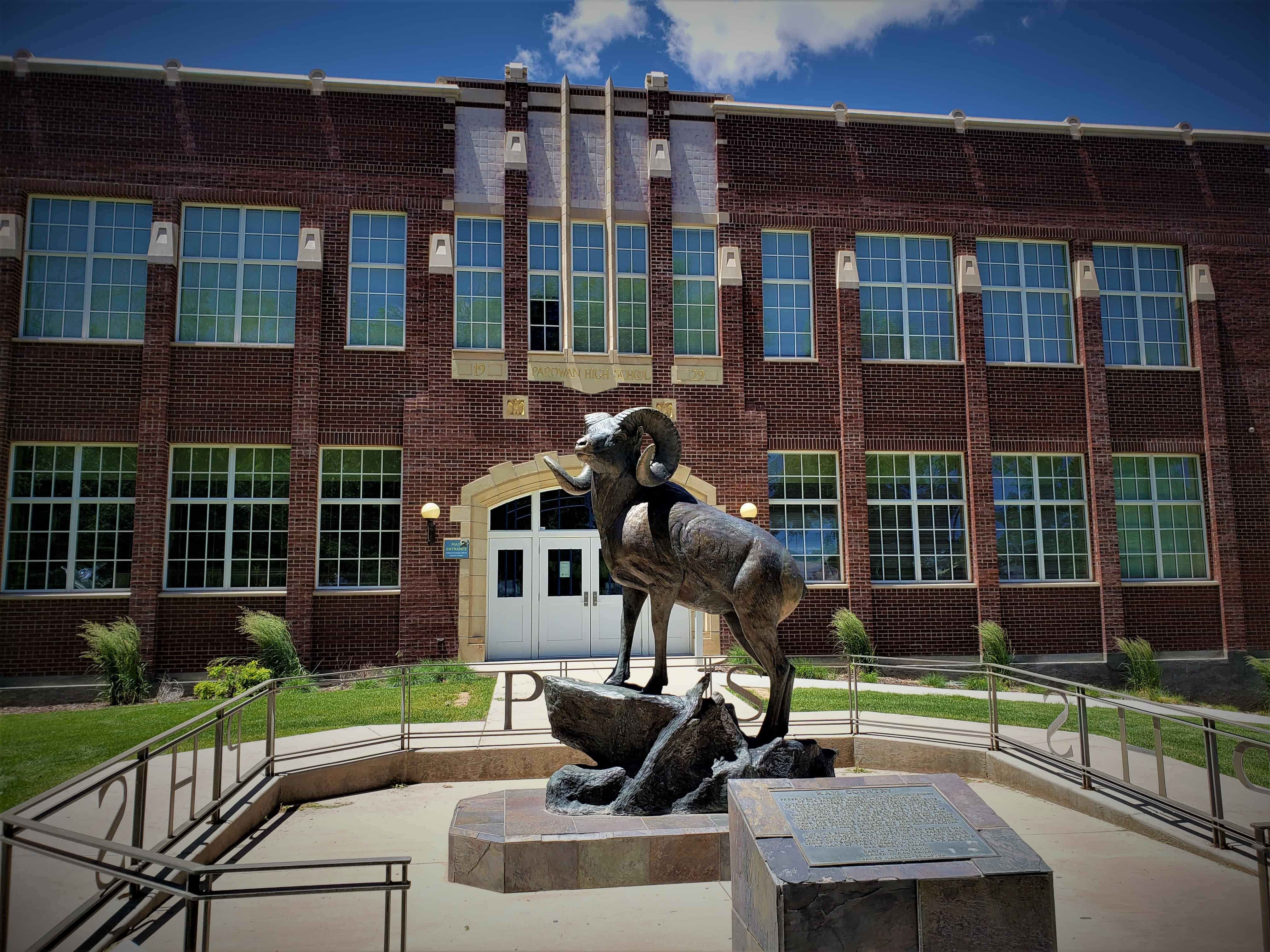
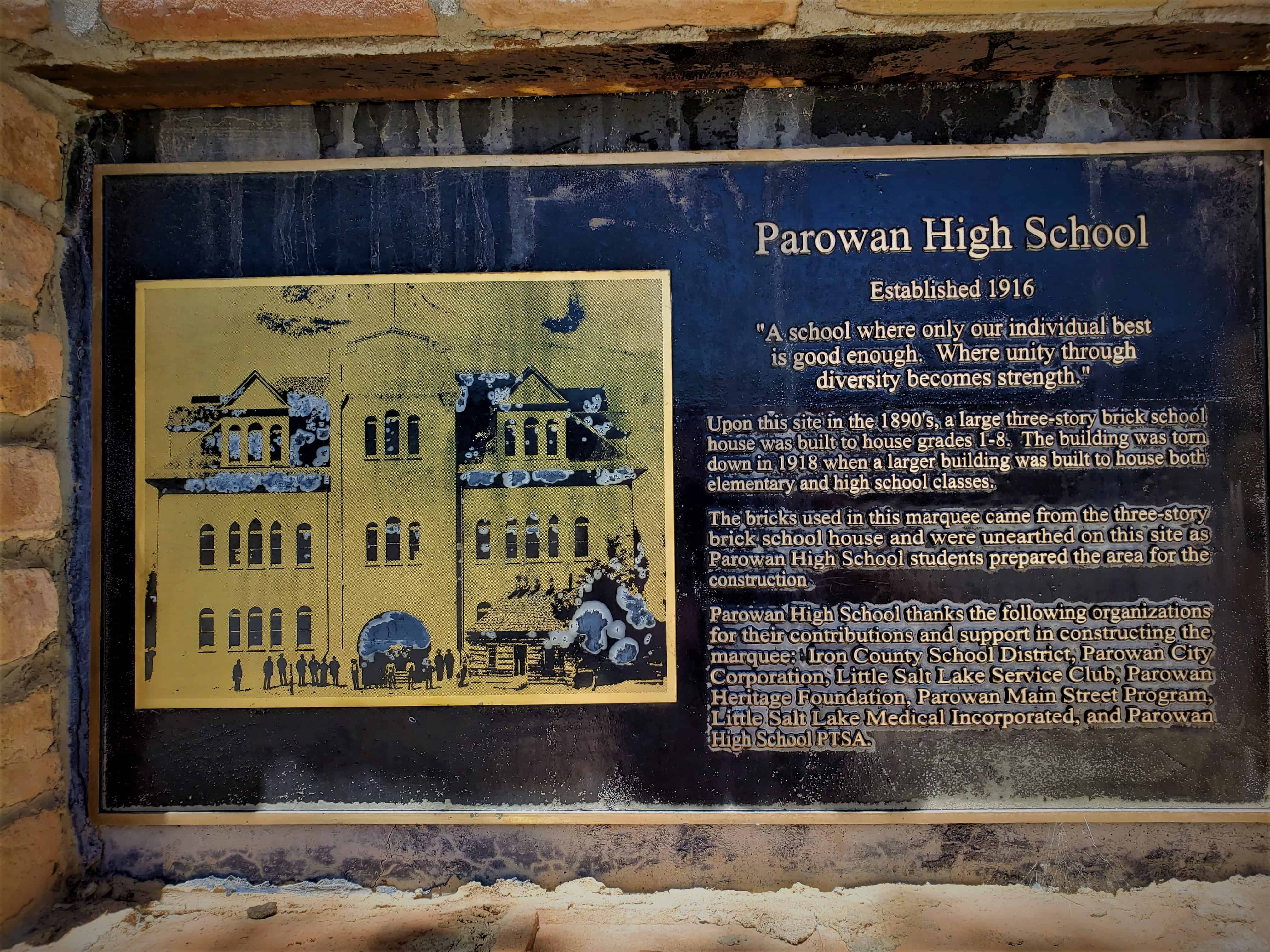
Parowan High School
Established 1916
“A school where only our individual best is good enough. Where unity through diversity becomes strength.”
Upon this site in the 1890’s, a large three-story brick school house was built to house grades 1-8. The building was torn down in 1918 when a larger building was built to house both elementary and high school classes.
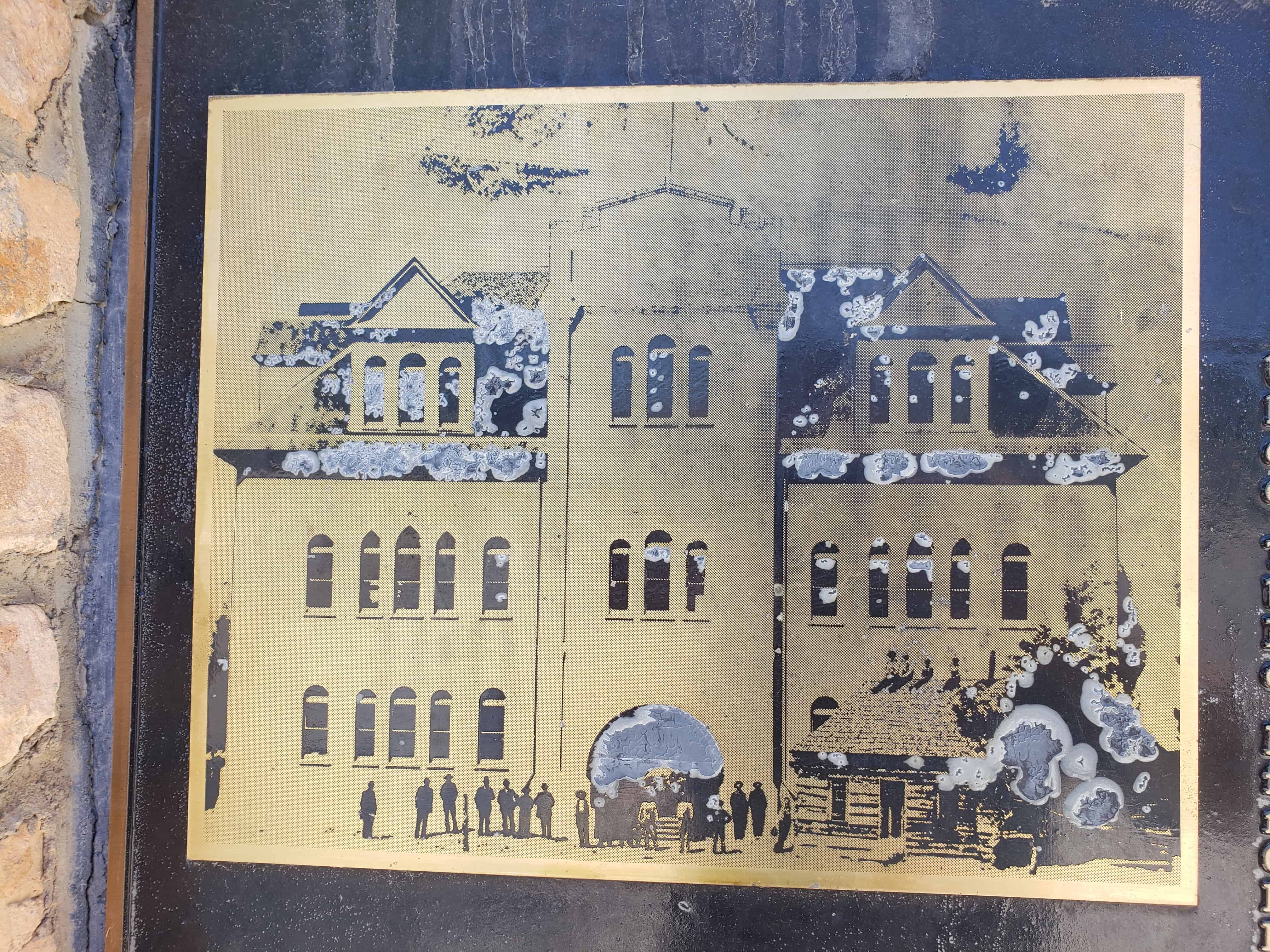
The bricks used in this marquee came from the three-story brick school house and were unearthed on this site as Parowan High School students prepared the area for the construction.
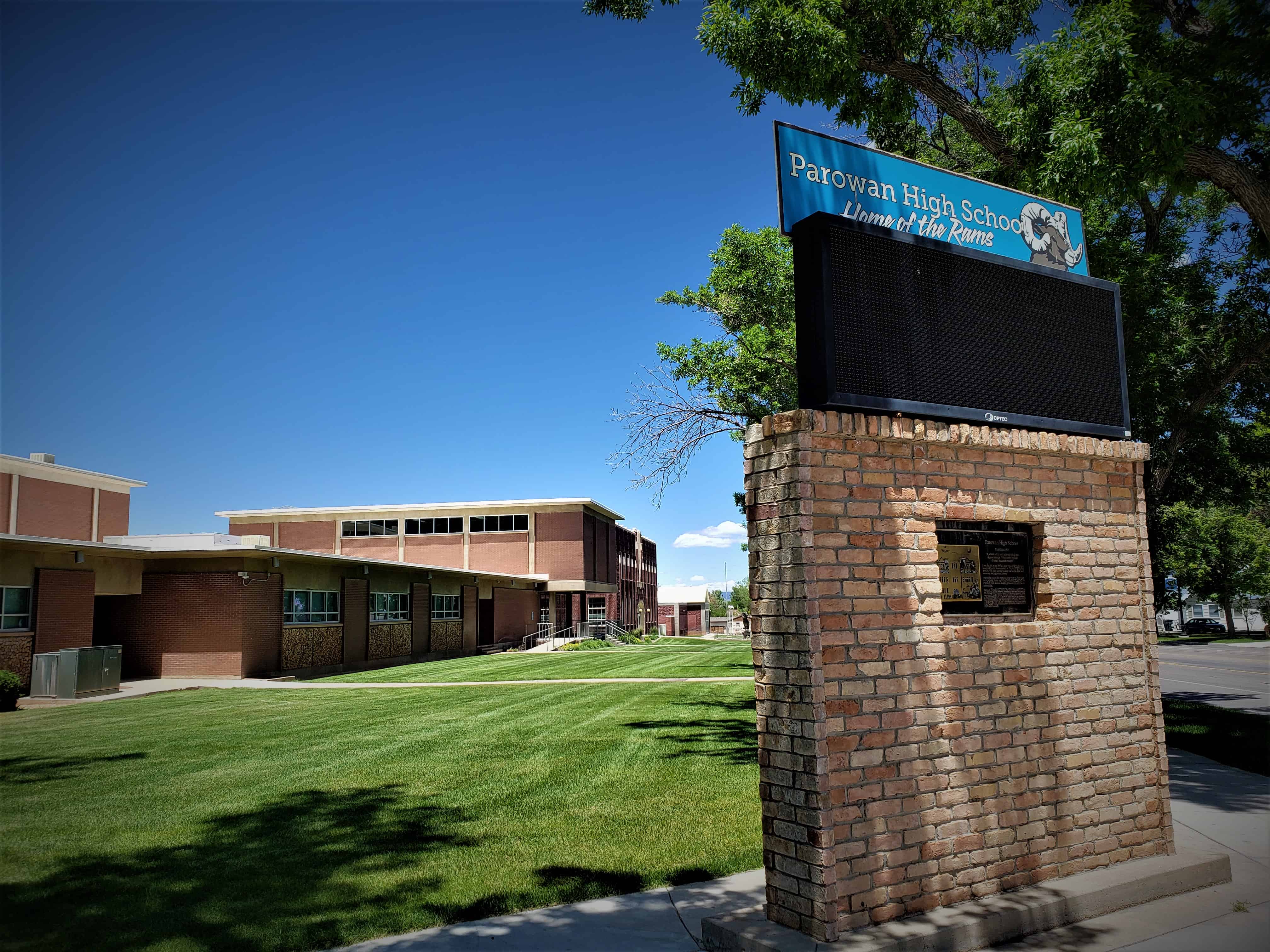
Parowan High School thanks the following organizations for their contributions and support in constructing the marquee: Iron County School District, Parowan City Corporation, Little Salt Lake Service Club, Parowan Heritage Foundation, Parowan Main Street Program, Little Salt Lake Medical Incorporated, and Parowan High School PTSA.
Related Posts:
07 Saturday Sep 2019
Posted in Uncategorized
Tags
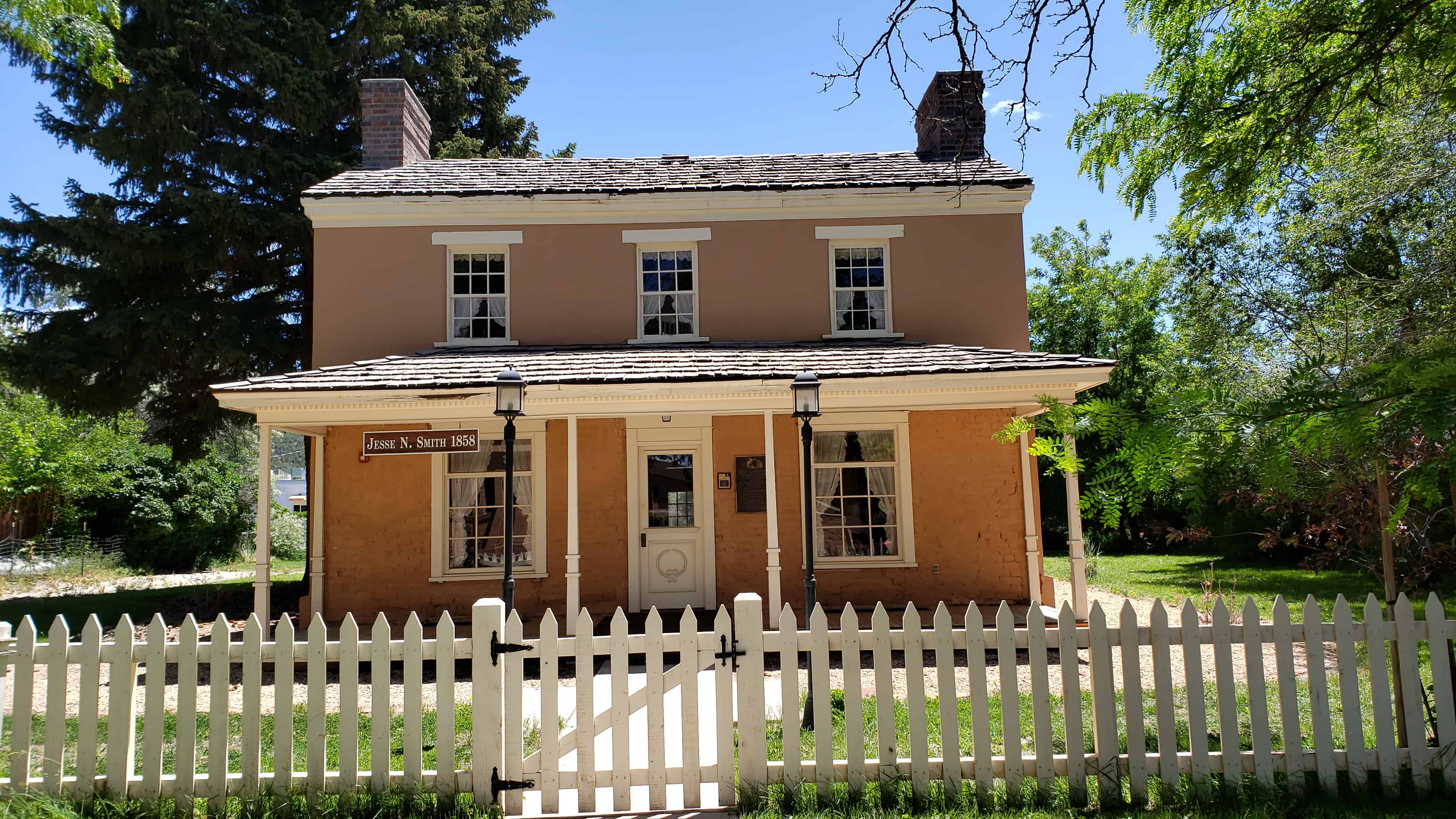
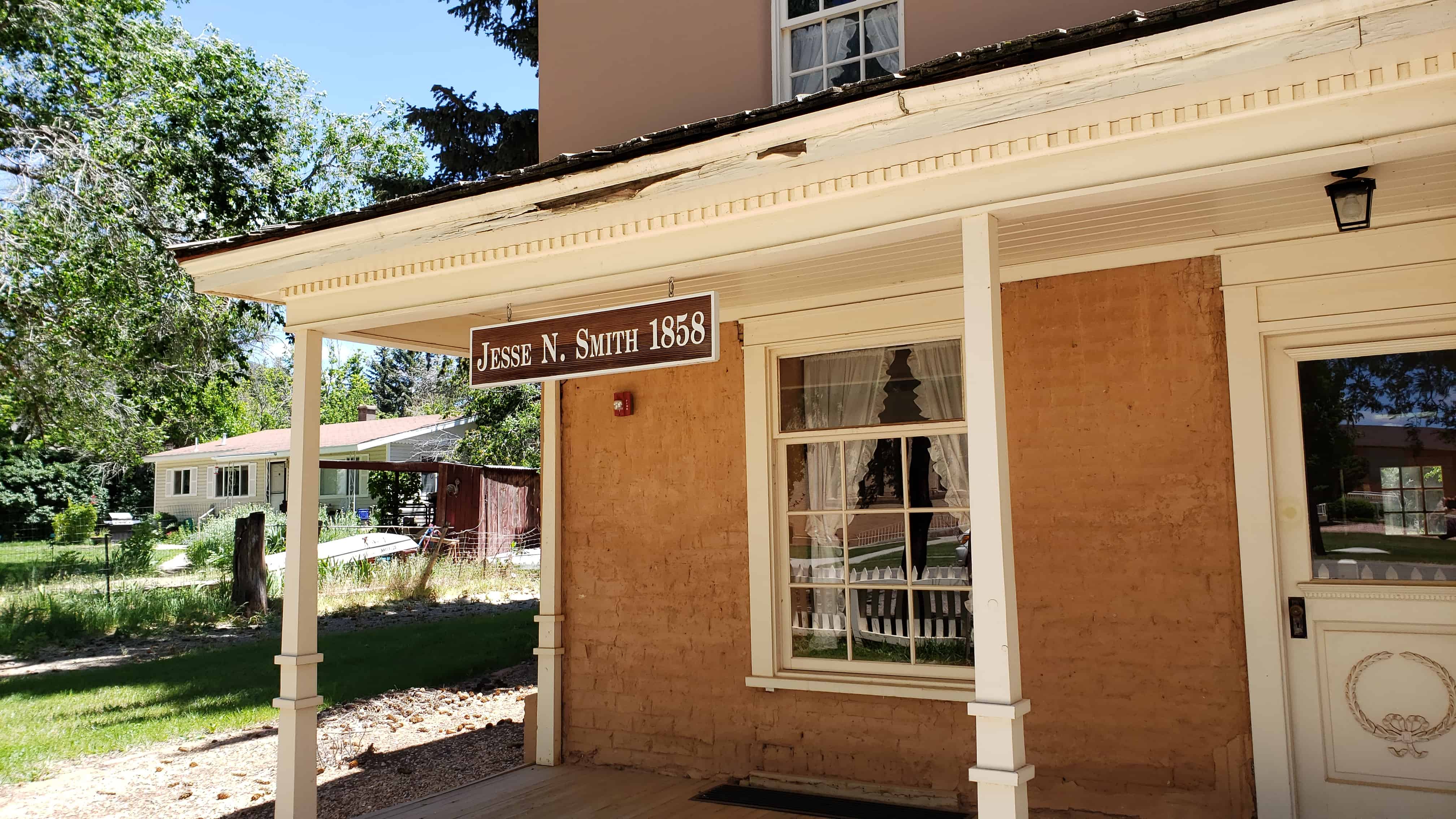
Jesse N. Smith Home
Located in Parowan, Utah – this is the oldest adobe structure in Utah. Jesse also discovered the first lead mine in Utah.
Dedicated to the memory of Mary Aikens Smith and her sons Jesse Nathaniel and Silas Sanford and to the memory of all the pioneer settlers who founded Parowan in 1851.
Constructed 1856-58 by Jesse N. Smith
Restored 1967 by Jesse N. Smith Family Assn.
Plaque provided by National Society Sons of the Utah Pioneers

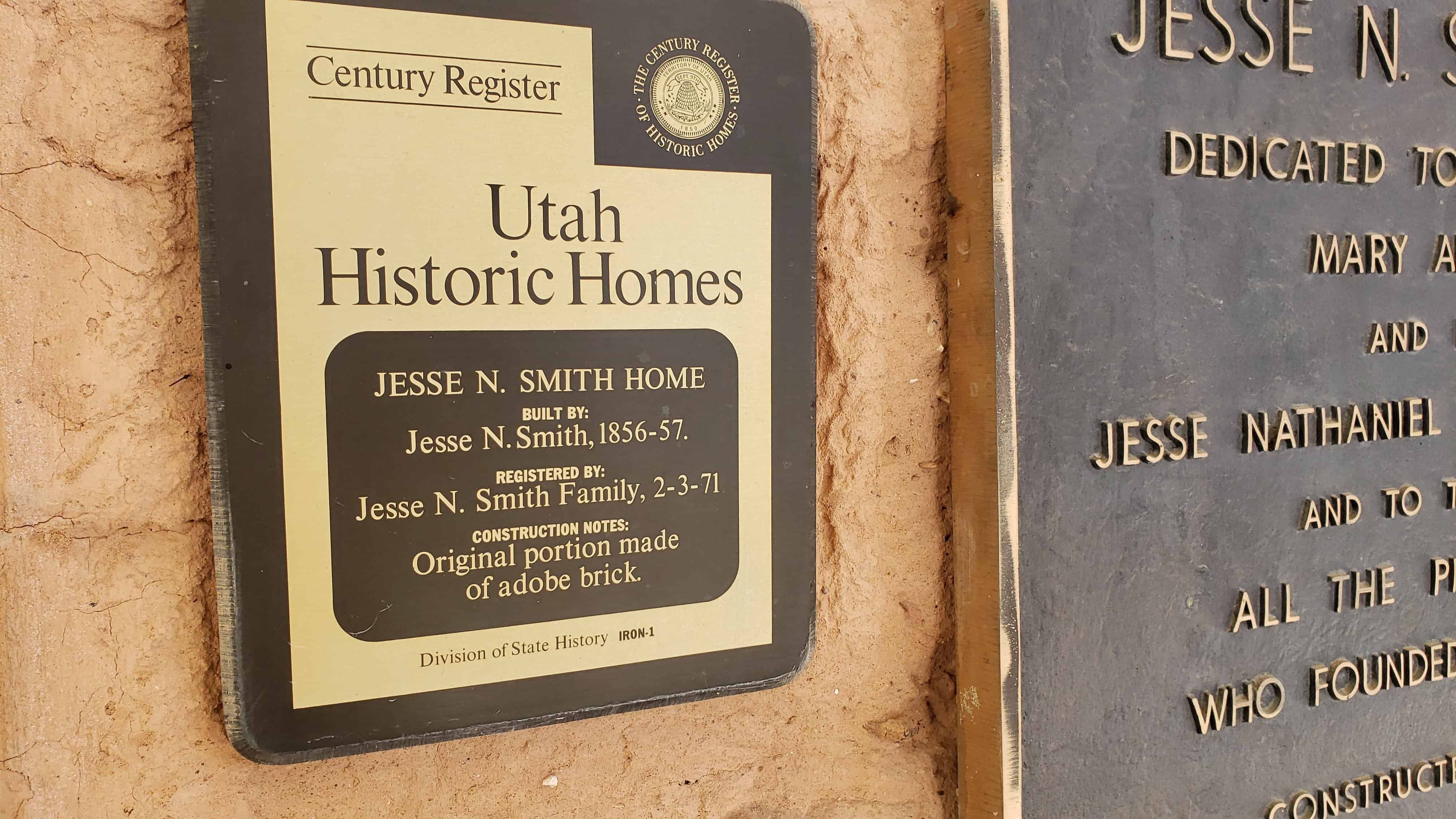
Utah Historic Homes
Jesse N. Smith Home
Built by: Jesse N. Smith, 1856-57
Registered by: Jesse N. Smith Family, 2-3-71
Construction notes: Original portion made of adobe brick
Located at 45 West 100 South in Parowan, Utah and added to the National Register of Historic Places (#75001807) on June 20, 1975. The following is from the nomination form when it was added to the register:
The Jesse N. Smith hone derives its significance from two factors. It is an excellent and well preserved example of an early Mormon Pioneer lone built of stuccoed adobe. Secondly, it was the home of one of Southern Utah and Northern Arizona’s most prominent pioneers, Jesse W. Smith. According to family records,. Jesse N. Smith, born December 2, 1834, in Stockholm, St. Lawrence County, New York, was the youngest cousin of the Mormon founder Joseph Smith. As a boy Jesse lived in Kirtland, Ohio, and in 1839 his family moved to Missouri. Intending to settle at Far West, word of Governor Bogg’s Extermination Order caused a change of plans and eventually the family made their way to Illinois. At the age of thirteen Jesse traveled to Utah with the Parley P. Pratt Company, reaching the Great Salt Lake Valley on September 25, 1847.
Four years after his arrival in Utah, Jesse N. Smith was called to help with the establishment of the Iron Mission. Making his home in Parowan, lie soon became one of the leaders in church and political affairs in Southern Utah. In 1855. at the age of 21, he served as a Representative to the Territorial Legislature and three years later was elected Mayor of Parowan.
It was during this period that work on his Parowan home began. In his journal Smith notes that in the spring of 1856 he made adobes to build a house. The June 28, 1856, journal entry offers some insight into the hazards of house-building, “While quarrying rock for my house, I fell and rolled down the face of a steep cliff, some thirty feet, wrenching one of ray ankles so severely that I could not work for several days. The events of the Utah War in 1857 delayed completion of the home until March 1858 when, the Smith diary notes, the family moved into the new home. In 1860 Jesse was called to serve a mission to Denmark. Me proved a successful missionary and in May 1862 he assumed responsibility as President of the Scandinavian Mission and served in that position for more than two years before returning to Utah in 1864. Pour years later in 1868 he was again called to return to Scandinavia where once more he presided over the Scandinavian Mission until 1870. Although Jesse N. Smith had provided his family with a modest but comfortable home, the five years lie was away from his family serving missions for the Church were undoubtedly a difficult time for his two wives and their children. One of his daughters, recalling the Christmas of 1862 in their Parowan home, wrote: “All of us children hung up our stockings. We jumped up early in the rooming to see what Santa had brought, but there was not a tiling in them. Mother wept bitterly. She want to her box and got out a little apple and cut it in tiny pieces and this was our Christmas.
Nine months before Jesse Smith returned home from his first Scandinavian mission his second wife Margaret died leaving two children to be raised by his first wife Emma. Jesse married a total of five wives and fathered 44 children. The Smiths remained in Parowan until 1878 when Jesse was called to help lead the Mormon colonization efforts in Arizona. Apparently this call came in response to a controversy which developed between the Smith brothers, Silas S. and Jesse H. , and William U. Dame in something of a power struggle for the position of ecclesiastical leader in Iron County. Jesse N. Smith was nominated as Stake President in a meeting presided over by Brigham Young but was not sustained by a majority of Saints because of objections to Smith’s arbitrary and tyrannical nature. In the end Dame was successful in becoming Stake President and the Smith brothers left for other areas Silas to the San Juan Mission and ultimately the San Luis Valley of Colorado and Jesse to the Little Colorado Region of Arizona. Here he did become the spiritual leader of the Snowflake area serving as President of the Fast Arizona Stake from 1879 to 18S7 and President of -the Snowflake Stake from 1887 to his death in 1906. In addition to his church responsibilities, Smith was President of the Arizona Cooperative Mercantile Association. He was active in railroad construction and a leading figure in water development on the Little Colorado River. His 1 1/2 story brick home in Snowflake, Arizona, was listed on the National Register in 1972.
In the Forward to the 1970 edition of The Journal of Jesse Nathaniel Smith, Charles Peterson outlines the significant role of Smith in Utah and Mormon history:
Of all the Latter-day Saint causes of Smith’s time none were more important than those of the gathering to Zion and the extension of the physical bounds of the Kingdom. Like many Mormons, Jesse N. Smith devoted his life to these causes, but, more than most of his contemporaries, he played roles which cut across the full fabric of the Mormon experience. He was in the truest sense of a church leader one who may be classified accurately as a field commander. Directing the preaching and convert migration of a proselyting mission abroad and directing the water development and homebuilding of long-term colonizing missions in the West, he at once shared the attitudes and experiences of the church’s top hierarchs, yet worked, aspired, and sacrificed with rank-and-file pioneers in opening new frontiers.
Style and significance:
During the period from June, 1856, to March, 1858, Jesse N. Smith constructed, a two-story home facing the town square in Parowan. He quarried the rock, baked the adobes and, hewed the timber himself. The original building consisted of four rooms, two upstairs and two downstairs and a rock basement. As originally constructed, it an “I” house, i.e., it had a one-room deep rectangular plan, two stories high. In 1865, Smith built a lean-to addition on the rear of the house consisting of four rooms, two upstairs and two downstairs. The front façade of the house was also plastered at that time, In 1879, Smith sold the house to a William Bentley for $2,700. For several years the building was unoccupied, but in 1962 the Jesse N. Smith Family Association purchased the building and began to raise money for its restoration. This restoration took place between 1967 and 1969 and cost $12.000. The roof was repaired and the adobe walls, which because badly eroded due to the defective roof, were repaired and replastered. The front wall on the main story had lost its original plaster, but because of protection from the long front porch the wall had not eroded and was left with its adobe bricks exposed.
In profile, the building is a modified saltbox. Though the lean-to was added later, its roof has the same pitch as the original gabled roof.
The front façade of the house is symmetrically arranged with a centered door and two large flanking windows on the lower floor and three double-hung sash 6 over 6 paned windows on the upper floor, The windows have wooden lintels and sills and are trimless. The cornice is moulded and skirted and returns slightly along the gable-ends. Two gable-end chimneys complete the Federal style façade. The large porch which extends along “the entire length of the home is supported by decorative lathe-turned posts. The porch entablature is simple and the porch soffit is boxed. The porch is believed to have been added later, as was the front door with its glass pane and the small window to the right of the door. The windows on the lower floor are fixed with transoms above. These, too, were doubtlessly modified after initial construction.
The interior features the same room arrangement as the original plan, The staircase is centralized and in the lean-to. There are six fireplaces in the home.
Despite the few alterations that have been made to the building, its general form-and simple detailing continue to reflect its 1856-58 construction and styling. It is typical of old Colonial American houses and is thought to be the oldest home in Southern Utah.