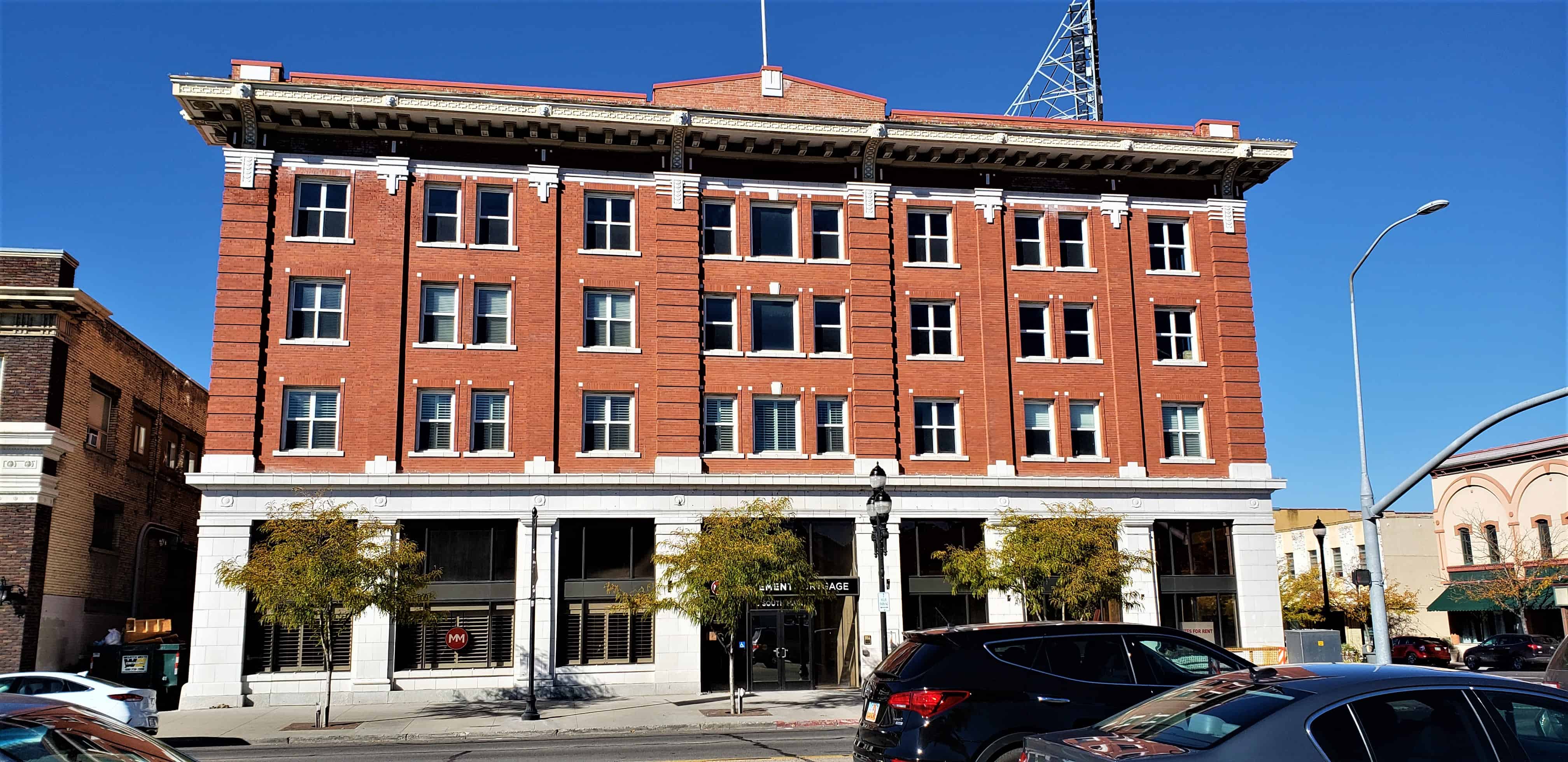
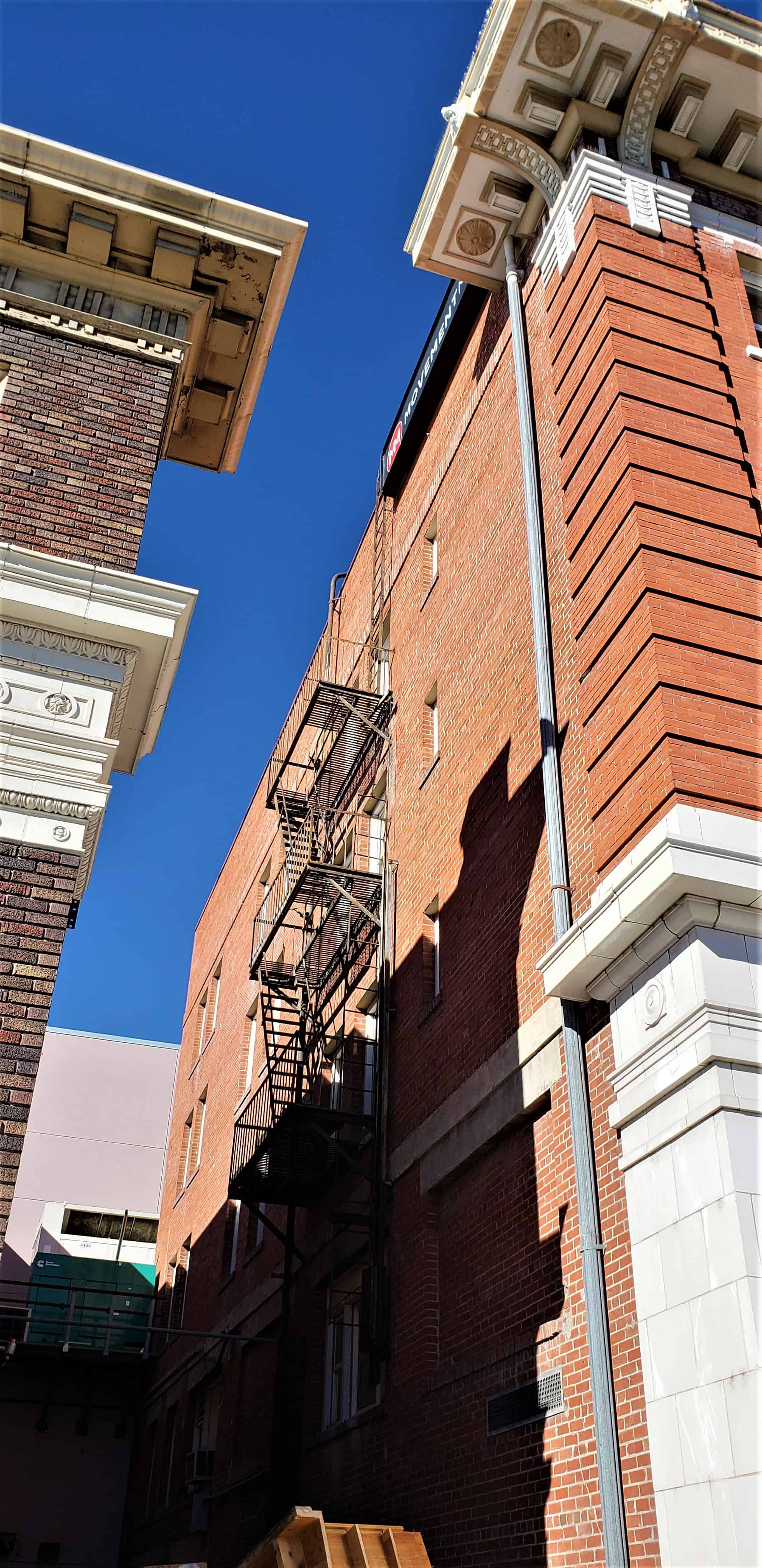
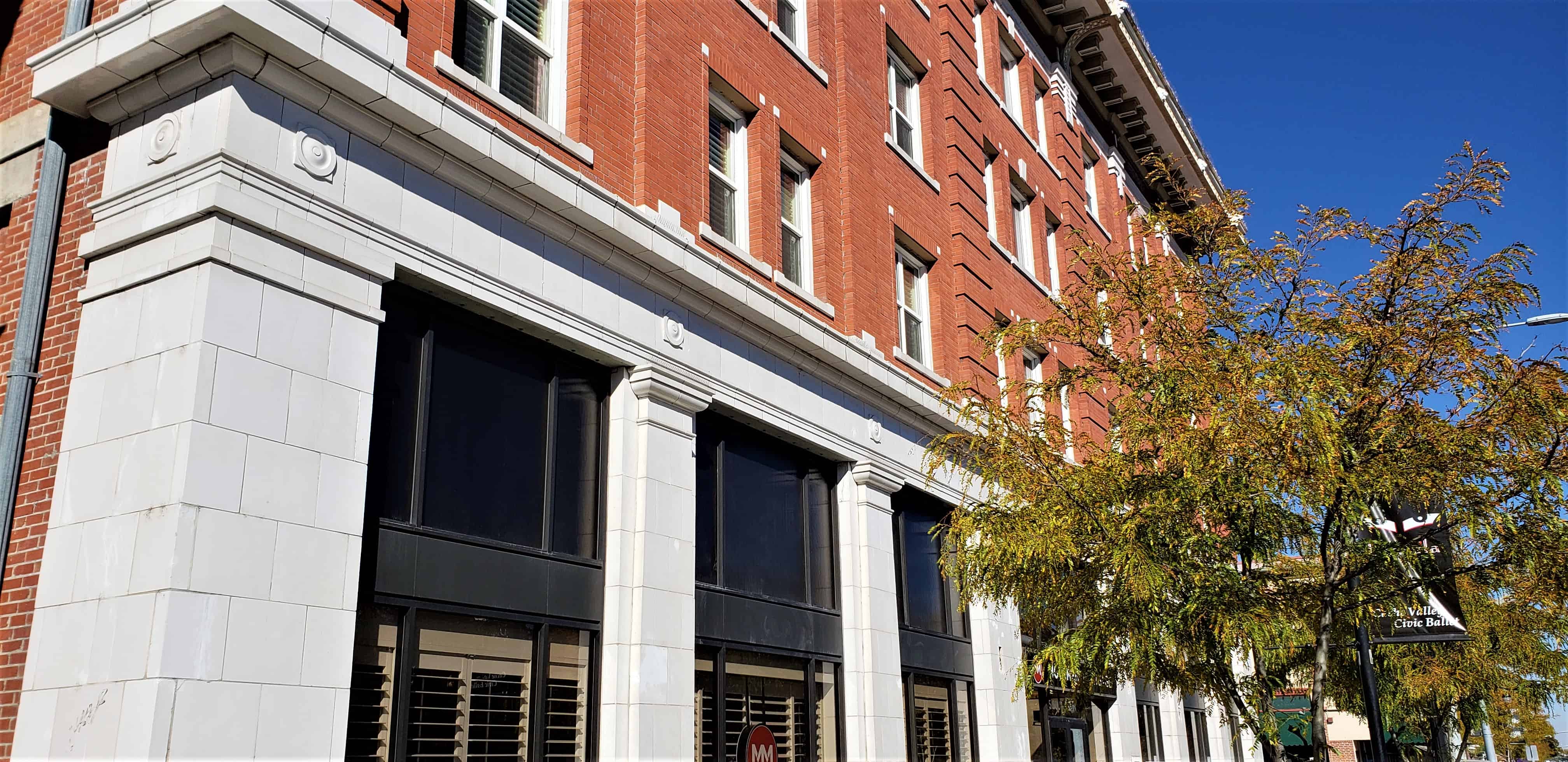
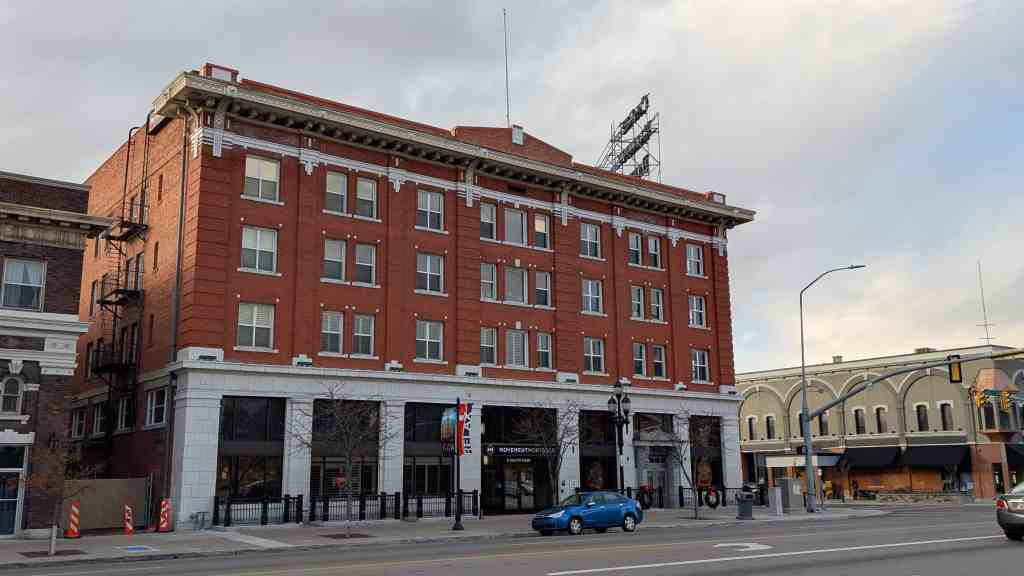
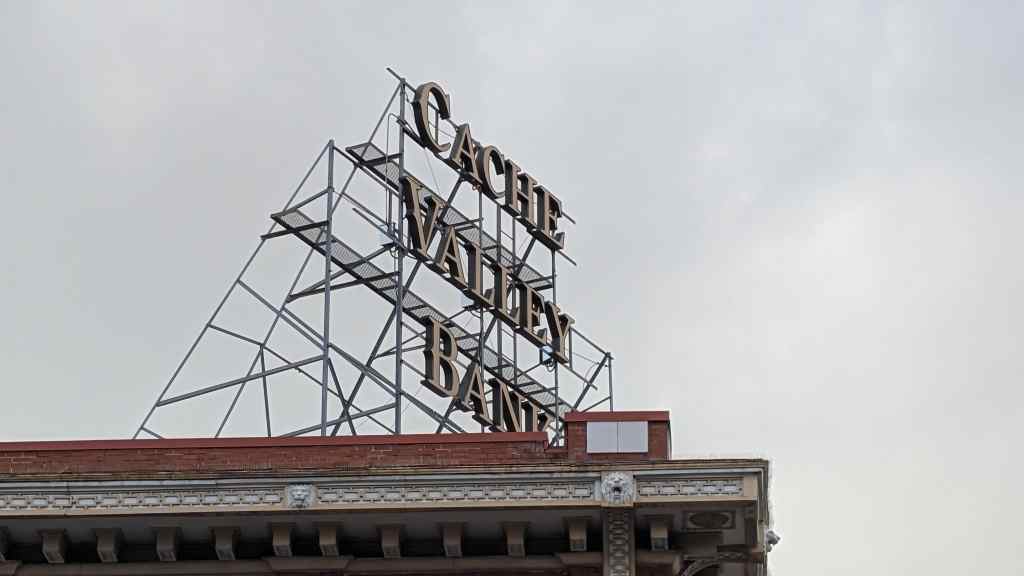
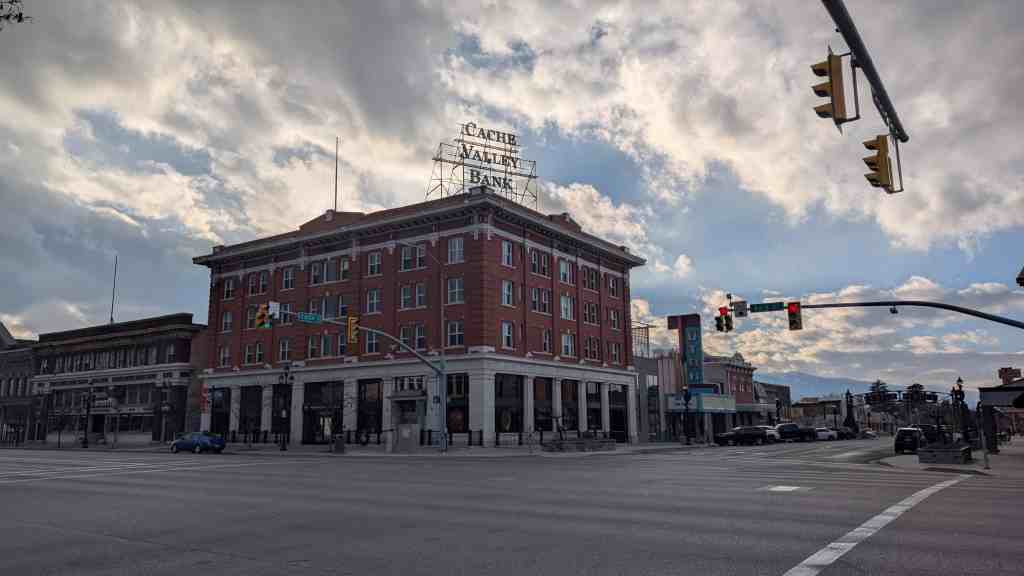
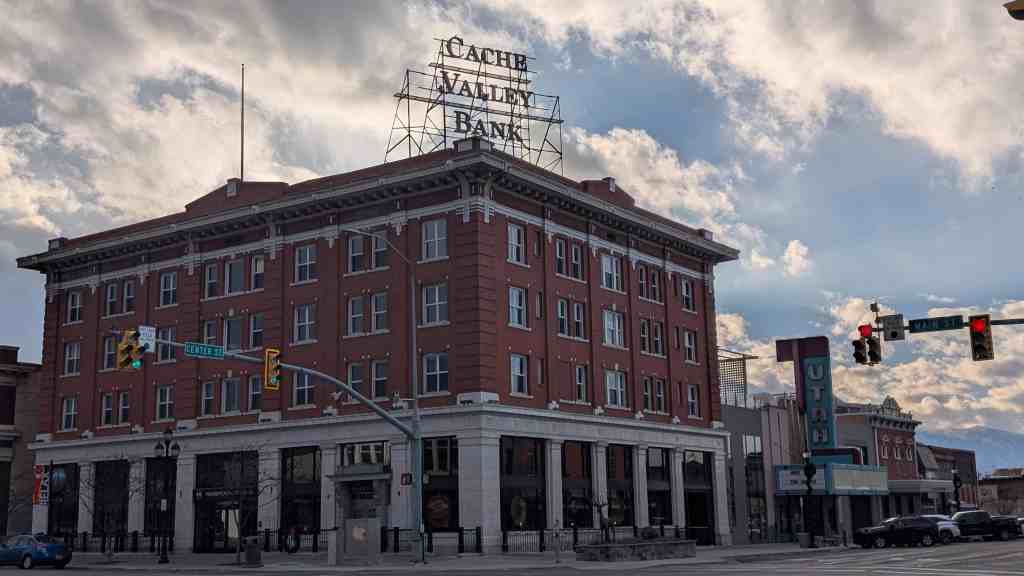
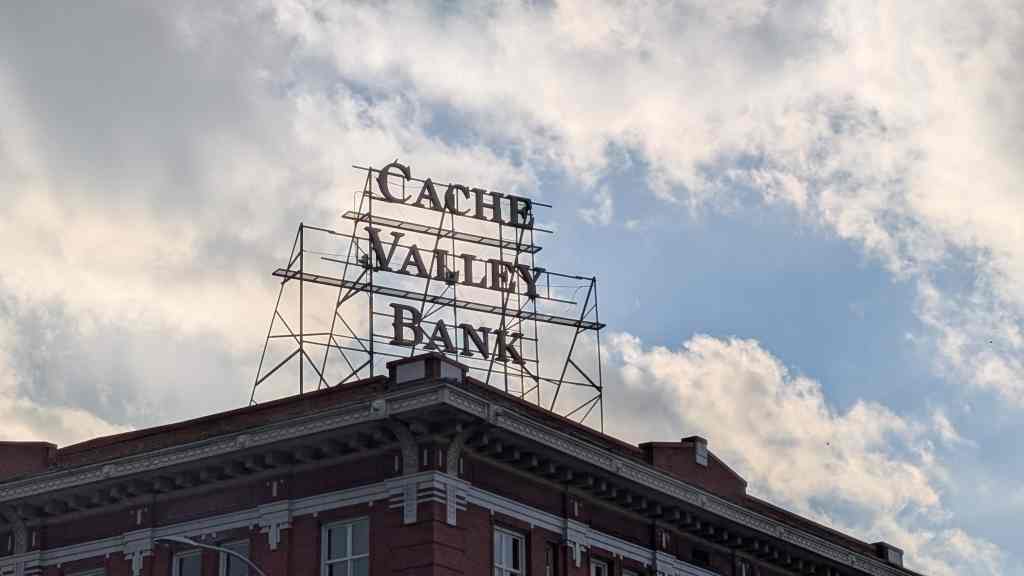
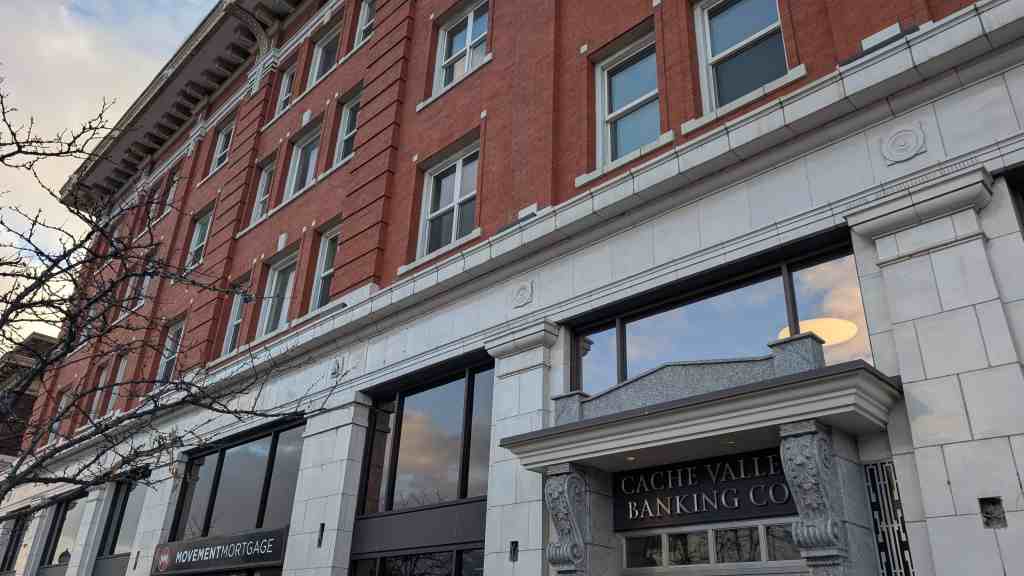
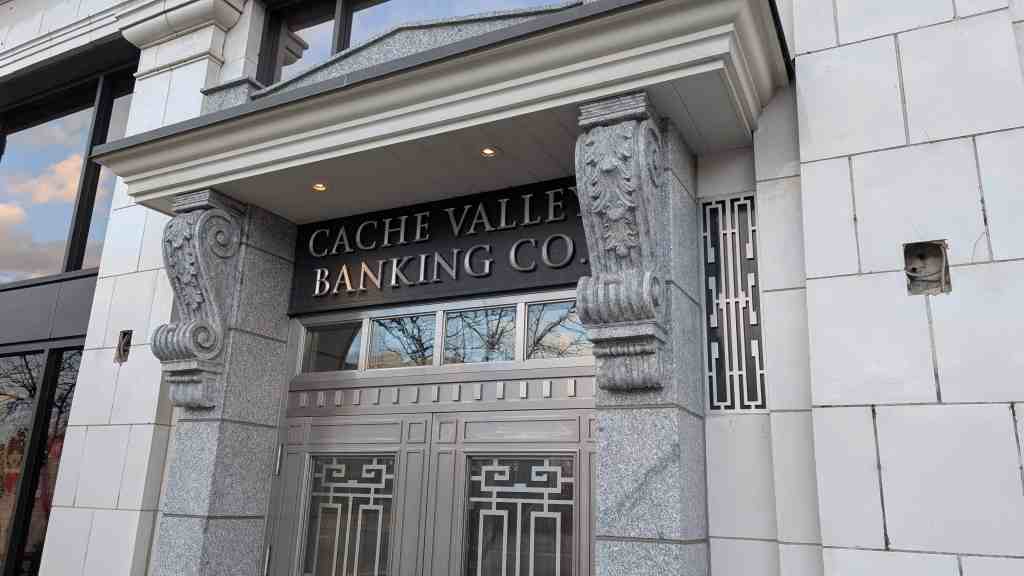
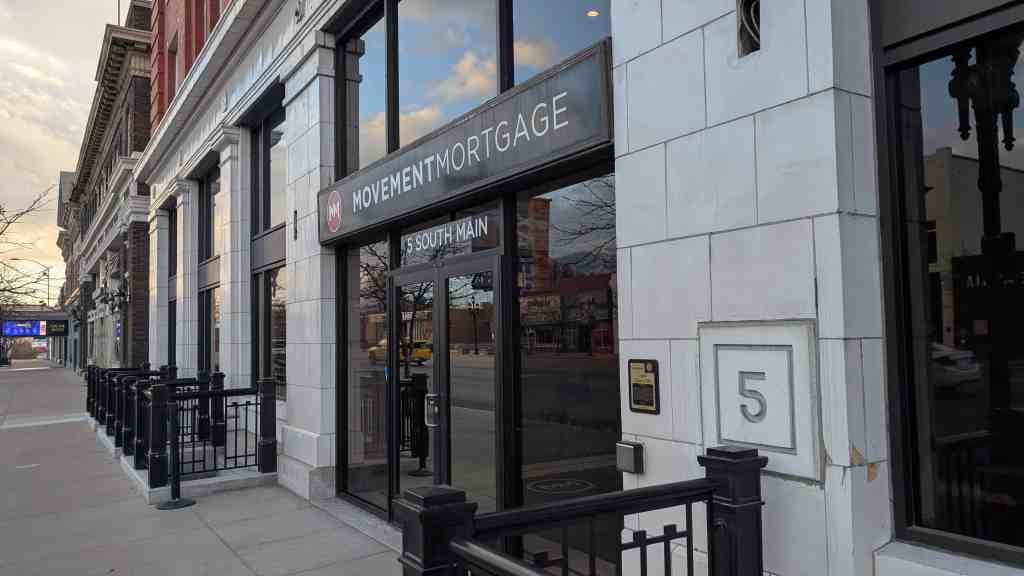
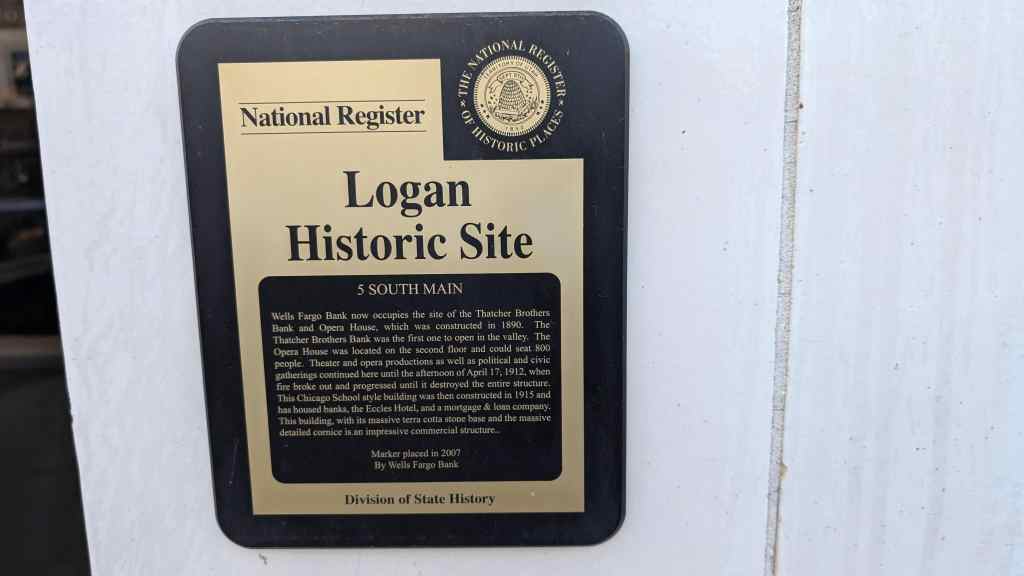
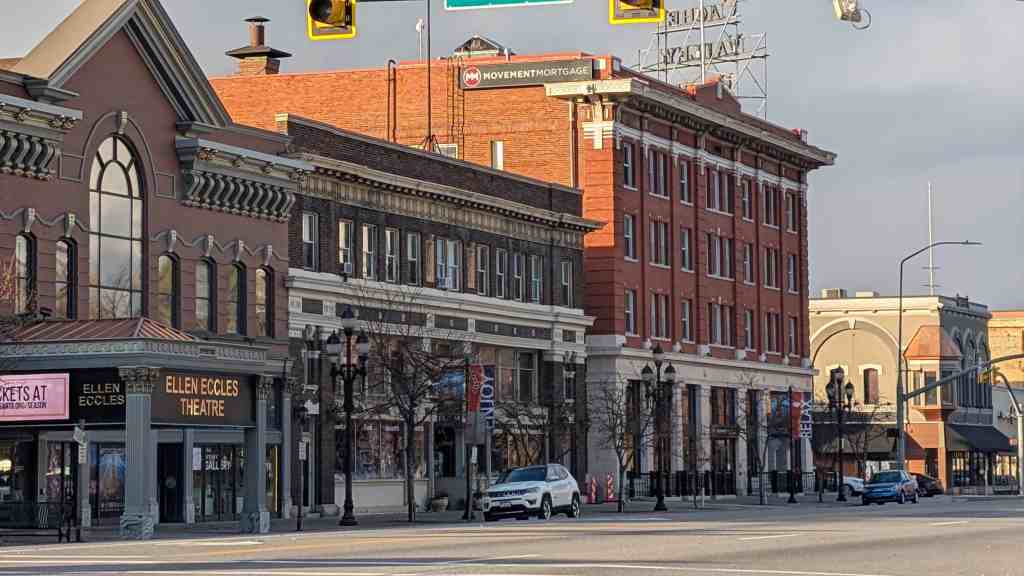
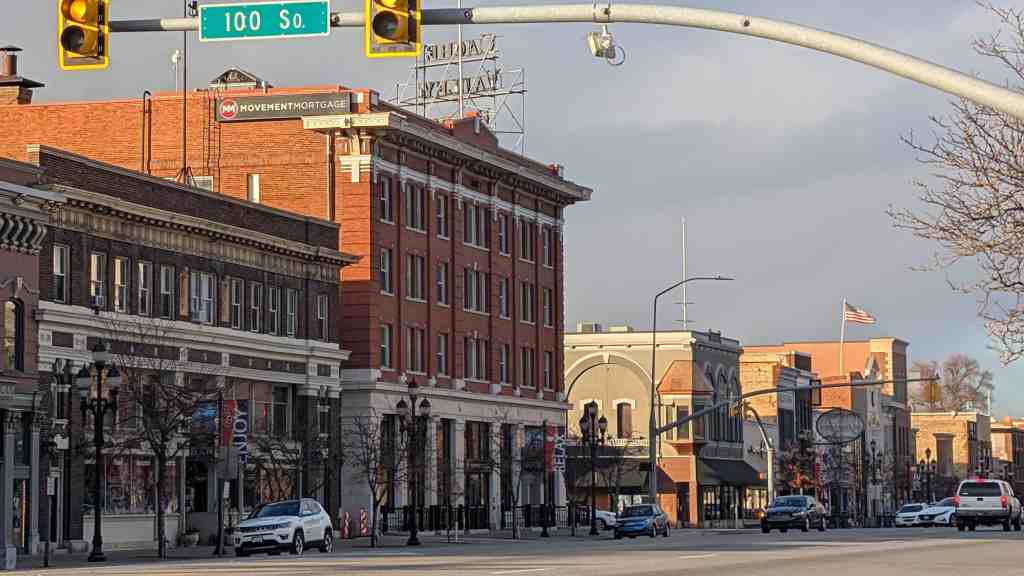
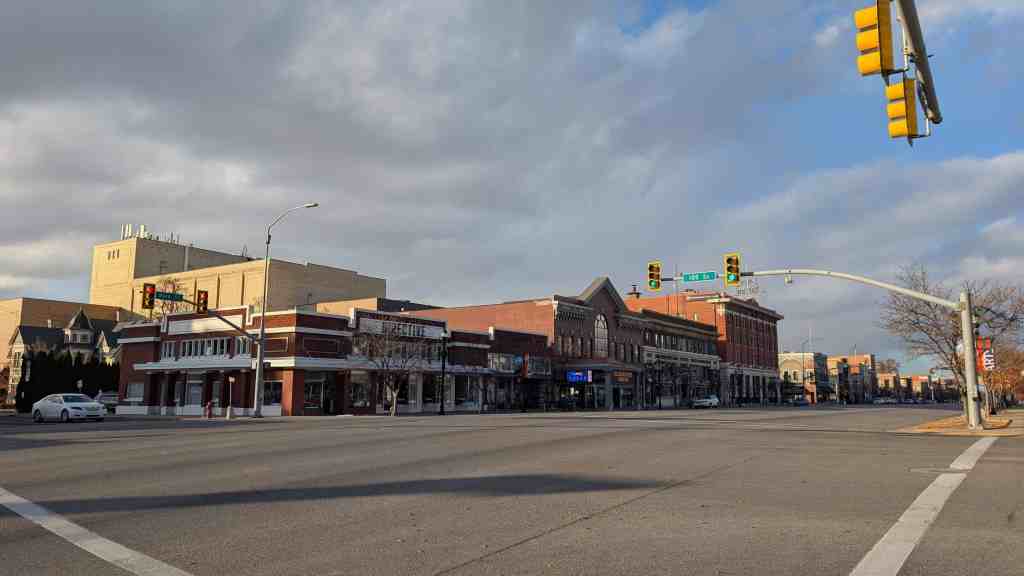
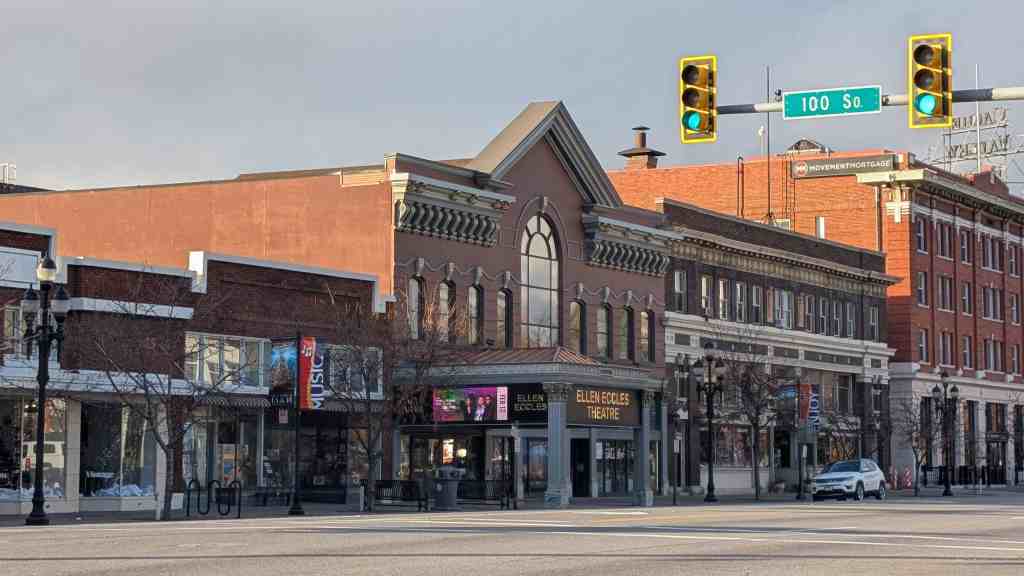
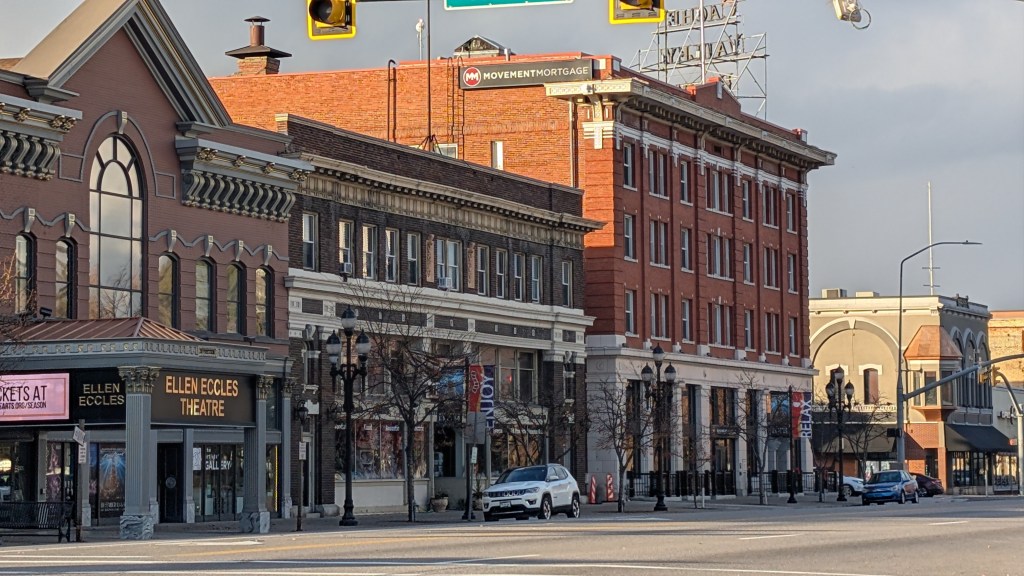
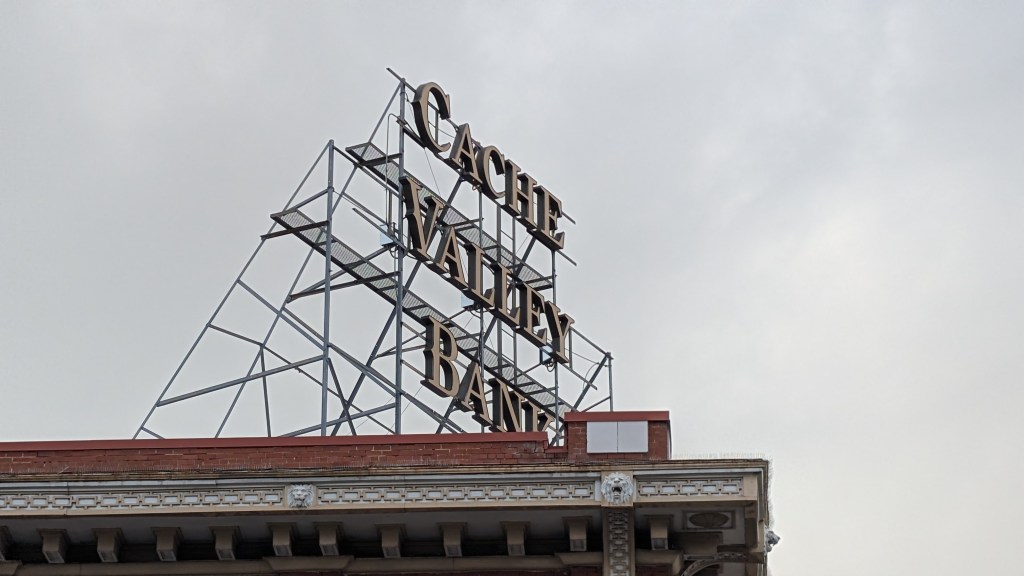
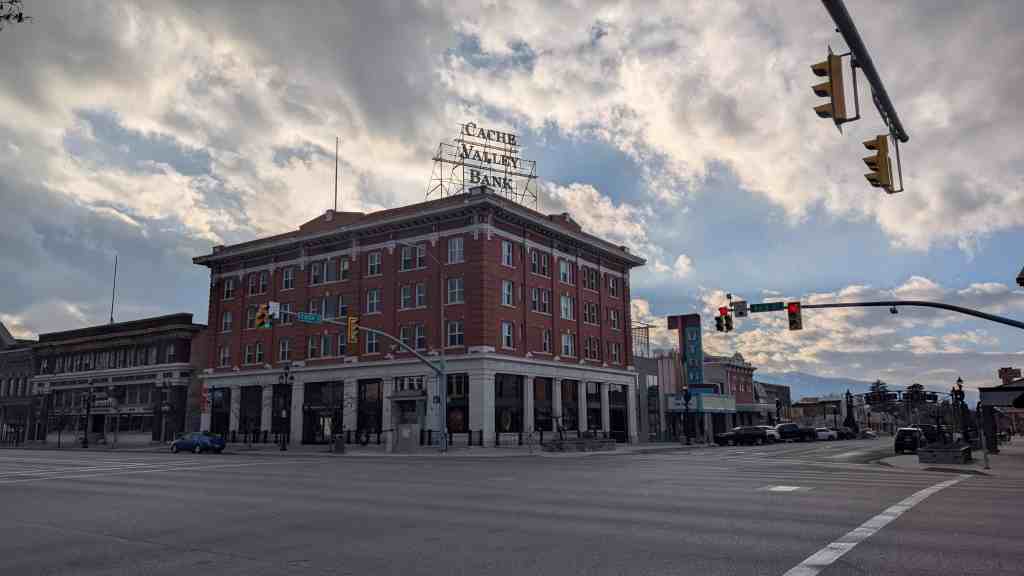
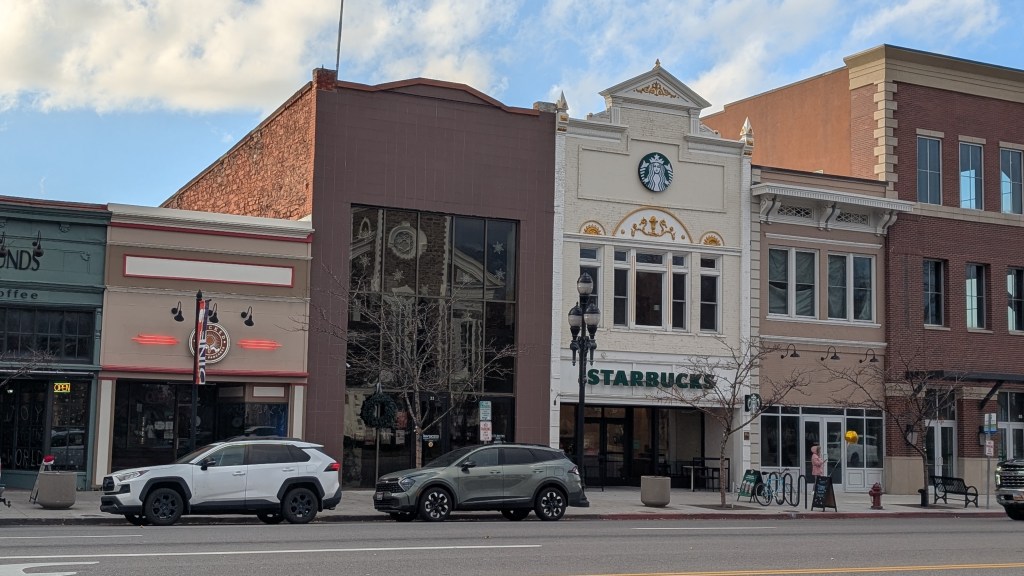
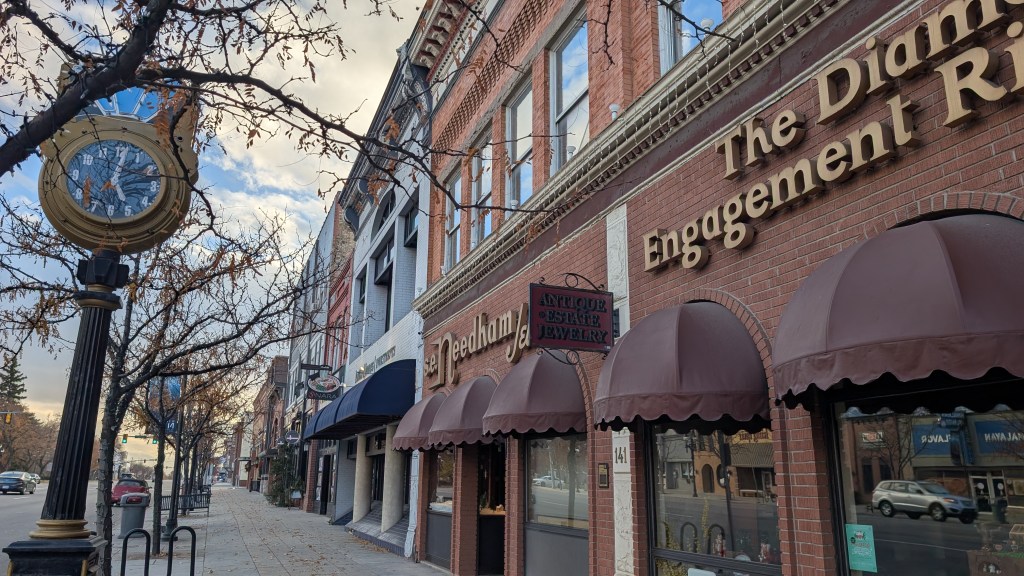
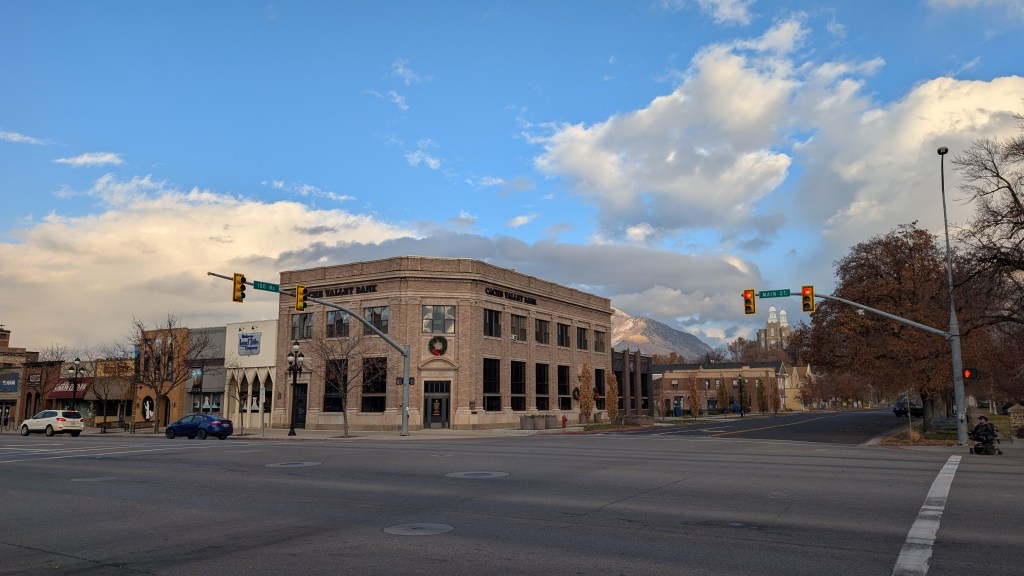
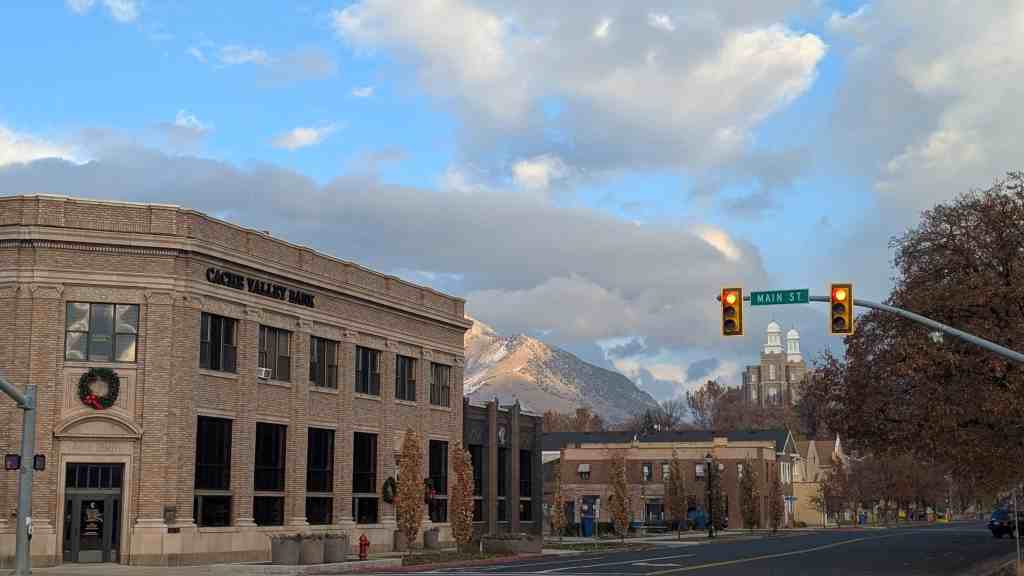
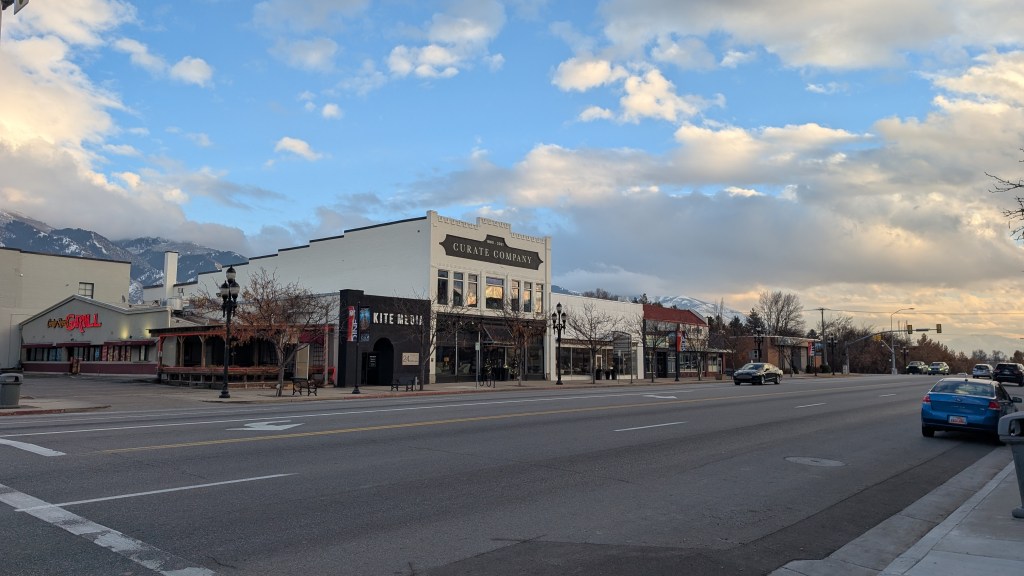
Wells Fargo Bank now occupies the site of the Thatcher Brothers Bank and Opera House, which was constructed in 1890. The Thatcher Brothers Bank was the first one to open in the valley. The Opera House was located on the second floor and could seat 800 people. Theater and opera productions as well as political and civic gatherings continued here until the afternoon of April 17, 1912, when fire broke out and progressed until it destroyed the entire structure. This Chicago School style building was then constructed in 1915 and has housed banks, the Eccles Hotel, and a mortgage & loan company. This building, with its massive terra cotta stone base and the massive detailed cornice is an impressive commercial structure
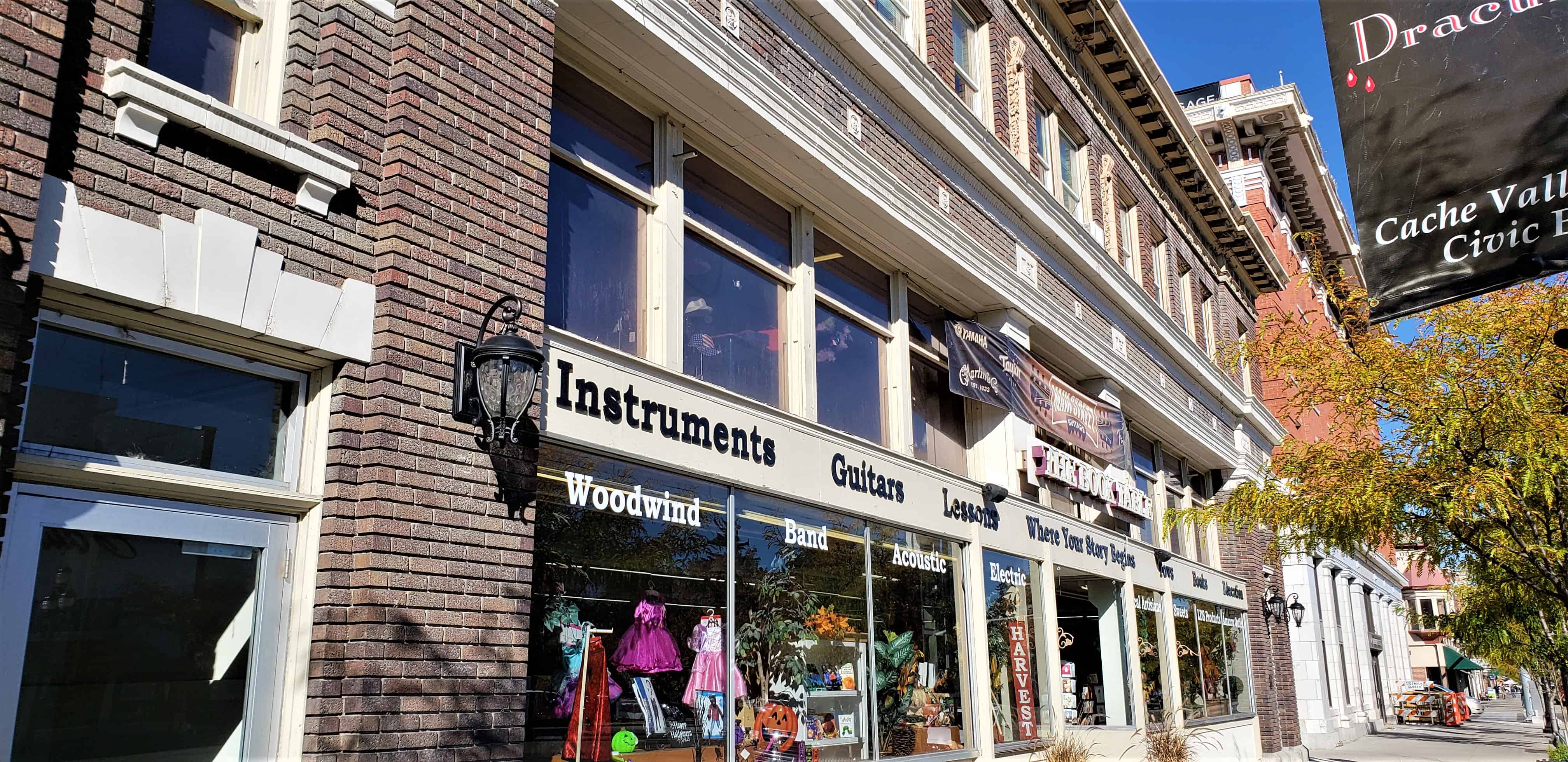
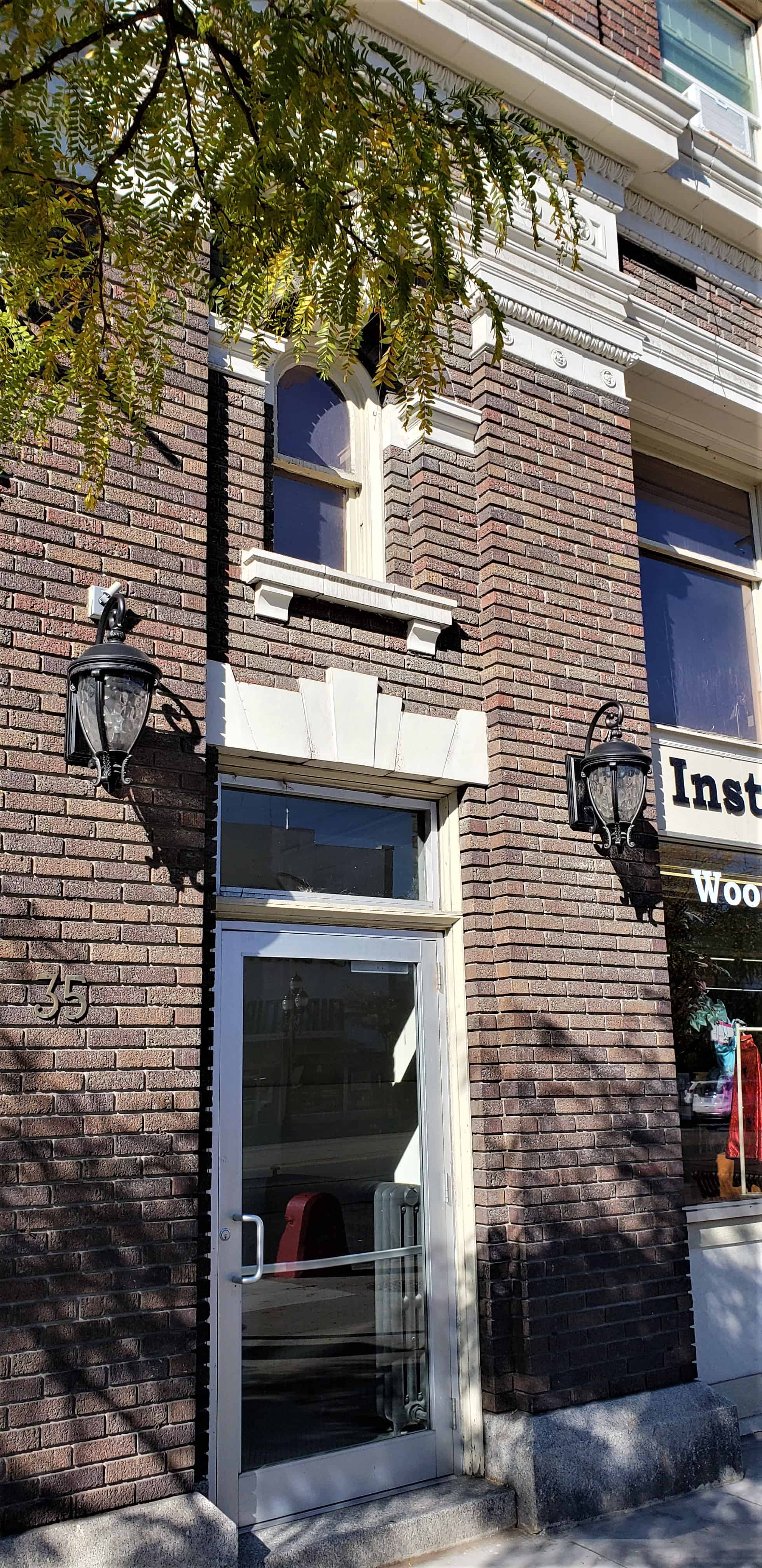
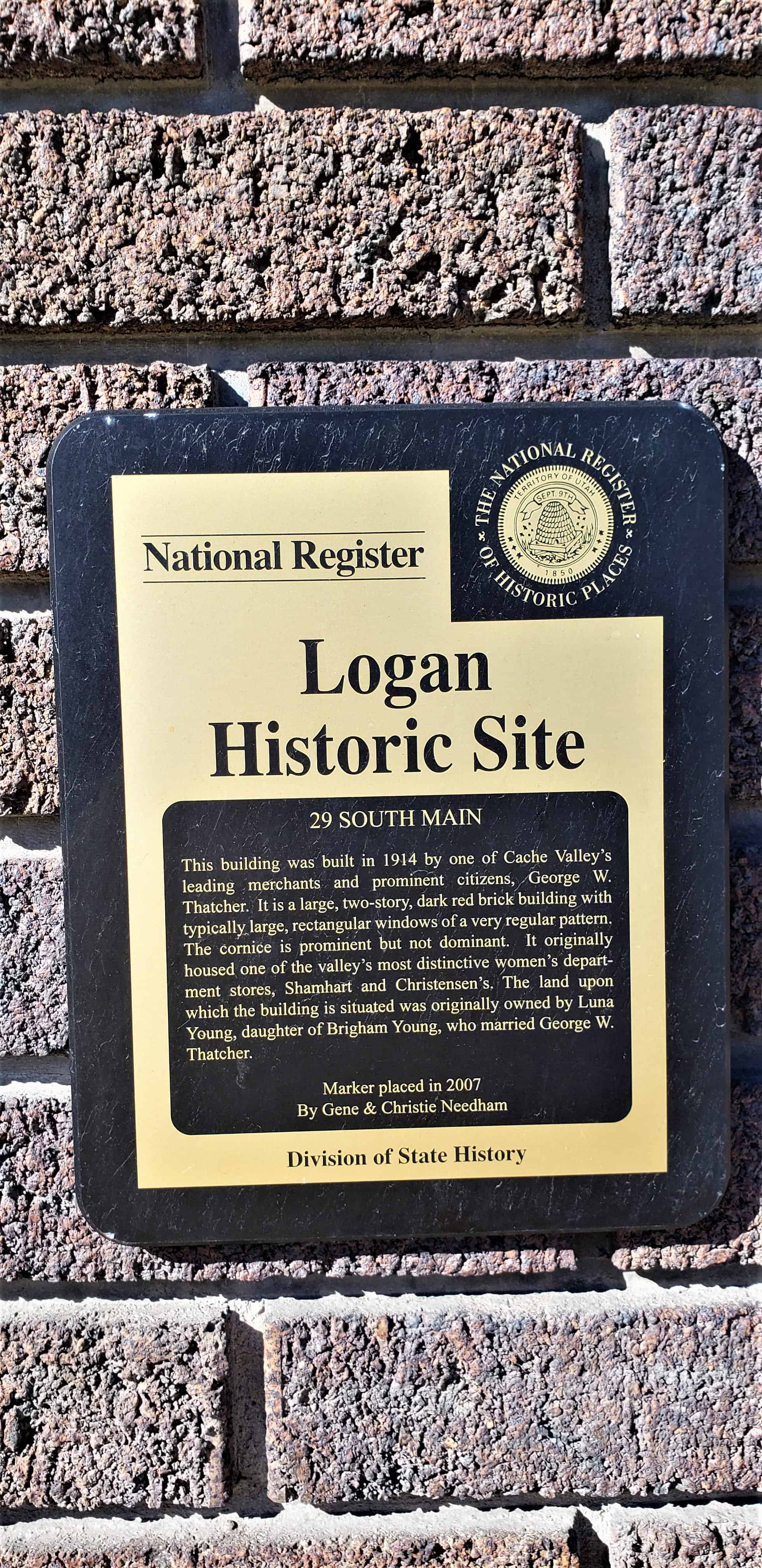
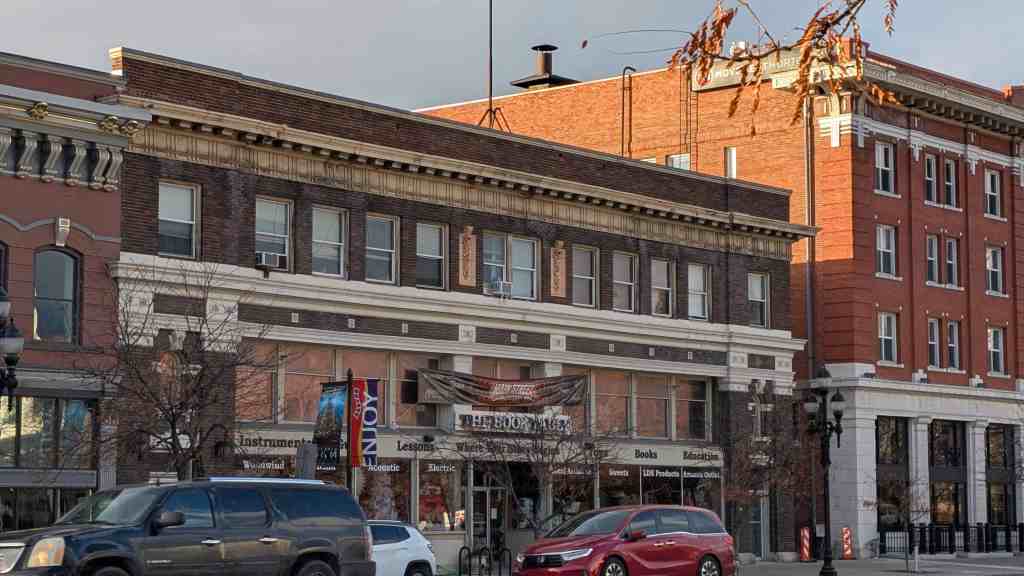
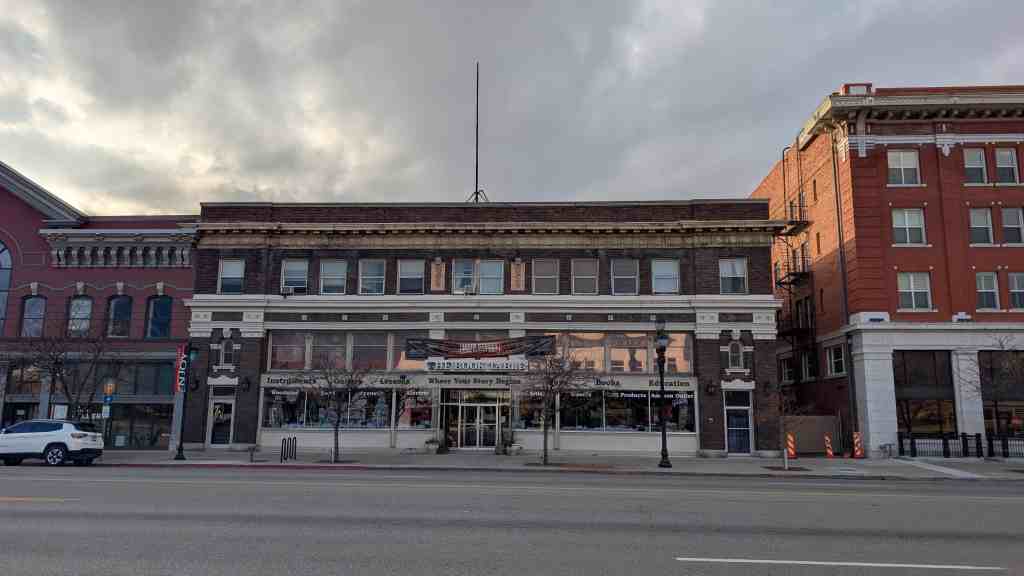
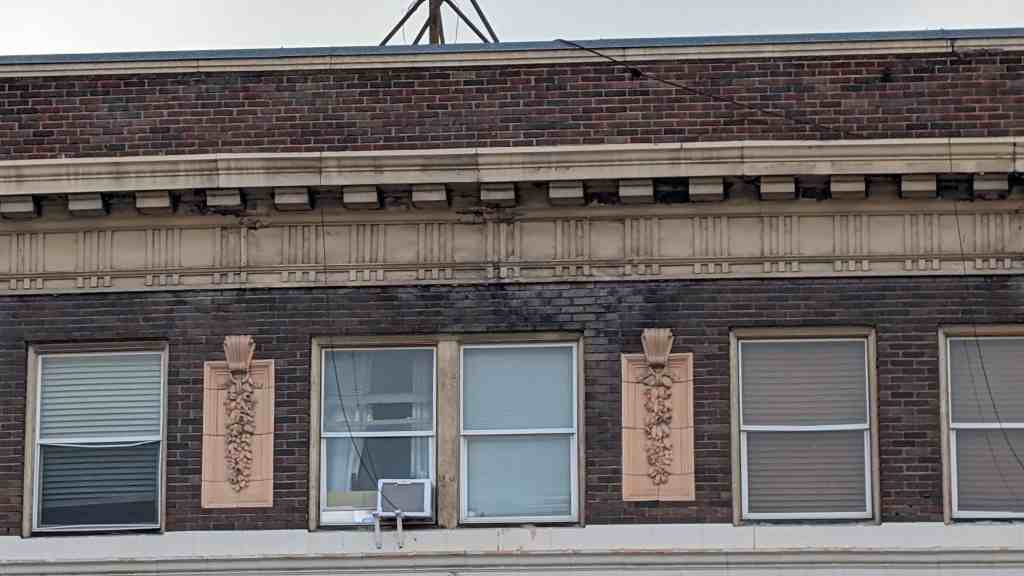
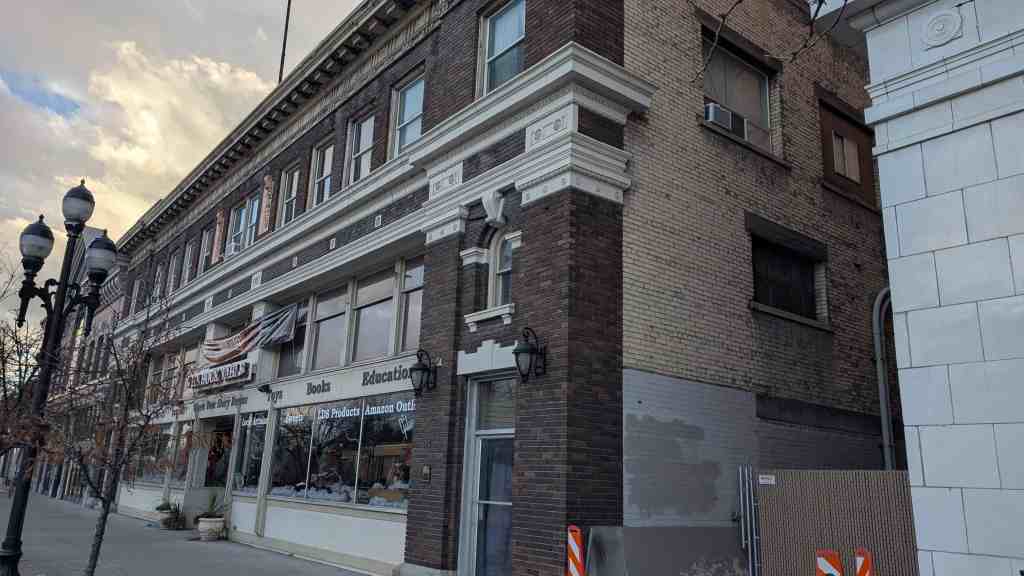
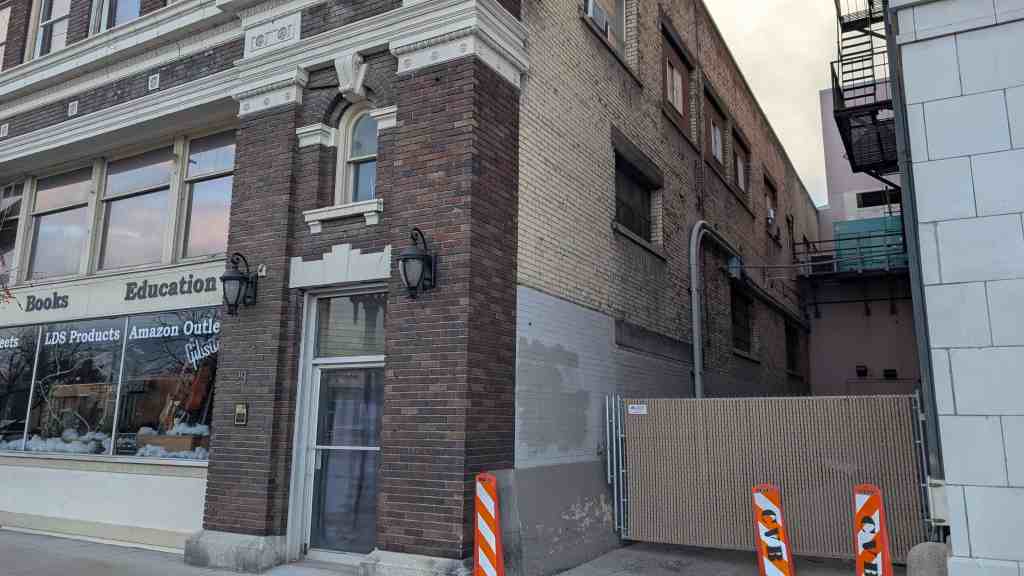
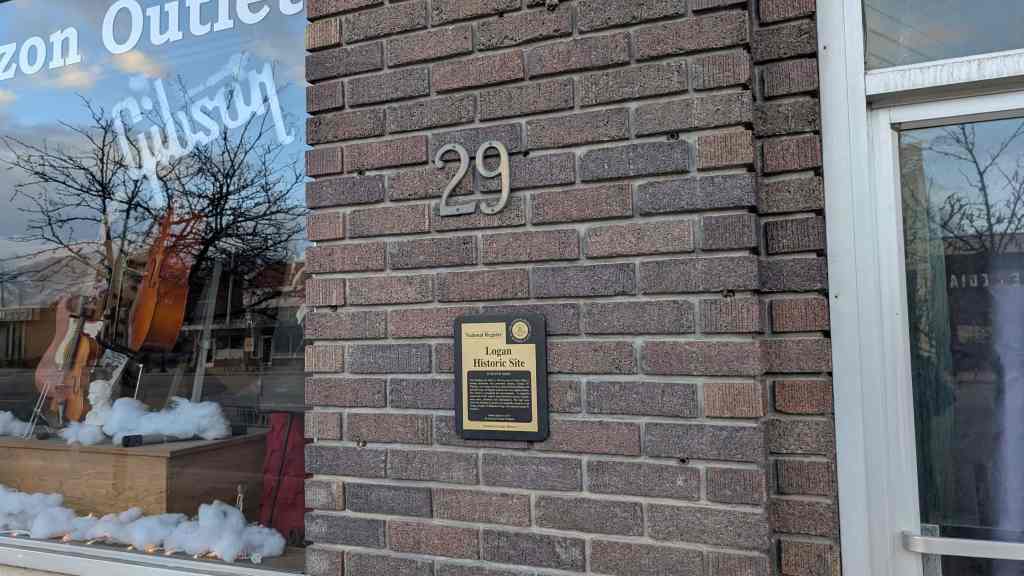
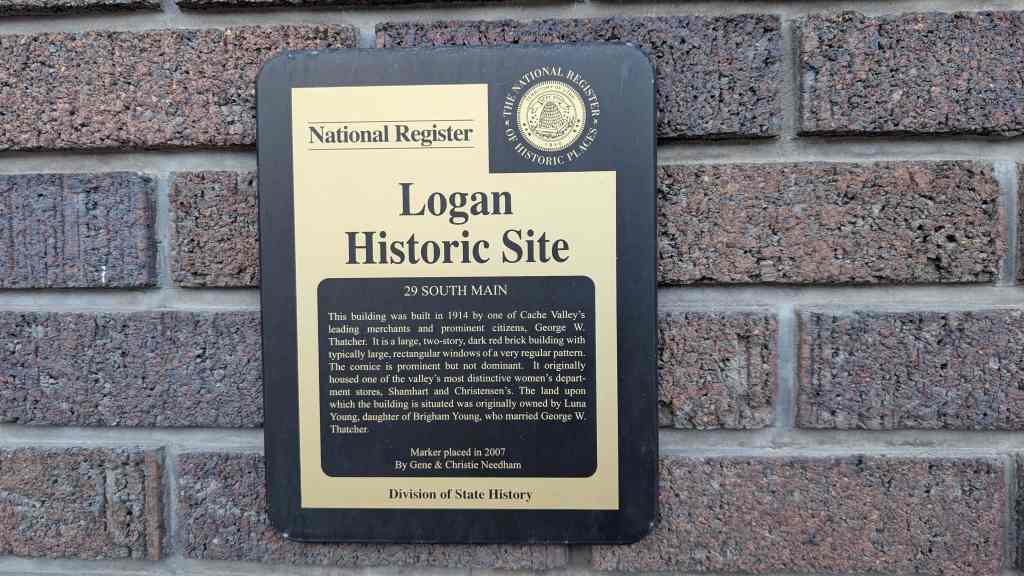
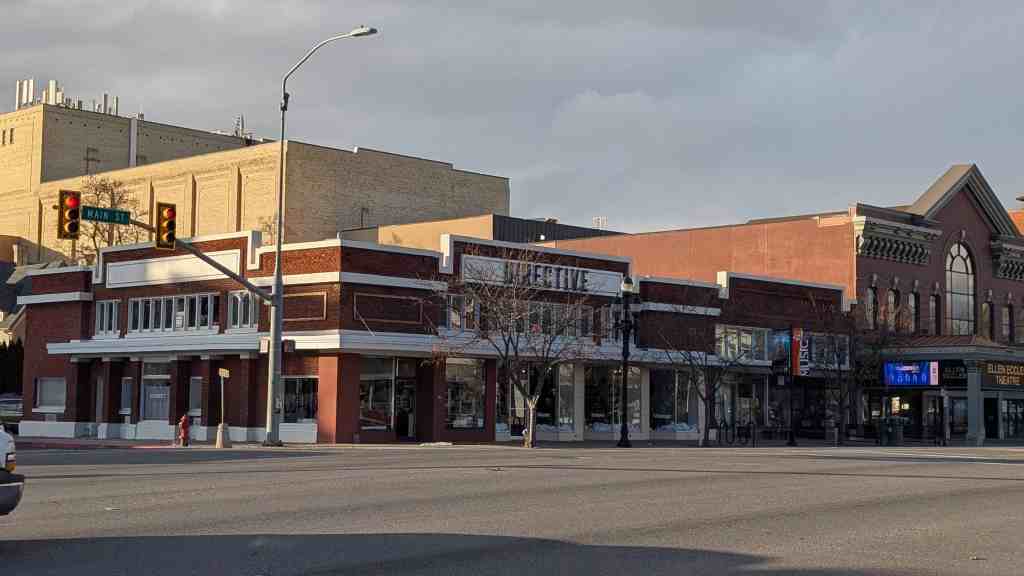
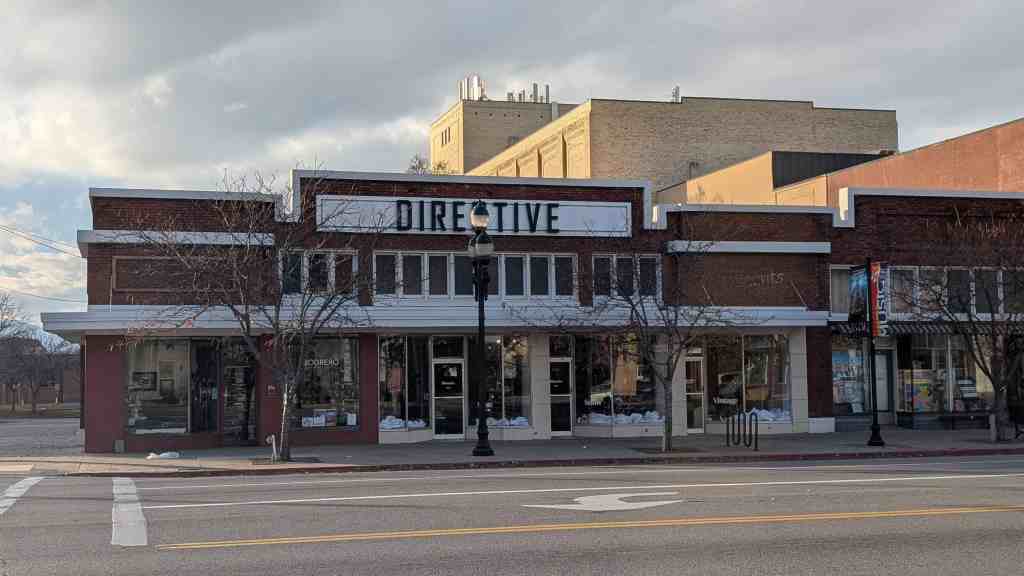
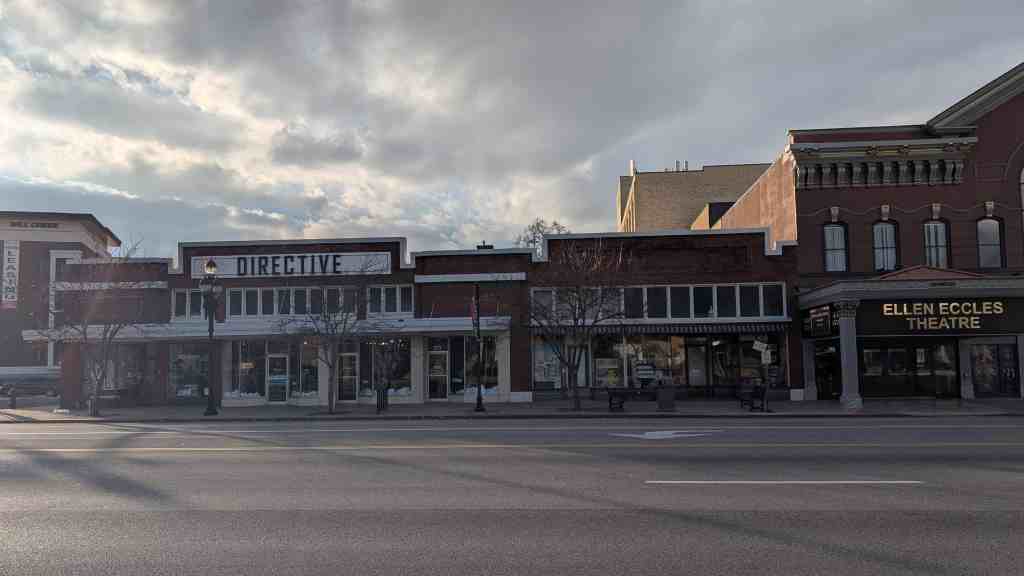
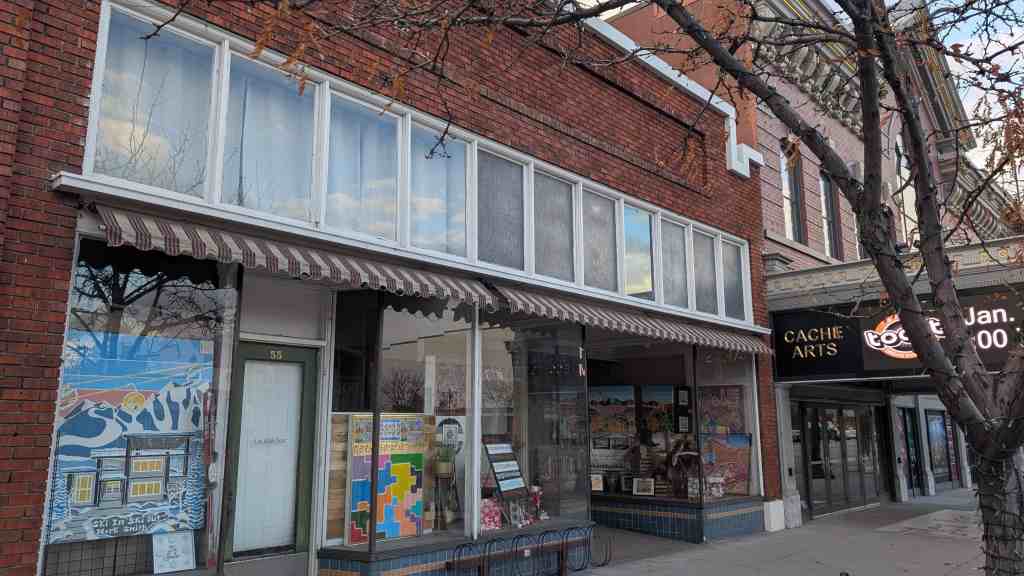
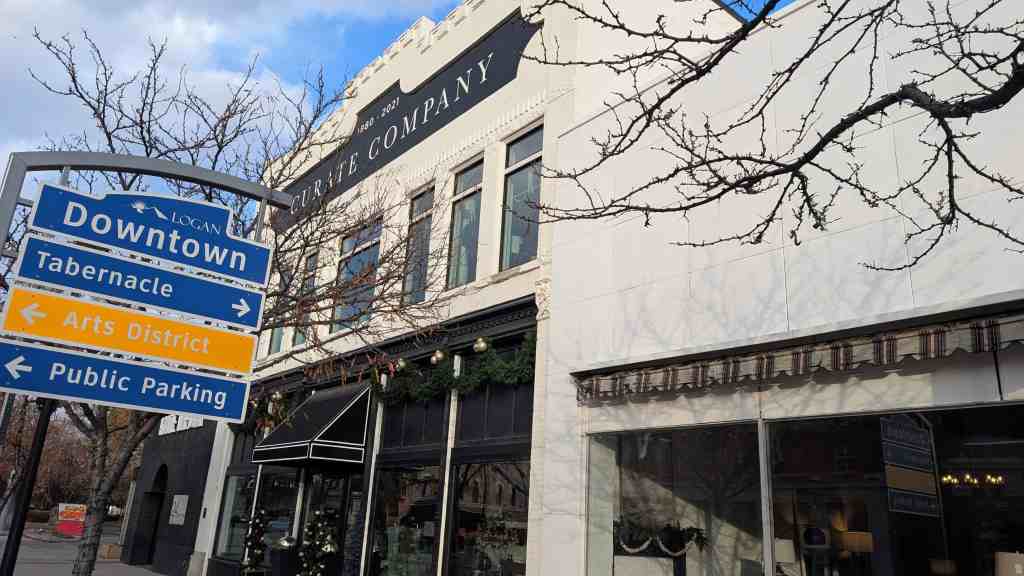
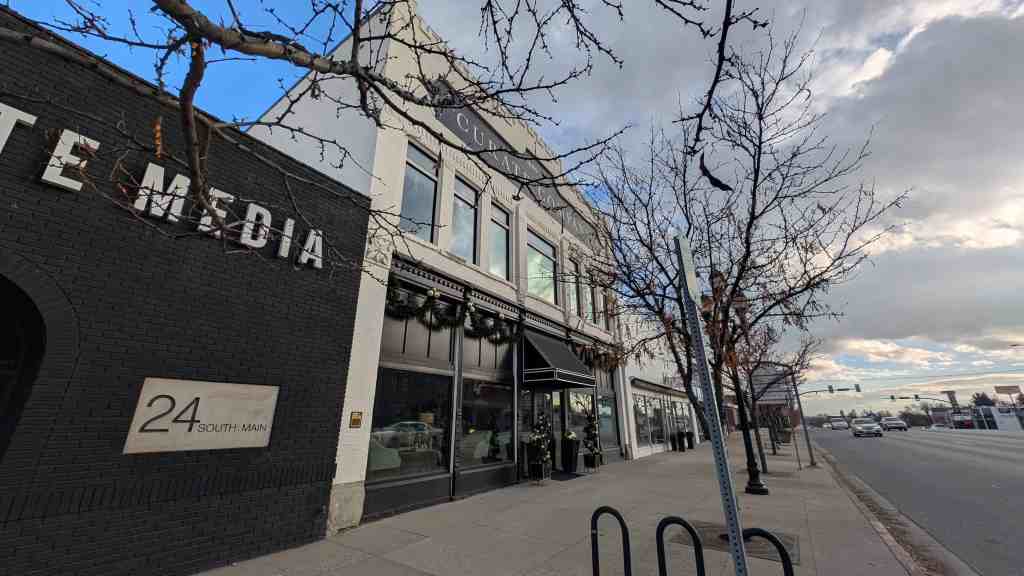
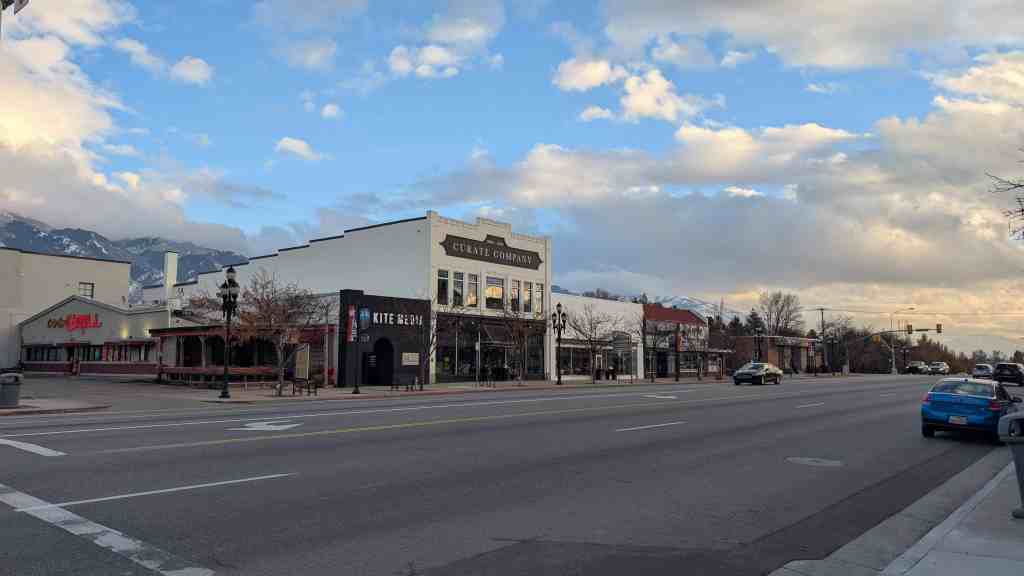
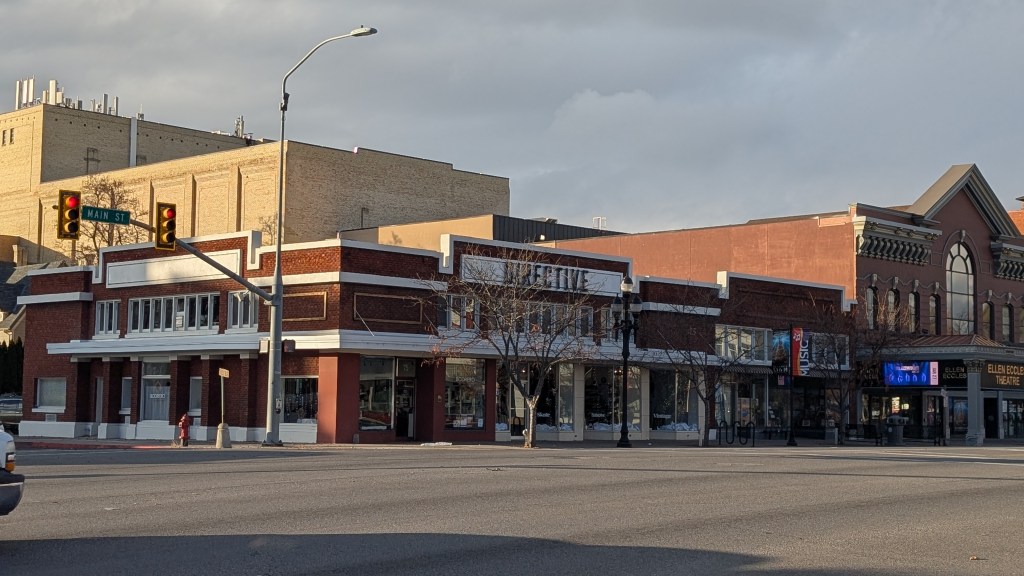
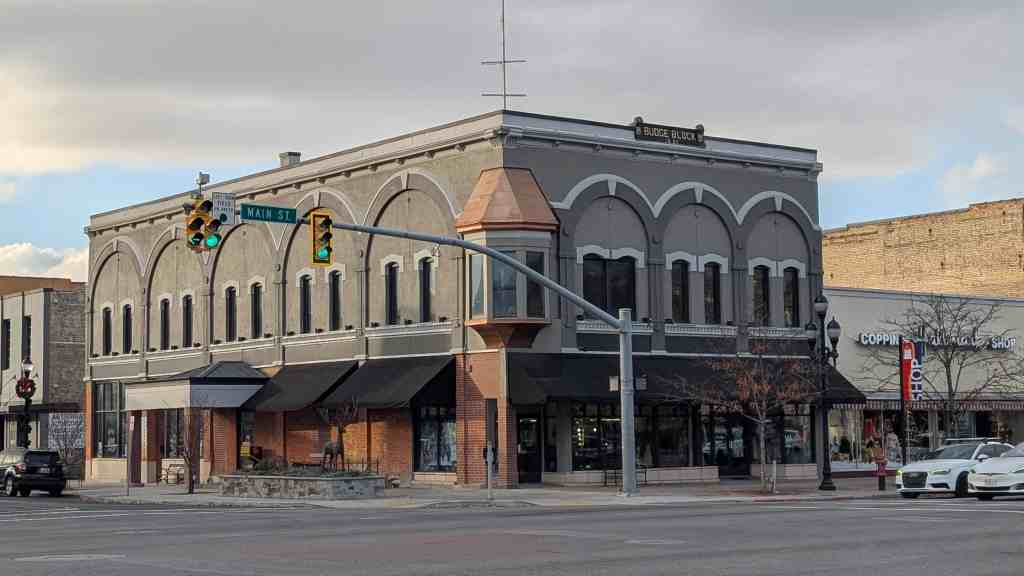
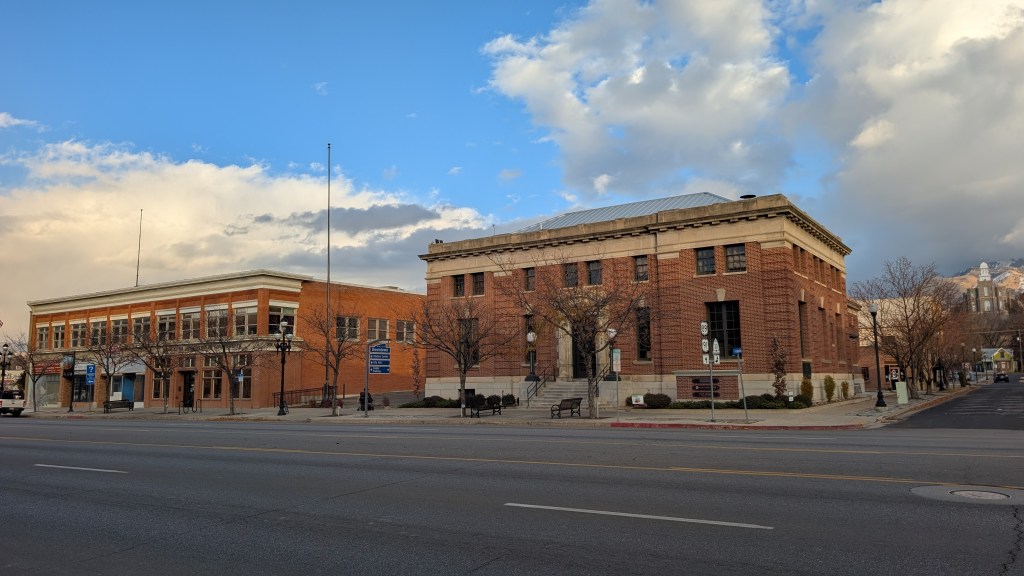
This building was built in 1914 by one of Cache Valley’s leading merchants and prominent citizens, George W. Thatcher. It is a large, two-story, dark red brick building with typically large, rectangular windows of a very regular pattern. The cornice is prominent but not dominant. It originally housed one of the valley’s most distinctive women’s department stores, Shamhart and Christensen’s. The land upon which the building is situated was originally owned by Luna Young, daughter of Brigham Young, wo married George W. Thatcher.
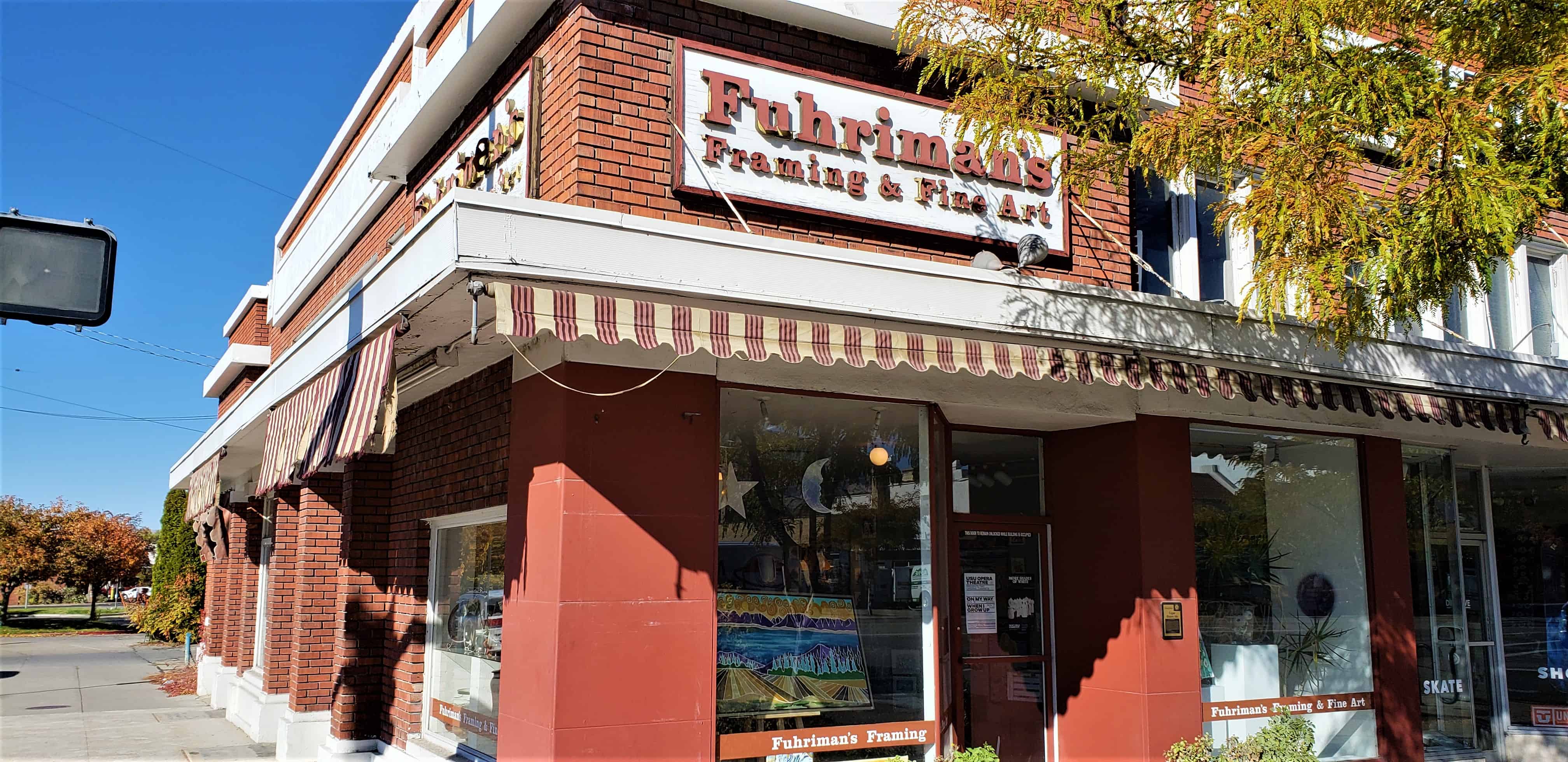
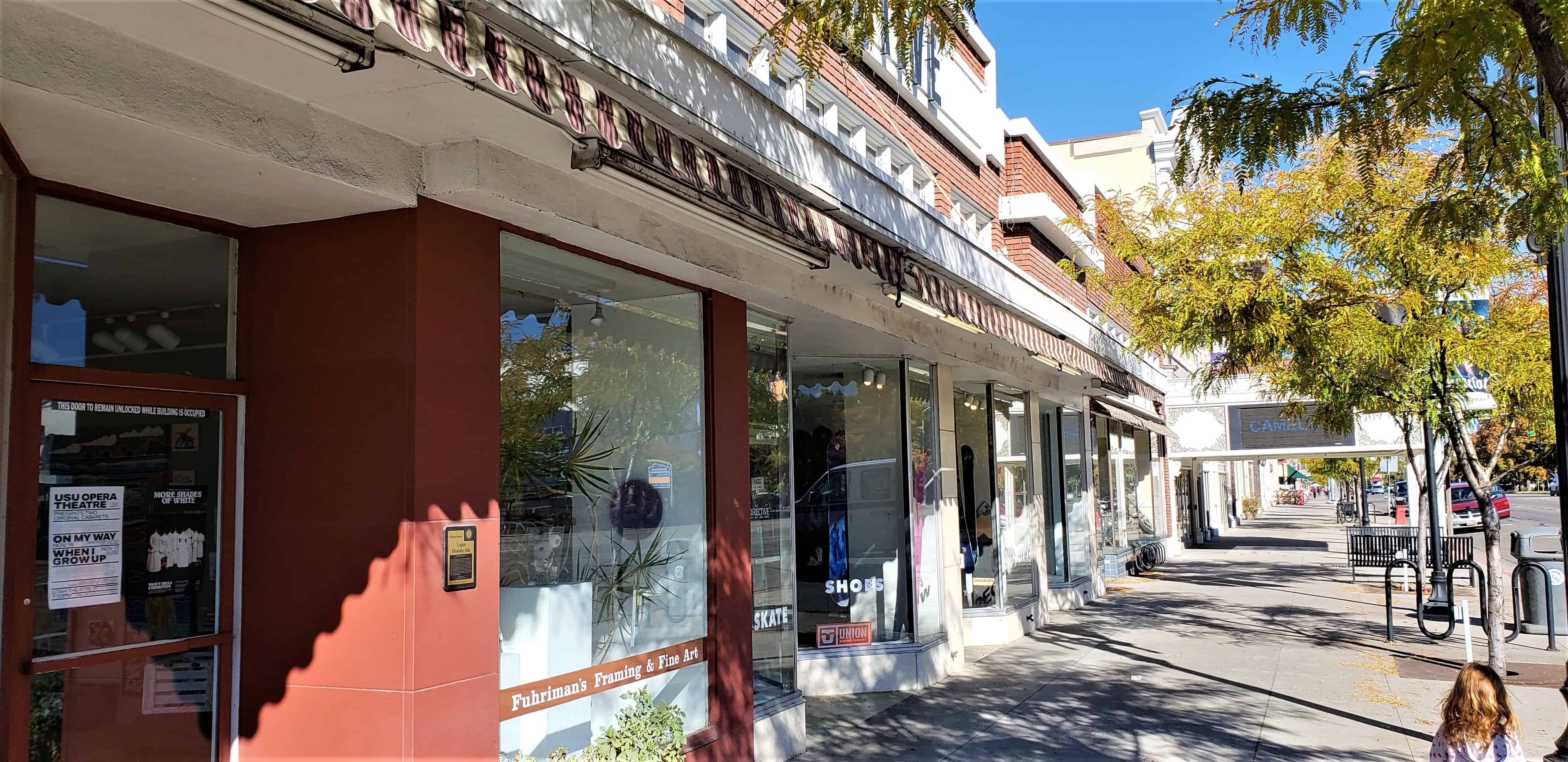
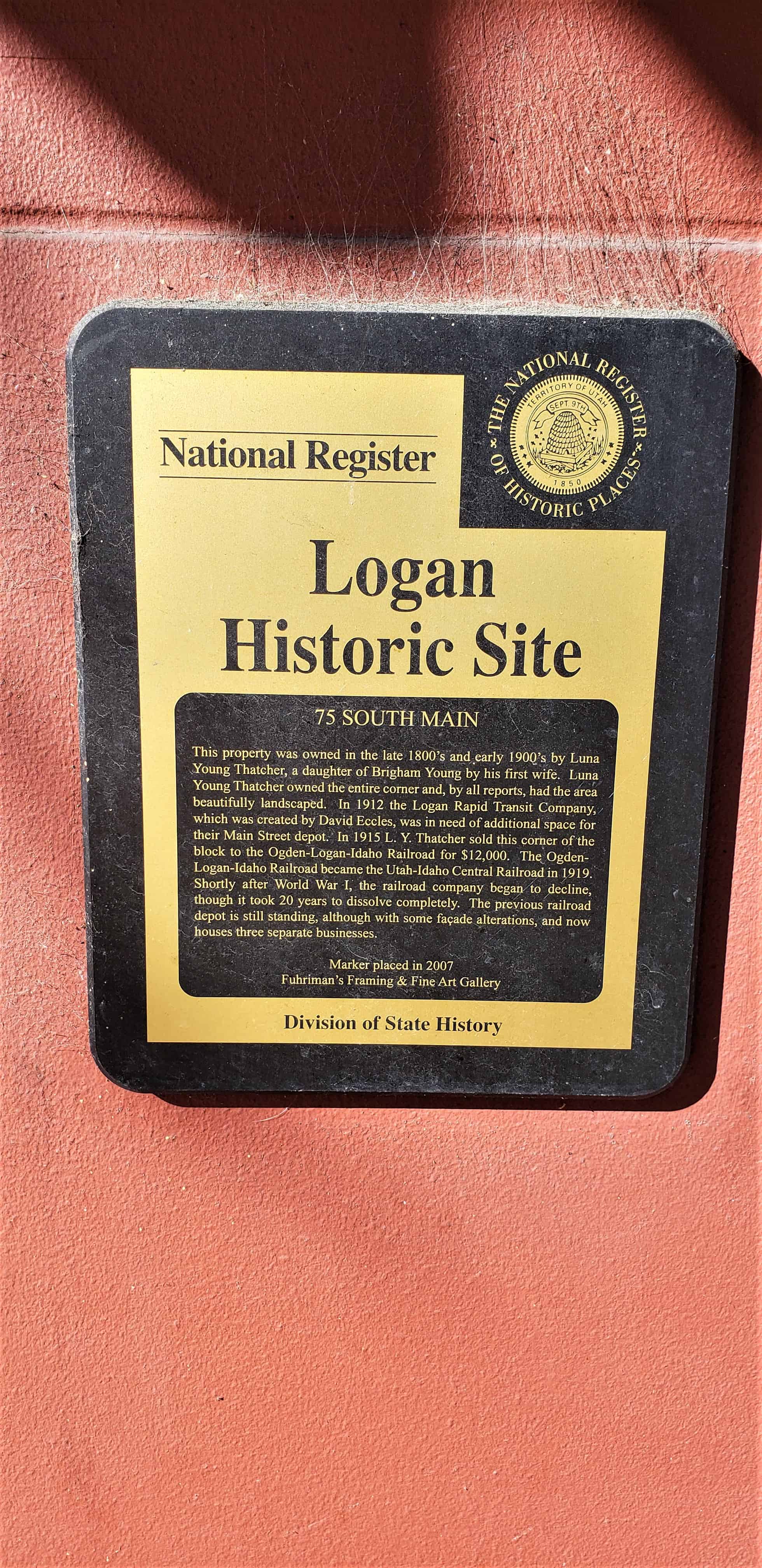
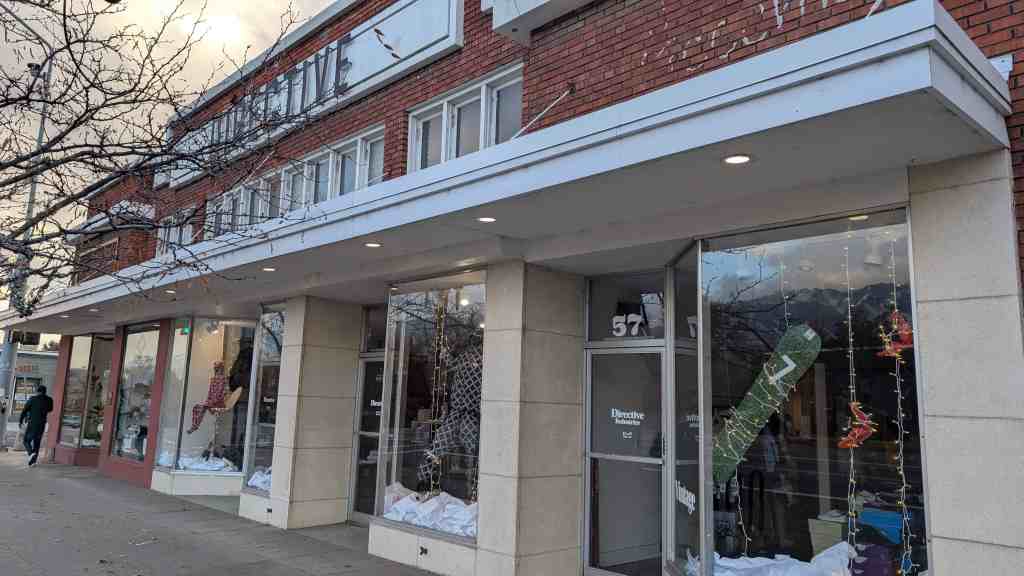
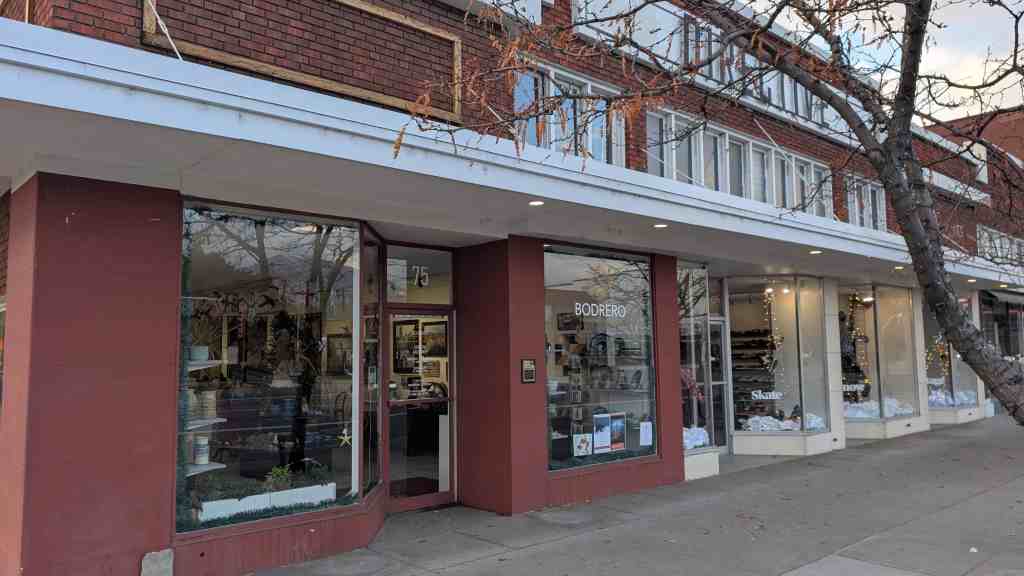
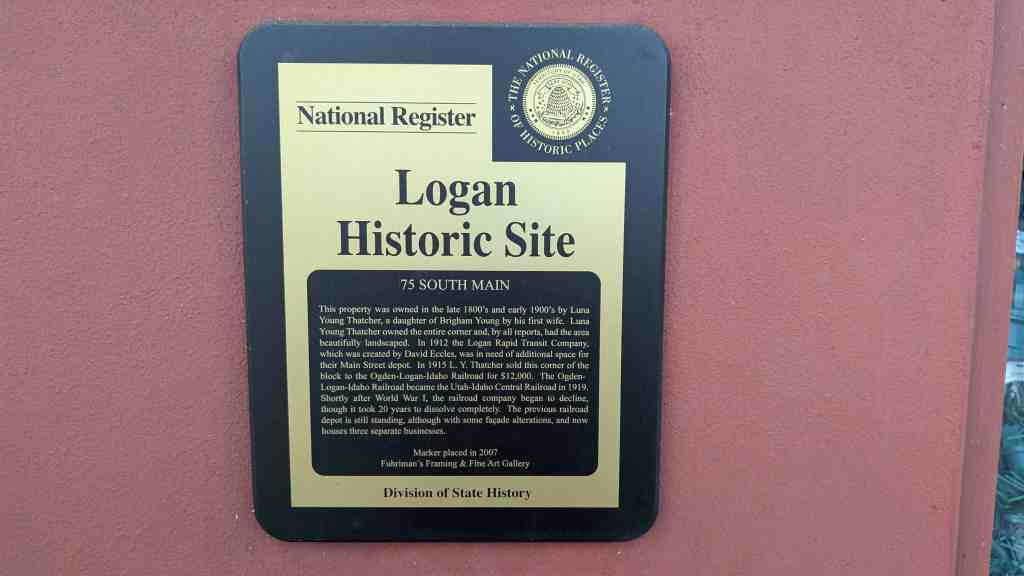
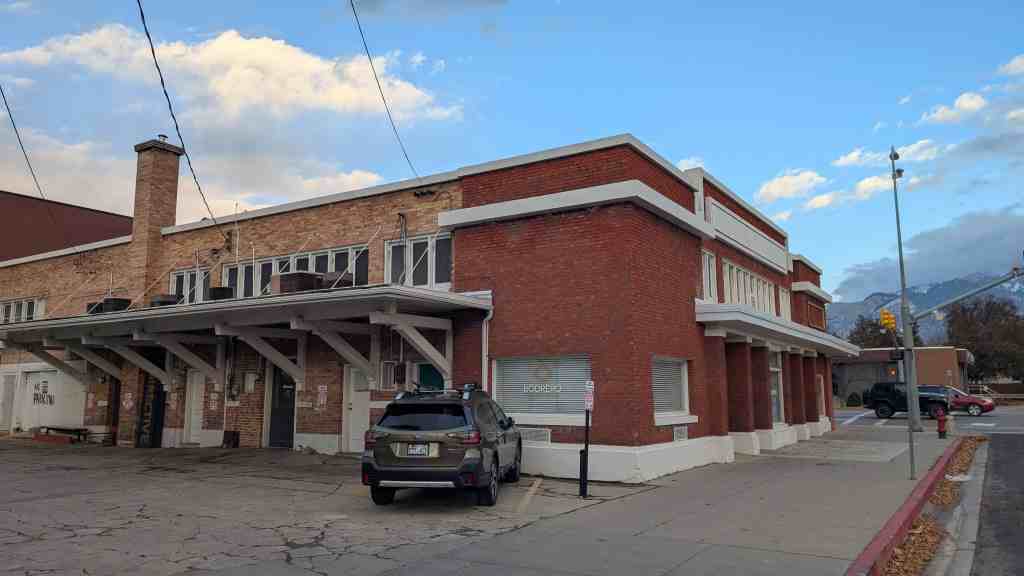
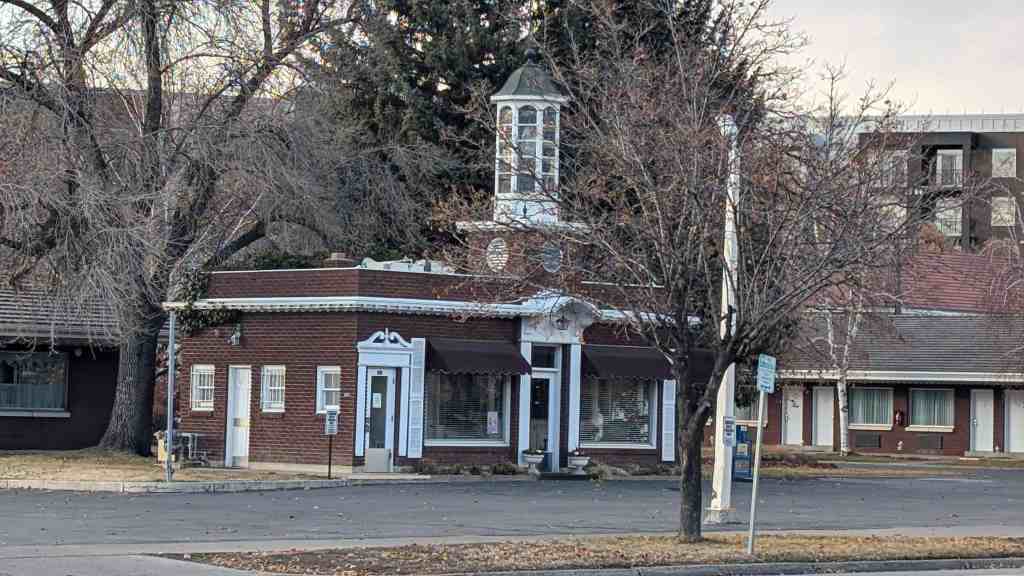
This property was owned in the late 1800’s and early 1900’s by Luna Young Thatcher, a daughter of Brigham Young by his first wife. Luna Young Thatcher owned the entire corner and, by all reports, had the area beautifully landscaped. In 1912 the Logan Rapid Transit Company, which was created by David Eccles, was in need of additional space for their Main Street depot. In 1915 L. Y. Thatcher sold this corner of the block to the Ogden-Logan-Idaho Railroad for $12,000. The Ogden-Logan-Idaho Railroad became the Utah-Idaho-Central Railroad in 1919. Shortly after World War I, the railroad company began to decline, though it took 20 years to dissolve completely. The previous railroad depot is still standing, although with some façade alterations, and now houses three separate businesses.
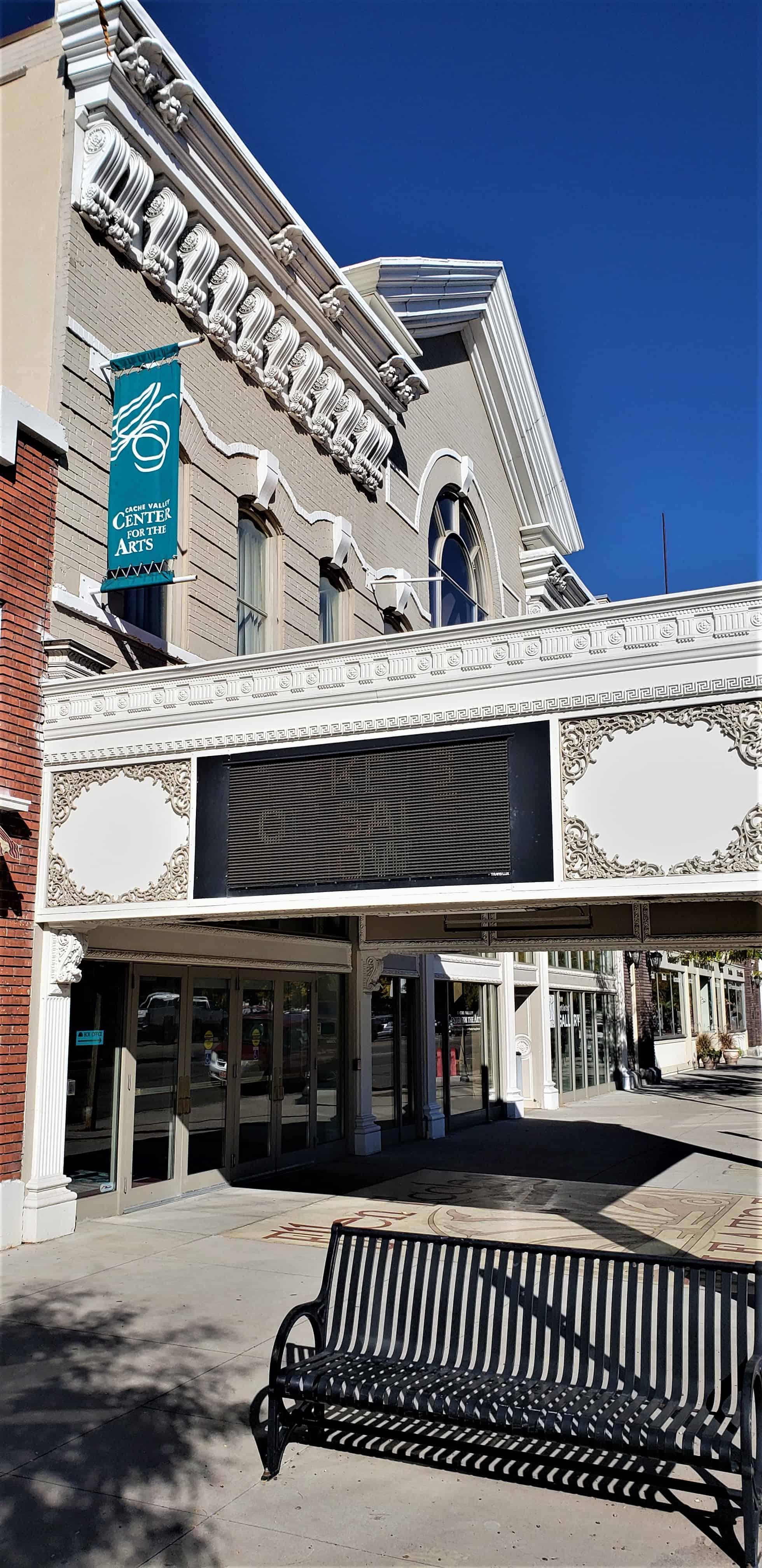
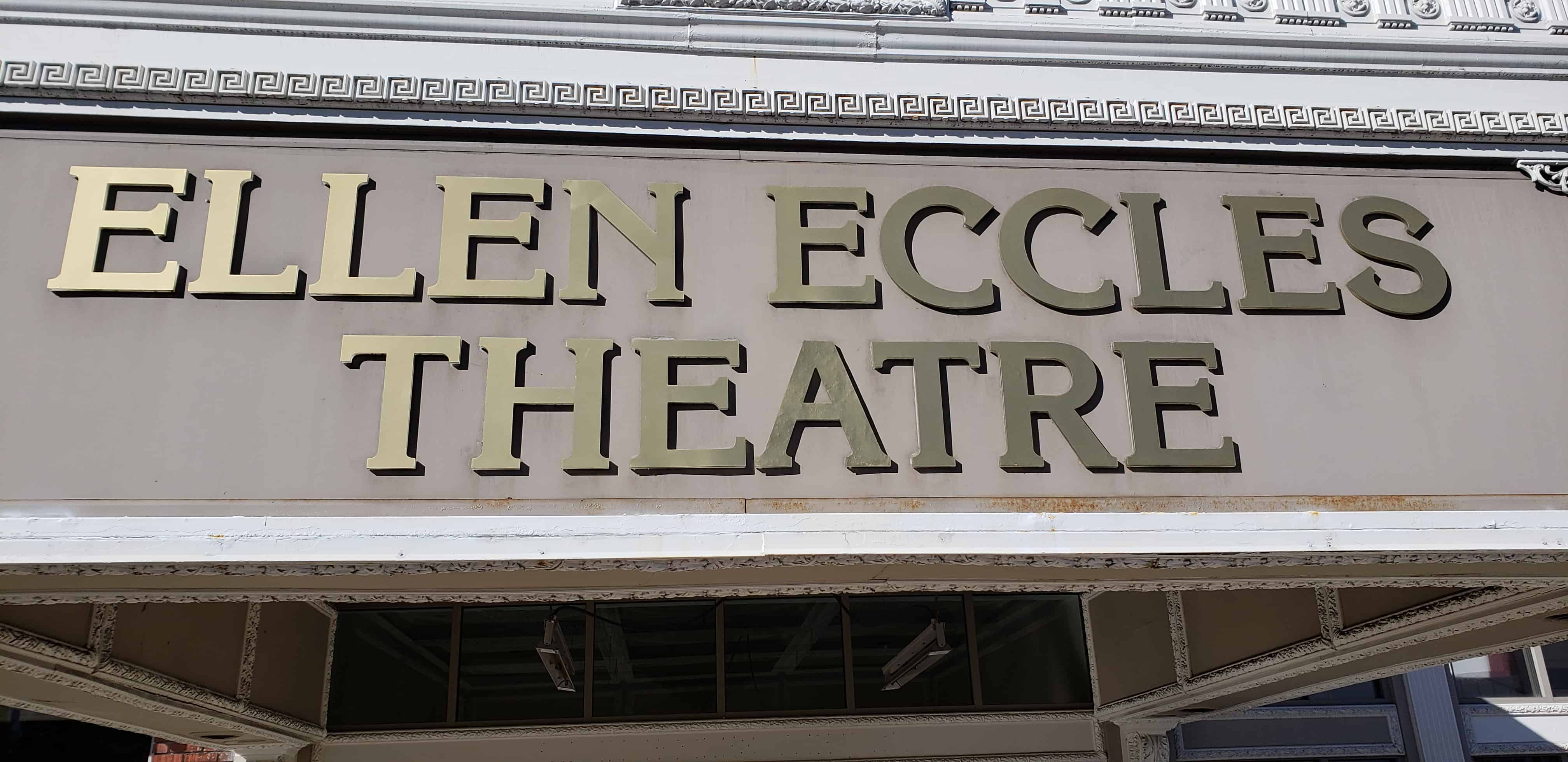
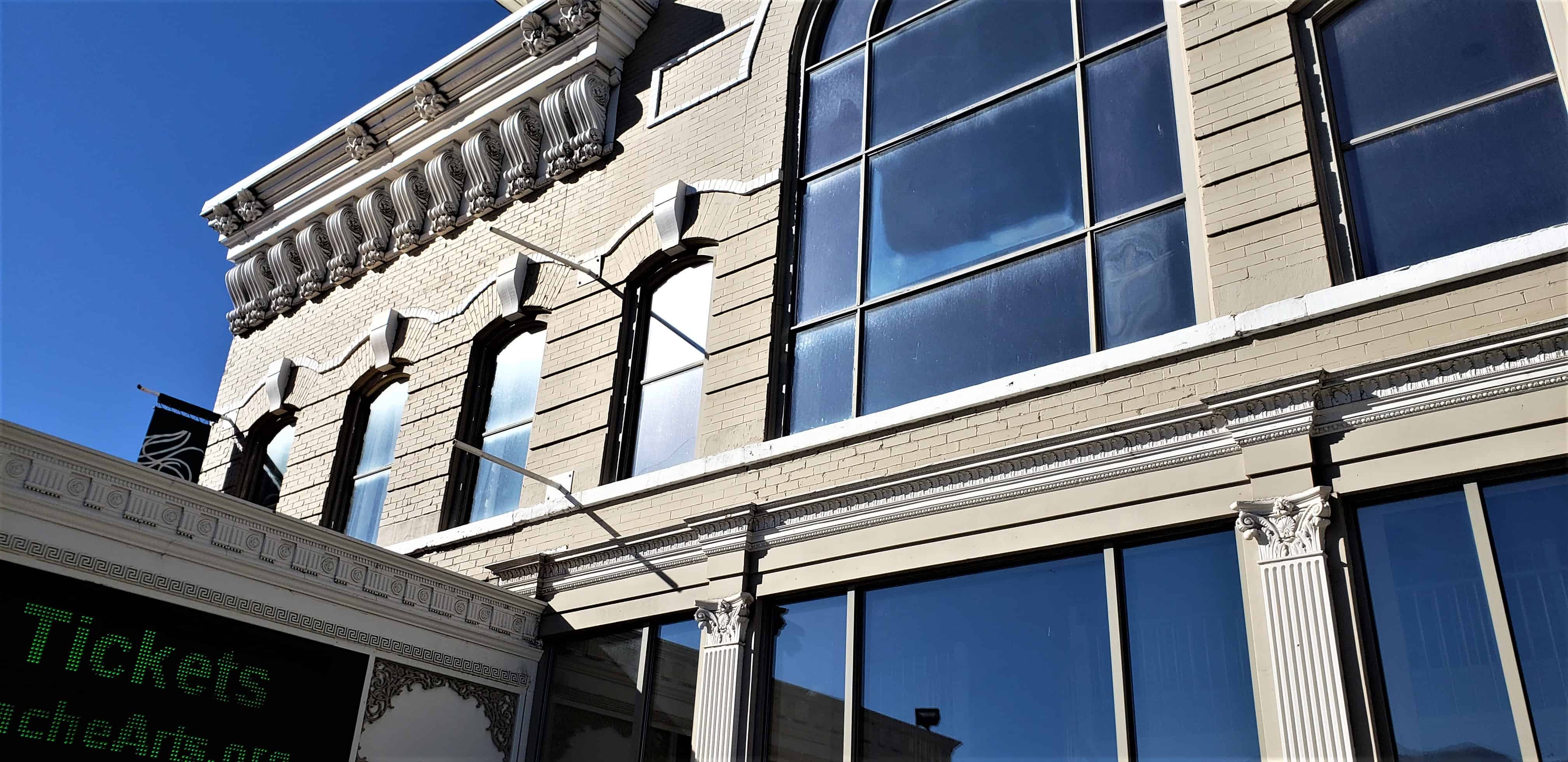
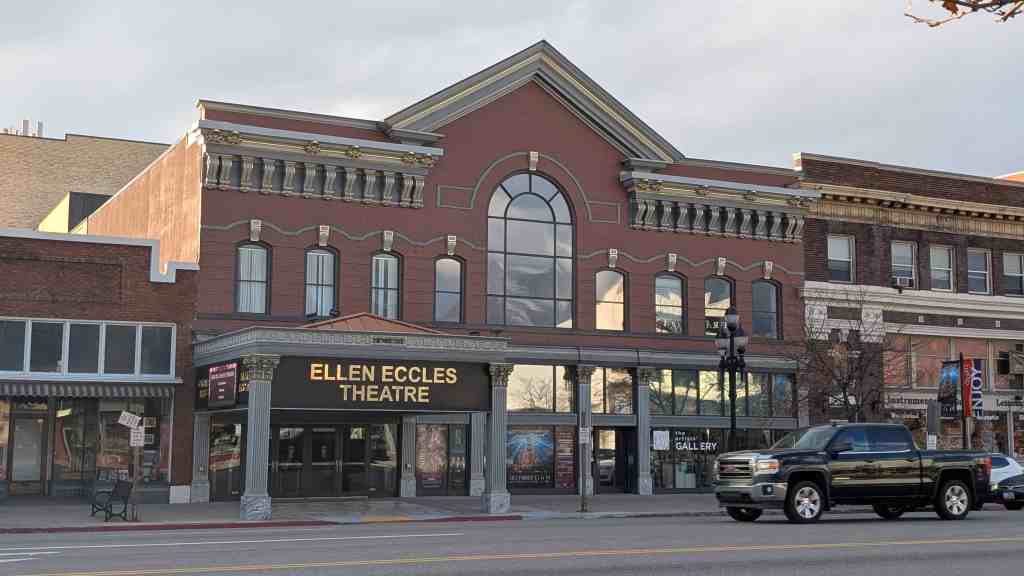
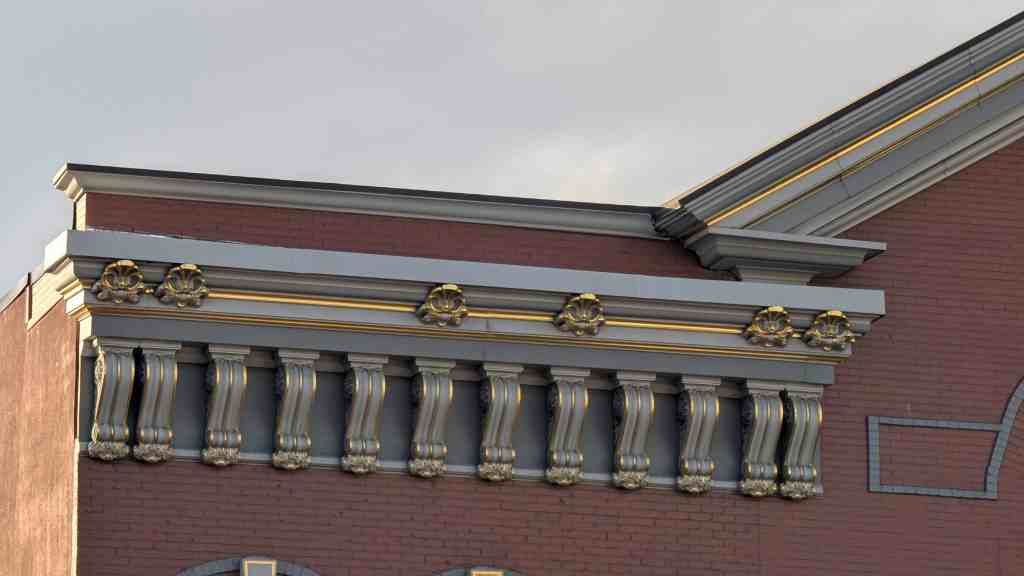
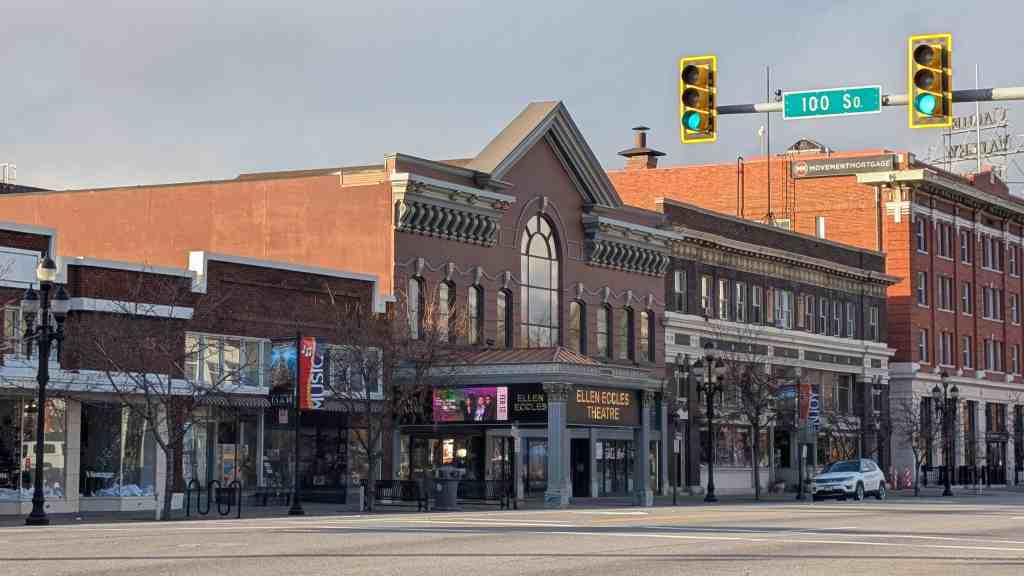
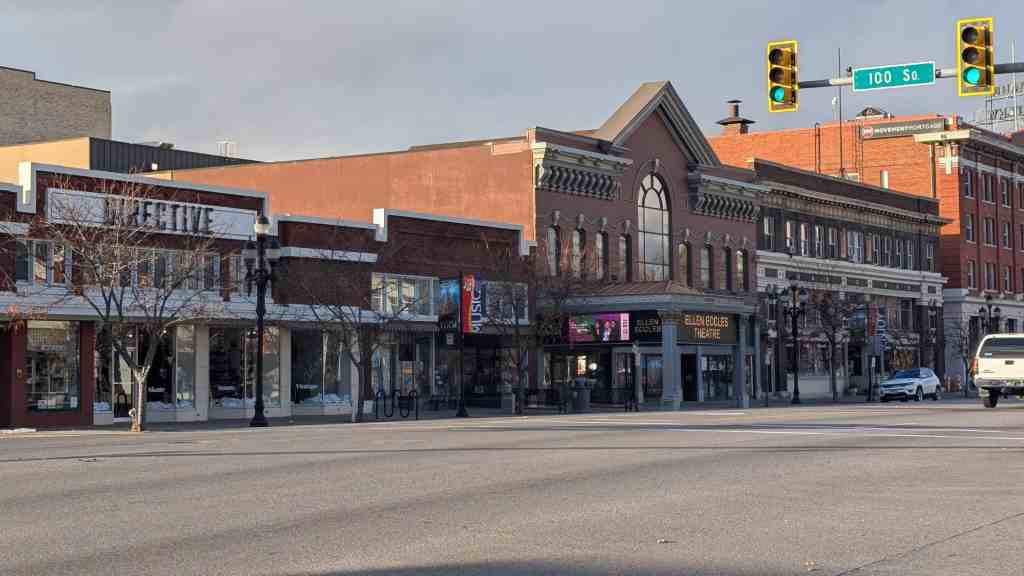
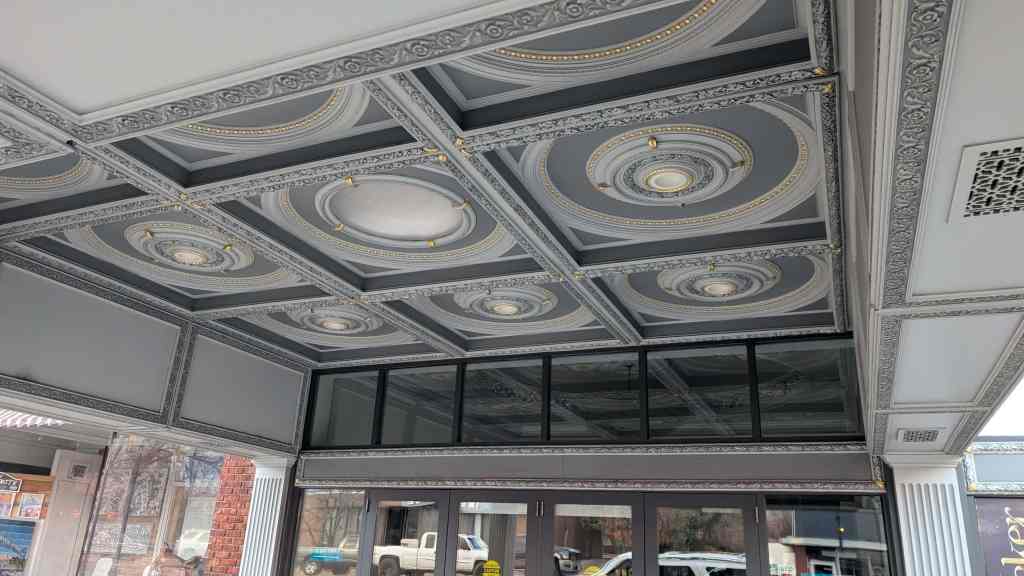
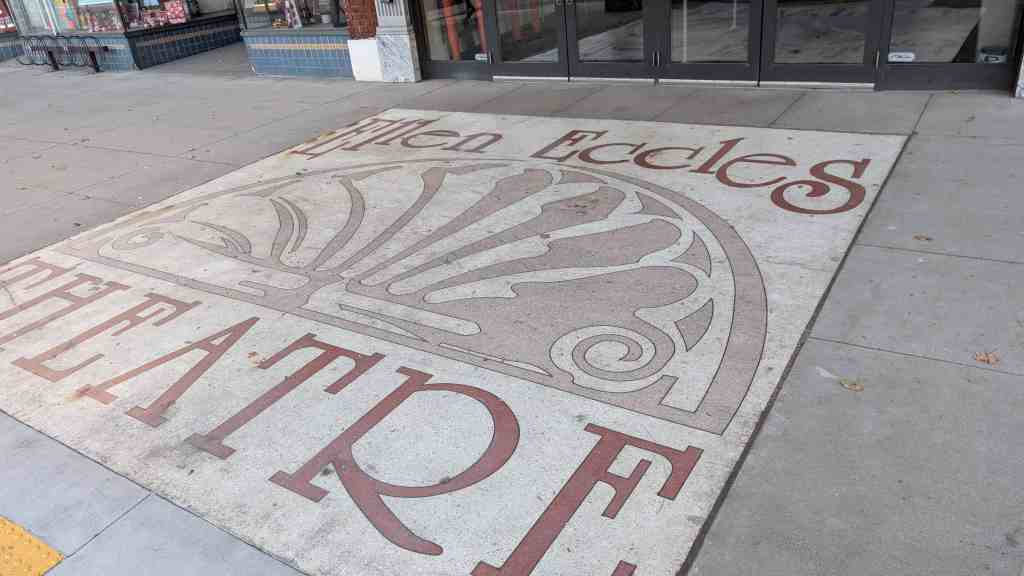
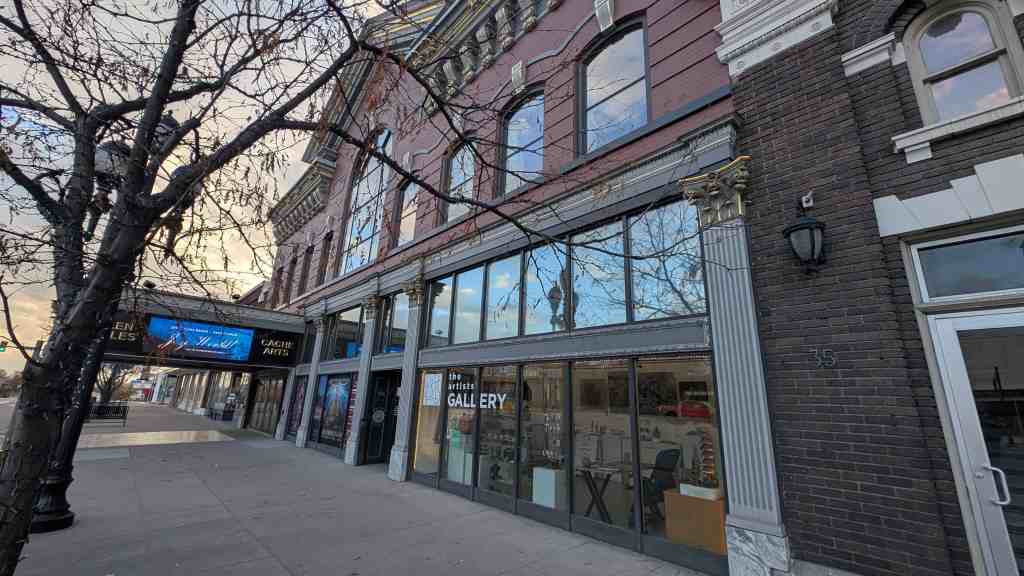
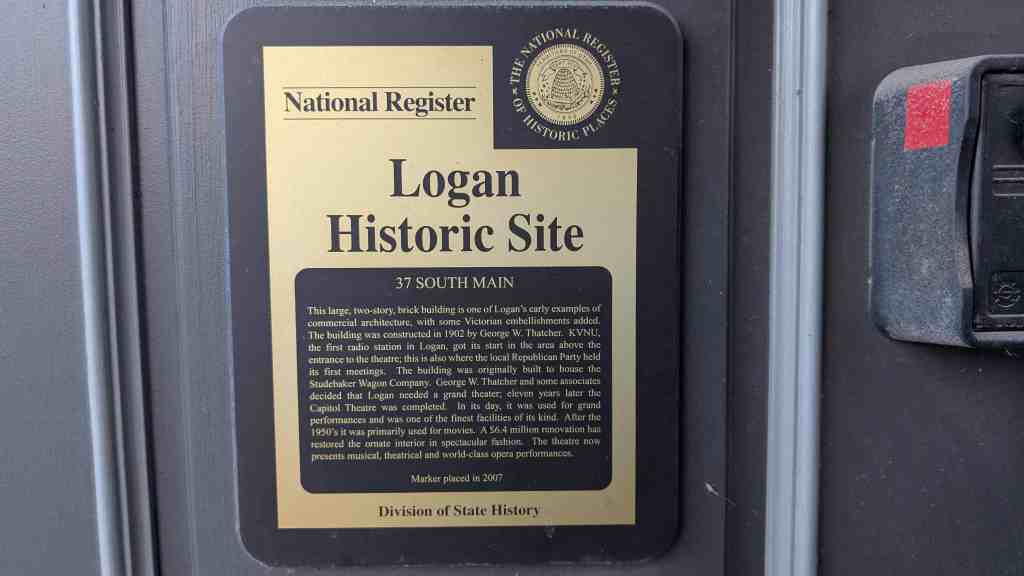
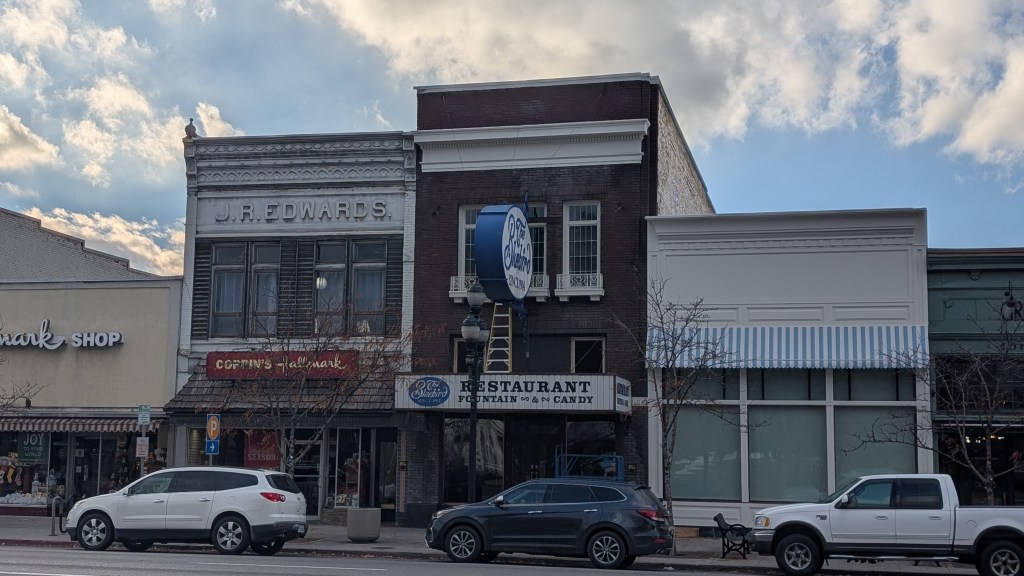
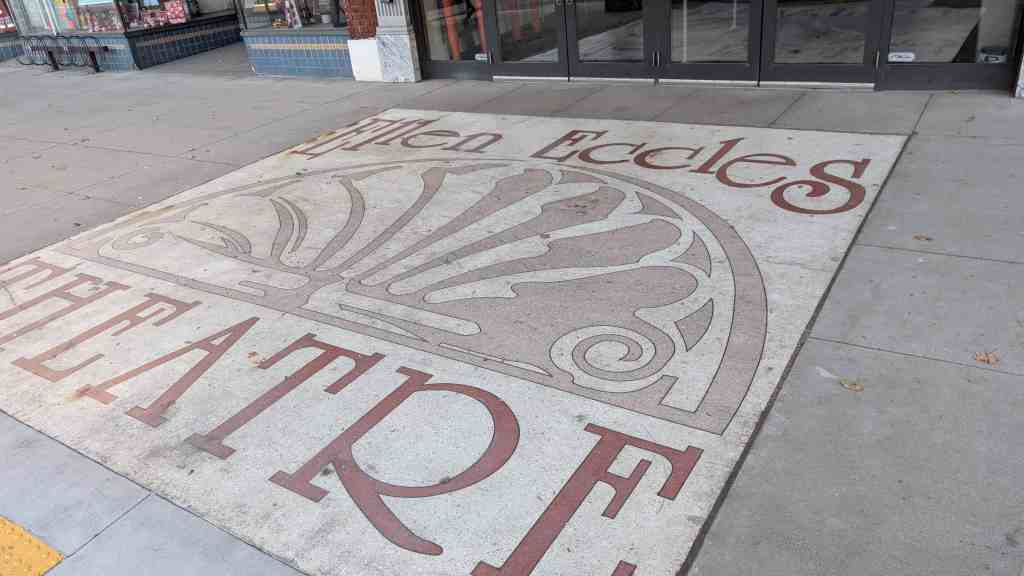
This large, two-story, brick building is one of Logan’s early examples of commercial architecture, with some Victorian embellishments added. The building was constructed in 1902 by George W. Thatcher. KVNU, the first radio station in Logan, got its start in the area above the entrance to the theatre; this is also where the local Republican Party held its first meetings. The building was originally build to house the Studebaker Wagon Company. George W. Thatcher and some associates decided that Logan needed a grand theater; eleven years later the Capitol Theatre was completed. In its day, it was used for grand performances and was one of the finest facilities of its kind. After the 1950’s it was primarily used for movies. A $6.4 million renovation has restored the ornate interior in spectacular fashion. The theatre now presents musical, theatrical and world-class opera performances.
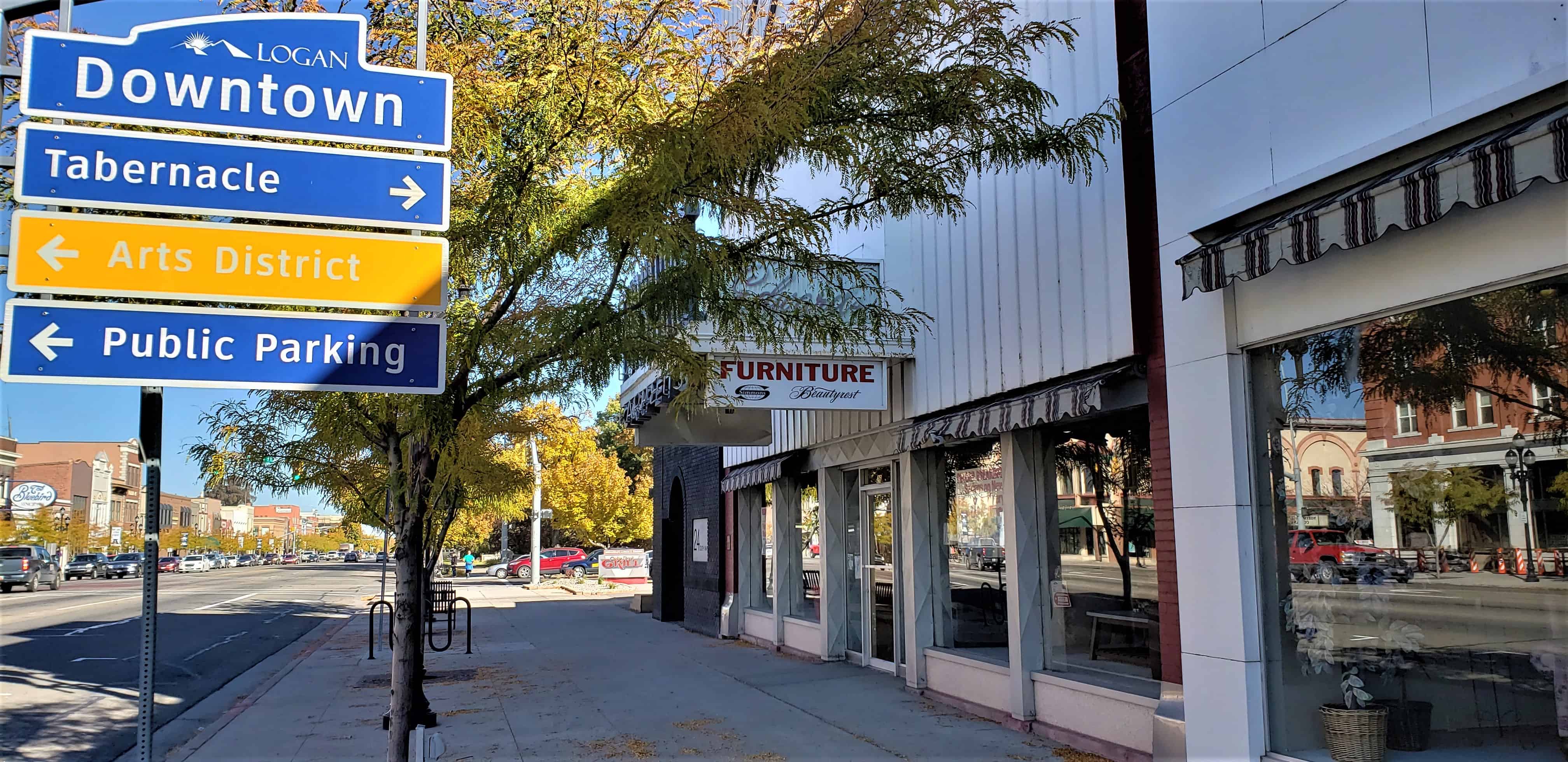
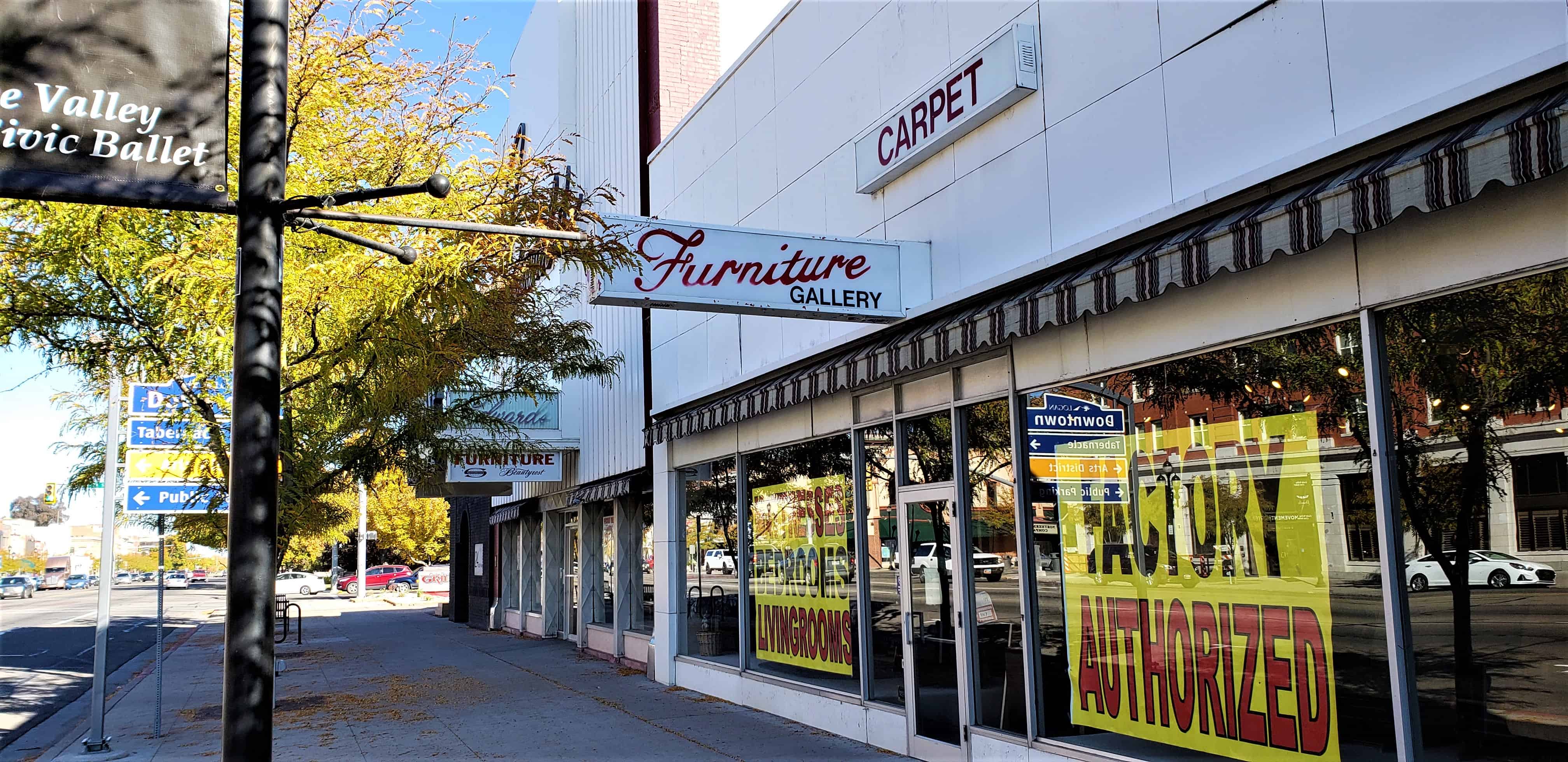
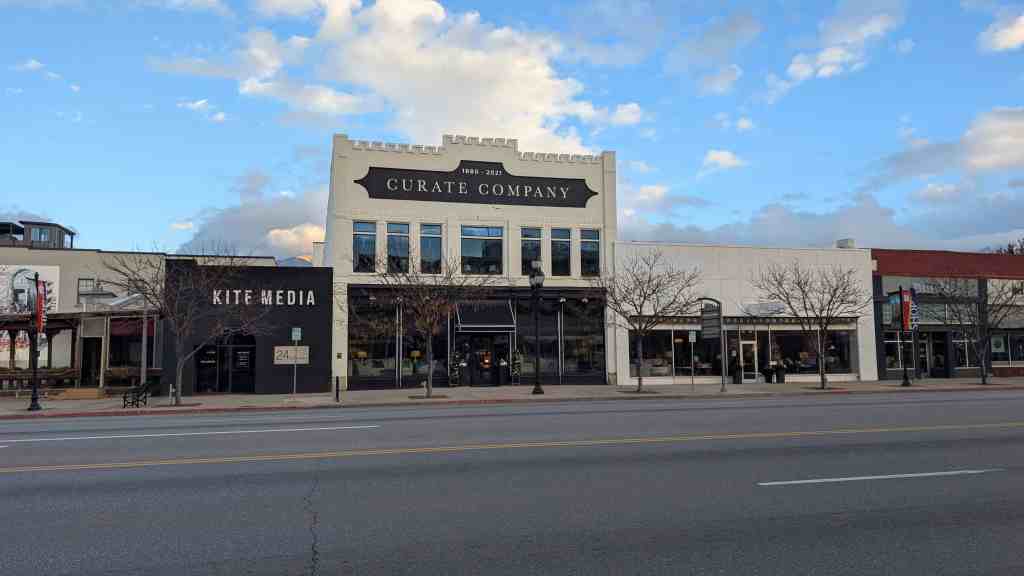
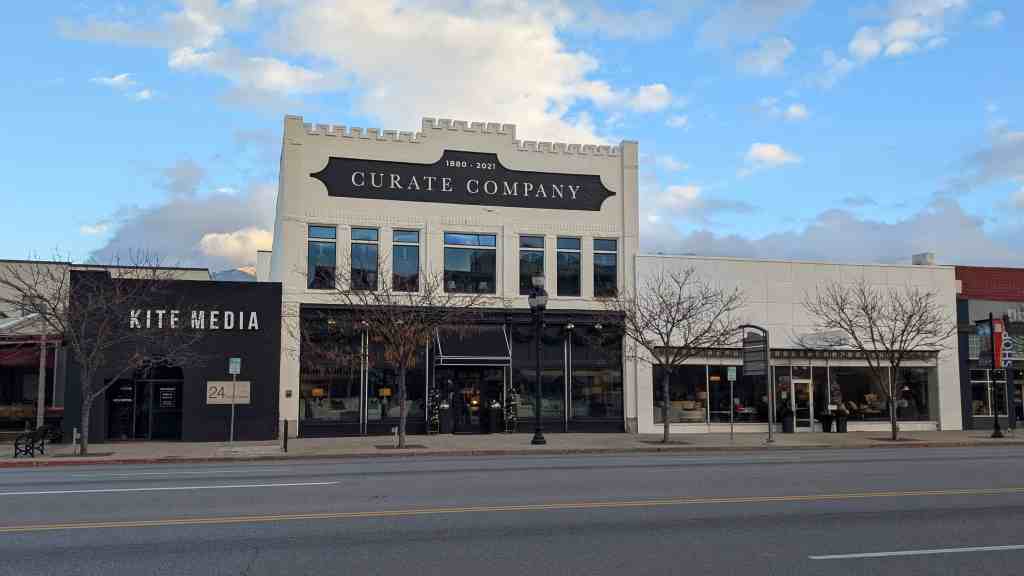
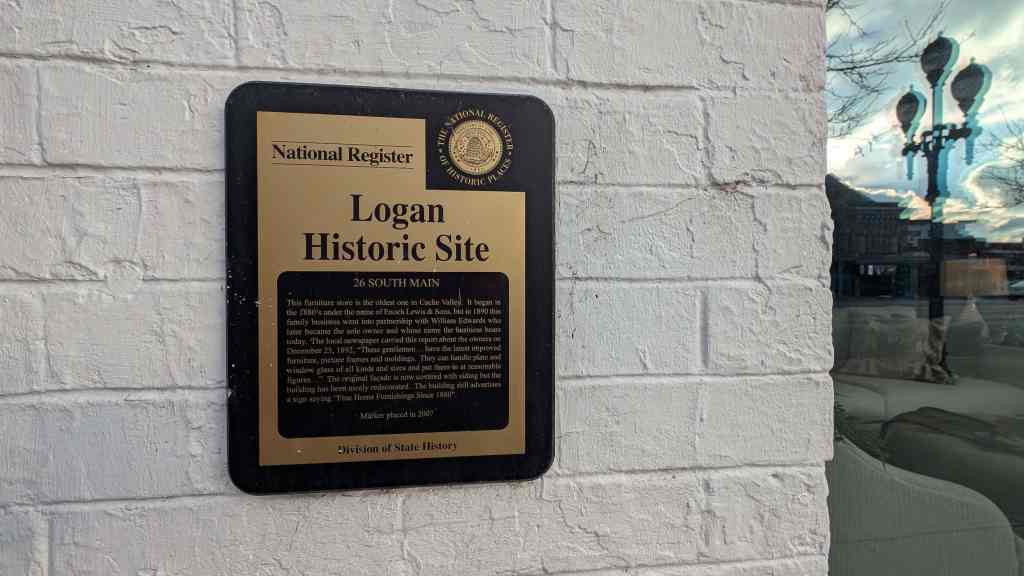
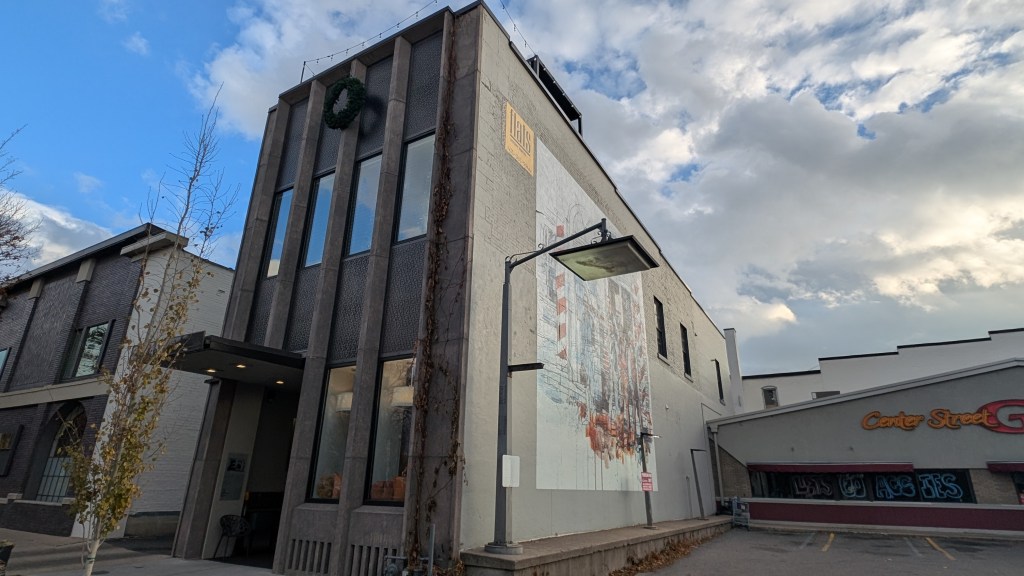
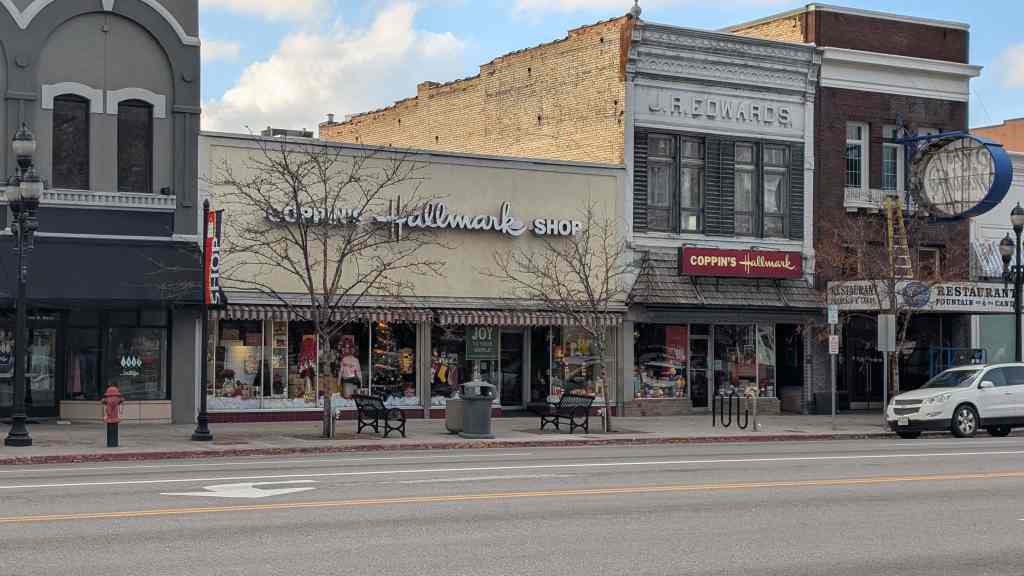
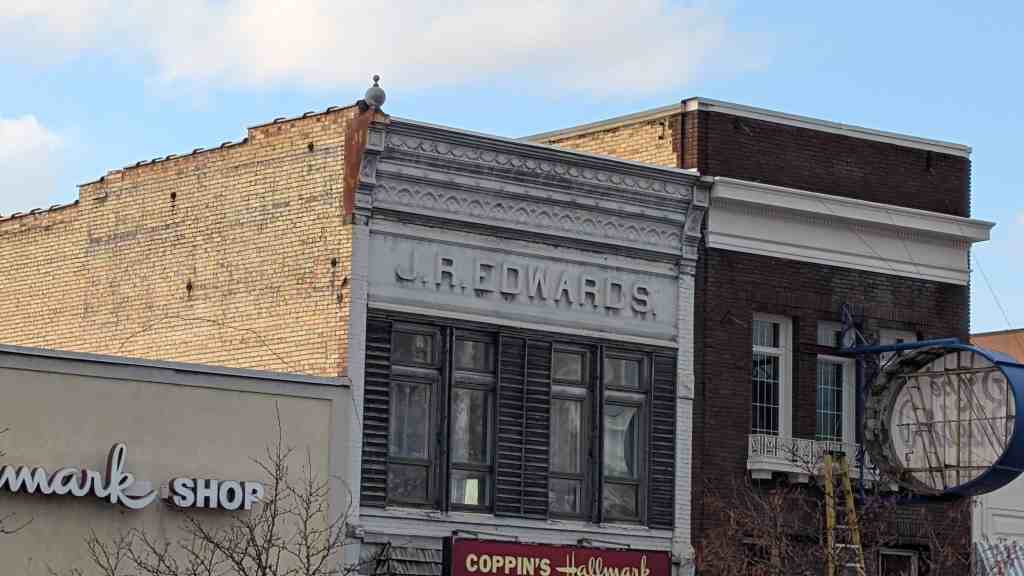
This furniture store is the oldest one in Cache Valley. It began in the 1880’s under the name of Enoch Lewis & Sons, but in 1890 this family business went into partnership with William Edwards who later became the sole owner and whose name the business bears today. The local newspaper carried this report about the owners on December 25, 1892, “These gentlemen… have the latest improved furniture, picture frames and moldings. They can handle plate and window glass of all kinds and sizes and put them in at reasonable figures…” The original facade is now covered with siding but the building has been nicely redecorated. The building still advertises a sign saying “Fine Home Furnishings Since 1880”.
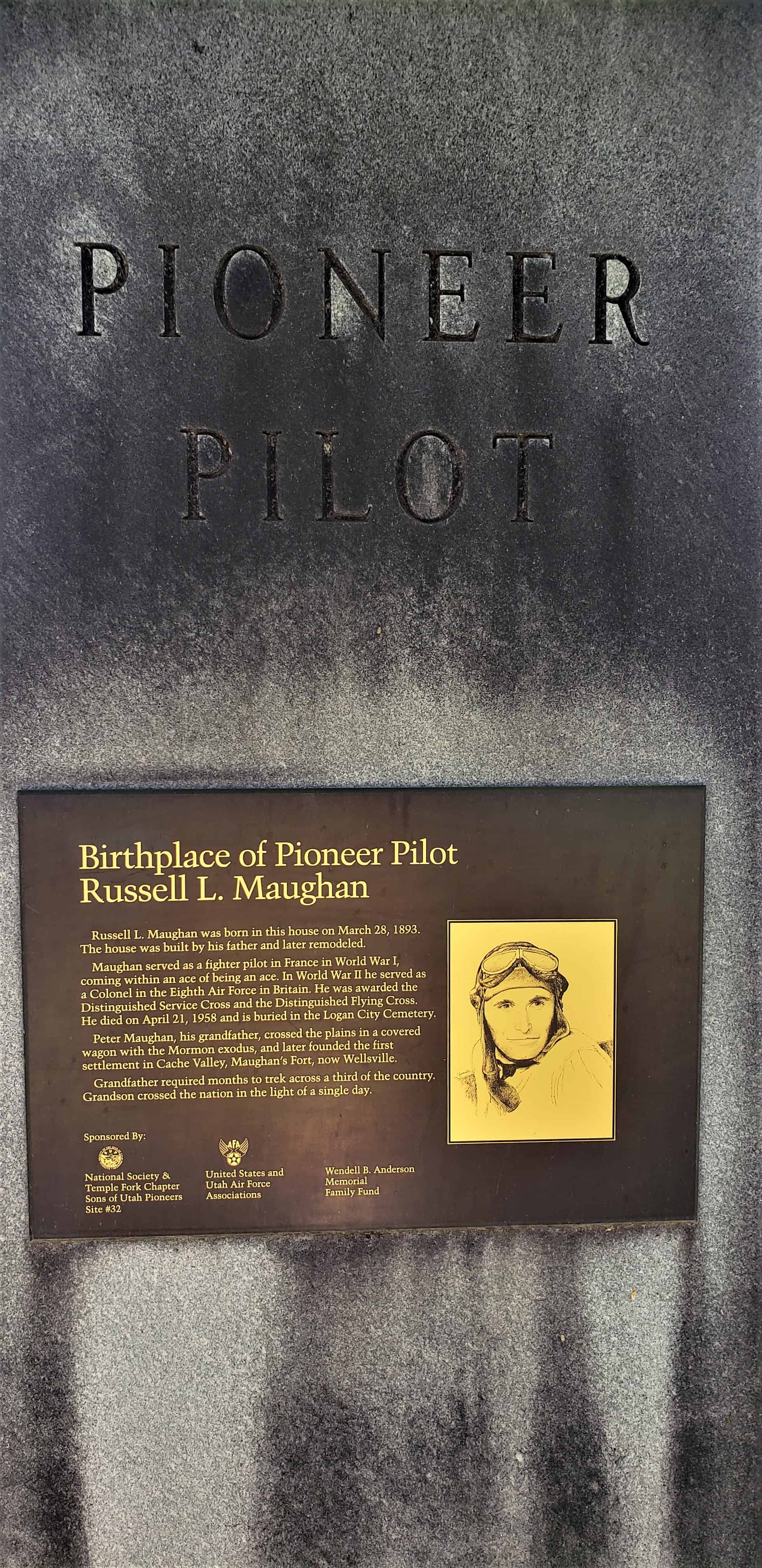
Birthplace of Pioneer Pilot Russell L. Maughan Russell L. Maughn was born in this house on March 28, 1893. The house was built by his father and later remodeled.
Maughan served as a fighter pilot in France in World War I, coming within an ace of being and ace. In World War II he served as a Colonel in the English Air Force in Britain. He was awarded the Distinguished Service Cross and the Distinguished Flying Cross. He died on April 21, 1958 and is buried in the Logan City Cemetery.
Peter Maughan, his grandfather, crossed the plains in a covered wagon with the Mormon exodus, and later founded the first settlement in Cache Valley, Maughan’s Fort, now Wellsville.
Grandfather required months to trek across a third of the country. Grandson crossed the nation in the light of a single day.
First Dawn to Dusk Flight Across America
Colonel Russell L. Maughan of Logan, Utah made the first daylight flight across the continent on June 23, 1924. Flying solo in a Curtis PW-8 pursuit aircraft, Maughan, then a lieutenant in the U.S. Air Service, left Mitchell Field, New York, at dawn and arrived at Crissy Field, San Francisco, at 9:40 p.m., P.S.T, one minute before official dusk.
Winging his way to destiny, Maughan flew from the Atlantic to the Pacific Ocean in 21 hours 48 minutes and 30 seconds, averaging approximately 150 miles per hour. His actual in-flight time was 18 hours and 20 minutes.
Having made two previous attempts, which were aborted because of engine failures, Maughan’s successful flight illuminated the imagination of people everywhere. Hailed as a world hero he set both pattern and precedent for generations to follow.
His flight of fancy and faith had become a reality. And in a few short years others have broken the sound barrier, flown to the moon, and orbited the earth in a fantastic sequence of adventures of the human spirit.
But in 1924 the dawn to dusk flight across America was a “Maughanumental” achievement.
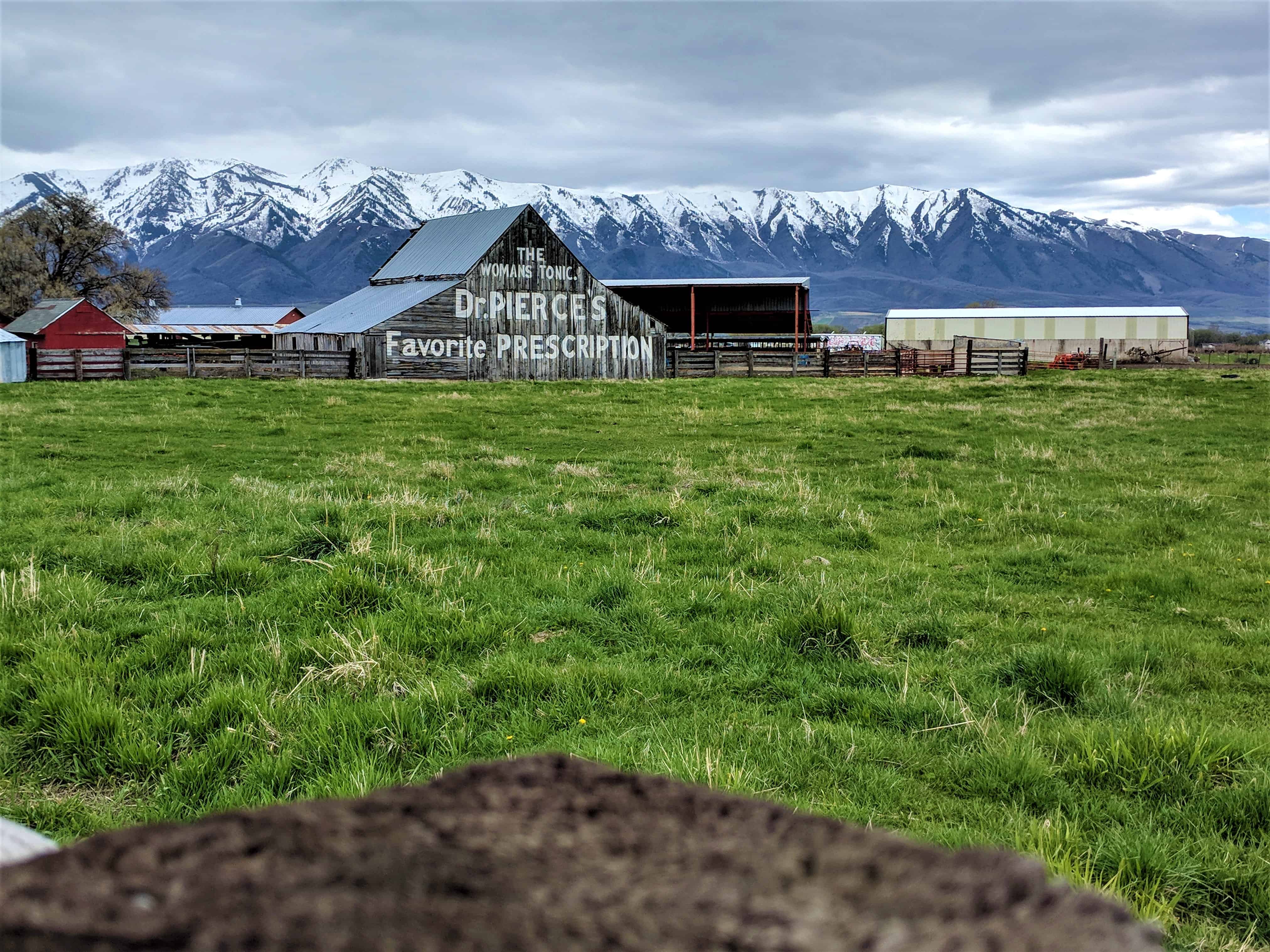
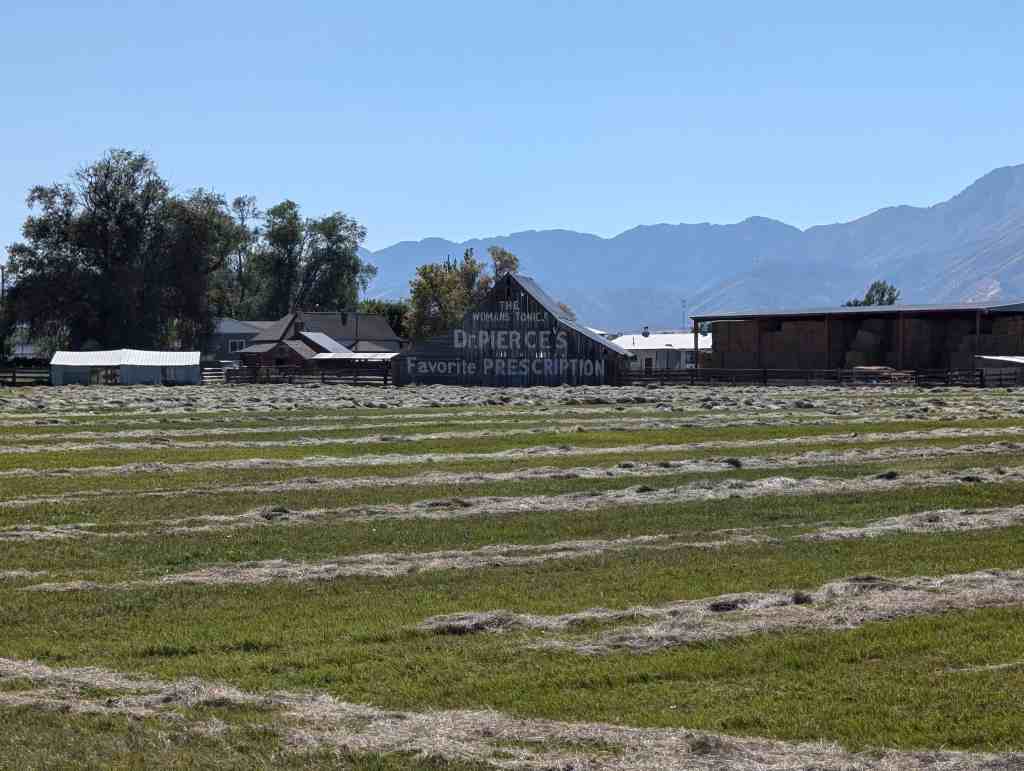
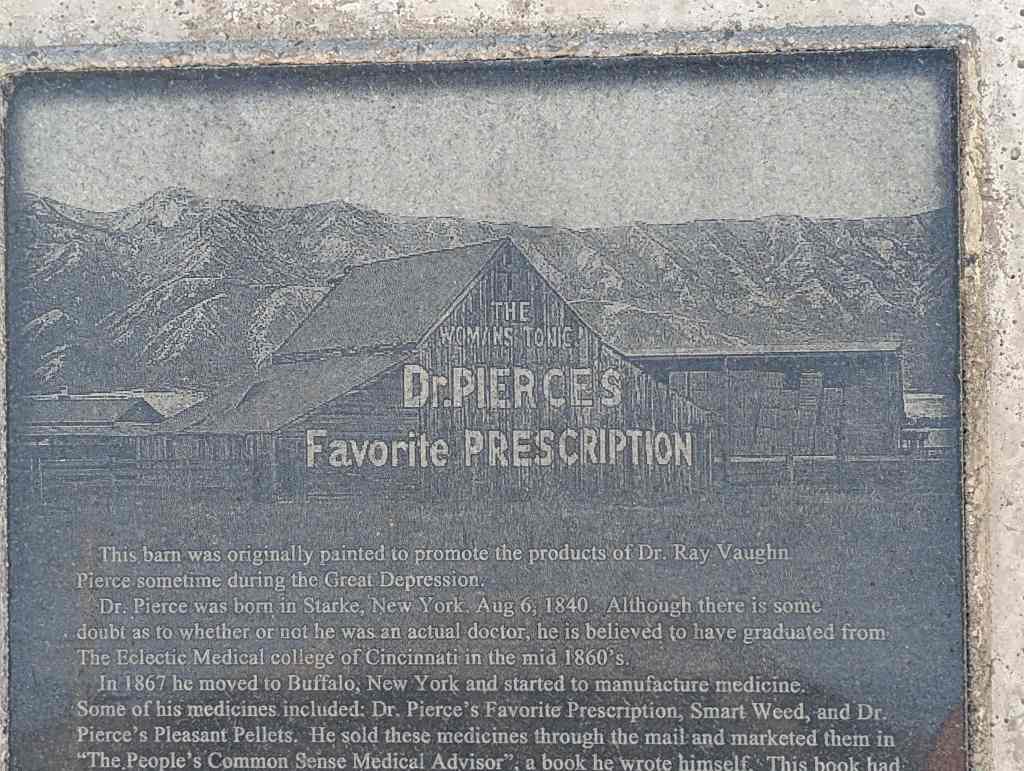
The Womans Tonic. Dr. Pierce’s Favorite Prescription.
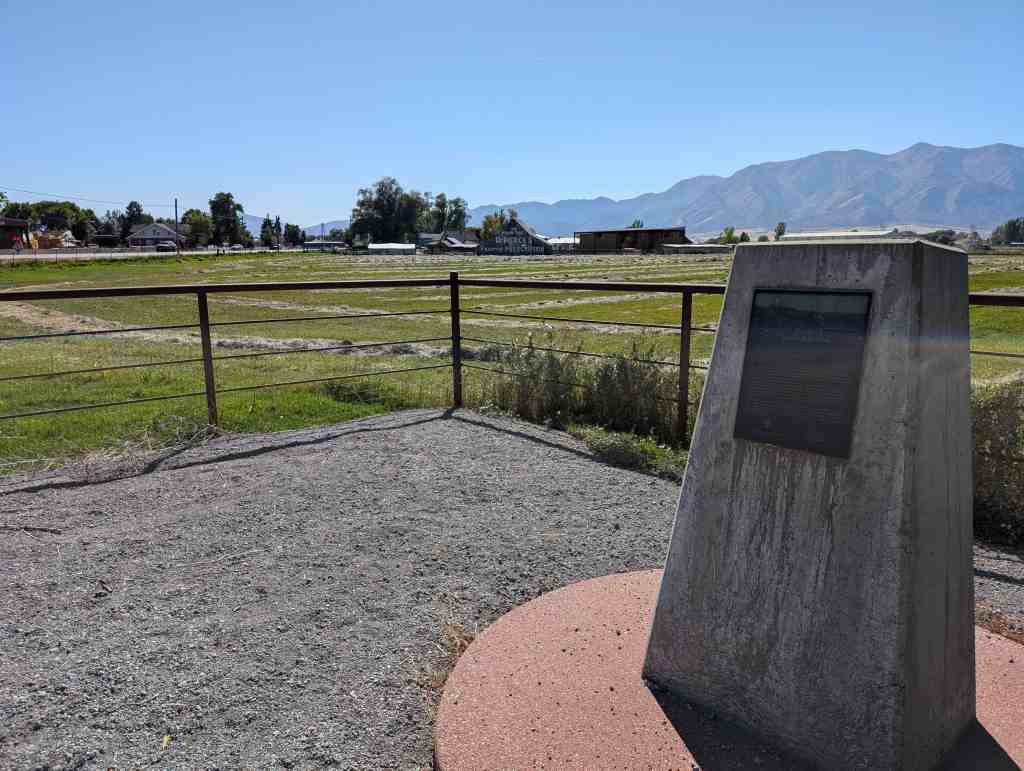
Off the highway in College Ward when you’re leaving Logan and heading toward the canyon to go up and over the pass to Brigham City you can see off to the right an add for “The Womans Tonic. Dr. Pierce’s Favorite Prescription.” on the side of a barn.
I’ve always loved the old look of it, I wondered if it was real for many years but after looking into it I found it it was a very popular product that sold millions of bottles through the mail and claimed to instantly cure any problem a women had.
Over 100 years ago the add was painted on the barn and $10 a year was paid for some time. The company went out of business in the 1940s but the add still stands.
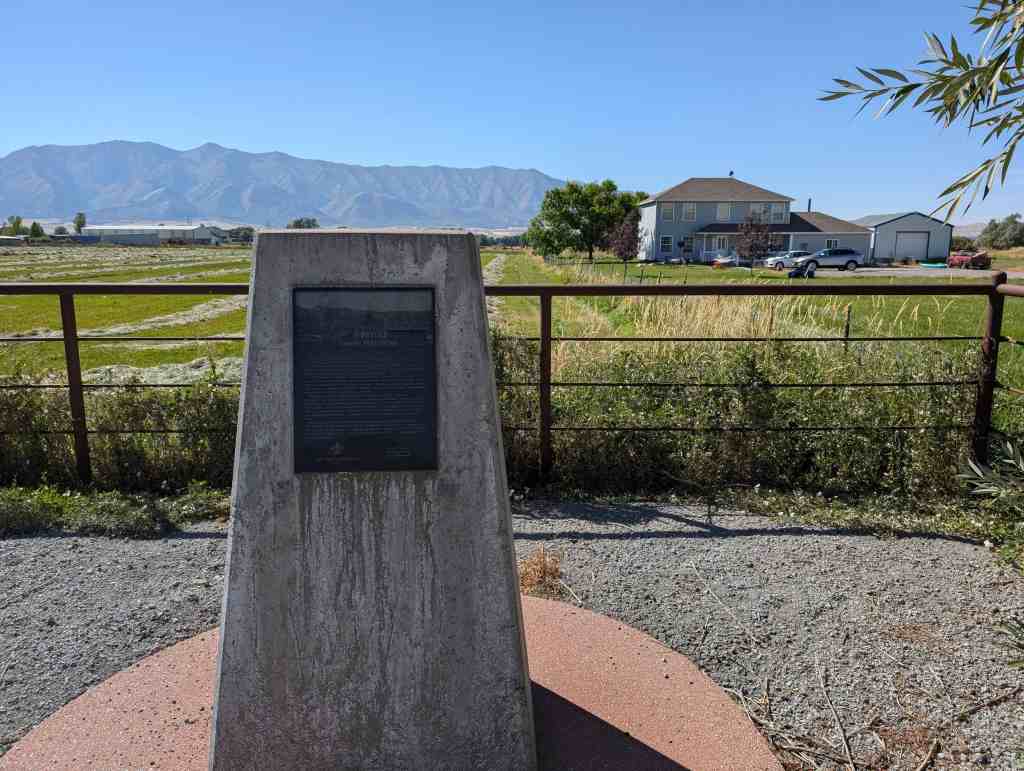
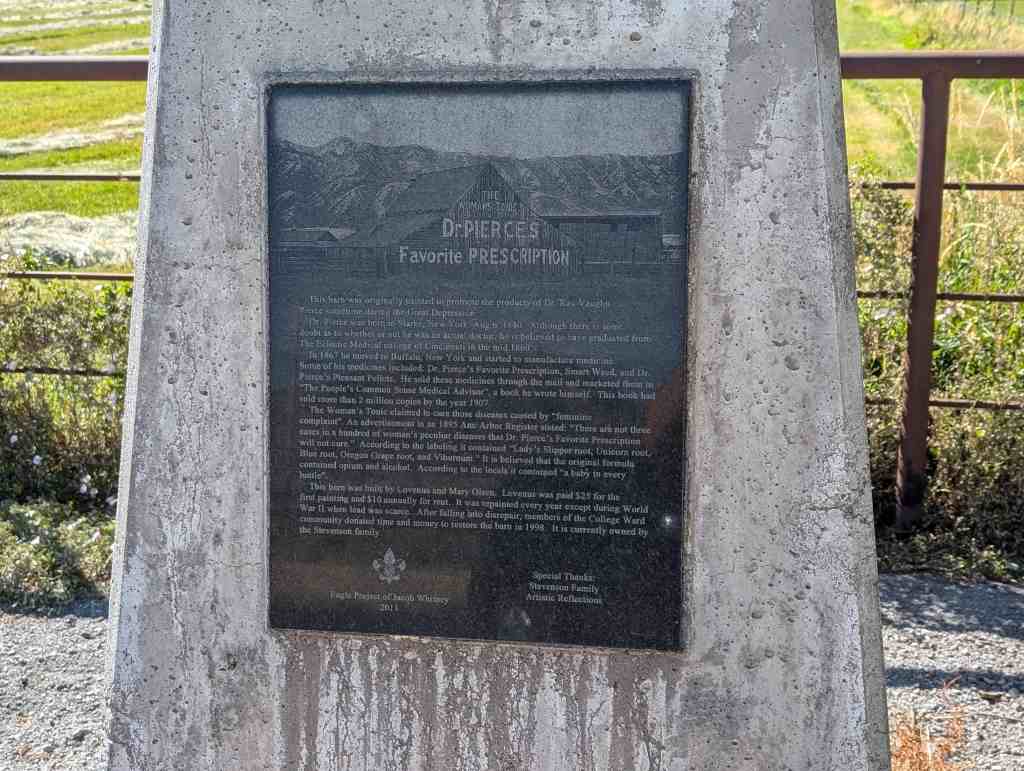
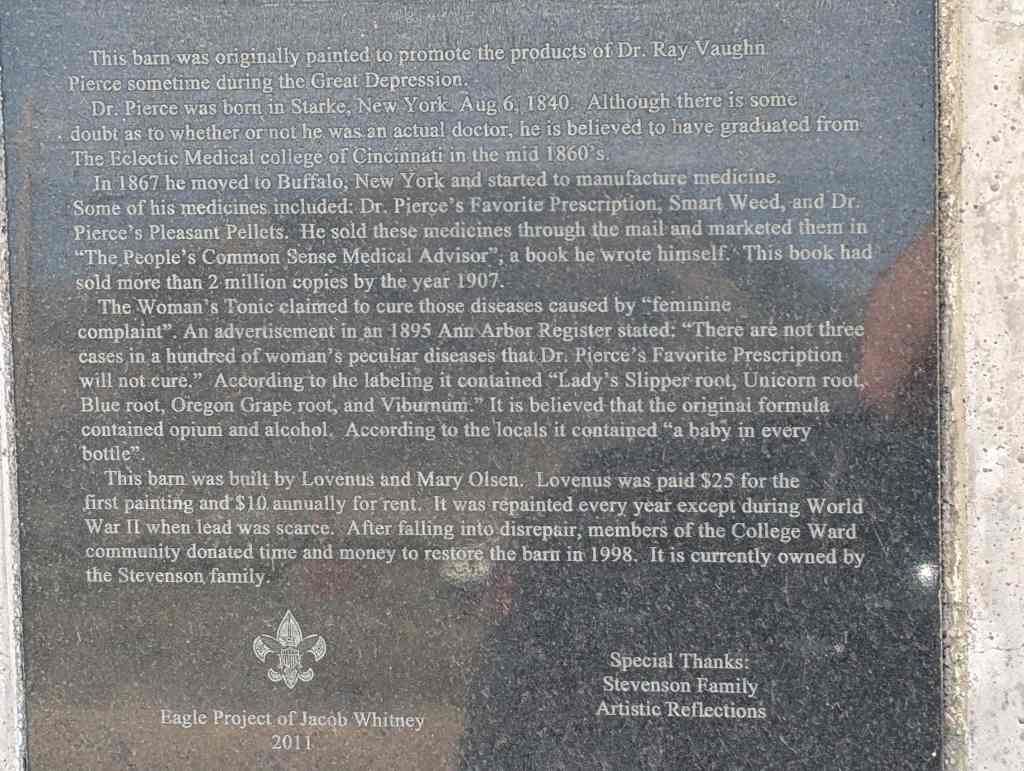
A 2011 Eagle Project of Jacob Whitney is a monument stating:
This barn was originally painted to promote the products of Dr. Ray Vaughn Pierce sometime during the Great Depression.
Dr. Pierce was born in Starke, New York. Aug 6, 1840. Although there is some doubt as to whether or not he was an actual doctor, he is believed to have graduated from The Eclectic Medical college of Cincinnati in the mid 1860’s.
In 1867 he moved to Buffalo, New York and started to manufacture medicine. Some of his medicines included: Dr. Pierce’s Favorite Prescription, Smart Weed, and Dr. Pierce’s Pleasant Pellets. He sold these medicines through the mail and marketed them in “The People’s Common Sense Medical Advisor”, a book he wrote himself. This book had sold more than 2 million copies by the year 1907.
The Woman’s Tonic claimed to cure those diseases caused by “feminine complaint”. An advertisement in an 1895 Ann Arbor Register stated: “There are not three cases in a hundred of woman’s peculiar diseases that Dr. Pierce’s Favorite Prescription will not cure.” According to the labeling it contained “Lady’s Slipper root, Unicorn root, Blue root, Oregon Grape root, and Viburnum.” It is believed that the original formula contained opium and alcohol. According to the locals it contained “a baby in every bottle”.
This barn was built by Lovenus and Mary Olsen. Lovenus was paid $25 for the first painting and $10 annually for rent. It was repainted every year except during World War II when lead was scarce. After falling into disrepair, members of the College Ward community donated time and money to restore the barn in 1998. It is currently owned by the Stevenson family.
“Dr. Pierce’s” Barn College Ward, 1904 This Intermountain style barn was built by Lovenus and Mary Olsen, Swiss Mormon farmers. Work horses were sheltered in the west lean-to. The east leanto was added in the 1940s when Ike Olsen began dairying. There is no loft—hay was stacked on the ground in the center part of the barn.
The “Dr. Pierce’s Favorite Prescription” sign was painted sometime during the Great Depression. The landowner was paid $25 at the time of the first painting and $10 per year thereafter for use of the side of the barn as a billboard. Now, because it has become a beloved landmark, the sign has been periodically repainted.
In 1998, a group of neighbors in the area, with the owners and several local businesses who donated materials, straightened the barn and reinforced it. The farmers of College Ward feel that this barn belongs to the community, and they did not want to see it fall down. Further stabilization work was done in 2002 by the Utah Conservation Corps and the Bear River Association of Governments.
Dr. Pierce’s Favorite Prescription was a patent medicine of the time. According to labeling on old packages, the concoction contained no alcohol or opium, but did contain “Lady’s Slipper root (cimicifuga Racemosa), Unicorn root (Helonias Dioica), Blue Cohosh root (Caulophylloum Thalictroides), Oregon Grape root (Berberis Aquifolium), Viburnum.”
Location: 2595 S. Highway 89/91, north of Wellsville Viewing directions: Either pull off at the side of Highway 89/91, or turn west onto the side road that is just north of the barn (1600 West).
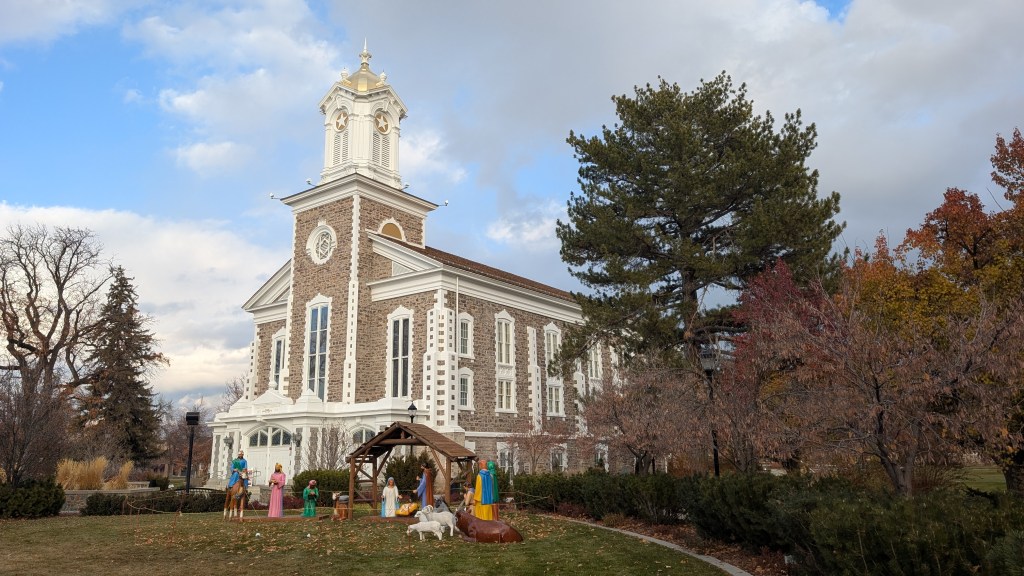
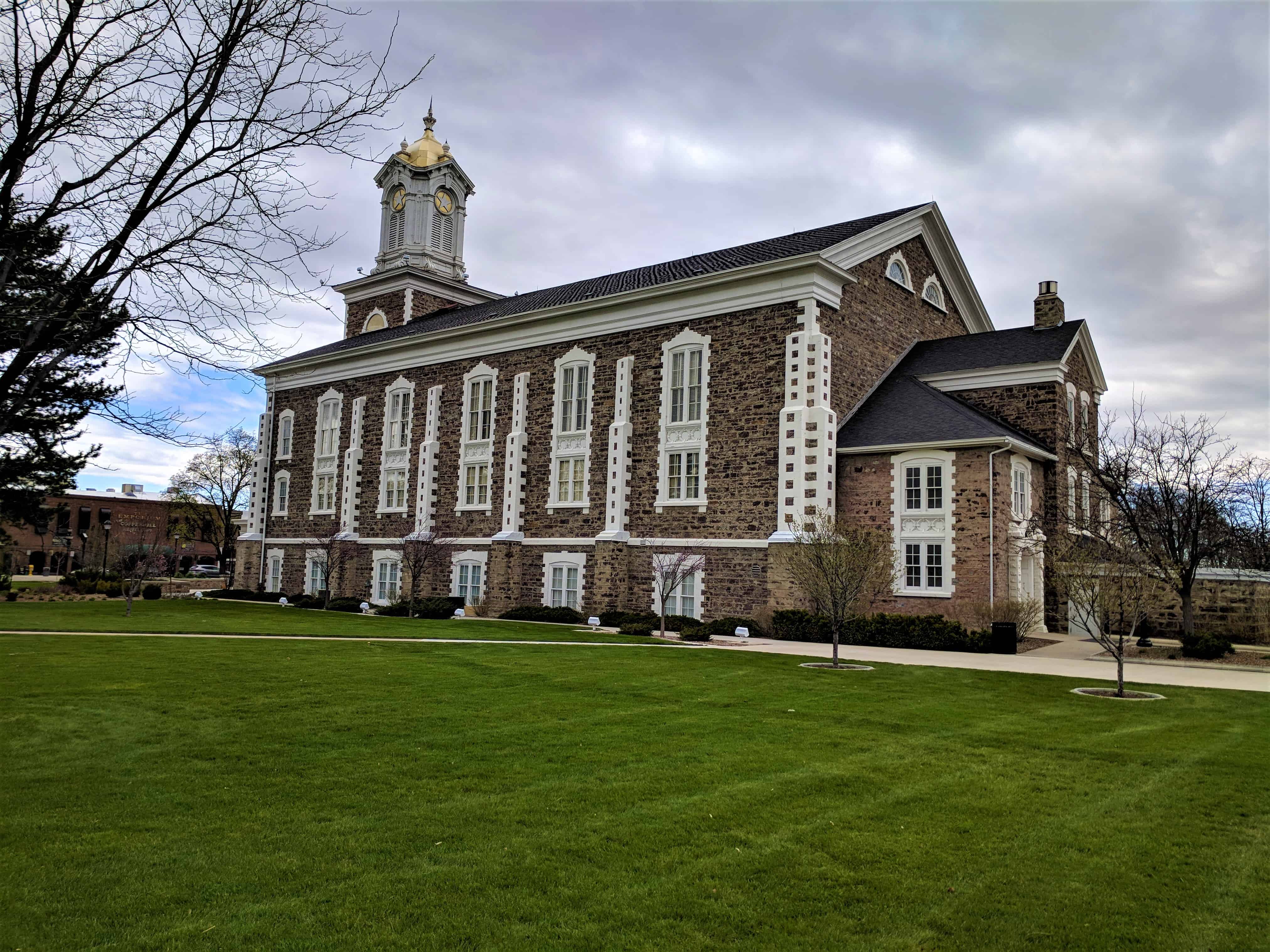
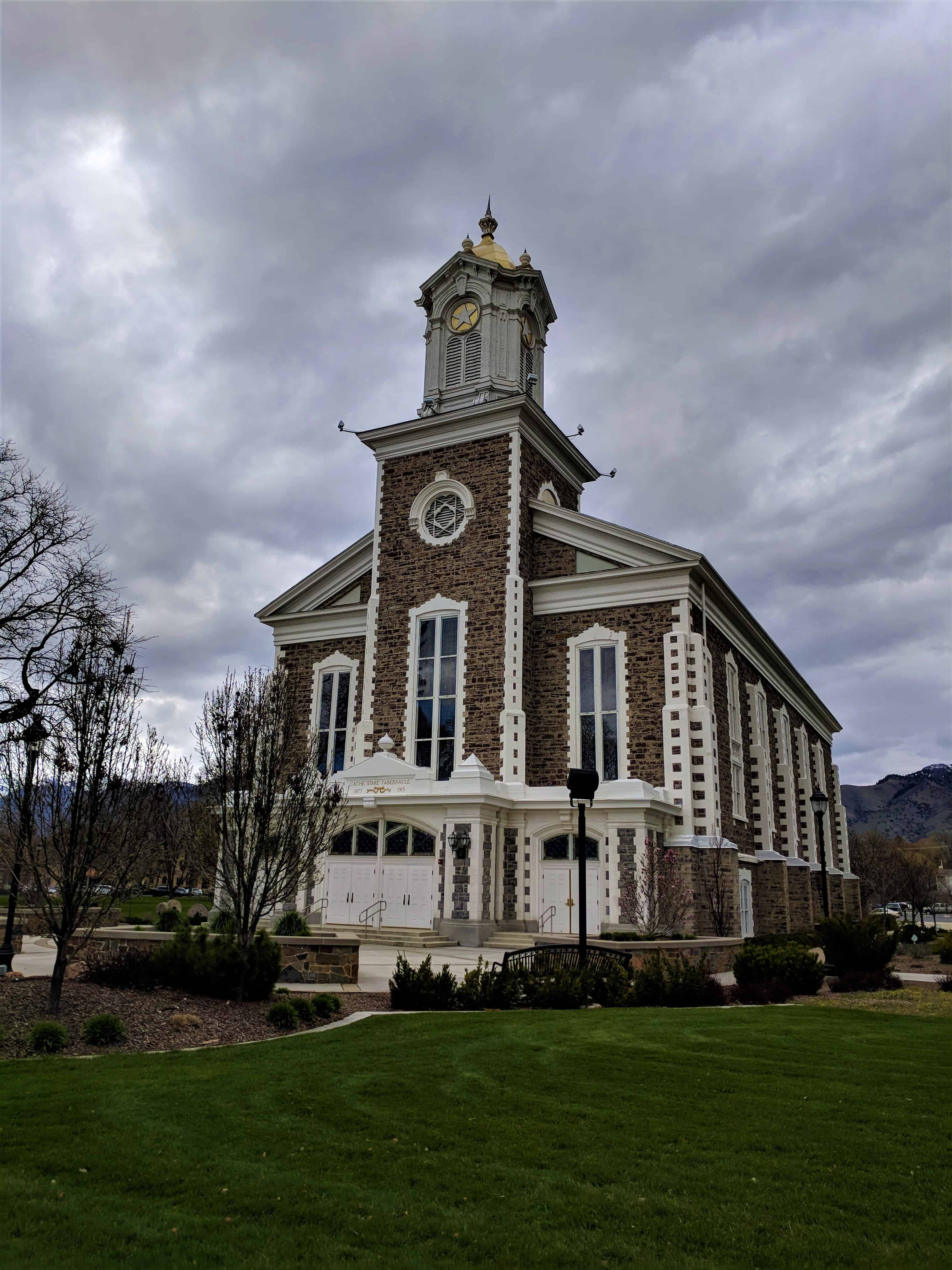
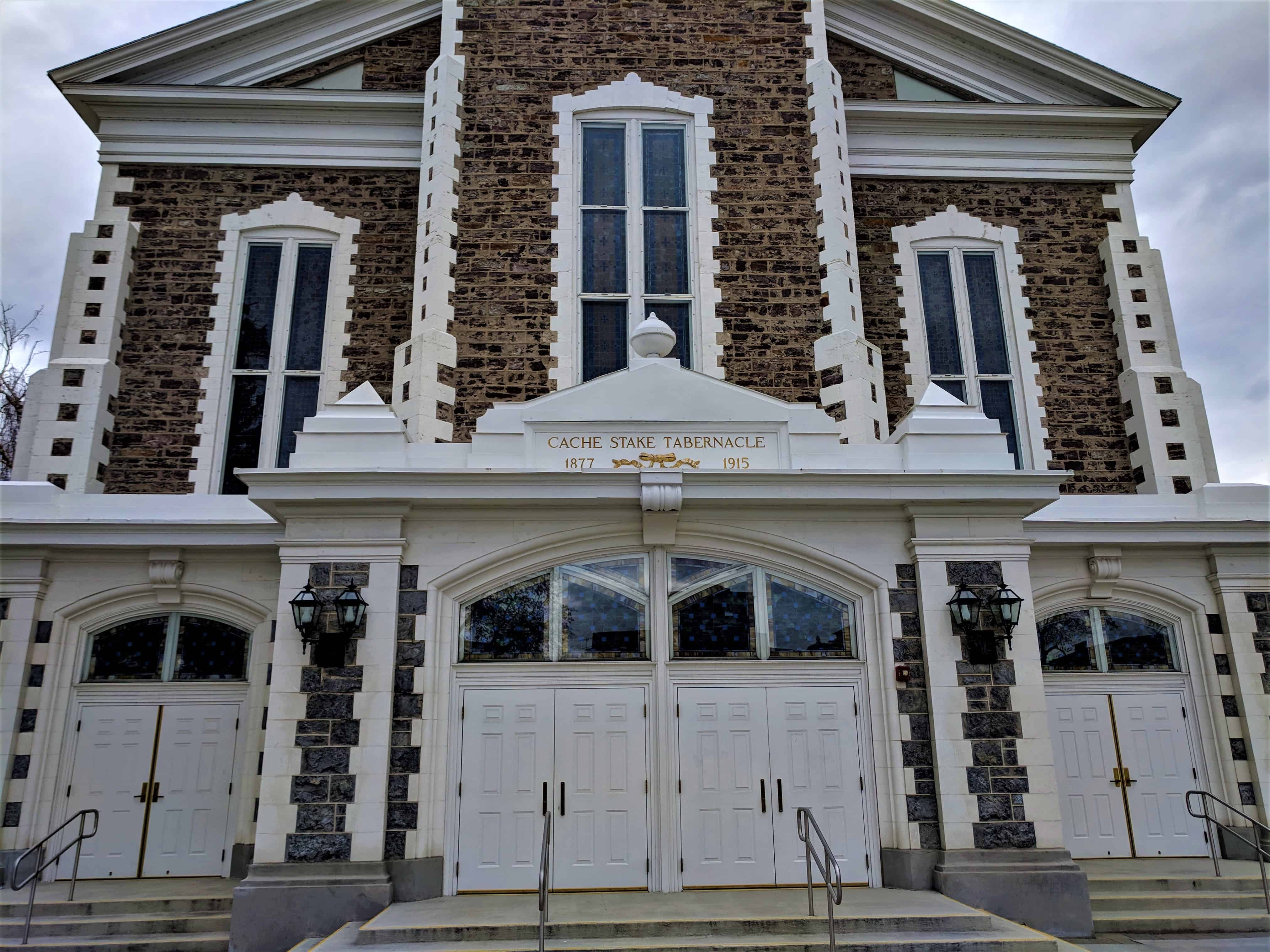
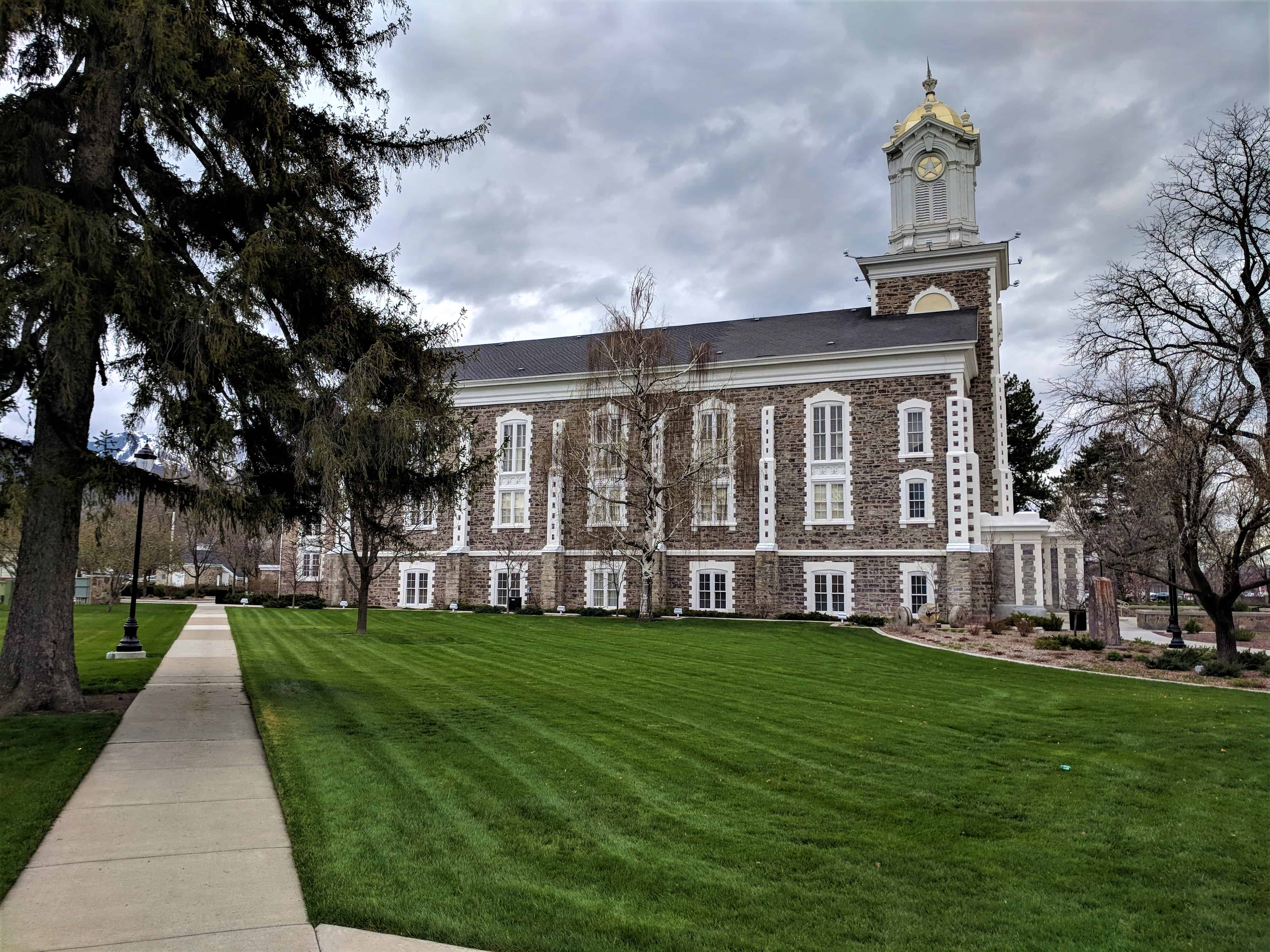
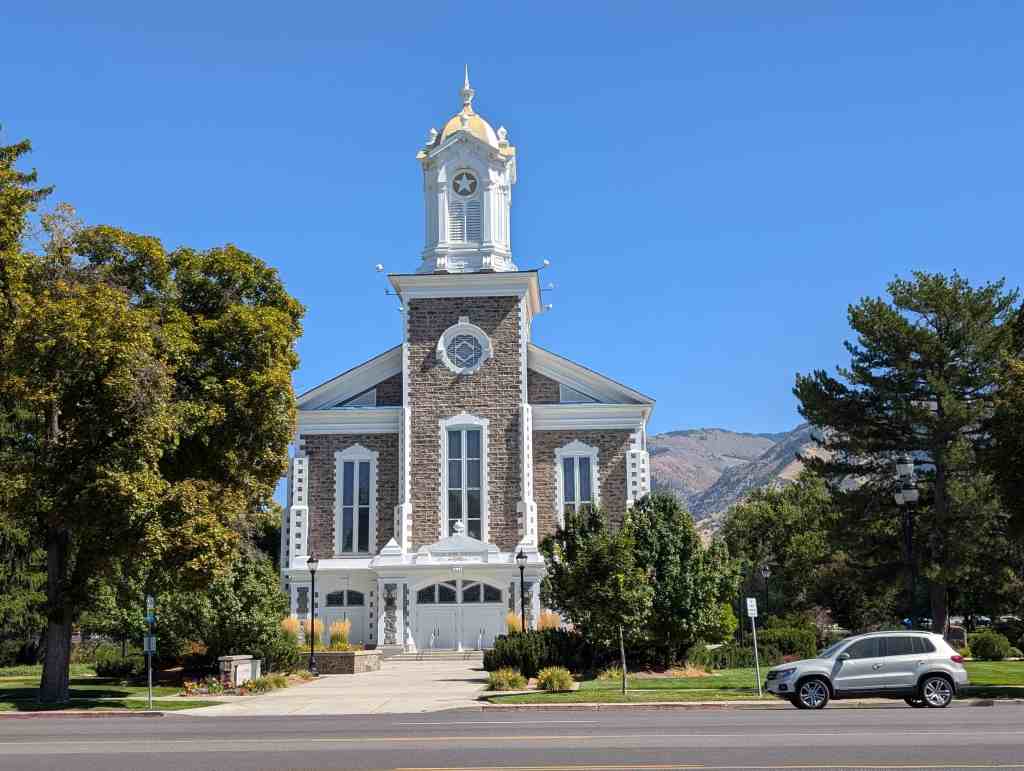
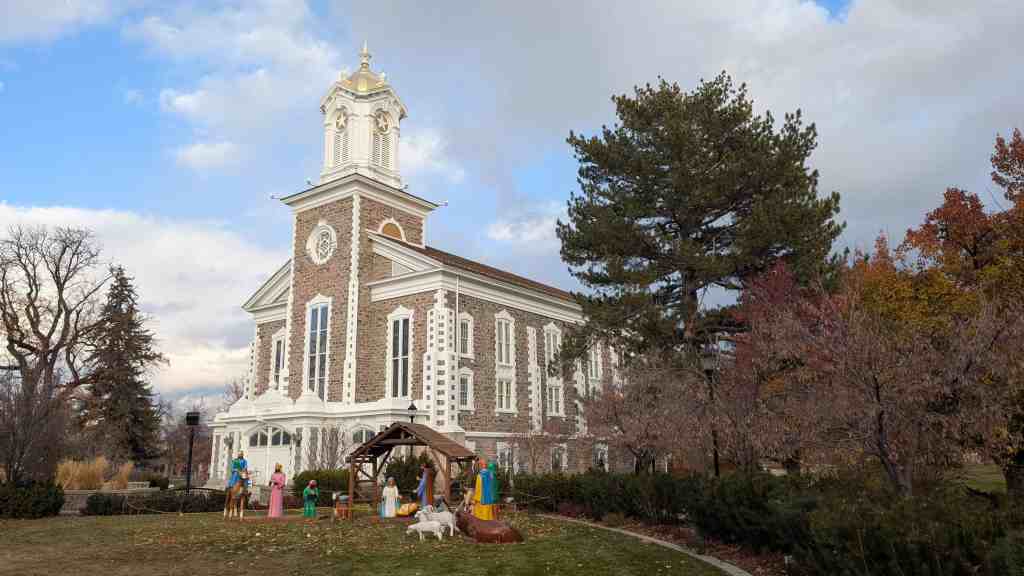
The Logan Tabernacle is a tabernacle of The Church of Jesus Christ of Latter-day Saints (LDS Church) and is located in Logan, Cache County, Utah. It is the site of many local celebrations, including the city’s annual Summerfest Arts Faire.
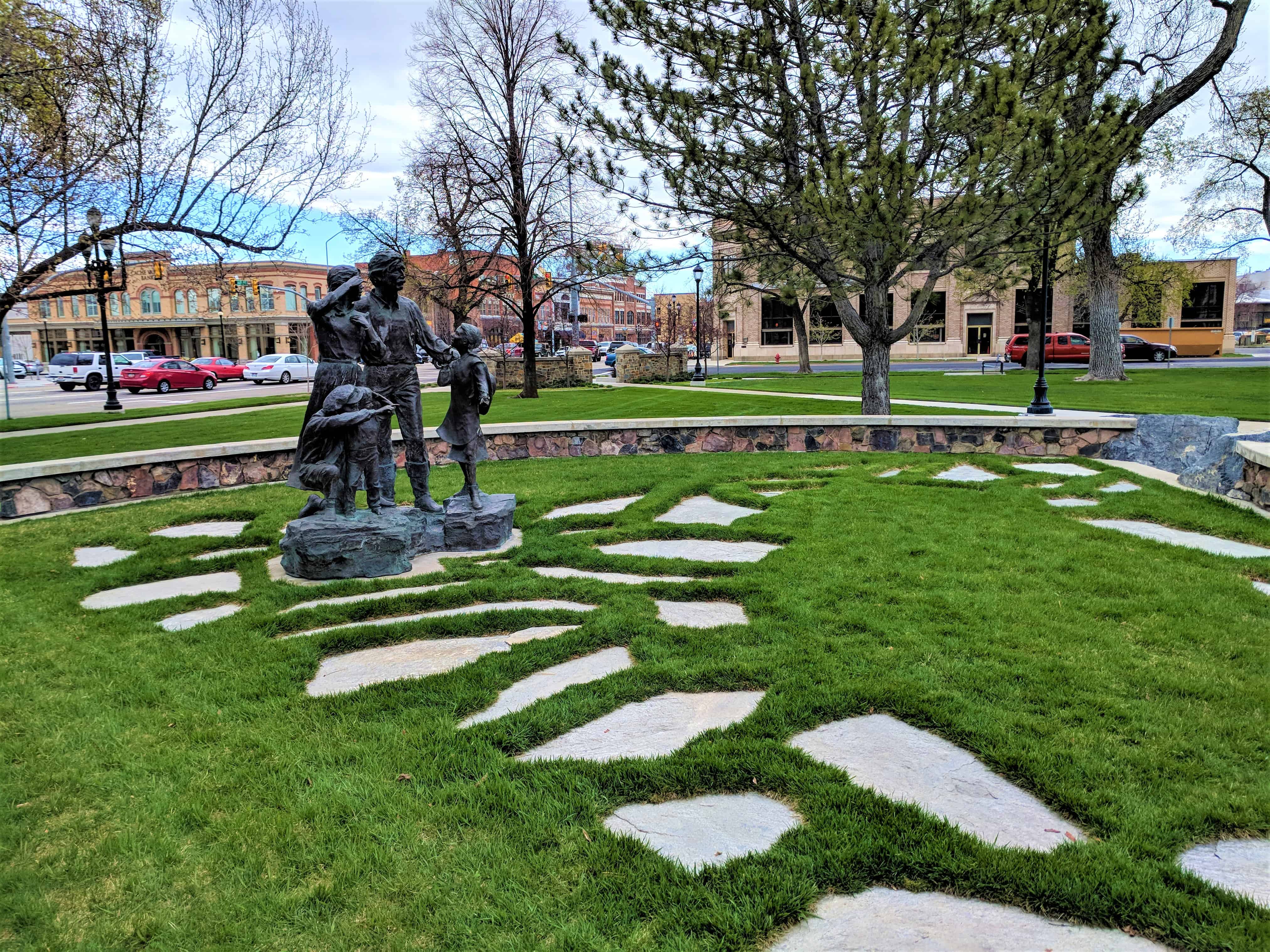
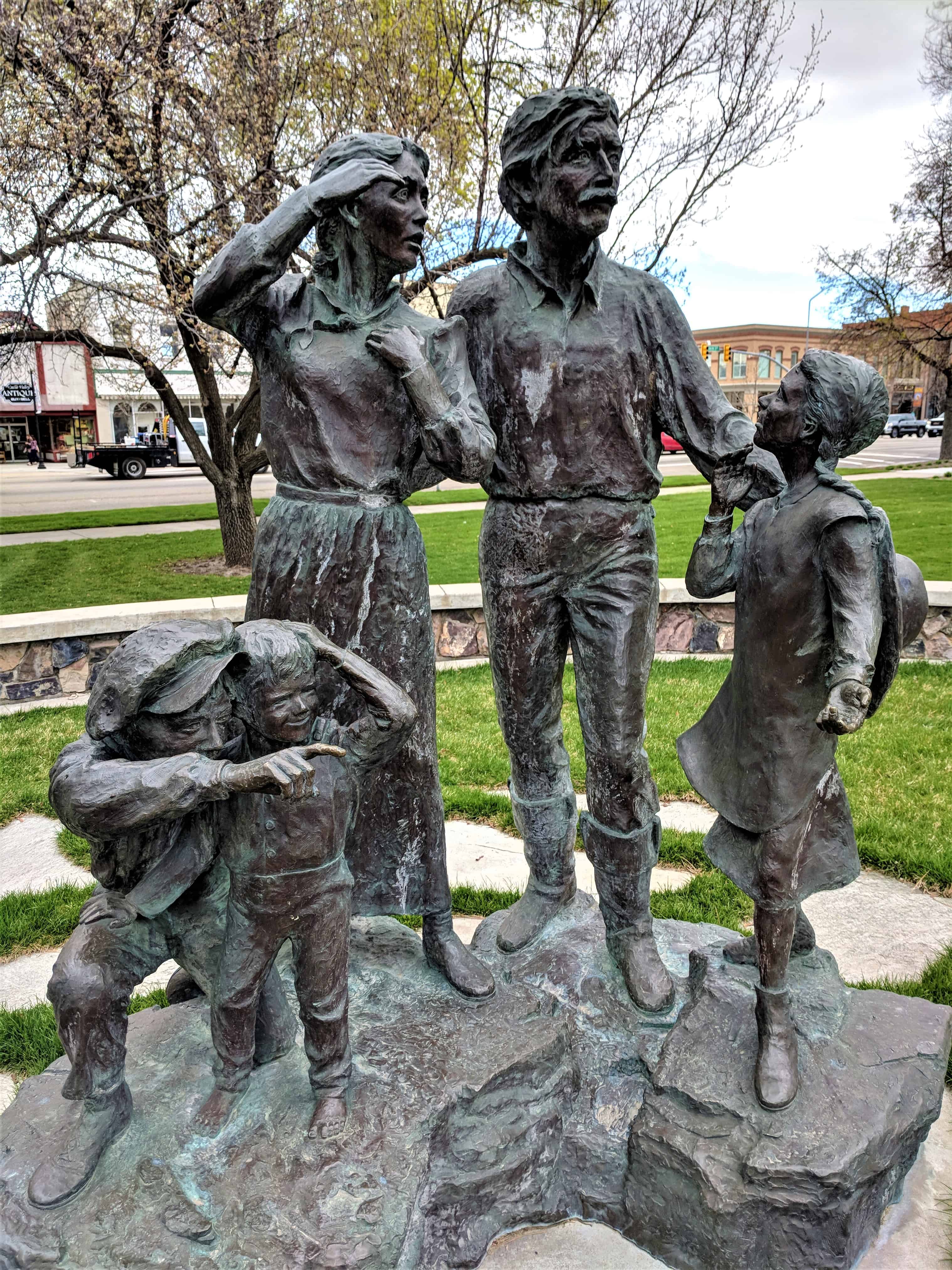
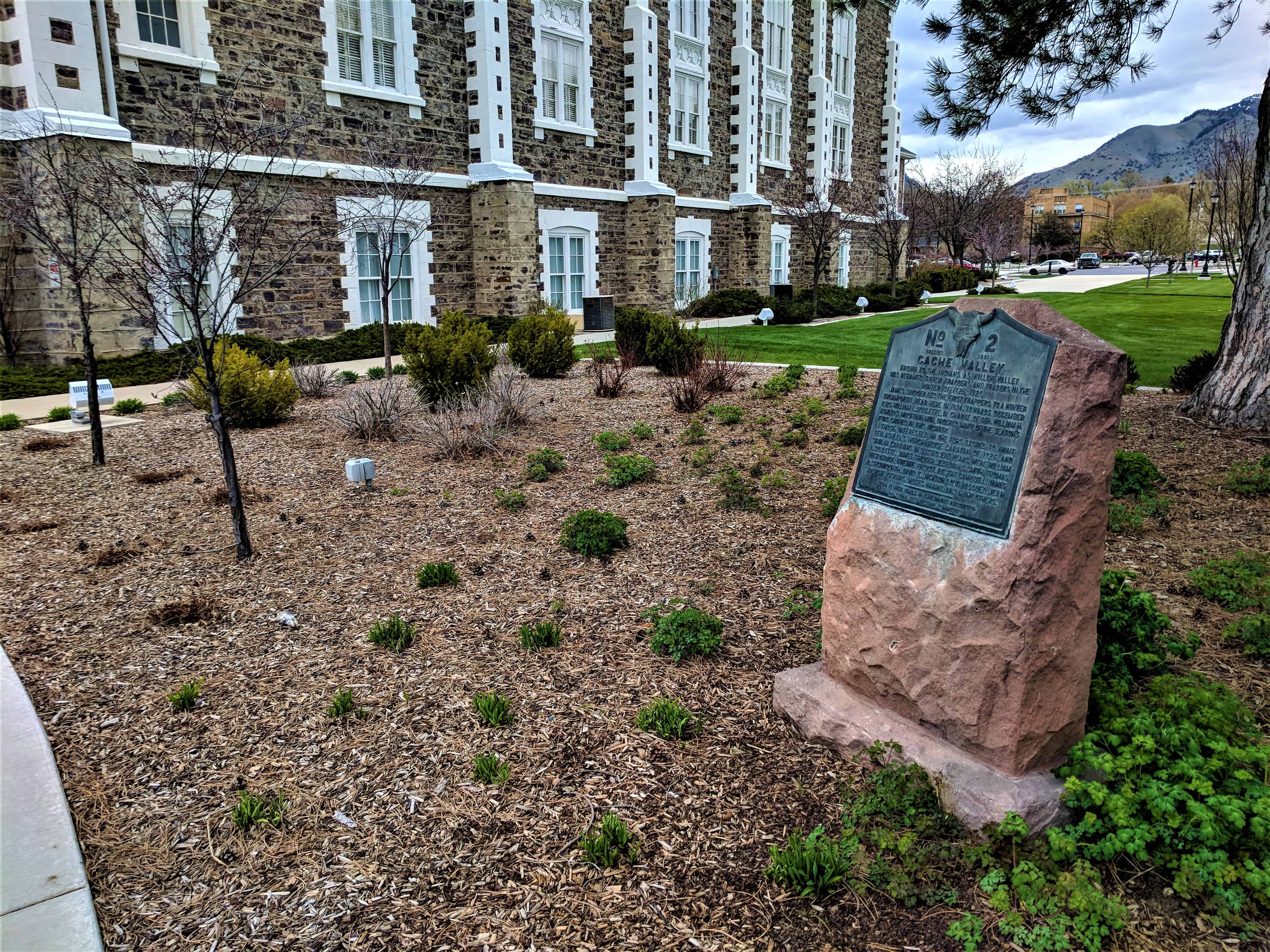
Several historic markers are located here, including:
Located at 50 North Main Street in Logan, Utah and added to the National Register of Historic Places (#75001800) on October 15, 1975.
Construction work on the Logan Tabernacle began in 1864, five years after the settlement of Cache Valley. Although the tabernacle was off to a good start with 1864 meeting, the not dedicated some I75 persons subscribing a total of $26,450 at a December 7, 1864 meeting, the project lagged for several reasons and the completed tabernacle was until 1891, more than a quarter century after the work began.
The heavy increase of population in Cache Valley led to the establishment of many wards in the area with each ward having the responsibility to construct its own meetinghouse. The building of these ward chapels absorbed most of the available labor and cash. Work on the Tabernacle was also slowed because of the absence of several church officials on missionary work and the deaths of leaders, Ezra T. Benson and Peter Maughan. After 1877 and the decision to construct the Logan Temple, the tabernacle was given second priority. In 1877, Charles O. Card, Superintendent of construction of the Tabernacle, was transferred to supervise the building of the Logan Temple, and Bishop Anthon Skanchy was assigned to supervise work on the Tabernacle until its completion.
In an 1873 visit to Logan, Brigham Young advised that the original 60 foot by 106 foot foundation be torn out and enlarged to 65 feet by 130 feet. On January 1874, the basement story was dedicated. By 1878, the upper story was sufficiently complete to hold the August quarterly conference there. The present entrance and tower were built later under the direction of George Cole and in November 1891 the completed tabernacle was dedicated by President Wilford Woodruff.
The Logan tabernacle derives its significance from its architectural qualities, its function as the primary LDS meeting hall in Cache Valley and its story of twenty seven years of construction at a time of economic austerity and when the church members efforts were strained by other building projects.
With its variant design elements, the Logan tabernacle is classically eclectic in its architectural styling. A rendering drawn prior to 1875 shows the original intention of combining Gothic, Greek, Roman, Byzantine and perhaps other classical and revival features in the building. The present edifice is very much like the building depicted in the old rendering, The dark stone tabernacle is rectangular in plan, measuring 65 x 150 feet, The height to the top of the tower is 135 feet. The upper floor consists of one room and a vestry while the basement contains eight rooms. The interior is beautifully finished with the woodworking and seats being grained, the floors carpeted and the walls and ceilings frescoed with original designs. The tabernacle is used for stake conferences and other large gatherings and will comfortably seat 4,000 people, including seating in the gallery. The building cost has been estimated at $100,000.
The general form of the tabernacle follows the usual pattern for early Mormon meetinghouses — that of a simply gabled box with an engaged central tower in the front façade. To this form is added much relief and interest through varied detailing. Features include buttresses with stone of alternating colors, quoins of white stone at the building corners and around all the window and door bays, a molded cornice with full return across the front wall and butting into the tower; a vestry which extends outward from the tower and is capped with small, stone pinnacles; soaring windows with central mullions and segmented arches; a round window with the Star of David motif within on the tower; and a wooden lantern or steeple which I is ornately milled and topped with a golden dome and several finials. While these are the dominant features, there are many others that add to the rich quality of the design.
Known to the Indians as Willow Valley – was renamed by fur trappers and traders in the winter of 1825 – 1826.
James Bridger led the first trappers to a winter encampment near here in 1824. Towards December 1825, William Sublette, in charge of Gen. William H. Ashley’s mountain men, ordered many of the season’s furs cached in this vicinity.
Those interested in the furs stored to await Gen. Ashley’s merchandise caravan of 1826, and similar caravans in subsequent years, were William I. Sublette, James Bridger, Jedediah S. Smith, Thomas Fitzpatrick, Etienne Provot, Robert Campbell, James P. Beckwourth, David E. Jackson, Louis Vasquez, Jean Baptiste Gervais, Moses Harris, and many others.
This marker is located at the Logan Tabernacle in Logan, Utah. Check out all of the historic markers placed by the Sons of Utah Pioneers and UPTLA at JacobBarlow. com/sup