• About JacobBarlow.com
  • Cemeteries in Utah
  • D.U.P. Markers
  • Doors
  • Exploring Utah Email List
  • Geocaching
  • Historic Marker Map
  • Links
  • Movie/TV Show Filming Locations
  • Oldest in Utah
  • Other Travels
  • Photos Then and Now
  • S.U.P. Markers
  • U.P.T.L.A. Markers
  • Utah Cities and Places.
  • Utah Homes for Sale
  • Utah Treasure Hunt

JacobBarlow.com

~ Exploring with Jacob Barlow

JacobBarlow.com

Tag Archives: NRHP

Harriet S. Shepherd House

06 Friday Dec 2024

Posted by Jacob Barlow in Uncategorized

≈ Leave a comment

Tags

NRHP

Harriet S. Shepherd House

The house is significant for both its architecture and the history of its early residents.. It was an early brick house by Beaver standards and is surprisingly substantial for a home built in 1876. Thomas Frazer, the local Scots mason who was the principal builder in Beaver, constructed the granary (the work is recorded in his work books) but the builder of the house itself is unknown.

The home is quite large and was considered a mansion by townspeople. The home is an “I”-house and has a central-hall plan which is quite unusual in Beaver, there being only three other examples of such a plan in town. Its style, more than any other extant building in Beaver, was influenced by the Federalist style of architecture that was so popular in the eastern United States.

Located at 190 North 200 East in Beaver, Utah and added to the National Register of Historic Places (#80003888) on February 8, 1980. The text on this page is from the nomination form from the national register.

Marcus L. Shepherd was a very prominent citizen of pioneer Beaver. He was born in Ohio in 1825 and died in Beaver in 1904. During his years in Beaver, his occupation was primarily that of a sheepman and he served on the board of directors of the Beaver Woolen Mills for many years, Mr. Shepherd was also active in the Church of Jesus Christ of Latter-day Saints, serving as a counselor to two different Stake Presidents from 1877 until his death. He was a polygamist, in accordance with church doctrine, marrying two different wives.

His first wife was Harriet S. Shepherd, who was born in New York in 1831 and died in 1888 in Beaver. She was very active in the Beaver Stake Relief Society, serving as a treasurer and counselor. It is reported that Harriet and Marcus’ second wife, Cedaressa, did not get along well, and they did not live in the same house. Harriet obtained the title to and lived in the big house at 190 North 200 East. Many senior citizens remember attending dances at the home, on the second floor which is now sub-divided into bedrooms. One room of the house also served as an early school house, and there is evidence that the granary just east of the home served as one of Beaver’s early jails. A popular story is that an Indian was incarcerated in this jail for murdering a young miner for his boots. The young man’s brother came into town to seek revenge, and when the jailer saw the brother coming, he simply opened the door to the jail. Thus, no trail was ever necessary.

Marcus L. Shepherd also married Cedaressa Cartwright Shepherd, who was the first white child born in Cedar City, Utah. She was almost thirty years his junior. Apparently, Marcus spent the latter part of his life with this second wife, for townspeople remember them living west of town at what is now a creamery, and not at Harriet’s big house. Upon. Harriet’s death, the house under discussion here went to Harriet’s daughter who lived there for many years.

The Harriet S. Shepherd House is a large, two-story, brick home with a full attic and a half basement. It has a green granite foundation and the body of the house is constructed with Beaver’s local red brick. The house has a central hall plan with two rooms flanking either side of the hall.

On the front façade, the ground floor has four windows and a door arranged with bilateral symmetry. The door has sidelights and a large transom above it. On the second floor, there are five windows, each appearing directly above its ground floor counterpart.

At the gable ends of the house, something unusual happens. There are chimney stacks at the end of the gable on the roof top, but directly under the chimney stacks are windows. A visit to the attic explains the mystery. The flues at each end of the house split and go around the windows, down through the second story to the ground floor.

The windows are all six panes over srix, ! and the lintels for the doors and windows are wood. The cornice is very decorative; with two sets of dentils and a partial boxed return at the gable ends.

There is a granary on the east side of the house that was built by Thomas Frazer, the local stonemason and contractor. It has a black rock foundation and is constructed of red brick with lines that are reminiscent of the big house.

Corn Creek Campsite

01 Sunday Dec 2024

Posted by Jacob Barlow in Uncategorized

≈ Leave a comment

Tags

Clark County, Nevada, NRHP

Corn Creek Campsite

Added to the National Historic Register (#75001105) on March 4, 1975.

Lydia Puzey House

30 Saturday Nov 2024

Posted by Jacob Barlow in Uncategorized

≈ Leave a comment

Tags

NRHP, utah

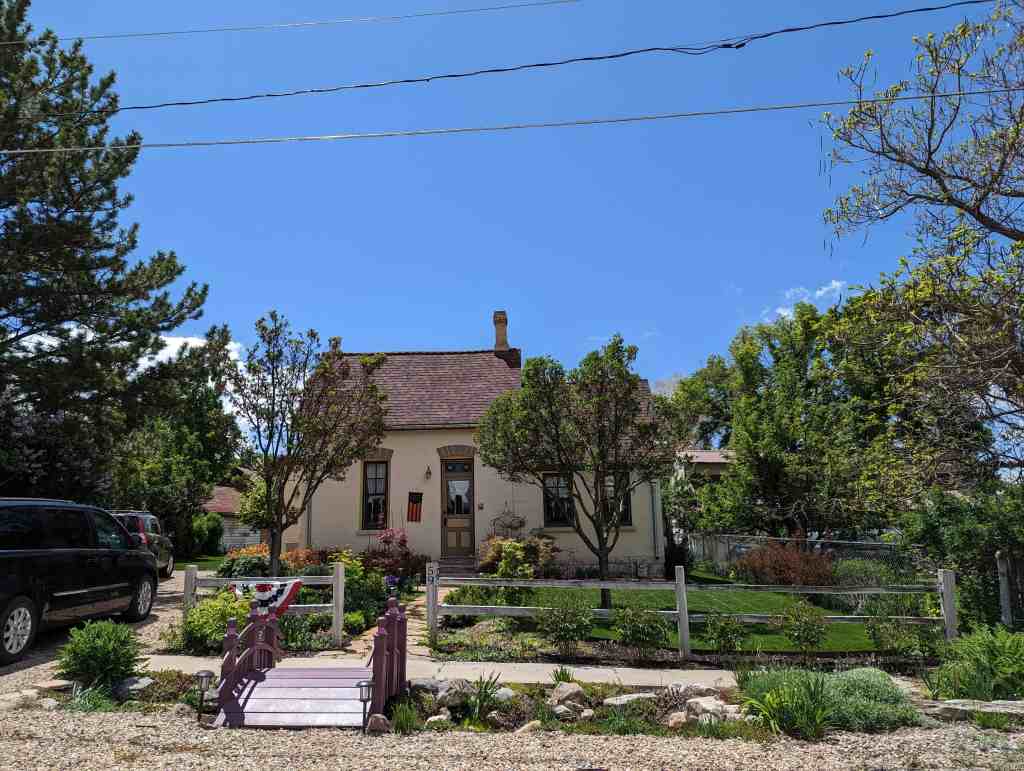
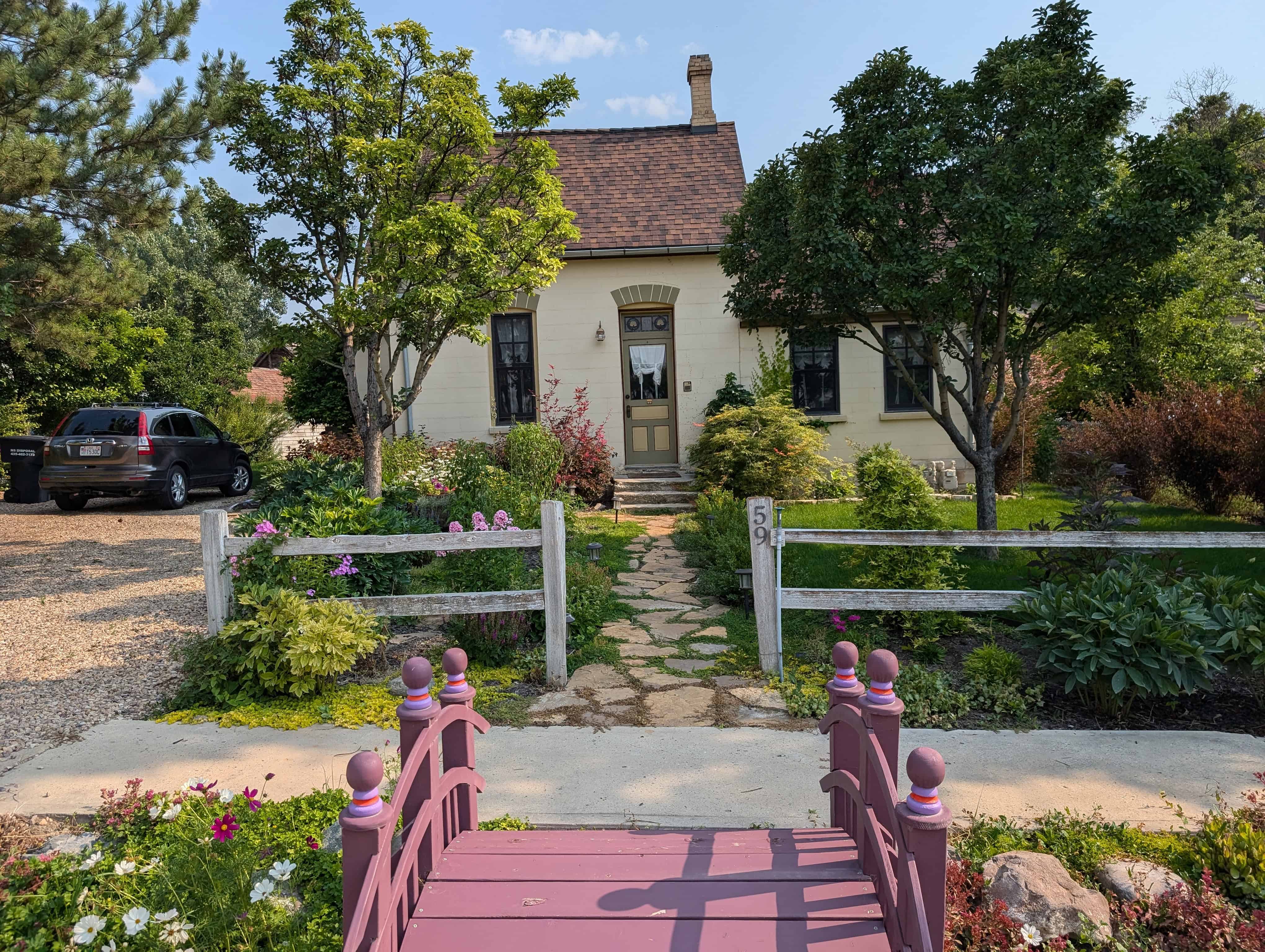
Lydia Puzey House

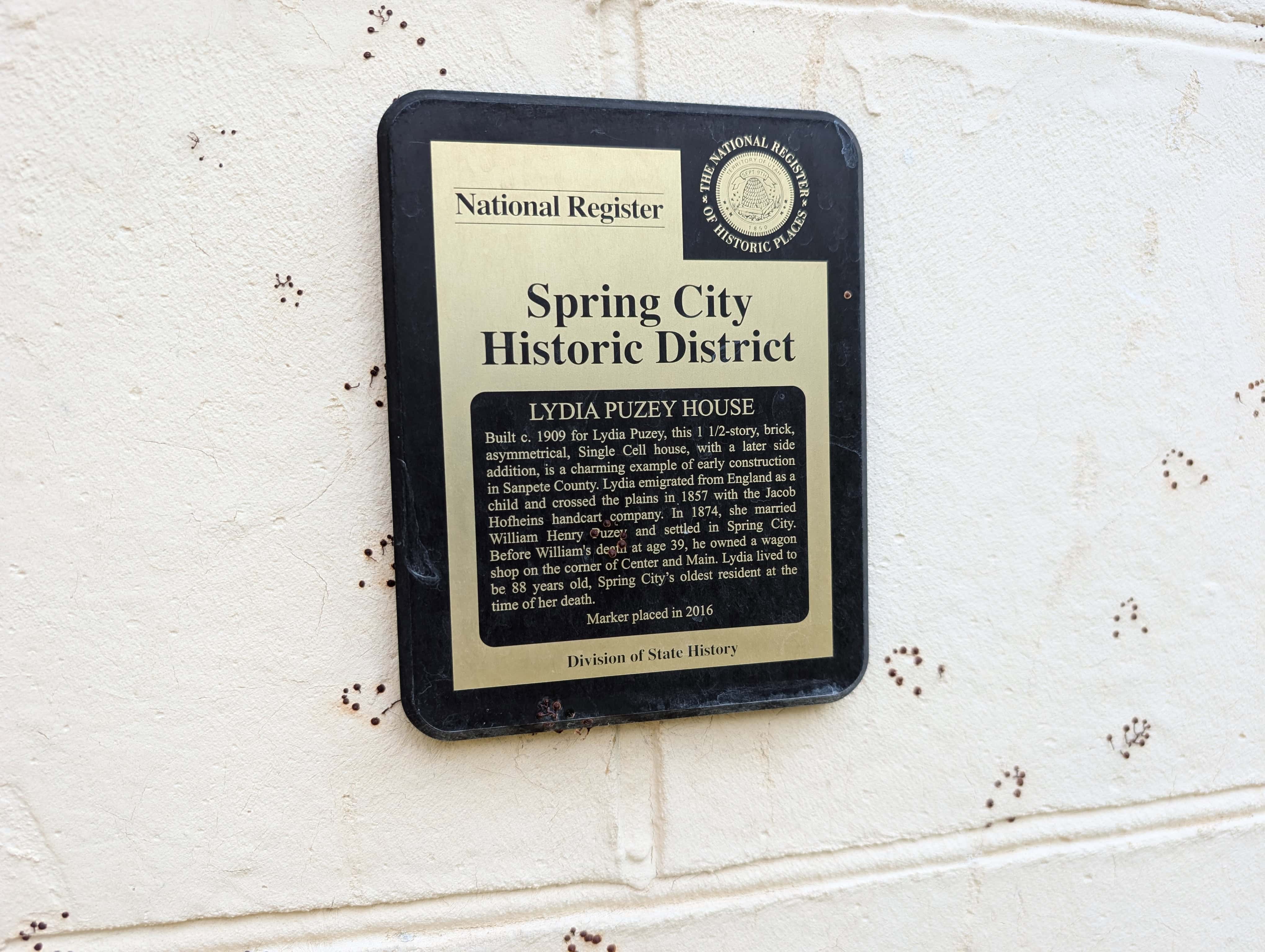
Built c. 1909 for Lydia Puzey, this 1 1/2-story, brick, asymmetrical, Single Cell house, with a later side addition, is a charming example of early construction in Sanpete County. Lydia emigrated from England as a child and crossed the plains in 1857 with the Jacob Hofheins handcart company. In 1874, she married William Henry Puzey and settled in Spring City. Before William’s death at age 39, he owned a wagon shop on the corner of Center and Main. Lydia lived to be 88 years old, Spring City’s oldest resident at the time of her death.

59 West Center Street in Spring City, Utah

Thomas Frazer House

29 Friday Nov 2024

Posted by Jacob Barlow in Uncategorized

≈ Leave a comment

Tags

Beaver, Beaver County, Historic Homes, NRHP, utah

Thomas Frazer House

The oldest section of the Thomas Frazer House (the middle part) was built in 1870 while an addition to the east was completed in 1872. Both of these portions of the house are constructed of a basalt-like black rock. The third section of the house was completed c. 1890 and was constructed of a pink tufa rock. All facades, except the north, display well cut and finished stone masonry.

The house was built by and for Thomas Frazer, a Scotch immigrant and convert to the Mormon church. Frazer was a stonemason by trade and worked in this capacity both in Scotland and Utah. In 1868 his mason’s skills were requested in Beaver, and Frazer initiated a vigorous building campaign in that pioneer town.

The Thomas Frazer House is one of the earliest permanent homes in Beaver, a town that was originally settled with log cabins and dugouts some 20 years prior to Frazer’s arrival. As the town gradually acquired prosperity, people desired more permanent, comfortable houses and these were mostly built by Frazer and his apprentices.

In his own home Frazer paid attention to special details, such as an inscription plaque of sandstone, bearing the date (1872) and the initials of Frazer and his wife Annie. Another example would be the bas-relief portraits, in green granite, of Frazer and Annie that enfrom the south door.

Besides such details, the house also displays several of the characteristics of Frazer’s style of building. These characteristics include: 1) stone bay windows, 2) dormer windows, 3) fancy work along the cornice, and 4) exacting treatment of both the cut stone and the mortar work. In summary, the Thomas Frazer House is significant not only as a fine example of pioneer architecture, but also as the residence of the architect/building who profoundly shaped the character of the town of Beaver.

The Thomas Frazer House is located at 590 North 300 West in Beaver, Utah and was added to the National Historic Register (#78002650) on November 16, 1978. The text on this page is from the nomination form from when the home was added to the national register.

The Thomas Frazer House still retains its original appearance and is in excellent condition. It is a one story stone house, and due to later additions, it has a low, linear character. The two oldest parts of the house display Greek Revival and Federalist Revival elements in the partial boxed return cornice (with fancy brackets) and the door surrounded by transom and side lights. The gabled roof is of medium pitch and is topped by three chimneys.

The nature of the stonework is very fine and exacting and this contributes to the rather formal character of the house. The stones are laid up in broken courses, and each block is nicely squared and finished. The mortar is beaded and originally stained white. The house contains two stone bay windows and one dormer window that used to give light to the attic/loft.

There are four types of rock used in the Thomas Frazer House. The first and most prevalent is a basalt-like black rock. The two earliest sections of the house were constructed out of this stone. The second type of rock is a pink tufa, which is much softer, and therefore easier to work with than the black rock. The third and last section of the house is built with this pink rock. Red sandstone and green granite are used a lintels and decorative motifs throughout the exterior.

The decorative elements and the care lavished on the construction of the house emphasize the fact that the house was built by Thomas Frazer, the town stonemason, as his own home. While Frazer’s workmanship was always excellent no matter what he was building, his own home displays extra small decorative motifs and items of interest.

Rochester-Muddy Creek Petroglyph Site

21 Thursday Nov 2024

Posted by Jacob Barlow in Uncategorized

≈ Leave a comment

Tags

Emery County, NRHP, Petroglyphs, Rock Art, utah

Rochester-Muddy Creek Petroglyph Site

The Rochester-Muddy Creek Petroglyph Site / Rochester Rock Art Panel is located near Emery, Utah in Emery County. It was added to the National Register of Historic Places (#75001803) on June 26, 1975.

Provo Downtown Historic District

15 Friday Nov 2024

Posted by Jacob Barlow in Uncategorized

≈ Leave a comment

Tags

Historic Districts, NRHP, Provo, Provo Downtown Historic District, utah, utah county

The Provo Downtown Historic District was added to the National Historic Register (#80003980) on May 1, 1980.

Related posts:

  • Downtown Provo
  • Provo, Utah

The text below is from the nomination form for the National Historic Register:

A central business district conveys the image for a city. The Provo Downtown, Historic District’s “attractive and substantial buildings,” built bylocal craftsmen and builders, reflect business and building booms in the cityin the 1880’s, 1900’s and 1950’s. The structures document the history of thearea and its residents, some prominent (T.N. Taylor, Jesse Knight, O.K. Berg, Alex Hedquist, Ercanbach and Sons, and the Hoover Brothers), some infamous (S.S. Jones, Russel S. Hines), some obscure. The buildings remain as resources to exploit for their visual beauty, style, craftsmanship and as reminders of the past out of which the present is created.

Following Provo’s development in the 1850’s of a commercial center at the corner of 5th West Street and Center Street, business activity moved east to the present Downtown Historic District in the late 19th Century. The earlies buildings in the District, two-story brick Victorian commercial structures, date from the late 1870’s and the 1880’s, the documents of a boom in the rich Tintic mining district to the west. Other commercial and public structures, one to three stories tall in the Victorian, Renaissance and Classical Revival styles, illustrate eras of business prosperity in the 1900’s. Buildings from the 1950’s and 60’s, along with extensive “modernization” of most of the earlier structures, reflects the development of the nearby Geneva Steel mills and the rapid expansion of Provo’s Brigham Young University in the period.

Provo’s downtown historic district is one of the two or three most intact and architecturally significant Main Streets of Utah’s middle-sized cities. Provo’s commercial district is probably the most architecturally legible of these. While most of Utah’s Main Streets developed loosely around a central block with a Mormon tabernacle as the focal point, Provo’s commercial district presents a very distinctive “crossroads” at the intersection of Center and University Streets. Two large Victorian commercial blocks, one with a clock tower, mark the two northern corners of the intersection, the Classical Revival City and County Building and the Gothic Revival Provo Tabernacle (National Register) prominently occupy the southeast and southwest corners. Almost a dozen of the commercial structures on the north side of Center Street are now owned by a partnership who have announced plans to renovate the buildings and restore the facades.

The History:

In March 1849, John S. Highbee led a company of about 150 persons, bringing their goods, cattle, equipment and provisions into the Utah Valley. They formed the nucleus of the tour of Provo City. The company had been sent by Brigham Young, President of the L.D.S. (Mormon) Church, and as part of an effort to secure a territory in which to establish a theocratic hegemony.

In keeping with the ideals of Jeffersonion agrarianism which infused Mormon philosophy and practice, and the necessities of producing food and feed, Provo was surveyed (1850) as a plot one mile square surrounded by several acres of land put into eight lots. This grid pattern was the “Plat of Zion” pattern used repeatedly by the Mormon settlers.

Brigham Young had instructed the settlers, particularly the church and city officials, to establish their homes and farms in the town site. When many chose to build outside the city, those on the townsite petitioned Brigham Young (1852) to appoint church leader George A. Smith to move to Provo and regulate the affairs of Utah County. Smith did so, and with his encouragement the frontier town with its accompanying industrial and commercial enterprises began to emerge.

The first merchant in Provo was Andrew J. Stewart who operated a general store out of his home on what is now 5th West. He later moved his business into a building he had erected on what is now Center Street the street which would become the center of Provo’s commercial district.

By the end of 1852, Provo had several industries and businesses – a pottery for brown ware, two grist mills, one sash factory, three cabinet shops, one wooden bowl factory, three shoe shops, two tailor’s shops, one meat market, two store houses, and two lime kilns. The Deseret Manufacturing Company organized by John Taylor had brought in sugar refining machinery from England and had obtained land for raising sugar beets. Provo also had two hotels.

The hotels and most of the businesses were clustered at 5th West and Center Street. However, other businesses followed and established themselves east along Center Street. These two streets had been surveyed eight rods wide, with other streets five rods. As the demand for city lots increased, Plat 13 of Provo city was surveyed (1856) on the Mormon Tabernacle. It is obvious from the additional placement of the tithing yard diagonally across the street from the Tabernacle, that the city organizers planned for this east end of Center Street to be used for religious activities rather than commercial. Eventually even the county and city governmental buildings were located at this end.

However, commercial establishments did not remain clustered on the west side, but rather pushed into the east – even including on the LDS blocks. The two streets – 5th West and University – were to become the focal point of the west-east commercial development in the City and the conflicts between the west and the east side merchants which would spill over into politics.

The arrival in Utah of the United States Army (1857) in an effort to control the seemingly rebellious Mormons was a stimulation to the economy of Utah and particularly Provo. The several thousand Mormons from Salt Lake City significantly, the soldiers from Camp Floyd needed materials and supplies.
When the army finally left the area in July of 1861, more than $4,000,000 worth of Government property was sold at a public auction for about $100,000.

One of the merchants who had prospered because of the residence of the soldiers was Samuel S. Jones. He had begun his mercantile business in Camp Floyd, first by making adobe bricks for the fort and then in partnership with William Daley by selling vegetables to the men. After the army left, Jones who had bought some of the government property, established a business with a Jewish merchant Benjamin Buchman.

This partnership and its later dissolution are symbolic of the sometimes cooperation, more often competition, between the Mormon and non-Mormon merchants in Provo. The competition intensified with the Mormon cooperative effort.

In a 1867 church meeting, Brigham Young exhorted the Mormons to maintain economic self-sufficiency and to trade only among themselves. He soon afterward suggested cooperative merchandising. Late in 1868, the ever enterprising S. S. Jones organized a group of Mormon merchants including David John and A. O. Smoot, at the “Provo Co-Operative Institution.” Utah’s first cooperative store – the “West Co-Op” was established on Center Street in the building built by Andrew Stewart. S. S. Jones became the manager.

A flood of “Gentile” business never did come into Provo as it did Ogden. Although Provo Canyon was examined as a possible route for the Pacific railroad, the “iron horse” found its way to Ogden rather than to Provo. After 1869, Ogden’s population and commerce increased rapidly in comparison to Provo’s. Provo, as the W.P.A. writers put it, “maintained its identity as a solid Mormon town.”9 There were non-Mormons who came to Provo. Some were successful businessmen – such as the Bee brothers whose twin buildings which housed their harness and mercantile businesses still stand. The entire Bee family – Jane Bee, Jennie Bee Jones, Fred Bee, Cal Bee – was involved in Provo commerce. Earlier than the Bee family was the Freshwater family who began business in Provo in 1871 and continued successful through the 1920’s. Samuel Schwab developed a clothing business which attracted customers from throughout the state.

There was a building boom in Provo in the late 1860’s. Several businesses – many substantial brick buildings of two or more stories – locate along Center Street. The quagmire in the street was eliminated by grading in 1865.10 The Provo Woolen Mills was begun in 1869 on a block just north of Center Street. It would become one of Provo’s major industries.

Some of the early commercial buildings in Provo were built of wood. Man} others, in accordance with advice given by Brigham Young, were made of adobe. Adobe yards were located in what is now North Park. In 1866, Philander Corton built Provo’s first kiln, and by 1874, W. Alien’s brickyard was employing ten people.11 Many of Provo’s commercial buildings built in the 1850’s boom, suet as the West Co-Op, were constructed of adobe and brick.

Samuel Liddiard established a cement business in Provo in 1865. His son – the Liddiard Brothers – continued the operation, building many of the commercial structures on Center Street. (The Cal Bee building). Later, S. H. Belvant established a stone work business (1890) examples of which are still standing (Smoot building). E. J. Ward and Sons (1889) became the Central Lumber Co. (1904), competing with the Beebe and Smooth Lumber Companies (1870). The Provo Foundry and Machine Company (1885) produced much of the heating and plumbing systems included in Provo’s buildings.

The building boom of the 1860’s included the establishment on West Center Street in 1866 of the Taylor Furniture Company.13 Members of the George Taylor family established a number of successful Provo businesses – the West Side Business District.

However, the Provo commercial district had continued to move east along Center Street, and in 1883, Samuel S. Jones erected a handsome store (demolished) on J Street, now University Avenue. The next year the first bank in Provo, the First National Bank of Provo (1882), moved into its own building just down the street from Jones. Although businesses would continue to prosper and new ones would continue to be established on West Center Street, the next years would see the shift in Provo’s Commercial District to the east. The impressive buildings on either side of University Avenue (the Excelsio, the Union Block, the Knight Block) remain as evidence of this shift.

Part of the impetus for new businesses and new buildings in the 1880’s was the spinoff from the mining boom which had been going on in the Tintic mining district since the late 1870’s. Many who made their fortunes in Tintic came to Provo and established businesses and residences, building substantial homes and often extravagant buildings. Russel S. Hines who built the Palace Drug Store and Saloon which is still standing, was but one example. The relationship between Tintic and Provo would continue as other businesses and buildings were established and built in Provo with capital made in Tintic.

Charles E. Loose used his Tintic-made fortune to buy up much of Provo’s commercial property. The Loose Block, though fairly modest, remains as part of that legacy.

Jesse Knight who attempted to establish “clean” mining towns built one of the most impressive of Provo’s buildings – the Knight Block on east center where the East Co-Op had stood in the Mormon tithing yard. He became the symbol and the power of Provo’s east-side in the way Thomas N. Taylor became that for the west side.

for the west side. In 1883, construction began on a new LDS Tabernacle on the same block as the older one, a massive structure of brick and stone. Though the structure was not completed until 1896, its beginnings were part of a new building boom.

In 1888, the Provo Enquirer ran headlines that read, “Boom, Boom, Boom.” Entrepreneurs and real estate investors from the East and the West came to Provo and began paying exorbitant prices for real estate. The Provo Chamber I of Commerce which had been organized the year before to stimulate the growth in the community, published a 50-page pamphlet describing the “Garden City” of Utah.

In 1889, the Rocky Mountain Bell Telephone Company secured a twenty-year franchise and eventually built a building on the east side. The North American Asphalt Company began paving sidewalks, North and University Avenue (then called Academy Avenue). The Provo Lake Resort was established on Utah Lake.

The “Boom” did not last long, however. During the winter of 1891-92, only a few of the new real estate dealers renewed their licenses. The national panic of 1893 further aggravated the situation. Many businesses failed including Samuel S. Jones.

There were those able to rise out of the panic. One was George Startup who began his candy business in 1895. By 1897, the business had grown so much that he and his brother Walter built a little factory on 3rd West which still remains. The large factory built in 1900 on the south side is on the National Register of Historic Places. Candy-making was a popular business in Provo at the turn of the century, with enterprises so numerous, Provo could have been called the “Candy City”, a situation made possible by the large sugar beet industry in the area.

The turn of the century saw a continuation of the West-East side controversy, a culmination in the 1905-11 fight over the location of the railroad depot and the conclusion in favor of the east side as more businesses continued to locate there and north along University Avenue.

The prominence of this section of town was even more emphasized by the building of the public library (1907, since greatly remodeled), the Provo Post Office (1909, since demolished) and finally, the replacement of the Utah County Courthouse (1873, demolished) with an impressive new City and County Building (1902-26). In 1976, Provo City Offices were moved out of this building into a new complex built on block 63, replacing the Provo High School Building and part of a reversing trend of the commercial and public interests building on the west end.

The 1920’s saw the rise of the automobile industry in Provo and brought about one of the last major changes in the commercial district, as automobile repair and service shops established themselves along the south side of Center Street replacing several residences and filling up what had been vacant land. Some of these businesses were the descendants of earlier harness and wagon businesses.

nesses. The post World War II economic boom had a major impact on the business section of Provo. With the completion of the General Steel Plant in 1946, the rapid expansion of Brigham Young University which was only recently leveled, the proliferation of new housing developments to accommodate the many new families which moved into the area, the downtown merchants responded with effort to “modernize” their buildings. These efforts, suing sheet metal and stucco, were the most destructive changes to the architectural character of the district. However, recently there is evident a realization that restoration of the architectural heritage may now be a way to revitalize the downtown whose vitality is being sapped by the development of suburban malls.

Boundaries:

The northwest corner of the Provo Downtown Historic District begins approximately 180 north of the intersection of Center Street and 300 West along the East curb of 300 West. The boundary follows east along the back property lines of the buildings facing south on Center Street (buildings 58-20) to a point at the northeast corner of building # 20 where it turns north to follow along the back property lines of buildings which face east on University Avenue (buildings 16-12).

At the northwest corner of building 12, the boundary turns east again across University Avenue to the northeast corner of building 11 where it turns south along the back property lines of buildings 11 and 10, then east along the back property lines of the buildings facing south on Center Street (building 8-1) to the west curb of 100 East where it turns south following the west to the corner of 100 East and 100 South were it turns west, following the north curb along 100 South to 100 West where it turns north along the east curb of 100 West approximately 200 feet where it turns west and follows the back property line of the buildings facing north on Center Street (buildings 76-59) to 300 West where it turns north along the east curb back to the point of beginning.

Included Sites listed here: Provo Center Street

Caleb Baldwin House

10 Sunday Nov 2024

Posted by Jacob Barlow in Uncategorized

≈ Leave a comment

Tags

Beaver, Beaver County, Historic Homes, NRHP, utah

Caleb Baldwin House

The Caleb Baldwin home is significant because its age and architectural design represent the first major period of Beaver’s growth and development. As permanence and prosperity arrived, small one and two room homes of logs were replaced by small two and three room homes of stone and brick. During this rebuilding phase, the two room hall and parlor house form (with or without rear extensions) was the most common in Beaver. The Baldwin house is one of a number of such houses which continue to stand and which in their typical nature contribute to a full understanding of Beaver’s 19th Century architecture.

Located at 195 South 400 East in Beaver, Utah and added to the National Historic Register (#83003834) on November 30, 1983. The text on this page is from the nomination form for the historic register.

This hall and parlor house was constructed of pink rock c. 1885 for Caleb Baldwin and his family. It has four windows and a central door arranged symmetrically across the front facade and end wall chimneys. It displays a broad Greek Revival style cornice around the eaves and above each window and door is a large pink rock lentel. The home rests upon a foundation of black rubble rock and the stonework on the front facade is well squared. On the gable ends, the rock has been roughly cut and layed at random, while facade displays coursed ashlar masonry. The home has an original rear extension that forms a T-plan. At a later date, probably c. 1900, a pink rock addition was built on to the rear of the house, giving it its current elongated T-plan. All the pink rock walls are 18 inches in thickness and all the windows in the house are splayed, being wider on the interior than the exterior. A deteriorated shed roof frame addition, c. 1910, stands on the west side of the house but does not detract from its historic integrity.

Tule Springs Ranch

27 Sunday Oct 2024

Posted by Jacob Barlow in Uncategorized

≈ Leave a comment

Tags

Clark County, Las Vegas, Nevada, NRHP, Ranches

Floyd Lamb State Park / Tule Springs Ranch

The subject project is an architectural/historic assessment and evalution of the architectural resources of the Floyd Lamb State Park. The Division of State Parks of the State of Nevada currently plans to develop the Park into a facility providing for greater intensity of public use, offering a variety of recreational activities. The report will also provide an assessment of the effects of the proposed park development upon existing resources.

The Park served as a city park for the City of Las Vegas from 1964 to 1971, as a private commercial entity from 1959 to 1964, and as a working ranch/guest ranch from 1941 to 1959, during which period most of the existing structures were built. The property possesses some historical values due to its uses during these periods as well as prior eras, and some architectural values due to the construction, planning, and design of the ranch complex.

The purpose of this report is to assess the architectural/historical significance of the park and its structures in order to provide a basis for the development of appropriate plans for new facilities and modifications of existing park structures or facilities,

Tule Springs Ranch was added to the National Register of Historic Places (#81000383) on September 23, 1981. It is now the site of Floyd Lamb Park in Las Vegas, Nevada.

The history of Tule Springs prior to its first permanent settlement includes its use by Indian tribes, early settlers, prospectors, and a transport company. Historic discussion will focus primarily on ownership eras that may involve the addition of structures to the property.

Ownership: (from first permanent settlement of site):

  • Nay: 1916-192S
  • Hefner: 1928-1941
  • Gournond: 1941-1959
  • Tule Springs Investment Company: 1959-1964
  • City of Las Vegas: 1964-1977
  • State of Nevada: 1977 to present

Tule Springs’ history apparently began as an occasional early watering place for Indians traveling back and forth between the desert and the mountains in pursuit of seasonal food sources. Although they utilized the spring at Tule it apparently was not as favored a location for their uses as spring at either Las Vegas or the Redrock area.

Tule Spring may next have been used by Mormons as a camping place on their way to obtain timber from the northeast for construction purposes, having €stablishe3 a settlement in the Las Vegas valley in 1855.

In the late 1860’s, a reconnaissance trip through the area by Lt. George Wheeler of the U.S. Army Corps of Engineers noted that Tule Springs was one of the stops on a road traveled by prospectors from Elko Nevada to Prescott, Arizona. Tule Springs was described as having good water but no wood or grazing.

In 1876 a man named Kiel built a sawmill near Las Vegas and an 1886 map shows a road leading to the sawmill past Tule Springs. Although there was some local traffic in the late 19th century and a few prospectors, the majority of travel in the area occurred on other roads that did not pass by Tule Springs.

By 1904, the imminent coming of the railroad assisted by mining discoveries in the Bullfrong region, provided a remarkable sudden population growth for Las Vegas. Tule Springs became a watering place on the Bullfrog stage route. A photograph, report, and a radio broadcast prepared by Charles P. Squires asserts that an establishment did exist at Tule by 1905, and was located just east of the main spring at Tule (possibly near the present swimming pool). The establishment appears to have been named the U.S. Hotel and was operated by a man known simply as Levandowski.

Squires discussed the freight road that passed by Tule at that time, where two or three freight outfits might be stopping at once with from 40 to 80 head of horses and mules in various corrals clustered about the Springs. An automobile stage line running past Tule from Las Vegas to the Bullfrog mine was also operating at that ‘time but ceased the following year when it was determined to replace it with a railroad line.

It is not known whether anyone lived at the Springs during the next 8-10 years or whether any structures existed on the property at that time.

The next individual known to have settled at the Springs was a Mormon, Bert Nay, who filed on the water rights in 1916. Nay’s application states that the property had never had any development work done on it. Apparently the U.S. Hotel, if it existed, had disappeared by then. The Nay family may only have spent summers at Tule Springs, living in tent houses and camping out of a wagon when following the stock.

The Ritenour report states that the smali adobe building (Building #13, Vhay & Ferrari Building Inventory) was probably built by Nay between 1914 and 1918, as a blacksmith shop and storage facility. Nay would have needed such a facility there on the ranch readily accessible for the care of stock.

However, according to the Nevadan, March 13, 1977 article, “The Nays return to Tule Springs”, Bert and Anne Nay actually lived in the old adobe building still standing at Tule Springs. The Georgia Lewis article states that “Indians or early traders built the adobe as a shelter and Bert added a roof, doors and windows. The adobe bricks came from large clay beds, later diked by Prosper Goumond in the 1940’s to form a lake.”

Nay also built a dam reservoir and apparently a small frame house near the Springs that apparently burned in the 1930’s.

Apparently the next owner of the property, Gilbert Hefner, was not responsible for the addition of any structures of the area. At this writing, after further conversation with Ms. Ritenour, the existence of a bootlegging operation on the ranch during Hefner’s ownership appears questionable. The Hefners did not develop the property further and it lay vacant until purchased in 1941 by the individual who sold it the same year to Prosper Goumond.

History: Goumond Era

By far the major portion of the Tule Spring Ranch, Floyd Lamb State Park complex was planned, developed and built by Prosper Goumond after his acquisition of the property in 1941. Goumond acquired the Tule Springs property on the day Pearl Harbor was attacked in 1941, and gradually added surrounding land until his total ownership involved 880 acres. Only two structures apparently remained on the property when Goumond purchased it, the adobe hut, and a deteriorated wooden structure, located at the end of the original entry between the Concessions Building and the Foreman’s House. He removed it when he began to develop the property.

The first structure built on the ranch by Goumond was the so-called Cook House, later known as the Club House. The structure ultimately experienced. several alterations but was originally built with 2 bedrooms, a fireplace, a living room and a kitchen. Its first addition was a large dining room to the east for ranch cowboys. This addition later became the kitchen, and a large guest dining room and bar were added to the southern part of the building. The bar had a decorative fireplace and yellow upholstery with a studded brass rail design, executed by Goumond’s grandaughter. This structure burned and was removed during the city’s ownership. A contemporary concession building, #15 of the Vhay/Ferrari Inventory, stands approximately at the former location of the Cook House.

The Cook House served as lodging while the other portions of the ranch were under construction. The next principal structure to be built was the Ranch House which became the residence of Goumound’s daughter, Pat Goumond De Vaney, Cliff De Vaney, and Pat’s daughter, Margo. (Prosper Goumond did not reside at the ranch, but lived in town.)

The original entrance road ran between Buildings #15 and #16, the Cook House and the Ranch House. The traditional square-framed “ranch” entry with gate and hanging signs marked the entrance to the ranch. The road that now extended east and west bet wen the stable row and the Hay Barn, and parallel to them, did not exist at that time.

The construction of the other ranch buildings took place on through the 1940’s. The initially rural residence rapidly evolved into a working ranch complex. At its height of operation, Goumond’s Tule Spring complex encompassed a considerable variety of ranch activities.

Goumond bred and raised a particular crossbreed of cattle termed “Brangus”, involving the mating of an Angus Bull and Brahma Heifer. Cattle were butchered on the ranch and hung in large walk-in butcher’s refrigerator. A concrete-walled enclosure in back of the Dairy Building, #6 in the Vhay/Ferrari Inventory, was fitted with a cement slab, built-in trough and a large wood framework with pulley for slaughter purposes. A network of corrals engulfed the area by the stable buildings.

The ranch also kept pigs. The hog house or pig pens and enclosures were located in Building #10 on the Vhay/Ferrari Inventory. Pigs were also slaughtered in the enclosure by the Dairy Building. The room at the west end of this structure held a butcher block table, stainless steel sinks, and various pieces of dairy machinery.

The ranch maintained a small dairy herd as well. Building #6, the Dairy Building, still contains the ramped concrete stanchions that held cows for milking by machine. A complex arrangement of pipe created stalls on a 3 1/2 foot tall concrete platform and held cows for milking by electric machine. (The process and its machinery were not always completely effective. The efficient modern procedure provided a display of intent sometimes followed by the actual milking of the cows down behind the barn.)

Hay and alfalfa for ranch livestock were stored in the large hay barn by the lake. The ranch cultivated and farmed alfalfa in acreage to the northeast of the lake and south east of the pool area thus providing fodder for its cattle.

Stock included horses, both working and ‘dude’, cattle, and dairy cows. Chickens were kept in Buildings #4 and #5, pigs in Building #10 and possibly Building #8, and turkeys were also raised on the ranch. Peacocks, and both domesticated and wild ducks and geese co-existed on the ranch. The water fowl populated both the pond spanned by the suspension bridge and the lake.

The lake itself was stocked by bass, crappie, and blue gill fish, and provided a setting for canoeing or boating. A boathouse, now gone, housed lake canoes and was fitted on the interior with a system for lifting them out of the water.

A swimming pool surrounded by a white picket fence stood near the suspension bridge and pond, also edged in white pickets. The pool was originally built as a reservoir. It was filled with sand to provide a children’s play area during the city’s ownership. A fenced horse pasture (for the better horses) lay below the pool to the east.

The original spring lies beneath the northeastern edge of the Duplex Building #19. A cistern still exists under its foundation. The gazebo sheltered a drinking foundation and a refrigerated unit containing ice.

A large wood water wheel spanned a small masonry lined channel that carried water from the Pump House. The Pump House, Building #18, stands over the first well drilled on the property by Goumond.

The Spring House, Building #26, was occupied by Margo Goumond, Prosper’s granddaughter. Other accommodations existed in the Cook House and Bunk House, but apparently were mainly occupied by employees of the ranch. Maid quarters were located in the water tower, which had apartments also in the rear addition and at the second floor level.

An orchard with a wide variety of fruit trees stood to the north of the Guest House, Building #17. A truck farm provided fresh produce for the ranch and its guests, Products of both were summer-canned and stored for year round ranch use in the root cellar.

Green laws stretched between picturesque green and white structures, pools and graceful willows, tall cottonwoods and fruit trees, creating a garden oasis that contrasted sharply with the dry surrounding land.

A large Fairbanks-Morse diesel engine served by diesel fuel stored in a large tank embedded in the earth next to the Generator Building, #24, provided power for the ranch until diesel fuel became too expensive, Goumond also built his own operating telephone and power lines.

Essentially, the ranch was planned and managed, to the greatest degree possible, as a self-sustaining unit, virtually in the middle of a desert.

An interesting adjunct to the basic ranch operation in the late forties and early fifties was its evolving additional function as a guest or “dude” ranch. While dude-ranching in the west has a history that extended back into the 19th century, a combination of legal changes in Nevada and changing societal attitudes towards marriage created a climate that rather suddenly popularized the state as a combination divorce and guest ranch destination for the entire country,

A notable factor in this phenomenon was the reduction of the residency requirement for divorce in Nevada to only six weeks, the shortest term of any state at that time. Accordingly, the guests that came to Tule Springs were predominately potential divorcees, often women from the east, wealthy, well educated, and “social”.

Some additional apartments were created in order to accommodate this function, notably Buildings #17 and #19. Guest capacity at the ranch could apparently range up to 10 or 12 persons depending on various factors. Additionally, the proprietor of guest/divorce facilities like Tule Springs played the important role of “witnessing” the continuity of residence of divorce-seeking guests, according to state law.

Las Vegas Springs

26 Saturday Oct 2024

Posted by Jacob Barlow in Uncategorized

≈ Leave a comment

Tags

Clark County, Nevada, NRHP, Springs

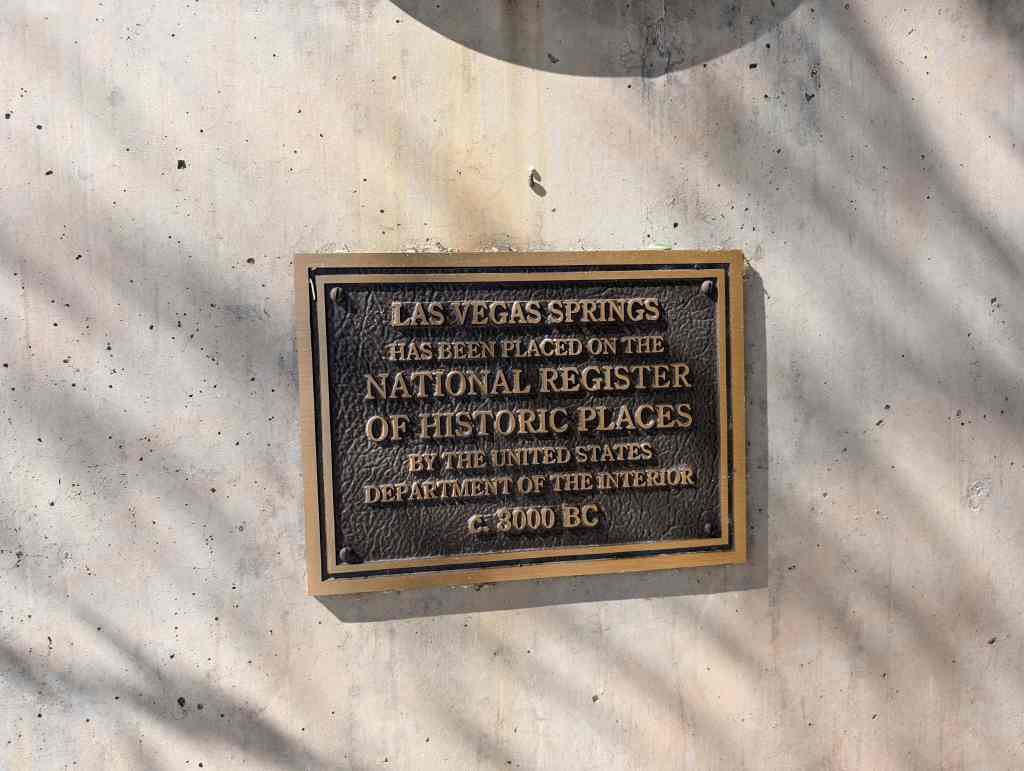
Las Vegas Springs

From Wikipedia:
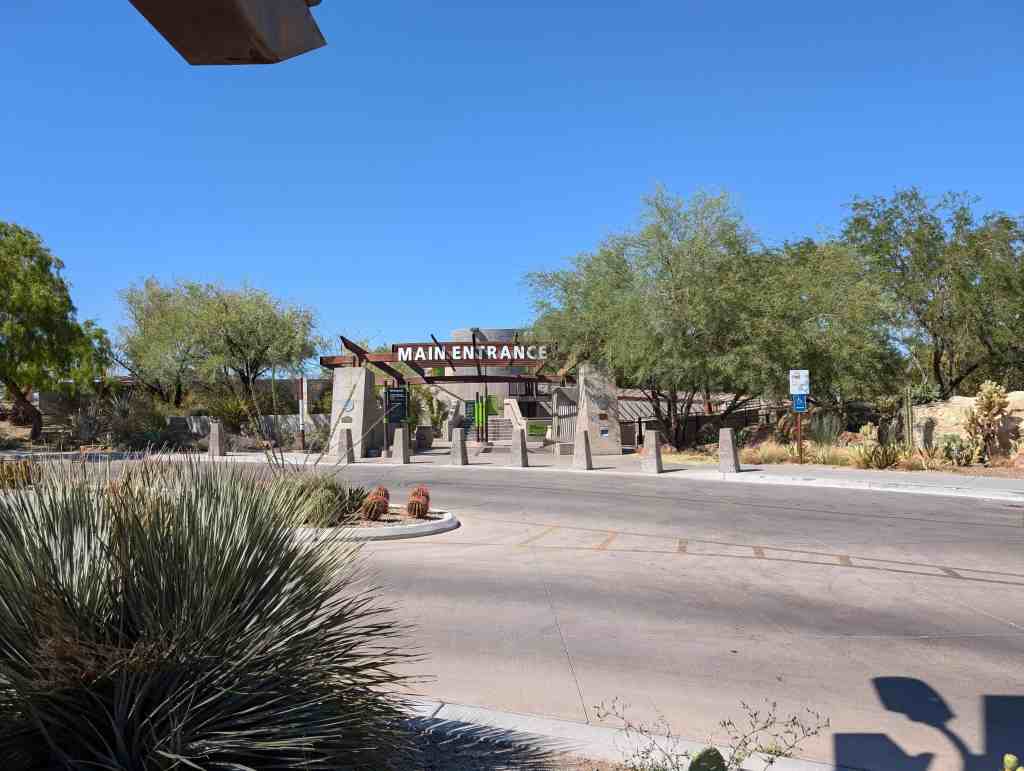
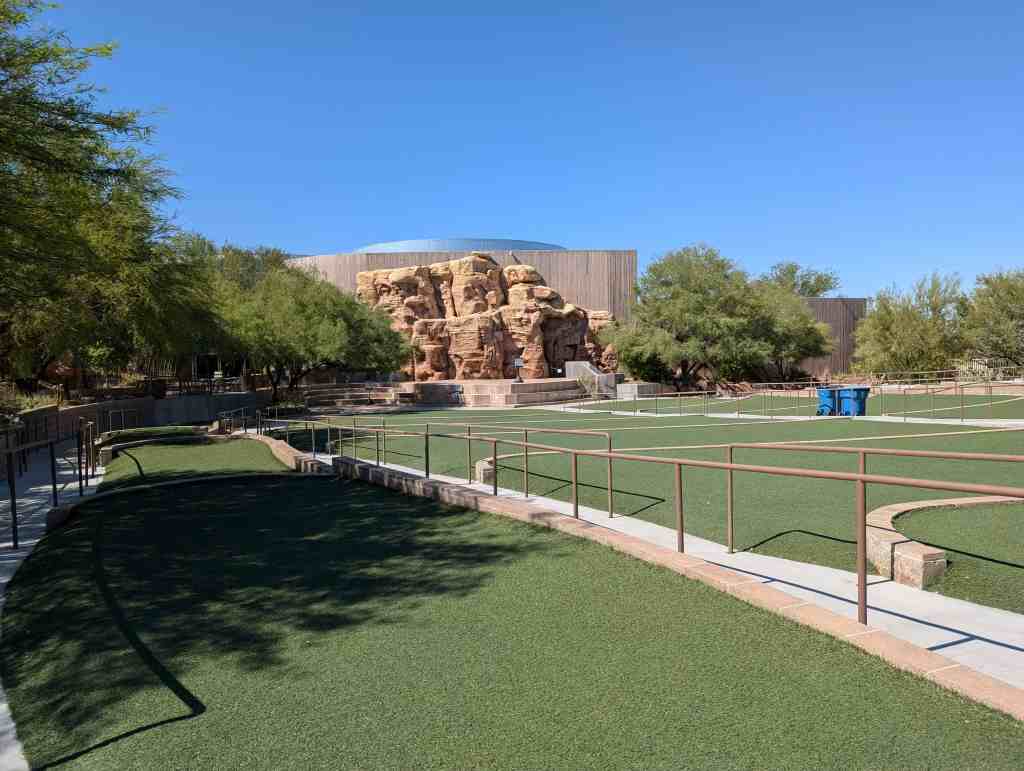
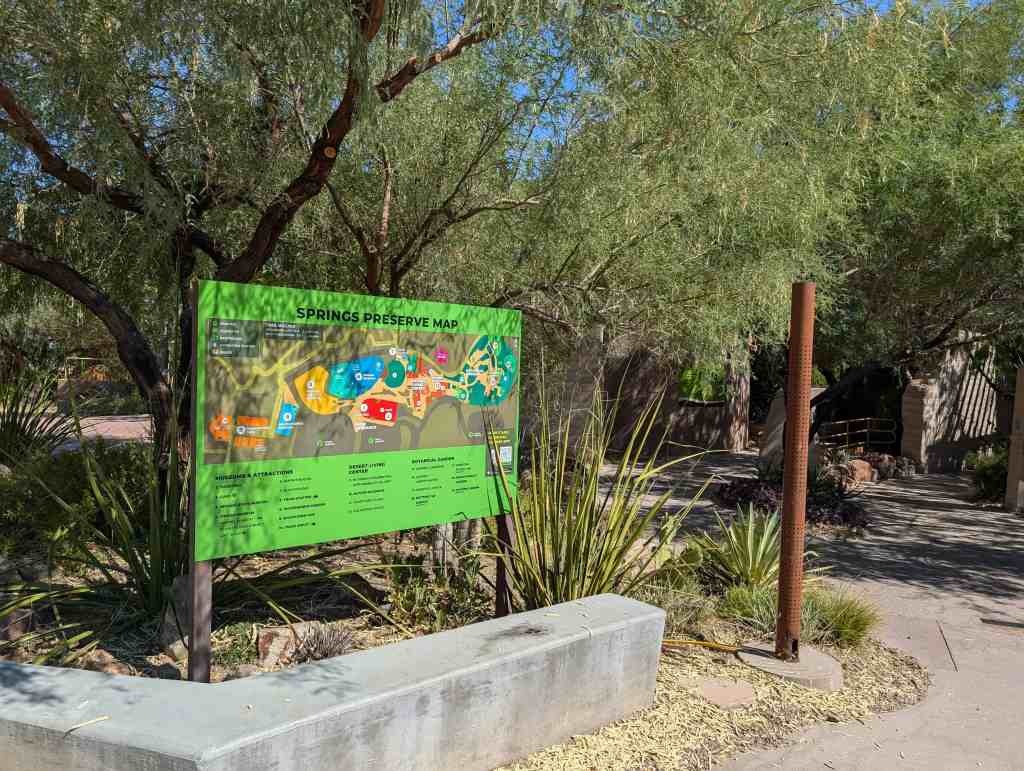
The Las Vegas Springs or Big Springs is the site of a natural oasis, known traditionally as a cienega. The springs are now a part of the Las Vegas Springs Preserve.

Related:

  • Las Vegas (The Meadows) (historic marker)

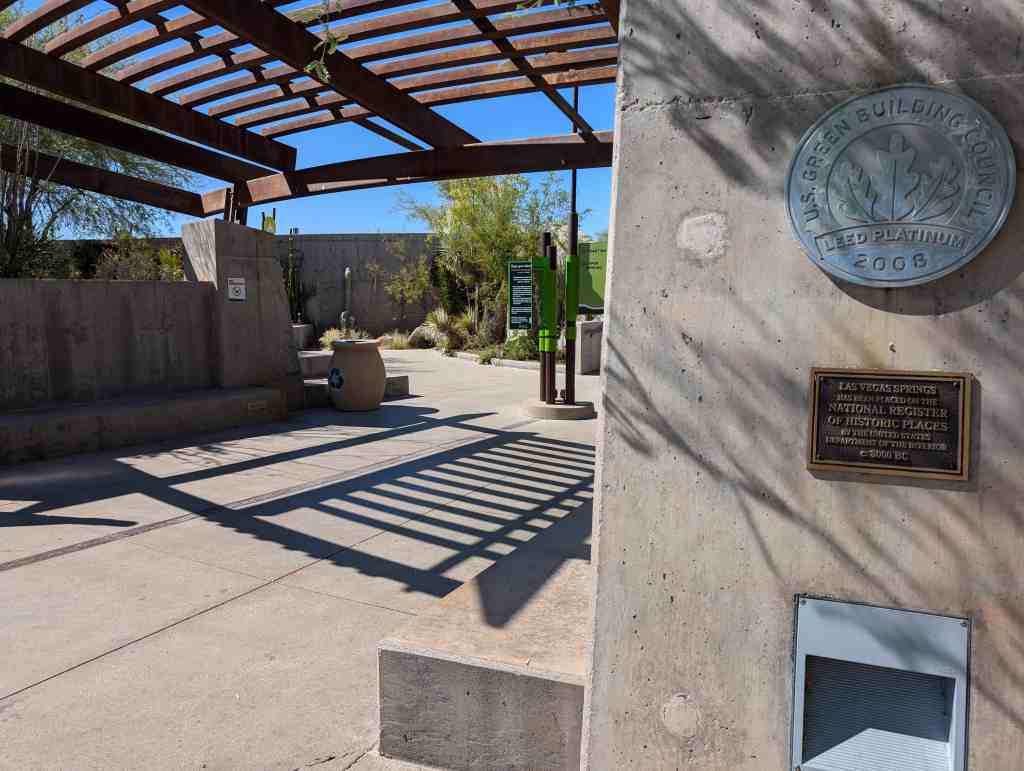
The springs were added to the National Register of Historic Places (#78001719) on December 14, 1978.

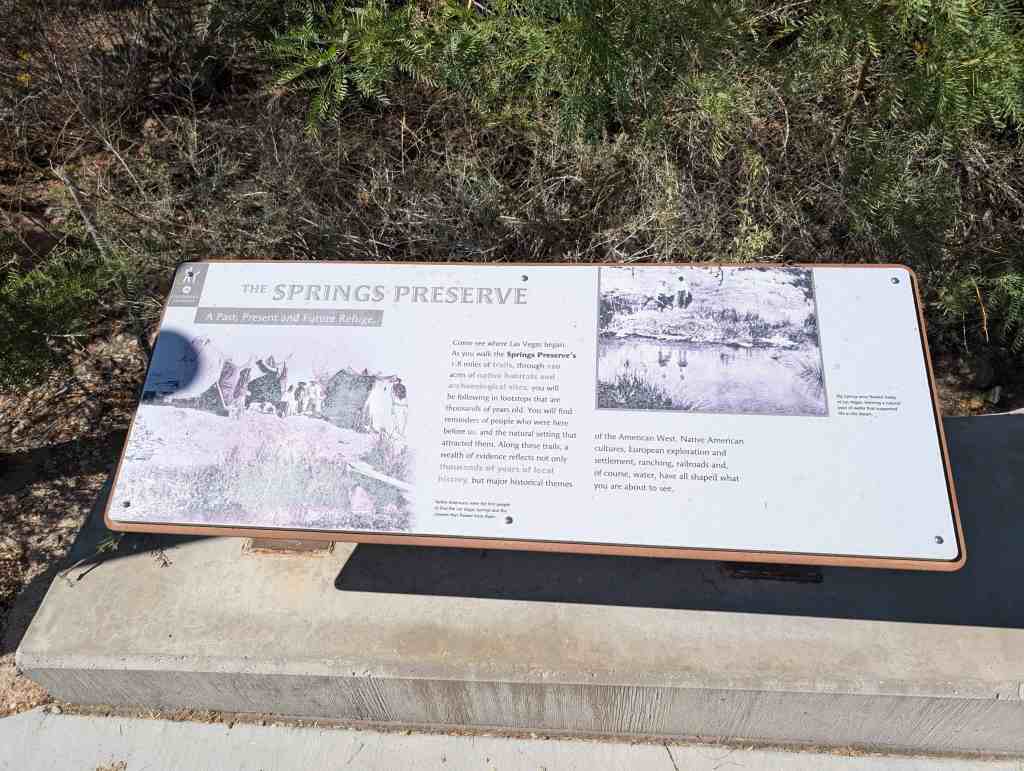
The Springs Preserve
A Past, Present and Future Refuge

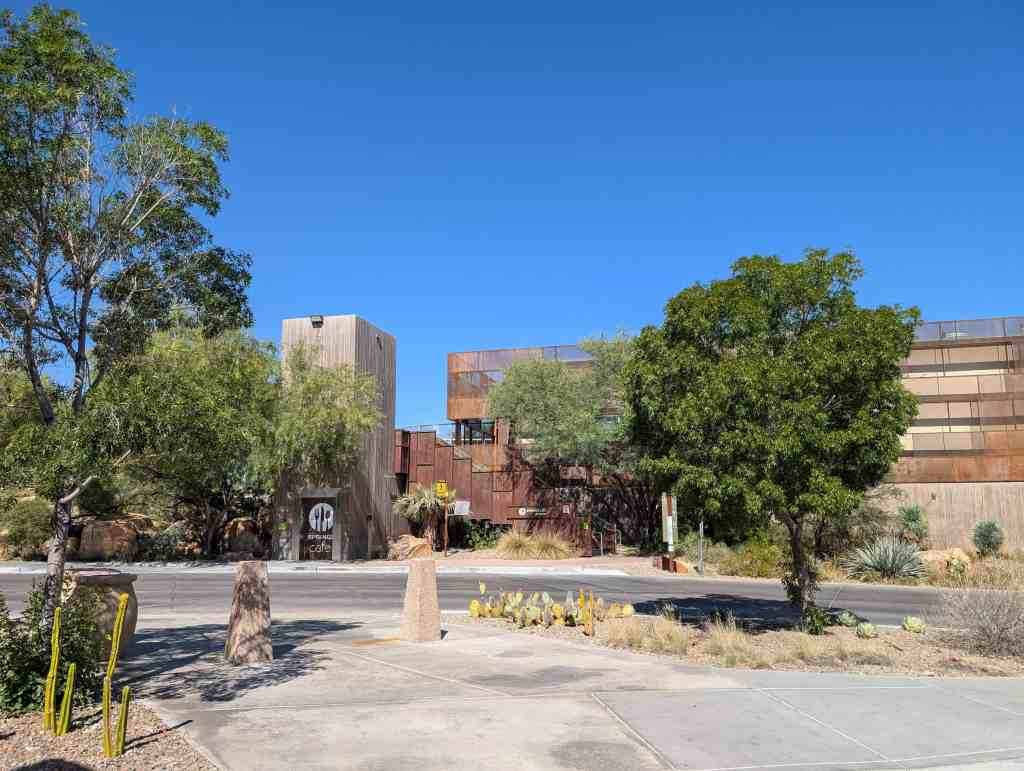
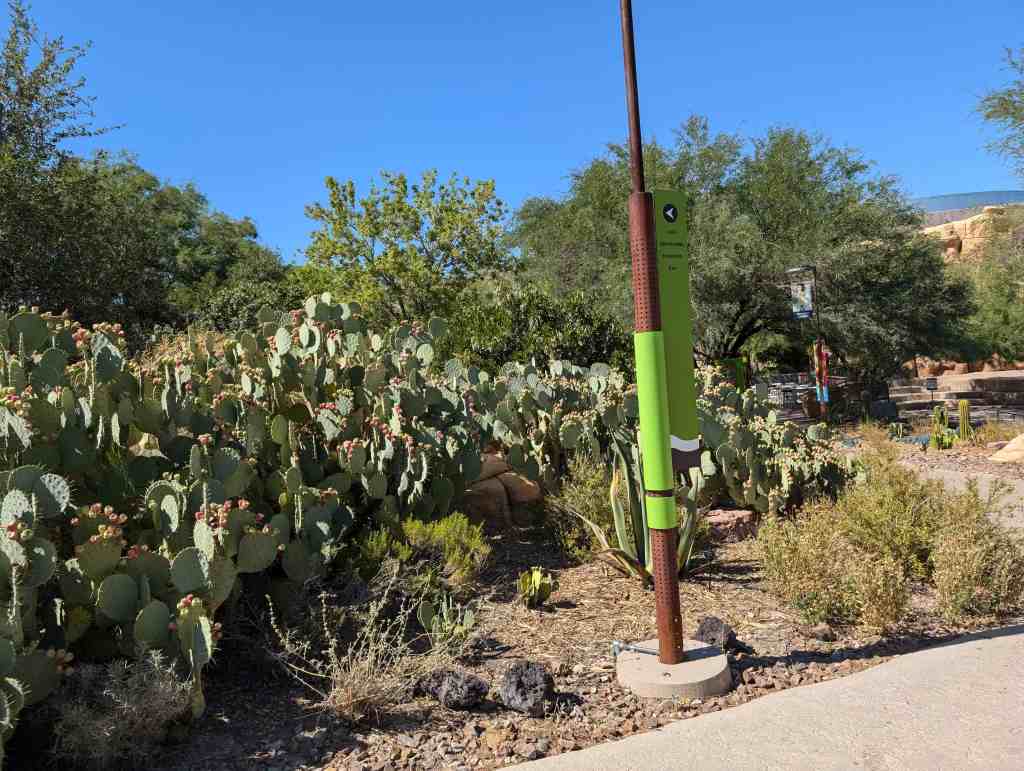
Come see where Las Vegas began. As you walk the Springs Preserve’s 1.8 miles of trails, through 120 acres of native habitats and archaeological sites, you will be following in footsteps that are thousands of years old. You will find reminders of people who were here. before us, and the natural setting that attracted them. Along these trails, a wealth of evidence reflects not only thousands of years of local history, but major historical themes of the American West. Native American cultures, European exploration and settlement, ranching, railroads and, of course, water, have all shaped what you are about to see.

Deseret Telegraph and Post Office

21 Monday Oct 2024

Posted by Jacob Barlow in Uncategorized

≈ Leave a comment

Tags

NRHP, Rockville, Telegraph, utah

Deseret Telegraph and Post Office

Communication in early Utah was a difficult and time-consuming task, With the completion of the Transcontinental Telegraph line in Salt Lake City, October 23, 1861, the Mormons had instantaneous contact with the outside world. They desired next to put the miracle to use in Utah.

Almost immediately plans were made to build a telegraph line from Logan in the north to St. George in the south. However, the shortages of material occasioned by the Civil War forced postponement of the line. Later it was built with “war surplus” purchased from the federal government.

During the winter of 1865- 1S66 plans for its construction were revived Cash tithing was accumulated to purchase wire and insulators for the 500 miles of line. A telegraphers 1 school, taught by John C. Clawes, was opened in Salt Lake City to train operators. Each area serviced by the line was asked to send an operator to the school. In many instances young men and women were “called” to this assignment. Their salaries, later, came from donations collected for that purpose.

The Deseret Telegraph and Post Office is located at 91 West Main Street in Rockville, Utah and was added to the National Historic Register (#72001263) on February 23, 1972. The text on this page is from the historic register’s nomination form.

To finance construction, the Deseret Telegraph Company was organized March 21, 1867 with a stock issue of $100,000. In addition, each valley was expected to provide labor organized and directed by the L.D.S. Church Priesthood. Poles were cut, hauled and set, so that by the time Horace D. Height’s ox teams arrived in October 1866 with supplies, the lines were ready for them. By January 10, 1867, the St. George office was open. When completed, the system was appraised at about $500,000.

Soon after this branch telegraph lines were opened. One of these led from Toquerville in southern Utah, southeast to Rockville and then south and east to Windsor Castle (Pipe Springs) by December 1871. This was Arizona’s first telegraph office. The line continued north to Kanab and on to Long Valley. The ^Rockville Station became an important link in the telegraph extension to the east Pipe Springs and Kanab where the Navajo Indian raiders were first intercepted when raiding the Mormon communities.

Although one reference suggests that Erastus Snow, in St. George, received a “telegram” from Rockville as early as November 22, 1868, it is believed that the “express” actually came from Toquerville, on the main southern line, that someone rode from Rockville to Toquerville to send the telegram.

The Deseret News (December 20, 1871) records that the telegraph office was first opened in mid-December, 1871, in “Brother Charles N. Smith’s Parlor. Messrs. Scipio Kenner and Gerana Bebee. Operators. The citizens of course are much pleased.” Smith’s home seems to have been a sawed-log structure.

A few years later a telegraph office was built and attached to the west end of the old rock house that Edward Huber (or Hubert) had built in 1864. Both structures are included in the site designation. The little building was used as a Telegraph and Post Office for several decades. In 1903 the Deseret Telegraph Company had discontinued its services in southern Utah.

Most of the company had been sold to Western Union earlier. At its height, the church owned Deseret Telegraph Company, served all of Utah, and interlocked with Mormon settlements in Arizona, Nevada, and Idaho, Its more than 1,000 miles of lines were built primarily to serve as a communications medium for the Mormon people. Only where it served “gentiles” did it “turn a profit.” This little office and rock house at Rockville recall this distinctive part of western and Mormon history.

← Older posts
Newer posts →

Follow Jacob

Follow Jacob

Come wander with me on Youtube.

Blog Stats

  • 2,104,852 hits

Social and Other Links

BarlowLinks.com

Recent Posts

  • Scout Monument
  • Provo High School Seminary Building
  • 821 E 100 S
  • 820 E 100 S
  • 817-819 E 100 S

Archives

Loading Comments...