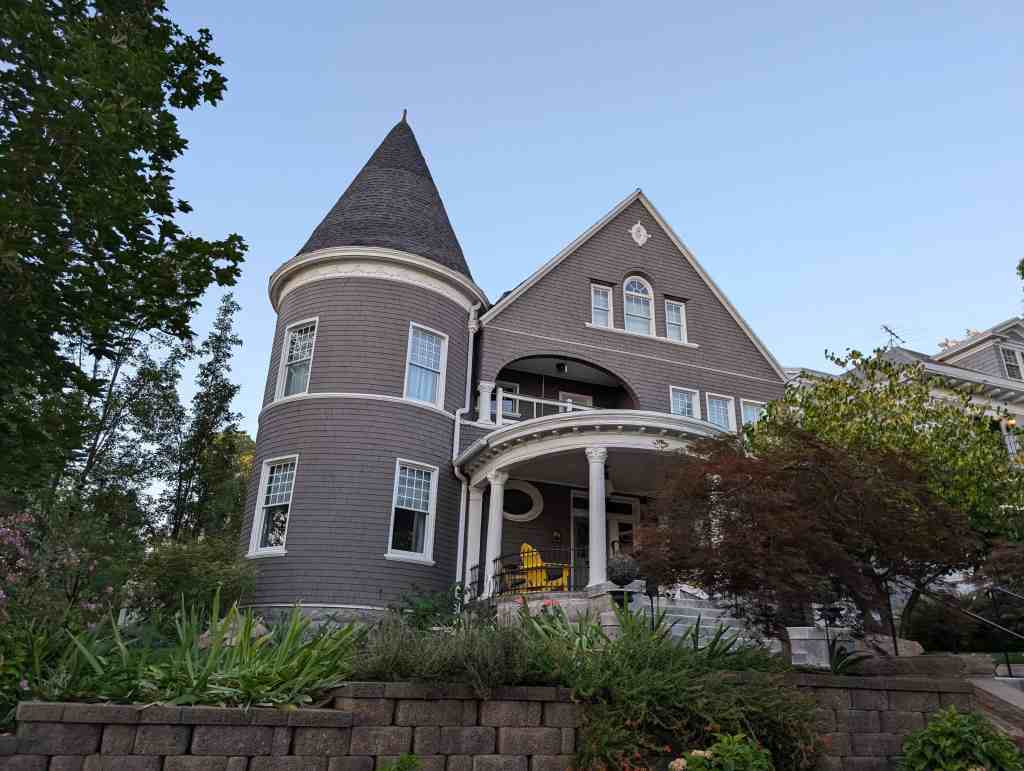
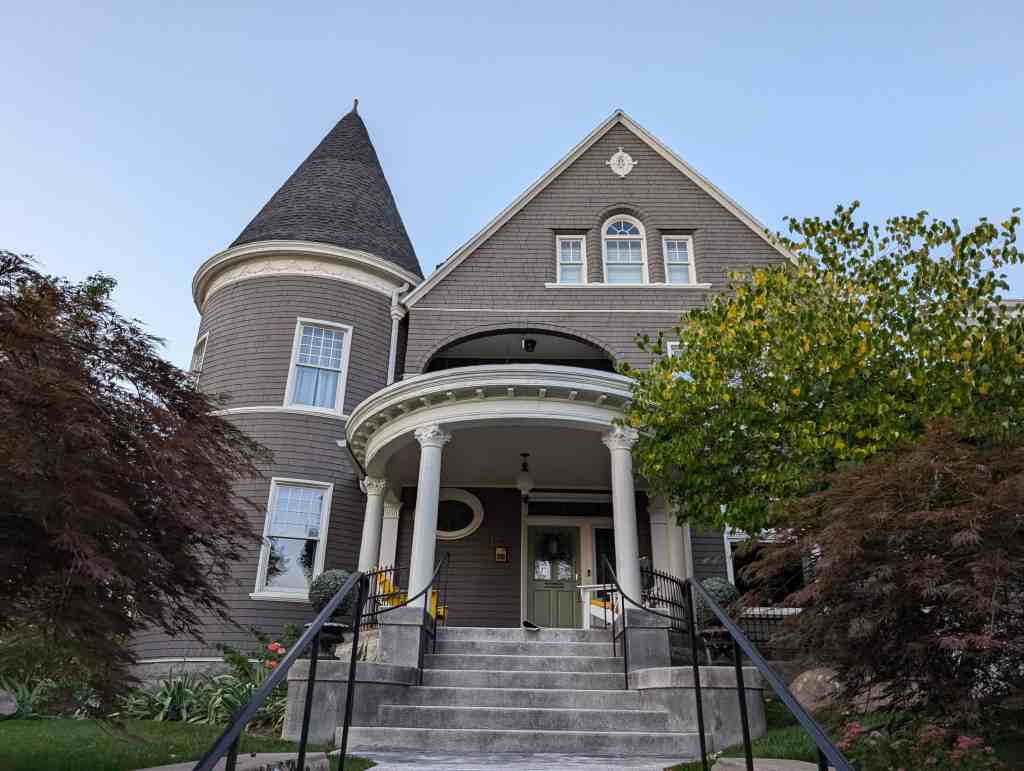
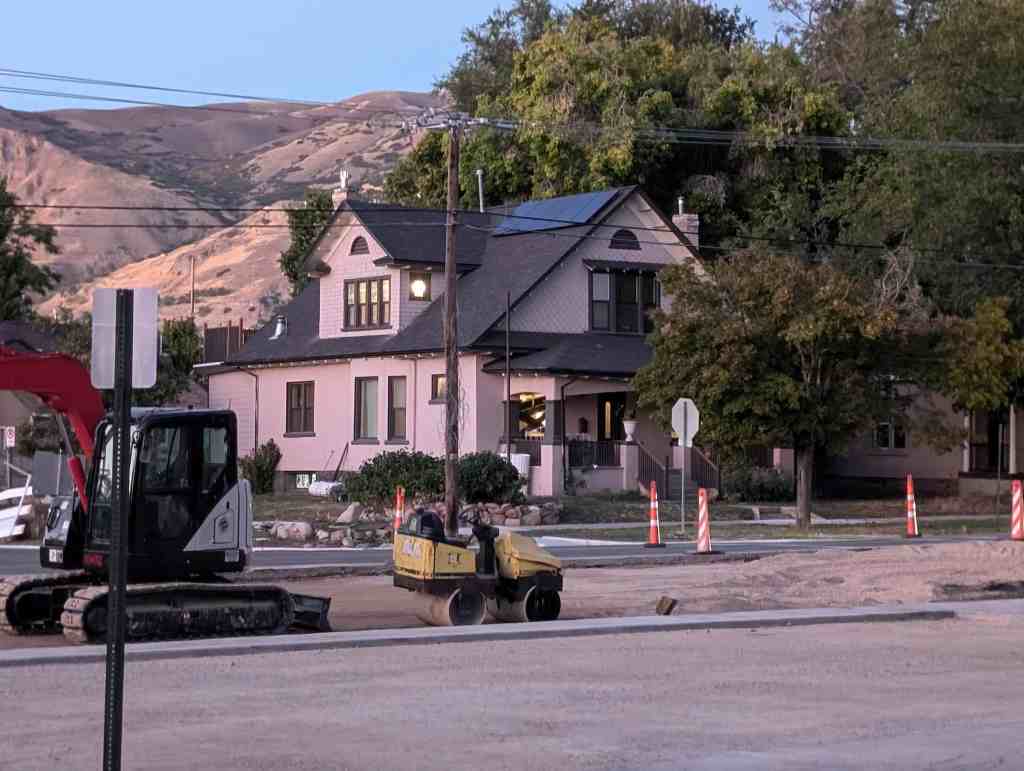
Markland/Walker House 1205 E. South Temple 1895, Frederick A. Hale, SLC
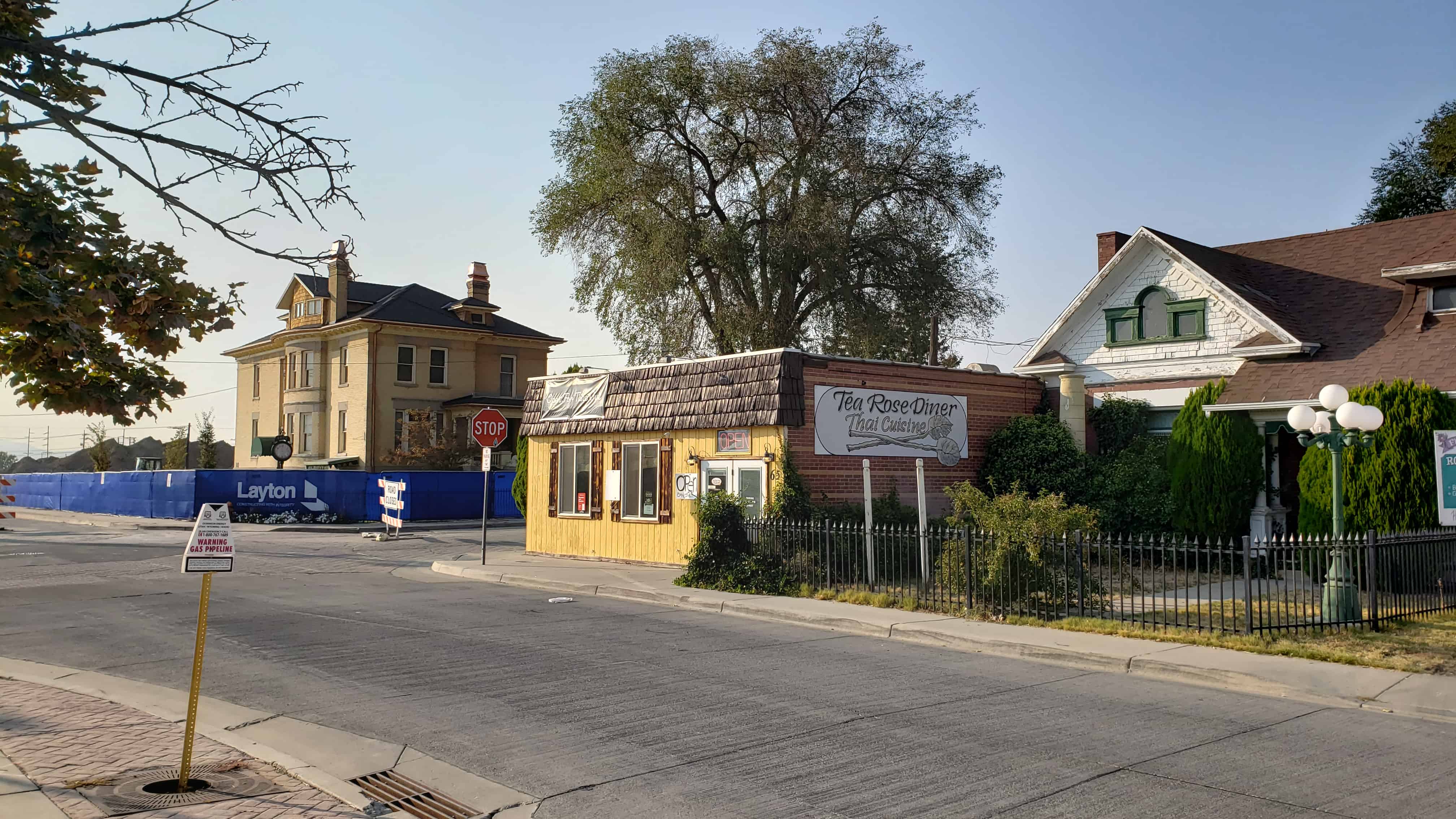
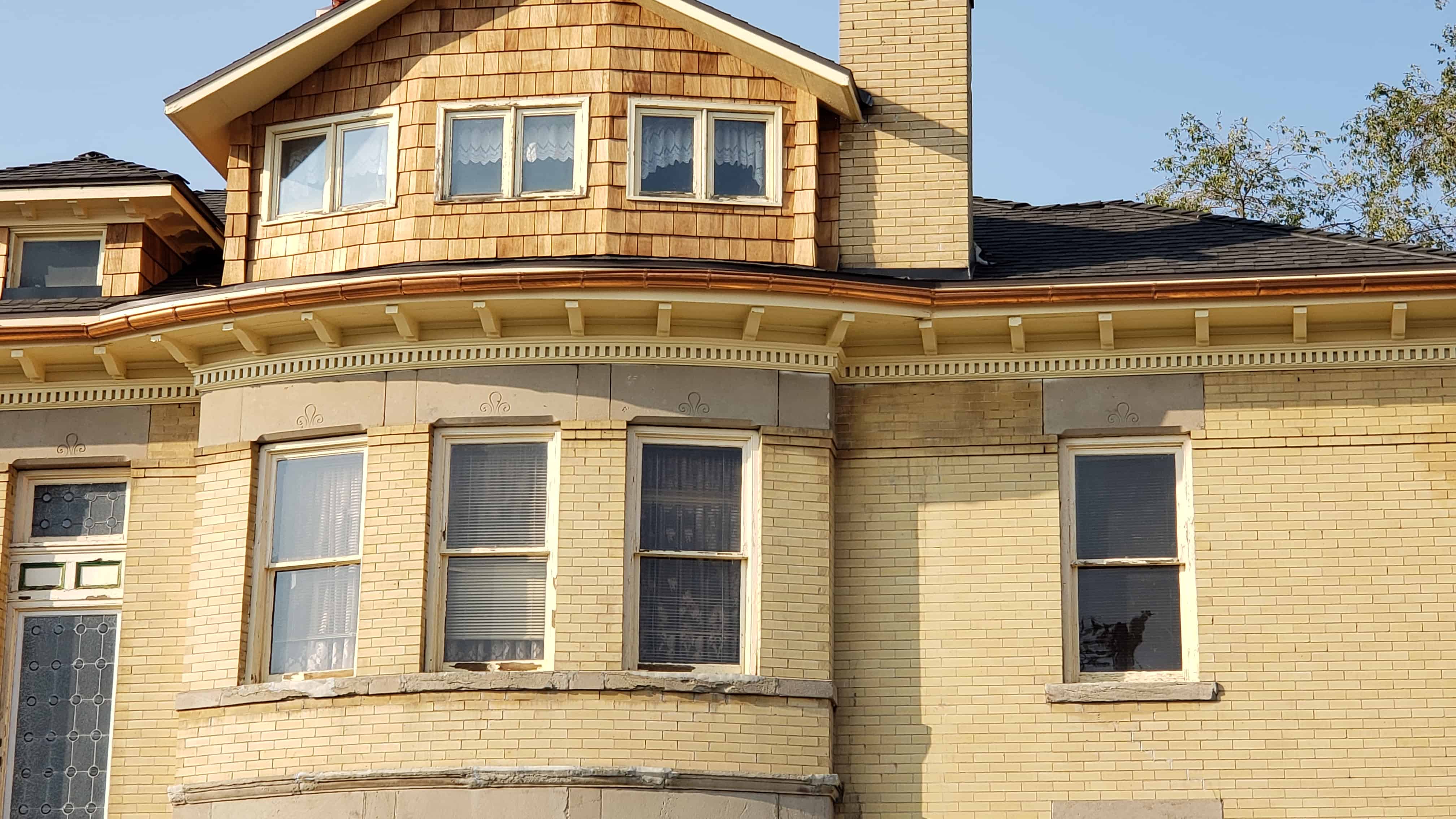
Like the Shingle style Downey House, the Markland/Walker House was designed by Frederick A. Hale. The house’s shingled exterior walls and prominent corner turret are typical of the Shingle style. The entryway is sheltered by a semi-circular porch with Ionic columns. Above the porch is a recessed balcony. On the east side of the house is an unusual round bay topped by a dormer with three round, oculus windows.
The house was built in 1895 for Charles B. Markland, manager of the Conklin Sampling Works. In 1905 it was purchased by Joseph Walker, Jr. and his wife Margaret. Joseph Jr., son of the Joseph Walker who helped establish the Walker Brothers empire, became president of the family dry goods store. He also developed the Walker Mining Company in California.
The carriage house, situated to the north on “S” Street, features shingles and a turret that match the main house. The Walkers’ daughter, Margaret Wicks, bought the carriage house from her parents upon her marriage in 1935 and converted it into a residence. She incorporated paneling, parquet flooring, and a mantel from her grandfather’s house on Main Street into her new home. (from Preservation Utah’s walking tour)
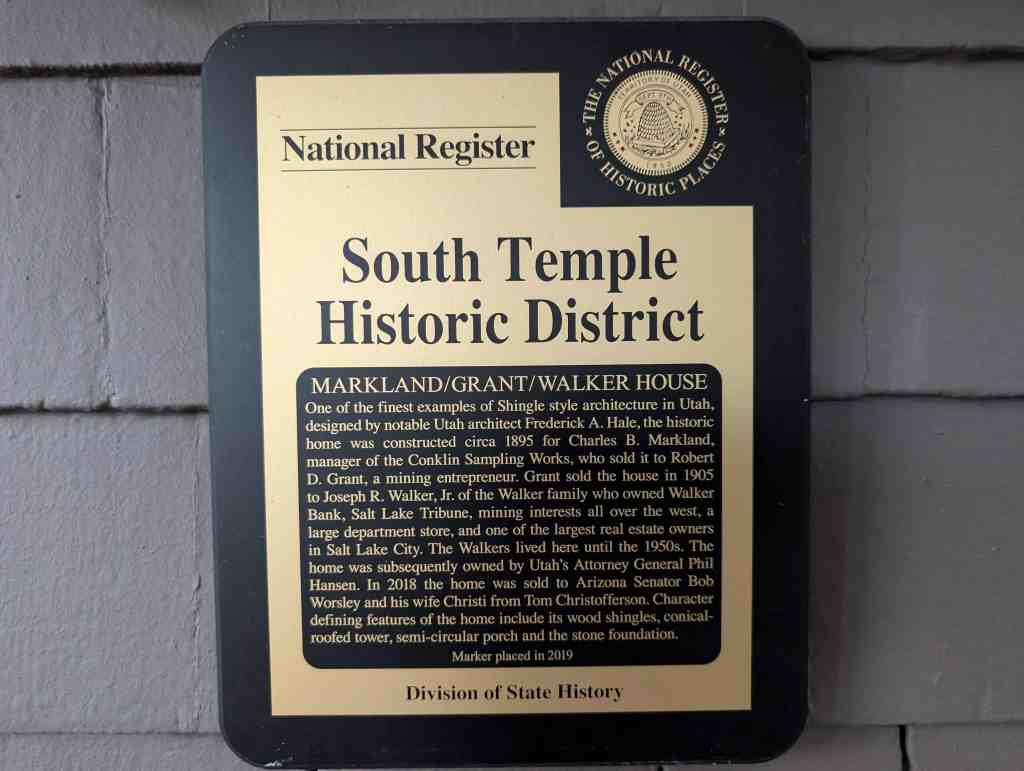
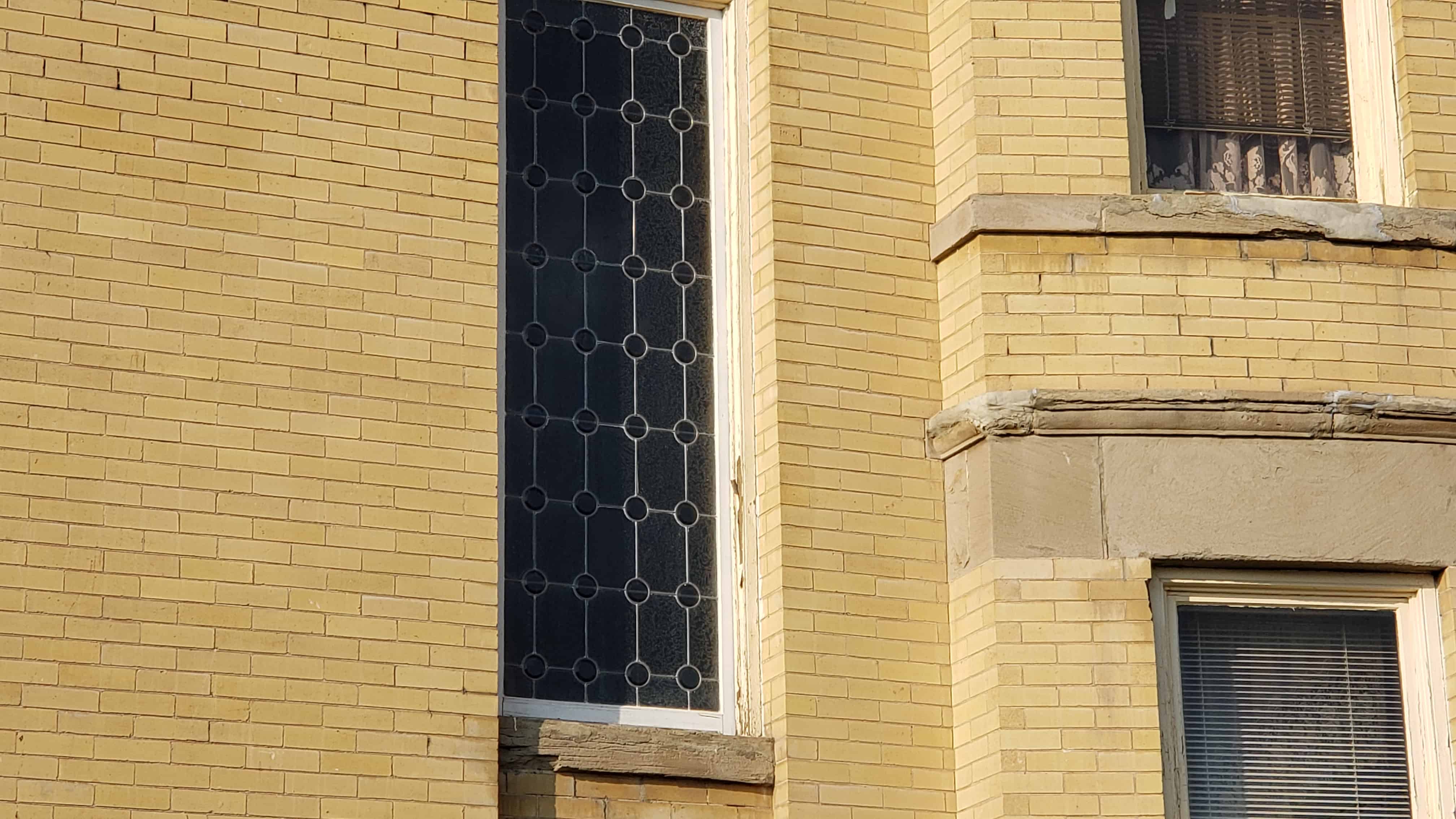
One of the finest examples of Shingle style architecture in Utah, designed by notable Utah architect Frederick A. Hale, the historic home was constructed circa 1895 for Charles B. Markland, manager of the Conklin Sampling Works, who sold it to Robert D. Grant, a mining entrepreneur. Grant sold the house in 1905 to Joseph R. Walker, Jr. of the Walker family who owned Walker Bank, Salt Lake Tribune, mining interests all over the west, a large department store, and one of the largest real estate owners in Salt Lake City. The Walkers lived here until the 1950s. The home was subsequently owned by Utah’s Attorney General Phil Hansen. In 2018 the home was sold to Arizona Senator Bob Worsley and his wife Christi from Tom Christofferson. Character defining features of the home include its wood shingles, conical- roofed tower, semi-circular porch and the stone foundation.
The Lars Andersen house in Ephraim is architecturally significant as an example of Scandinavian folk building in Utah. The house contributes historically to the thematic nomination, “The Scandinavian-American Pair-house in Utah.”
Lars S. Andersen was born in 1829 in Denmark. Converting to the LDS Church in 1852, he emigrated to Utah in the winter of 1855. Arriving in Ephraim in the summer of 1856, Andersen soon became a leading citizen of this community. He was primarily a farmer, but also served as tithing clerk, and director of the Ephraim Co-op Store. Active in the Church, Andersen was a counselor to the Stake President, Canute Petersen, and filled a Danish mission in 1873-1875. In 1879 he became bishop of Ephraim.
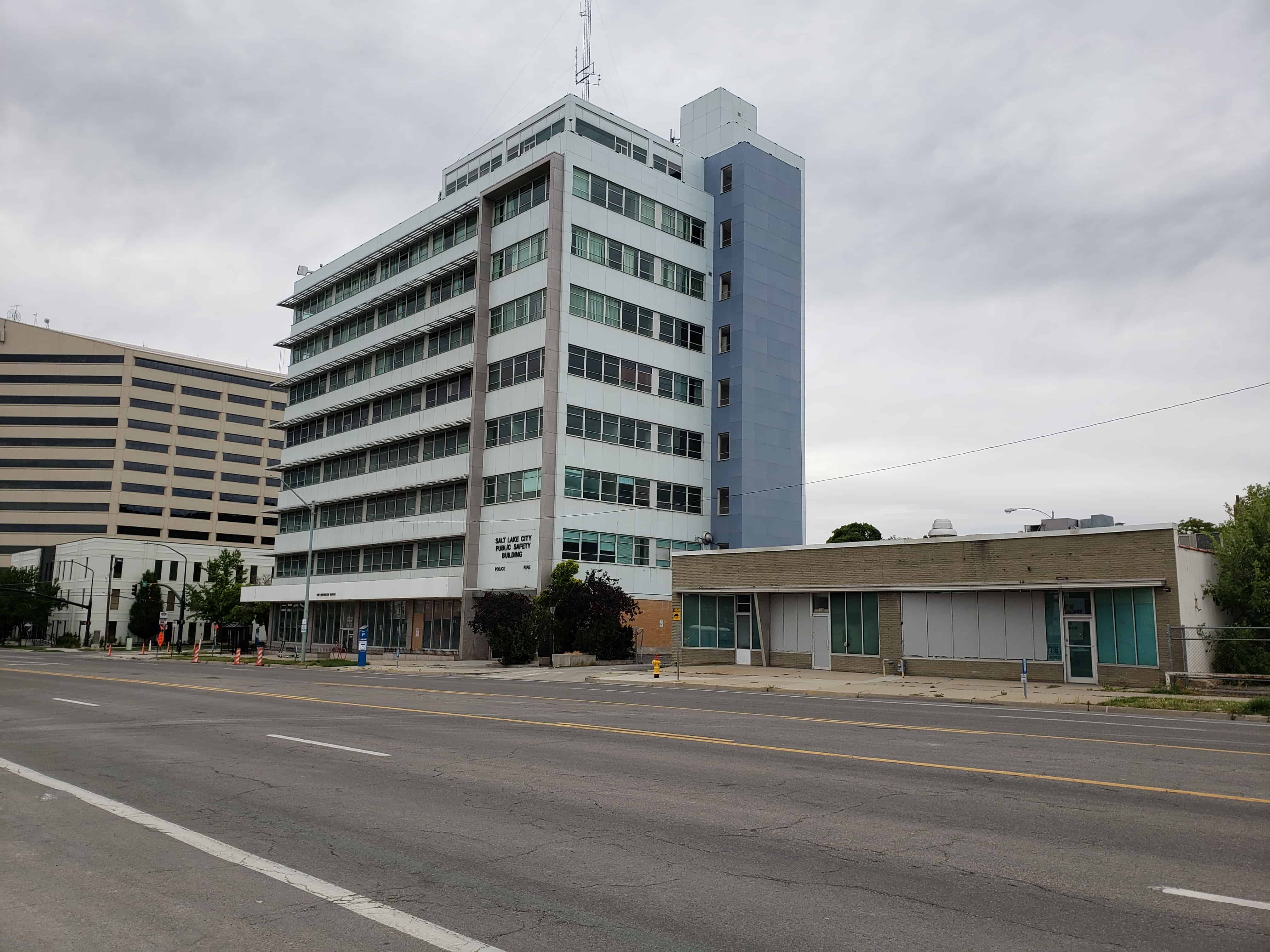
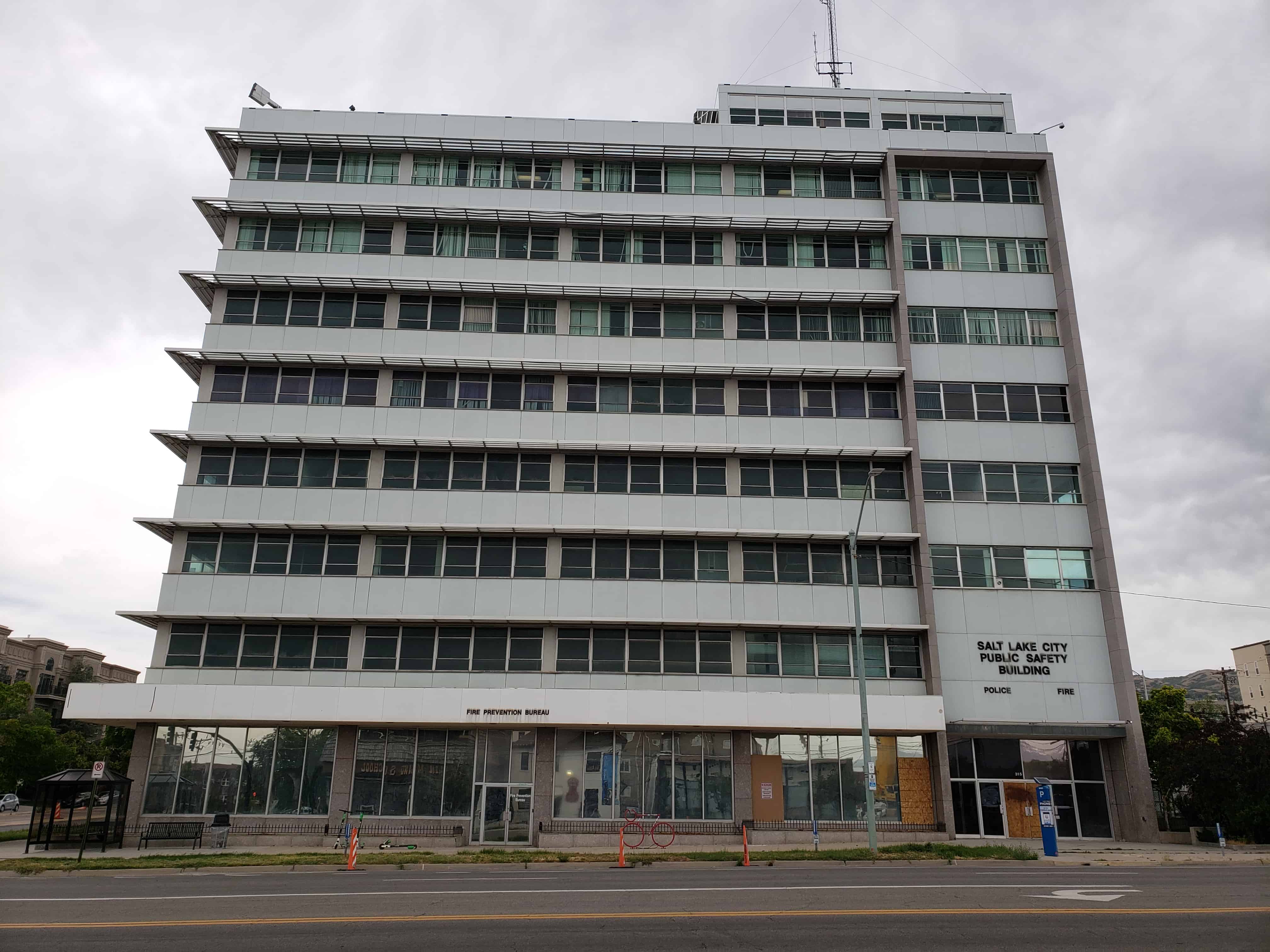
Built in 1958 in International Style, it was the Salt Lake City Public Safety Building from 1979 to 2013.
The Public Safety Building was originally built as the Pacific Northwest Pipeline Company headquarters and it was expected to have 275 employees work in the building. Architects for the structure were the local father and son team Slack and David Winburn, with contractors Del Webb Construction Company of Phoenix, Arizona. The 95,000 square-foot building opened to great newspaper fanfare in May 1958 with Salt Lake Tribune headlines. The $2.5 million structure included an upper story that featured a penthouse conference room; heat resistant glass and aluminum louvers to shade windows on the south and west for energy efficiency; interior steel from the Geneva Steel Company in Lehi, Utah County; and an exterior of porcelainized steel, the same material pioneered on the First Security Bank building.(*)
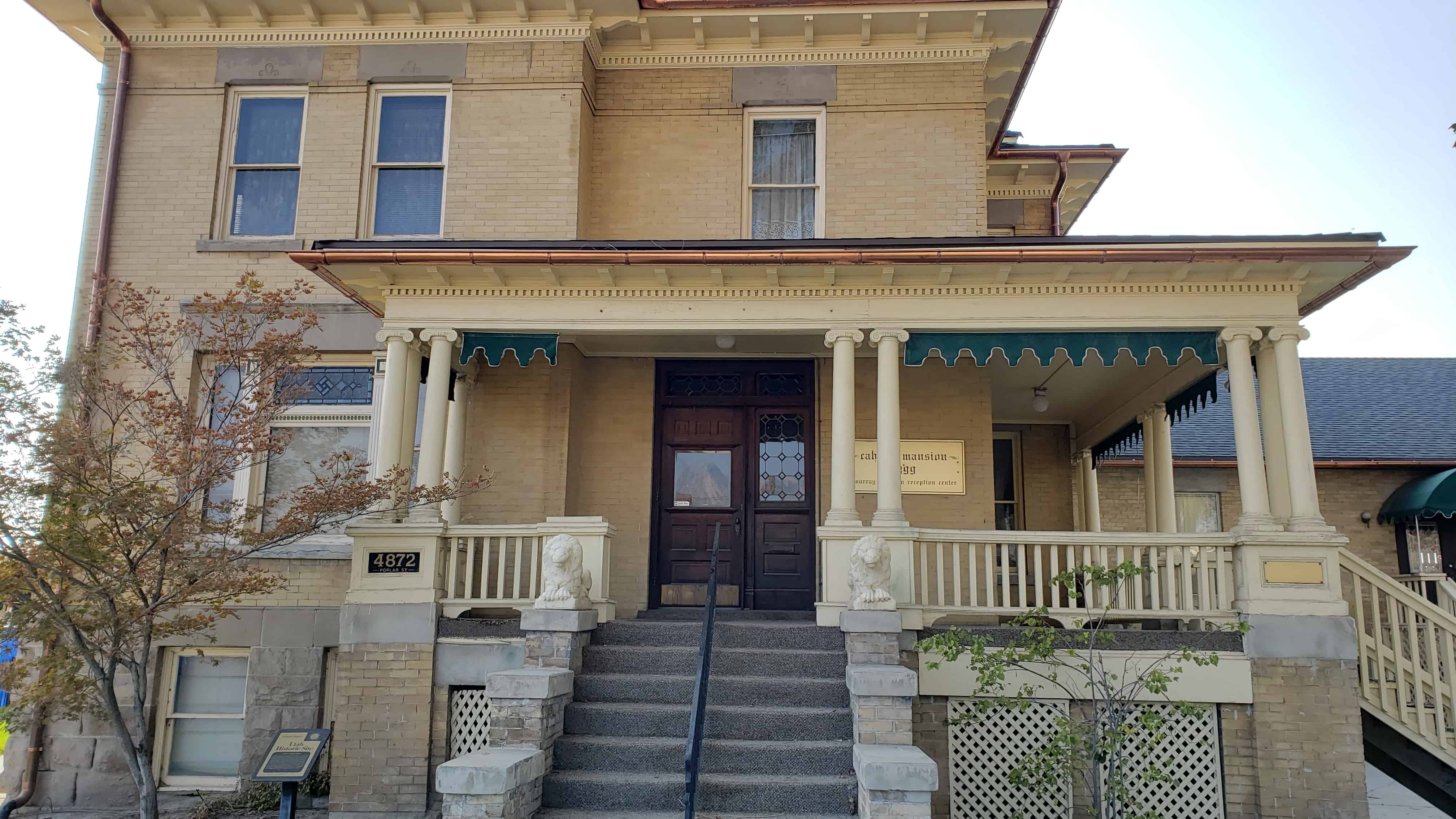
The John P. Cahoon House is significant as the finest example of residential Victorian Eclectism in Murray City and as the home for over twenty years of John P. Cahoon, a pioneer in the brick industry in Utah and the West. The large, two-and-one-half story brick house referred to in 1902 as “easily the finest home in the county outside Salt Lake City,” (Murray is located about five miles south of Salt Lake City) has remained virtually unchanged since its construction around 1900. Although its Victorian styling is more subdued than that found on many houses in Salt Lake City, this house represents the fullest expression of “high style” architecture in its community, where the housing stock consists mainly of smaller scale, modestly ornamented cottages. John P. Cahoon was the principal founder of what is claimed be the first commercial brick manufacturing plant in both Utah and the West in 1878. Brick played an especially important role in the construction business in Utah because of the scarcity of readily available lumber, and by the turn of the century there were several dozen companies competing in the brick manufacturing industry. Under John P. Cahoon’s leadership, his company, incorporated in 1891 as Salt Lake Pressed Brick Company, emerged as one of the most successful in the industry, and Cahoon himself made important contributions to the industry, He was appointed to the War Service Committee on Brick in Washington, D.C. in 1918, and served as an organizer and vice president of the Brick Manufacturers Association of America. Also, under his leadership, his company started the first trade school program in Utah, teaching brick laying to students. Interstate Brick Company, as it was renamed in 1939, has become the largest company of its kind in the Intermountain West and is still directed by members of the Cahoon family.
The Cahoon house, build ca. 1900, is the best example of “high style” Victorian architecture in Murray, Although less elaborate than many of the fine homes in Salt Lake City, this two-and-one-half story house features a quality of design and decoration unmatched in the Murray area. The integrity of the house on both the interior and exterior has remained virtually unaltered, and the entire house is in exceptionally good condition.
The Victorian Eclectic styling of the house, most evident in exterior and interior details, reflects the Victorian influence of the late nineteenth century, but the basic rectangular shape and the subdued ornamentation hint of the early twentieth century economy of design that produced the simple Box and Bungalow styles.
The large, brick house sits on a raised sandstone foundation, which holds a full basement-story. The brick exterior walls are accented with heavy sandstone lintels and sills. A two-story bowed bay window on the south side is the only feature that interrupts the rectangular massing of the house. Victorian detailing such as scroll brackets and dentils decorates the wide eaves. Hip dormers with flared cheeks provide illumination to the attic story. Other decorative features include clear and frosted leaded glass in some windows and transoms, and a heavy paneled front door framed by a transom and sidelights. The large wrap-around front porch features a wooden balustrade, paired Ionic columns on paneled pedestals, and latticework along the base.
The only exterior changes are the addition of a small canvas canopy over the doorway on the south and the application of outdoor carpet on the front steps and porch. Exterior condition of the house is very good overall, with only minor spalling of some of the sandstone blocks, slight deterioration of mortar in some joints, and a few cracked bricks.
The interior of the house has also been very well maintained and remains virtually unchanged from its original condition. Original features include twelve-foot high ceilings, ornate fireplaces (still in use), decorative wood baseboards and trim, and wood paneled doors both hinged and sliding, with classical surrounds. The stairway is lit by a large leaded glass window and features, finely turned balusters and heavy paneled newel posts. Other original interior features are the oval doorknobs, operable transoms, and cast iron radiators. Interior alterations are very minor; no windows or doorways have been covered over, and even though the house was used as a multi-family residence for several years, the original floor plan has remained intact with the single exception of a wall and doorway addition (ca. 1940) in the hallway leading to the stairway and side entrance. The kitchen and bathrooms have been altered only slightly by the addition of newer fixtures and cabinets.
John P. Cahoon was born in the area known as South Cottonwood, on February 1, 1856. His parents, Andrew and Margaret C. Cahoon, who had come to Utah in 1848 as Mormon pioneers, were among the original settlers in that area, which later became known as Murray. John, the second of five sons, attended local schools and married a local girl, Elizabeth Gordon.
In 1878, he and his brothers began manufacturing brick on a small scale with primitive hand-powered tools and equipment on a location near 5300 South in Murray. This brick was used primarily for the construction of their own houses, and John built his first house at 5600 South and Winchester Street (401 West). In 1891 John founded the Salt Lake Pressed Brick Company and moved the manufacturing plant from 4200 South, a later location, to a new location near 1100 East and 3300 South, where there was an abundance of good quality clay for brick manufacturing. The clay beds at that location completely filled the company’s needs until 1921 when clay began to be shipped in from other areas.
The Salt Lake Pressed Brick Company prided itself in the quality of its product and was awarded many prizes for its bricks, including first place for best red brick at the World’s Columbian Exposition in Chicago in 1893. The company also manufactured pipe, tile, and other clay products. It was also involved in the construction of the “mail order” bank in Vernal in 1916, shipping all the brick via parcel post to avoid the higher conventional freight costs.
John Cahoon was also involved in several other businesses including Miller-Cahoon Company (4810 South State Street), a lumber and hardware company, Elkhorn Ranch, and The Progress Company, which installed the water mains in Murray.
In 1888 John and Elizabeth Cahoon and Harry and Jane Haynes together purchased a 17.84 acre tract of land fronting State Street near 4800 South. In the early 1890’s Cahoon and Haynes subdivided the land (Cahoon and Haynes Subdivision) and sold off many of the parcels. Cahoon retained about eight acres of the property and had this large house built on it around 1900. The brick for the house was undoubtedly manufactured by his Salt Lake Pressed Brick Company. John P. Cahoon lived here with his wife, Elizabeth, for the next twenty years, raising most of their ten children here. In the early 1920’s the Cahoons had a new house built at 4882 South Highland Drive (demolished), where they lived until their deaths she in 1931, and he in 1939.
In 1936 John retired, turning over the business to his sons, Chester P. and John B. The company, known since 1939 as Interstate Brick Company, is now headed by a grandson, Harold P. Cahoon. In 1972 the company moved from their location at 1100 East and 3300 South (now Brickyard Plaza, a shopping center) to their new plant at 9210 South 5200 West, which has been called the largest brickmaking facility in the country.
From 1923-25 James C. Overson, a mining man, and his wife, Verenia, lived in the house. During the next fifteen years the house was apparently used as rental property. Around 1941 James P. and Ellen C. Payne moved into the house and lived here for many years. James (1894-1966) had served as pastor of the Murray Baptist Church, located nearby at 62 East 4800 South, from 1926 to 1941 and also as a chaplain in the Civilian Conservation Corps. He later worked as a patternmaker for American Foundry and Machine Company. Mrs. Payne continued to live here after her husband’s death, and for several years she and her widowed sister-in-law, Ruth Christensen, lived in the house together. In 1978 she sold the house to O. LaMont and Shirley Heath, who used it as the office of Heath Realty.
Steven L. Hansen, an attorney, purchased the house in October of 1981 and established his office on the main floor. He is currently in the process of leasing out the basement and upper stories of the house for office use.
John P. Cahoon House
This house, built about 1900 for John P. Cahoon, is the finest example of residential Victorian architecture in Murray City. Cahoon was the principal founder of one of the first commercial brick manufacturing plants in Utah in 1878. Incorporated in 1891 as Salt Lake Brick Company, it is now known as the Interstate Brick Company, one of the largest in the Intermountain West. Cahoon was also important in the brick industry as the organizer of the Brick Manufacturers Association of America, as a member of the War Service Committee on Brick, and as the leader establishing the first trade school in Utah, teaching brick laying to students.
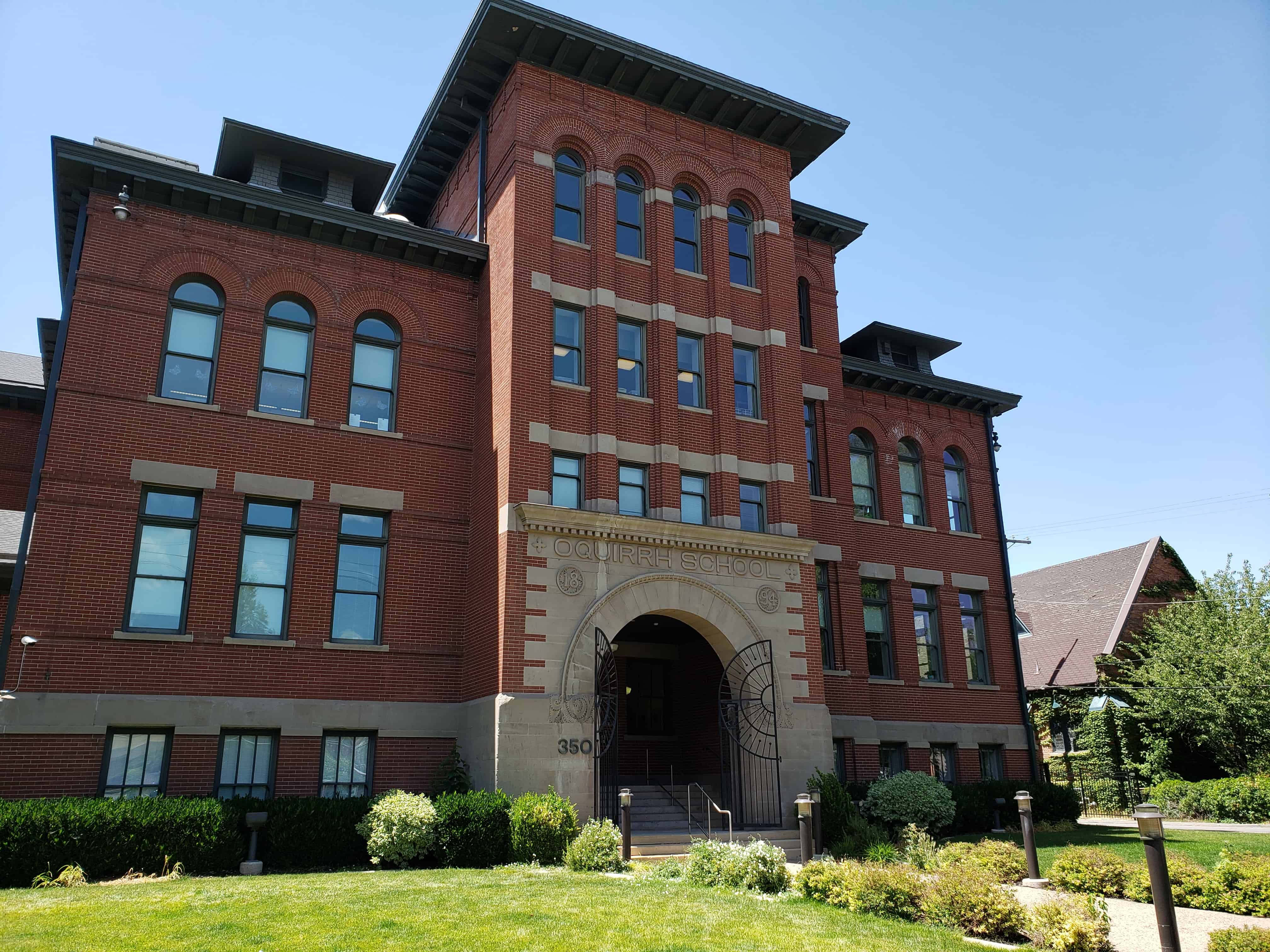
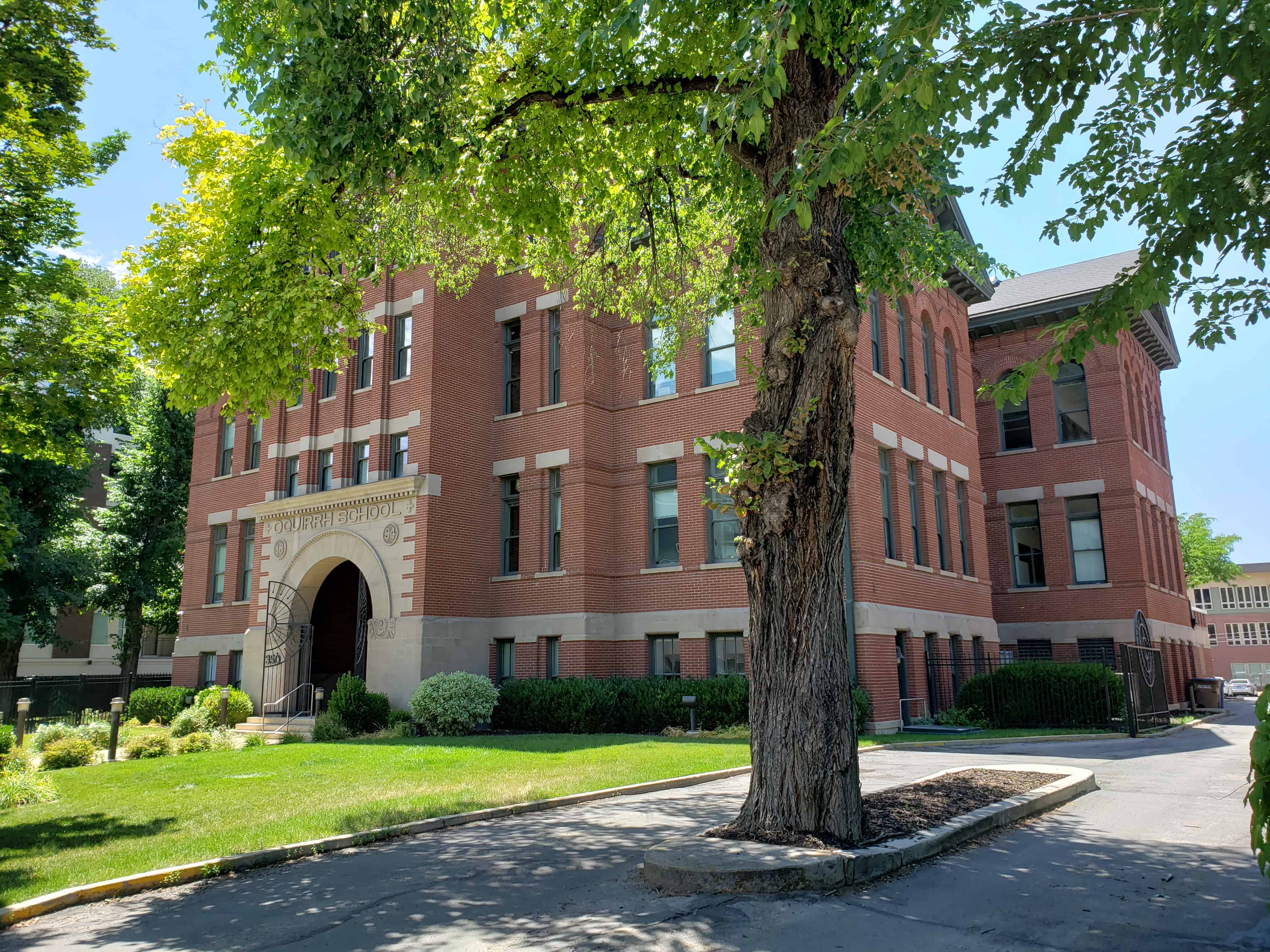
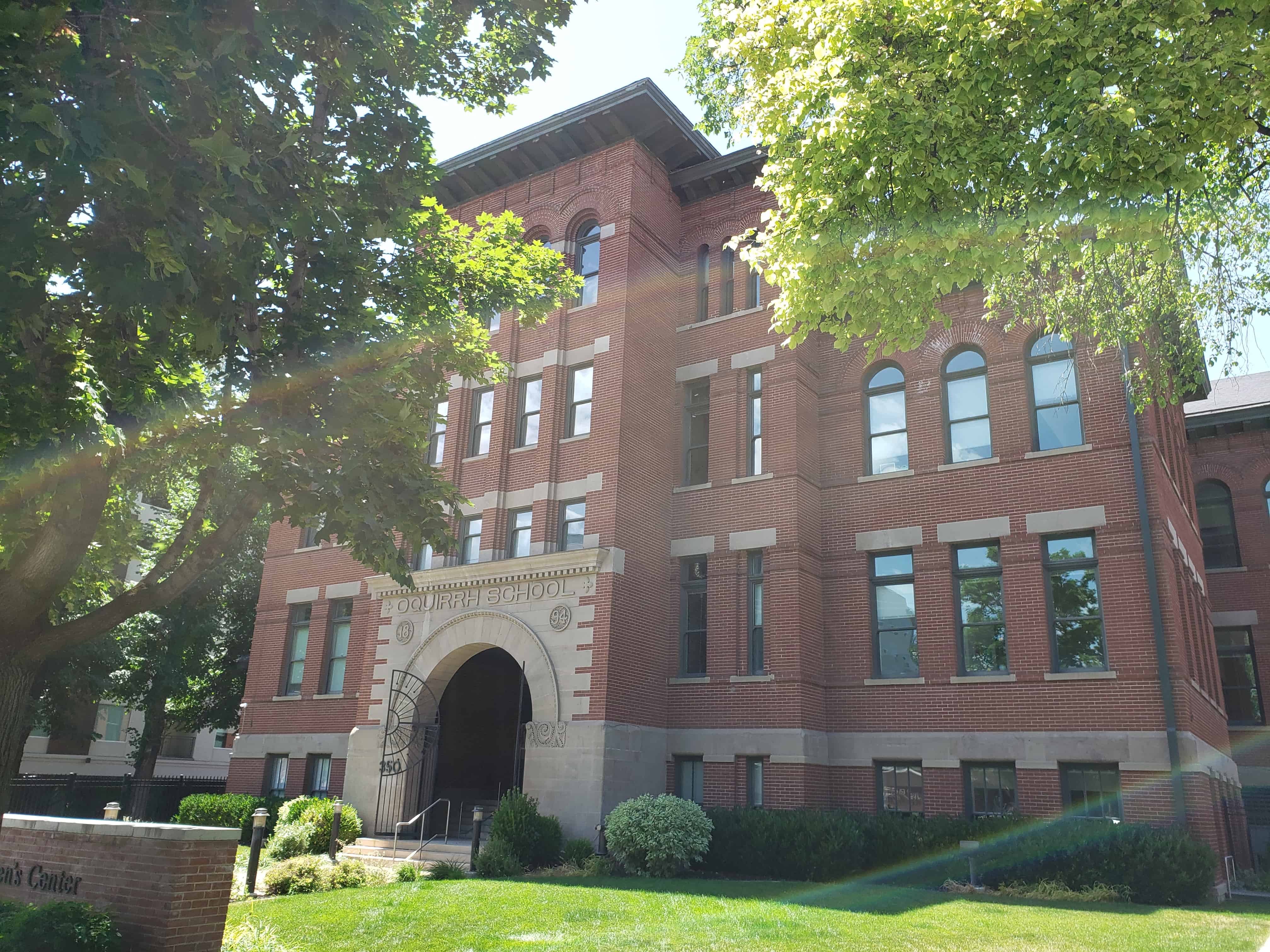
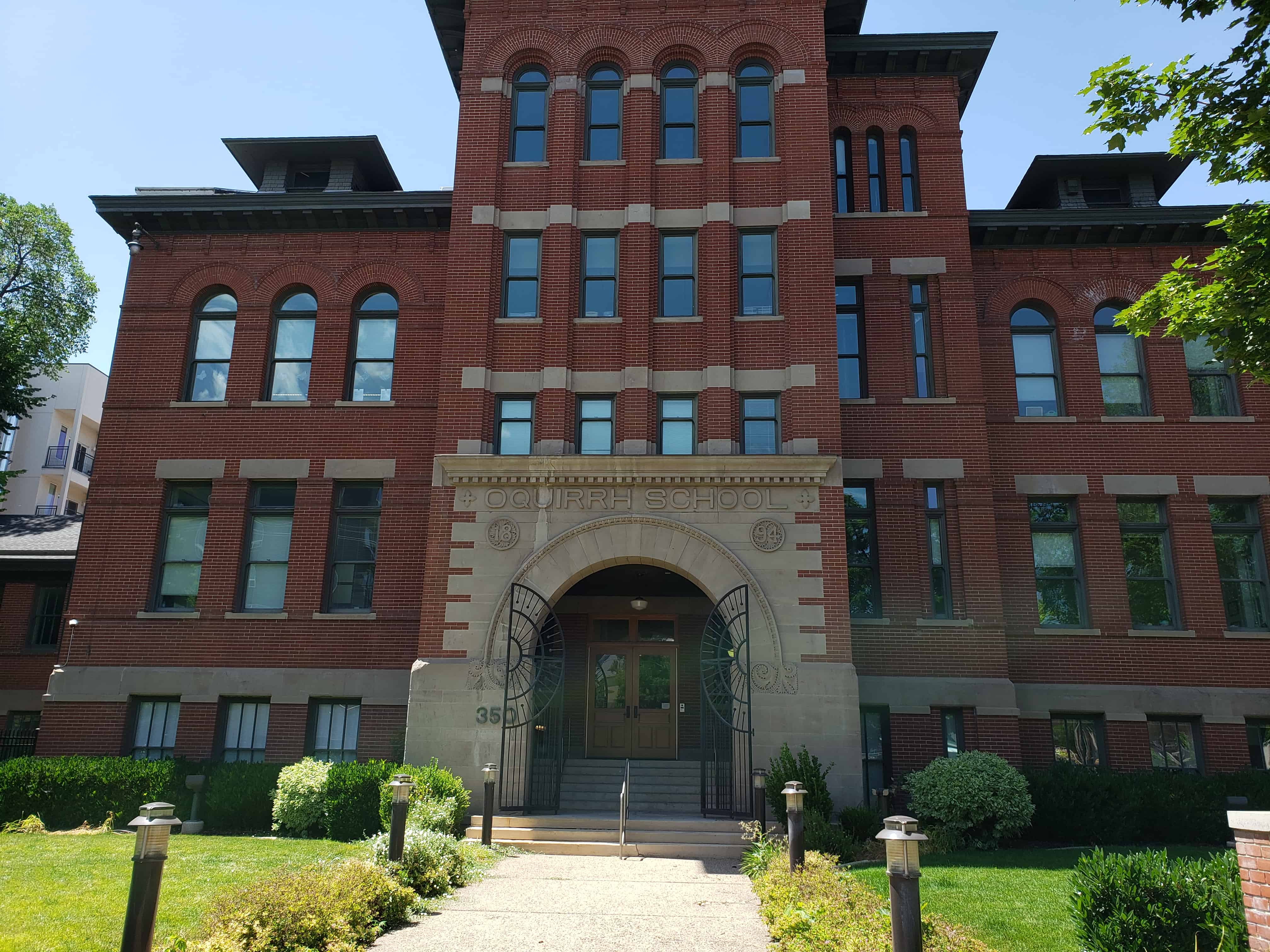
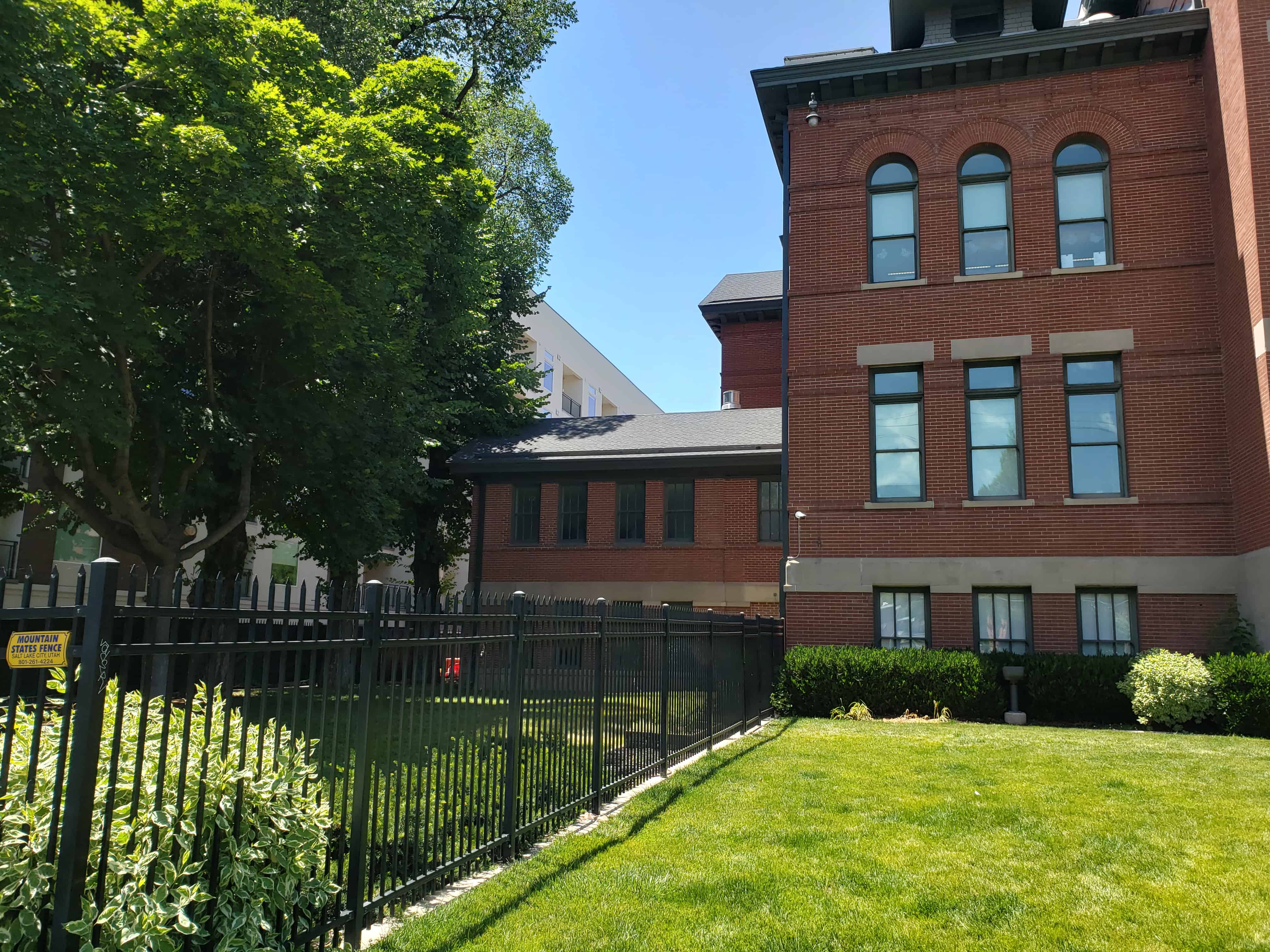
The Oquirrh School, constructed in 1894, is significant as a representational example of the schoolhouses constructed as a result of the education reforms and development of the public school system that accompanied Utah’s campaign for statehood in the 1890s. Reforms include the consolidation of school districts, the adoption of a statewide curriculum and and the construction of numerous unified schoolhouses. The Oquirrh School was one of the first to be built and as such embodies the earliest ideologies and practices of public education in Utah. The Oquirrh School is also architecturally significant because it was one of the first public schools built in Salt Lake City and is an excellent example of late Victorian institutional architecture implementing a combination of the Romanesque and Second Renaissance Revival styles. The school can also be considered the work of a master, namely the regionally prominent architect Richard K. A. Kletting*, who also designed several emblematic Utah buildings.
This is located at 350 South 400 East in Salt Lake City, Utah – the text above is from the plaque on site from the National Register of Historic Places.
The Zion’s Co-operative Mercantile Institution was organized in December 1868 under the direction of Brigham Young, the president of the Church of Jesus Christ of Latter-day Saints (LDS or Mormon Church). Since the initial settlement in 1847, the Mormon pioneers had lived for the most part as an isolated community. The discovery of valuable ores in the canyons near Salt Lake City in the early 1860s and the arrival of the transcontinental railroad were perceived as a threat to the peace and prosperity of the Mormon settlers. Despite a number of self-sufficiency polices, such as encouraging “home manufactures,” the number of non-Mormon merchants grew. By the 1860s, most merchandizing was in the hands of non-Mormons because of the stigma attached to “profiteering Saints” and the inability of Mormon merchants to refuse credit or collect debt from fellow Mormons. Following the example of successful cooperatives in Brigham City and other settlements, Brigham Young and a group of church leaders organized the ZCMI in order “to bring goods here and sell them as low as they can possibly be sold and let the profits be divided with the people at large.”
The ZCMI eventually became a chain of mercantile cooperatives that included approximately 150 retail co-ops. Salt Lake City was chosen to be the location of the wholesale distribution center. The center would develop an integrated marketing and distribution system, which had the responsibility to supply and distribute products to the outlying settlements. ZCMI stocked a variety of goods, including wagons, machinery, furniture, carpets, clothing, shoes, sewing machines, household items, dry goods and groceries all available to member co-ops for the same price as they were in Salt Lake City.
ZCMI, the “Parent Store,” was an immediate success. Within a few years, it had a near-monopoly on the wholesale trade in the territory and much of the retail trade in Salt Lake City. The company built a grand retail store for its consolidated departments at 13-31 South Main Street in 1876. The building, often considered “America’s First Department Store,” was expanded and doubled in size in 1880. ZCMI also built a tannery, a boot and shoe factory, and a clothing factory, the products of which were distributed through its retail and wholesale outlets.
ZCMI, itself, was never a true cooperative, and though it retained a strong presence in Salt Lake City, as the population of outlying settlements grew, the cooperative movement became less popular. A secularization of mercantilism and trade took place in the 1880s and 1890s with many of the local co-ops closing. Many Mormon-owned stores throughout Utah continued to call themselves co-ops and did much of their wholesale purchasing through ZCMI, but from-the-pulpit church-sponsored support of the company gradually diminished. Traditional loyalties continued to bring church members into the store, but in the twentieth century, ZCMI became increasingly more commercialized with an aggressive advertising budget and an obligation to its stockholders, rather than the “community of Saints” at large. 5 On September 30, 1895, the Zion’s Cooperative Mercantile Institution was reorganized as a million-dollar corporation. The ZCMI General Warehouse was built during this period of secularization and commercialization.
In 1902, ZCMI purchased Lot 7, Block 63, of Salt Lake’s Plat A from Elizabeth Davis Ayrton. Elizabeth was born in Wales in 1837 and married William Ayrton in Salt Lake in 1868. The couple built an adobe house in the center of Lot 7. William Ayrton died September 15, 1902 and Elizabeth sold the lot to ZCMI on October 8, 1902, ZCMI granted Elizabeth Ayrton a “term of life” lease and built a brick cottage at the northeast corner (222 South 500 West) of the lot to replace the adobe home demolished to build the warehouse. The brick cottage was demolished sometime between Elizabeth’s death on February 5,1915 and 1925. The lease was terminated on January 15, 1929.
The 1898 Sanborn map shows the neighborhood as still mostly residential with a number of adobe, frame and brick homes. A few small stores and a couple of modest hotels were nearby. However, the map also shows the neighborhood in transition. The Utah Central Railroad had a line down the center of 500 West (formerly known as 4th West) and the Rio Grande had spurs on 600 West (formerly 5th West). One spur curved from 600 West into the center Lot 4 stopping at the west end of the Ayrton property. This spur was labeled “track not used” on the 1898 map. By the time of the 1911 map, the spur was servicing three brick warehouses: the rear dock of the J. L. Case Implement Warehouse on 600 West, the north elevation of the Security General Storage Warehouse, and the interior of the ZCMI General Warehouse.
There was no building permit found for the ZCMI General Warehouse. Salt Lake County tax records give the construction date as 1904. Historian Martha S. Bradley, in her history of ZCMI, describes one of the company’s warehouses on Salt Lake’s west side: “The warehouse for the wholesale grocery department had three acres of floor space. The noise of the trains pulling out of the neighboring Denver & Rio Grande depot shook the upper windows of this new structure, which had been built for $35,000 in April 1905.”6 While “three acres” may be a small exaggeration, the rest of the description fits the ZCMI General Warehouse, which was a stone’s throw from the Denver & Rio Grande Western Railway Depot, built in 1910. The ZCMI warehouse was photographed on December 18, 1907. The photograph shows the west elevation with a fleet of horsedrawn wagons at the loading docks and a boxcar on each set of rails. Twenty-two men, probably the warehouse’s entire workforce, also posed for the photograph.
The warehouse does not appear in the Salt Lake City directories until 1925 when residences and businesses were cross-referenced by address. The building is listed at 230 South Fourth West simply as “ZCMI warehouse”. In 1927, the listing changed to “Zion’s Wholesale Grocery”, possibly a subsidiary of ZCMI since the company retained ownership of the property. The difference may have been mainly a movement of administrative services to the warehouse site as indicated by the construction of the 1926 addition and a new listing for the property as both office and warehouse for the company. A Salt Lake City building permit issued on May 28, 1926, for the construction of the two-story brick addition gave an estimated cost of $10,000 and listed the builder as the Jacobsen Construction Company, a firm still in business today. An advertisement for Zion’s Wholesale Grocery noted the business had branches in Provo (Utah), Pocatello and Idaho Falls (Idaho). The products available were “Staple and Fancy Groceries, Stationery and School Supplies, Office and Store Supplies, Paper Bags, Wrapping Paper, Store Display Fixtures, Etc.”
Zion’s Wholesale Grocery only stayed at that location two years. The Security Storage and Commission Company had moved from a nearby warehouse to the west (236 S. Woodbine [earlier Storage] Avenue) to the ZMCI property by the 1929 directory printing. ZCMFs sale of the property to the Security Storage and Commission Company was finalized on January 3, 1930. The same day ZCMI was granted a mortgage on the property worth $59,583. The Zion’s Wholesale Grocery moved to 40 S. 300 West (demolished 1980s?). A furniture factory took over the storage company’s former warehouse.
The sale of the warehouse may have been a response to the economic downturn that followed the stock market crash in October 1929. In an annual report submitted to stockholders in April 1931, ZCMI president, Heber J. Grant, acknowledged “The severe business depression, which has affected practically all types of industries, naturally, has seriously affected the business of your company during the [previous] year.” Grant continues by stating “The operations of the company were carried on at considerably less expense than for the previous year, but this reduction did not compensate for inventory losses and reduction in earning from reduced volume.” He concludes by saying “Conditions within the company are improving . . . Expenses are being reduced.” The sale of the warehouse on 500 West may have been one of the reductions to which Grant was referring.
Another reason for the sale may have been the transition from horse-drawn wagons to trucks that most industries, including ZCMI, experienced during the 1920s and 1930s. ZCMI had a compound of stables near 400 South and 500 West, just south of the General Warehouse. By the early 1920s, the compound was converted to a garage for the company’s fleet of delivery trucks. The General Warehouse was designed specifically for rail and wagon freight operations, and ZCMI officers may have felt the building could not be adapted.
ZCMI remained in the grocery business until the 1950s. In January 1960, the company discontinued all of its wholesale divisions completely to concentrate on the retail market. During the 1960s and 1970s, the company built a new store in downtown Salt Lake; a new service center to consolidate all office, warehouse and service departments under one roof; two stores in Salt Lake suburban malls; and stores in Orem, Ogden and Logan. During this time, the LDS Church retained fifty-one percent of stock in the company until December 1999 when the department store chain was sold to Meier and Frank.
The Security Storage and Commission Company was one of twelve commercial storage companies operating in Salt Lake City in the 1930s. Nine were located west of the downtown commercial district. The Security Storage and Commission Company owned the property until 1985. The company was the sole user of the building through the 1930s and 1940s. Beginning in the 1950s, there were a variety of tenants in addition to the Security Storage and Commission Company. There has also been some storage space in the building, but the names have changed. Security operated until the 1960s when it became the Watson Warehouse and Storage Company. Examples of co-tenants include wax manufacturers and machinists (1950s); food brokers and window distributors (1960s); food brokers and roofing equipment (1970s); computer installation and playground equipment (1980s). In the 1980s, the building was known as the City Center Plaza and City Center Storage. The City Center Plaza Association, who bought the building in 1985, sold it to Bridges LP in 1997.
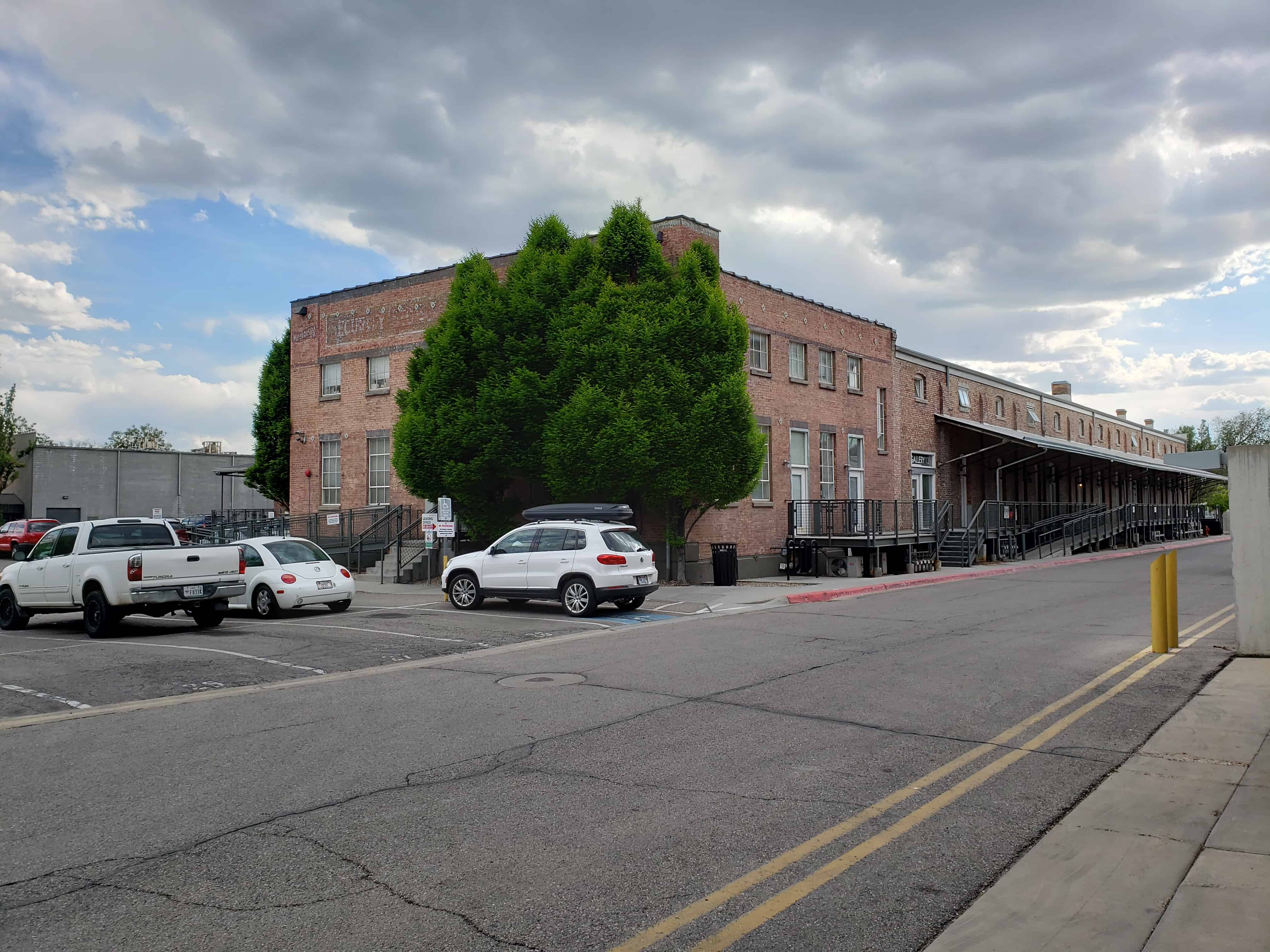
The ZCMI General Warehouse, built in 1905, is two-story warehouse constructed of brick masonry and heavy timbers. There is a two-story brick addition, built in 1926, on the north side of the east elevation. The warehouse is located at 230 S. 500 West in Salt Lake City’s west side industrial district. The 1905 building is set on a raised concrete foundation. The roof is has a fairly flat slope and has built-up roofing with existing historic skylights or visible historic locations. The primary architectural features of the building are the stepped parapets on the east and west elevation, brick pilasters dividing the thirteen bays of the north and south elevations, and the large opening for a former rail spur into the interior of the building on the west elevation. The 1926 office addition features multi-light metal sash windows and a decorative cast concrete surround for the front entrance. A rehabilitation of the building began in July 2005 as a federal and state rehabilitation tax credit project and is expected to be completed by Summer 2006. The former ZCMI General Warehouse is part of the Bridges redevelopment project and will be adapted for use as office space and artist studio-residences.
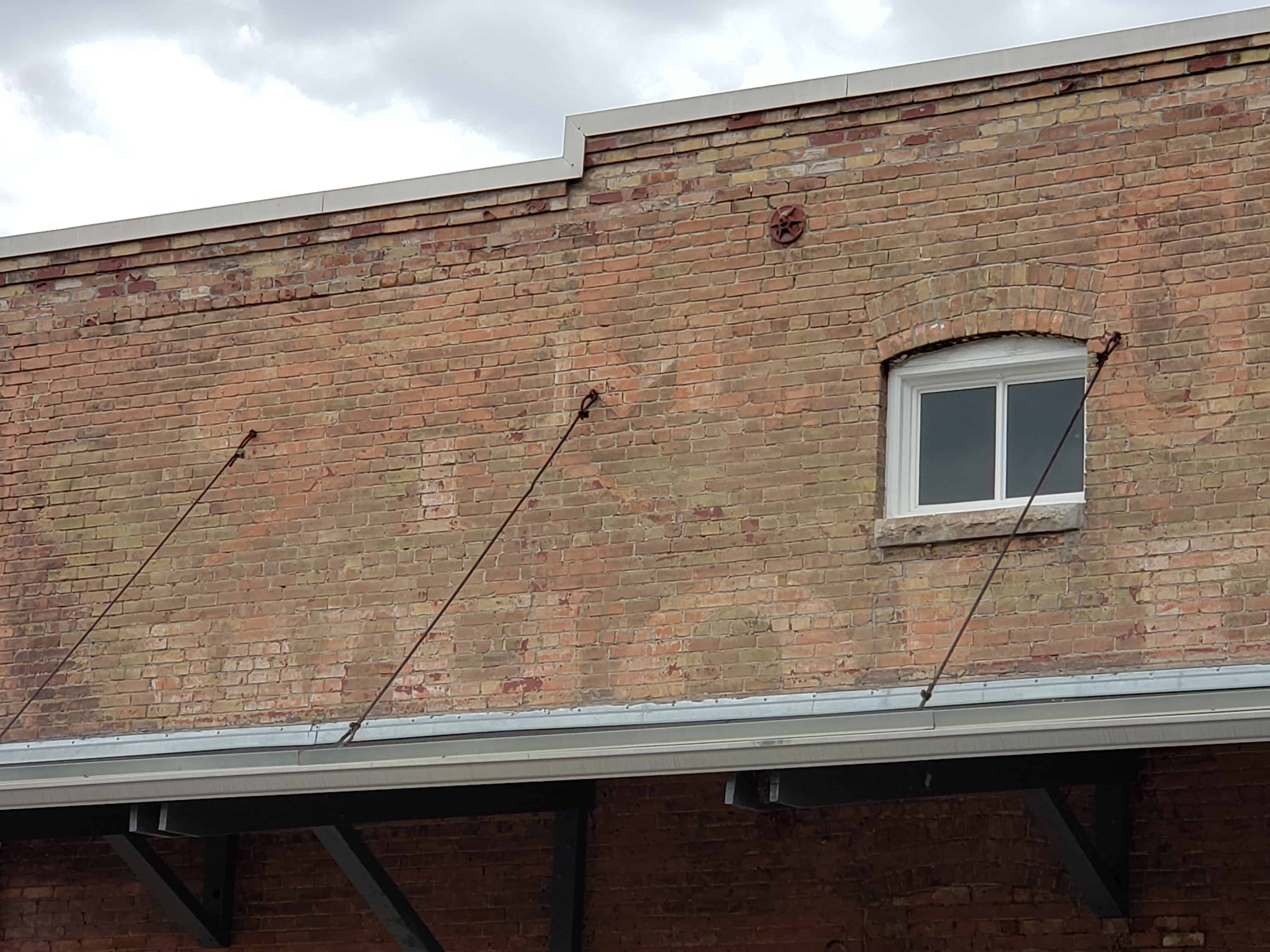
According to Martha S. Bradley, who wrote a history of the Zion’s Co-operative Mercantile Institution (commonly known as ZCMI), the warehouse was completed in April 1905 at a cost of $35,000. The Salt Lake County tax assessor’s card gives the year of construction as 1904 and the building was in use when photographed on December 18,1907. The brick addition can be dated to a Salt Lake City building permit for a “$10,000 two-story brick addition” issued on May 28, 1926 and construction was probably completed later that year. The original warehouse was constructed of commercial grade yellow-pink brick laid in American (common) bond with headers at every sixth course. The addition was also constructed of brick masonry laid in a common bond. The warehouse and addition have been painted red, probably at the same time the addition was built. A portion of the dock area (west bays of north elevation) under a canopy was never painted. The historic photograph indicates the building had three tall brick chimneys, but all have been shortened (date unknown, probably after 1970). There are two short chimneys with corbelled caps on the north and south elevations. Physical evidence suggests the building had several skylights. Only one is currently intact, and is pyramidal in shape with iron or steel sash.
The ZCMI General Warehouse is a wide rectangular building measuring 120 feet x 148 feet. The addition at the northeast corner measures 53 feet by 41 feet. The east and west elevations of the original building were similar with the exception of the rail spur opening. Both elevations feature a symmetrical corbelled parapet that steps to the north and south corners of the building. There is a metal penthouse for the freight elevator located in the center of the roof. On the main level of both elevations are several large openings that resemble windows, but are used as loading dock doorways. The floor level above the raised basement allowed wagons to be loaded directly from each opening. The openings each have a divided transom in a wood or metal sash and a three-course rowlock-brick relieving arch. The openings have been filled in by various materials (e.g., concrete block, metal and wood) over the years. The second level features smaller metal or metal-clad wood windows with relieving arches and a divided sash. The sills are sandstone. There are also basement windows in the scored concrete foundation with relieving arches of brick. There are six courses of projecting brick at the water table line. Most of the basement windows have security grilles. The most prominent feature of the west elevation is the two-story rail car opening just north of the building’s center. The opening featured a wide relieving arch of brick, but it appears the double-rail opening was narrowed for one rail, probably in the 1940s, when two storage structures were built on either side of the west elevation. These two structures, built in 1942 and 1946, were demolished circa 1980s. A newer overhead industrial-type door replaced the original “iron rolling curtain” noted on the 1911 Sanborn map. There is a circa 1940s historic paneled door just north of the rail door opening. There are no existing docks on the west elevation.
The east elevation is the most altered. With the exception of the second level windows to south, the majority of windows on the east elevation were obscured by the addition of the 1926 office and the addition of a loading dock (circa 1960). The dock has a concrete deck and an awning of wood. Though the original windows in the dock area have been bricked-in, the extant relieving arches indicate they were narrower than the openings on the west elevation and not used for a loading area. Two square openings and a door were cut in the wall when the dock was built. Modern signage was added, including the words “City Center Self Storage” in blue foam lettering on a white background in the upper portion of the east elevation (circa 1980s). The 1926 addition, a two-story office block, is north of the dock area. The addition has a flat built-up roof and a metal coping on a short parapet. The addition is built on a raised concrete foundation with a scored line in the center. The main entrance faces east with a set of concrete steps and a circa 1960s metal rail. The main entrance is under the round arch of a cast concrete door surround with a keystone in the center. The surround is a modest Jacobethan Revival detail, but is the building’s only definable stylistic element. The door is a later replacement. There is a secondary door from the dock area to the south (circa 1960). The windows on both levels are metal-sash, multipane windows with brick lintels and concrete sills. The main-level windows have been painted or filled in at the top where a modern dropped ceiling intersected the historic windows (circa 1960s). The lintels of the upper windows are part of a stringcourse of brick (painted white). The foundation, door surround, lintels and sills are also painted white. Modern signage for the “City Center Plaza” is located in a sign space (blue on white) at the top of the east elevation.
The south elevation is located along the south property line and is simply detailed. The south elevation is divided into thirteen bays by colossal brick pilasters, which taper at the top about a foot below the eave line. The south elevation has no doors but features rows of windows on all three levels. The small windows are similar to those found on the upper levels of the east and west elevations. Inexplicably, some of the bays do not have windows and some windows have no relieving arches. The visible foundation increases as the site slopes gently to the west. All the basement windows have security grilles, and a few of the upper windows are damaged or filled in.
The north elevation was the primary dock area and is divided into bays by pilasters similar to the south elevation. There was originally a dock along three-quarters of the elevation, but only a small section of the wooden platform is extant and is severely deteriorated. The dock is sheltered by the original sheet metal awning on brackets. The first bay on the east side appears to have multi-pane replacement window (circa 1930s). The next three bays have metal doors (possibly original). The remaining bays to the west have an individual “window” loading opening similar to those on the west elevation. A few of the openings appear to have original metal sliding doors; others have been altered or blocked. Most of the bays also have smaller windows on the second level. Each bay has a basement window as well. The east elevation of the 1926 addition has basement windows in addition to main and upper level windows similar to those on the east elevation and north elevations. In the northwest corner is a tall window for lighting the stairwell.
On the interior, the 1905 warehouse has approximately 23,000 square feet of space, not counting the interior rail dock, which is open from the rail bed to the roof structure. The rails were removed at an unknown date (probably 1970s). The two-story interior space is arranged U-shaped around the interior rail dock with brick firewalls separating each section. The walls are between three and five wythes thick, depending on the location.
The brick is laid in a common bond with headers varying from every fourth to every ninth course. Openings between the sections feature brick arches. The interior of the structure is supported on heavy timber posts, each with a heavy timber shearhead or capital with tapering ends to support the beams. The beams are mock timbers, which consist of six 2 x 12s bolted together. The interior rail dock is below the main floor level with a wood deck on the north side. Newer and wider openings with steel lintels were cut at an unknown date (probably after 1970) into the walls to augment the original arched openings from the rail dock to adjoining spaces.
The space on the south side of the rail dock is nearly twice as deep as that on the north side, and was used for storage. The space on the north side of the rail dock was probably designed to facilitate the movement of goods directly from the rail cars to the wagon docks. An original freight elevator, still operable but substandard, is located in the center of the building south of the rail dock. The modest stair with its original wood handrail and baluster is located to the east. The most extensive modification to the interior has been the addition of over 300 individual storage cubicles of plywood and chicken wire (recently removed). Other than these and other utilitarian modifications, most of the original interior of the warehouse is intact. An early office partition by the freight elevator and bead board ceilings on the north side corner suggests there was finished office space in the original warehouse but any office walls, doors, etc. are no longer present. There may have been some original finished space in the northeast corner of the warehouse, but most of the finishing occurred after the corner became the connecting point to the 1926 addition. There was also some later remodeling in the addition (circa 1960s-1980s). The basement is fully excavated and unfinished.
The 1926 addition has 2,173 square divided between the two floors. The interior features a lobby accessed from the southwest door, so probably added during the 1966 remodeling. The east entrance enters into a hallway with offices on either side. There appear to be some historic moldings on the main floor. The stair is located on the north side and features a metal handrail and baluster. The several offices on the second floor are completely covered in 1960s paneling. Most of the other finishes, including lowered ceilings, date from that period.
Recent removal of lay-in ceilings, modern partitions, etc. has revealed interior timber columns with modestly detailed timber shearheads. There is little other detailed interior historic material.
The site is a 1.25-acre rectangular parcel. The ZCMI General Warehouse partially abuts the property lines to the south. There are asphalt-covered parking areas on the east and west sides. A chain link fence encloses portions of the property. Two modern gates are located on 500 West. The driveway runs along the north side of the property. Another contemporary warehouse, which is within 43 feet of the rear elevation, may have been associated with the ZCMI Warehouse in some capacity since they shared a loading platform (now demolished), but that building is on a separate parcel. There is no landscaping. The site slopes down gently from east to west. There are several late-nineteenth and mid-twentieth century warehouses in the immediate neighborhood. There are also some recently constructed buildings in the area; particularly the modern four-story “Bridges” project built on the neighboring parcel at the corner of 200 South and 500 West. The neighborhood was once residential, but evolved as the city’s industrial and warehouse district after numerous rail lines were developed in the area in the late nineteenth century.
The adaptive reuse of the historic ZCMI General Warehouse is following the Secretary of the Interior’s Standards for Rehabilitation and the proposed rehabilitation has received preliminary approval from the National Park Service. The project will include cleaning, repairing and repainting the exterior brick masonry. Extant original doors, windows and skylights will be refurbished or replaced with elements similar to the originals. The individual loading and storage bays and the 1926 addition will be divided into multi-level artist living areas and studios. Each apartment will have an entrance though existing openings. The interior rail dock will be retained and used as an atrium space for the residents. Office space will be designed for the large southern portion of the building. The non-historic east loading dock will be simplified and the missing historic north dock reconstructed. The freight elevator cannot be updated and will be replaced with a passenger elevator in the same location. Some historic features, such as the exposed interior masonry walls, metal-clad fire doors and the simple, decoratively detailed timber capital blocks in the 1926 addition will be retained and refurbished.
The rehabilitation is scheduled for completion in 2006 and the building documentation for this nomination will be revised once these changes have occurred. The ZCMI General Warehouse is an important contributing historic resource in Salt Lake’s industrial west side downtown neighborhood.
The ZCMI General Warehouse, built in 1905 with a two-story brick addition built in 1926, is historically significant under Criterion A for its long association with the Zion’s Co-operative Mercantile Institution, commonly known as ZCMI. Labeled “America’s first department store” by most Utah historians, ZCMI was founded in 1868 by Brigham Young, and within a few years, spawned a regional system of local co-operatives. In Salt Lake City, the ZCMI department store was one of the most successful retail establishments in the city’s first 150 years. The ZCMI General Warehouse provided a vital link between Salt Lake’s railroad district and the ZCMI store on Main Street in the heart of the downtown business. The warehouse was also significant as a wholesale processing center for merchandise bound for ZCMI branches throughout the Great Basin and the Intermountain West. The warehouse reflects the twentieth-century development of Salt Lake City’s railroad and warehouse district. The building is also significant under Criterion C as both a representative and an innovative warehouse. Though the building is one of many early industrial and warehouse buildings remaining on Salt Lake City’s west side, it is one of only two known turn-of-the-twentieth-century industrial buildings to incorporate an interior dock for loading and unloading rail cars. The warehouse also features an innovative interior layout that facilitated the movement and storage of goods. The ZCMI General Warehouse is being nominated under the Salt Lake City Business District Multiple Resource Area context. The building will be rehabilitated as an adaptive reuse project in 2005-2006 and remains a contributing resource in one of Salt Lake’s historic west side neighborhoods.
When first constructed in 1906, the New York Hotel provided luxurious accommodations for travelers. The building offered steam heat and electric lights in every room while advertisements assured all guests of excellent service.
The hotel features an attractive entrance canopy supported by cast iron columns on high sandstone bases. Also note the curvilinear gable where the building’s name appears in large block letters. In the mid-1970s, the New York Hotel was renovated to house restaurants and office space. The pioneering project was one of the first in Salt Lake City to adapt an historic building for a new use. Its success brought new life to an historic building and a declining area of downtown.
This house offers a view of the range of Spring City’s architectural tradition. Built c. 1875, the original structure was a stone, hall-parlor house. The rear adobe addition was probably completed within just a few years after the main portion. Little is known about Iver Petersen, except that he also built the stone granary located on the property. The granary is one of the best preserved and most substantial granaries of Spring City.
Located at 309 North Main Street in Spring City, Utah
Iver Petersen (1844-1881), a Danish immigrant, built this stone, hall-parlor plan house in the mid 1870s. A rear adobe addition was constructed shortly thereafter. He died at a young age leaving a widow with several young children. A stone granary behind the house has been made into a living space.(*)
Constructed c. 1911, this one-and-one-half-story house is a nice example of large bungalow, the most common house type in Utah during the early twentieth century. The house exhibits characteristics of the transition between the waning Victorian Eclectic style and the then current Arts and Crafts style. These details include wide eaves with classical modillions, large side dormers, decorative iron railing and square classical columns on the large from porch, and the decorative use of multiple materials with the combination of brick and patterned shingles in the gable ends. These elements combine to produce a unique dwelling.
According to the title, Esther Catherine W. Haslam was the original owner of the house and she deeded it to David and Emma Haslam in 1943. Most likely the house was always used as a rental, for city directories indicate that neither of the Haslam families lived here, and residents’ names changed on a regular basis.