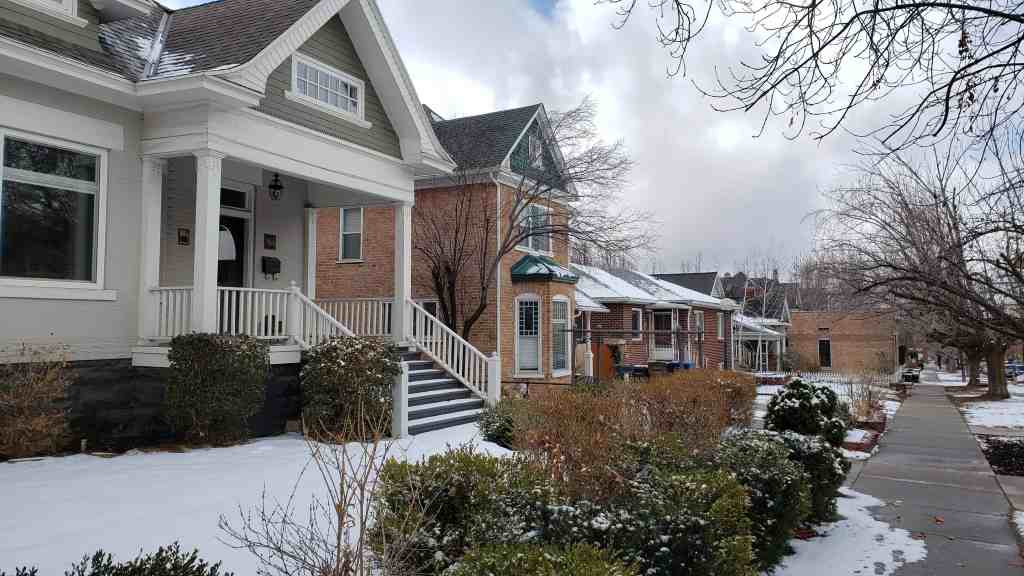
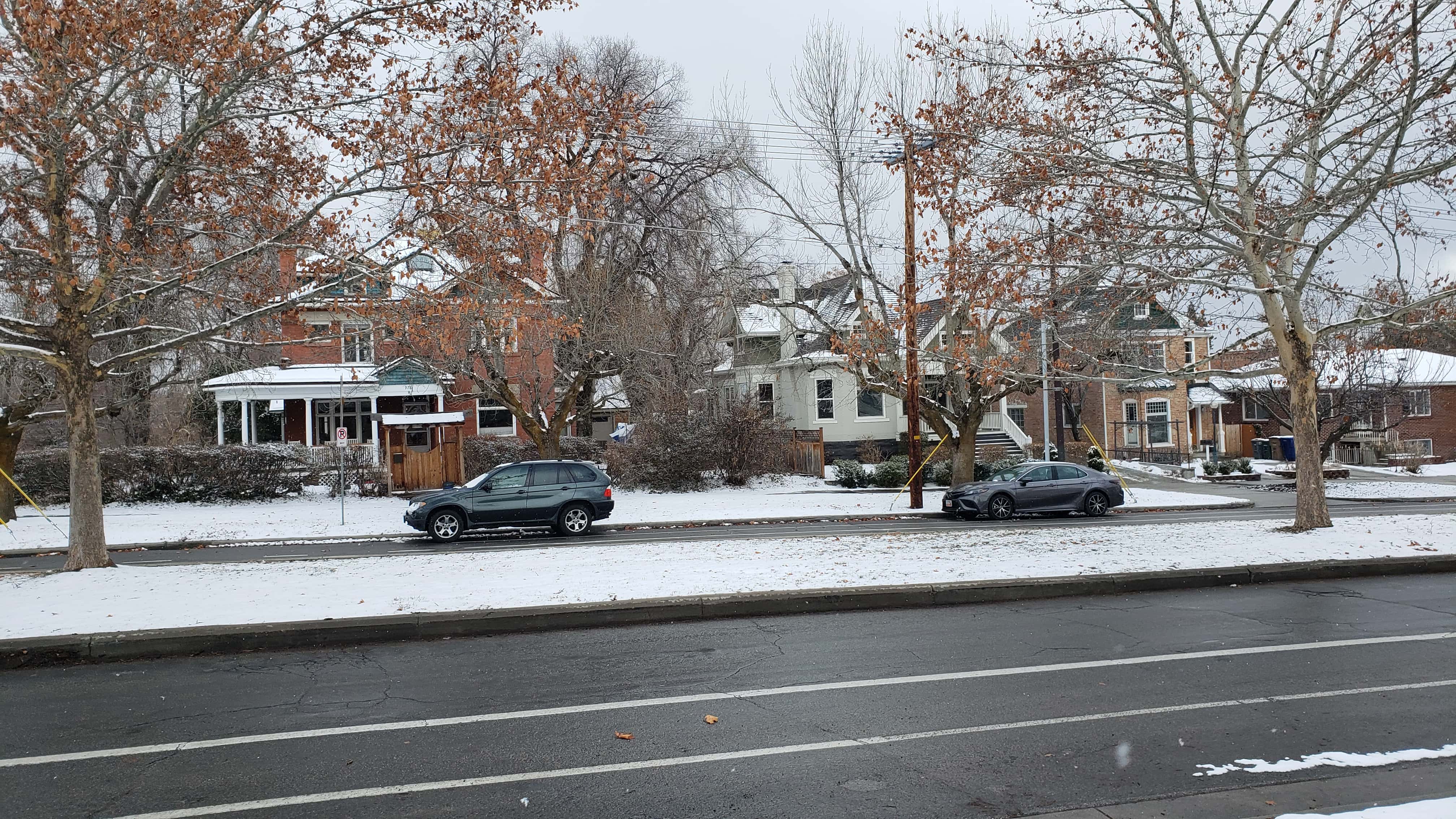
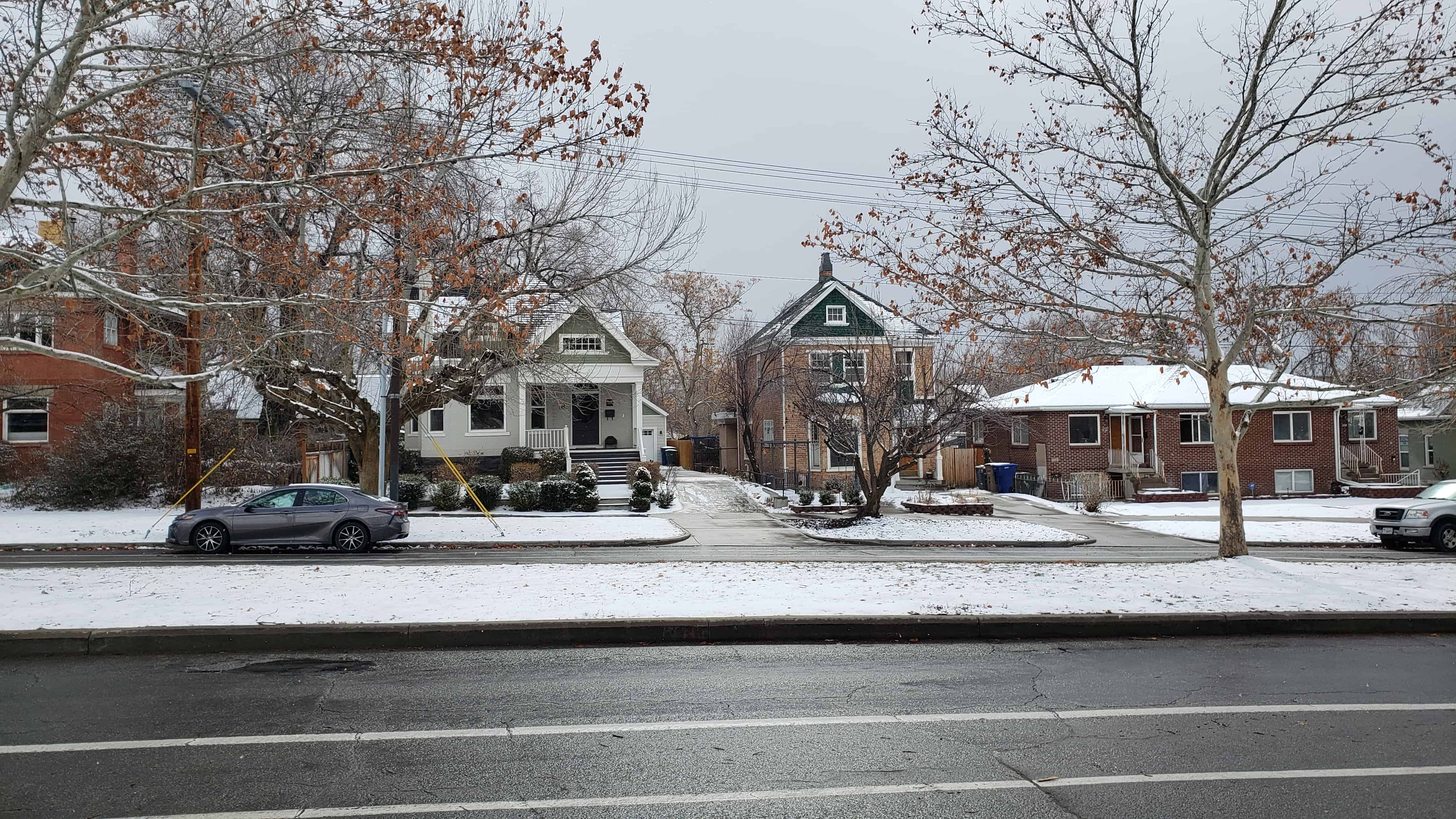
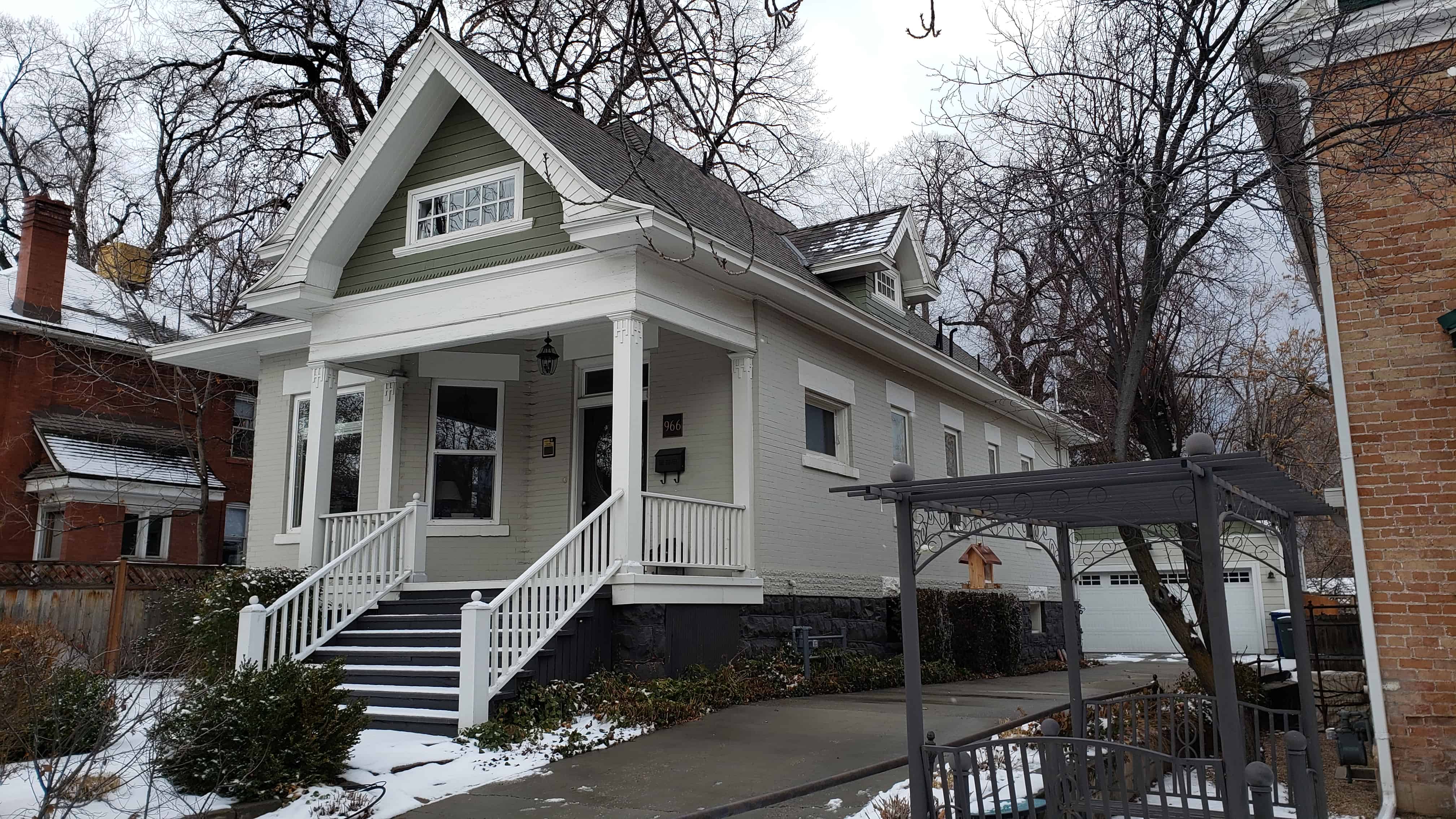
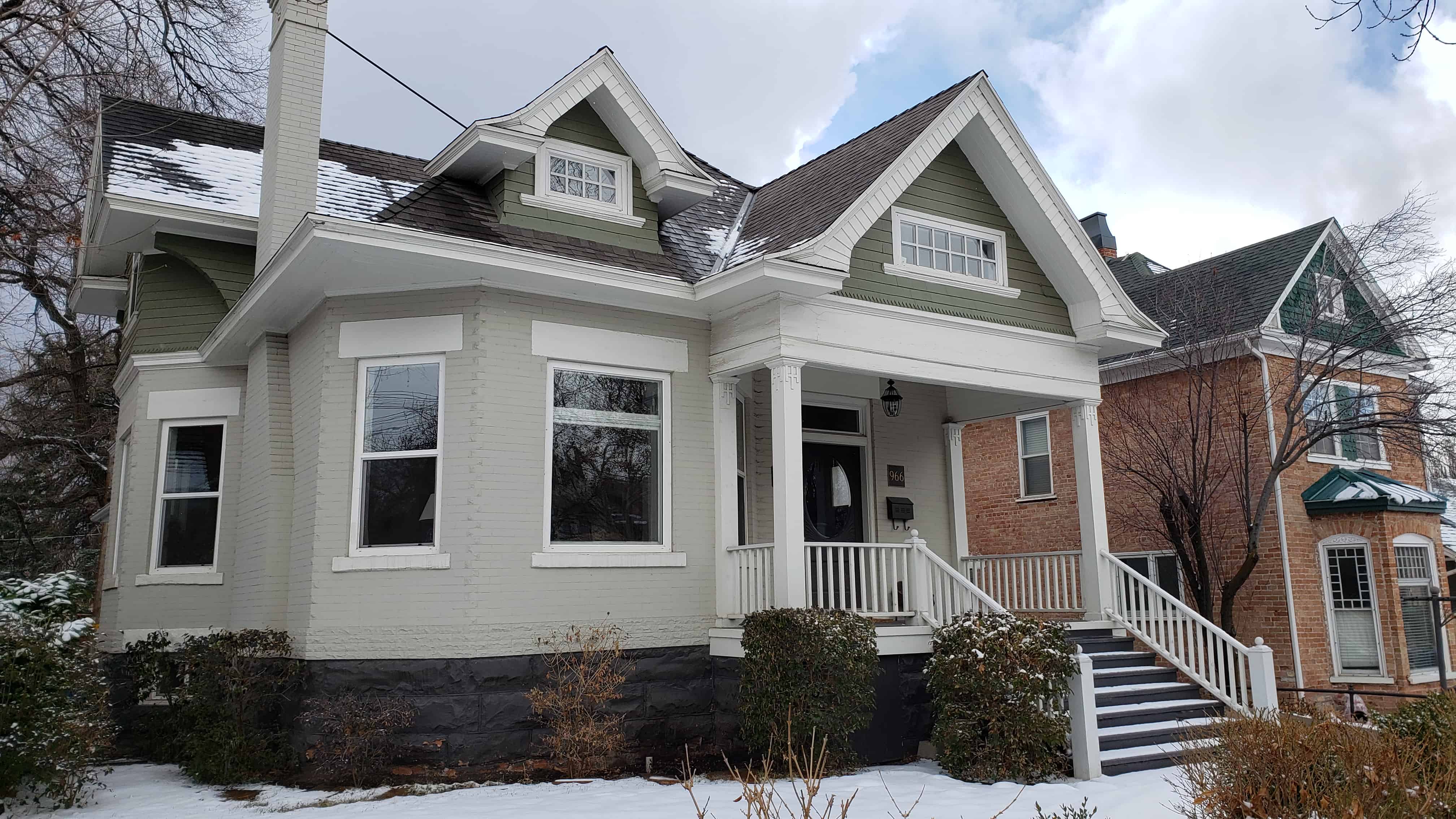
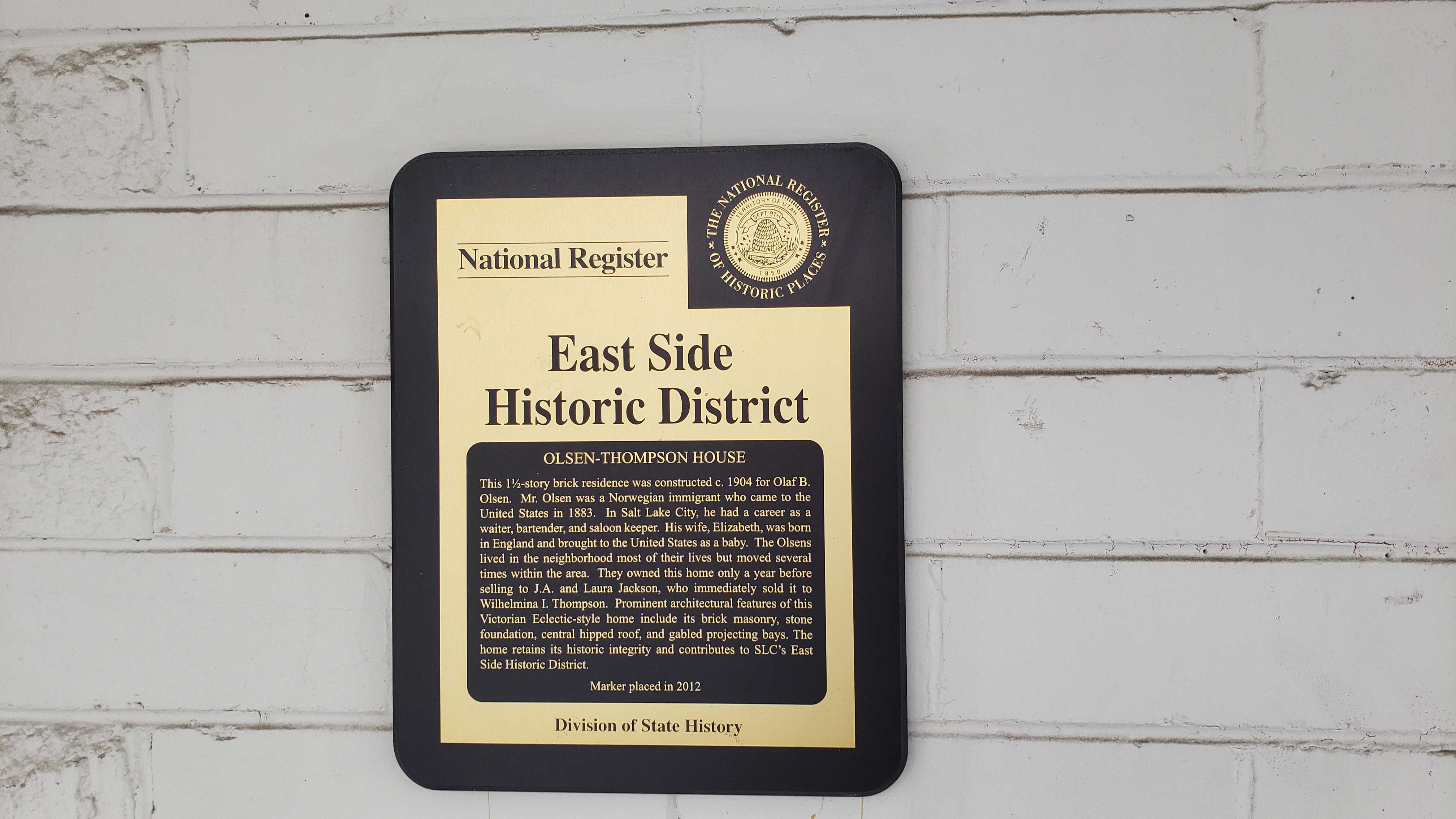
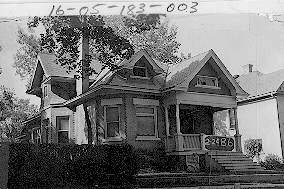
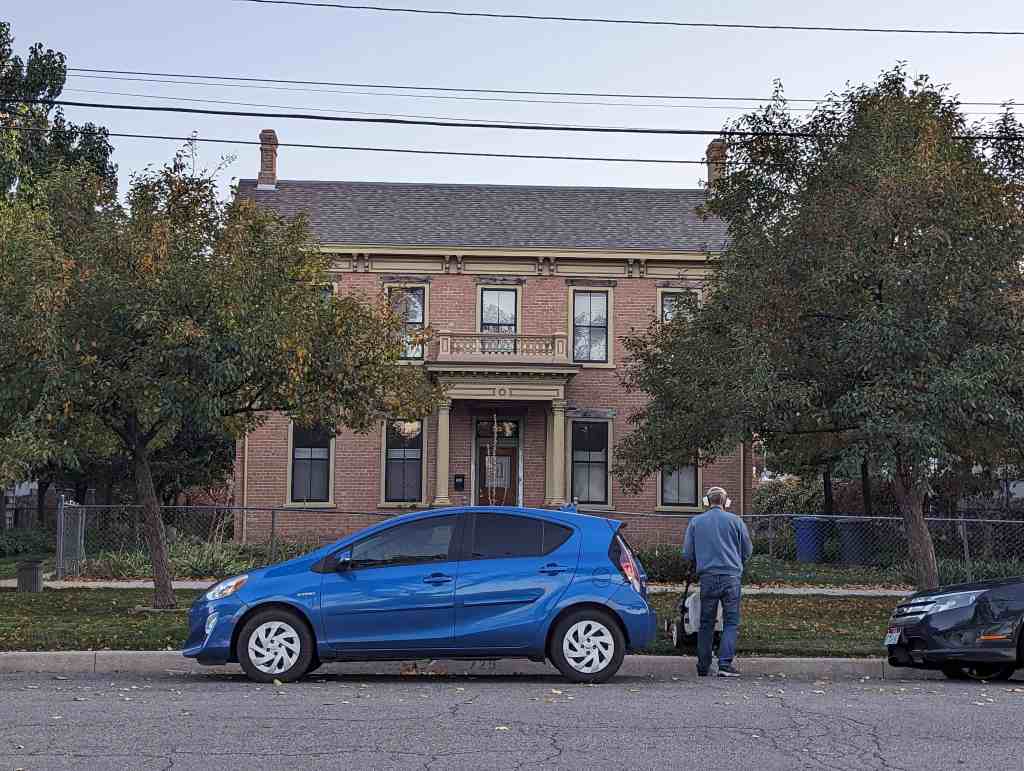
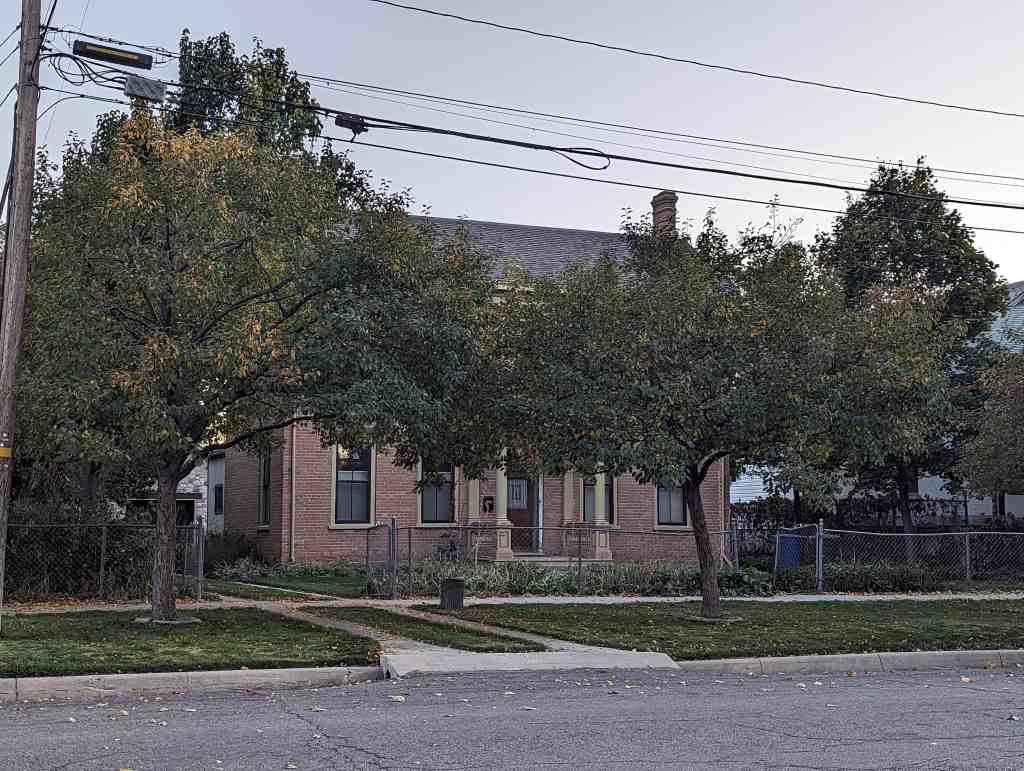
This 1 1/2-story brick residence was constructed c. 1904 for Olaf B. Olsen. Mr. Olsen was a Norwegian immigrant who came to the United States in 1883. In Salt Lake City, he had a career as a waiter, bartender, and saloon keeper. His wife, Elizabeth, was born in England and brought to the United States as a baby. The Olsens lived in the neighborhood most of their lives but moved several times within the area. They owned this home only a year before selling to J.A. and Laura Jackson, who immediately sold it to Wilhelmina I. Thompson. Prominent architectural features of this Victorian Eclectic-style home include its brick masonry, stone foundation, central hipped roof, and gabled projecting bays. The home retains its historic integrity and contributes to SLC’s East Side Historic District.
The community of Sugarhouse in Salt Lake City, Utah, was settled in the spring of 1848 and is considered among the first ten of Mormon settlements in the Great Basin. Located about six miles southeast of the center of Salt Lake City, the colony was organized for the purpose of building a sugar factory to process locally grown beets into refined sugar. Excellent molasses was produced but numerous attempts to manufacture table sugar at this location failed. Nevertheless, the settlement established a firm agricultural and commercial economy and survived after the sugar factory failed. Physical evidence of the early colony such as the Sugar House and the Mormon meetinghouse and school have been replaced by newer structures in recent decades. One of the oldest surviving public building of note in Sugarhouse is the Irving School.
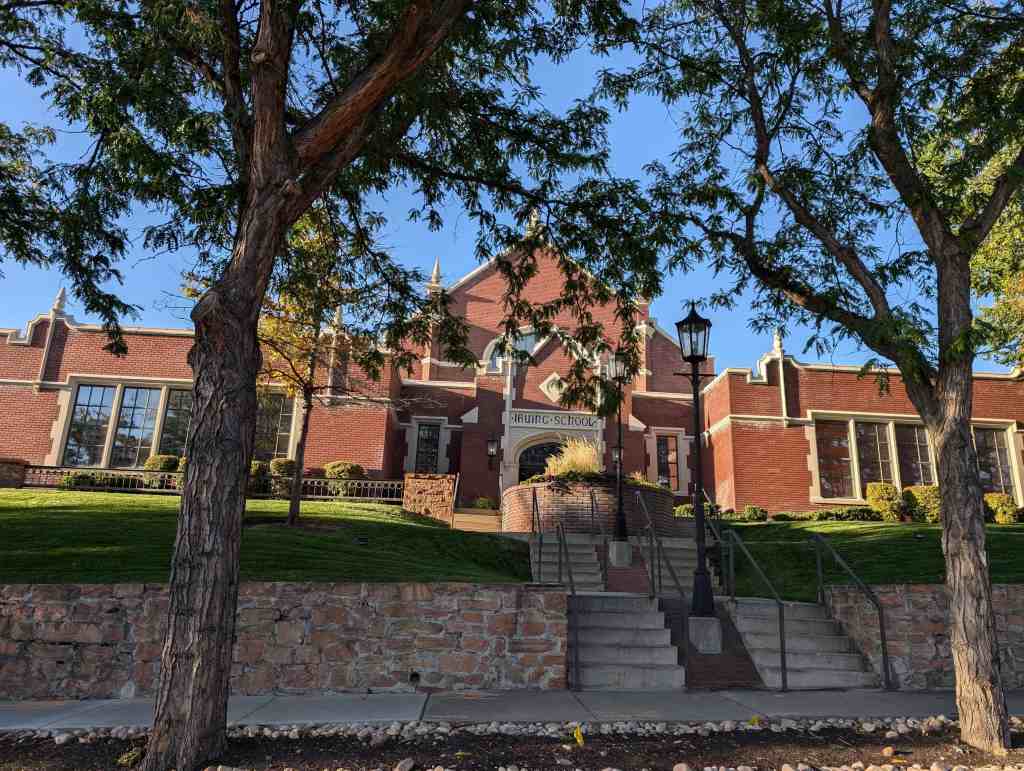
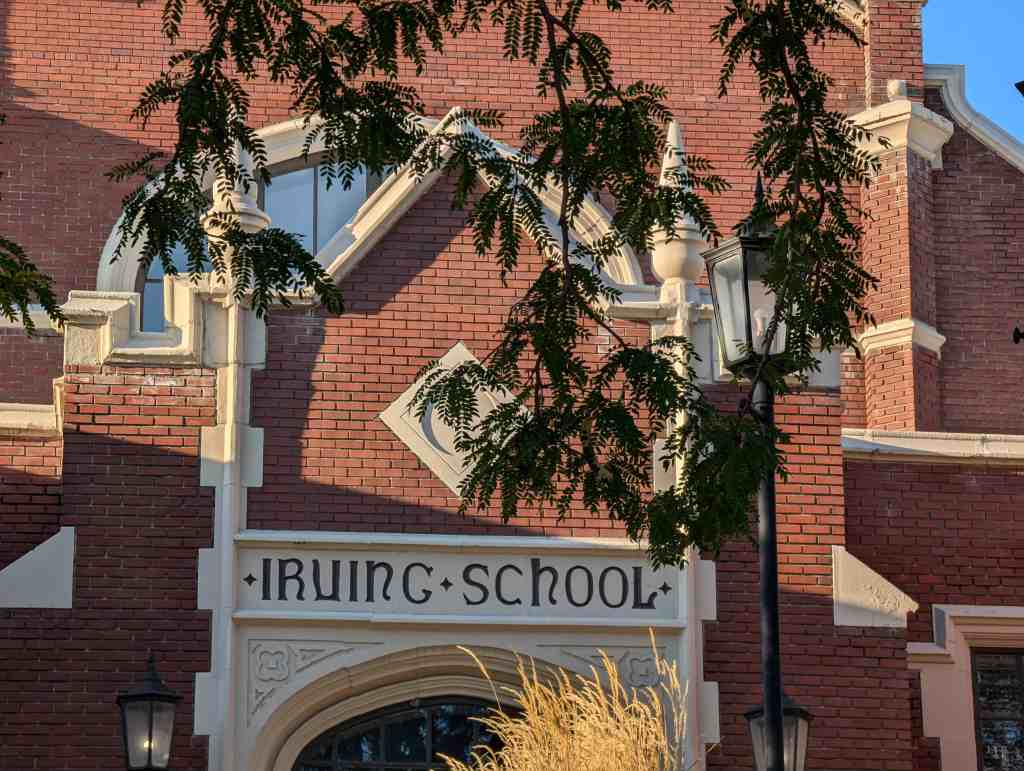
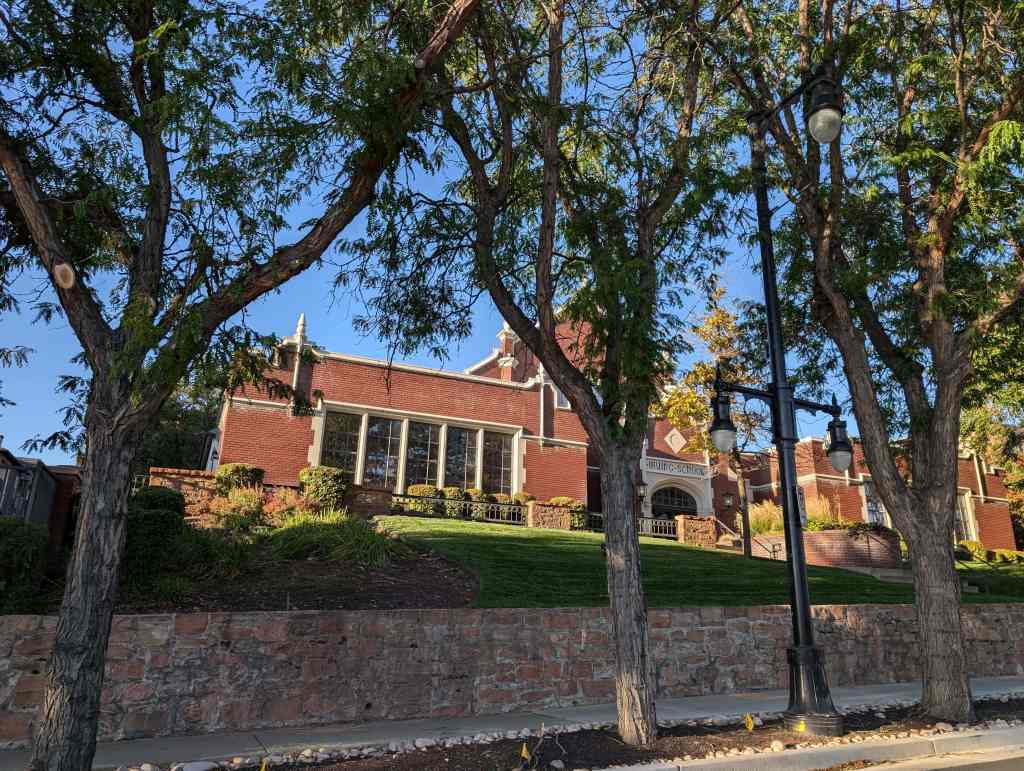
Located on an elevated site along the north side of 21st South Street (the main east-west axis of the community), Irving School overlooks the area’s commercial and residential districts. The school’s terraced site, with sandstone retaining walls, is a major historical focal point in Sugarhouse. Since its opening in 1916, Irving School has serviced the educational needs of the neighborhood’s middle-school or junior high school children.
Irving School is one of the best and earliest examples of the Jacobethan Revival Style in Utah. Utah’s earliest significant example of the style is Converse Hall (National Register) built in 1906 as the main administrative building for Westminster College. Irving School, built in three idealistically styled sections in 1916, 1926, and 1930 is characteristic of the Jacobethan Revival in many of its design elements. Particularly significant features include the steeply pitched gables, Elizabethan windows of various types with cast stone frames and mullions, and decorative cast stone copings, pinnacles, string courses, quoins, labeled arches, and inscription plaques. The cast stone ornamentation is itself significant for being among the earliest examples of that type of material in that region.
The interior of Irving School, while conventional in plan, features interesting exposed trusses, a proscenium stage, molded wooden trim, Tudor-arched bays, and light fixtures which carry the Jacobethan theme throughout the building.
Located at 1179 East 2100 South in the Sugar House Neighborhood of Salt Lake City, Utah and added to the National Historic Register (#78002674) December 22, 1978. The text on this page is from the nomination form for the national register.
The primary architects of the Irving School were Charles S. McDonald and Raymond J. Ashton. McDonald’s practice, which spanned the period from 1909 through 1918 was cut short by his untimely death at age 39. During his career, McDonald was associated with architect Frederick A. Hale and later became a partner in the firm of McDonald and Cooper with Walter J. Cooper. Although he designed homes, theaters, and commercial buildings, McDonald’s major commissions were school buildings for the Salt Lake City, Board of Education. Besides Irving School, McDonald designed two other 26-room schools in Salt Lake City in 1916.
Following McDonald’s death, architectural work on Irving School was done by Raymond J. Ashton. Early in his career Ashton was associated with a prominent local building contracting firm known as the Ashton Brothers. R. J. Ashton became a draftsman for the firm which led to his becoming an architect, a profession which he engaged in for over 40 years. Primarily known for designing many of the area’s older church buildings, Ashton was quite sensitive to historical architecture. He chose to carry on McDonald’s Jacobethan Revival theme as he made additions to the pre-existing school. The final result, despite having been built in several stages, displays a cohesive, well-integrated design.
Irving School is a load-bearing brick wall structure which varies from one to three stories in height. Set back on a terraced prominence overlooking the Sugarhouse area of Salt Lake City, Utah, the school is impressively situated amongst mature Evergreen shrubbery. With wood floors and trusses and a Jacobethan Revival façade and interior, the building is somewhat anachronistic considering some of the more contemporary architectural and engineering trends which were developing in 1916, the year the first section of the school was constructed. The reaction against academic formalism as well as the austere, geometric rigidity of styles such as the Prairie Style was considered legitimate at the time, however, and resulted in Irving School’s fanciful dark red brick and light east stone appearance. Basically H-shaped in plan, the building was built in several stages over a twelve-year period. Typically, the school contains classrooms flanking central halls, an auditorium, gymnasium, shop and music rooms and other special-use spaces, kitchen and cafeteria, offices and other rooms related to the building’s original school functions. Much of the school’s interior appointments are intact including wood trim and doors, columns, exposed trusses, decorative plaster trim, stairways, theater seats, radiators, and fountains.
On the exterior, Irving School displays dark red brick in the field of its walls, with decorative cast stone trim in a light color as contrast. Door and window bays are of various shapes and sizes and include Tudor-arched bays and various rectangular, flat-arched bays. All bays, as well as the cornice copings on the gables and parapets, are of cast stone. Cast stone is also used in a plastic way to give form to pinnacles, splayed entry casings, label arches, string courses, quoins, stepped buttress caps and various panels and plaques. This ornamental trim, together with the variety of massing and form inherent in the building, give it a quality of considerable visual interest.
The Thomas and Mary Hepworth House, constructed in 1877, is architecturally significant under criterion C as the only known 2-story Italianate central-passage house in Salt Lake City. As such it marks a culmination of the long tradition of central-passage house designs in the United States and particularly in Utah. The house illustrates the longevity the tradition enjoyed in Utah before giving way to the popularity of the Victorian Picturesque styles of the 1880s. In some ways the house design was a bridge from the old to the new, with its traditional central-passage plan, updated with more vertical Victorian proportions and with stylish Italianate detailing.
The Thomas and Mary Hepworth House is located at 725 West 200 North in Salt Lake City, Utah and was added to the National Historic Register (#00000404) April 21, 2000.
The Thomas and Mary Hepworth House, constructed in 1877, stands facing north on 200 North in the Northwest residential section of Salt Lake City. The House originally stood on 5/8 of an acre, which likely included a number of outbuildings. The west section of the property was eventually sold off, so that the house now sits on just under 1/3 of an acre. This smaller lot at one time included a barn, a garage, and a shed, none of which survived beyond the 1960s. While homes were built in the neighborhood soon after the area was platted in 1849, only a few of the early houses remain. Most of the houses in the area date from the 1880s to the 1910s, a period when the larger lots were sub-divided into numerous small parcels. This period of smaller homes built on smaller lots corresponds with the transformation of the neighborhood from a somewhat rural area to a more working-class urban neighborhood. As one of the oldest homes in the neighborhood, the Hepworth House stands out as one of the larger homes on one of the larger lots in the area.
The Thomas and Mary Hepworth House is a two-story central passage “l-house” with a single-story ell attached to the rear of the house. The foundation is constructed of local pink sandstone, laid in a random ashlar pattern in the front of the house and a random rubble pattern in the rear. The main two-story body of the structure is built of a soft-fired orange-colored brick laid in common bond pattern, while the single-story rear ell is frame covered with drop/novelty siding. The main elevation consists of five bays and a square porch protecting the central entry door. An Italianate cornice with panel moldings and paired sandwich brackets trims the roof and punctuates the gabled ends of the house with returns. The eaves conceal functioning box gutters and a corbelled chimney stands at each gabled end.
The form and massing of the Hepworth House have undergone relatively little change since its construction in 1877. The footprint of the house originally formed a simple T. The only change in the basic footprint came with the early addition of a single-room in the southwest corner of the T. This addition was in place at least by 18981 , and had likely been there for quite some time before that year. Long porches originally flanked both sides of the rear ell, but they were altered over time and eventually removed. Otherwise, the body of the structure remains primarily as it was built. The greatest changes to the house came through the deterioration and removal of original detailing. The original front porch, while essentially the same size as the current one, was far more elaborate. It had wooden balustrades, fluted Corinthian columns, and a balustrade on the roof above, creating a second-story balcony. This balustrade had disappeared by the 1920s and by the late 1930s the columns and railings had been removed3 . The rest of the porch was replaced in the 1980s, due to structural problems. Likewise, the chimneys deteriorated over a long period of time and were eventually knocked off at the roofline and covered over in the 1980s4 . The chimneys were re-built in 1996 based on photographs and the remaining physical evidence. Decorative Italianate pediments originally hung over each window and the main entrance on the front of the house. These details were likely removed in the 1950s when the house was modernized with asbestos siding. The siding on the front and side elevations was removed in 1999 to reveal the original brickwork. The cornice detailing on the front and back of the house also suffered from neglect and most of it was removed. These sections of the cornice were re-constructed in 1997, based on photographs and the surviving cornice sections. Originally, the front part of the house had double-hung sash windows with two-over-two divided lights. The sashes were replaced with aluminum framed windows, probably in the 1960s or 70s, but the window casings were left intact.
The interior of the house is laid out in a typical central passage “l-house” plan. The entry hall contains a staircase to the second floor. A paneled octagonal newel post stands at the base of the staircase. The post as well as the surviving octagonal balusters and handrail are of walnut. The rest of the woodwork in the house, which is of pine or fir, was originally painted to imitate oak and maple. Eventually all the woodwork in the house was painted over with solid paint colors. On the main floor there is a single large parlor on each side of the entry hall. The parlor on the east was the formal parlor and included a fireplace with a cast-iron mantel, a plaster medallion on the ceiling, and a coved plaster cornice around the room. Unfortunately, the original mantel and the ceiling medallion disappeared from the house. Only portions of the cornice remain. On the second floor, there were originally two bedrooms off each side of the central hallway. In 1943, when the house first became a multi-family dwelling, the southeast bedroom was divided into a bathroom and a kitchen. At some point partition walls were also constructed underneath the stairway and at the top of the stairs to divide the house into apartments. The frame ell at the rear of the house originally included a dining room, a pantry, and a kitchen, as well as a small room that at some point became the first bathroom in the house. A single room addition (mentioned above) was constructed (or perhaps created from an existing porch) in the corner formed by the ell and the brick portion of the house on the west side.
The Hepworth House was constructed in 1877 for Thomas and Mary Hepworth. Thomas and Mary were natives of England, born in 1826 and 1832 respectively. Not long after their marriage they converted to Mormonism in Liverpool and in 1852 they set out for America, making the long sea voyage and then the wagon trip across the plains to Utah. While they apparently lived in a number of communities in Utah, they eventually settled in Salt Lake City, where Thomas worked as a butcher in the City Market and in time set up his own meat market, T. Hepworth and Sons. In 1872, Mr. Hepworth purchased a piece of property on the west side of town5 . It is likely that at the time the property already included some kind of residence, because the Hepworths were listed in city directories as living on the property for several years following the purchase, but before the current house was built.
By 1877, the Hepworths had accumulated enough wealth to build a new home and construction apparently began late in the summer of that year. Physical evidence of this date of construction is found in the house itself. The roof of the house is made of planks apparently taken from some kind of billboard or fence. On the planks there are still fragments of posters advertising the coming of “Montgomery Queen’s California Menagerie, Caravan and Great Double Circus.” This circus performed in Salt Lake City on July 2 and 3, 18776 . By late August the planks had apparently been salvaged for use in the Hepworths’ new house, for a cryptic note in the attic states, “7 days, masons started Thursday August 23,1877.” This is likely a reference to the commencement of the stone foundation for the house. The brick portion of the house and the frame ell were constructed together. The only addition to the house over the years came fairly soon in its history, as evidenced by the square nails and the same circus-billboard planks used in its construction. Sanborn Maps show the one-room addition in place by 1898, but it had likely been there for quite some time before that. The Hepworths, who would have had 8 children living at home when the house was built, continued to occupy the house as their children married and left home. Thomas died in 1895, following an accidental fall in an elevator shaft. After his death, Mary continued to live in the house until 1904. Failing health prompted her to go live with a daughter in Los Angeles, where she died in 1905. The family sold the house to Samuel and Emma Bjorklund in 1906. They also sold off the western part of the original property separately and a new house was soon constructed there.
Samuel and Emma Bjorklund were both natives of Sweden. While there is no evidence that either of them were ever members of the Mormon church, it is likely that they came to Utah with family members who had converted to Mormonism. In Sweden, Samuel had been trained in “dental surgery, tonsillectomy, and barbering,” but was apparently not allowed to practice the first two professions after arriving in Utah in the early 1880s7 . He did, however, work as a barber for many years in a succession of barbershops in Salt Lake City. Samuel and Emma were married in Salt Lake City in 1886 and eventually had four children. They occupied a number of residences in the city and even had one built, but they didn’t settle down permanently until they purchased the house from the Hepworth family. During the time the Bjorklund family owned the house the only significant changes they made to it were the removal of the rear porches and the pillars and balustrades on the front porch. After their children were grown, one un-married daughter, Inga, and one widowed daughter, Frances, continued to live in the house. Following Emma’s death in 1932 and Samuel’s in 1939, the two daughters continued to occupy the home for a couple of years.
In about 1941 the Bjorklund family sold the house to a third immigrant couple, John and Marie Roothoff. The Roothoffs were natives of Holland and had come to Utah as Mormon immigrants. The Roothoffs lived in the house for only a few years, but their impact on the history of the building was great. After living in the house for a time, they began in 1943 to divide the house into apartments9 and then moved out, continuing to rent out the apartments for a number of years. In 1953, Irven and Mary Light purchased the house as their own residence, but continued renting out part of the house as well. During the time they owned the property, the Lights carried out the most extensive changes to the structure. This included removing some of the decorative woodwork on the exterior, covering the brick with asbestos siding, and further dividing the house to accommodate apartments10 . After the Lights sold the house in 1963, it would pass through multiple landlord owners, functioning as a rental property for more than thirty years.
The house is currently undergoing an extensive restoration. As noted earlier, the chimneys have been re-built, most of the asbestos siding has been removed from the brick section of the house, and missing cornice details have been reproduced. The restoration will eventually include replacement of aluminum-framed windows with historically accurate wooden-sash windows, reconstruction of the historic front porch, and duplication of the missing window pediments. Fortunately, there is sufficient photographic and physical evidence to accurately reproduce these lost elements.
Architectural Significance
The Hepworth House is located on the west side of Salt Lake City in one of the original city plats (Plat C) laid out in 1849 by Mormon pioneers who had first arrived in the Salt Lake Valley two years earlier. This plat, like other portions of the city, was made up of a grid of wide streets surrounding ten-acre blocks. Each block contained eight lots. In 1872, Thomas Hepworth purchased one-half of one of these lots on a block situated about 7 or 8 blocks from the central business section of the city. It is clear from the house he built that Thomas Hepworth had become quite prosperous and wanted a home that would express that status. Consequently, he chose a house form that had long been “something of a national symbol of economic achievement” – the central-passage house11 . Furthermore, he chose a two-story version with the more impressive five-bay façade. To this strong traditional symbol of success he added vertical proportioning and stylish Italianate detailing, including a bracketed cornice, pediments over the windows, and porch balustrades and Corinthian columns. It is clear even today that there was a conscious effort to make the house as impressive as possible. The brick portion at the front of the house has all the large windows and all the elaborate detailing. The rear ell was constructed of wood and lacked detailing. The bulk of the available resources went instead for the main façade.
By 1877 the central-passage house had long been a popular form in Utah. The form had its roots in the Georgian house and, in time, became the quintessential American house. The two-story, single-pile version became so common in the midwestern states of Illinois, Iowa, and Indiana, that it was dubbed the “l-House”. Early Mormon settlers brought this preference for the central-passage house to Utah and in the early 1850s most of the finest homes in the early Mormon communities were built in that form. This included the Beehive House, Brigham Young’s official residence, as well as those of other prominent LDS church leaders. Although the central-passage form was not the most common form in early Utah, it was the house plan of choice for almost anyone who could afford it, and Salt Lake City boasted scores of classically proportioned central passage homes. In Utah, as in other parts of the country, the central passage house was a recognizable symbol of social and economic success.
The elite preference for this form persisted through the 1860s, despite the introduction of new architectural styles in the Eastern United States. The coming of the Transcontinental Railroad in 1869 brought the end of Utah’s isolation and the 1870s saw new styles beginning to impact the trends in Utah Territory. While some adopted the new styles outright, many simply applied the new styles to familiar building forms. This was particularly true in the smaller towns in the territory, where classically inspired building forms with Gothic Revival or Italianate detailing became fairly common. In Salt Lake City, where the newer styles were more likely to be fully embraced, as in Brigham Young’s lavish new Second Empire “Gardo” House, the mix of the old and new still found a place. The Thomas and Mary Hepworth House is an outstanding urban example of these architectural “bridges” between the traditional and the up-to-date.
While the Hepworths occupied the home for many years, their house was never more stylish than the day it was built. By the early 1880s building in such a style was almost unheard of in Salt Lake City. Within a decade the tradition of central-passage houses had almost completely died out in rural Utah as well.
Today, the Thomas and Mary Hepworth House remains as a rare symbol of nineteenth century values and social structure. Of the numerous central-passage houses that once stood in Salt Lake City, only a handful remain. Of those that do, only the Hepworth House, with its central passage plan and its Italianate detailing, reflects the architectural transition from old to new that took place in Utah in the 1870s.
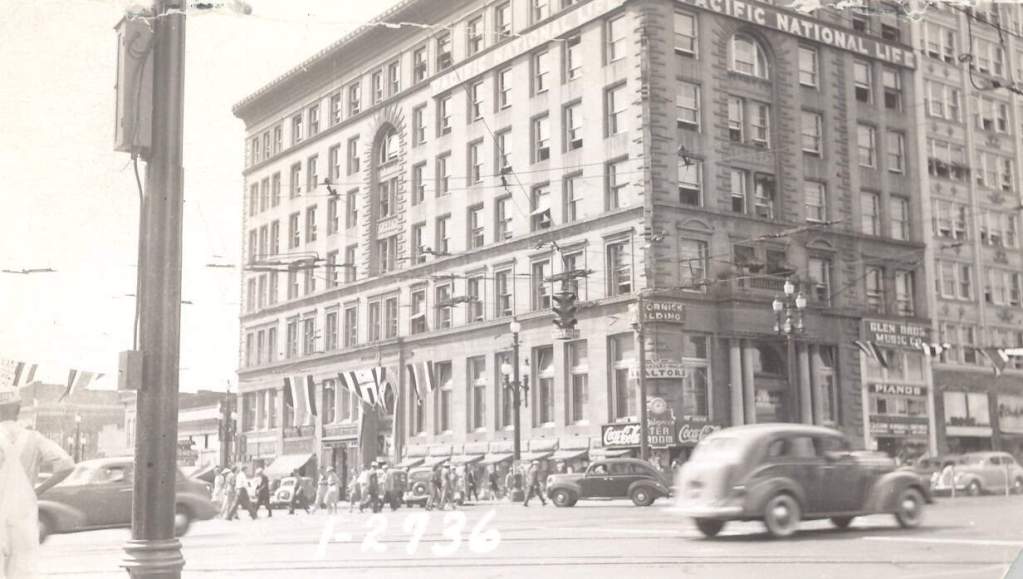
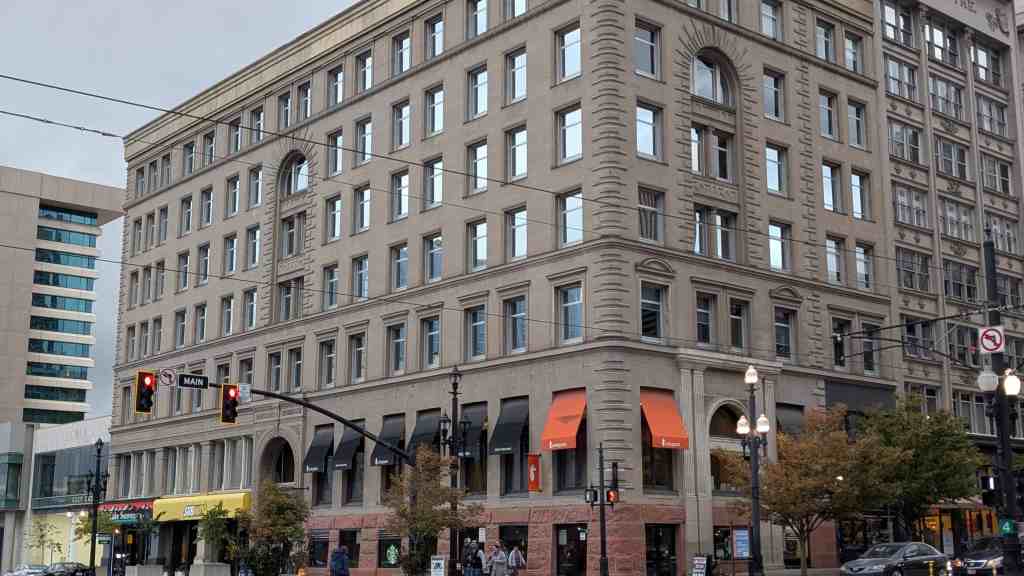
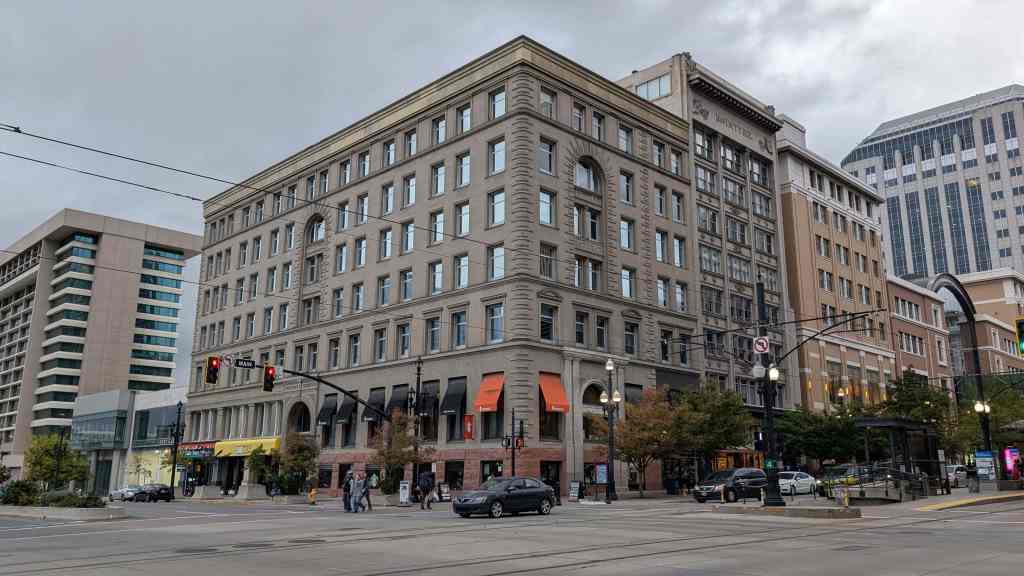
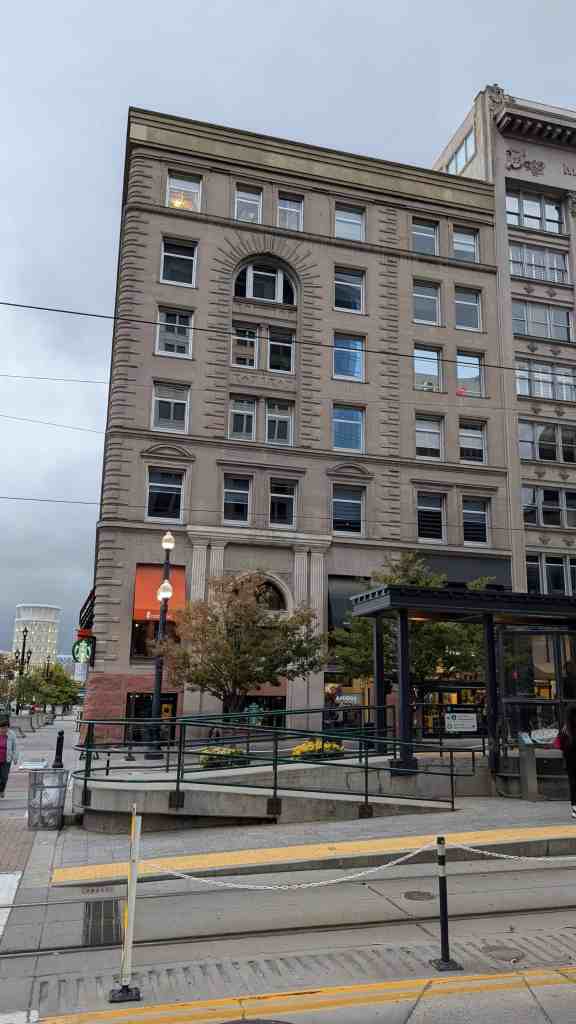
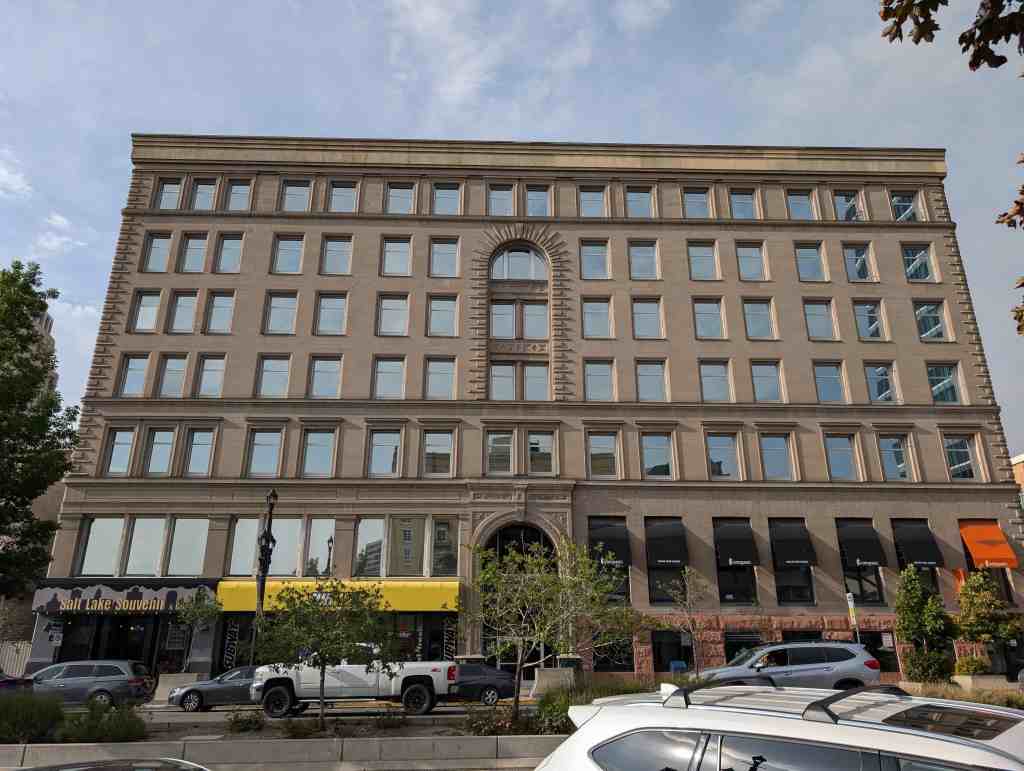
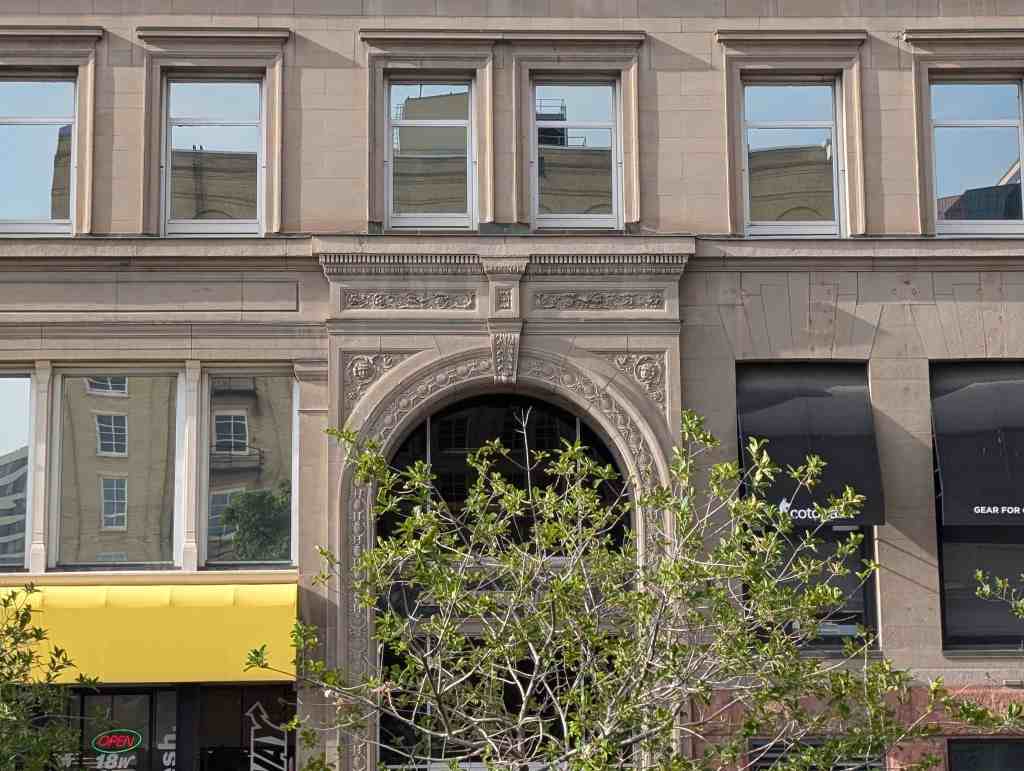
The McCornick Block represents a transition in Salt Lake City’s commercial architecture from the two to four-story buildings of the 19th century to the skyscrapers of the 20th century. When it was completed in 1893, the seven- story McCormick Building towered over its smaller neighbors. Six early model elevators enabled people to reach the dizzying heights of the seventh floor with ease. This building originally featured a four-foot copper cornice and a columned entryway on the east side. A keen observer will note that the northernmost two bays are a later addition (1908), but conform to the building’s original design.
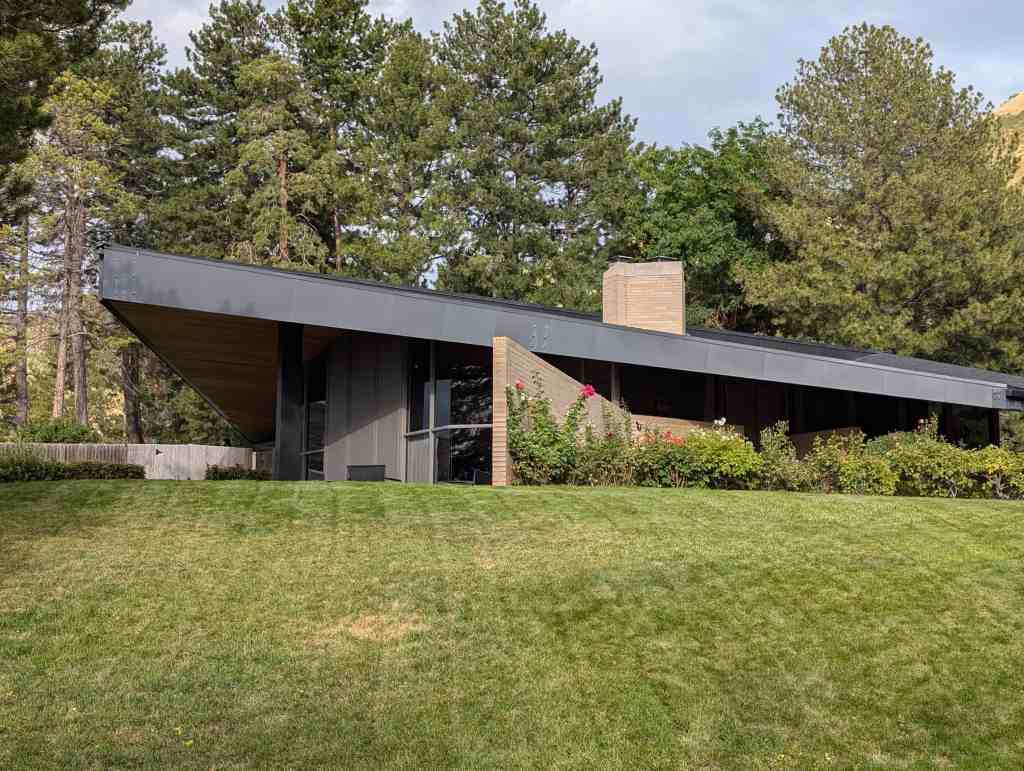
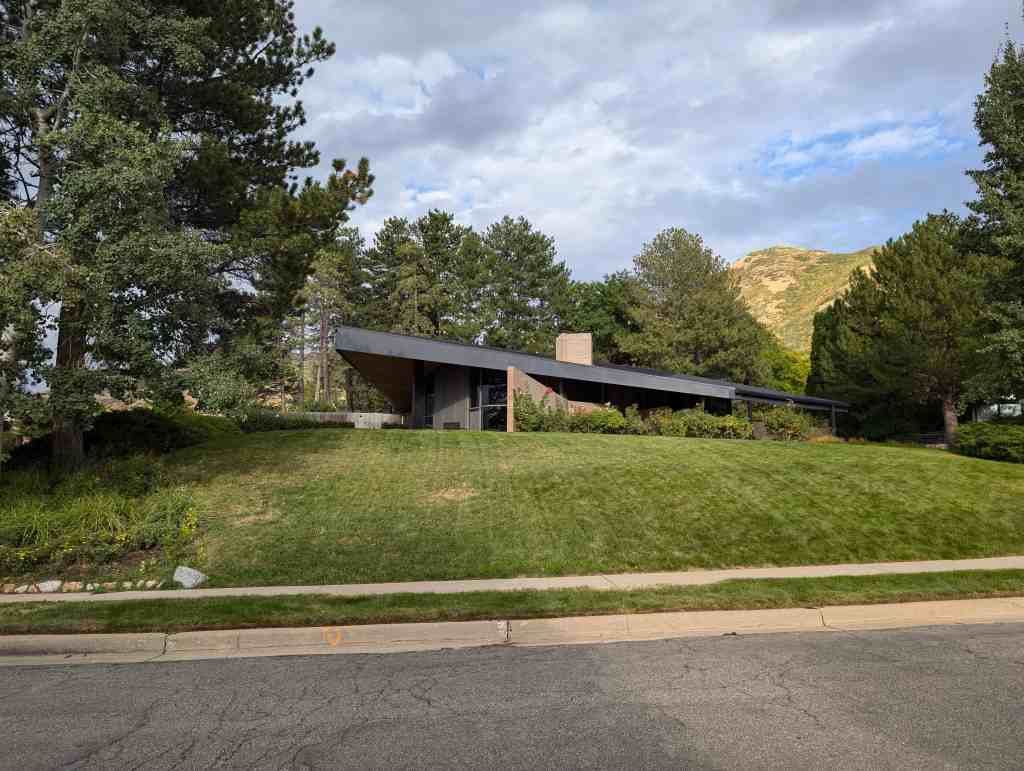
The Harlan and Marie Nelson House is located at 2785 East Lancaster Drive in Salt Lake City, Utah and was added to the National Historic Register (#100006014) on January 4, 2021.
From ksl.com: The Nelson House sticks out to anyone who has crossed its path over the past 58 years. Built from cream brick, plywood, glass and steel, it literally sticks out.
“The style is strictly International Style with distinctive features, such as an irregularly-shaped hexagonal roof with prominent roof steel members, walls of glass, an open floor plan in the gathering spaces around a central hearth and a sunken den on the garden level,” historians wrote. “More than the California ranch or other common house styles of the period, popularity of the International Style was inherent on unique clients as they were particularly suited for unique lifestyles.”
Harlan Nelson was one of IBM’s top salesmen during the rise of computers in the 1950s. His work took him and his family to Salt Lake City in 1956. A few years later, they hired Utah-based architect Eduard Dreier to design their dream home.
Historians noted that Dreier was “a prolific residential architect with a relatively short career,” and the Nelson home is unique among Dreier’s work. He was one of a few Utah-based architects that dabbled in the International Style at this time.
It remained with the Nelsons up until Marie Nelson’s death in 2018. It’s still a private residence to this day.
(from Preservation Utah’s walking tour) Covey-1909, David C. Dart, SLC Buckingham-1916 ,W. C. A. Vissing (builder), SLC
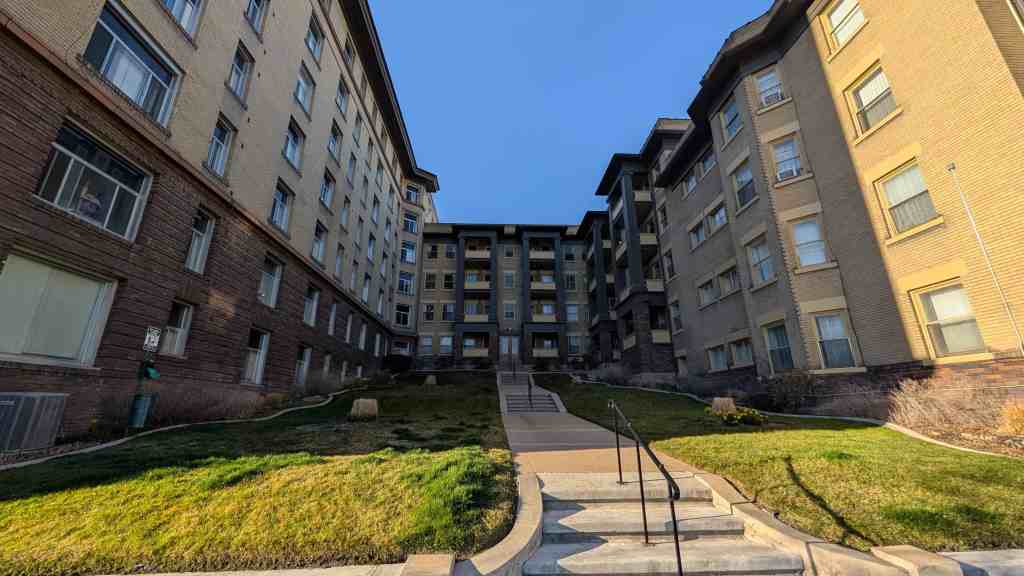
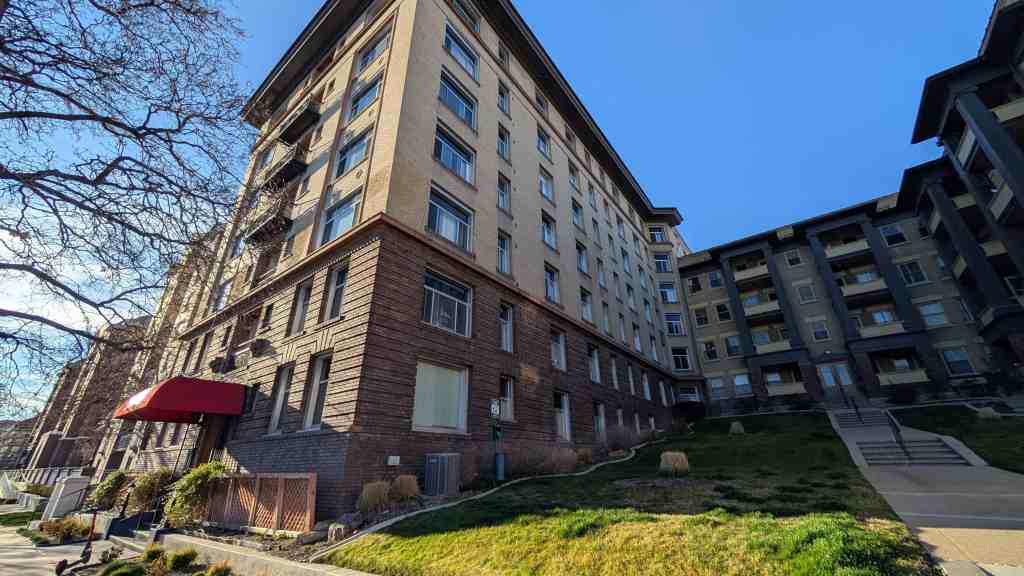
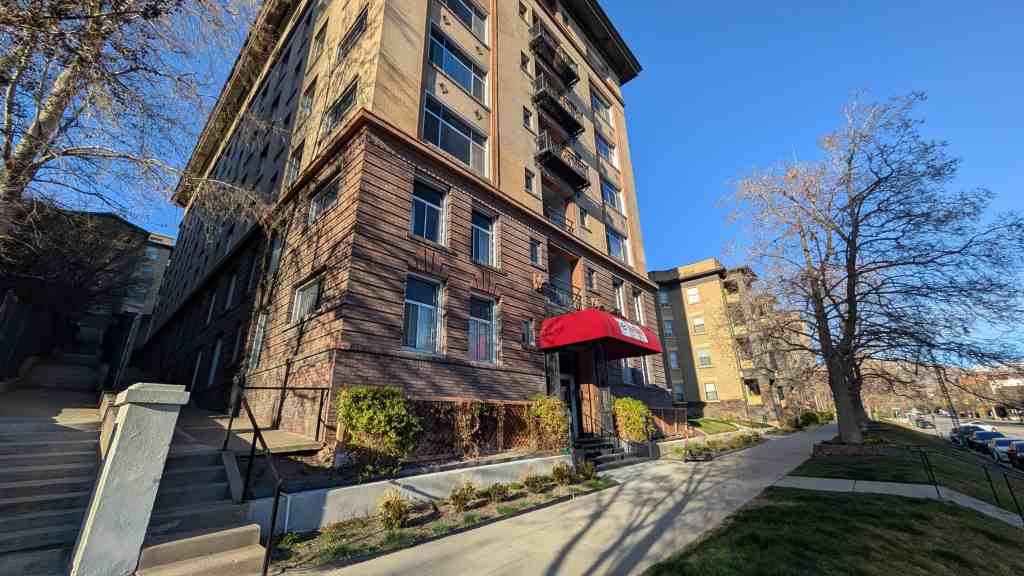
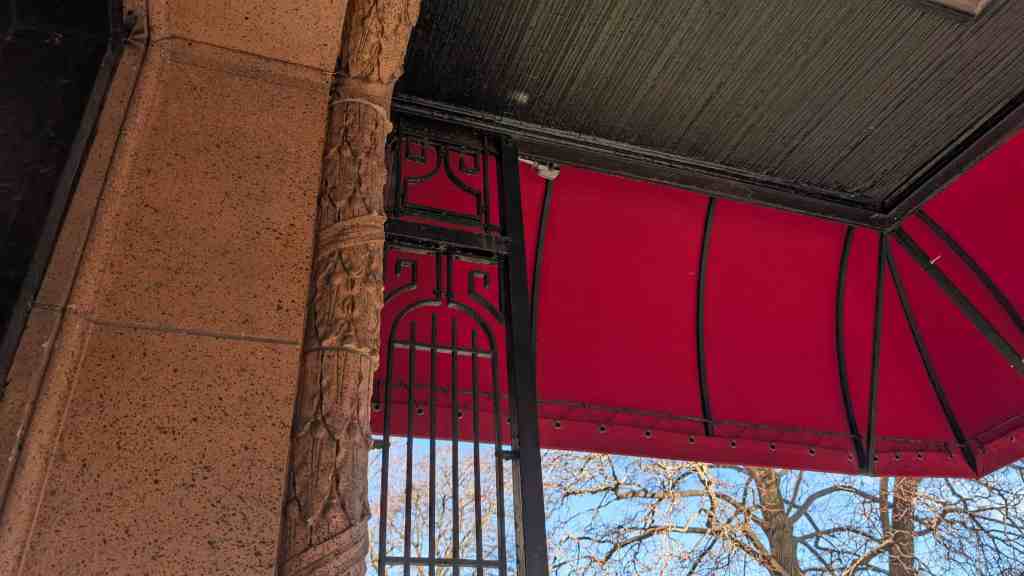
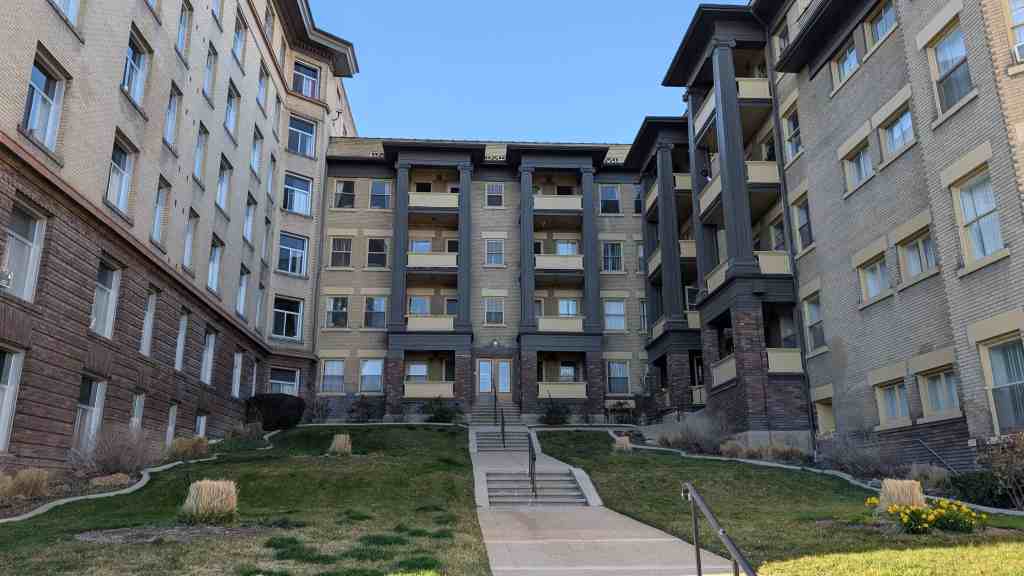
The Covey Investment Company, which built, owned, and managed many of the city’s early apartments, constructed both of these buildings. Completed in 1909, the seven-story Covey Apartments is one of Salt Lake’s few historic apartment buildings more than four stories tall. Because of its height, the Covey featured a rare luxury in early 20th-century Utah – a passenger elevator. Also note the tile ornaments dividing the upper stories and the indented porches with wrought iron railings.
The Covey Investment Company seems to have intended this “high rise” on prestigious South Temple to be its flagship apartment building. The company changed the name of the 1905 Covey Flats on 300 South to the La France Apartments so it could give the Covey name to this building.
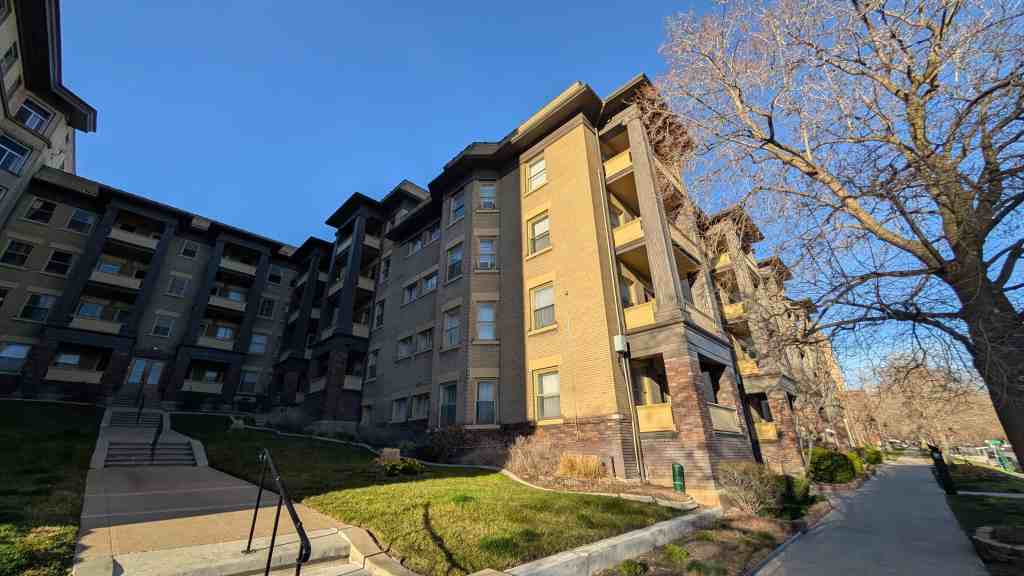
The Buckingham Apartments, built in 1916, are more typical of the buildings constructed by the Covey Investment Company.
These “walk-up” apartments snake around two central courtyards, one opening to the street and one opening to the alley behind the building, allowing each tenant to have a front and back porch. The more humble Buckingham features much less architectural ornamentation than its upscale neighbor.
Bishop Robert Sherwood, January 27, 1858 – August 6, 1942, donated parcels of this land known as Sherwood Forest Addition for perpetual public use on July 12, 1890.
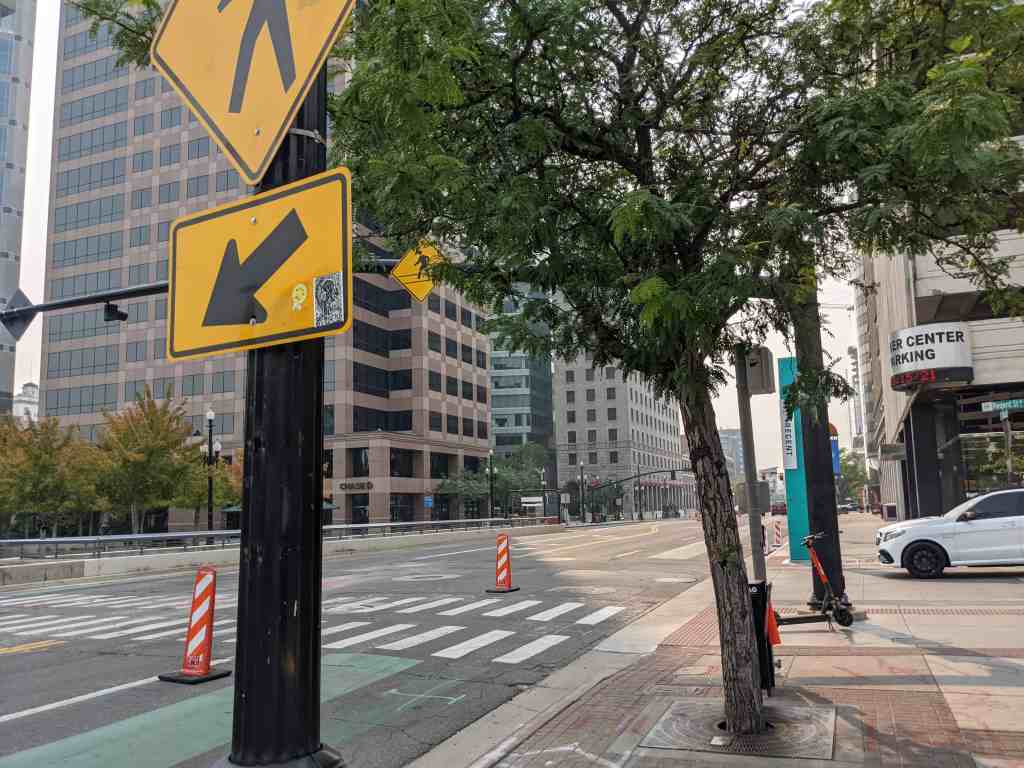
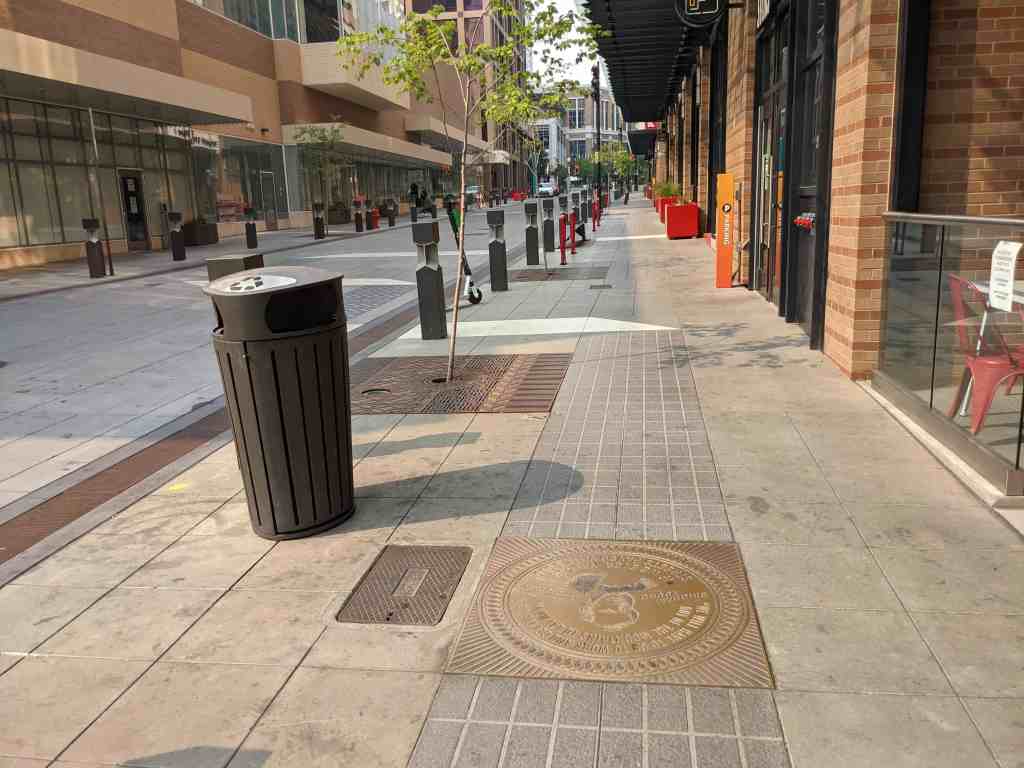
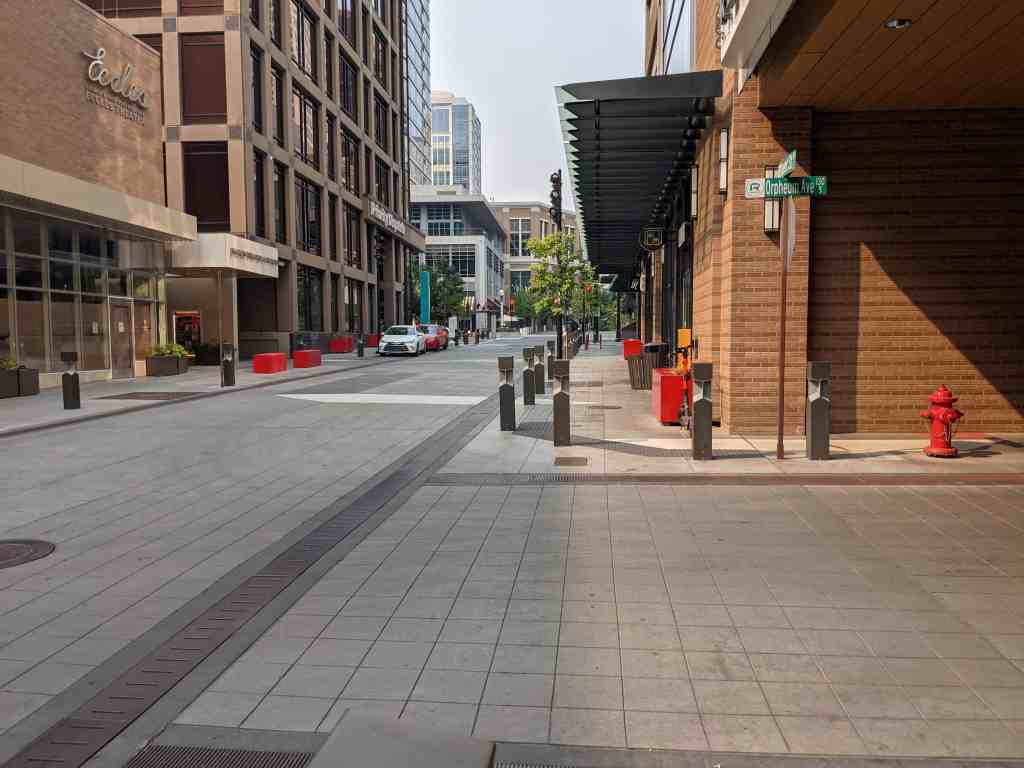
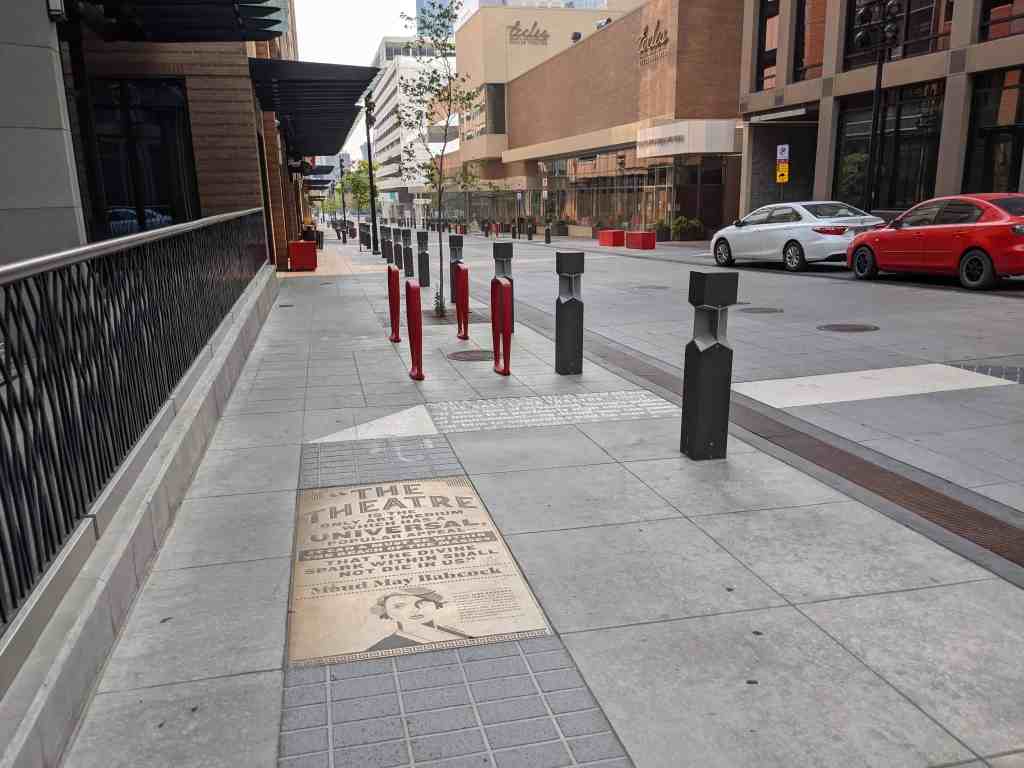
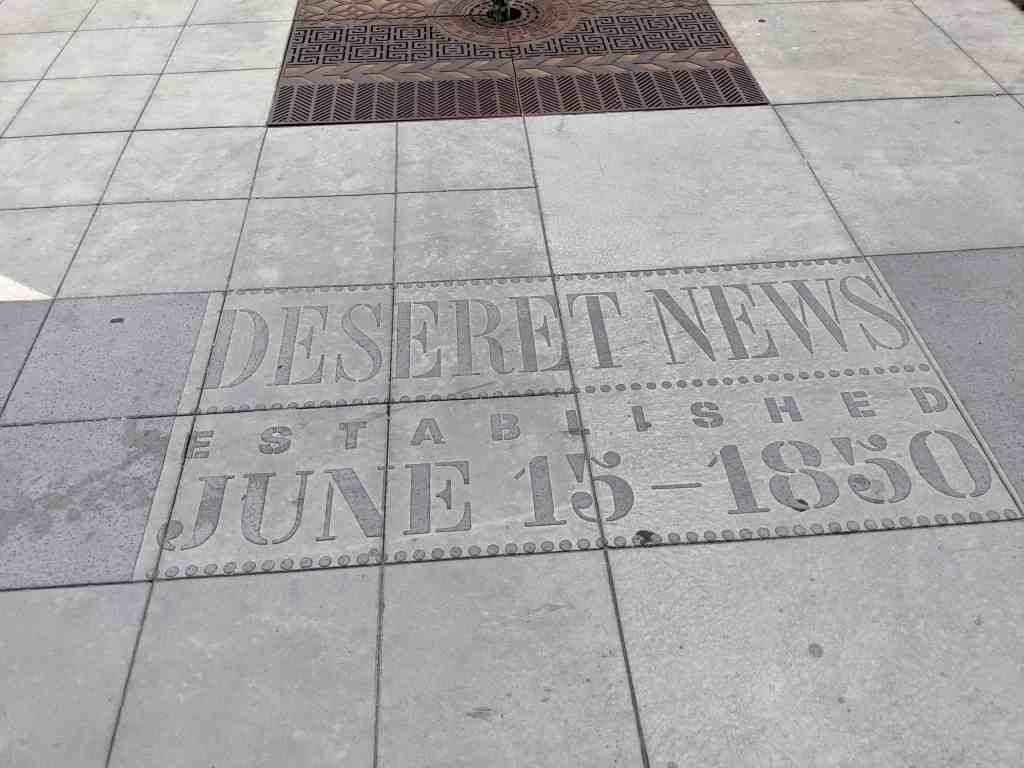
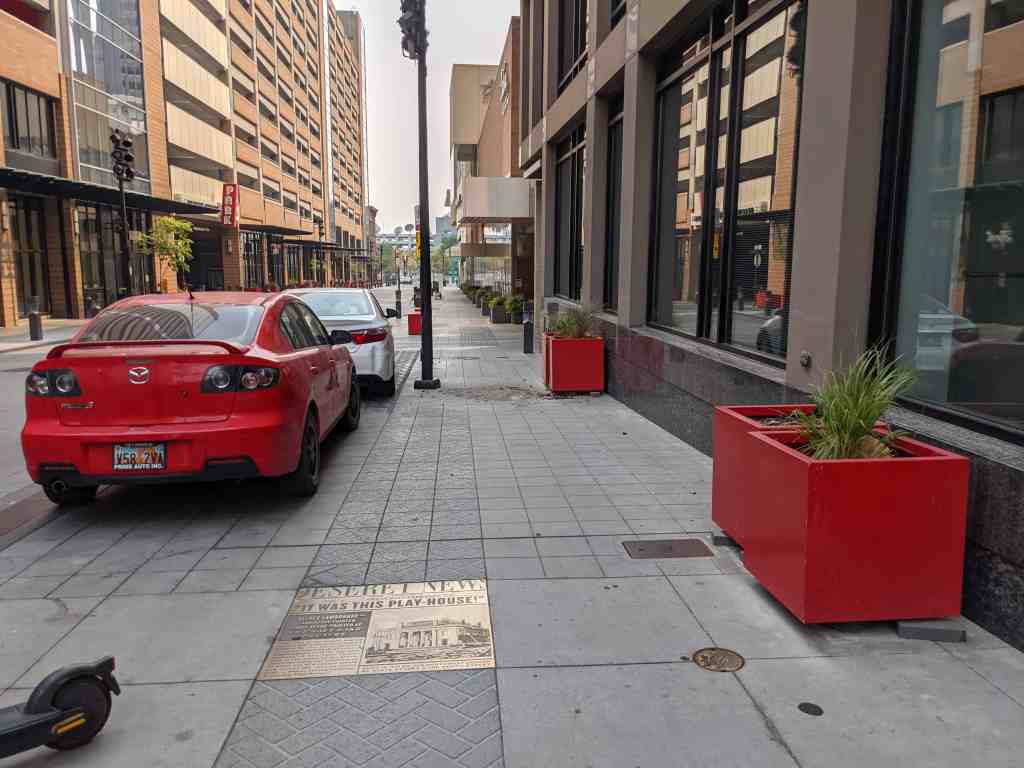
Inspired by the printing presses of Regent Street that busily churned for years publishing The Salt Lake Tribune and Deseret News, the Regent Street press sheet winds its way down the street.
Along its meandering path you’ll find stories about the long and diverse history of this part of Salt Lake City. Once called Commercial Street, Regent Street has been the site of Salt Lake City’s red light district, a home to Chinese immigrants in the late 19th century, a center for headline news in the 20th century, and now is at the heart of the city’s cultural core.
“In those days the hot spots of Salt Lake were located in a tidy manner on a street that ran between 1st and 2nd South and Main and State. Within the street were saloons, cafés, parlor houses, and cribs that were rented nightly to the itinerant ladies of the calling. It was against the rules to solicit, so these soiled doves would sit at the top of the stairs and coo their invitation to ‘C’mon up, kid.'” – John Held, Jr.
John Held, Jr. (1889-1958) was an American cartoonist, printmaker, and one of the best known magazine illustrators of the 1920s. He worked as a cartoonist at The Salt Lake Tribune and illustrated covers for LIFE, The New Yorker and Vanity Fair.
Plum Alley ran north and south dividing the city block between Main and State Streets, the cross streets being 100 South and 200 South. During the early 20th century, within and around Plum Alley, the Chinese developed a microcommunity with grocery and merchandise stores, laundries and restaurants.
“On New Year’s Day they had a big New Year’s celebration in Plum Alley, some of them old guys would come over and give us the red envelopes with lucky money in them. That was quite a haul, when you’d get up there you might get twenty bucks in silver dollars.” – Henry Ju
Henry Ju (1923-1990) was the son of Joy Ju, one of the first merchants on Plum Alley. The family store, Wo Sang, sold merchandise such as chinaware and silk from China.
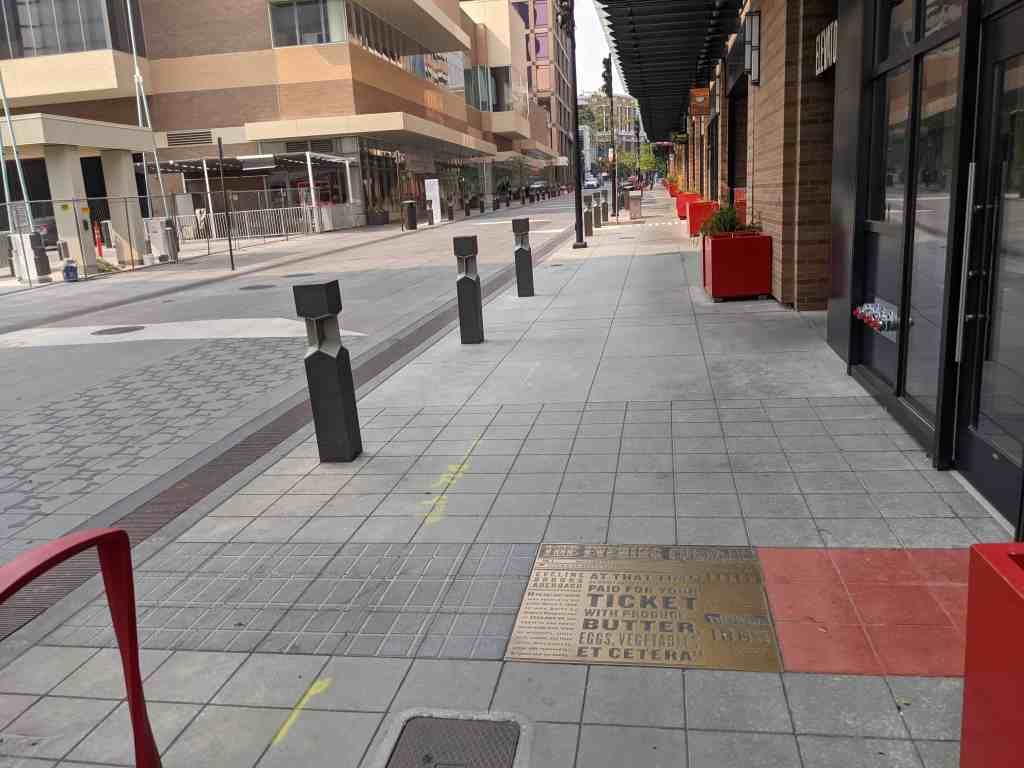
“The Salt Lake Theatre was opened to the public March 8, 1862. It was built by Brigham Young at a cost of $200,000.00 and equal to any opera house in the East. It had an orchestra, stalls, first, second, and third circle, three boxes on either side reserved for Brigham and his family. At that time no money was in circulation, and you paid for your ticket with produce – butter, eggs, vegetables, et cetera.” – Eveline Brooks Auerbach.
Eveline Brooks Auerbach (1859-1924) was born in the California mining town of Timbucktoo in 1859. Her family lived as merchants in various towns in the western U. S., eventually settling in Salt Lake City. In 1879 she married Samuel Auerbach, a German-Jewish immigrant in the goods business in Salt Lake City. She raised a family and lived in Salt Lake City for most of the rest of her life. Her published memoir touched on business and social conditions as well as relations among religious groups.
“We will have to go to work and get the gold out of the mountains to lay down, if we ever walk in streets paved with gold.” – Brigham Young, an original settler of Block 70.
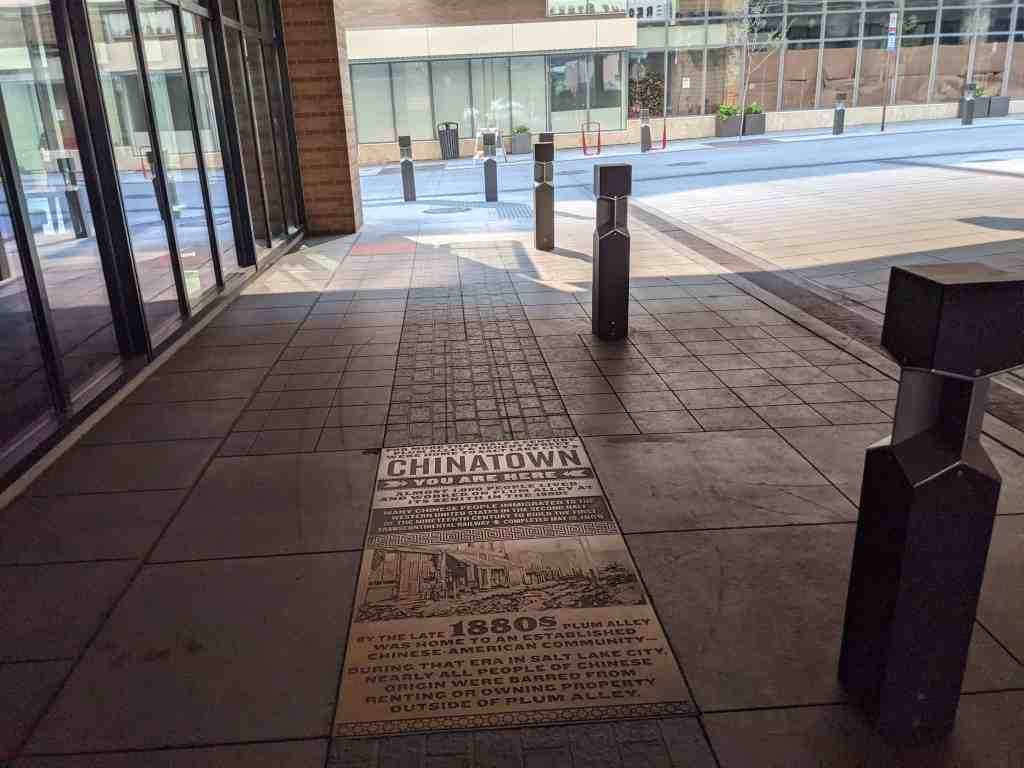
For more than half a century, Plum Alley & Regent Street were home to Salt Lake City’s Chinatown. Almost 1,000 people lived and worked on Plum Alley at its zenith in the 1890s.
Many Chinese people immigrated to the western United States in the second half of the nineteenth century to build the first transcontinental railway – completed May 10, 1869.
By the late 1880s Plum Alley was home to an established Chinese-American community – during that era in Salt Lake City, nearly all people of Chinese origin were barred from renting or owning property outside of Plum Alley.
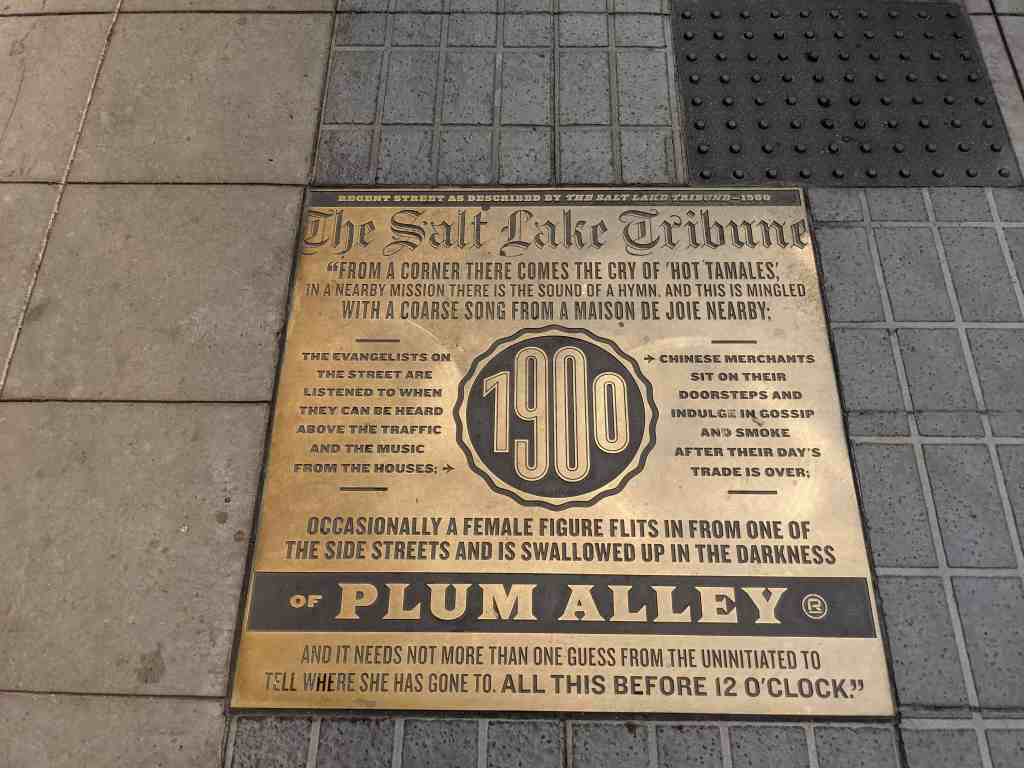
“From a corner there comes the cry of ‘hot tamales,’ in a nearby mission there is the sound of a hymn, and this is mingled with a coarse song from a Maison De Joie nearby; the Evangelists on the street are listened to when they can be heard above the traffic and the music from the houses; Chinese merchants sit on their doorsteps and indulge in gossip and smoke after their day’s trade is over; occasionally a female figure flits in from one of the side streets and is swallowed up in the darkness of Plum Alley and it needs not more than one guess from the uninitiated to tell where she has gone to. All this before 12 O’clock.” – The Salt Lake Tribune – 1900
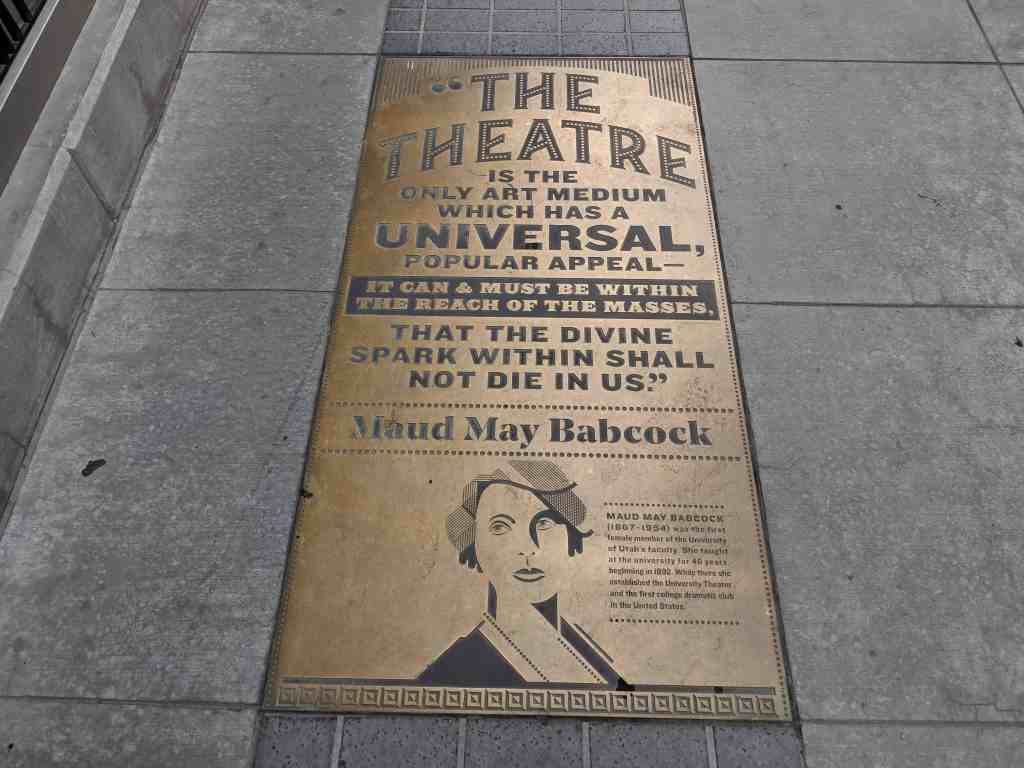
“The theatre is the only art medium which has a universal, popular appeal – it can & must be within the reach of the masses, that the divine spark within shall not die in us.” – Maud May Babcock
Maud May Babcock (1867-1954) was the first female member of the University of Utah’s faculty. She taught at the university for 46 years, beginning in 1892. While there she established the University Theater and the first college dramatic club in the United States.
“It was one of President Young’s prides to have it a perfectly high class place of amusement – no detail was too small for him to supervise and he was justly proud of the results.” – Sara Alexander – Pioneer era star of the stage. (The Salt Lake Theatre – 1861)
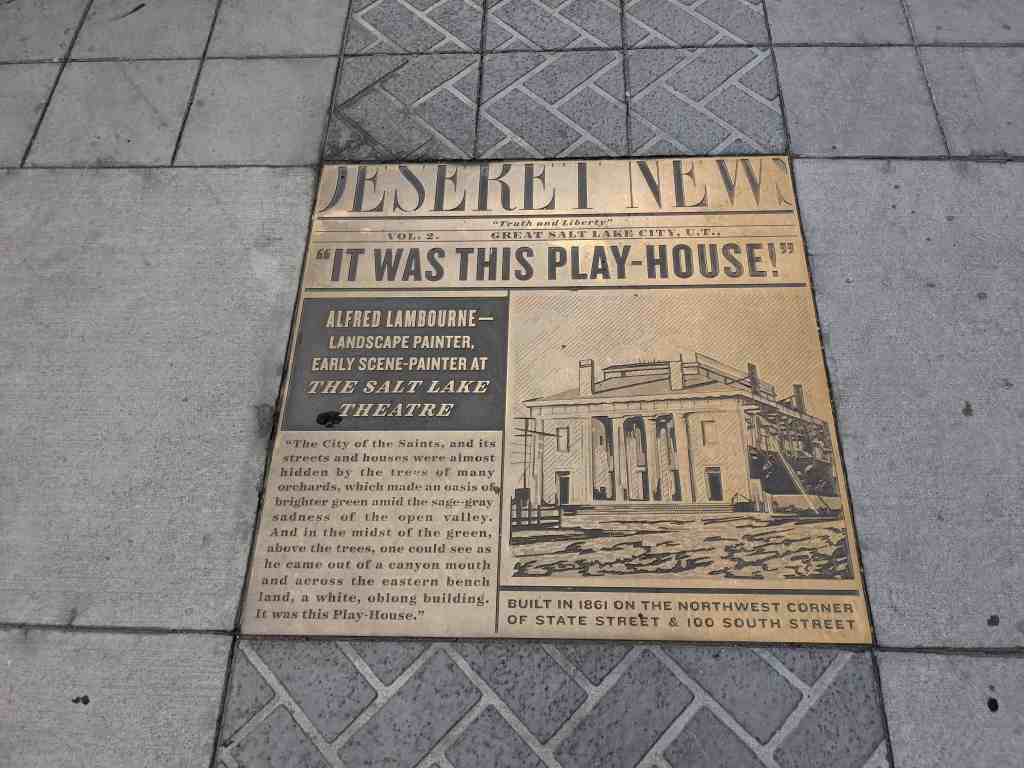
“The City of the Saints, and its street and houses were almost hidden by the trees of many orchards, which made and oasis of brighter green amid the sage-gray sadness of the open valley. And in the midst of the green, above the trees, one could see as he came out of a canyon mouth and across the eastern bench land, a white, oblong building. It was this Play-House.” – Alfred Lambourne – Landscape painter, early scene-painter at The Salt Lake Theatre.
Built in 1961 on the Northwest corner of State Street & 100 South Street.
Pony Express Riders sworn oath:
“I, do hereby swear before the great & living God that during my engagement & while I am an employee of Russell, Majors & Waddell – I will under no circumstances use profane language, I will drink no intoxicating liquors; that I will not quarrel or fight with any other employee of the first and that in every respect I will conduct myself honestly, faithful to my duties, & so direct my acts, as to win the confidence of my employers, so help me God.”
Salt Lake City’s Pony Express Station was located at 143 South Main Street.
“One cannot be pessimistic about the West. This is the native home of hope. When it fully learns that cooperation, not rugged individualism, is the quality that most characterizes and preserves it then it has a chance to create a society to match its scenery.” – Wallace Stegner
Wallace Earle Stegner (1909-1993) was an American novelist, environmentalist, and historian. Although he had lived in many places, he always referred to Salt Lake City as his “hometown.” Educated at the University of Utah, he is considered among the most influential Western writers and won the Pulitzer Prize in 1972.
History of Salt Lake City’s Red Light District
The growth of Salt Lake City in the 19th century mirrored that of other Western cities in many respects, including prostitution. A red light district emerged on Regent Street in the 1880s and continued to exist there through the early 20th century, with some brothels persisting on Regent until the 1930s. Regent Street’s location within the commercial district on Block 70’s interior made it a setting where prostitution was tolerated as it was not easily visible from the major streets surrounding it. Brothels were unofficially regulated (through intermittent arrests and fines for people engaged in the trade) in this area until 1908, when the red light district was moved to the west side of Salt Lake City.
Describing the area in 1900, The Salt Lake Tribune stated: “From a corner there comes the cry of ‘hot tamales,’… in a nearby mission there is the sound of a hymn, and this is mingled with a coarse song from a maison de joie nearby; the evangelists on the street are listened to when they can be heard above the traffic and the music from the houses; Japanese, Chinese, negroes, and white mix together in a friendly way; occasionally from one of the saloons some tough… is seen to shoot out of a door-he doubles his fist, Vows vengeance and then slides away; out from a dark and badly-scented alley comes a pale-faced man whose chief occupation in life is to smoke opium; Chinese merchants sit on their doorsteps and indulge in gossip and smoke after their day’s trade is over; … occasionally a female figures flits in from one of the side streets and is swallowed up in the darkness of Plum Alley, and it needs not more than one guess from the uninitiated to tell where she has gone to. All this before 12 o’clock.”