Commemorating the beginning in America of modern irrigation.
In this vicinity on July 23 and 24, 1847 by the Mormon pioneers.
“Encamped near the bank of a beautiful creek of pure, cold water… In about two hours after our arrival we began to plow, and the sale afternoon built a dam to irrigate the soil.”
“July 24th… this forenoon commenced planting our potatoes, after which we turned the water upon them and gave the ground quite a soaking.”
Orson Pratt thus records compliance with the instructions of Brigham Young, who with the main company arrived about the time the irrigating began.
This tablet is within the half-acre of ground first plowed, as identified by William Carter who held the plow.
This historic marker is located outside the Wells Fargo building at 111 E 300 S in Salt Lake City, Utah and was placed by the Utah State Conference, Daughters of the American Revolution, July 23, 1931.
“The wilderness and the solitary place shall be glad for them, and the desert shall rejoice and blossom as the rose.” – Isaiah, 35:1
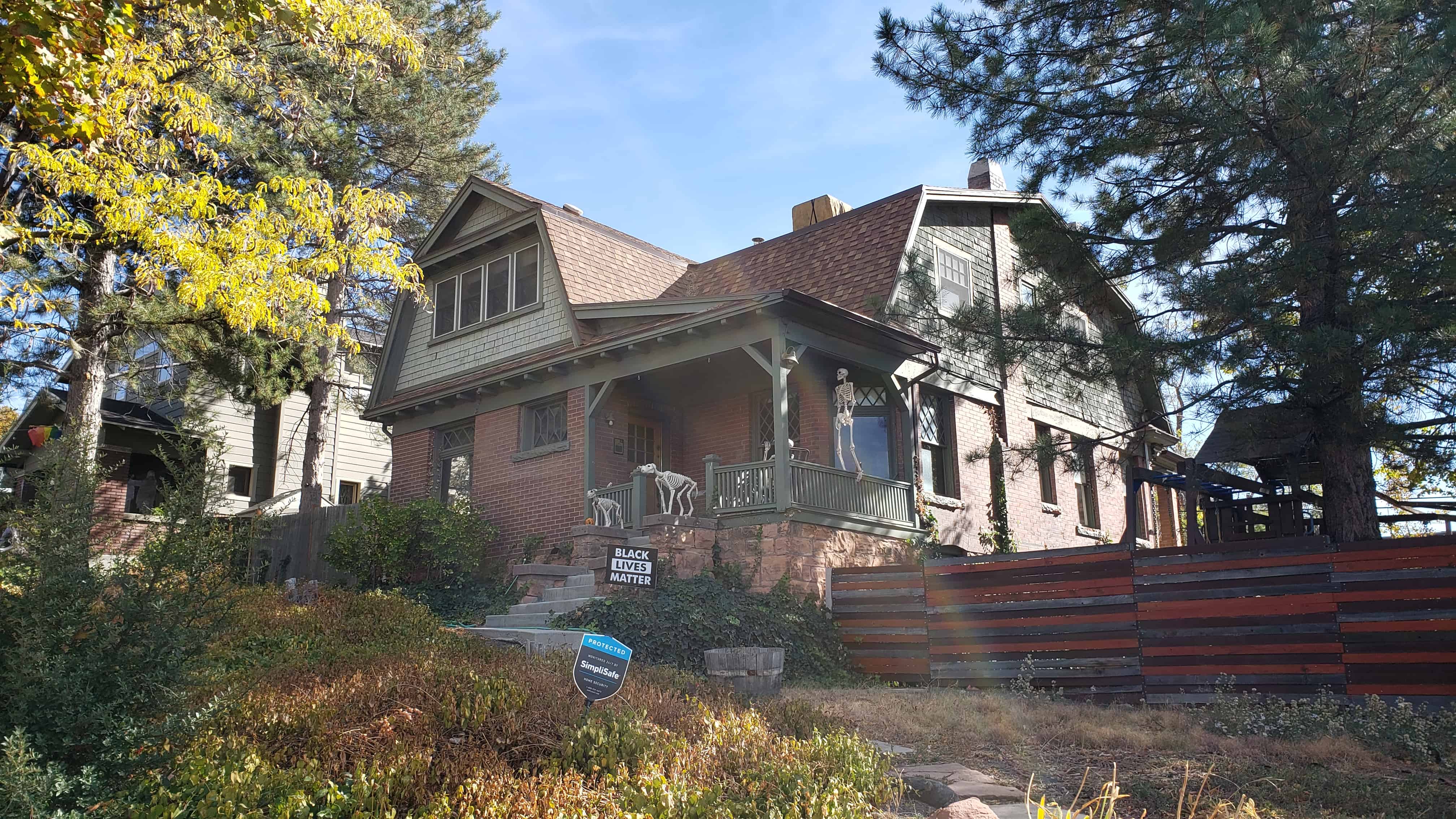
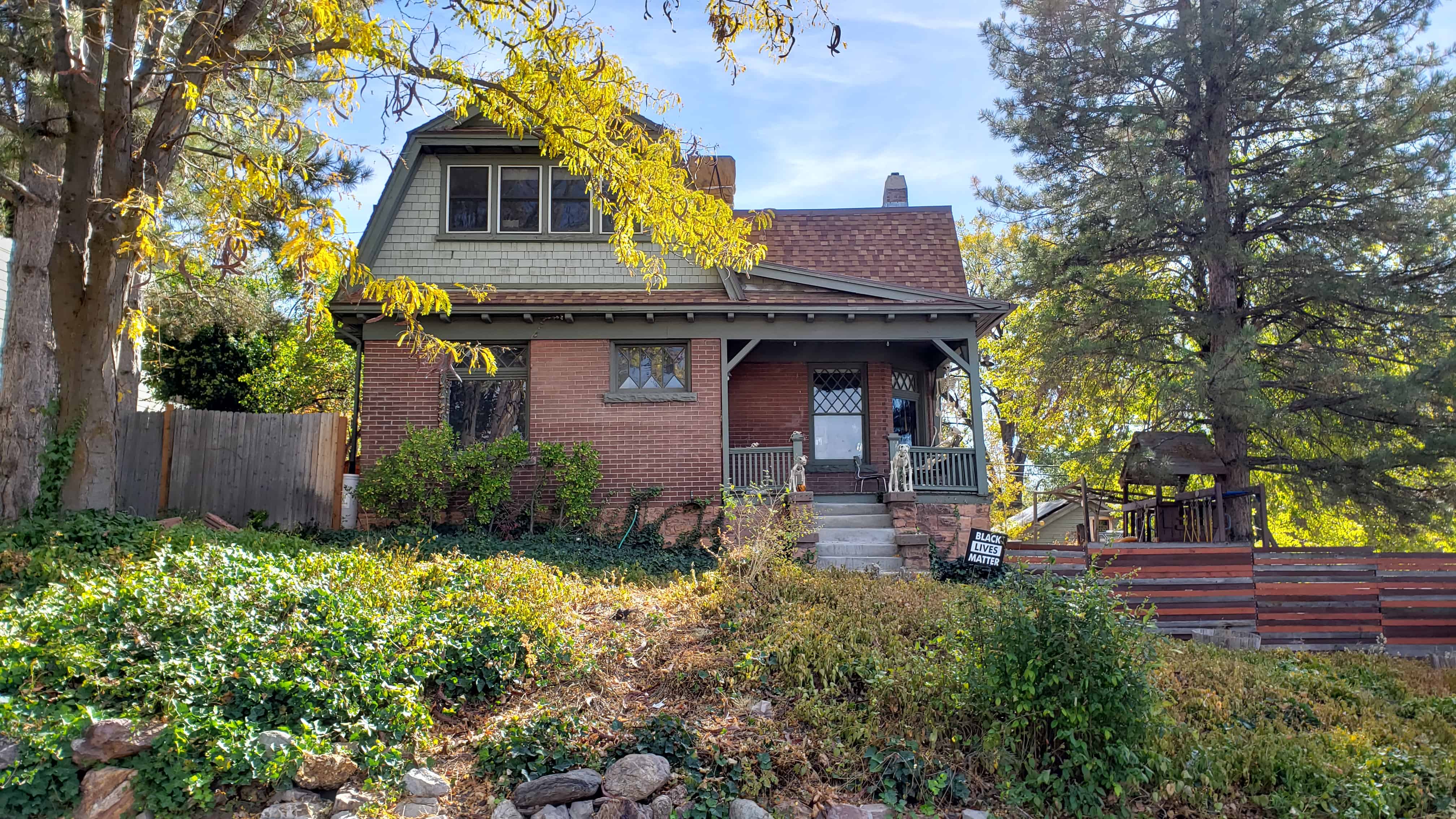
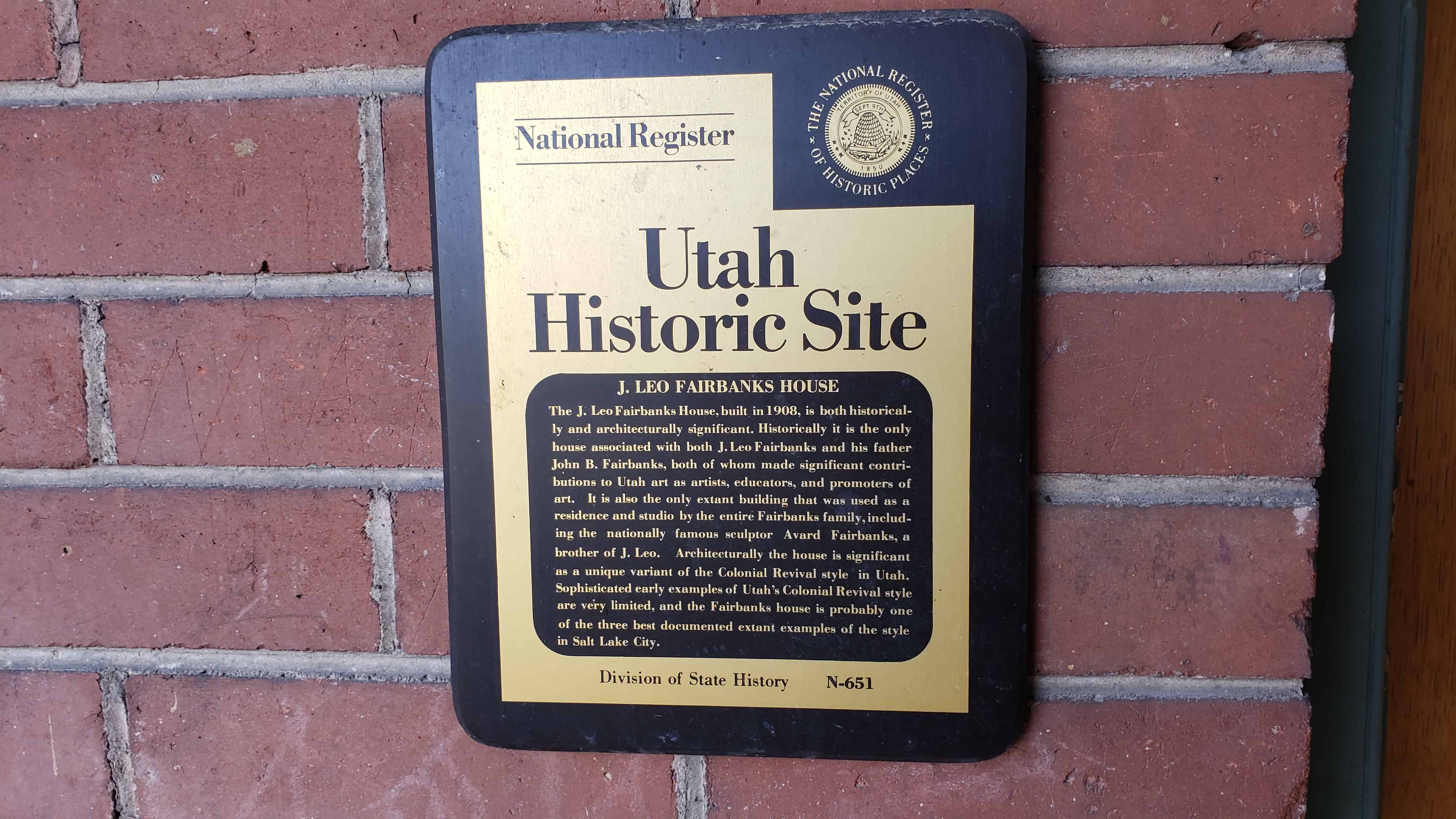
The J. Leo Fairbanks House, built in 1908, is both historically and architecturally significant. Historically it is the only house associated with both J. Leo Fairbanks and his father John B. Fairbanks, both of whom made significant contributions to Utah art as artists, educators, and promoters of art. It is also the only extant building that was used as a residence and studio by the entire Fairbanks family, including the nationally famous sculptor Avard Fairbanks, a brother of J. Leo. Architecturally the house is significant as a unique variant of the Colonial Revival style in Utah. Sophisticated early examples of Utah’s Colonial Revival style are very limited, and the Fairbanks house is probably one of the three best documented extant examples of the style in Salt Lake City.
Built in 1908 for Utah artist J. Leo Fairbanks, this house is both historically and architecturally significant. Historically it is the only house associated with both J. Leo Fairbanks and his father John B. Fairbanks, both of whom made significant contributions to Utah art as artists, educators, and promoters of art. It is also the only extant building that was used as a residence and studio by the entire Fairbanks family, including the nationally famous sculptor Avard Fairbanks, a brother of J. Leo. Both J. Leo and John B. studied in Paris and returned to Utah where they became best known for their work on religious murals in temples of The Church of Jesus Christ of Latter-day Saints (LDS Church), John B. having painted some of the murals, and J. Leo having restored some damaged murals. Both taught art at the LDS University in Salt Lake City and elsewhere, and each held the position of supervisor of art in public schools, John B. in Ogden, and J. Leo in Salt Lake City. Architecturally the house is significant as a unique variant of the Colonial Revival style in Utah. Sophisticated early examples of Utah’s Colonial Revival style are very limited, and the Fairbanks house is probably one of the three best documented extant examples of the style in Salt Lake City. Two other examples listed in the National Register include: the Walter E. Ware House, 1184 First Avenue, built ca. 1905 and listed in 1980 as part of the Avenues Historic District; and the Mort Cheesman House, 2320 Walker Lane, built 1912-13, and listed in the National Register as an individual nomination in 1982.
J. Leo Fairbanks, the designer and original owner of the house at 1228 Bryan Avenue, was born in Payson, Utah in 1878 to John B. and Lily H. Fairbanks. Following the lead of his father, John B. Fairbanks, and having studied under him at the LDS University, he became an artist. In 1901 he replaced his father as a teacher for one year at the LDS University, and then went to study in Paris. He studied with Laurens and Simon, and sculptors Bonn and Verlet before returning to Utah in 1903. He was then employed as supervisor of drawing in the Salt Lake City schools, a position which he held until 1923. He also served as the art director at LDS University and as president of the Utah Art Institute. J. Leo is best known for his many religious (LDS) paintings, and worked on the restoration of damaged mural sections in the Salt Lake City LDS Temple. He devised several successful schemes for mural decoration for the interiors of public halls. In 1924 he moved to Oregon where he became the director of the art department at Oregon State College.
J. Leo was single when he designed and had this house built in 1908. According to his brother Avard, inspiration for the design of the house came from the old family home in Dedham, MA, the famous Jonathan Fairbanks home, built in 1636, and from European sources to which he had been exposed during his years of study. J. Leo invited his father, a widower, and the rest of his family to live with him, and the house served as the Fairbanks family home and studio for over fifteen years. They had previously resided at 1152 East Bryan Avenue.
J. Leo, his father John B., and his brother Avard were all notable Utah artists, and each resided in the house for an extended period of time. Some of the second story rooms were used as a home studio. John B. was born in Payson on December 27, 1855 to Utah pioneers John Boylston and Sarah Van Wagoner Fairbanks. He studied art in Paris from 1890 to 1892 under Rigelot, Constant, Lefebvre and Laurens. Although his work includes some paintings, he is best known for the murals he painted in the LDS temples in Salt Lake City, St. George, Utah, and Mesa, Arizona, and for the Century in Progress exposition in Chicago, the San Diego exposition and the Texas centennial. He was a professor of art at Brigham Young University, Weber Stake Academy, and at the LDS University. He became the first supervisor of arts in public schools in Ogden in 1898. Avard, the most famous of the Fairbanks artists, was a child prodigy, and is the best known among traditional realist sculptors working in Utah.4 He spent his childhood in this house. He too studied in Paris at the Academie de la Grande Chaumier et Colaross and then with Injalbert at the Ecole Moderne. He became the first dean of the School of Fine Arts at the University of Utah.
The house was rented periodically during the later years of Fairbanks occupancy. It was sold to Edward G. Titus, Director of the Utah-Idaho Sugar Co., in 1925, and he owned the house until his death in 1964. The current owners are Michael Treshow and Marilyn Tueller who bought the house in 1982 and are restoring it.
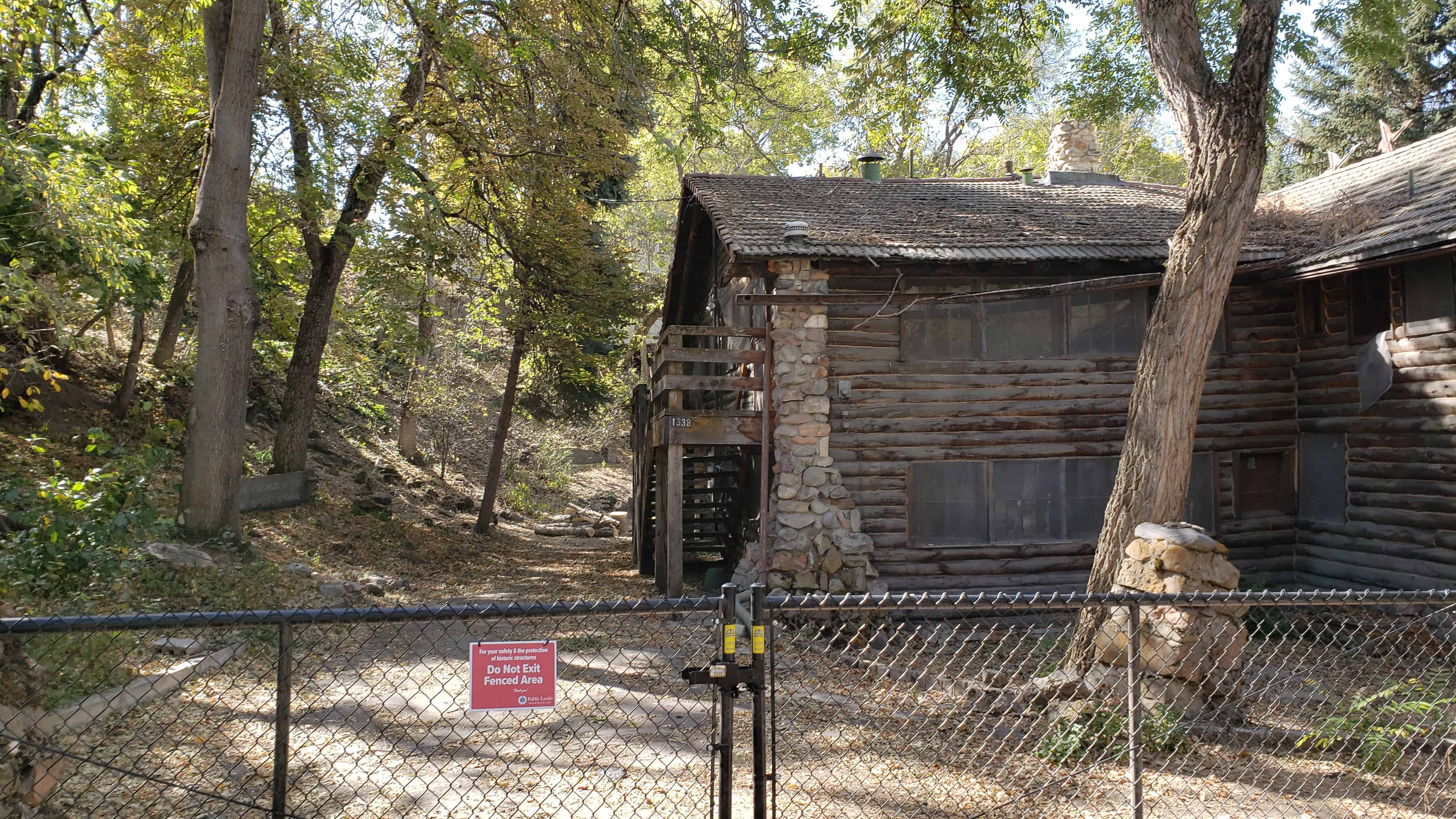
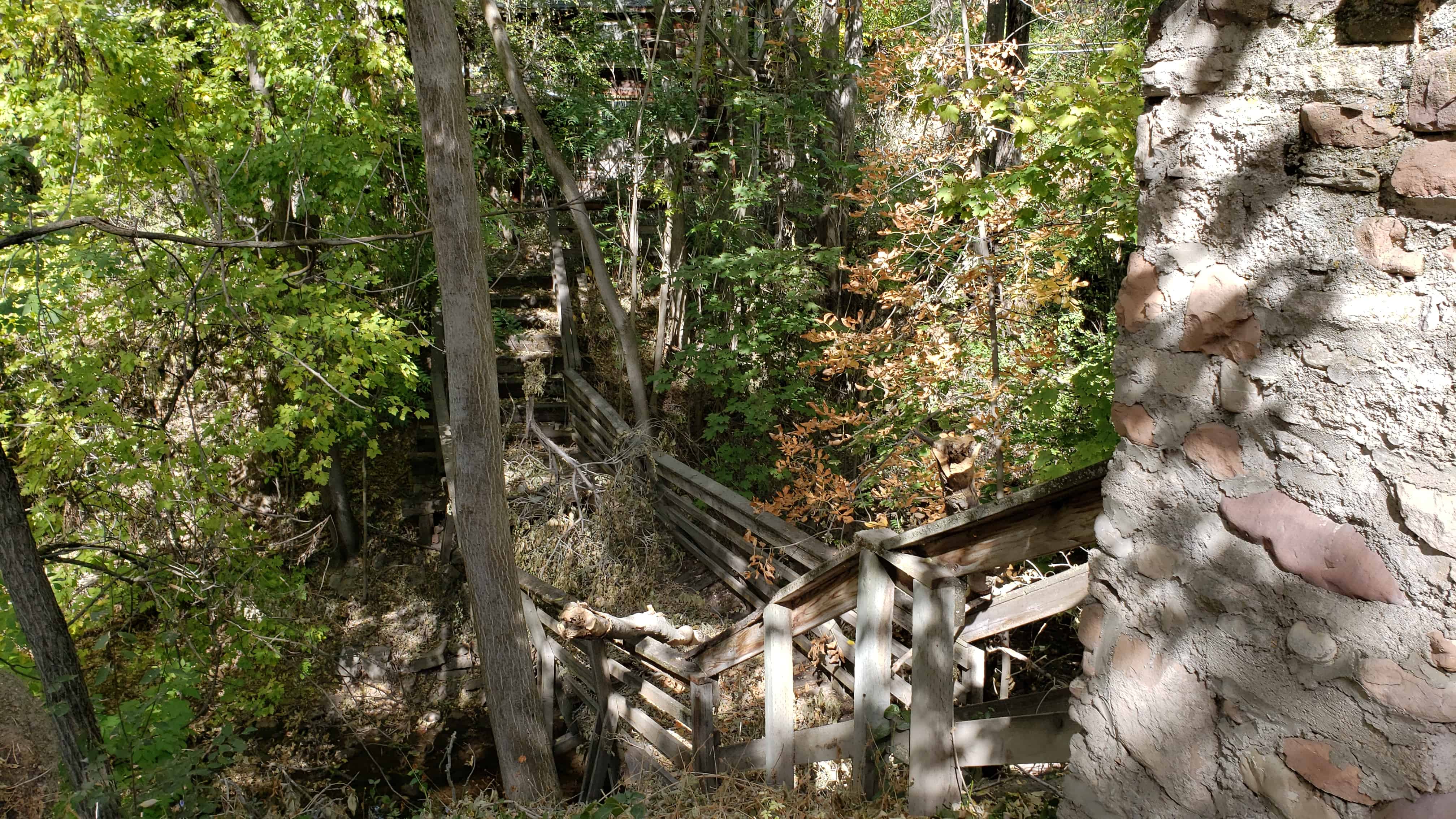
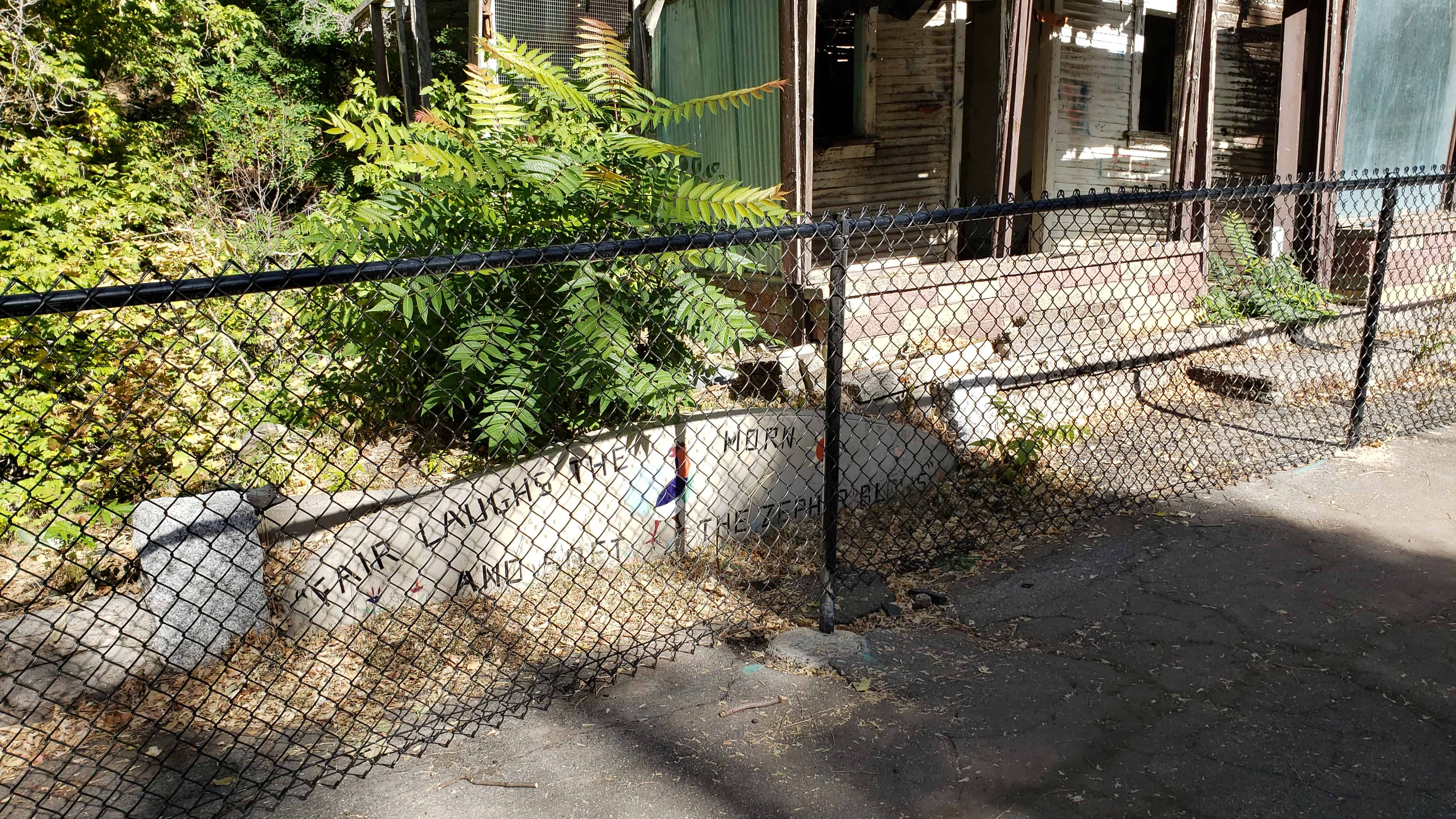
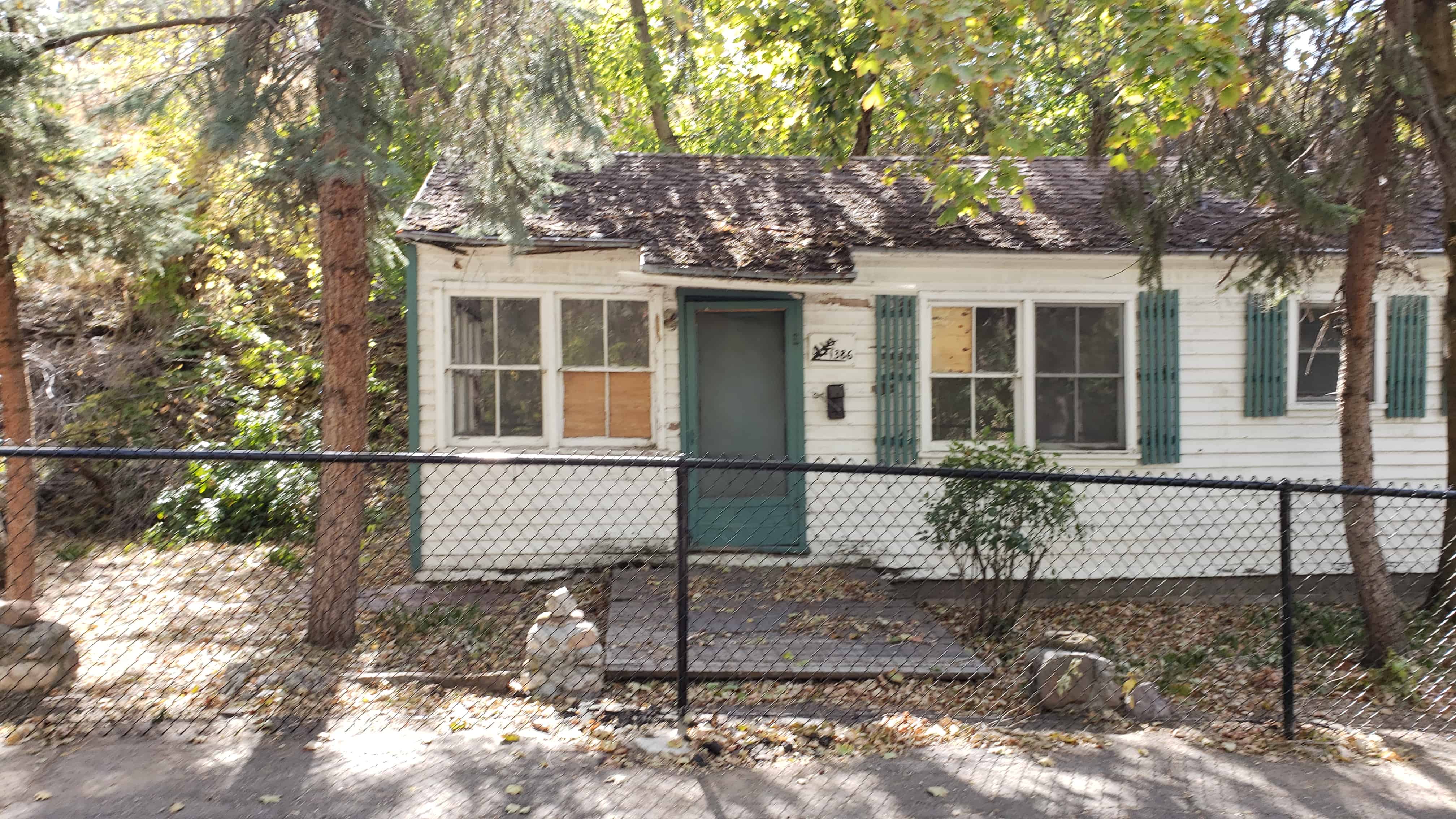
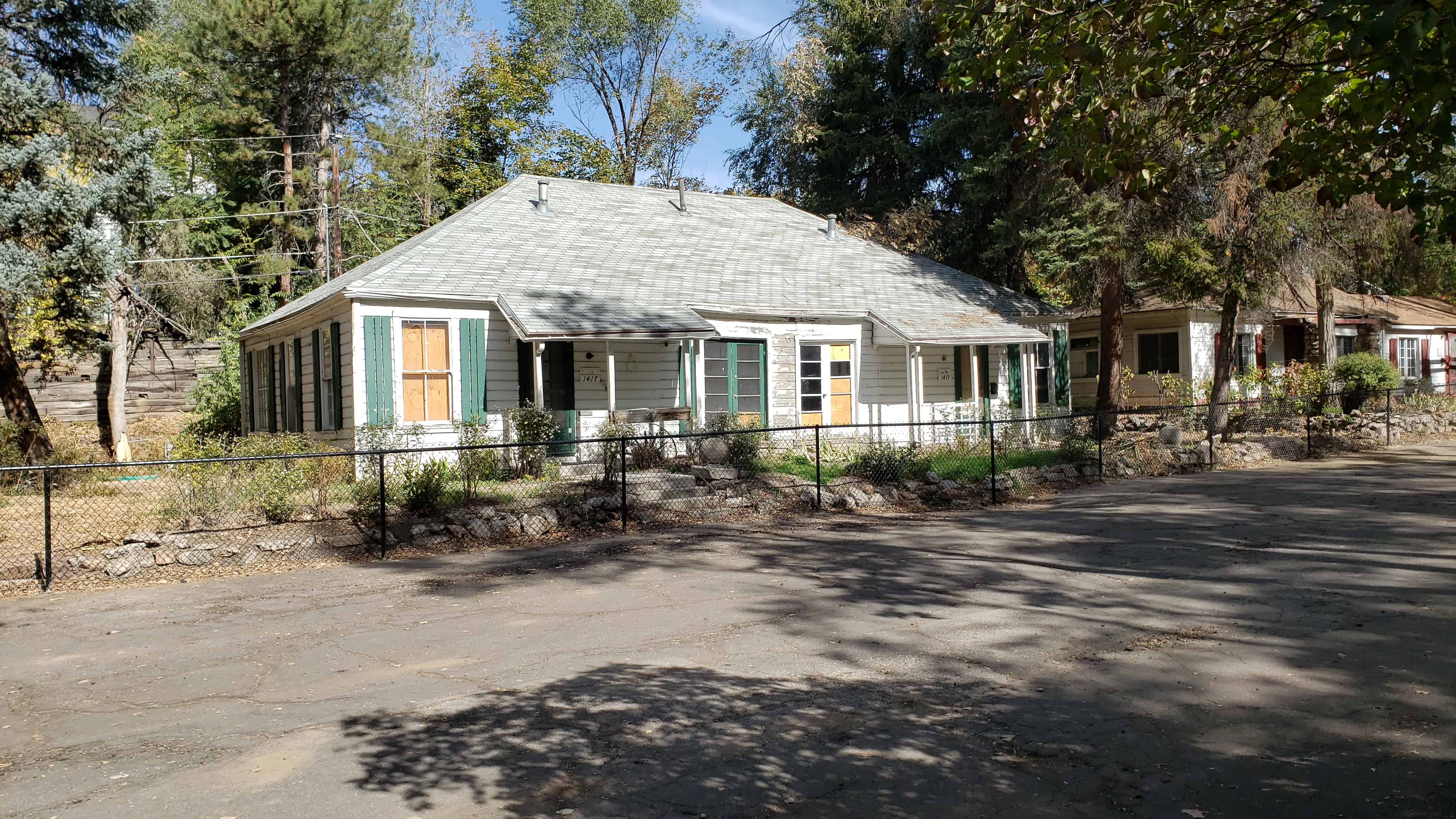
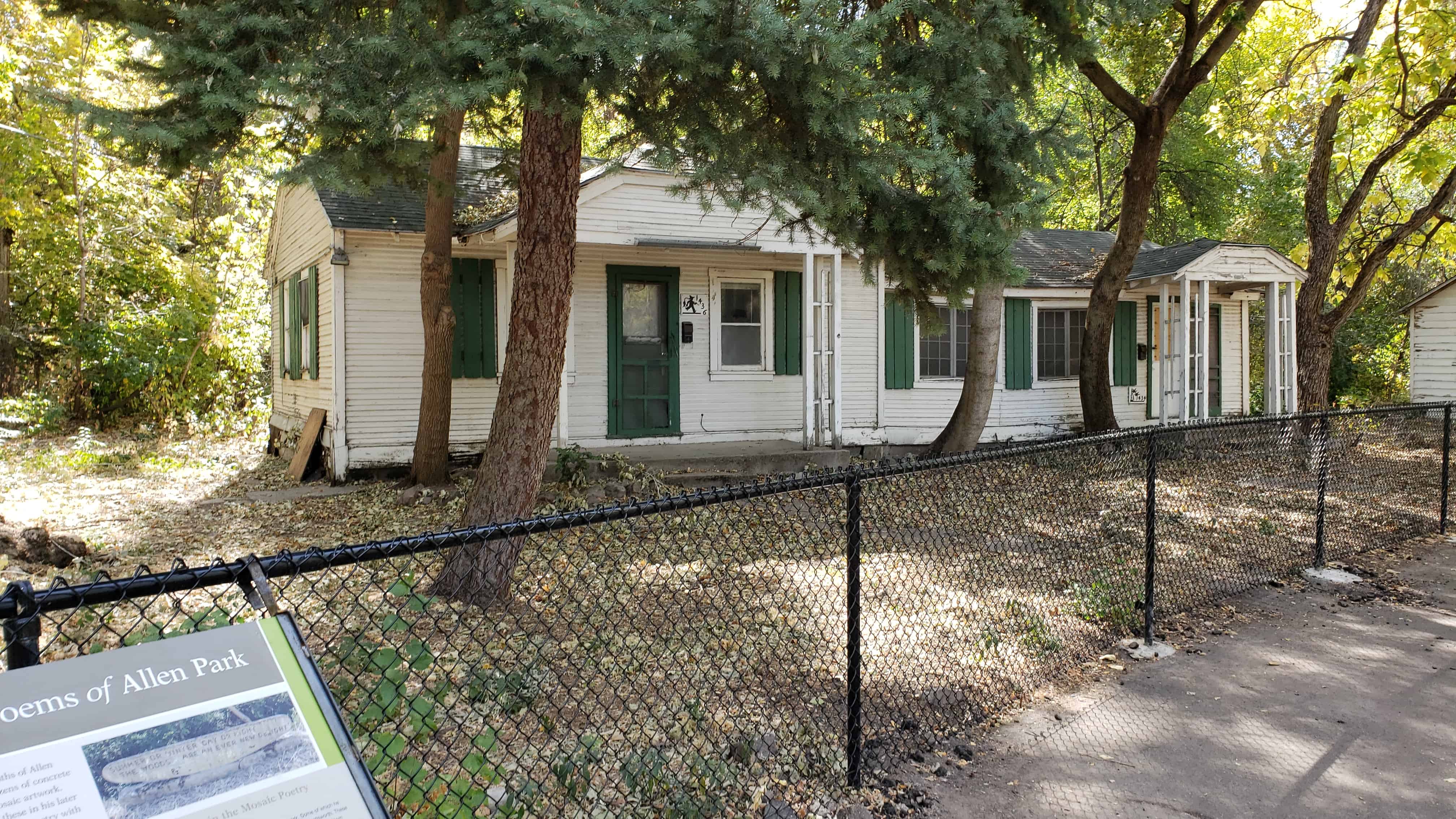
In October 2020 Allen Park was opened as a new public city park in Salt Lake City. Previously it was a private residential area with an interesting history, often called “Hobbitville.” I stopped by to document as much as I could without getting inside when there was talk of demolishing it all – you can see that on this page.
Dr. George Allen was born on June 7, 1894 in Penetanguishene, Ontario, Canada. He spent his childhood in Clintonia Township, Illinois, where he graduated from high school. Shortly after, he left for college at the university of Illinois Medical School in Chicago, IL.
Upon graduation in 1920, Dr. Allen and his sweetheart, Ruth Larson, migrated to Utah, where they got married on May 3rd.
During their first year in Utah, Dr. Allen worked as a surgeon for the Standardville Coal Mines. A year later, they moved to Salt Lake City, where Dr. Allen became a surgeon for several major businesses – including the Sugarhouse Penitentiary.
During the next decade, The Allens grew thier family from two to six; Mary Rose, Amy, George Al Jr., and Sally Ann. In 1931, the Allens purchased the 8-acre piece of land that Allen Park sits on. Originally farmland, the Allens worked to transform their home into an urban oasis.
Dr. Allen’s servitude in Salt Lake City was remarkably influential.
Helped establish the Tracy Aviary, Hogle Zoo, and the Salt Lake Zoological Society.
Served as president for the Sugarhouse Chamber of Commerce and the Salt Lake City Zoological Society.
Was a member of the Salt Lake Library Board, The Masons, Odd Fellows, American Pheasant Society, Chamber of Commerce, and GOP.
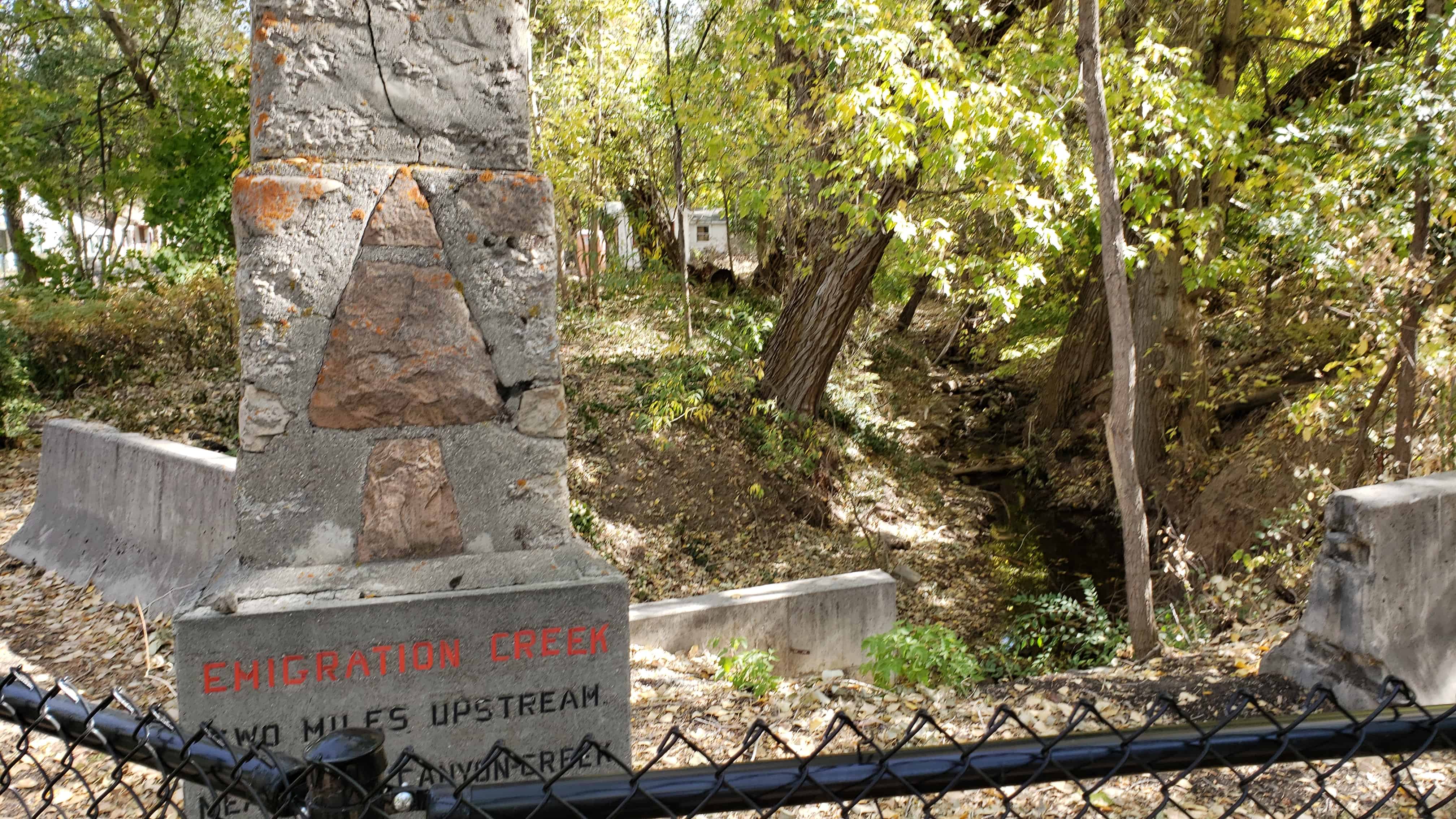
Emigration Creek History
In 1847, the first party of Mormon Pioneers entered the Salt Lake Valley through what we now know as Emigration Canyon. Tradition holds that this is where Brigham Young first views the valley unobstructed and said “This is the right place, drive on.”
Within days of settling in the Salt Lake Valley, the water of Emigration Creek was diverted for irrigation. The diversion established the first water right in the valley.
The hydrology of Emigration Canyon attracted pioneers to take up residence along the creek, clearing dense vegetation in favor of fields and pastures. Pollution from livestock deterred the City from protecting Emigration Canyon as a watershed, opening the area to development.
An early 1800s building boom prompted the extraction of red and white sandstone in Emigration Canyon. An electric railway system was installed in 1907 to meet the high demand but was dismantled a decade later as concrete became the preferred foundation material.
In 1931, Mr. & Mrs. Hogle donated land near the mouth of Emigration Canyon to became the new site for Salt Lake City zoo, now known as Hogle Zoo.
Record snowpacks in 1952 and 1983 caused hundreds of Salt Lake City blocks to be flooded. Excessive spring runoff in 1983 cased 10 million dollars of damage in Parleys, Emigration, and Red Butte Creeks.
In 2014, the non-profit organization Seven Canyons Trust formed a 100-year vision to uncover and restore the Salt Lake Valley’s buried and impaired creeks. Six years later, in 2020, Seven Canyons Trust partnered with Salt Lake City Public Lands to begin restorative work on the Three Creeks Confluence, where Emigration Creek, Red Butte Creek, and Parleys Creek join the Jordan River.
Allen Park: Bird Sanctuary in the City
Riparian areas of Utah, such as Emigration Creek, are key to the conservation of birds. Its importance is amplified as these streams are connected to the Great Salt Lake, an ecosystem that attracts millions of migratory birds each year.
82% of all bird species in the Intermountain West (466 and counting) rely on riparian habitat. You will find twice as much bird density in riparian areas than upland areas nearby.
Mosaic Poems of Allen Park
As you walk the quiet paths of Allen Park, you will find dozens of concrete monuments inset with mosaic artwork. Dr. George Allen created these in his later years, sharing his passion for poetry with his visitors.
According to his daughter, Mary Rose, her mother, Ruth, would find discarded tile in the local tire store’s dumpster. She would bring the tile home for her husband, who would then grind the pieces in their basement to form the mosaic artwork you see in Allen Park.
Romanticism in the Mosaic Poetry of Allen Park
Dr. George Allen quoted over 20 poets in his mosaic artwork. Some of which he quoted multiple times: Walt Whitman, John Keats, and William Wordsworth. These three writers have something in common – they were all a part the romanticism movement.
Romanticism is the retrospective name given to a dominant movement in literature, music, and painting from the 1770s to the mid-nineteenth century.
In its early years, Romanticism was associated with radical and revolutionary political ideologies, in reaction to the generally conservative mood of European Society.
A few main features of Romanticism include:
awe of nature and capacity for wonder
emotional and imaginative spontaneity
importance of self-expression and individual feeling
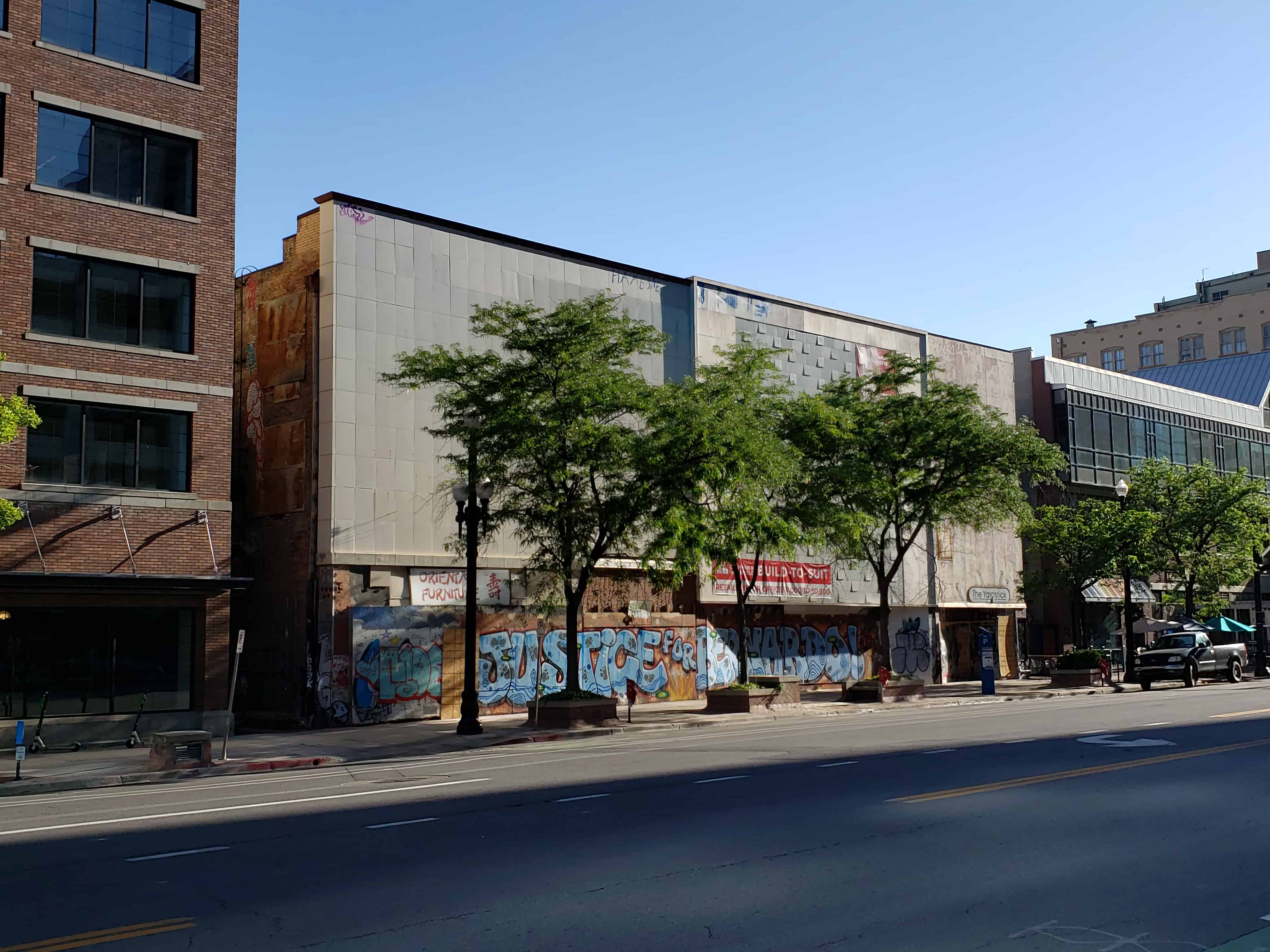
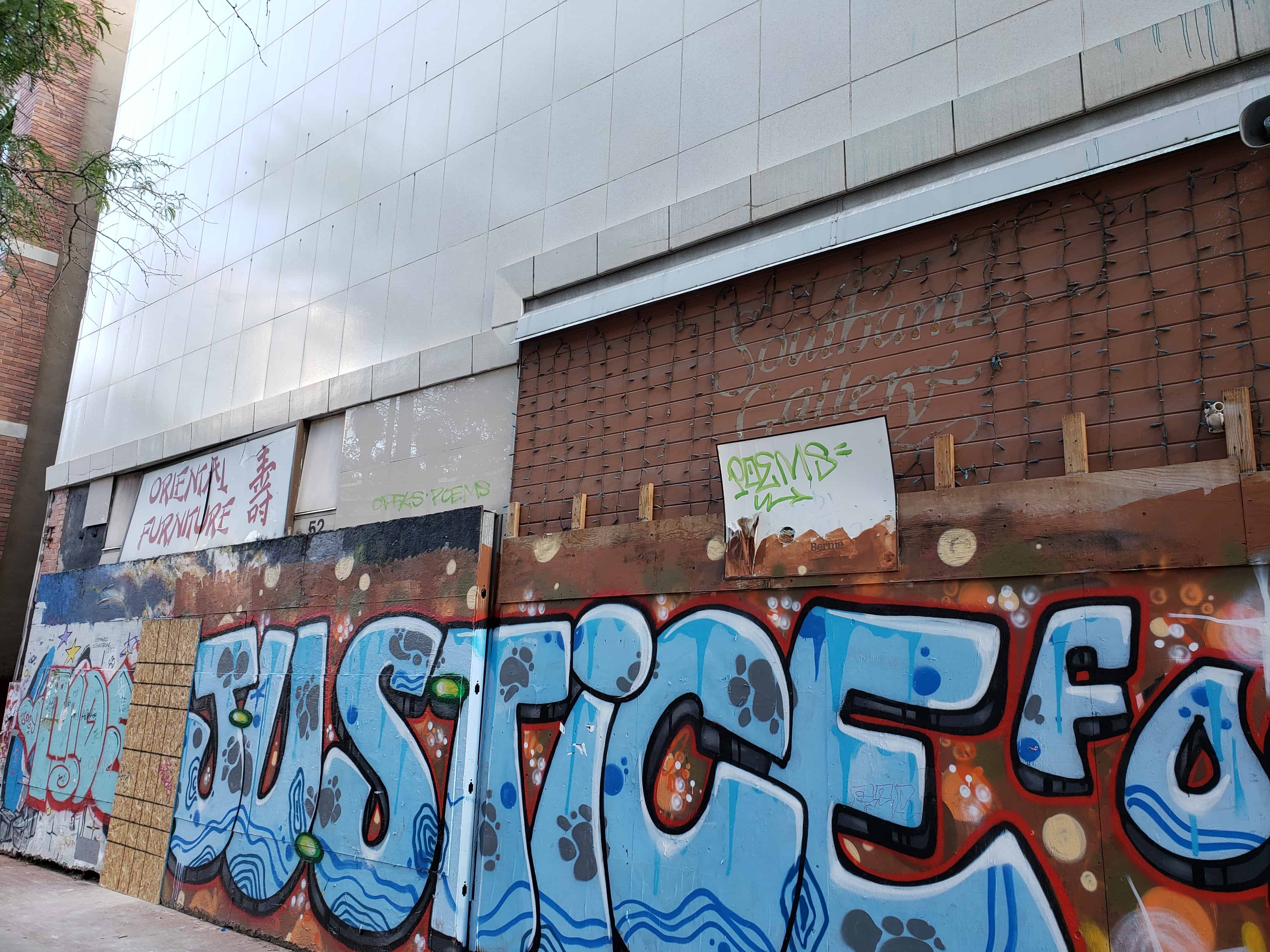
The Victory Theater was first known as the Colonial Theater in 1908 and then the Pantages, not to be confused with this one on Main Street, after that is was the Casino Theater and finally the Victory Theater. It later burned in May of 1943 and in 2020 it is sitting in poor shape wit talks of it being demolished.
The parcel is at 40 East 300 South in Salt Lake City and it is now one large boarded up building, the theater was the east half and the address was 48 East 300 South or 48 E Broadway. The west half was the Paris Millinery at 40 E Broadway.
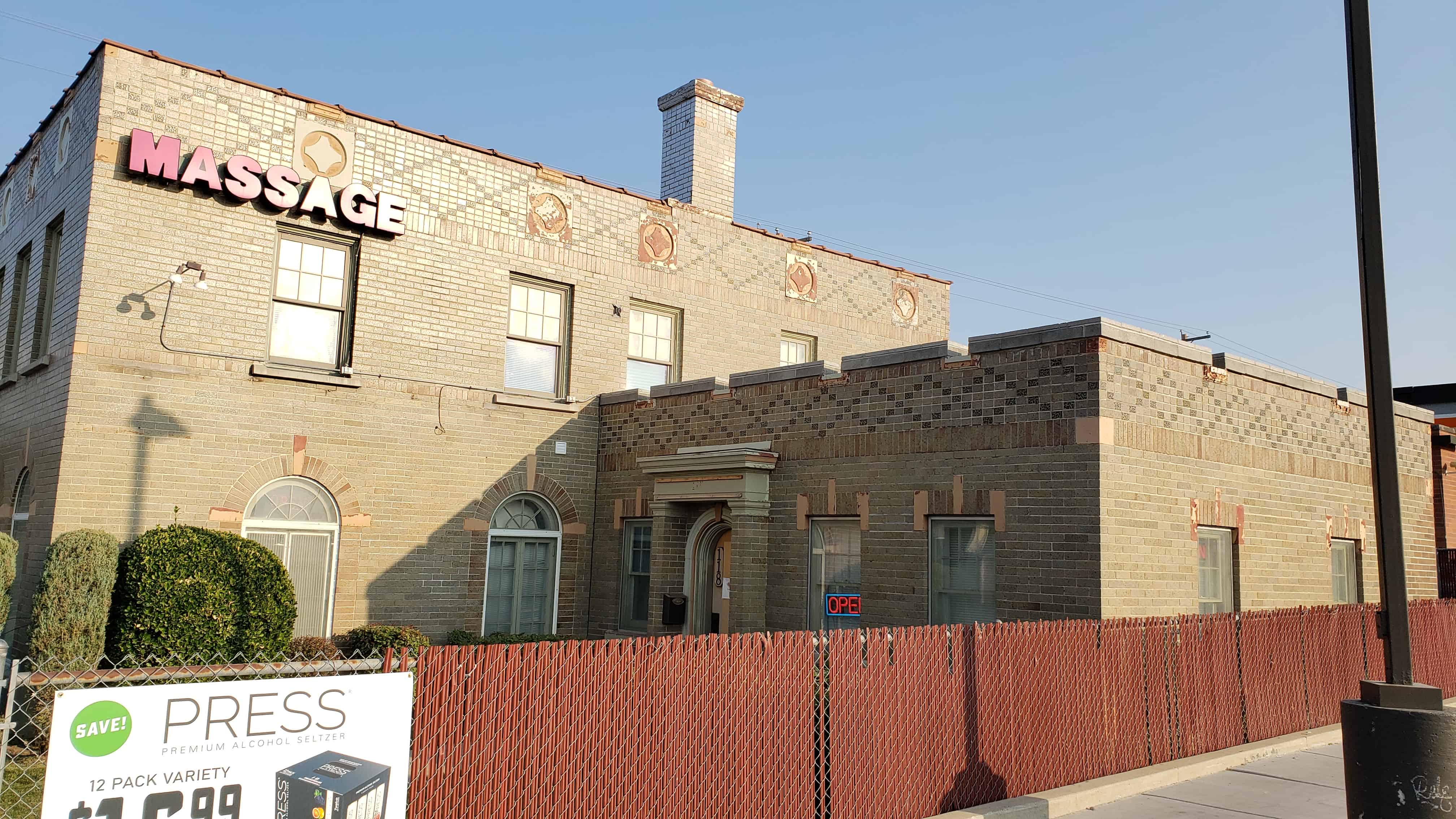
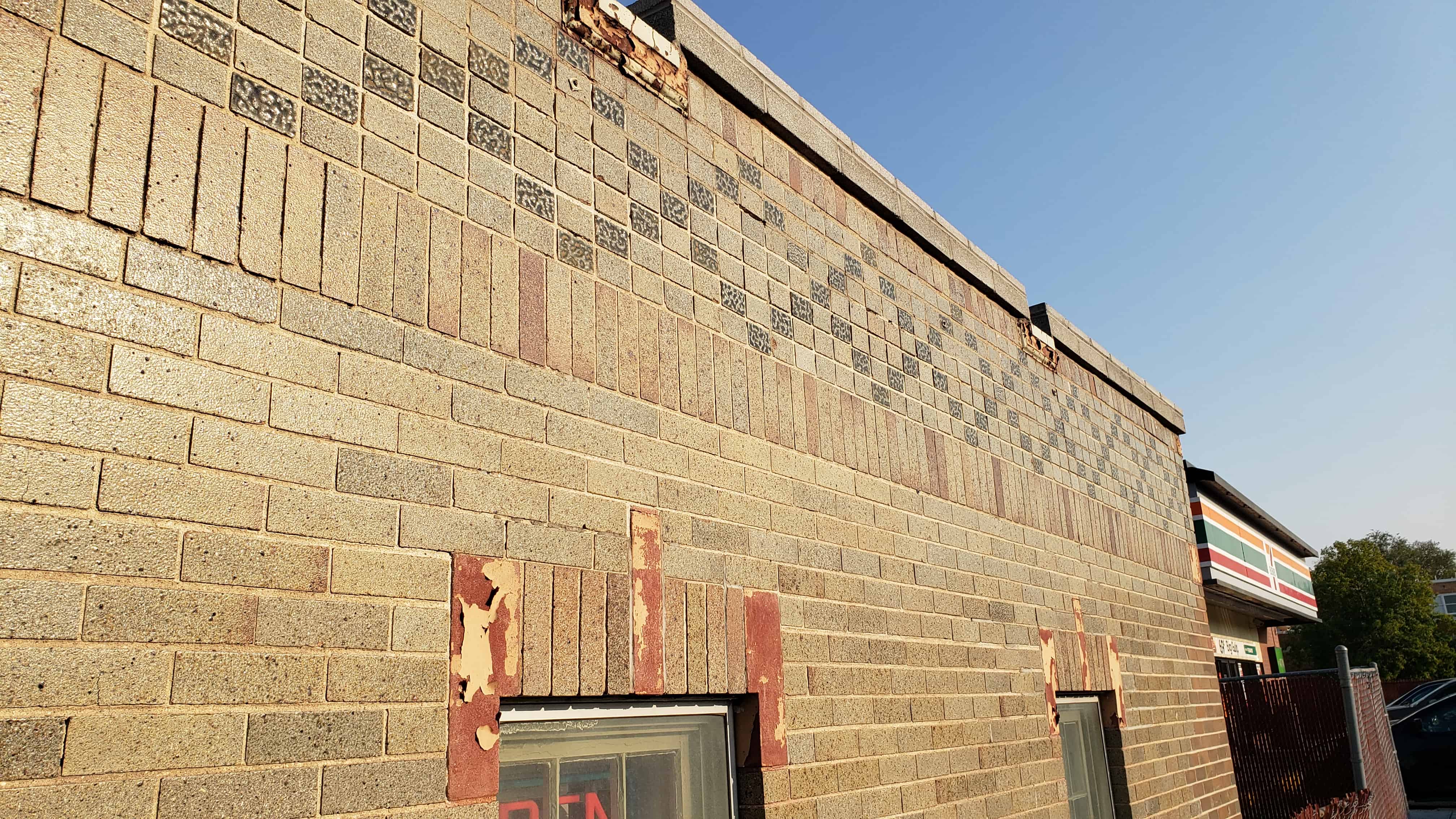
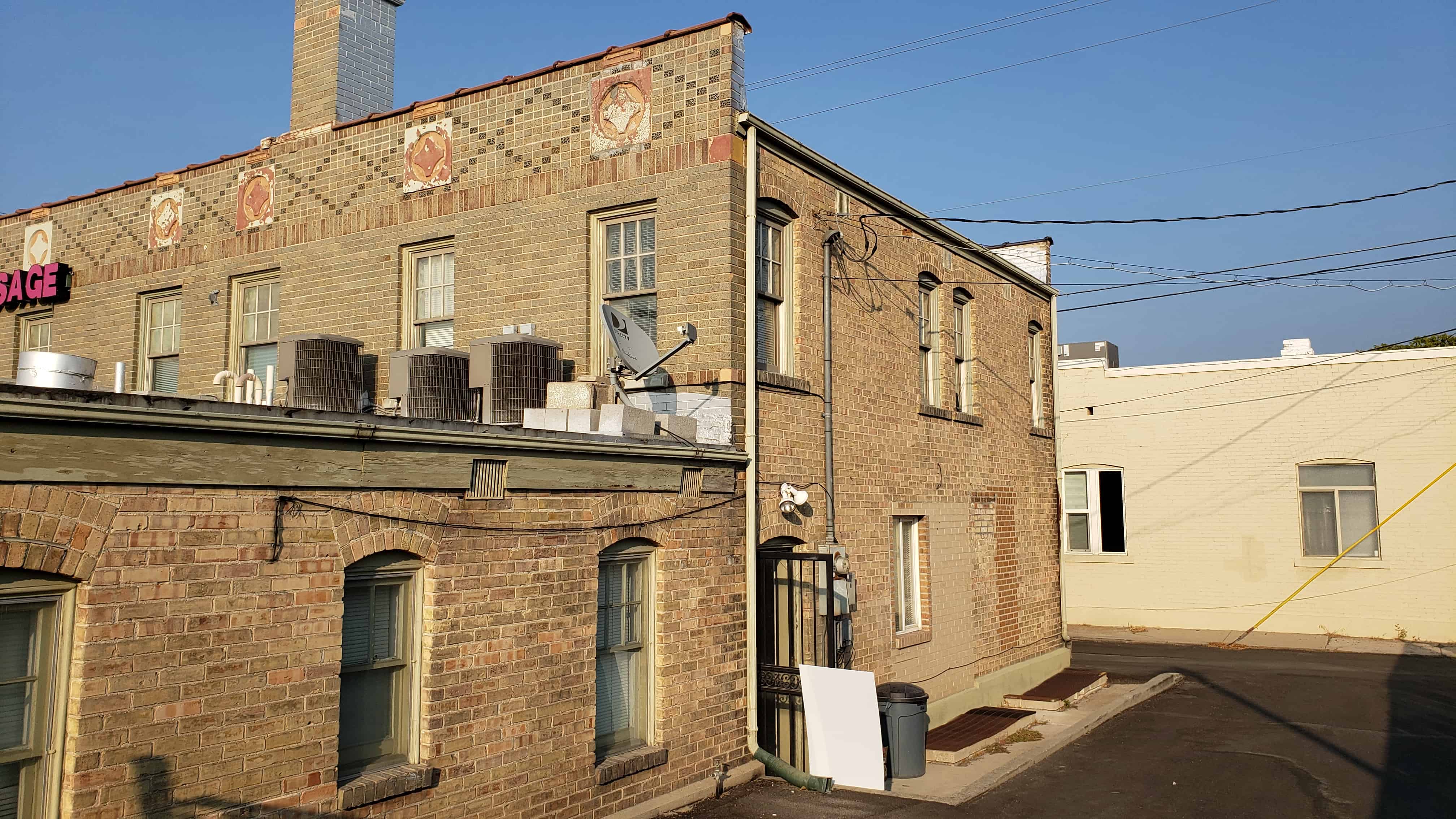
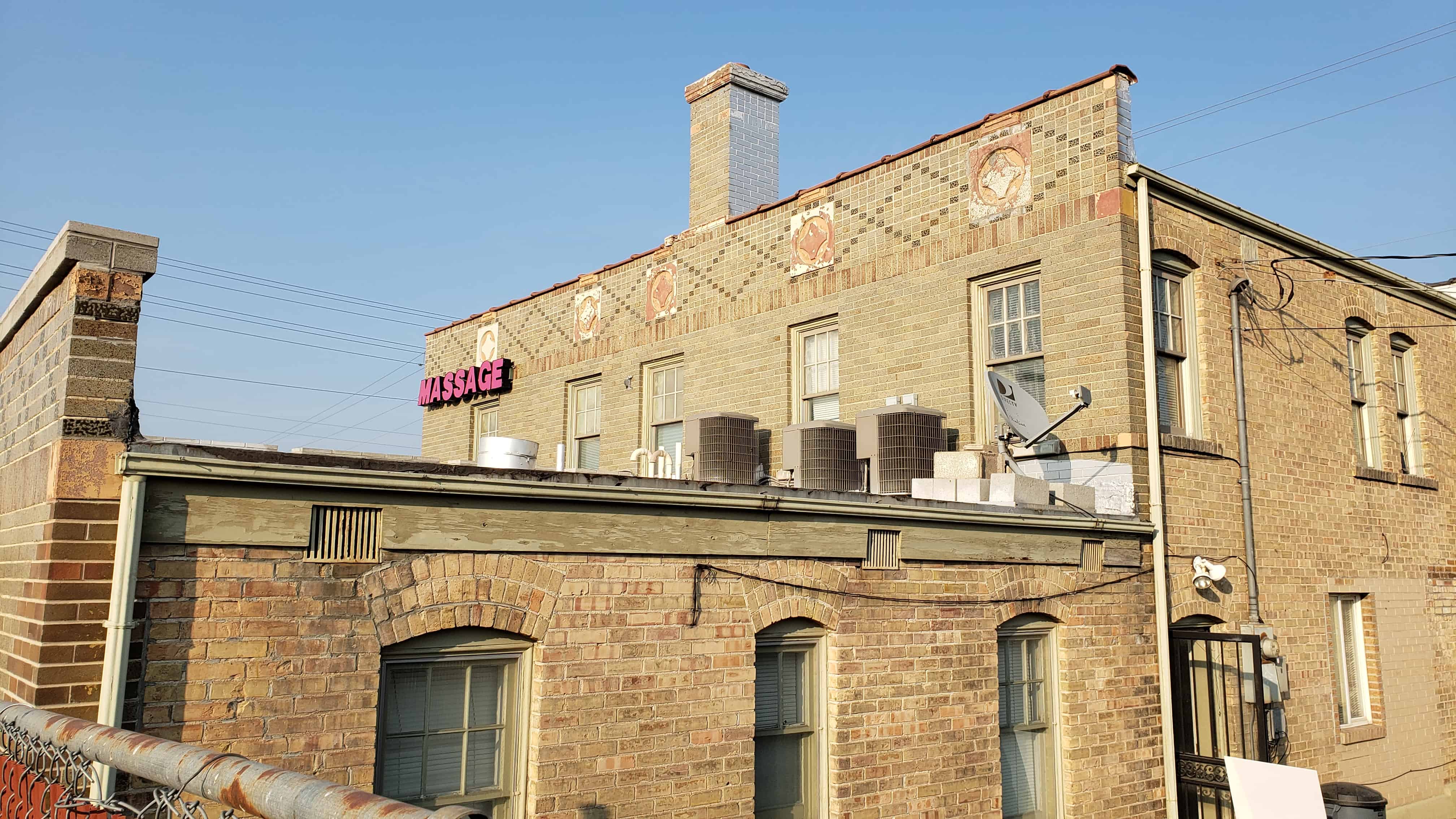
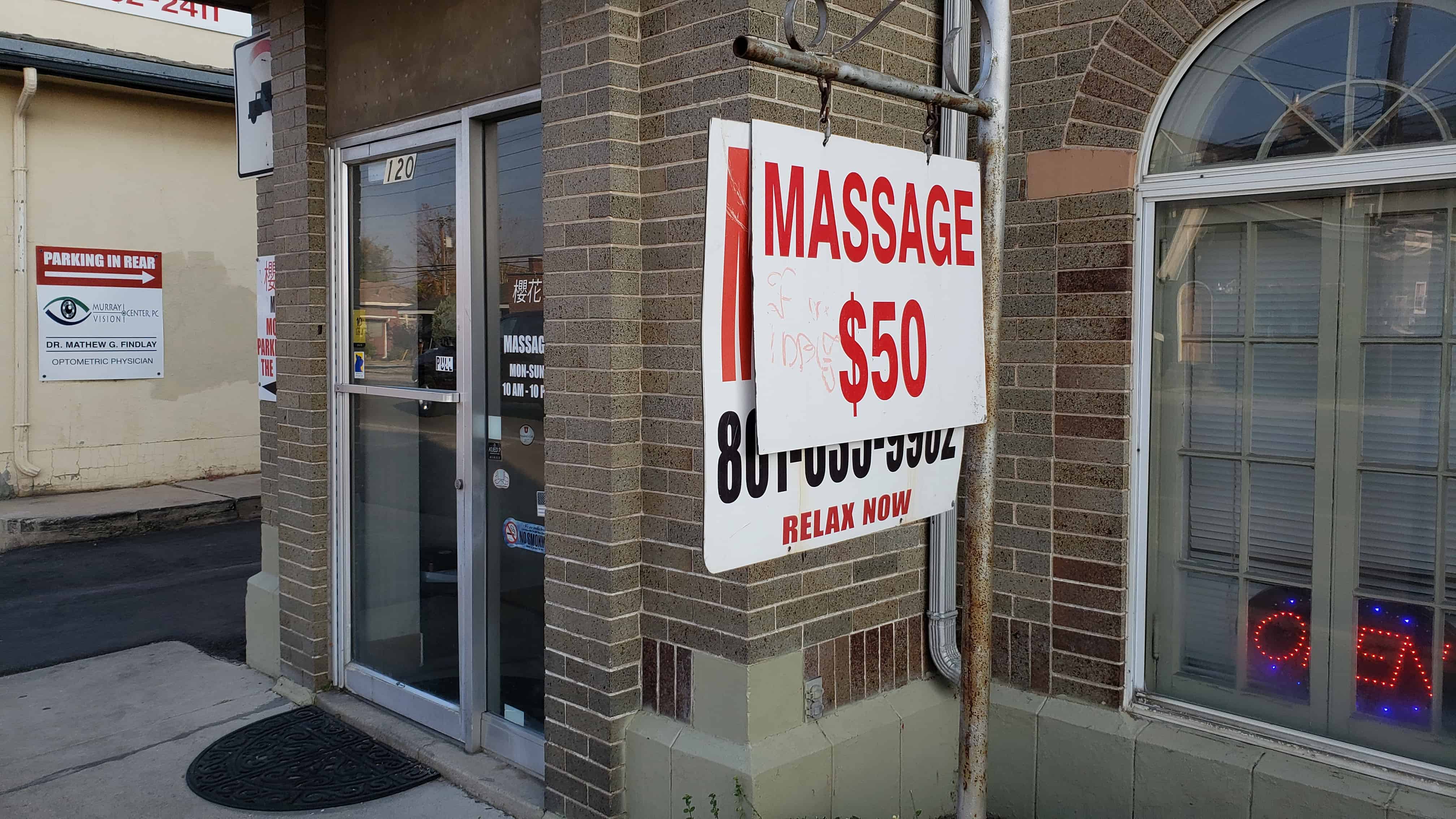
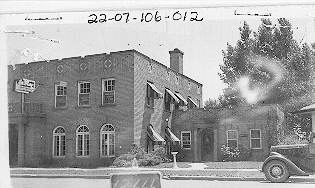
The Murray Clinic Hospital was constructed in 1927 for Herond Nishan Sheranian, M.D. on property purchased from William J. Warenski and was designed by Architect Leonard C. Nielson. It had ten beds for treating patients, and included a modern operating room and x-ray facility. The two-story brick building features the extensive use of polychrome glazed brick and a unique blend of architectural styles.
In 1942, Francis E. Boucher, M.D. bought the facility and continued his medical practice there until the building was purchased by Optometrist, Dr. Bruce J. Parsons, in 1954. The building served as Murray Vision Center for 50 years, dedicated to serving the vision needs of Murray and Salt Lake County residents. The property is currently owned by Bruce James Parsons Intervivos Trust.
120 East 4800 South in Historic Downtown Murray, Utah
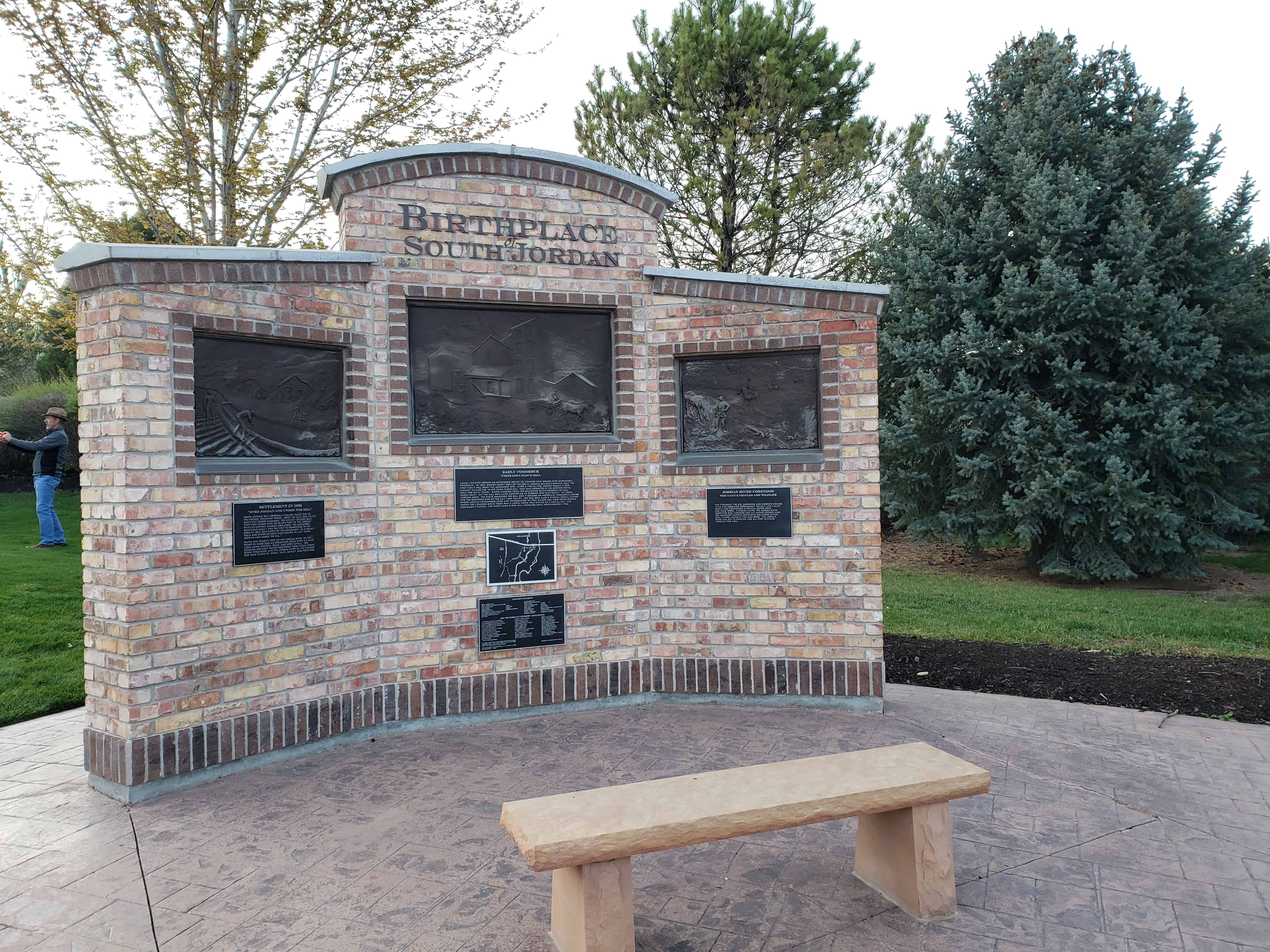
South Jordan was originally called “Gale” due to the strong, persistent winds. Since the Salt Lake Valley had little timber available, the earliest settlers built their first homes into the bluffs west of the Jordan River as earthen dugout dwellings. The Alexander Beckstead family was the first to homestead in this area in 1859, southwest of this monument. As a result, these and other settlers were known to live “over Jordan and under the hill.”
Water was scarce west of the Jordan River, so the pioneers hand dug an irrigation ditch over 2.5 miles long using shovels, picks, and spirit levels. This channel brought water northwest from Midas Creek, other tributaries and the Jordan River to the farmers for their crops of wheat, barley, and potatoes.
Early Commerce
White Fawn Flour Mill
Local farmers needed an accessible outlet to convert raw grain into marketable products. In 1895, Robert Mabey Holt of the South Jordan Milling Company built the first flour mill near this monument site. After a fire in 1902, Robert Rebuilt a new facility called the ‘White Fawn Flour Mill’ that was operated by his brother Royal Holt for many years. Water flowing from the Beckstead ditch powered the mill wheel shaft, but the mill was later converted to operate with electricity. As South Jordan grew, the Holts enlarged the mill and it became an important commerce center for the southern end of the Salt Lake Valley. The mill was also a pivotal social center where locals exchanged news and information as they waited for their grain orders. Above the loading dock there was a large room that served as a social hall for community events. The White Fawn Flour Mill operated until approximately 1955.
Jordan River Corridor
The Native Peoples and Wildlife
For centuries, the Ute, Shoshone and Goshute Indians lived and migrated throughout the Salt Lake Valley which was considered a neutral buffer zone for these tribes. Passage along the Jordan River corridor was common and all native groups used the abundant natural resources including water, salt, plants, animals, fish and birds. The Jordan River was key to survival for all who traveled through this area.
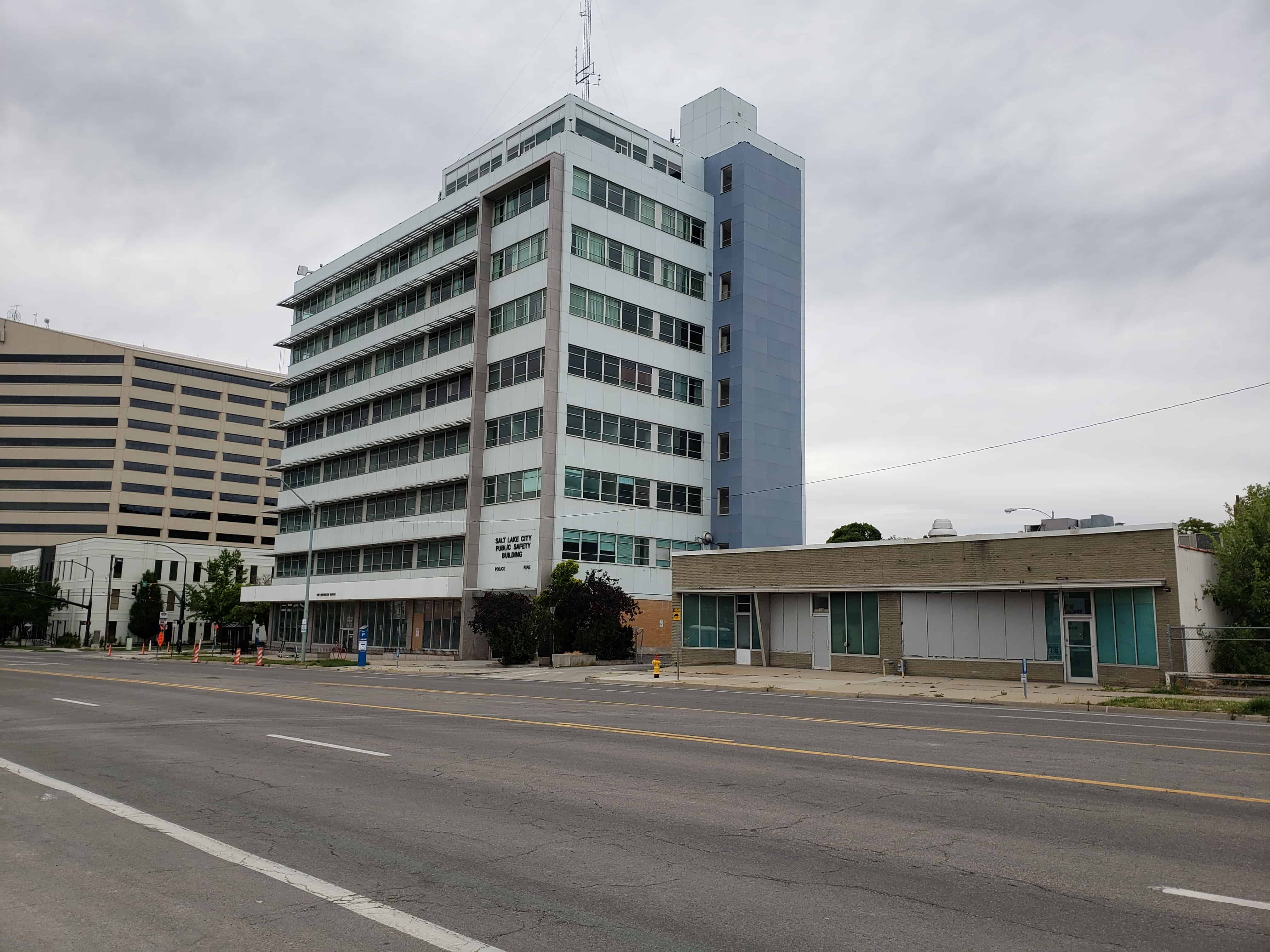
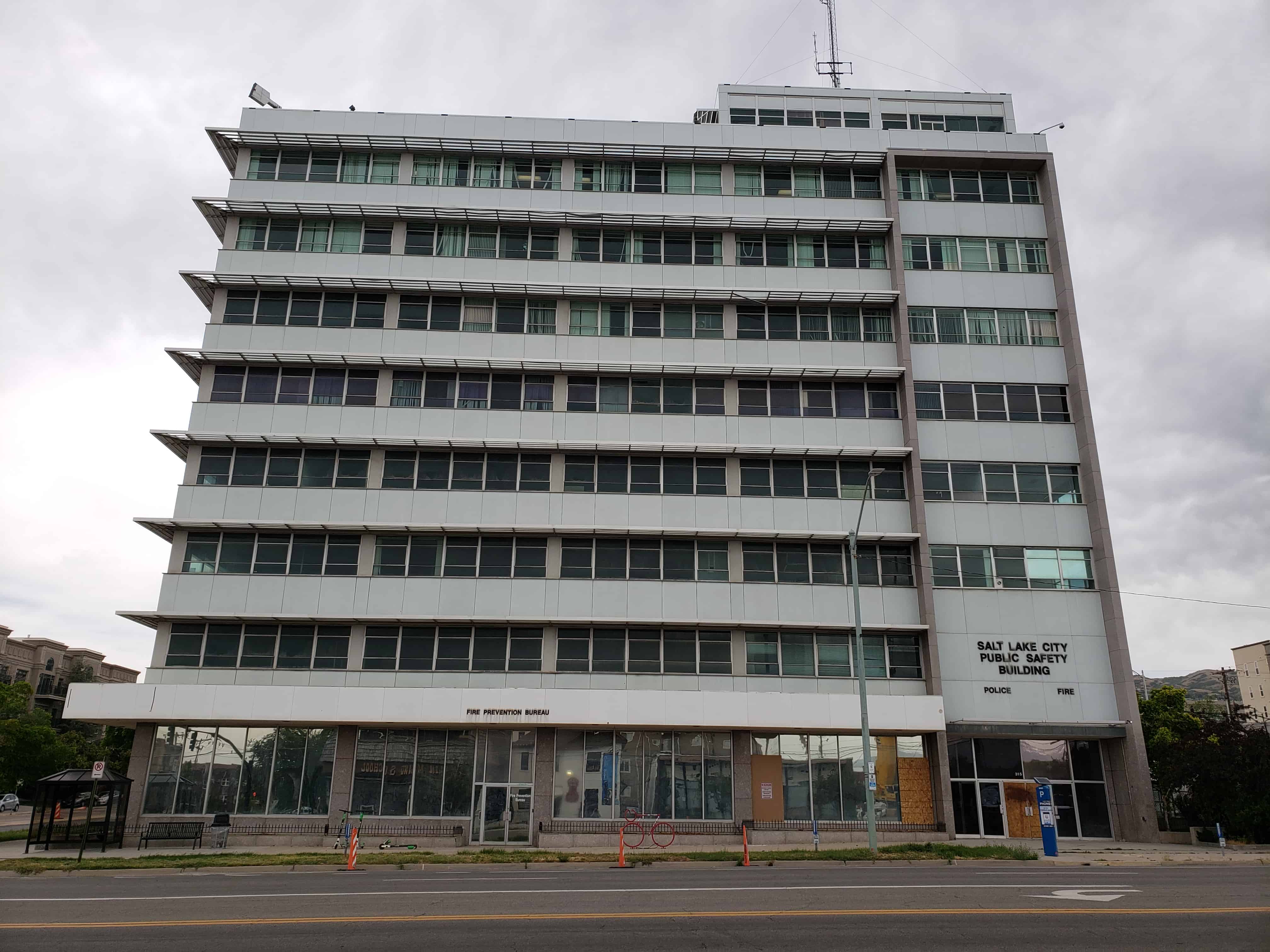
Built in 1958 in International Style, it was the Salt Lake City Public Safety Building from 1979 to 2013.
The Public Safety Building was originally built as the Pacific Northwest Pipeline Company headquarters and it was expected to have 275 employees work in the building. Architects for the structure were the local father and son team Slack and David Winburn, with contractors Del Webb Construction Company of Phoenix, Arizona. The 95,000 square-foot building opened to great newspaper fanfare in May 1958 with Salt Lake Tribune headlines. The $2.5 million structure included an upper story that featured a penthouse conference room; heat resistant glass and aluminum louvers to shade windows on the south and west for energy efficiency; interior steel from the Geneva Steel Company in Lehi, Utah County; and an exterior of porcelainized steel, the same material pioneered on the First Security Bank building.(*)