William Sandstrom built this two-story frame and adobe commercial building in 1911. The first floor operated as a pool hall with a dance hall above. Later in the century, it was operated as a grocery store. It also served as the post office and, during the 1930s, had a WPA library on the upper floor. At one time it was occupied by the Dahl family.
William Sandstrom (1877-1911) built this two-story adobe-lined, wood frame commercial building about 1911. The first floor operated as a pool hall with a dance hall above. After Sandstrom’s death, James W. Blain ran a grocery store here and in the teens it was the post office. It also served as a bicycle shop, WPA library, and Dahl’s Grocery.*
The Hans Ottesen house, built c. 1865-1875, is one of 61 examples of the Scandinavian pair house type that have been recorded in Utah. Graphically documenting the migration of thousands of Scandinavian converts to Mormon Utah during the second half of the nineteenth century, the pair house type makes a significant contribution to the architectural history of the state. The Ottesen house is to be included in the thematic nomination, “Scandinavian-American Pair Houses,” listed in the National Register in 1983.
Hans Ottesen was born in Aalborg, Denmark, in 1834. The Ottesens were early converts to the Church of Jesus Christ of Latter-day Saints, the Mormons, and emigrated to Utah during the 1850s. Hans Ottesen was living in Manti as early as 1860, where he was a farmer and stonemason. Ottesen never married, and probably built this house sometime in the 1865-75 period. On November 2, 1884, Ottesen was brutally murdered by two men during a robbery attempt on the house. In 1886 the house passed to Otto Ottesen, the son of his brother, Jens Ottesen. Otto Ottesen was the sheriff in Manti for many years.
The Hans Ottesen house in Manti is a 1 1/2 story example of the pair house type. It has three rooms arranged axially under its gable roof. The center room was the kitchen, and the upstairs rooms were never finished. The house is constructed of the native oolite limestone in the Greek Revival style. The walls were coursed rubble, and the principal facade was originally plastered. Fine limestone sills and pedimented lintels embellish the windows. A bungalow-style porch was added to the front of the house during the 1920s, and the entire house was plastered in 1952. The chimney at the south end has also been removed. These additions do not significantly affect the historic integrity of the home, which remains a good example of the pair house type in Utah.
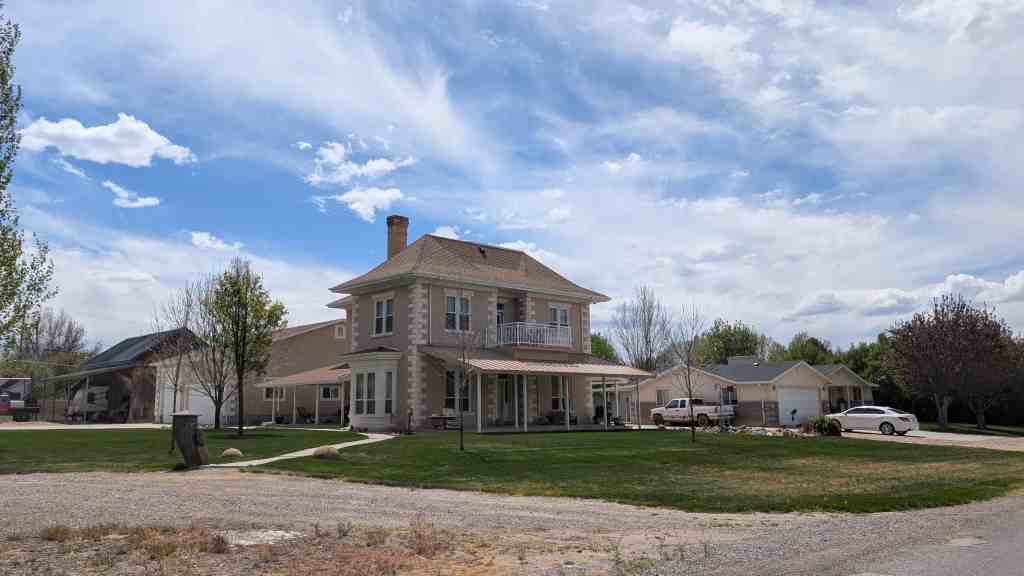
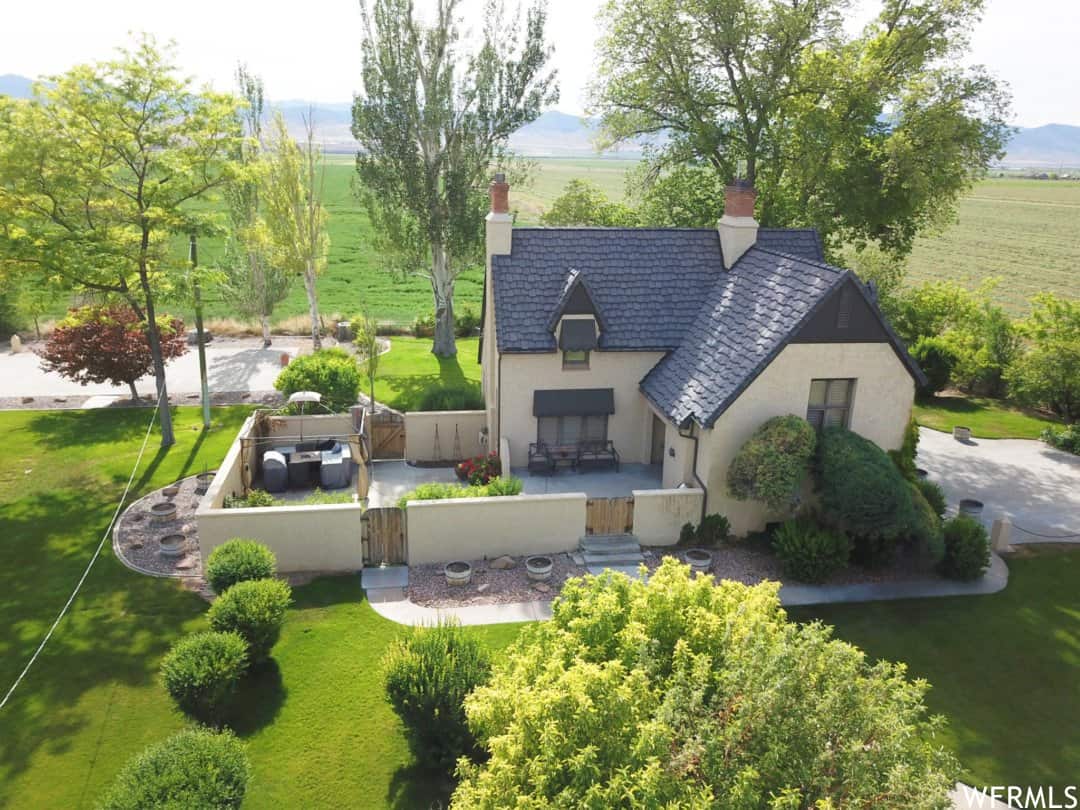
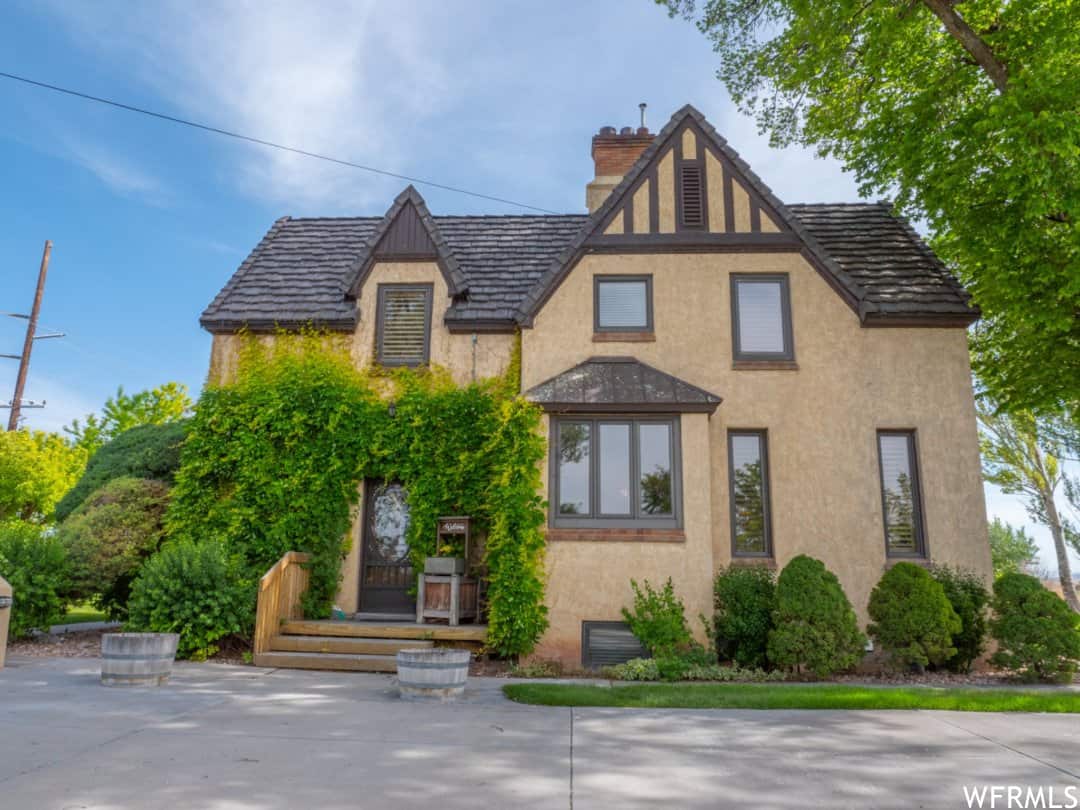
Located at 630 S Main Street in Centerfield, Utah, this beautiful 1923 home was nicknamed the Sugar Mansion being across the street from the sugar beet processing plant.
This charming property was developed in the mid-1920’s by William Wrigley (1861-1932) of Chicago, the millionaire whose name appears on Wrigley Field and the chewing gum. This house and garage are excellent examples of the English Tudor Revival style, popular after World War I. The steeply-pitched roof gables, half-timbering, narrow dormers, ornamental chimneys, slanted bay windows, and light-colored stucco are typical of this picturesque style. English design elements also were used inside, including low ceilings and archways between rooms. Inside and out, fine design and craftsmanship are evident. The carefully landscaped grounds continue the European theme with a ‘fence’ of concrete posts and chains, masonry walls, meandering paths and exceptional plantings.
Mr. Wrigley built this home for the superintendent of the Gunnison Sugar Factory, a million dollar factory which he owned and established locally in 1917. Set on one acre of ground, this property’s artistic landscaping harbored many varieties of birds in trees such as locust, Chinese elm and fruit trees, accompanied by distinctive privet hedges. The manicured yard was simultaneously watered and fertilized by built-in sprinklers that sprayed run-off water rich in beet pulp and piped in from the sugar factory across the highway. Later, the home was purchased by Frank and Betty Ginder so sold it to the present owners, Juan and Vicky Larson in 1975.*
The original stone house (northern section) was built for Ruben Warren Allred c 1864, making it one of the oldest in town. It was expanded by a 1909 brick addition on the south and further altered in the 1970s by the stuccoing of the exterior walls. Rueben Allred, a native of Tennessee, came to Utah in 1849 then moved to Manti in 1853. From 1855 to 1860 he served as bishop of Fort Ephraim. He settled permanently in Spring City in 1861 and lived in this house until his death in 1884.
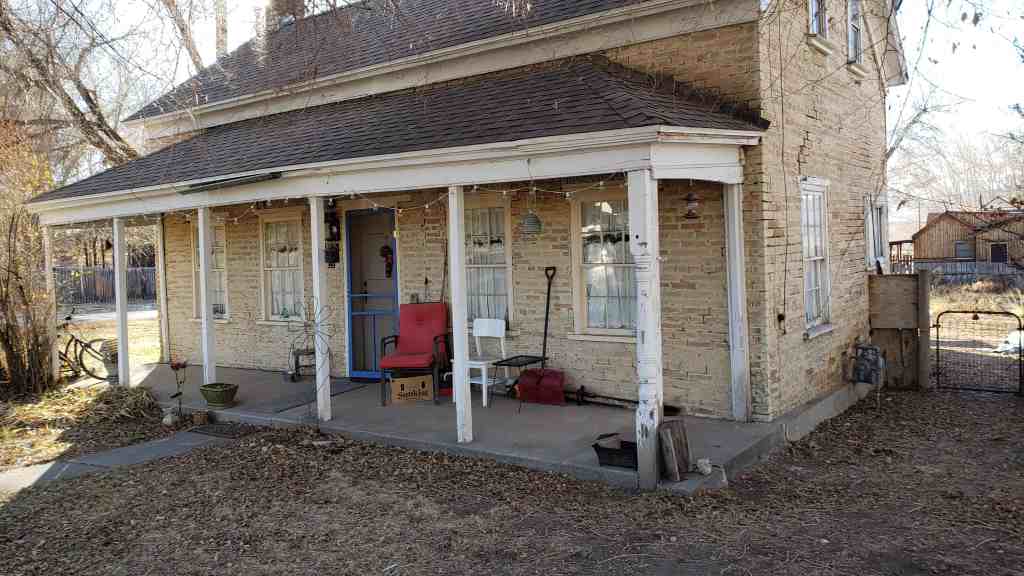
This one-and-one-half-story hall-parlor house of locally fired yellow brick was built in the mid-1870s. A rear addition was added in the 1890s. Adler, born in Sweden, was a convert to the LDS Church. He and his wife arrived in Salt Lake City in 1858. They later moved to Spring City where three of their children were born.
Located at 296 South Main Street in Spring City, Utah
From Sanpete.com: This one and one half story yellow brick house was one of the first fired brick houses in Spring City. It is a hall-parlor plan with a rear lean-to addition. Neils Adler (1828-1921), an early Utah immigrant, joined the LDS church in 1853, was in Spring Town by 1867 and died at the age of 93 in Castle Dale, Utah.
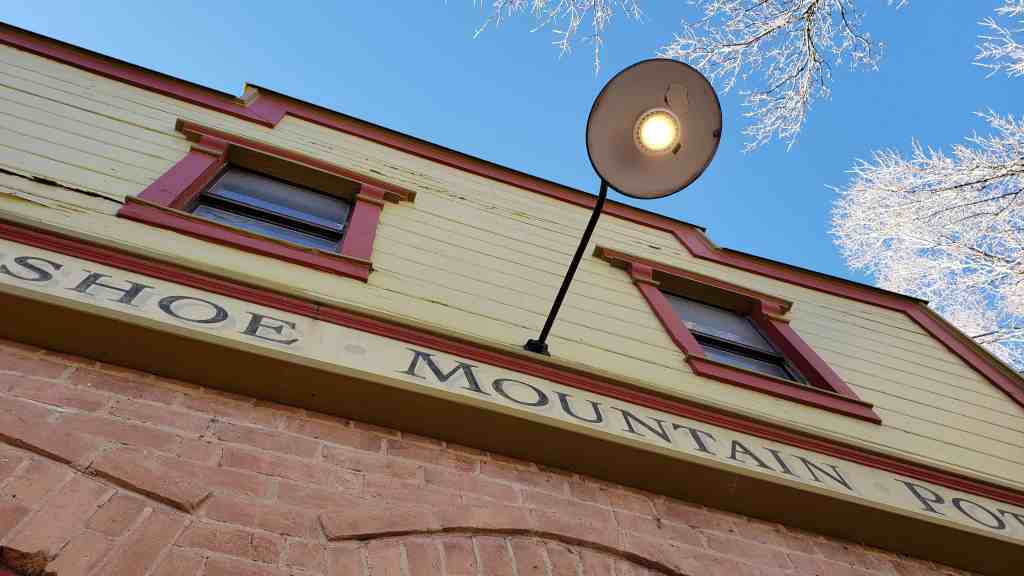
Best remembered as the Arthur Johnson Meat Market, this two-part commercial block with its false front was most likely built in 1905 by the original property owner, Alvin Allred. Arthur Johnson was the son of local judge and United States Congressman Jacob Johnson.
Located at 278 South Main Street in Spring City, Utah
From Sanpete.com: Best remembered after 1916 as the Arthur Johnson Meat Market this small brick building was actually built in 1905 by Alvin E. Allred (1828-1921). Arthur Johnson (1883-1969)was the son of Judge Jacob Johnson. The store is now home to Joe Bennion’s Horseshoe Mountain Pottery. The building is a two-part block, false front commercial structure. The building’s gambrel roof replaced an earlier gable roof. Several potter’s kilns are located behind the building.
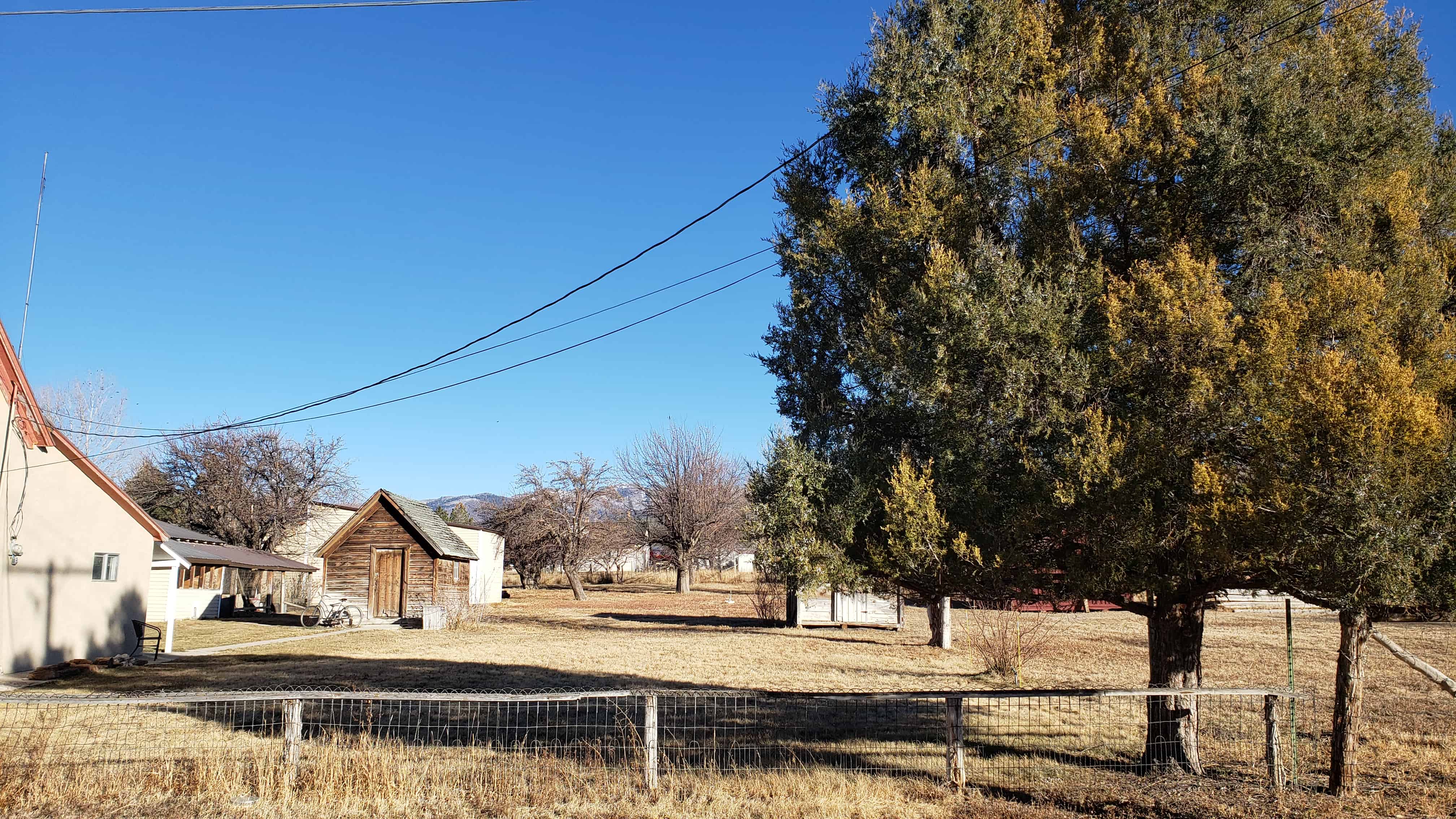
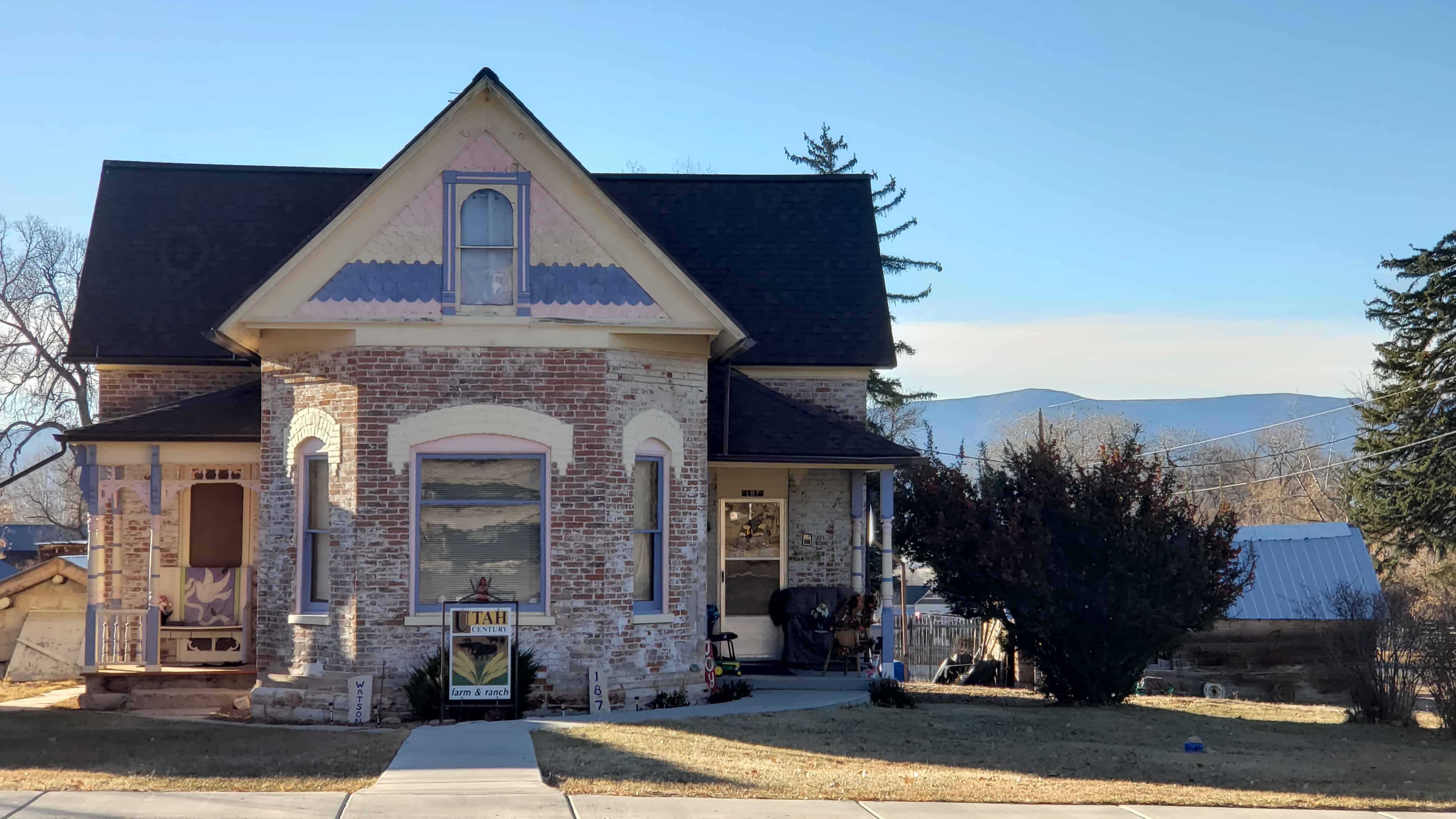
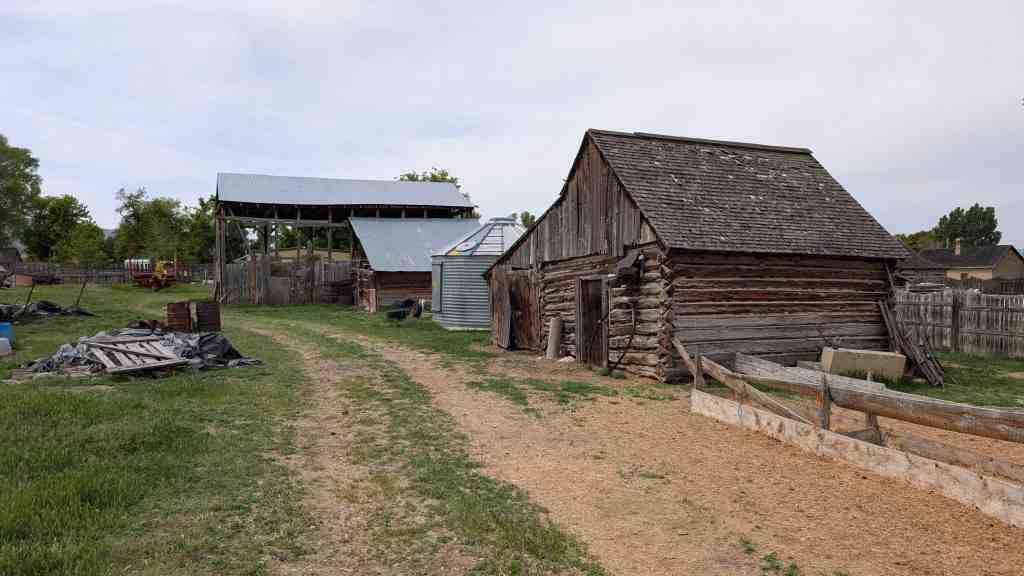
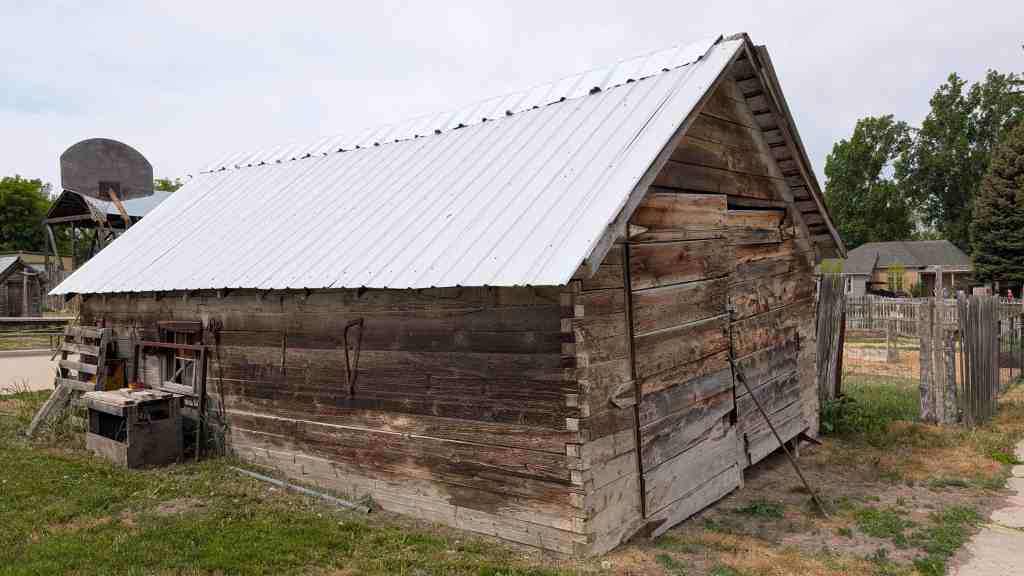
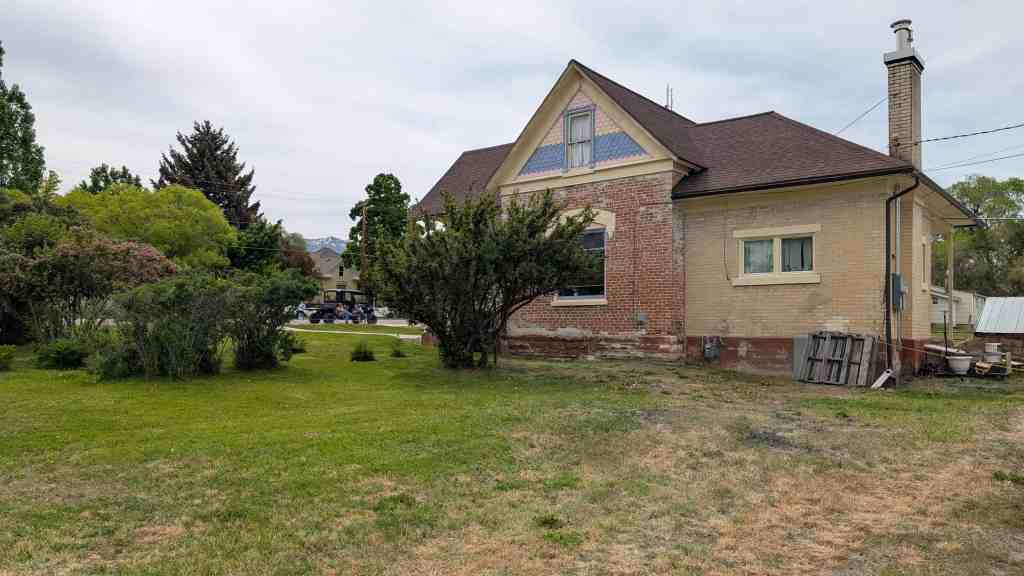
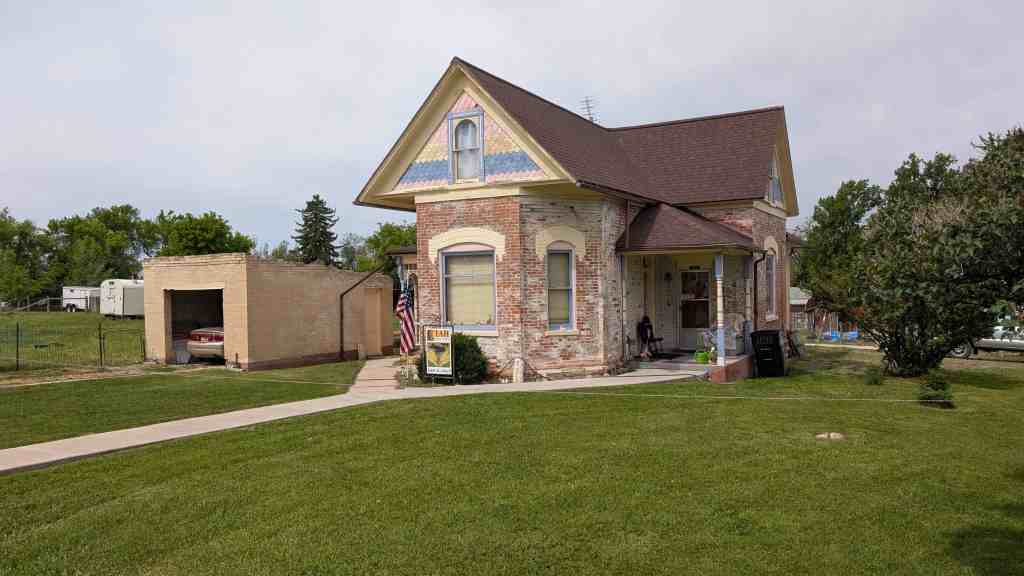
In 1898 Alex Justesen purchased the land from Simon T. Beck and built this brick Victorian cottage. The brick used to construct this house was fired by H.H. Omansen. Several outbuildings remain, typifying the agrarian pattern of the Mormon village. The house has been in the Watson family since 1909. Two rooms were added to the rear of the house in 1916.
Located at 187 North Main Street in Spring City, Utah
As is typical of the “Mormon Village” idea, the property has several outbuildings on the 1.06 acre lot. The small outhouse and wood granary were built along with the main house in 1900. Sidewalk viewing only.*
William A. Ford, a blacksmith, built this frame and adobe house with clapboard siding about 1880. The house is a hall-parlor plan with a rear addition. Ford’s blacksmith shop was located west of the house. The house was sold to Edward Sahlberg about 1920. John R. Baxter purchased it in 1927, and it still remains in the Baxter family (as of 2001).
Located at 13 North Main Street in Spring City, Utah
From Sanpete.com: William Ford, a blacksmith, owned this adobe-lined, wood frame house. The hall-parlor has a rear addition, form that is not uncommon to the area. Ford’s blacksmith shop was likely situated to the west of the house. The house was sold to Edward Sahlburg about 1920. John R. Baxter, Jr.(1888-1978), owner and operator of the nearby confectionery and Lyceum Theater lived here for many years. Baxter’s descendants still own the home.