In 1868, the first Marriott School was constructed of logs on the corner of 12th Street and 1200 West. Later a brick school building was constructed on this site and operated by Weber School District. The school went through several renovations until it was demolished in the early 1940s. The land was then donated to the Marriott Ward. In 2007, the land was gifted to Marriott-Slaterville City as a perpetual park. The bowery and playground were reconstructed by Marriott-Slaterville City.
Marriott-Slaterville City Historical Marker historical marker #3, located at Marriott Park at 1025 South 1200 West in Marriott-Slaterville, Utah
Richard Slater and Ann Corbridge were immigrants from England. Richard served in the Mormon Battalion before relocating his family to Utah as part of the early pioneer movement. In 1852, he acquired land in Slaterville and constructed an adobe home for his wife and twelve children. In approximately 1898, he constructed this brick home on Pioneer Road. This home is typical of the architecture of the late 19th Century. Richard Slater is the namesake of the Slaterville settlement. He served in a variety of community and ecclesiastical leadership positions.
Marriott-Slaterville City Historical Marker historical marker #10, located at Slaterville Park at 2699 West Pioneer Road in Marriott-Slaterville, Utah
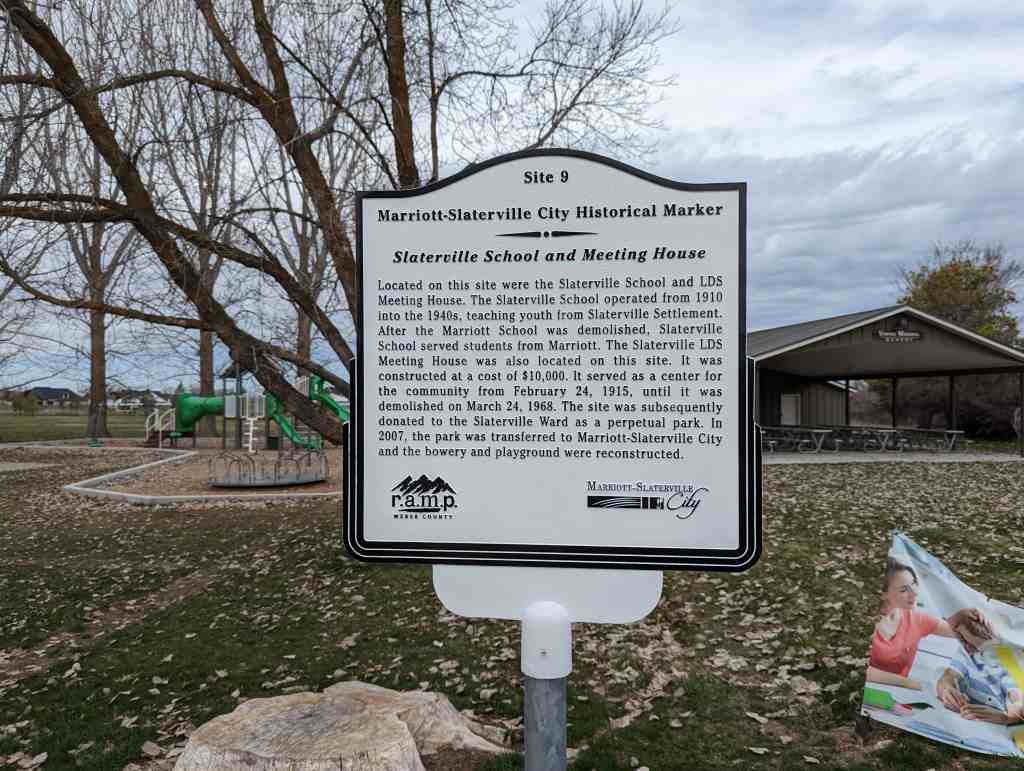
Located on this site were the Slaterville School and LDS Meeting House. The Slaterville School operated from 1910 into the 1940s, teaching youth from Slaterville Settlement. After the Marriott School was demolished, Slaterville School served students from Marriott. The Slaterville LDS Meeting House was also located on this site. It was constructed at a cost of $10,000. It served as a center for the community from February 24, 1915, until it was demolished on March 24, 1968. The site was subsequently donated to the Slaterville Ward as a perpetual park. In 2007, the park was transferred to Marriott-Slaterville City and the bowery and playground were reconstructed.
Marriott-Slaterville City Historical Marker historical marker #9, located at Slaterville Park at 250 North 2250 West in Marriott-Slaterville, Utah
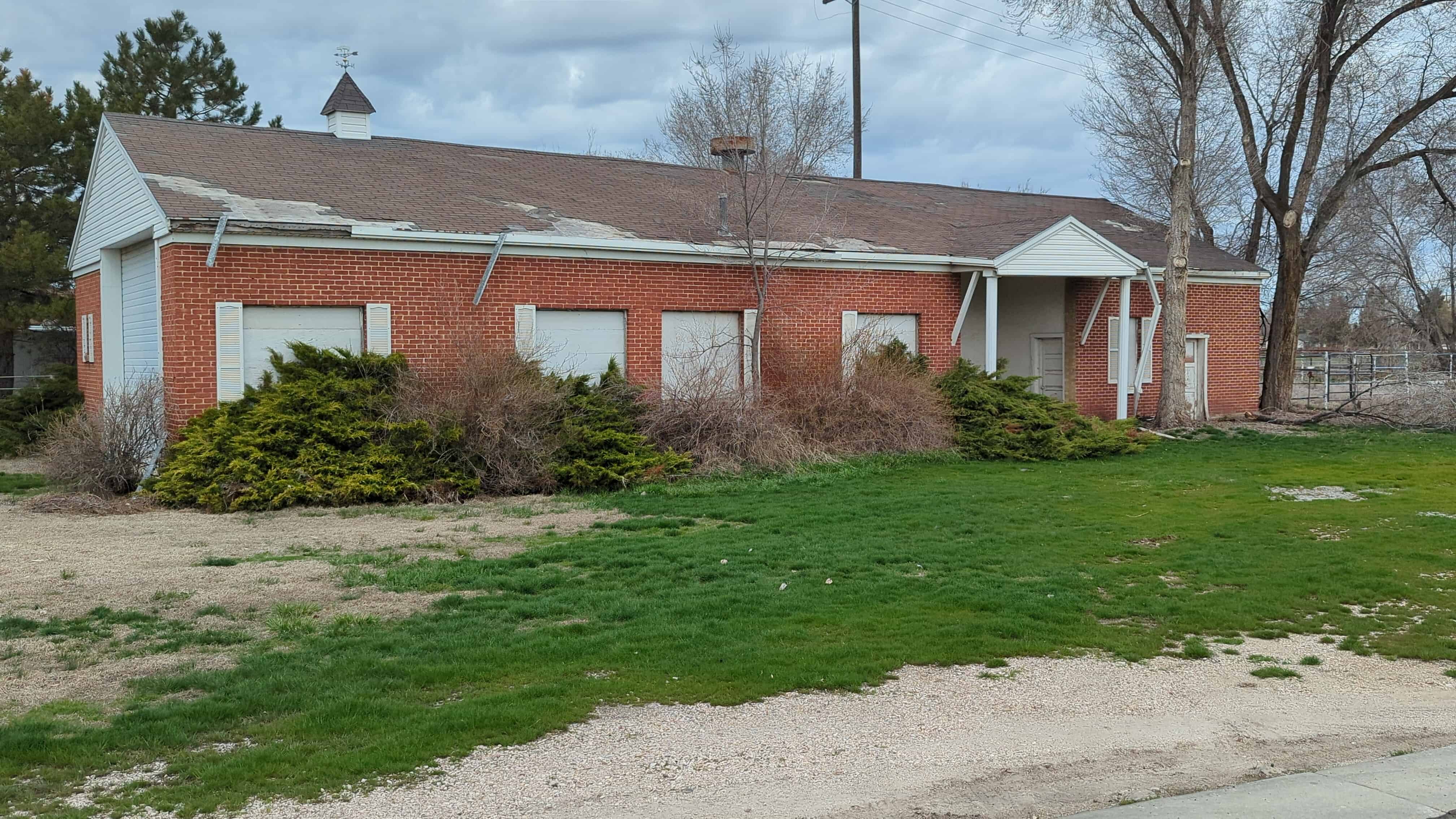
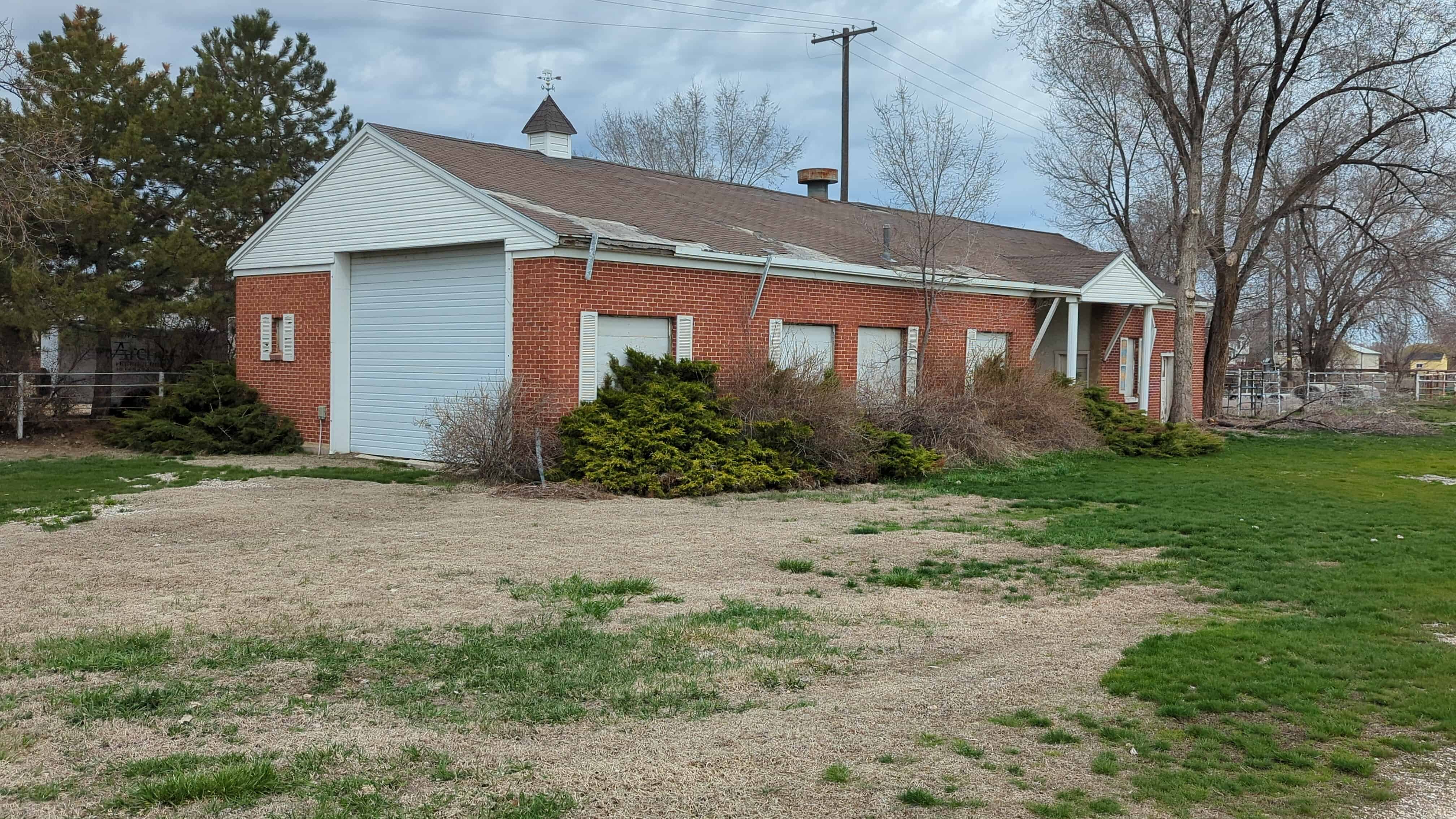
The Rose Lawn Dairy was one of the largest dairy operations in Weber County. The dairy operated throughout the 20th Century. It was initially operated by the Ekins family, and later operated by the Storrer family through the 1980s when the dairy closed. This building is the only remaining structure and served as the creamery. This creamery also made ice cream for the community. People throughout the region enjoyed the products manufactured at this site. Marriott-Slaterville City preserves this site as a historical landmark.
Marriott-Slaterville City Historical Marker historical marker #8, located at 2075 West 500 South in Marriott-Slaterville, Utah
John Marriott, an English immigrant and pioneer, permanently settled here in 1855, founding Marriott Settlement or Marriottsville. Other families soon arrived including the Butler, Elmer, Hodson, Morris, and Stanger families. In 1856, the Marriott branch of The Church of Jesus Christ of Latter-day Saints was formed. Marriott Ward was incorporated on March 22, 1882, and a meeting house was built near this site in 1893. On September 25, 1965, the meeting house was demolished.
Hyrum Willard Marriott and Ellen Morris Marriott Farm
Hyrum Willard Marriott was the sixth son of John Marriott and Elizabeth Stewart. He married Ellen Morris, a daughter of William Morris. Together they raised a family of four boys and four girls near this site. The family farmed this ground, some of the richest farmland in Utah. The Weber River courses along the south of the farm depositing fertile sediments and carving oxbow ponds on its travels to the Great Salt Lake. This farm includes a portion of the “U” Pond, an oxbow pond, which was popular in the community for ice skating parties. In addition to farming, Hyrum was a butcher, leather worker, and sheep rancher. He served in the bishopric of the Marriott Ward for 17 years and as a member of the Utah legislature. This farm is preserved in perpetuity by Marriott-Slaterville City, and made possible, in part, by a generous donation from the J. Willard and Alice S. Marriott Foundation.
Marriott-Slaterville City Historical Marker historical marker #7, located at 2271 West 700 South in Marriott-Slaterville, Utah
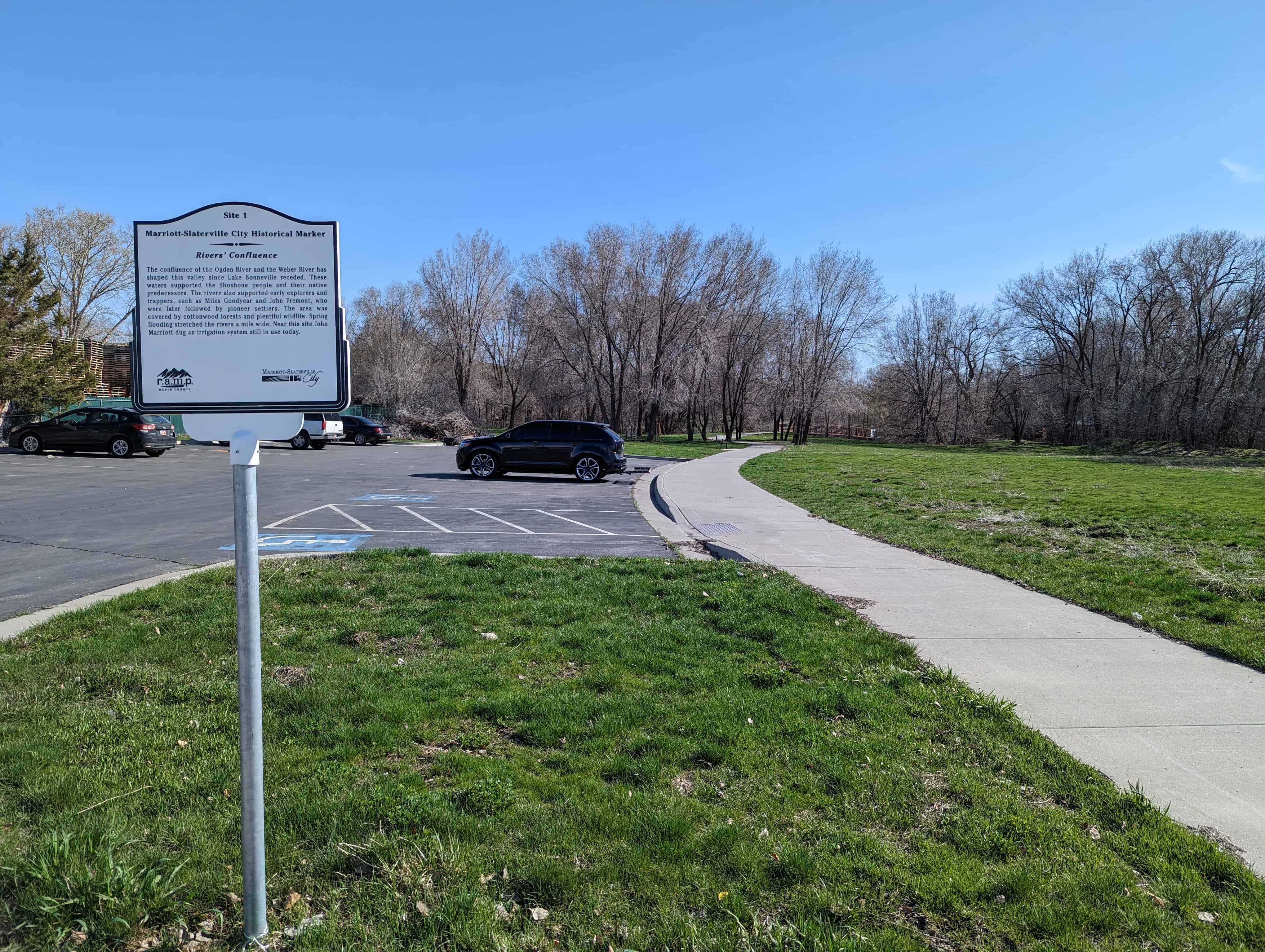
The confluence of the Ogden River and the Weber River has shaped this valley since Lake Bonneville receded. These waters supported the Shoshone people and their native predecessors. The rivers also supported early explorers and trappers, such as Miles Goodyear and John Fremont, who were later followed by pioneer settlers. The area was covered by cottonwood forests and plentiful wildlife. Spring flooding stretched the rivers a mile wide. Near this site John Marriott dug an irrigation system still in use today.
Marriott-Slaterville City Historical Marker historical marker #1, located at 903 West 1700 South (17th Street) in Marriott-Slaterville, Utah
This building was constructed in 1914 and is historically significant for its long association with the early 20th century development of Ogden City’s transportation and railroad district. The Royal Hotel originally provided housing for blue collar railroad workers and travelers. In the 1920s and 1930s, the hotel provided housing to many of the Basque workers from the Pyrenees Region of France and Spain who had come to work in the wool and sheep industry which was largely dependent on rail transportation until the early 1940s. During the 1940s, the Royal became one of very few accommodations available to African-Americans, because of segregation. The hotel also served as an office for the black military police during World War II.
The Royal was constructed during a time in which this area was becoming a center for commerce, entertainment, and lodging. Several other hotels were also constructed around this same time including the Healy Hotel and the New Brigham Hotel, both of which are on Wall Avenue, and the Marion Hotel, Windsor Hotel, and Helena Hotel which are on 25th Street.
The contractor for the Hotel was George A. Whitmeyer and Sons, a prominent local builder and contractor, who had built many of Ogden’s important public buildings, schools, libraries, office buildings, hotels and residences. The first story provided space for shops and offices while residential rooms were found on the second and third stories. The building was one of the most modest hotels in the district in terms of size and design.
A later addition to the rear of the original building was a jai alai (hie-lie) court. This structure is similar in size to the hotel and was constructed between 1920 and 1930 to provide the Basque residents a place to play their native game, which loosely resembles squash played by two teams of two people. The jai alai court was an important tie to the culture and heritage identity of these Basque immigrants.
The Hotel is a three-story brick building with a flat roof. The exterior façade is a uniform reddish brown, and a common variegated red/brown/tan colored brick for the sides and rear walls. The lower front façade features three bays matching the second and third story bays. The center door bay is recessed with historic entry doors made of wood and aluminum. Above the center door is transom of pattern glass. The upper façade features a concrete sill above the second and third floor window panels with a broad, simple detailed overhanging cornice made of metal.
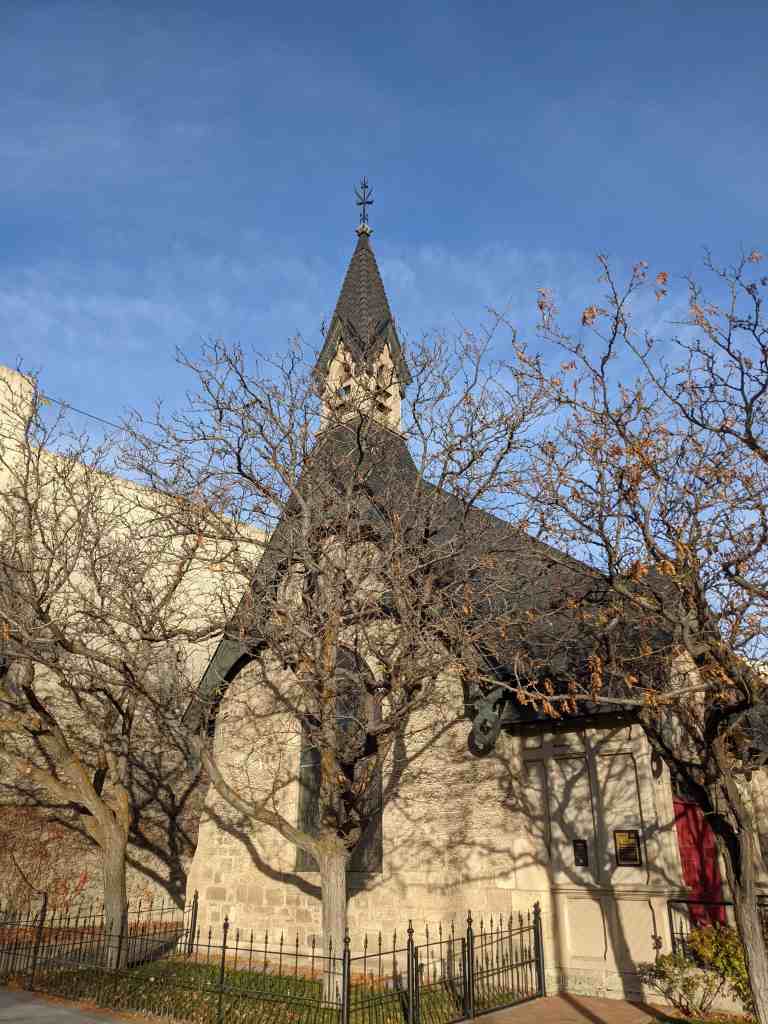
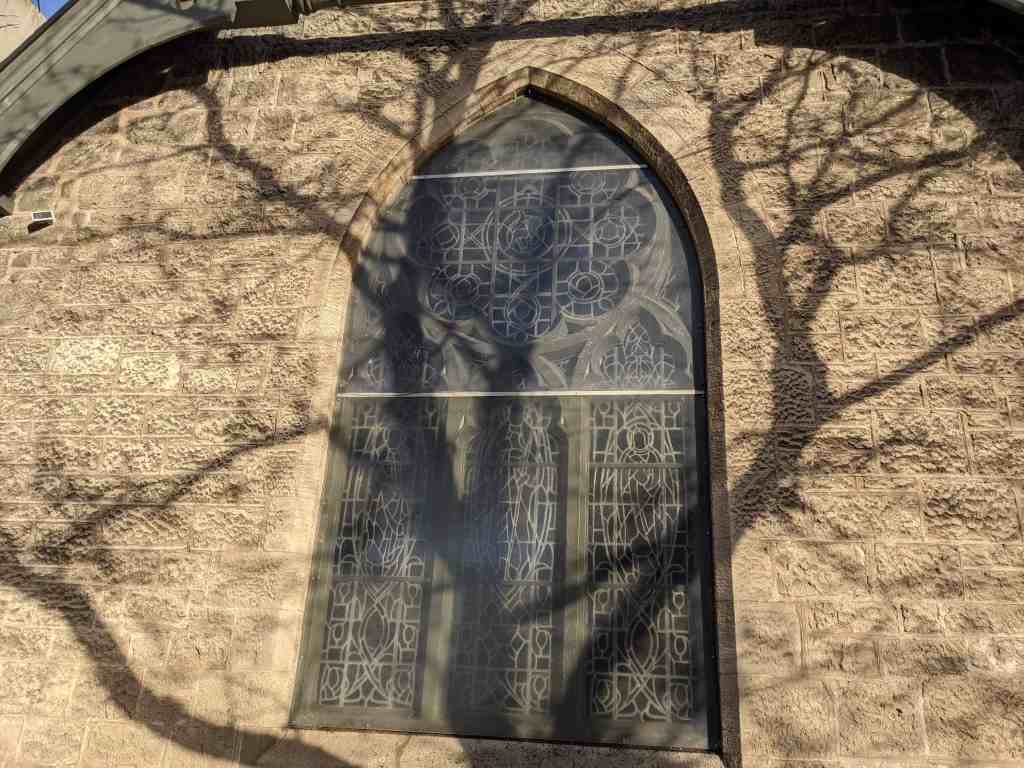
The Episcopal Church of the Good Shepherd is an example of “Carpenter Gothic” style of architecture. Some of the buildings defining features are the stained glass contained in the Tudor windows, the bell tower which contains the first church bell ever to be rung in Ogden, and the wrought iron fence across the front of the courtyard.
The Episcopal Church was the first Protestant religion to locate in Utah. Bishop Daniel Tuttle arrived in Utah in 1867. Three years later, in 1870, Reverend James Lee Gillogly was sent to Ogden as a resident missionary. In 1874, Bishop Tuttle obtained a $4,000 donation from John W. Hammersly of New York for the erection of a church in Ogden in memory of his daughter, Mrs. Catherine L. Livingstone.
The cornerstone was laid April 29, 1874 and the building was consecrated on February 6, 1875. It stands today as a reminder of the pioneering work of the early Episcopalians in the west.
Located at 2374 Grant Avenue in Ogden, Utah and added to the National Historic Register (#73001864) on April 3, 1973.
Twenty years after the arrival of the first Mormons in Utah other religious groups began to make inroads into the Mormon Zion, The first Protestant group to set up a permanent organization in Utah was the Episcopal Church. The Episcopalians did not come West with the express purpose of making converts of the Mormons but rather to find its members and offer services to them.
Brigham Young said that he did not expect any “abuse and detraction from an Episcopal bishop. They are men of education and better sense; they are gentlemen, and any gentleman is welcome here, no matter what his creed.” (Daniel Sylvester Tuttle, Reminiscences of a Missionary Bishop, p. 59-60)
Bishop Daniel Tuttle arrived in Utah in 1867, Three years later, in 1870, Reverend James Lee Gillogly was sent to Ogden as a resident missionary. Church services were first held in the passenger room of the Ogden train station. That same year an old building which had been used as a saloon was secured for church and educational purposes.
In 1874 Bishop Tuttle obtained a $4000 donation from John W. Hammersley of New York for the erection of a church in Ogden in memory of his daughter, Mrs. Catherine L, Livingstone, The designs for the church were provided by Gordon W. Lloyd of Detroit, Michigan.
The cornerstone was laid April 29, 1874 and on February 6, 1875 the church was consecrated. The total cost was near $11,000 and Mr. Hammers ley willingly provided the extra money.
From the time of his arrival Mr. Gillogly assumed an attitude of strong and square opposition to the Mormons, As a result antagonisms did develop between the two churches. In this sense the Church of The Good Shepherd serves as a reminder of that conflict, but even more so it stands as a monument to the pioneering work of the early Episcopalians in the West.
Church of the Good Shepherd (Episcopal)
Congregation established 1870. Cornerstone laid April 29, 1874 by Bishop Daniel S. Tuttle. Consecrated February 6, 1875. Funds donated by John W. Hammersley of New York.
Dedicated to the Glory of God Tuttle Hall In memory of The Rt. Rev. Daniel Sylvester Tuttle First Bishop of Utah
Ogden High School, completed in 1937, together with the U.S. Forest Service Building (1933) and the Ogden/Weber Municipal Building (1939), are exceptionally important as the most significant Art Deco structures in Ogden and the state of Utah. These structures gain added importance as works of the architectural firm of Hodgson and McClenahan, and are excellent examples of federal, work projects initiated during the Great Depression of the 1930s. Leslie S. Hodgson, who designed the school, has been labeled as the most important architect of the Ogden-Weber County area from the late 19th to mid 20th century. The Ogden High School was regarded as his “masterpiece, the culmination of almost four decade’s work.”
Located at 2828 Harrison Boulevard in Ogden, Utah and added to the National Historic Register (#83003201) on June 7, 1983.
Public works projects formed an important part of the federal government’s response to the depression of the 1930s. The Public Works Administration was established under the National Industrial Recovery Act, and was continued by the Emergency Relief Appropriation Act of 1935. This agency was authorized to make loans and grants available for “non-federal construction projects of states, counties, cities, territories, and possessions, and to conduct federal demonstrations of slum clearance and low-rent housing.” Such projects were financed by PWA grants from Federal Emergency Relief Administration funds for a portion of the total cost. The remaining cost was usually paid by the local bodies sponsoring the projects.
As early as June 1933, Ogden City, Utah was seeking some $1,745,000 from the state PWA director, R. A. Hart, with the Ogden City Board of Education applying for $600,000 for a new high school. Sources indicate that after delays in funding, plans were executed by the architectural firm of Hodgson and McClenahan for the structure. The contractor for the building was the company of George A. Whitmeyer & Sons. Leslie S. Hodgson, who produced most of the design concepts for the firm became noted for his ability to work with a wide range of architectural styles, from Prairie School and Egyptian Revival to the Art Deco, for example. The high school was considered his “masterpiece,” as he designed it and supervised its construction.
Completed in 1937, Ogden High School cost about $1,150,000. Ogden’s “Million Dollar School” was lauded locally as “truly a magnificent structure, modernly equipped,” with credit going to the Board of Education, PWA, and local voters who provided needed funding for the project. At dedicatory festivities, state PWA director, R. A. Hart, listed his agency’s objectives as putting men to work, and constructing worthwhile buildings. He stated further that Ogden City and Weber County had done more for recovery through construction projects than any other unit in the state. The high school became a source of community pride, with a Kiwanis arboretum and lane dedicated at the site in April 1938.
The building remains as the Ogden High School. Remodeling was completed at the school in the late 1970s, by the architectural firm of Sterling R. Lyon, with Barbara G. Cowley, project designer. This was accomplished tastefully, and reflects the continued pride held for the building.
Architecture:
The corner stone of Ogden High notes that it was Public Works Project #1423. Like the U. S. Forestry Service Building and the Ogden/Weber Municipal Building, it was designed by the firm of Hodgson and McClenahan during the 1930s when both public works projects and the Art Deco Style were predominant on the American architectural scene.
Ogden High School, completed in 1937, was built of tan brick with glazed terra cotta trim. The horizontal massing almost negates the vertical implications which are so characteristic of the Art Deco Style. The asymmetry of massing also varies from most Art Deco prototypes. Flat roofed, similarly detailed rectangular units of varying height are collected into an overall grouping. Interior space use administrative offices, classrooms, gymnasium and auditorium) is implied by the exterior massing.
As in the other Art Deco buildings, vertical bands of metal frame windows are separated by brick pilasters. Spandrels reveal decorative masonry with the geometric Art Deco character, stressing verticals and diagonals in the corbelling patterns. Top spandrels and pilasters are terminated by terra cotta trim reflecting the undulation of the wall plane below.
The main entrance is determined by a tall rectangular mass. Cast terra cotta spandrels here have geo-floral motifs. There is greater spatial undulation here than in other parts of the building and a more vertical feeling. Each of the four entrance doors has a geometric patterned metal grill transom. The original exterior lamps at the entrance are extant, reflecting Art Deco design considerations.
The school interior remains largely unchanged and well preserved. Polychromatic wall stencils, patterned floors, marble dados, metal trim and plaster work are extant. The library was recently renovated (late 1970s) in a way most sensitive to the original design. Subsidiary buildings on campus and all exterior modifications also sensitively reproduce the character of the main building in scale, massing, materials, and trim. The nomination includes the school and gymnasium building.