• About JacobBarlow.com
  • Cemeteries in Utah
  • D.U.P. Markers
  • Doors
  • Exploring Utah Email List
  • Geocaching
  • Historic Marker Map
  • Links
  • Movie/TV Show Filming Locations
  • Oldest in Utah
  • Other Travels
  • Photos Then and Now
  • S.U.P. Markers
  • U.P.T.L.A. Markers
  • Utah Cities and Places.
  • Utah Homes for Sale
  • Utah Treasure Hunt

JacobBarlow.com

~ Exploring with Jacob Barlow

JacobBarlow.com

Tag Archives: Weber County

Ogden / Weber Municipal Building

03 Friday Mar 2023

Posted by Jacob Barlow in Uncategorized

≈ 2 Comments

Tags

NRHP, Ogden, utah, Weber County

The Ogden/Weber Municipal Building, 1939, together with the U.S. Forest Service Building and the Ogden High School, are exceptionally significant as the best Art Deco Style building in Ogden and the state of Utah. They also represent important works of the architectural firm of Hodgson and McClenahan, and are excellent examples of federal work projects initiated during the Great Depression of the 1930’s.

The Municipal Building is a warm brick building with glazed terra cotta trim. In many ways it is a “typical” Art Deco example. Symmetrically arranged from a rectangular base, side wings step down gradually from the taller central mass. Metal frame casement windows are separated by brick pilasters which function visually to accent verticality and to modulate the surface lanes. The flat roofs are capped with contrasting glazed terra cotta trim which undulates respectively to the walls and pilasters, activating the roofline and terminating the vertical movement with crisp geocurvalinear shapes.

The Municipal Building is one of Utah’s Public Works Administration projects designed to put people to work and create useable structures for the future.

Located at 2549 Washington Blvd in Ogden, Utah and added to the National Historic Register (#83003202) on June 7, 1983.

Related:

  • Ogden Carnegie Library (was located here until 1969)
  • Original Pioneer Settlers of Weber County (historic marker in the building)
  • Ogden Memorial Plaza
    • Captain James Brown
    • Jedediah Strong Smith
    • John Henry Weber
    • Lorin Farr
    • Pioneer Forts in and near Ogden, Utah

The Ogden/Weber Municipal Building, 1939, together with the U. S. Forest Service Building (1933) and the Ogden High School (1937), are exceptionally significant as the best Art Deco Style buildings in Ogden and the state of Utah. They also represent important works of the architectural firm of Hodgson and McClenahan, and are excellent examples of federal work projects initiated during the Great Depression of the 1930s. The Municipal Building also symbolizes the unification of city and county governments in an effort to consolidate facilities and save tax dollars.

Local governmental officials were conferring on a consolidation of Ogden City and Weber County facilities in Ogden at least as early as March, 1934. At this time federal aid, through the Public Works Administration, was made available to the states as part of the government’s response to the
depression. The PWA program was initiated to help provide jobs and construct useful buildings. In October, 1937, U. S. Senator Elbert D. Thomas, of Utah, notified Ogden Mayor Herman W. Peery that Ogden City and Weber County “may” receive a federal grant for a joint building. R. A. Hart, FWA
director for Utah, stated at the dedication of Ogden High School that Ogden City and Weber County had done more for recovery through construction projects than any other unit of government in the state.

Leslie S. Hogdson and Mryl A. McClenahan were commissioned sometime in late 1937 or early 1938 to prepare preliminary plans for a building, subject to final approval by the PWA. By April, 1938, backers of the joint facility were confident that funds appropriated by the Roosevelt administration for the project would be released. Those local officials who supported the effort included Mayor Peery, City Commissioners Edward T. Saunders and William J. Rackham, and County Commissioners George F. Slmmons (Chairman), Charles A. Halverson, and W. R. McEntire.

Plans, as drawn by Hodgson and McClenahan, called for a “modern” Art Deco design. In the words of Leslie Hodgson, “It might be termed ‘restrained contemporary’ design with vertical lines emphasized and marked by the absence of horizontal accentuations.” The building was then, in 1938, projected to
cost about $600,000. Work began in October, 1938, as the south wing of the old City Hall was razed to make way for the new edifice. By April, 1939, the reinforced concrete foundation had been poured, but final plans for the structure were delayed because of a need for further engineering data.

Work commenced again in June, 1939, and in March, 1940, the Salt Lake Tribune echoed the headline, “Ogden-Weber Building Nears Finish.” The article stated that,

Ogden city offices will occupy the north side of the first floor, and Weber county offices will be on the south. The 11 stories above will be occupied alternately by the city and county.

Jail equipment will occupy three stories with cells, but it will take four entire stories for the jail, detention quarters and city-county law enforcement offices. A joint custodian will be In charge of the jail system for both city and county.

On November 8, 1940, the $952,668 Weber County-Ogden City administration building was formally dedicated, even though it had been occupied since June 15. Morgan M. Lewis, acting regional head of the PWA from San Francisco, stated that the building was a “monument to the creative and public spirited
activities of the architects, Hodgson & McClenehan [sic], and the sponsors, Weber county and Ogden city [sic].” The final cost was placed at $952,668.52, with the PWA paying 43% or $410,175. Ogden City and Weber County each contributed $271,246.75, or 28 1/2% of the cost. Ogden City’s last payment occurred in 1940.

The building continues to function as the Ogden-Weber Municipal Building, a center for local governmental activity.

A public works project completed in 1939, the Ogden/Weber Municipal Building is the last of three important Art Deco commissions in Ogden designed by the firm of Hodgson and McClenahan. It is a warm brick building with glazed terra cotta trim. In many ways it is a “typical” Art Deco example, resembling the Syracuse Lighting Company Office Building (1932), Syracuse, New York.

Symmetrically arranged from a rectangular base, side wings step down gradually from the taller central mass. Metal frame casement windows are separated by brick pilasters which function visually to accent verticality and to modulate the surface planes. The flat roofs are capped with contrasting glazed terra cotta trim which undulates respectively to the walls and pilasters, activating the roofline and terminating the vertical movement with crisp geo-curvalinear shapes. The water table and window sills are also glazed terra cotta elements.

The building is twelve stories in height, with its main entrance centered on the east facade in a projecting flat-roofed pavilion capped with terra cotta trim. A flight of stairs leads to the actual entrance area and four steel frame doors. Each door has a tall transom which displays a metal grill with pierced geometric design. The doors and transoms have a terra cotta surround. Period lamps in the Art Deco Style flank the entrance.

The exterior retains its historic integrity, and the interior maintains much of its original character. Especially notable in the interior are the marble dados, metal arid wood trim, plaster work, light fixtures, and patterned floors.

Edwin Dix Home

01 Wednesday Mar 2023

Posted by Jacob Barlow in Uncategorized

≈ Leave a comment

Tags

Historic Homes, Ogden, utah, Weber County

Edwin Dix served as Weber County assessor from 1894 to 1904. He came to Utah around 1860, as a member of The Church of Jesus Christ of Latter-day Saints, then left that church and helped establish the Episcopal Church in Plain City. Dix worked as a stonecutter on the LDS temple in Salt Lake City, and is believed to have built this house over several years, between 1895 and 1903.*

462 17th Street in Ogden, Utah

Weber Stake Relief Society Building

21 Tuesday Feb 2023

Posted by Jacob Barlow in Uncategorized

≈ 1 Comment

Tags

NRHP, Ogden, utah, Weber County

Weber Stake Relief Society Building

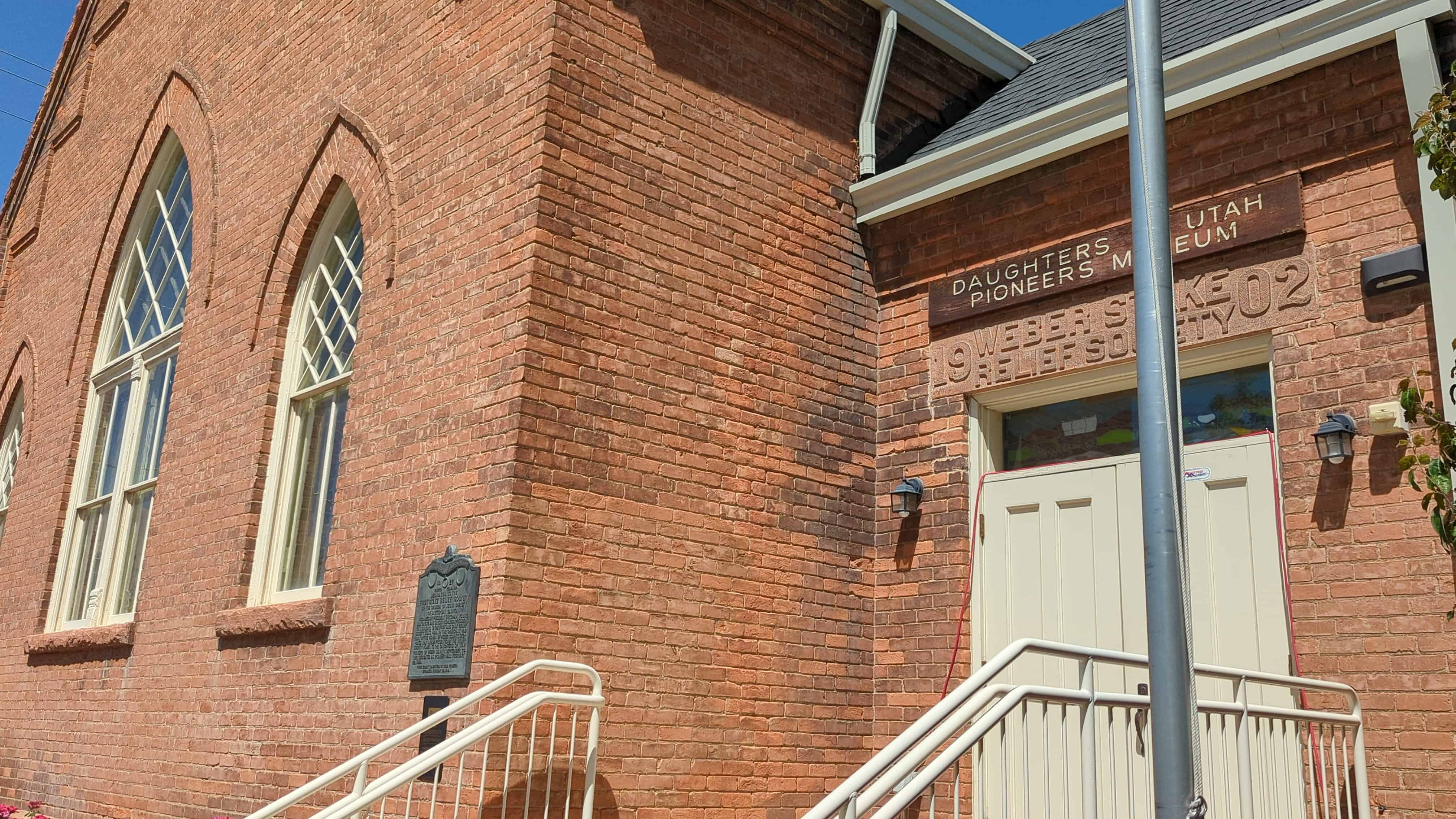
Constructed in 1902, the Weber Stake Relief Society Building is locally significant as the center of activities for the women’s organization of the Church of Jesus Christ of Latter-day Saints (Mormon or LDS Church). During the late nineteenth century. Relief Society women in virtually every Mormon community constructed buildings to accommodate their activities . There were meetinghouses, granaries, stores, and homes of assistance for the needy. These buildings represent the significant role the Relief Society played i n promoting the spiritual and temporal welfare of Mormon communities. Relief Society buildings were gradually abandoned during the early twentieth century as new accommodations for the Relief Society were provided within the main church buildings being constructed at that time. Although the building acted as a religious structure , it s significance i s derived from it s representation of the historical theme of Relief Society activity in early Mormon communities.

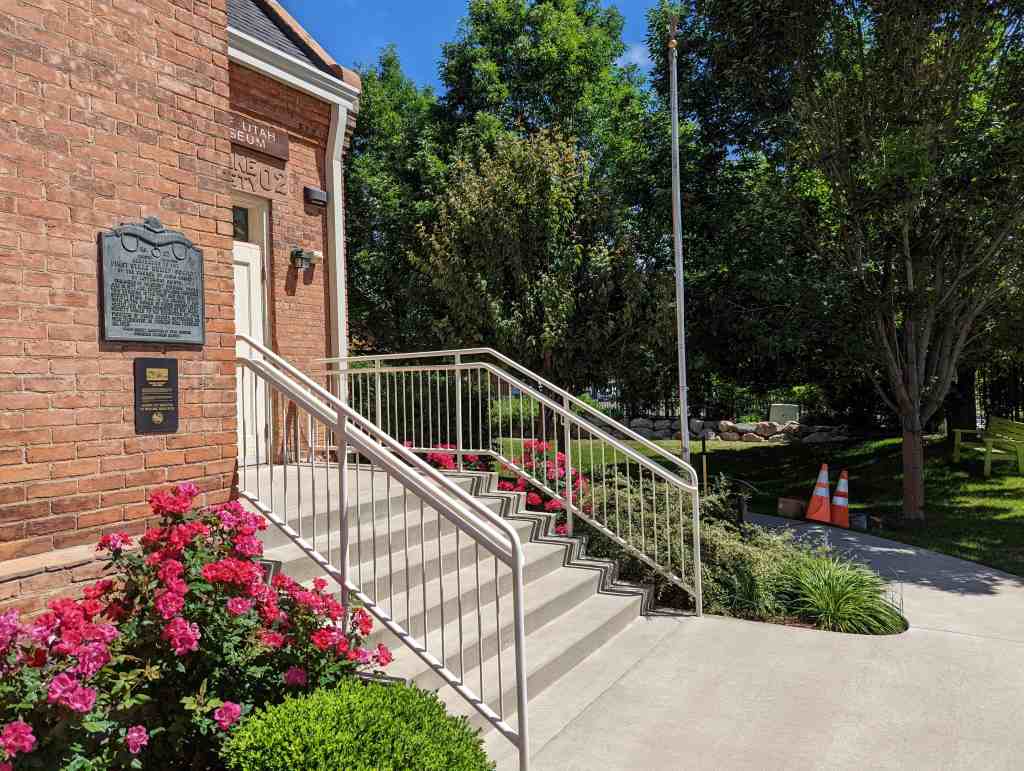
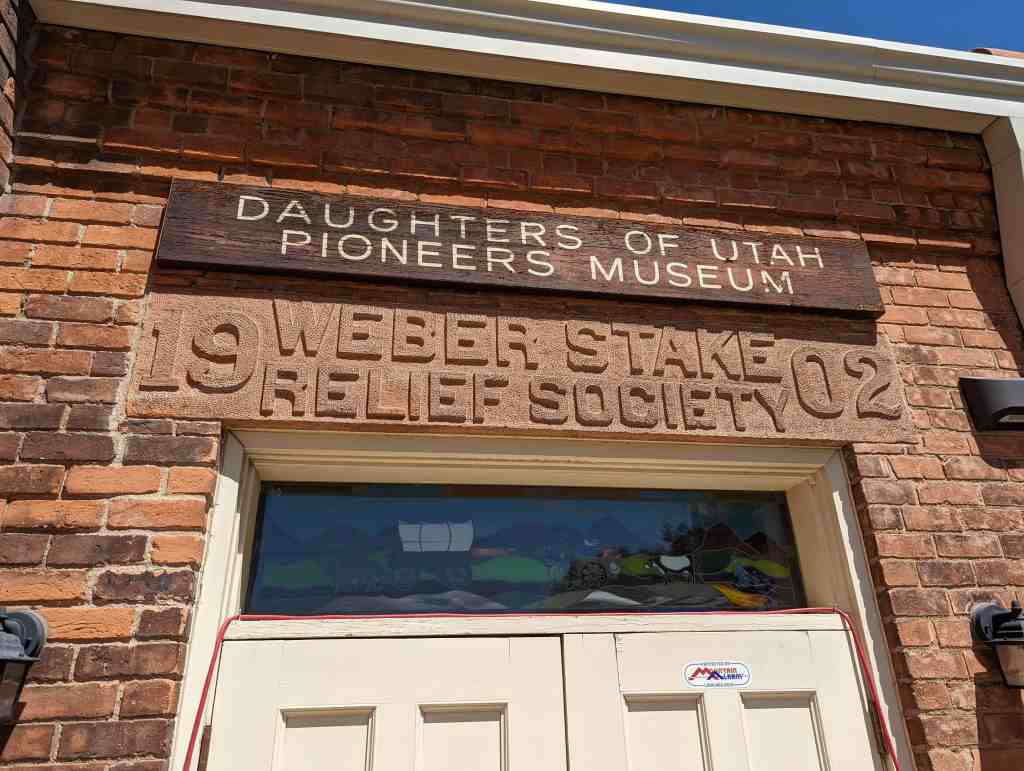
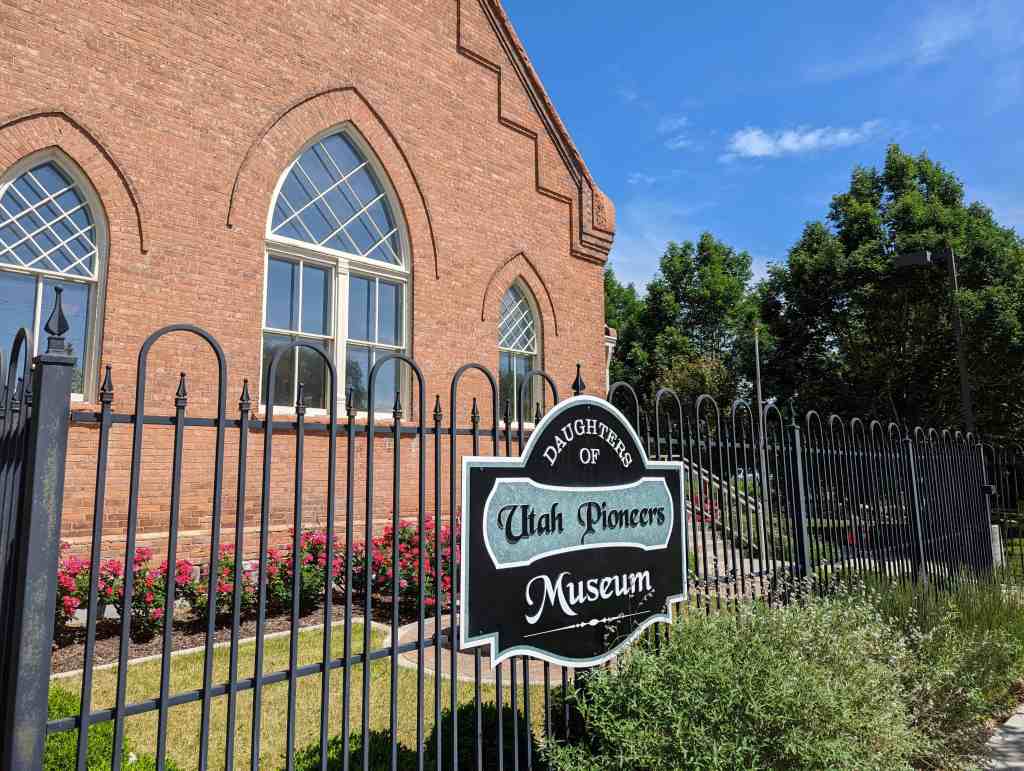
This building is located at 2104 Lincoln Avenue in Ogden, Utah, it was moved from 2148 Grant Avenue on January 24, 2012, it was added to the National Historic Register on February 13, 1989 (#88003438) and it is the home of the Weber County Daughters of Utah Pioneers Museum.

The Weber Stake Relief Society was organized in 1877 under the direction of Brigham Young and other LDS church officials. It was reportedly the first Relief Society group to be organized by stake rather than ward (a stake comprises several wards or congregations). Like Relief Society groups church- wide, the Weber Stake Relief Society was responsible for providing assistance to the poor, the sick and the needy. It is unknown where the group met during its first 25 years, but in 1902 plans were made -for constructing a large brick building on Tabernacle Square in downtown Ogden. Property for the building was donated by the Ogden Third Ward of the LDS church. Work commenced in the spring of 1902 under the supervision of a three-man building committee consisting of D.H. Peery, Barnard White and S.W. Wade. Funds were obtained by the women through donations and various fund-raising projects. Most of the $5,000 construction cost was paid by the time the building was dedicated on July, 19, 1902. The dedication was attended by a number of church officials and scores of women who were also celebrating the 25th anniversary of the organization of the Weber Stake Relief Society. 2 The building was used by the
Relief Society for a variety of purposes, including meetings, quilt- making, concerts, dances, .and other cultural events.

Changes in church organization and policy brought an end to the use of the building by the Relief Society in 1926. The Weber Stake had been divided into three stakes in 1908, and wit h the growth of those organizations the building was unable to accommodate al l the needs of the Relief Society. In addition, the church began constructing new church buildings which included accommodations for the Relief Society and other auxiliary functions. As a result of those developments, the building was no longer needed as a Relief Society facility. In 1926 it was transferred to the Weber County Daughters of Utah Pioneers in 1926 wit h the stipulation s that it be used as a non-profit museum for displaying pioneer relics. If those conditions were not adhered to then the property was to revert back to the church. The Weber County Daughters of Utah Pioneers have maintained a museum in the building to the present.

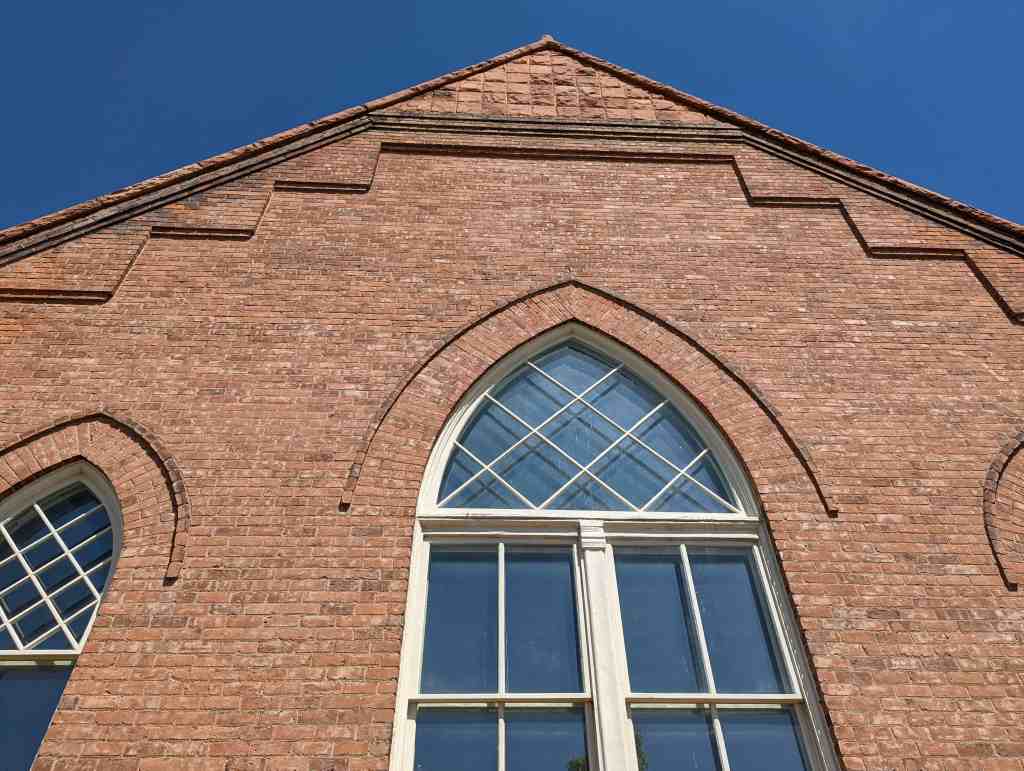
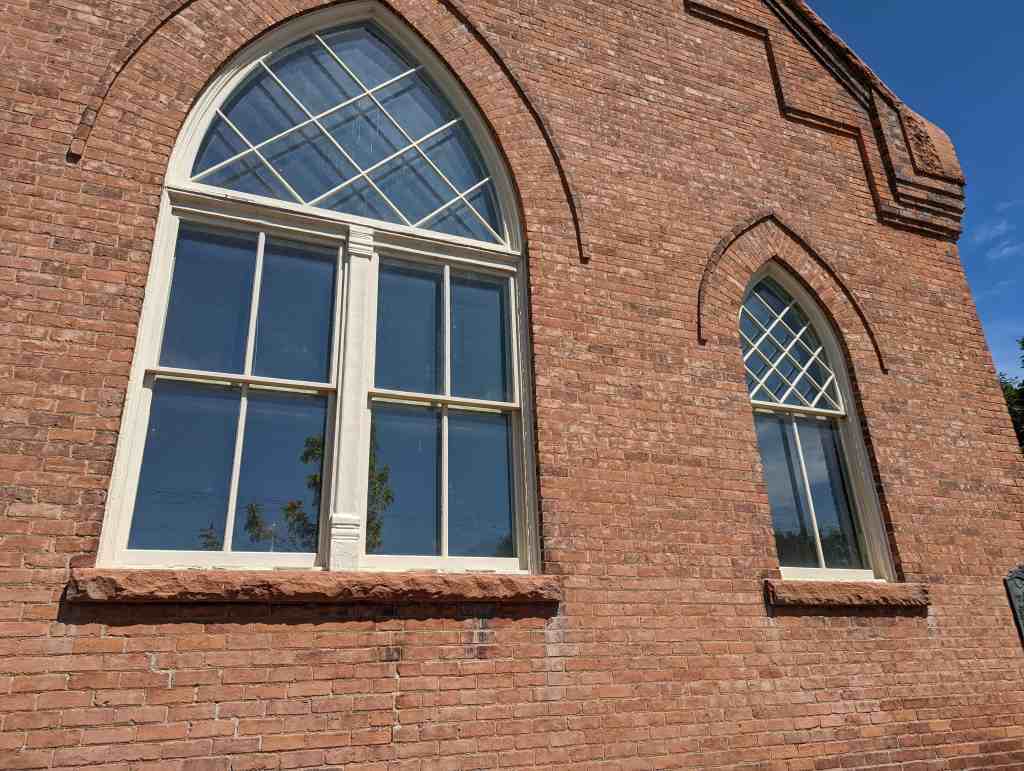
This brick building , constructed in 1902, is a good example of the Victoria n Gothic architectural style, a style which was popular in Utah in the years between 1880 and 1910. Gothic features include the prominent, steeply pitched gable roof that spans the main part of the building, and the three pointed arched windows in the principal façade. The center window is the largest, and all three are highlighted
by low-relief segmental brick arches. Rusticated stone coping has been used along the raking eaves of the front gable. Further adding to the the rustic appearance of the building are the slate tiles infilling the top of the front gable and the use of a shadow line of low-relief brickwork to approximate a stepped gable along the raking eaves. Also, diamond-paned tracery is found in the transoms of the three front windows.

The rest of the building is plainer and more Victorian in style. Rows of main story and basement windows along each side and rear of the rectangular gabled block have slightly rounded segmental arches. The rear gable is pedimented but devoid of ornamentation. A one story gabled entrance wing is located on the front of the south side, and there is another one story gabled extension to the rear of the main block. Both these sections appear to be original and have rusticate d coping along their raking eaves. A smaller addition has been placed at the southeast corner of the rear section which also appears original . The building remains in good historic condition.

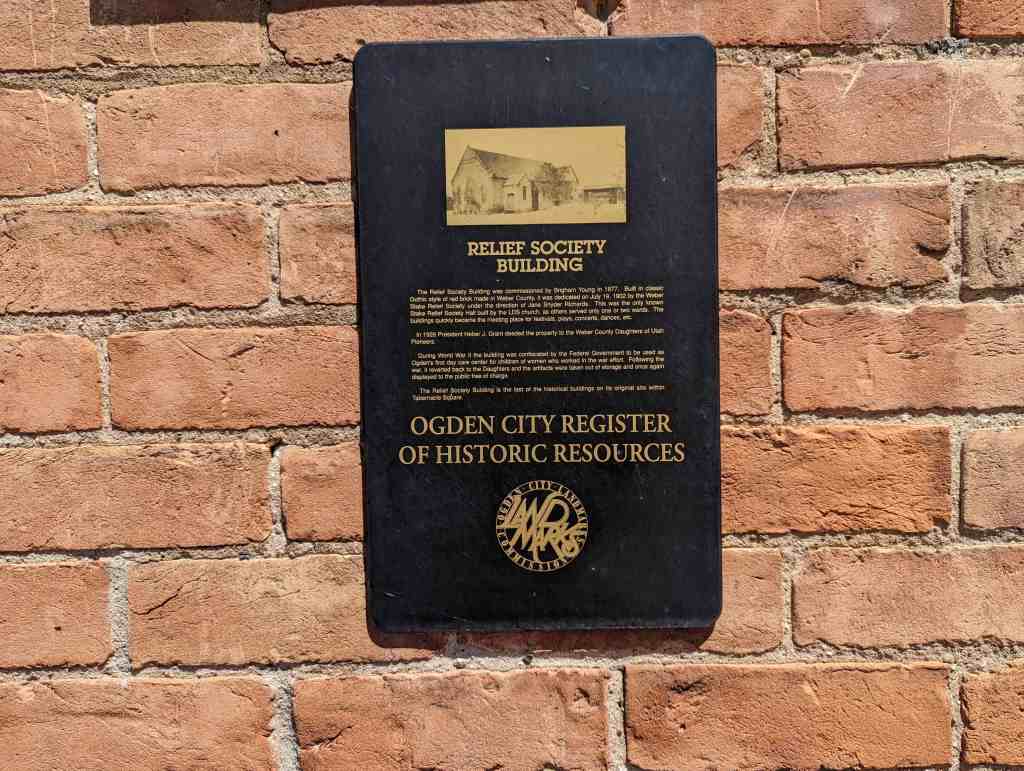
The Relief Society Building was commissioned by Brigham Young in 1877. Built in classic Gothic style of red brick made in Weber County, it was dedicated on July 19, 1902 by the Weber Stake Relief Society under the direction of Jane Snyder Richards. This was the only known Stake Relief Society Hall built by the LDS church, as others served only one or two wards. The buildings quickly became the meeting place for festivals, plays, concerts, dances, etc.

In 1926 President Heber J. Grant deeded the property to the Weber County Daughters of Utah Pioneers.

During World War II the building was confiscated by the Federal Government to be used as Ogden’s first day care center for children of women who worked in the war effort. Following the war, it reverted back to the Daughters and the artifacts were taken out of storage and once again displayed to the public free of charge.

The Relief Society Building is the last of the historical buildings on its original site within Tabernacle Square.

Miles Goodyear Cabin

20 Monday Feb 2023

Posted by Jacob Barlow in Uncategorized

≈ Leave a comment

Tags

Cabins, Historic cabins, NRHP, Ogden, Weber County

The Miles Goodyear Cabin is located outside the Weber County Daughters of Utah Pioneers Museum at 2104 Lincoln Avenue in Ogden, Utah. There are several historic markers that talk about it:

U.P.T.L.A. Marker #41 says:
This cabin, built about 1841 by Miles Goodyear, as far as known the first permanent house built in Utah, stood near the junction of the Ogden and Weber Rivers. In 1848 it was sold to Captain James Brown of the Mormon Battalion with a Spanish land grant covering all of Weber County. It was preserved by Minerva Stone Shaw and by her presented to the Daughters of the Utah Pioneers, Weber County Chapter, who placed it on its present site.

D.U.P. Marker #484 says:
Miles Morris Goodyear built this cabin on the lower Weber River as a way station and trading post. The cabin, along with other buildings became Fort Buenaventura meaning good venture. It was the first permanent settlement in the Utah Territory. Miles Goodyear (1817-1849) had traveled as far as Fort Hall in 1836 with Dr. Marcus Whitman’s party of Methodist Missionaries. Goodyear was a trapper, prospector and trader. His Indian wife Pomona was the daughter of Ute chief Peet-teet-neet. The couple had two children, William Miles and Mary Eliza.

Mormon Battalion Captain James Brown and Mary Black Brown bought Fort Buenaventura and all of Weber County for $1,950 in gold. Mary Brown made the cabin home for her family and made 1,000 pounds of cheese during the first year.

The Browns sold the cabin to Amos P. and Minerva Leontine Jones Stone. The Stone family lived in the cabin for a time, eventually using it as a blacksmith shop. A daughter, Minerva Pease Stone Shaw, in 1926 presented the cabin to Weber County Daughters of Utah Pioneers for preservation. It has been moved seven times, ultimately being placed at this site. In 1994 it was disassembled for preservation of the logs and reassembled in 1995 at this location to benefit posterity.

The Ogden City Landmarks Commission plaque says:
Miles Goodyear came west as a venturesome young man with the Whitman- Spaulding Expedition of 1836. He married a daughter of the Ute Chief, Pe-teet-neet, and located his stockade and cabin on the Weber River. This post became a stop-over and replenishment station for California-bound emigrants. Goodyear called his place Fort Buenaventura.

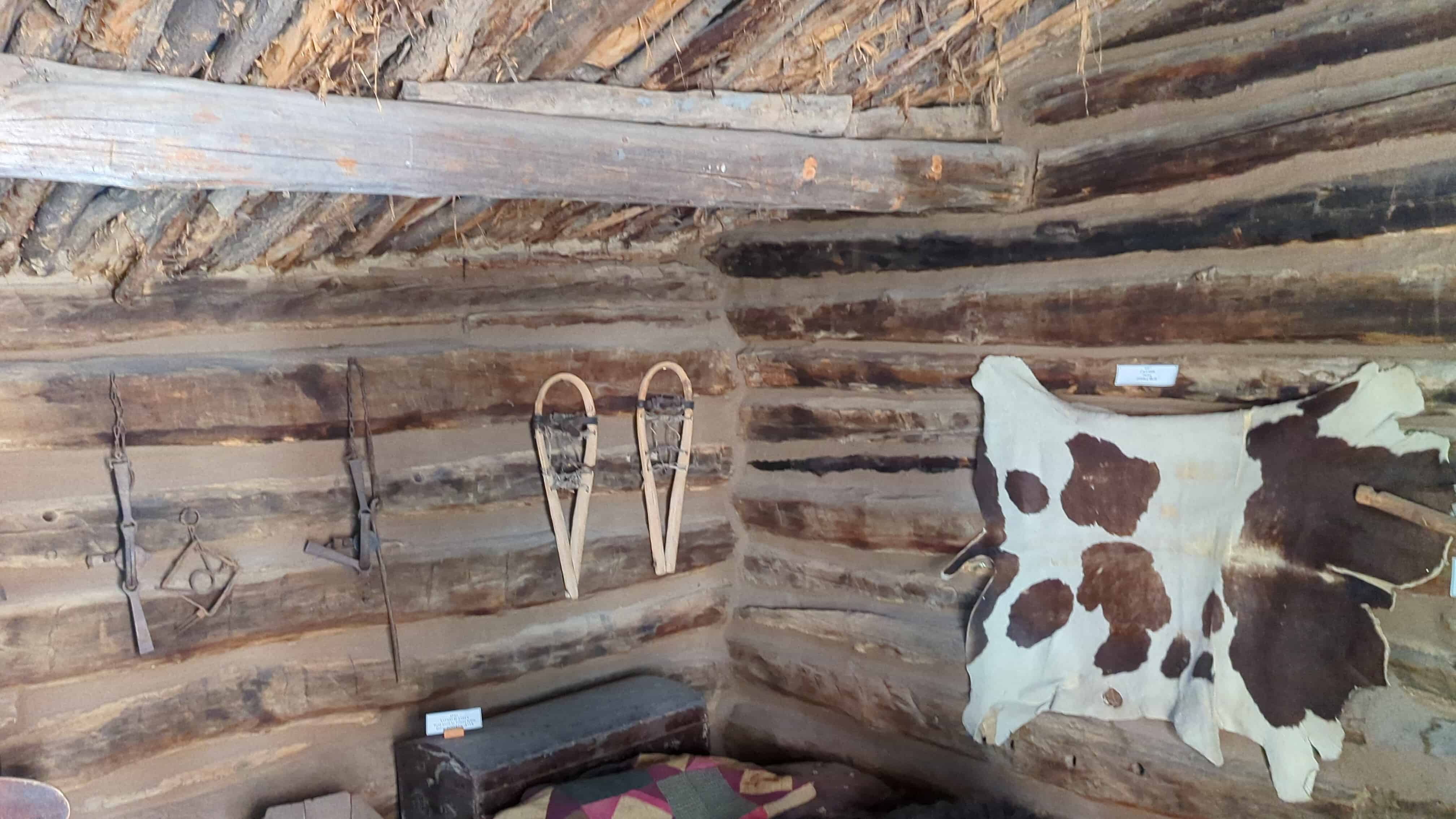
The cabin was built of sawed cottonwood logs in 1845 by Goodyear. Its dimensions are 14’4″x17’9″. The original floors were dirt. As the foundation logs sat on the ground, they rotted away and have been replaced. In addition, some of the lumber in the door and the windows was sawed after 1847.

Originally located on the Weber River two miles above the Ogden River confluence, the cabin has been moved several times. In 1928 it was donated to the Daughters of the Utah Pioneers.

The cabin was added to the National Historic Register (#71000866) on February 24, 1971.

The earliest permanent white settlers in Utah were trappers and traders. In the Miles Goodyear cabin the story is told of the transition from trap- per and trader to settler. Goodyear came west as a venturesome young man with the Whitman-Spaulding Expedition of 1836. At Fort Hall on the Snake River in present-day Idaho, he left the party to become a mountain man.” In time he married a daughter of the Ute Chief, Pe-teet-neet, and located his stockade and cabin on the Weber River. This post became a stop-over and replenishment station for California-bound emigrants. Goodyear called his place Fort Buenaventura.

Goodyear combined his trapping ventures with trading as far afield as California. On July 10, 1847, he met the advance party of the first Mormon emigrants at Bear Lake bottoms, where he talked with O. P. Rockwell, George A. Smith, Erastus Snow, and Norton Jacobs.

The new emigrants soon became interested in Goodyear’s holdings. James Brown saw them in August, 1847. After returning from California with Mormon Battalion payrolls, Brown pursued this interest and was per- mitted to negotiate with Goodyear who sold his properties for $1,950.00. The original claim included about 225 square miles, nearby all of present Weber County.

Brown moved in by March, 1848. The site became known as Brown’s Fort, Brown’s Settlement and, subsequently, Brownsville. The name Ogden was be- stowed officially in 1851.

Only the cabin remains of Goodyear’s Fort Buenaventura. But through it, this important transitional part of American and Utah history can be told.

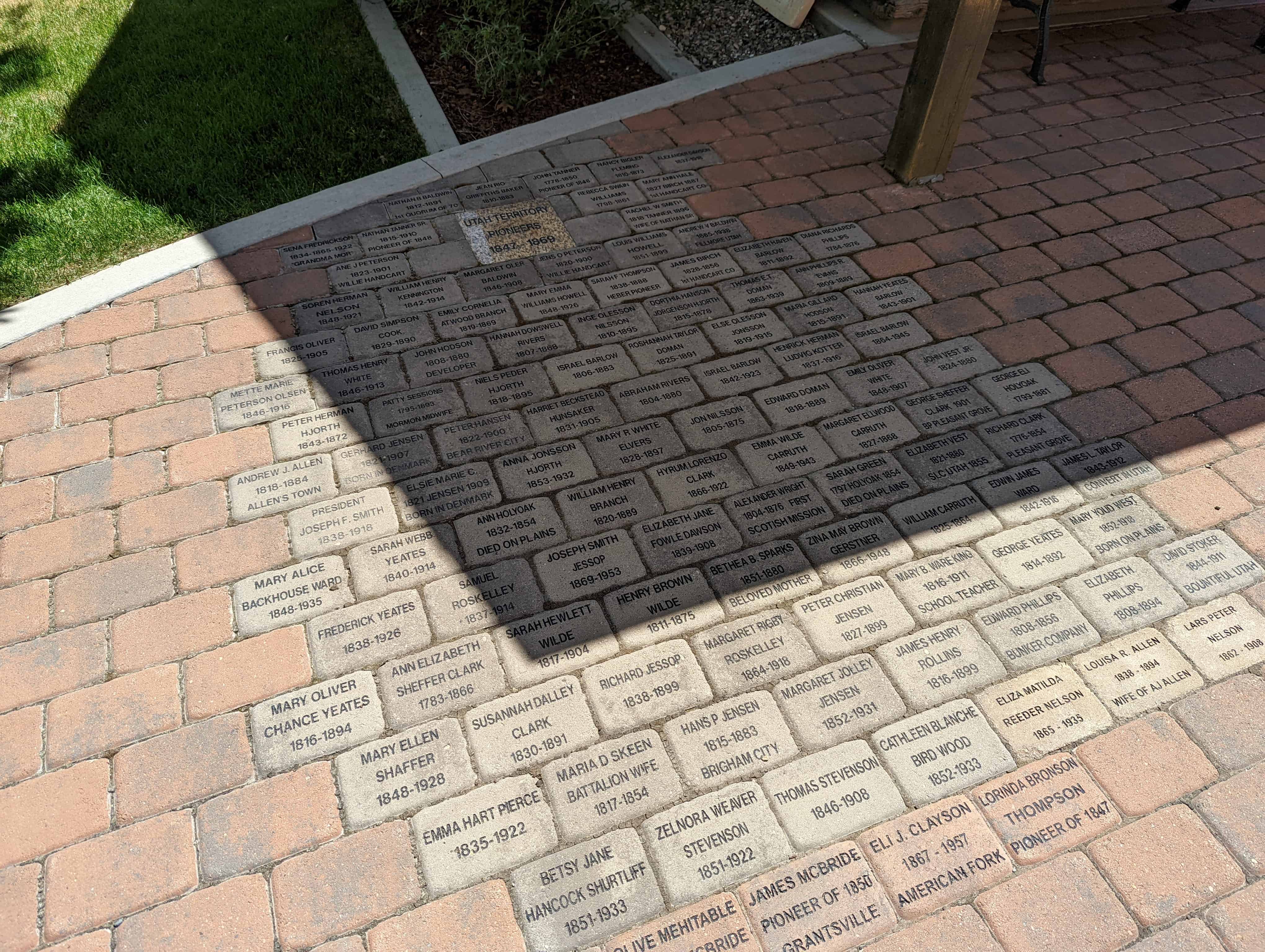
Weber County Daughters of Utah Pioneers Museum

19 Sunday Feb 2023

Posted by Jacob Barlow in Uncategorized

≈ Leave a comment

Tags

DUP, museums, utah, Weber County

Located at 2104 Lincoln Avenue in Ogden, Utah

Related:

  • Daniel Burch Millstone
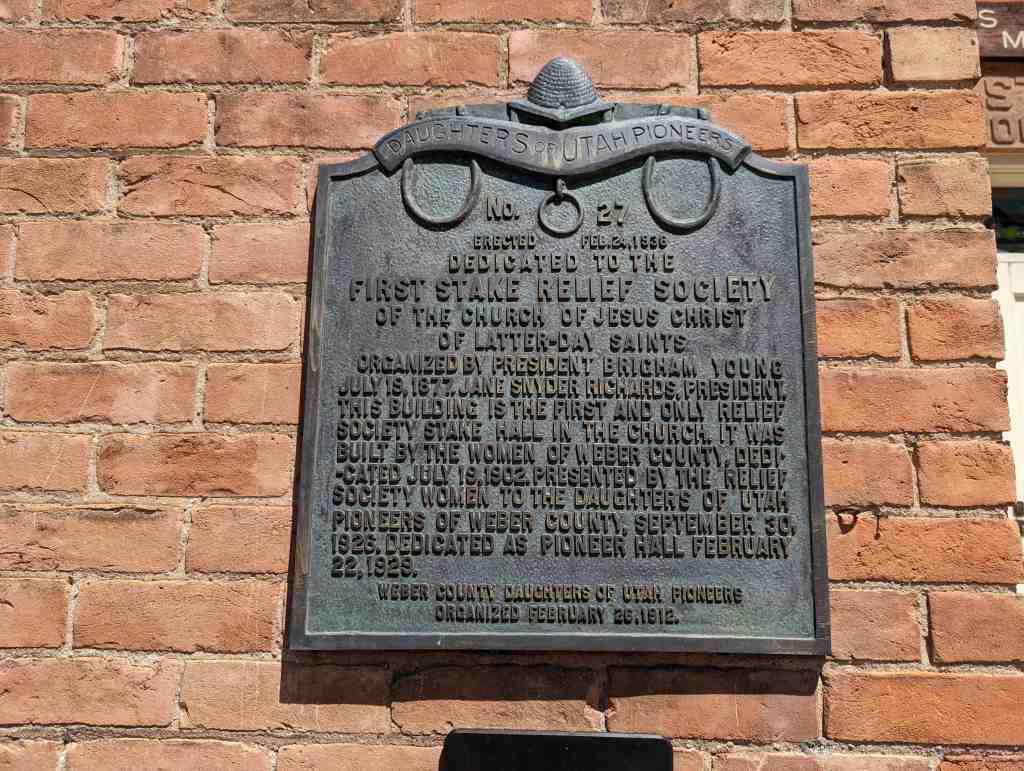
  • First Stake Relief Society (DUP historic marker)
  • Jane S. Richards
  • Miles Goodyear Cabin
  • Miles Goodyear Cabin (UPTLA historic marker)
  • Miles Goodyear Cabin (DUP historic marker)
  • Lorin Farr (UPTLA historic marker)
  • Pioneer Handcart
  • Tabernacle Square Watering Trough

The museum is in the historic Relief Society Building.

The Relief Society Building was commissioned by Brigham Young in 1877. Built in classic Gothic style of red brick made in Weber County, it was dedicated on July 19, 1902 by the Weber Stake Relief Society under the direction of Jane Snyder Richards. This was the only known Stake Relief Society Hall built by the LDS church, as others served only one or two wards. The buildings quickly became the meeting place for festivals, plays, concerts, dances, etc.

In 1926 President Heber J. Grant deeded the property to the Weber County Daughters of Utah Pioneers.
During World War II the building was confiscated by the Federal Government to be used as Ogden’s first day care center for children of women who worked in the war effort. Following the war, it reverted back to the Daughters and the artifacts were taken out of storage and once again displayed to the public free of charge.

The Relief Society Building is the last of the historical buildings on its original site within Tabernacle Square.

The Kington Fort-Morrisite War Site
Pioneer Tabernacle DUP Marker

Miles Goodyear Cabin

25 Wednesday Jan 2023

Posted by Jacob Barlow in Uncategorized

≈ Leave a comment

Tags

Historic Markers, Ogden, SUP, UPTLA, utah, Weber County

Miles Goodyear Cabin

This cabin, built about 1841 by Miles Goodyear, as far as known the first permanent house built in Utah, stood near the junction of the Ogden and Weber Rivers. In 1848 it was sold to Captain James Brown of the Mormon Battalion with a Spanish land grant covering all of Weber County. It was preserved by Minerva Stone Shaw and by her presented to the Daughters of the Utah Pioneers, Weber County Chapter, who placed it on its present site.

This is Utah Pioneers Trails and Landmarks Association historic marker #41, later adopted by the Sons of Utah Pioneers. Erected July 24, 1934 and located at the Weber County Daughters of Utah Pioneers Museum at 2104 Lincoln Avenue in Ogden, Utah

  • U.P.T.L.A. historic markers
  • S.U.P. historic markers
Miles Goodyear Cabin DUP Marker

Lorin Farr

25 Wednesday Jan 2023

Posted by Jacob Barlow in Uncategorized

≈ Leave a comment

Tags

Historic Markers, Ogden, SUP, UPTLA, utah, Weber County

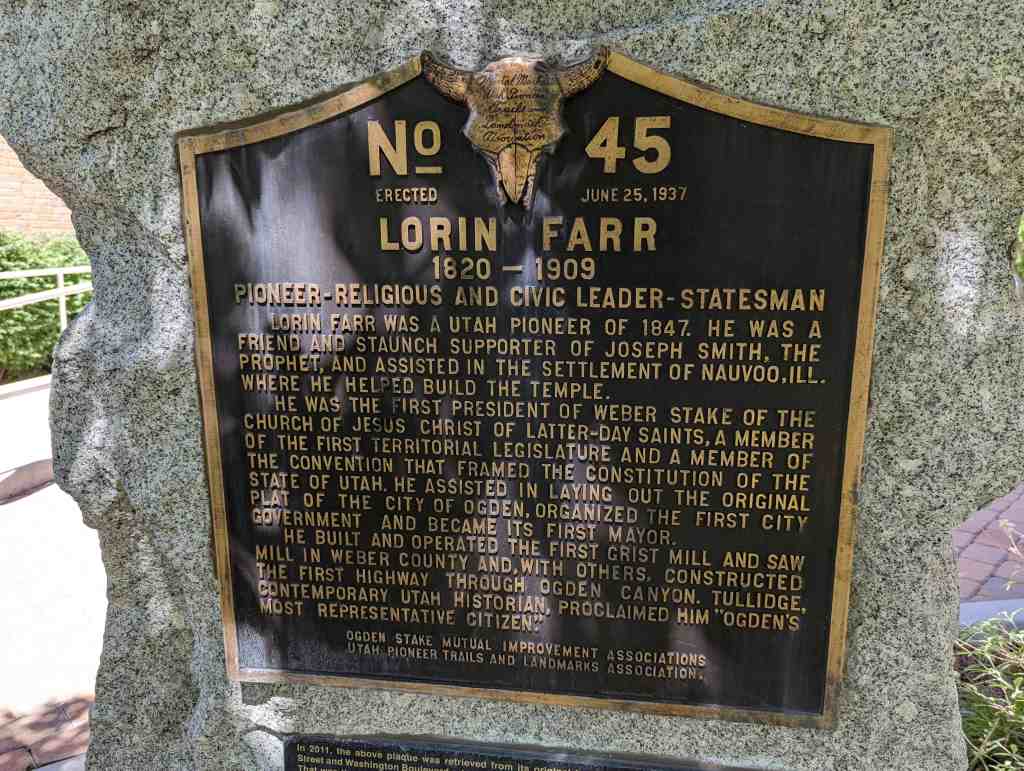
Lorin Farr
1820-1909
Pioneer-Religious and Civic Leader-Statesman

Lorin Farr was a Utah pioneer of 1847. He was a friend and staunch supporter of Joseph Smith, the Prophet, and assisted in the settlement of Nauvoo, Ill. Where he helped build the temple.

He was the first president of Weber Stake of the Church of Jesus Christ of Latter-day Saints, a member of the first Territorial Legislature and a member of the the convention that framed the constitution of the State of Utah. He assisted in laying out the original plat of the city of Ogden, organized the first city government and became its first mayor.

He build and operated the first grist mill and saw mill in Weber County and, with others, constructed the first highway through Ogden Canyon. Tullidge, contemporary Utah historian, proclaimed him “Ogden’s most representative citizen.”

This is Utah Pioneers Trails and Landmarks Association historic marker #45, later adopted by the Sons of Utah Pioneers (#177 in that series). Erected June 25, 1937 and located at the Weber County Daughters of Utah Pioneers Museum at 2104 Lincoln Avenue in Ogden, Utah

  • U.P.T.L.A. historic markers
  • S.U.P. historic markers

In 2011, the above plaque was retrieved from its original location at the corner of 21st Street and Washington Boulevard, when the structure it was mounted on was demolished. That was the location of one of Lorin Farr’s early homes. The Farr descendants and the Ogden Pioneer Chapter of the Sons of Utah Pioneers remounted it here in 2013, with appreciation to the Daughters of Utah Pioneers for allowing its relocation to this site.

Also related:

  • Lorin Farr (UPTLA Marker #113)

Charles W. Cross Home

17 Saturday Dec 2022

Posted by Jacob Barlow in Uncategorized

≈ Leave a comment

Tags

Historic Homes, NRHP, Ogden, Queen Anne style, utah, Victorian, Victorian Eclectic, Weber County

Charles W. Cross Home

Built c. 1891, the Charles W. Cross House is architecturally significant as one of about fourteen well preserved, documented, extant examples of houses in the Ogden area that reflect the influence of the Queen Anne Style in that area. Of those fourteen, three houses are high style examples, and three are Queen Anne cottages. Eight of the houses are two story examples whose plans and designs, like those of the Queen Anne cottages, were probably either drawn from or influenced by house pattern books. As one of those eight houses, the Cross House is one of the best preserved examples. In addition, it is also more clearly tied to pattern book sources than are the other houses, because its plan and elevation are almost identical to 462 17th Street, the house across the street.

This home was added to the National Historic Register (#84002434) July 12, 1984 and is located at 451 17th Street in Ogden, Utah

Charles W. Cross was born at London, England in 1861. He came to Utah sometime in 1880. Cross was a harness maker and established a shop in Ogden, Utah. He had a frame building on stiles built to serve as his shop. About ten years later, apparently to expand his business, Cross had a two-story building constructed and took on his brother, Alfred Cross, as a partner. His brother died several years later and Cross continued on with the business. Cross apparently acquired a large holding of Ogden area property. An obituary that appeared in the Deseret News states, “It is believed that he was the heaviest taxpayer for his years in the city [Ogden].” In addition to his harness and saddlery business Cross managed his real estate interests.

Cross married Annie Cave and they had five children. In 1900 Cross was elected as an Ogden City councilman and was re-elected in 1901. He served as the chairman of the committee on public buildings and grounds as well as on “several other important committees, where he rendered conspicuous service.” Cross was serving on the city council when he died , at the age of 44, on April 29, 1903 in the house on 17th Street.

In 1903, after Cross’s death, the harness and saddlery company was incorporated with his son, Charles Cross Jr., his mother, Avis Cross, and his sister listed as the owners. The business continued to operate under the name of the C.W. Cross Company and is now known as the Cross Western Store.

The Cross house is significant as an example of the type of houses that were built during Ogden’s early 1890s boom period which resulted in the building of numerous houses and the formation of many additions and subdivisions. Ogden newspapers indicated that in 1890 the area was experiencing a building boom and a proliferation of subdivisions and additions. On March 19, 1890 The Semi-Weekly Standard commented, “The question of house room is becoming too serious. Unless the builders get more force into the field, tents will be in demand.” Later, on July, 19, 1890 another article on the building situation was headlined, “The Building Boon Our Residence Supply Fearfully Inadequate-Demand For Houses Is Enormous.”

The growth of the city was attributed to the publicity that the city had been receiving. The publicity was probably of a promotional nature since local businessmen and eastern investors were interested in seeing the area grow. From interviews with real estate men in the city it was claimed that each company was receiving twenty calls per day and that if housing the were available it would be immediately rented or purchased.

One means of meeting the need for more housing was shipping in 11 ready-made” houses by train from St. Paul. These houses were substantial buildings. They cost from $600 to $5,000 and were two stories with four rooms on the first floor and two rooms on the second. The company putting up the buildings promised a foundation that was 18 inches deep, two coats of plaster, two coats of paint, outhouses in the rear, a board fence around the lot, and a picket fence in front of the house.

On June 25, 1890, the Semi-Weekly Standard announced, in a regular article, that the Riverside Park addition, the area where the C.W. Cross house was built, was open for sale by the Utah Loan and Trust Company. The N. Farr Land, Loan and Trust Company served as the agents for the addition. The advantage of the Riverside Park addition was its proximity to the center of town. Since such property was scarce the addition was felt to be valuable. However, it appears that only several houses were built in the addition at this time. The Cross House and the house across the street, 467 17th Street, are the only identified houses in the vicinity that date from this period. By 1892 C.W. Cross was living in the house. It is not known whether Cross had the house built or whether the house was built by the developers of the Riverside Park addition. The similarity of the Cross house with the one across the street, 467 17th Street, might indicate that the area was developed according to a plan and that the developers relied on house pattern book sources.

Built in 1890-91, the Charles W, Cross house is a two story example of the typical expression of the Queen Anne style in Utah. It is likely that the design for this house was derived from pattern books of the late nineteenth century. It is a brick house with an irregular plan, a stone foundation, and a pyramid roof off of which three gable roof cross-wings project. The house is oriented north, and the cross-wings are on the east, west and north sides. Each of the cross-wings terminates in a three part bay topped by a decorative gable. The main double door entrance is on the east half of the north façade. The porch over the entrance wraps around the northeast corner of the building, and is distinguished at the corner by a conical roof which caps a circular projection of the porch floor. A second smaller entrance opens off the porch into a panel of the east façade three part bay. Fluted columns support the porch roof, and there is a lathe-turned balustrade. There is a small second story screen porch over the main entrance which is topped by a small gable roof projection off the main roof. That porch is connected to the east panel of the north façade three part bay.

Double hung sash windows pierce each of the panels of the three part bays. There is a single double hung sash window per story on all panels of each window bay. The relieving arches of the first story windows are accented by decorative brickwork, compared with the simple arches of the second story windows. A band of stained glass lights frame the upper sash of each window the three part bays. The pediments of the gable section over each three part window bay are highlighted by fish-scale patterned shingles, a bargeboard into which a decorative pattern has been incised, and a small rectangular window with a simple pediment over it. Large decorative brackets intersect below the corners of each pediment. Decorative posts support the second story screen porch, and a unique spindle band spans the spaces between posts. A sunburst decorative element fills the pediment of the porch gable.

A one story brick kitchen wing is attached to the rear of the house. It is more elaborate than most extensions of this type, resembling a small Victorian cottage. It has a multi-hip roof which terminates in a gable projecting over a three part bay at the rear of the house. The use of diamond patterned shingles in the gable section reflects an attempt to visually tie the rear extension with the rest of the house. A back entrance opens off a small open porch which is attached to the east side of the three part bay. The windows of the kitchen wing are the double hung sash type. Some of them are Distinguished by rough cut red sandstone sills. The sills of the main section as well as those of the first section of the kitchen have smooth concrete sills. It is possible that the rear section of the kitchen wing was added some time after the construction of both the main body of the house and the first section of the kitchen wing. A slight difference between the color of the brick of the two story section and that of the kitchen wing suggest that the entire kitchen wing may not be original. If not original, however, the wing was probably built soon after the original construction, and complements the house in materials, style, decorative elements and massing. A one story gable roof extension was added to the west side of the kitchen extension. It has asbestos siding, and was probably added in the 1950s. Because of its scale and location it is an unobtrusive alteration which does not affect the original character of the building.

The organization of rooms on the interior of the house is typical of Victorian design. The plan is asymmetrically arranged with a hall on the east side, from which a staircase rises to the second floor. Behind the hall is a dining room. On the west side of the house are two parlors, one behind the other. Upstairs, two bedrooms are aligned one behind the other over the parlors, and there is a third bedroom over the dining room. There is no hall on the second story, except for the foyer where the stairs come up from the first floor. The rooms merely open one into the other. All of the original moldings are intact. They are grooved moldings with distinctive corner blocks typical of Victorian design. The moldings in the front parlor, which flanks the hall, are hand grained, and are accented with gold leaf. The fireplace in that room has an ornate oak mantel with a distinctive hearth of decorative tiles. The kitchen wing consists of three rooms built within the historic period, and three rooms that are in the asbestos sided wing. The three rooms in the brick section include an entry hall flanked by a small room behind which is a large kitchen. A second set of stairs rises from that room to an attic section which has been converted to several small bedrooms, and connects with the second story of the main section of the house. A bathroom, one long hall, and a single work room occupy the space of the asbestos sided addition.

This house is a fine example of Utah’s expression of the Queen Anne style. Typical of the Queen Anne style is the asymmetrical composition, and the variety of materials, texture, and color. Brick was used instead of wood, the common building material for examples of the style in other parts of the country, because it was probably the most readily available material. The brick, however, contrasts with the stone of the foundation and the wood of the gable sections and porches. An active visual image was created by topping the irregular form with a hip roof from which several gable sections project in various directions. The decorative brickwork over the windows and along the major chimney flue, in combination with the patterned shingles and bargeboards of the gable sections and the stained glass panels of the window sashes provide a variety of textures and patterns. Two colors have been combined on the gable sections and contrast with the red bricks. The conical roof on the porch, the multi-planed roof, the fish-scale shingles on the gable sections, the stained glass lights around the upper sashes of the windows, the bargeboards, and the wrap around porch are elements that are typical of the Queen Anne style.

It is likely that the basis for the plan and design of the Cross house probably originated in popular plan books. The Cross house was built at a time when there was a nation wide trend to own a home in the suburbs. Architectural pattern books provided the source of inspiration for the prospective suburb homeowner who desired a home that would meet personal needs, announce financial and social aspirations, and be a singular and personal expression of taste and preference.’ Because the Cross House is very similar to the house across the street, 462 17th Street, and the plan of the house is similar to other houses whose designs have been attributed to pattern book sources, it seems probable that the design of the Cross house is in part the product of a pattern book design.

The Charles W. Cross home was built in 1891 as one of the first homes to be constructed in the newly platted Riverside Addition to the City of Ogden. The Home incorporates many of the best elements of the late Victorian Ecclecticism, seen in the broad use of color and texture and in the extensive efforts to achieve visual variety and interest.

C.W. Cross, Sr. was a local harness maker, with a store located on Washington Boulevard. He was serving as an Ogden City Councilman at the time of his death in 1903.

The elaborate Queen Anne front porch was added by Mr. Cross in an effort to out-do his neighbor, fellow entrepreneur and long-time rival William Craig. Mr. Craig had built his family home at 462 17th Street, across the street. The original Cross porch looked very similar to the Craig front porch, before it was altered. In the spirit of competition Mr. Craig sold this property and built a second family home directly across Adams Avenue.

Arsenal Villa, Utah

20 Sunday Nov 2022

Posted by Jacob Barlow in Uncategorized

≈ Leave a comment

Tags

Arsenal Villa, utah, Weber County

Arsenal Villa, Utah

Weld the Past to the Present to Enrich the Future

08 Friday Jul 2022

Posted by Jacob Barlow in Uncategorized

≈ Leave a comment

Tags

Historic Markers, Ogden, SUP, UPTLA, utah, Weber County

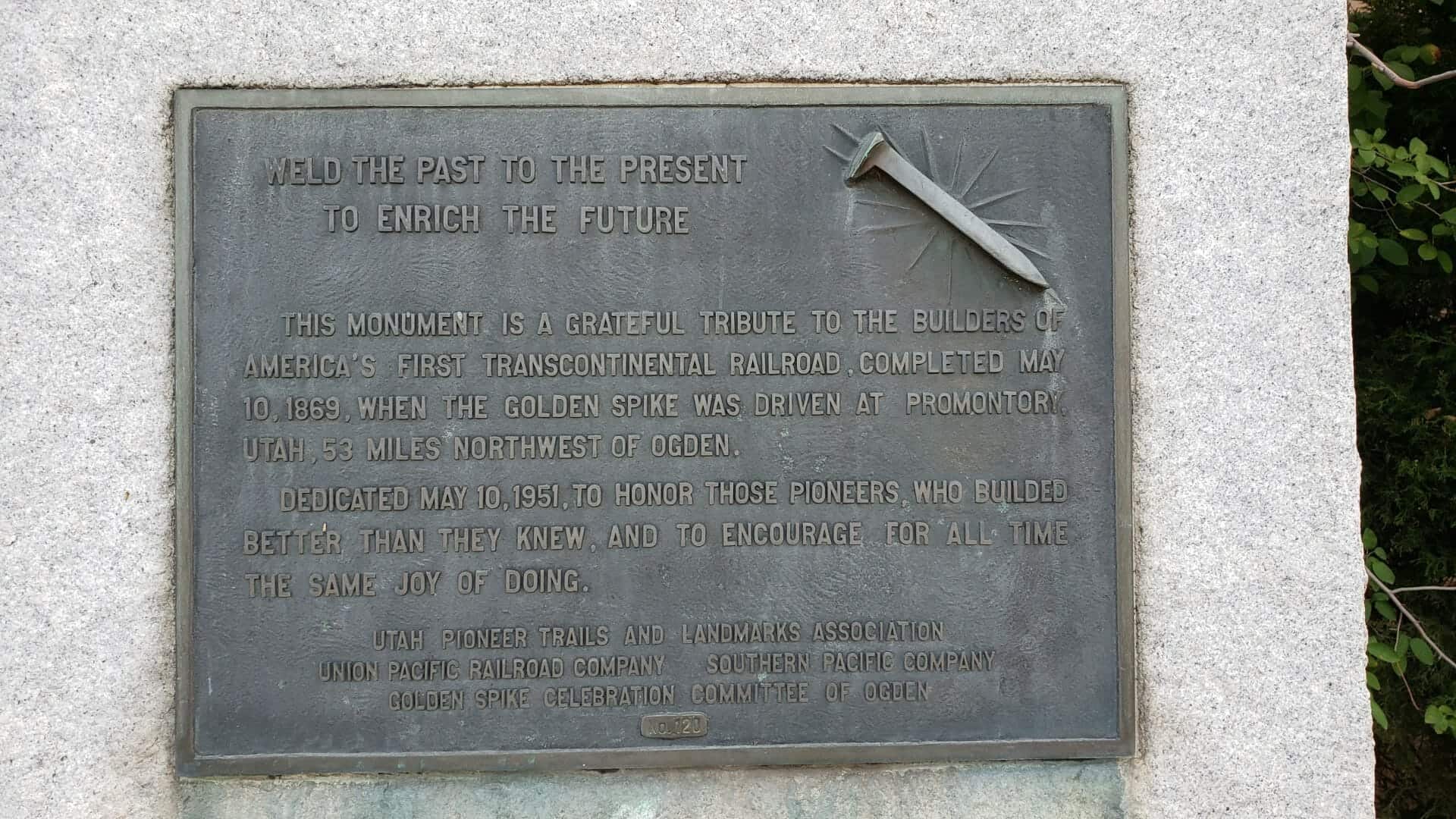
Weld the Past to the Present to Enrich the Future

This monument is a grateful tribute to the builders of America’s first transcontinental railroad completed May 10, 1869, when the Golden Spike was driven at Promontory, Utah, 53 miles northwest of Ogden.

Dedicated May 10, 1951, to honor those pioneers, who builded better than they knew, and to encourage for all time the same joy of doing.

This is Utah Pioneer Trails and Landmarks Association historic marker #120, erected along with the Union Pacific Railroad Company Southern Pacific Company, the Golden Spike Celebration Committee of Ogden and later adopted by the Sons of Utah Pioneers.

Related:

  • S.U.P. Historic Markers
  • U.P.T.L.A. Historic Markers

Located at Union Station at 2501 Wall Avenue in Ogden, Utah on a monument with D.U.P. Historic Marker #416 “Ogden City Wall.”

Kiwanis’ plaque:
On September 11, 2002 The Kiwanis Club of Ogden donated this flag pole in remembrance of the September 11, 2001 terrorist attack on America.

← Older posts
Newer posts →

Follow Jacob

Follow Jacob

Come wander with me on Youtube.

Blog Stats

  • 2,099,644 hits

Social and Other Links

BarlowLinks.com

Recent Posts

  • Scout Monument
  • Provo High School Seminary Building
  • 821 E 100 S
  • 820 E 100 S
  • 817-819 E 100 S

Archives

Loading Comments...