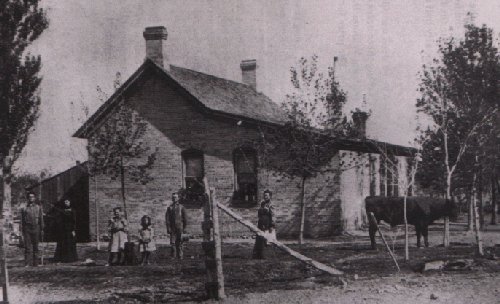
Built in 1907 it was the home of the first non-farmer in Provo Bench (later named Orem), William owned the local mercantile store.
The William and Lizzie Cullimore house, built ca.1907, is a one-story brick bungalow on a raised lime mortar and fieldstone foundation. As a mercantile owner, William Cullimore was one of only a handful of residents on the Provo Bench who did not raise fruit or produce for a living. This house, is a good example of a small Prairie School-style bungalow, quite common in the state, and throughout the country during the first two decades of the 20th century, represents a style that came slowly to the Provo Bench and seems appropriate for a business owner living in a newly prospering community.
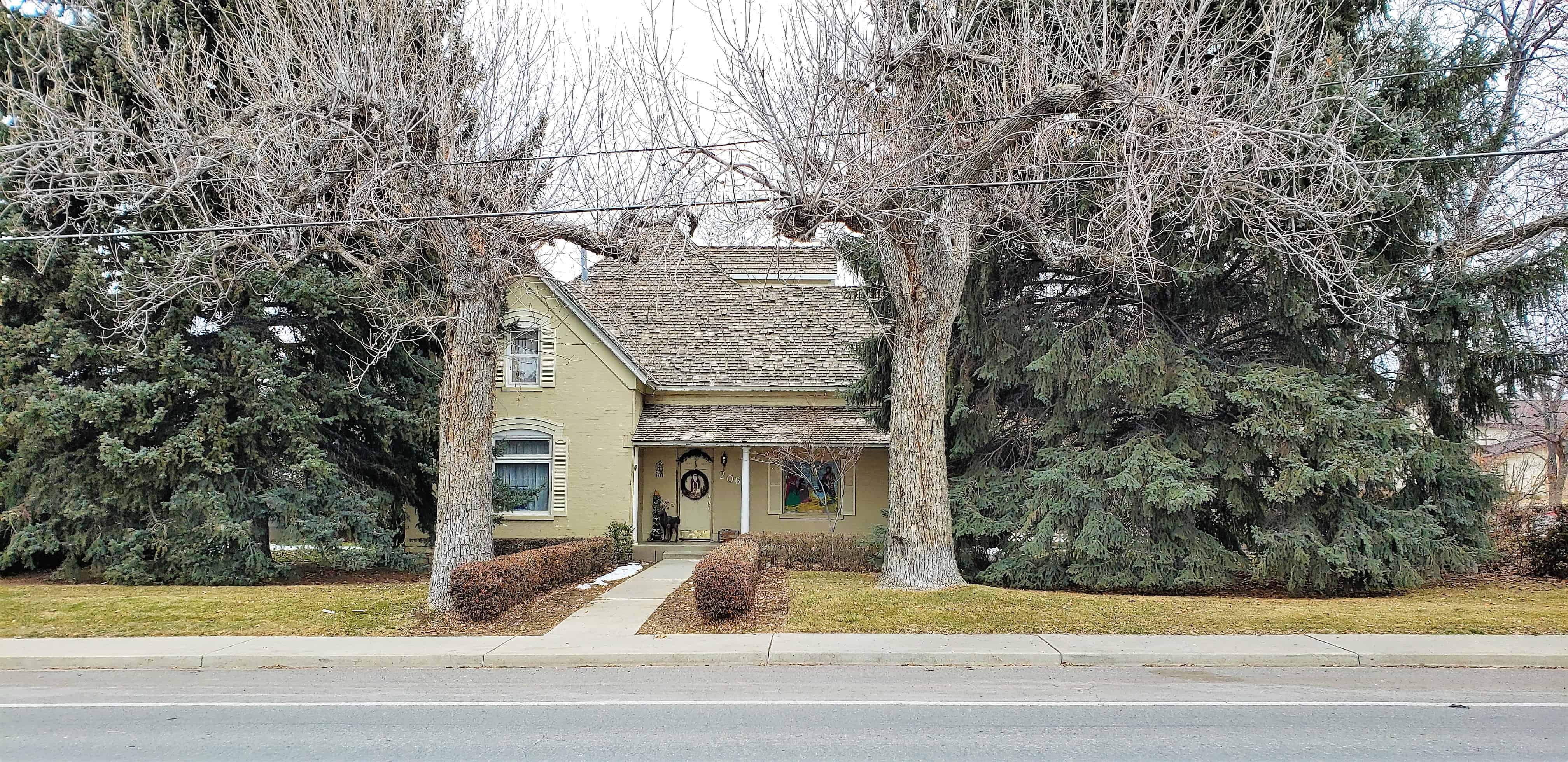
The David and Drusilla Baxter House at 206 W. 1600 N. in Orem, Utah was built in 1895. It was listed on the National Register of Historic Places in 1998.
The David and Drusilla Baxter house, built ca.1895, is a one and one-half story, brick Victorian Eclectic central-block-with-projecting-bays house on a stone foundation. The house has many of the elements of the Victorian Eclectic pioneer houses in the area, including: decorative brickwork, Classical-style porch columns, and arched window openings. The house represents a transition from the unadorned vernacular houses of the early settlers to the more stylish Victorian homes. By the turn of the century, prosperity was beginning to take a foothold on the Bench which can be observed in the increased numbers of larger, more stylistically embellished buildings. The Baxter house is a good example of the architecture common during this period on the Provo Bench.
According to its NRHP nomination, the house is a “good example of the transitional character of the architecture on the Provo Bench at the latter-part of the 19th century”; it includes Classical and Late Victorian elements.
Norman T. & Lucy E. Davis House (12 West 2000 South)
Norman T. & Lucy E. Davis House
The Norman T. and Lucy E. Davis house was built in 1905 and is a one and a half story brick cross wing Victorian Eclectic ornamentation. The foundation is stone and the windows have two courses of rowlock brick in relieving arches. The Davis family has owned land in the vicinity since Albert M. Davis took the first patent in 1883. Albert Davis deeded a portion to Norman, his half-brother. Norman and Lucy’s first house was adobe and was later replaced by this brick house. Norman Davis was a “mixed” farmer according to the census enumeration for 1910. This house is associated with the development of the south end of Orem. Through the years, the farm has been part of the Lakeview community and the original Davis Family homestead.
Axtell, originally called Willow Creek, is a wide-spread, productive farming community located on the boundary of Sanpete and Sevier Counties. It is a living monument to the rugged characteristics of the pioneers who came to this valley. Axtell was settled by pioneer Axel Einarsen and a “handful of colonists”.” These settlers homesteaded and cleared the land of sagebrush, rocks, and rattlers. They built reservoirs, irrigation systems, and dug wells by using teams, plows, picks, and shovels. Families hauled logs and dug pits for dugouts. These dugout shelters were usually 12 feet by 16 feet with a chimney sticking out of the ground. Some chose adobes made of mud and straw. In the spring of 1861, a tithing granary was built of logs. These pioneers displayed determination of spirit and purpose that even death, disaster, or the elements of nature could not drive them away.
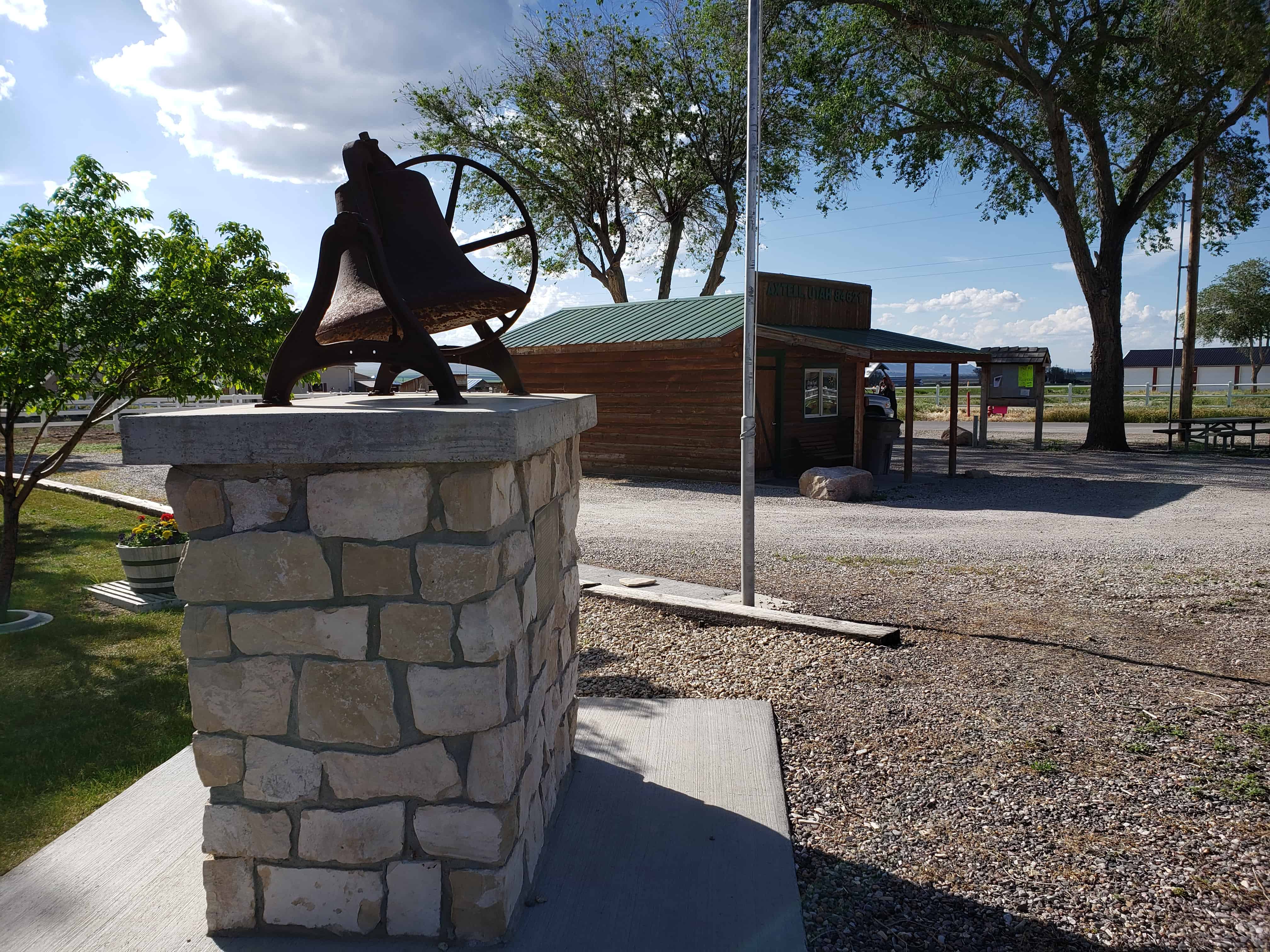
In 1880 the first school was built of logs, whitewashed on the inside with clay, and furnished with slab and pine benches. The first teacher was Hannah Hansen. The children walked, rode on horseback, or arrived at school in wagons, buggies, or sleighs, depending upon the weather. The school building, built in 1898, served the community for school, social, and church events. Atop this monument is the original school bell. For years, the bell’s clarion-call tolled for church, school, fire, flood, pending danger, and for funerals. The rock for this monument came from the home of Grover Jensen, the first boy born in Utah after statehood.
In 1876 Willow Creek was renamed for Governor Samuel B. Axtell in tribute to his friendliness with members of The Church of Jesus Christ of Latter-day Saints (Mormons) during the trying years before statehood.
Axtell, originally called Willow Creek, is a wide-spread, productive farming community located on the boundary of Sanpete and Sevier Counties. It is a living monument to the rugged characteristics of the pioneers who came to this valley. Axtell was settled by pioneer Axel Einarsen and a “handful of colonists”.” These settlers homesteaded and cleared the land of sagebrush, rocks, and rattlers. They built reservoirs, irrigation systems, and dug wells by using teams, plows, picks, and shovels. Families hauled logs and dug pits for dugouts. These dugout shelters were usually 12 feet by 16 feet with a chimney sticking out of the ground. Some chose adobes made of mud and straw. In the spring of 1861, a tithing granary was built of logs. These pioneers displayed determination of spirit and purpose that even death, disaster, or the elements of nature could not drive them away.
In 1880 the first school was built of logs, whitewashed on the inside with clay, and furnished with slab and pine benches. The first teacher was Hannah Hansen. The children walked, rode on horseback, or arrived at school in wagons, buggies, or sleighs, depending upon the weather. The school building, built in 1898, served the community for school, social, and church events. Atop this monument is the original school bell. For years, the bell’s clarion-call tolled for church, school, fire, flood, pending danger, and for funerals. The rock for this monument came from the home of Grover Jensen, the first boy born in Utah after statehood.
In 1876 Willow Creek was renamed for Governor Samuel B. Axtell in tribute to his friendliness with members of The Church of Jesus Christ of Latter-day Saints (Mormons) during the trying years before statehood.
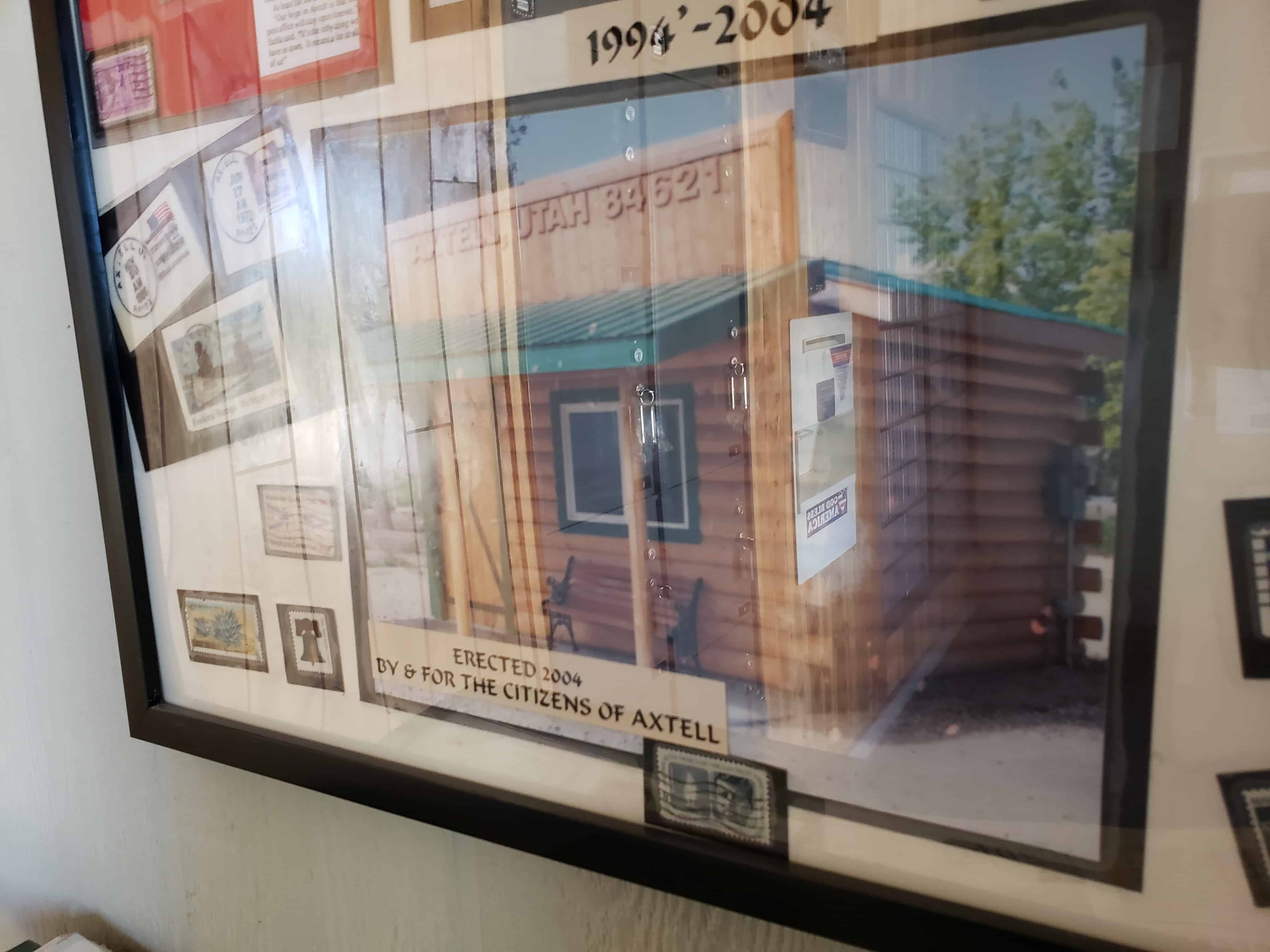
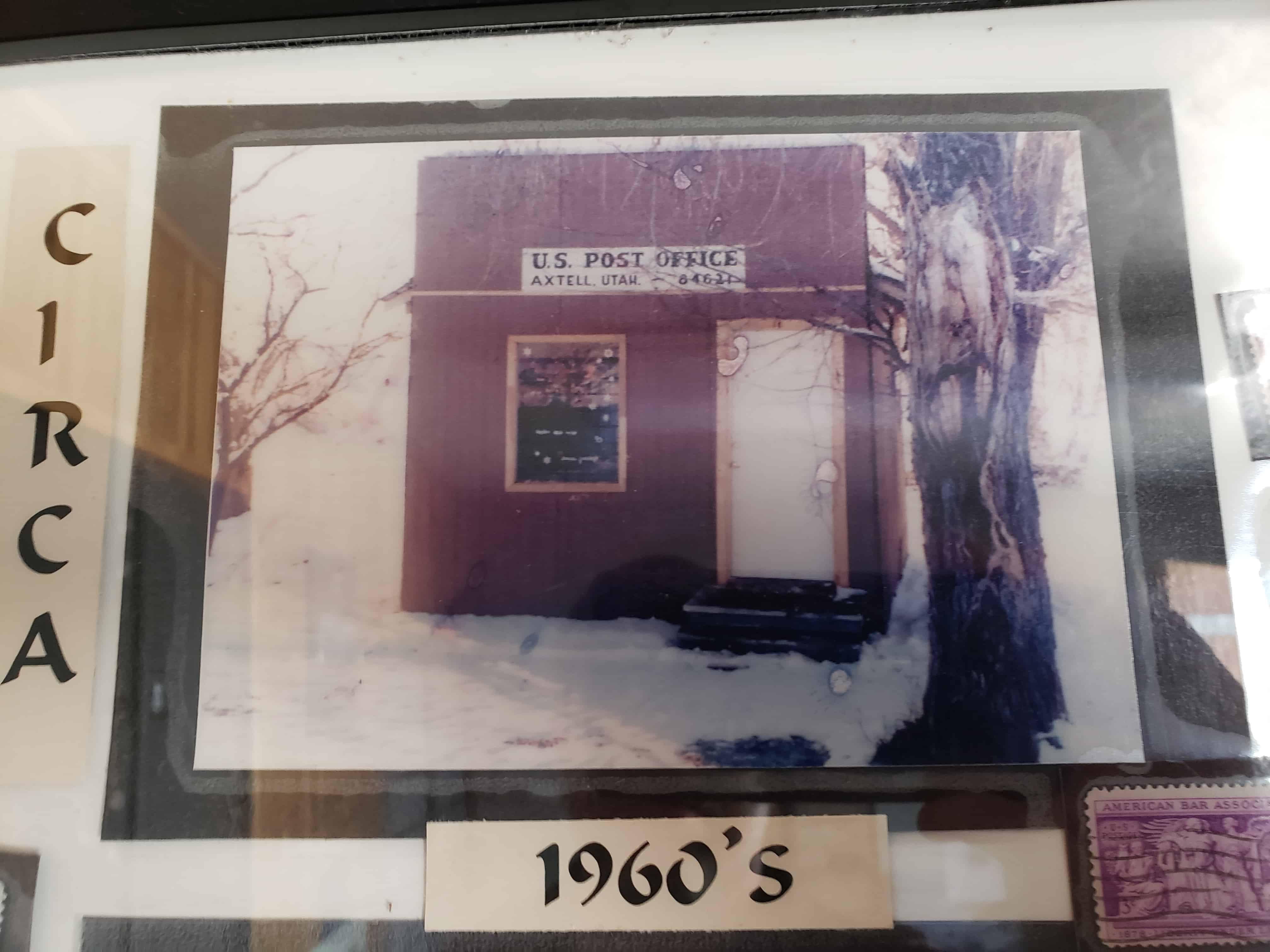
This is Daughters of Utah Pioneers historic marker #551 located at the post office in Axtell, Utah.
This 1903 Victorian Eclectic cross-wing is constructed of orange brick with darker brick used as decorative accents on the house. The darker brick is used in the
segmental arches above the windows. The house was built by Joseph A. Wilkinson. His immigrant mother, Mary Ellen Wilkinson, had a homestead claim on this property after the death of her husband, Moses in 1899. Joseph was twenty-five years old at the time he started building this house. His daughter Rose remembered her father having a strong duty to his family which is why he started building the house for his mother and his eight siblings. In the early 1900s, Orem was predominantly farm land from which residents made a living. Joseph Wilkinson spent most of his life farming the land next to this house and growing crops such as apples, raspberries, cherries and other fruits.
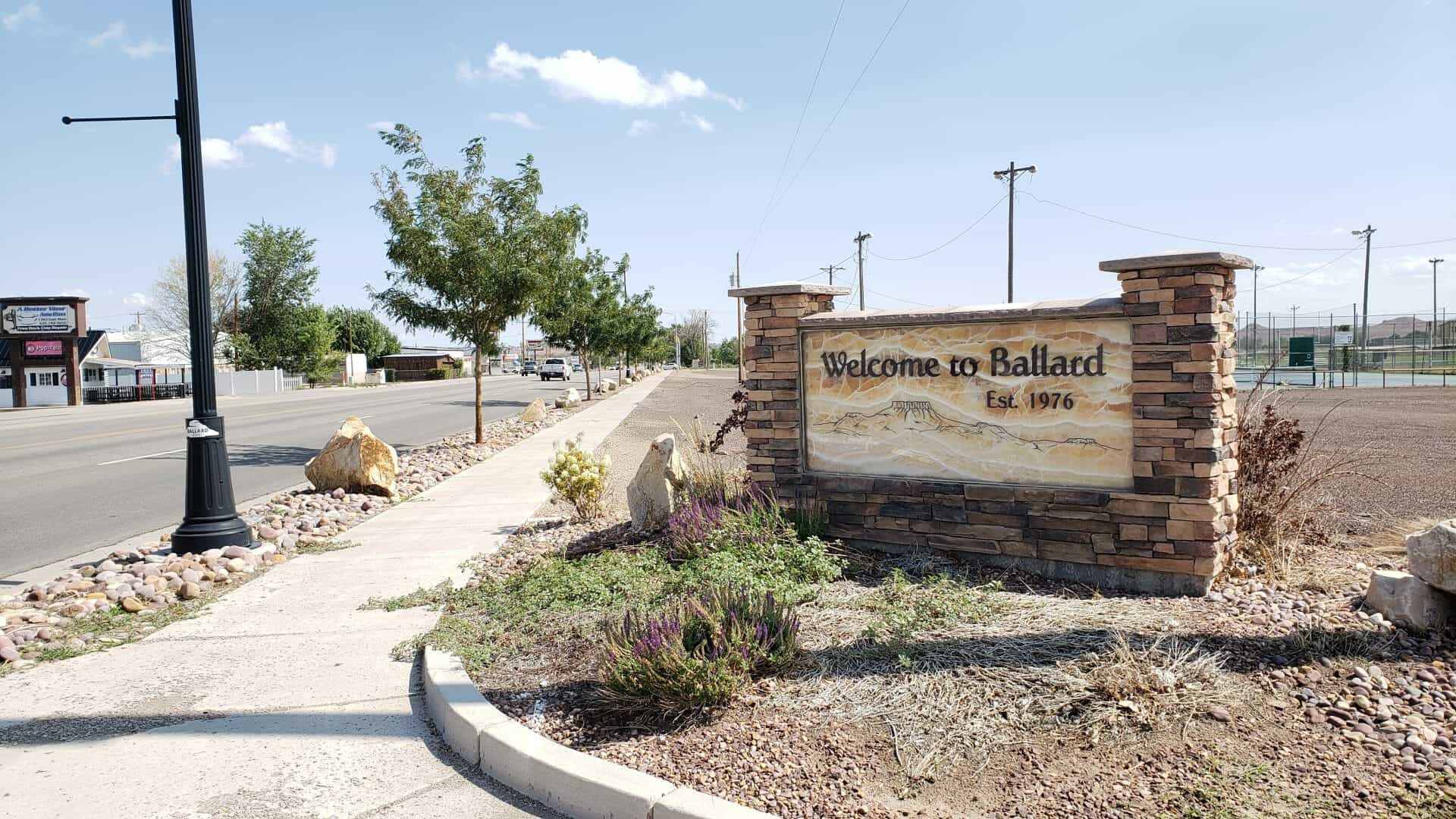
Wikipedia says: Ballard is a town in Uintah County, Utah, United States. The population was 566 at the 2000 census, a decrease of 78 persons from the 1990 population of 644.
Stephen and Mary Bunnell House
(970 South 800 West, Utah Valley University)
Stephen and Mary Bunnell House
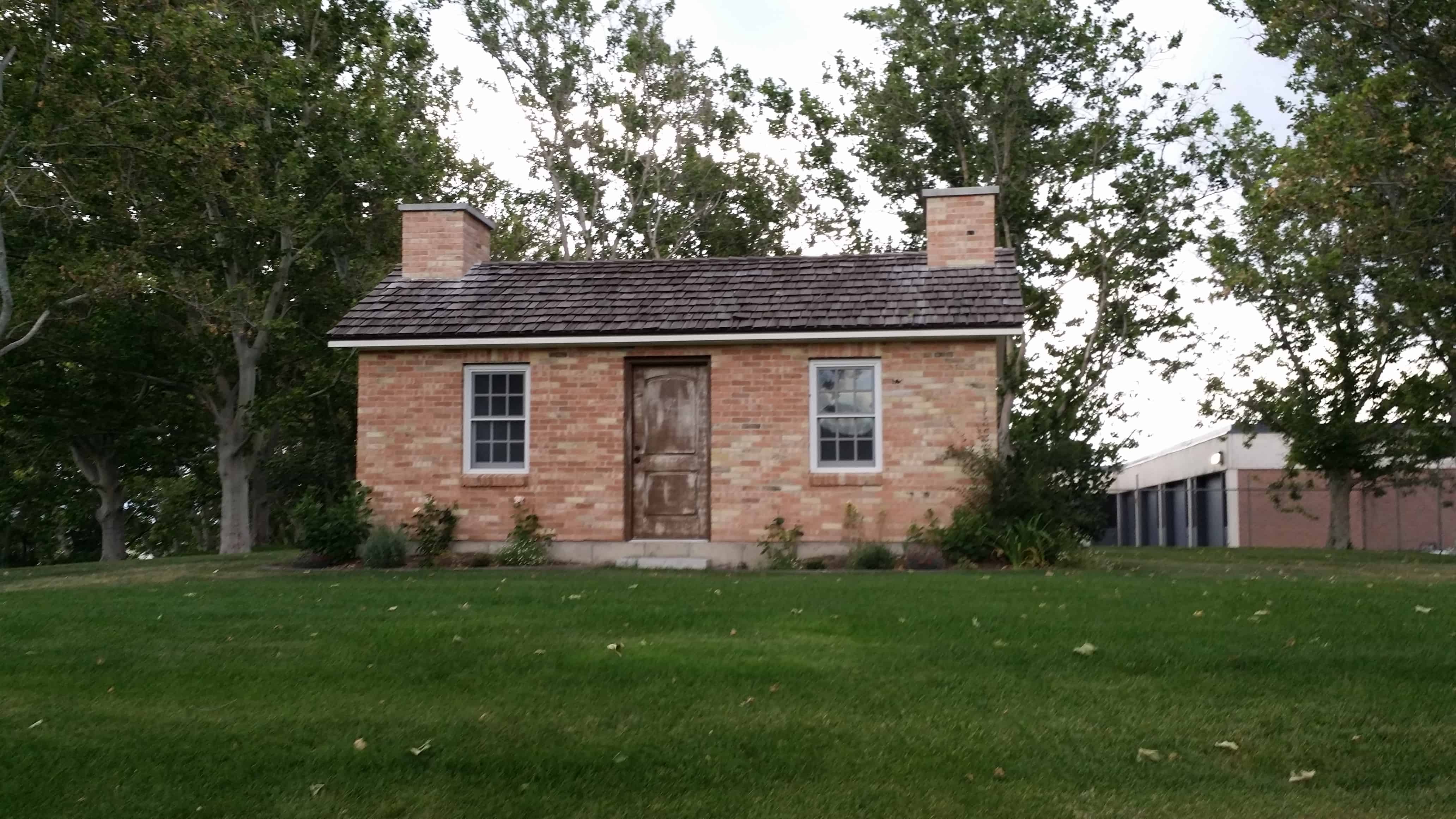
This one story brick house was constructed in 1892 by Stephen I. and Mary Bunnell. It is a hall parlor house with an original rear lean-to and a 1910 bedroom addition off the north end of the lean-to. Once part of a sixty-acre farm and orchard, it is now situated on the Utah Valley University Campus. The Stephen and Mary Bunnell House, is significant in its representation of the way in which the city of Orem, Utah was originally settled and developed. Built prior to the organization of a township, the Bunnell house depicts the nature of the growth of the area. The area in which Orem evolved was originally farmland and the building of houses occurred in a scattered farm pattern. This settlement pattern varies from the town grid system laid out in most cities in Utah, a system that was based on the Plat of the City of Zion, the model for Mormon settlements.
The Classically detailed Bunnell house is one of only six houses built in Orem prior to 1900 that remains. It is an excellent example of a settlement farmhouse that has maintained its integrity and contributes to the historic qualities of Orem.
* As of May, 2013 the house has been taken apart for the construction of a new building for the University, sources at UVU say it will be moved and rebuilt at either Nielsen’s Grove or another part of UVU campus.
Nielsen’s Grove (Orem City Park)
(931 South Sandhill Road)
Nielsen’s Grove
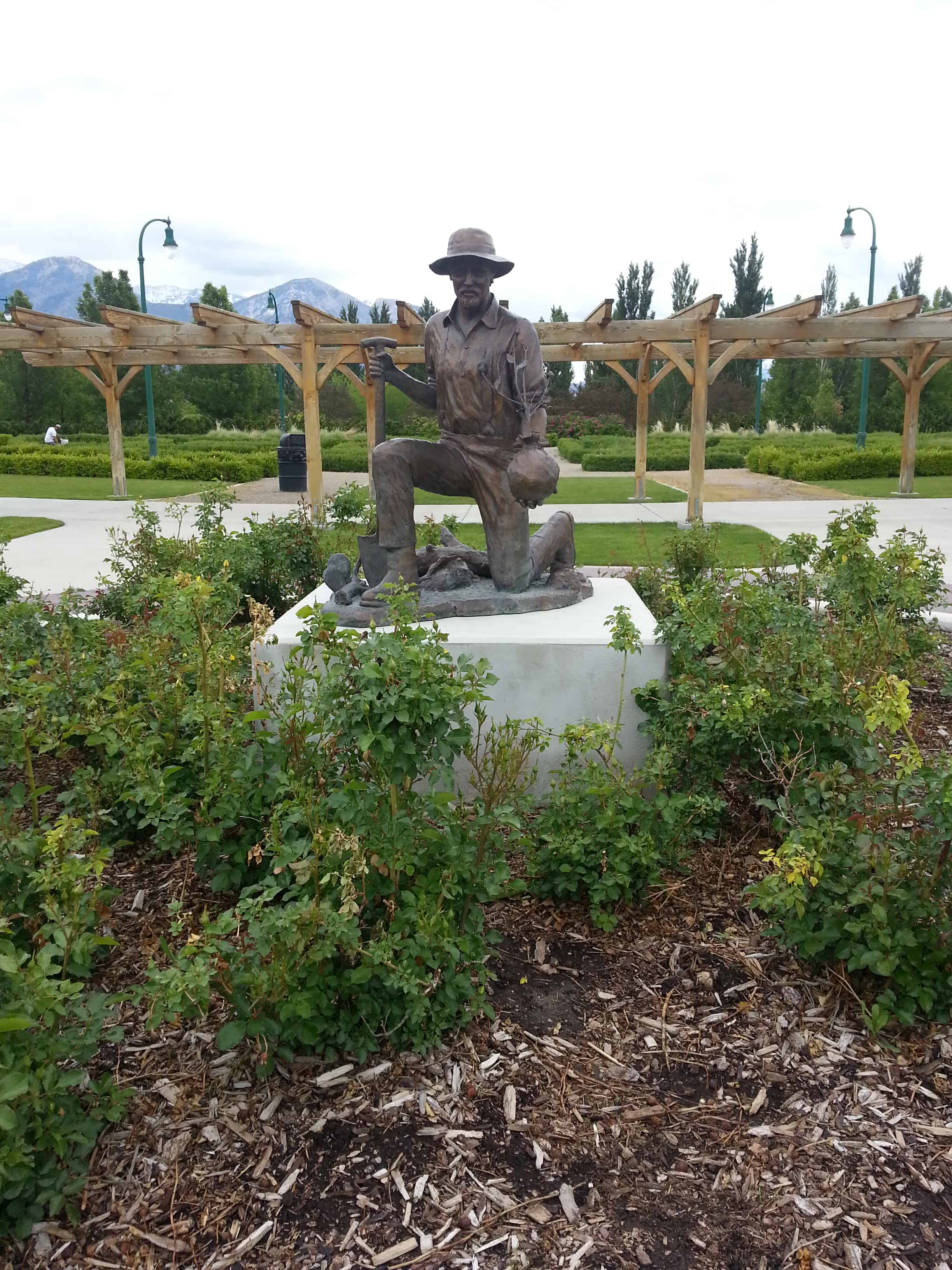
Nielsen’s Grove is possibly the earliest designed park in the state of Utah. Jorgen C. Nielsen, a Denmark native, immigrated to the Provo area in 1863 after joining the LDS Church. Records indicate he and his wife, Annie Byer, moved to the Lakeview area in 1876. He purchased the Grove property from Harold B. Skinner in 1882.
Nielsen had a background in horticulture, having been trained by his uncle who served as a florist and gardener for King Christian IX of Denmark. Using a natural spring for a pond as the central feature of the grove, Nielsen designed and planted an elaborate park and amusement area, attracting many people. It is believed that Jorgen Nielsen performed most of the work on the grove himself, assisted by special trades when they were necessary.
Surrounding the pond were silver leaf poplar and mulberry trees, and shrubbery. Trellis structures, planted with grape vines and climbing roses, covered at least ten picnic areas. The grove was ornamented with four marble statues, allegedly carved by an itinerant stone carver. Three of those statues are presently on exhibit at the Daughters of the Utah Pioneers Museum in Provo. A covered bowery with a dance floor was among the structures in the grove. A big attraction was a twelve-seat, center-pivot, human-powered swing.
The park was in existence as late as 1910 but due to the seepage from irrigation on the bench above and to the east, the land increasingly become swampy. The Grove became neglected and was abandoned. Later, what was left of the park was torn down and the land was used to grow wheat during World War I; drain tiles were installed to control the seepage from the bench above.
A popular recreational area for many years, the site was purchased by the City of Orem in 1995 for park development. In 2002 and 2003 the park was re-created to match many of the original features of the original park including a museum that was built to match the layout of Nielsen’s original house. The museum provides information not only on Jorgen Nielsen and Nielson’s Grove, but also on the history of Orem itself.
Brigham Young University, also called BYU or even just “The Y” is a University in Provo, Utah. BYU’s mascot is the Cougar and the school is owned by the LDS Church.
The school evolved from the University of Deseret to Brigham Young Academy to BYU.