January, 1879, Orange Seeley, presiding valley bishop, appointed Elias Cox to preside over the Latter-day Saints who had settled on Huntington Creek. In October a ward was organized. Logs were hauled from the canyon and a meeting house erected by Benjamin Jones, Sr., John F. Wakefield, W. Albert Guymon, Sr., Walsh Caldwell, William Avery, Milas E. and Joseph R. Johnson, Albey W. Sherman, Jr., David Cheney, John Wimmer and others. The building was 40 x 60 feet, split shingle roof, lumber floor and benches of split logs. It was dedicated December 1880, and served the community for church, school, and recreation. The building was destroyed by fire in 1918.
In 1875, Leander Lemmon and James McHadden, seeking a good range for their horses found feed plentiful at the mouth of Huntington Canyon and vicinity. Mr. Lemmon brought sheep and cattle from Cottonwood, Salt Lake County. In the autumn of 1876, he built the first log cabin on Huntington Creek near this marker. An irrigation ditch was dug, taking water from the nearby creek. The town is situated on Huntington Creek, from which it receives its name.
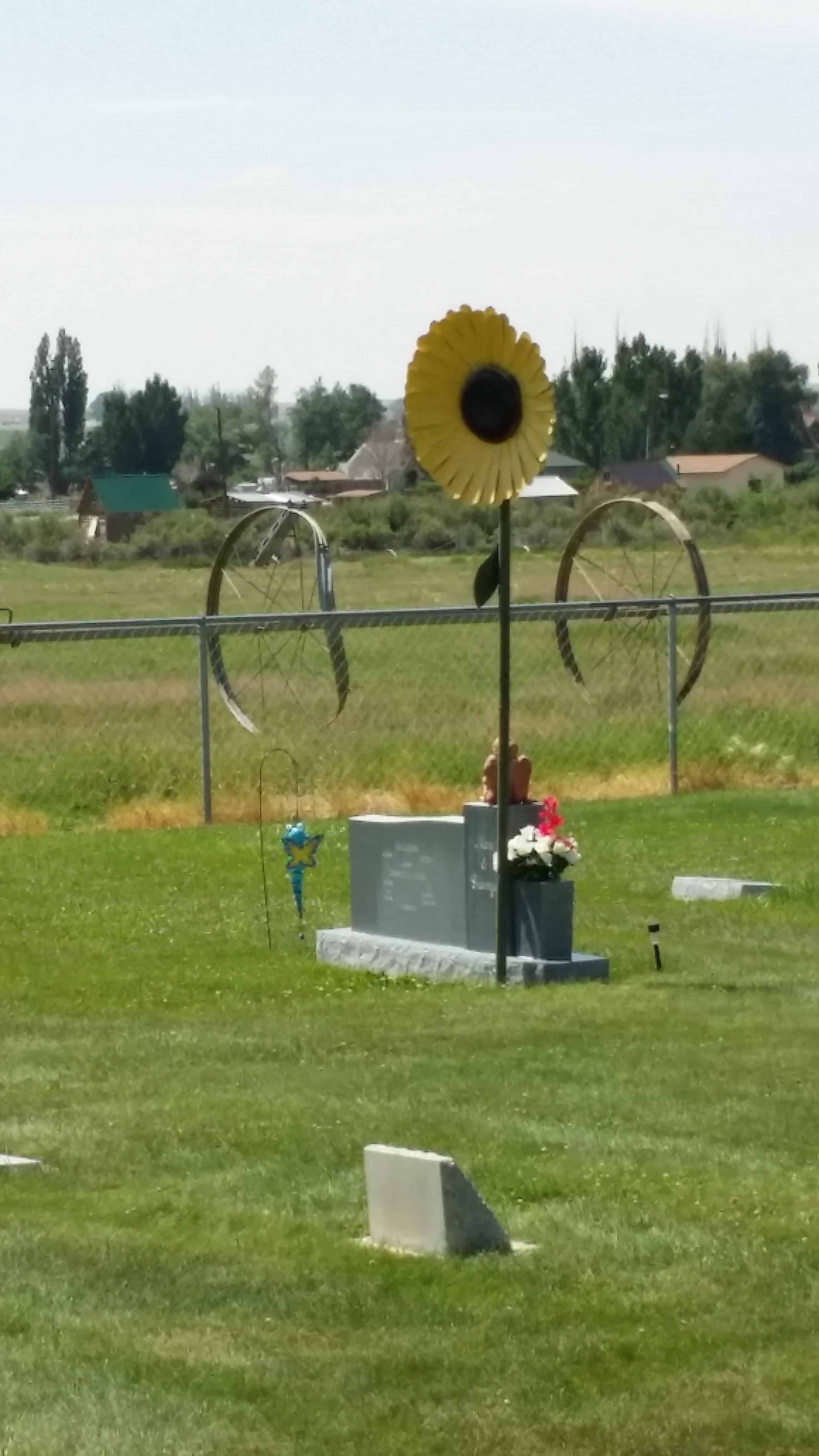
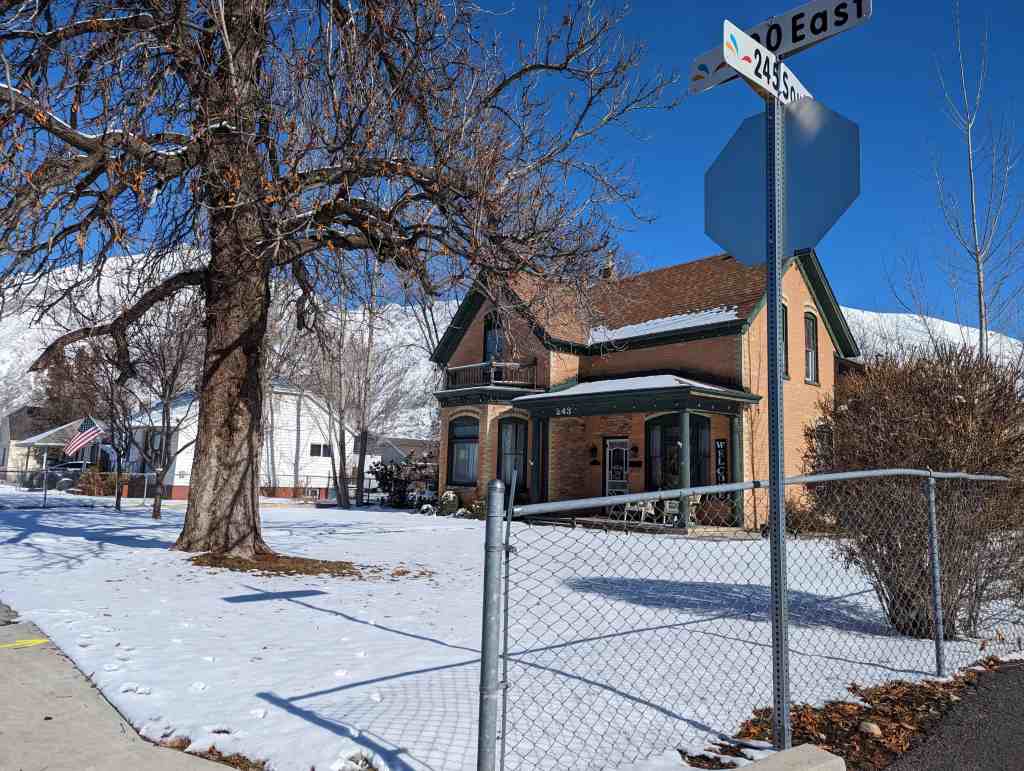
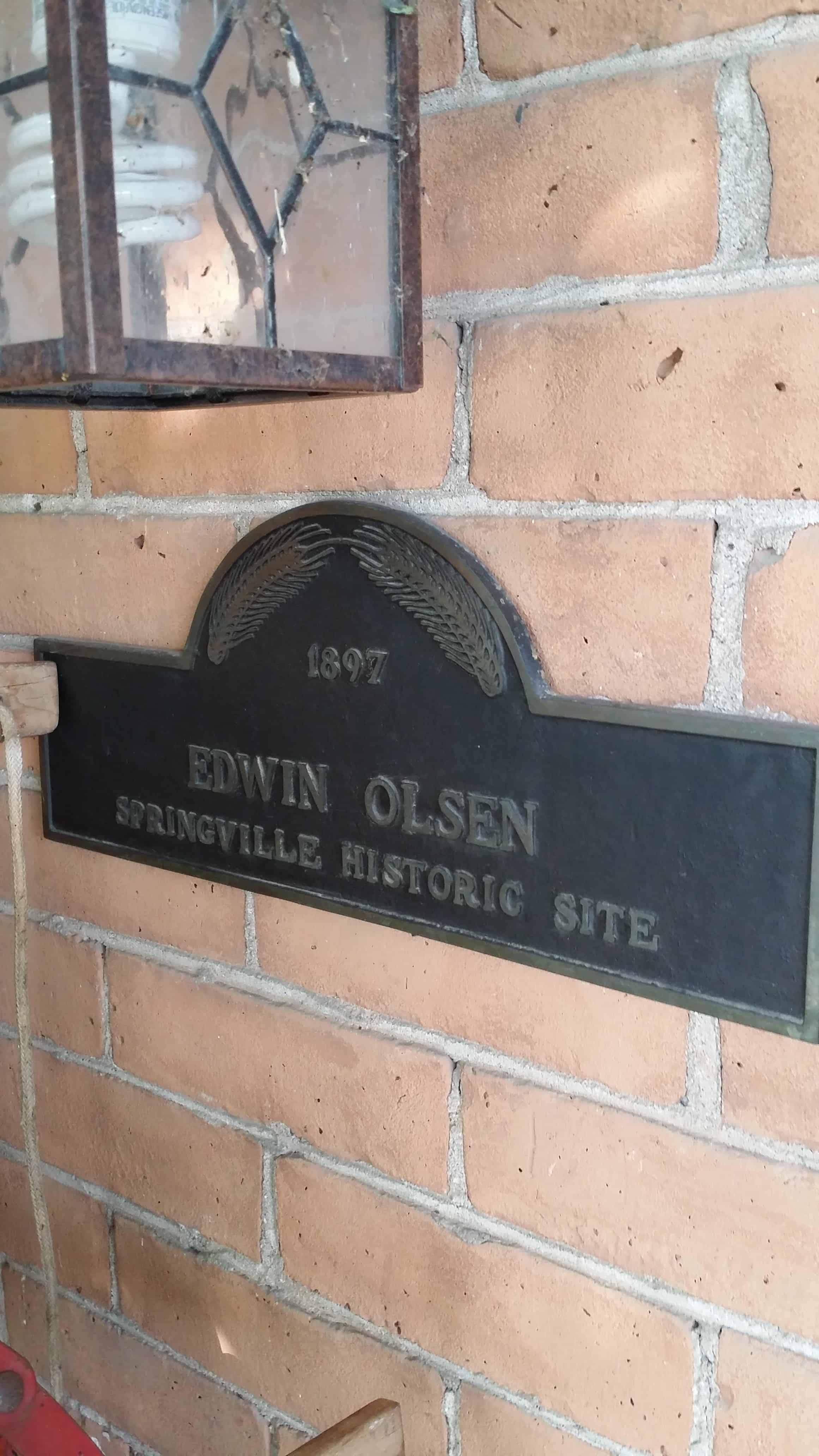
One D.U.P. Marker told of some history. Other historic markers, memorials and cool old buildings and some public art too.
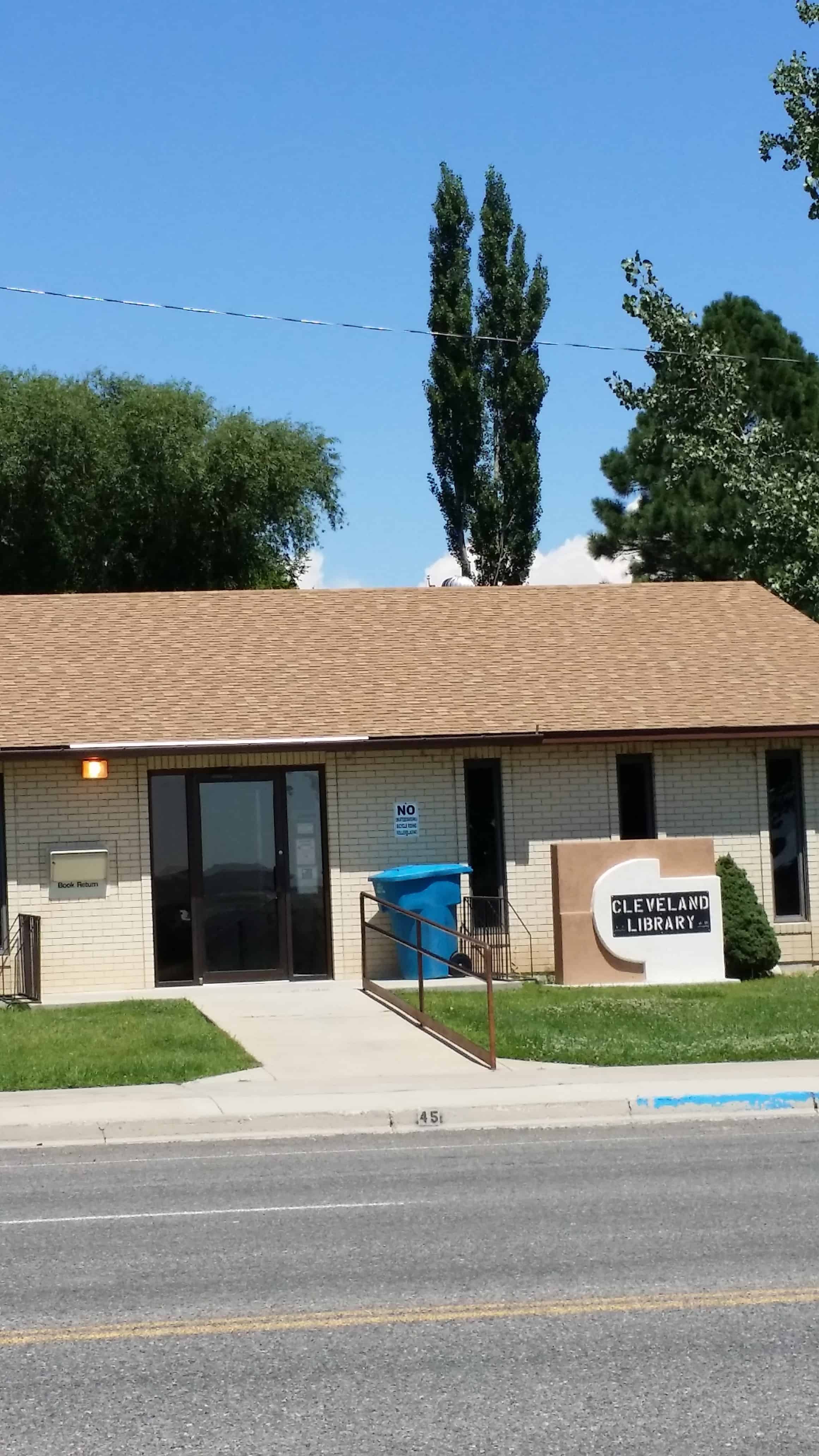
Cleveland was first settled in 1884 by Samuel Nelson Alger and Henry Sr. These two men took up homesteading and soon after twenty five-families joined them. Firm roots began to take hold, and gradually with hard work and persistence, Cleveland began to grow. These families were typically pioneers. Cleveland was named after Grover Cleveland who was President of the United States in the 1880s.
The “old timers” claim that farms within the boundaries of Cleveland require less water than other farms in Emery County and had the most productive ground. Many of the founding fathers came to Cleveland because of good reports of plentiful grass and good homesteading. The reason that Cleveland was not settled sooner was the lack of a sufficient water source and supply.
In 1890, a log school with plank benches was built but was outgrown by 1893 when a frame building was built. Later a two-story section was added. The adobe brick school was built in 1912. Harry B. Mortensen and C. Leslie Bennett were instrumental in getting sports, music, and speech programs stated for school students. A new school was built in 1976 and remodeled in 1989.
Cleveland’s people loved social activities, and they had quite a few socials and parties. Departure of missionaries and servicemen were an exceptionally good reason for a get-together. In April 1910, Ernest E. Davis built a large Opera House. Many dances and weddings were held there also. In April 1923, a silent movie picture machine was installed with a player piano for music. In 1928, a talking movie projector was installed. A roller skating rink was added in 1937. These buildings do not exist there today.
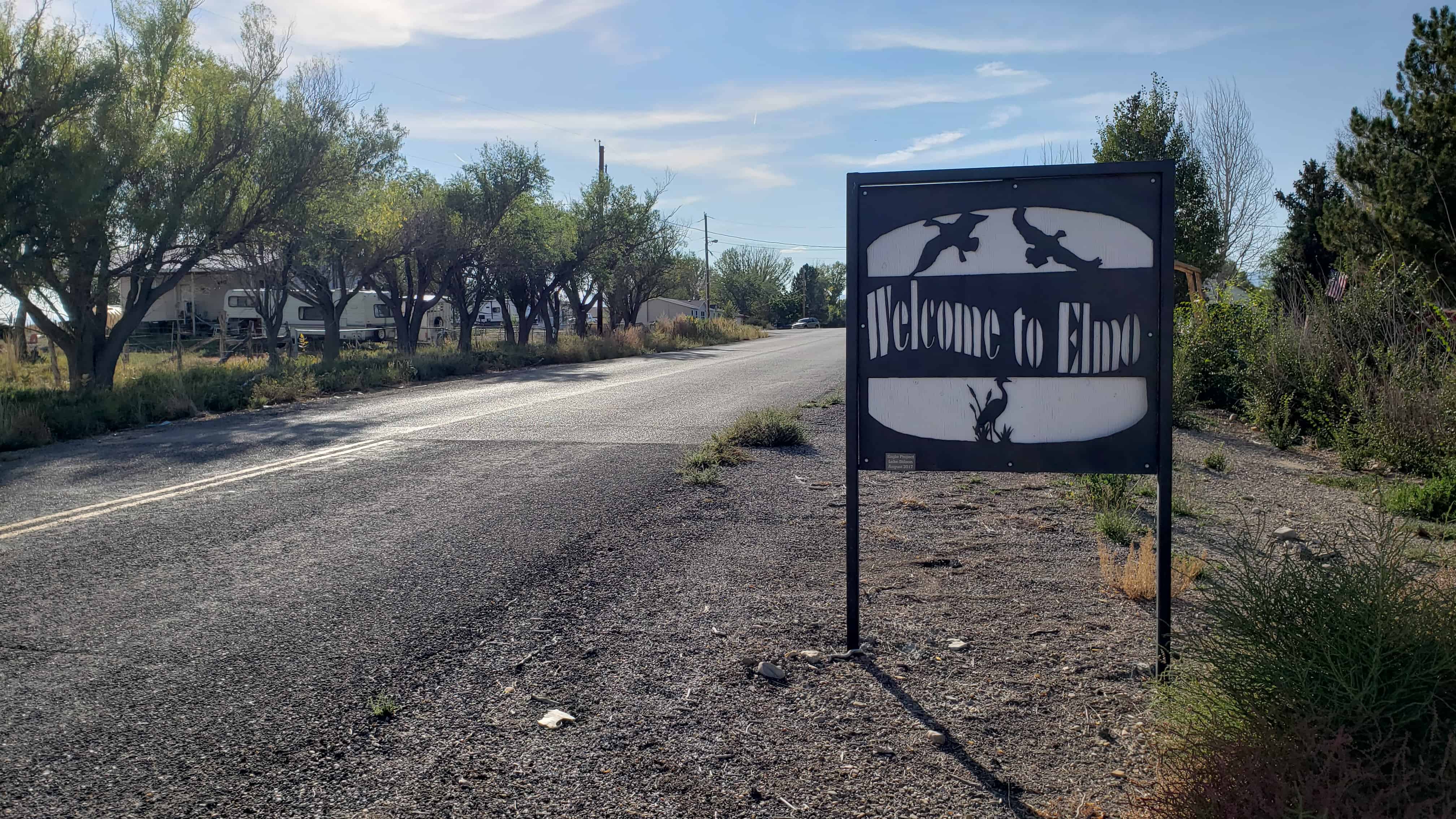
Elmo is a small, dispersed agricultural community east of U-10 and eight miles north of Huntington. Elmo was settled in 1908 by people from Cleveland, although it was filed upon as early as 1904. The origin of the name is uncertain, but folklore suggests a reference to a popular novel of the day, St. Elmo.
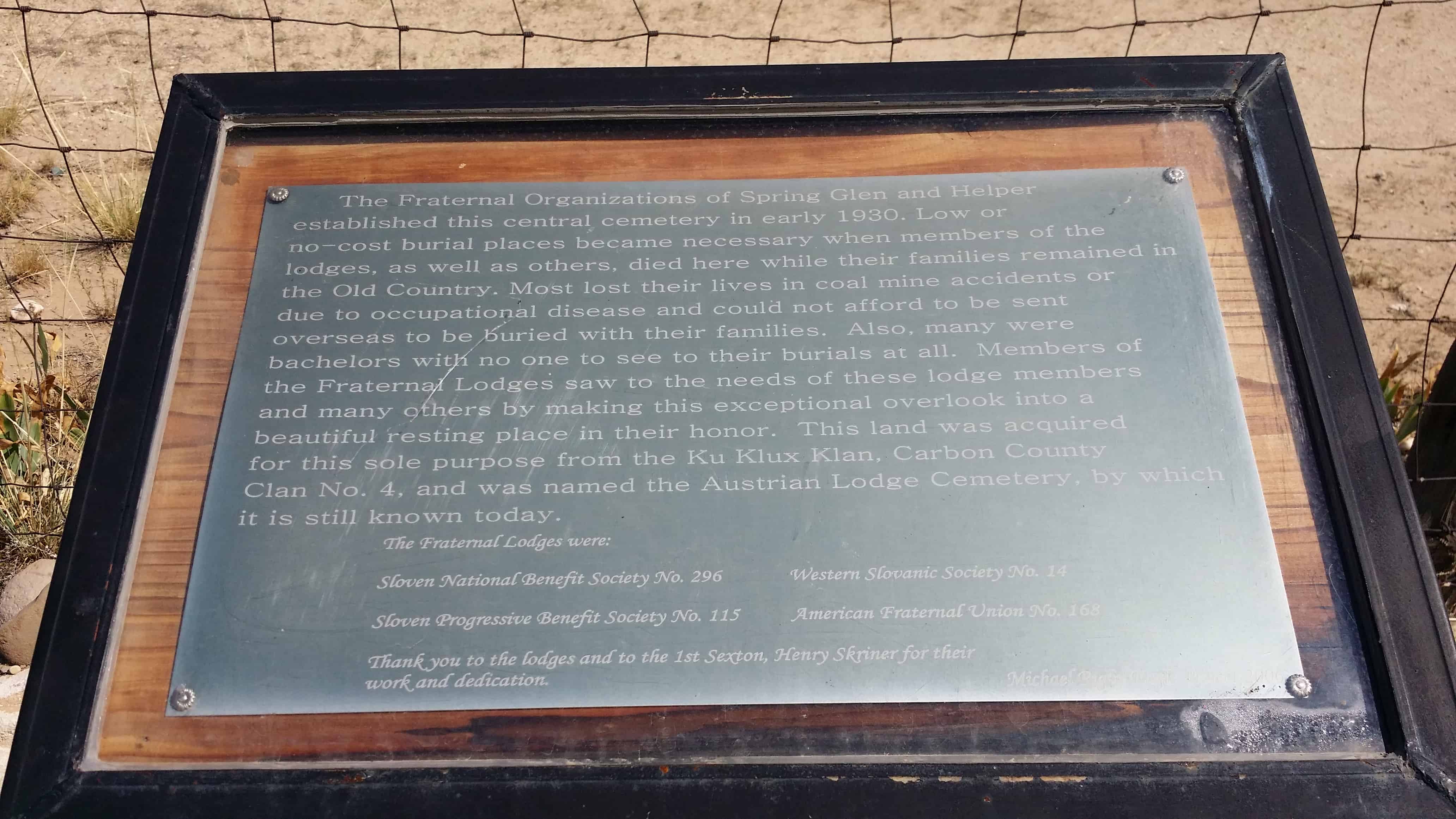
The Fraternal Organizations of Spring Glen and Helper established this central cemetery in early 1930. Low or no-cost burial places became necessary when members of the lodges, as well as others, died here while their families remained in the Old Country. Most lost their lives in coal mine accidents or due to occupational disease and could not afford to be sent overseas to be buried with their families. Also, many were bachelors with no one to see to their burials at all. Members of the Fraternal Lodges saw to the needs of these lodge members and many others by making this exceptional overlook into a beautiful resting place in their honor. This land was acquired for this sole purpose from the Ku Klux Klan. Carbon County Clan No. 4, and was named the Austrian Lodge Cemetery, by which it is still known today.