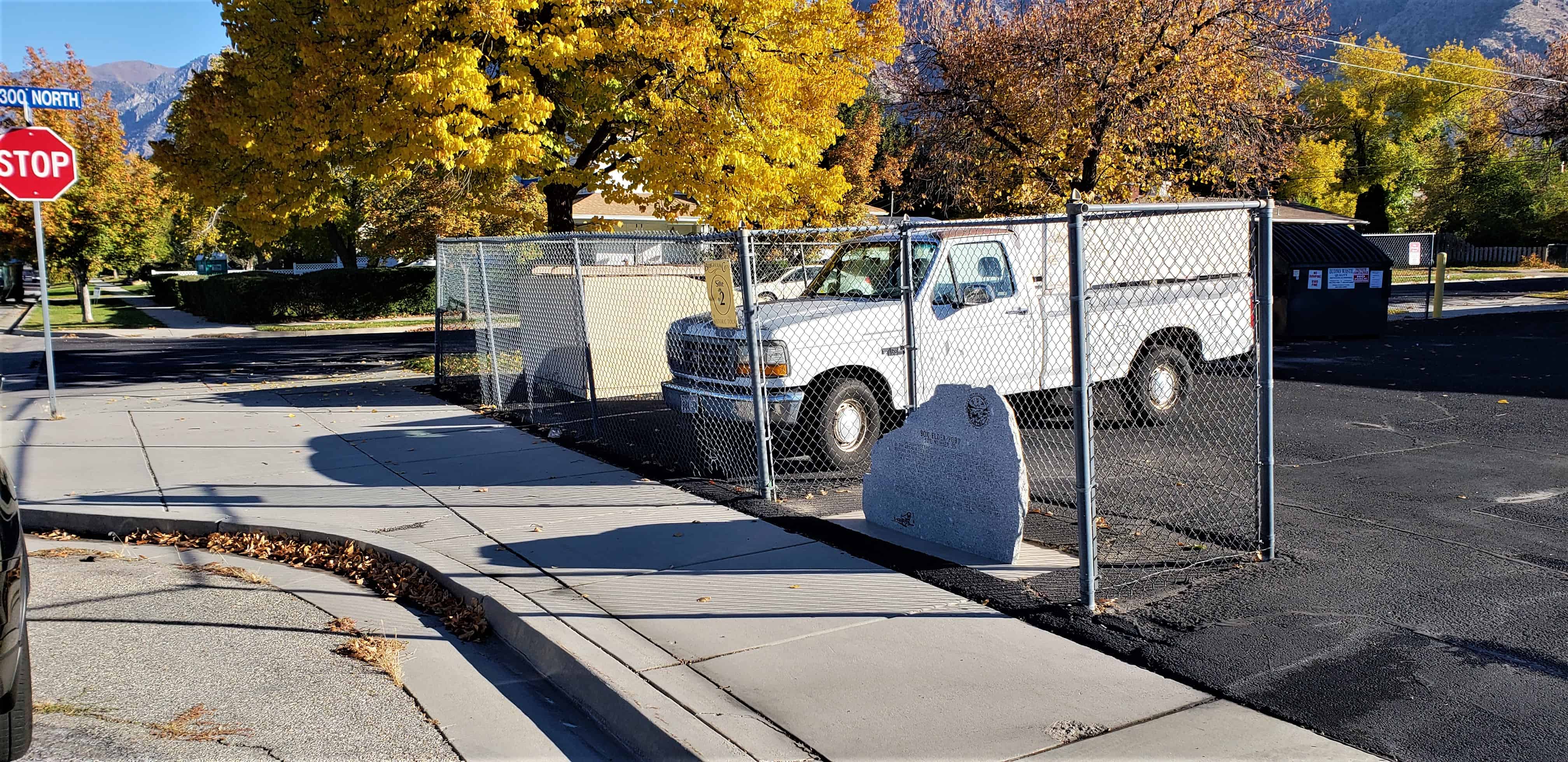
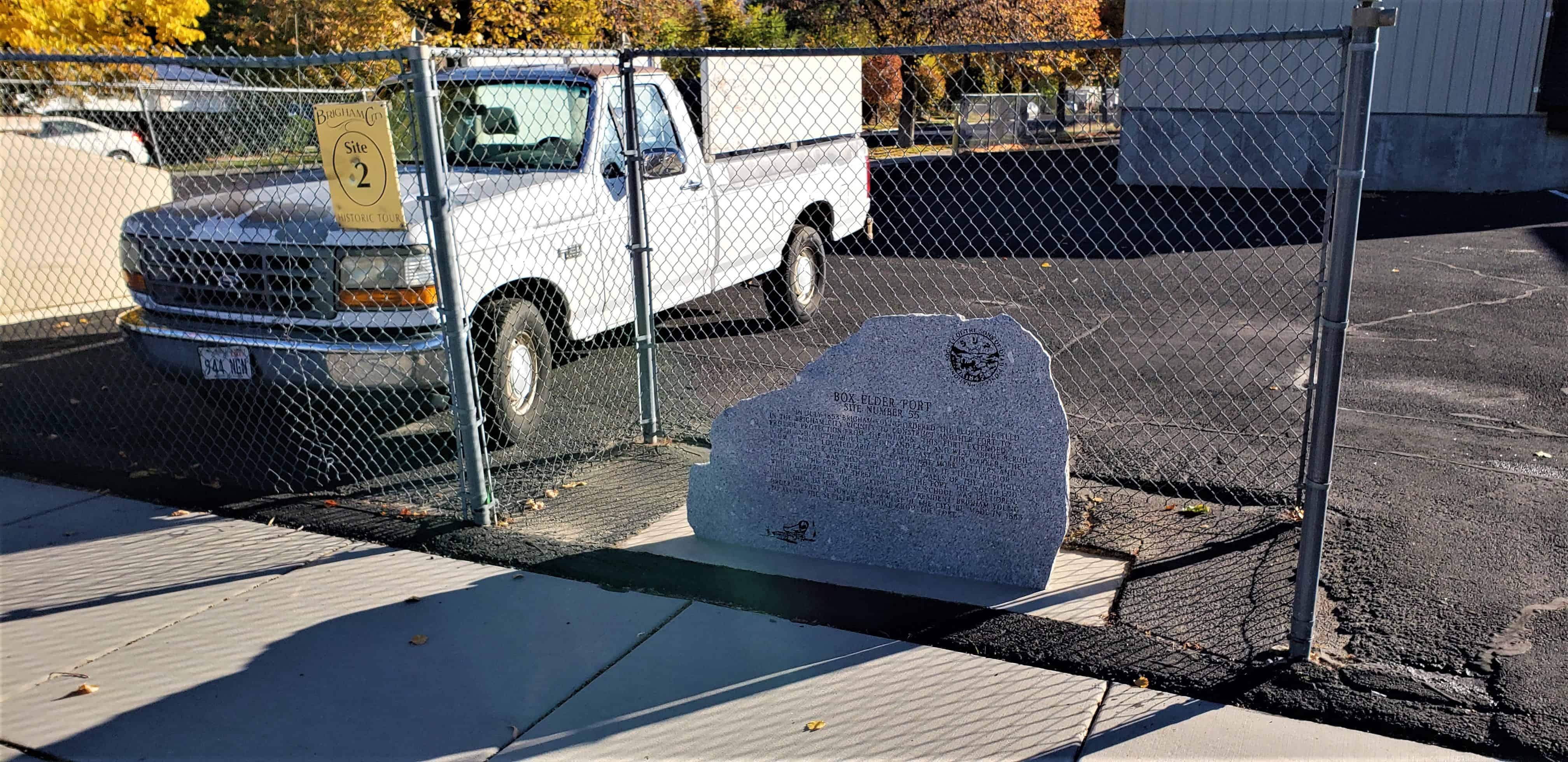
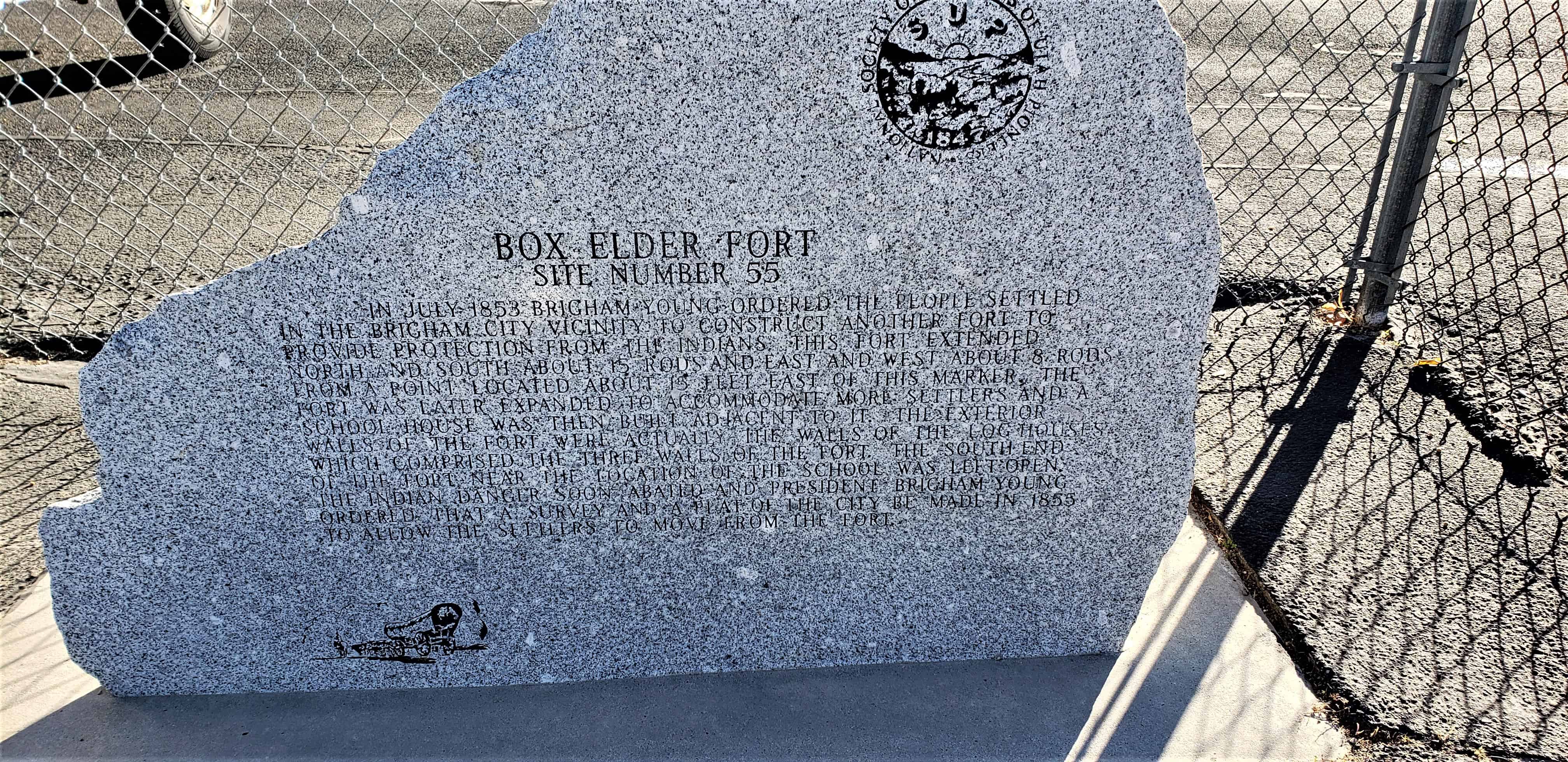
In July 1853 Brigham Young ordered the people settled in the Brigham City vicinity to construct another fort to provide protection from the Indians. This fort extended north and south about 15 rods and east and west about 8 rods from a point located about 15 feet east of this marker. The fort was later expanded to accommodate more settlers and a school house was then built adjacent to it. The exterior walls of the fort were actually the walls of the log houses which comprised the three walls of the fort. The south end of the fort near the location of the school was left open. The Indian danger soon abated and President Brigham Young ordered that a survey and a plat of the city be made in 1855 to allow the settlers to move from the fort.
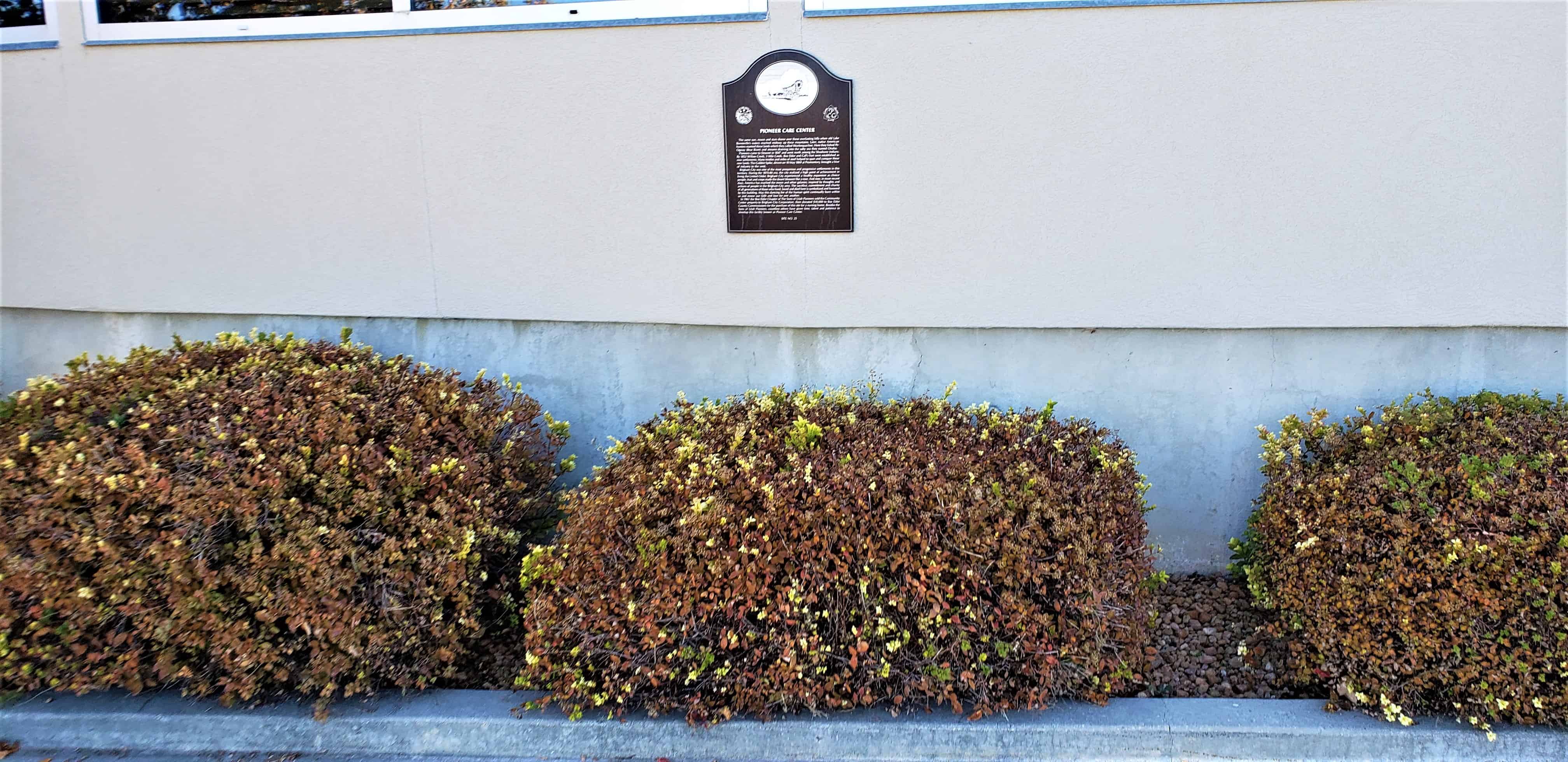
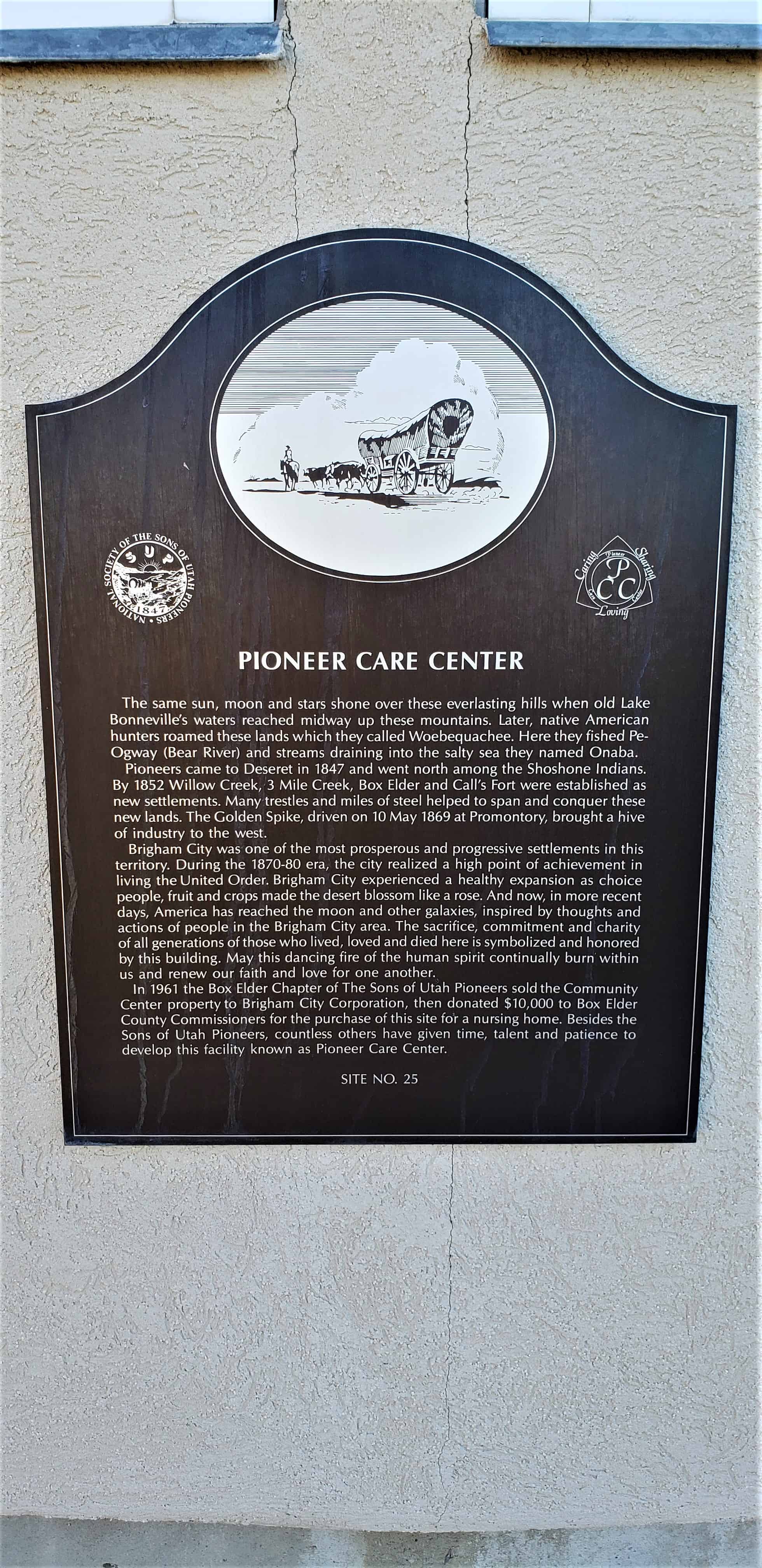
The same sun, moon and stars shone over these everlasting hills when old Lake Bonneville’s waters reached midway up these mountains. Later, native American hunters roamed these lands which they called Woebequachee. Here they fished Pe-Ogway (Bear River) and streams draining into the salty sea they named Onaba.
Pioneers came to Deseret in 1847 and went north among the Shoshone Indians. By 1852 Willow Creek, 3 Mile Creek, Box Elder and Call’s Fort were established as new settlements. Many trestles and miles of steel helped to span and conquer these new lands. The Golden Spike driven on 10 May 1869 at Promontory, brought a hive of industry to the west.
Brigham City was one of the most prosperous and progressive settlements in this territory. During the 1870-80 era, the city realized a high point of achievement in living the United Order. Brigham City experienced a healthy expansion as choice people, fruit and crops made the desert blossom like a rose. And now, in more recent days, America has reached the moon and other galaxies, inspired by thoughts and actions of people in the Brigham City area. The sacrifice, commitment and charity of all generations of those who lived, loved and died here is symbolized and honored by this building. May this dancing fire of the human spirit continually burn within us and renew our faith and love for one another.
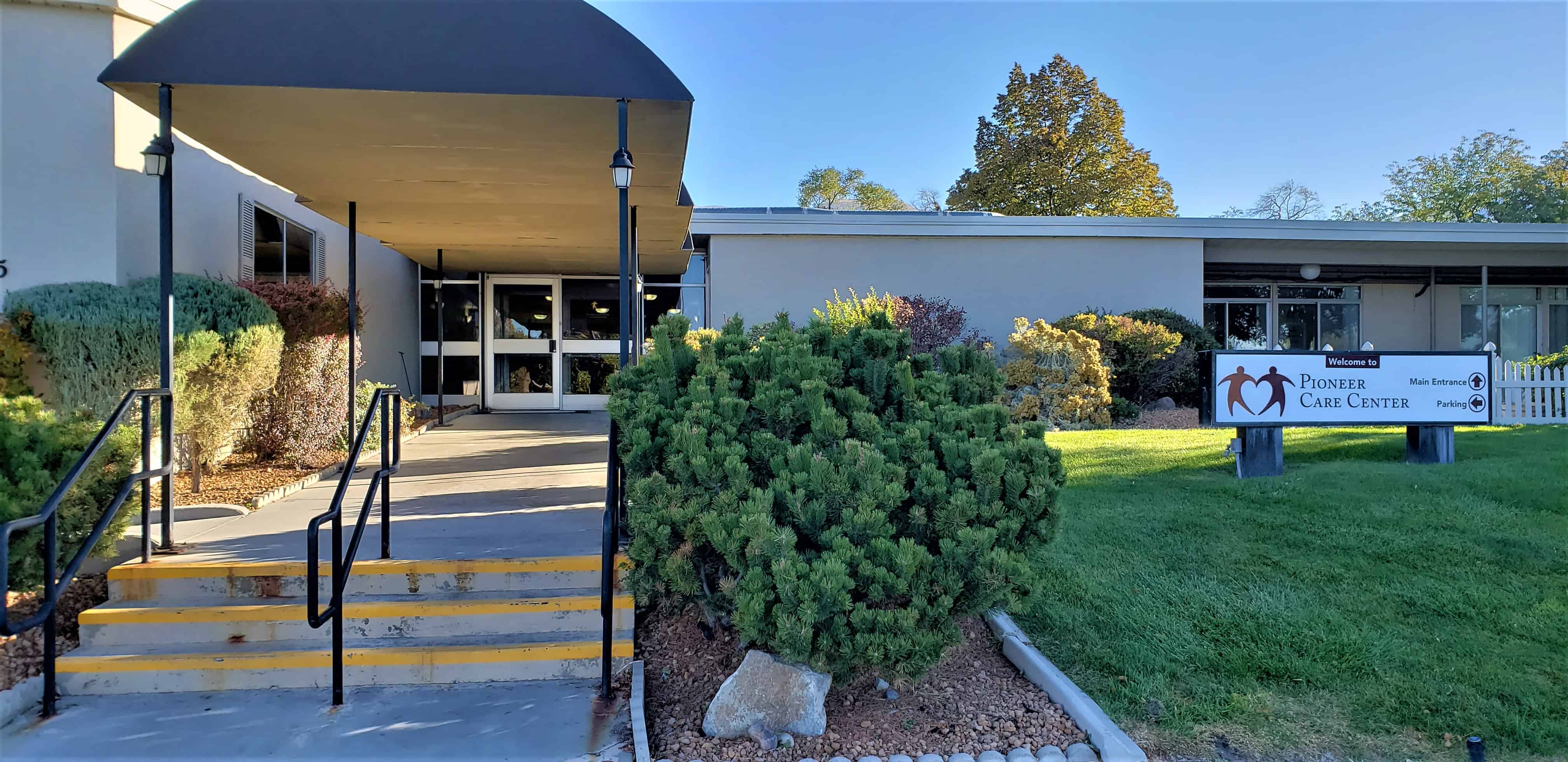
In 1961 the Box Elder Chapter of the Sons of Utah Pioneers sold the Community Center property to Brigham City Corporation, then donated $10,000 to Box Elder County Commissioners for the purchase of this site for a nursing home. Besides the Sons of Utah Pioneers, countless others have given time, talent and patience to develop this facility known as Pioneer Care Center.
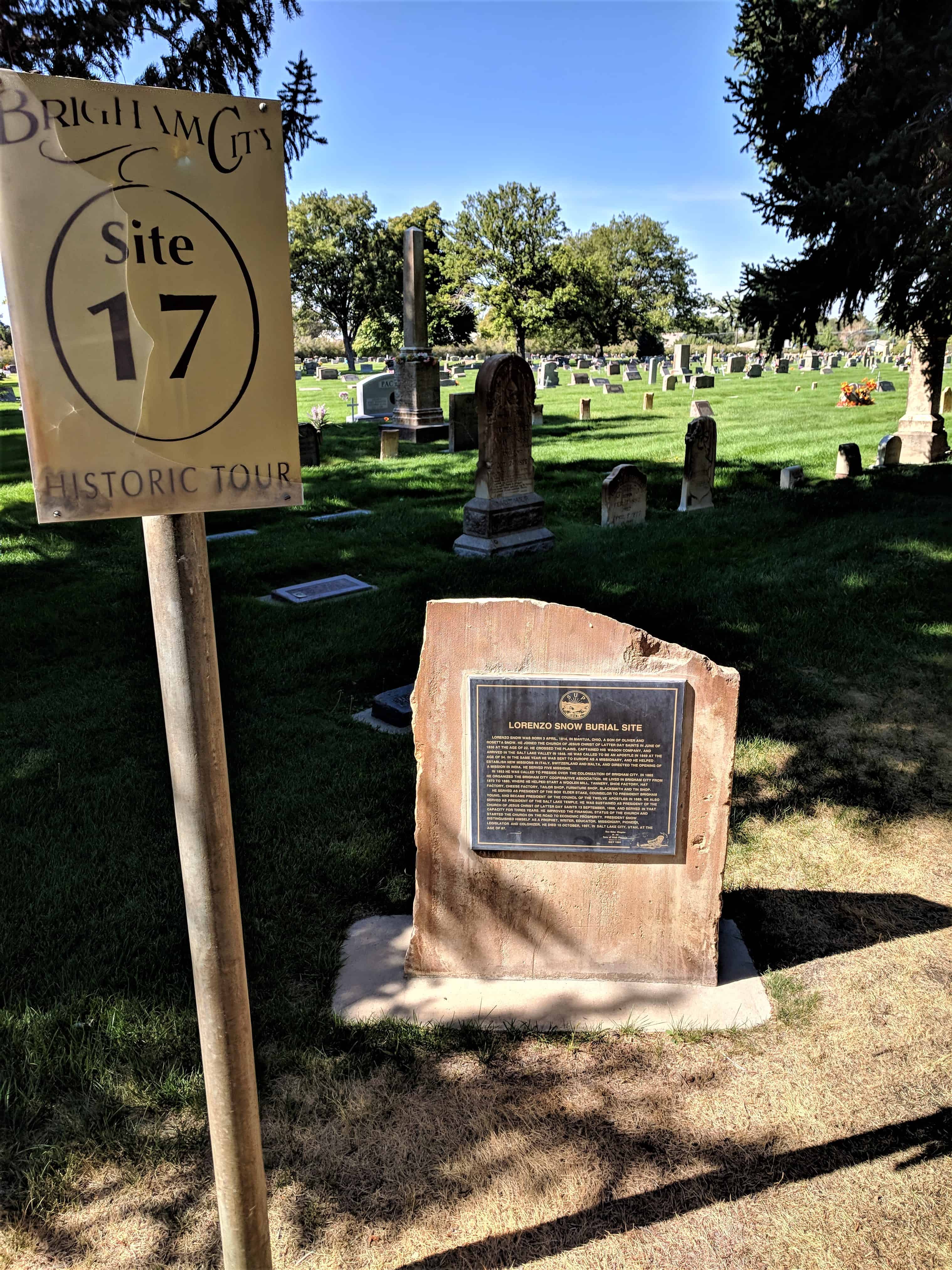
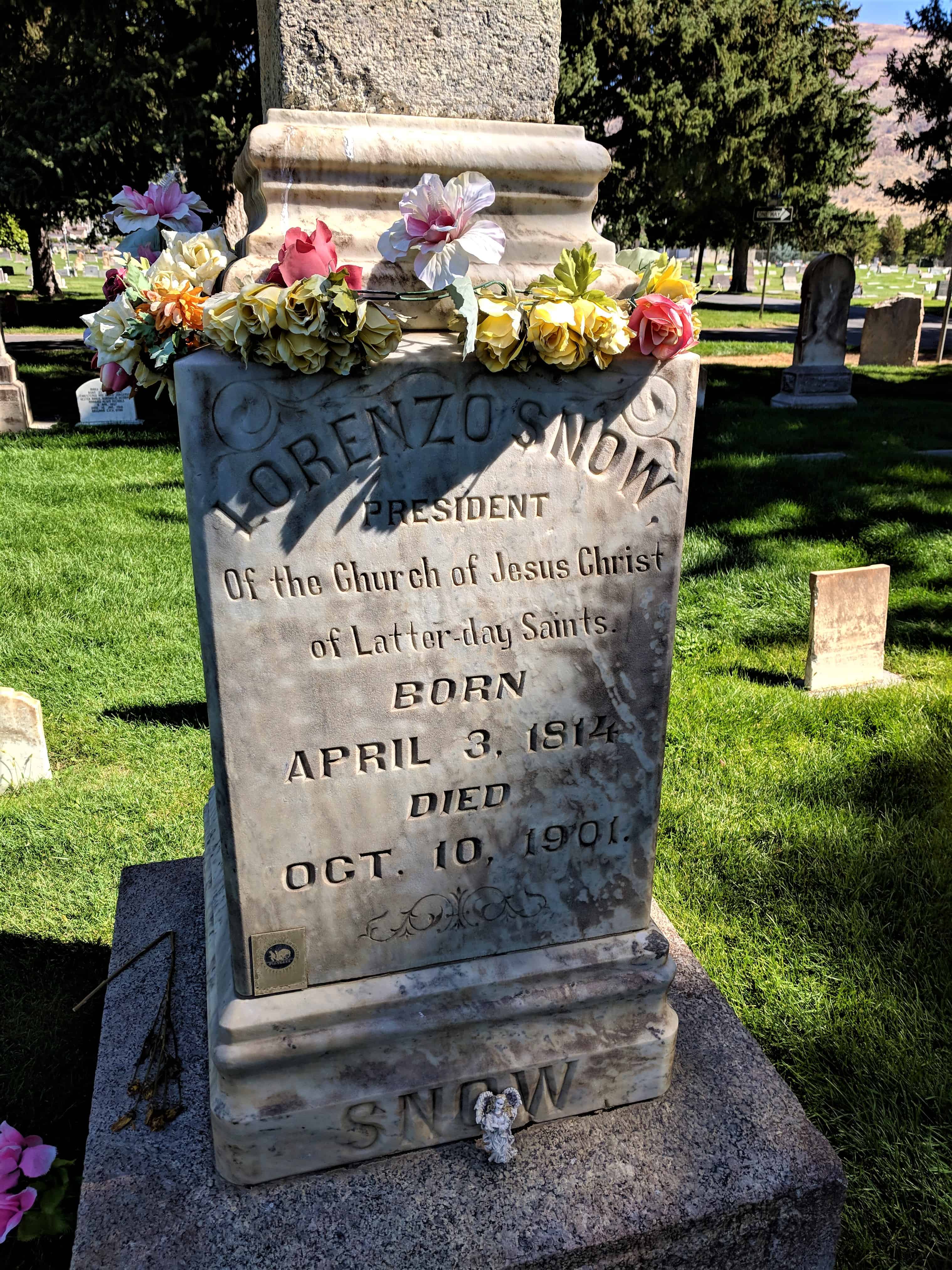
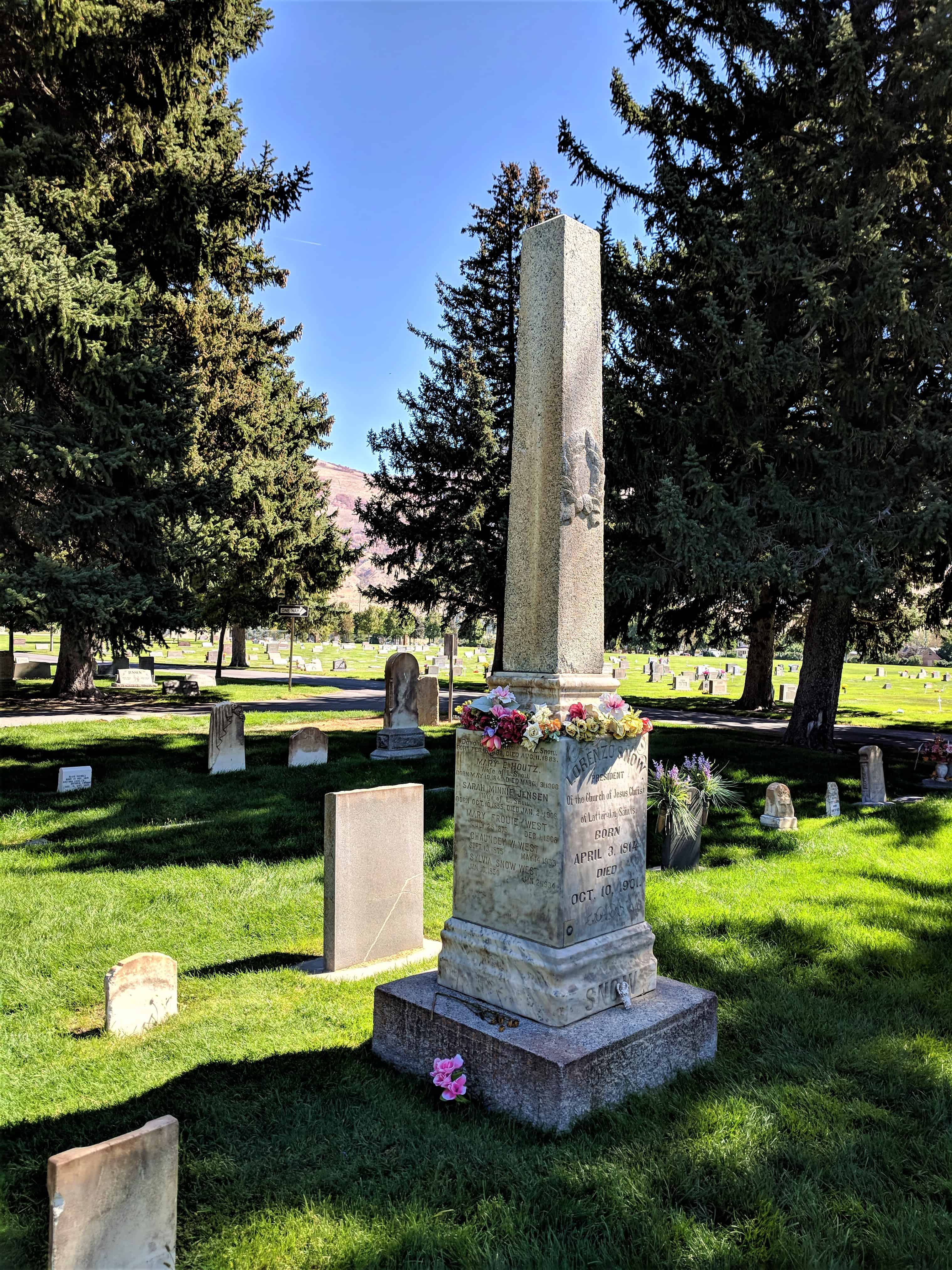
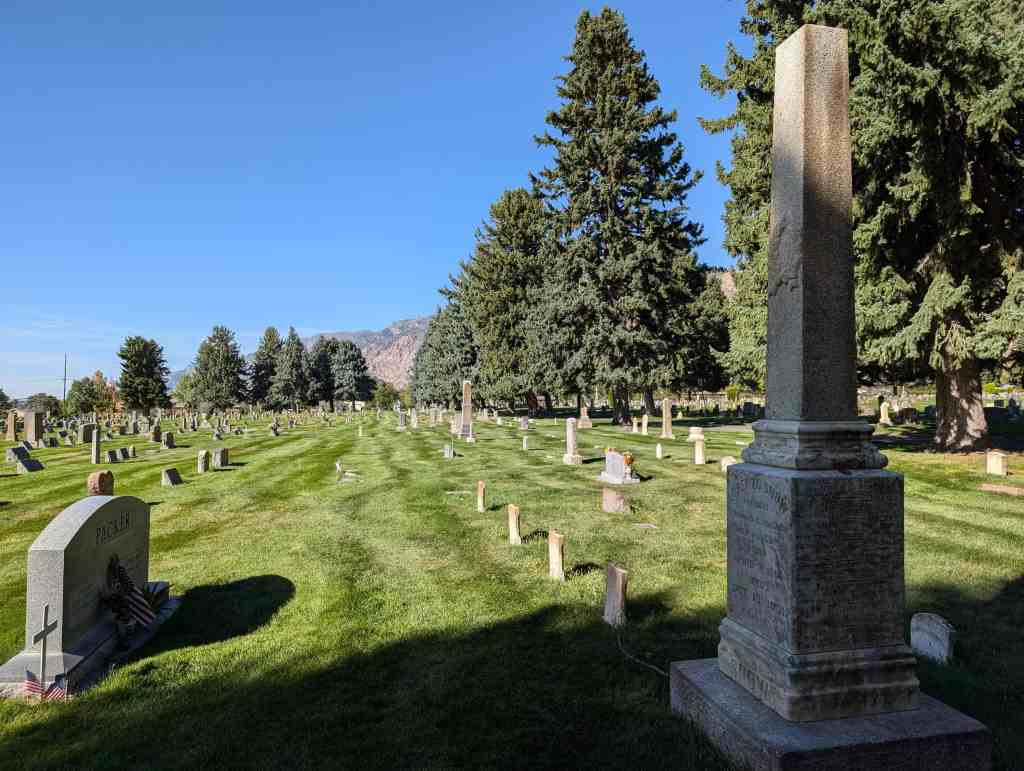
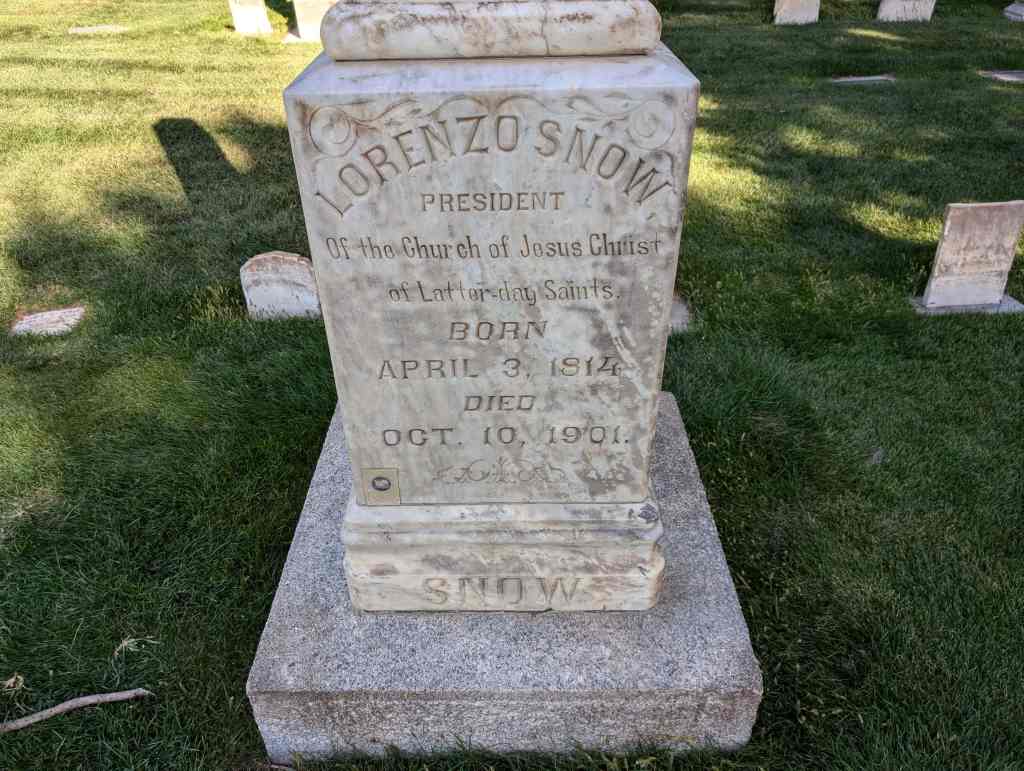
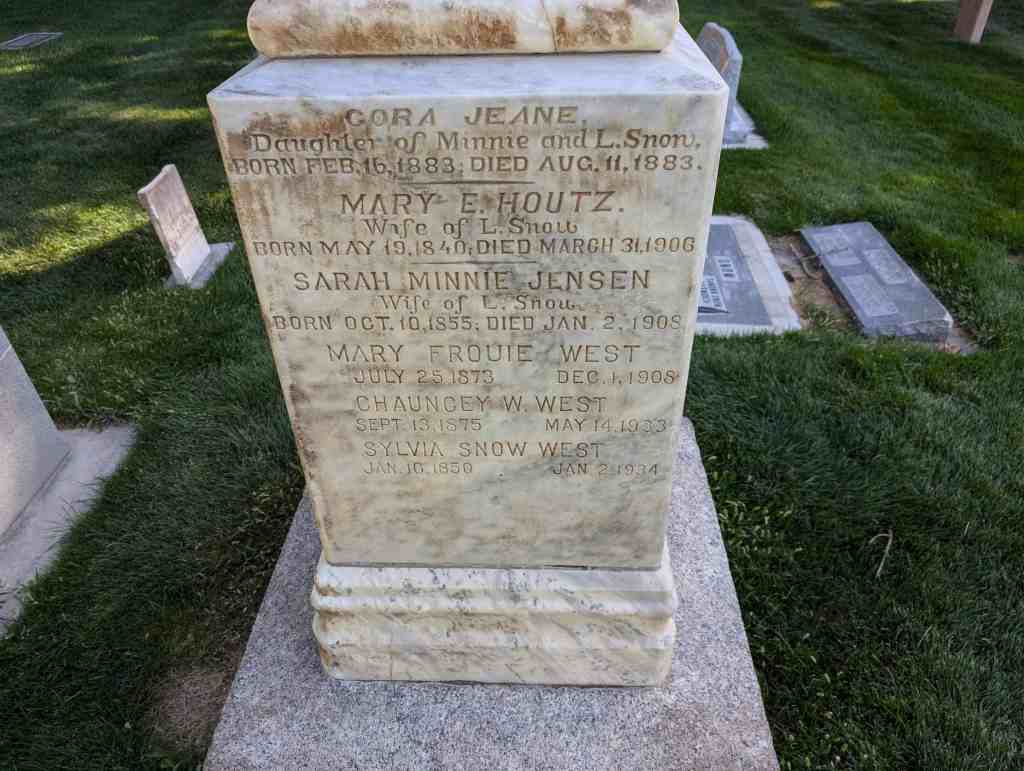
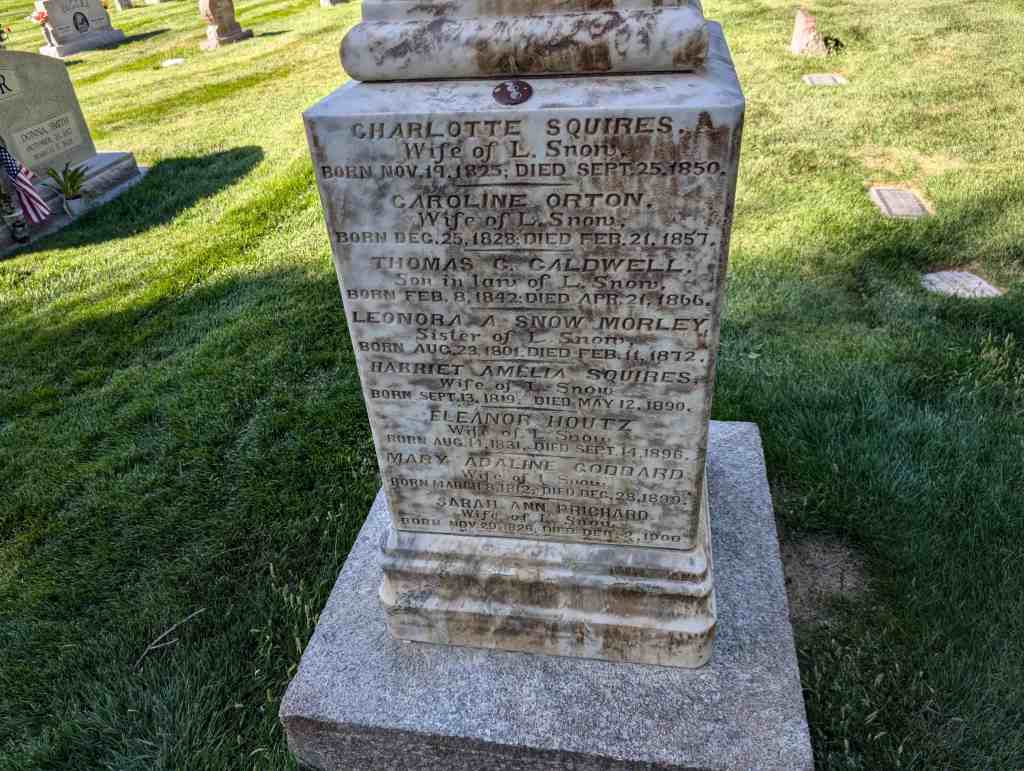
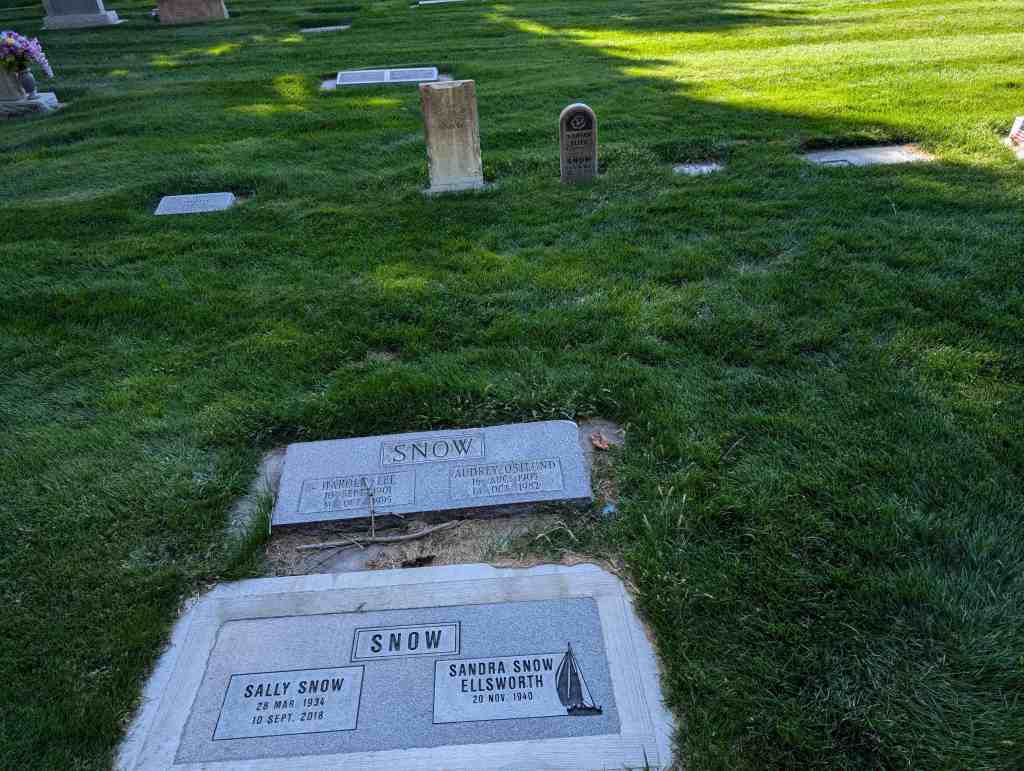
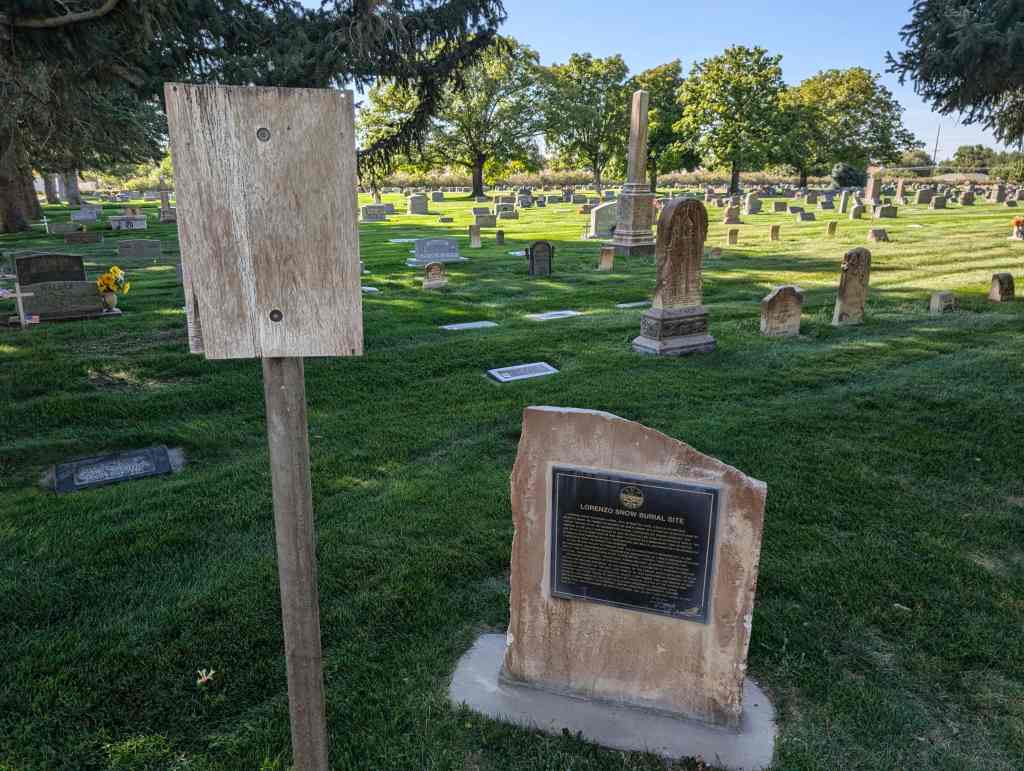
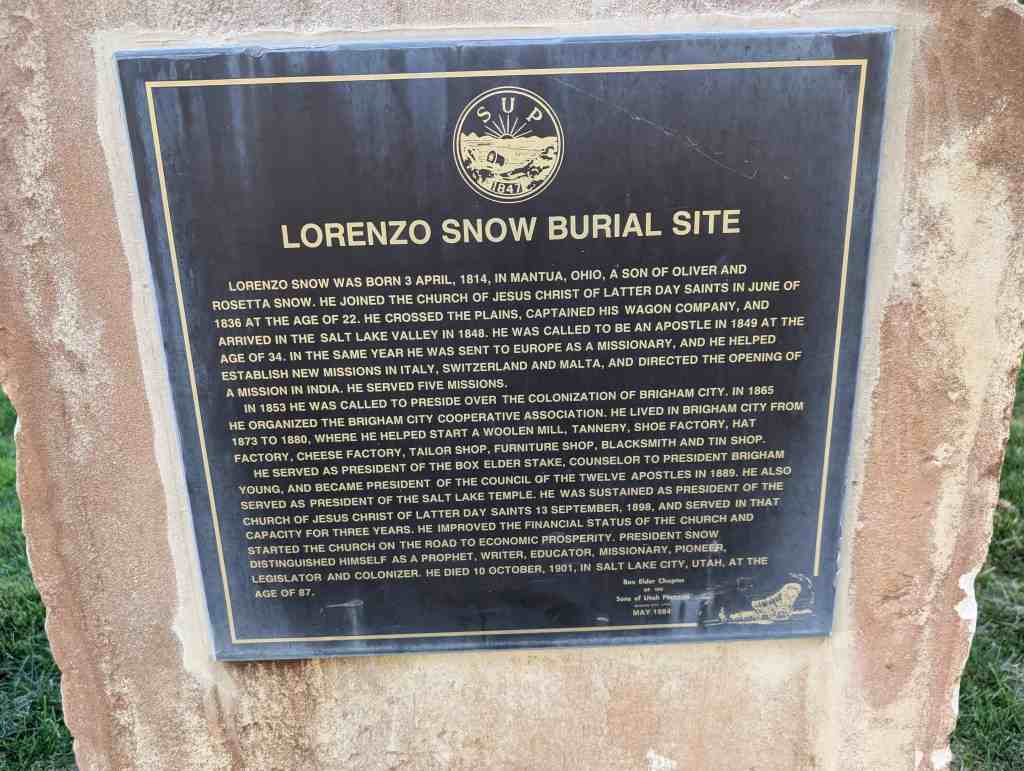
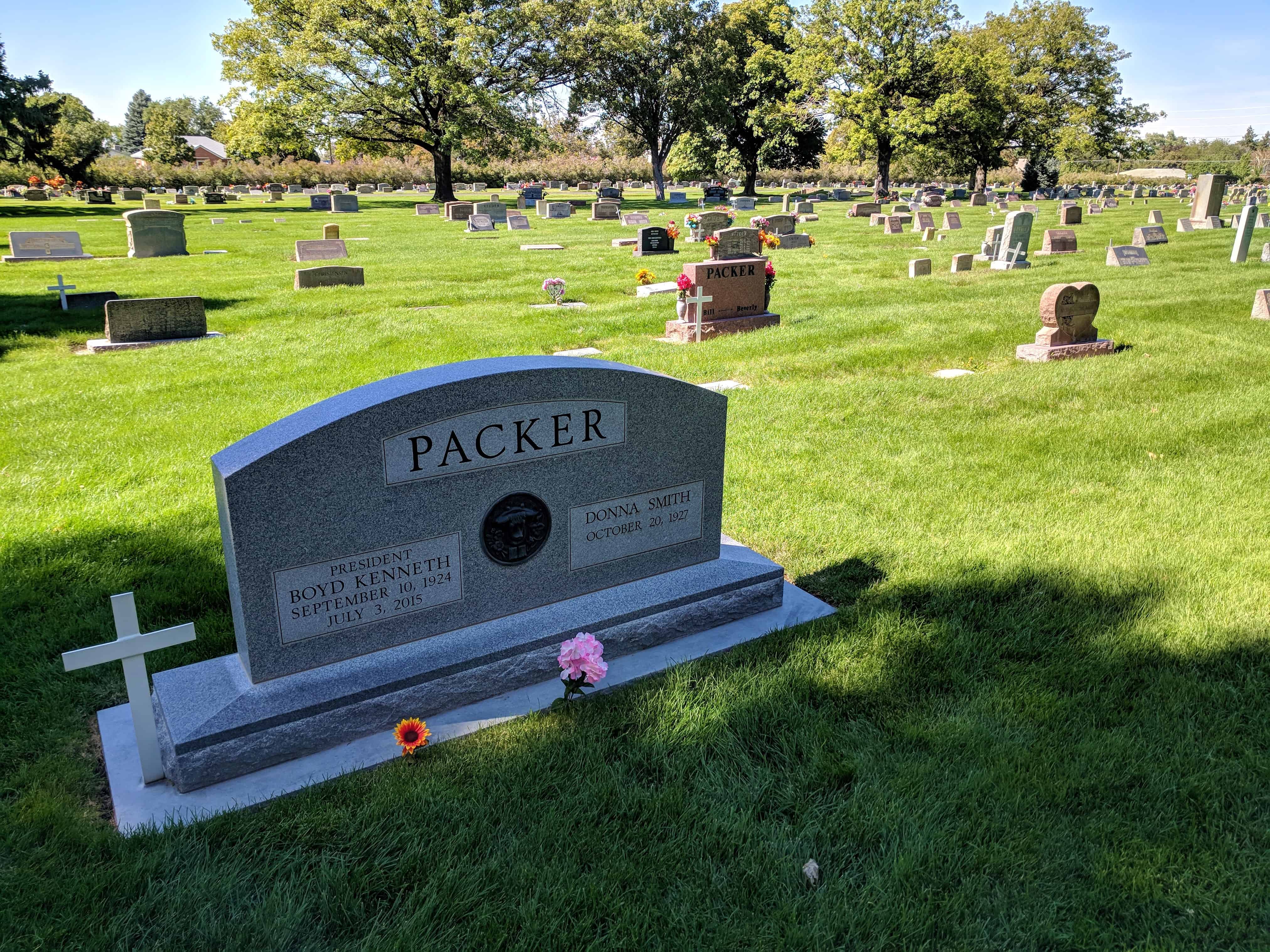
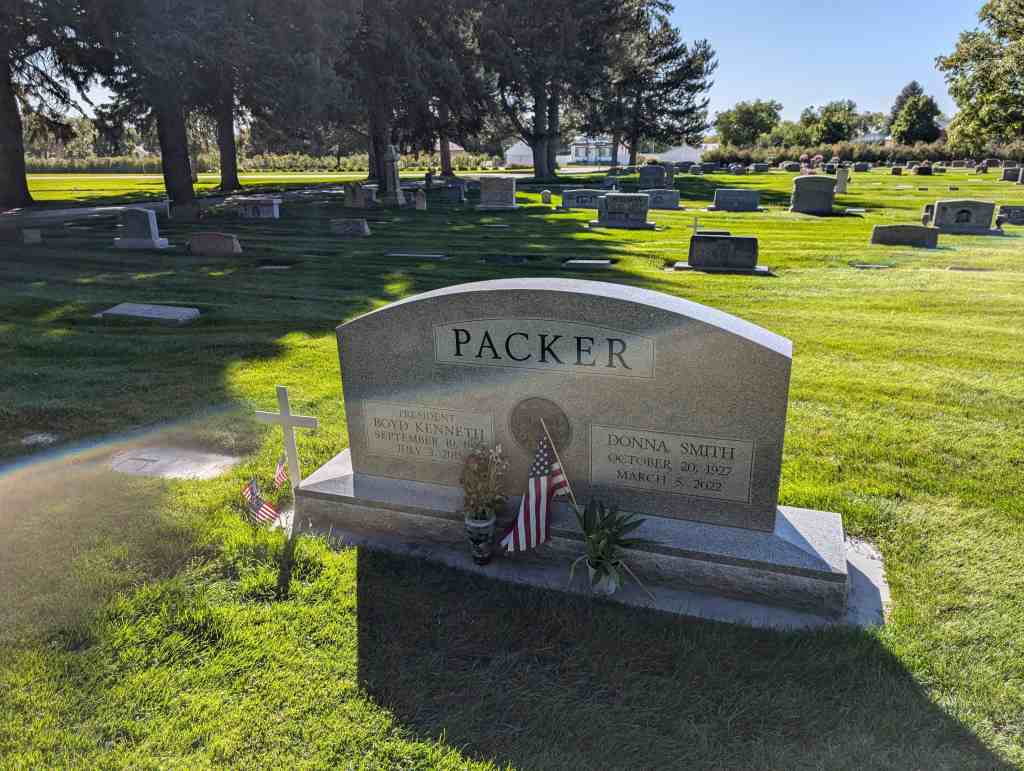
I grew up listening to President Boyd K. Packer and loved him. I stopped by to get pictures of President Lorenzo Snow’s gravesite and some of my family’s as well and was surprised to see this one here.
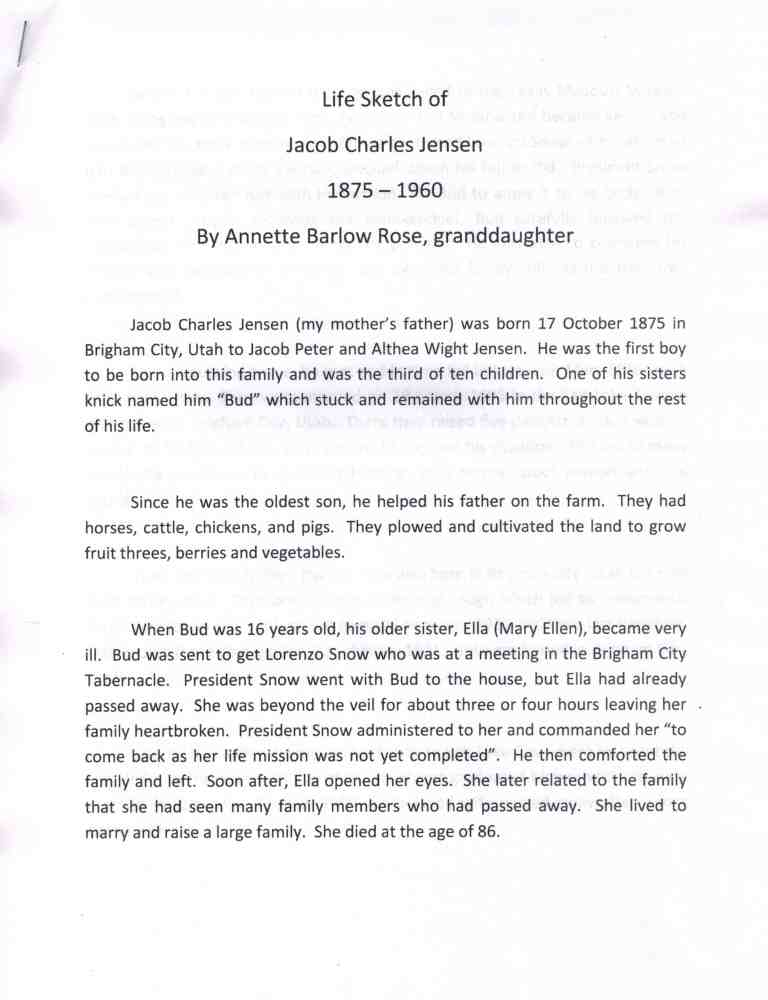
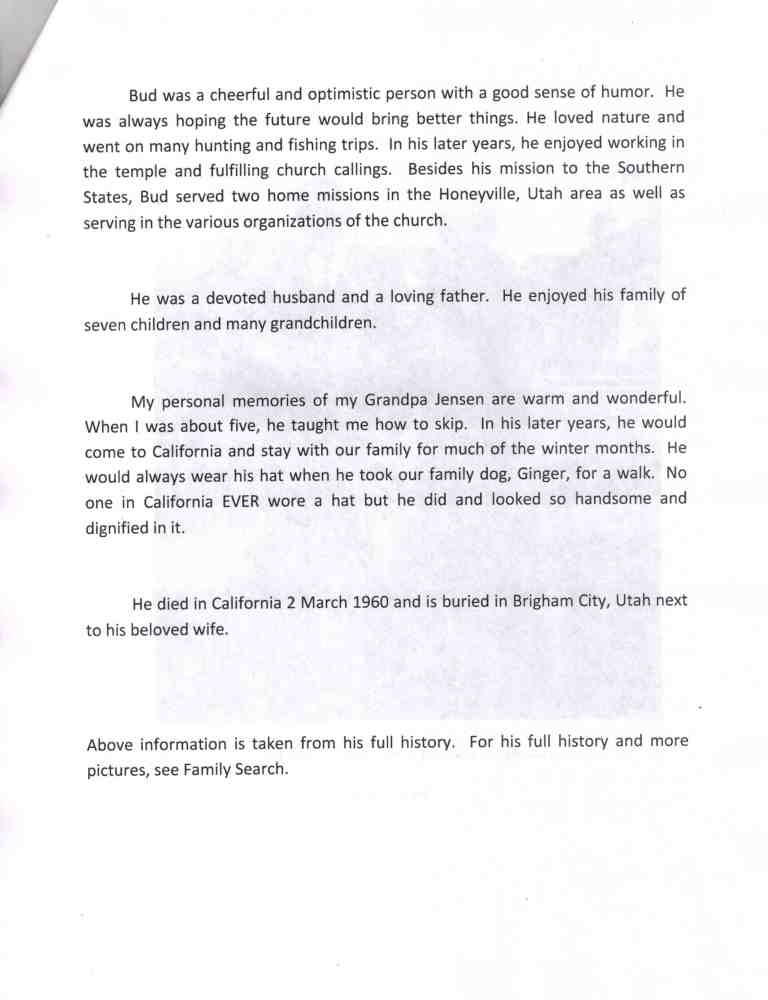
Jacob (Bud) was born October 17, 1875, in Brigham City, Utah. His father (Jacob Peter Jensen) and grandfather (Hans Peter Jensen) came across the plains after joining the Church of Jesus Christ of Latter-day Saints in Denmark. His mother’s family came from the Isle of Wight, off the coast of England.
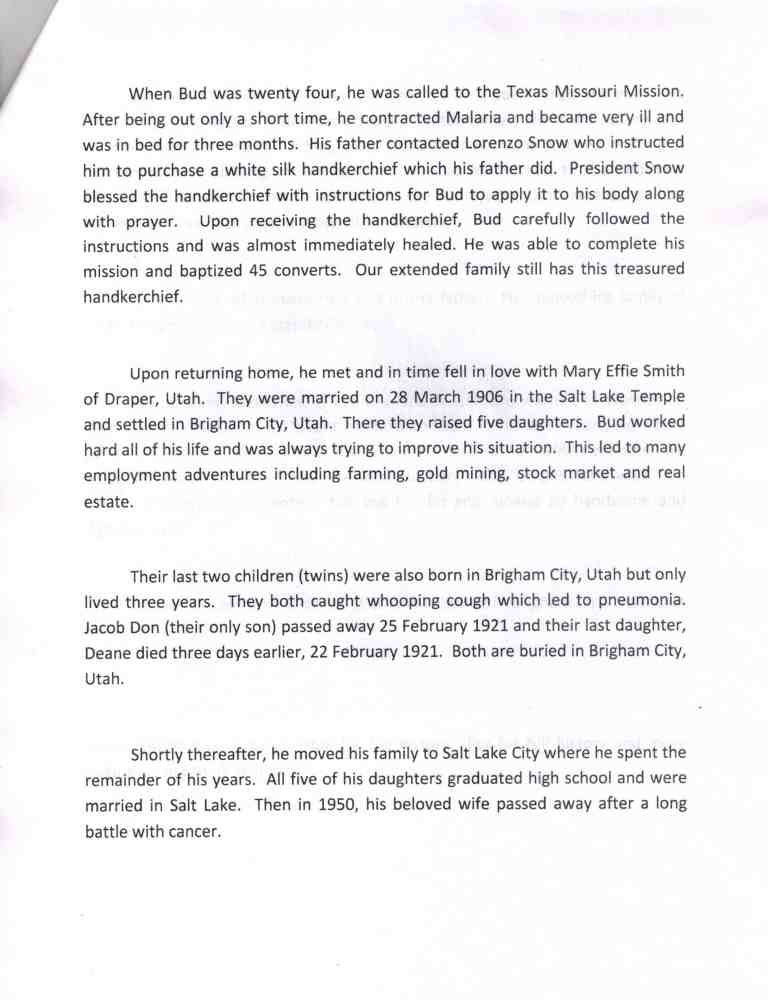
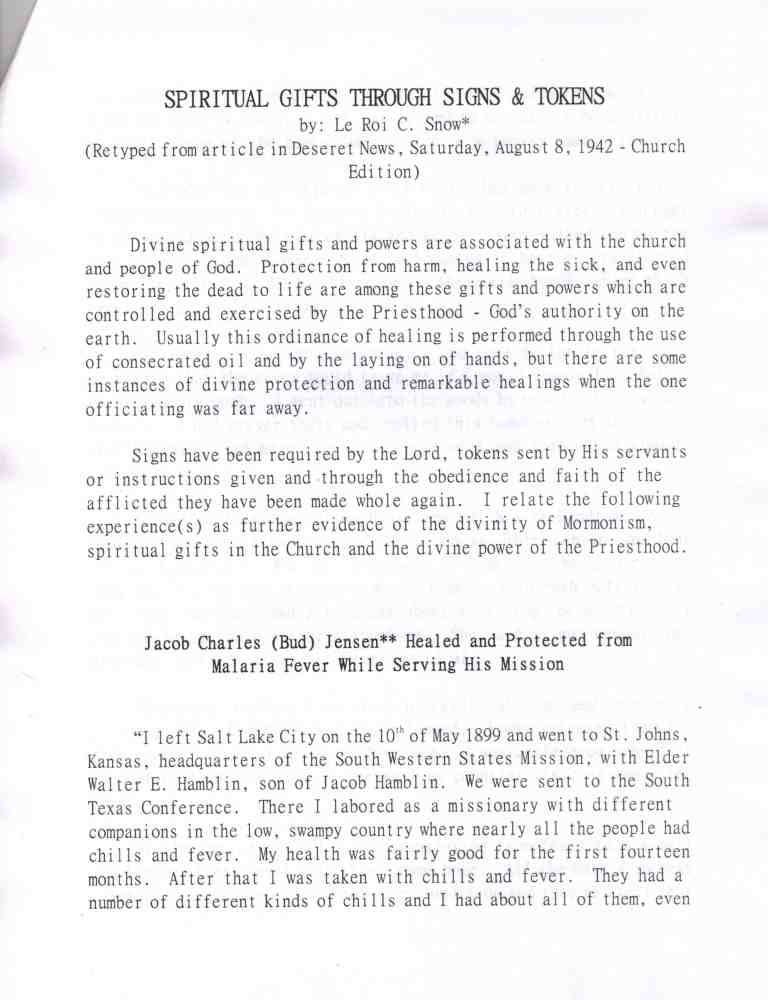
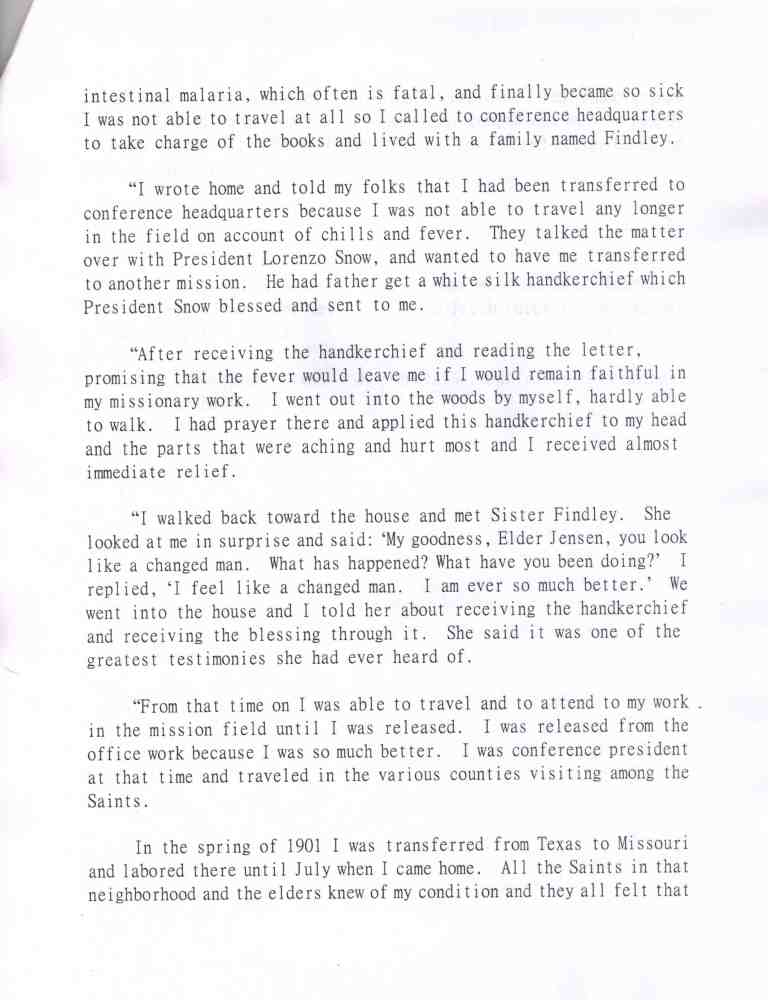
When Bud was 24 years old, he was called to the Texas- Missouri, Mission, serving with Walter Hamblin who was the son of Jacob Hamblin. After being out only a short time he contracted malaria, was seriously ill, and became bedridden for three months. When word came to his father, Jacob Peter contacted his uncle Lorenzo Snow. President Snow instructed Jacob to purchase a white silk handkerchief and bring it to him. Then President Snow blessed the handkerchief with instructions for Bud to apply it to his body along with prayer. Bud said, “After receiving the handkerchief and reading the letter, promising that the fever would leave me if I would remain faithful in my missionary work. I went out into the wood by myself, hardly able to walk. I had prayer there and applied this handkerchief to my head and the parts that were aching and hurt most, and I received almost immediate relief. I felt like a changed man. I was ever so much better.”
“From that time on I was able to travel and attend to my work in the mission field until I was released. I was released from the office work because I was so much better. I was Conference President at that time and traveled in the various counties visiting among the Saints.” Bud completed his mission in July 1901 after baptizing 45 converts.
Note: When Lorenzo Snow was 22 years old, he received his patriarchal blessing given by Joseph Smith, Sr., who was the father of the prophet Joseph Smith. This blessing was given in the Kirtland Temple. An excerpt from it says, “Thou shalt become a mighty man. Thy faith shall increase and grow stronger until it shall become like Peters-thou shalt restore the sick, the diseased shall send thee their aprons and handkerchiefs and by thy touch their owners shall be made whole. The dead shall rise and come forth at thy bidding.”
While visiting one of his missionary companions Bud broke out with smallpox and was quarantined there in the Shipp home. While there, after recovery, he met Mary Effie Smith. This courtship grew to marriage on Mary 28, 1906 in the Sal Lake Temple. They settled in Brigham City.
Family history and posterity continues to this day. Bud and Mary reared seven children and have numerous grandchildren. This reverenced handkerchief is in possession of the family.
Sources:
Article in Deseret News (Saturday, August 18, 1942)
Personal History of Mary Effie Jensen
Lorenzo Snow’s Patriarchal Blessing in the (Improvement Era, September 1929)
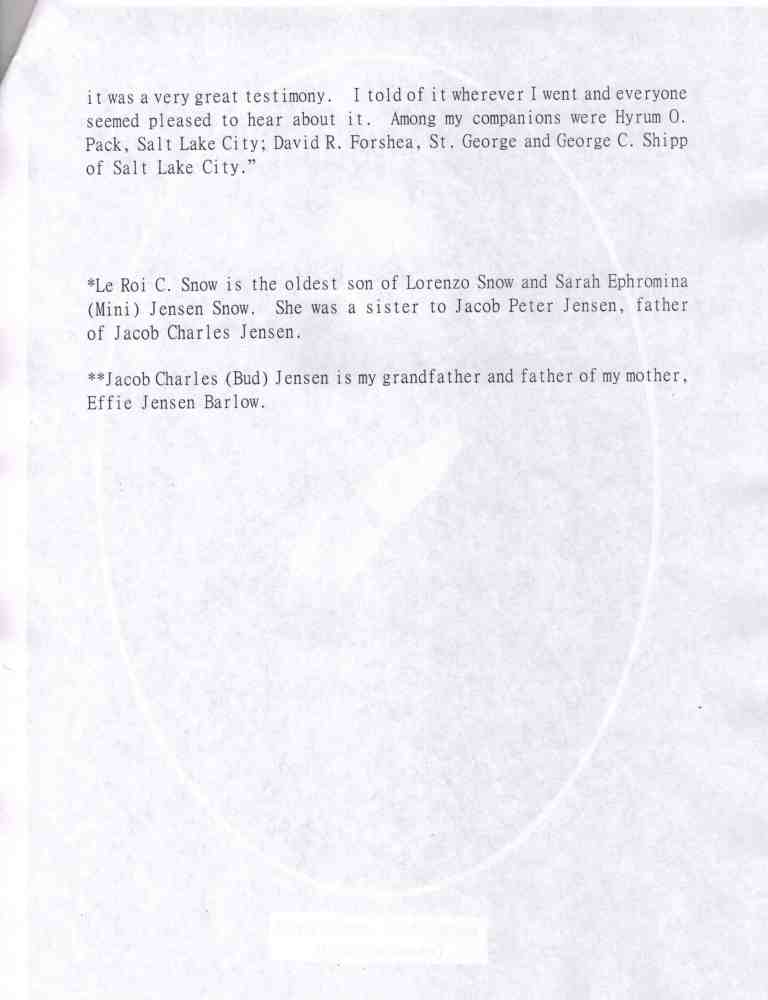
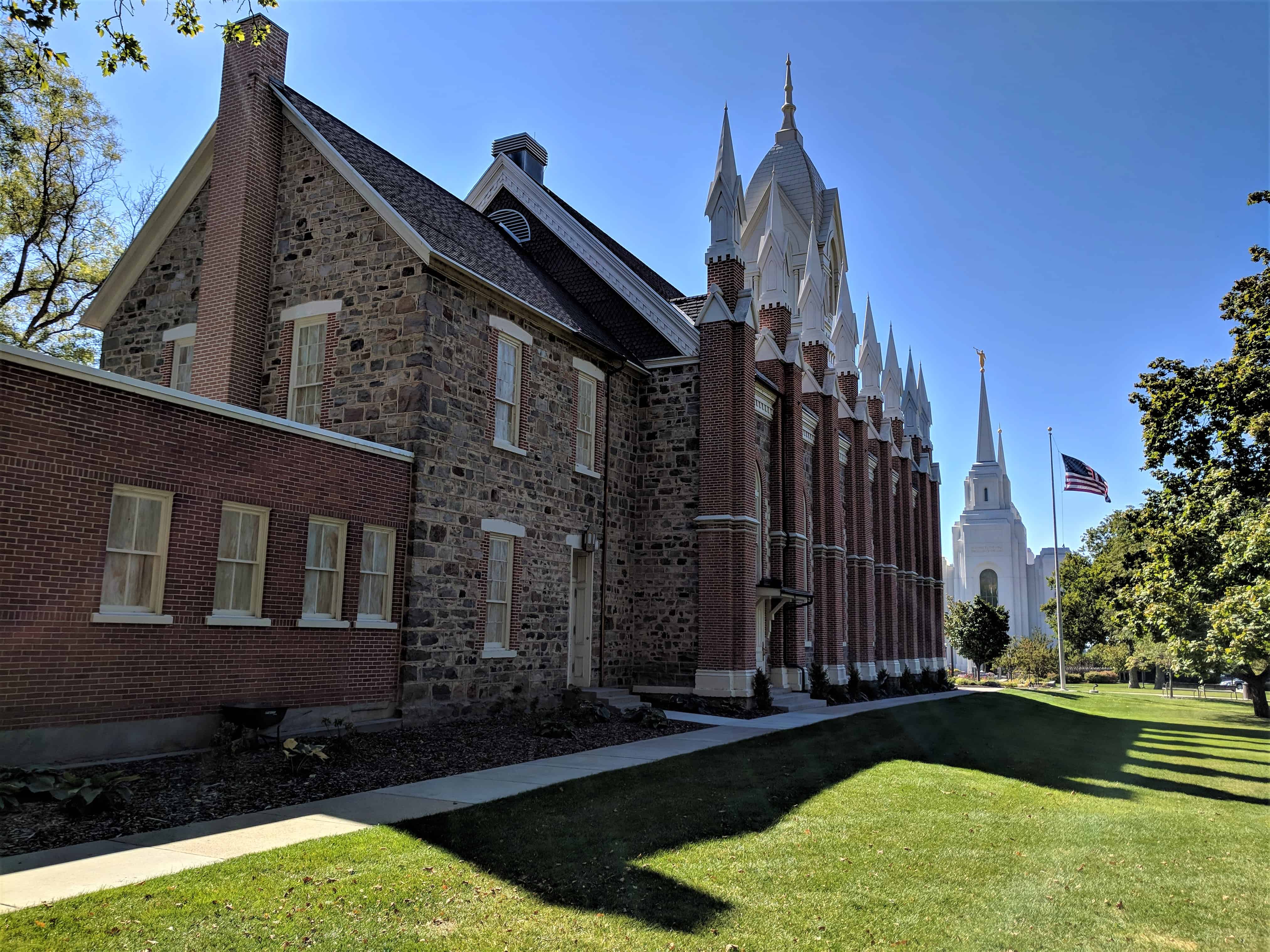
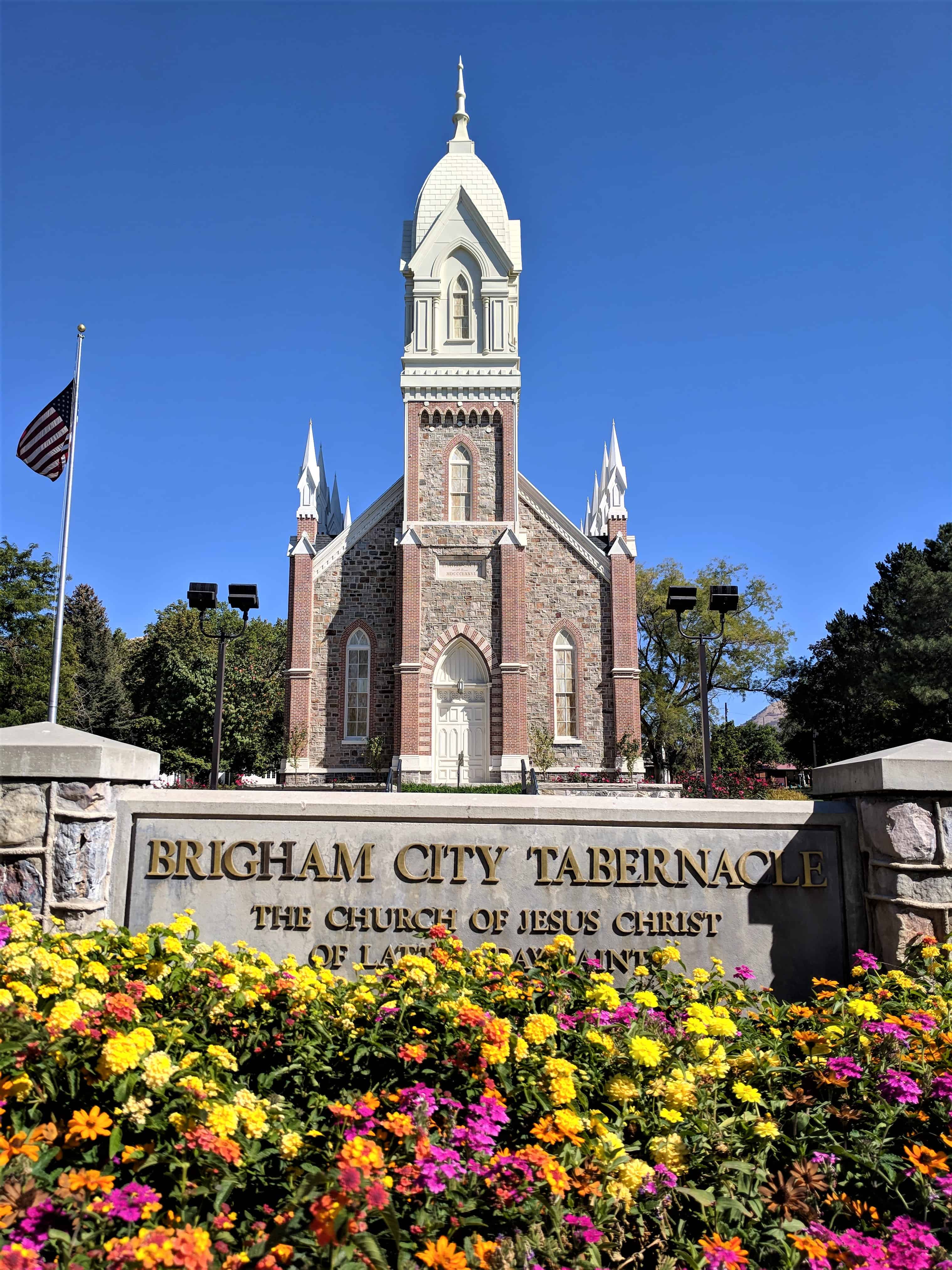
This stately building is one of the finest examples of nineteenth century Latter-day Saint architecture. For more than a century, it has served as a center of Christian worship, cultural enrichment, and community activities. Towering above the trees, it has become one of the principal landmarks of the region.
Members of the Church of Jesus Christ of Latter-day Saints settled this area in 1851, just four years after the arrival of the first pioneers in Salt Lake City. Under the leadership of Elder Lorenzo Snow of the Council of the Twelve Apostles, they built this town at the mouth of Box Elder Canyon, near traditional Shoshone Indian campgrounds and renamed it for the Church president Brigham Young. For many years they worshiped in a log meetinghouse and in the local courthouse, but in 1865 Brigham Young directed Elder Snow and other community leaders to build a tabernacle for conferences of the Box Elder Stake. The local leaders had already selected a site on the corner of Main and Forest Streets in the center of town when President Young visited the community. However, according to tradition, he led them here to “Sagebrush Hill,” the highest point on Main Street and said, “This is the spot for your Tabernacle.” The selection of this site insured that the building would be visible for many miles across the valley. President Young and his territorial surveyor Jesse W. Fox laid the cornerstones on 9 May 1865.
Construction proceeded slowly as local manpower was diverted to completing the transcontinental railroad. Work on the building resumed in earnest in 1876, mostly with donated labor. Local craftsmen used quartzite, sandstone and lumber from the nearby mountains. Women donated produce from their gardens and eggs laid on Sundays to sell for the needed cash for glass and other materials that could not be produced locally. Fourteen years after Brigham Young laid the cornerstone, the first meeting in the partially completed building took place on 27 May 1879.
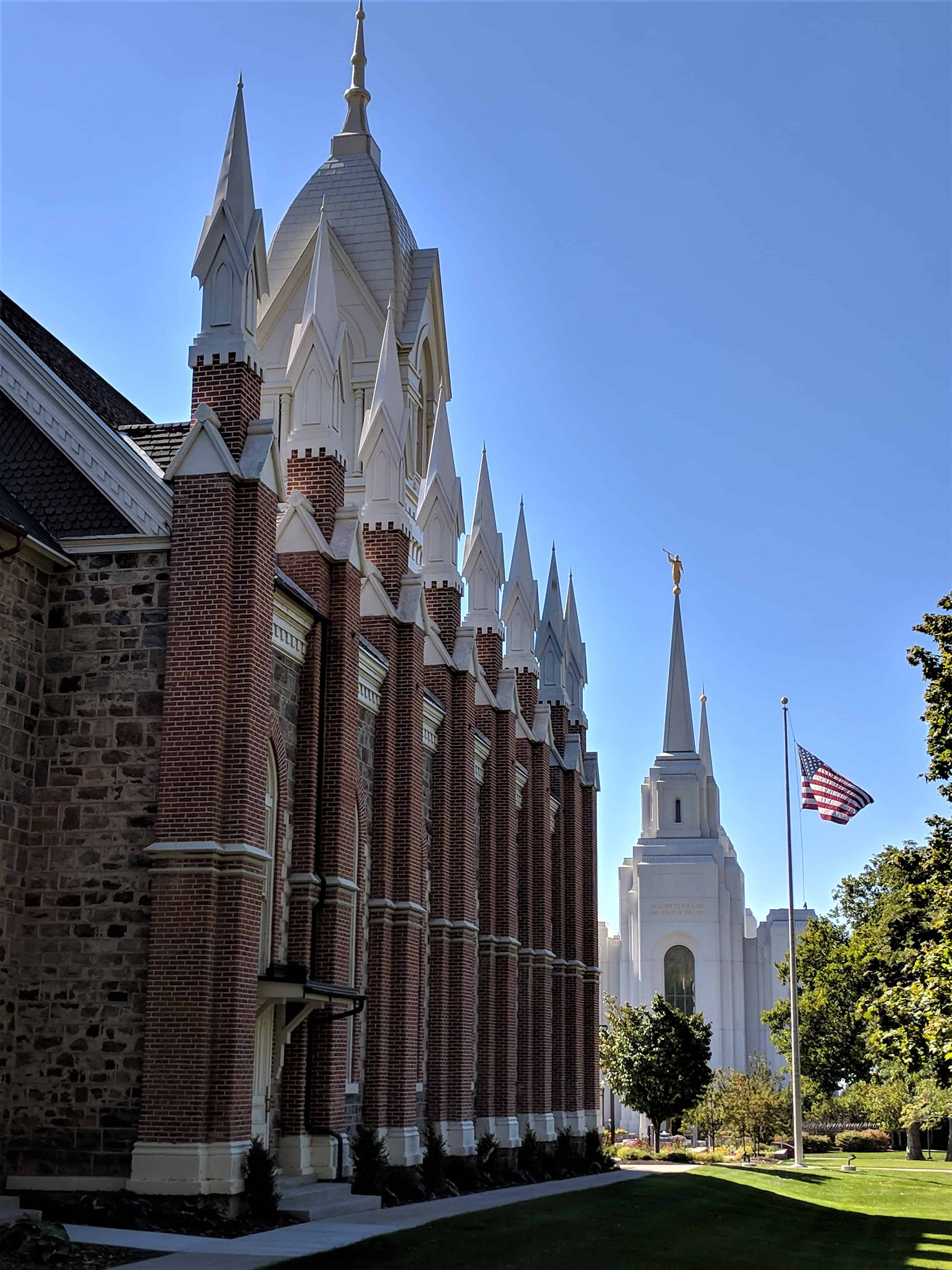
As originally built, the Tabernacle was sturdy but plain in appearance. However, in 1889, a conference of the Box Elder Stake voted to “complete” the building. In the following months, a tower, a gallery, a rear vestibule, brick buttresses with decorative caps, and other improvements added to beautify the structure. Church President Wilford Woodruff dedicated the finished building 28 October 1890.
On Sunday 9 February 1896, as people began to assemble for afternoon services, a fire started in the furnace room. No one was injured but despite frantic efforts, only smoke-blackened stone walls remained an hour later. Stake President Rodger Clawson supervised reconstruction over the next thirteen months. The new Tabernacle was even finer than the old, with elegant woodwork, a distinctive gothic/revival tower and sixteen graceful pinnacles. On 21 March 1897, George Q. Cannon, First Counselor to President Woodruff, dedicated the rebuilt structure.
Throughout the following years, the people of Brigham City and neighboring towns have preserved and maintained this beloved building. In 1971, it was listed on the National Register of Historic Places, one of the first buildings in Utah to be so honored. Beginning in 1985, an extensive restoration project replaced the mechanical and electrical systems, reinforced the structure, and carefully renewed both the exterior and interior to guarantee the continued preservation of this magnificent landmark. The 106-old Tabernacle was rededicated on 12 April 1987 by Elder Boyd K. Packer of the Council of the Twelve Apostles, a native of Brigham City.
Box Elder Tabernacle- Built 1867-1890 Pioneer settlers used stone and wood from nearby mountains and their finest craftsmanship to built this place of worship. It was finished and dedicated in 1890. Six years later in 1896, it was gutted by fire and had to be rebuilt. The building was finished and rededicated in 1897.
The following is from the National Historic Register’s nomination form:
During the summer of 1865, Brigham Young visited the community. When he observed men beginning an excavation, he asked its purpose. When told it was to be the site of their new tabernacle, he objected. Taking Jesse W. Fox, church surveyor with him, he located a spot on Sagebrush Hill, the back bone of the community. Actually, the site was on the crest of the alluvial fan so characteristic of many of the Mormon communities along the Wasatch front. From that spot the water ran north, south and west.
During the next 11 years rocks were hauled to the site. Construction was begun with some serious intent in 1876. By 1881, the building was sufficiently completed to hold conference in it. However, the buiIding was not finished until 1890. It was dedicated by President Wilford Woodruff October 27th of that year. The building had taken twenty-five years to build, in part because the small community was also building numerous other structures tannery, gristmills, broom factory, etc. under the cooperative arrangement of the United Order or communal economic system.
The lovely structure served well, except for the furnace. One Sunday afternoon, February 9, 1896, it burned down, leaving only the four sturdy walls standing. Stake President Charles Kelley asked architects to investigate the walls. They were declared sound. On March 27, 1896, the people voted to rebuild it. Monies were solicited from as far away as Salt Lake City. Reconstruction began immediately and by March 21, 1897, a lovely new structure was ready for dedication by Apostle George Q. Cannon.
Brigham City holds its tabernacle in high regard. It sits proudly on the crest of the hill, probably one of Utah’s most photographed buildings. Its architectural style and history mark it as one of the State’s most significant structures.
Brigham City’s first Stake President was Lorenzo Snow 1853-1877. He was succeeded by Oliver B. Snow, who served until 1888 when Rudger Clawson became president. His successor, who rebuilt the Tabernacle, was Charles Kelley. The building is still used for L.D.S. Church functions and is open to the public on a restricted basis.
The original Box Elder Stake Tabernacle was built of field stone collected nearby. The architect was probably Truman O. Angel, Jr. or his father, one of the more famous L.D.S. Church architects. The Tabernacle was 50 feet by 95 feet with a tower rising above each of the four corners. The interior when finally completed in 1890, had a gallery on the north and south walls, with the elevated speaker’s stand on the east end. Most of the lumber was hauled from nearly mountains, sawed and delivered to the site. The seating capacity was 1200.
After the building burned in 1896, it was rebuilt even more elaborately. The restoration architect is not identified. Sixteen brick buttresses were added to the exterior with steeples topping each one, A major tower was built on the front. The style has been described as neo-Sothic. Inside the building a vestibule was added, and the seating capacity increased by 400. A very simple hand-carved design goes all around the new balcony to focus the eyes on the pulpit which, with the choir seats, is now on the west end of the building.
The building has an excellent organ and modern lighting and heat. It is maintained by the Box Elder Stake L.D.S. Church.
The Knudsen Cabin, built by Porter Squires for Wilhelm and Laura Amelia C. Knudsen. In 1855 was one of the first permanent structures in Brigham City. Located on the corner of First East and First South, the original cabin was 14 feet x 16 feet. It had a lot running the full length of the inside walls and was entered by means of a small square outside door just below the gables. Six of their thirteen children were born in the cabin during the years from 1856-1865.
The Cabin was moved to Rees Pioneer Park in 1929 where it could be preserved as a typical pioneer dwelling. The move cost $15.00. Charles Squires, son of the original builder, was hired to do some restoration work for $221.00. It was dedicated September 8, 1929.
In 1993 Box Elder South Company Daughters of Utah Pioneers made arrangements to lease enough land to form a yard around the cabin permitting removal of the 1948 cover which had largely obscured it from view. Renovation and restoration followed including installation of a clay floor, cedar roof and half-loft; and planting of old fashioned flowers in the yard and furnishing the cabin with pioneer originals and replicas – all combining to create more fully the atmosphere of a 1855 pioneer home. Bronze plaque on chimney of cabin: Pioneer Cabin built by Porter Squires 1855 for Wm. Knudsen moved to this location 1929 by Box Elder County Daughters of Utah Pioneers.
(Information from Wikipedia) Brigham City is a city in Box Elder County, Utah. The population was 17,899 at the 2010 census. It is the county seat of Box Elder County. It lies on the western slope of the Wellsville Mountains, a branch of the Wasatch Range at the western terminus of Box Elder Canyon. Brigham City saw most of its growth during the 1950s and 1960s, but has seen a struggling economy and stagnating growth since then. It is near the headquarters of ATK Thiokol, the company that created the solid rocket boosters for the Space Shuttle.
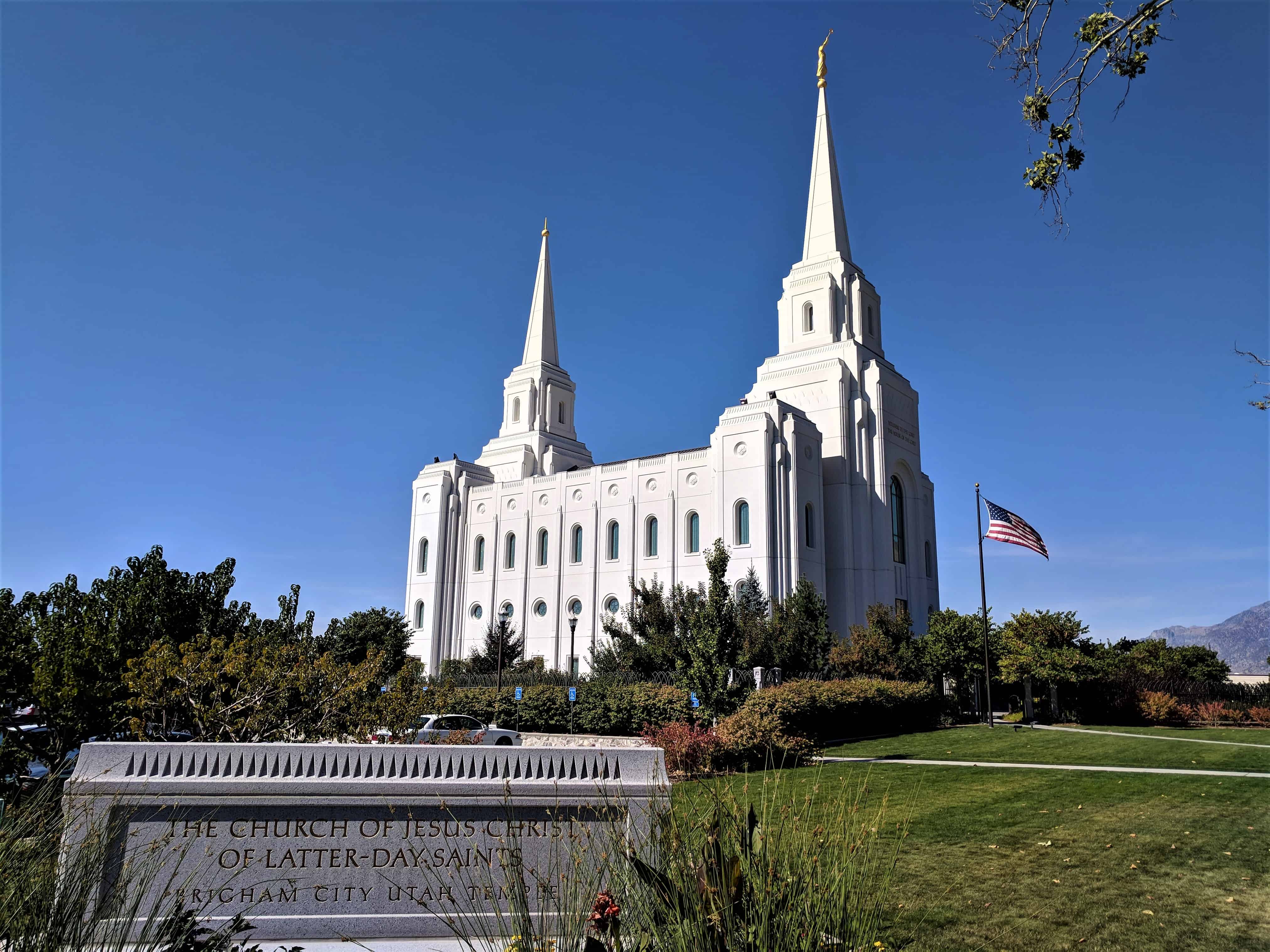
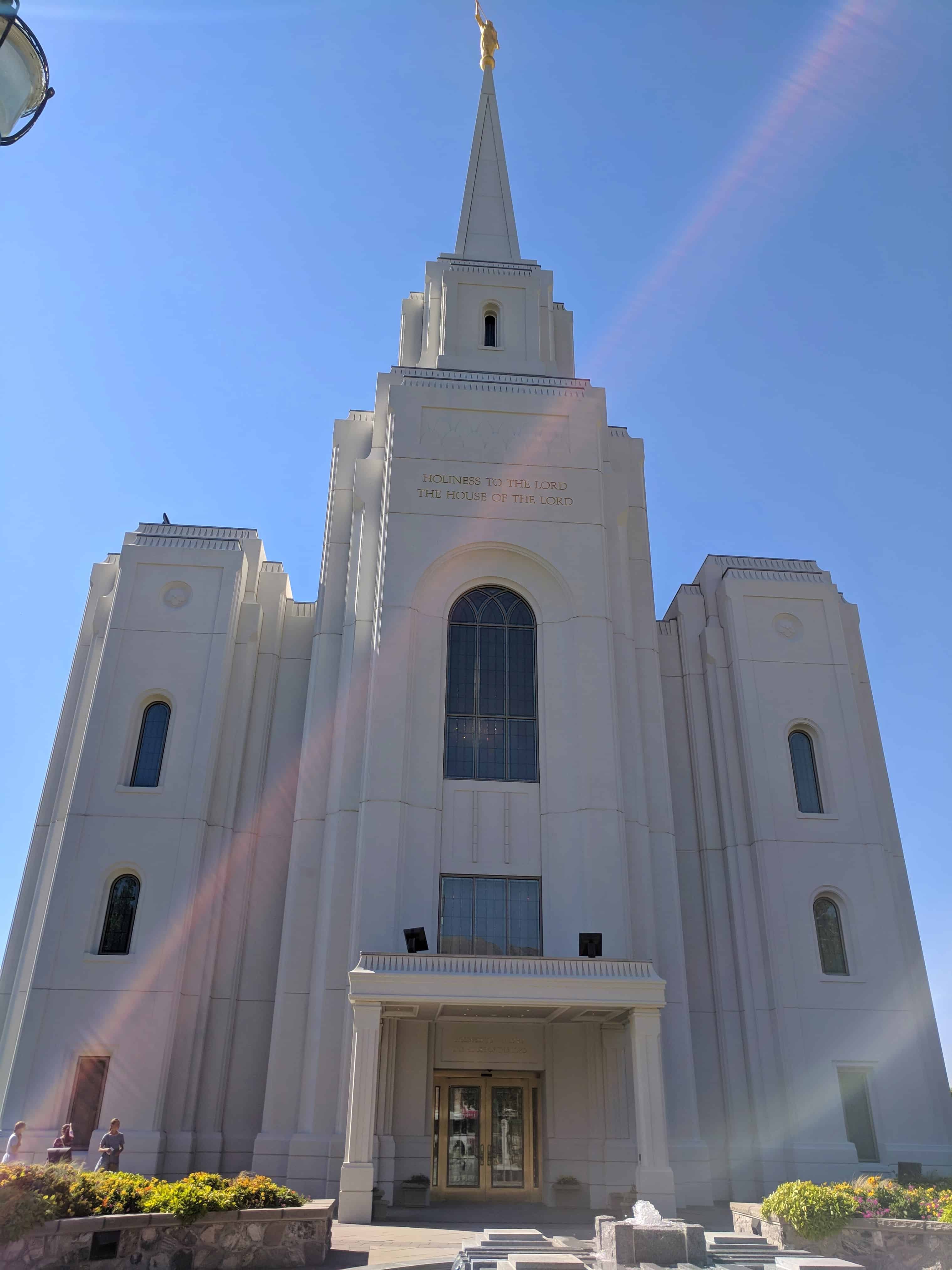
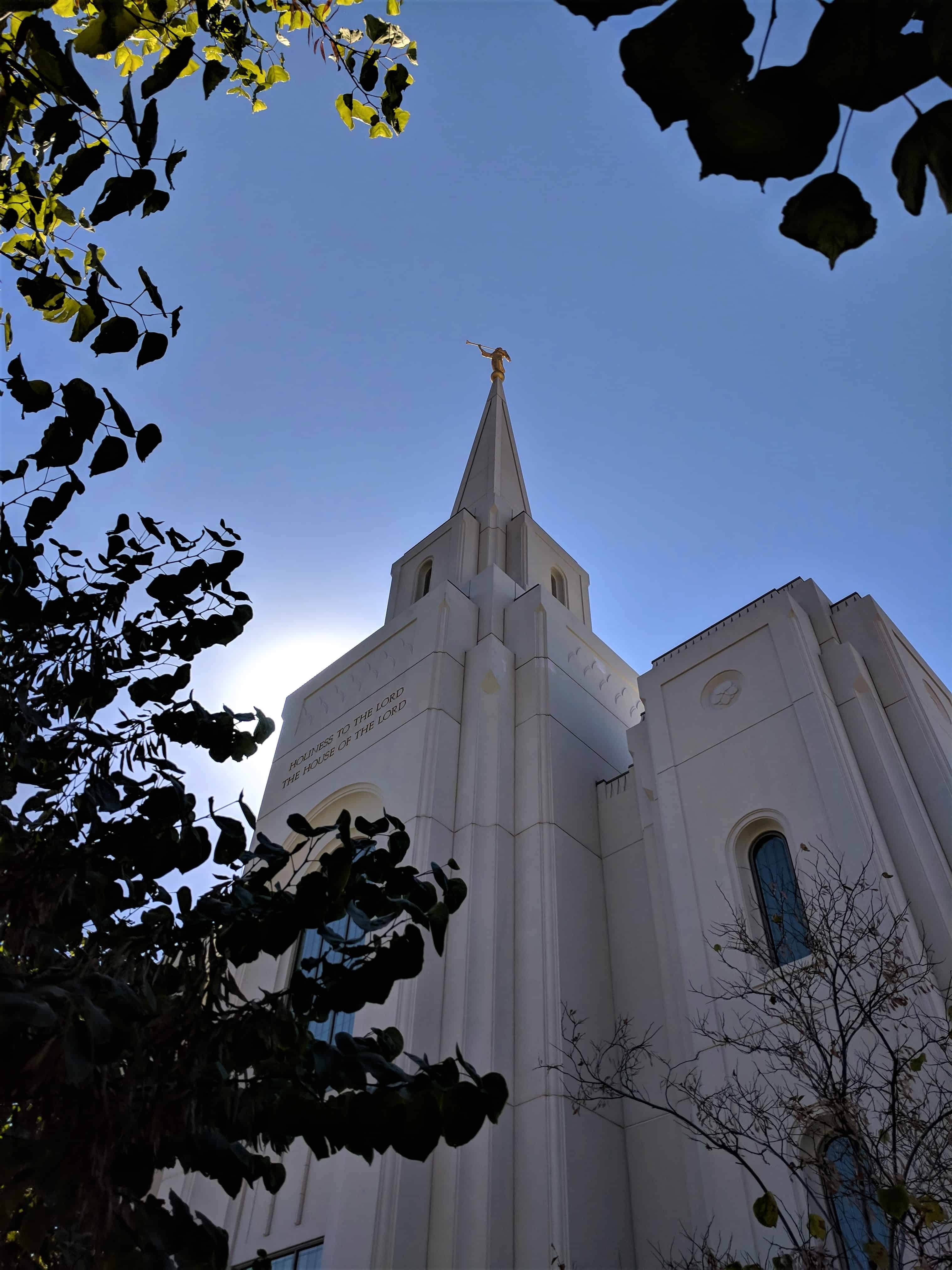
Brigham City is known for its peaches and holds an annual celebration called Peach Days on the weekend after Labor Day. Much of Main Street is closed off to cars and the festival is celebrated by a parade, a car show, a carnival, and other activities. The The Church of Jesus Christ of Latter-day Saints (LDS Church) recently completed building a temple in downtown, which is the 14th in Utah.
Mormon pioneer William Davis first explored the Brigham City area in 1850. He returned with his family and others a year later to create permanent homes. Brigham Young directed Lorenzo Snow to create a self-sufficient city at the site in 1853. Snow directed both religious and political affairs in the settlement, eventually naming it Box Elder in 1855. Brigham Young gave his last public sermon there in 1877 shortly before his death and the name of the town was changed to Brigham City after the church president. In 1864, the cooperative movement began in earnest with the creation of a mercantile co-op store and was an important element of the United Order of Enoch. Other industries were added, and the Brigham City Co-op is widely recognized as the most successful of the Mormon Co-op ventures. Economic hardships brought an end to the Co-op in 1895, though the Co-op had first started selling businesses off in 1876.
World War II brought a major economic boost to the city. The federal government created Bushnell General Hospital on Brigham City’s south side to treat soldiers wounded in the war. Locals sold supplies and food to the hospital while hospital staff patronized local businesses. After the war, the hospital’s buildings were used as Intermountain Indian School. Many young Native Americans attended the boarding school until it closed in 1984, although the Intermountain “I” on the mountain is still visible in tandem with Box Elder High School’s “B”. The facility has left its mark in a number of other ways, with most of the buildings still standing. Some have been converted into businesses and condos, while others remain empty.