
Smithfield Fire Station, built in 1940 and located at 71 North 100 West in Smithfield, Utah
Related:


10 Sunday Mar 2024
Posted in Uncategorized
Smithfield Fire Station, built in 1940 and located at 71 North 100 West in Smithfield, Utah
Related:
10 Sunday Mar 2024
Posted in Uncategorized

Build in 1895 and located at 91 West 100 North in Smithfield, Utah
Related:


05 Tuesday Mar 2024
Posted in Uncategorized
Tags
Cache County, DUP, museums, NRHP, Relic Halls, Richmond, Tithing Offices, utah
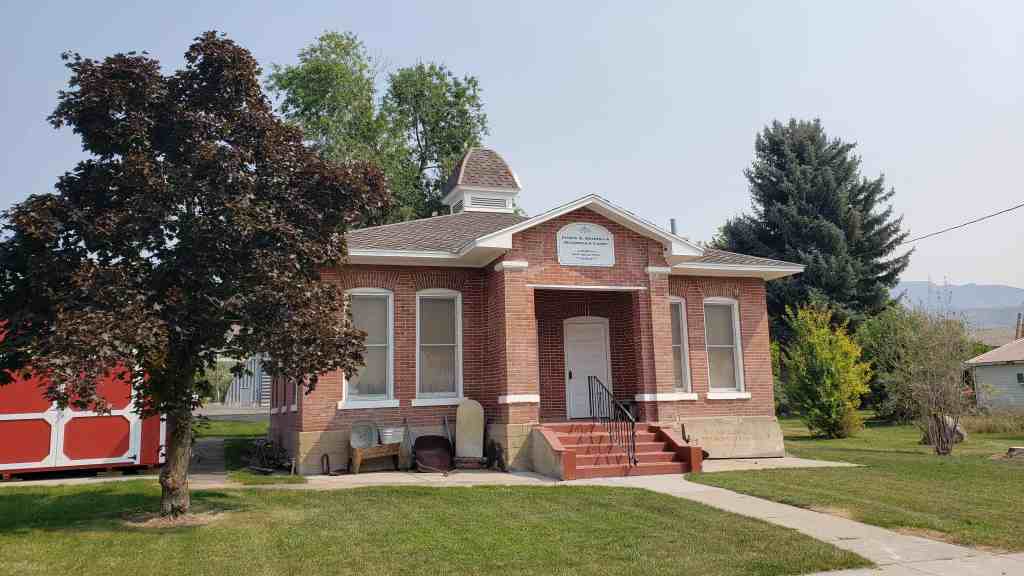
Built in 1907, the Richmond Tithing Office is significant as one of 28 well preserved tithing buildings in Utah that were part of the successful “in kind” tithing system of The Church of Jesus Christ of Latter-day Saints (LDS or Mormon church) between the 1850s and about 1910. Tithing lots, which usually included an office and several auxiliary structures, were facilities for collecting, storing, and distributing the farm products that were donated as tithing by church members in the cash-poor agricultural communities throughout the state. Tithing offices were a vital part of almost every Mormon community, serving as local centers of trade, welfare assistance, and economic activity. They were also important as the basic units of the church-wide tithing network that was centered in Salt Lake City, This building is also significant as one of about ten tithing offices which, having been built according to standard plans issued from church headquarters, represent the first known instances of centralized building administration in the LDS church.
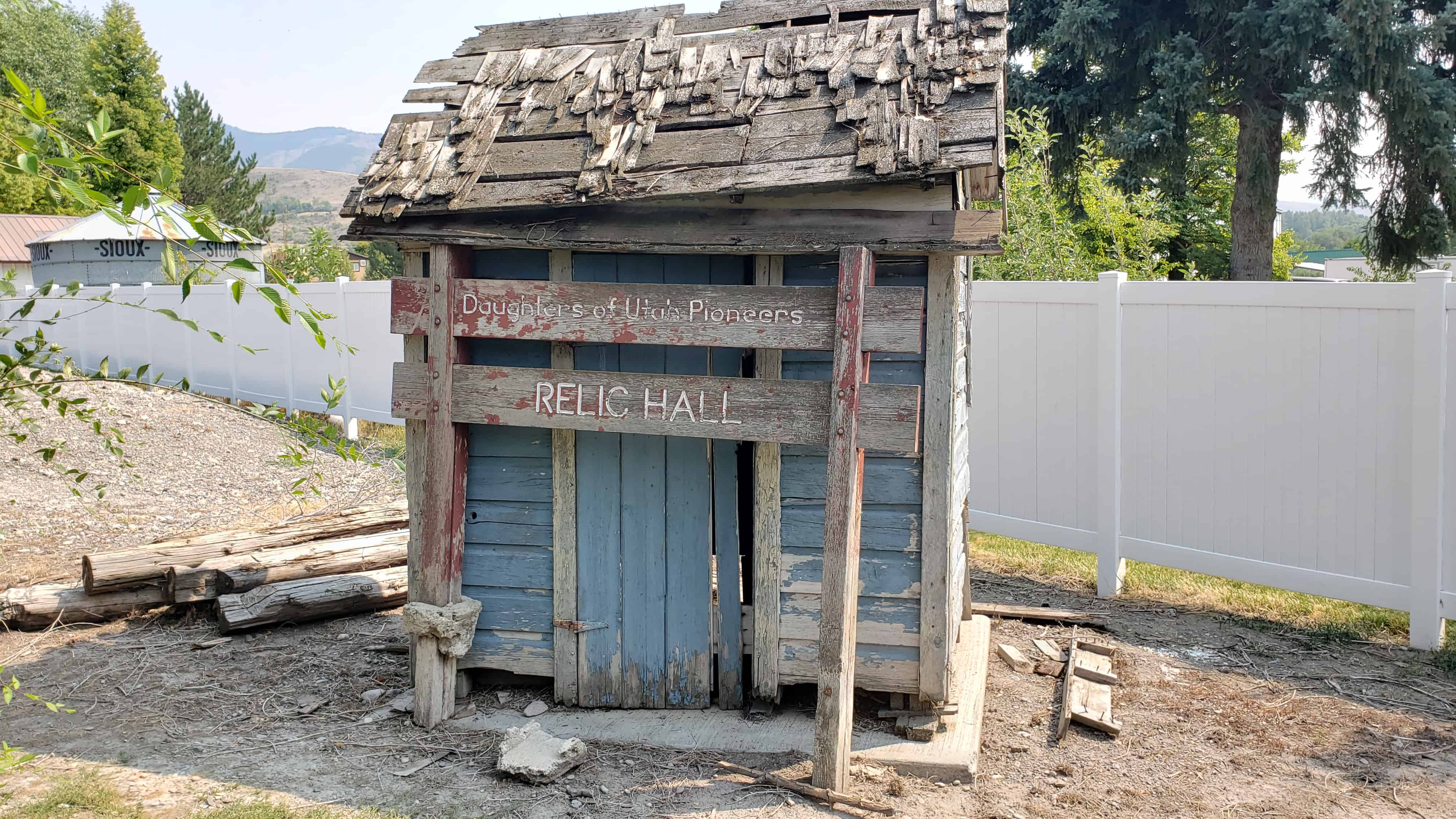
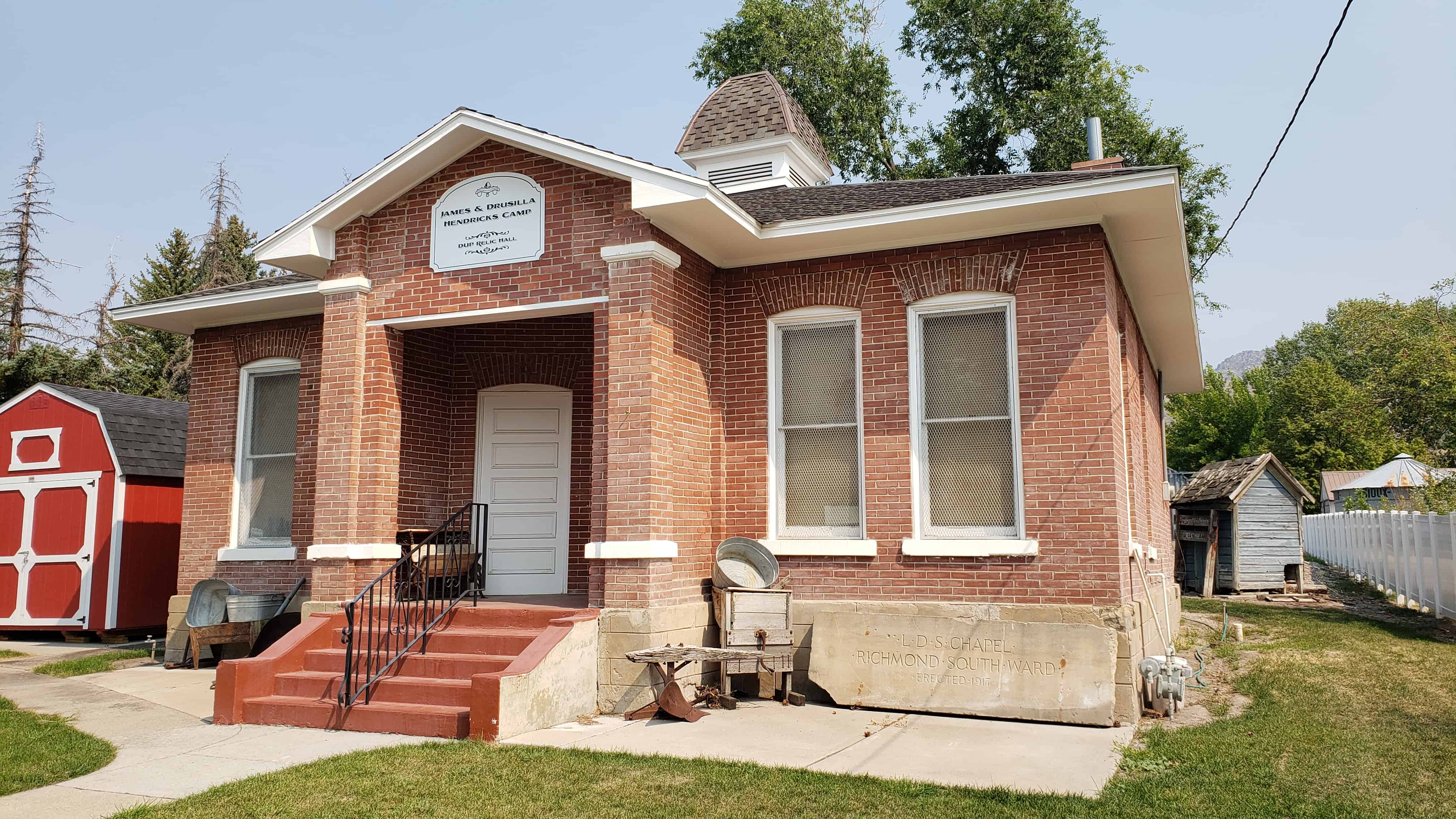
The Richmond Tithing Office is now the Richmond D.U.P. Relic Hall, James & Drusilla Hendricks Camp, located at 25 South State Street in Richmond, Utah. It was added to the National Historic Register (#85000256) on January 25, 1985.
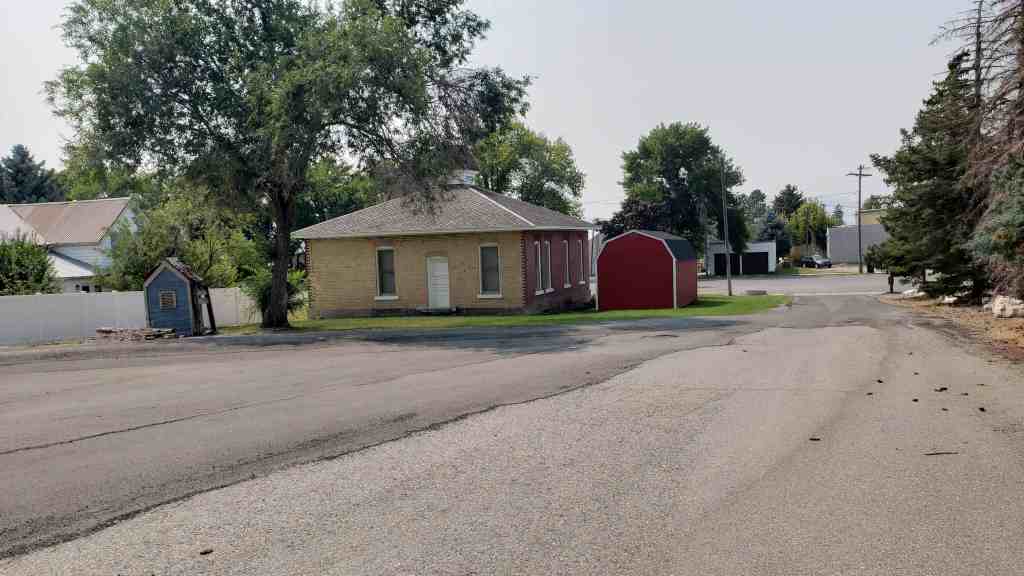
In January 1907, Stake President Alma Merrill and Bishop Thomas H. Merrill of the Richmond Ward, submitted a request to the Presiding Bishopric of the LDS church for approval to construct a new tithing office which would also serve as offices for the stake presidency and a meeting place for the stake high council. Land for the new building was provided on the tithing lot in the center of town. Although plans for the building were provided by church headquarters in Salt Lake City, detailed instructions for constructing the building were not given. The Presiding Bishopric offered the following explanation for those omissions: “…regarding specifications for tithing office no. 3, will say, that no specifications were provided other than the bill of material listed on the plans, owing to the fact that the different stakes erect the office of the material at their disposal. ” A local builder, James Lewis Burnham, was reportedly hired to construct the tithing off ice, 3 which was completed by December 1907 or January 1908. In February 1908, Bishop Merrill applied to the Presiding Bishopric for help in furnishing the office. Construction of a fence around the new building and planting grass on the property were finishing touches to the new tithing office that were recommended by the stake clerk in June 1908, but it is unknown whether or not they were ever accomplished.
The design of the Richmond Tithing Office was one of at least three standard tithing office plans that were developed at church headquarters around 1905 and sent out to a number of wards in the state that requested to have a new tithing office built. Those plans were perhaps the first examples of what eventually became a policy with the church – developing standard building plans at church headquarters rather than having each ward generate its own. In addition to the Richmond Tithing Office, other tithing offices in the state that were built according to the plans of “tithing office no. 3” are those in Manti, Sandy, Panguitch, and Hyrum, all of which were built between about 1905 and 1910.
The Richmond Tithing Office was owned by the Richmond Ward of the LDS church until 1968, when it was sold to Richmond City. The city has allowed the local chapter of the Daughters of the Utah Pioneers to use the building as their relic hall.

The Richmond Tithing Office is a one story square red brick building with a pyramid roof, a coursed ashlar foundation, and a projecting gabled pavilion on the façade. It was designed from one of at least three standard plans which were created for tithing offices about 1905, two of which have been identified. The design of the Richmond Tithing Office has been identified as type No. 3, and is almost identical to the design of the Sandy, Manti and Panguitch Tithing Offices. It is also very similar to the Hyrum Tithing
Office. The façade is symmetrically arranged with a gabled pavilion centered between pairs of one over one double hung sash windows. The pavilion has a flat arch opening. Above the opening is an inset rectangular panel above which is an enclosed semi -circular vent. Pilasters are attached to the corners of the pavilion. Two doors open off the pavilion, each set at an angle into the wall under the pavilion. The arrangement of openings on the other three sides of the building is irregular, but is very similar to that of
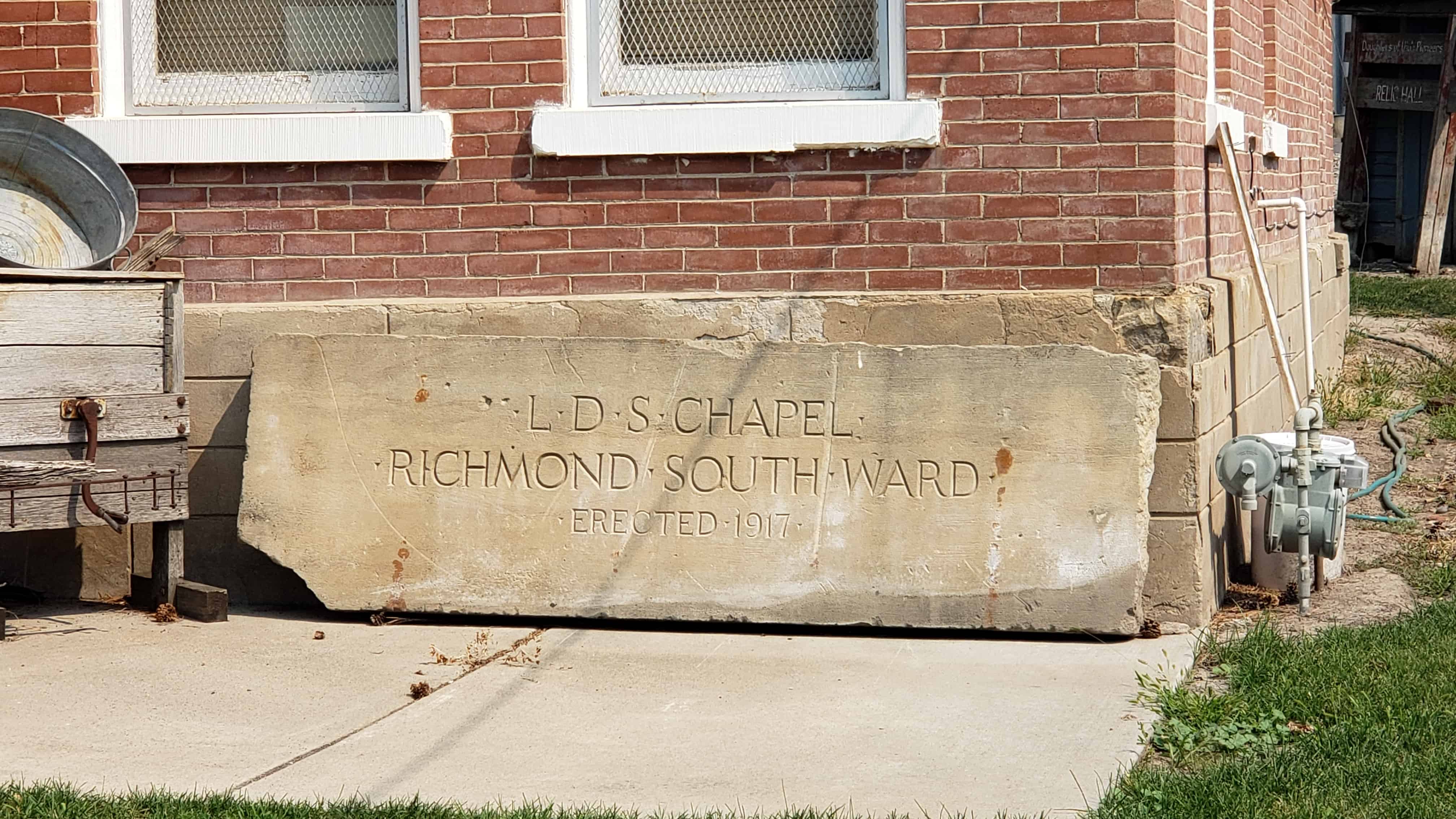
other tithing offices of this type. Decorative elements include a wide frieze which wraps around the building below the cornice line. It consists of string courses of brick which project at different levels. Rock-faced brick highlights the relieving arches of the windows. A small domed cupola structure tops the building. The Richmond Tithing Office is unaltered, is in good condition, and therefore maintains its original integrity.


05 Tuesday Dec 2023
Posted in Uncategorized
Tags

Parks in Logan, Utah
13 Tuesday Jun 2023
Posted in Uncategorized
Tags
19 Friday May 2023
Posted in Uncategorized
Tags
Newton, Utah
19 Friday May 2023
Posted in Uncategorized
Tags
Newton Reservoir
The town of Newton was settled in 1870, Because of the lack of sufficient rainfall for the growing of crops it was necessary to construct a long canal to bring irrigation water from Clarkston Creek, When it appeared that the creek would not provide sufficient water during the dry summer months a meeting was held in March, 1871 and a decision made to build a dam to impound the waters of Clarkston Creek.
The dam was built in 1871 and the resulting reservoir was the first irrigation reservoir built by Americans.
The dam washed out in heavy runoffs in 1874, 1877, and 1888. Each time it was rebuilt. In 1897 the dam was lined with rock and its height raised three feet.
In 1941-1946 a new dam was constructed below the old by the Work Projects Administration and the Bureau of Reclamation, The capacity of the reservoir was increased from 1566 to 5300 acre feet and the irrigable land from 1600 to 2225 acres.

Newton Reservoir is located at Newton, Utah and was added to the National Historic Register (#73001860) on November 30, 1973.

The new dam site constructed in the 1940’s is located 1 and 1/2 miles downstream from the original dam site. After the waters of the new dam backed up to the old dam a portion of a swale on the west of the old dam was cut to allow waters from the new dam to enter the old reservoir and vice-versa. The major portion of the reservoir exists as it was built and rebuilt, 1871-1888. Only the original spillway has been removed.
17 Wednesday May 2023
Posted in Uncategorized
Tags
Borden Company Plant
Built 1904-1945.
Construction of the two-story brick factory building and warehouse began in 1904 but there were five key construction phases between 1904 and 1945. It was a milk factory with large ties to the Cache Valley dairy industry that remains prominent to this day.
“The plant in Logan was one of the two earliest and largest of the five canned milk plants built in Cache Valley in the early 20th century. These plants processed and shipped condensed and evaporated milk throughout the Intermountain West,” historians noted.
While originally local, it was sold to the Borden Company in 1912. It’s still in the hands of Borden Holdings, LLC, and went through a renovation that ended last year. Nonhistoric additions (from eras after 1945) were removed and remaining historic features were preserved.
The Borden Company Plant is located at 290 South 400 West in Logan, Utah and was added to the National Historic Register (#100006935) on September 20, 2021.
26 Wednesday Apr 2023
Posted in Uncategorized
Tags
Clarkston Tithing Granary
This tithing granary was built about 1905 and is on the National Register of Historic Places as one of only a few well-preserved tithing buildings in Utah. The successful “in-kind” tithing system of The Church of Jesus Christ of Latter-day Saints was in place between 1850 and 1910. Tithing lots, which usually included a granary, an office, and several auxiliary structures, were facilities for collecting, storing, and distributing farm products donated as tithing by Church members in cash-poor agricultural communities throughout the state. These tithing lots were a vital part of the community, serving as the local center of trade, welfare assistance, and economic activity. Tithing lots were also important as the basic units of the Church-wide tithing network centered in Salt Lake City.
All of the buildings on the tithing lot were demolished, except the granary, in the 1950s. The Doug and Ruth Clark family later donated it to the Martin Harris Camp of Daughters of Utah Pioneers. The granary was moved to its present site in 2018 and restored. It now houses a DUP satellite museum with artifacts collected from many sources in the area that represent Clarkston’s heritage. Stone from the original foundation was used to create the marker.
This is Daughters of Utah Pioneers historic marker #592 located at 88 West Center Street in Clarkston, Utah. The marker was dedicated in 2022.
The Tithing Granary was moved on September 8, 2018 to this location at 88 West Center Street from 94 South 100 East (10212 North 8700 West), it was added to the National Historic Register (#85000250) on January 25, 1985.
Built c. 1905, the Clarkston Tithing Granary is historically significant as one of 28 well preserved tithing buildings in Utah that were part of the successful “in kind” tithing system of The Church of Jesus Christ of Latter-day Saints (LDS or Mormon church) between the 1850s and about 1910. Tithing lots, which usually included an office and several auxiliary structures, were facilities for collecting, storing, and distributing the farm products that were donated as tithing by church members in the cash-poor agricultural communities throughout the state. Tithing offices were a vital part of almost every Mormon community, serving as local centers of trade, welfare assistance, and economic activity. They were also important as the basic units of the church-wide tithing network that was centered in Salt Lake City.
The Clarkston Tithing Granary was built c. 1905, probably at about the same time as the construction of the nearby tithing office, which was demolished in the late 1950s. This part of the block was owned by the LDS church and was used as the tithing lot where all the farm products that were donated as tithing were stored. This granary is the only building or structure that remains from the tithing yard. The tithing office, which was located on the corner to the west of the granary, was demolished around 1957, the scales for weighing wagons were removed at an unknown date, and corrals and other granaries that may have been part of the tithing lot are no longer there. A frame building in the center of, the block behind this granary is reportedly the old Relief Society Granary. During the late nineteenth and early twentieth centuries, the Relief Society, the women’s organization of the LDS church, took upon themselves the responsibility for collecting and storing grain for emergency or welfare assistance. That program was separate and distinct from the tithing program, therefore that building and others like it around the state are not included in the Tithing Building Thematic Resources nomination.
The design of the Clarkston Tithing Granary is a specific type of granary that is found in other northern Utah communities, especially in Cache Valley, but which was possibly a standard design approved and issued by the LDS church from its headquarters in Salt Lake City. Although no direct reference to the Clarkston Tithing Granary has been found in correspondence from the Presiding Bishopric’s Office, which administered the tithing program, a letter pertaining to a granary of similar construction in Garland substantiates the assumption that this was a standard design. It included the following description:
We prefer that you follow the granary plan sent you herewith, and known as granary No. 6, built of 2×4 lumber, spiked and set on three parallel foundation walls, which we find the best style of granary for tithing purposes.”
That description, though not very detailed, fits the Clarkston Tithing Granary, as well as the Lewiston Relief Society Granary, and is very similar to the Lewiston Tithing Granary. A number of other such granaries featuring walls made of 2x4s stacked on top of each other have been identified in farmyards in Lewiston and other northern Utah communities, indicating that it was a popular type whose origin was not solely the LDS church.
10 Monday Apr 2023
Posted in Uncategorized

Smithfield Veteran’s Memorial
Located outside the Smithfield Carnegie Library in Smithfield, Utah
Veterans Memorial
“Honor to the Soldier and Sailor everywhere, who bravely bears his country’s cause. Honor also to the citizen who cares for his brother in the field and serves, as he best can, the same cause.” – Abraham Lincoln


Glen & Ruby Thornley Memorial Bench
There is beauty all around when there’s love at home.
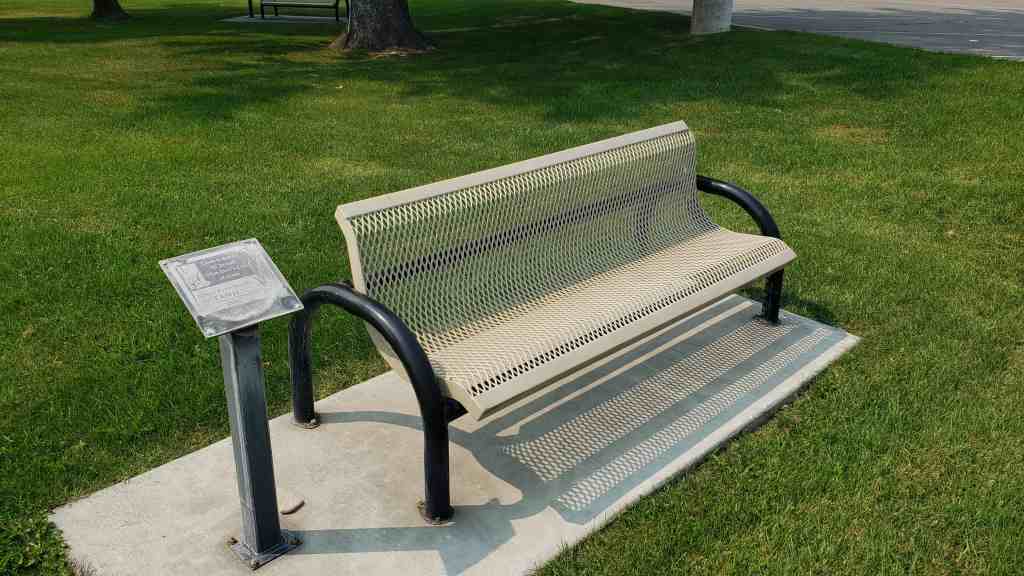

“Bessie” Elizabeth P Hansen Memorial Bench
Smithfield City Treasurer 1950-1971
Married to Edgar L. Hansen
Elizabeth is the Great Granddaughter of Peter Maughan, founder of Cache Valley.
For more than half a century Hansen family members have served the citizens of Smithfield.


