Heber C. Kimball, pioneer of 1847 and first counselor to Brigham Young, was allotted the land adjacent to this monument upon which to build homes for his family, the majority of whom arrived in 1848. He and Newel K. Whitney dedicated a plot of ground one-half block east as a private cemetery for both families. Buried therein are 33 Kimballs, 13 Whitneys and 10 others. Both Heber C. Kimball and Newel K. Whitney are interred in this sacred spot.
This is a private cemetery with- a large central monument to Heber C. Kimball and Newell K. Whitney, A stone retaining wall and an iron fence separate the cemetery from the street.
Heber C. Kimball was born June 14, 1801, at Sheldon, Vermont. He became an £ apostle of the L.D.S. Church in 1835 and in 1847 first counselor to President Brigham Young, in whose company he came to the Salt Lake Valley the same year. He received a large tract of land north of the Temple Square as his inheritance “where he settled his family and constructed mills. He died in 1868.” Whitney was Born in 1795, and was the second presiding bishop of the L.D.S. Church. He came to Utah in 1848 and died here in 1850. Whitney’s wife, Ann Houston Whitney, was the first person buried there after the cemetery was dedicated in 1848.
Thirty-three Kimballs, thirteen Whitneys, and ten others are reported to have been buried here before the site was closed in 1889. Since 1931 the property has been held and maintained by the L.D.S. Church.
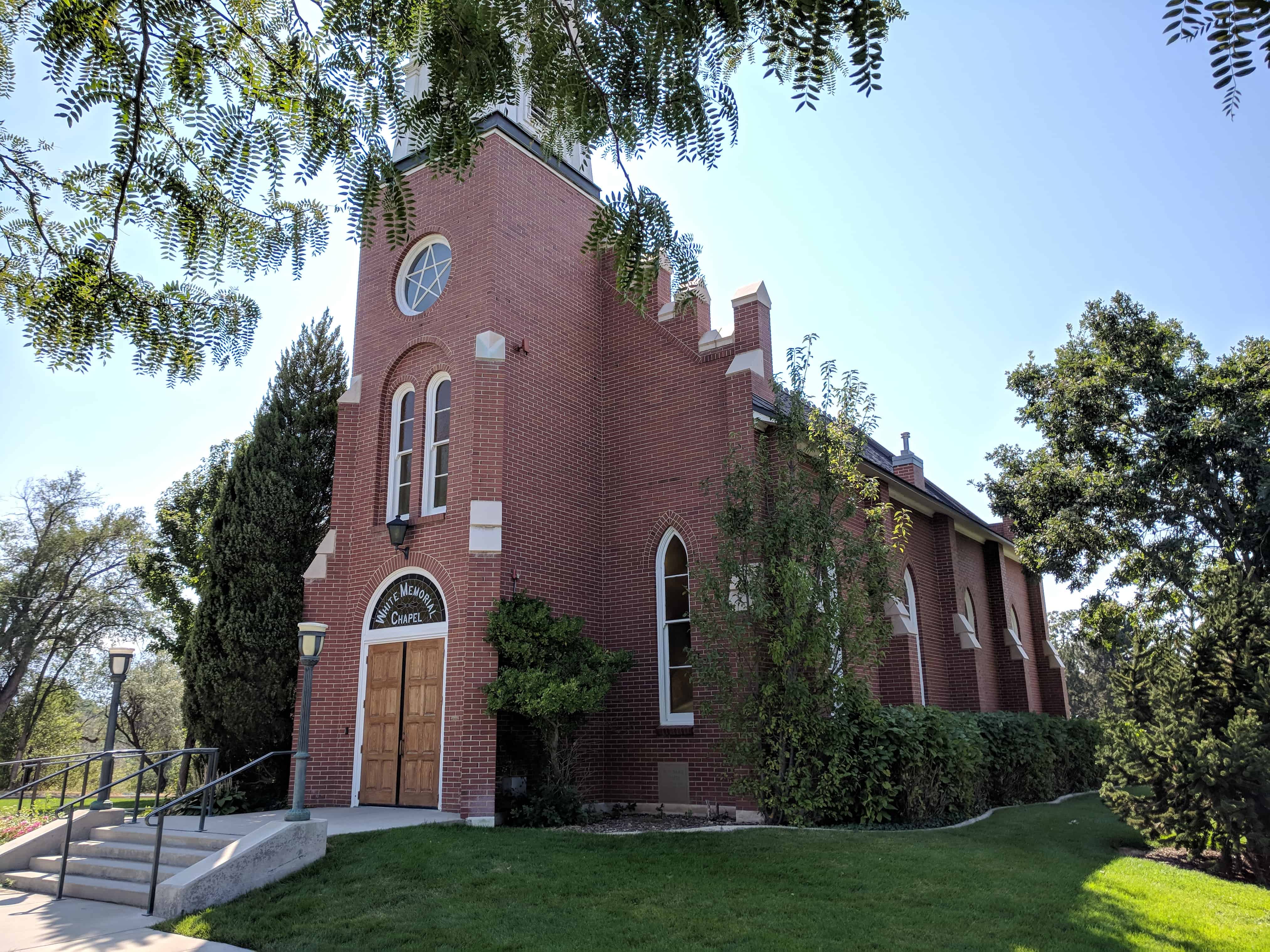
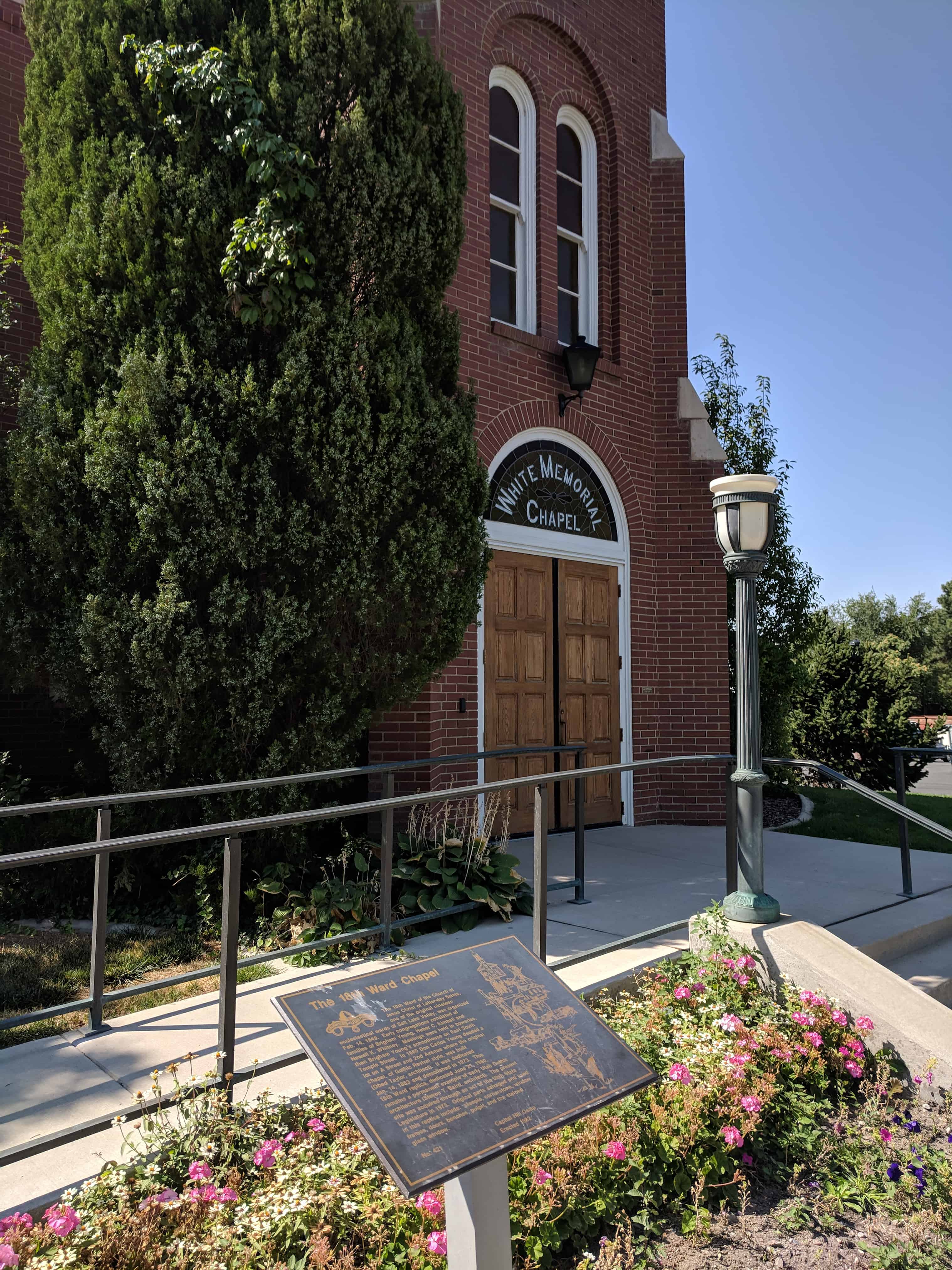
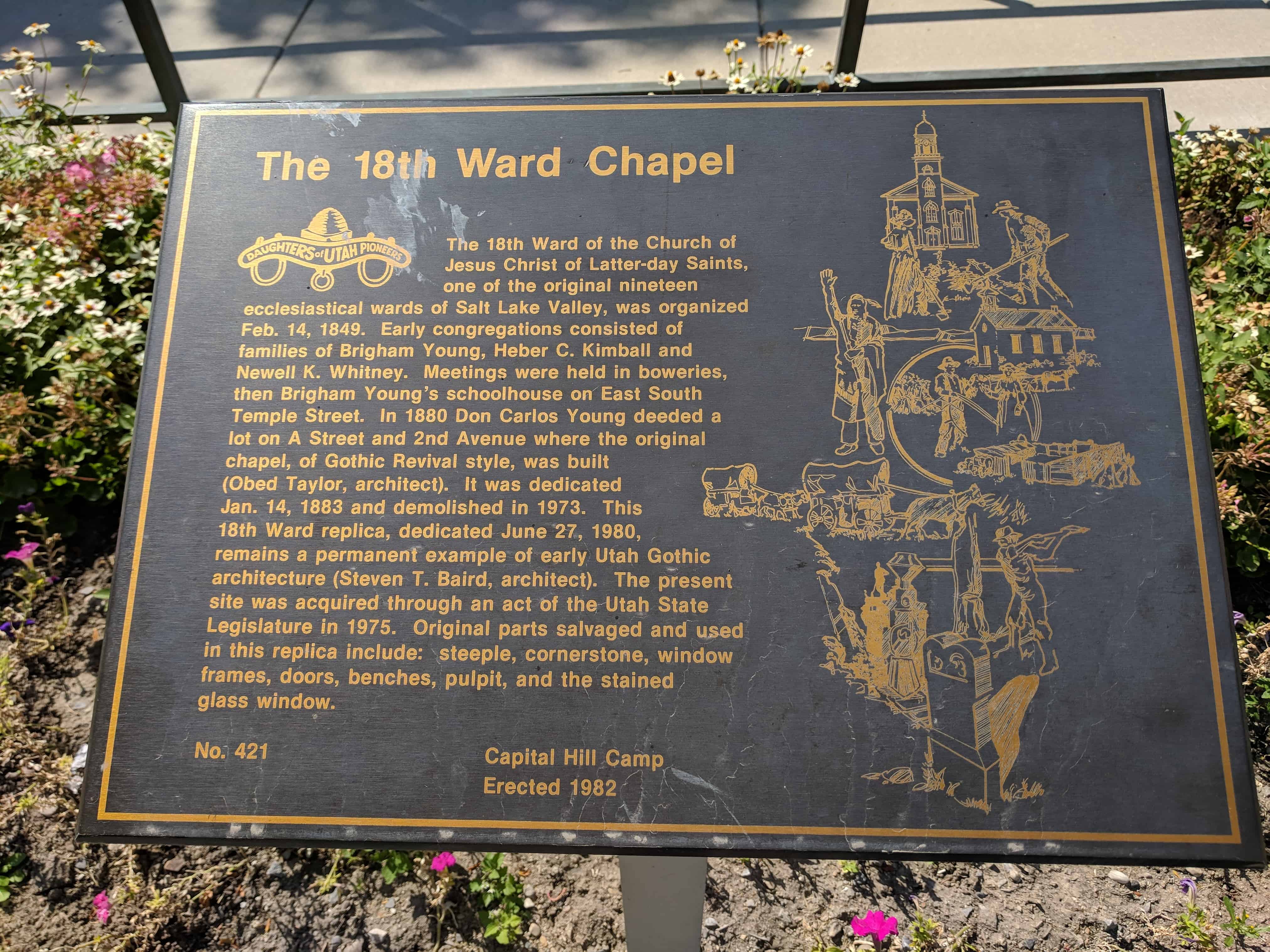
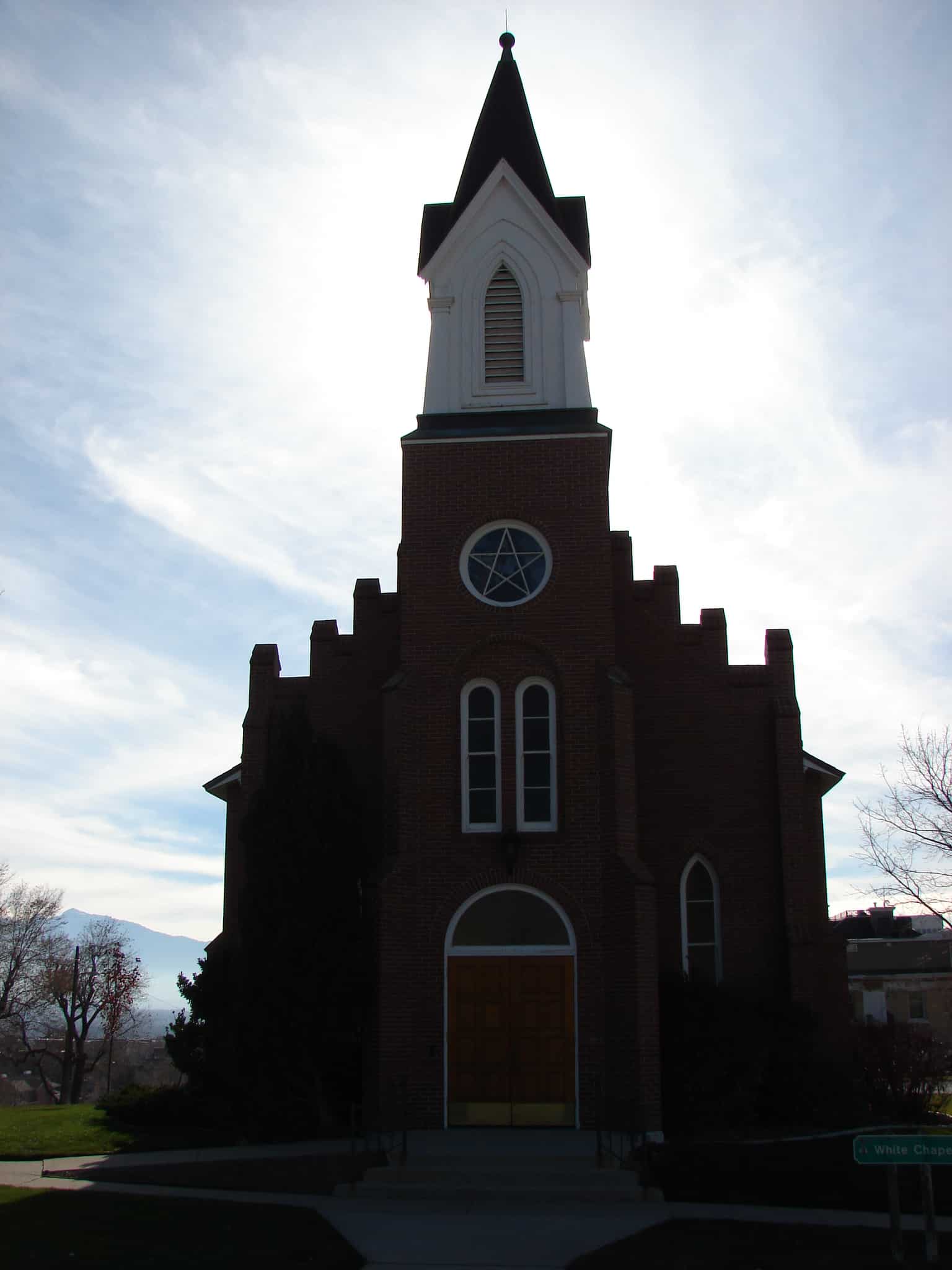
The 18th Ward of the Church of Jesus Christ of Latter-day Saints, one of the original 19 ecclesiastical wards of Salt Lake Valley, was organized Feb. 14, 1849. Early congregations consisted of families of Brigham Young, Heber C. Kimball and Newell K. Whitney. Meetings were held in boweries, then Brigham Young’s schoolhouse on East South Temple Street. In 1880 Don Carlos Young deeded a lot on A Street and 2nd Avenue where the original chapel, of Gothic Revival style, was built (Obed Taylor, architect) dedicated Jan. 14, 1883 demolished in 1973. This 18th Ward replica, dedicated June 27, 1980, remains a permanent example of early Utah Gothic architecture (Steven T. Baird, architect). The present site was acquired through an act of the Utah State Legislature in 1975. Original parts salvaged and used in the replica: steeple, cornerstone, window frames, doors, benches, pulpit, and the stained glass window.
On the north by 7th Ave. (or Ensign Ward), east by C St. (or the 20th Ward), south by South Temple St. (or the 12th-13th Ward), and west by Main St. (or the 17th Ward).
History timeline:
1849 – one of the original nineteen wards into which Salt Lake City was divided in February, 1849. At the time of its organization the ward extended northward and eastward to the mountains The first permanent settlers in the 18th Ward were Pres. Brigham Young and Elders Heber C. Kimball and Newel K. Whitney who, with their families, were the only residents of the ward for several years. 1856 – all that part of the 18th Ward lying east of Walnut St. (later A St.) was organized as the 20th Ward 1877 – boundary line was changed to Pine St. (C St.), its present boundary. 1904 – 18th Ward belonged to Salt Lake Stake, but when Salt Lake City was divided into four stakes in 1904, the ward became a part of Ensign Stake 1913 – The organization of Ensign Ward in 1913 diminished its northern boundary to 7th Ave.
The 18th ward is one of the original 19 wards in Salt Lake City in 1849, you can see the others on this page.
This is a gable roofed, gable facade chapel. The entrance pavilion has a frame cupola. There are buttresses between pointed arched windows. The building is symmetrically arranged with the roof cresting on the main gable. – D. Diana Johnson
The Eighteenth Ward was one of the original ecclesiastical divisions of Salt Lake City, for a few years inhabited only by President Brigham Young and Elders Heber C. Kimball and Newell K. Whitney. “In 1883 a fine brick chapel, erected by the Saints on A Street between 2nd and 3rd Avenues, was dedicated.” This structure was demolished about 1975 and a reconstruction, incorporating elements of the original building, was completed in 1979.
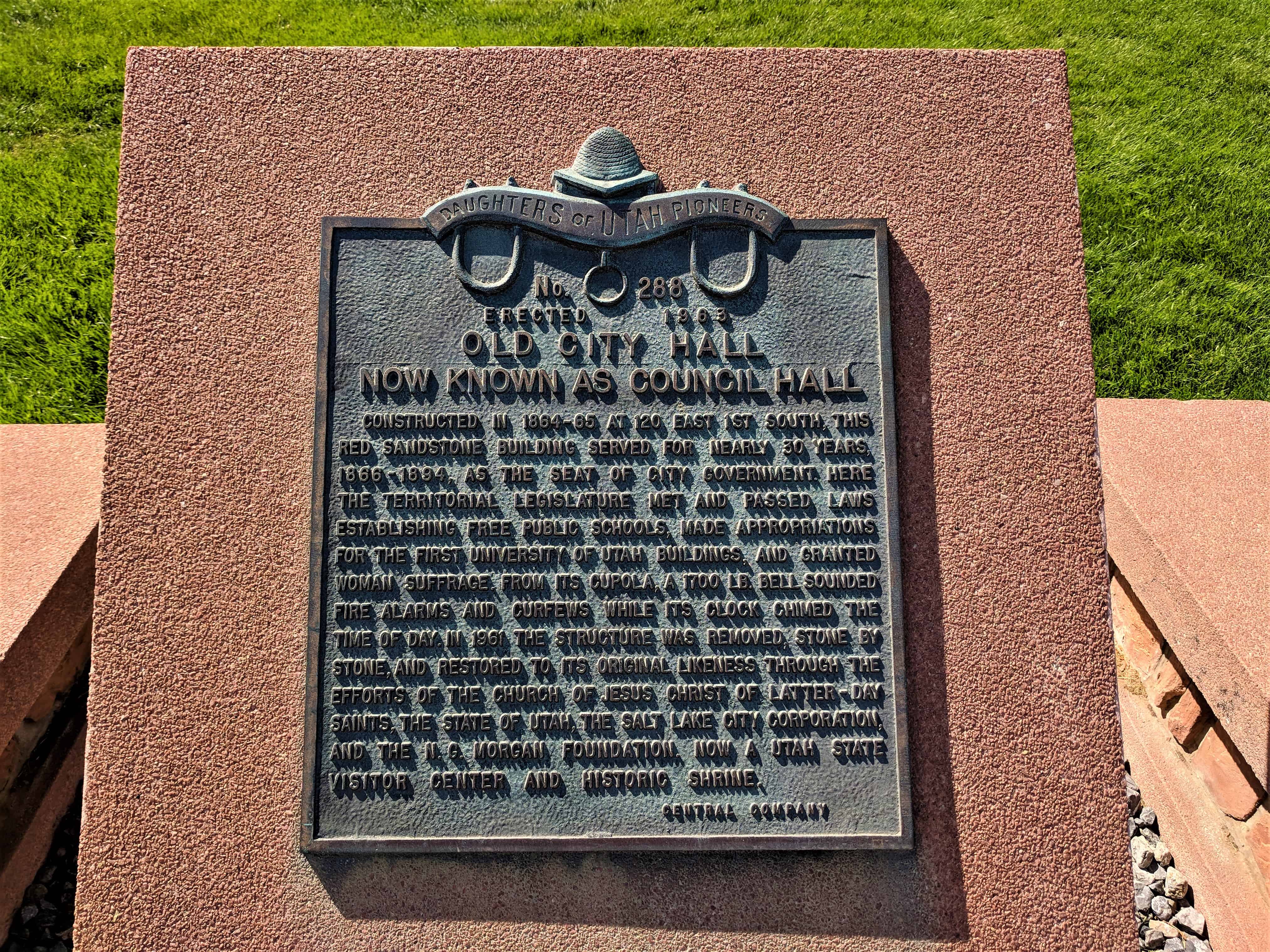
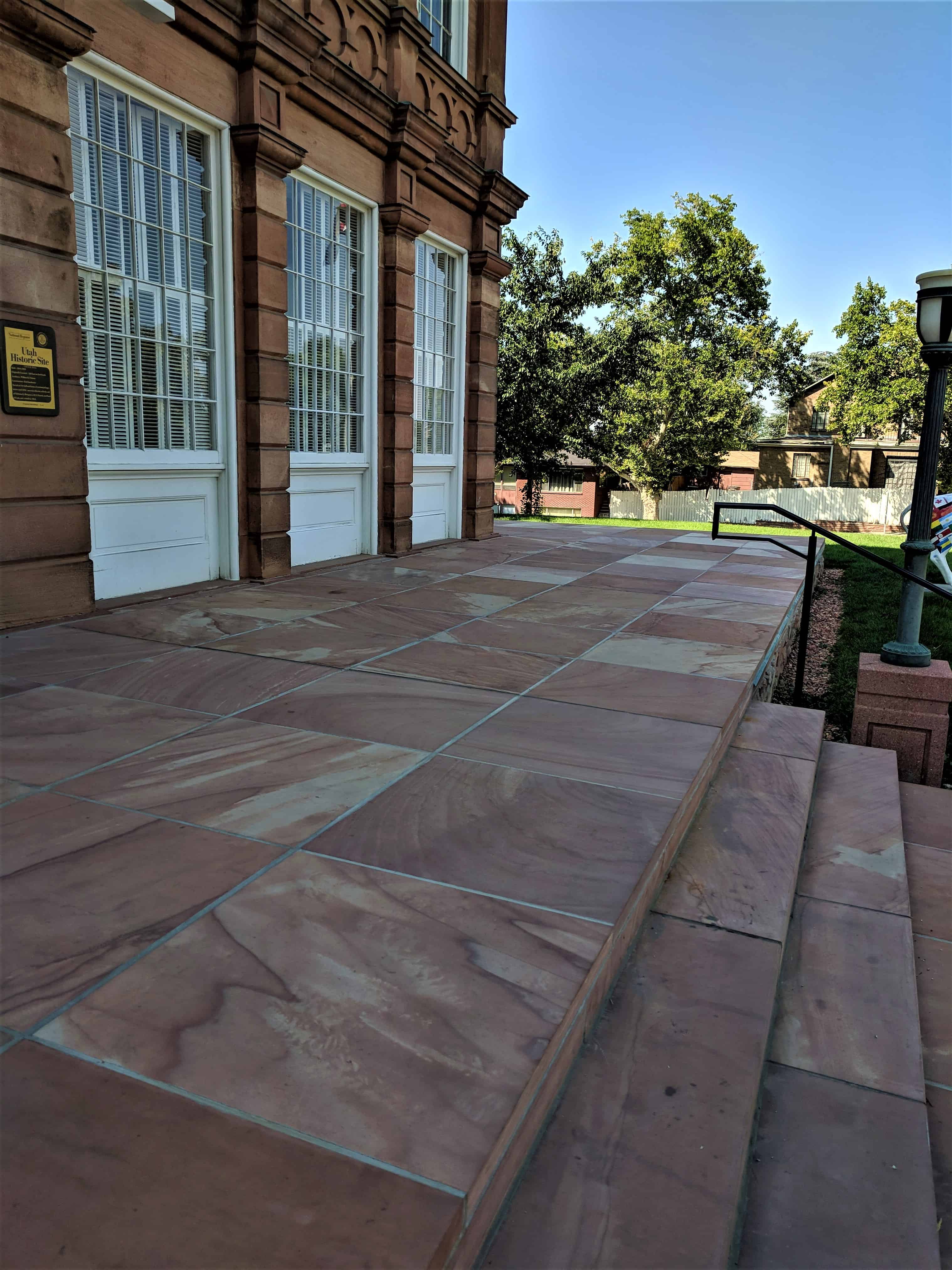
Constructed in 1864-65 at 120 East 1st South, this red sandstone building served for nearly 30 years, 1866-1894, as the seat of government. Here the Territorial Legislature met and passed laws establishing free public schools, made appropriations for the first University of Utah buildings, and granted woman suffrage. From its cupola, a 1700 lb. bell sounded fire alarms and curfews while its clock chimed the time of day. In 1961 the structure was removed, stone by stone, and restored to its original likeness through the efforts of the Church of Jesus Christ of Latter-day Saints, the State of Utah, the Salt Lake City Corporation, and the N.C. Morgan Foundation. Now a Utah State Visitor Center and historic shrine.
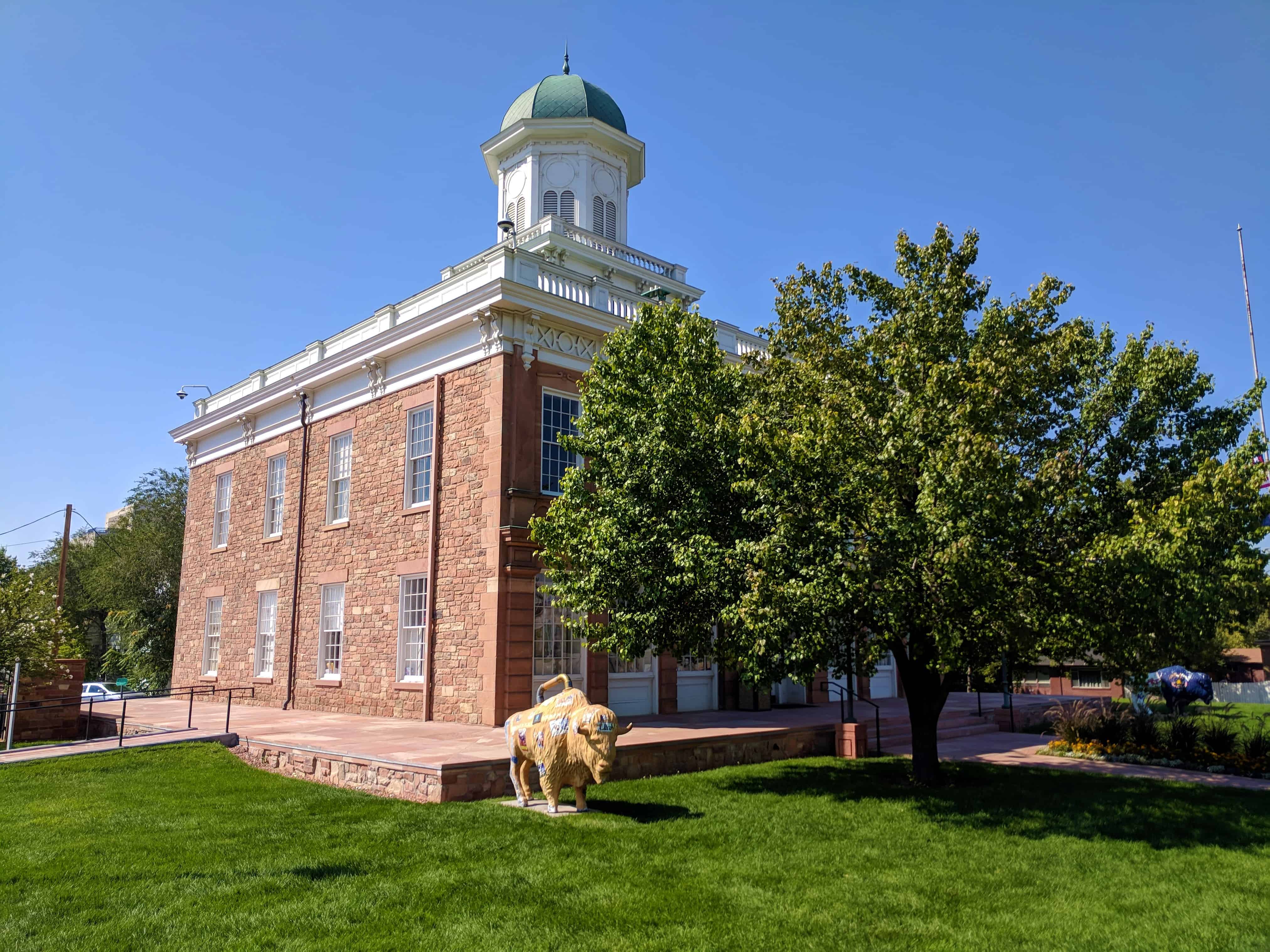
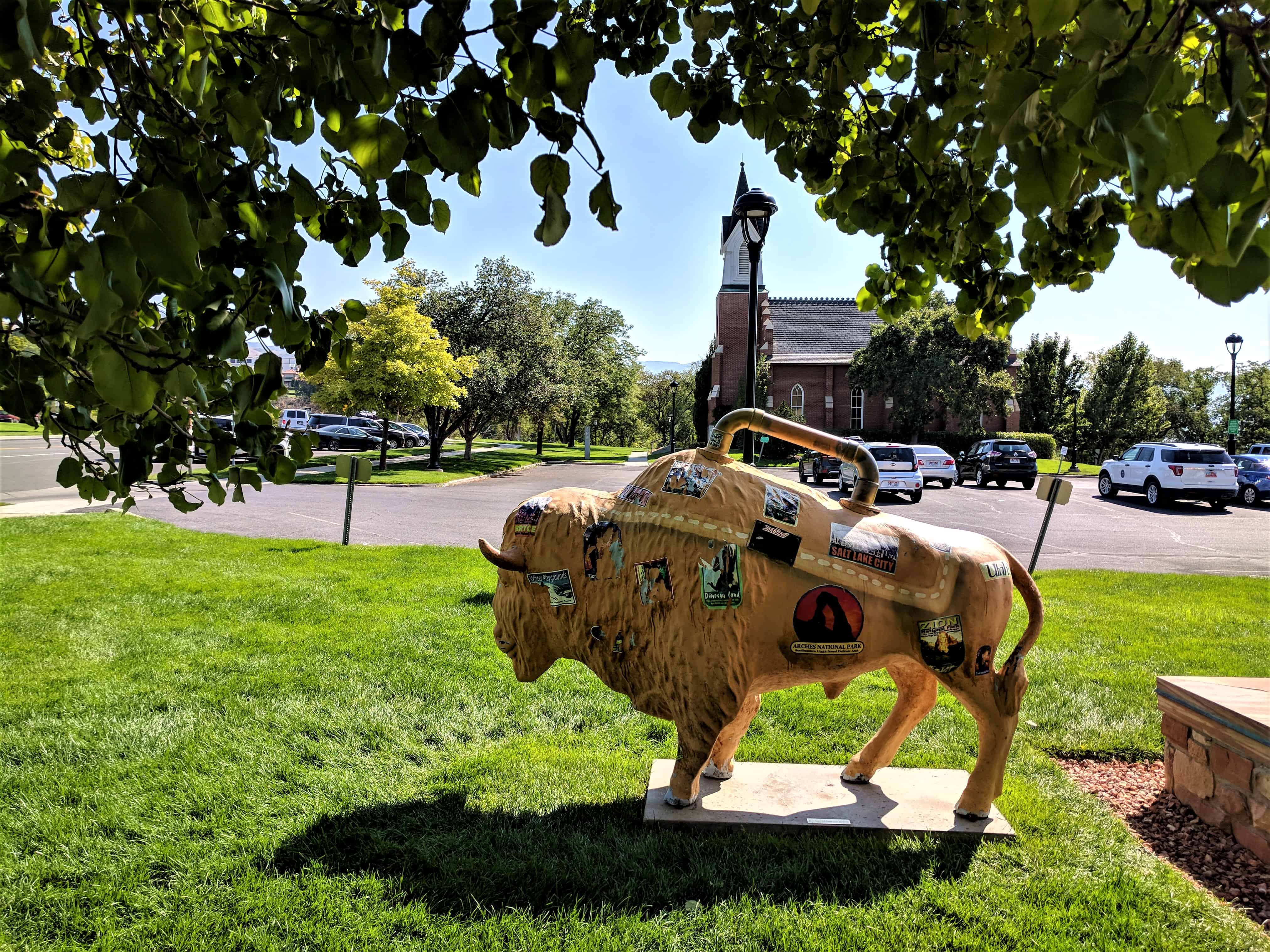
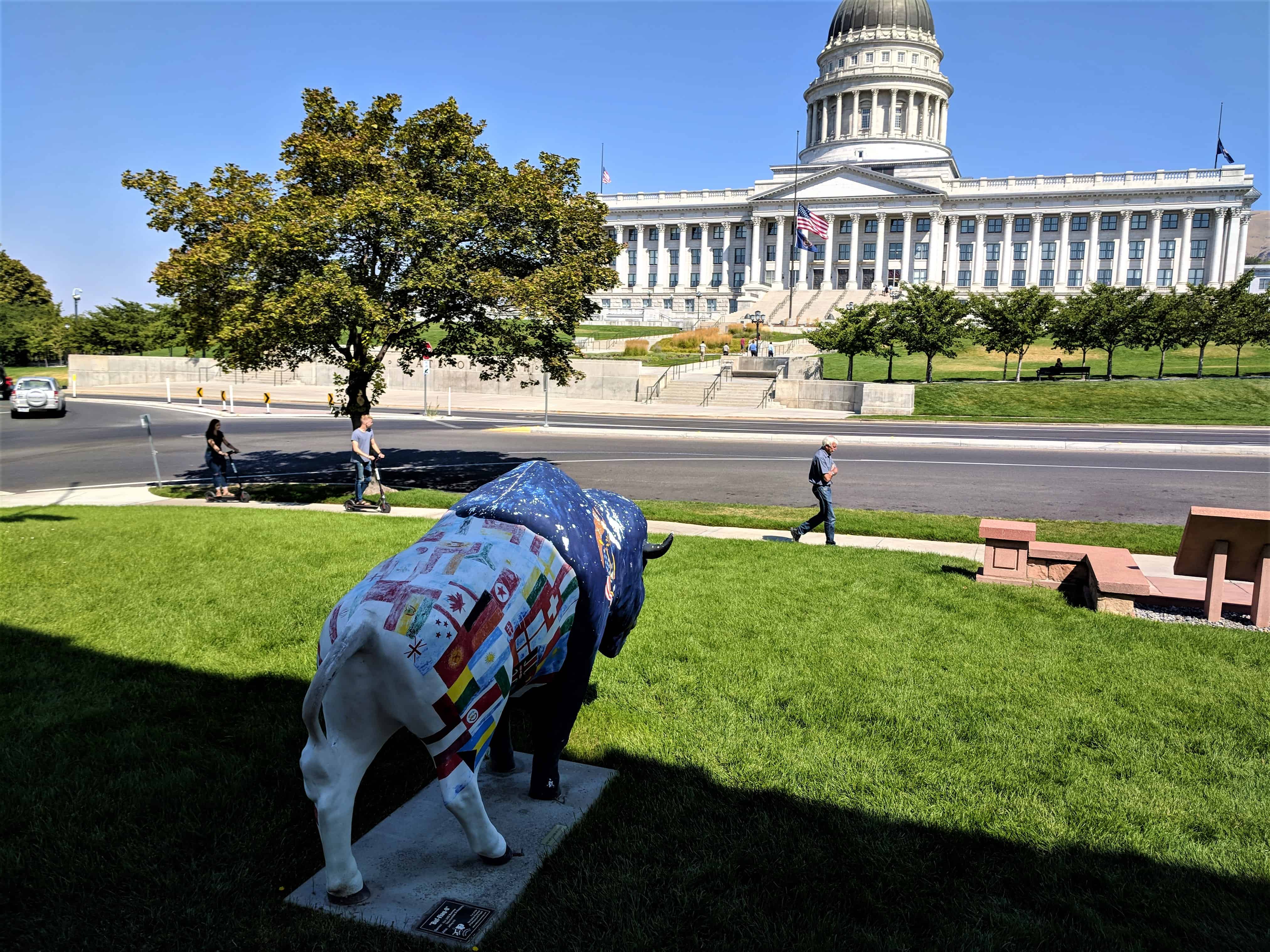
Its two most interesting features occupy the grounds at each front corner of the building. At the northwest corner is the “International” bison. This bison wears the flags of many of the different ethnic groups that contributed to the great economic growth of the area during the first 50 years after the initial emigration. At the northeast corner is the “Suitcase” bison, representing a piece of luggage bearing travel stickers from many of Utah’s top scenic attractions.
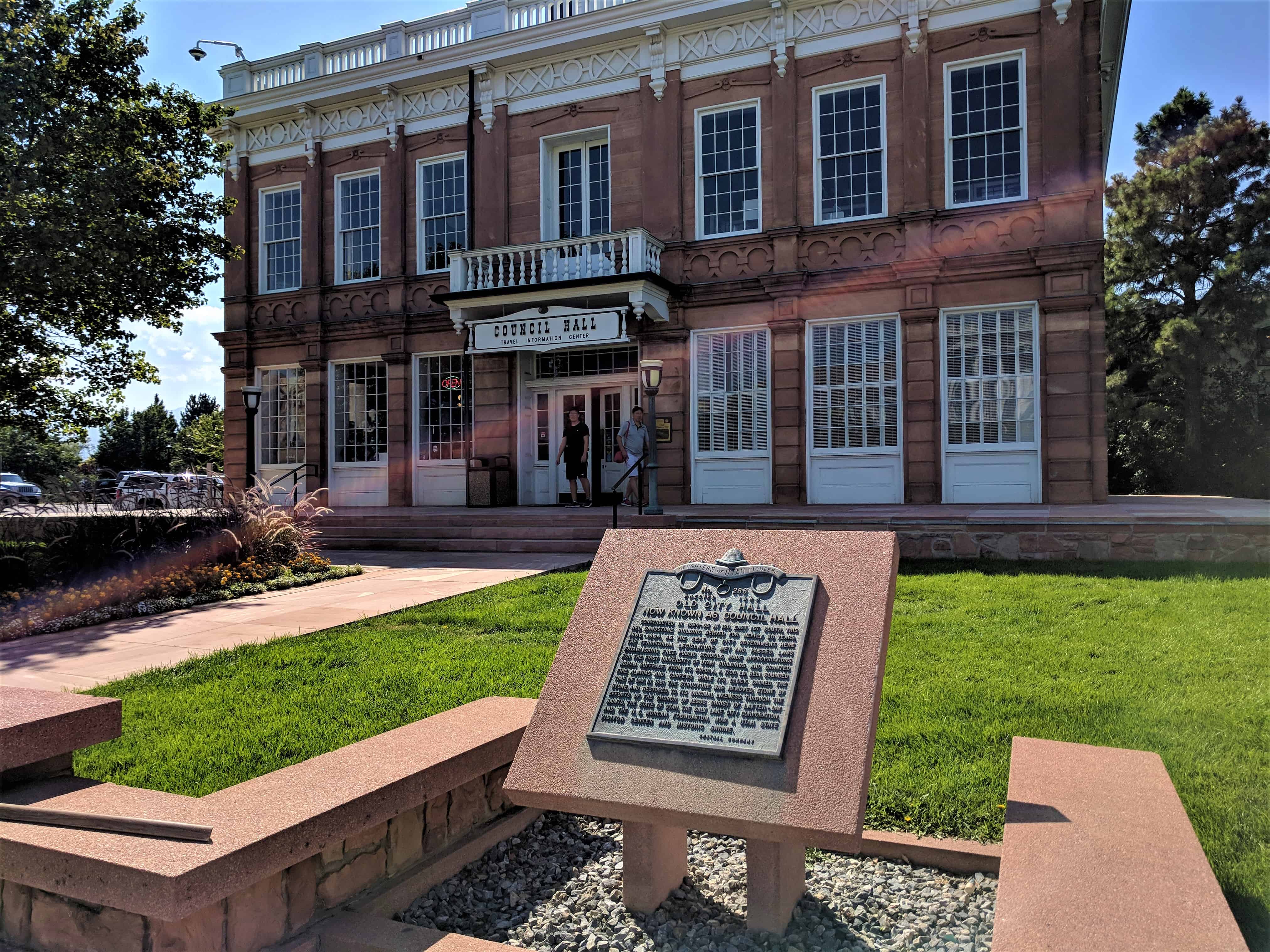
Erected between 1864 and 1866 to house Salt Lake City’s governmental offices, Council Hall served both as a municipal building an4 the Utah Territorial Capitol until 1894. Today it is an impressive reminder of what historian Howard Roberts Lamar has characterized appropriately as “perhaps the most turbulent and unusual” experience “in the history of the American territorial system.” Between 1850 and 1890 Utah exhibited few of the political, legal, and economic customs normally found in a developing frontier community. The theocratic territory rejected public schools, Federal land policy, the two-party system, parts of the common law, and the primacy of civil courts. Consequently the National Government departed from its usual territorial policy and adopted special measures to reconstruct Utah’s political and social institutions. In 1857-1,858 President James Buchanan sent a military expedition to the desert territory to force the Mormons to cooperate with Federal officials, and between 1862 and 1887, Congress enacted a series of laws banning polygamy, reforming Utah’s judicial system, dissolving the Nauvoo Legion, and establishing a commission to supervise Utah voter registration and elections. Only once before, in the defeated South after the Civil War, had the U.S. Government found it necessary to interfere so drastically in the local affairs of a community or region.
Because the Territorial Governor, the Mormon-dominated legislature, and Salt Lake City municipal officials shared Council Hall, much of the struggle for political control of Utah took place in the 60-foot-square, 2-story, red sandstone building. Originally it stood on the corner of First South and State Streets, but in 1961-1962, with funds supplied by the Church of Jesus Christ of Latter-Day Saints, the structure was dismantled and moved to the present location immediately south of the State capitol. Today the Utah Travel Council occupies the beautifully restored hall.
Architect William H. Folsom designed Council Hall for use as a municipal government building. Construction began at the corner of First South and State Streets in 1864 and reached completion in 1866. From then until 1894 the structure provided office space for Salt Lake City officials and served as Utah’s Territorial Capitol as well. City police enjoyed exclusive use of the hall from the mid 1890’s until 1915 , when it became the home of the municipal Board of Health.
In 1948 David O. McKay, President of the Church of Jesus Christ of Latter-Day Saints, guided development of plans to restore the building. The church secured land directly across from the State Capitol and furnished approximately $300,000 to finance movement of Council Hall about 1 mile to the new site. Architect Edward O. Anderson supervised the dismantling and restoration work in 1961-1962. Presently the building is the home of the Utah Travel Council.
Elegantly designed, Council Hall is a 60-foot-square, 2-story structure of randomly laid red sandstone and contrasting white woodwork. It is seven bays wide and five bays deep. On the lower front façade, there are six stationary, 30-pane windows and a centrally located double door flanked by side lights. On the upper level, immediately above the main entrance, double glass doors open onto a small balustraded balcony, which is supported by pendant-ornamented brackets. The six upper level Windows are 12-over-12 sash, and each is topped by a broken pediment of stone. Side and rear windows are 12-over-12 sash too, but they are topped by smooth sandstone lintels.
A three-part wooden entablature extends around the top of Council Hall, and scroll brackets support the cornice and a railing. An octagon-shaped cupola with a square, balustraded base sits astride the copper-covered hip roof. The cupola dome and small spire are copper also. Two interior metal chimneys pierce the roof near the northeast and southwest corners.
length of the first story. Large paneled doors with transoms and shouldered architrave trim lead into a visitor information center and a storage room on the left and a period room and a conference area on the right. Four-inchwide oak planks with simulated wooden pegs cover the floors throughout. Walls and ceilings are finished in plaster and painted variously in white, yellow, green, blue, and pink.
A dog-leg stair with turned balusters leads from the corridor to the upper story, where there are two offices, a large courtroom, and the council room. The latter measures about 35 by 45 feet, contains period furniture, and features an elaborate plaster cornice. Adjacent to this room is the original mayor’s office, which is furnished with period pieces too.
Structurally the restored Council Hall differs from the initial building in only two major respects. A small basement has been added for additional storage space, and a sawed sandstone apron has been constructed around the exterior.
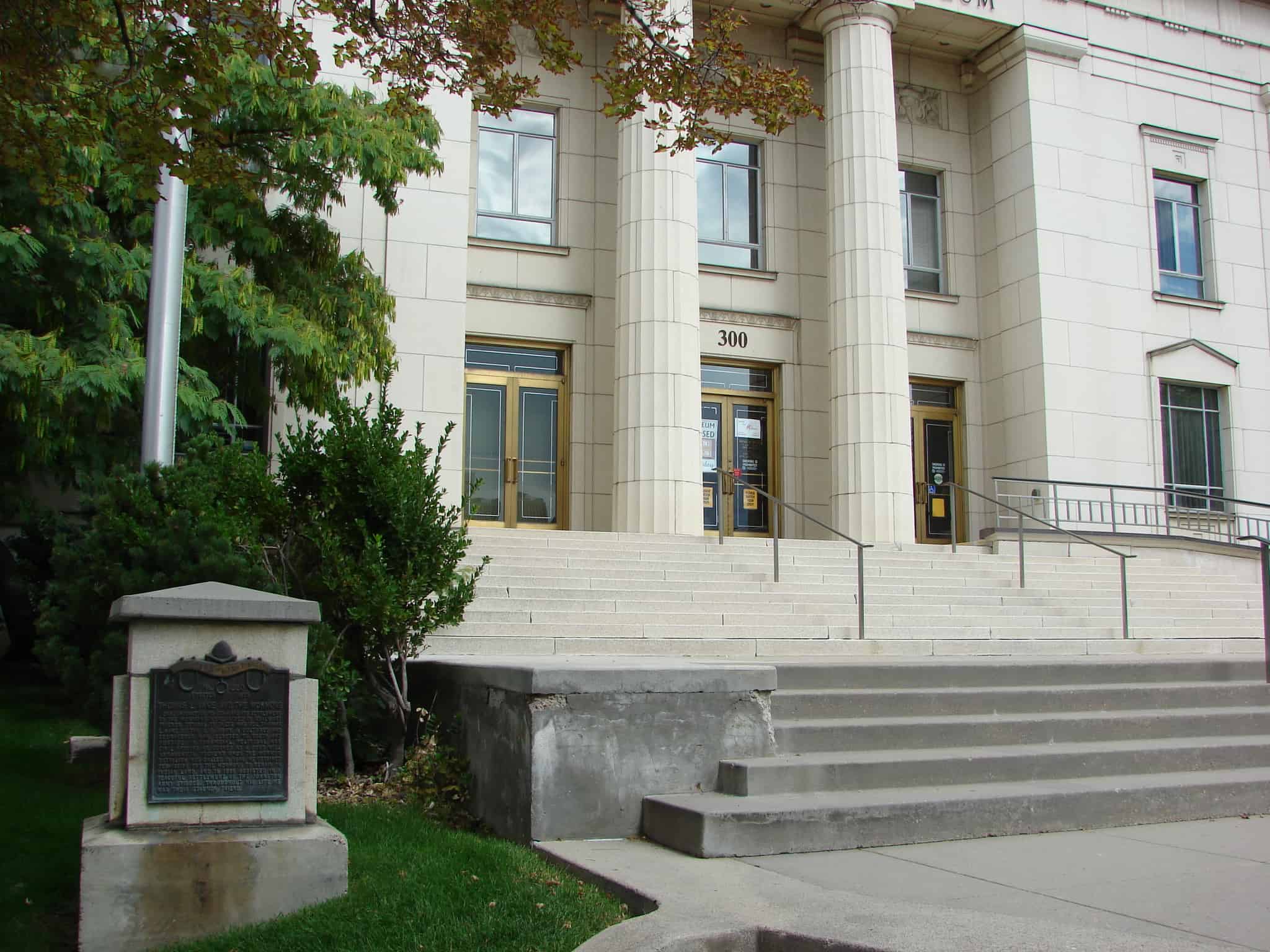
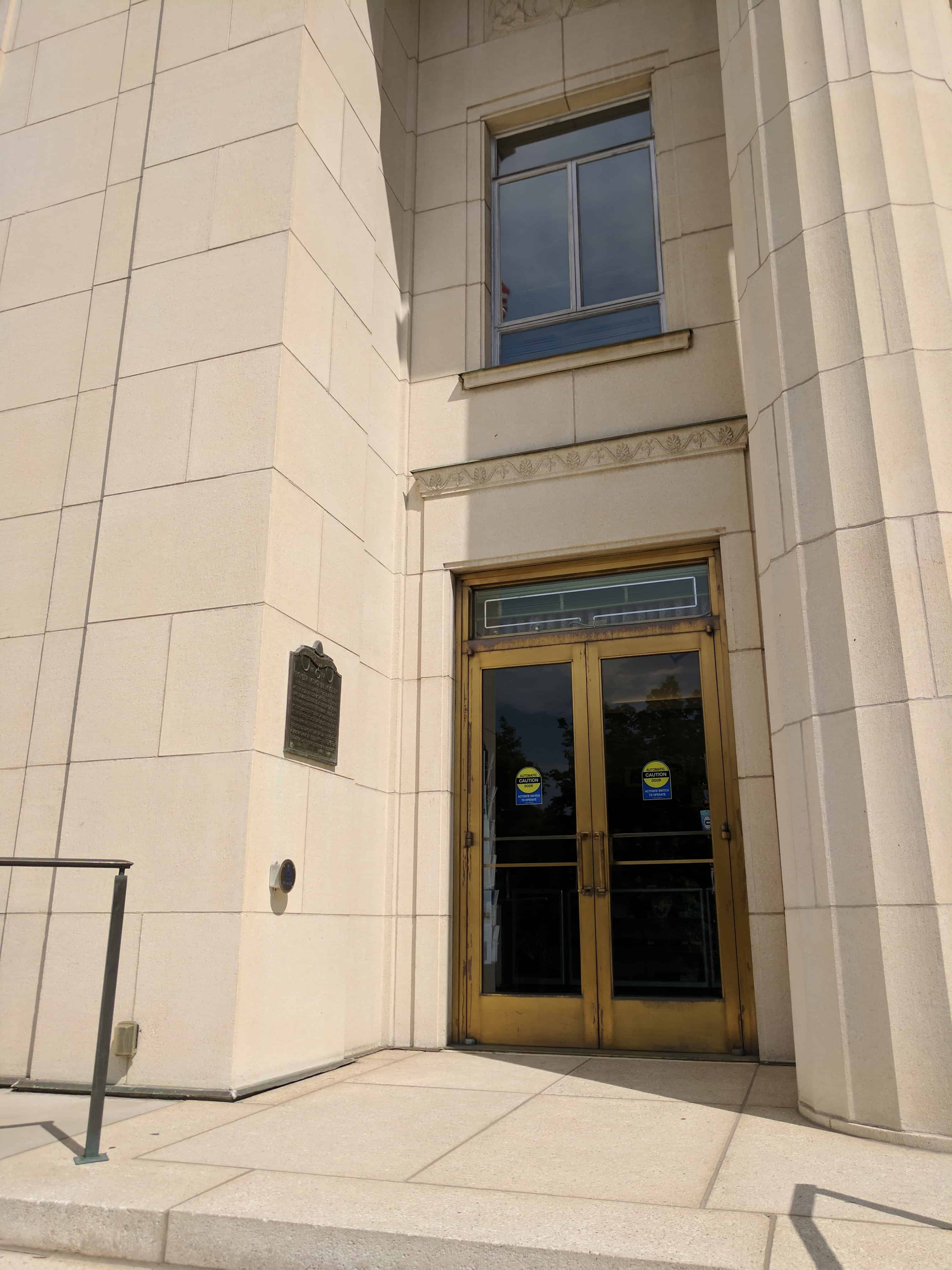
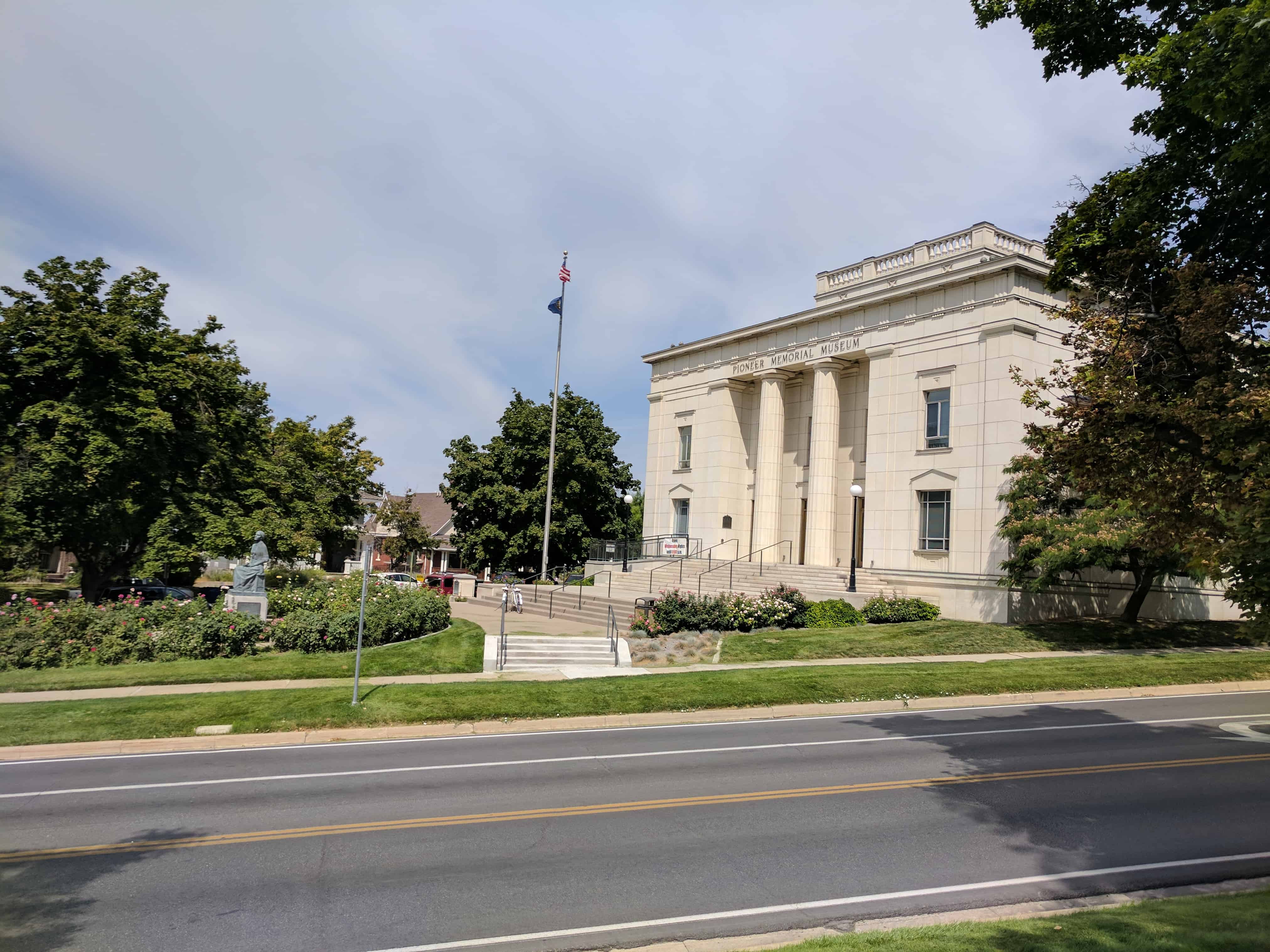
Erected by the Daughters of Utah Pioneers and the State of Utah as a replica of the Salt Lake Theater. Dedicated July 23, 1950, as a Hall in which to preserve the names, portraits, histories, manuscripts, relics and other evidences of wisdom, industry and culture of nearly 86,000 immigrant pioneers who, from 1847 until 1869, with ox team, handcart and on foot crossed a thousand miles of wilderness to find religious freedom and new homes in the Rocky Mountains.
Plaque B: Eliza R. Snow Leader of Pioneer women January 21, 1804 December 5, 1887
Plaque C: Presented to the Daughters of the Utah Pioneers and the State of Utah by the Nicolas G. Morgan Sr. Memorial Foundation
This is a two story, stone building in a Classical Revival style. It has a flat roof and a “T” plan, the leg of the “T” pointing north. The façade is symmetrical with an indented entrance area accented by two Doric columns. Pilasters divide the windows on the secondary facades and mark the corners. First story windows have pedimented headers; second story windows have flat, dentiled headers.