At the junction of highways 6 and 89 in Spanish Fork Canyon where 89 cuts off to go to Sanpete is a heart made of painted rocks and three crosses memorializing 5 who have lost their lives on the road at that location.
Katie and Taylor Marcus from Ogden tragically lost their lives April 3rd, 2014.
16-year-old Katherine “Katie” Pauline Marcus and her 12-year-old brother, Taylor Zane Marcus were the inspiration for the heart memorial.
The next year, 38-year-old Heather Jacobson and 7-year-old Broc Jacobson of Cleveland, Utah were also killed at the location.
A third cross was added for Merlene Green of Fairview who had been killed at the intersection back on October 2, 2003.
Hopefully we can all be a little extra careful and remember these people who were gone too soon.
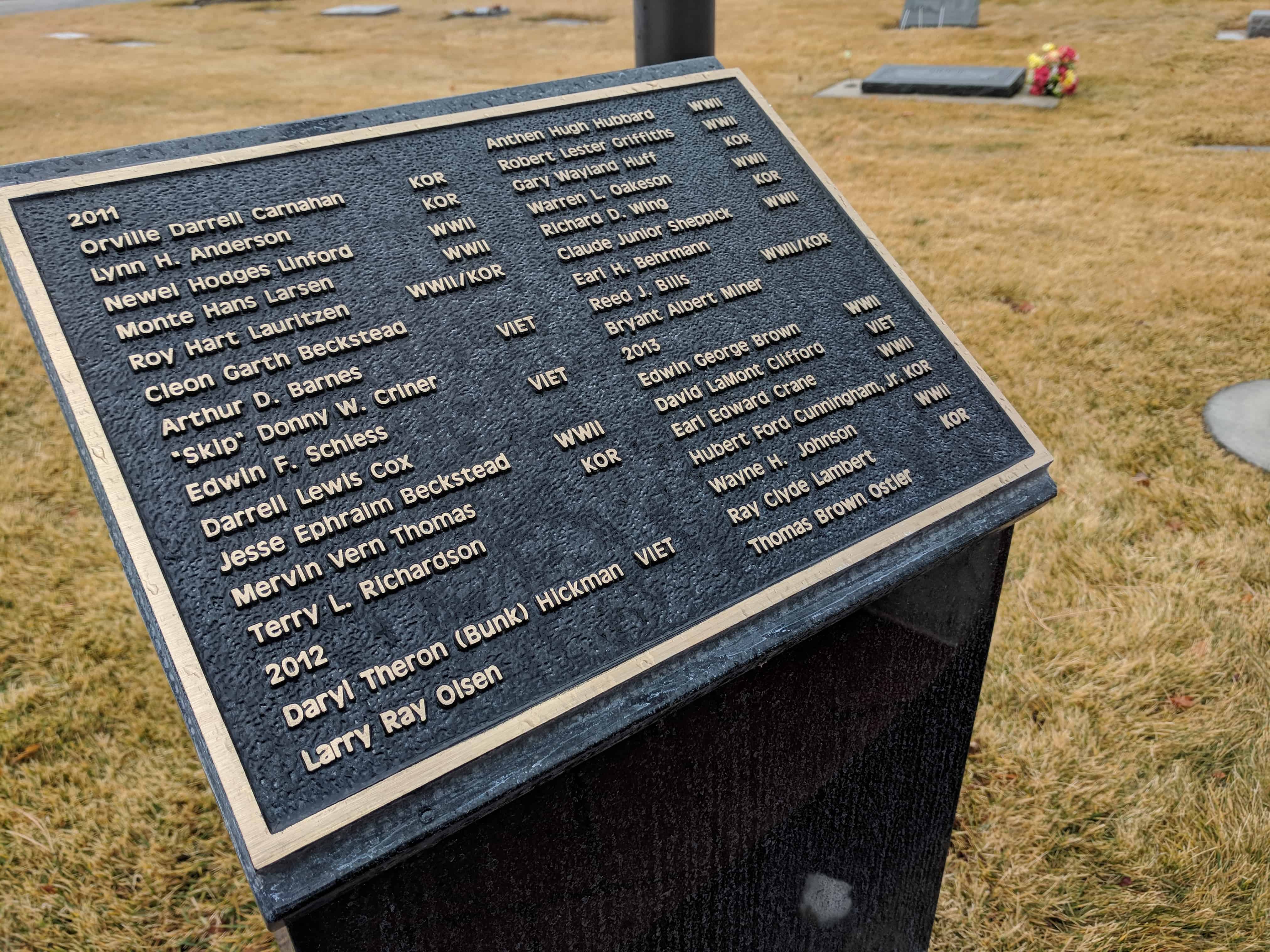
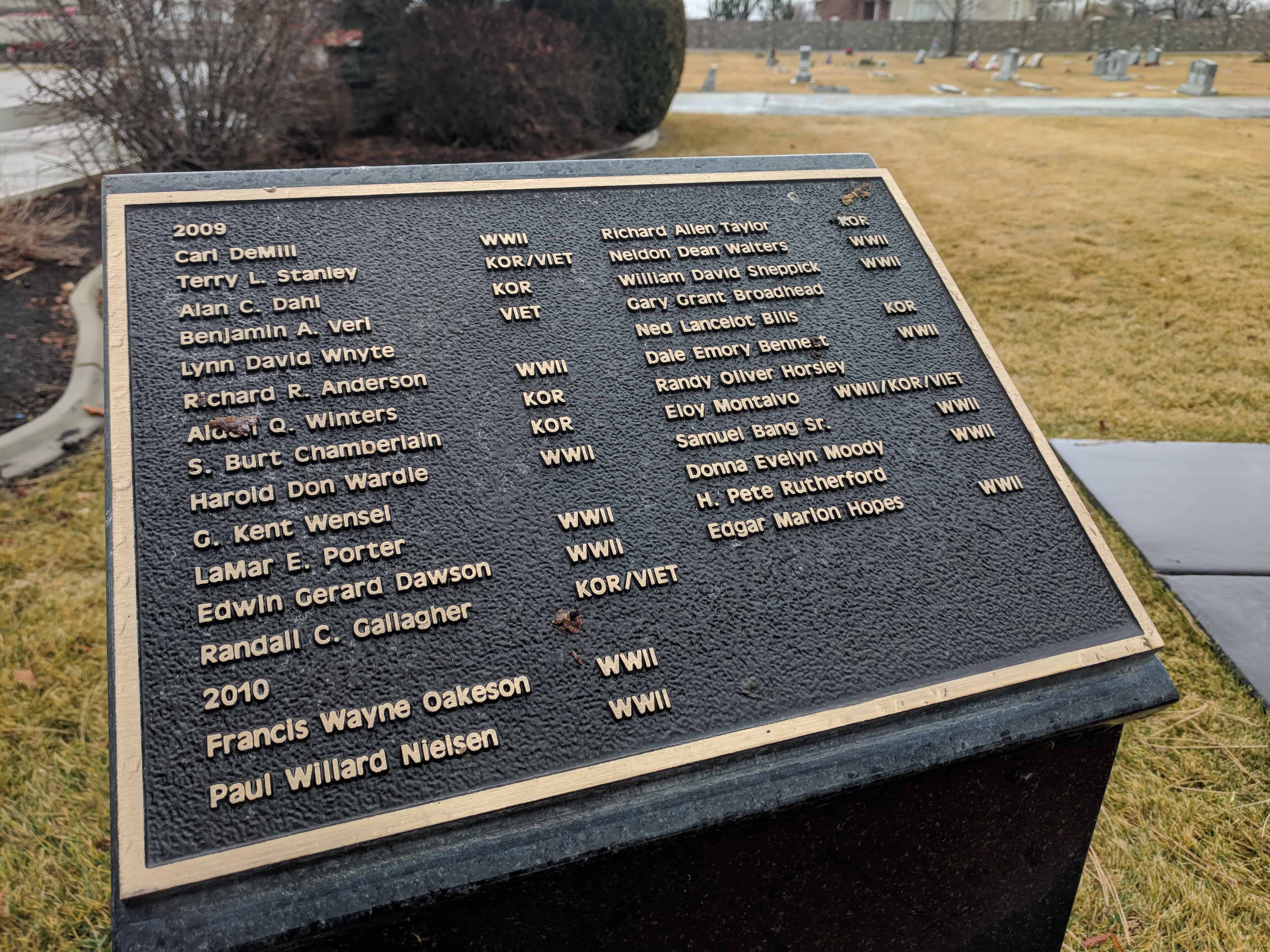
In Memory of the nine area veterans who gave their lives in service of their country: their families, friends and the American Legion brought underground power, lighting and white lifetime fence to the monument area. For the nine veterans honored a star is shown by their name on the roll call plaque.
After returning home from World War II, area veterans organized and requested membership to the National American Legion Program.
January 09, 946, national headquarters issued a charter for “Hiatt-Hunt Post 80”. The post was named in honor of the fist two area sons who gave their lives for freedom and their country: Alton Hiatt of World War I, and Alma Hunt of World War II.
This monument is erected on the southeast corner of a forty acre piece of property belonging to Post 80. Many membership hours were spent in building what we see today. Post 80 is proud of its present and past membership and their accomplishments. We desire that the described property always remain in the ownership of Post 80. We want to leave this as a legacy to family and friends. We say – “Enjoy and use, but don’t abuse”.
Post 80 dedicates this monument in honor of the veterans of past wars. Anyone who puts their life on the line deserves to be treated with the utmost of dignity and respect. They are the men and women who have served our nation with honor. They have earned the right to be called “veterans” by their sacrifice and devotion to duty in some of the darkest hours our nation has known.
“I am a patriot-an American. I stand for the preservation of moral principles that this nation was founded upon. I love my country and pray that we will continue to be one nation, under God, with liberty and justice for all. I have seen the face of terror, felt the stinging fold of fear, and enjoyed the sweet taste of a moments love. I have cried, pained and hoped, — but most of all, I have lived times, others would say, were forgotten. I am proud to say that I am an American – a veteran”.
The circular classic styled memorial is composed of eight peripteral doric columns rendered in granite. The colonade supports a circular entablature composed of an architrave, wide frieze and cornice, above which is found a carved crown molding rendered in a floral motif. The entablature supports no dome allowing light to penetrate to the central interior of the monument via the round opening which the entablature forms. The colonade rests on a round three-stepped base of granite.
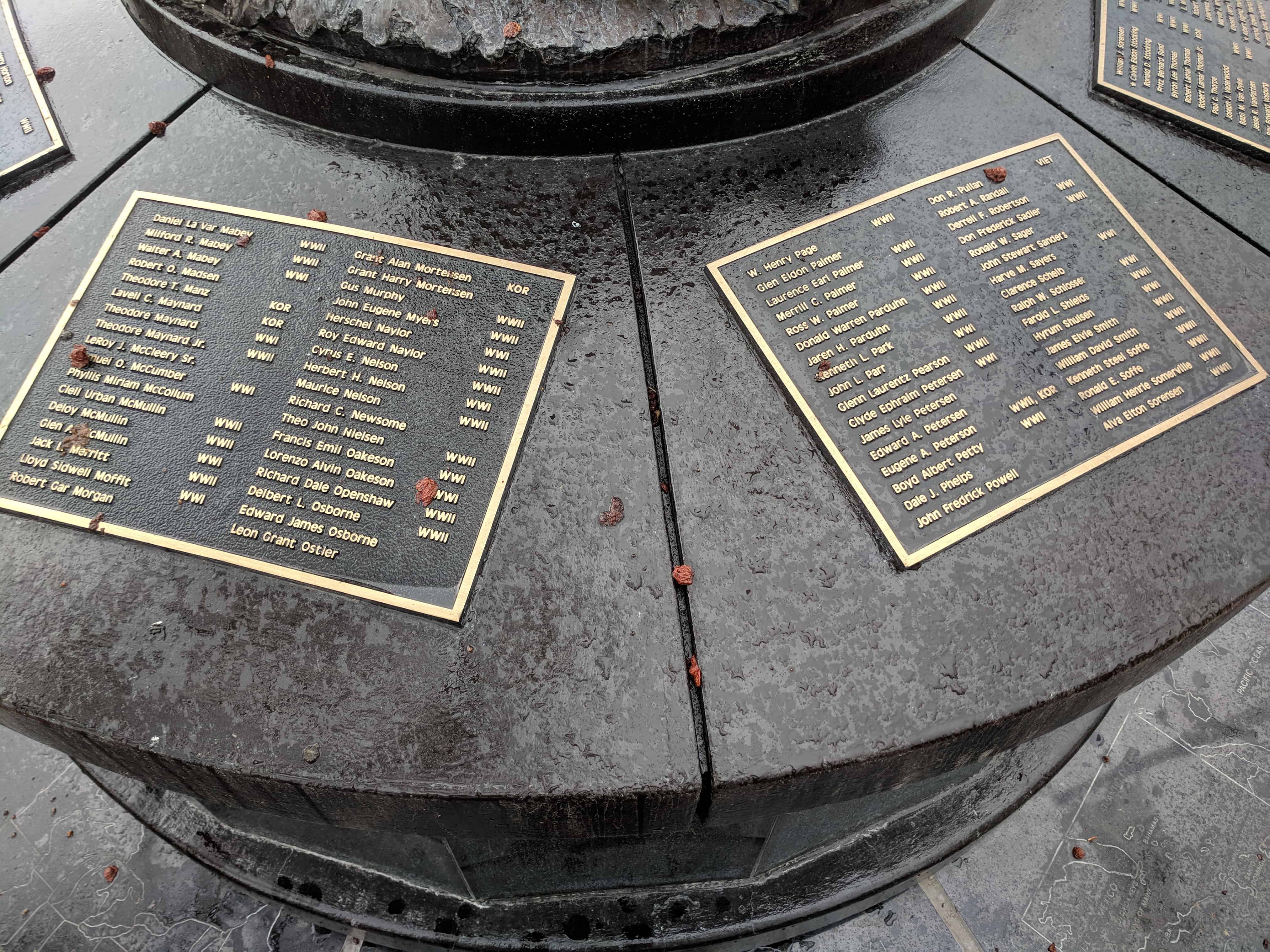
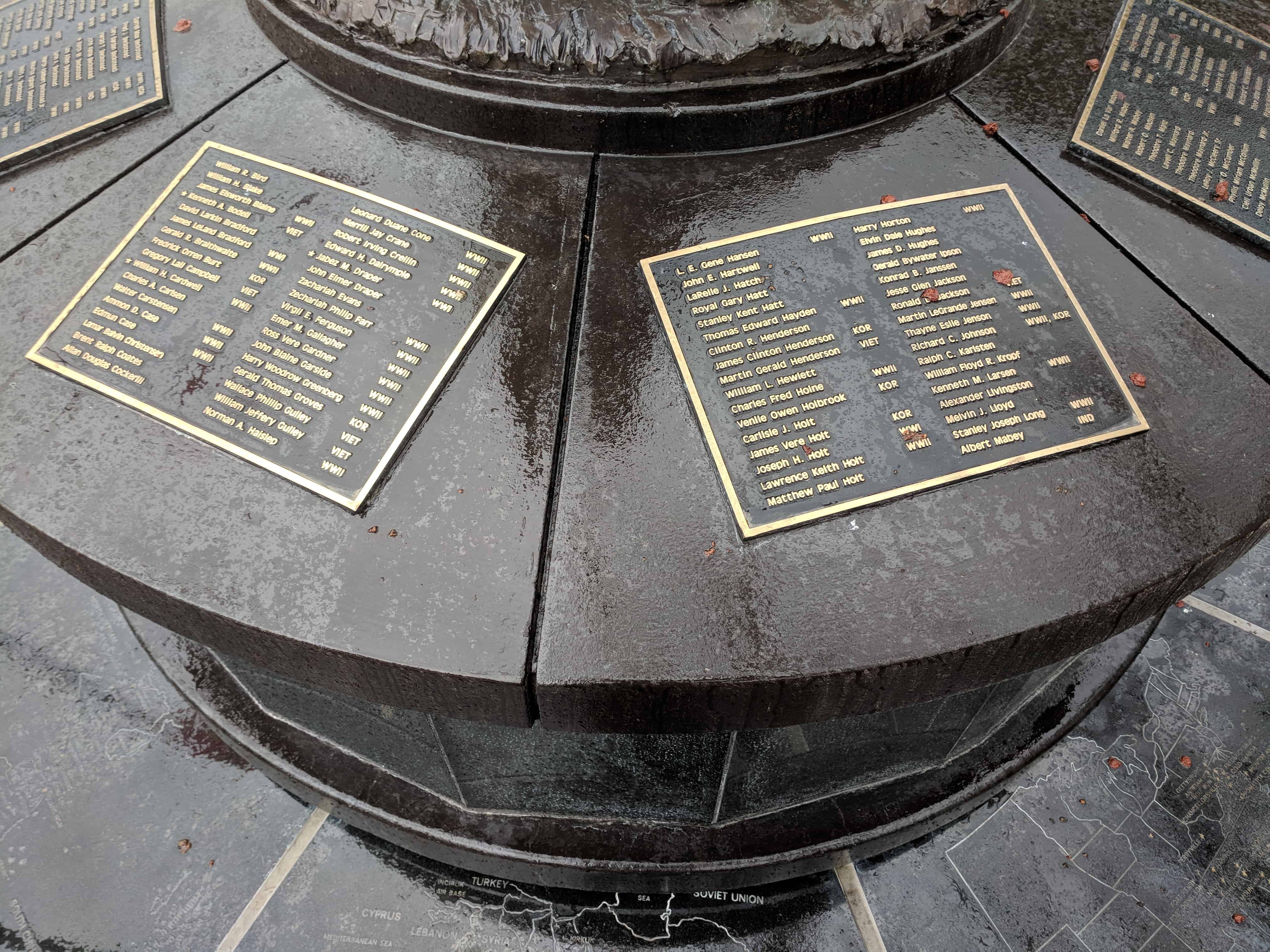
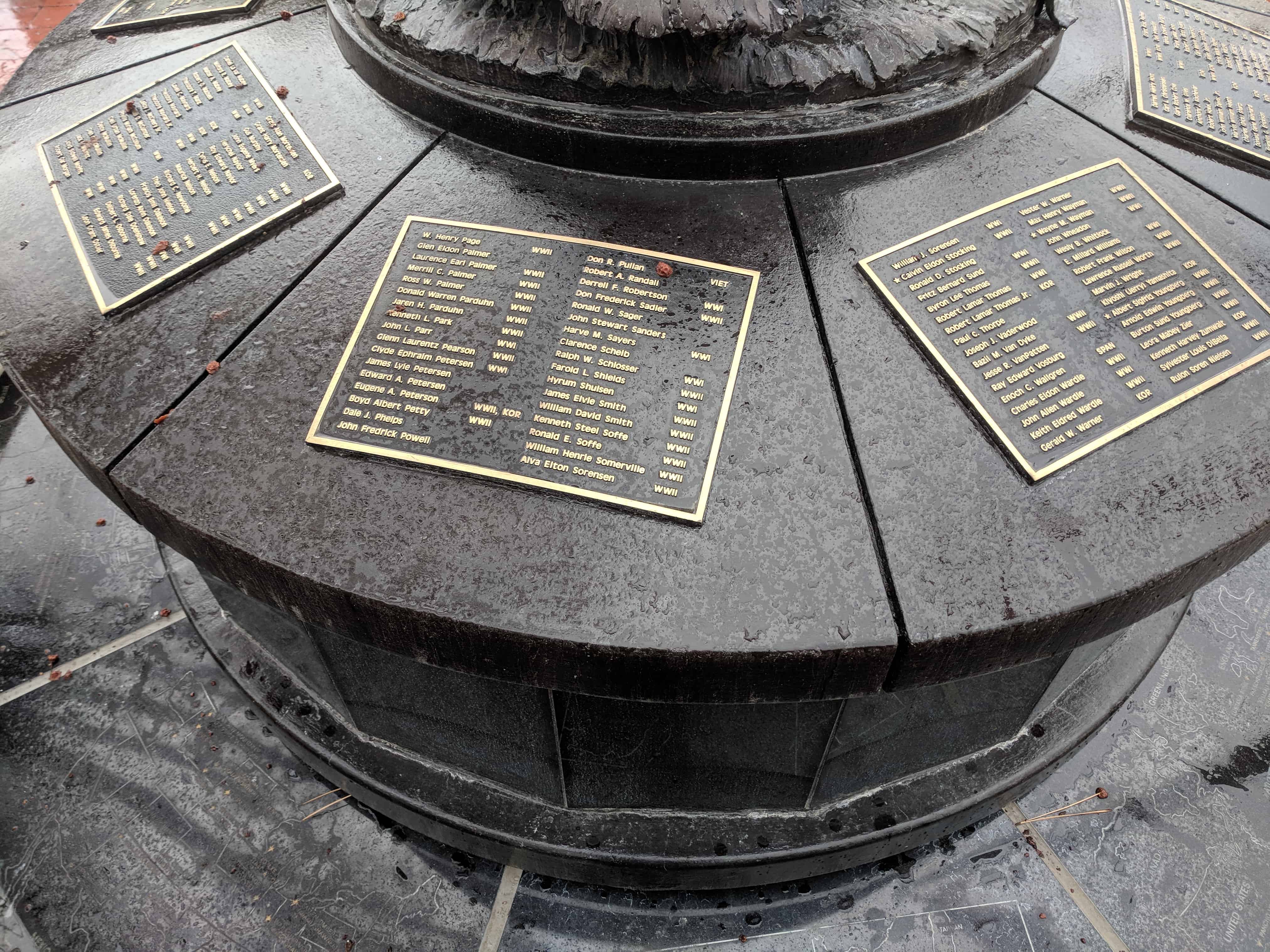
The central focal point of the monument is a centrally located octagonal shaft which supports an urn. Around the flat sides of the shaft are bronze plaques bearing the names of war dead. Radiating out from the base of the shaft Is a star form composed of random shapes of marble set into the floor.
1914-1918 In Grateful Remembrance of the Heroic Sons of Utah Who Gave Their Lives in the World War This Monument Erected A.D. 1932
At 11:30 p.m. Saturday, February 16, 1924, Officers William N. Huntsman and Brigham H. Honey Jr. heard a shot fired outside the State Café, 46 W. Broadway, which was being robbed. Both officers pursued the suspect to this location and a gun battle ensued. Huntsman, 26, was killed immediately, while Honey, 34, died several hours later. They are buried near each other in the Salt Lake City Cemetery.
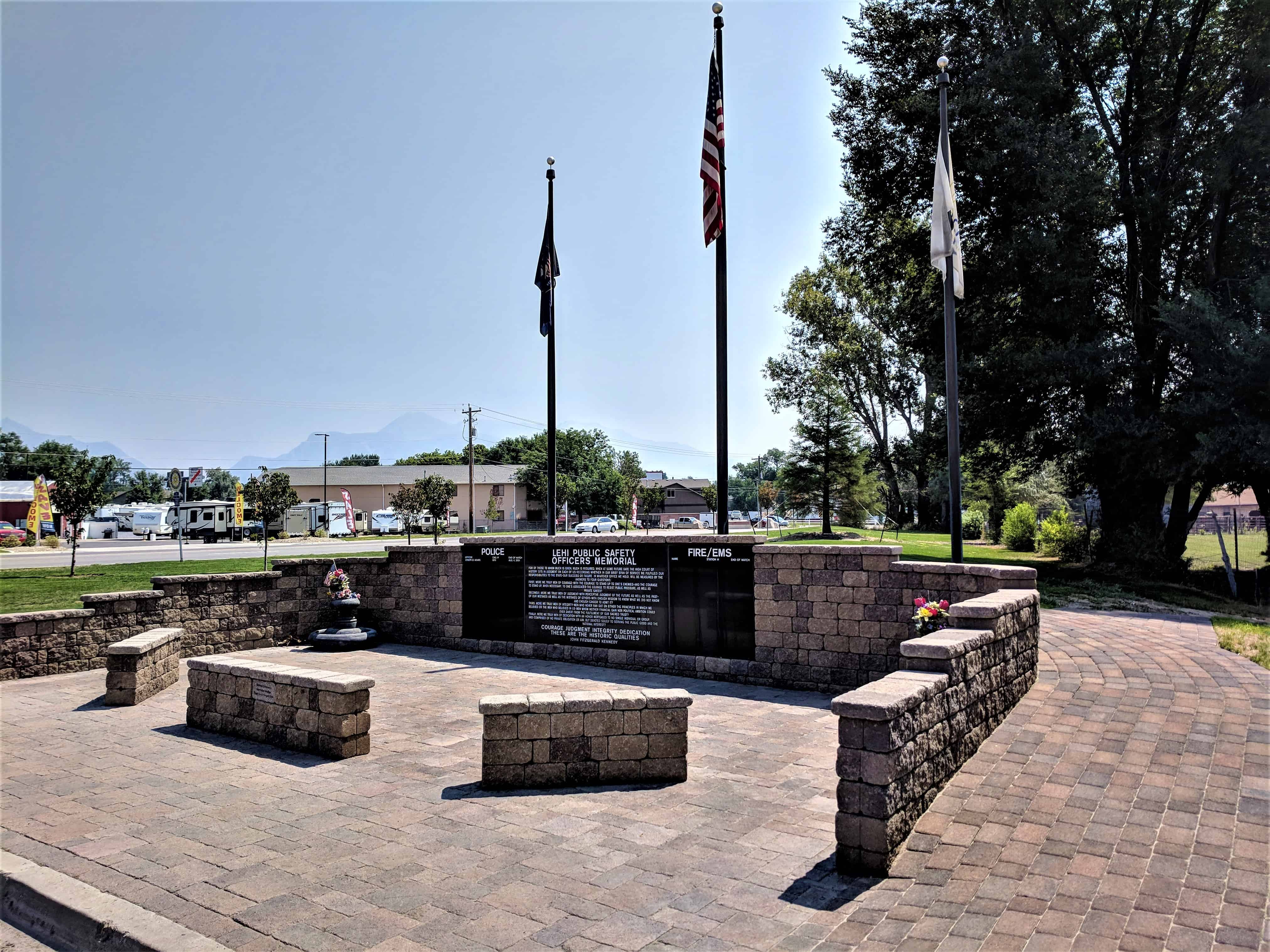
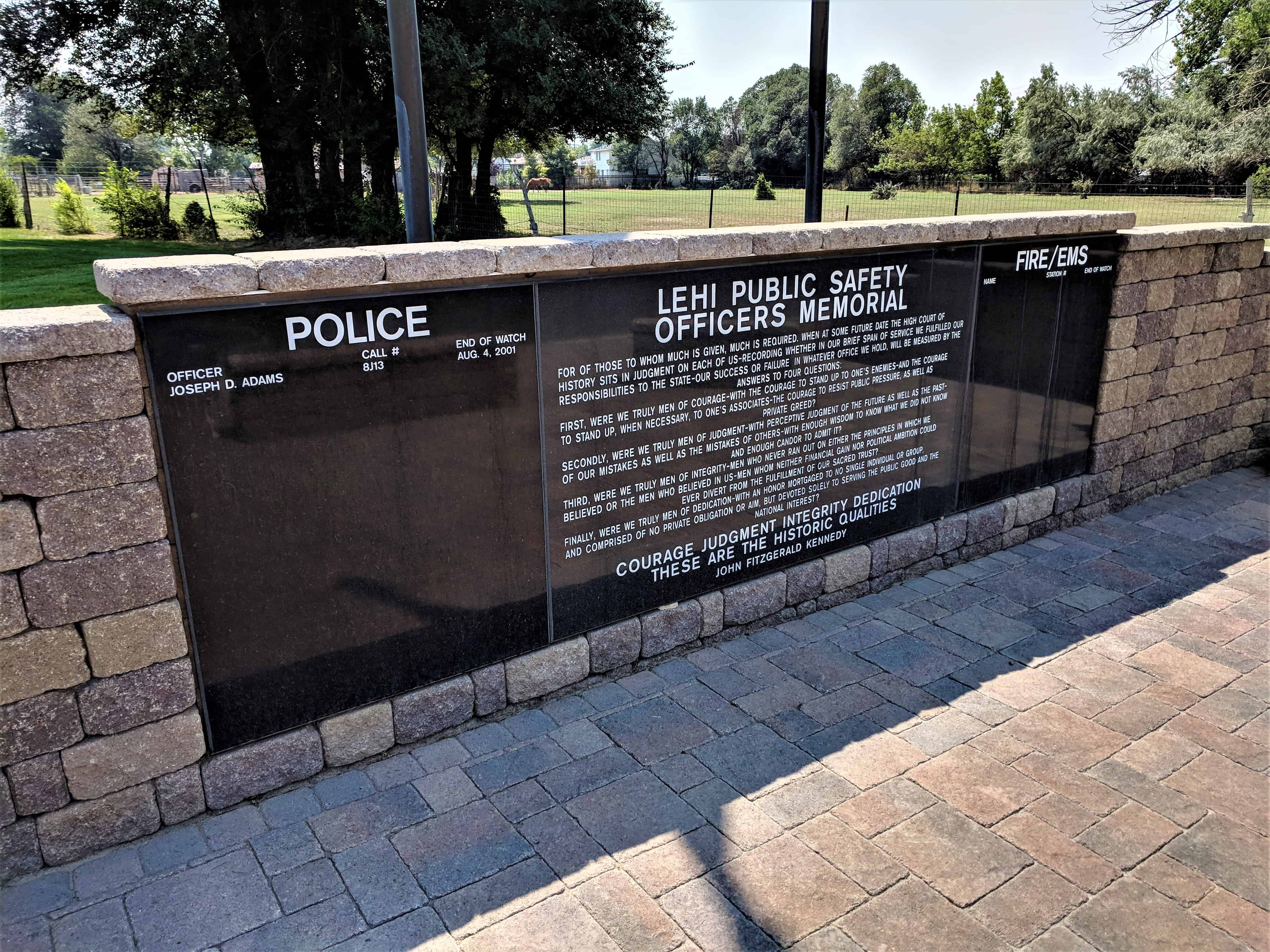
According to police, Adams stopped a suspected drunken driver at 2100 N. 1200 West just before 11 p.m. Friday. Adams reportedly ticketed the man for DUI and asked him to step out of his vehicle. In the process of being handcuffed, the man was somehow able to free one hand, grab a small handgun and begin shooting, Utah County Sheriff’s Sgt. Dennis Harris said.
A wounded Adams was still able to shoot the assailant numerous times before the man got into his car and drove away with Adams’ handcuffs dangling from one wrist.(*)
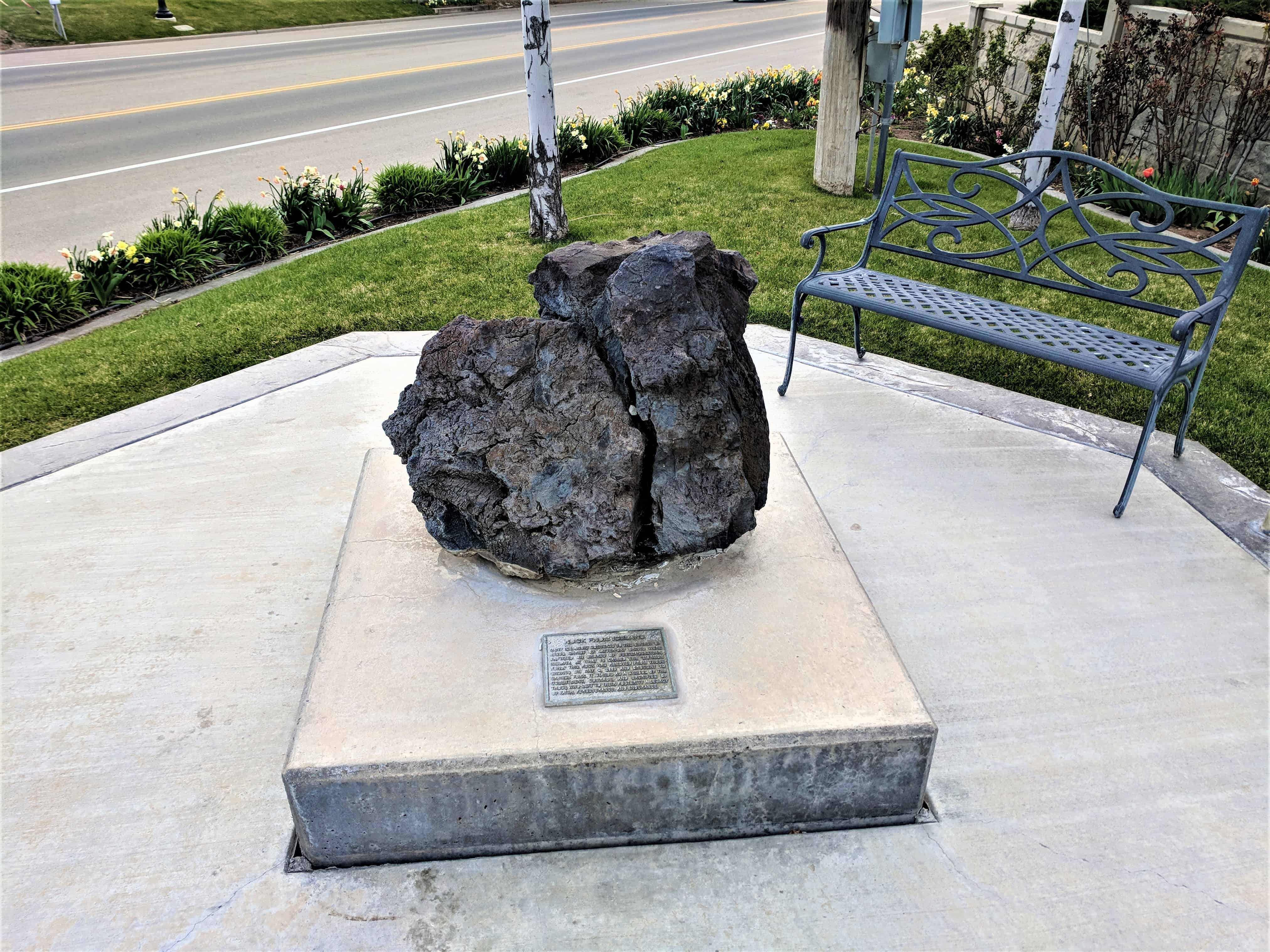
Many Icelandic converts to The Church of Jesus Christ of Latter-day Saints were baptized on the shores of Vestmannaeyjar, Iceland, at what is called the “Mormon Pond.” This rock was removed from those shores on May 6, 2005 and brought to Spanish Fork. It stands as a symbol of the commitment, courage, and sacrifice of those who left to their posterity a legacy of faith, perseverance, and endurance.
Two natives of Iceland, Porarinn Halfidason and Gudmunder Gudmundsson, met two Mormon missionaries from Utah while studying in Copenhagen, Denmark, in 1851. After careful investigation, they converted to The Church of Jesus Christ of Latter-day Saints. They returned to their homeland to share their newfound faith. In 1852 Porarinn drown at sea. Gudmunder carried on the proselyting activities. Many converts were baptized on the shore of Vestmannaeyjar, Iceland.
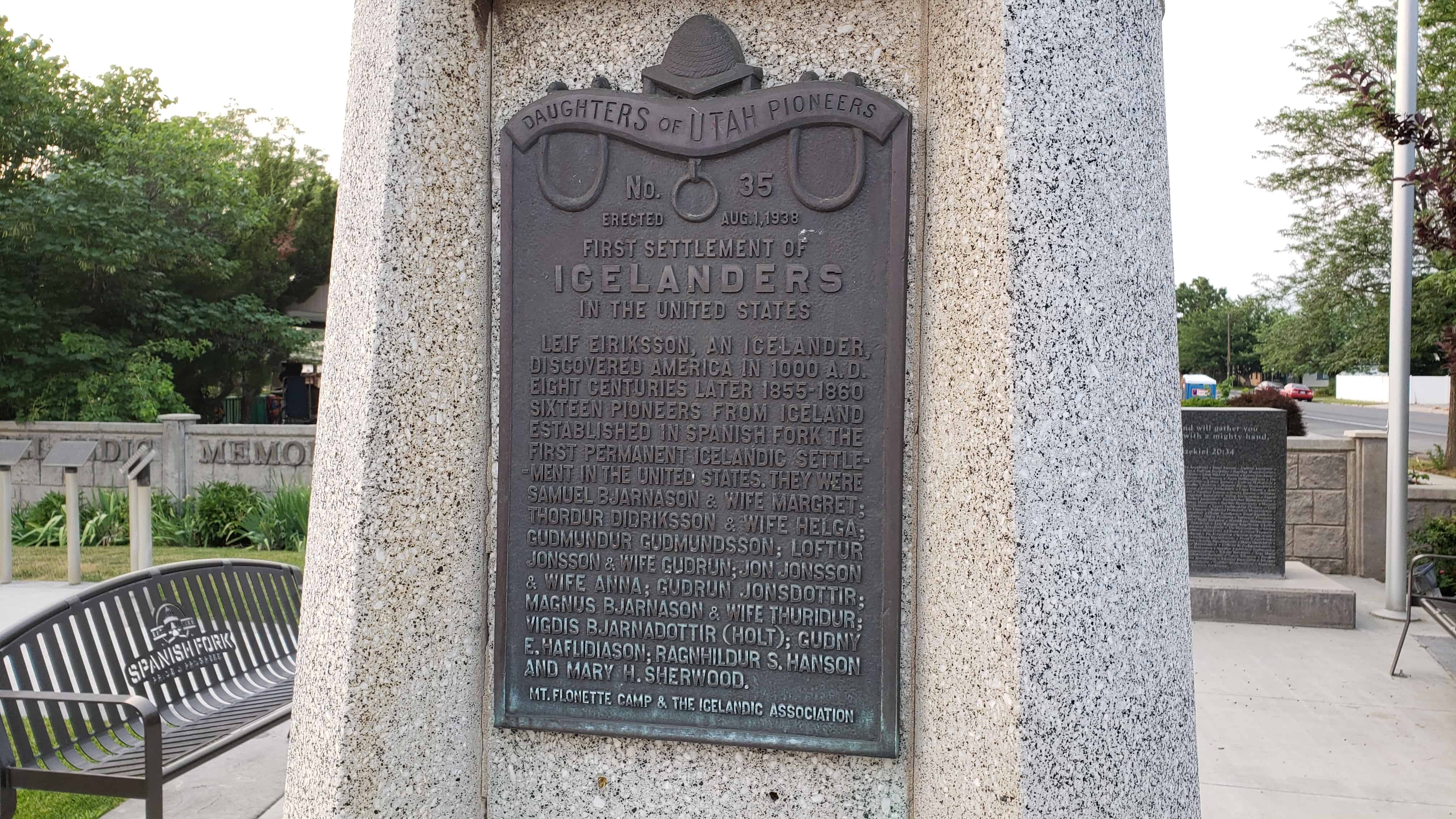
In 1854 Samuel Bjarnson and his wife, Margret Gisladottir, and a traveling companion, Helga Johndottir, were the first converts to leave Iceland for Zion. They sailed from Iceland in November of 1854 to Liverpool, England, on the ship James Nesmith. From England, they continued on to New Orleans where they boarded a riverboat headed to St. Louis, Missouri. After passing through Mormon Grove, the group arrived in the Great Salt Lake Valley on September 7, 1855, 300 days after their departure from Iceland. Brigham Young, President of The Church of Jesus Christ of Latter-day Saints, directed Samuel, Margret, and Helga to settle in Spanish Fork, Utah. With a nucleus of 16 pioneers the first permanent Icelandic settlement in the United States was established in Spanish Fork.
Prior to 1869, Icelanders made the trip to Utah by sailing on ships, traveling in wagon trains, and pulling handcarts. After that time, they traveled to Utah by steamship and train. Over 400 Icelanders immigrated to Utah from 1855 to 1914. Because the pioneers had very little money to help themselves or others, they found it necessary to work together as they settled in their new homes. In 1887 the Icelanders in Spanish Fork held their first Iceland Days Celebration, Kate B. Carter wrote, “The Iceland people in Utah are said to have preserved the folk-lore and customs of their mother country more than any other nationality that pioneered in Utah.”
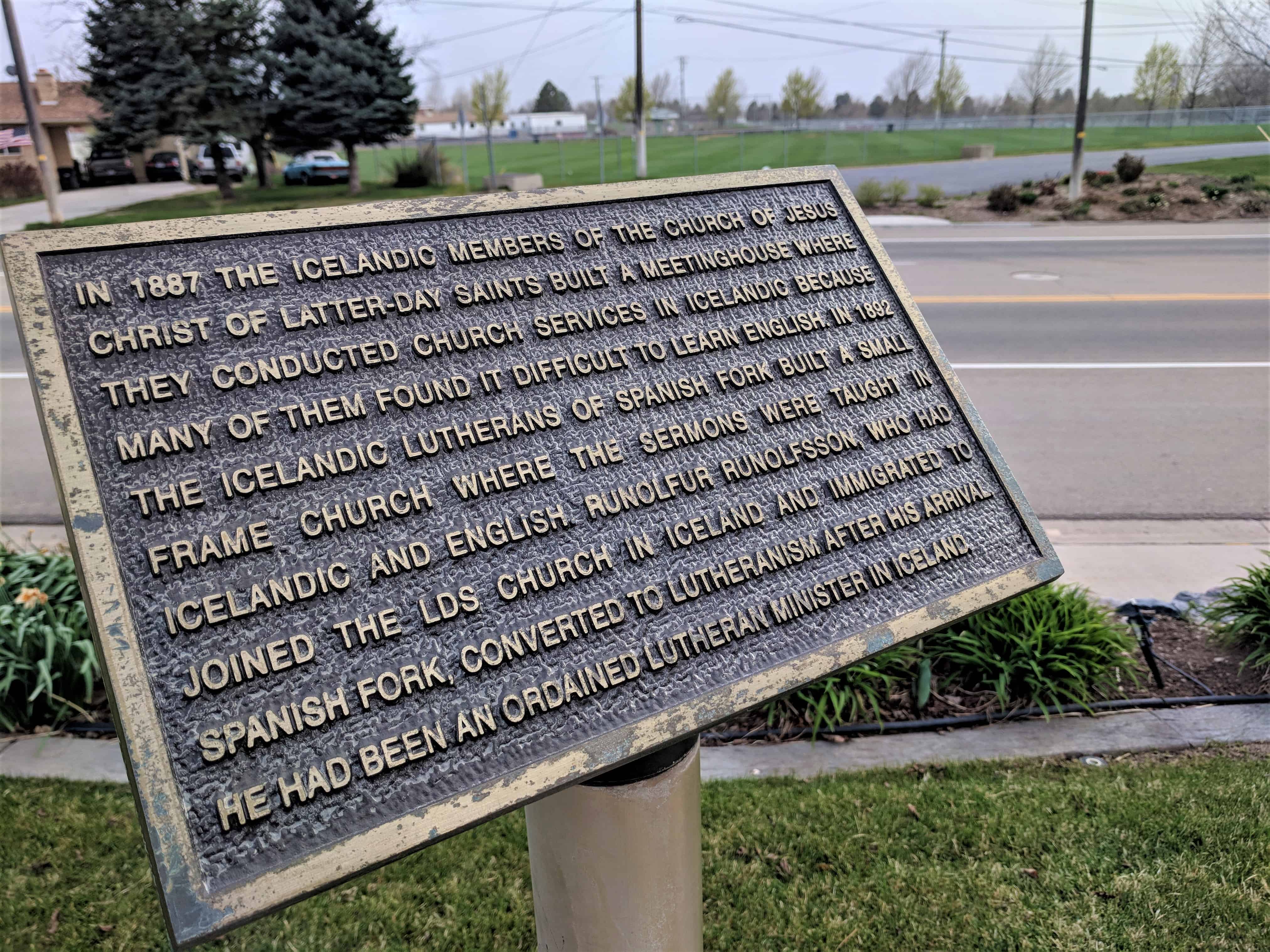
In 1887 the Icelandic members of The Church of Jesus Christ of Latter-day Saints built a meetinghouse where they conducted church services in Icelandic because many of them found it difficult to learn English. In 1892 the Icelandic Lutherans of Spanish Fork built a small frame church where the sermons were taught in Icelandic and English. Runolfur Runolfsson, who had joined the LDS Church in Iceland and immigrated to Spanish Fork, converted to Lutheranism after his arrival, he had been an ordained Lutheran minister in Iceland.
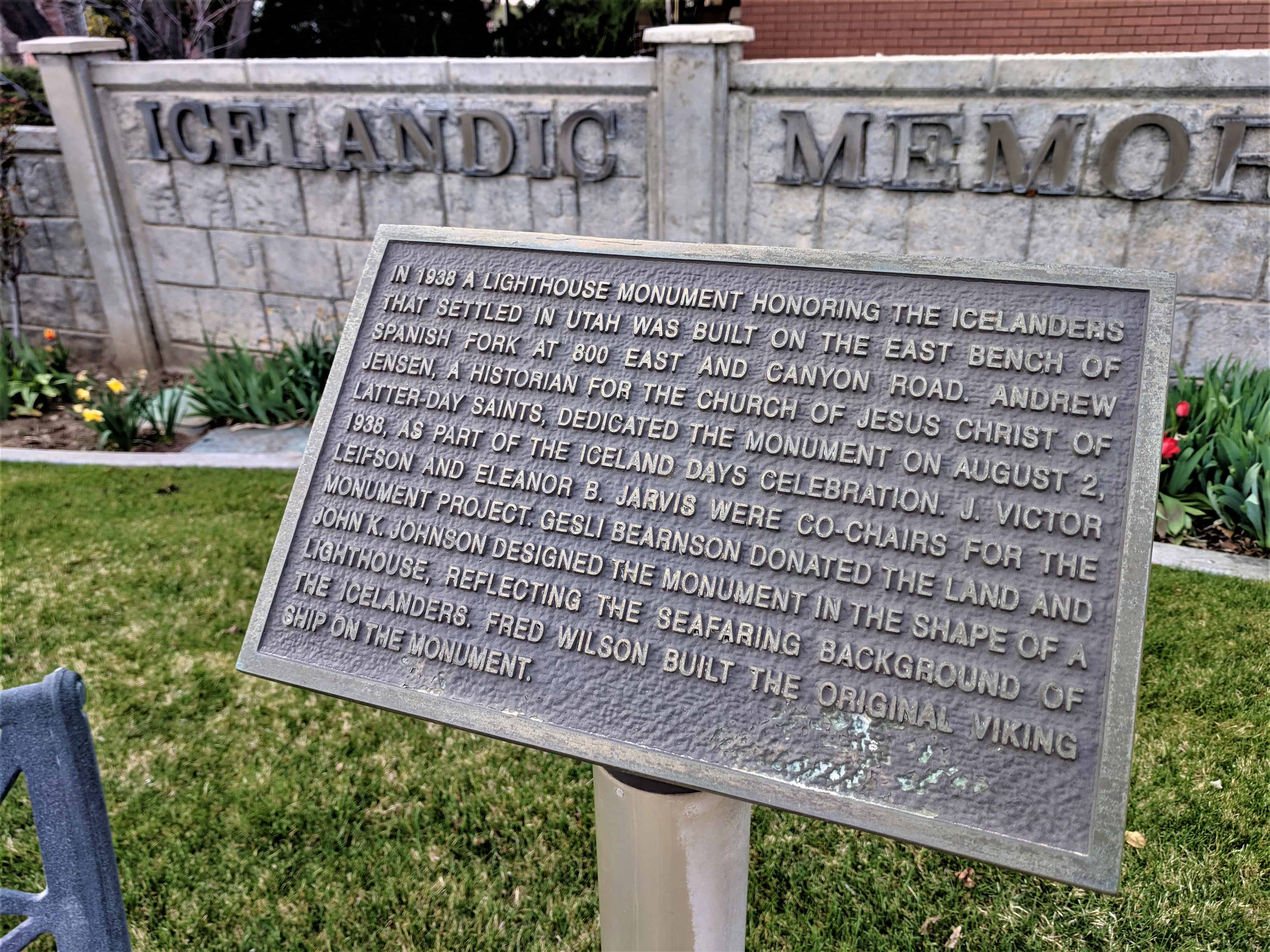
In 1938 a Lighthouse Monument honoring the Incelanders that settled in Utah was built on the east bench of Spanish Fork at 800 East and Canyon Road. Andrew Jensen, a historian for The Church of Jesus Christ of Latter-day Saints, dedicated the monument on August 2, 1938, as part of the Iceland Days celebration. J. Victor Leifson and Eleanor B. Jarvis were co-chairs for the monument project. Gesli Bearnson donated the land and John K. Johnson designed the monument in the shape of a lighthouse, reflecting the seafaring background of the Icelanders. Fred Wilson built the original Viking ship on the monument.
The centennial celebration of the first Icelanders coming to Utah was held on June 15-17, 1955. Elder Henry D. Moyle of The Church of Jesus Christ of Latter-day Saints opened the celebration as a keynote speaker during a religious service on Wednesday, June 15. The celebration included a parade and concluded on Friday, June 17, a national holiday in Iceland. The Iceland Association, in 2000, raised funds to build a monument in Vestmannaeyjar to honor their ancestors, along with an exhibit in Hofsos, Iceland.
Byron T. Geslison, his wife, Melva and their two sons, David and Daniel, were called to Iceland in 1975 to renew the missionary effort of The Church of Jesus Christ of Latter-day Saints. When the Geslisons arrived in Iceland there were no missionary discussions or tracts in Icelandic. Byron had the voice of warning and truth, written by Thordur Didriksson in 1879, re-printed to use as a missionary tract. The Icelandic government officially recognized The Church of Jesus Christ of Latter-day Saints on November 1, 1983.
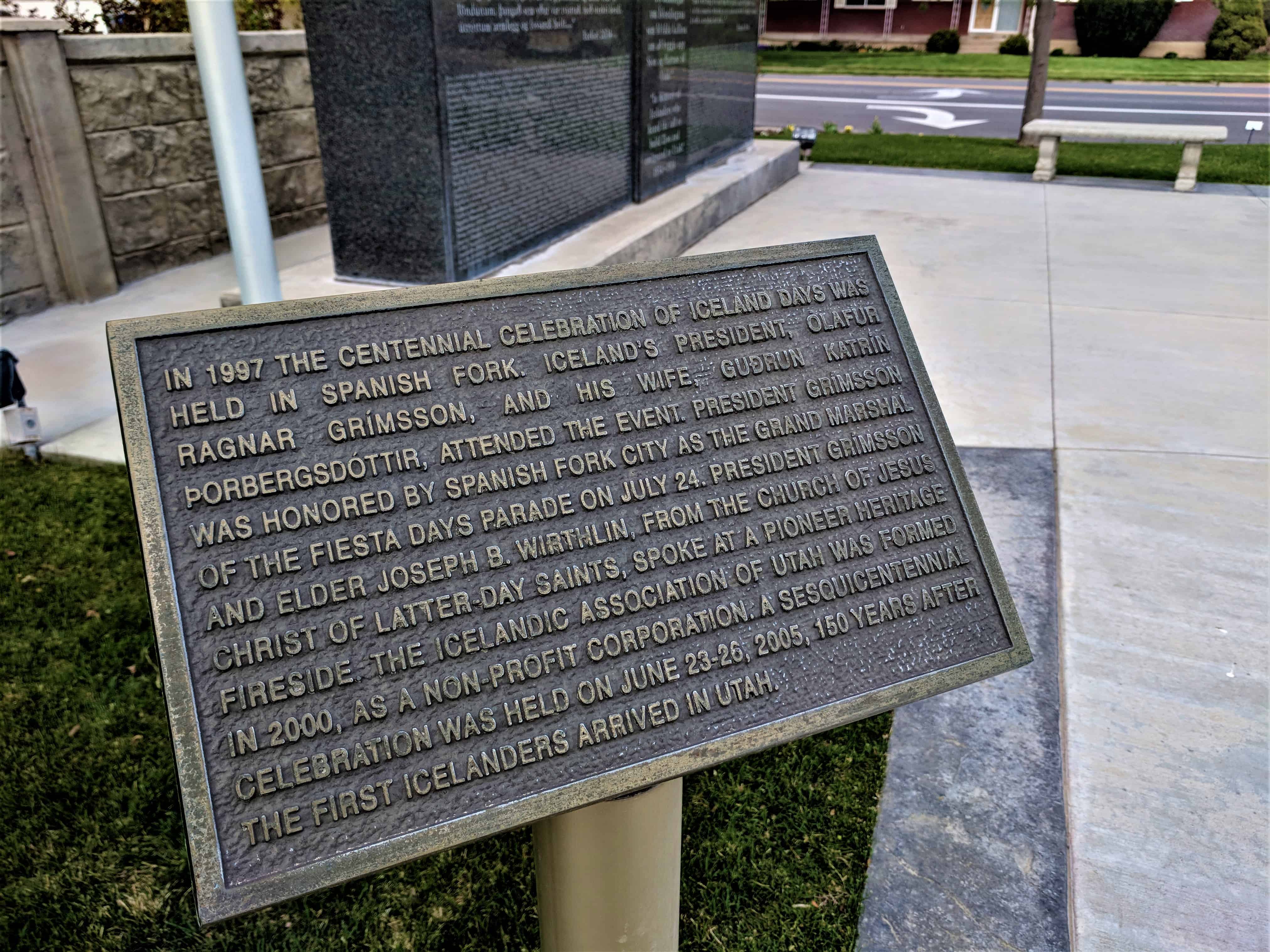
In 1997 the centennial celebration of Iceland days was held in Spanish Fork. Iceland’s President, Olafur Ragnar Grimsson, and his wife, Gudrun Katrin Porbergsdottir, attended the event. President Grimsson was honored by Spanish Fork City as the Grand Marshal of the Fiesta Days Parade on July 24. President Grimsson and Elder Joseph B. Wirthlin, from The Church of Jesus Christ of Latter-day Saints, spoke at a pioneer heritage fireside. The Icelandic Association of Utah was formed in 2000, as a non-profit corporation. A sesquicentennial celebration was held on June 23-26, 2005, 150 years after the first Icelanders arrived in Utah.
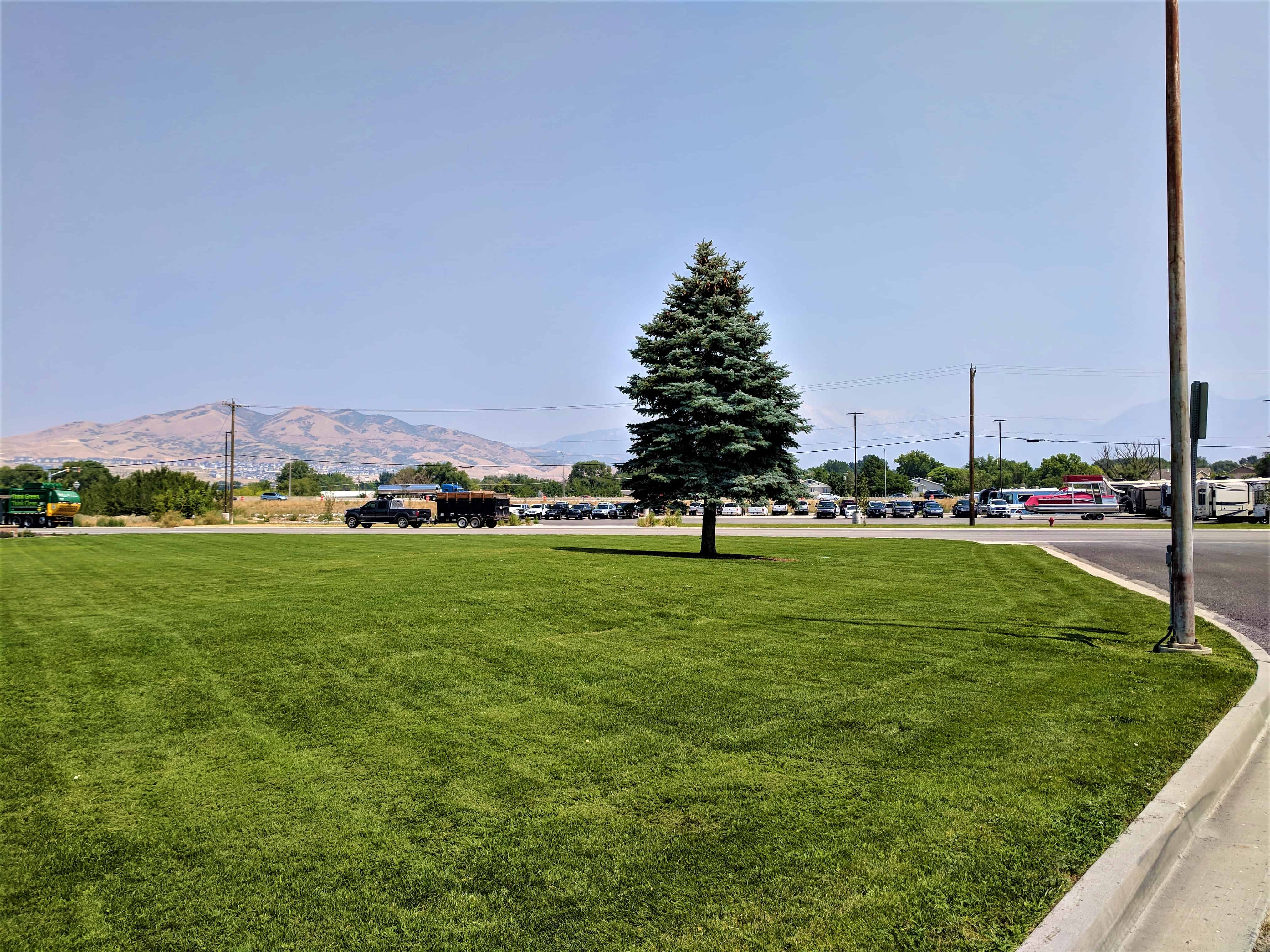
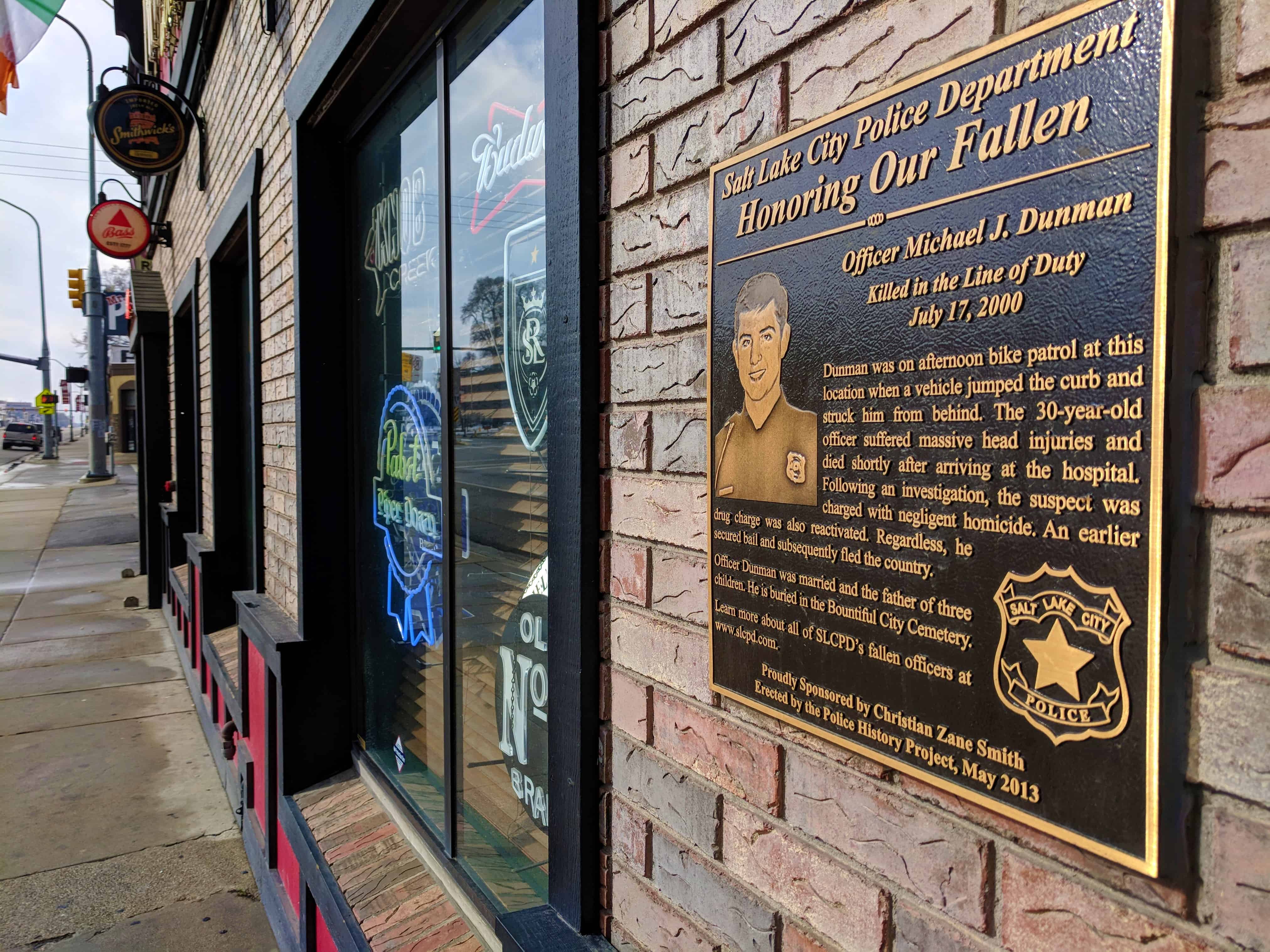
Dunman was on afternoon bike patrol at this location when a vehicle jumped the curb and struck him from behind. The 30-year-old officer suffered massive head injuries and died shortly after arriving at the hospital.
Following an investigation, the suspect was charged with negligent homicide. An earlier drug charge was also reactivated. Regardless, he secured bail and subsequently fled the country.
Officer Dunman was married and the father of three children. He is buried in the Bountiful City Cemetery.
Our lives are filled with symbolism. This monument, dedicated to those who served their country, is symbolic of sacrifice. May those who come here find peace, courage, and hope.
The circular form represents life and existence, the eternal qualities that surround and are a part of all mankind. “Honor, Pride and Pain” are defined by artist L’Dean Trueblood in her sculpture of two soldiers. In the service and sacrifice of war, it is that noble part of the soldier’s character that we honor.
The two soldiers stand as silent sentinels to those buried here. Whether under a blue sky with a warm, gentle summer breeze or the cold, damp, blustery darkness of a stormy winter night, the soldiers stand, unyielding to the elements until the day when these graves will be empty and Another will stand guard over all humanity. As if on an alter and as a statement of sacrifice, the dead are listed around the soldiers’ feet. Each soldier who gave his or her life in battle has a star in front of their name.
Below the names lies a reflecting pool, not of water, but polished black granite. The maps represent places where battles were fought and courage conquered fear. A circular field of earth tones surrounds the monument. Reds represent Mother Earth and the fact that we, the living, walk in freedom on the blood and sacrifice of many.
Polished black represents the area of the dead, where dignity should reside. The four white benches stand for the area of living – a place where mortality may return to find solace, comfort, or pay homage and respect for those who have sacrificed for us.
– Written by Joey Clegg –
Monument dedicated by Elder Boyd K. Packer, May 4, 2002