• About JacobBarlow.com
  • Cemeteries in Utah
  • D.U.P. Markers
  • Doors
  • Exploring Utah Email List
  • Geocaching
  • Historic Marker Map
  • Links
  • Movie/TV Show Filming Locations
  • Oldest in Utah
  • Other Travels
  • Photos Then and Now
  • S.U.P. Markers
  • U.P.T.L.A. Markers
  • Utah Cities and Places.
  • Utah Homes for Sale
  • Utah Treasure Hunt

JacobBarlow.com

~ Exploring with Jacob Barlow

JacobBarlow.com

Tag Archives: Moab

Moab Cabin

02 Thursday Mar 2023

Posted by Jacob Barlow in Uncategorized

≈ 1 Comment

Tags

Grand County, Historic cabins, Moab, utah

Moab Cabin

The Moab Cabin is important to the city of Moab because it is a tangible link with the community’s earlier days, and because the history of the cabin in many ways perfectly reflects the progress of history in many of the major economic and social events that have been important to Southeastern Utah and the American West in the last 100 years. Built by Mormon pioneers, used by cowboys who served the area’s cattle boom, owned by the first clerk of the La Sal Forest which had been created to provide sensible management of the region’s fragile ecology, and home to a succession of humble prospectors who brought about Moab’s Uranium boom, the Moab cabin is an important focus for regional history.

Located outside the Moab L.D.S. Church/D.U.P. Museum at 45 North 200 East in Moab, Utah, it was added to the National Historic Register (#80003906) on February 14, 1980.

The original owner was Marietta Pierce Stewart, the third plural wife of Randolph Hockaday Stewart, the first bishop of Moab. In 1879 R. H. Stewart and his three families started south from Rich County, Utah in response to a call of the Mormon Church to settle Emery County (which then included the present Grand County, where Moab is located). They were stopped by the fierce winter of 1879-80 in Huntington, Emery County, where Bishop Stewart built three log houses for his families. They stayed there for one year and in
the spring of 1881 arrived in Moab, Presumably he once again built three log cabins, although that supposition cannot be verified. At any rate, he acquired all of Block 14, the site of this cabin, from Leonidas L. Crapo, the original homesteader. He and his first counselor in the LDS Church, Orlando W. Warner, deeded this block to Marietta, Bishop Stewart’s third wife.

Marietta’s children inherited the cabin, and in 1910 deeded it to John Jackson, a Wild West, yarn-spinning, old-time cowboy. Local tradition claims that John Jackson (ne Hinton) actually built this cabin in the 1890s of cottonwood logs hauled from the creek that ran through Moab. He was rough and tough and enjoyed a good tale, regardless of its veracity. He was raised in Texas and orphaned at eleven, lived with an uncle for a time and got in several scrapes with other cowboys, Indians, and horse thieves. He claimed that when he left Texas the sheriff and his possee wanted him to stay so bad they chased him all the way to the border, trying to get him to come back. After his hasty exit from Texas, he was forced to change his .name. He then became known as John “Jackson,” although he stayed in Arizona with his brother, Bill Hinton, and the two came to Utah together in 1890. In 1891 Jackson drifted up to Moab, spent a night or two, and did not return until 1893, when he settled there. Locally, he got his start as a cattleman as he “roped wild mavericks in the canyons surrounding the Blue Mountains and sold them for $5 a head. John did a lot of trading and finally had a herd of cattle, which he ran down the river.” Local residents insist that he was more of a rustler in the beginning, a common start for cattlemen in the Old West. He worked for a local cattle company and was allowed to rope mavericks for himself, but at the end of the season he had more cattle than the company did! Jackson himself never discouraged tales about his escapades, although he wound up a wealthy man with money to lend to several of the leading families of Moab. During his days on the range he usually kept his wife and family out with him. On their trips to town they stayed in this cabin and eventually lived there. His first wife, Lillian Webb, bore at least one of her children in this cabin and the family was settled there by 1900.

In April 1910, John Jackson officially acquired title to the property from the children of Marietta Stewart for twenty-five dollars. He didn’t keep the cabin long, selling that part of the lot to John E. Dubois in July for four hundred dollars. Dubois in turn sold it to Henry A. Bergh and Howard W. Balsley in November for
four hundred and fifty dollars. Balsley got sole title to the property eleven months later in October, 1911 for six hundred and fifty dollars and has owned it ever since.

Howard W. Balsley, now 92 and the second oldest person in Moab, still owns the cabin and his own experiences give a fascinating glimpse of the process of change in the American West since the early 20th century. By 1908 when Balsley came to Moab, the West had been officially “closed” for almost twenty years. Traditionally, the American West had been a land of wide open spaces, with room for all. The Old Spanish Trail ran through Moab, one of the few points that allowed a relatively easy crossing of the Colorado River. Indian families, Spanish padres, explorers, traders and trappers of various nationalities had passed through the area for centuries. In 1877, the last call of Brigham Young for the settlement of Emery County (which then included Grand County, and Moab) encouraged Mormons to settle there although other residents, mostly bachelor cowboys and traders, were already in residence. The Mormon pioneers initiated a settled order of life which the community had previously lacked and started farming and agriculture on a wide scale (including the cultivation of the famous Stewart peach, bred by the first Mormon Bishop and possible builder of this cabin, Randolph Hockaday Stewart). The main concern any farmer in the desert has always been water. In addition to private effort, irrigation companies organized to raise money back East for the schemes of opening desert land to cultivation. One of these companies originally drew Howard Balsley to Moab.
A native of Pennsylvania, Balsley was living in Indianapolis when he and his sister invested heavily in the stock of a western water company, known variously as the Grand Valley Land and Mineral Company or the Valley City Reservoir Company. This irrigation project was designed to impound water from the washes between the towns of Green River and Moab, opening large tracts of land to homesteaders. Several people settled the land while an Indianapolis bank partially financed the project, selling stock to eastern
investors such as Howard Balsley. After his first job campaigning for the Republicans in 1908, Balsley decided to go West and see what happened to his investment. “I got out here and found that the secretary-treasurer of the company had been spending the money on horse races instead of putting in a concrete dam as he was supposed to have done. They just had an earthen dam. The first big flood that came along, why, away it went. Anyhow, that’s one investment made and lost I never regretted, otherwise I’d have never been out. It was a means to an end.”

“What made you decide to stay?” “Oh, I just liked the country. These red rocks had quite an attraction for me. It was quite romantic in the old stage days, you know.” The Old West wasn’t quite dead in Moab.

After working hard on a farm and saving his money, Howard Balsley accrued the thirty dollars necessary to take the U.S. Civil Service examination, qualifying him to join the U.S. Forest Service. He became the first permanent clerk of the LaSal National Forest, now part of the Manti-LaSal. He started as a clerk and
later served as clerk-ranger from 1909 to 1918, during the tenures of four of the first five supervisors: John Riis, Henry A. Bergh, J.W. Humphrey and Samuel B. Locke.

The creation of the National Forest Service resounds to the credit of President Theodore Roosevelt. The American Forestry Association was founded in 1875 at the urging of Gifford Pinchot, an early conservationist. The government reacted unenthusiastically, but by 1891 Congress authorized the President to create forest reserves; which he did immediately. These reserves underwent several changes of title and control, but by 1905 the Forest Service was in operation under the Department Agriculture, where it remains today. “The LaSal Forest Reserve was established by proclamation on January 25, 1906. The Monticello Forest was established by proclamation on February 6, 1907; and the LaSal and Monticello were consolidated on July 1, 1908. By the time Howard Balsley became forest clerk in 1909, the previous temporary clerk had quit and he was left to do the clerical work of the entire forest, stretching over a wide area in Grand and San Juan Counties in Utah and Mesa and Montrose in Colorado.

Balsley lived in Moab , boarding for a while with the Forest Supervisor, Henry Bergh, and his wife Zena in the house where Balsley now lives. He and Bergh together bought the log cabin, situated on the same block as the present Balsley residence.

After purchasing the cabin, Balsley moved in there for a short while with his friend, Loren L. “Bish” Taylor, who became the second owner and editor of the Moab newspaper, The Times Independent. The two men lived in the cabin only a short time while they built a frame structure directly to the south; it had room for some cupboards and was generally more spacious. (This frame dwelling is now part of the main structure of the “Atomic Motel,” a name undoubtedly coined during the uranium boom of the 1950s.) Balsley’s parents came out for a visit in 1910 and stayed almost a year in the log cabin. His father put a glass window in the front door, apparently the only alteration in the building since its construction.

In 1912 Howard Balsley married Jessie Trout, a local girl whose father, Tom Trout, was one of the wild Texas cowboys to settle in the Moab area. Tom Trout lived in this cabin, too, for three or four years before his death on July 15, 1939. Trout had run cattle in Texas and participated in the big cattle drives to Dodge City, Kansas. He was on the first grand jury in Texas and perhaps thought that made some enemies, for local tradition claims that he was dumped over the Texas state line wrapped in a cowhide. True or not, by 1885 he was in Monticello, Utah, punching cattle. At Christmas 1886, he came to Moab to celebrate (in the hard-drinking, gun-shooting manner of the wild west cowboy) and won ten dollars on the horse race held on Moab’s main street. A local citizen asked if he’d like to buy a town lot. “I just as well invest my money in town lots as anything I know of,” Tom replied. Then he left town, returning in 1888 when the local citizens offered to buy the lot for $1,000 to build a schoolhouse. Impressed by the worthiness of the cause, Trout freely gave them his lot, now the site of the junior high school. He later married Elizabeth Standifird of Moab, became a cattle rancher, county road commissioner, deputy sheriff and miner.

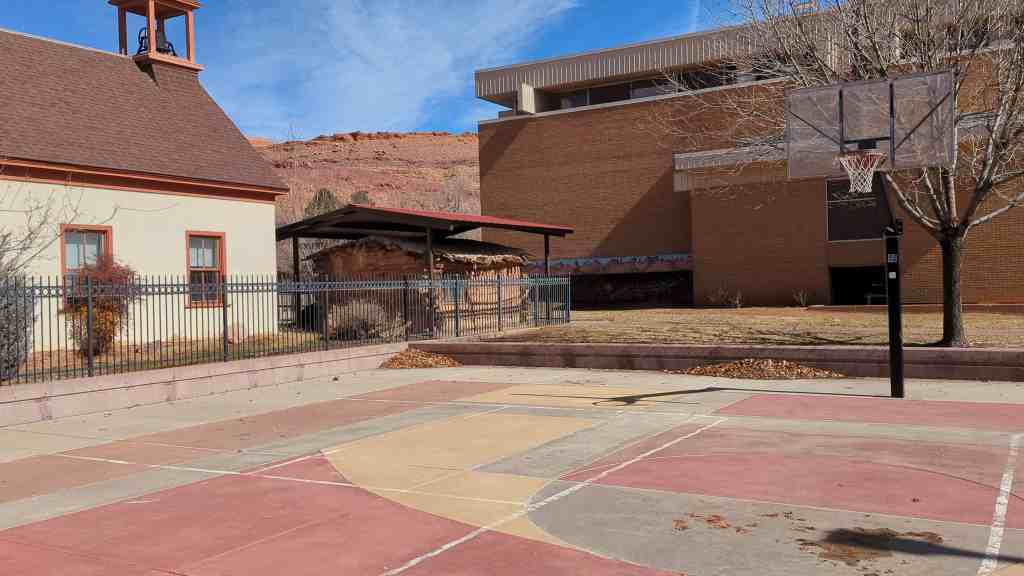
A single-story rectangular log structure. The walls are of rough-hewn logs with mud chinking, unevenly notched at the corners The flat roof is made of parallel logs covered with branches and mud, sporting a final layer of growing plants.

Finally, the cabin is significant because of its ties to Howard Balsley and his career in uranium. Commencing in 1913 while he was still in the employ of the Forest Service, Howard Balsley helped pioneer the development of the Uranium industry in the west. Later, during the uranium boom of the fifties, the cabin was again home to a succession of hopeful prospectors.

Moab L.D.S. Church

02 Thursday Mar 2023

Posted by Jacob Barlow in Uncategorized

≈ 1 Comment

Tags

Chapels, Grand County, Historic Buildings, Historic Churches, Historic Markers, Moab, museums, NRHP, Schools, utah

Moab L.D.S. Church

Constructed of adobe in 1889, the Moab L.D.S. Church was built nine years after the establishment of Moab in 1880. Angus Stocks supervised the laying of the foundation and adobes. Within a few years of the original construction, an addition was made to the rear of the building. The church was used by the Moab Ward until 1925 when a new church was built and this church deeded to the Grand County School District. In 1937 the Grand County Camp of the Daughters of the Utah Pioneers began holding meetings in the building and have continued to use the building, with the exception of a ten year period between 1954-1964 when it was used for classrooms.

The Moab L.D.S. Church is located at 45 North 200 East in Moab, Utah and was added to the National Historic Register (#80003907) on November 28, 1980.

Related:

  • Early L.D.S. Church (D.U.P. Marker located here)
  • Elk Mountain Mission (D.U.P. Marker located here)
  • Moab Cabin (located here)

This 1889 stuccoed adobe structure is emblimatic of the LDS origins of Moab and the continuing importance of religion in the life of that community and is significant as a late example in Utah of a church building which exhibits the Greek Revival influence. It is of typical pioneer architecture, constructed of locally-available materials through the efforts of many local citizens, and its T-shape plan reveals the rapid growth of LDS Church membership during Moab’s early years of settlement. This structure was also the only religious building in Moab until 1910, when the Baptist chapel was formally dedicated.

The Moab area was long of interest to many groups because the Colorado River could be easily crossed at that point. Moab (then unnamed) was on the Old Spanish Trail, it became the site of the Mormon Elk Mountain Mission in 1854-55 and was sporadically used as grazing lands for cattlemen from both Utah
and Colorado in the 1860s and 1870s. Both Utes and Piutes claimed the land, and were partially responsible for the quick demise of the Elk Mountain Mission.

The present town of Moab dates its official founding from the establishment of the post office on March 23, 1880. The town served as a regular stop on the mail route from Salina, Utah to Ouray, Colorado, the first and only route in southeastern Utah and much of western Colorado. As a fragile link to the outside world, it was of tremendous importance to settlers in the area who tended to congregate at mail stops, hence increasing the population of towns like Moab. Most of those early settlers of Moab were Mormons, and on February 15, 1881, visiting church officials organized the Moab Ward with Randolph H. Stewart, bishop, Alfred G. Wilson, first counselor, and Orlando W. Warner, second counselor.

At the time of the Ward’s founding, Moab was part of the Emery Stake. However, in 1884 the Moab ward became part of the San Juan stake and began acquiring property. The Church lot was sold for $100 by the patentee, Leonidas L. Crapo, to Bishop Stewart and Counselor Warner in 1884. The bishop, a polygamist with three wives, was sorely pressed by the “raids” of the time and in 1885 transferred the land solely to Warner for $500. The following year Warner deeded all of Lot 1 to the Moab LDS Church Trustees-in-Trust: Henry Holyoak, Jefferson A. Huff and David A. Johnson.

In 1888 the building program began. “For the first part of the building, O.W. Warner, Henry Holyoak, and O.D. Allan were appointed as the building committee. Labor, money, and building materials were donated by the Church members. Angus Stocks supervised the laying of the foundation and the adobes (which) were made in the Jonathan Huff place.. .Hyrum Alien supervised the hauling of rock…from the canyon east of Moab. J.H. Staniford supervised the carpenter work. Lumber, shingles, windows and doors were ordered from Salt Lake City. Everyone with a team and wagon helped with the hauling.. .Bill Bliss cut the stones for the foundation and Angus Stocks laid them. Mr. Bliss helped make adobes on the Huff place. John Holyoak, Mrs. Mary Murphy, and their two oldest boys hauled the adobes to the Church site.” “Grandpa” Henry Holyoak cut logs from Pack Creek to make lumber at his sawmill. Many other community members aided in construction.

However, even as the church building rose, the town population also increased. When church members congregated for the first service in 1889 the building proved too small to hold them. Builders added another room sometime prior to 1900, giving the building its present “T” plan. For many years children attended Sunday school in the basement.

In 1902 the Moab LDS Church incorporated, and the Trustees-in-Trust deeded the land to the bishop, David A. Johnson, who immediately deeded the land to the Moab Corporation of the LDS Chruch, all in that year. Until 1925 this building continued serving as a church, until the population of the faithful
increased beyond the capacity of this structure. A new church was built at a cost of $30,000, and a newer one for $200,000. In 1925 the first church was deeded to the Grand County School District, who still retains ownership.

From 1925 to 1937 this building remained vacant. On November 3, 1934 the Grand County Camp of the Daughters of Utah Pioneers was organized and began meeting in private houses and in the Relief Society rooms of the newer LDS Church. As their membership expanded, they needed more space, and in 1937 the School Board allowed them to begin meeting in the original IDS Church. At their first meeting there, on May 26, 1937, “Daughter Mary presented the Daughters with an Organ” which still remains at the Hall. On October 28, 1937, “Daughter Mabel Johnson donated a stove for the rooms of the DUP. It was decided that members would take turns in furnishing coal and kindling for the fires and should also take turns in starting the fires, on meeting nights.” Finally, the Daughters installed linoleum removed from the local hospital, for which they had made curtains. At the April 28, 1938 meeting the Daughters organized a committee for gathering relics.

Since that time the original church has served as the DUP meeting rooms and Relic Hall with the exception of a ten-year period from 1954-64. During this period of Moab’s uranium boom, the school district reclaimed the building for use as classrooms and added the door at the left rear of the building to
permit easy access. They also installed a new, lower ceiling in the front part of the structure in a room then used for band class.

The Moab L.D.S. Church is a one story, gable roof building, originally built with an I plan, but later extended to a T plan. It was built of adobe with a rock foundation and later stuccoed over. A belfry is mounted on the ridge of the roof over the main entrance. Slender chimneys with decorative brick coursing occur at each end of the extension. Greek Revival influence is evident in the orientation of the church with the gable end to the road, and in the boxed cornice which returns on the gable ends. The single door on the façade has a Greek Revival-type of pediment. According to an old photograph, a small circular window was centered over the door which no longer exists. There are three two over two double hung sash type windows on each side of the original building. With two exceptions the same type of window was used on the extension. A six over six double hung window with a transom has been used on the rear and on the north wall of the extension. Alterations to the original structure include the major rear addition, the elimination of the circular window, and the lowering of an interior ceiling. A rear door with a
frame extension over it was added to the rear extension and the larger windows also may not be original. The stuccoing of the entire building dates later than the construction of the original building and its extension.

Star Hall

01 Wednesday Mar 2023

Posted by Jacob Barlow in Uncategorized

≈ Leave a comment

Tags

Grand County, License Plate Art, Moab, NRHP, Richardson Romanesque, Richardsonian, Richardsonian Romanesque, Romanesque, Sandstone Buildings, utah, Victorian

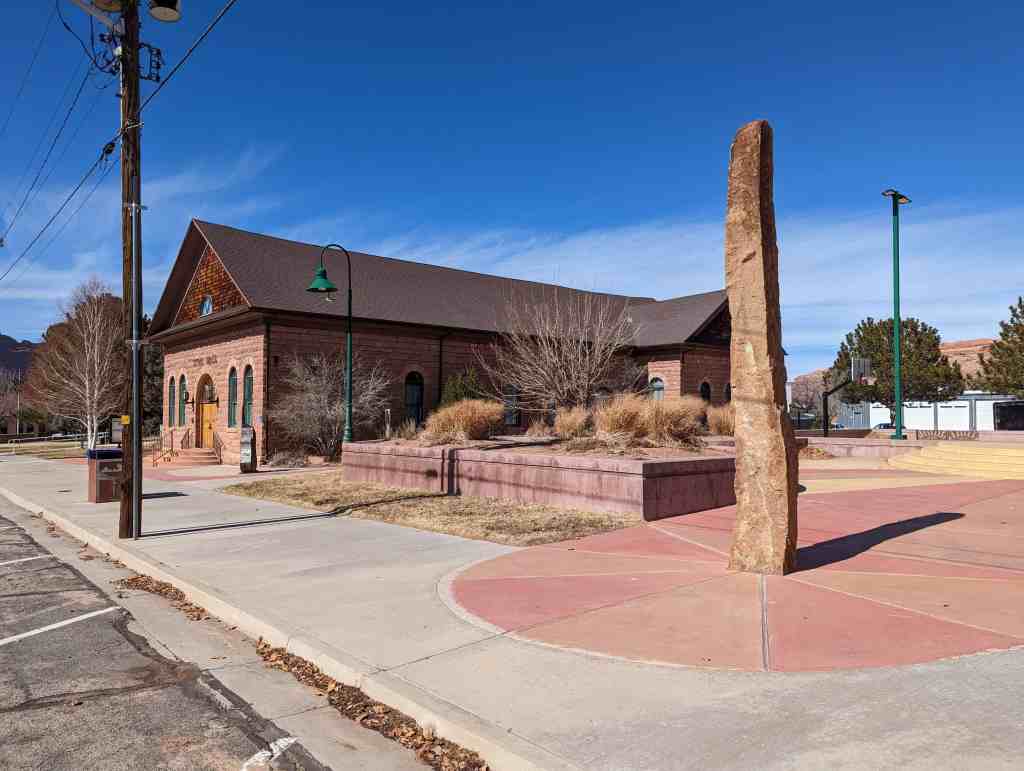
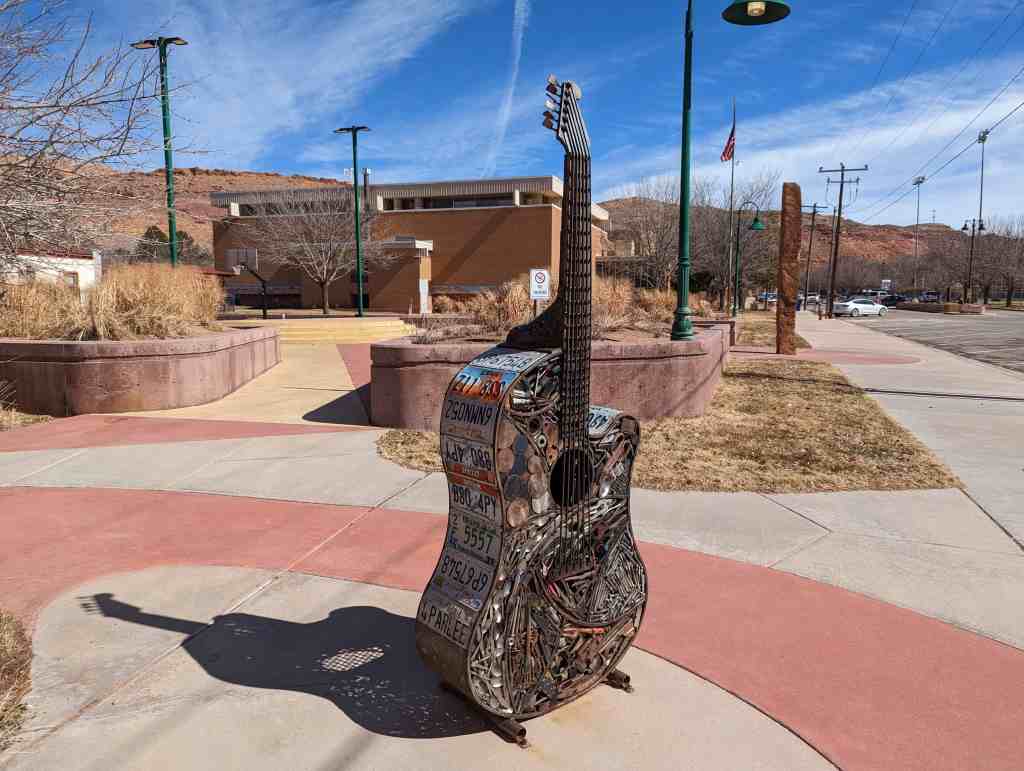
Star Hall

Star Hall is significant as one of the finest examples of the Richardsonian Romanesque architectural style in southeastern Utah (Criterion C). As a well preserved and locally rare example of the style, it is important to Utah’s architectural history. Due to its stature as one of the only remaining historic structures in Moab, Star Hall is a unique symbol of the community’s heritage. Star Hall is also significant as the primary community meeting and recreation hall in Moab, initially owned and operated by the LDS church, and later by the local school district (Criterion A). It has made a lasting contribution to the social history of Moab and its beauty and architectural style make the preservation of Star Hall vital to the local community.

Located at 159 East Center Street in Moab, Utah and added to the National Historic Register (#93000416) on February 19, 2008.

The first recorded deed of the Star Hall property shows Leonard Leonidas Crapo (b. 1838 – d. 1929) buying all of Lots 1, 2, 3, and 4 in Block 18 of Moab, Utah for $200 from the Land Office at Salt Lake City. Mr. Crapo was the first county attorney, a Justice of the Peace, a postal delivery worker, and one of Moab’s first uranium miners.

On February 22, 1884, Crapo sold Lot 1 (where Star Hall is now located) to Randolph H. Stewart and Orlando W. Warner for $1,000. While not explicitly listed on the warranty deed, Stewart and Warner undoubtedly purchased the property for the Church of Jesus Christ of Latter-day Saints (LDS or Mormon church). In 1881 Randolph H. Stewart was sent to Moab by the LDS church to organize the Moab Ward (congregation) and build the first Mormon church. Stewart was the bishop of the Moab Ward and Orlando W. Warner was a member of the ward bishopric, a second counselor. On July 25, 1885, Stewart sold the property to Warner for $500. Then on August 7, 1896, Warner and his wife Priscilla, “sold” the property to the trustees-in-trust of the LDS church for $1.

The Church of Jesus Christ of Latter-day Saints had Star Hall built as a recreational center or amusement hall for its Moab Ward members. The church contracted the construction of the hall to local Moab residents:

Will Shafer had the contract to do the woodwork. Steve Day cut the timber by a blue print supplied by Will Shafer. Will Bliss had a contract to do the rock. Stone came from the Goose Island stone quarry about a mile above the river spring. Will Bliss hauled the rock by team and wagon, making about four trips a day. Steve Day quarried it. A.M. Stocks dressed the rock for the arches for doors and windows and Bill Hawks helped lay up the rock.

William Albert Shafer (b. 1859) was a carpenter by trade who moved to Moab in 1888. Steven H. Day (b. 1883 – d. 1970) was not known for any particular construction skill or trade. Angus Murray Stocks (b. 1844 – d. 1920) was a noted mason and blacksmith, and once Star Hall was built, he was one its most renowned fiddlers and square dance callers. A.M. Stocks moved to Moab in 1885 and was one of the finest stone masons and stone quarriers in the region. William Jesse Bliss and John Will is “Bill” Hawks were also considered fine stone masons. (Bill Hawks had moved to Moab in 1902 to work as a mason on the old courthouse.)

While the exact date these men broke ground for the start of construction of Star Hall is unknown, on Nov. 3, 1905 the Grand Valley Times newspaper referenced the nearly completed construction of Star Hall: “It is reported that the new hall building will be raised two feet before the roof is put on. The building which was kept going so well during the summer seems to have struck one of those stagnant shoals so common to this climate.”

Then on Dec. 29, 1905 the same newspaper reported: “Practically nothing in the way of improvements has been shown in Moab, outside the work that has been accomplished in getting up the walls of a new amusement hall. Not a step toward making the town more attractive and healthier as a residence point.”

Once Star Hall was completed in May 1906, it did make the community “more attractive and healthier as a residence point” since the Church of Jesus Christ of Latter-day Saints used Star Hall for recreational, social and cultural activities. The church sponsored dinners, dances, plays and other community functions in Star Hall. One participant remembered the events:

They used to serve dinners in there, and I remember going to a lot of dinners in there. Everybody would have to furnish food and I know they’d have long tables clear the length of that big room…after they’d had their [dinner], or got the meal out of the way, they’d clear the tables out and then dance, and sometimes they’d dance most of the night.

In 1925, after Star Hall had been the center of church-sponsored activities for nineteen years, the LDS church sold all of Lot 1 in Block 18 to the Grand County School District. There is some confusion over the purchase price for the structure and property. The Times Independent newspaper stated that the Grand County School District had offered the Church of Jesus Christ of Latter-day Saints a total of $8,500 $7,000 was for Star Hall and one half of the adjoining lot and $1,500 for the church building (now the Daughters of Utah Pioneers building) and the rest of the property. According to the Times Independent, this total offer of $8,500 was accepted by the General Authorities of the Church of Jesus Christ of Latter-day Saints in Salt Lake City. However, the actual warranty deed filed July 11, 1925 and recorded July 10, 1926 indicates the church sold Lot 1 to the Grand County School District for $1.00.

Whatever the actual purchase price, after Star Hall became school property in 1925, the school district hired noted Salt Lake architect, Walter E. Ware to examine the building. He proposed replacing the window glass, repairing doors and windows and placing a ceiling over the stage. As stated by the Times Independent: “The repairs contemplated will all tend to make the hall more comfortable during cold weather.” Since the stage is covered with a ceiling today, it is likely these repairs were carried out about 1925, but the school district has no records of such expenditures. Whether or not Star Hall was altered in 1925, the school district continued to use Star Hall as a theater and auditorium, as well as a large classroom.

In 1968 the Grand County School District hired the Salt Lake architectural firm of Richardson and Richardson to draft plans for remodeling the interior of the building. The main alteration at this time was ’tilting’ (reconstructing) the main floor and balcony to provide a better view of the stage and installing 292 permanent seats (236 on the bottom and 56 in the balcony). This alteration of the interior allowed Star Hall to retain its original function as Moab’s auditorium, theater, community meeting house, and civic center. To this day, public meetings, concerts, theatrical performances, and most other community functions are still held in Star Hall.

The Richardsonian Romanesque style was made popular by Henry Hobson Richardson in the late 1800s and it was most frequently used for churches and county courthouses. It is therefore not surprising that the Church of Jesus Christ of Latter-day Saints chose this impressive style for its local recreational hall, Star Hall. Hallmarks of the Richardsonian Romanesque style are semicircular arch motifs for windows, entry porches and doors; and rock-faced stonework. Star Hall exemplifies this style in Utah, along with the Roman Catholic Rectory of the Cathedral of the Madeleine in Salt Lake City and the John Dixon house in Payson.

Since completion of construction in 1906, Star Hall has been one of the most important buildings in Moab, Utah. It has functioned as the central locus of community recreation, and social and cultural life since 1906. Since 1925 it has also served an important educational function with classes held there, as well as school performances, plays, graduation ceremonies, etc. Today, almost nine decades after its construction, it continues to serve the same functions as it did originally. Star Hall is eligible for the National Register of Historic Places under Criterion A since it exemplifies how the Church of Jesus Christ of Latter-day Saints has integrated religion with the social, cultural and recreational activities of its members. The church’s sponsoring of the latter activities along with religious services is currently typified by the construction of recreational rooms and basketball courts within its modern churches. This early pattern of separate facilities was consistent in the history of the church, making Star Hall an important example of this building type. Although the building was originally owned and used by the LDS church, it is no longer owned by a church nor used for religious functions (Criteria Consideration A).

Star Hall is a beautiful Richardson Romanesque style meeting hall in Moab, Utah. It is one of the only remaining historic structures in this southeastern Utah town. In plan, Star Hall is T-shaped, with the narrow portion (also a gable end) facing south onto Center Street, the main east/west street in Moab. The top, wide portion of the ‘T’ (the rear of the building) faces north toward the center of the block. The structure has had very little alteration to its exterior since it was constructed by the Church of Jesus Christ of Latter-day Saints in 1905-06. It was apparently repaired and updated c. 1925 and again in 1968.

The walls are made of twenty-one courses of locally quarried, rock-faced ashlar, reddish-pink sandstone. The mortar is the same color as the sandstone blocks and is predominately sand. The structure has a main, north/south gable roof with slightly smaller cross-gables with lower ridge lines over the ‘T’ 1′ extensions. All roofs are covered with non-historic brown asphalt composition shingles and all gable ends are pedimented. The eaves are wide, composed of tongue and groove boards, painted a dark brown. The pedimented, south-facing gable end is covered with plain wooden shakes which are Pabsco Spanish Tiles painted with Pratt & Lambert Red #231. These shakes replaced original shakes which had deteriorated by 1968.

Star Hall has a centrally located, round arched main entrance facing south onto Center Street. The main arched entrance has wooden paneled, double-doors with narrow sidelights and a fan-light window above. Immediately above the arched stone entry are metal letters reading “Star Hall”. While Star Hall is the original name of the building, these letters are probably not original. On either side of the main entrance and immediately above the top of the door are two decorative metal light fixtures of unknown date. (They were not present in a photo taken in 1909.)

Originally, three stone steps led to the main entrance from a dirt sidewalk. During the 1968 remodel of Star Hall, these original stone steps were replaced with three concrete steps leading up from a concrete sidewalk. The top of the original stone steps and the modern top step match the top of the beveled water table which is composed of two courses of dressed sandstone blocks.

The main entrance is flanked symmetrically by pairs of windows. The front windows, as with all windows in Star Hall, are two-over-two, double-hung windows with sandstone lug window sills and round arches of sandstone blocks over the half-round fixed transoms. The window sills lines around the building are all at the same height with the tops of the window sills approximately five feet above the present ground surface.

The long east and west sides of the T-shaped Star Hall are 69.5 feet long. The ‘bottom’ or south-facing side of each extension of the upper part of the ‘T’ is 10.0 feet long. The east- and west-facing sides of the upper part of the ‘T’ are 28.5 feet long. Despite the overall symmetry in dimensions and appearances, there are slight differences between the east and west sides of the building, so the east and west sides are described separately.

The east side of the main ‘stem’ portion of Star Hall contains four windows and one door which currently look out on the historic Moab LDS Church meetinghouse (listed on the National Register; now a Daughters of Utah Pioneers facility), a modern tennis court and school building. Originally, the east side faced onto poplar trees and the church. Located to the north of the four east side windows is an arched
entrance. The door in this east entrance is paneled wood with a fan-light window above and leads into the main room just south of the stage. (Instead of a door at this location, the west side contains another window.)

The south-facing (or Center Street-facing) side of the east portion of the top of the ‘T’ contains a single, central arched window. A single brick chimney is centered in the gabled roof above this south-facing window. On the east-facing side of this portion of the ‘T’ are two more arched windows, and a single door which leads to the basement.

The rear of the structure has been somewhat obscured by the addition of a concrete pad containing the air conditioner on the east side, and a low, one-story, concrete block storage room on the west. These c. 1971 additions abut the original walls of Star Hall. From the rear of the building a second brick chimney is visible. (At least one historic chimney, located on the south end of the west side, has been removed.) The rear elevation was probably configured with a centrally-located pair of doors and two evenly spaced windows to each side.

The west-facing side of the ‘stem’ has five arched windows identical in construction and placement to those on the front and east sides of the structure. The west side windows look out on the Grand County Courthouse. (This 1937 brick, PWA Moderne style building is potentially NR-eligible.) Originally the south-facing extension of the top of the ‘T’ contained another arched window, identical to the arrangement on the east side, but as part of the 1968 remodel, this window was converted into an arched door to provide access to the west wing of the stage. Below the door, nine concrete steps have been added on a stone base. This base does not alter the integrity of the building since it is constructed of the same local rock-faced ashlar sandstone blocks as the original construction stones. The mortar in this additional base, while cement, matches the original mortar in color. The west-facing end of the ‘T’ has two arched windows, but unlike the east side, no door is present north of the windows on the west side of the ‘T’. Another fan-light window is centered in the gable above the west windows.

Constructed from 1905 to 1906 by local craftsmen, Star Hall is architecturally significant as a fine local example of Richardsonian Romanesque architecture and is historically significant for the role it has played in the community over the years as a primary community gathering place, recreation hall, and school house. The T-shaped sandstone building was originally owned and operated by the LDS Church for activities such as dances, plays, and dinners. The church used the building for nineteen years and in 1925 they sold it to the Grand County School District. In 1972 the building became home of the Moab Art Theatre, a community theater and training center in the dramatic arts. The building, actively used today, is a prominent historic resource within the community of Moab.

STAR HALL HISTORY


Star Hall is the oldest public building in Moab that is still in use. Listed on the National Register of Historic Places, it was constructed in 1905-1906 by the local Mormon community to serve as a social and cultural center.

The exterior of the building is considered one of the finest examples of an architectural style called “Richardson Romanesque,” buildings that are rough-hewn versions of more elaborate structures created by Henry Hobson Richardson in New England.

The building opened in May, 1906, with a “musical entertainment” organized by the Busy Women’s Club to raise money for the victims of the San Francisco earthquake. At the time, the building had no name, but within six months it was referred to as The Star Opera House.

In the next two decades the “Opera House” was home to a variety of theatrical presentations, musical events, dances, meetings, political rallies, lectures, poetry readings and other public entertainments. Starting in 1907, the Shafer Brothers began to advertise and promote Star Hall to traveling shows. With a capacity of 500 and a gas-lit auditorium and stage, it was described as “the best equipped Amusement Hall in South Eastern Utah.” The basement was often used for large dinners, followed by dances. For several years in the era of silent movies, the “The Star” served as Moab’s cinema.

In 1925, the LDS Church sold the building for $1 to the Grand County School District, which changed the building’s name to Star Hall. Over the next thirty years, the School District used the facility many ways: for classrooms, as a venue for basketball games, and finally for shop and woodworking classes.

By the 1960’s. Star Hall had fallen into disrepair and was almost razed. After much public debate, the School Board used funds from a bond issue to renovate the structure and return it to its original use as a place for public entertainment. Among other improvements, a raked floor was installed. Opening night of the “new” Star Hall was May 23, 1968, with local students offering a presentation of Rodgers and Hammerstein’s Oklahoma.

Since that reopening, the hall has once again served as a performance center for plays, music, ceremonies, films, and meetings. Both audiences and performers praise Star Hall for its acoustics and intimacy.

In 1998, ownership of Star Hall was transferred from the School District to Grand County. A committee of local arts organizations – including the Moab Community Theatre, Moab Music Festival, and Moab Folk Festival- serves as an advisory group.

Thanks to the initiatives of many community members, the exterior of the building was repaired and restored in the late 1990’s and, in 2006-2007, the interior was renovated as part of Star Hall’s Centennial Celebration.

John Henry Shafer House

01 Wednesday Mar 2023

Posted by Jacob Barlow in Uncategorized

≈ Leave a comment

Tags

Grand County, Historic Homes, Moab, NRHP, utah

John Henry Shafer House

The John Henry Shafer House, constructed in 1884, is significant under Criteria B and C. Under Criterion C, it is significant as possibly the oldest extant residence in Moab, Utah, and is identified with the colonization of the area. The cross-wing form of the house, although not an early type of residence in Utah, was early for that region. The home is also significant under Criterion B for its association with John Henry Shafer, the original owner, who was a prominent citizen during the settlement era of Moab and Grand County. Mr. Shafer contributed to both the local government and the education system. He helped organize the county government and select the first county employees, was Grand County’s first representative to the Utah State Legislature, commissioner of Grand County for several years, and served on the school board. The site retains much of its integrity, with several mature trees and vegetable gardens. Although the house has been abandoned for years, a complete restoration is planned for use as office space.

Ownership:
1884-1891 – J. Shafer
1891-1916 – J. Tangren
1916-1919 – D. Parriot
1919-1930 – M. Martin
1930-1941 – D. Perkins
1941-1973 – R. Holyoak
2002 – Restored by Grand County Historical Preservation Commission

Located at 530 South 400 East in Moab, Utah and added to the National Historic Register (#94000366) on May 2, 2001.

The Moab area, located along the Old Spanish Trail in an area known as Spanish Valley, has been important to many groups throughout Utah’s history because the Colorado River could be easily crossed at that point. Both Ute and Piute Indian tribes claimed the land, and were partially responsible for the quick demise of the Elk Mountain Mission (National Register listed), an early Mormon colonization effort from 1854 to 1855. The area was also used sporadically as grazing lands for cattlemen from both Utah and Colorado in the 1860s and 1870s.

The idea of colonization was revisited in 1878 when settlers established the town of Plainsfield in upper Spanish Valley. The present town of Moab was officially founded with the establishment of the Post Office on March 23, 1880. The town served as a regular stop on the mail route from Salina, Utah to the northwest, to Ouray, Colorado to the southeast. At the time, it was the only route in southeastern Utah and much of western Colorado.

John Henry Shafer

The original owner, John Henry Shafer, was born in Salt Lake City, Utah on April 25, 1851, the son of Mormon immigrants. Although Shafer worked primarily as a rancher, he took part in many colonization efforts. When he was about twenty, he packed supplies for Major John Wesley Powell’s expedition when they emerged from the depths of the Grand Canyon at the mouth of the Virgin River. In 1878, Shafer arrived in the Moab area with other settlers and colonized the upper Spanish Valley, southeast of Moab in San Juan County. He helped build the grade for the Denver & Rio Grande Railroad through Grand County in the early 1880s, having charge of a crew of men, and also hauled freight for the construction of the first telegraph line between Denver and Cheyenne.

John Henry Shafer moved to Moab in 1880 and married Mary Forbush in 1881. Very little is known about Mary except that she was born October 7, 1865, and died May 14, 1889. John married Sariah Eveline (Essie) Johnson in November that same year. Sariah Johnson was born December 18, 1872, in Mona, Utah, and moved to Moab with her parents when she was 10 years old. As a midwife, “Aunt Essie” helped Dr. Williams deliver a number of Moab babies. She was also an accomplished seamstress and made dresses for many of the women in town.

“Uncle” John Shafer made many significant contributions in the formation and development of the community. He was referred to as the “father of the Grand County school system,” and it was largely through his efforts, aided by a few other citizens, that the county was established and maintained as a political entity. In 1890, he was one of three selectmen appointed under the Territorial Legislature to organize a county government. During his appointment, he helped select the first county clerk/recorder, assessor/collector, coroner, prosecuting attorney, and sheriff. When Grand County was created, Shafer was named as a member of the school board. The new county had no funds, and inevitably, there was no money available for the operation of schools. Shafer advanced the funds to build the first schoolhouse in Moab and to pay the teachers’ salaries. Shafer was Grand County’s first representative to the Utah State Legislature, serving two terms, and was elected to the position of county commissioner several times. He was also politically active and organized the Republican party of Grand County, being chairman for many years. John Henry Shafer died two weeks before his 80th birthday in 1931.

Other Owners

In 1891, the property was deeded to John and Ester Tangren. In 1912, the property was bought by Dale M. Parriot. Richard L. and Sarah Schofield Holyoak purchased it in 1941. Since then, the property has been known as the Holyoak Farm.

John Tangren was born July 27,1859 in Sweden and moved to Salt Lake City, Utah with his parents at the age of 12. He married Ester Alien in1878 and they moved to Moab 1890. In addition to ranching and farming, he was a member of the board of trustees of the Grand County high School for many years, serving in that capacity until his death January 18, 1912. Ester Alien Tangren was born September 27, 1859 in Ogden, Utah. She served as president of the Relief Society and president of the Primary Association for the local ward of the Church of Jesus Christ of Latter-day Saints. She died October 6, 1924.

Dale Martin Parriott was born April 13, 1885 in London, Iowa. He came to Utah with his mother and father in 1890 and moved to Moab in 1904. In 1914, he leased his land while he operated one of the first motor stage lines in the area. Two years later, he soled his interest in the stage line to the Moab Garage Company and returned to farming. He married Ruth Cartwright of Delta, Colorado in 1920. No information regarding her has been found. Grand County is the leading corn producing county in Utah and Moab corn has a history of national recognition. For example, at the 1925 Hay and Grain show in Chicago, Moab corn was awarded four out of five possible places with Mr. Parriott receiving second prize. In addition to farming, Parriott served a 2-year term as Grand County commissioner. He died November 19, 1958.

Richard Leroy Holyoak, a lifetime resident of Moab, was born January 11,1898. He was well known locally as a guide, a great camp cook, and as having a knack for treating both people and animals when they were sick. He married Sarah Victoria Schofield in 1922. In addition to being a farmer and a rancher, Holyoak served as president of the Young Men’s Mutual Improvement Association and the Sunday School Superintendent for the local ward of the Church of Jesus Christ of Later-day Saints. He also served as president of the Moab Irrigation Company, director of the Water Conservancy District, and was a member of the Grazing Service Advisory Board for the Taylor Grazing Act. Richard Holyoak died June 2 1975. Sarah Victoria Schofield Holyoak was born June 2, 1897 in Manassa, Colorado where she grew up and taught school prior to getting married in 1922. She served as secretary, and later president, of the Relief Society for the local ward of the Church of Jesus Christ of Latter-day Saints. Sarah Holyoak also sang with the Singing Mothers, and was a member of the Daughters of Utah Pioneers. Sarah died June 6, 1979.

Architectural Significance

According to survey information at the Utah State Historic Preservation Office, this simple, one-and-one-half-story, Victorian Eclectic style building with a cross-wing plan is architecturally significant for a number of reasons. There are only four known adobe residences, two with a cross-wing plan, left in Moab; the Shafer House is the oldest of the city’s seventeen remaining Victorian style; and of the six Victorian Eclectic style residences in the city with a cross-wing plan.

The cross-wing house plays an ever-present role in Utah. Because Mormon town planning based on Joseph Smith’s “Plat of the City of Zion” was promoted early on, nucleated villages were set up in a gridiron fashion. With a prescribed number of lots per block, housing, a garden, and a small family farm were incorporated into each homestead. Houses were usually placed at the corner of the lot nearest the intersection of the streets, which left two sides of the house as potential formal facades. With symmetry being a principle concern in the design of a house, the ambiguity of placement was somewhat disconcerting to the designers.

Nevertheless, house builders devised solutions that were also in keeping with changing architectural trends. By adding another wing to the common single-cell or hall-parlor, another less-formal façade was created so that there was now an entrance onto both streets. With the addition of the wing, the classical form of the house was altered to a Victorian type. Thus, not only was space increased, but the entire appearance of the house was updated as well. The familiar, and proven, hall parlor plan was maintained with the addition of another room, usually in the form of a kitchen.

By approximately 1880, cross-wings were being constructed as a general type, rather than just as additions to previously existing homes, although cross-wing additions continued to be a popular way to update and enlarge an existing home. The cross-wing ushered in the Victorian house type in Utah that would dominate through the first decade of the twentieth century.

In rural areas of Utah, the Victorian Eclectic was the most common of the Victorian styles. This style allowed builders and architects great freedom in selecting decorative motifs to achieve picturesque intricacy and enhancement of the irregular massing of their designs. As the name implies, however, this late-nineteenth-century expression is not a distinct style, but a term used to identify buildings that show a combination of elements from popular styles. Like other late picturesque styles, it was applied to cottages and other small residences in scaled-down form. The characteristics that the John Henry Shafer house exhibits are irregular plan, asymmetrical façade and roof silhouette, and arched windows and door openings.

Narrative Description – Residence

The John Henry Shafer House, built in 1884, is a simple, one-and-one-half-story, Victorian Eclectic style building with a cross-wing plan. It is constructed from adobe brick with a stucco finish. It has a relatively steep cross-gable roof with open eaves, and the asphalt shingles are mostly failing, revealing the original wood shingles. Two brick chimneys extend from the ridge of the roof, one on the south wing approximately two thirds of the way toward the gable end and the other on the north section just east of where the two wings intersect. The main and upper stories of the original portion of the building have single-hung, two-over-two sash windows with simple details such as brick segmental relieving arches. Outside entrances are located on every elevation of the house and are all similar, having segmental arches and transoms.

There have been two additions to the house, a kitchen (southeast corner) built in the 1920s and a bathroom (east-center) built in 1972. 1 These two shed roof additions are attached to the east side of the south wing, constructed of brick with a stucco finish, and covered with a corrugated steel roofing. Overall, this historic structure is in fair condition; the primary structural failure is the stucco which has fallen from all the walls except the north wall and the additions, i.e. kitchen and bathroom; also the gable end has fallen in on the south wing. Many of the windows and doors have been boarded up and their condition is unknown. Those that have not been boarded up are missing their glazing. A complete restoration using tax credits is planned pending National Register listing.

Narrative Description – Outbuildings

One non-contributing structure is located within the boundary area of the nomination. This is a small (6′ x 10′) frame and plywood shed used for storage of gardening equipment. This was placed on the property in the late 1990s. There are no other contributing or non-contributing outbuildings located within the nomination boundaries.

Narrative Description – Site

The house is surrounded by open, sandy land adjacent to a schoolyard. To the north of the house, the property slopes down to the banks of a creek. Landscaping on the property consists of mainly native vegetation including several large cottonwood trees near the creek, a few fruit trees adjacent to the residence, and an adjacent community garden to the north and west of the house.

497 N Main St

09 Monday Jan 2023

Posted by Jacob Barlow in Uncategorized

≈ Leave a comment

Tags

Grand County, Moab, Murals, utah

Poison Spider Bicycles Mural

497 North Main Street in Moab, Utah

  • Murals in Utah

King America, King World

01 Wednesday Jan 2020

Posted by Jacob Barlow in Uncategorized

≈ Leave a comment

Tags

Carvings, Grand County, Moab, Sculptures, utah

I’ve read several articles online about the King America, King World carving (1935) in Moab and have really wanted to find it because it is the kind of thing I am fascinated by.

Related Articles:

  • https://cindybythesea.com/
  • www.moabhappenings.com
  • https://moabtimes.com
  • https://www.canyoncountryzephyr.com

I looked for this location many times, learning that it was where the King World Water Park used to be, over behind the Arthur Taylor House / Moab Springs Ranch. The Water Park being named after the carving. I finally learned that the rock that was carved was moved over to the hospital in town and was able to go see it.

Related Posts:

  • Moab, Utah

The Old Spanish Trail

28 Saturday Dec 2019

Posted by Jacob Barlow in Uncategorized

≈ Leave a comment

Tags

Grand County, Historic Markers, Moab, Spanish Trail, utah

This historic marker is located in the Old City Park in Moab, Utah.

The Old Spanish Trail

About 1750 the Old Spanish Trail was formed as a means to reach Ute Indian country where New Mexican corn, tobacco, blankets, iron tools for pelts, deer skins, and slaves were traded. Immigrants and Mountain Men pushed the trail into California in 1830. A yearly trading expedition between New Mexico and California began. California miles and horses were traded for New Mexico wool and cotton woven goods. Up to 200 men with pack animals engaged in this trade which became important to the economy of New Mexico, providing miles to trade to the United States and deer hides to trade to Chihuahua, Mexico. Wagons eventually replaced the pack animals. The route avoided deep canyons and unfriendly natives to the south. Today, highways follow much of the route.

The spring located here was a major water source for the mail or south branch of the trail. The north branch through western Colorado joined the south just east of Green River.

The Old City Park

In 1934 Moab’s city fathers took advantage of federal programs and passed a bond issue to buy Westwood Spring and the land around it for $1,000. The spring became the principal water source for the town, and the land was quickly made into a park with the aid of the local Lions Club and others.

The Old City Park

27 Friday Dec 2019

Posted by Jacob Barlow in Uncategorized

≈ Leave a comment

Tags

Grand County, Moab, Parks, utah

In 1934 Moab’s city fathers took advantage of federal programs and passed a bond issue to buy Westwood Spring and the land around it for $1,000. The spring became the principal water source for the town, and the land was quickly made into a park with the aid of the local Lions Club and others.

Related Posts:

  • Moab, Utah
  • The Old Spanish Trail (historic marker in the park)

The Apache Motel

10 Saturday Aug 2019

Posted by Jacob Barlow in Uncategorized

≈ Leave a comment

Tags

Grand County, Moab, Motels, NRHP

The Apache Motel in Moab, they say John Wayne would stay here when making movies. It’s on the National Register of Historic Places.

Built in 1954 at 166 South 400 East in Moab, Utah and added to the National Historic Register (#08000062) on February 19, 2008.

Related:

  • Older photo

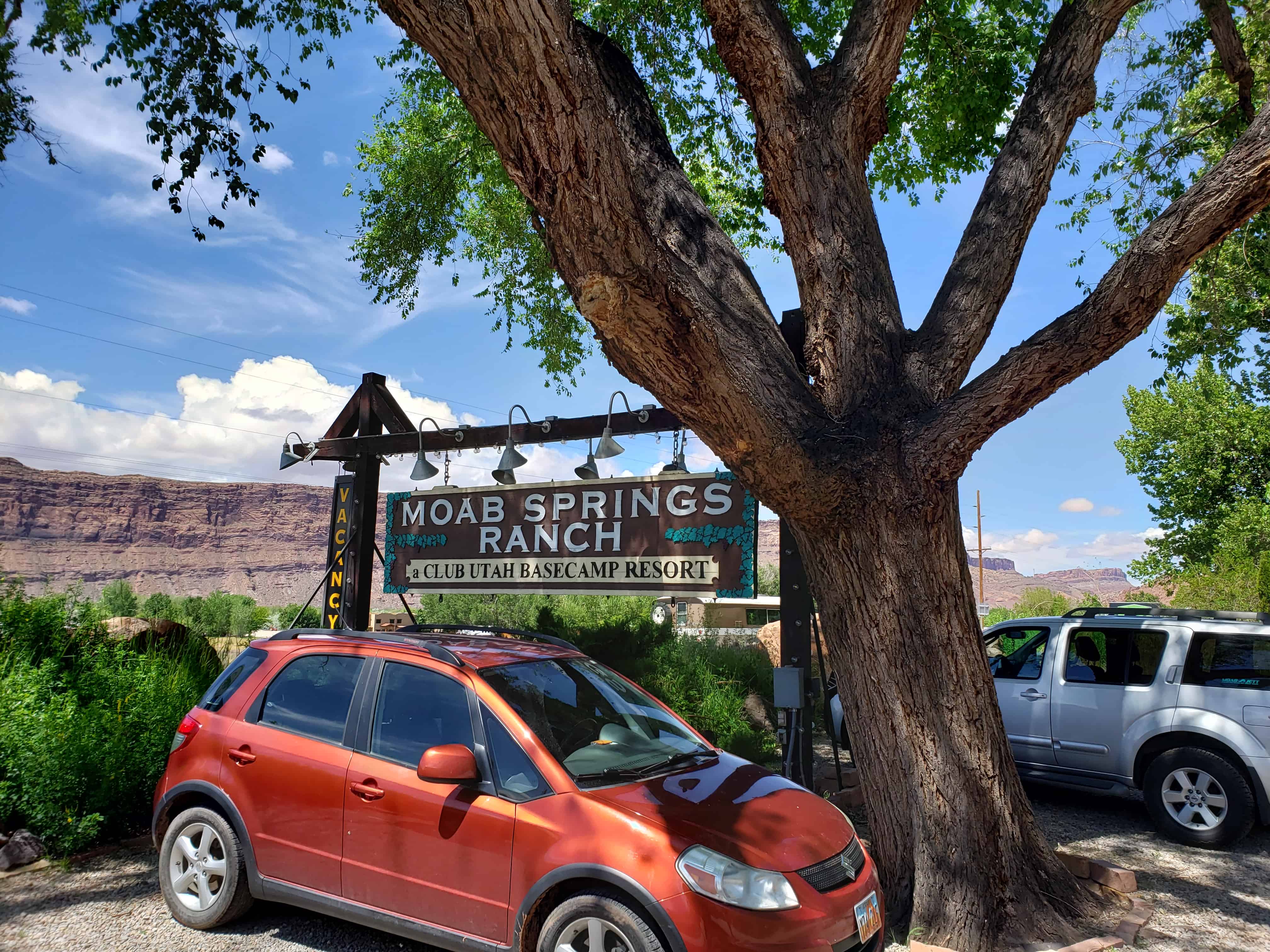
Arthur Taylor House / Moab Springs Ranch

04 Tuesday Jun 2019

Posted by Jacob Barlow in Uncategorized

≈ Leave a comment

Tags

Grand County, Historic Homes, Moab, NRHP, utah

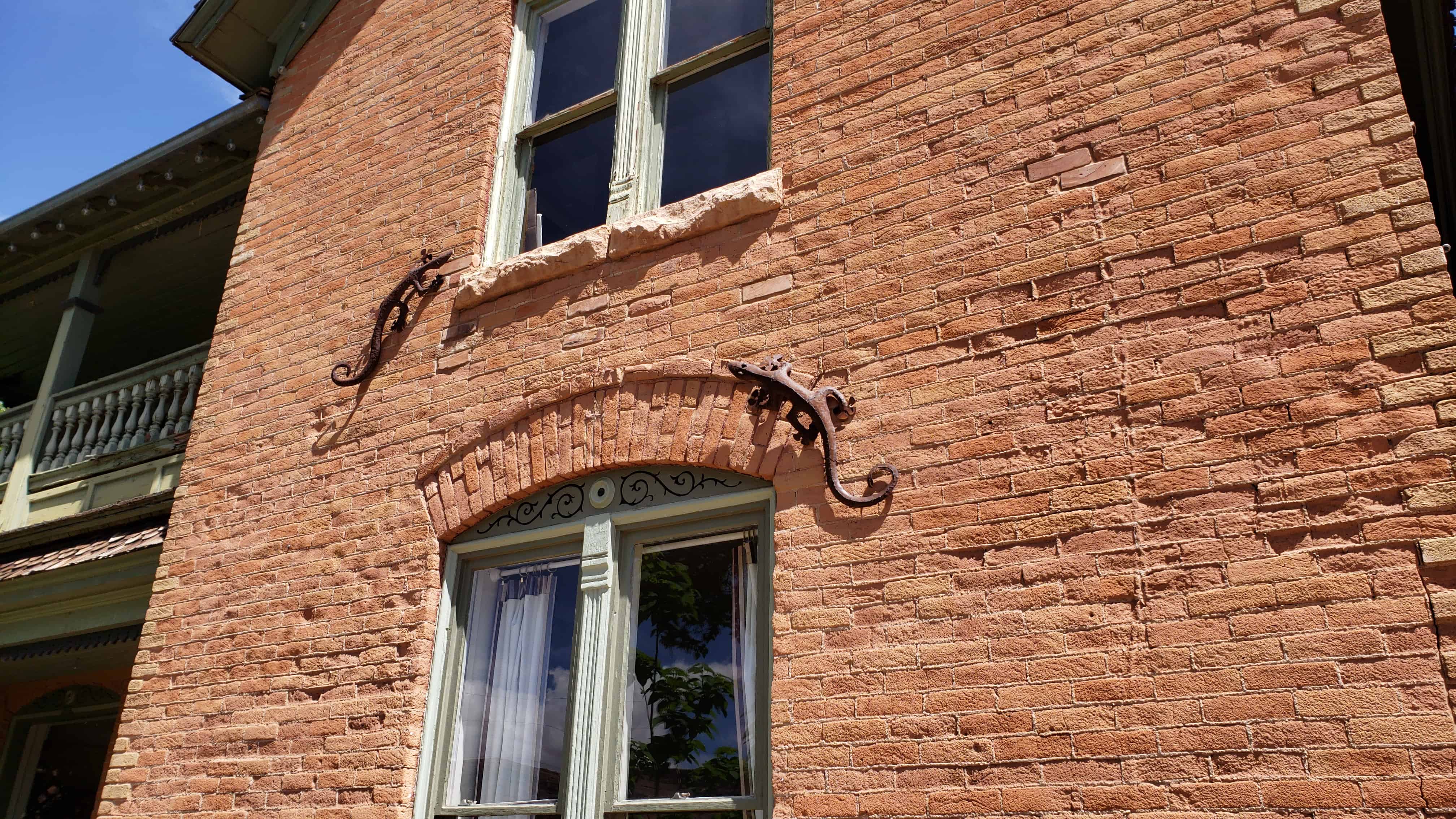
The Arthur Taylor House documents and illuminates some of the social and economic aspects of ranching in Southeastern Utah. Its size and sophistication, in comparison with the crude homes of most of Moab’s citizens, clearly marks the importance of ranching in the area during the late 19th century. Equally important are the home’s associations with members of the Taylor family who were pre-eminent in the promotion of ranching in Grand County. The Old Taylor Homestead is one of the few remaining historical and architectural assets of the town of Moab, which has suffered the baleful effects of uranium booms and tourist infestations, It is an essentially intact late nineteenth century farm complex, with a two story, T-plan main house of brick.

Located at 1266 U.S. Highway 191 in Moab, Utah and added to the National Historic Register (#80003908) on February 28, 1980.

The Taylor family arrived in Moab in 1881, and with their arrival, large scale cattle ranching got under way. The industry suffered from a grat deal, of lawlessness in the area, and cattle rustling was a continual problem. Amusingly, and accurately, local lore recalls that many local ranchers actually got their start in cattle ranching by establishing their herds with cattle stolen from longer established neighbors. The Taylor’s were the principal targets 6f much of this rustling, and the losses they were suffering contributed to their decision to switch to sheep ranching. The first to introduce sheep into Grand County, they were inevitably involved-in the range war that followed.

It was profits from sheep that enabled the construction of the Taylor Homestead to begin in 1894. The bricks were made in Moab by another member of the family, Elmer Taylor, while paints from the interior walls came from the Carter Brothers of Prove. When the Arthur Taylor’s moved into the house, the GJ:and Valley Times reported,, “Mr and Mrs Arthur Taylor had a parTy on Monday evening to celebrate the occupancy of their new mansion.” The Taylors were thus established as the leading family of Moab, and the object of considerable envy by the residents of the log cabins that constituted most of the dwellings in town.

Following Arthur Taylor, the home passed to his brother Lester Taylor and later went through a succession of hands residence, it is now used for refrigerated storage. Materials and building techniques place this structure at a date close to that of the main house. Of brick on a rough faced, ashlar foundation (now stuccoed with concrete), the gable areas are shingled. Segmental arches and wooden segmental insets complete the two-over-two windows treatment. A screened frame porch was part of this structure originally, resting on the same stone foundation.

Though adapted for use as a restaurant, the present owners have restored the interior of the Taylor home to its original character as much as possible. Woodwork was refinished and missing millwork has been reproduced and replaced. Facsimile wallpapers and paint colors were made after consulting a surviving early resident, Lydia Taylor Skewes.

The home has been rewired and period fixtures used. A second floor bathroom added ca 1945 was left intact. The first floor bathroom was divided into men’s and women’s sections in accordance with the restaurant code.

Outbuildings formed an integral part of any farm complex. At the Taylor farmstead the many extant outbuildings contribute to preserving the character of the original site.

Three original, rough-faced sandstone outbuildings survive, all with gable roofs. For the one story smoke-house, sandstone was used for the lower elevation level, while yellow brick was used on the upper portion. Dug partly into the hill is the icehouse. The creamery also remains, though the stone has been stuccoed. Frame storage sheds, corrals and chicken coops dot the complex.

The Taylor home exemplifies a common approach to domestic architecture in America. An established vernacular form with comfortable associations socially and historically was chosen. Yet in desire to keep up with current taste, details were applied which were not integral to the overall form.

The social and economic conditions which allowed the Taylor family to prosper and build are gone, but the home that was the result remains as a landmark of later nineteenth century architecture in rural Utah.

The Taylor Farmstead in Moab, Utah, remains as an essentially intact late nineteenth century farm complex. Begun in 1894, the farmhouse is similar in form and detail to other domestic architecture of the period. The T plan, one of the popular pattern book plans, was used extensively during this era throughout the West. Applying period ornament to a vernacular architectural type in order to update the appearance was a popular move – a comfortable step – embracing the vogue and the traditonal at once. Substantial scale and materials added to the pretentious detail crate an imposing result.

A full two stories, the Taylor home is large in comparison to other homes in the region. Brick for the walls was made locally by a family member. The lighter colored quoins may have been from another source. Rough faced, regular coursed sandstone was used for the massive window sills and the foundation (now stuccoed with concrete).

Window treatment for the Taylor Home is arranged around double hung, sash windows. Brick segmental arches with archivolt bands, and wooden segmental insets with an incised scroll motif seen commonly in Utah architecture are uniform. In the double unit window configurations, a classical vernacular pilaster divides the windows. Surrounds are of a plain, moulded style.

A porch and balcony in the Eastlake Style mark the main façade. The original arrangement (see ca. 1896 photo) was later modified by the addition of a roof over the second story balcony. Originally polychromed, the porch is now painted white. Scalloped shingles on the pent roof complimented the vergeboard drapery of quatrafoil motif, which is now missing. Later modifications were made to include the roof over the second story balcony. Here, square posts with milled bracketing replaced the turned balusters. Rafter ends have decorative rounded shapes.

Rear extensions and interior modifications began ca. 1943 and continued until the present ownership, under which a readaptive restoration was launched. The original rear porch has been enclosed. To accommodate the home’s present use as a restaurant, a kitchen has been added at the rear.

This modern kitchen connects the farmhouse to a one-story, rectangular brick structure. Probably originally a three-room before finally ending up as a prize to be carefully restored to its former grandeur. The present owners are making a worthwhile effort to rescue the building from dilapidation and to make it once more a showplace of Moab, and a reminder of the colorful ranchers who built Moab and Grand County.

← Older posts

Follow Jacob

Follow Jacob

Blog Stats

  • 2,001,798 hits

Social and Other Links

BarlowLinks.com

Recent Posts

  • Julie Budge Nibley Home
  • Elias and Agnes Beckstrand House
  • Ophir Town Hall
  • John Blanchard Home
  • Seth H. Blair Home

Archives


Loading Comments...